Grand Egyptian Museum Gallery 3 – Details of each artifacts with 4K Video & Stock Photos
Grand Egyptian Museum Gallery 3 – Details of each artifacts with 4K Video & Stock Photos.
the beginning of the Egyptian dynasties, the Old Kingdom, the First Intermediate Period…
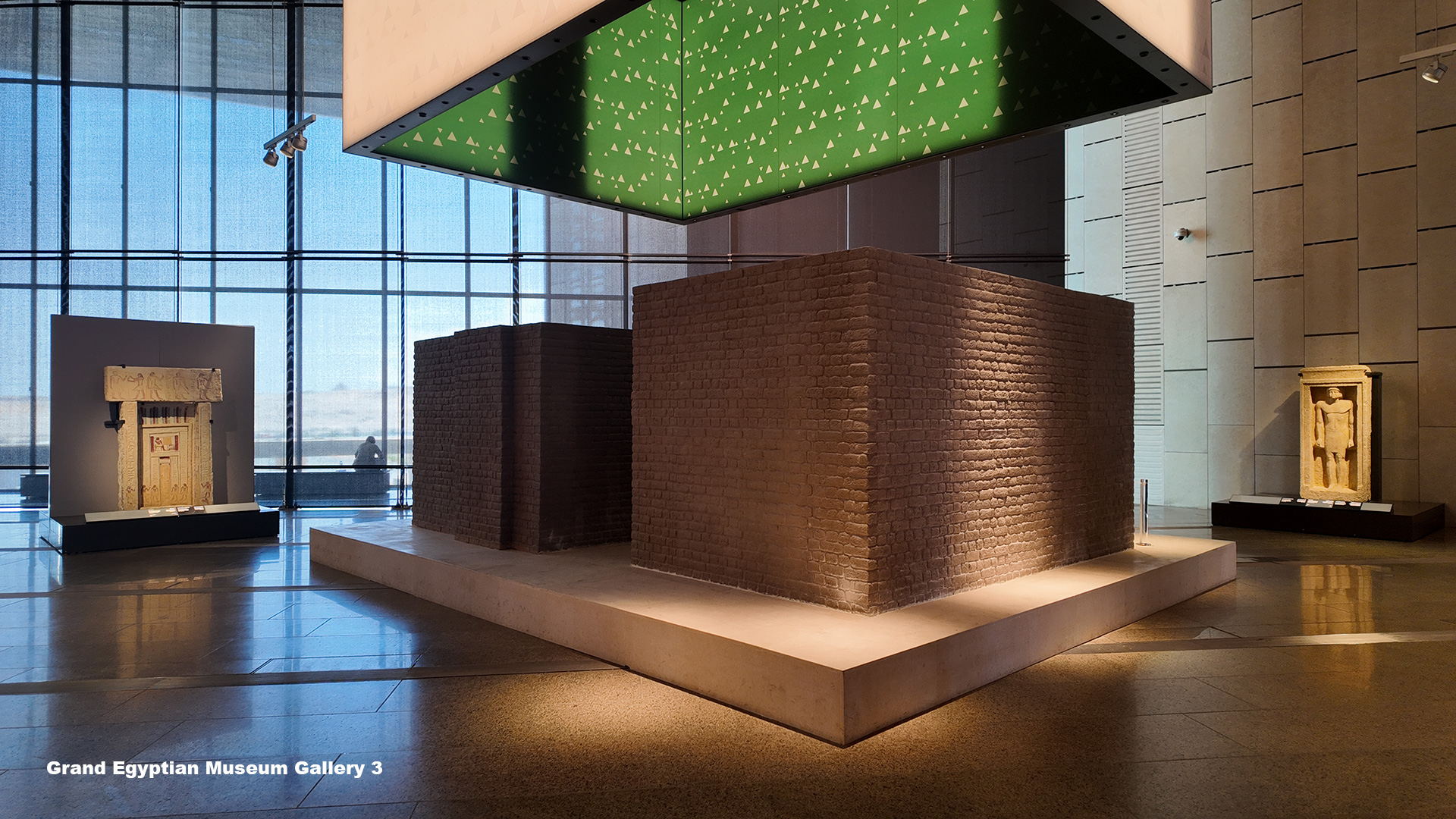
Grand Egyptian Museum Gallery 3
———– } ———– } ———– } ———– }
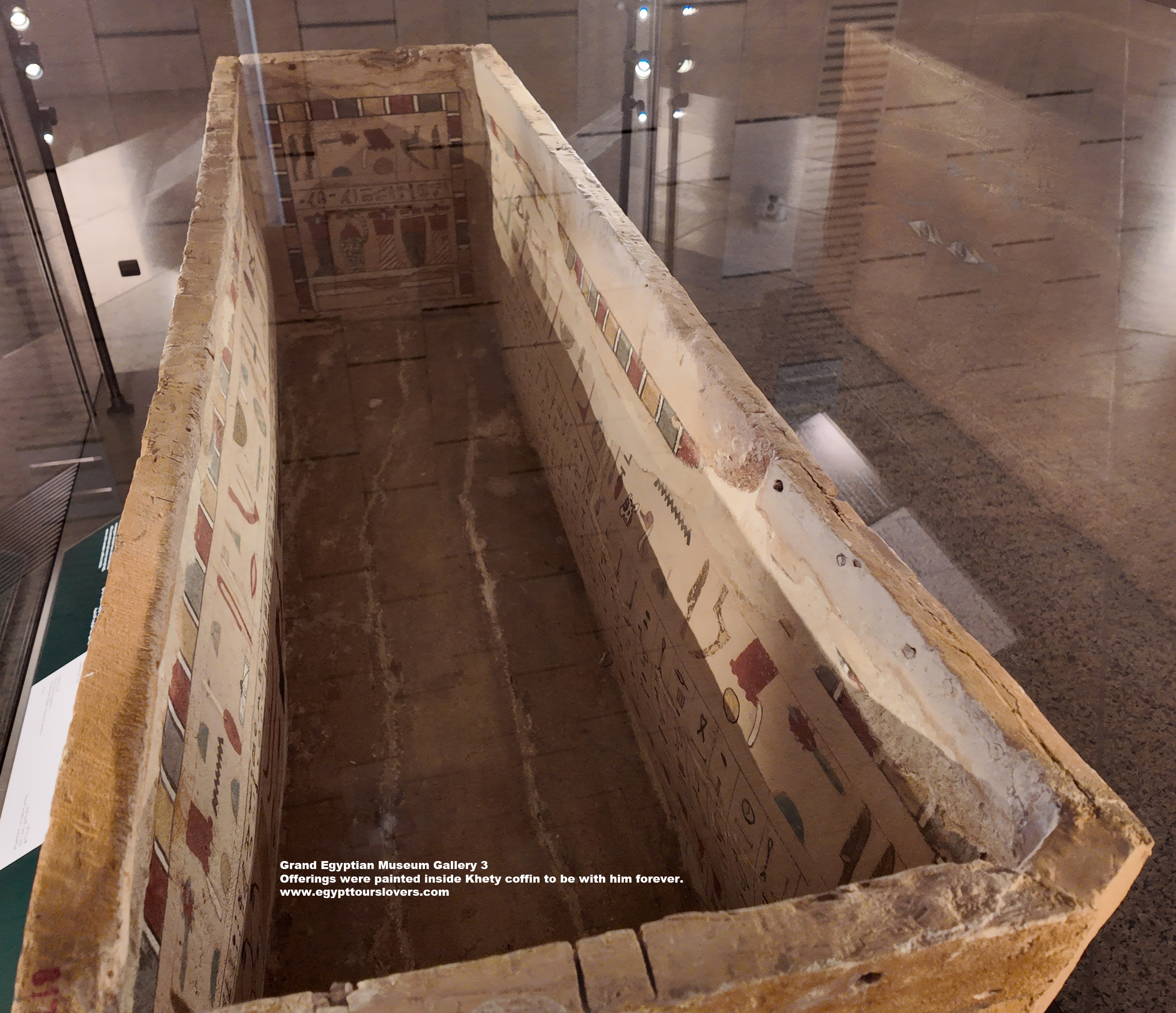
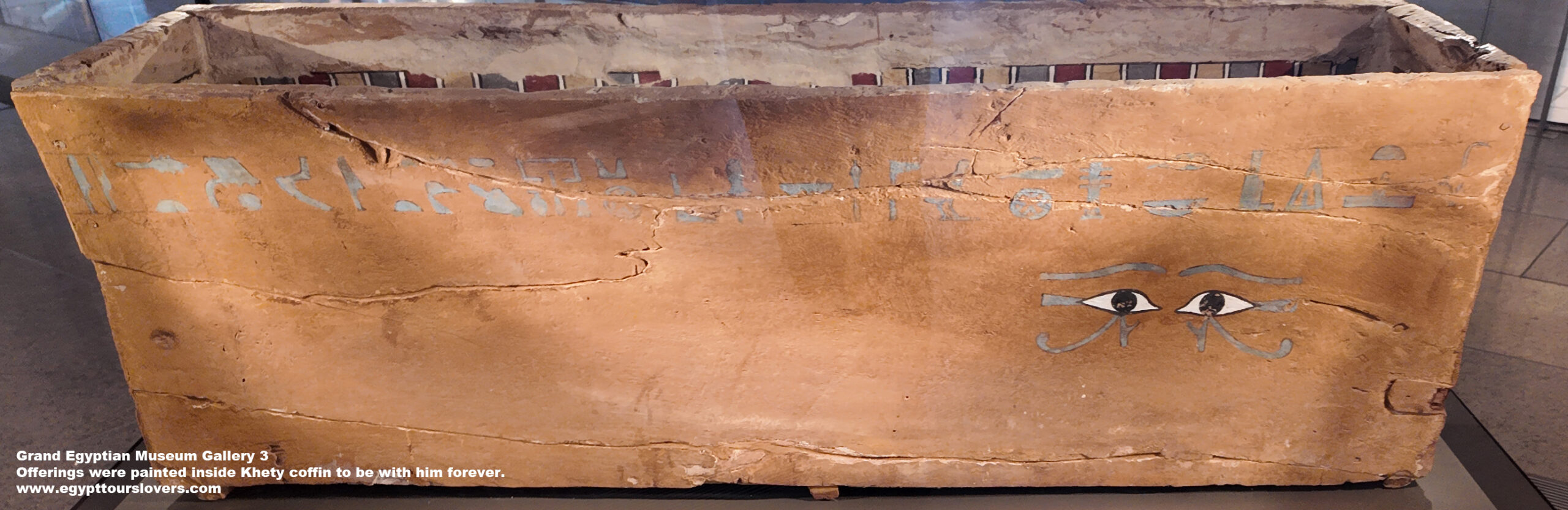
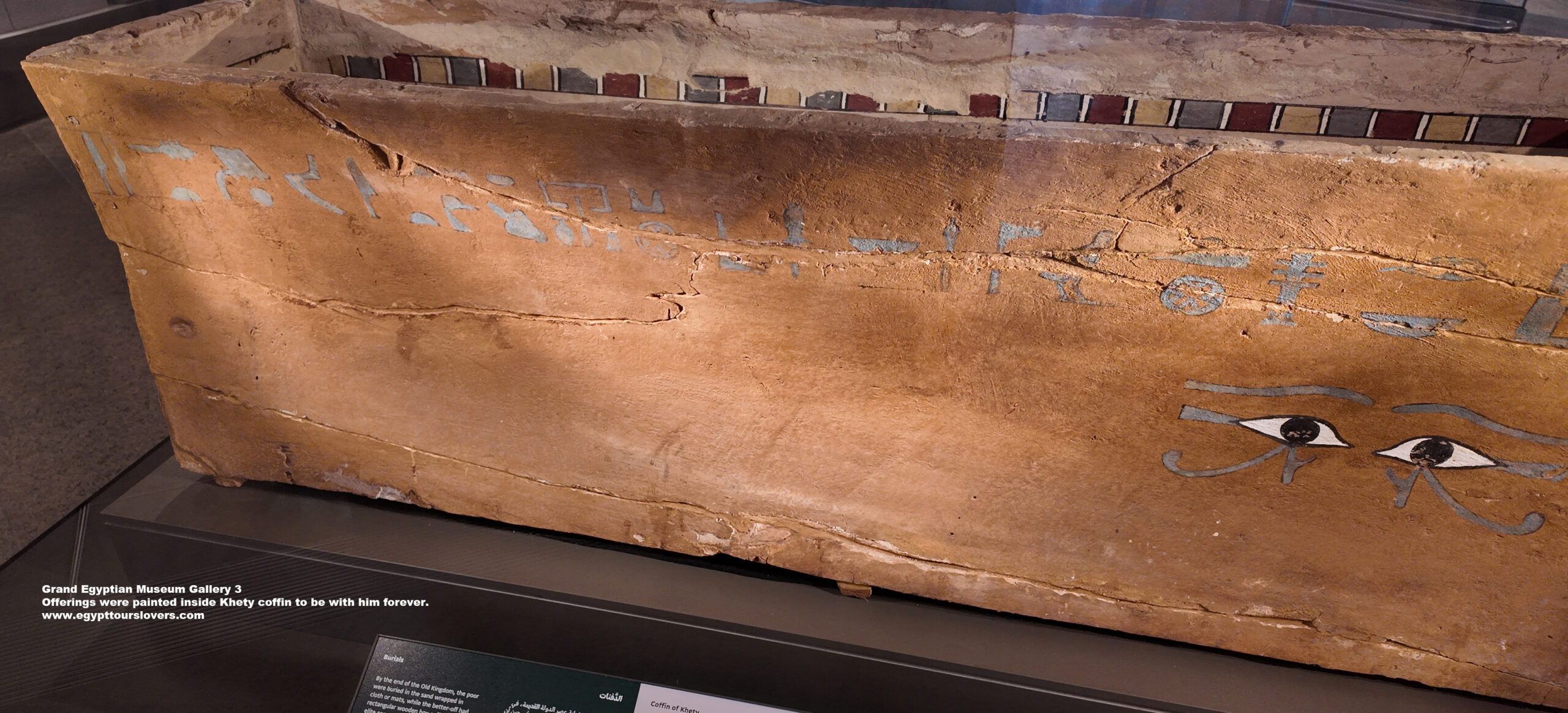
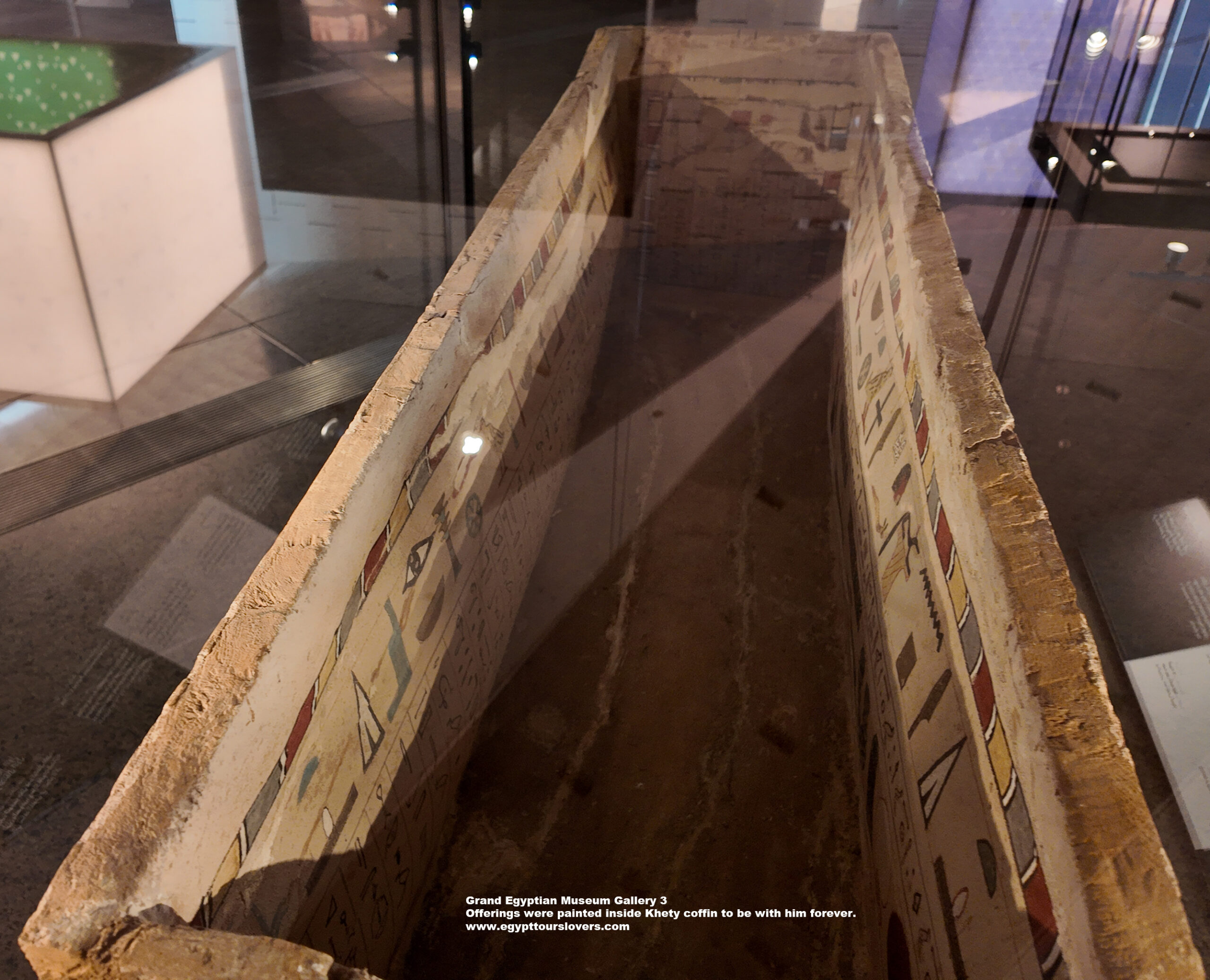
dynasty 9-10 | wood, plaster, pigment | herakleoplis magna “ihnasya el-edina”
Offerings were painted inside Khety coffin to be with him forever.
These offerings included jars of oil at his head, a headrest, mirrors, jewellery, vessels, weapons, bags of natron salt and a pair and sandals.
———– } ———– } ———– } ———– }
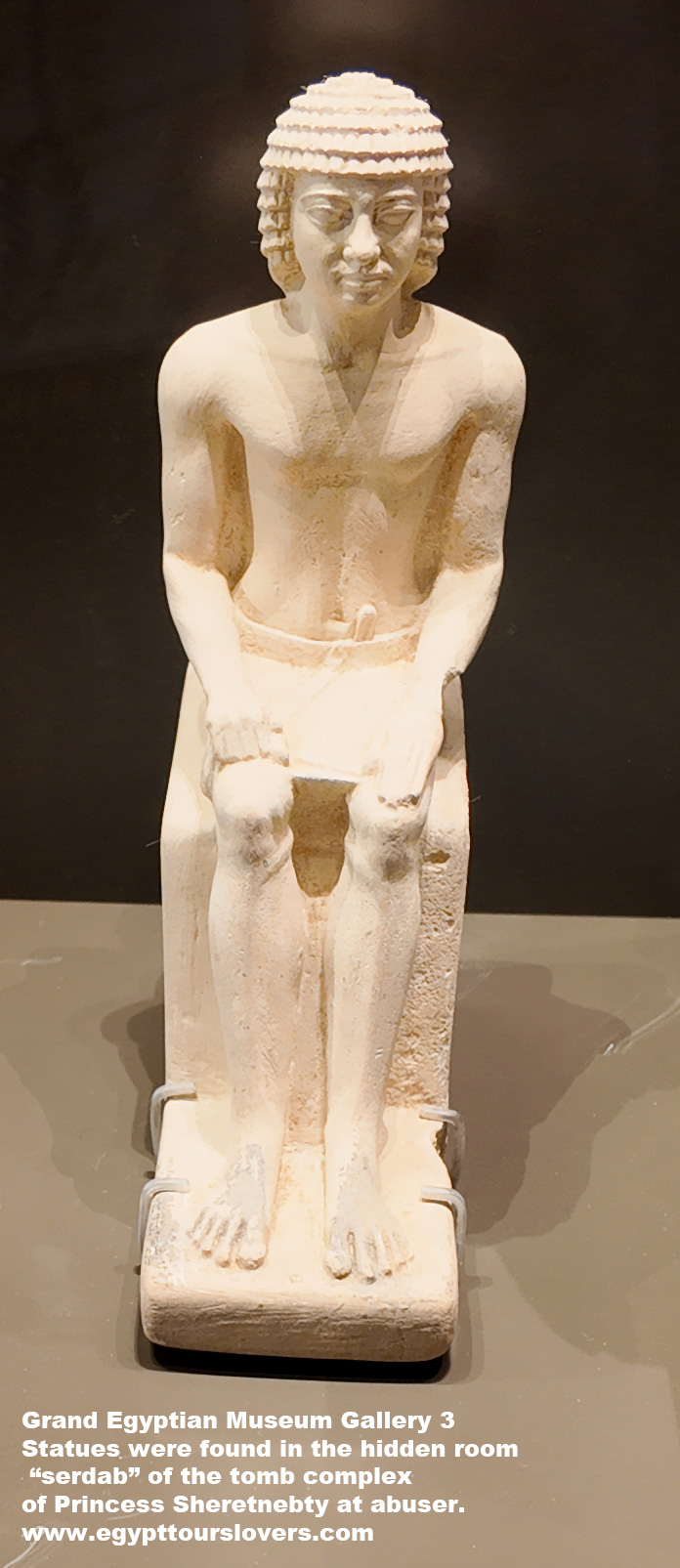
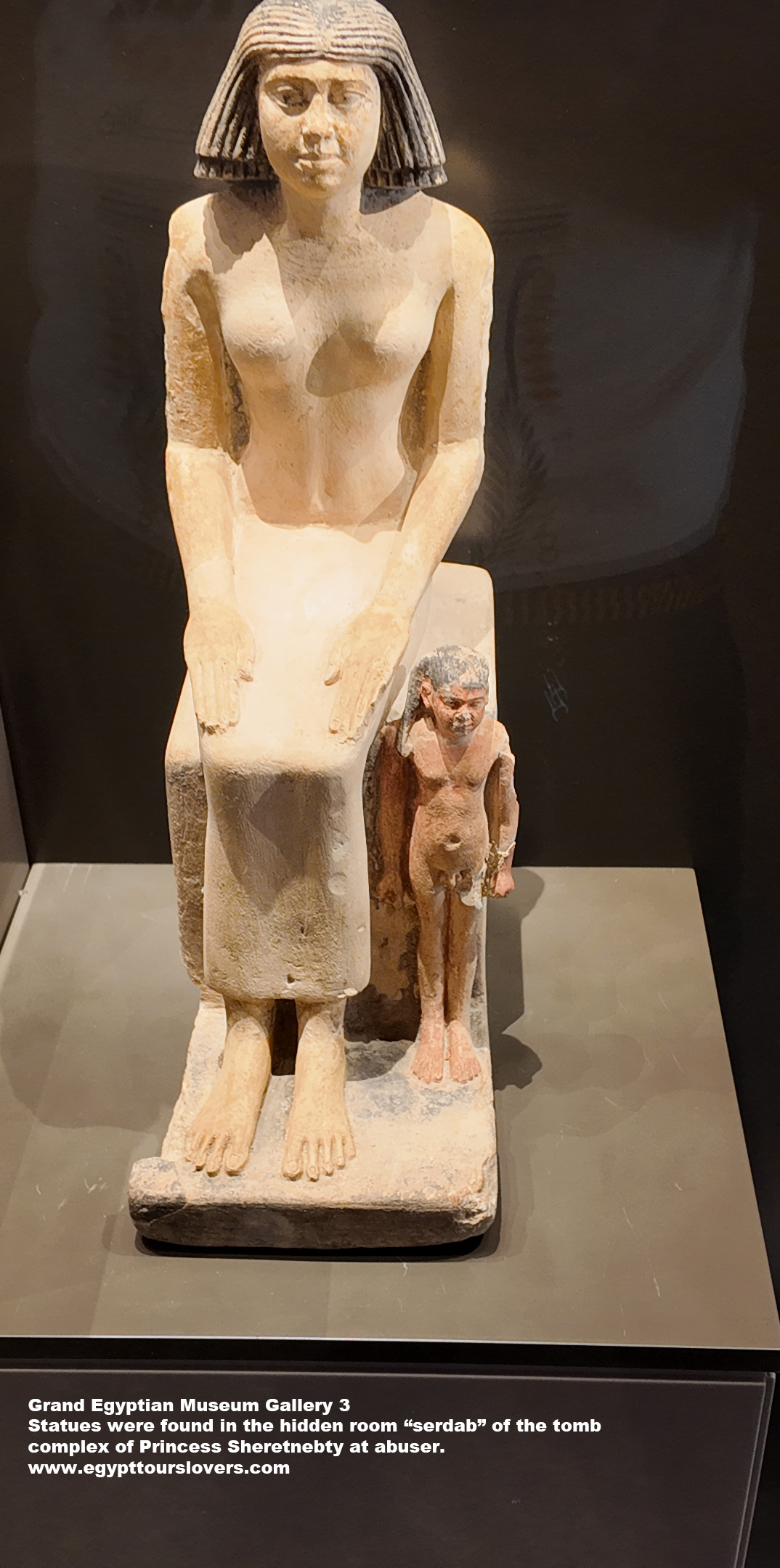
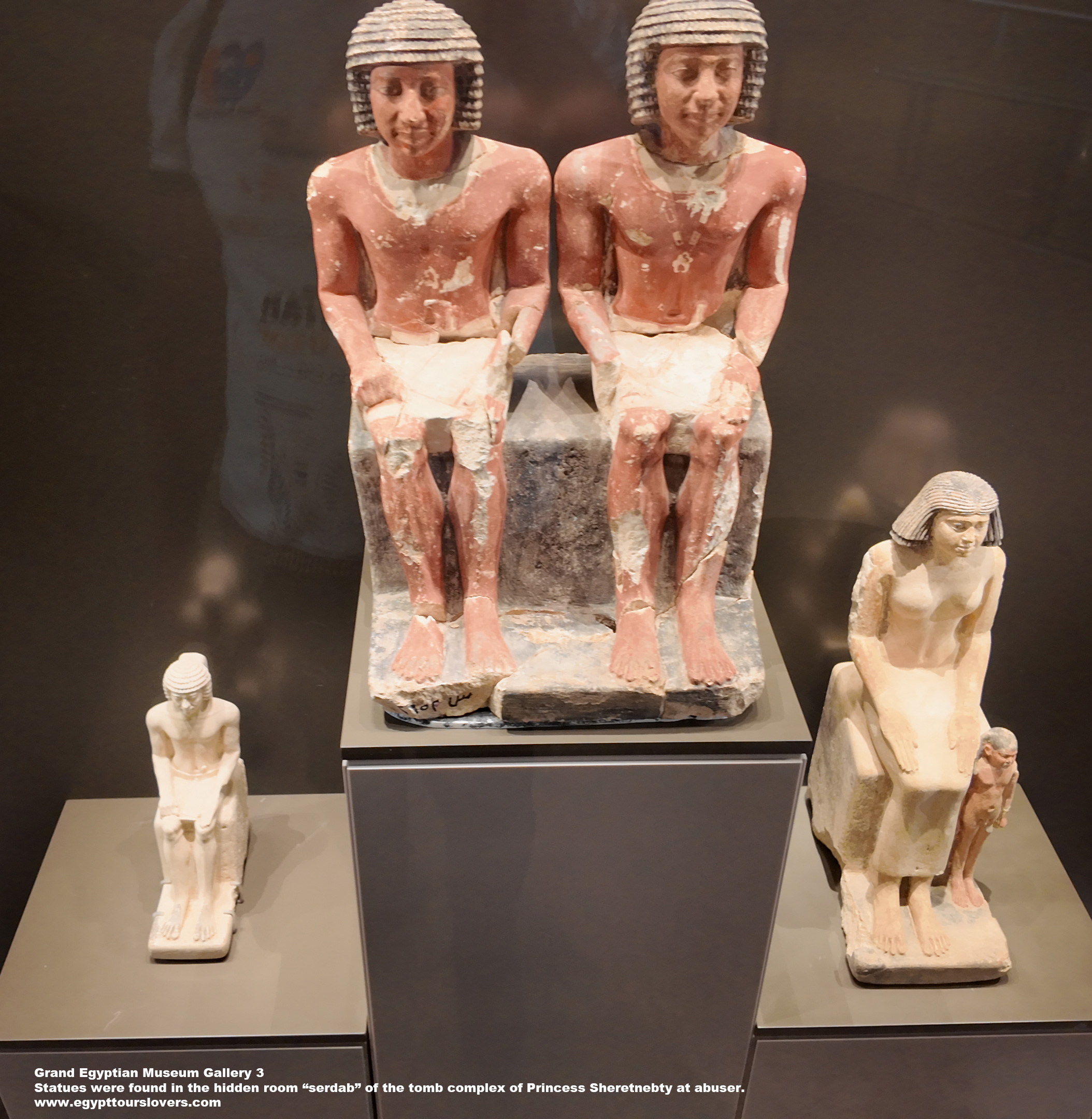
dynasty 5 | limestone, pigment | abuser
Statues were found in the hidden room “serdab” of the tomb complex of Princess Sheretnebty at abuser.
The represent the princess, her husband and other relatives who carried out priestly duties in pyramid temples at abuser and new sun temples at abu ghurab.
———– } ———– } ———– } ———– }
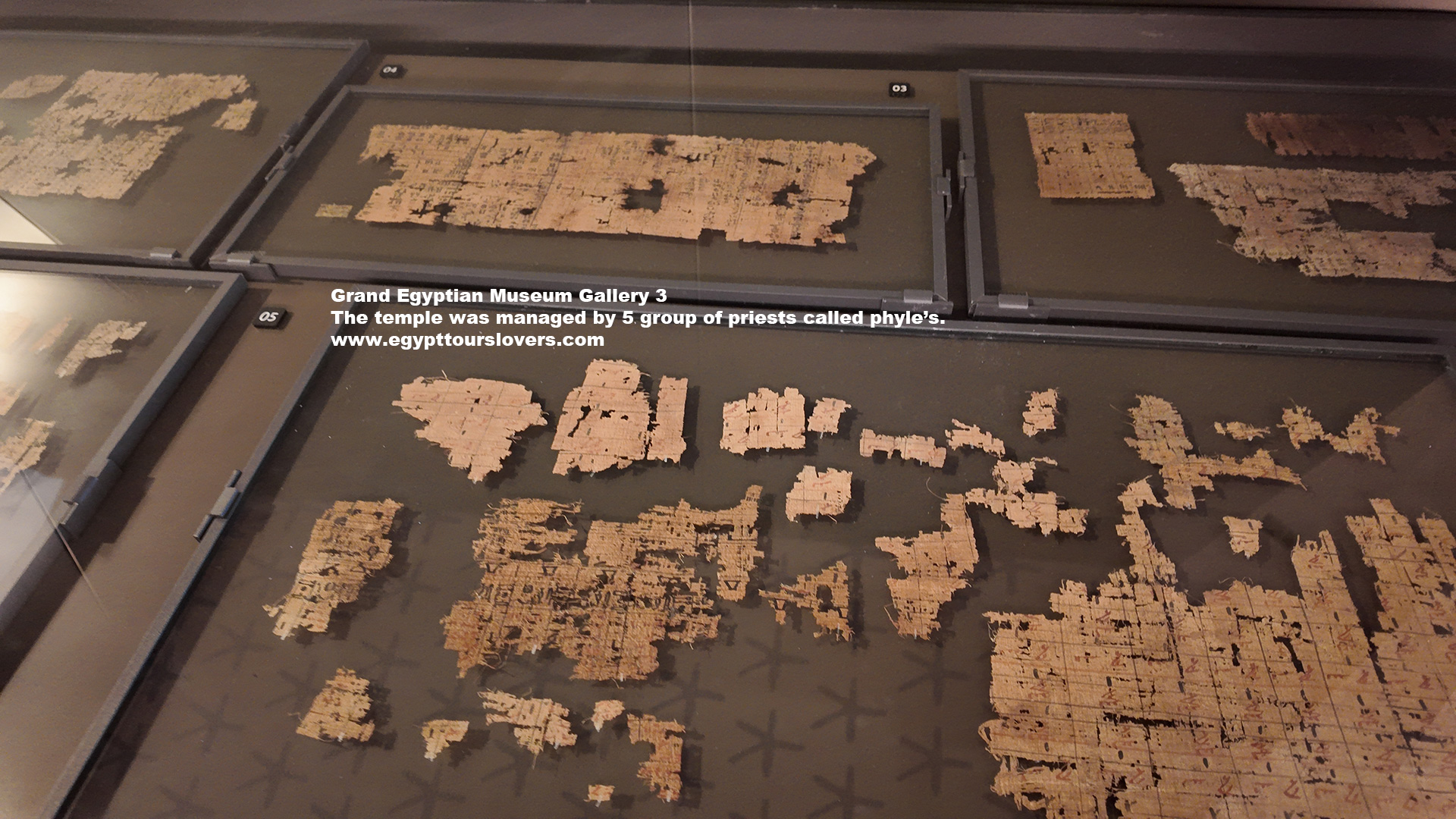
dynasty 5 | papyrus, pigment | abuser
The temple was managed by 5 group of priests called phyle’s.
This papyrus records the members of 2 phyle’s receiving food and drinks, including daily rations of different types of meat.
———– } ———– } ———– } ———– }
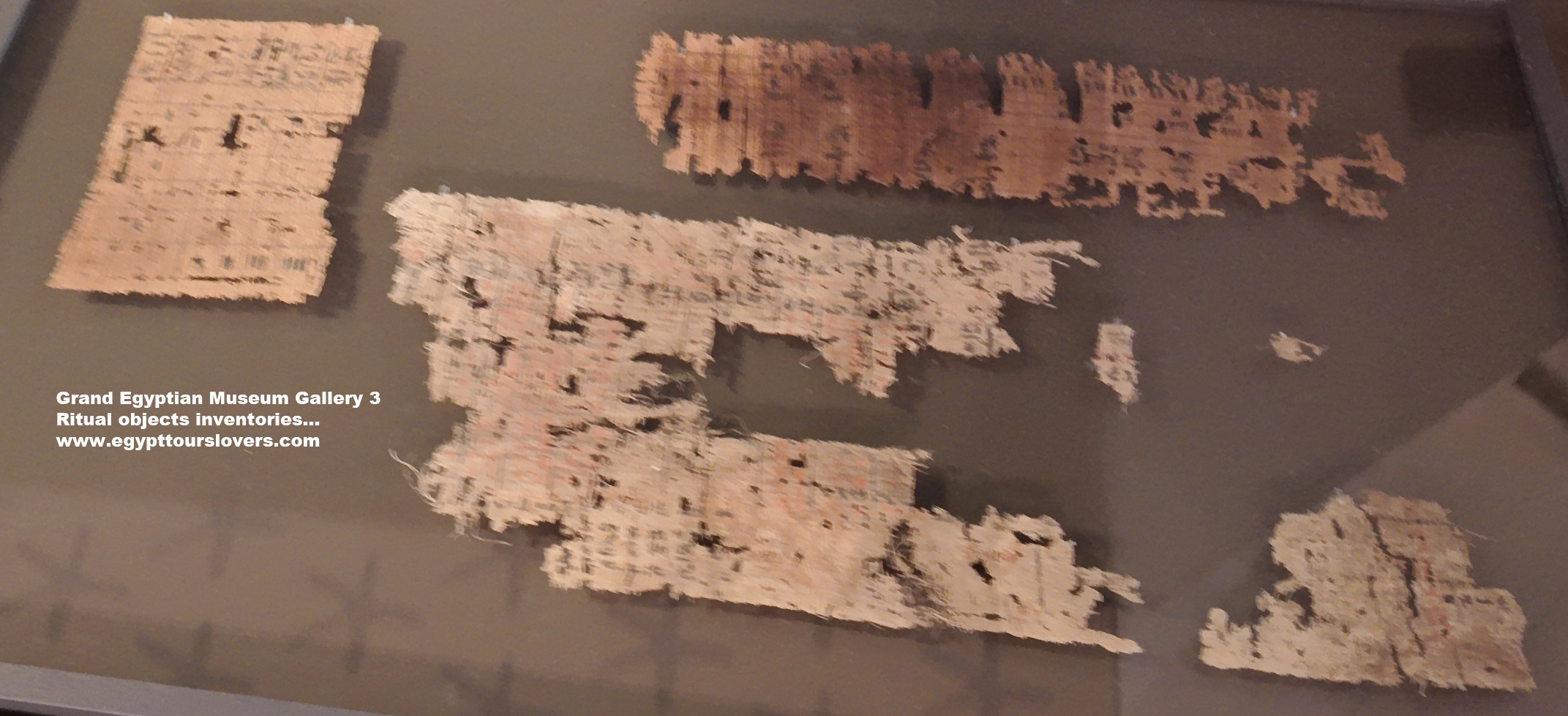
dynasty 5 | papyrus, pigment | abuser
Ritual objects inventories…
Objects and tools used during religious ceremonies in King Raneferef Temple needed to be counted and inspected regularly.
If some items were found damaged, they were repaired or replaced.
———– } ———– } ———– } ———– }
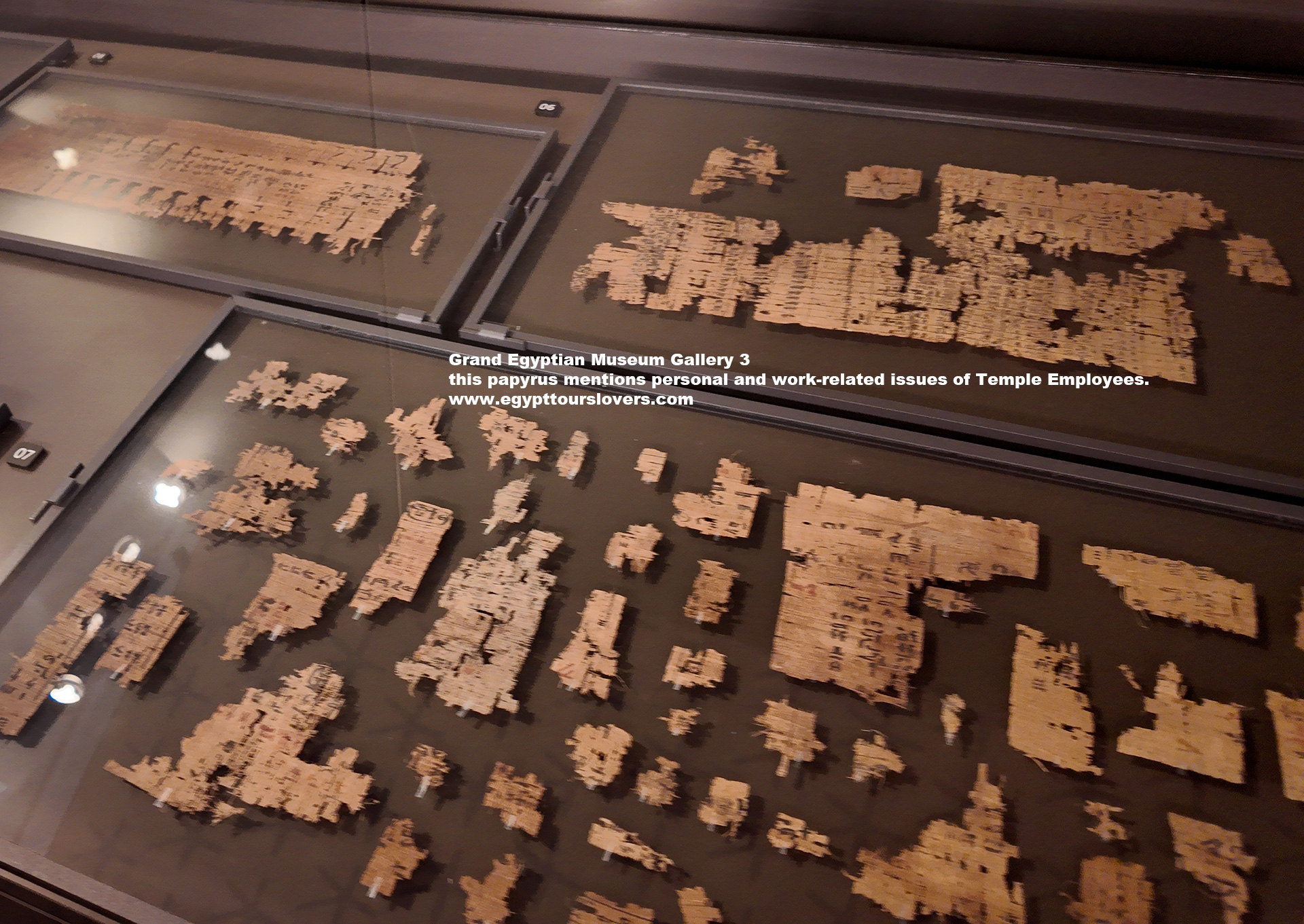
dynasty 5 | papyrus, pigment | abuser
this papyrus mentions personal and work-related issues of Temple Employees.
It also records the monthly distribution of clothes and emmer wheat to priests and s donation of food from the Medium Pyramid of King Sneferu.
———– } ———– } ———– } ———– }
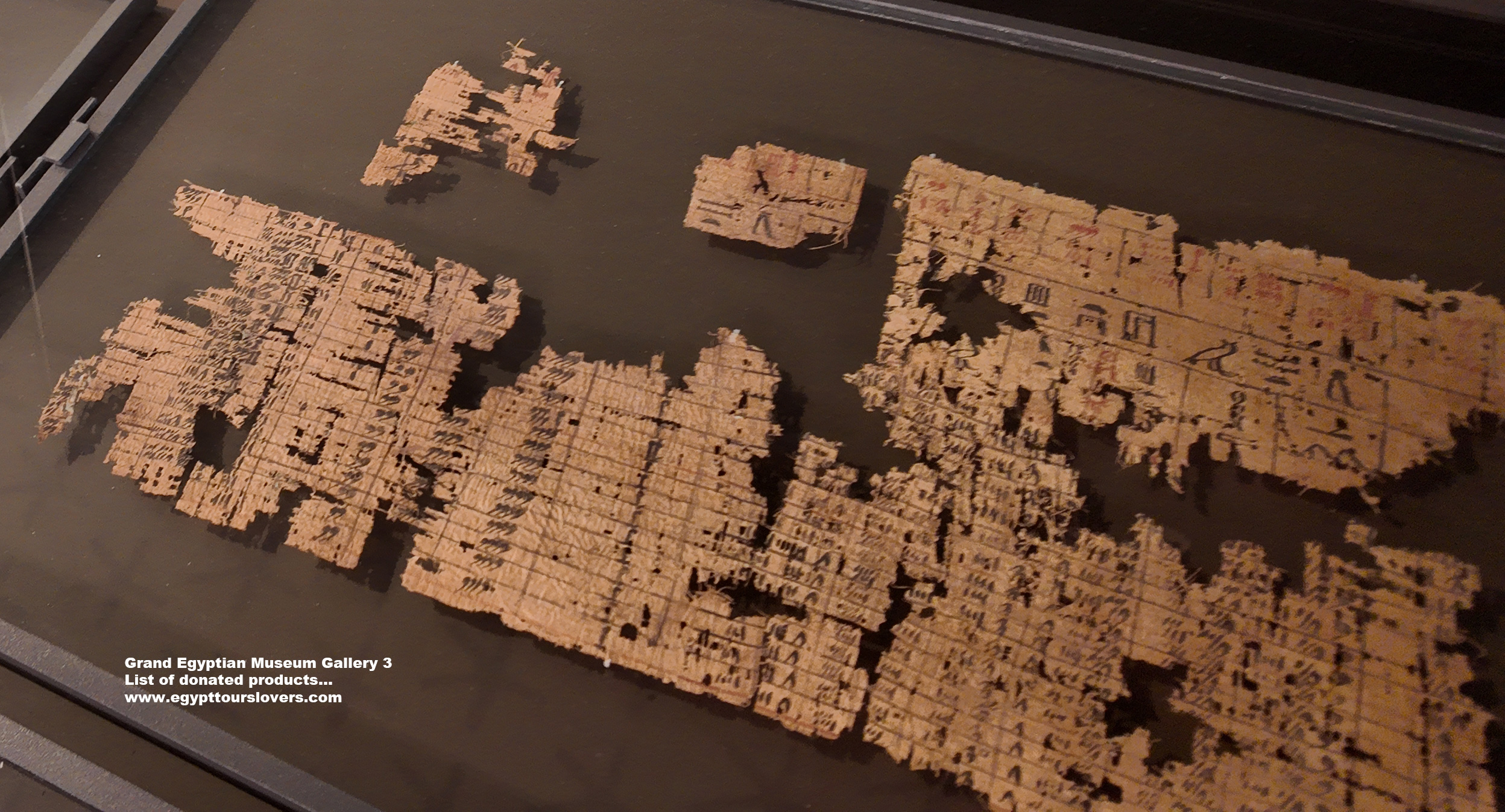
dynasty 5 | papyrus, pigment | abuser
List of donated products…
In 17 days, king Raneferef temple received thousands of food, beer, bread, birds and bulls from the Main Temple of Path at Memphis and also from one of Raneferef funerary properties.
———– } ———– } ———– } ———– }
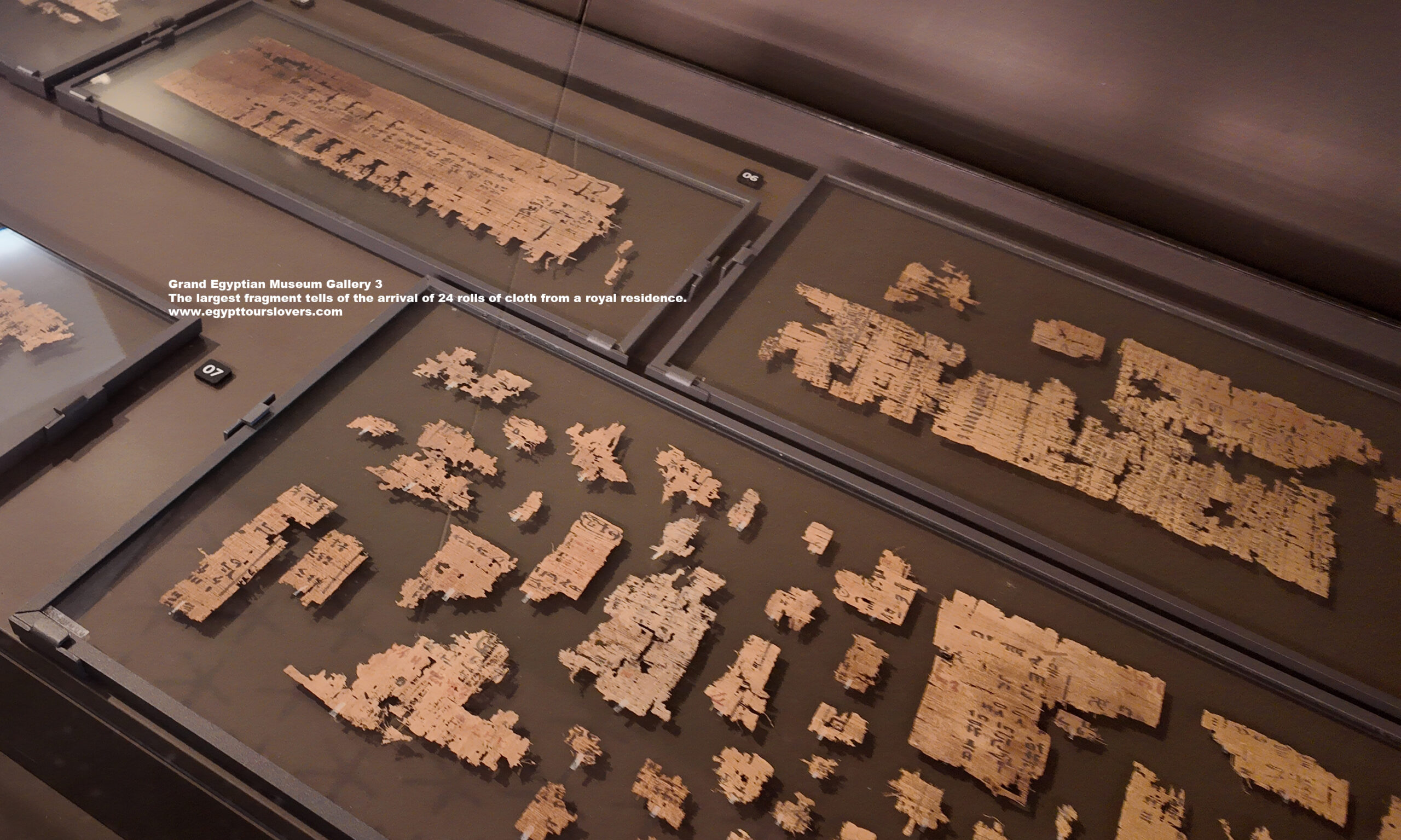
dynasty 5 | papyrus, pigment | abuser
The largest fragment tells of the arrival of 24 rolls of cloth from a royal residence.
Some fragments mention storerooms for ointments, leather and products from the marshes.
Another fragment shows the Cartouche of King Neferikare.
———– } ———– } ———– } ———– }
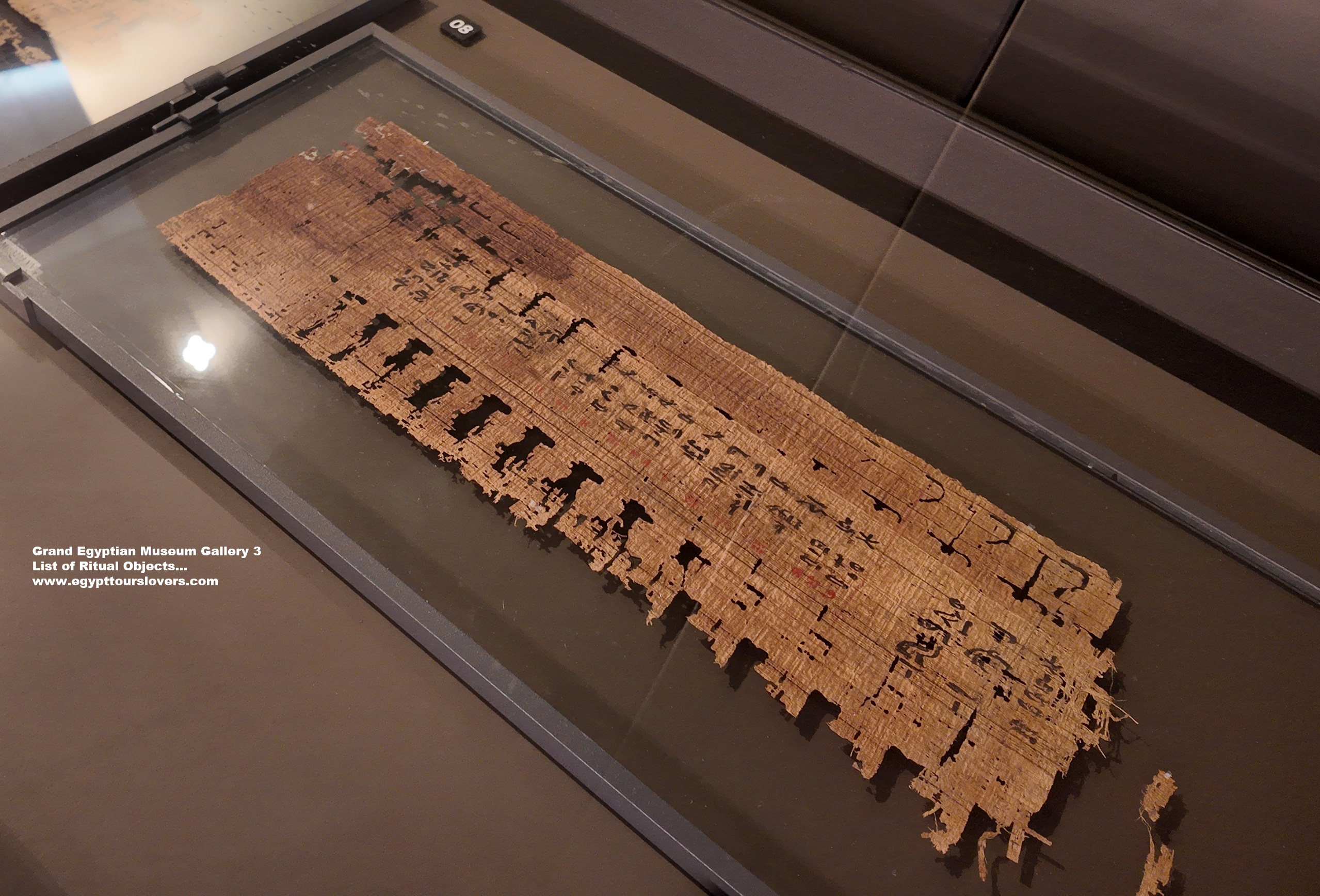
dynasty 5 | papyrus, pigment | abuser
List of Ritual Objects…
The first 2 items on this list of 206 cult objects are wooden statues of a heron-bird and hippopotamus used in rebirth rituals.
These are followed by 151 storage chests and other ritual tools.
206 dynasty 5 | papyrus, pigment | abuser
Beer and bread were distributed every other day to temple employees.
These included a palace inspector, a craftsman, a bleacher, a potter, a cook, a gardener, a cloth-keeper, a gatekeeper, a boatman and the palace physician.
———– } ———– } ———– } ———– }
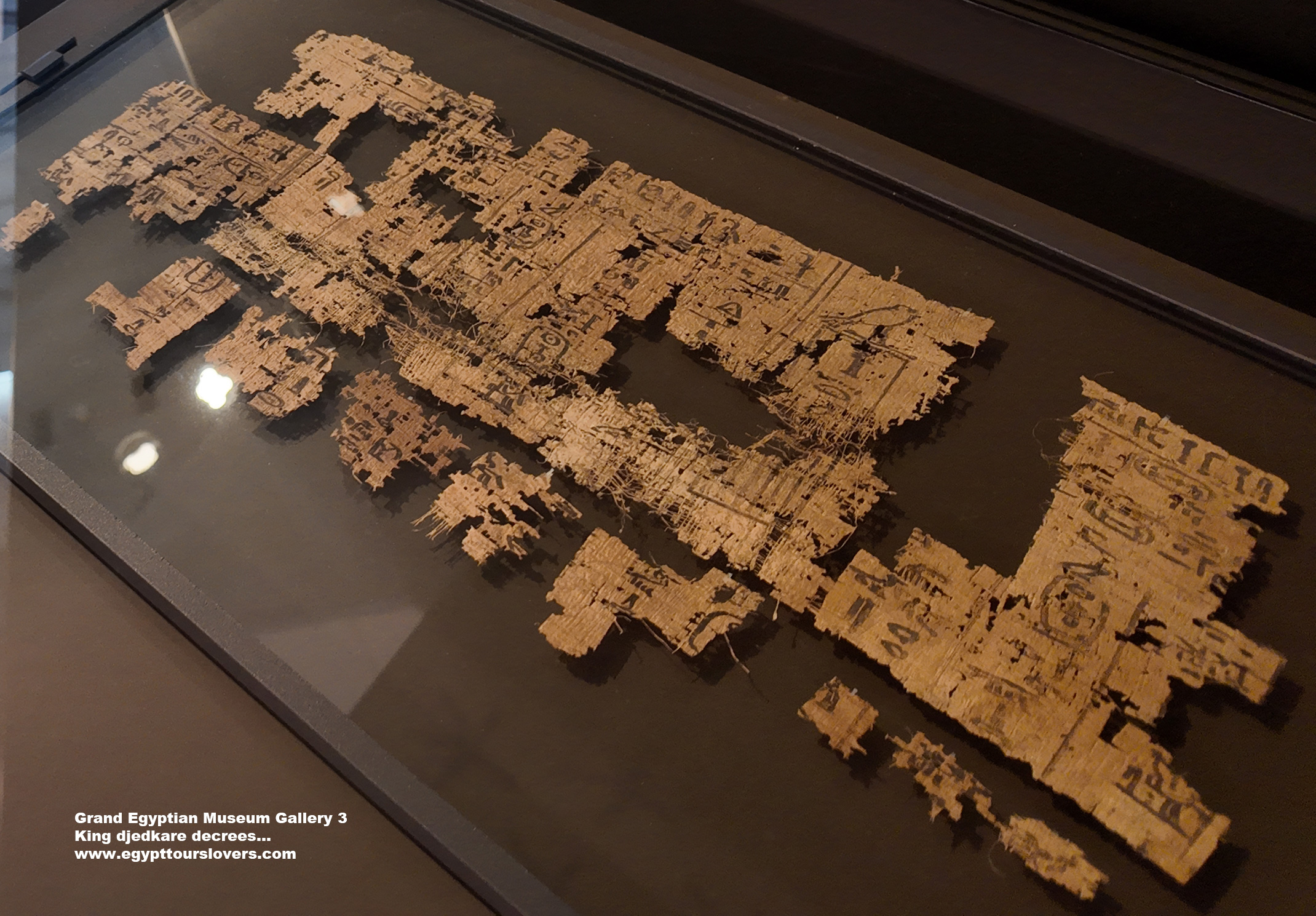
dynasty 5 | papyrus, pigment | abuser
King djedkare decrees…
King djedkare’s royal house name is followed by a command about priests who were allowed access to offerings brought to king Raneferef Pyramids complex.
These documents show that the distribution of offerings was controlled by the central administration.
———– } ———– } ———– } ———– }
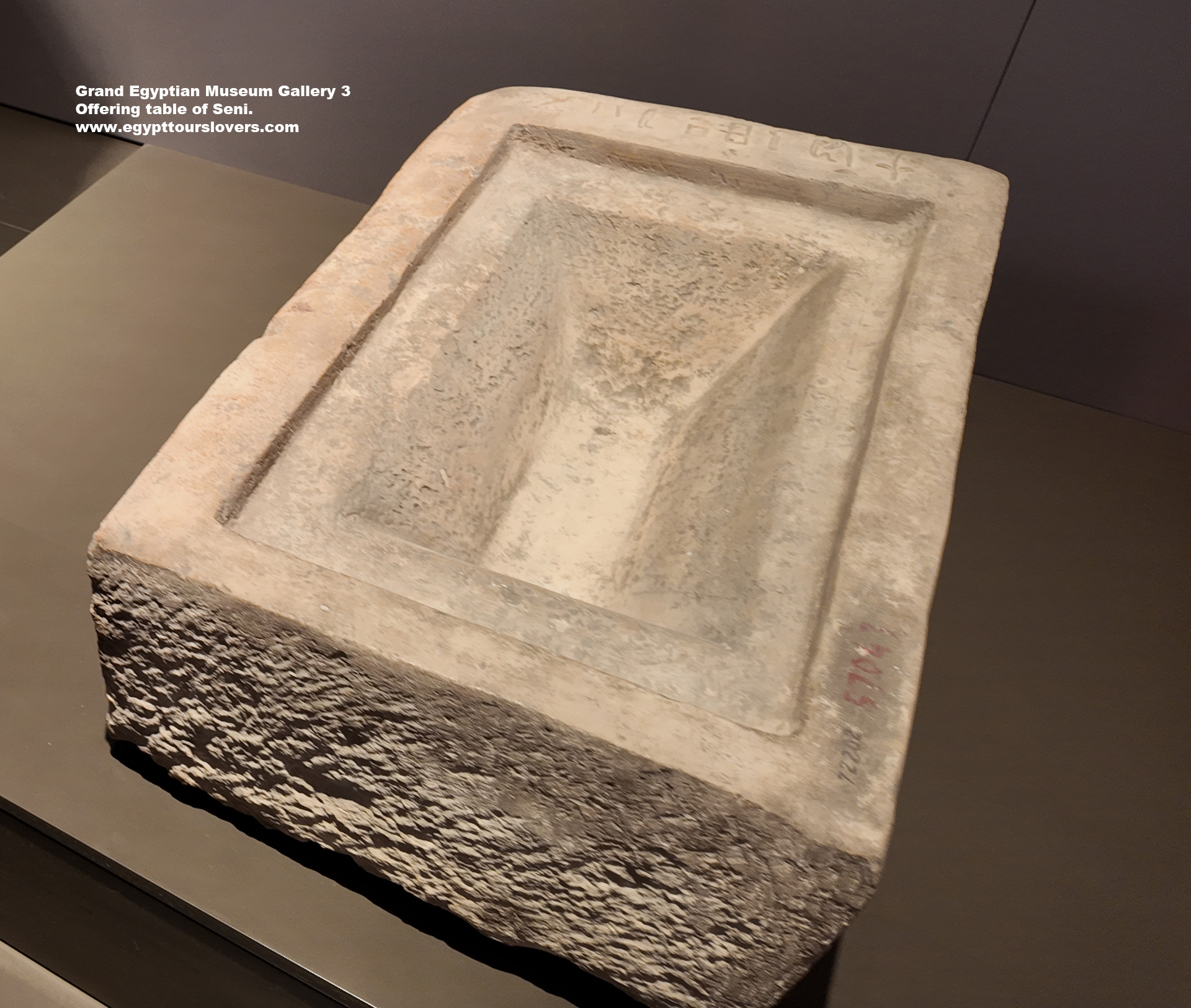
dynasty 6 | limestone | Saqqara
Offering table of Seni.
This large offering table with 8 sets of basins for liquids and bread was made for priest senedjem the younger “seni “, and 3 generations of his family including his mother, grand-parents and great-grand-parents.
———– } ———– } ———– } ———– }
dynasty 6 | limestone | Saqqara
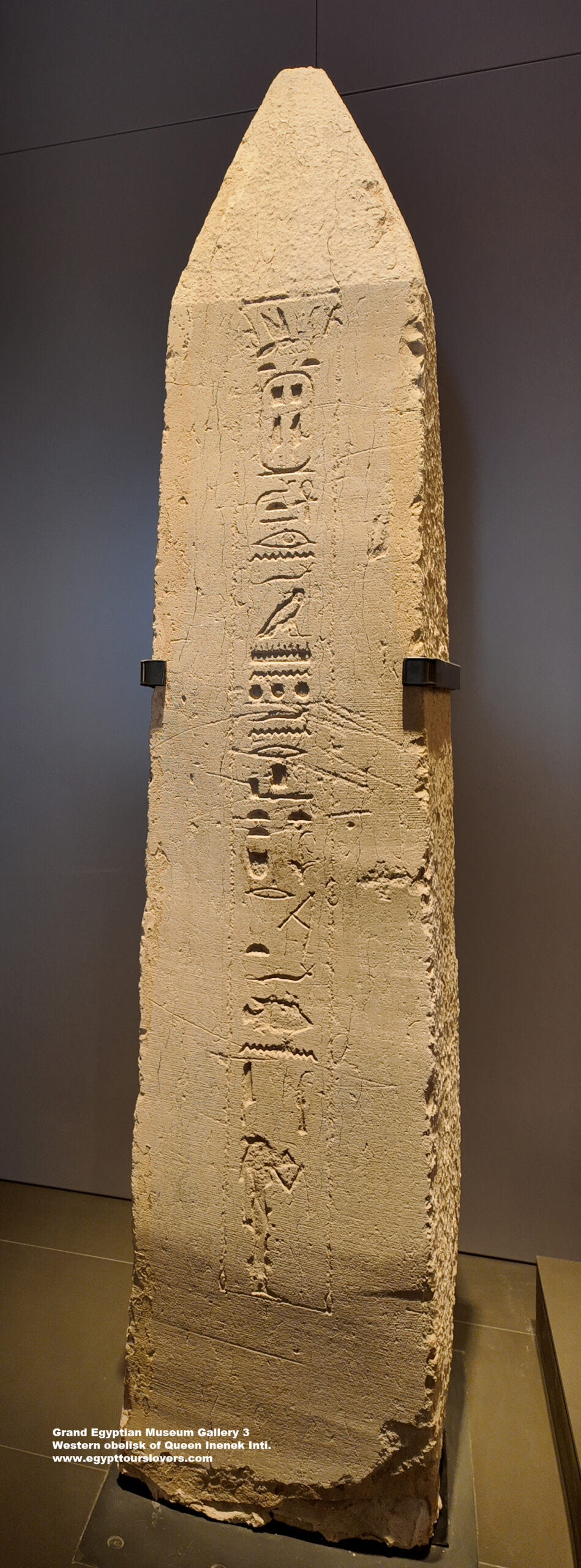
Western obelisk of Queen Inenek Inti.
Queen Inenek Inti received 2 of Obelisks from her husband King Pepy I.
———– } ———– } ———– } ———– }
dynasty 6 | limestone | Saqqara
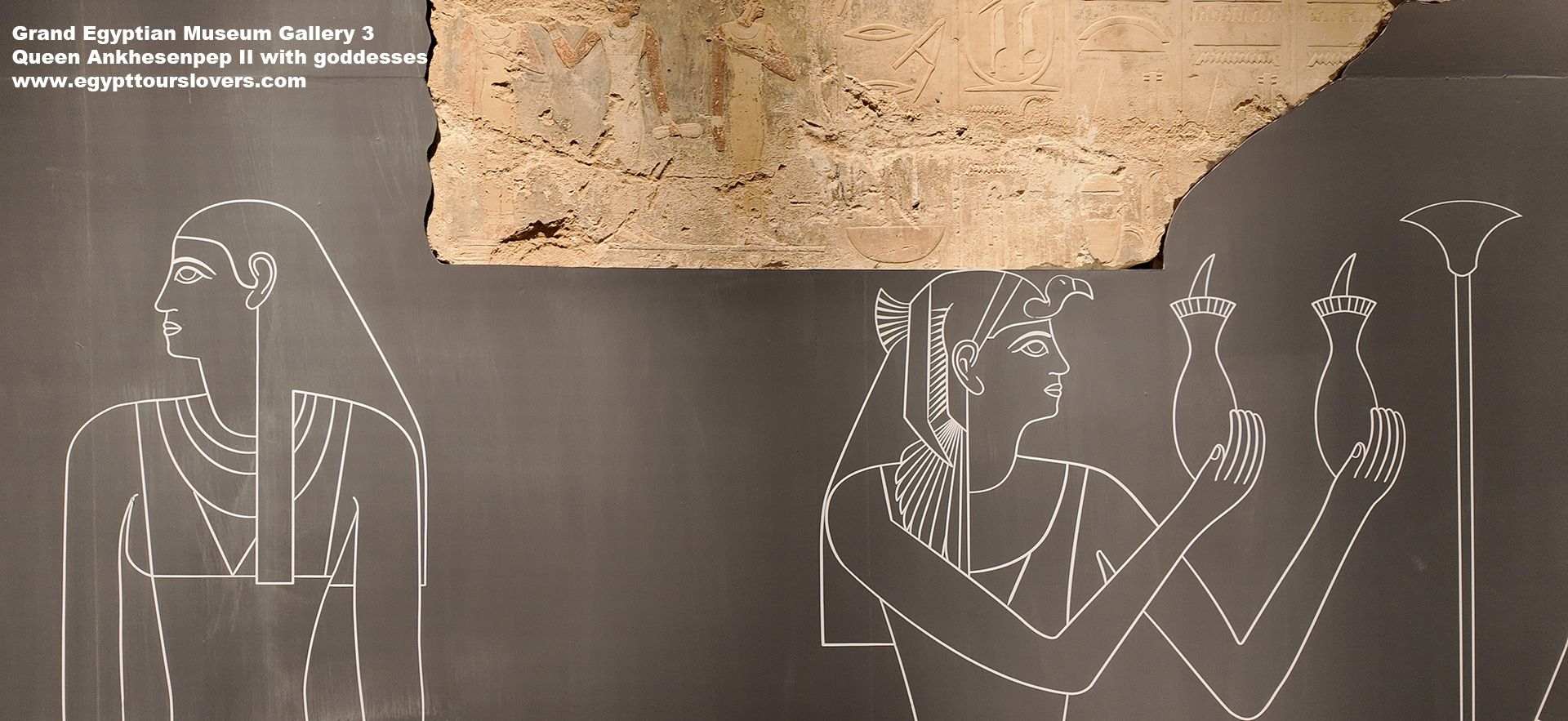
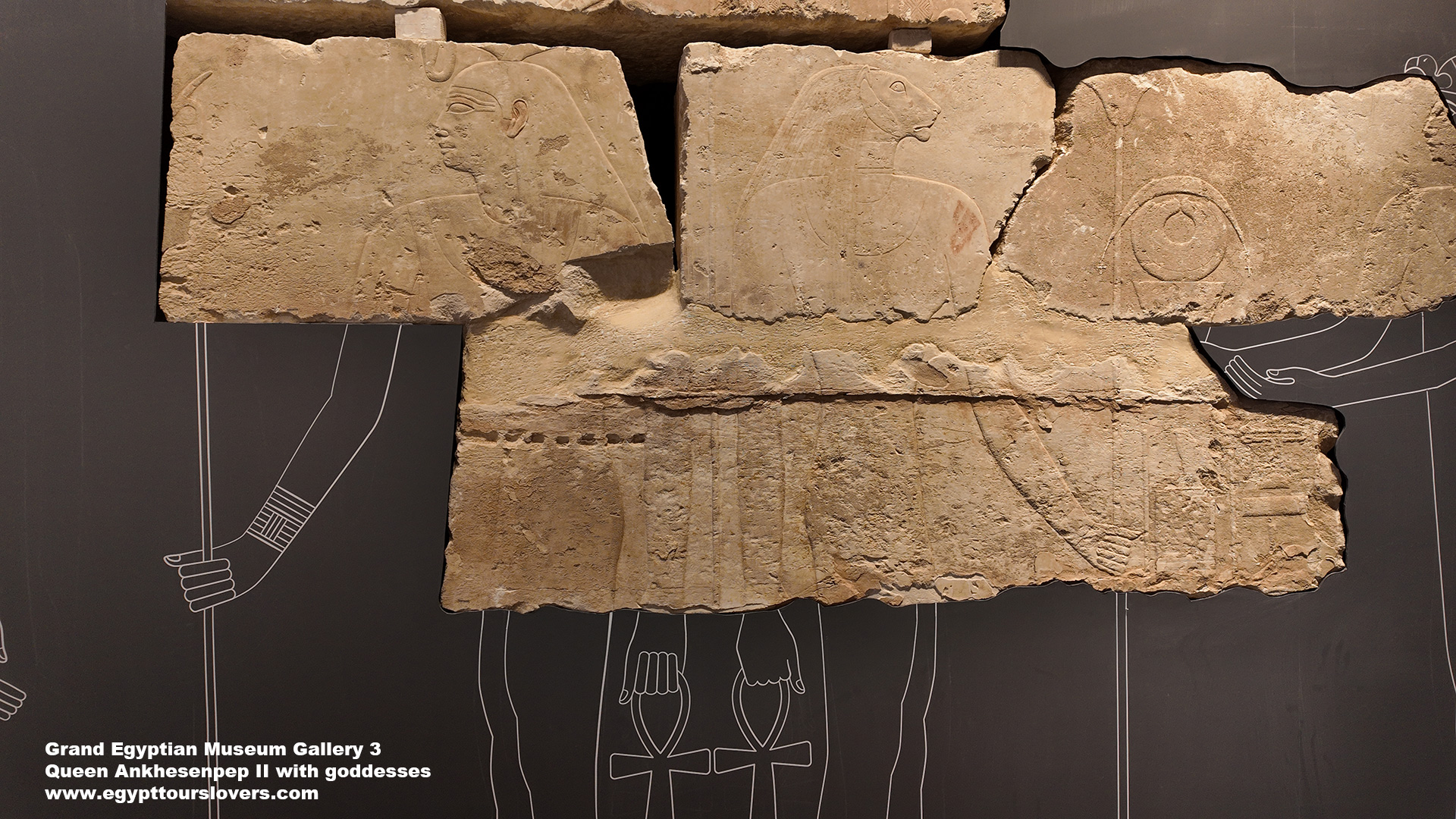
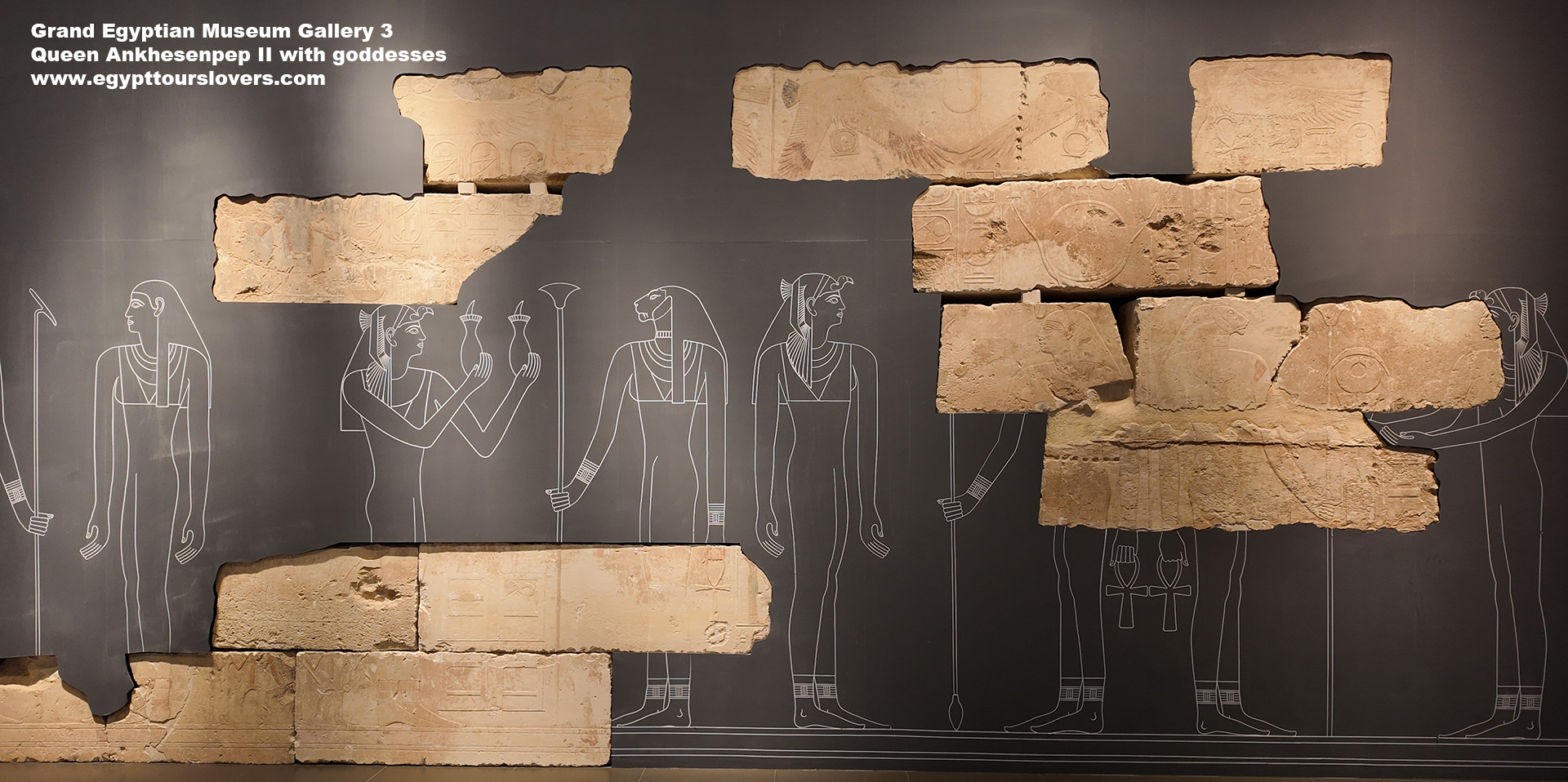
Queen Ankhesenpep II with goddesses…
Under the protection of falcons, Queen Ankhesenpep II offers ritual to the lion Bastet God.
Musical instruments in the shape of a crescent moon, along with Ankh amulets, a large necklace, and a basket.
Behind the goddess Bastet, the Goddess Hathor appears with cow horns surmounted by the sun disk, facing the queen Ankhesenpep II.
———– } ———– } ———– } ———– }
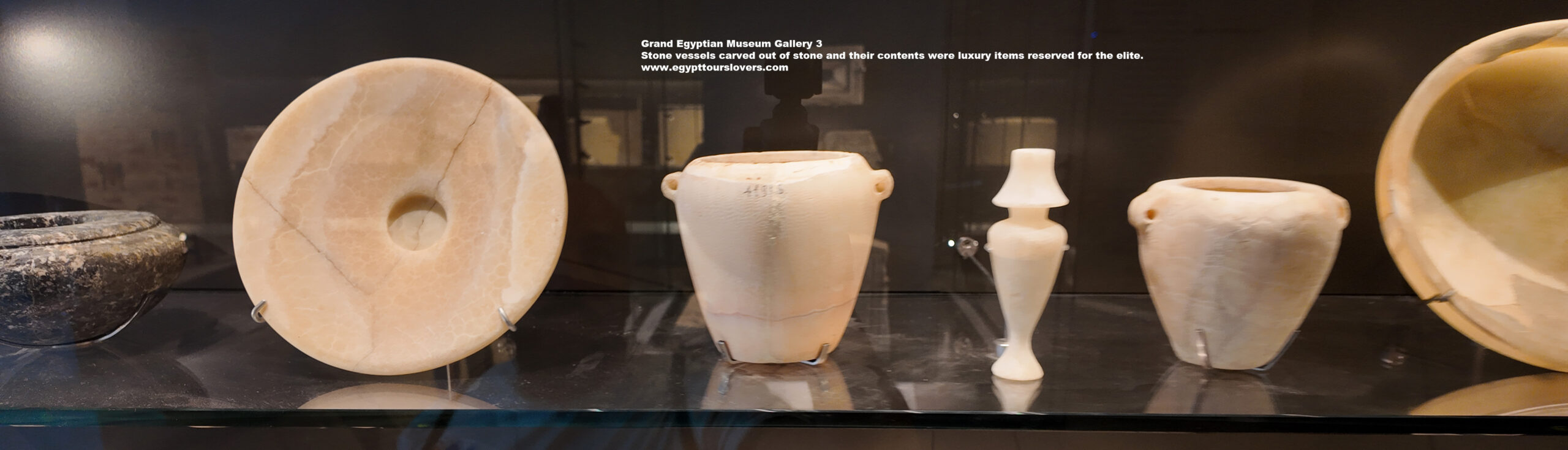
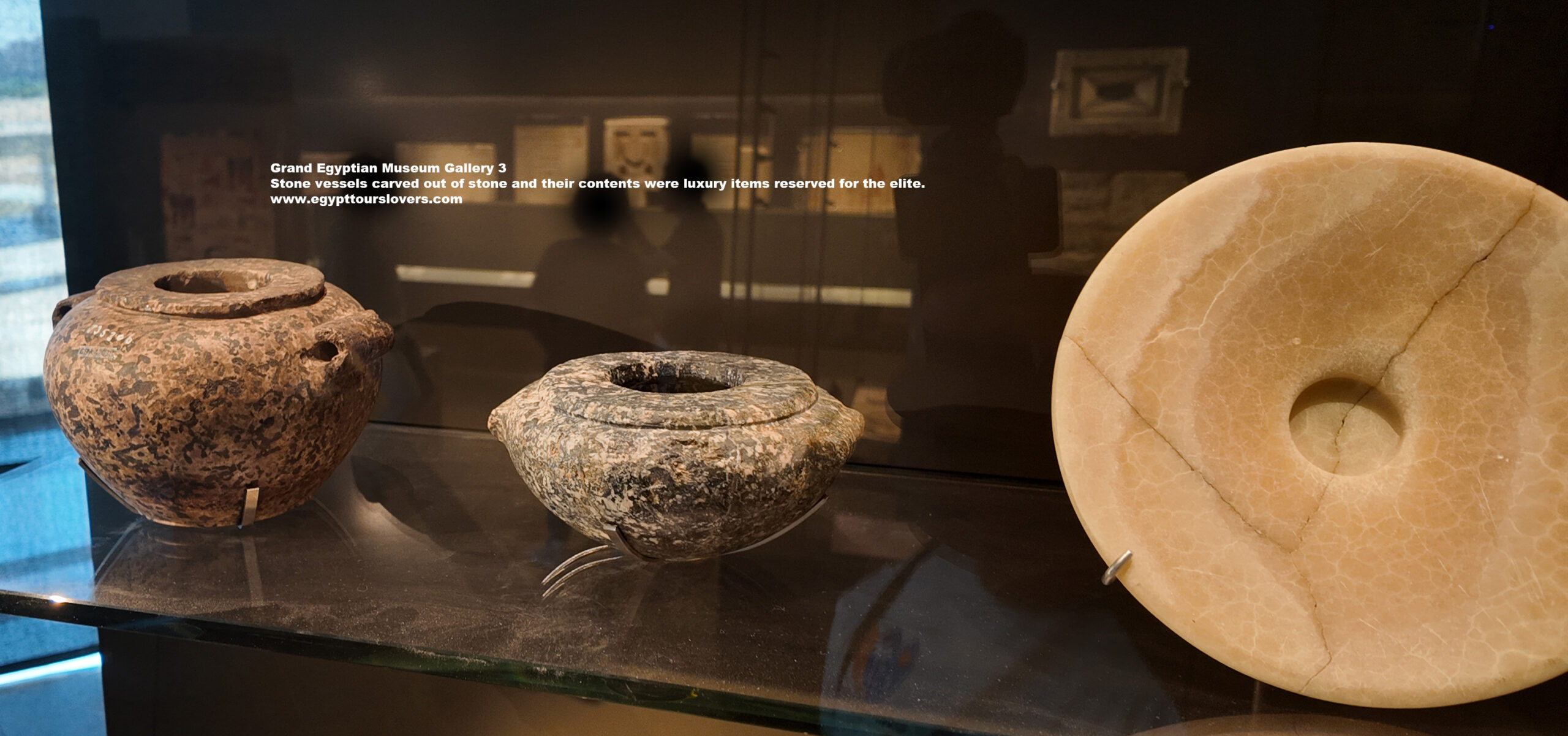
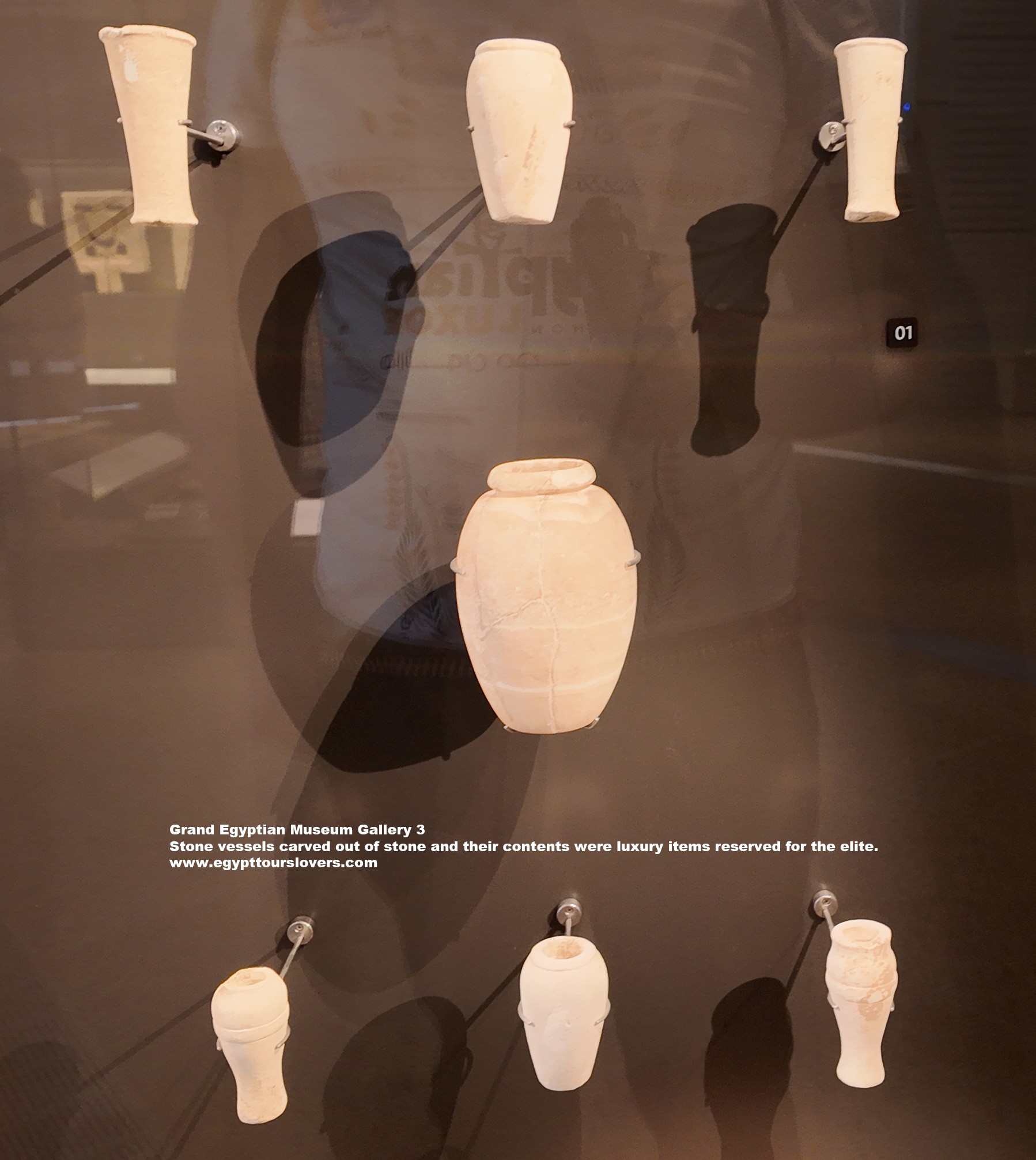
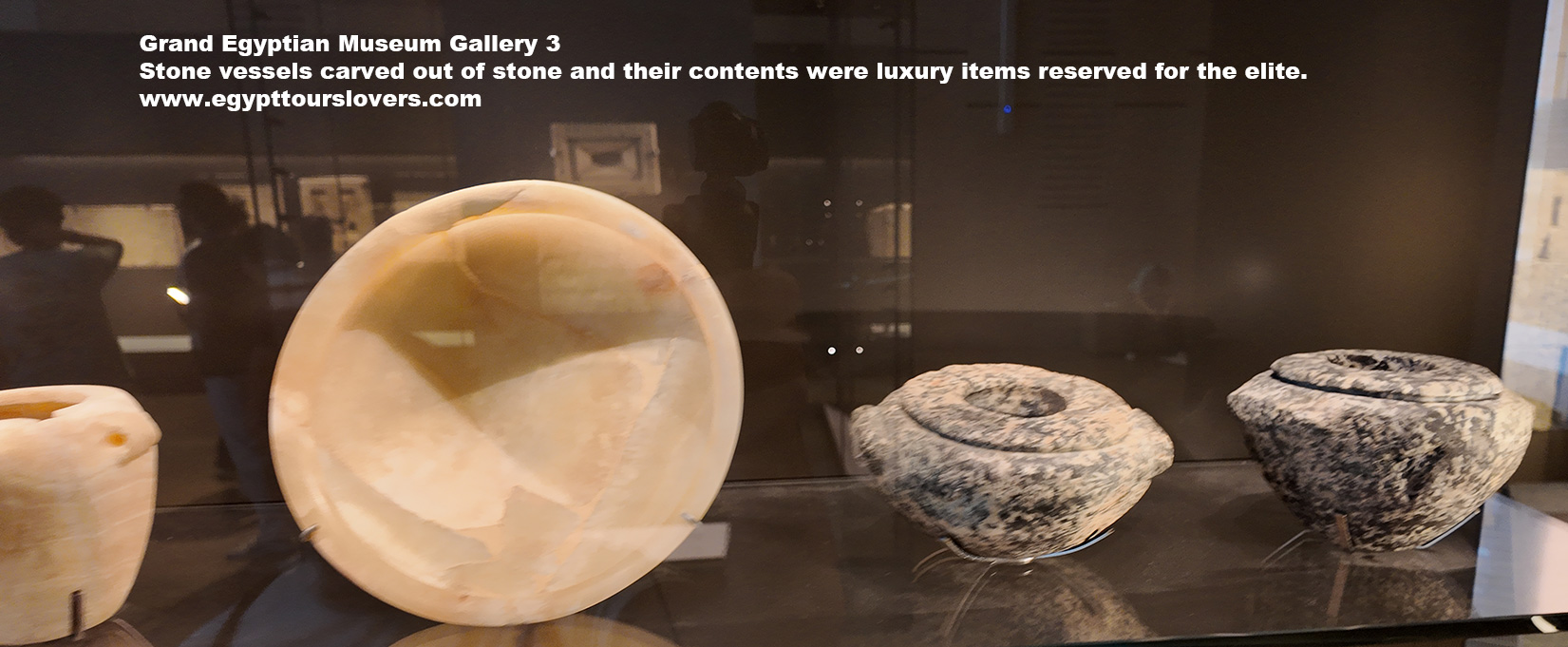
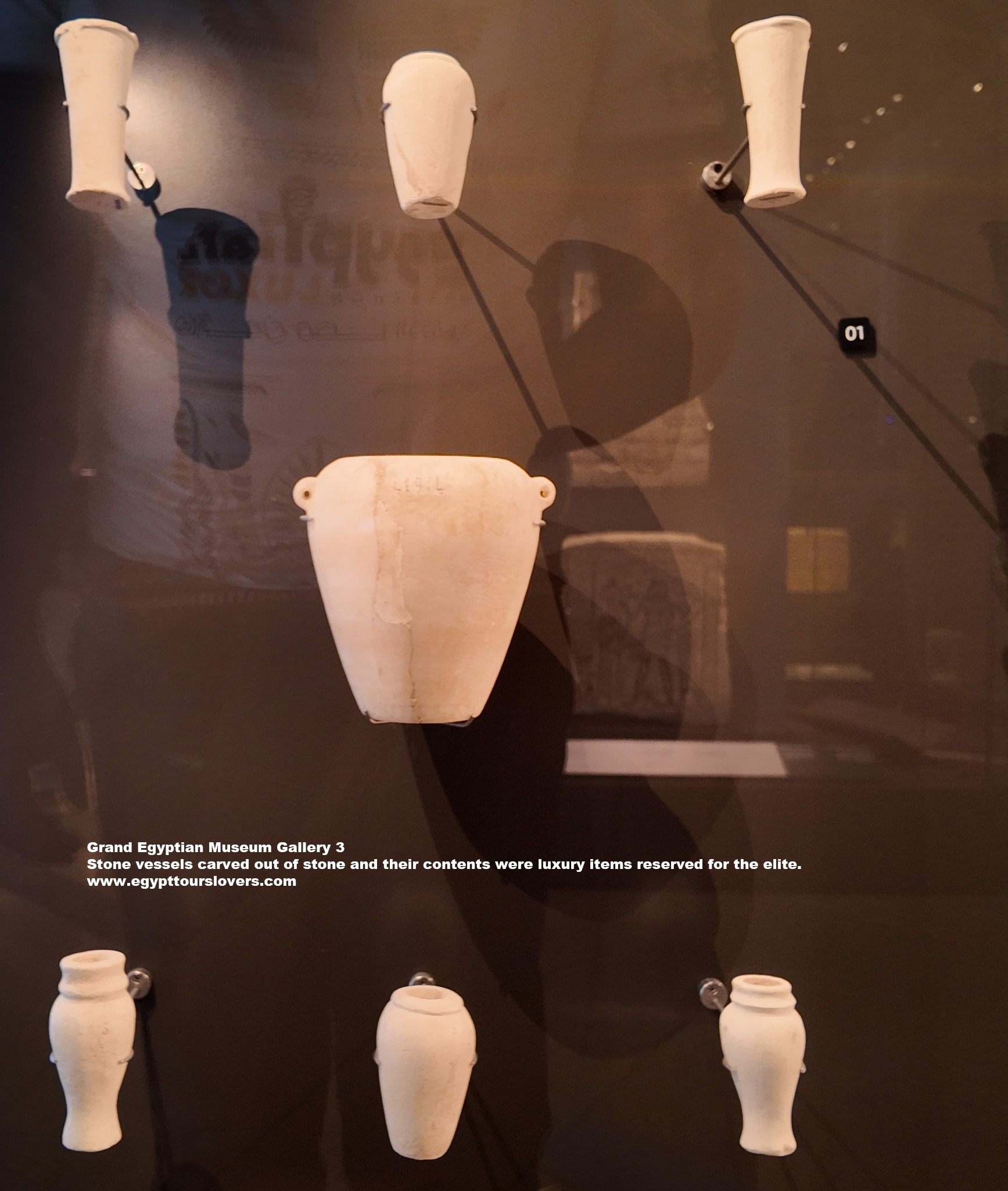
dynasty 3 – first intermediate period | Egyptian alabaster, diorite | giza, abuser, beit khallaf, dara
Stone vessels carved out of stone and their contents were luxury items reserved for the elite.
Some stone jars contained Sacred Oils needed for Burial Rituals.
———– } ———– } ———– } ———– }
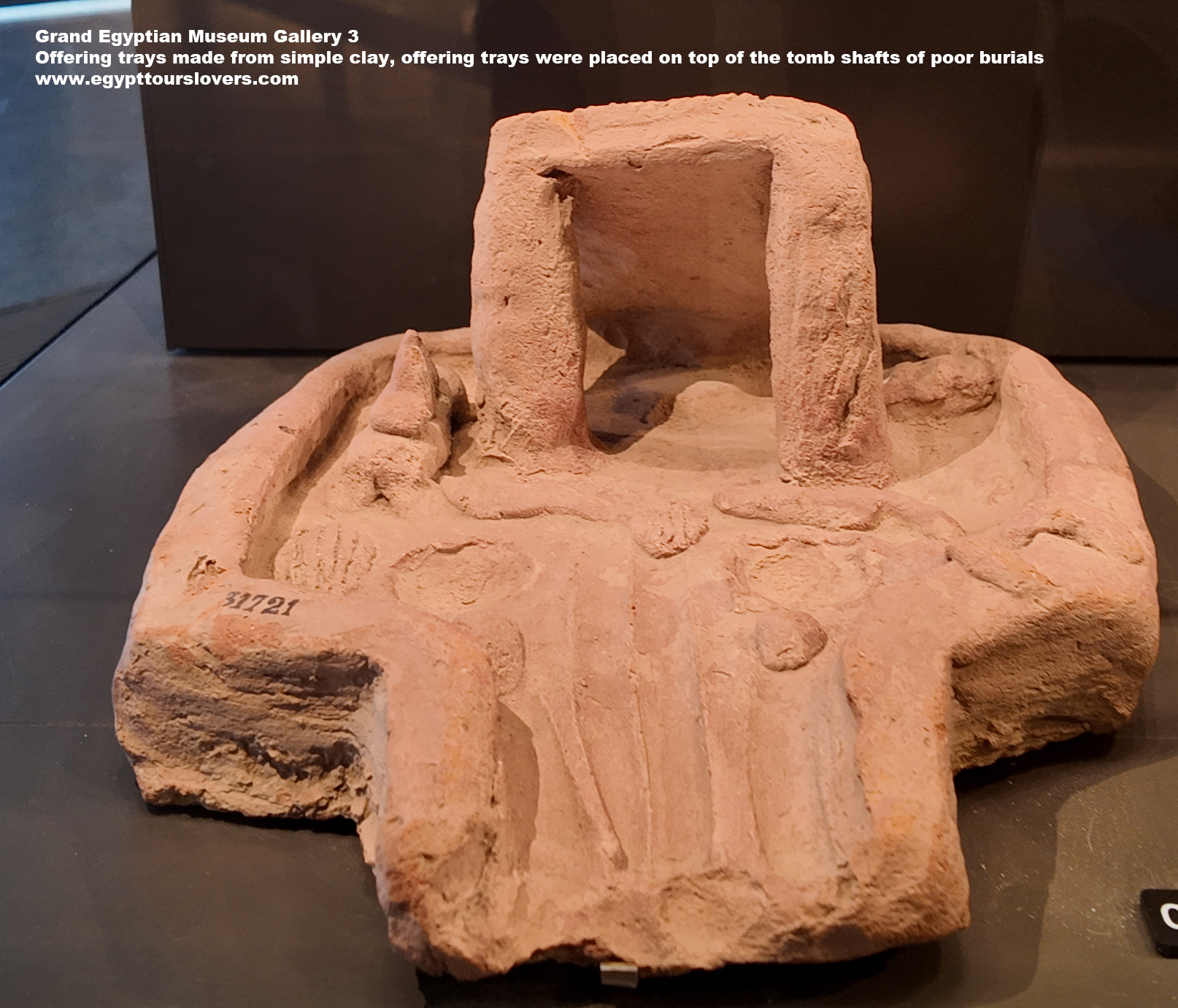
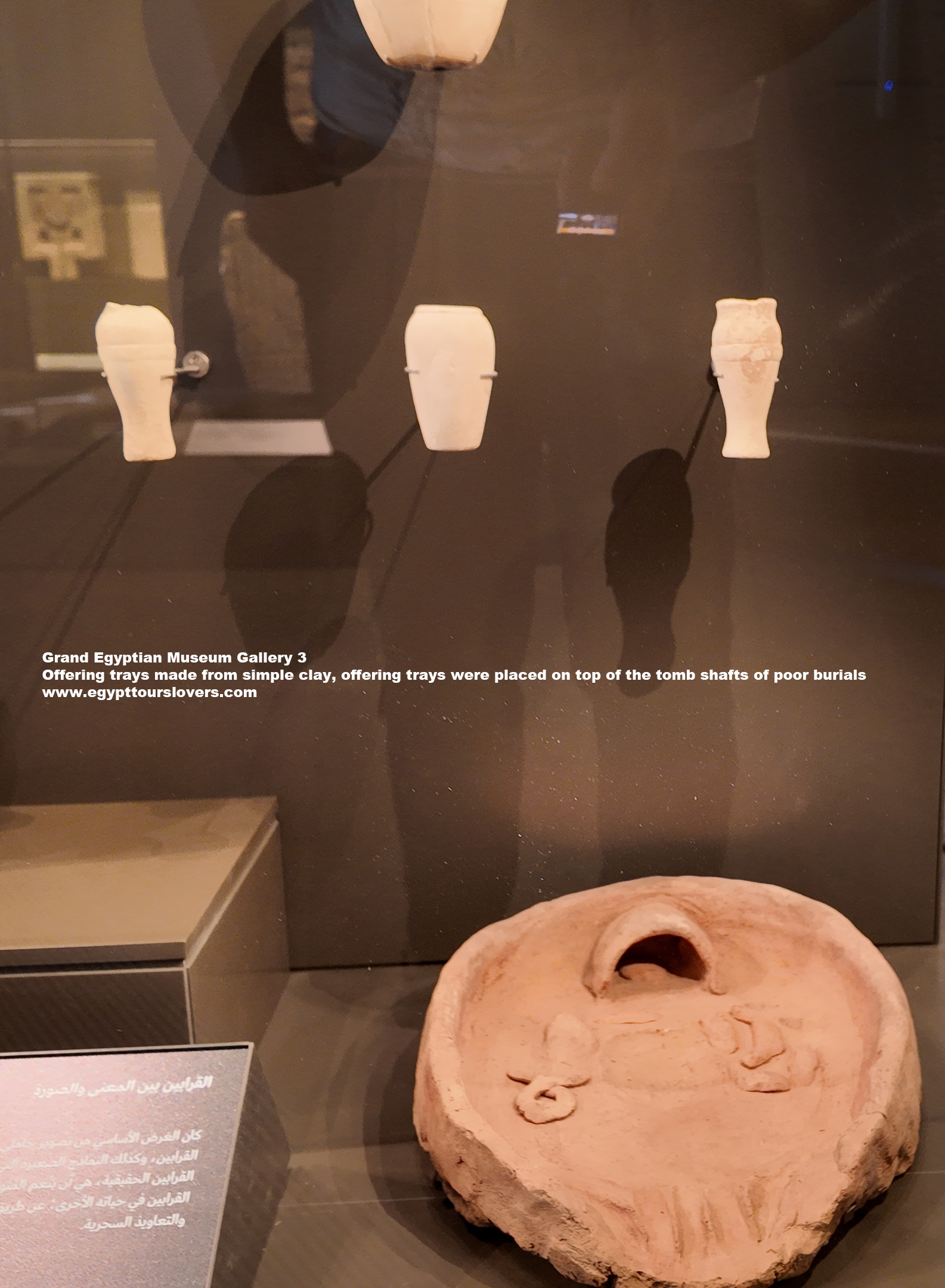
first intermediate period | pottery
Offering trays made from simple clay, offering trays were placed on top of the tomb shafts of poor burials to allow visitors to leave their offering.
Most showed tiny of bread and meat, and some shaped like walled courtyards and houses or shrines.
———– } ———– } ———– } ———– }
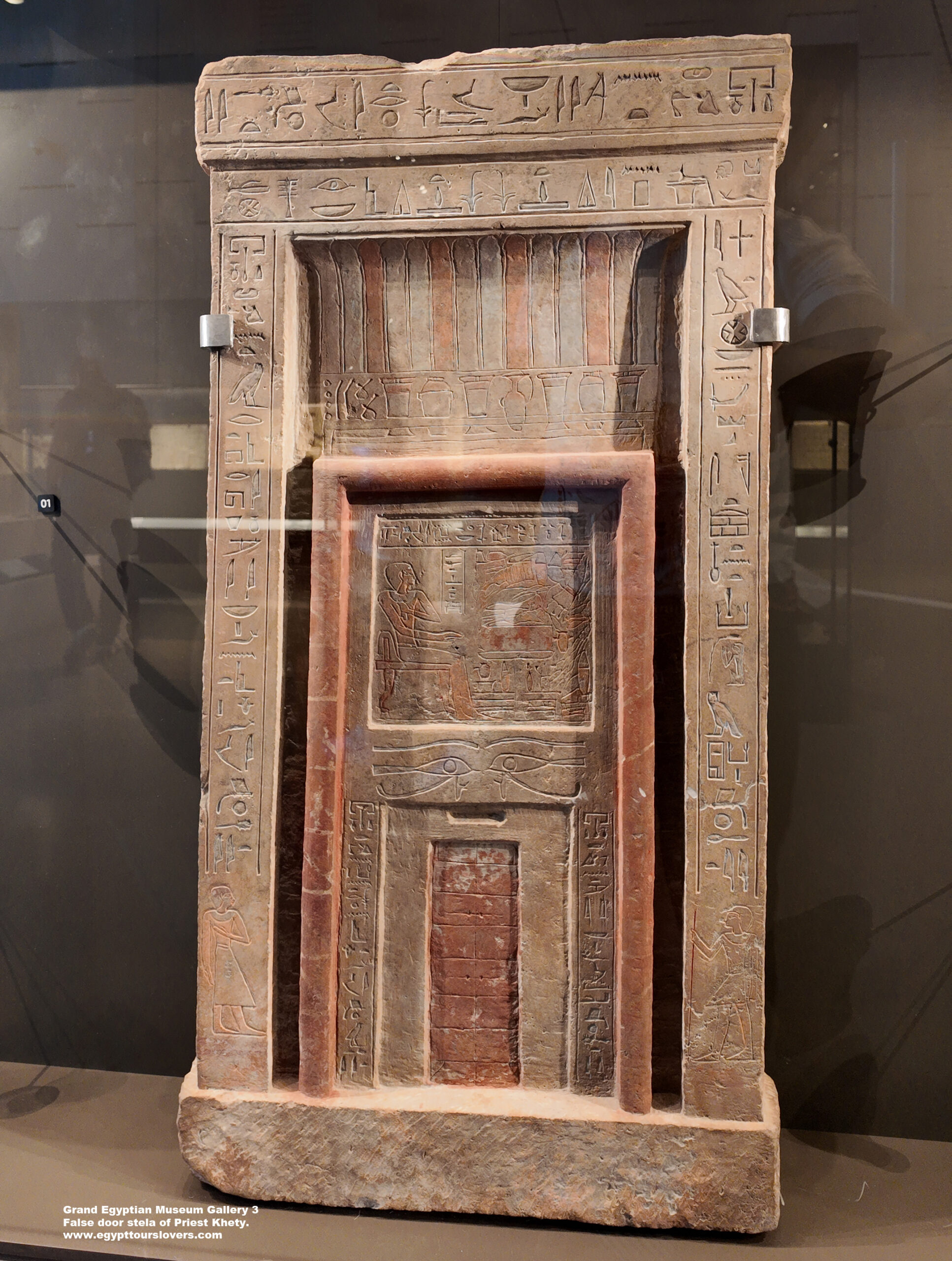
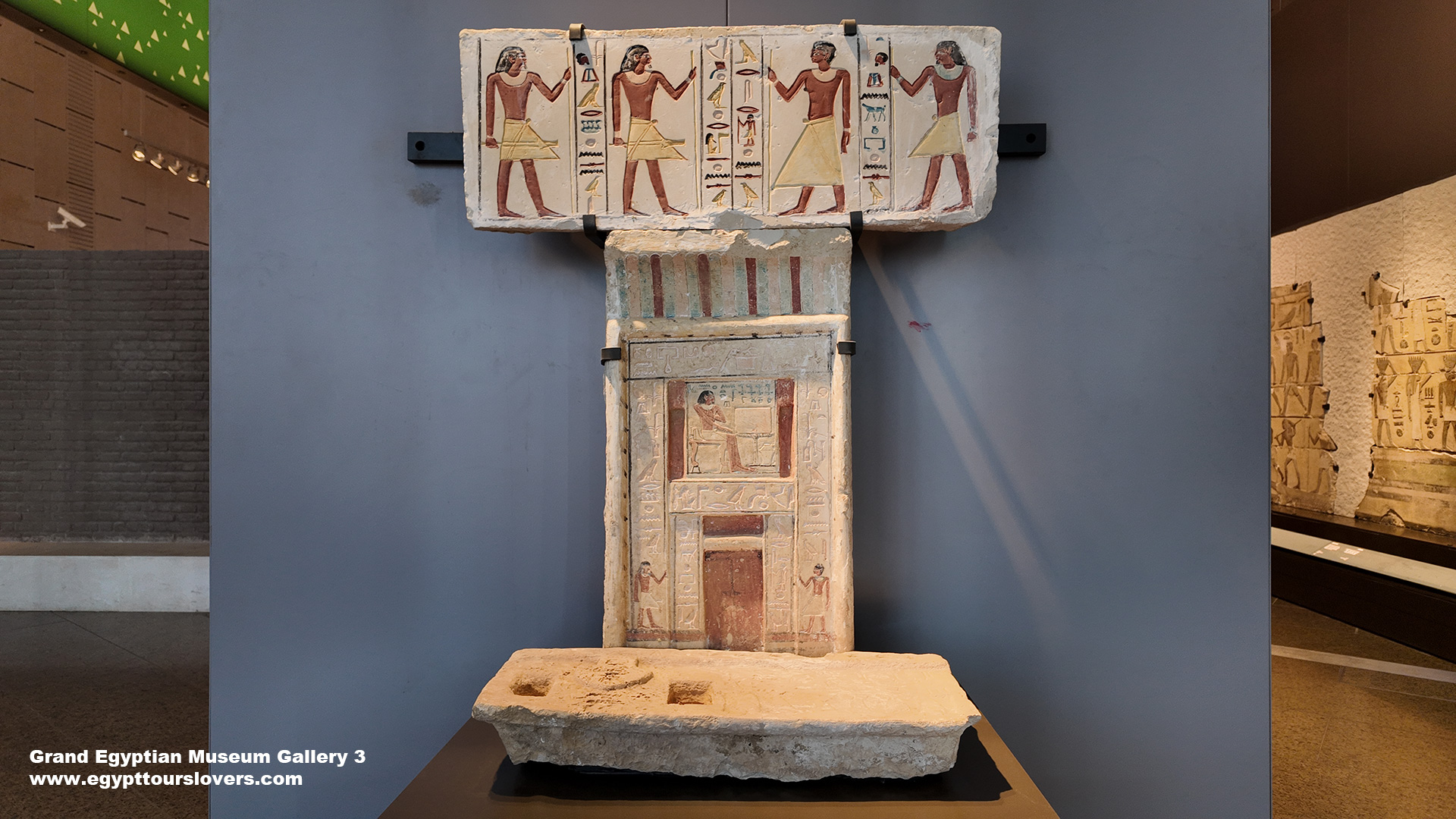
dynasty 9-10 | limestone | herakleoplis magna
False door stela of Priest Khety.
The jars at the top of this stela contained 7 sacred oils needed to funerary rituals.
———– } ———– } ———– } ———– }
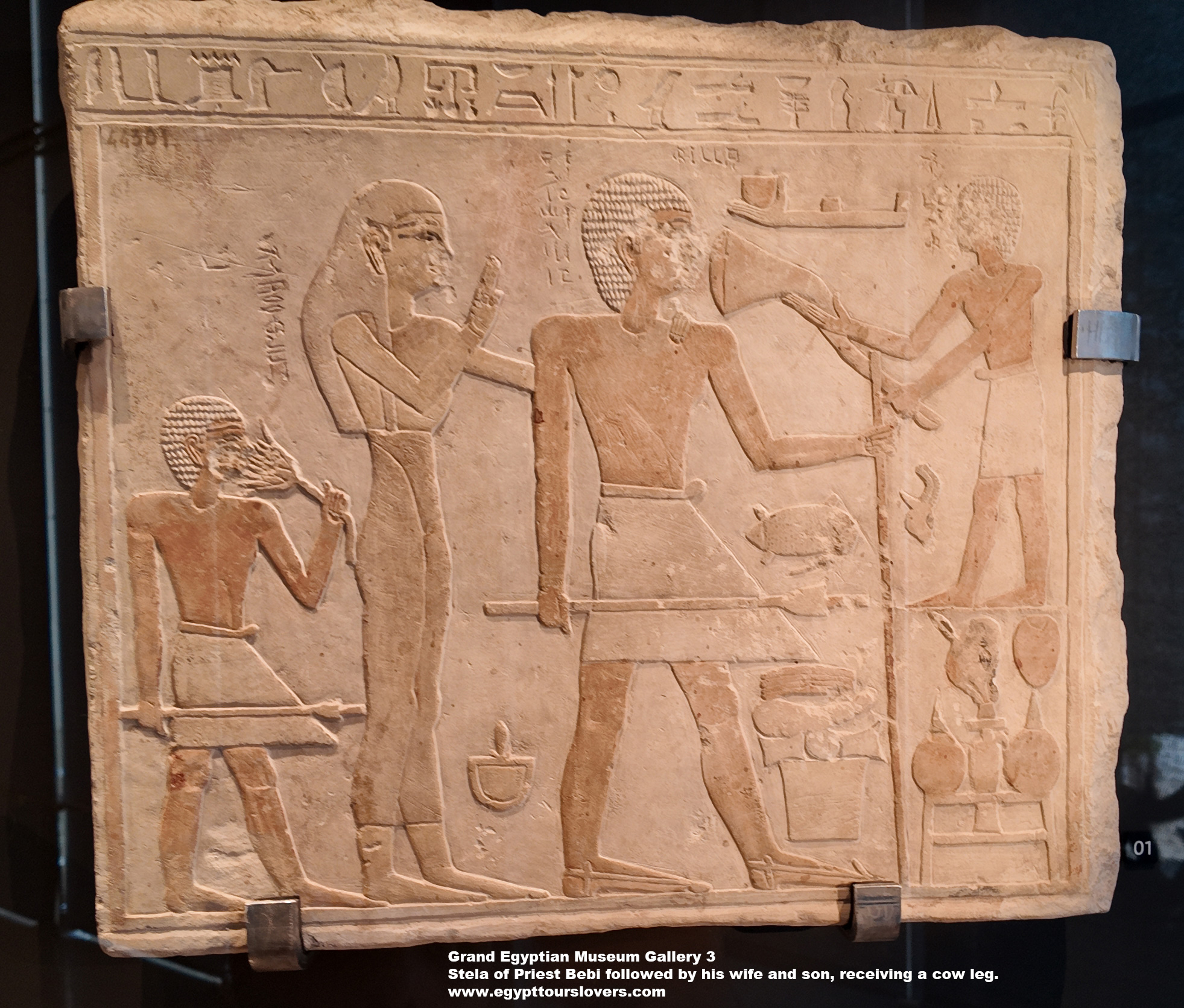
first intermediate period | Limstone | Dendera
Stela of Priest Bebi followed by his wife and son, receiving a cow leg.
———– } ———– } ———– } ———– }
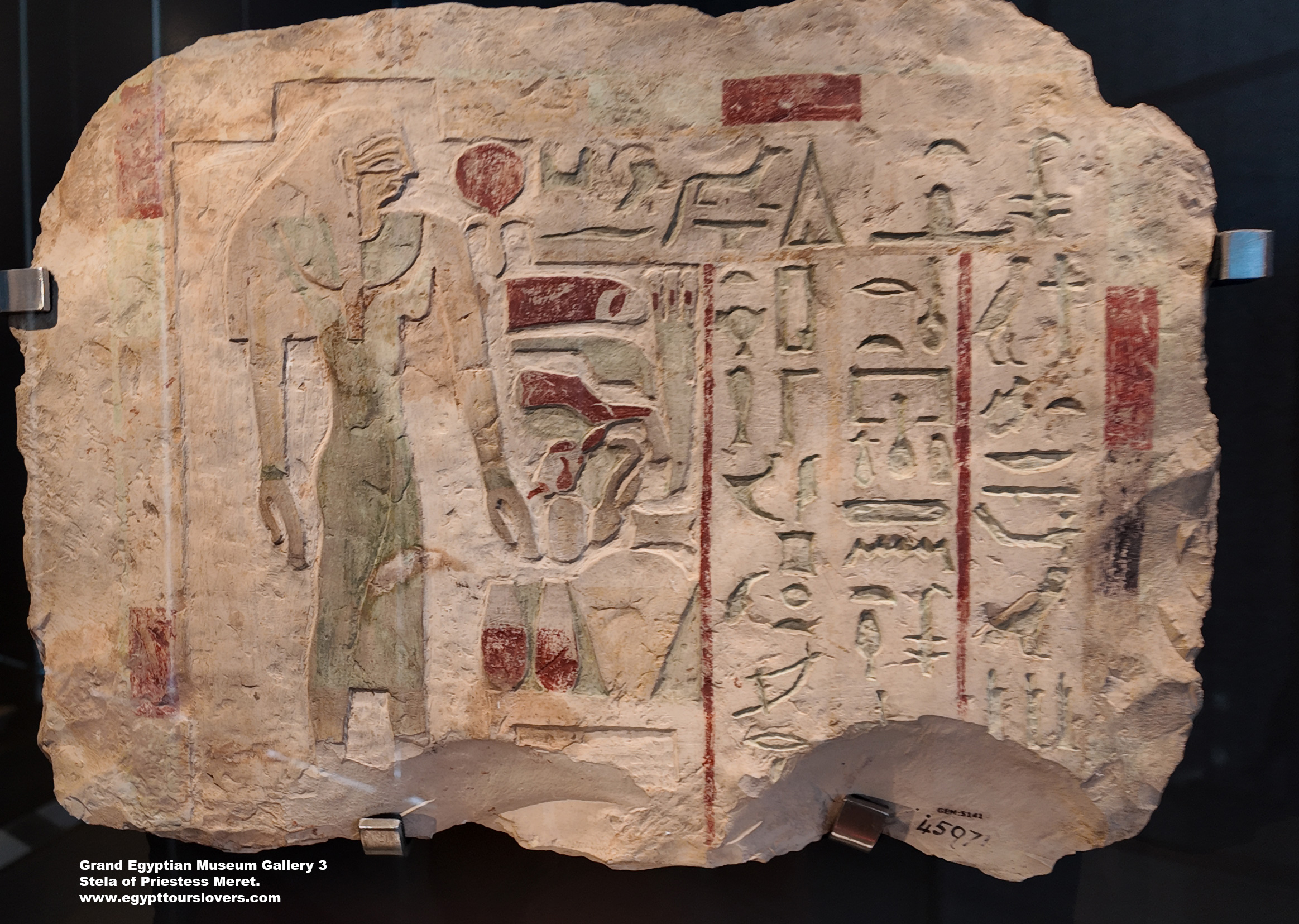
dynasty 3 – first intermediate period | limestone
Stela of Priestess Meret.
Royal ornament and priestess of Hathor meret is shown receiving offerings, including a copper mirror and pottery jars.
———– } ———– } ———– } ———– }
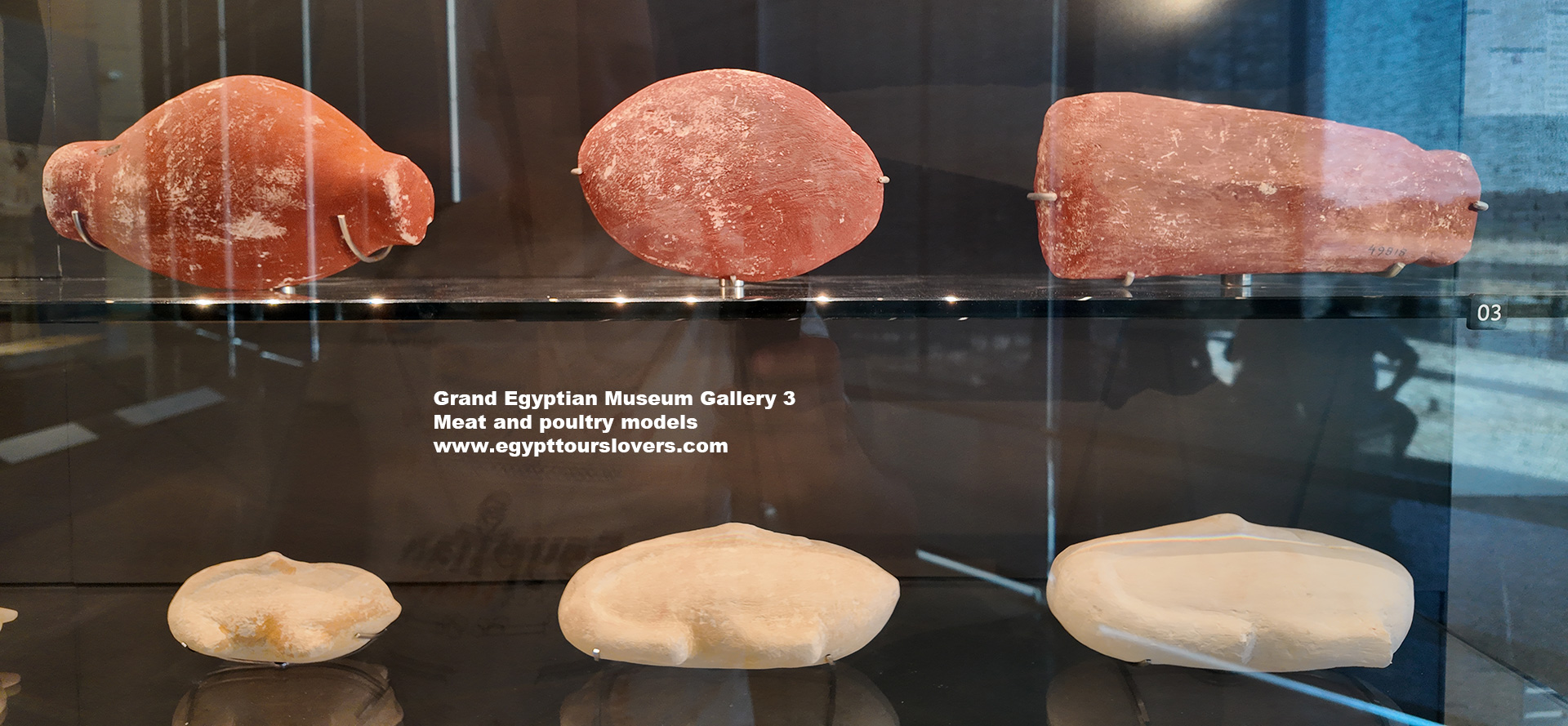
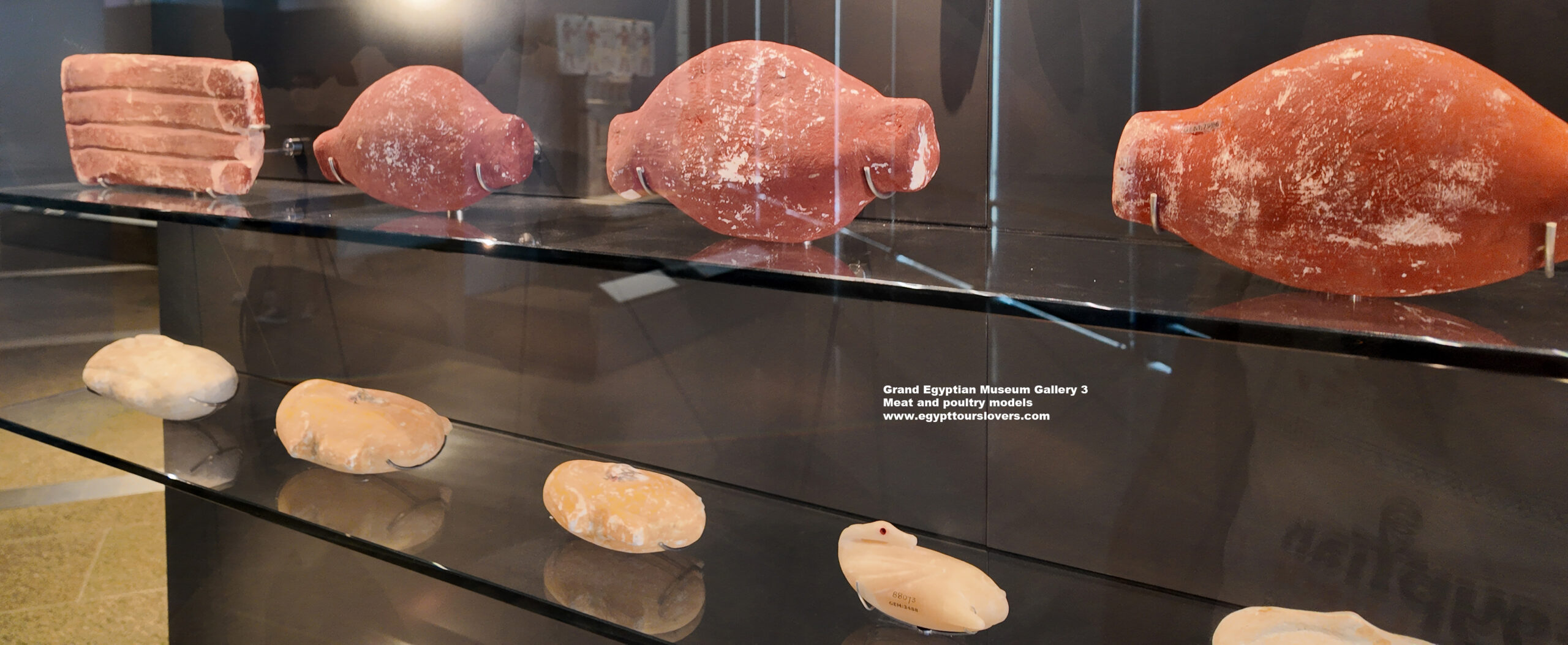
dynasty 6 – first intermediate period | limestone, Egyptian alabaster | Saqqara, dara
Meat and poultry models
In addition to real meat and duck, the royal family and high officials were sometimes buried with imperishable stone models.
They were carved and often painted to imitate actual food.
———– } ———– } ———– } ———– }
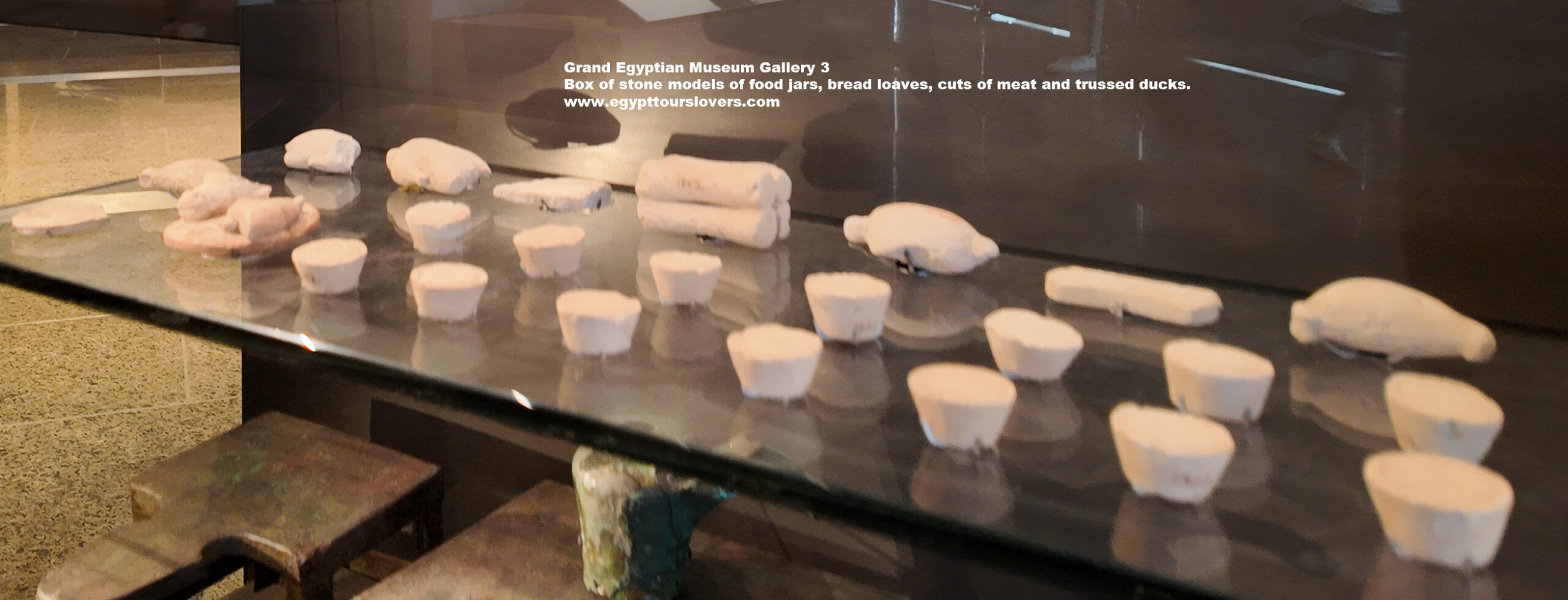
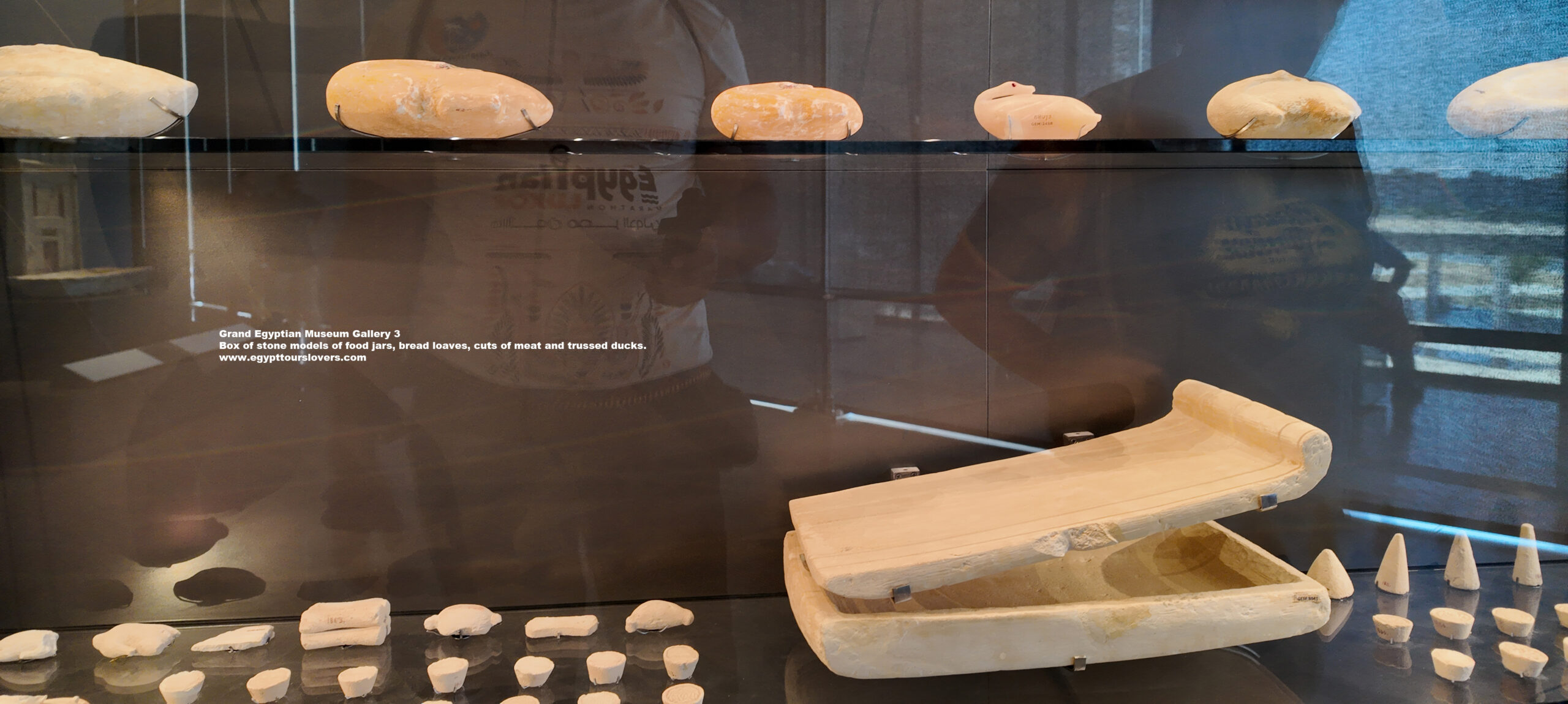
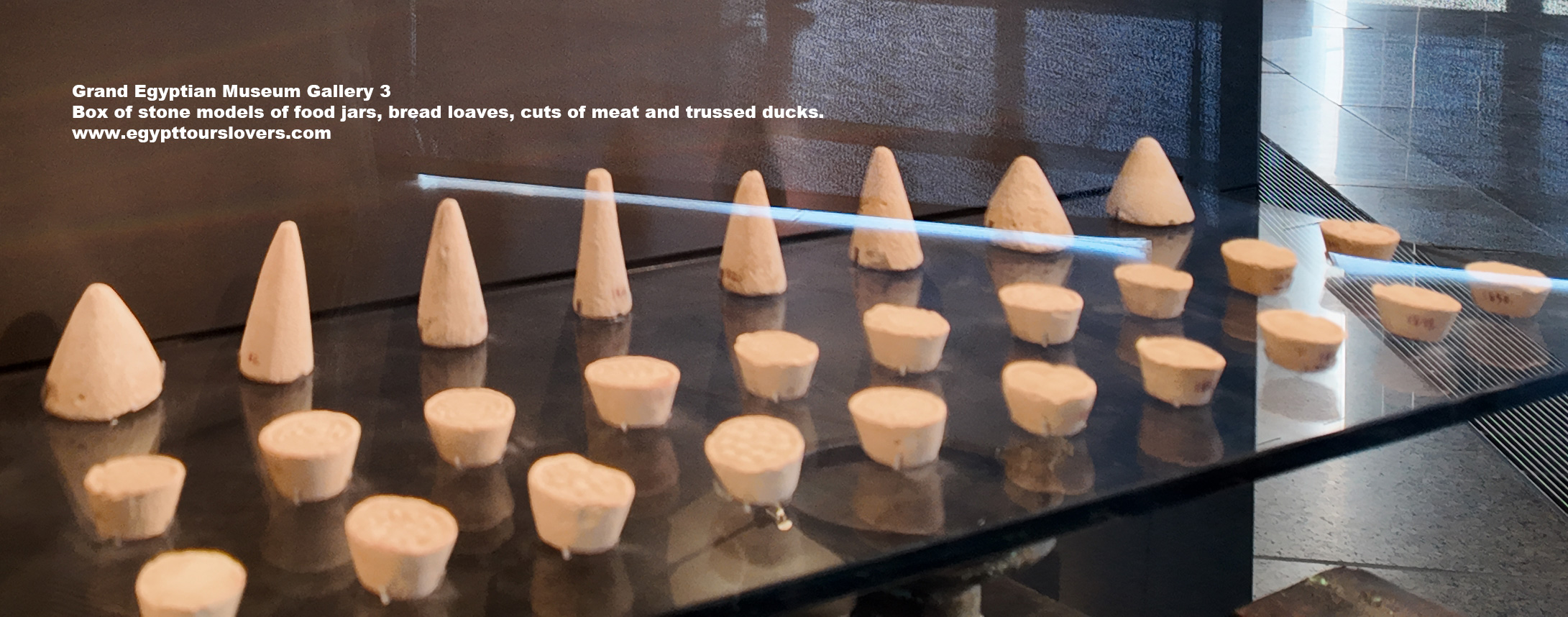
dynasty 4-6 | limestone | giza
Box of stone models of food jars, bread loaves, cuts of meat and trussed ducks.
———– } ———– } ———– } ———– }
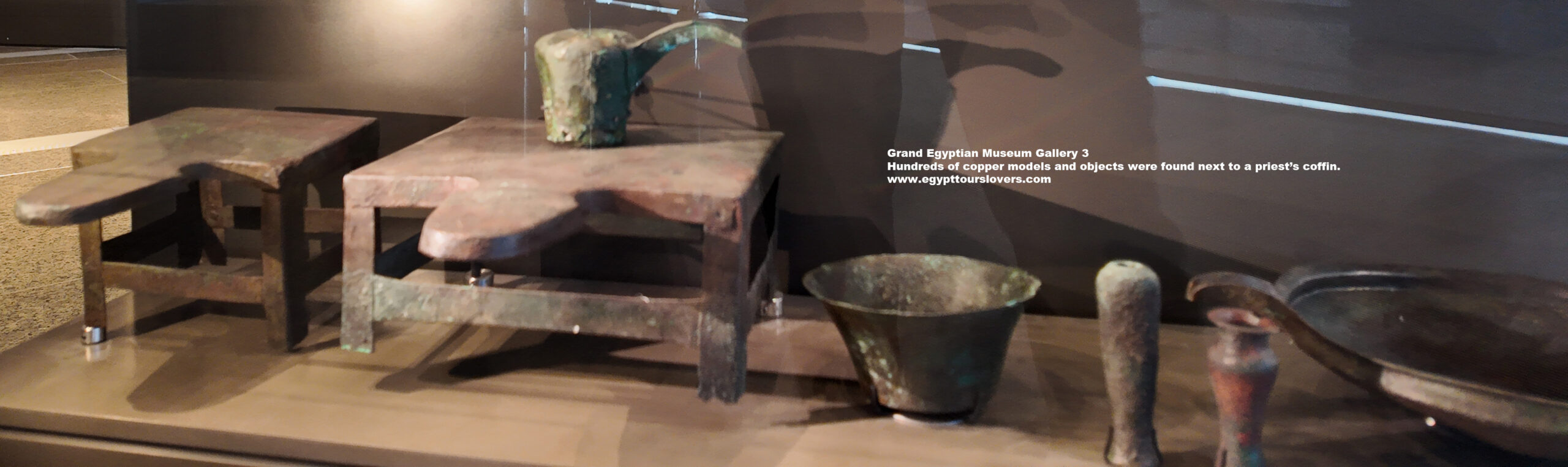
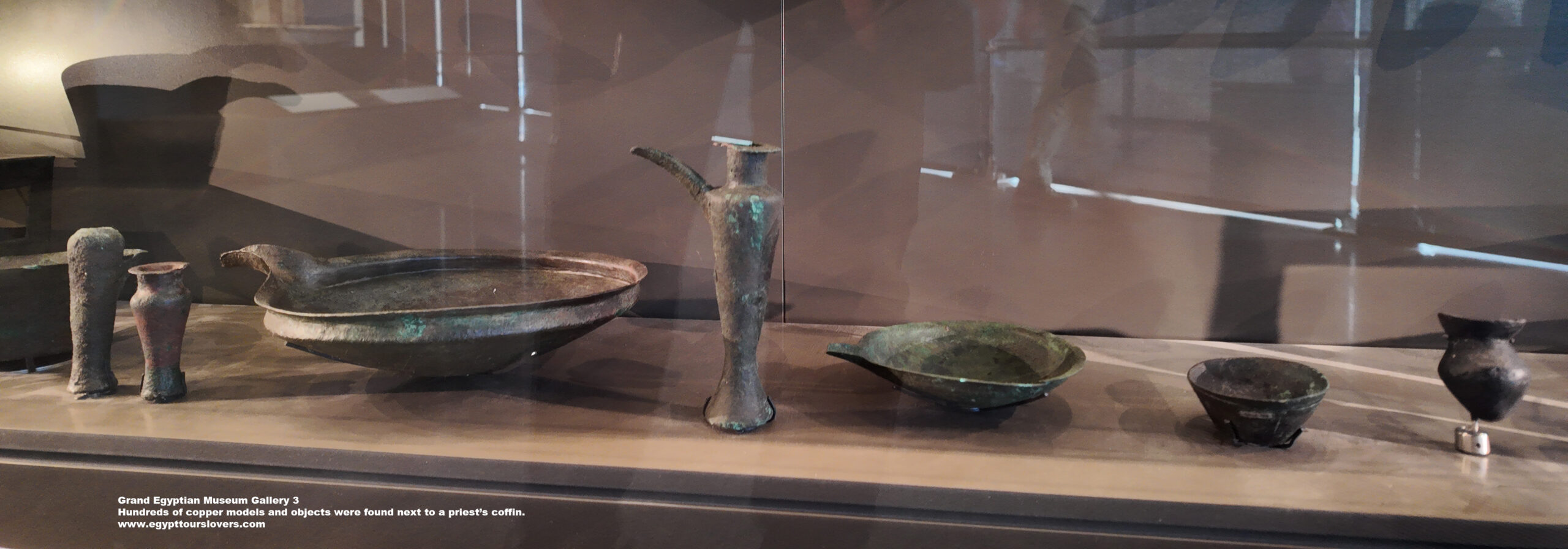
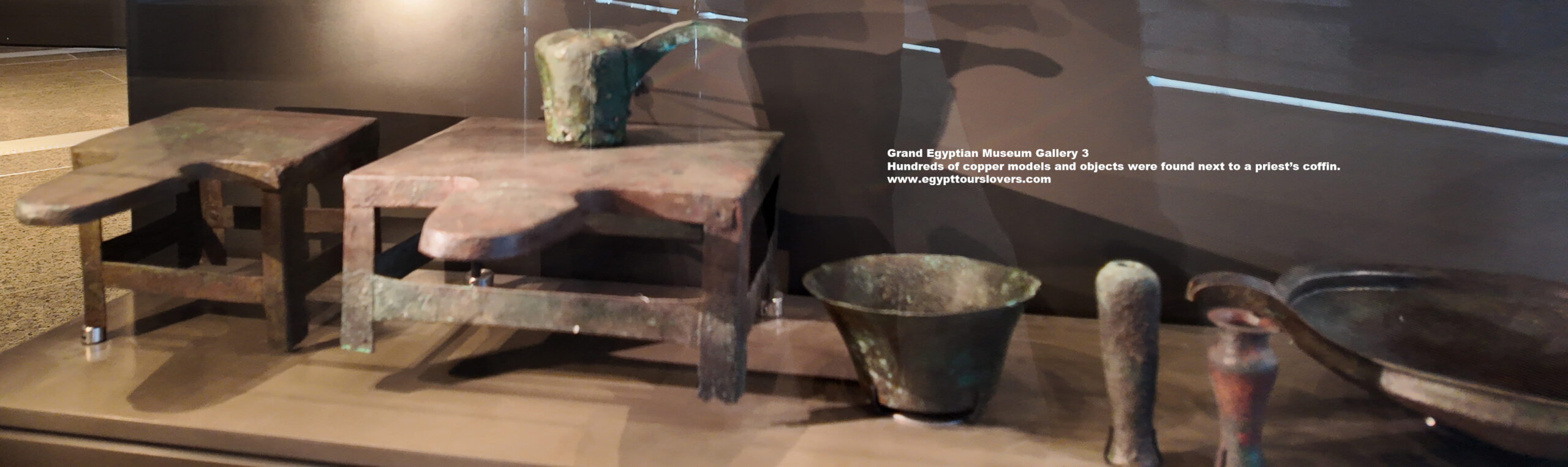
dynasty 6 | copper | giza
Hundreds of copper models and objects were found next to a priest’s coffin.
———– } ———– } ———– } ———– }
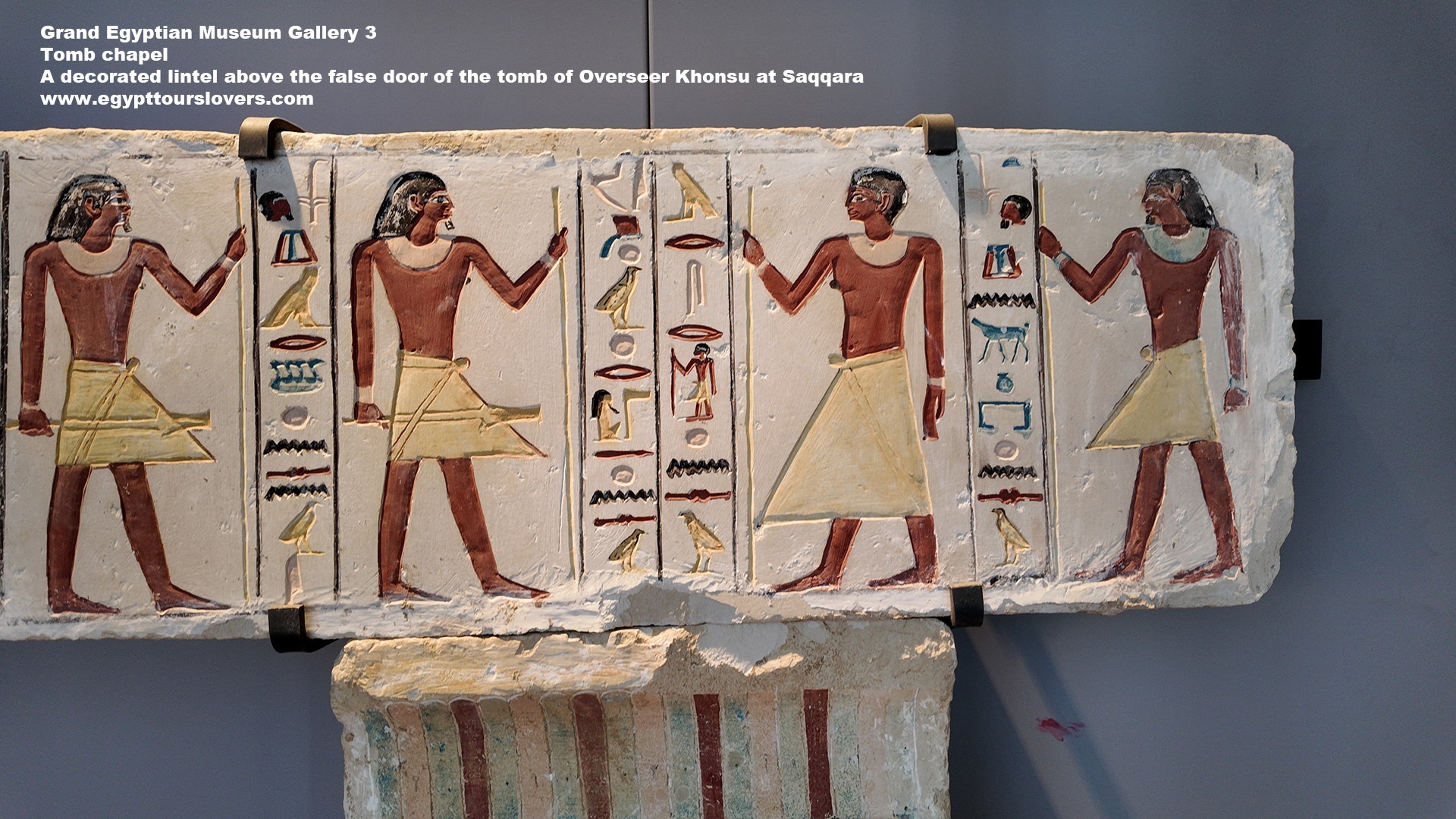
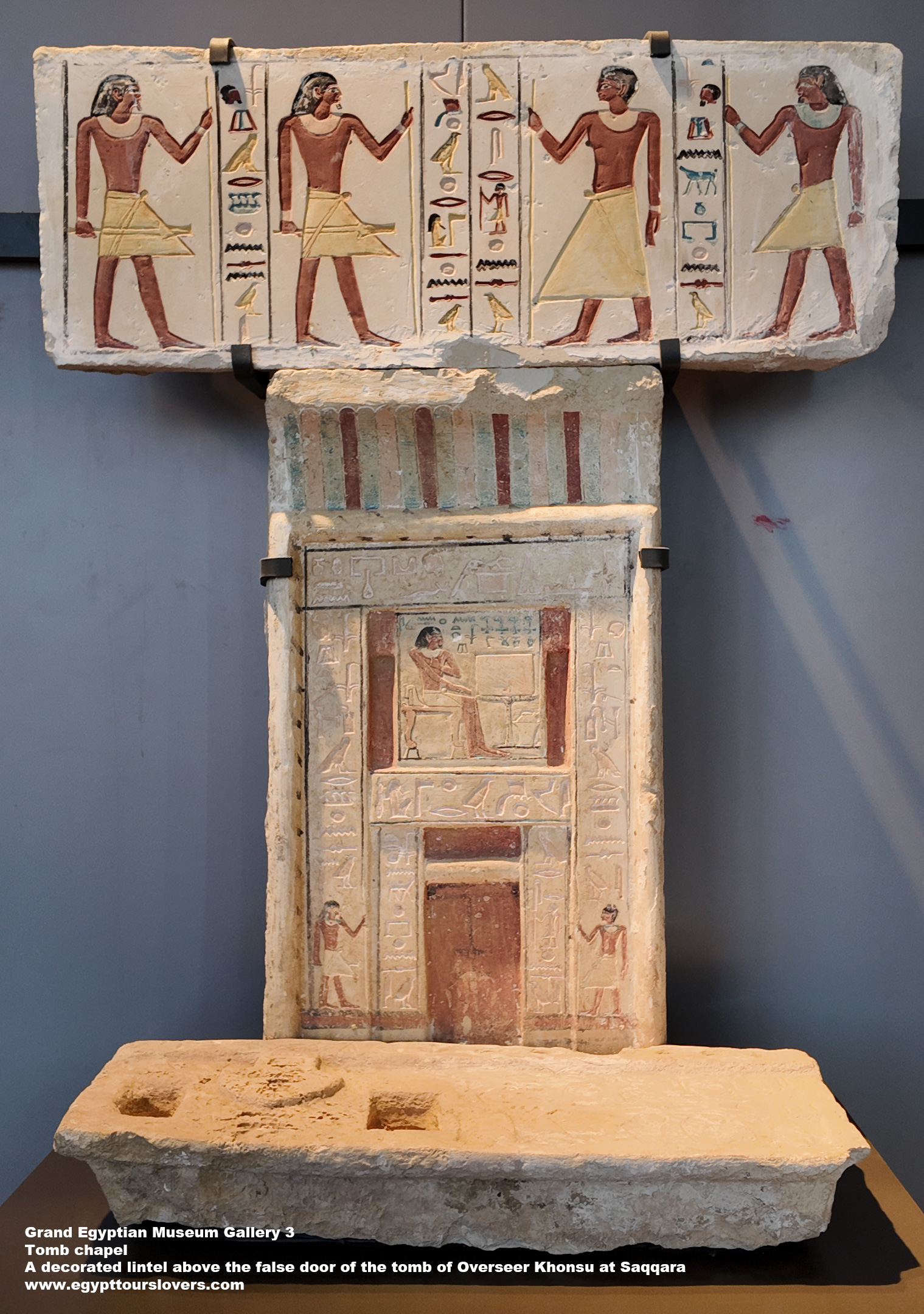
first intermediate period | limestone | Saqqara
Tomb chapel
A decorated lintel above the false door of the tomb of Overseer Khonsu at Saqqara.
Jobs: Overseer of officials, second only to the king.
The offering table included two basins and compartments for the seven sacred oils.
———– } ———– } ———– } ———– }
dynasty 4 | limestone | Saqqara
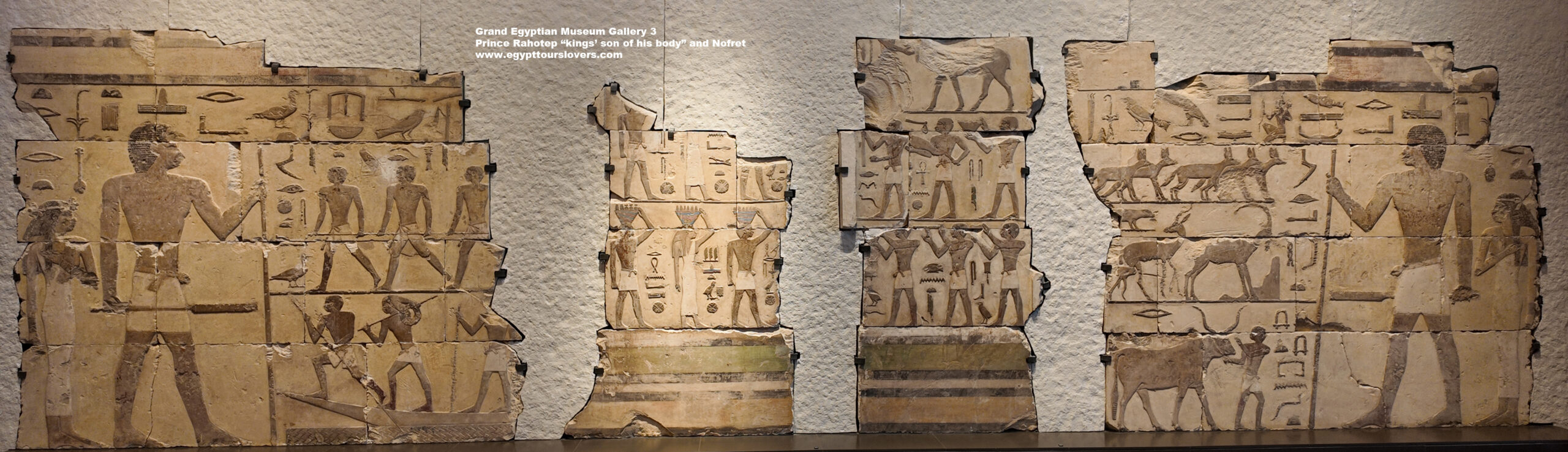
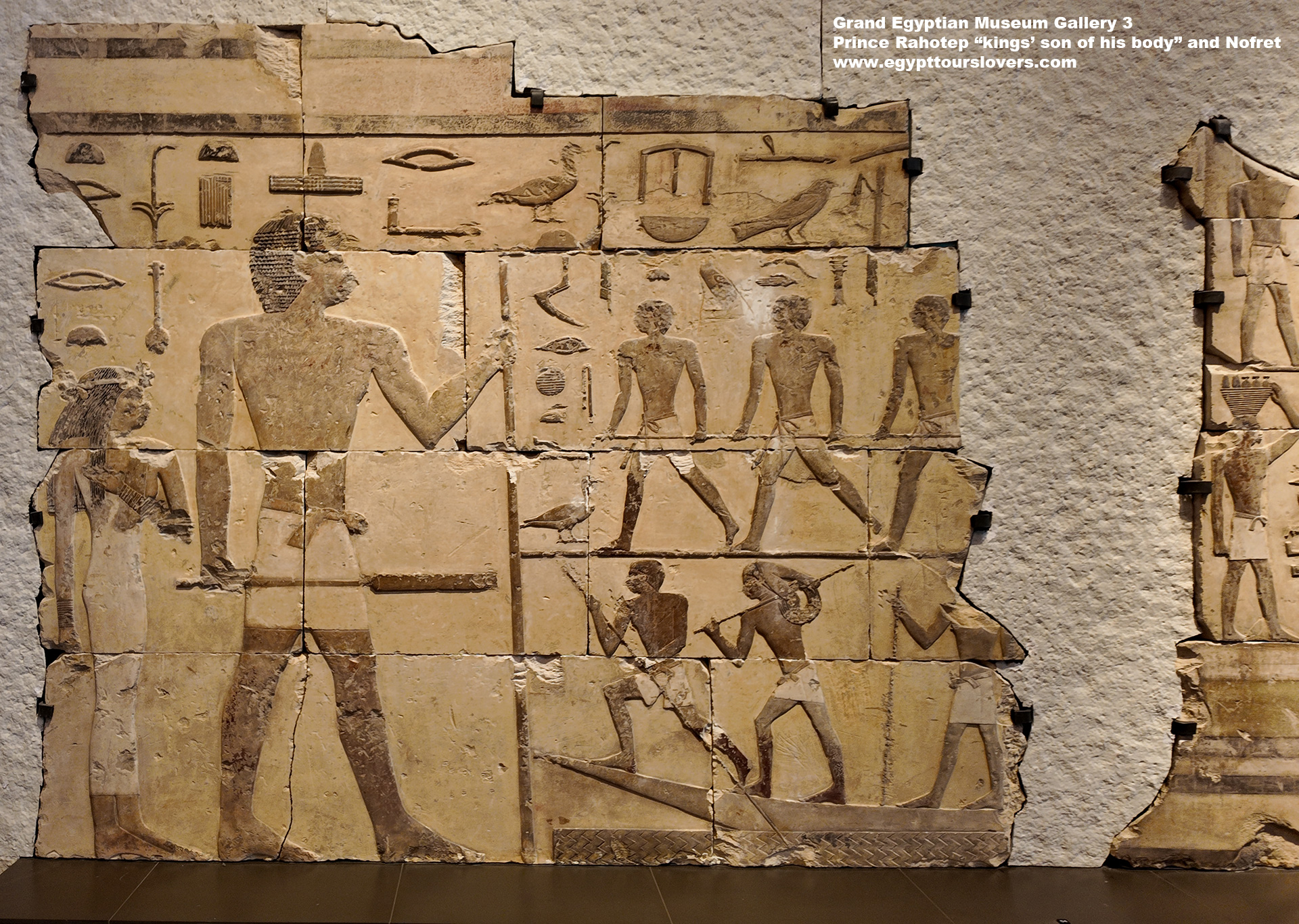
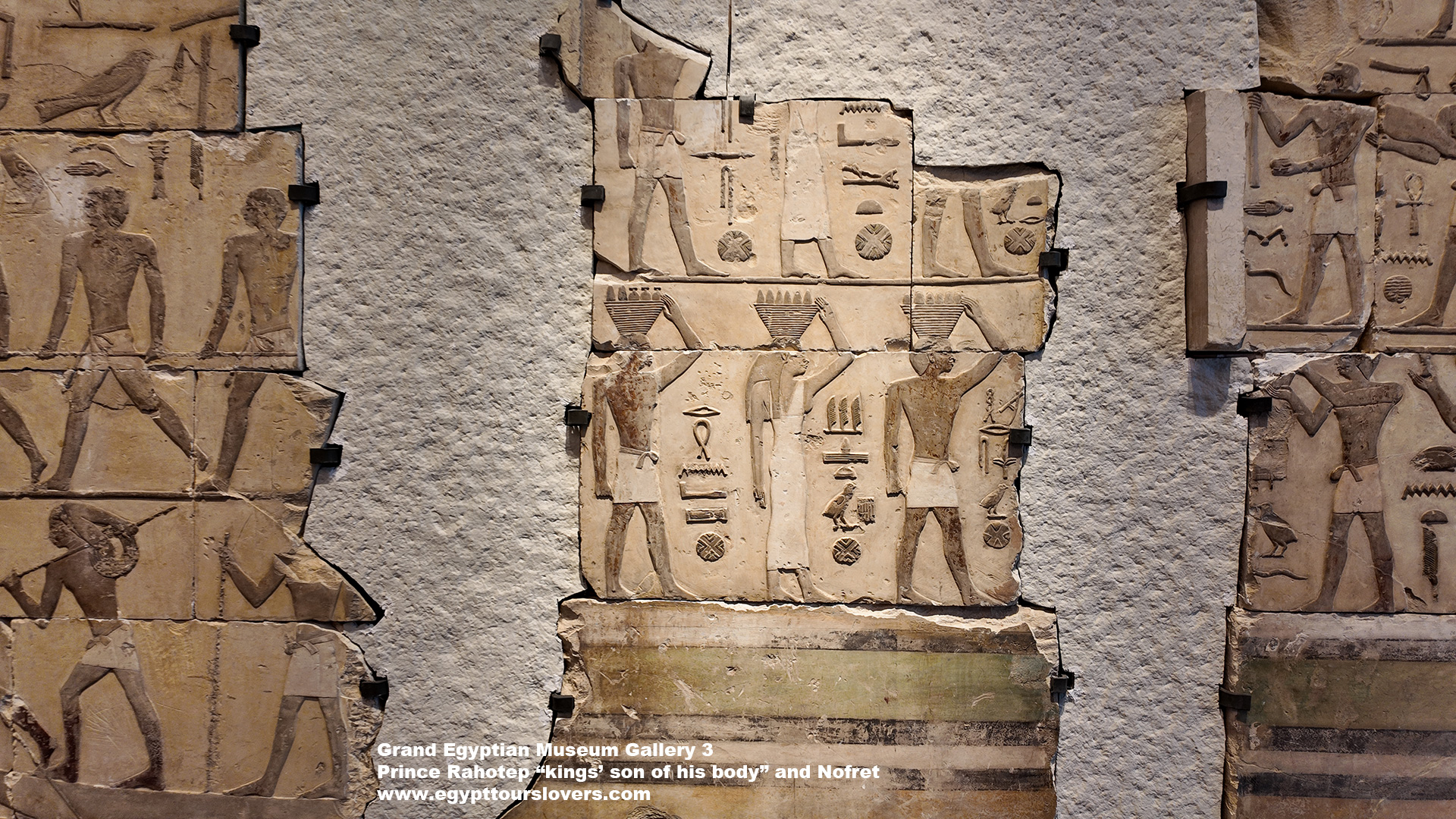
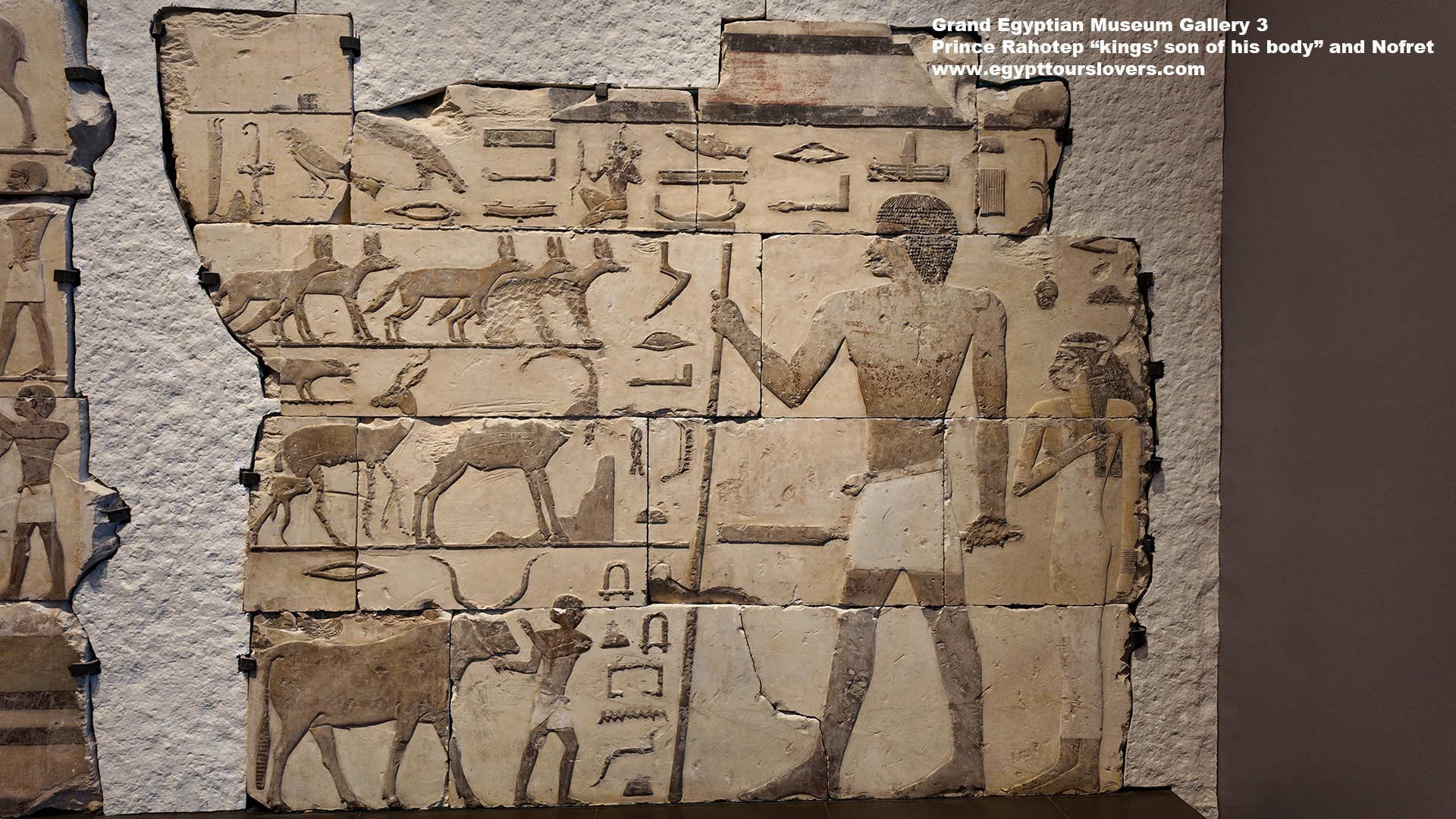
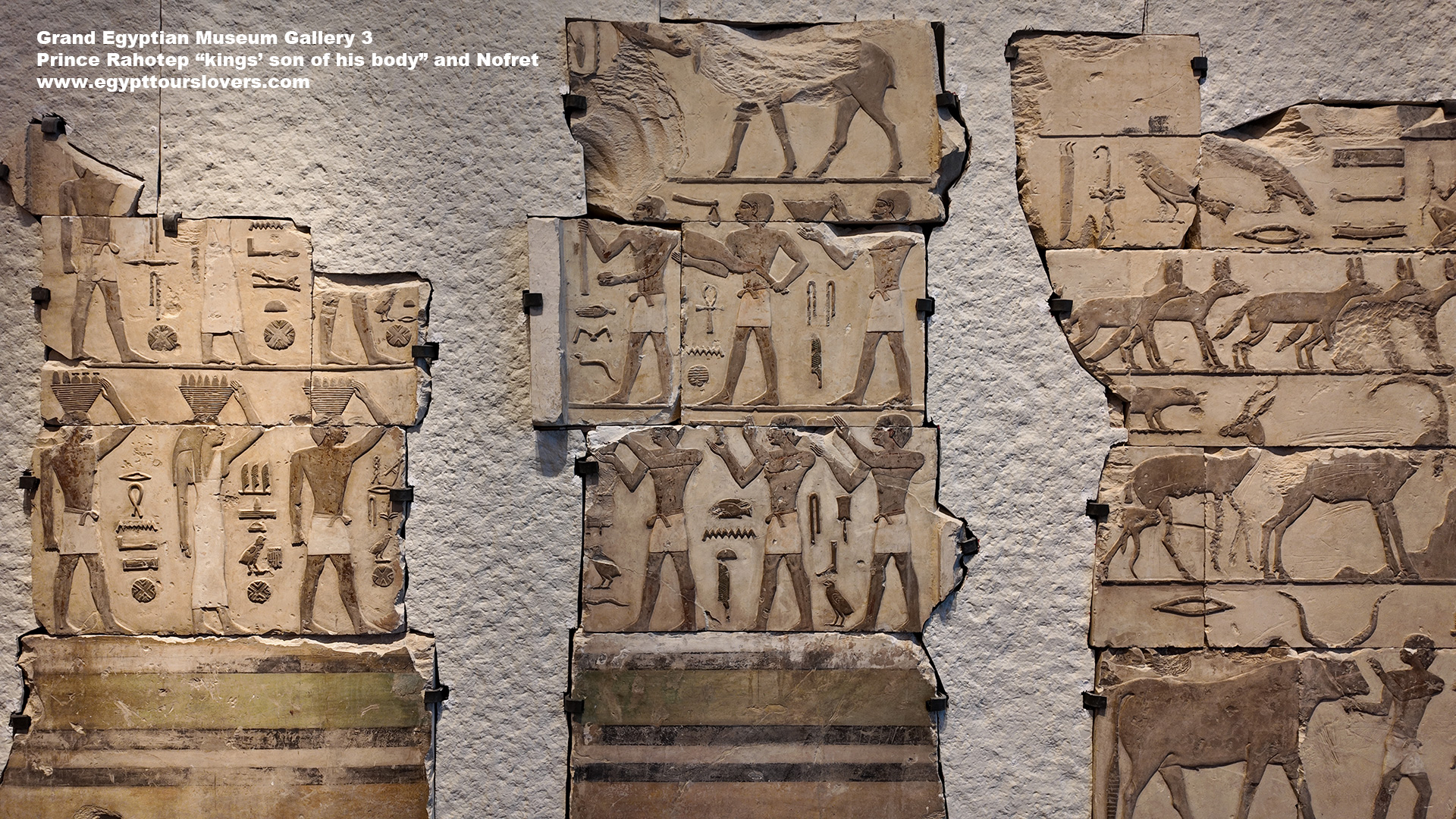
Prince Rahotep “kings’ son of his body” and Nofret
Jobs: chief priest at the most important cult Centre at the great temple of Ra God at Heliopolis.
A relief depicts Prince Rahotep and his wife, in smaller stature, receiving offerings of cattle and other animals.
A scene shows six men carrying food offerings; the names of the servants are inscribed to ensure their continued service in the afterlife.
A scene depicts a group of men and women arriving from the villages, carrying bread on their heads.
Descendants show Prince Rahotep holding a staff and scepter, while his wife, in smaller stature, receives fish and birds from boats.
———– } ———– } ———– } ———– }
first intermediate period | limestone | Saqqara
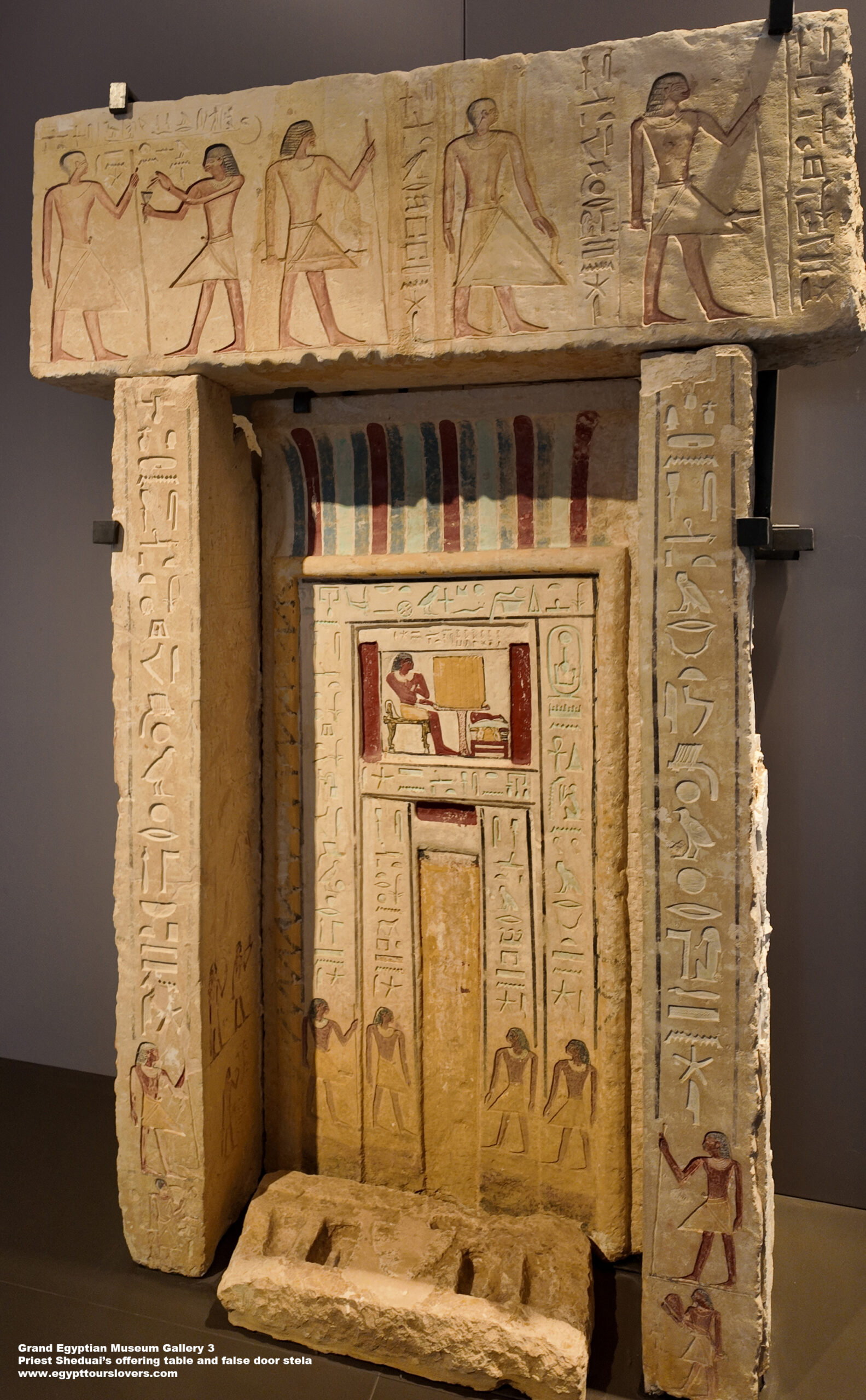
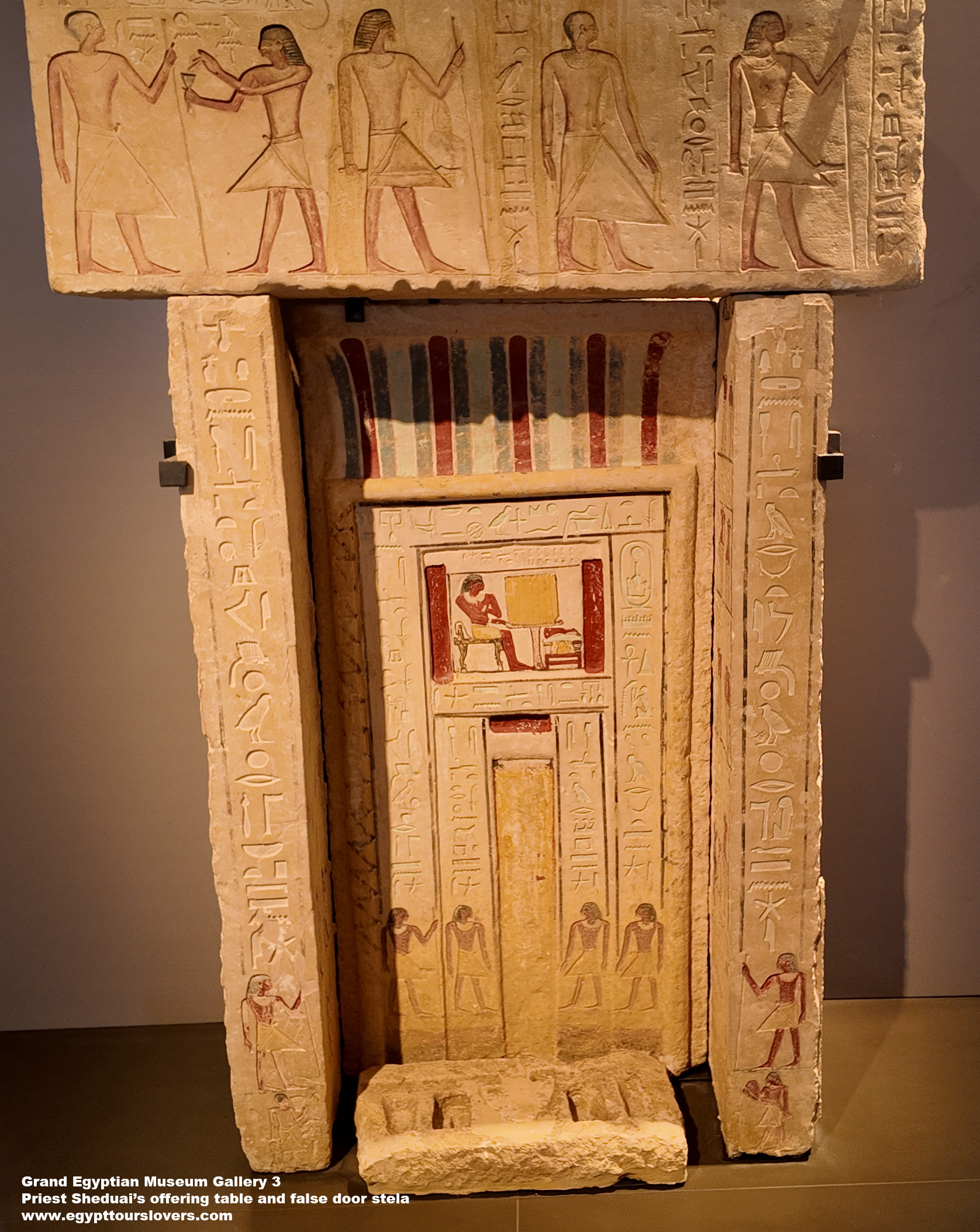
Priest Sheduai’s offering table and false door stela were displayed inside an elaborate doorway decorated with figures of him and his family.
He was a priest who worked in the pyramid complex of king pepy II.
———– } ———– } ———– } ———– }
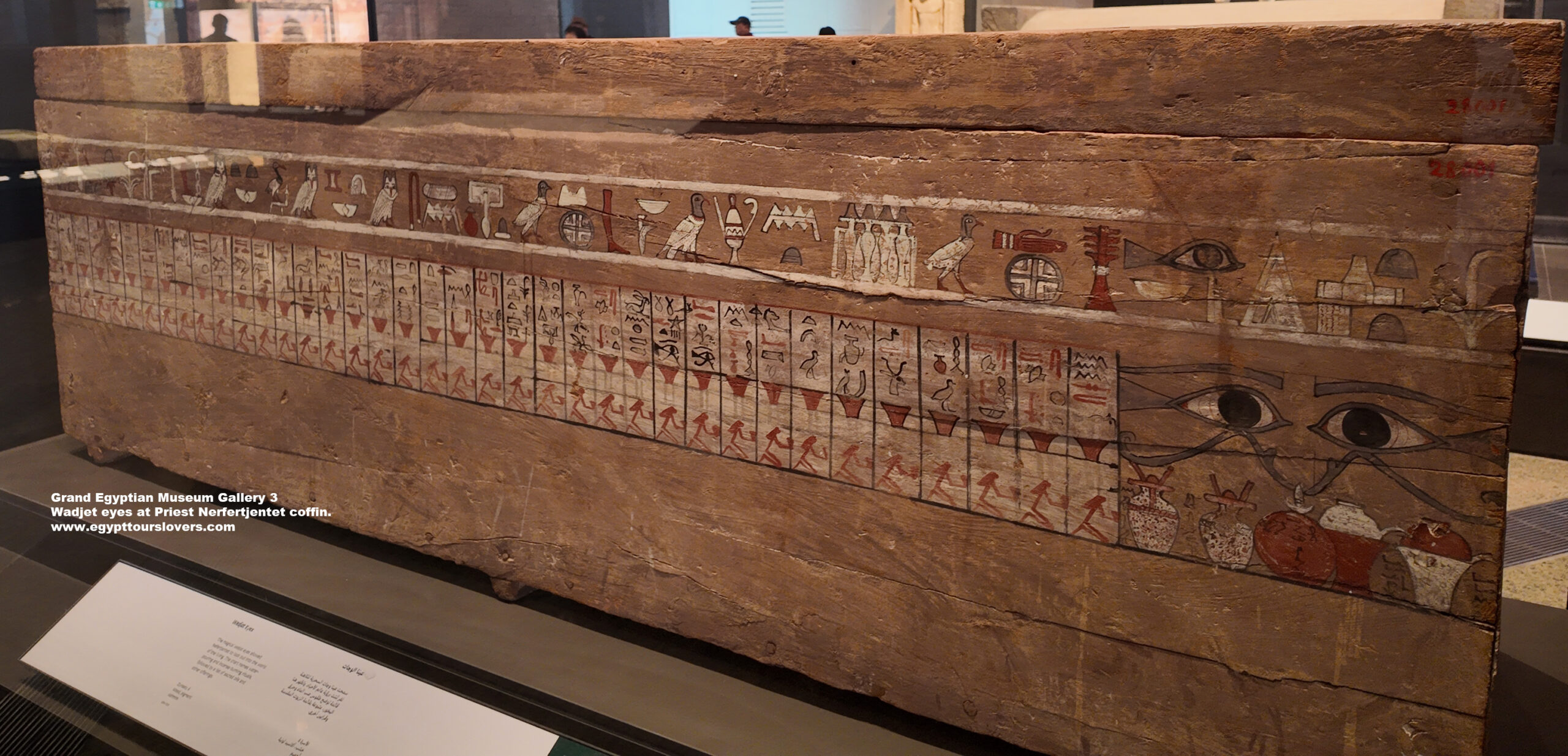
dynasty 6 | wood | akhmim
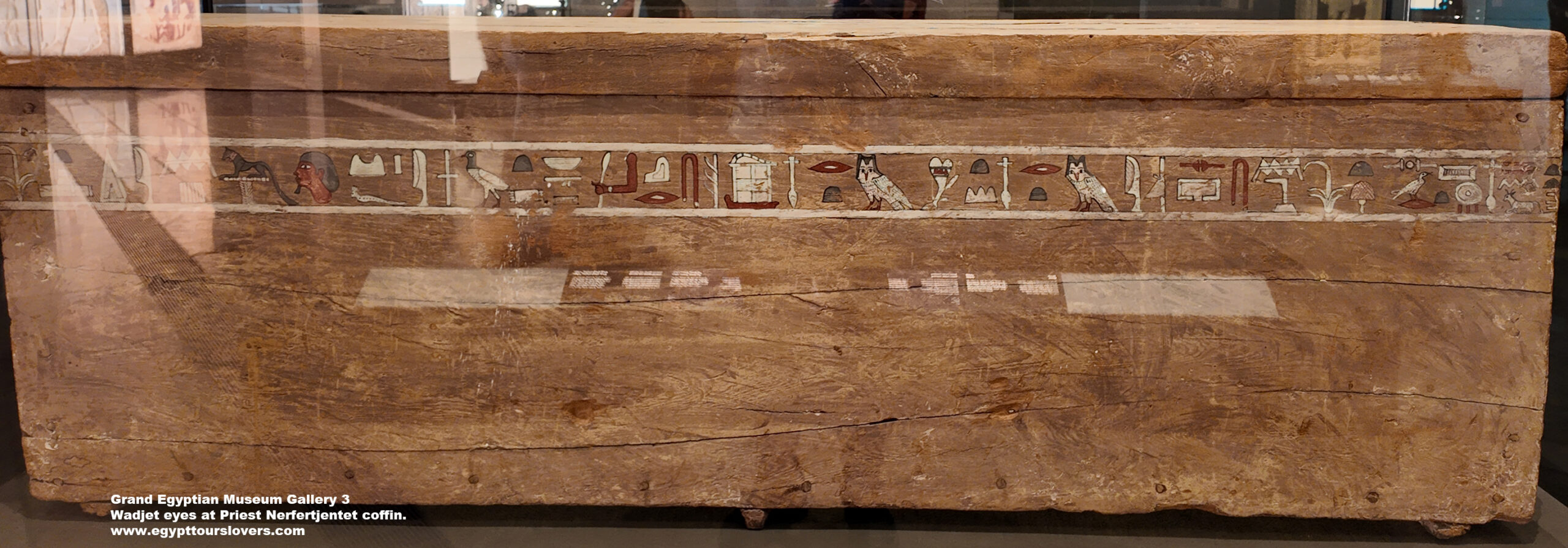
Wadjet eyes at Priest Nerfertjentet coffin.
———– } ———– } ———– } ———– }
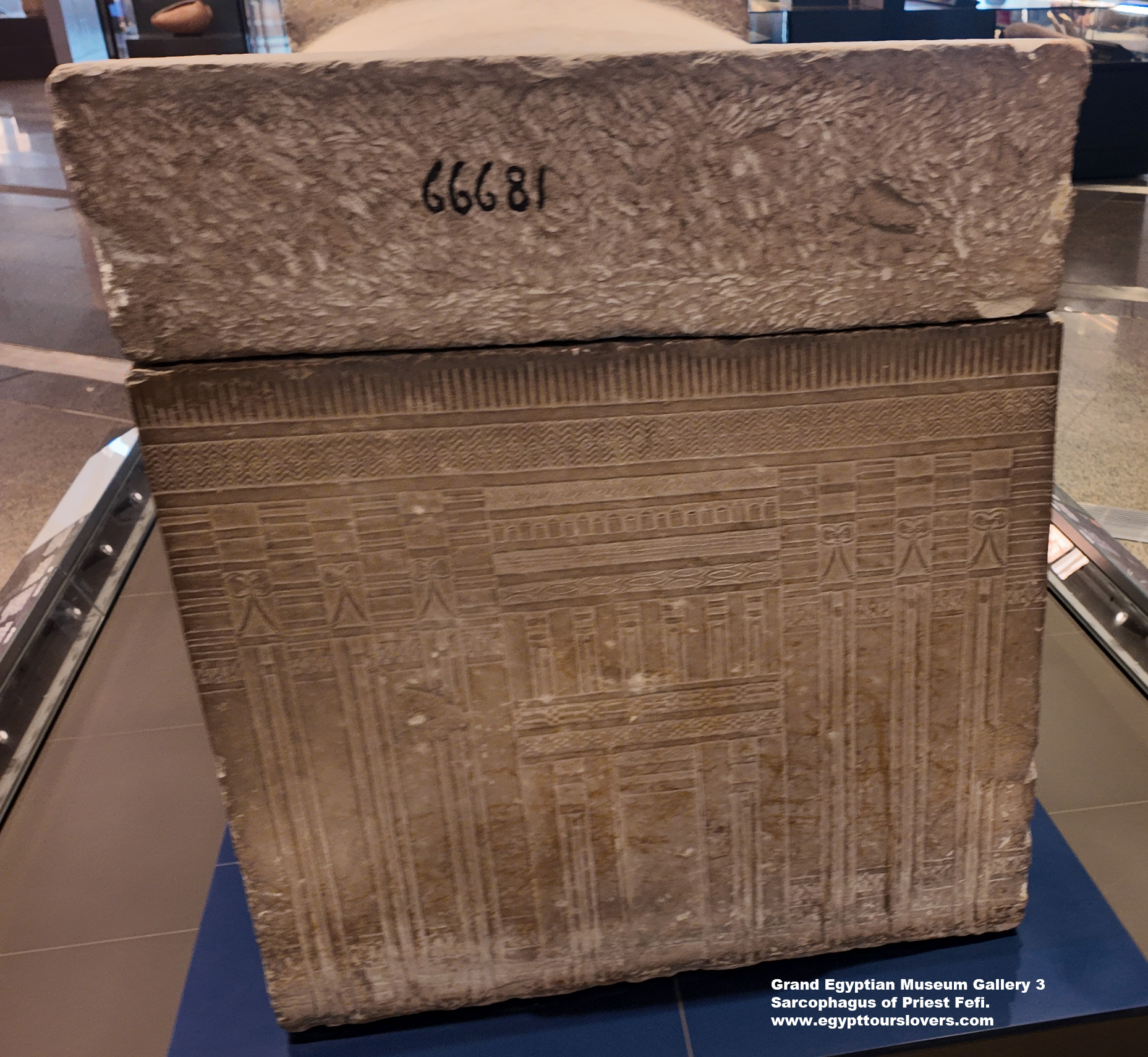
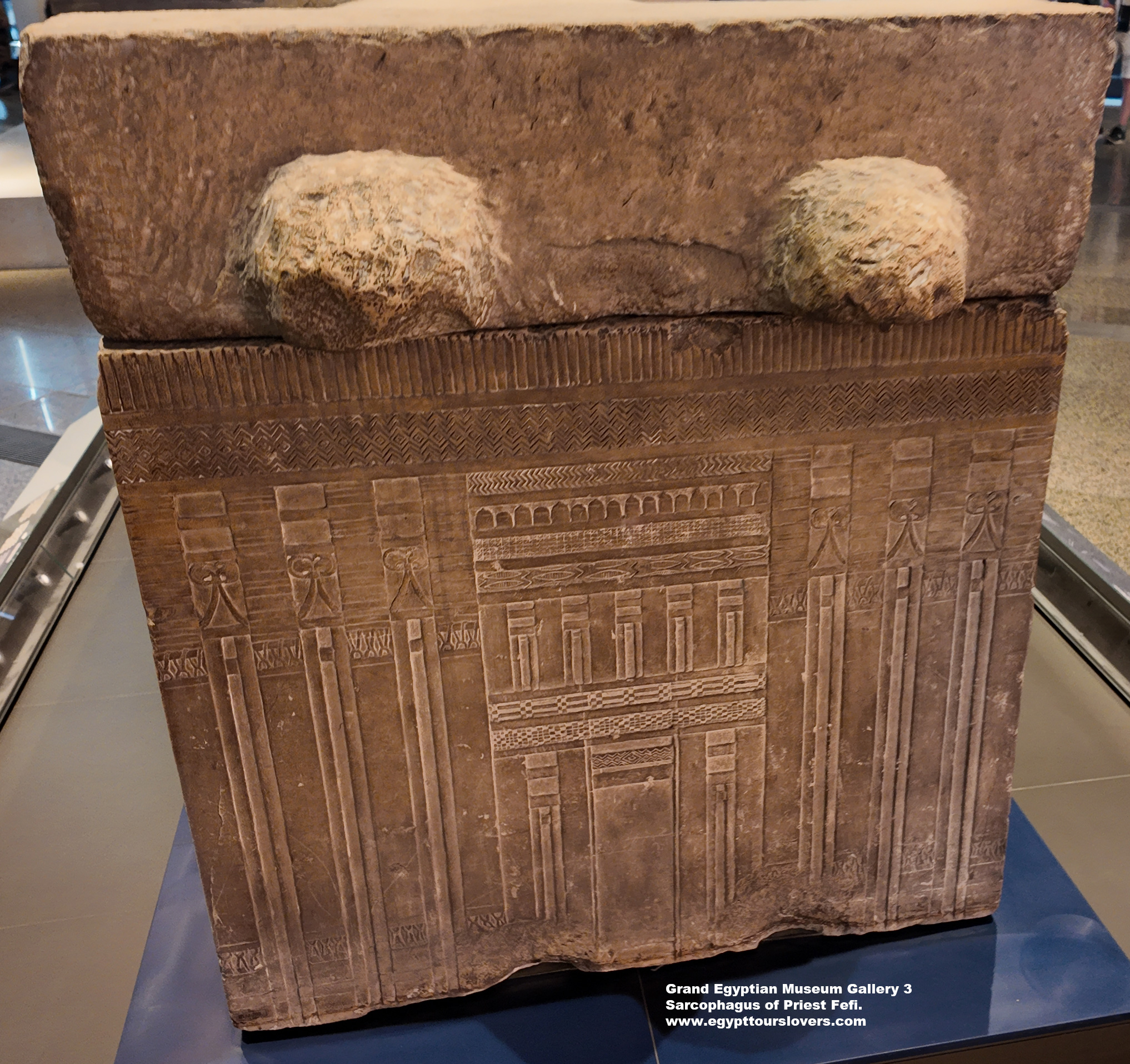
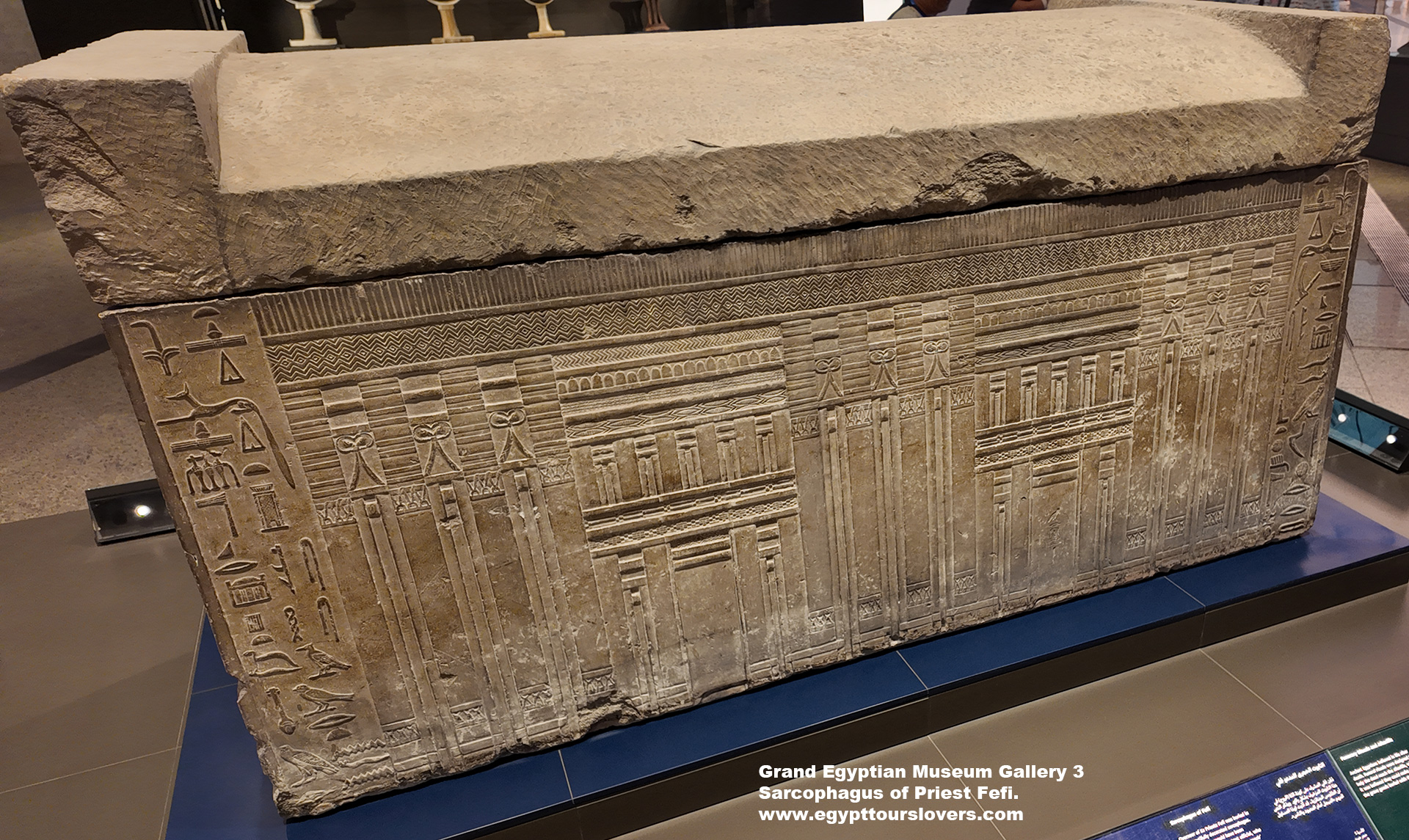
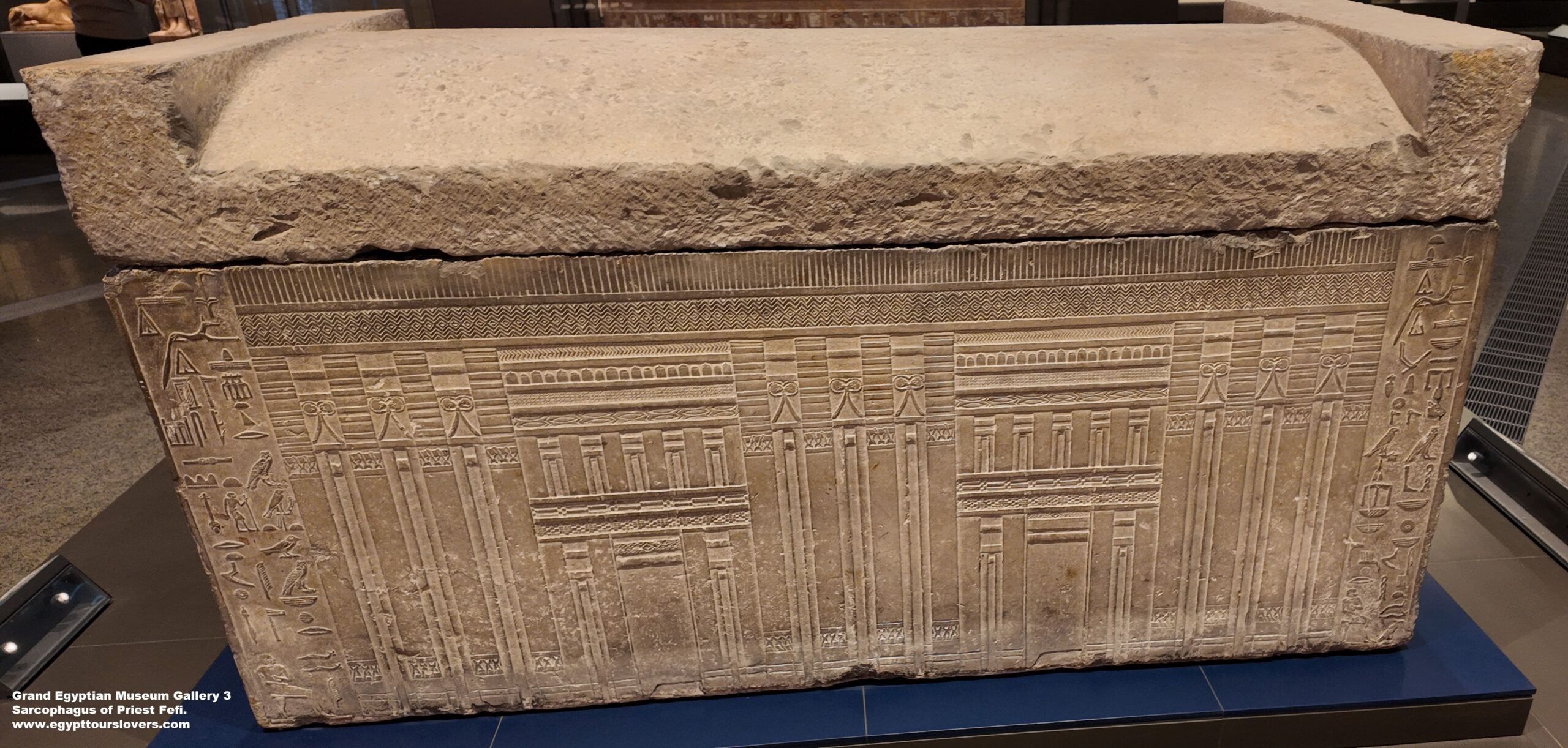
dynasty 5 | limestone | giza
Sarcophagus of Priest Fefi.
Jobs: overseer of ka priests “revered before the god and the people”.
The sarcophagus’s decorations are inspired by the architecture of the royal palace.
The inscription on the sarcophagus reads: “The God Anubis offered a good burial and many sacrifices to the priest Fefi, ‘the king’s servant.'”
———– } ———– } ———– } ———– }
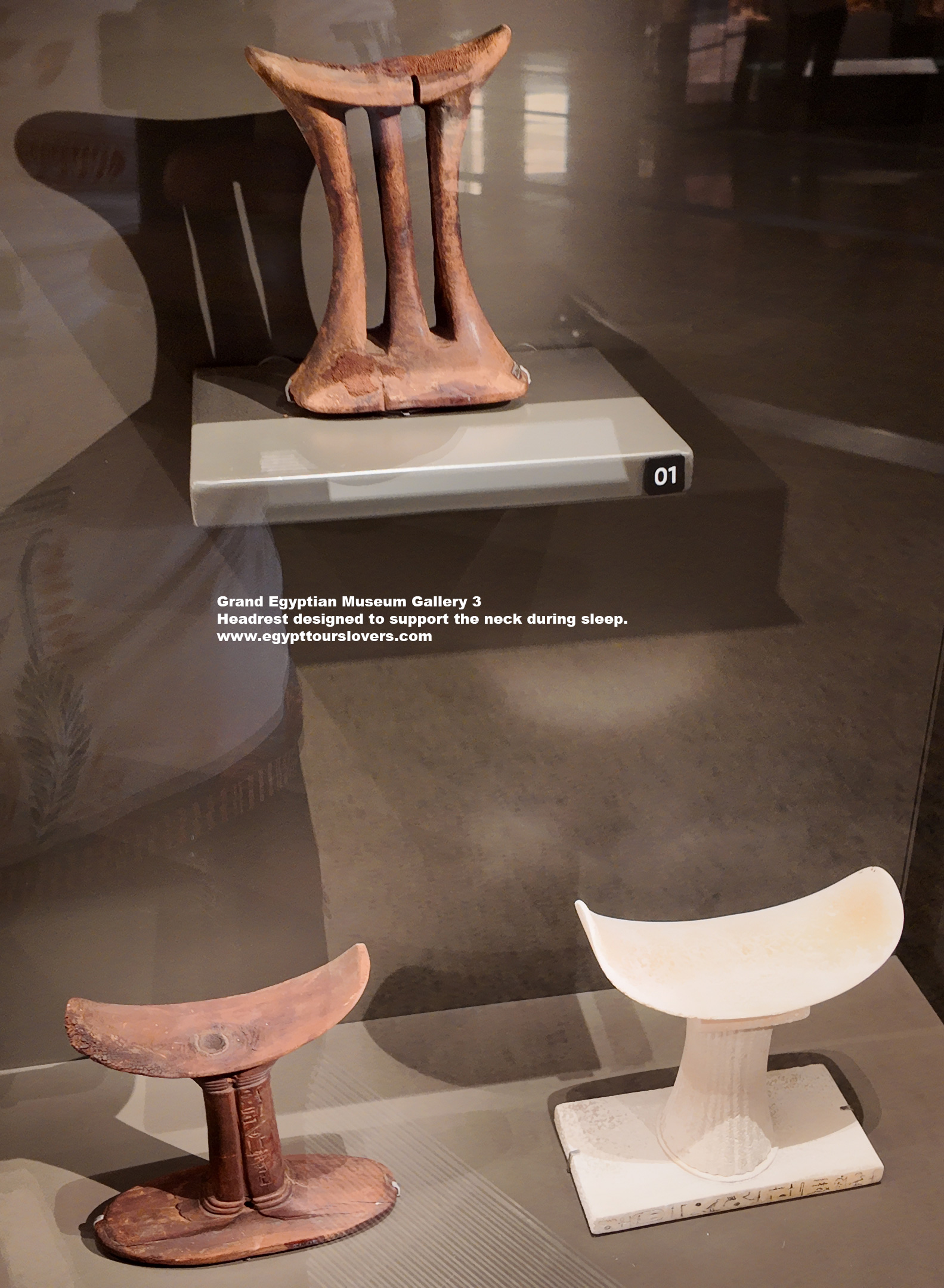
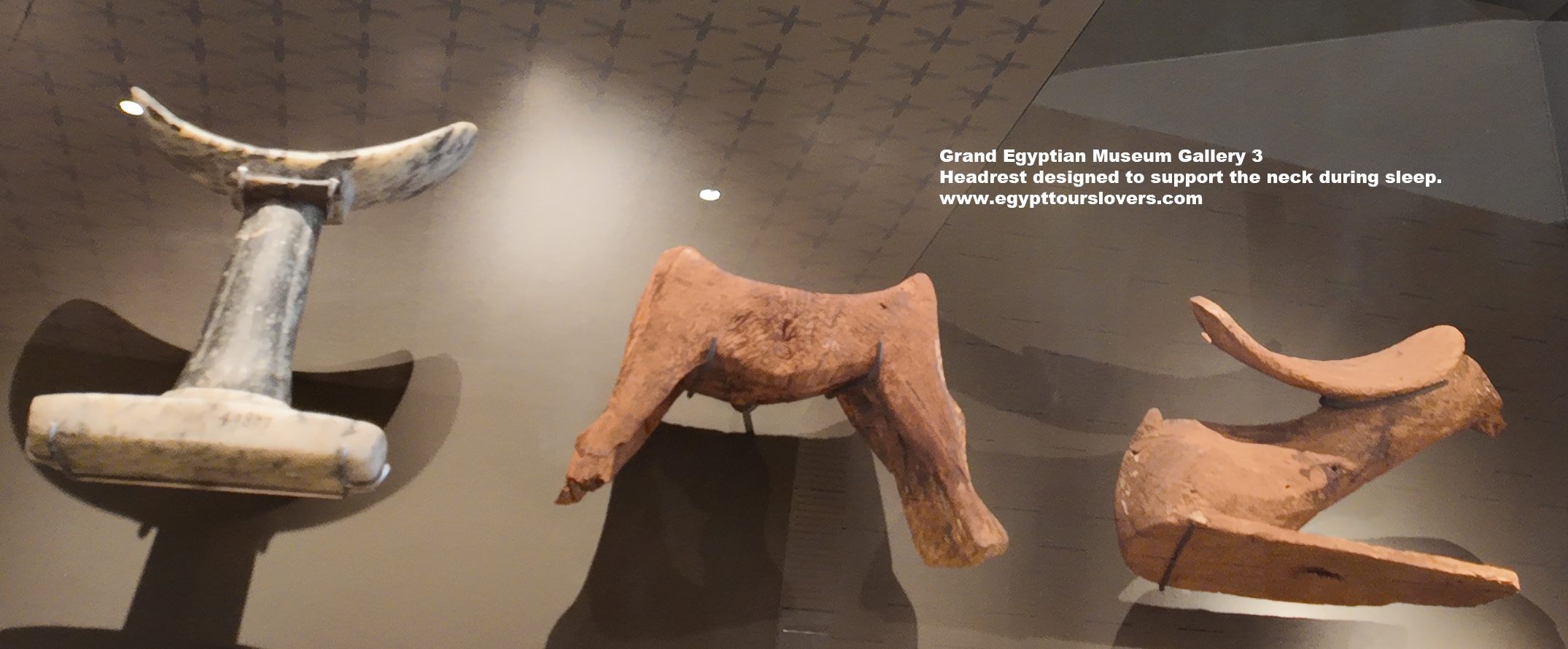
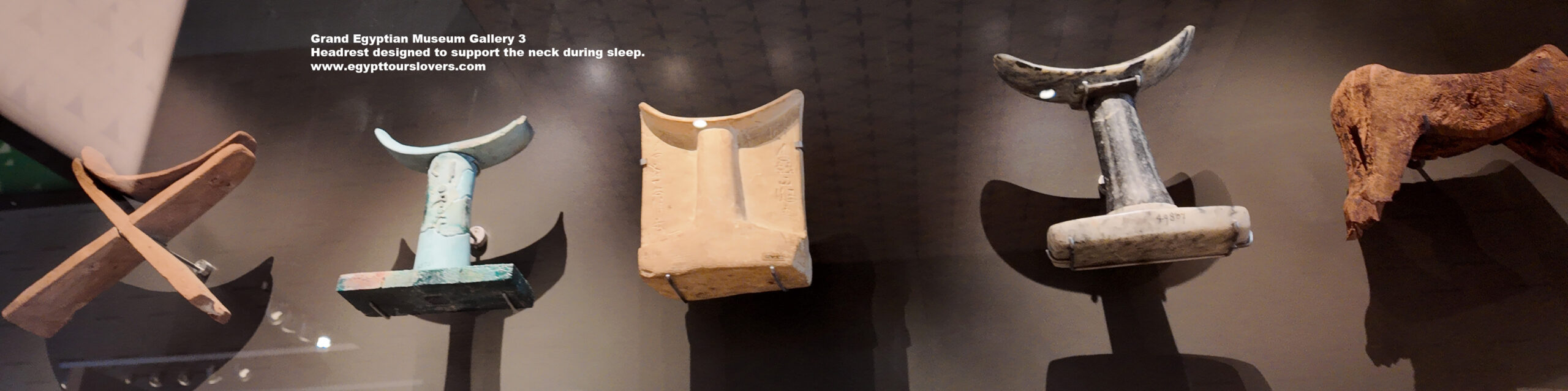
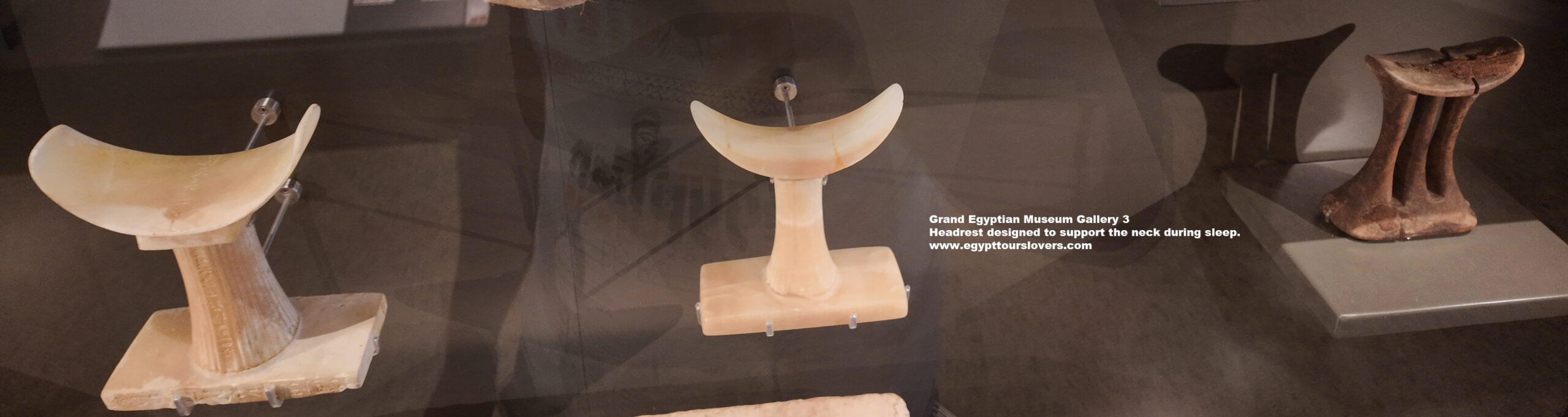
old kingdom + first intermediate period | limestone, wood, diorite, faience, Egyptian alabaster | Saqqara, giza, Luxor, elephantine, gegelein
Headrest designed to support the neck during sleep.
Headrests were an essential part of burial equipment.
Some bear the names and titles of the deceased, like those of King’s Son Tetiankh and Priestess Meret.
———– } ———– } ———– } ———– }
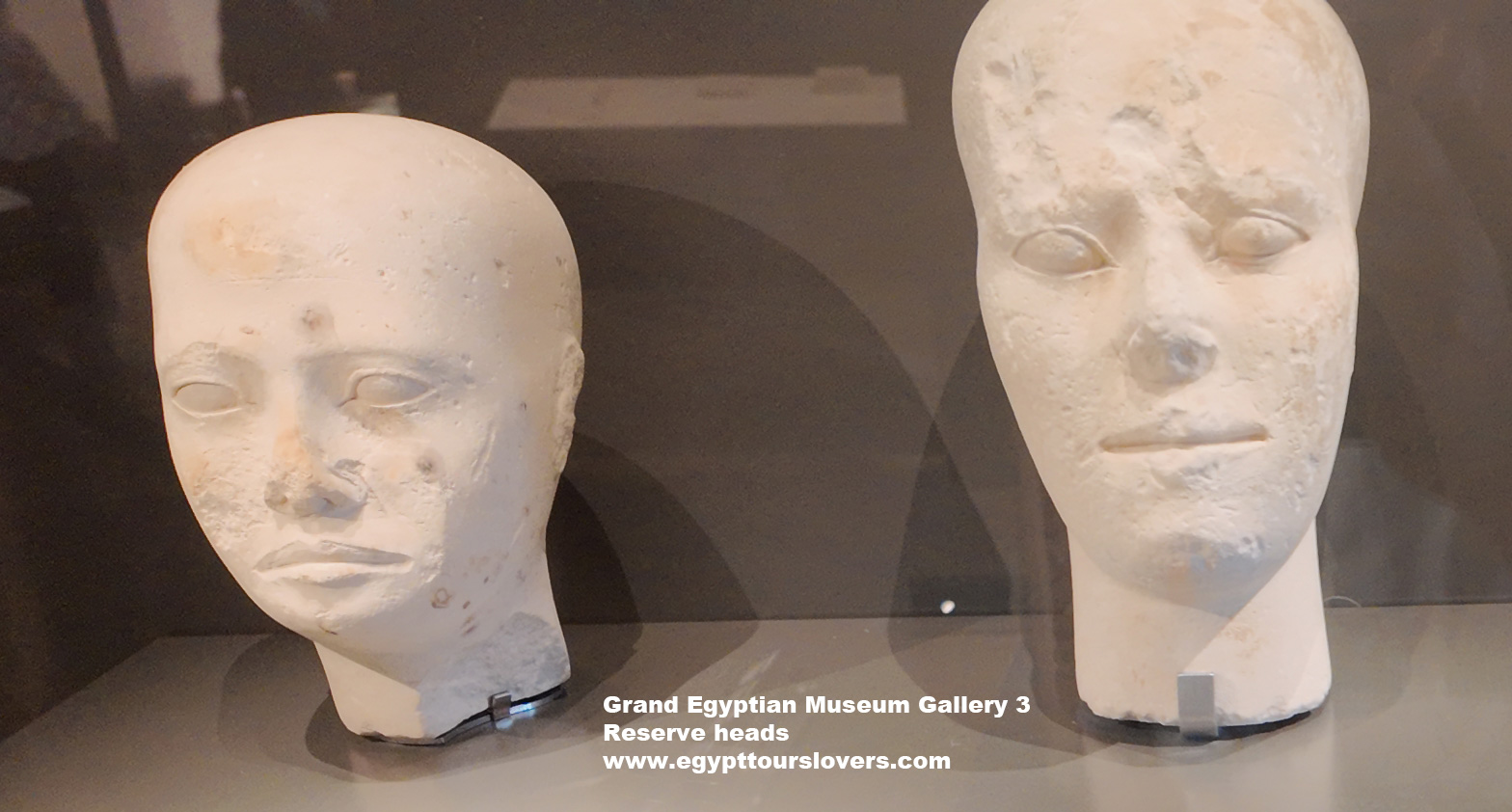
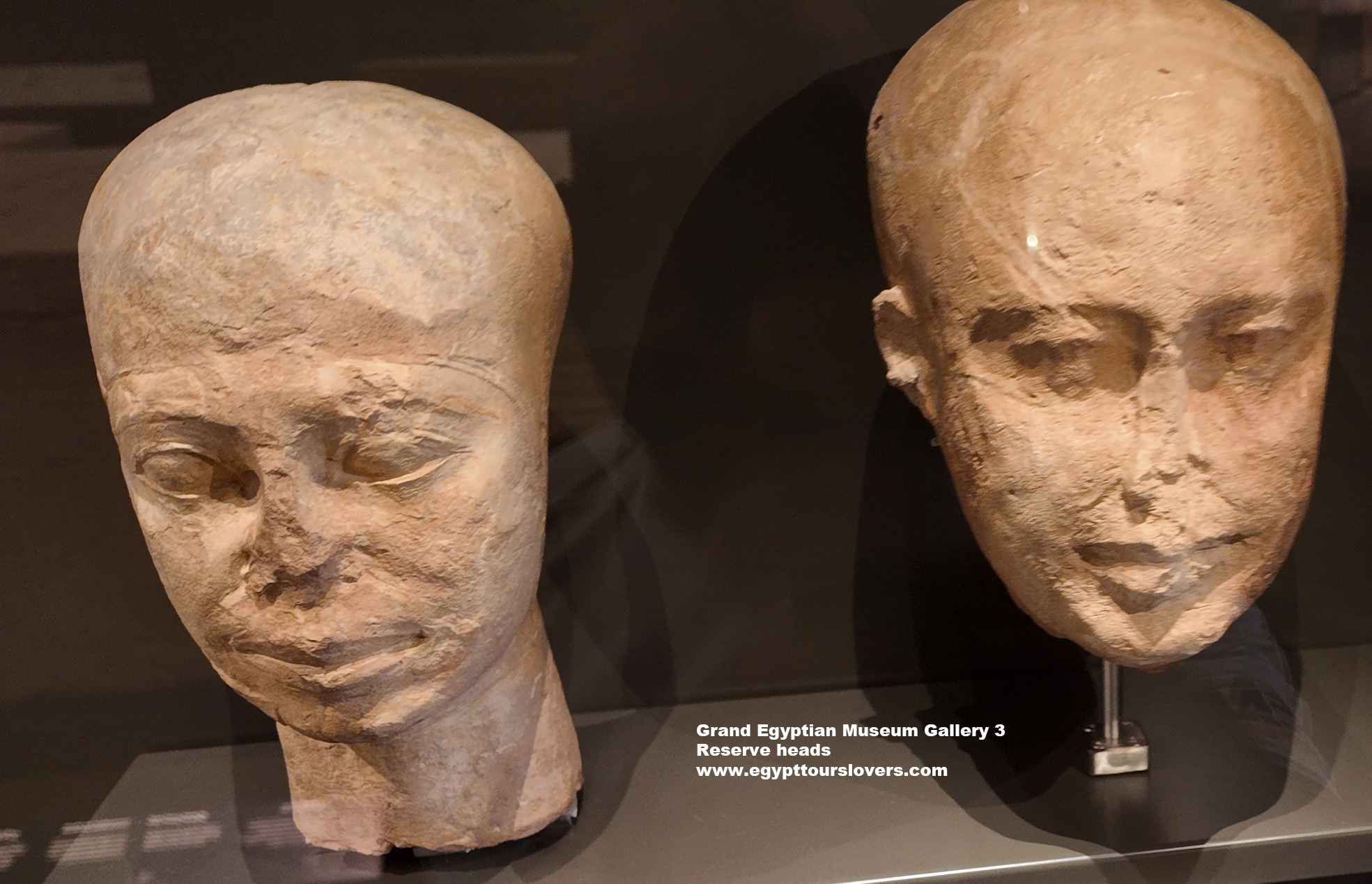
dynasty 4-5 | limestone, plaster | giza
Reserve heads
Some people were buried with heads carved with individual facial features.
Scholars call them reserve heads, because they might be magical replacement heads for the deceased dangerous journey through the underworld.
———– } ———– } ———– } ———– }
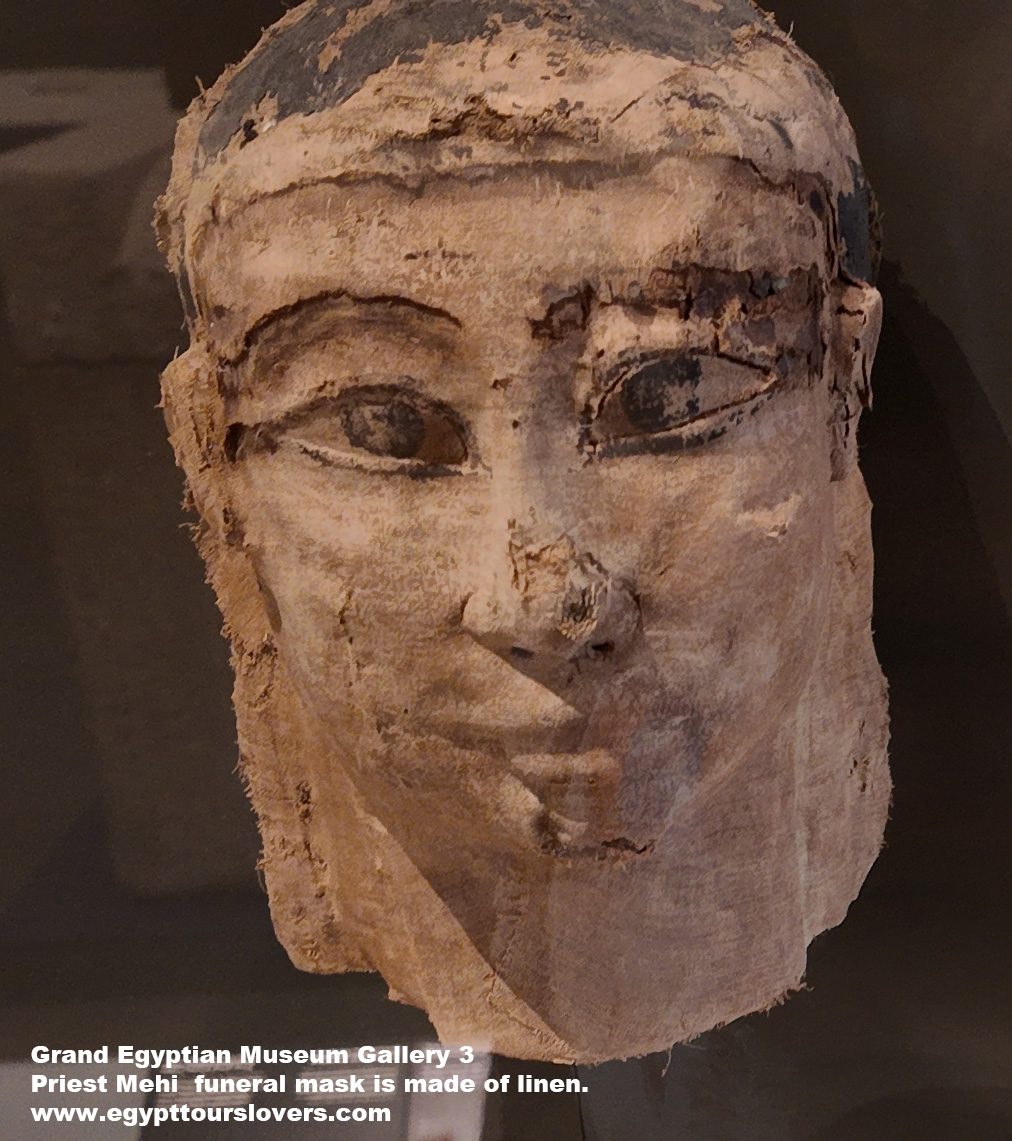
dynasty 6 | linen fabric | Saqqara
Priest Mehi funeral mask is made of linen.
———– } ———– } ———– } ———– }
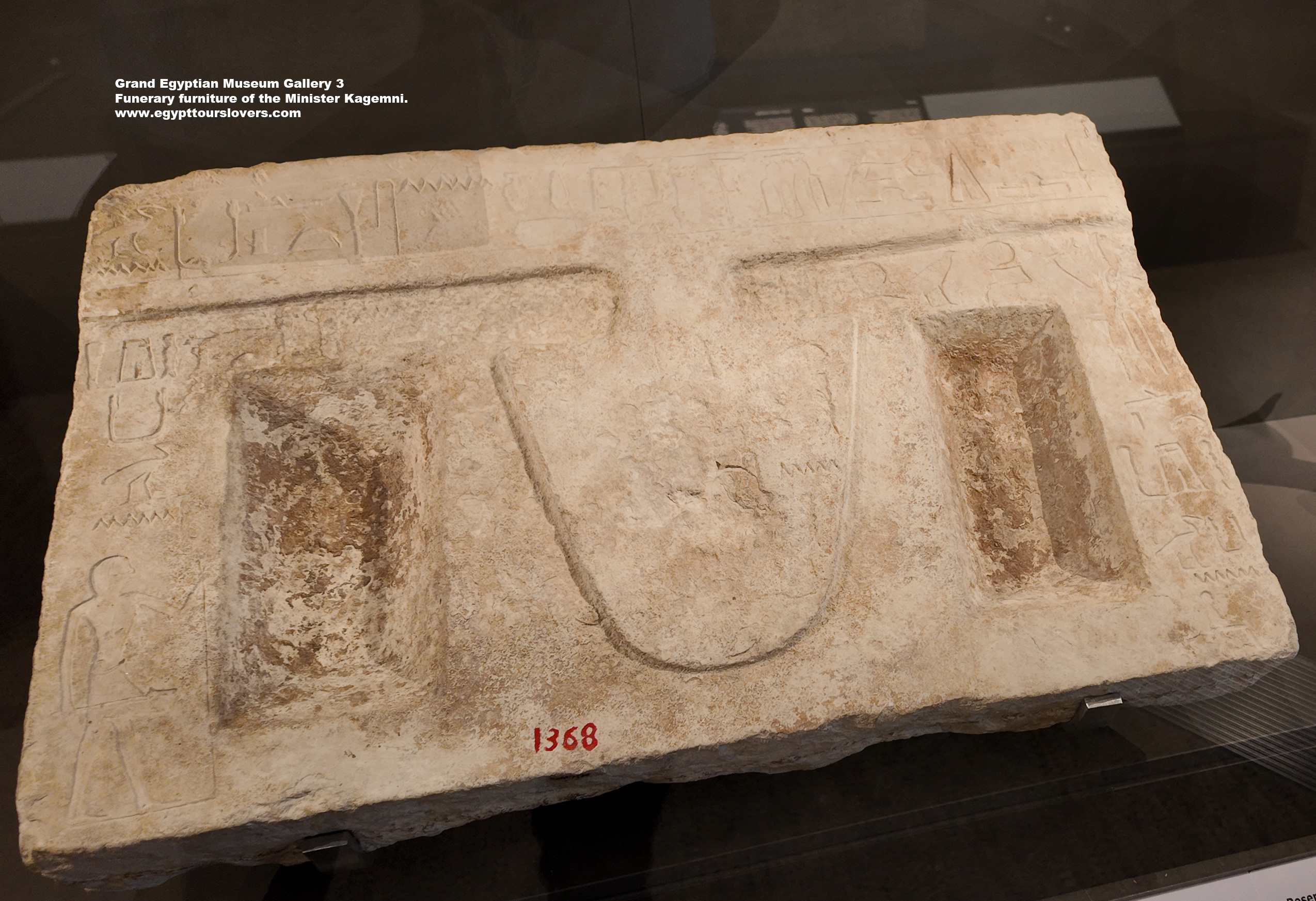
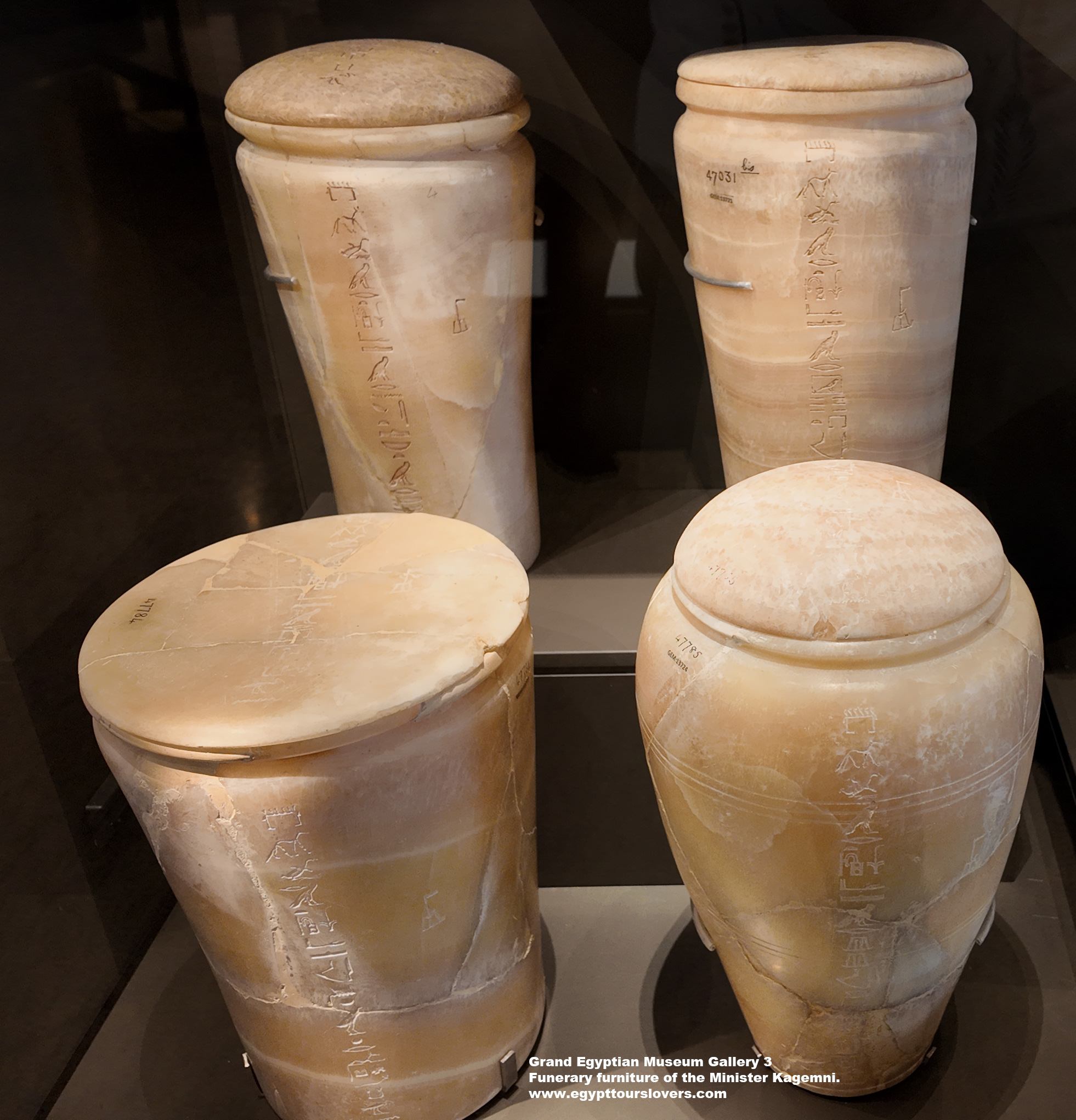
dynasty 6 | Egyptian alabaster, limestone | Saqqara
Funerary furniture of the Minister Kagemni.
Headrest, offering table, 4 Canopic Jars containing internal organs (liver, lungs, stomach, intestines).
———– } ———– } ———– } ———– }
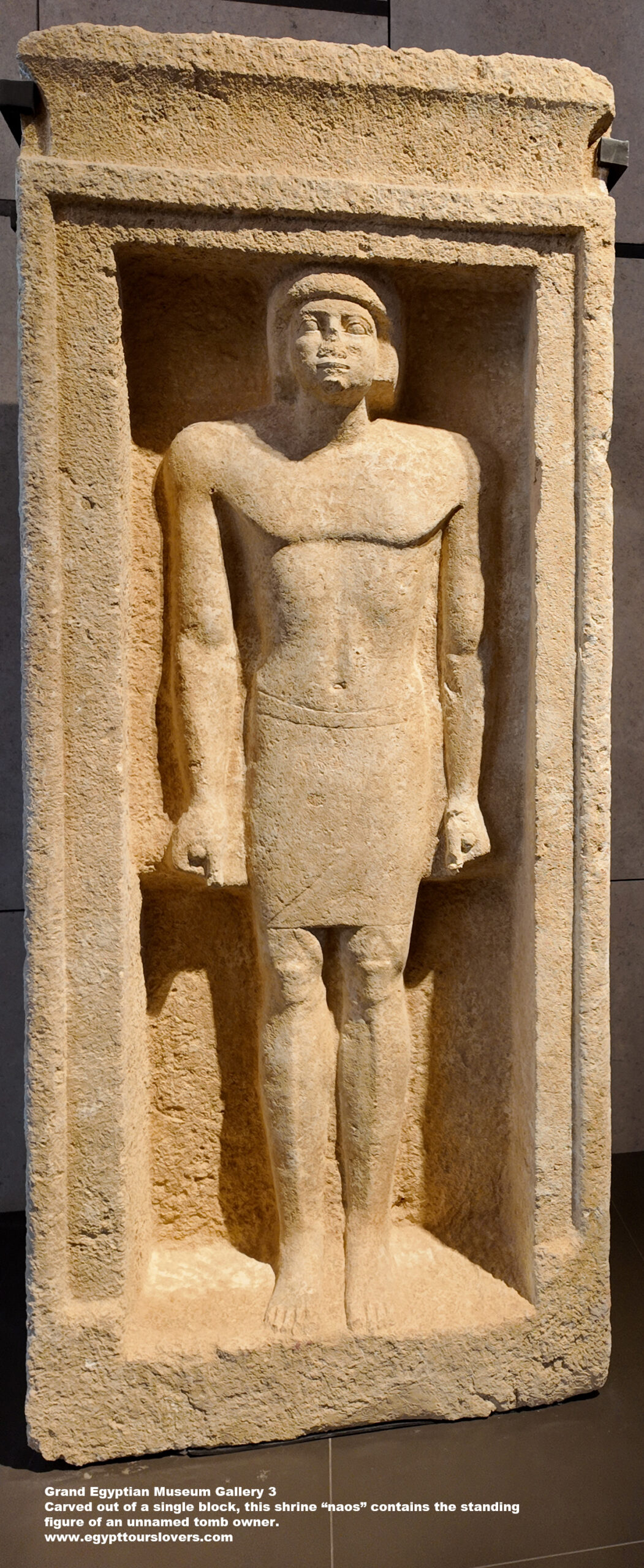
dynasty 5 | limestone | abuser
Carved out of a single block, this shrine “naos” contains the standing figure of an unnamed tomb owner.
It was placed in the courtyard of the family tomb to receive offerings.
———– } ———– } ———– } ———– }
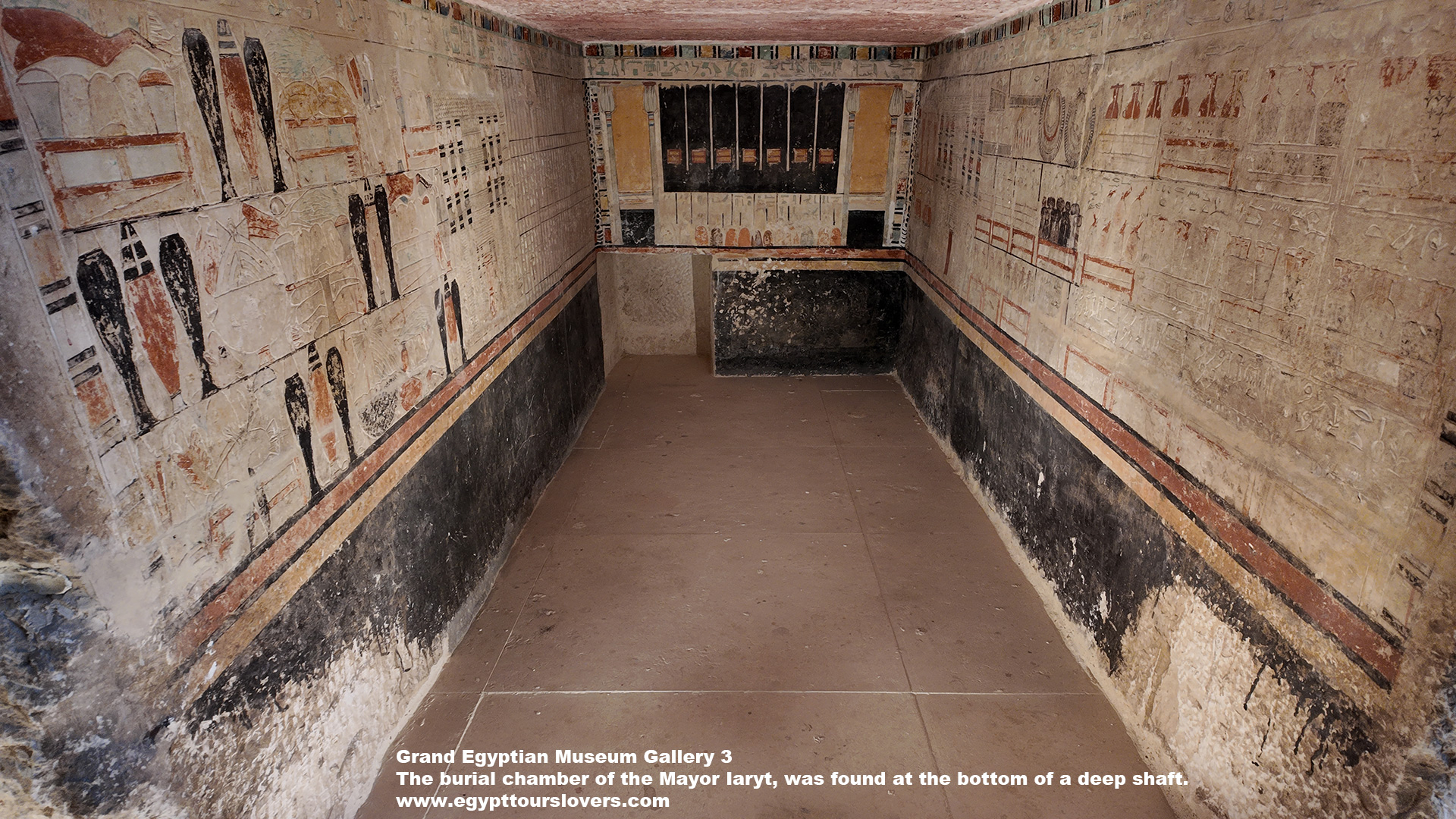
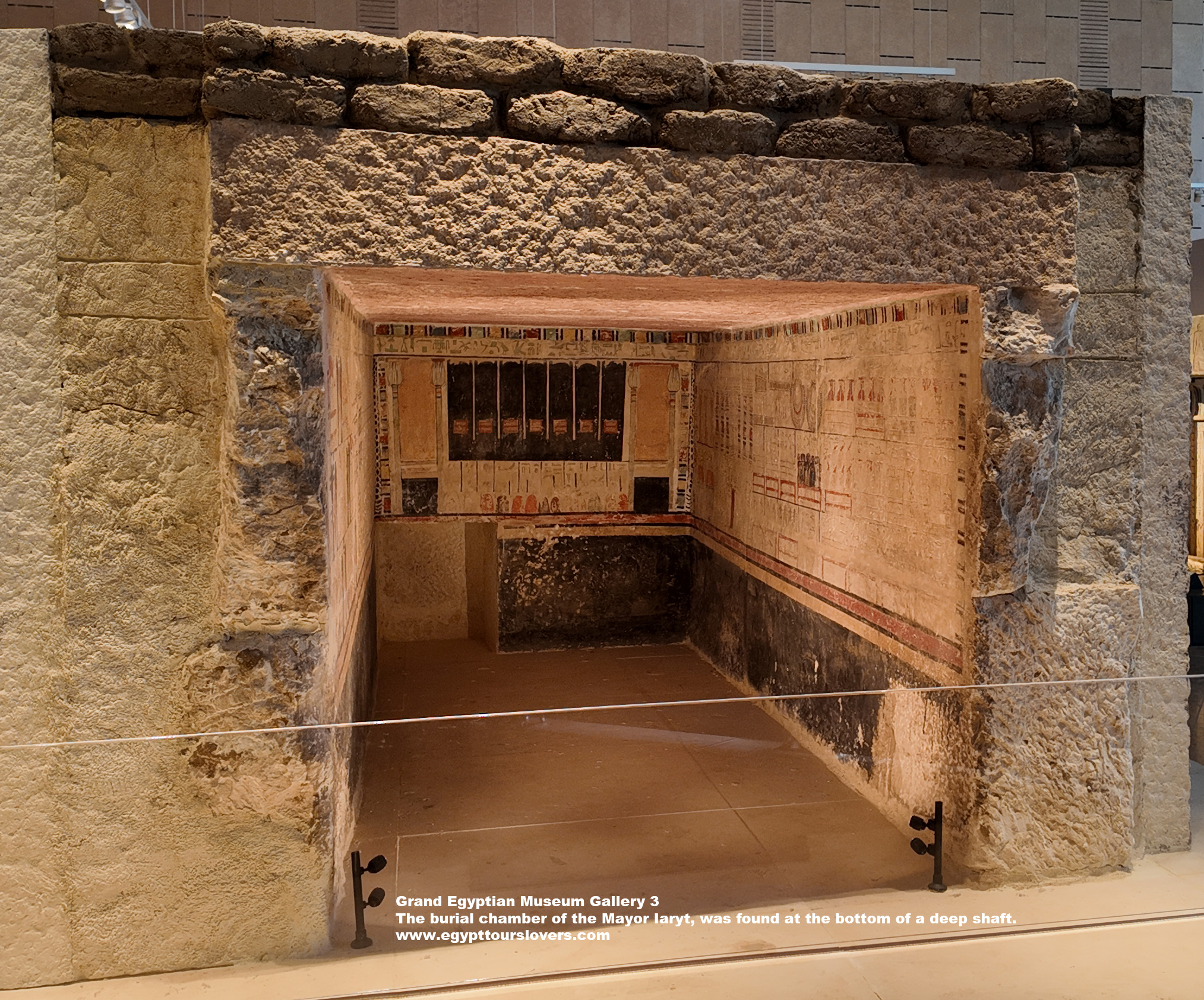
dynasty 6 + first intermediate period | limestone | Saqqara
The burial chamber of the Mayor Iaryt, was found at the bottom of a deep shaft.
It contained two false doors, wall decorations for food and drink, and a granary with Lotus-Shaped columns.
Positions: Seal-Bearer, King’s Confidant.
———– } ———– } ———– } ———– }
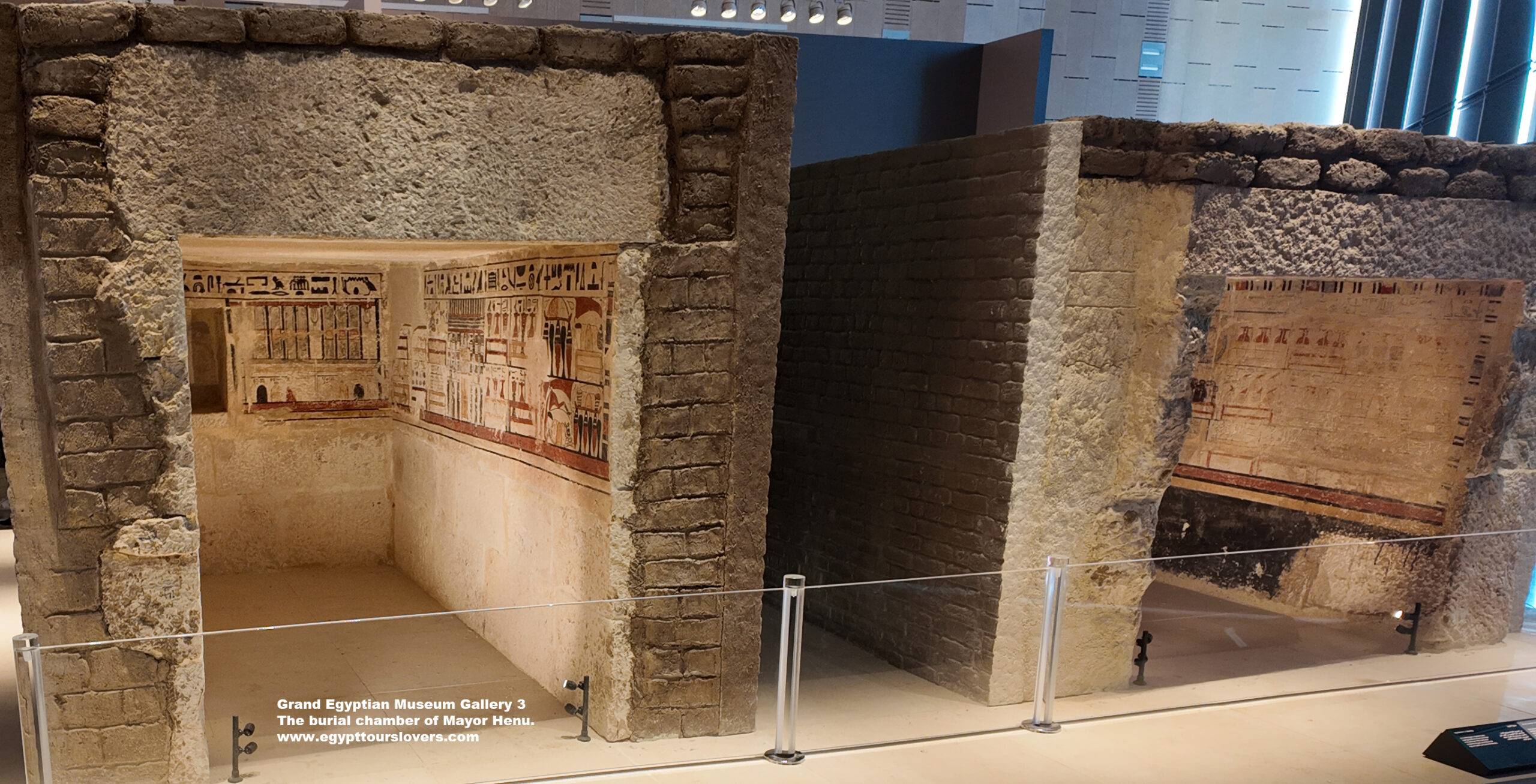
dynasty 6 + first intermediate period | limestone | Saqqara
The burial chamber of Mayor Henu.
It contained two false doors, wall decorations, a granary, funerary furniture, jewelry, food, and drink.
Positions: Seal-Bearer, Overseer of the Palace, Overseer of the Garden.
———– } ———– } ———– } ———– }
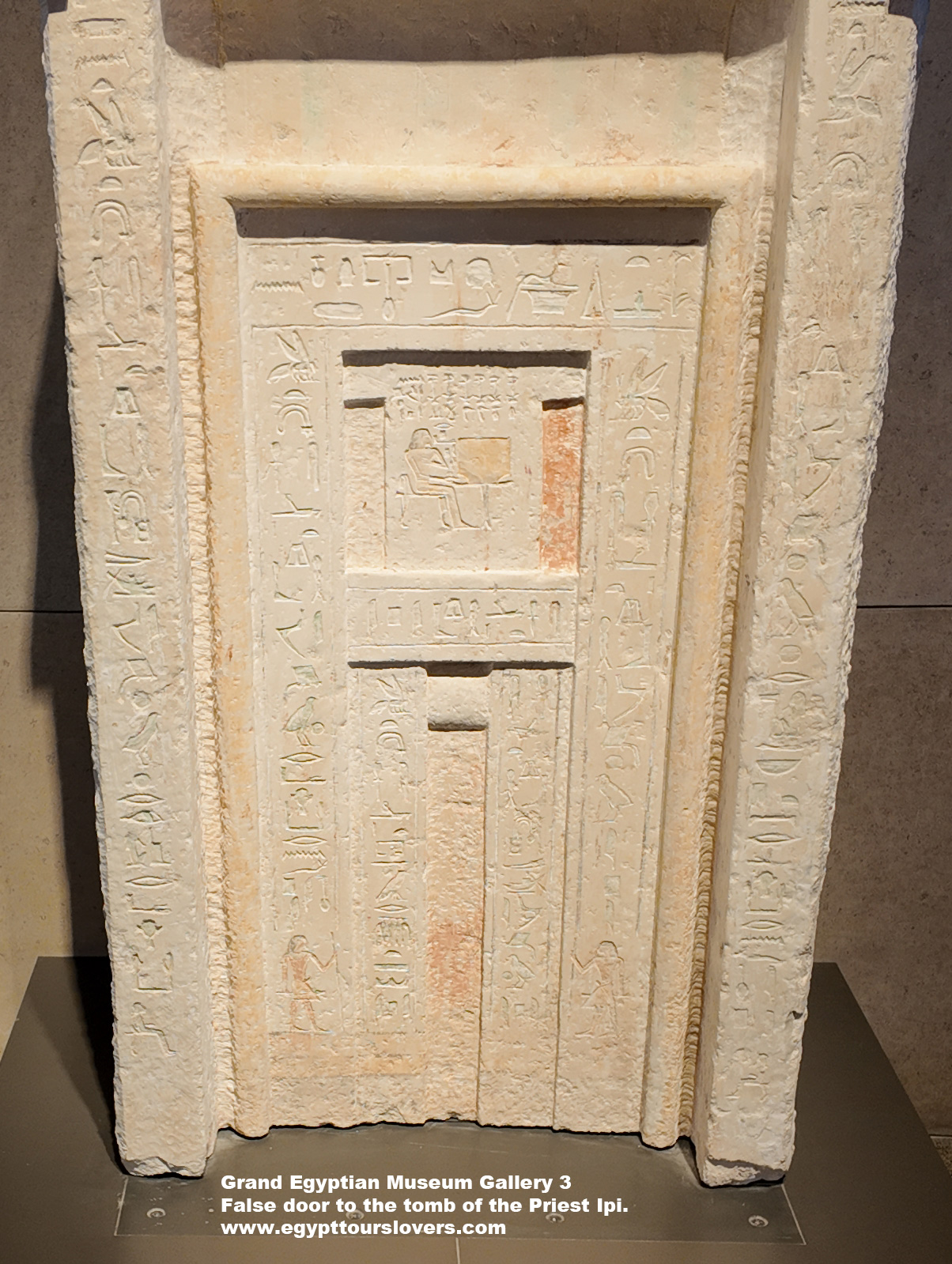
old kingdoms | limestone | Saqqara
False door to the tomb of the Priest Ipi.
Positions: Seal-Bearer, Chanting Priest, Overseer of the Great House.
———– } ———– } ———– } ———– }
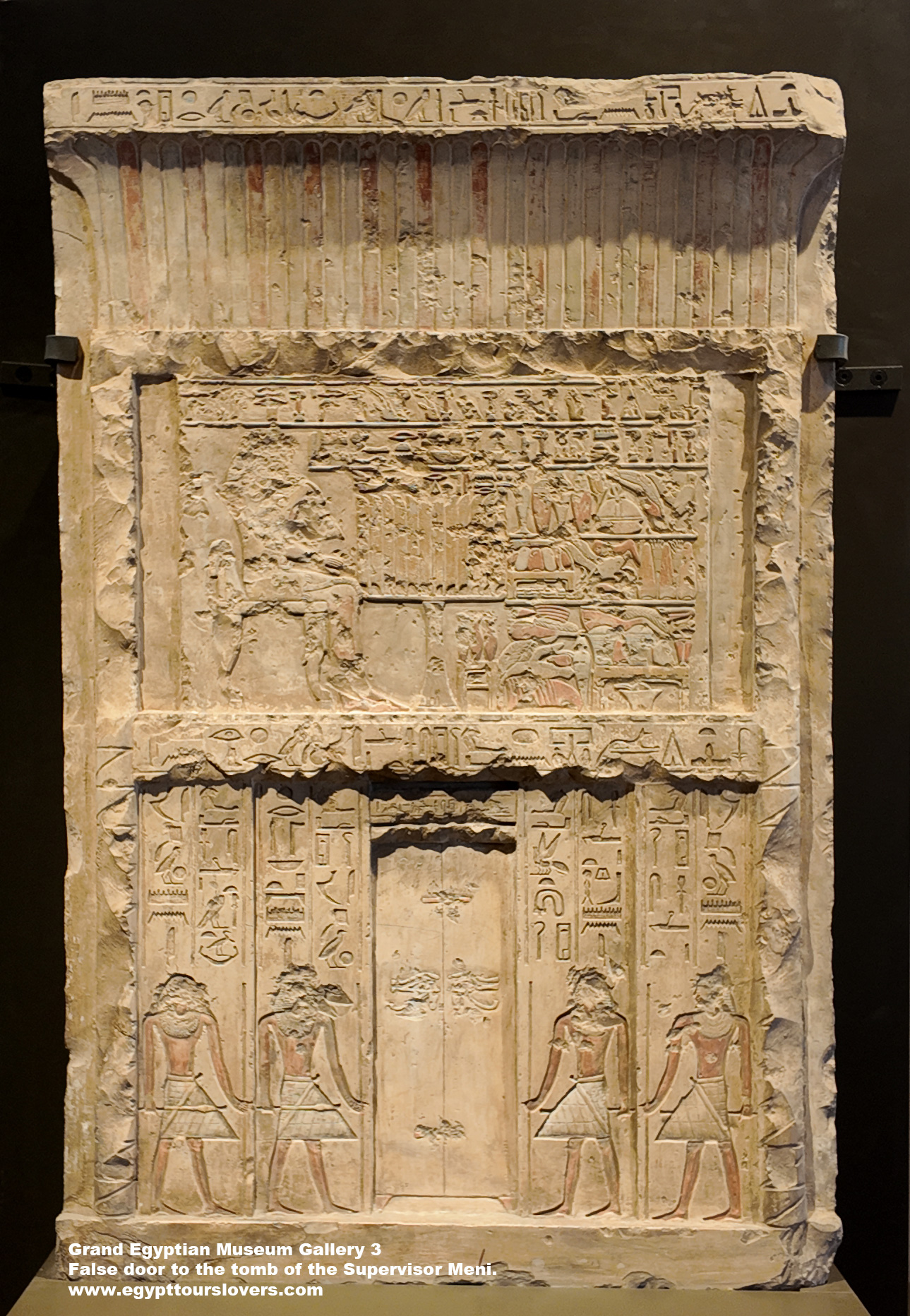
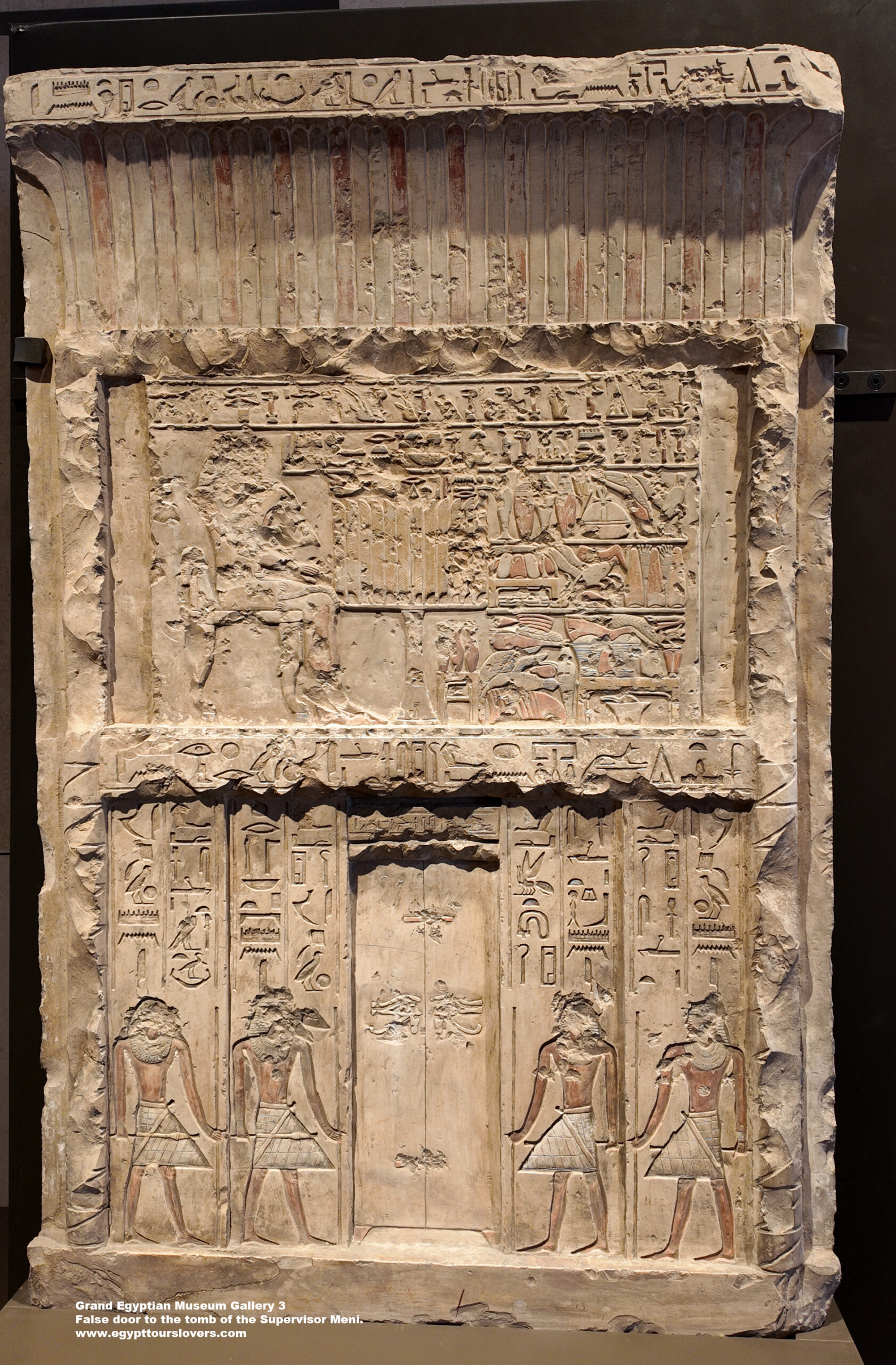
dynasty 6 | limestone | Dendera
False door to the tomb of the Supervisor Meni.
Functions: Supervisor of the sections allocated to the pyramid groups, supervisor of the farms in the Egyptian desert.
———– } ———– } ———– } ———– }
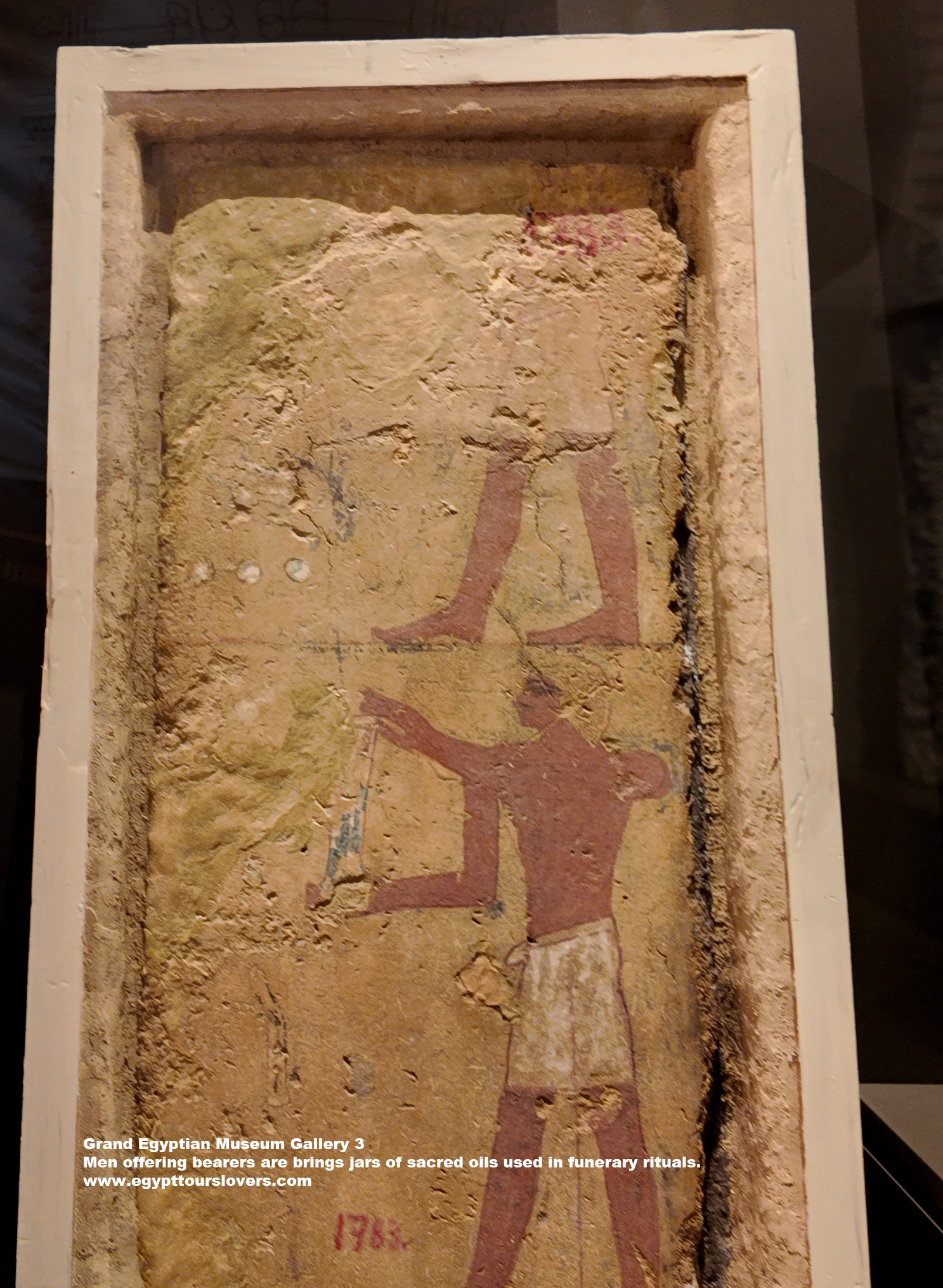
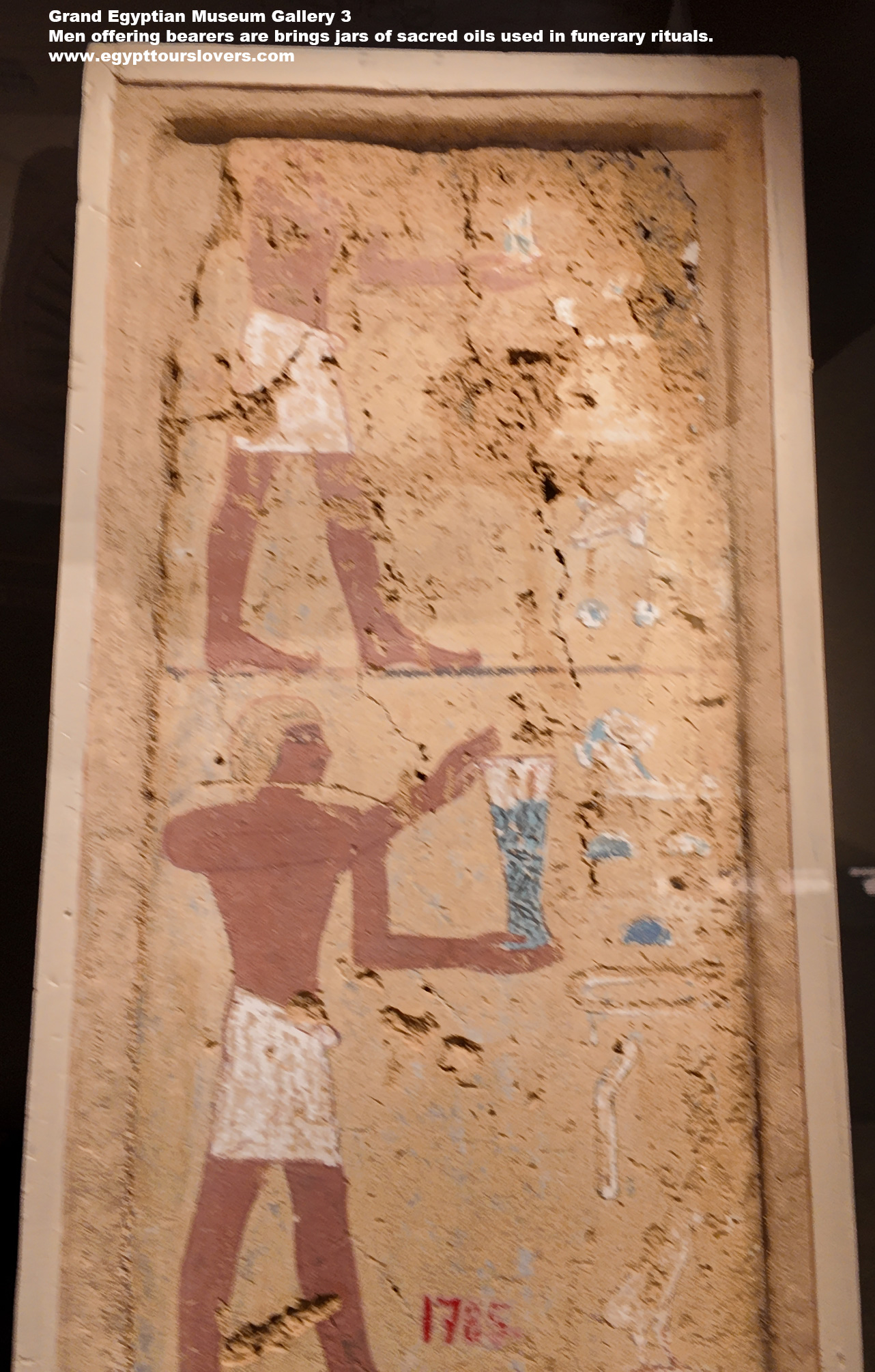
dynasty 6 | plaster, mud | dahshur
Men offering bearers are brings jars of sacred oils used in funerary rituals.
7 sacred oils “mint oil, pine oil, cedar oil, olive oil, cedar oil”.
———– } ———– } ———– } ———– }
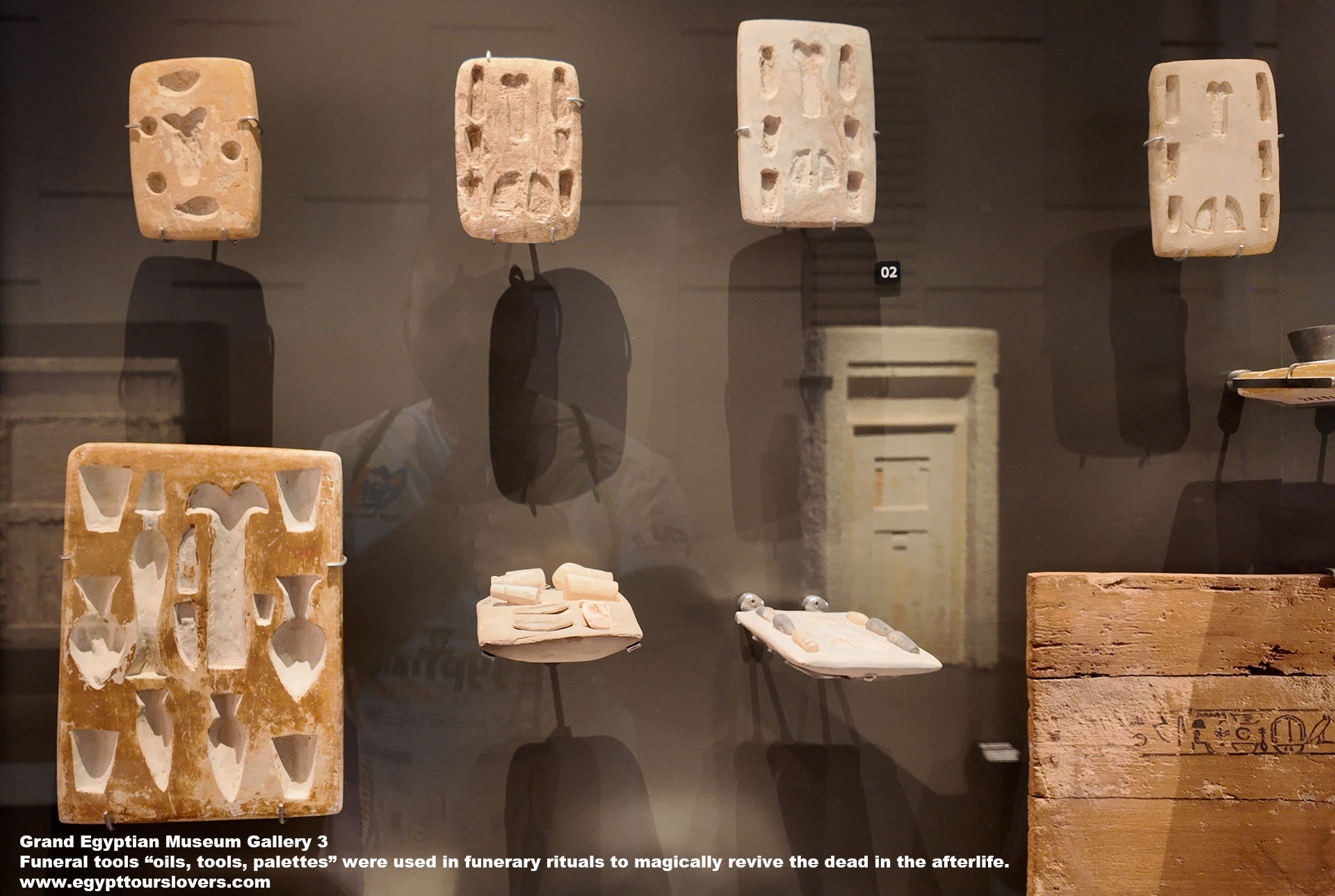
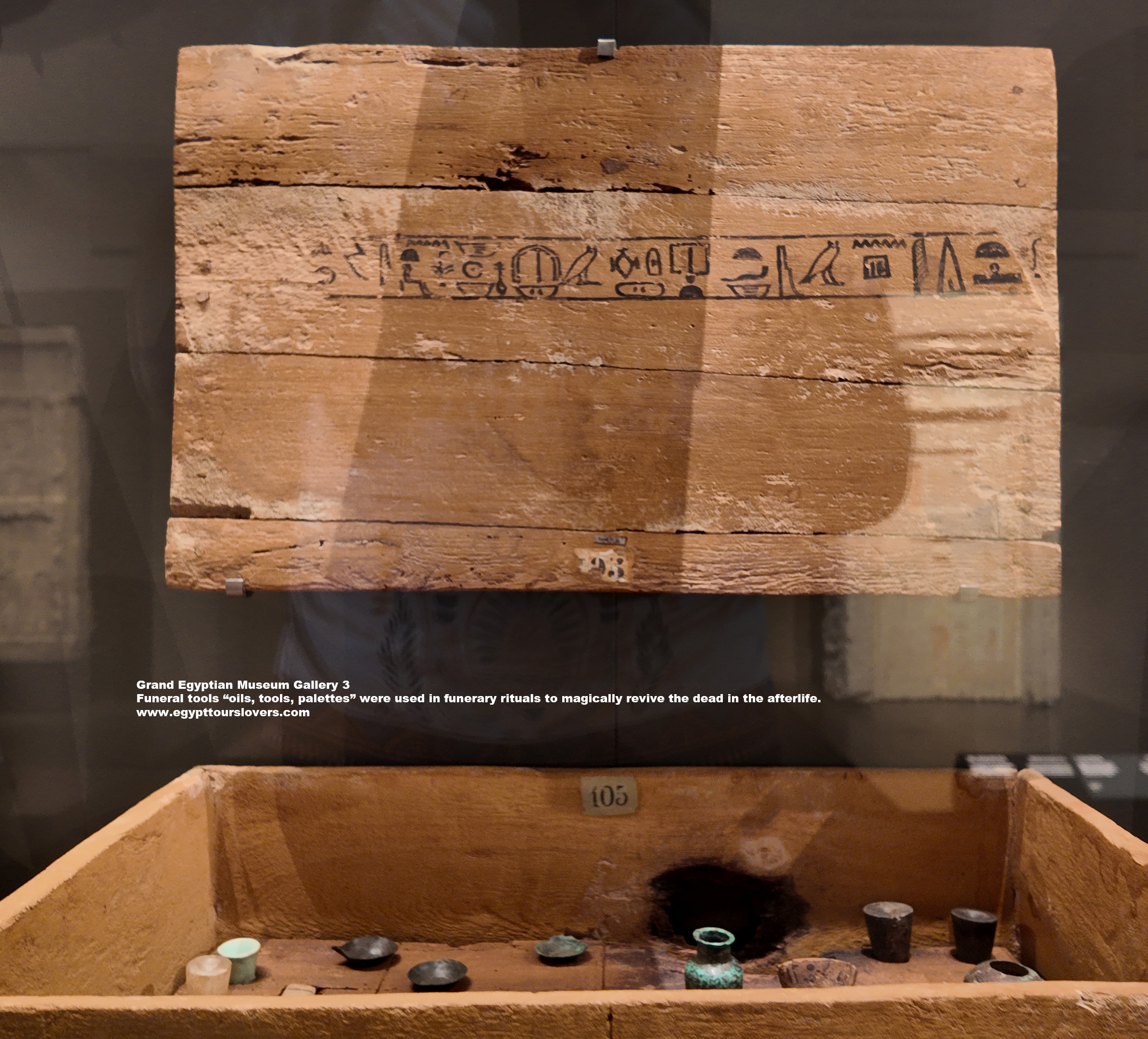
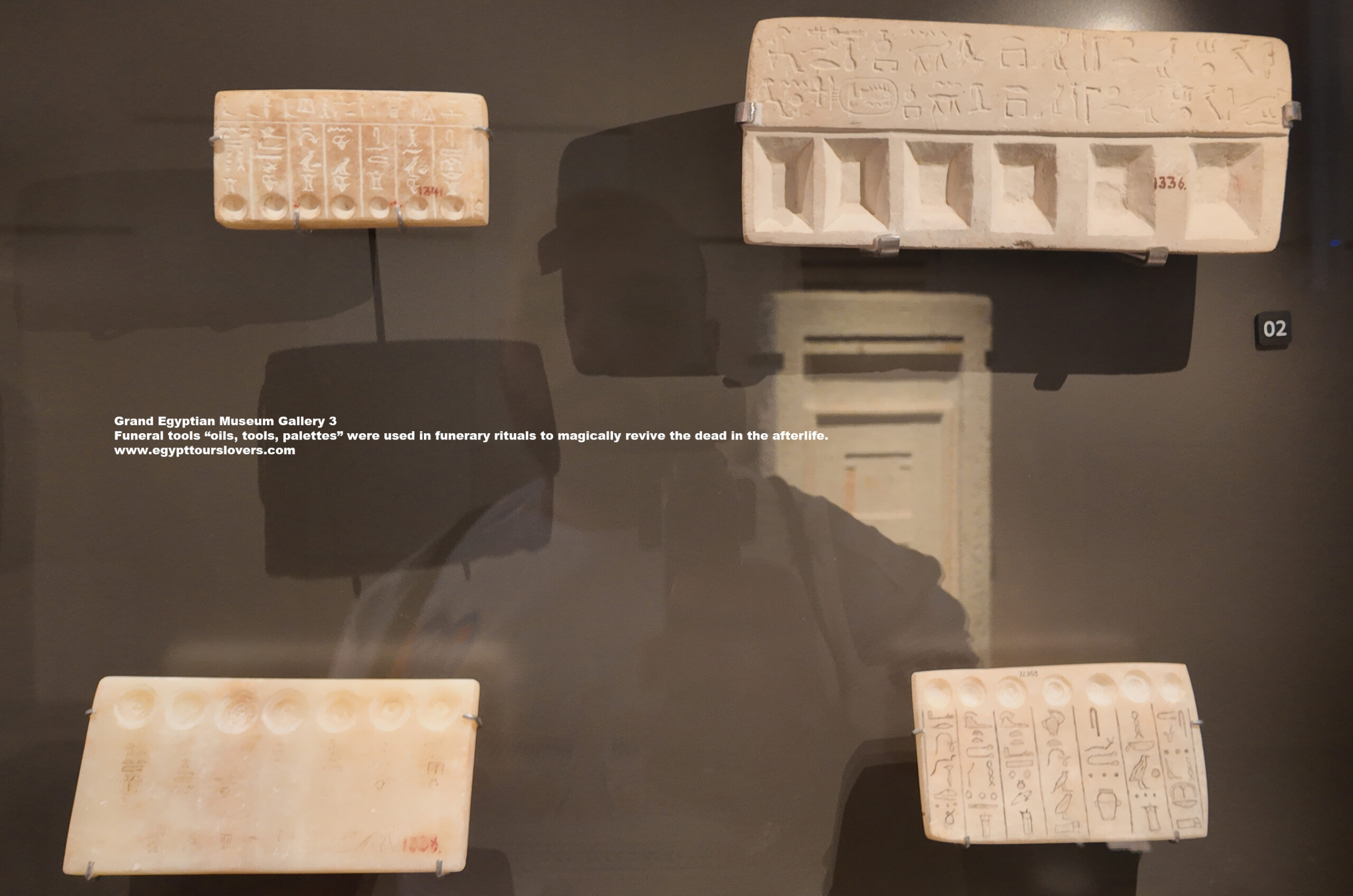
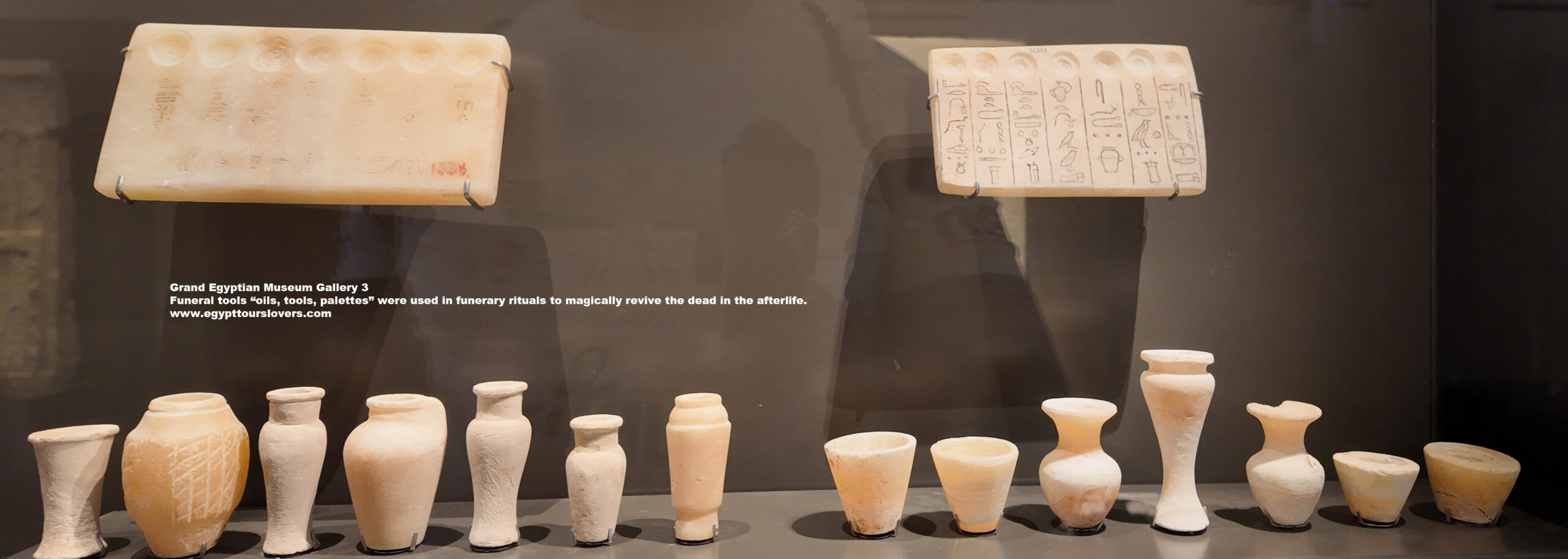
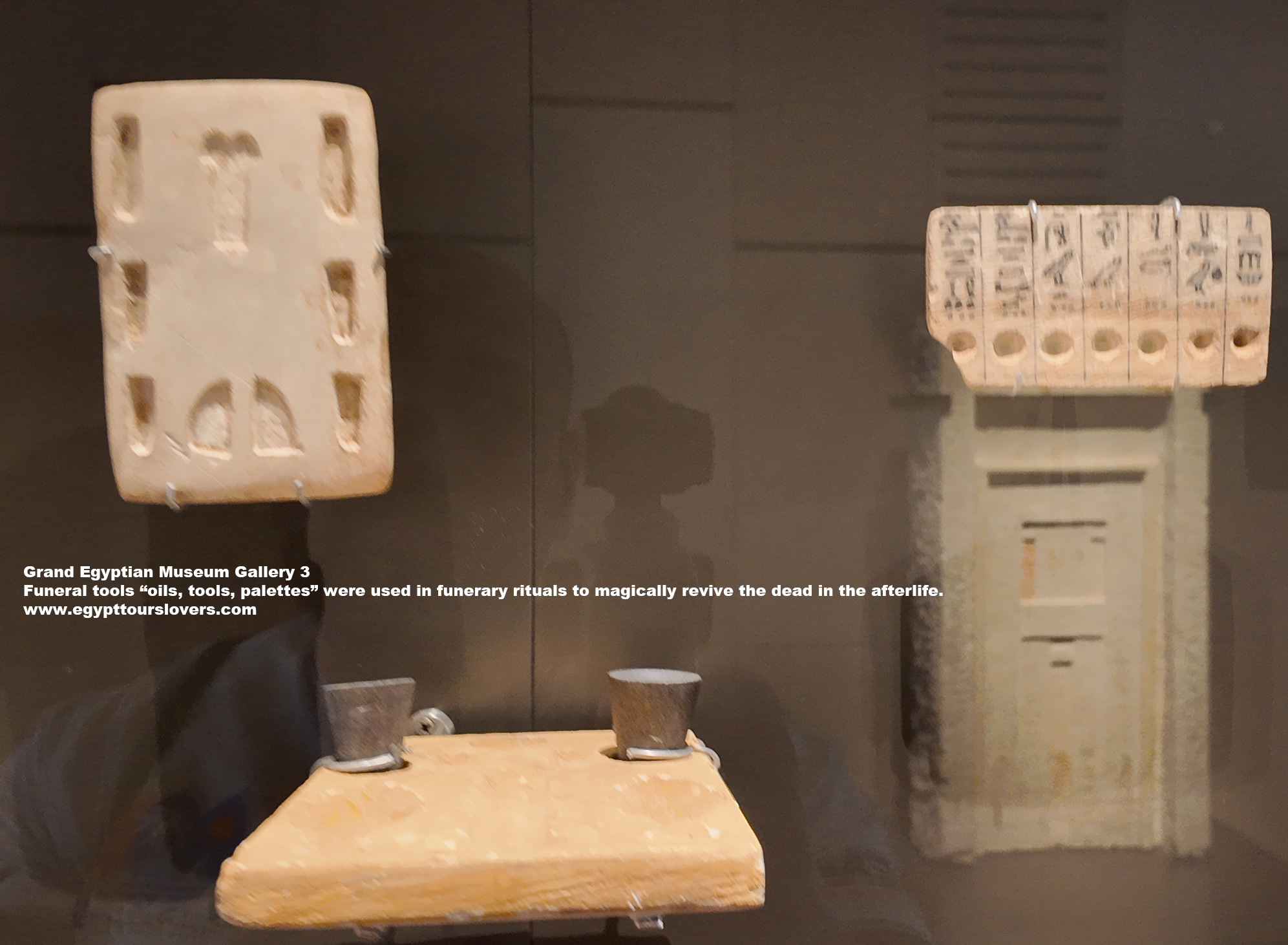
dynasty 4-6 | limestone, Egyptian alabaster |abu sir, zawyet el-amwat, Saqqara, giza
Funeral tools “oils, tools, palettes” were used in funerary rituals to magically revive the dead in the afterlife by opening their mouth to let them breathe again.
———– } ———– } ———– } ———– }
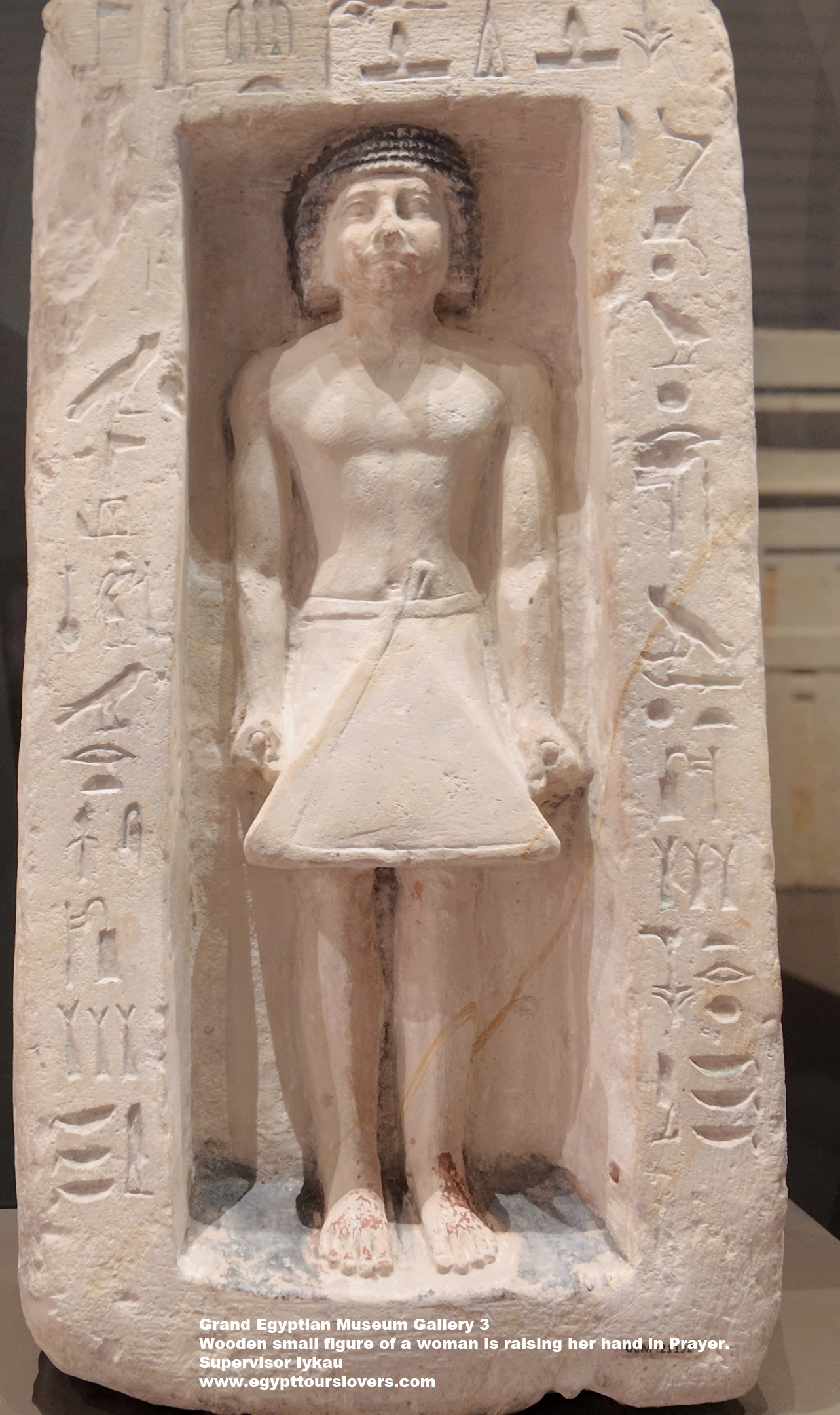
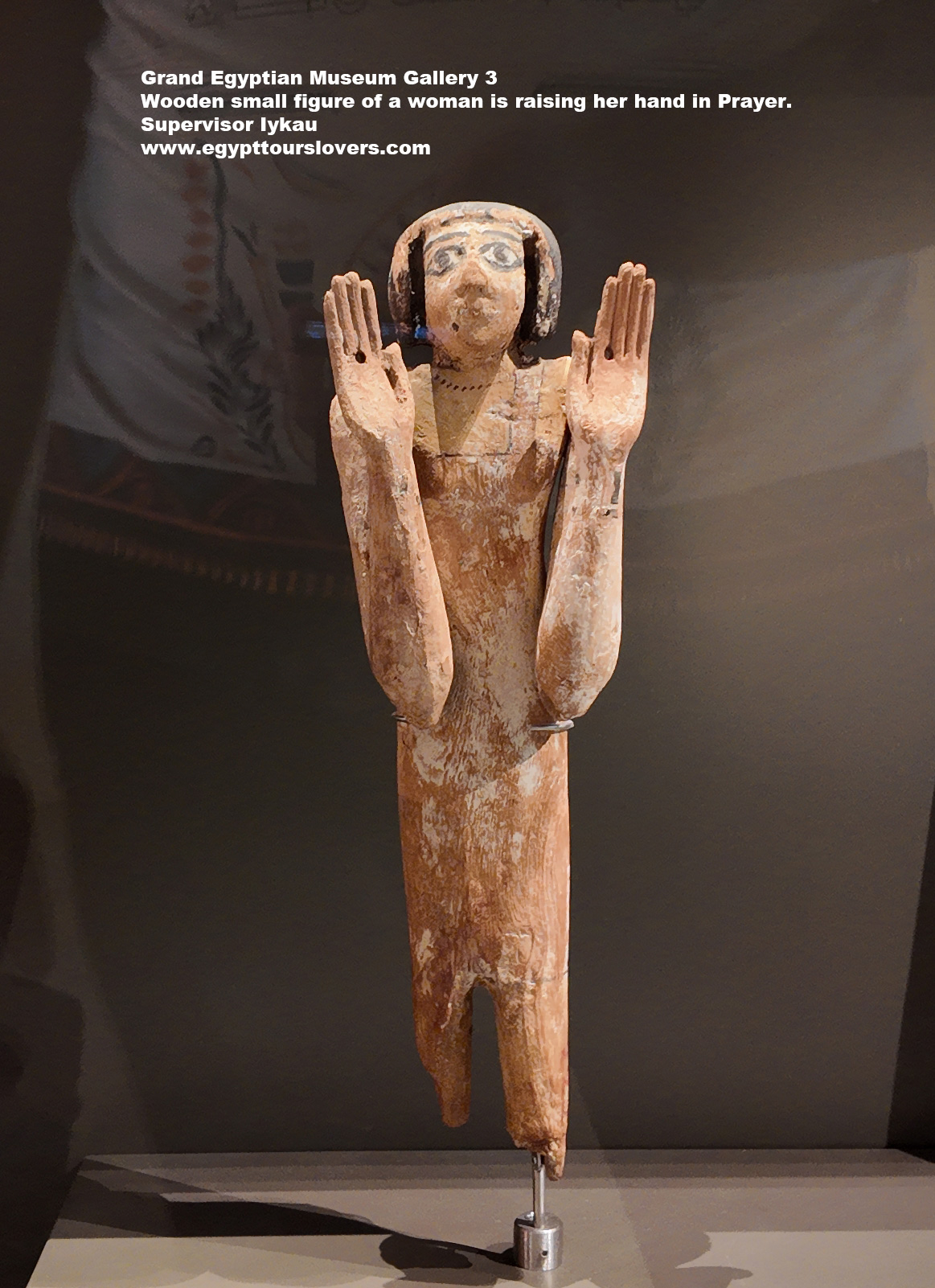
dynasty 5-6 | limestone, wood | Saqqara, luxor
Wooden small figure of a woman is raising her hand in Prayer.
Supervisor Iykau is shown in a niche inscribed with offerings including sacred oils
Job: overseer of scribes.
———– } ———– } ———– } ———– }
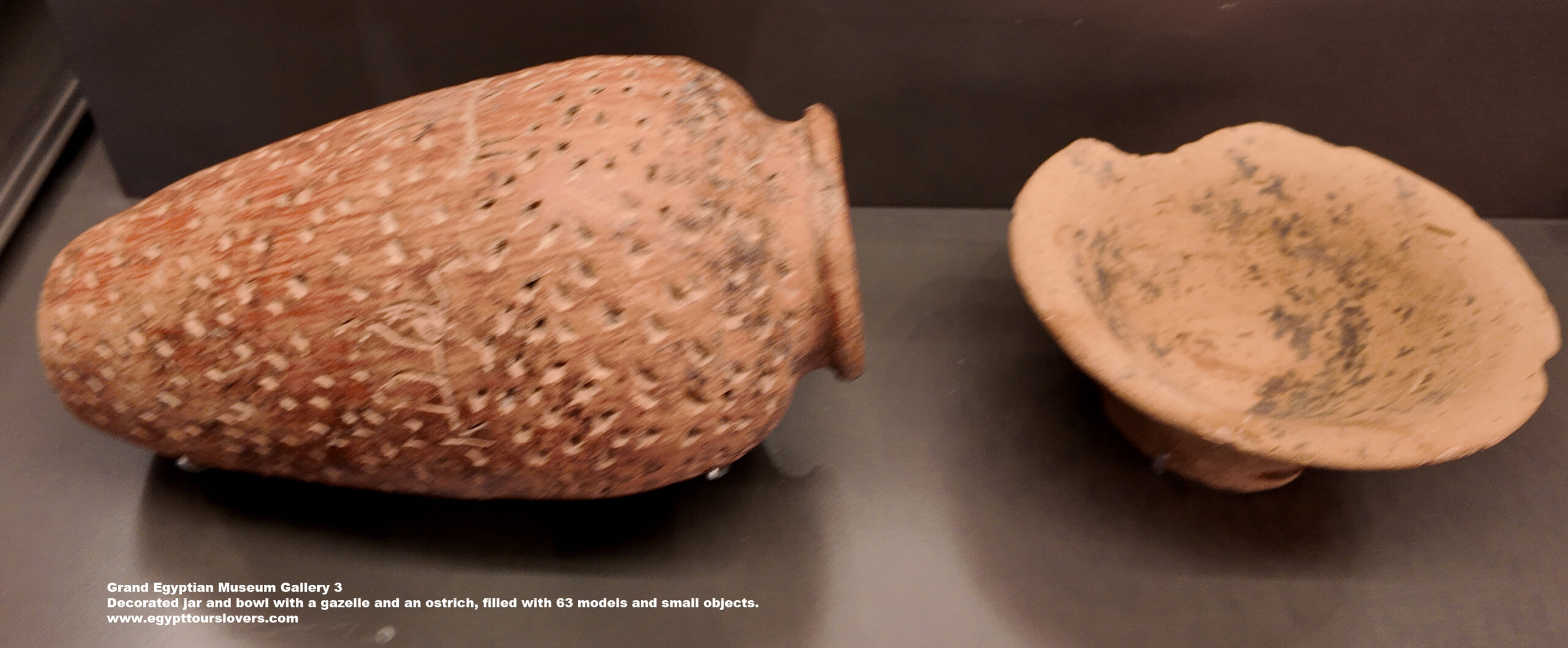
Naqada III | Pottery | Tel al-Farkha
Decorated jar and bowl with a gazelle and an ostrich, filled with 63 models and small objects.
———– } ———– } ———– } ———– }
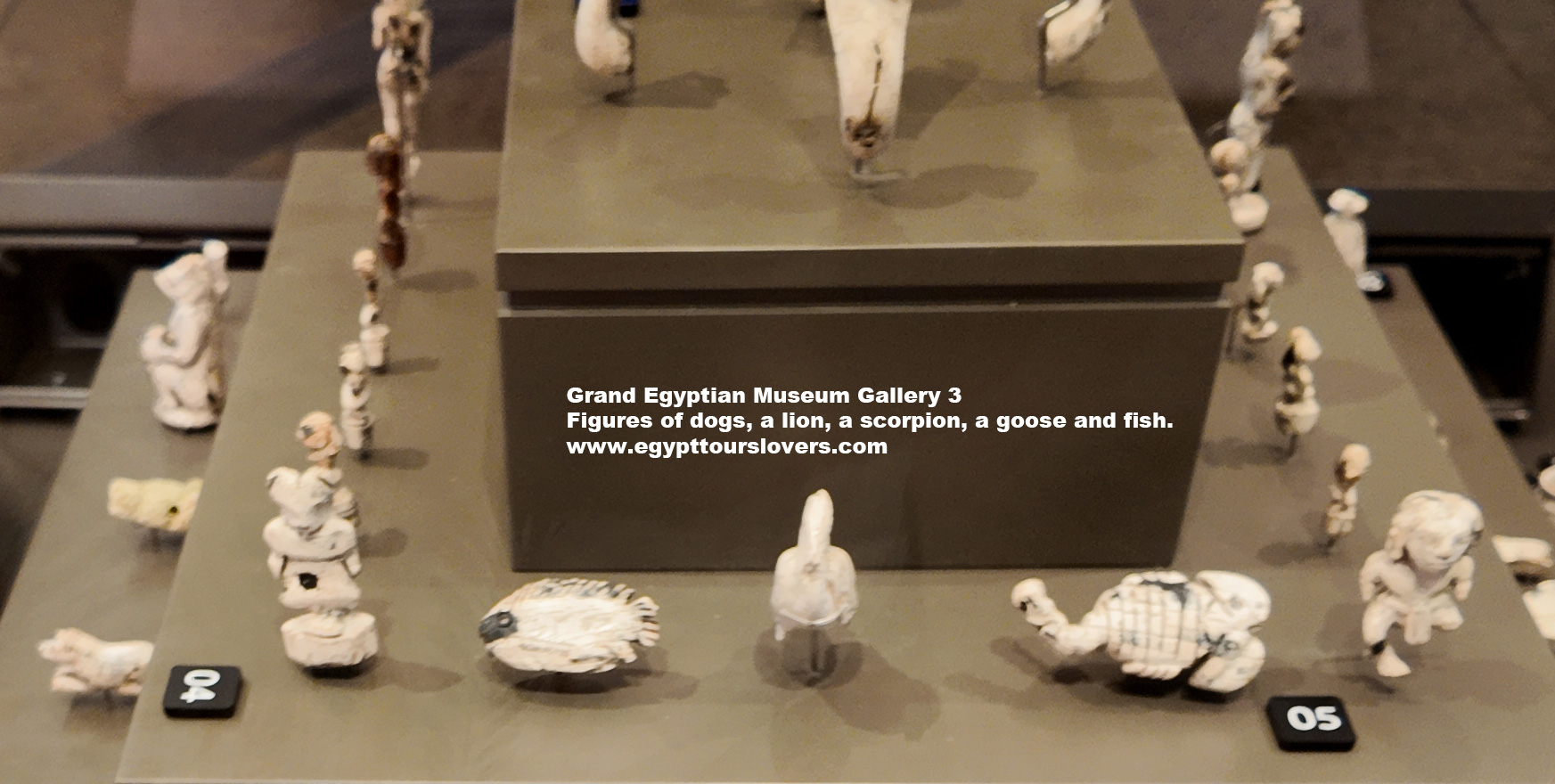
Naqada III | ivory, faience | Tel al-Farkha
Figures of dogs, a lion, a scorpion, a goose and fish.
———– } ———– } ———– } ———– }
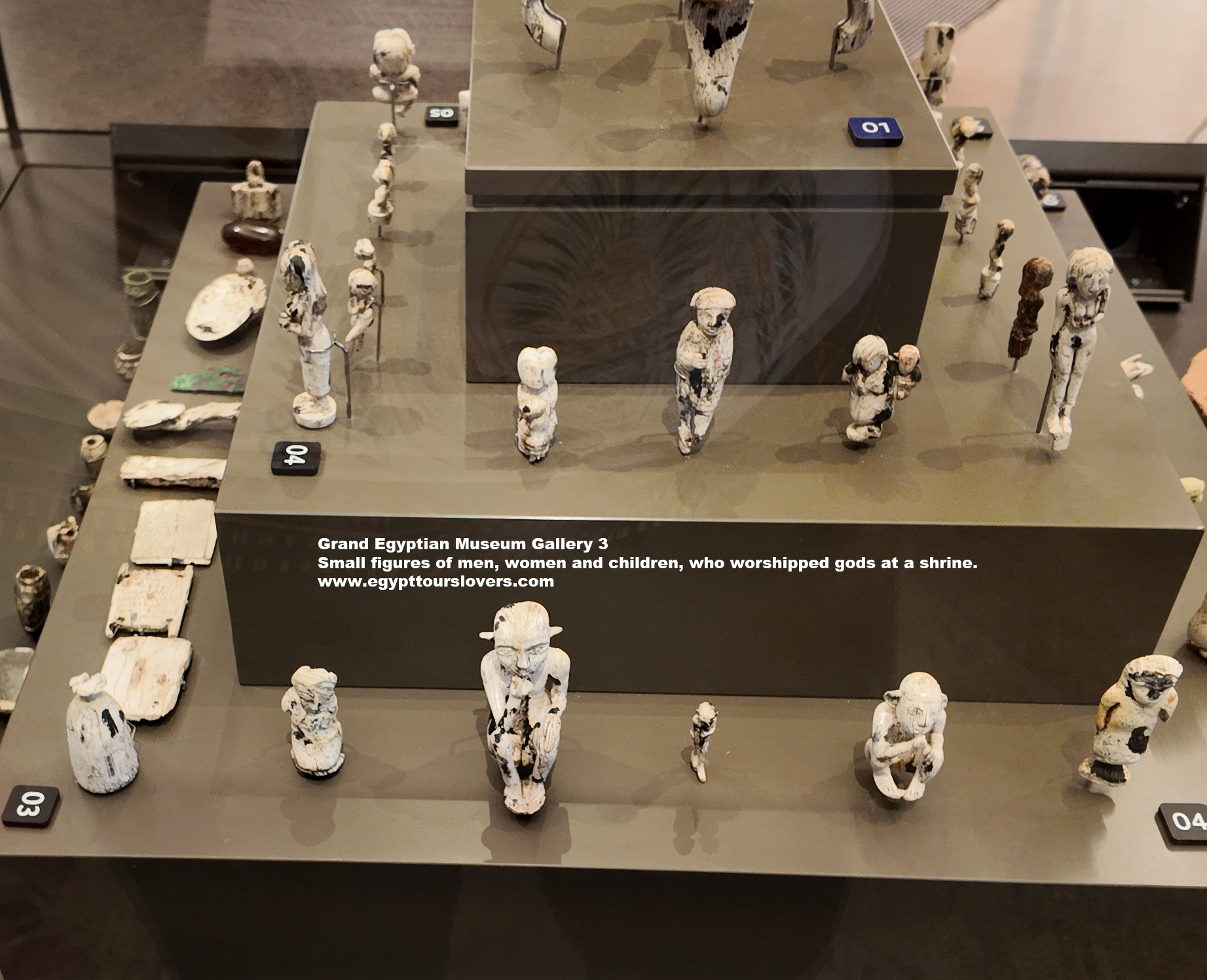
Naqada III | ivory | Tel al-Farkha
Small figures of men, women and children, who worshipped gods at a shrine.
———– } ———– } ———– } ———– }
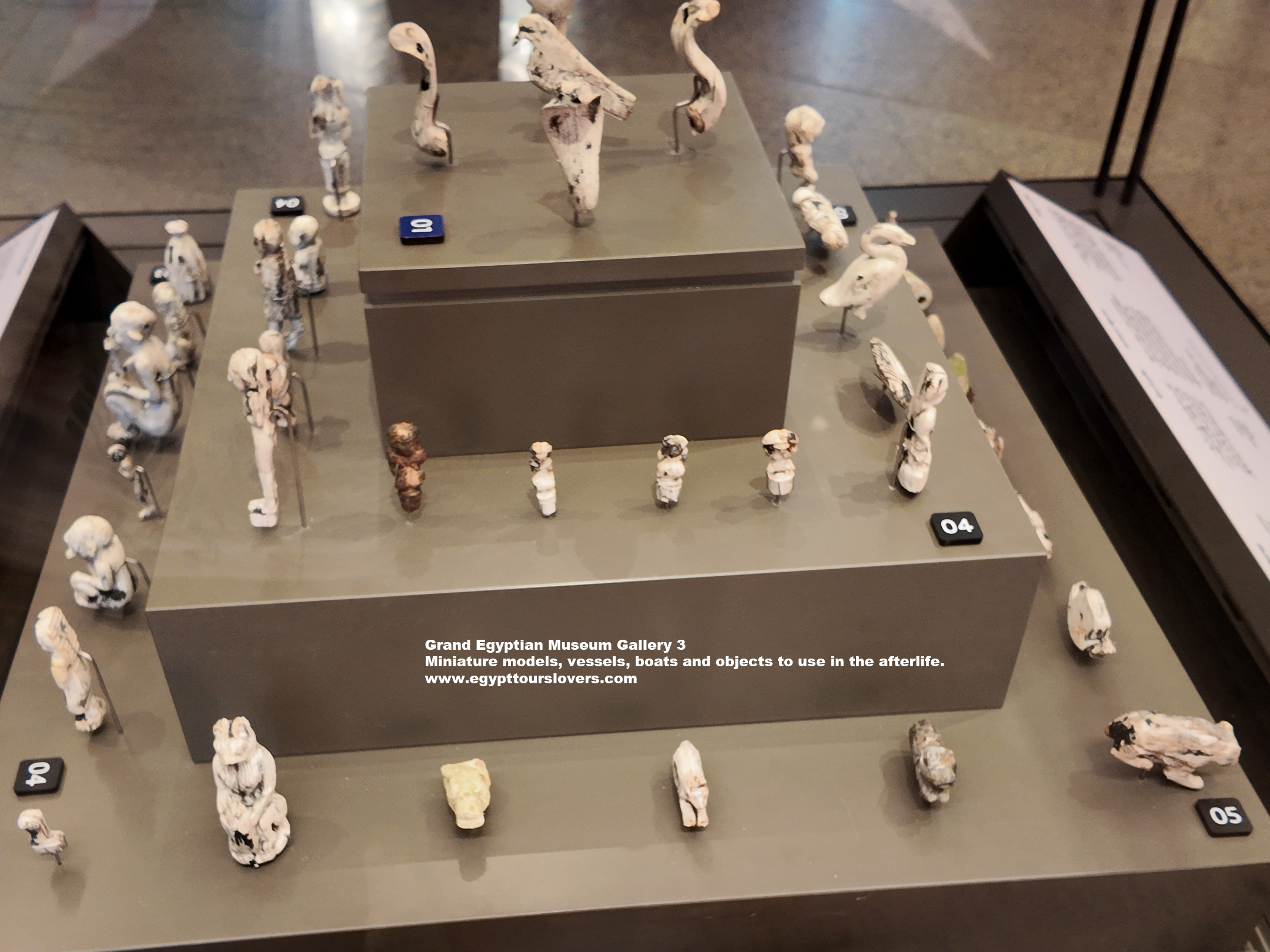
Naqada III | ivory, copper, basalt, faience, agate, dioritr, Egyptian alabaster | Tel al-Farkha
Miniature models, vessels, boats and objects to use in the afterlife.
———– } ———– } ———– } ———– }
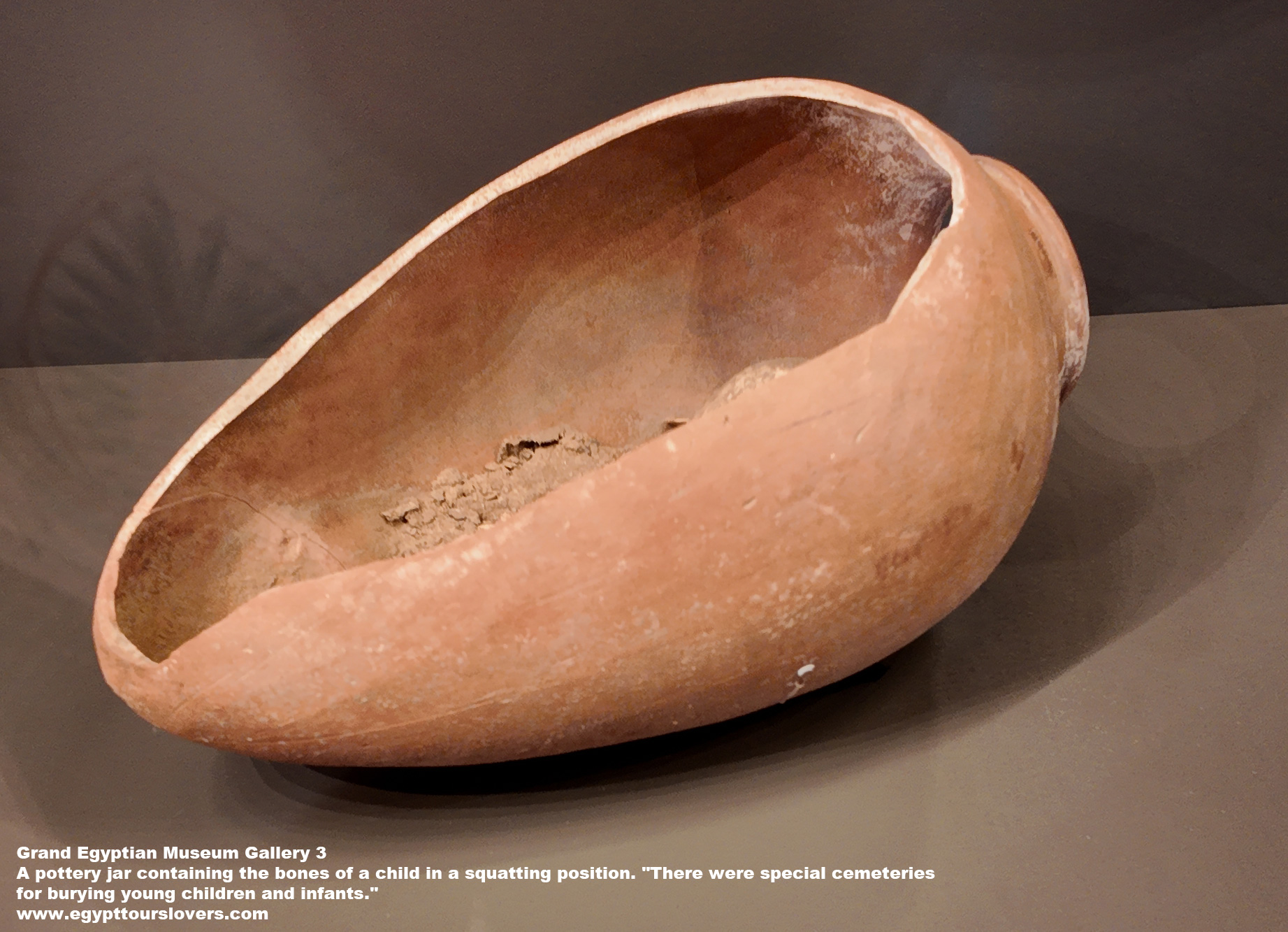
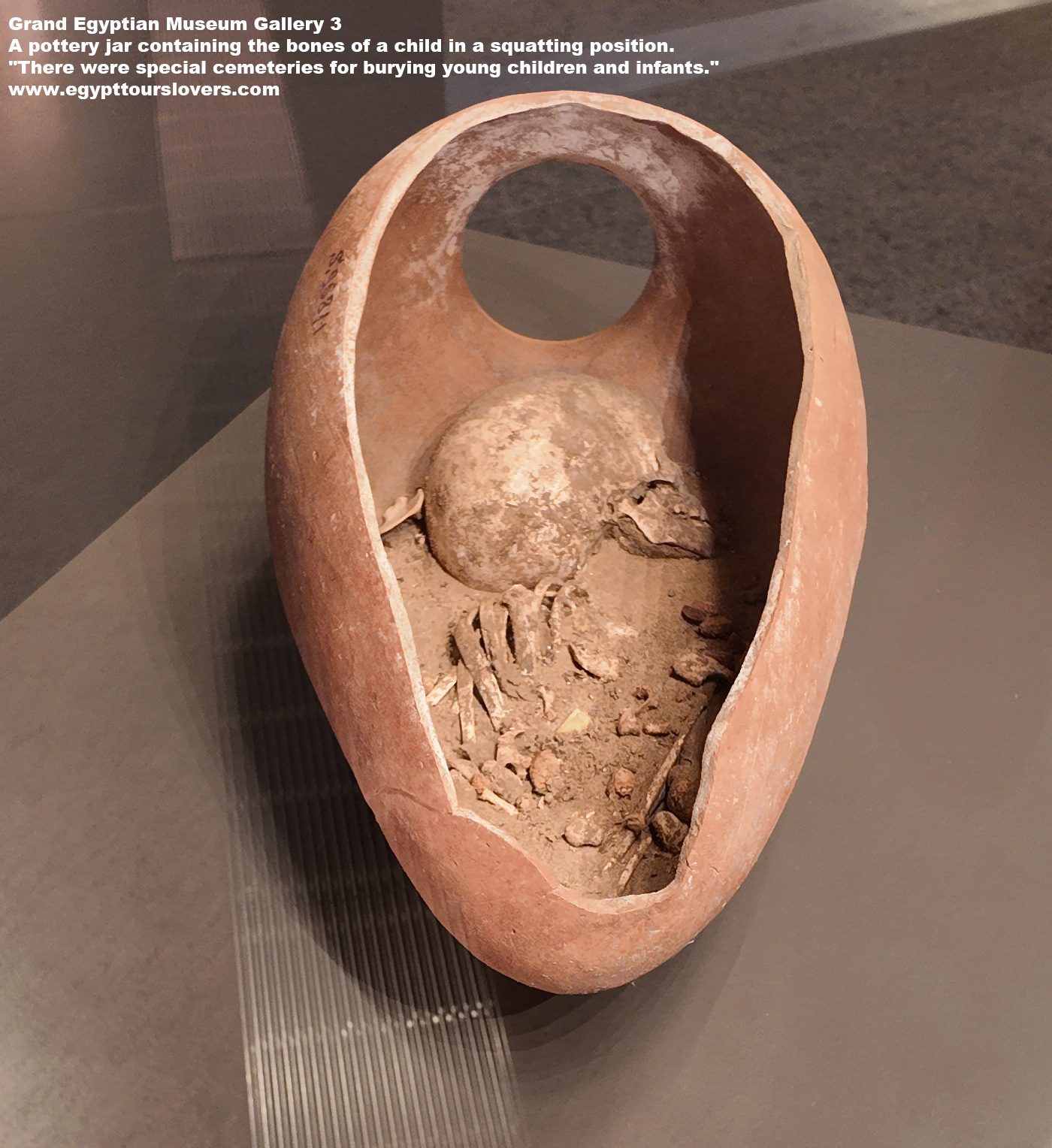
Predynastic era | Pottery, human bones | adiama
A pottery jar containing the bones of a child in a squatting position. “There were special cemeteries for burying young children and infants.”
———– } ———– } ———– } ———– }
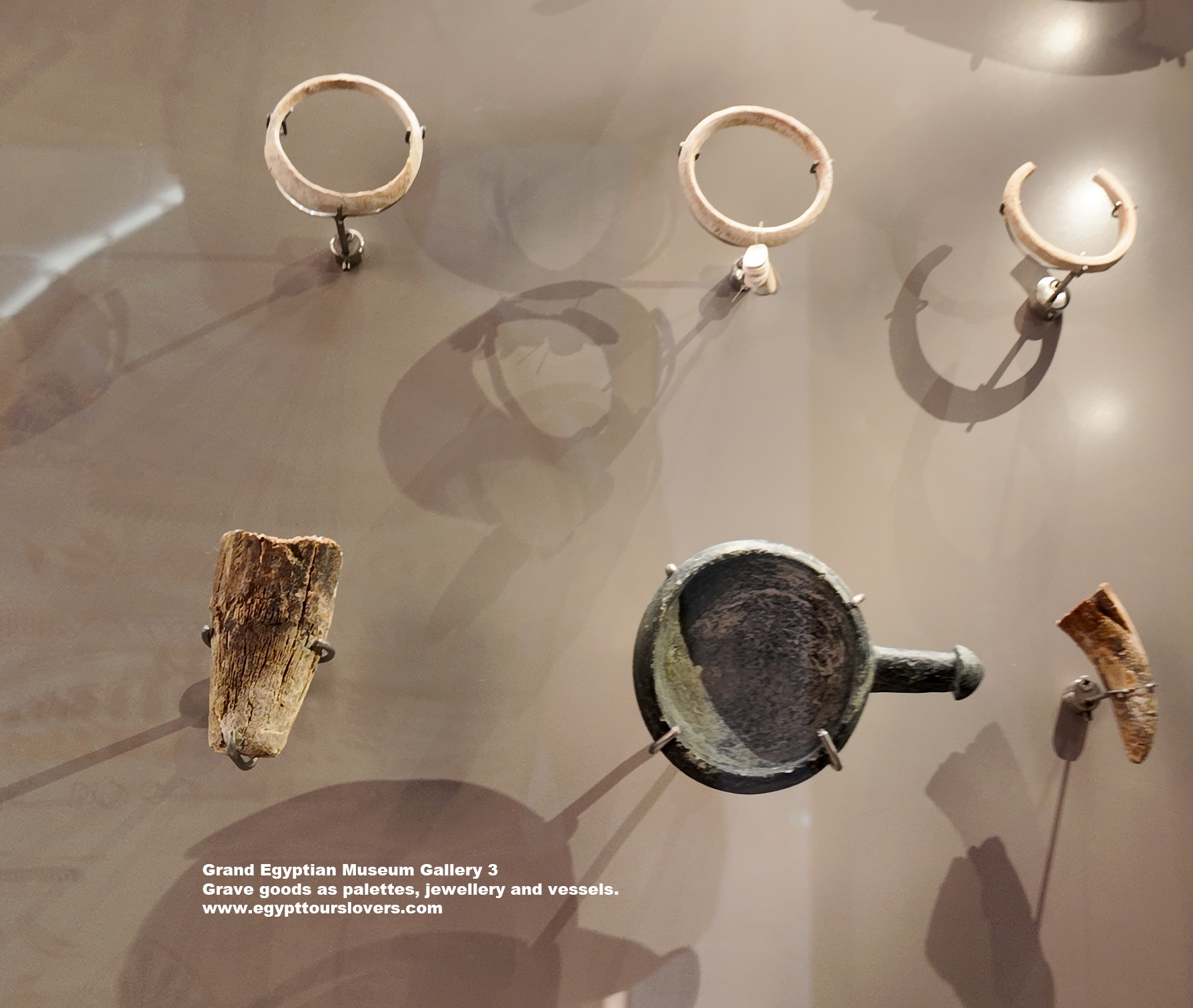
Neolithic period | granite, diorite, sandstone, flint, horn, shell | gebel ramlah
Grave goods as palettes, jewellery and vessels.
———– } ———– } ———– } ———– }
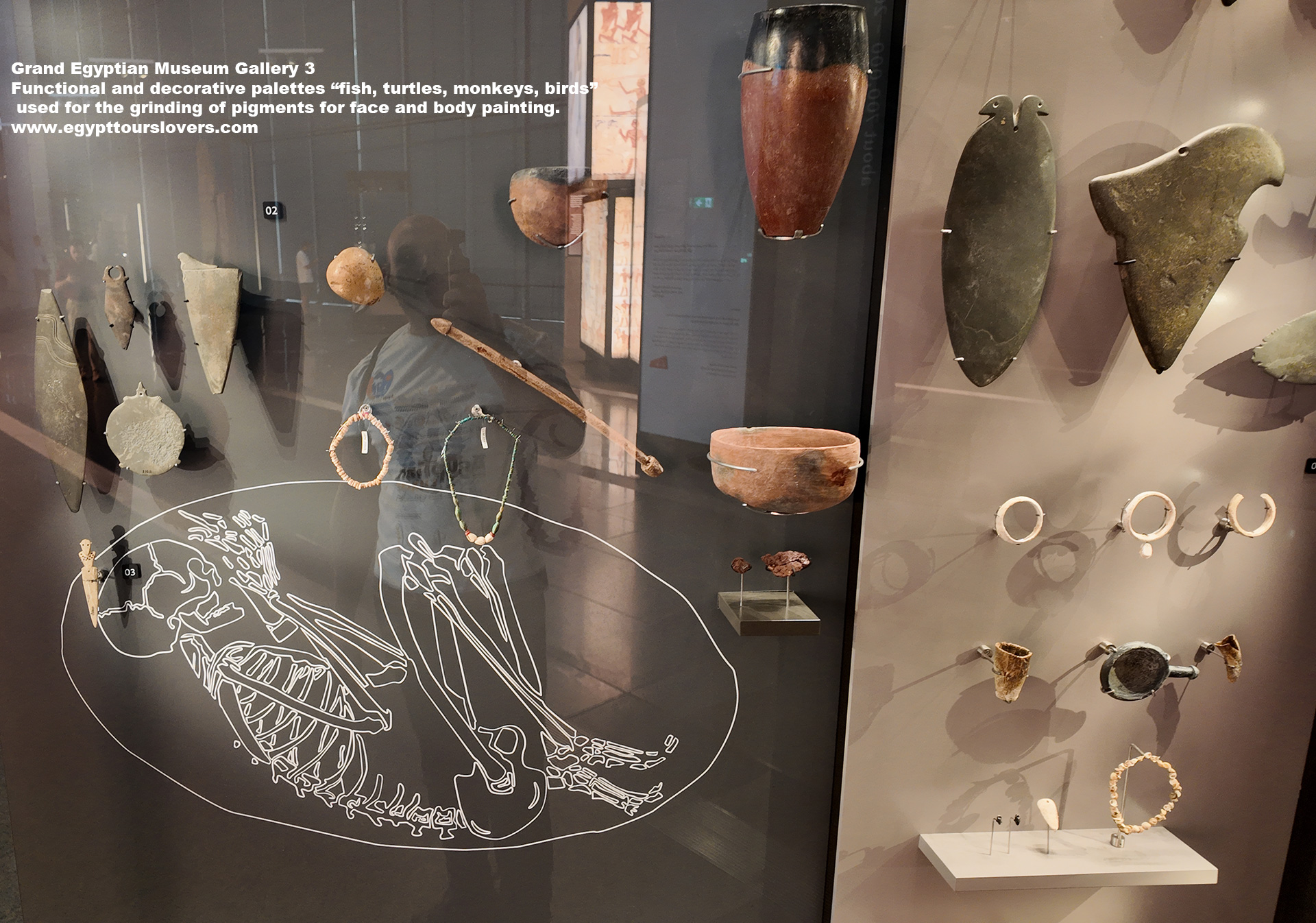
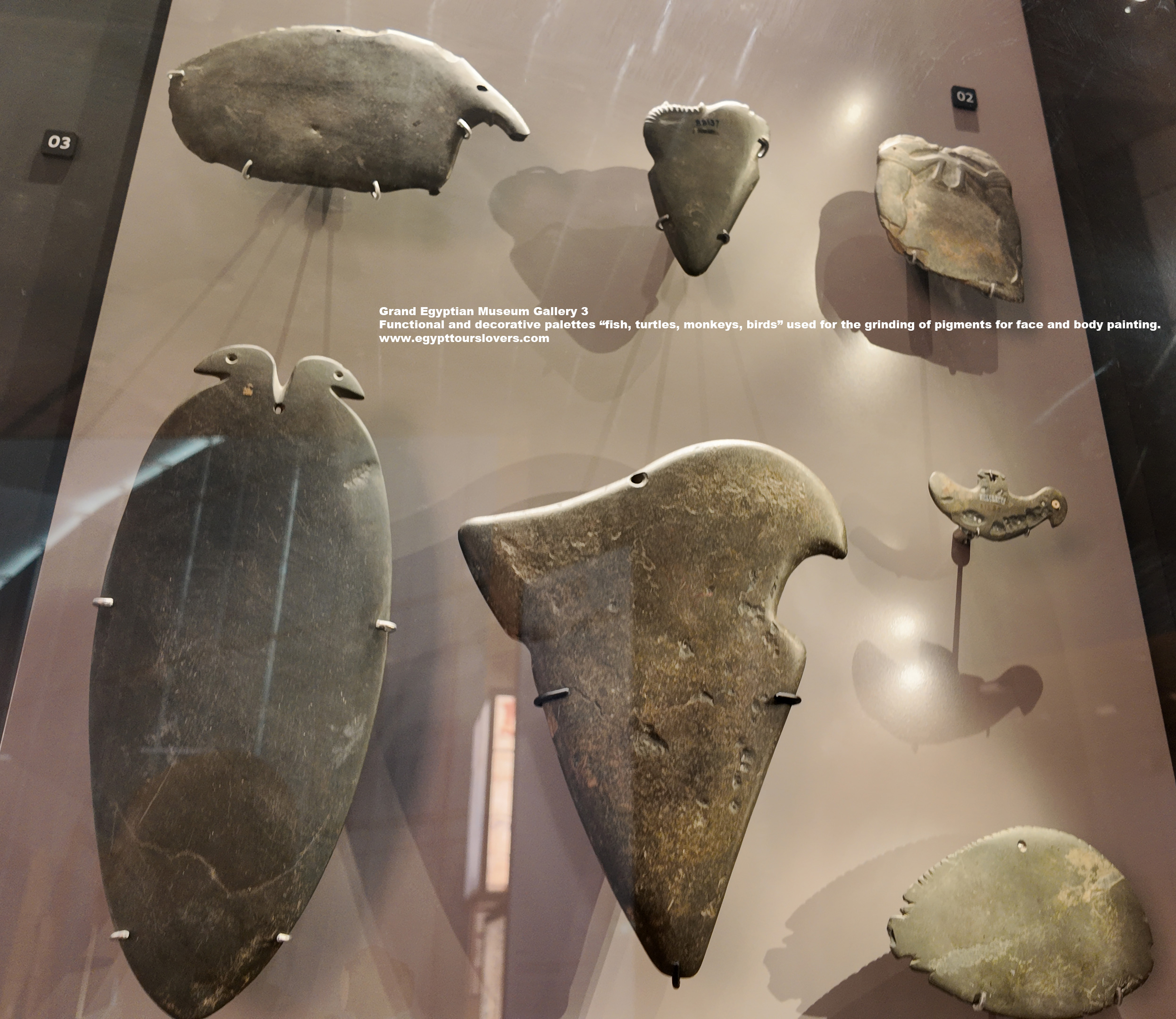
Naqada II | greywacke | Saqqara, gebel el tarif, tarkhan, nea el-deir, hierakonpoils
Functional and decorative palettes “fish, turtles, monkeys, birds” used for the grinding of pigments for face and body painting.
———– } ———– } ———– } ———– }
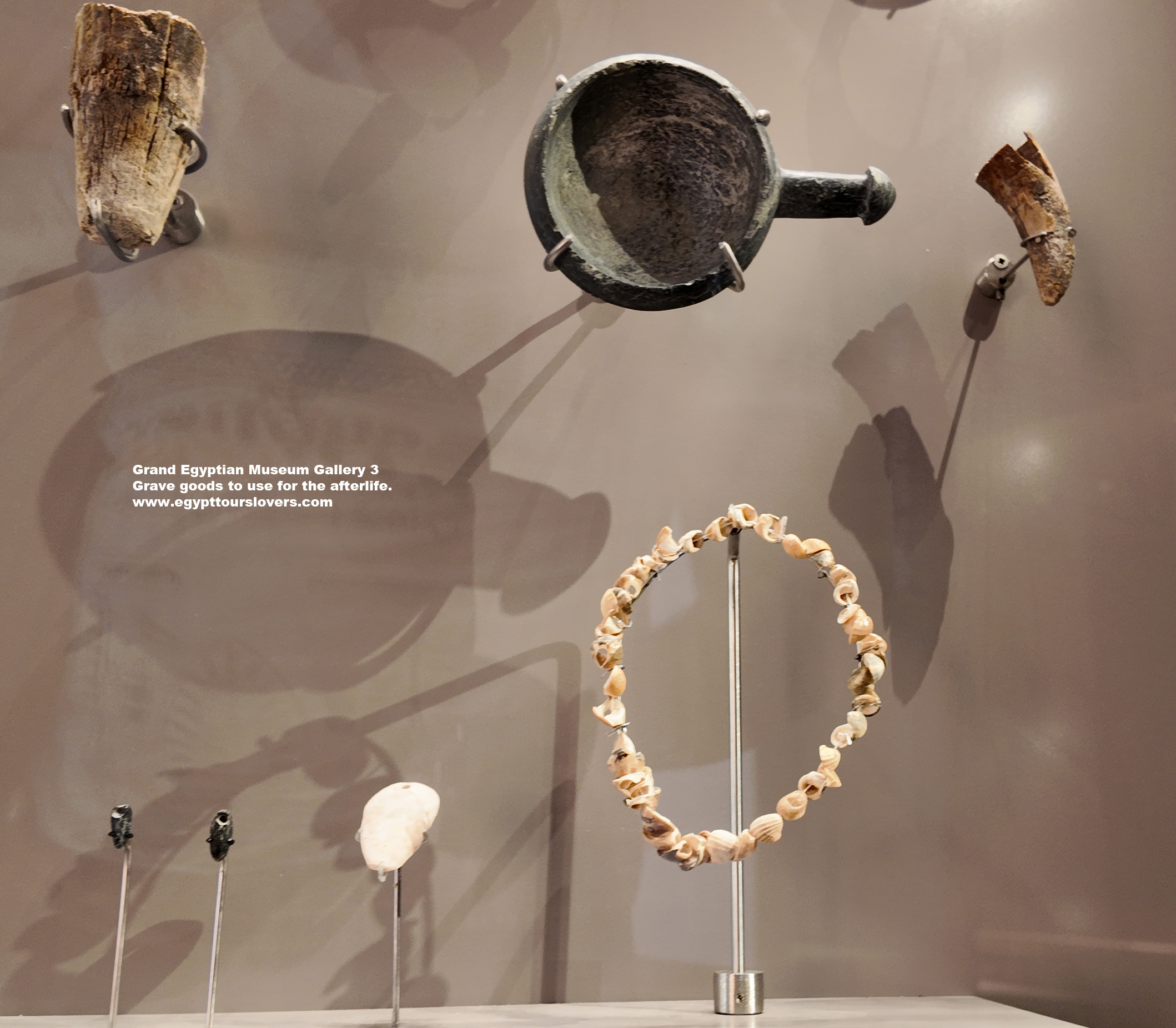
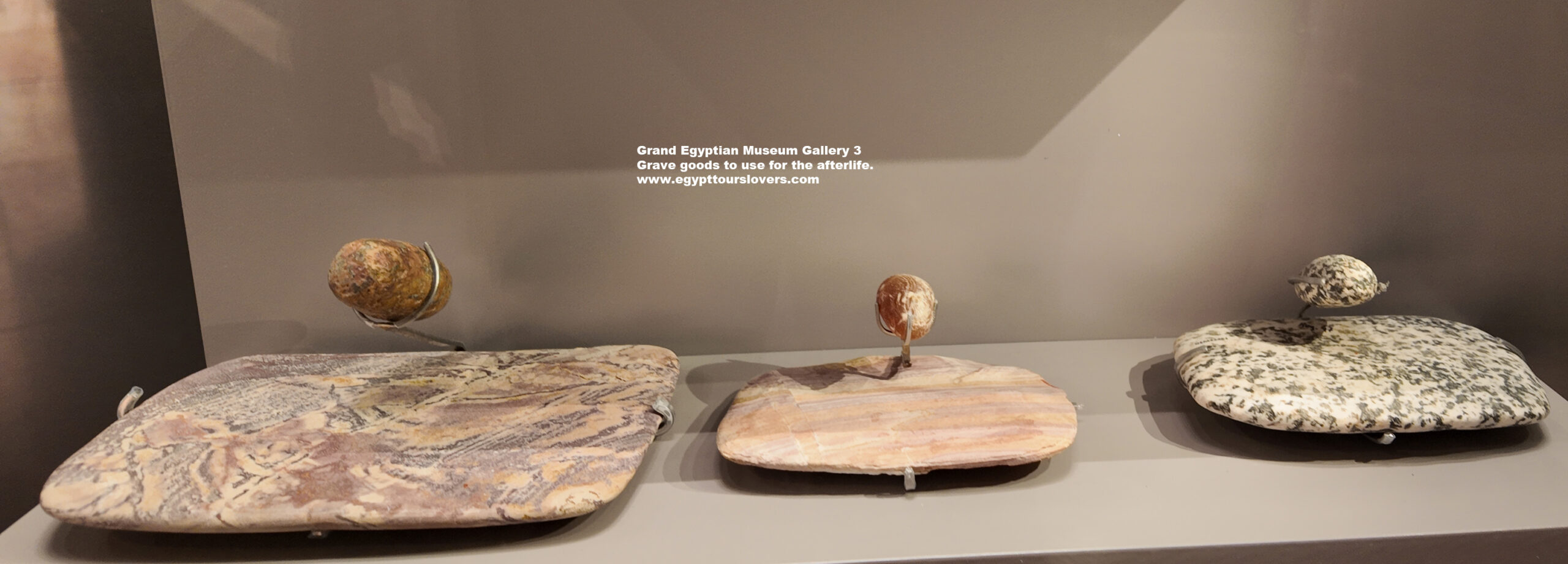
Neolithic period, Naqada III + Naqada II | greywacke, ivory, pottery, ochre, faience, semi-precious stones | Helwan, nubia, badari, deir tasa, mustagidda, hierakonpoils
Grave goods to use for the afterlife.
Often buried in shallow oval pits, bodies were surrounded by Grave goods.
———– } ———– } ———– } ———– }
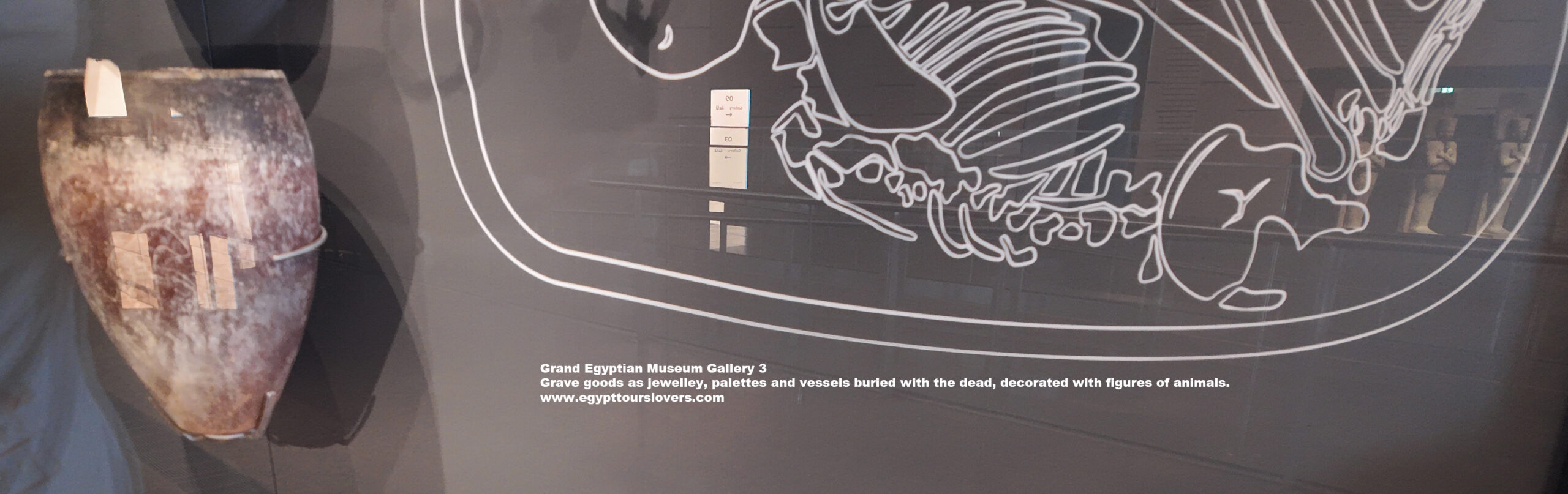
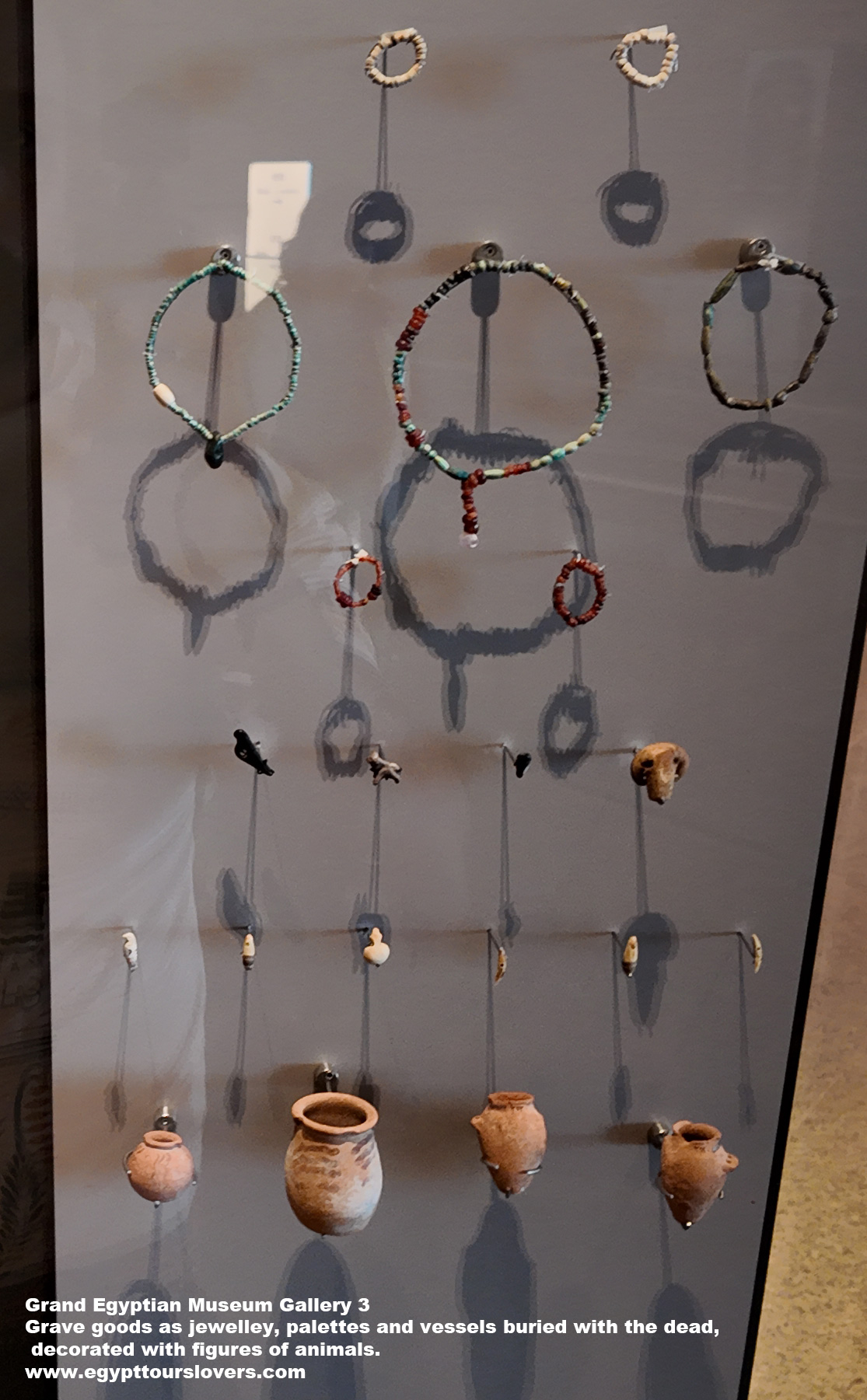
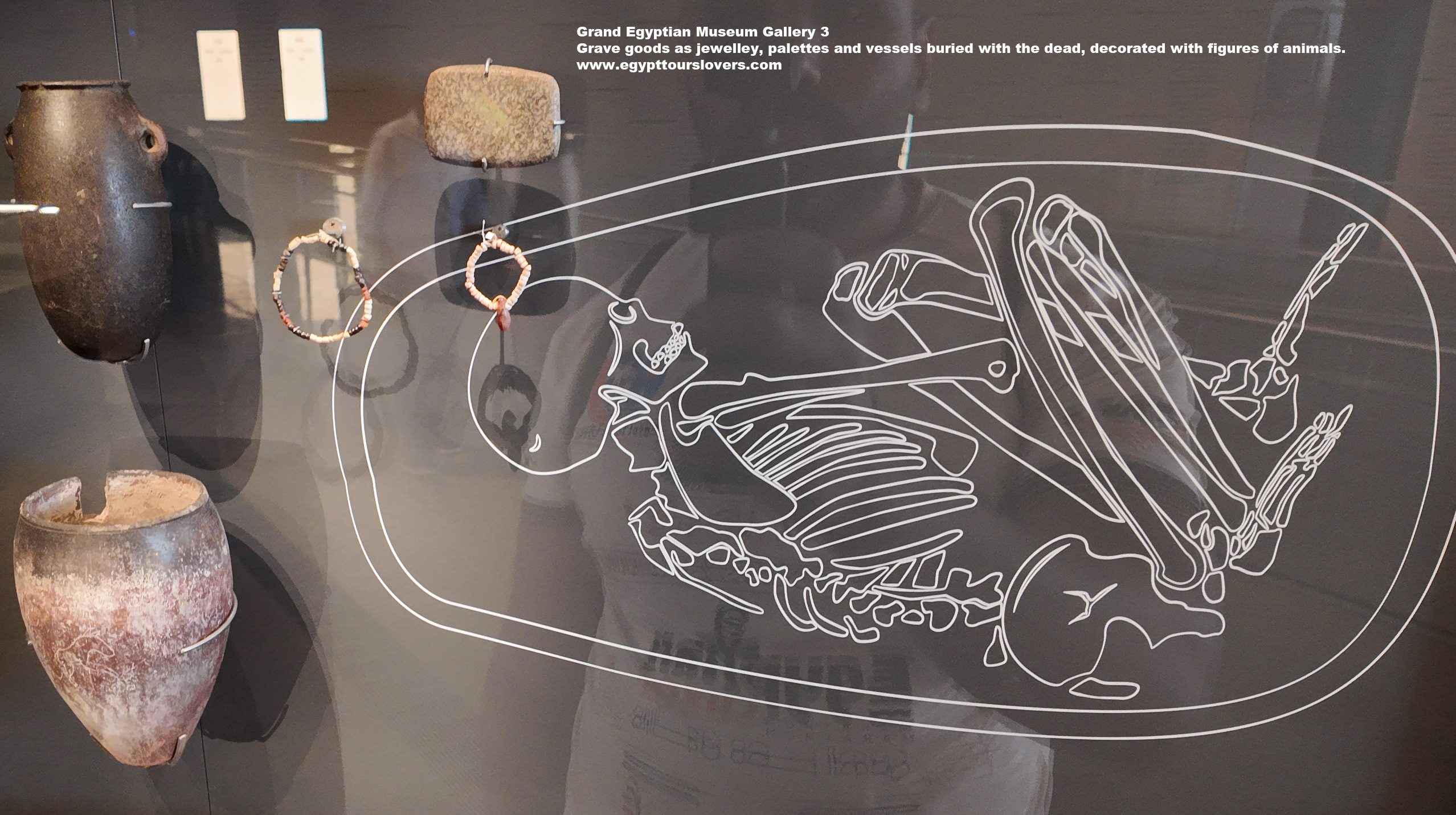
Naqada III + Naqada II | pottery, diorite, granite, ivory, faience, Egyptian alabaster, limestone, semi-precious stones | adiama
Grave goods as jewelley, palettes and vessels buried with the dead, decorated with figures of animals.
———– } ———– } ———– } ———– }
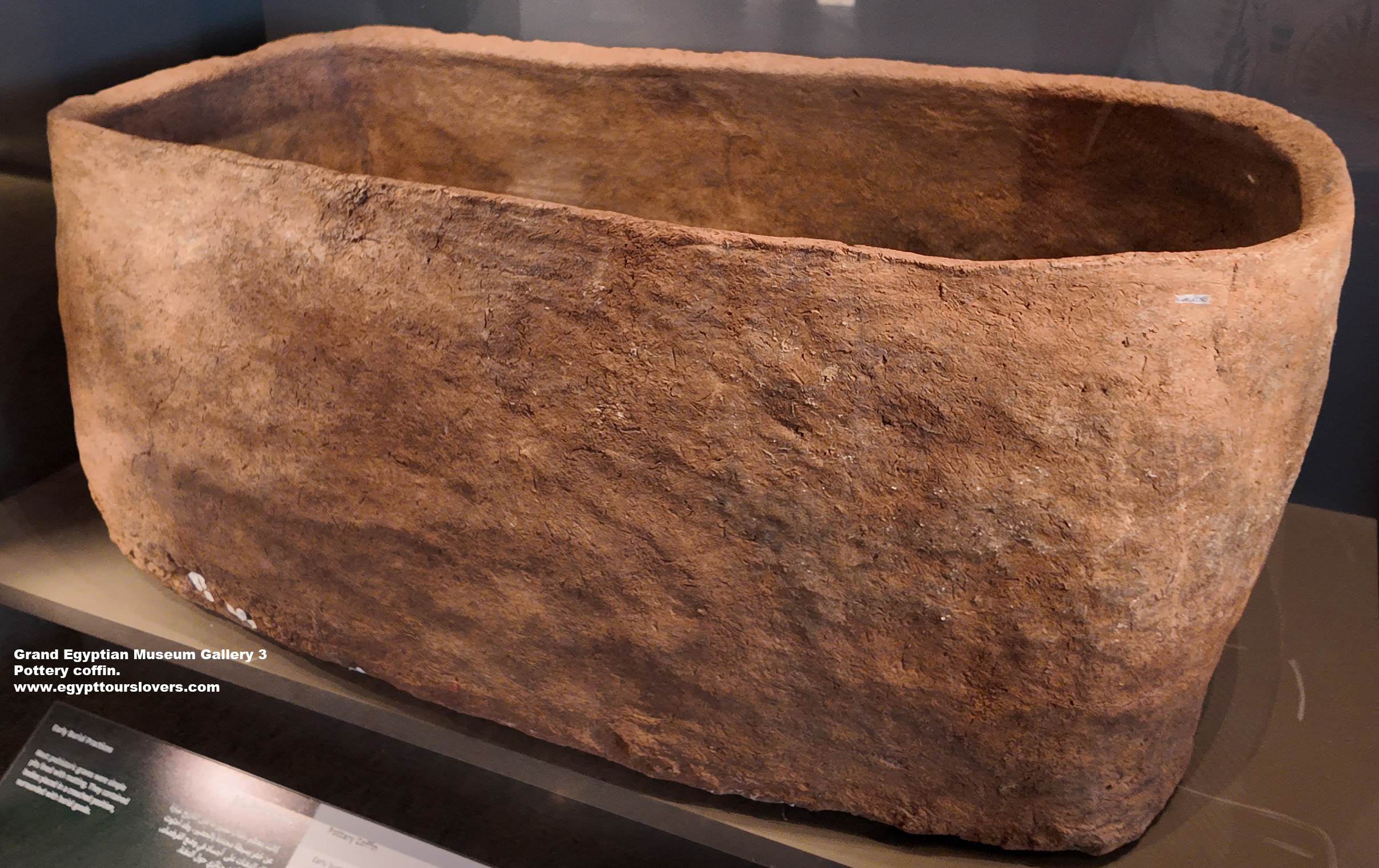
Naqada III | pottery | adiama
Pottery coffin.
Contain body lying on their left sides in crouched positions.
———– } ———– } ———– } ———– }
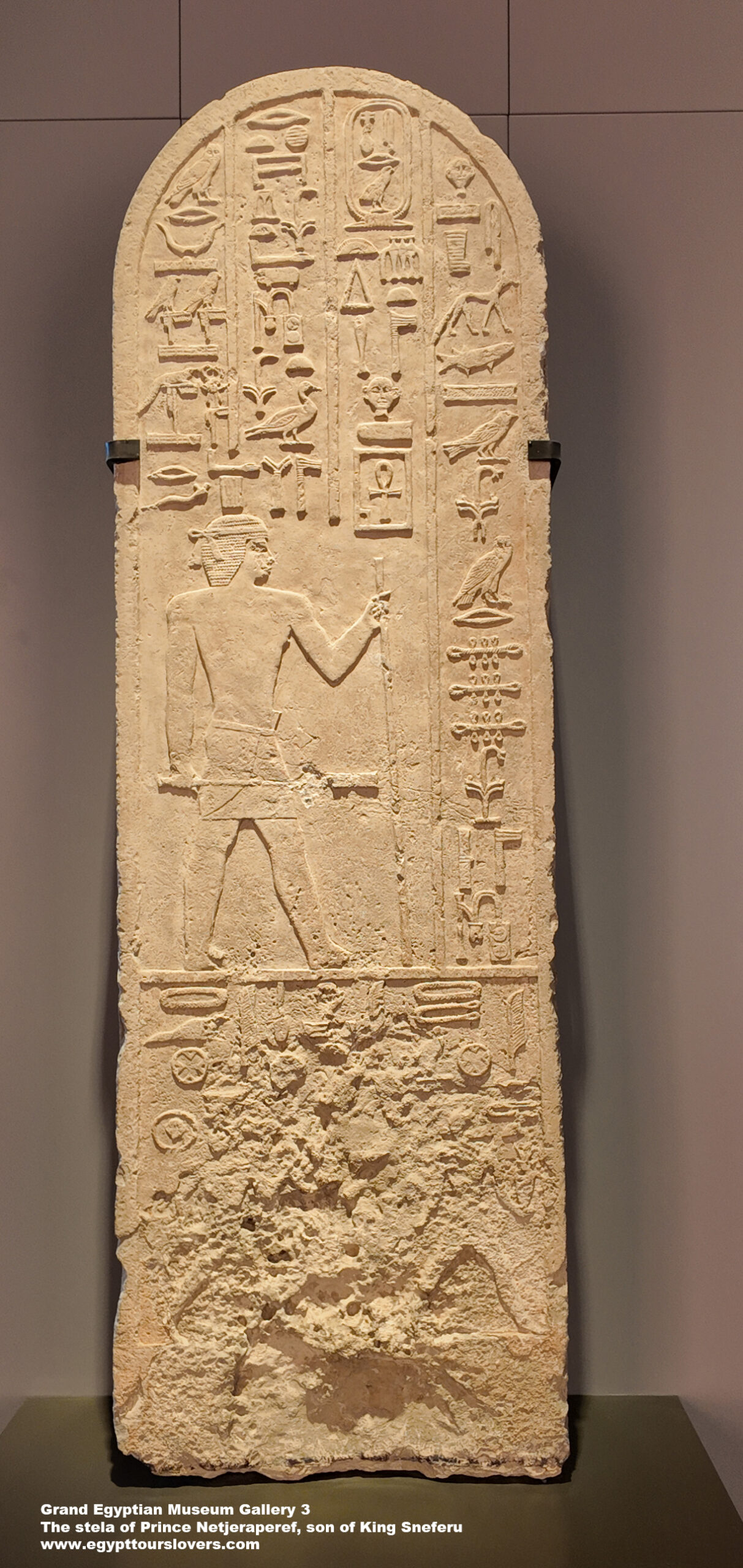
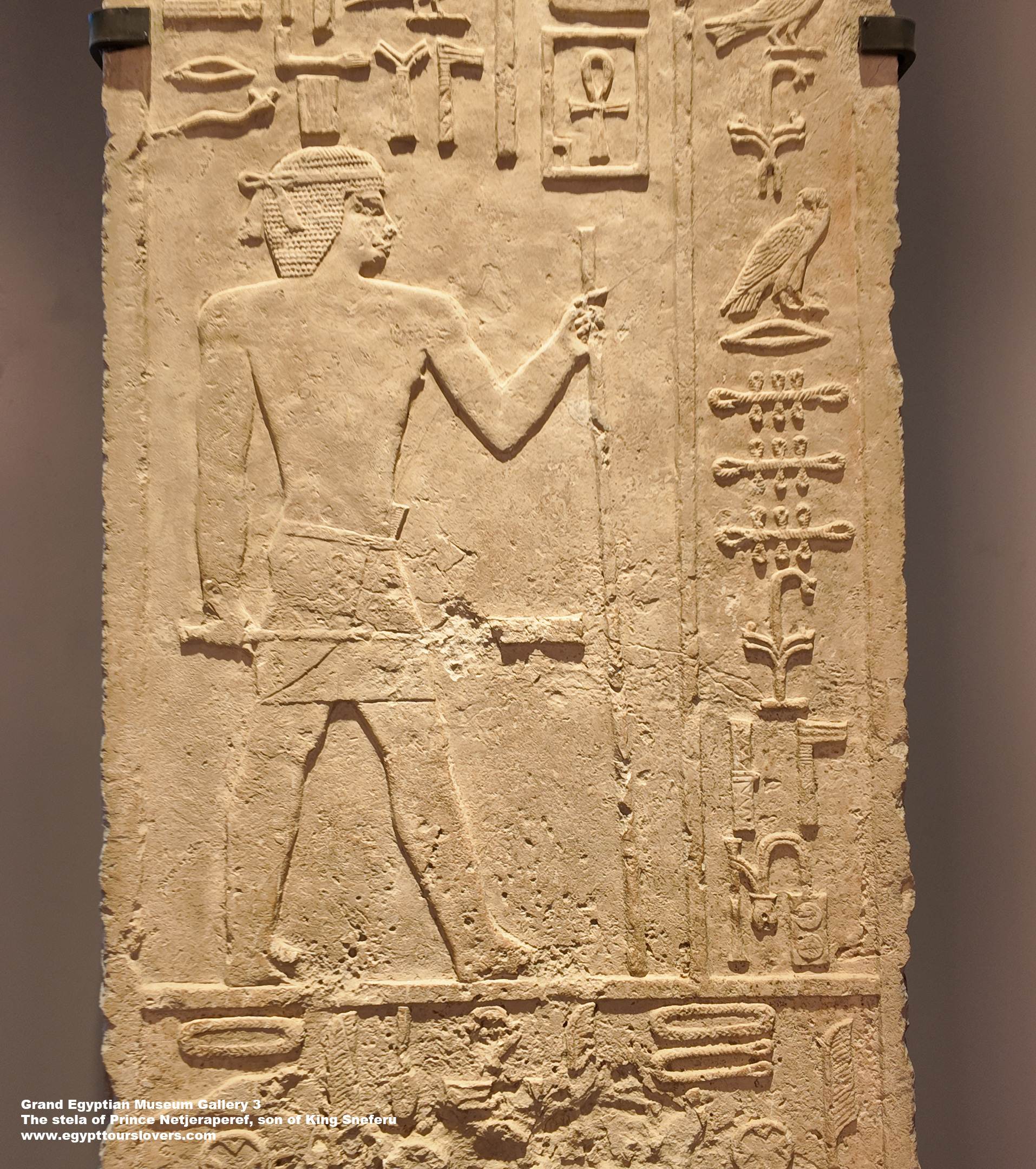
dynasty 4 | limestone | dashour
The stela of Prince Netjeraperef, son of King Sneferu
Prince Netjeraperef Jobs as a judge, responsible for the Egyptian borders, and supervisor of expeditions to the Upper Egyptian provinces (5, 6, 7).
The stela was discovered in the pyramid complex of King Sneferu at Dahshur.
———– } ———– } ———– } ———– }
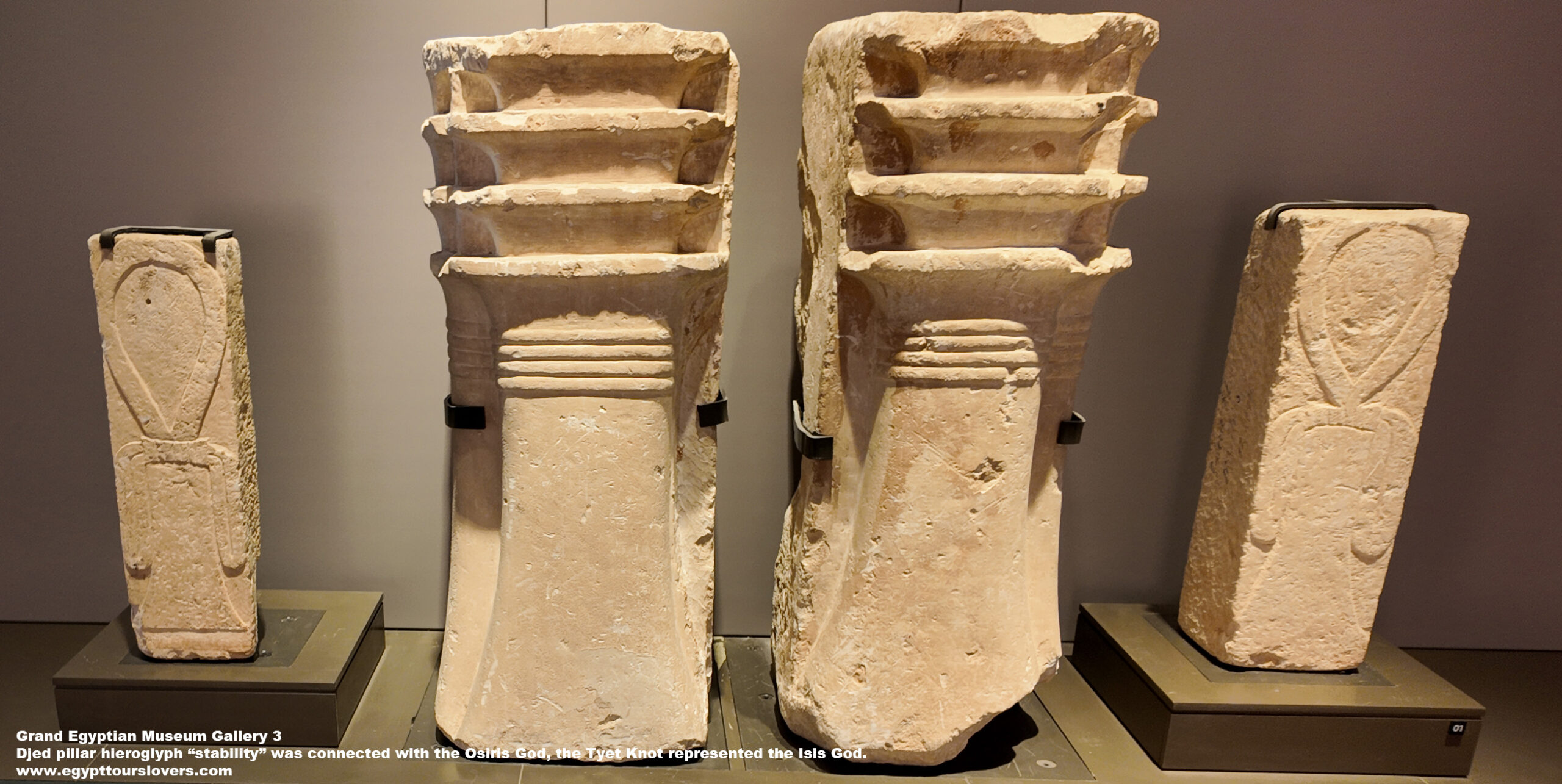 dynasty 5 | limestone | Saqqara
Djed pillar hieroglyph “stability” was connected with the Osiris God, the Tyet Knot represented the Isis God.
———– } ———– } ———– } ———– }
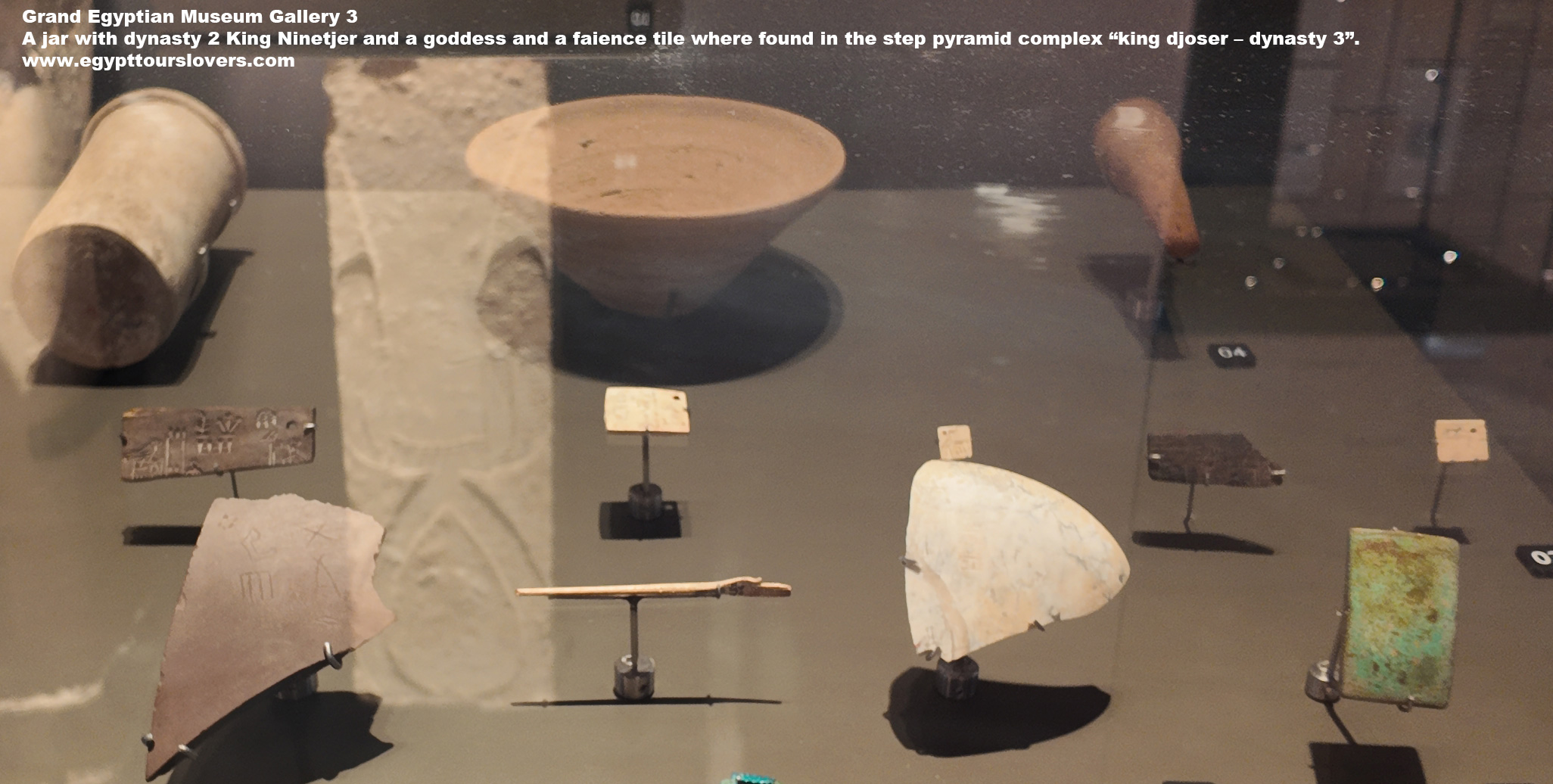 dynasty 2-3 | faience, diorite | Saqqara
A jar with dynasty 2 King Ninetjer and a goddess and a faience tile where found in the step pyramid complex “king djoser – dynasty 3”.
———– } ———– } ———– } ———– }
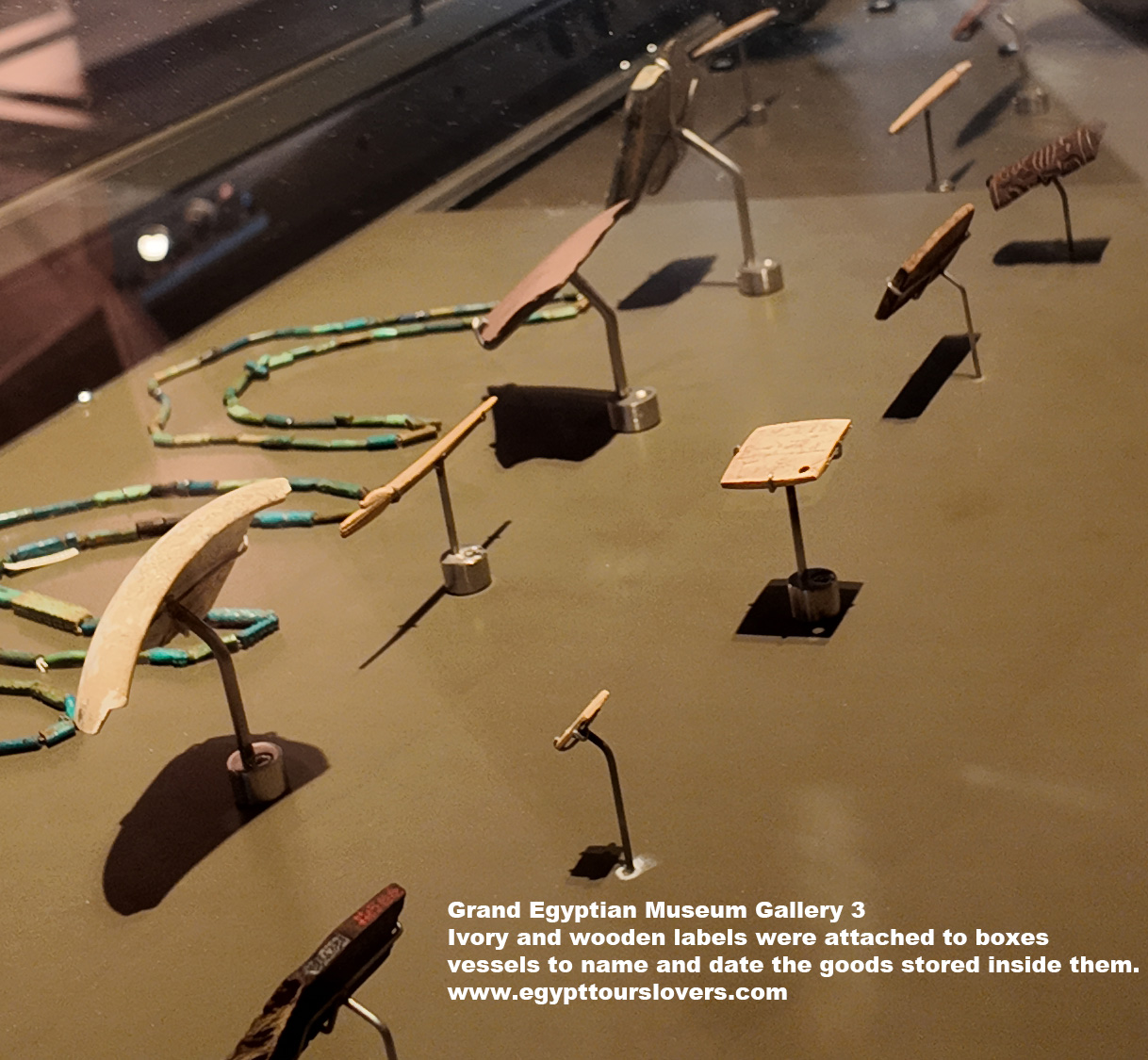 Naqada III + dynasty 6 | wood, ivory | Abydos
Ivory and wooden labels were attached to boxes and vessels to name and date the goods stored inside them.
labels listed ceremonies, battles, temple foundations and other royal events.
———– } ———– } ———– } ———– }
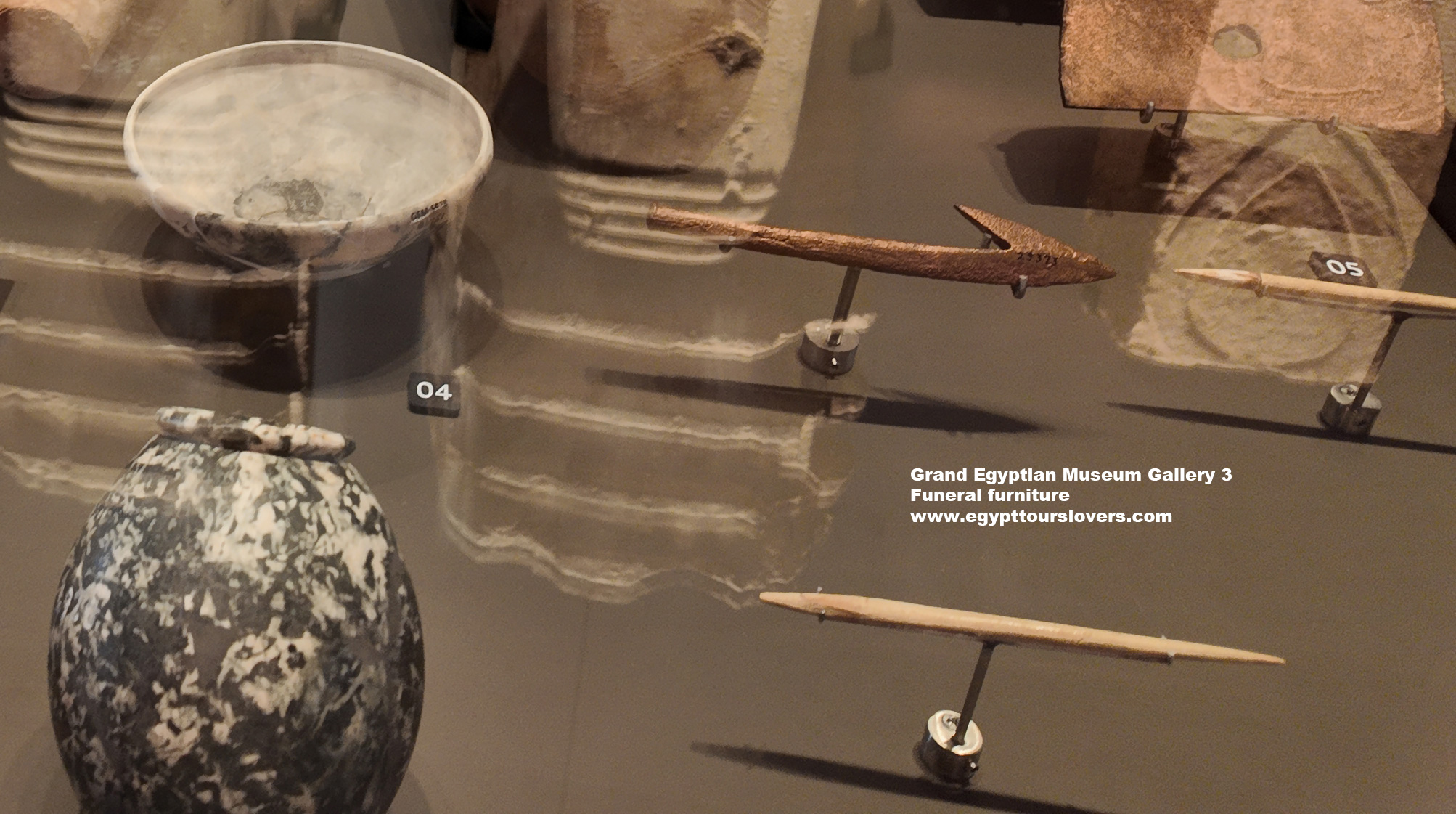 dynasty 6 | pottery, Egyptian alabaster | Abydos
Funeral furniture
———– } ———– } ———– } ———– }
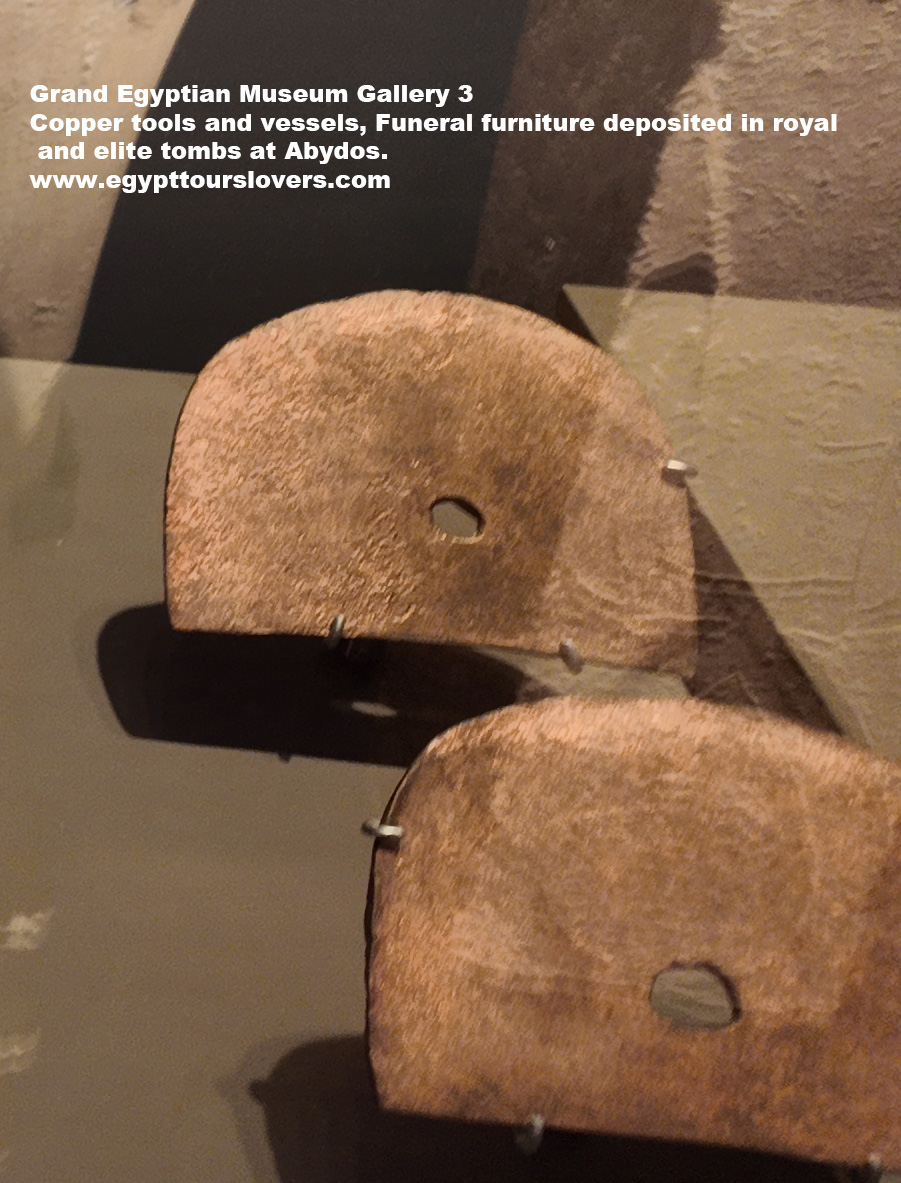 dynasty 2 | copper | Abydos
Copper tools and vessels, Funeral furniture deposited in royal and elite tombs at Abydos.
———– } ———– } ———– } ———– }
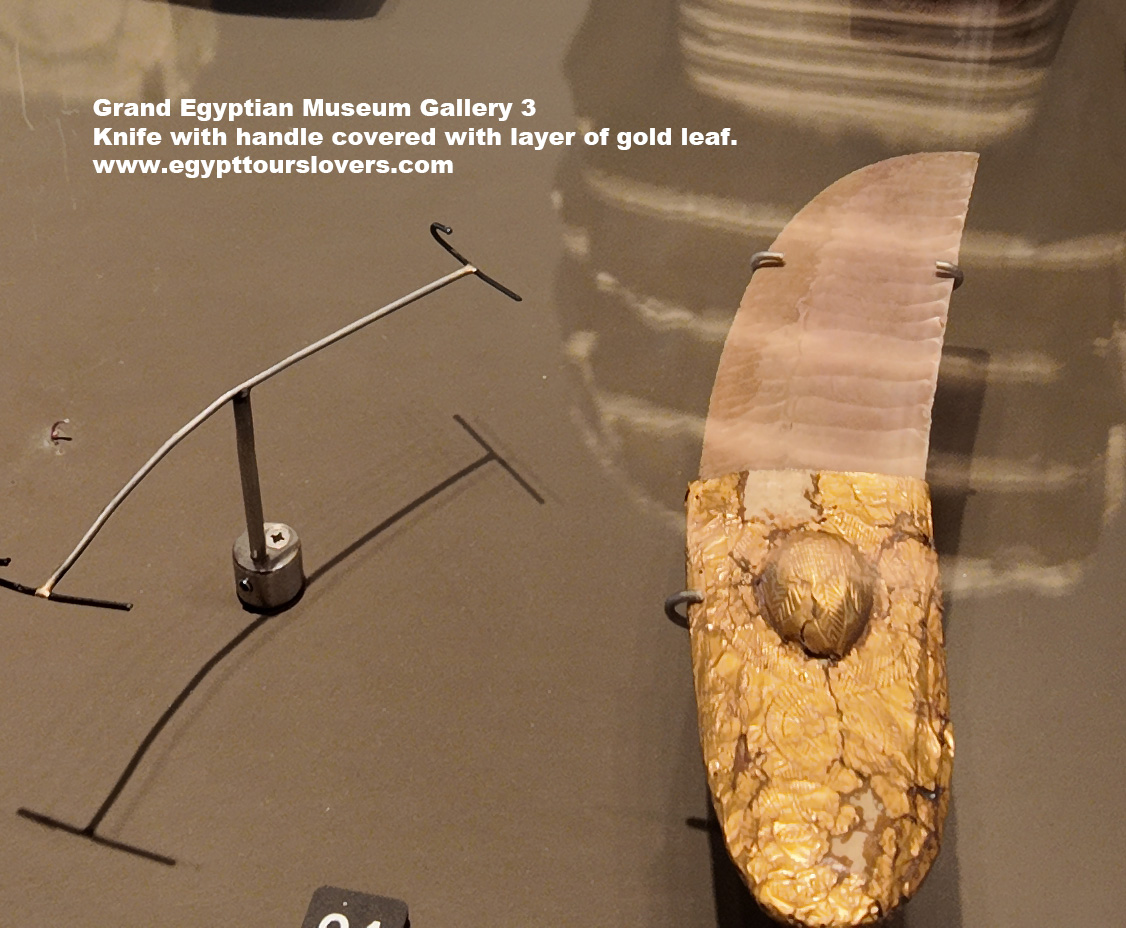
Naqada III | flint, gold | gebel el-tarif
Knife with handle covered with layer of gold leaf.
On one side 4 rows of animals “lion, dog, heyna, anteiopes”.
———– } ———– } ———– } ———– }
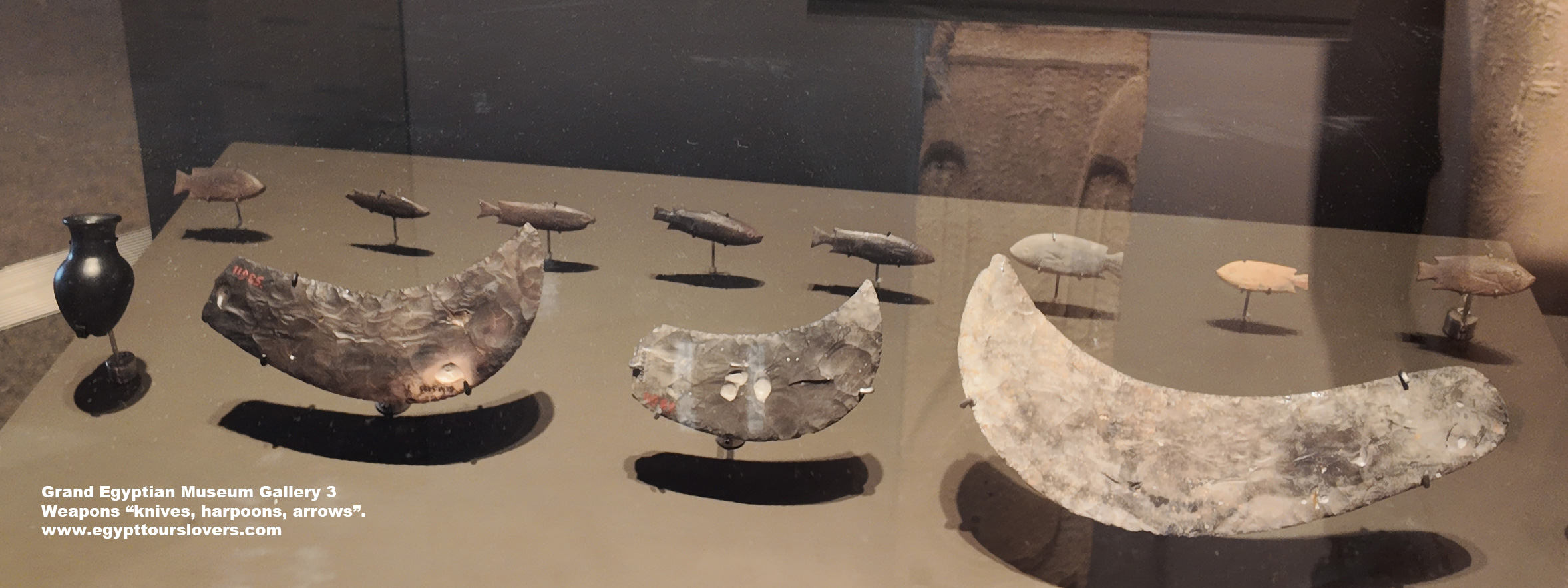 dynasty 1 | flint, copper, ivory | Abydos, Naqada
Weapons “knives, harpoons, arrows”.
———– } ———– } ———– } ———– }
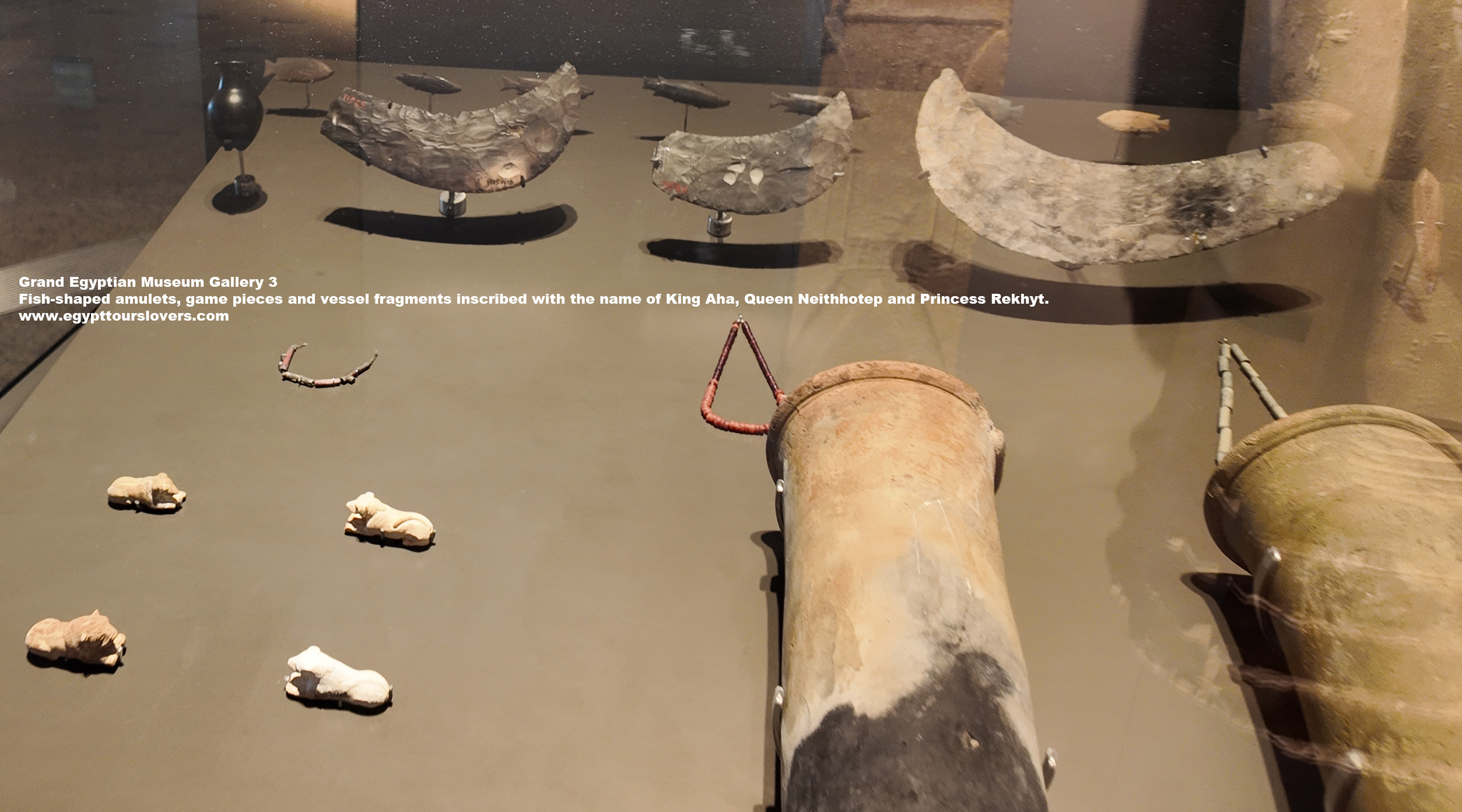 dynasty 1 | flint, limestone, ivory | Naqada
Fish-shaped amulets, game pieces and vessel fragments inscribed with the name of King Aha, Queen Neithhotep and Princess Rekhyt.
———– } ———– } ———– } ———– }
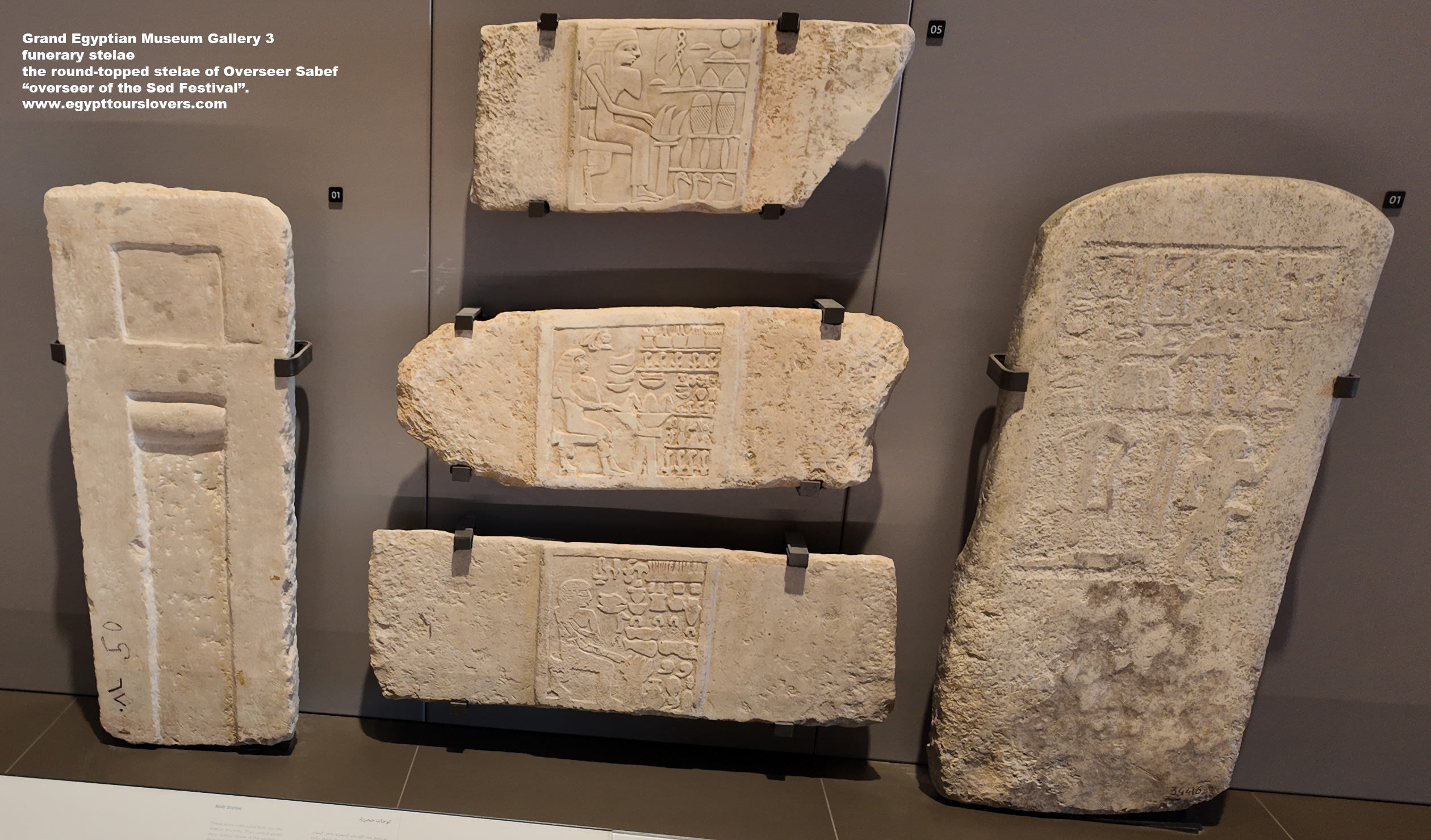 dynasty 1-2 | limestone | Abydos, abu rawash
funerary stelae
the round-topped stelae of Overseer Sabef “overseer of the Sed Festival”.
———– } ———– } ———– } ———– }
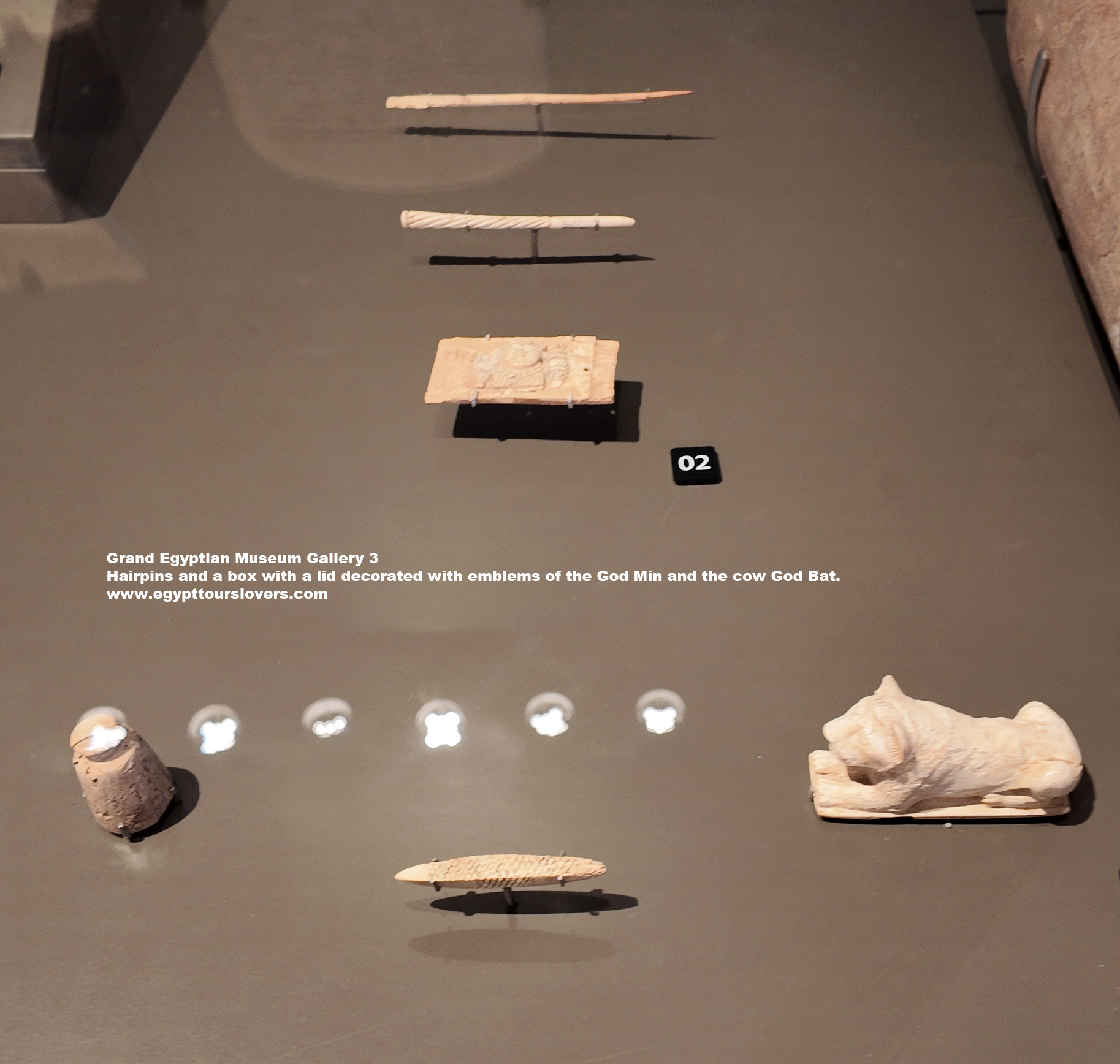 dynasty 1 | ivory | abu rawash
Hairpins and a box with a lid decorated with emblems of the God Min and the cow God Bat.
———– } ———– } ———– } ———– }
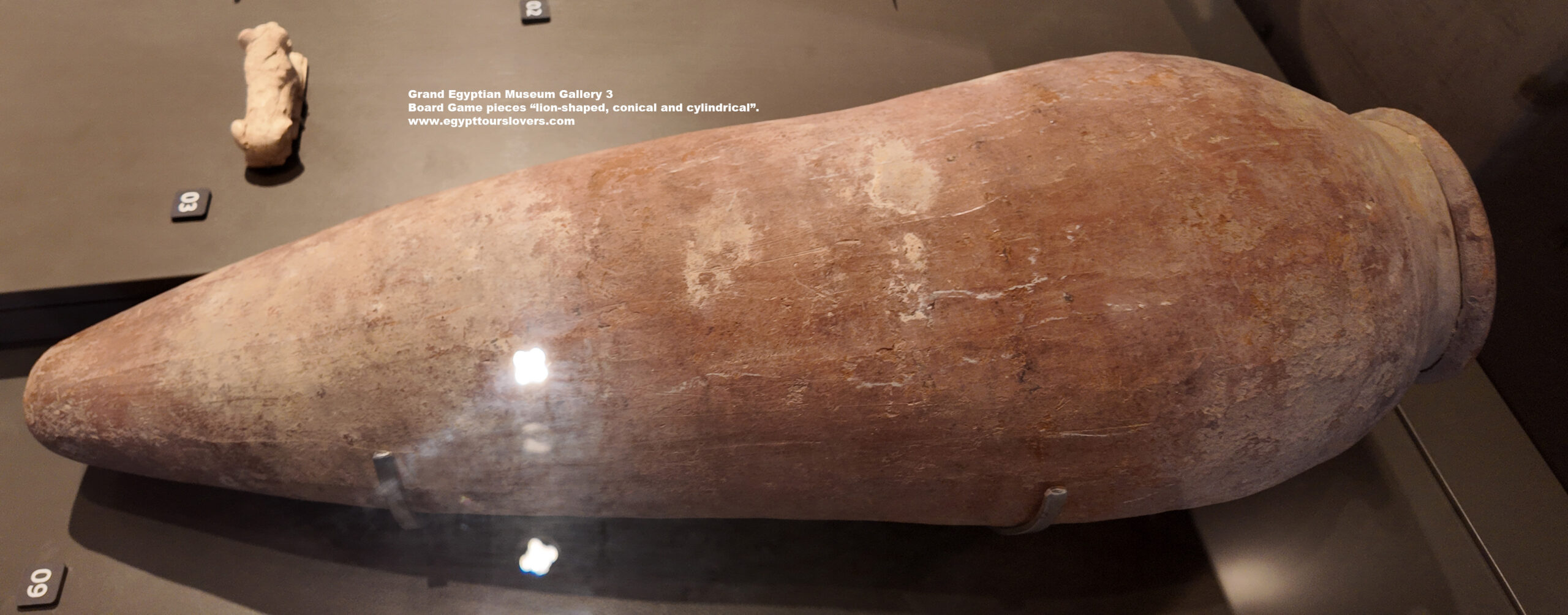 dynasty 1 | ivory, Egyptian alabaster, faience, limestone | abu rawash, gebel el-tarif
Board Game pieces “lion-shaped, conical and cylindrical”.
———– } ———– } ———– } ———– }
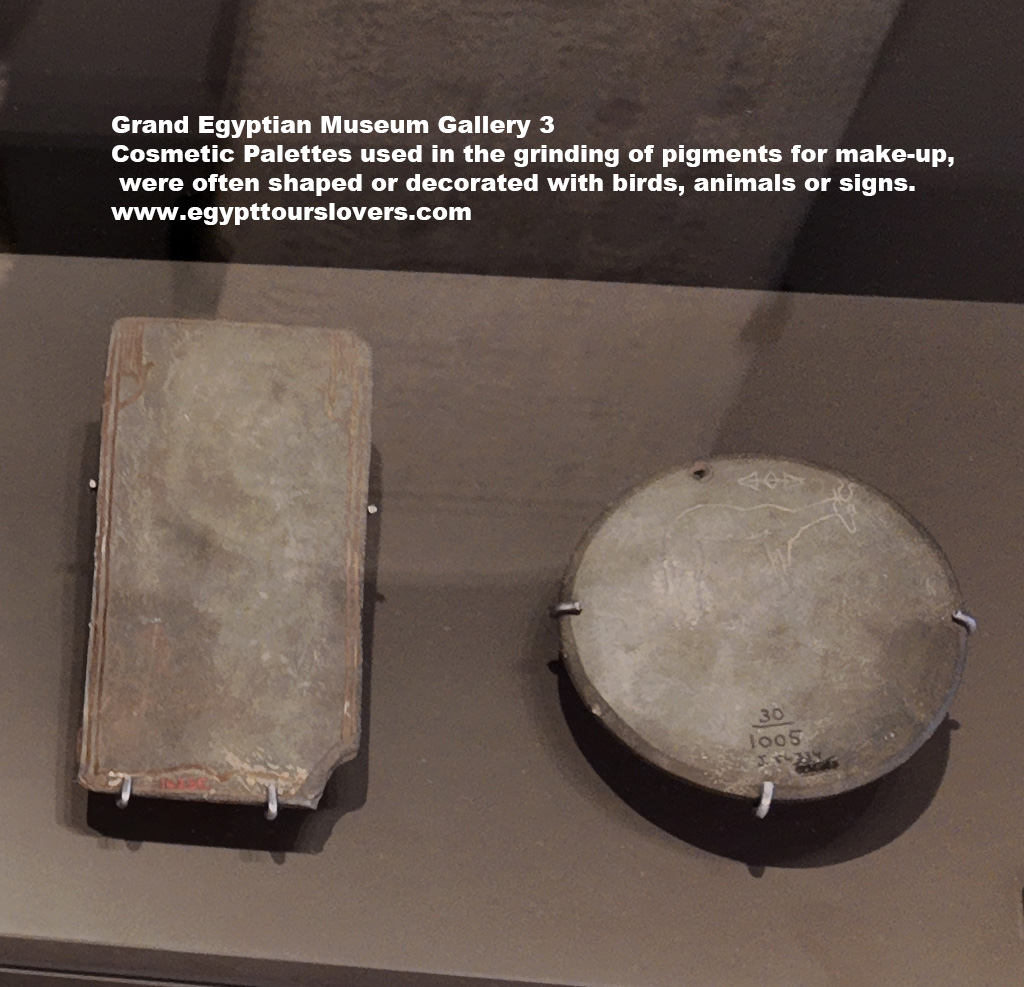
dynasty 1 | greywacke | matmar
Cosmetic Palettes used in the grinding of pigments for make-up, were often shaped or decorated with birds, animals or signs.
———– } ———– } ———– } ———– }
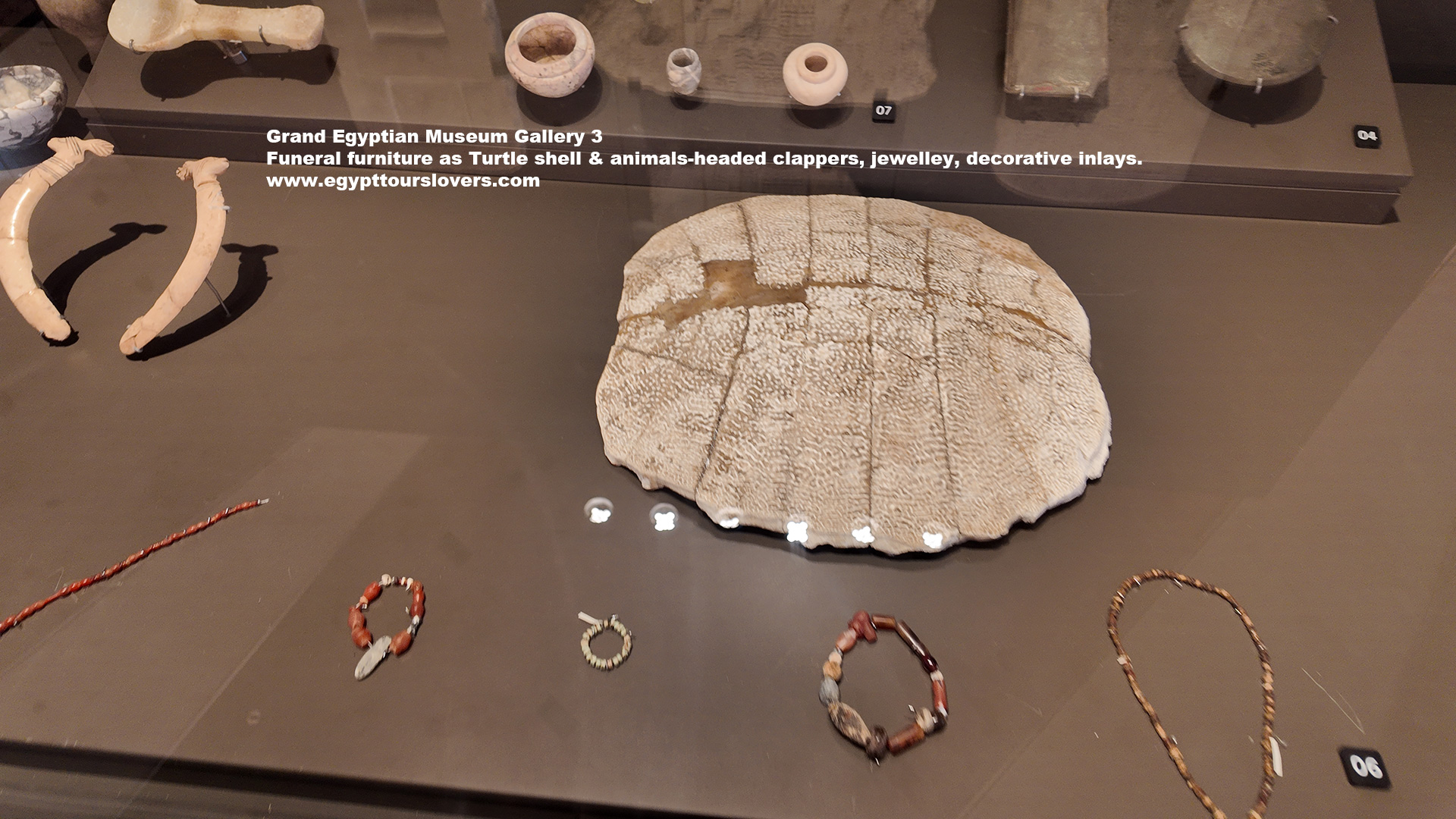
dynasty 1 | ivory, turtle carapace, bone, faience, semi-precious stones | minshat ezzat, Helwan, abu rawash
Funeral furniture as Turtle shell & animals-headed clappers, jewelley, decorative inlays.
———– } ———– } ———– } ———– }
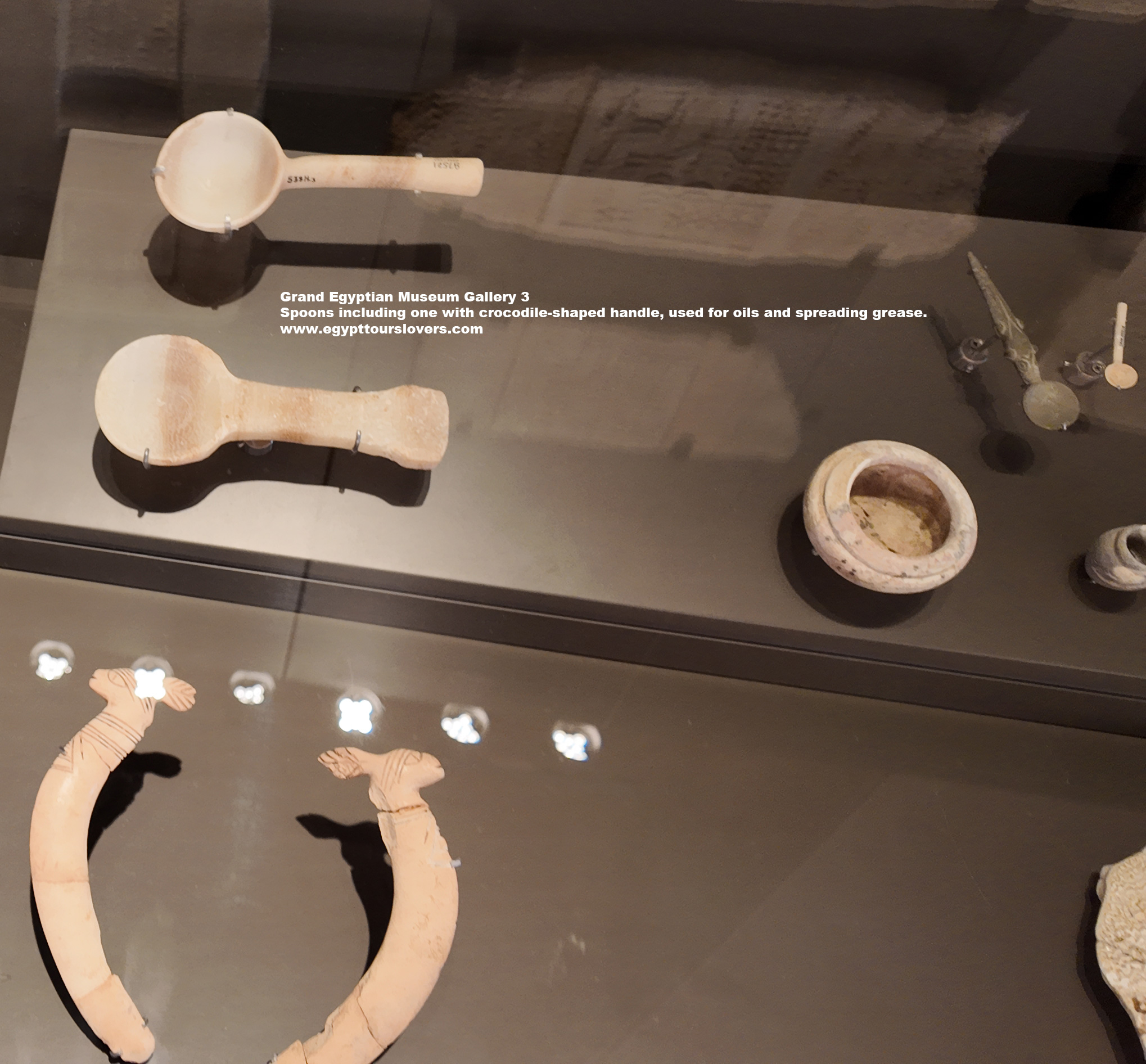
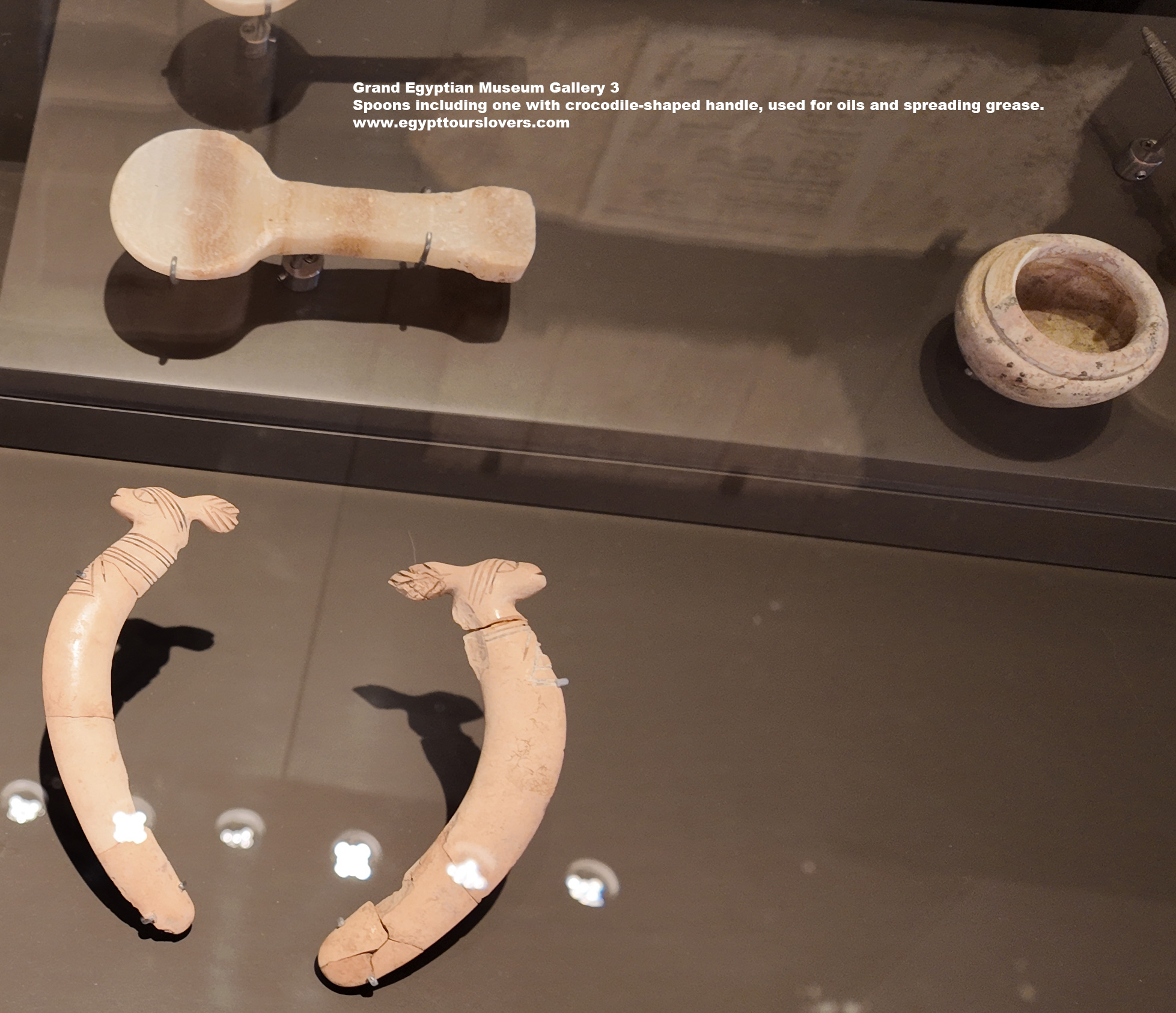
dynasty 1 + Naqada III | ivory, Egyptian alabaster, breccia, greywacke, diorite | tell el-farkha, abuser el-malaq, abu rawash, Helwan
Spoons including one with crocodile-shaped handle, used for oils and spreading grease.
Small cosmetic pots It contains kohl powder used for eye protection and eyeliner.
———– } ———– } ———– } ———– }
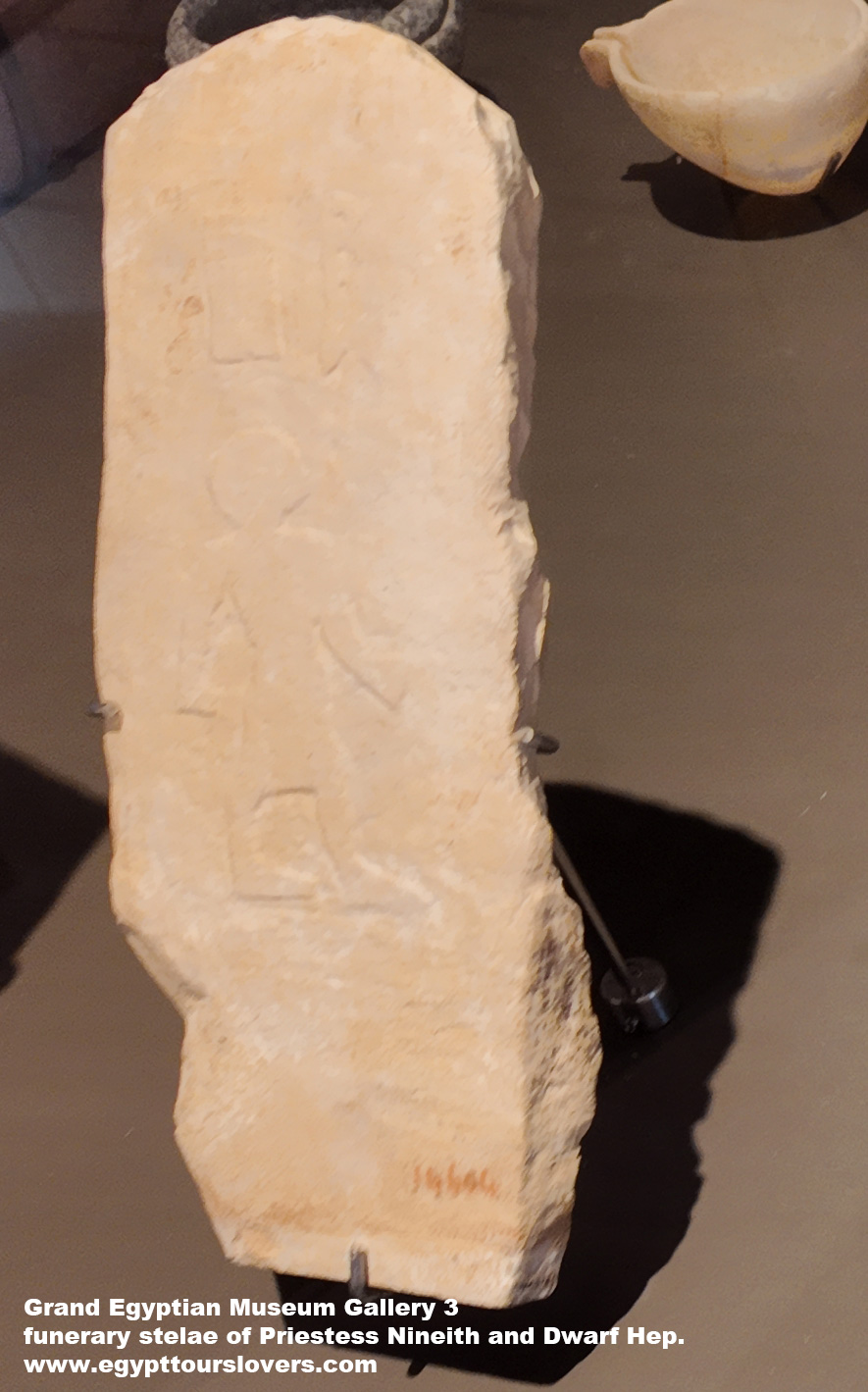
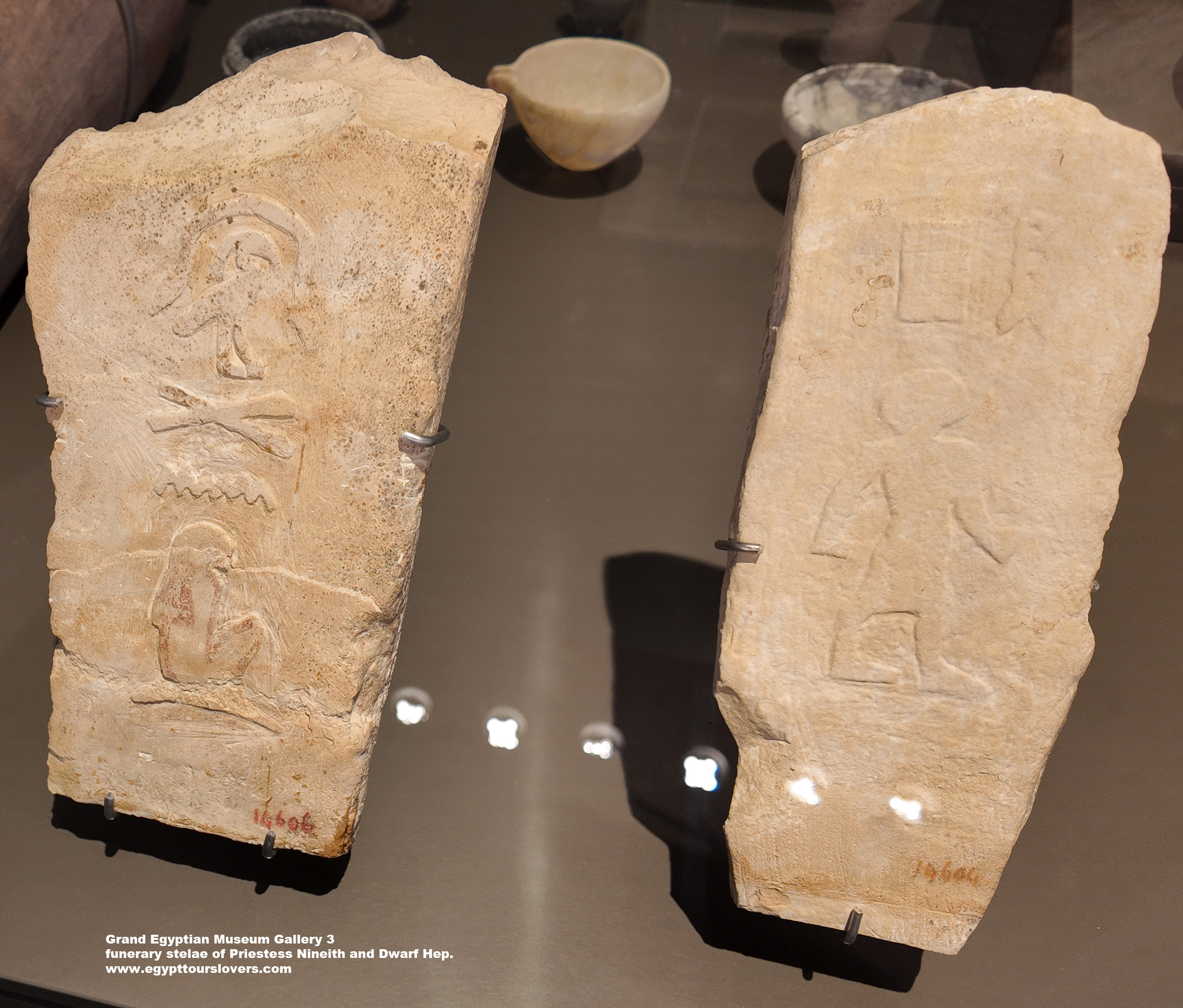
dynasty 1 | limestone | Abydos
funerary stelae of Priestess Nineith and Dwarf Hep.
———– } ———– } ———– } ———– }
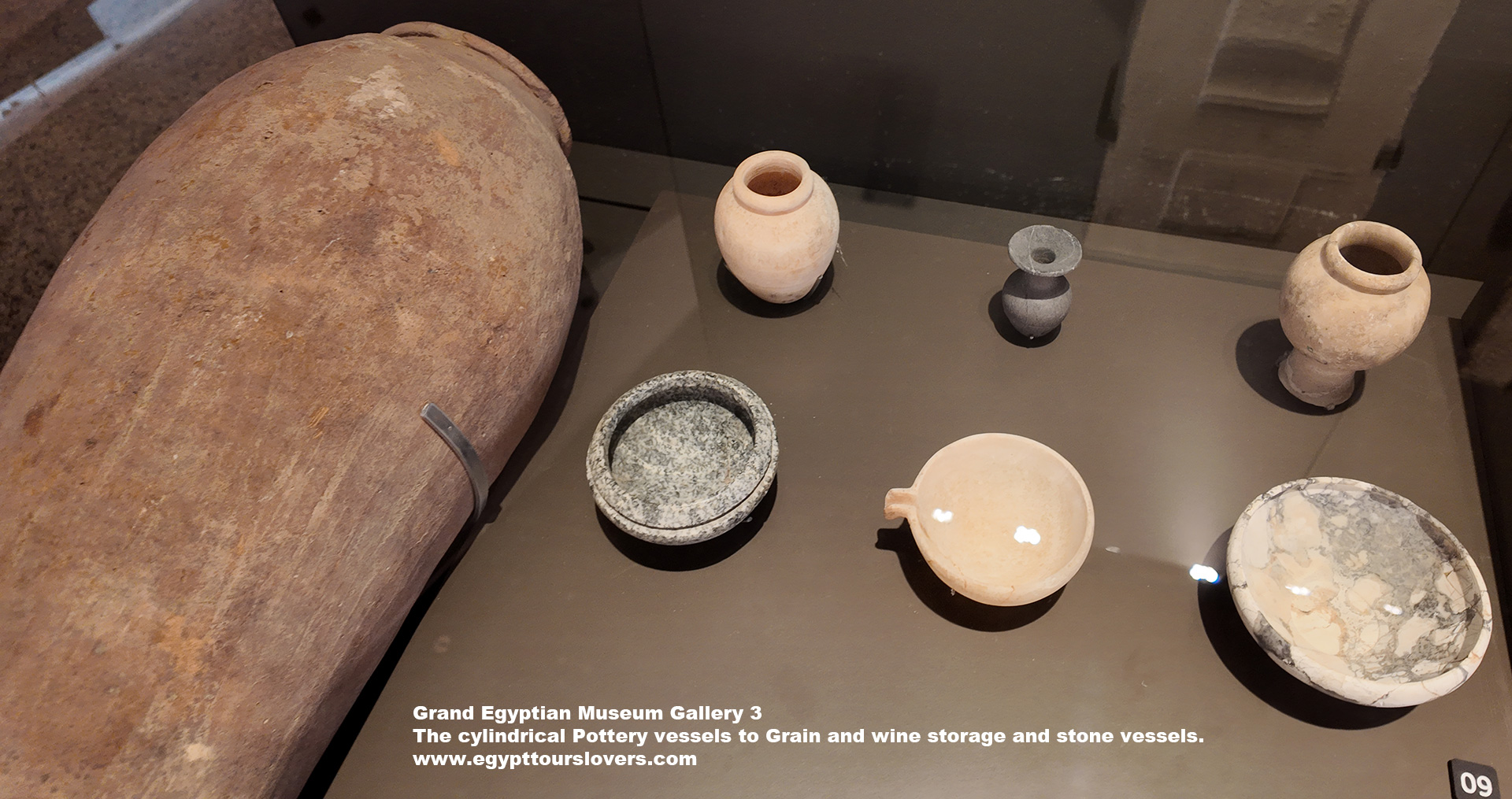
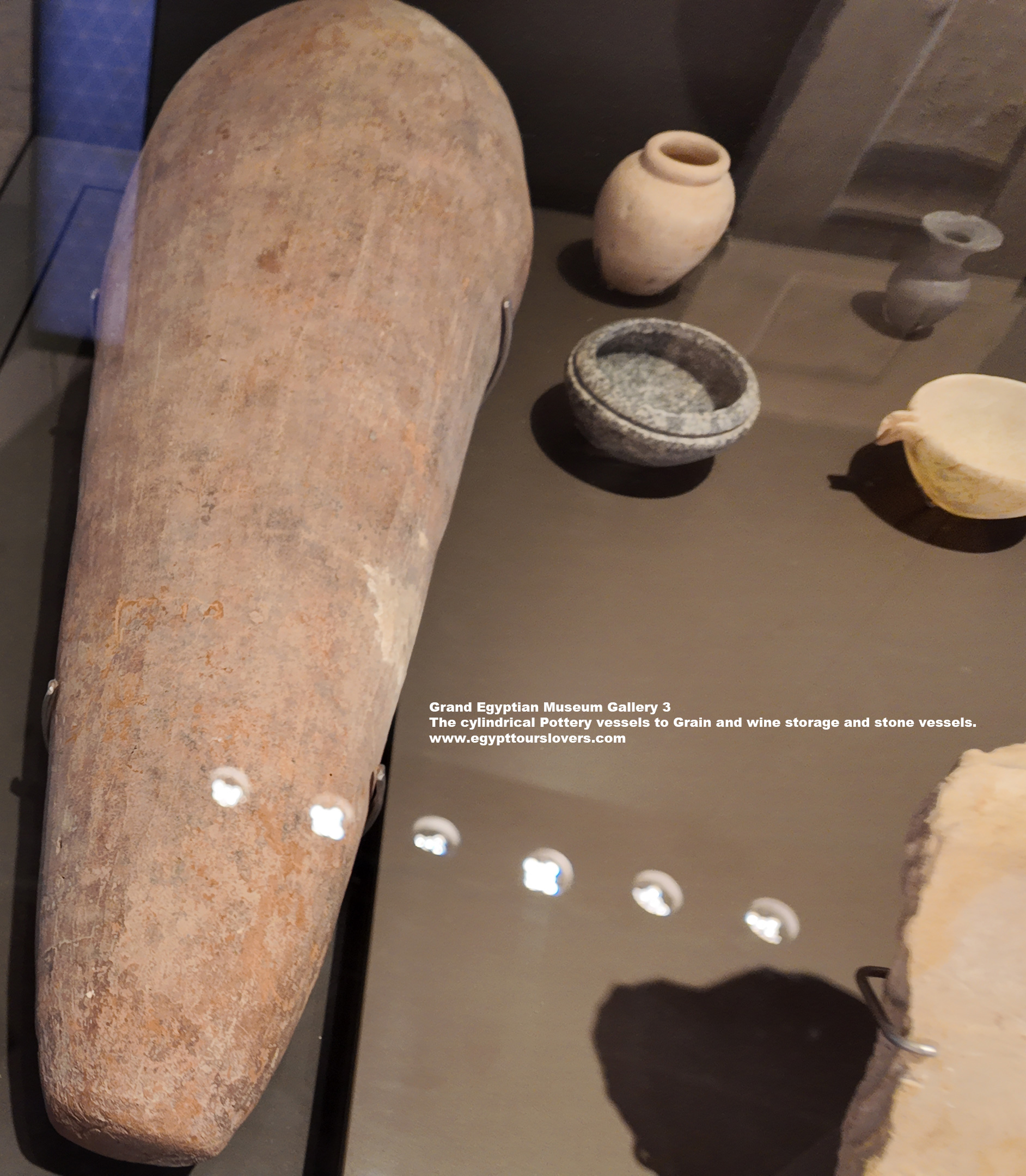
dynasty 1 + Naqada III | Egyptian alabaster, pottery, greywacke, granite | abu rawash, Helwan
The cylindrical Pottery vessels to Grain and wine storage and stone vessels.
———– } ———– } ———– } ———– }
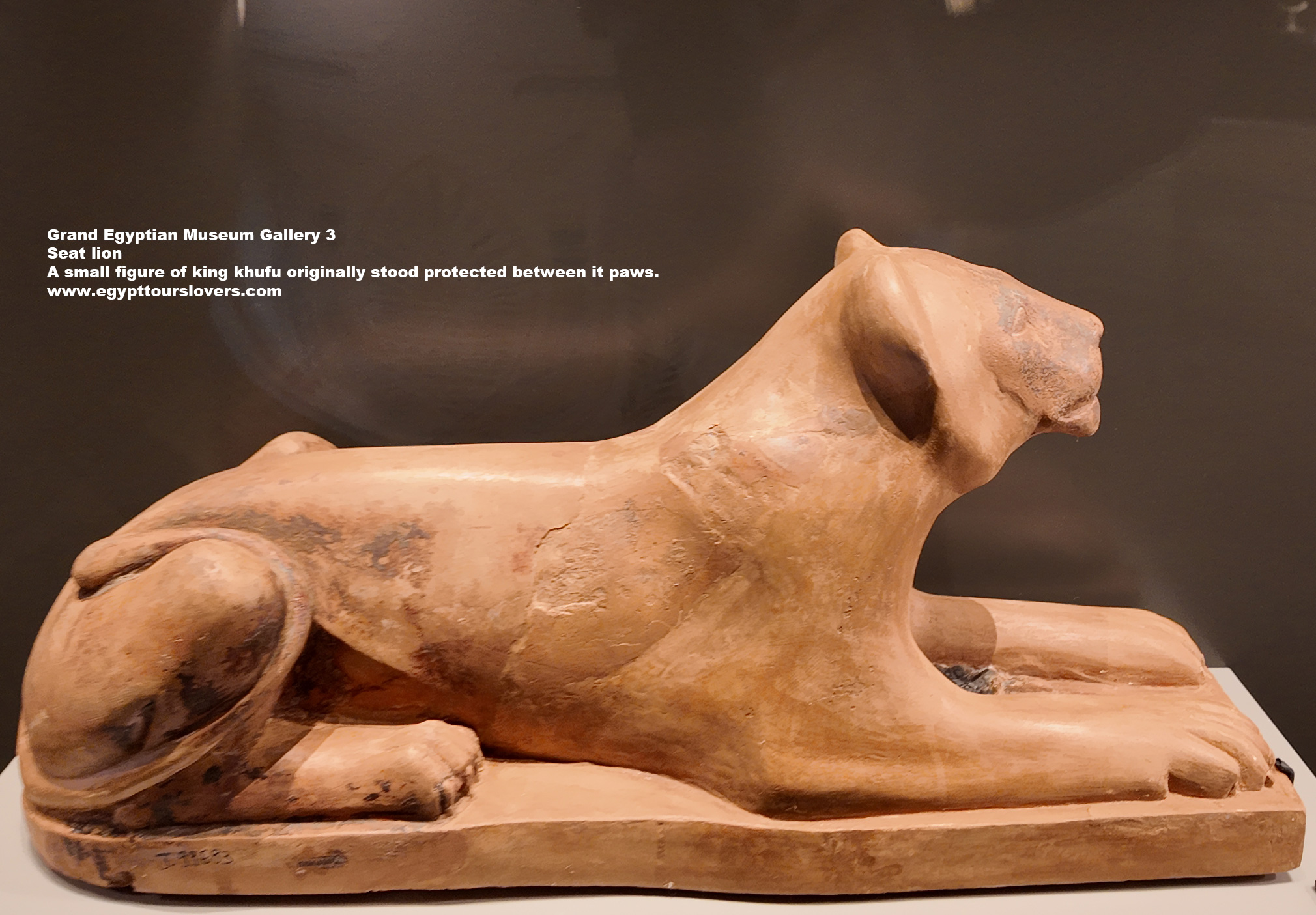
dynasty 4 | pottery | Saqqara
Seat lion
A small figure of king khufu originally stood protected between it paws.
———– } ———– } ———– } ———– }
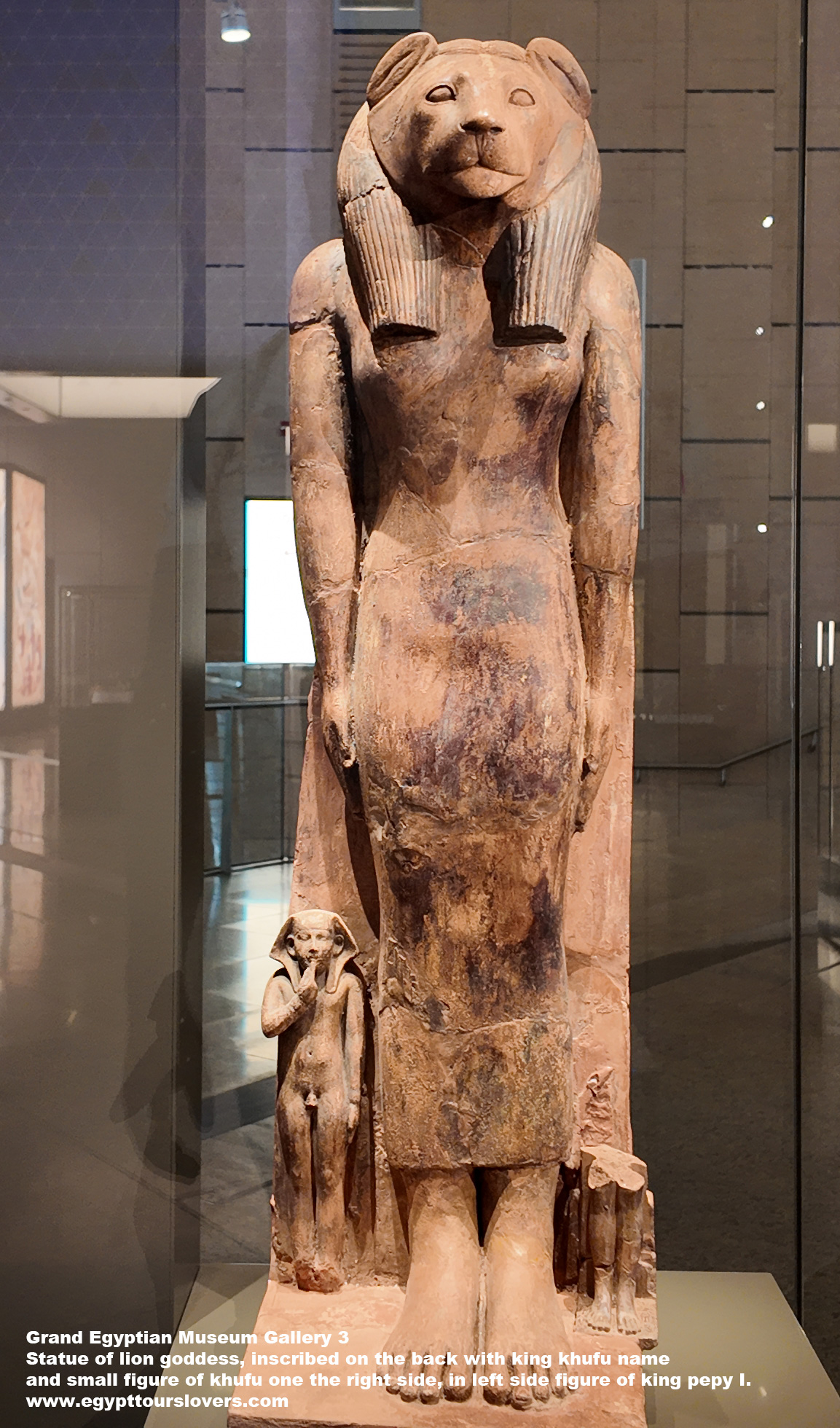
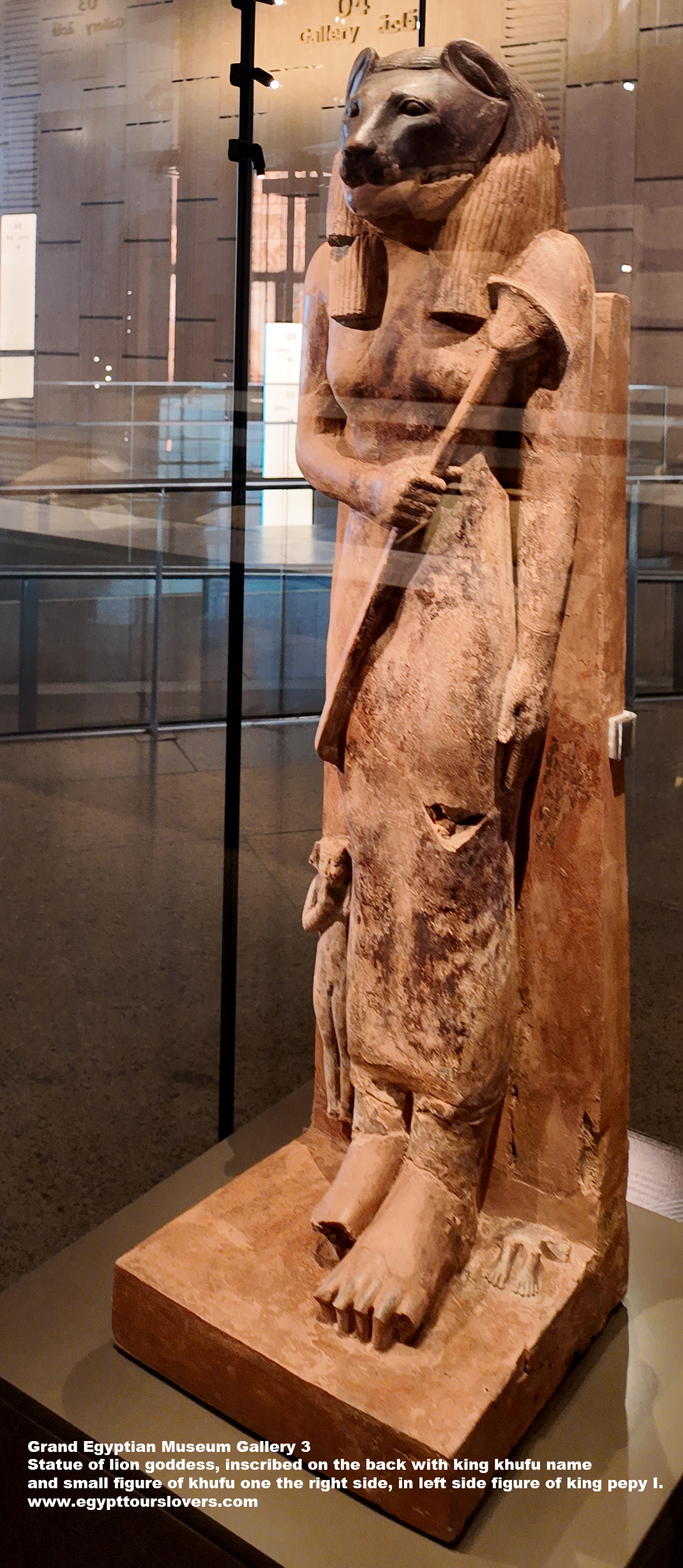
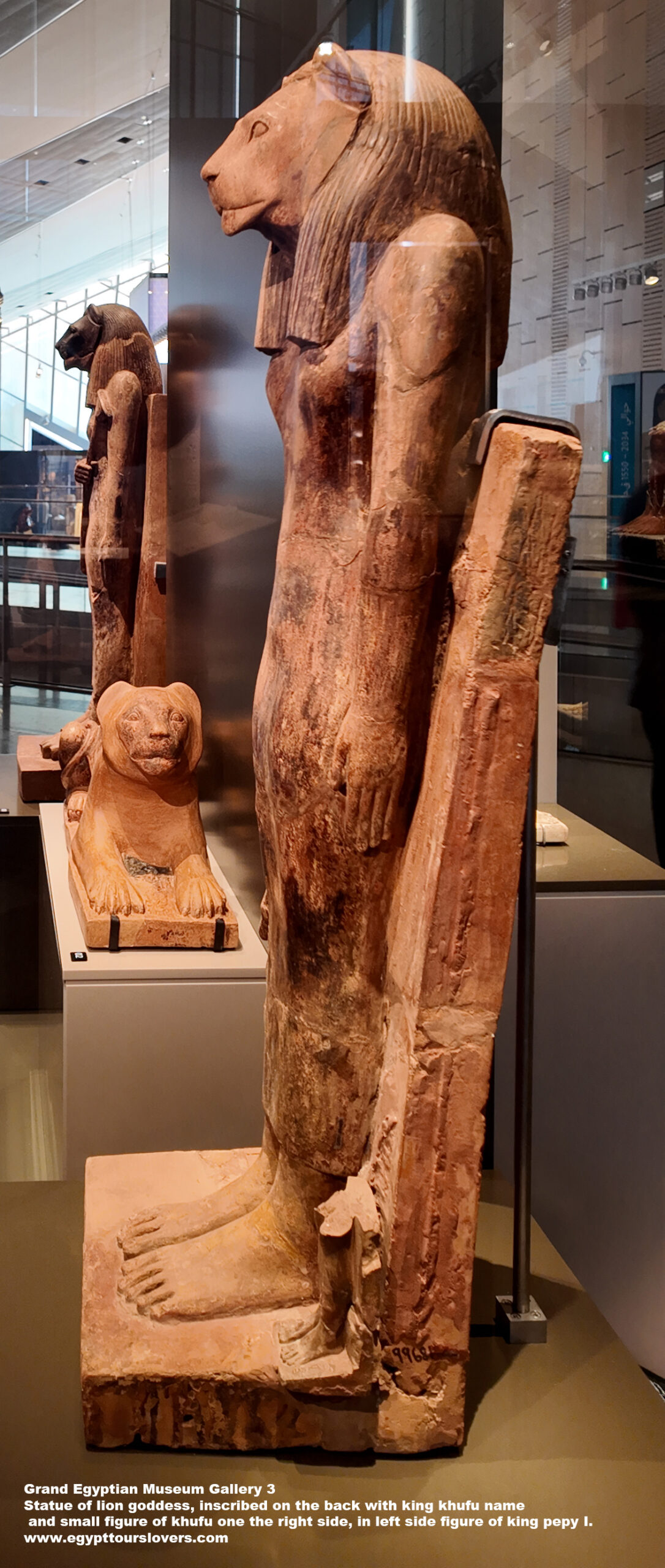
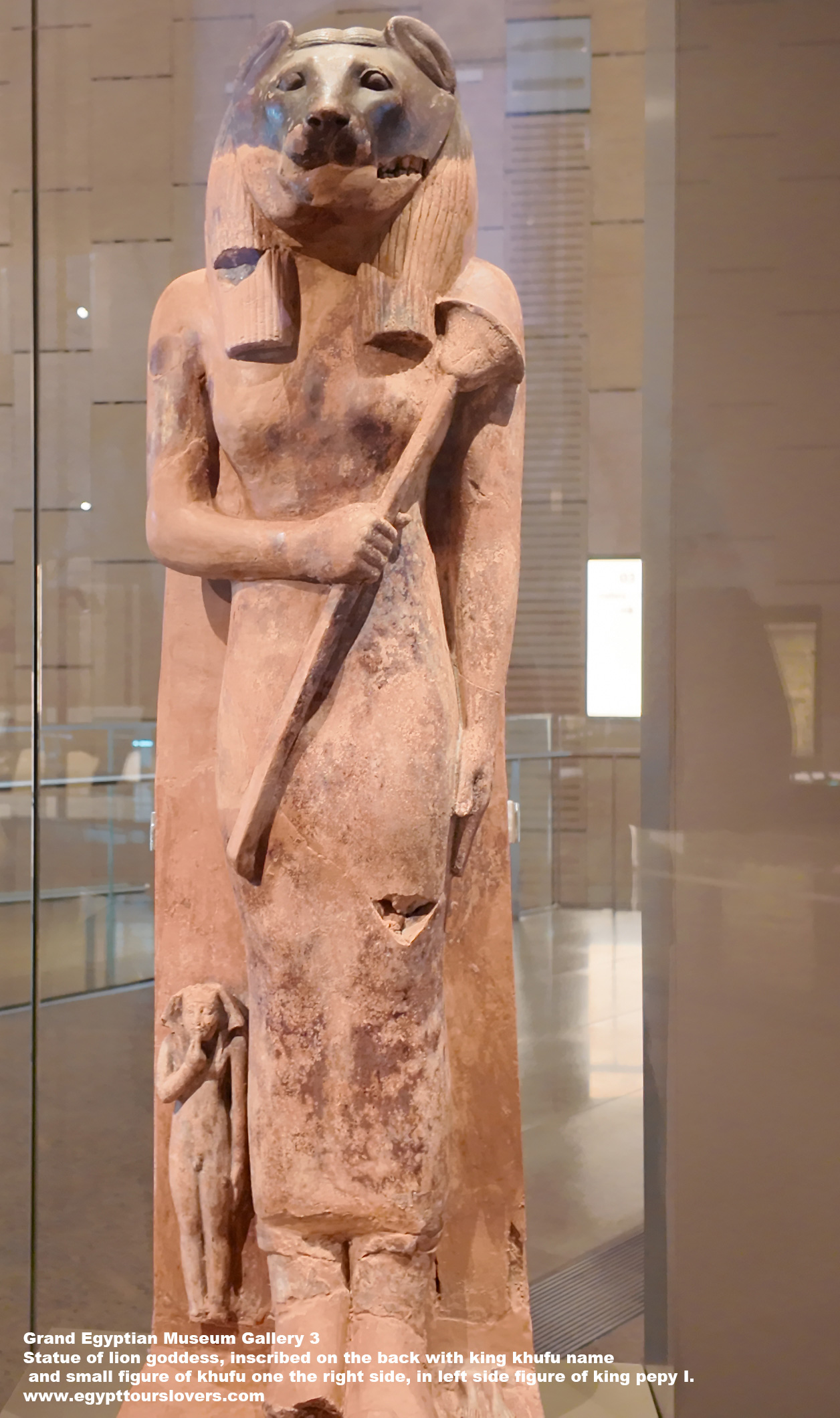
dynasty 4 +6 | pottery | Saqqara
Statue of lion goddess, inscribed on the back with king khufu name and small figure of khufu one the right side, in left side figure of king pepy I.
———– } ———– } ———– } ———– }
Researcher & Photographer King Tutankhamun Treasures: Tamer Ahmed Abdel Fattah