Grand Egyptian Museum Gallery 1 – Details of each artifacts with 4K Video & Stock Photos
Grand Egyptian Museum Gallery 1 – Details of each artifacts with 4K Video & Stock Photos.
Discover the world’s largest museum of ancient Egyptian antiquities…
Grand Egyptian Museum Gallery 1
———– } ———– } ———– } ———– }
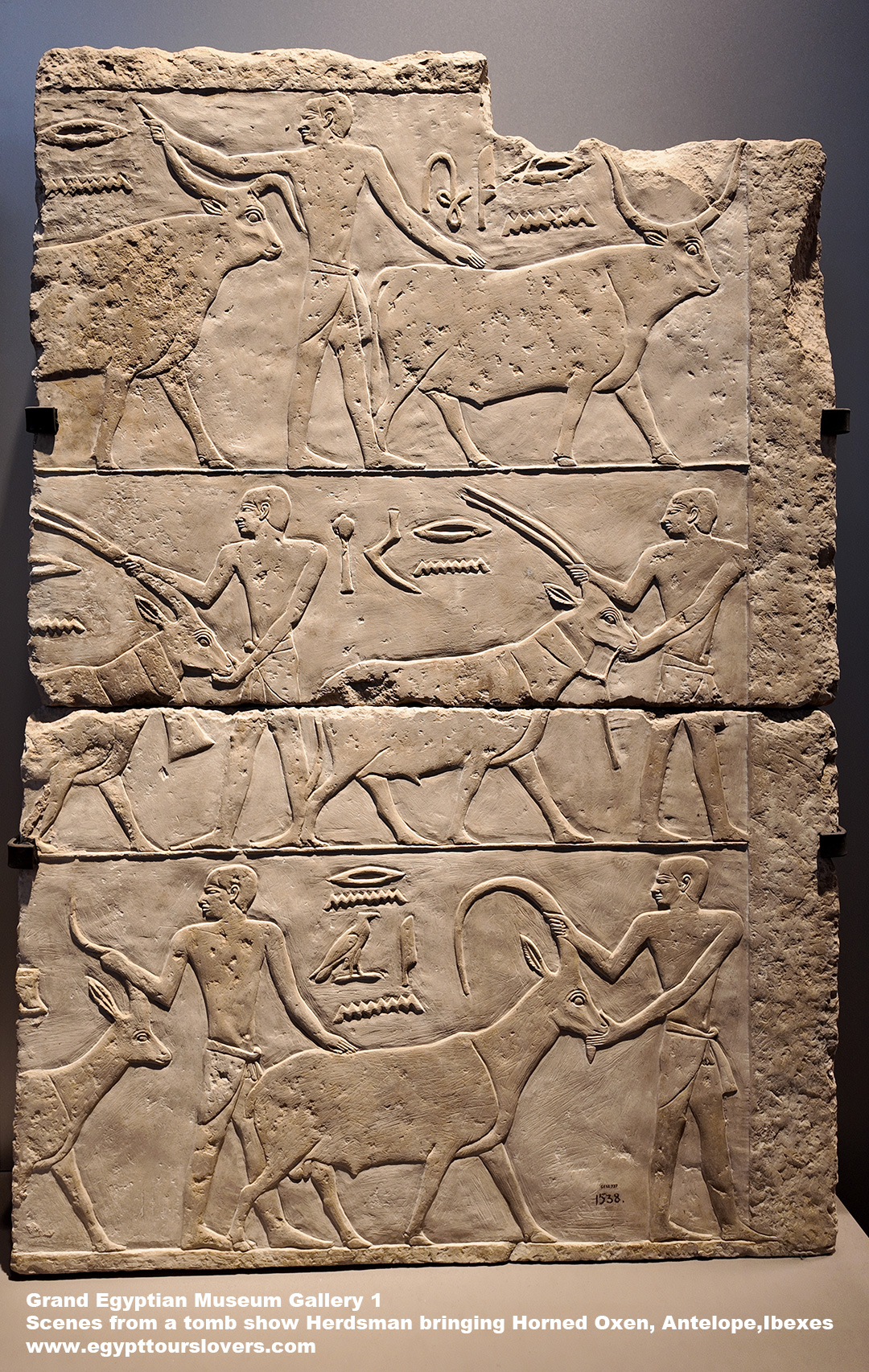
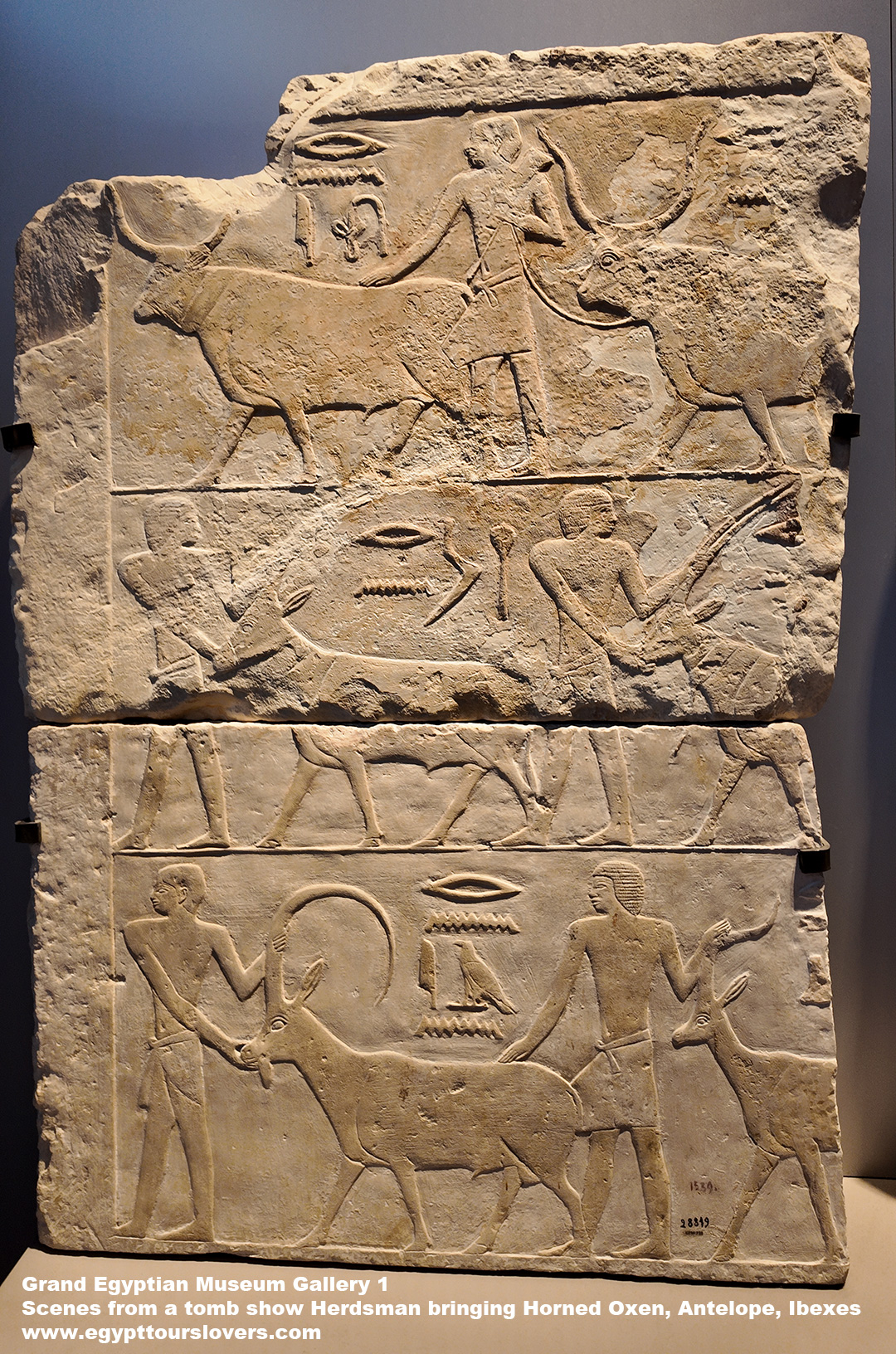
Dynasty 4 | limestone | Tombs in Giza | Agriculture
- Men brining animals
- Scenes from a tomb show Herdsman bringing Horned Oxen, Antelope and Ibexes.
- Being let with ropes and tethers, while other are held by theirs horns.
———– } ———– } ———– } ———– }
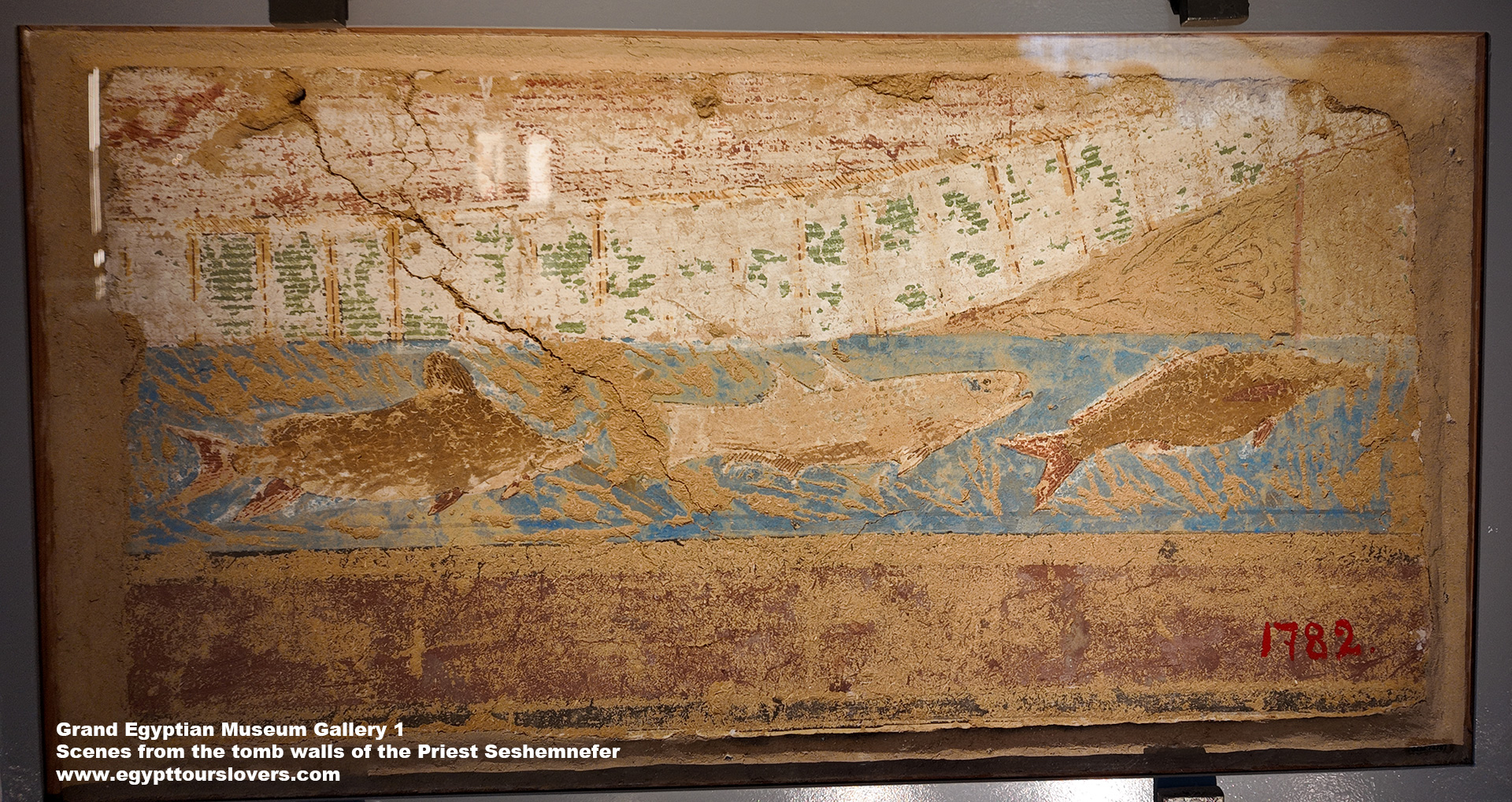
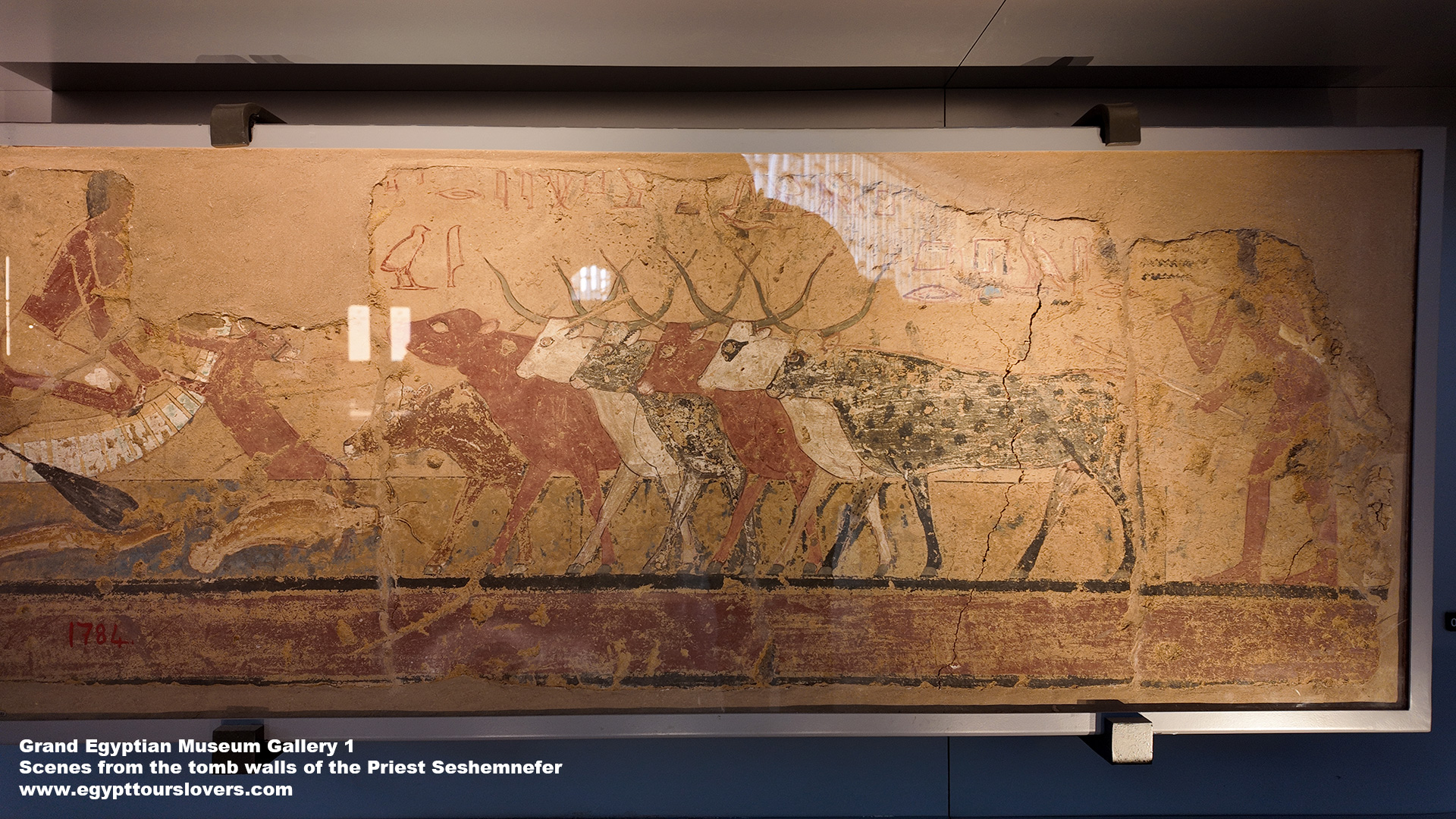
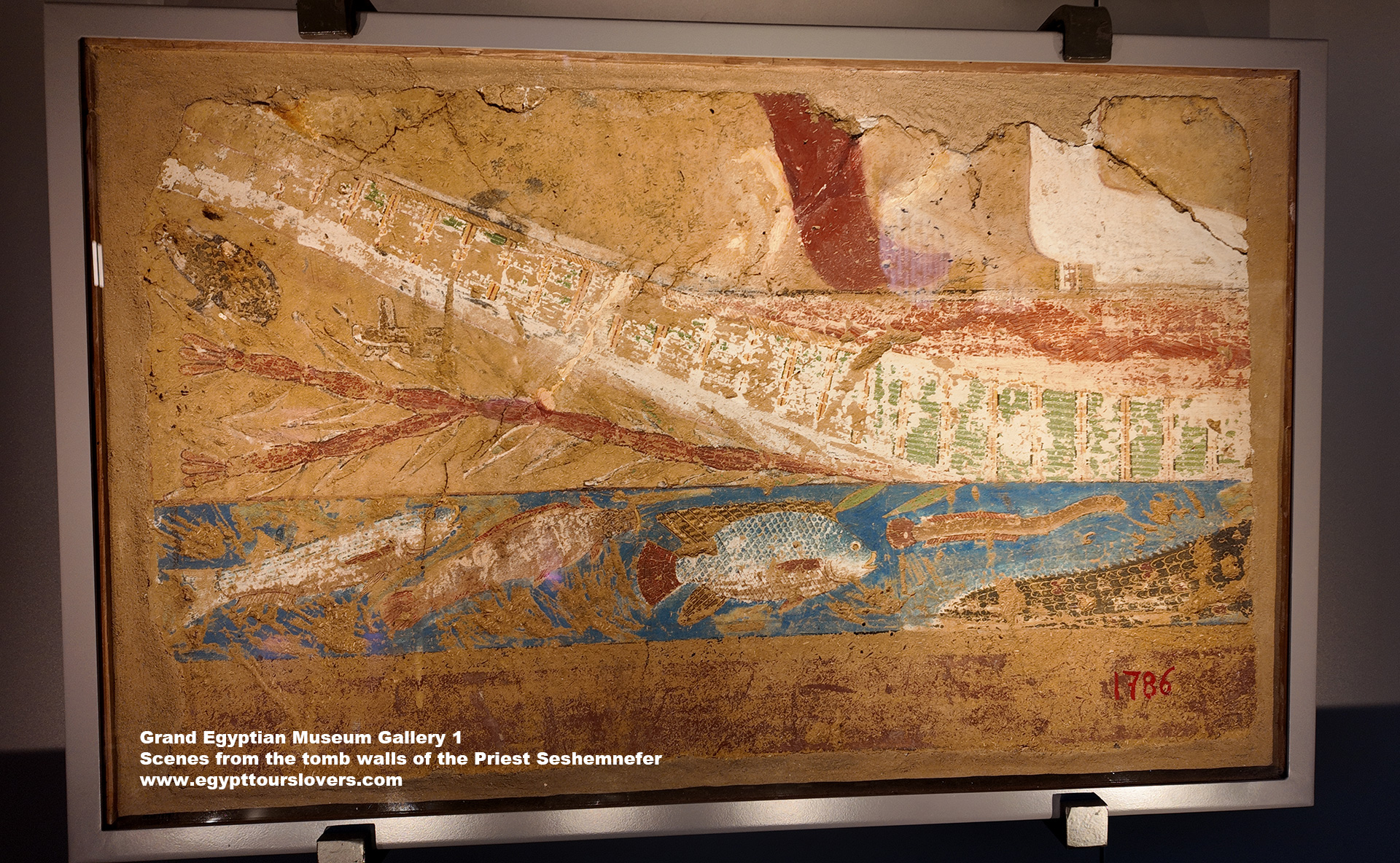
Dynasty 6 | Mud bricks, plaster, pigment oxides | Tombs in Dahshur | fishing trips
- Scenes from the tomb walls of the Priest Seshemnefer.
- The priest Seshemnefer and his wife sail in a boat.
- Below, beneath the boat, are Crocodiles and enormous Fish.
- Cows wade in shallow while a calf is getting help from other Cows.
———– } ———– } ———– } ———– }
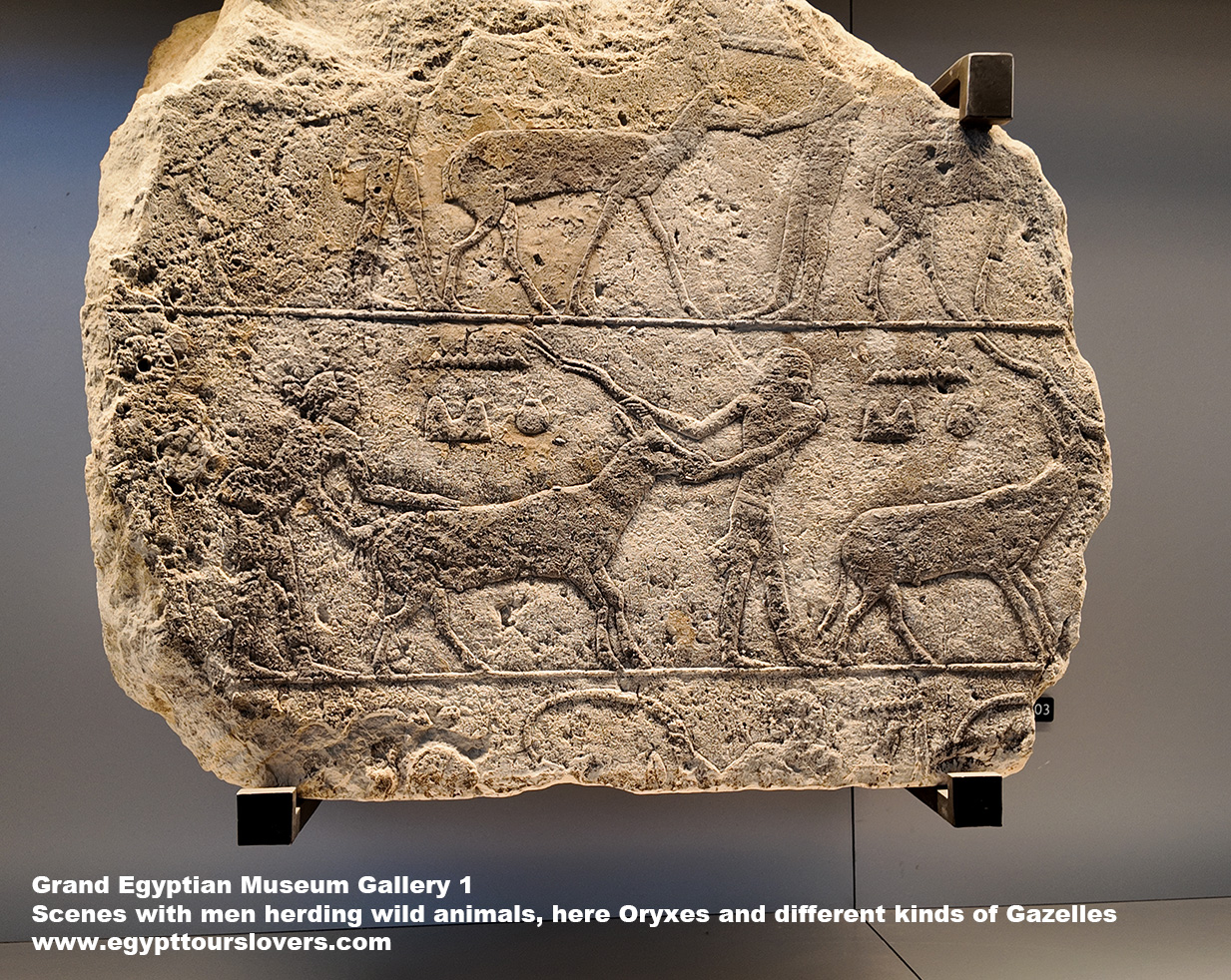
Dynasty 5-6 | limestone, pigment oxides | Tombs in Giza | Agriculture
- Bringing wild animals.
- Scenes with men herding wild animals, here Oryxes and different kinds of Gazelles.
- Importance of meat as a nutritional source in Egyptian food and major food offering in Rituals.
———– } ———– } ———– } ———– }
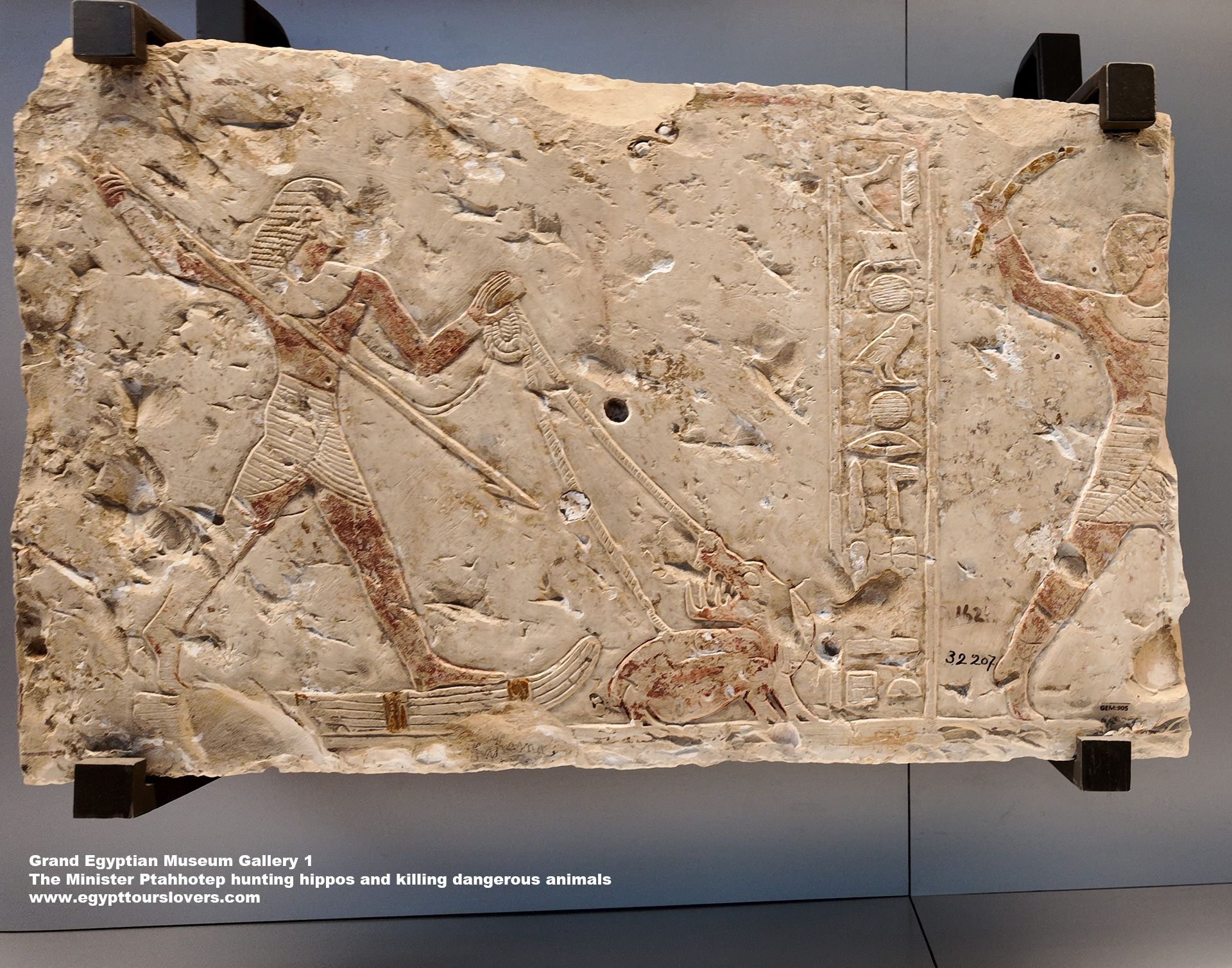
Dynasty 5-6 | limestone, pigment oxides | Tombs in el-mahasna, Sohag | Wild hunting trips
- The Minister Ptahhotep hunting hippos and killing dangerous animals “show power, courage, position in society”.
- Hippos’ tusk, meat, fat where used to make rituals objects.
- He has a mastaba tomb in the Saqqara necropolis.
———– } ———– } ———– } ———– }
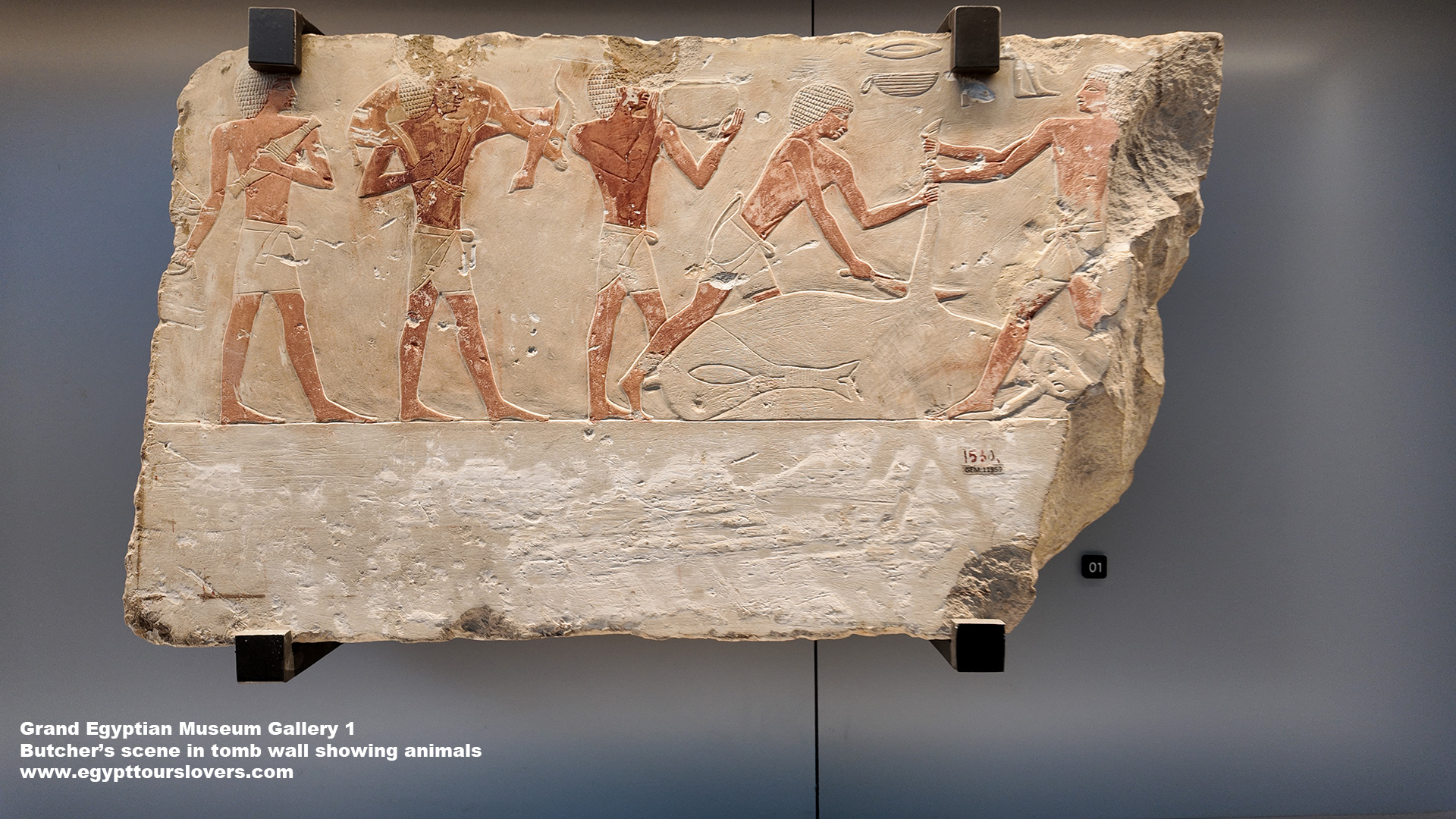
Dynasty 5 | limestone, pigment oxides | Tombs in Saqqara | Daily life
Butcher’s scene in tomb wall showing animals brought to use meat in Egyptian food and use as Rituals to give tomb owner strength for the long journey to the afterlife.
———– } ———– } ———– } ———– }
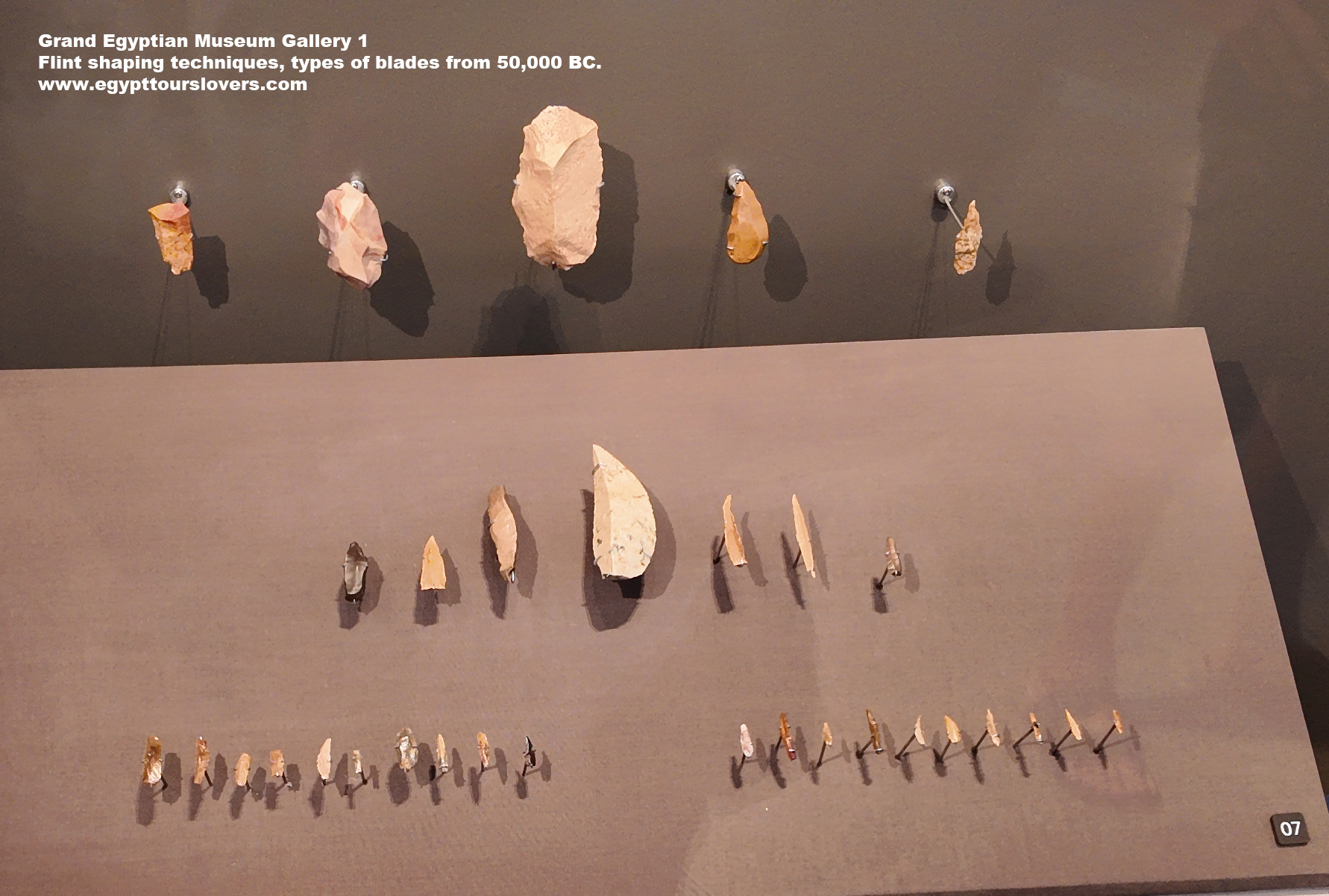
late Paleolithic | Flint stone | wadi kubbaniya, ezbet el-sibil, kharage oasis
Upper and late Paleolithic stone tools from 70,000 – 12,000 BC.
Flint shaping techniques, types of blades from 50,000 BC.
Very small flint microliths, spears, arrows “used to hunt animals from a safe distance”.
———– } ———– } ———– } ———– }
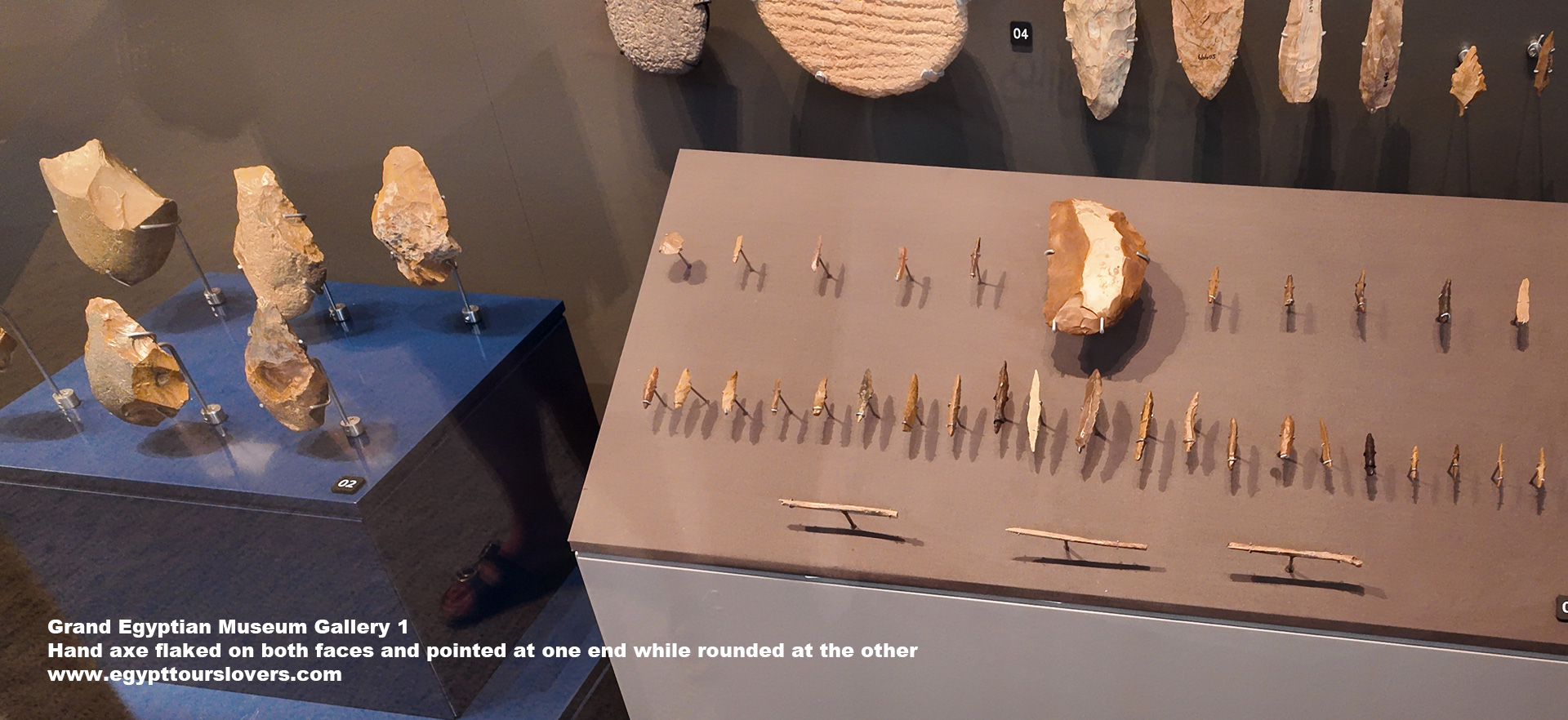
late Paleolithic | Flint stone | great sand sea “Between the Siwa Oasis and the Gilf Kebir Plateau, Western Desert”
Hand axe flaked on both faces and pointed at one end while rounded at the other.
Longest-used tool in human history.
Used for hunting, cutting, digging roots and skinning prey.
———– } ———– } ———– } ———– }
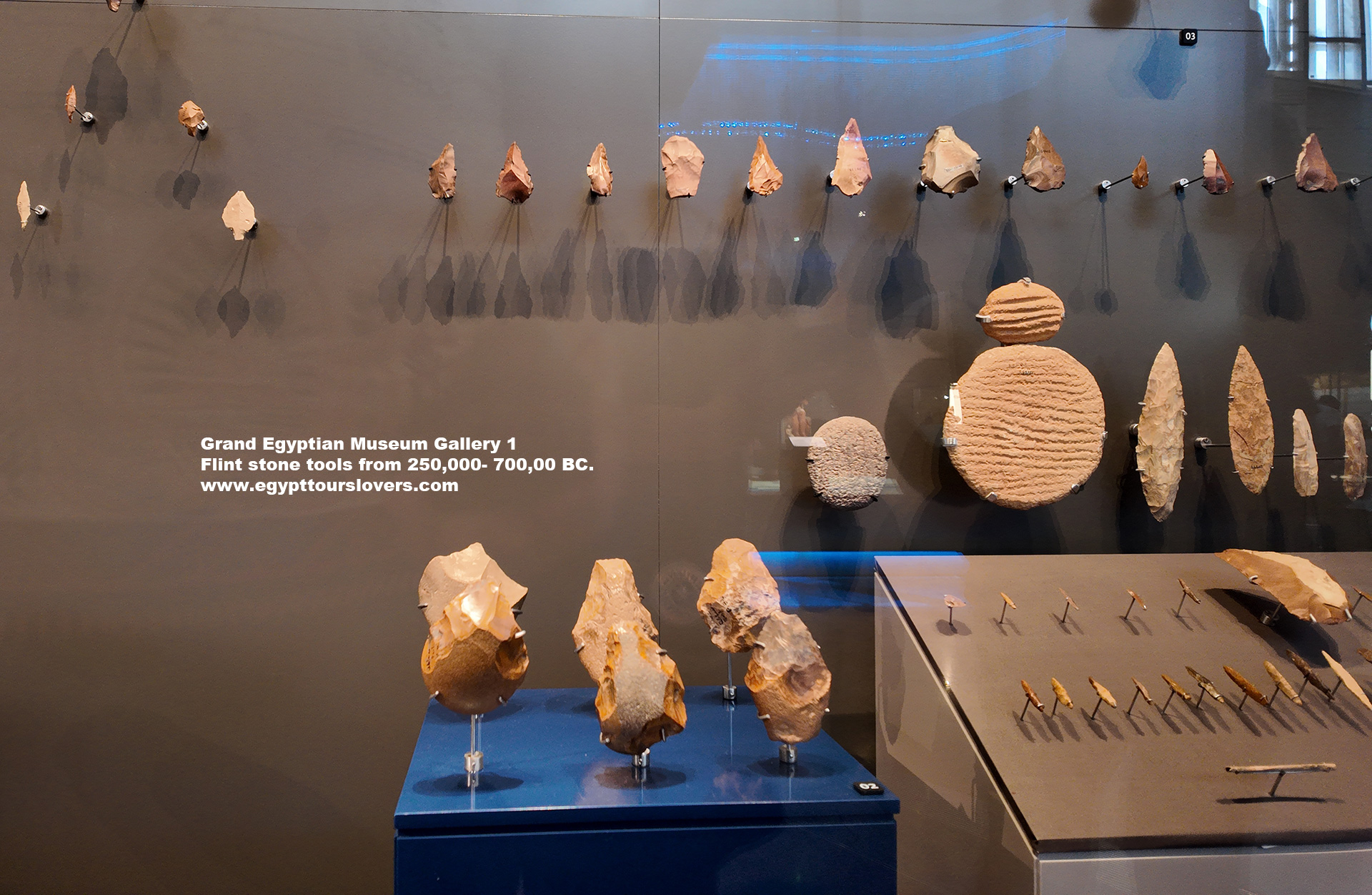
Lower Paleolithic | Flint stone | abbasiya quarries, gebel ahmar, great sand sea
Flint stone tools from 700,00 -250,000 BC.
Prehistoric hunter-gatherers relied on fishing, hunting and collecting wild foodstuffs for their survival.
Used with curved or straight cutting edges.
Earliest stone tools of ancient Egypt.
Used as hand axes and choppers.
———– } ———– } ———– } ———– }
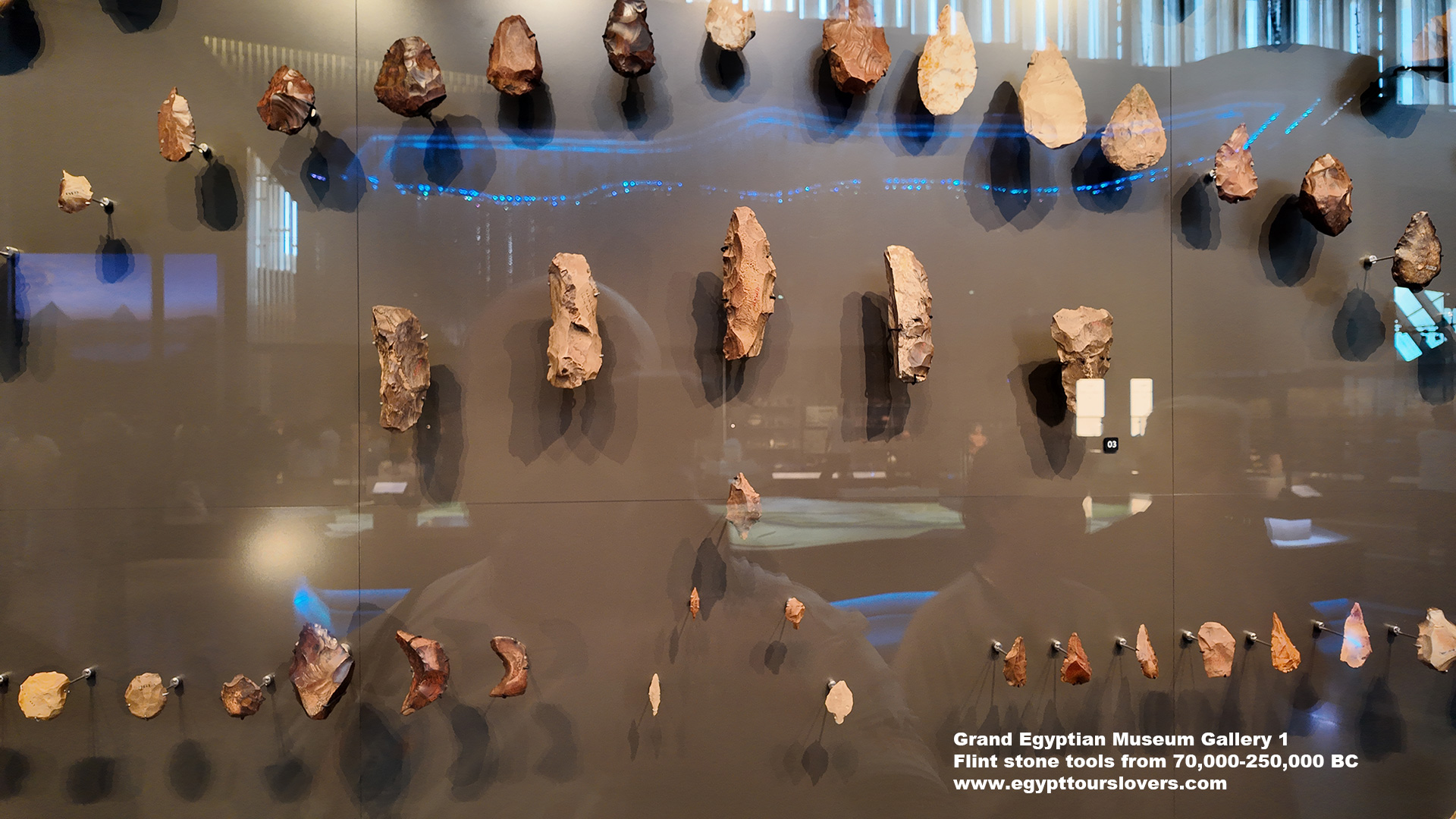
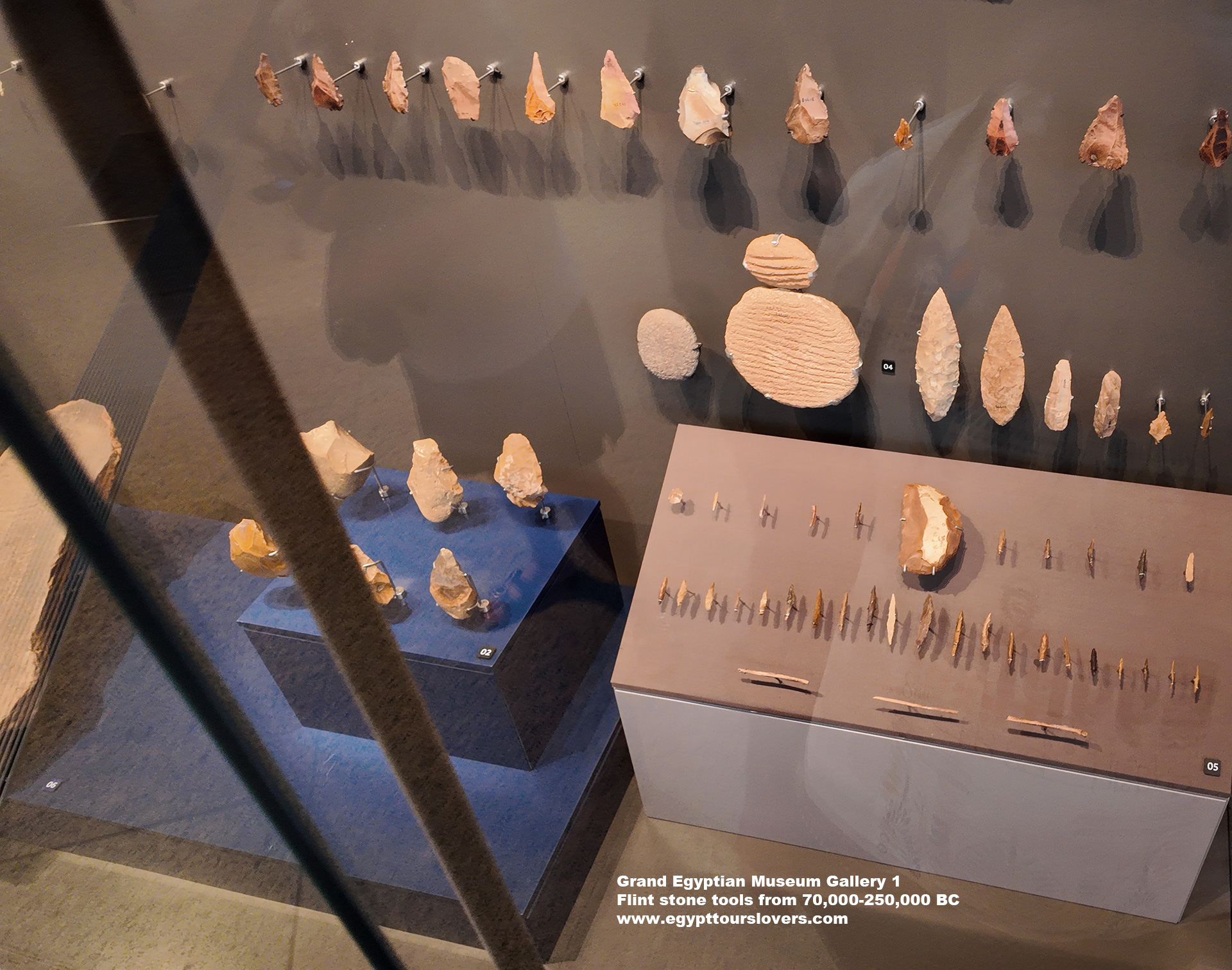
Middle Paleolithic | Flint stone | Luxor, wadi el-sheikh, kharage oasis, duch, Merimda Beni-Salama or Benisalam, edfu
Flint stone tools from 250,000-70,000 BC.
Scrapers, cutting, mining tools, Levallois points and tanged arrowheads.
———– } ———– } ———– } ———– }
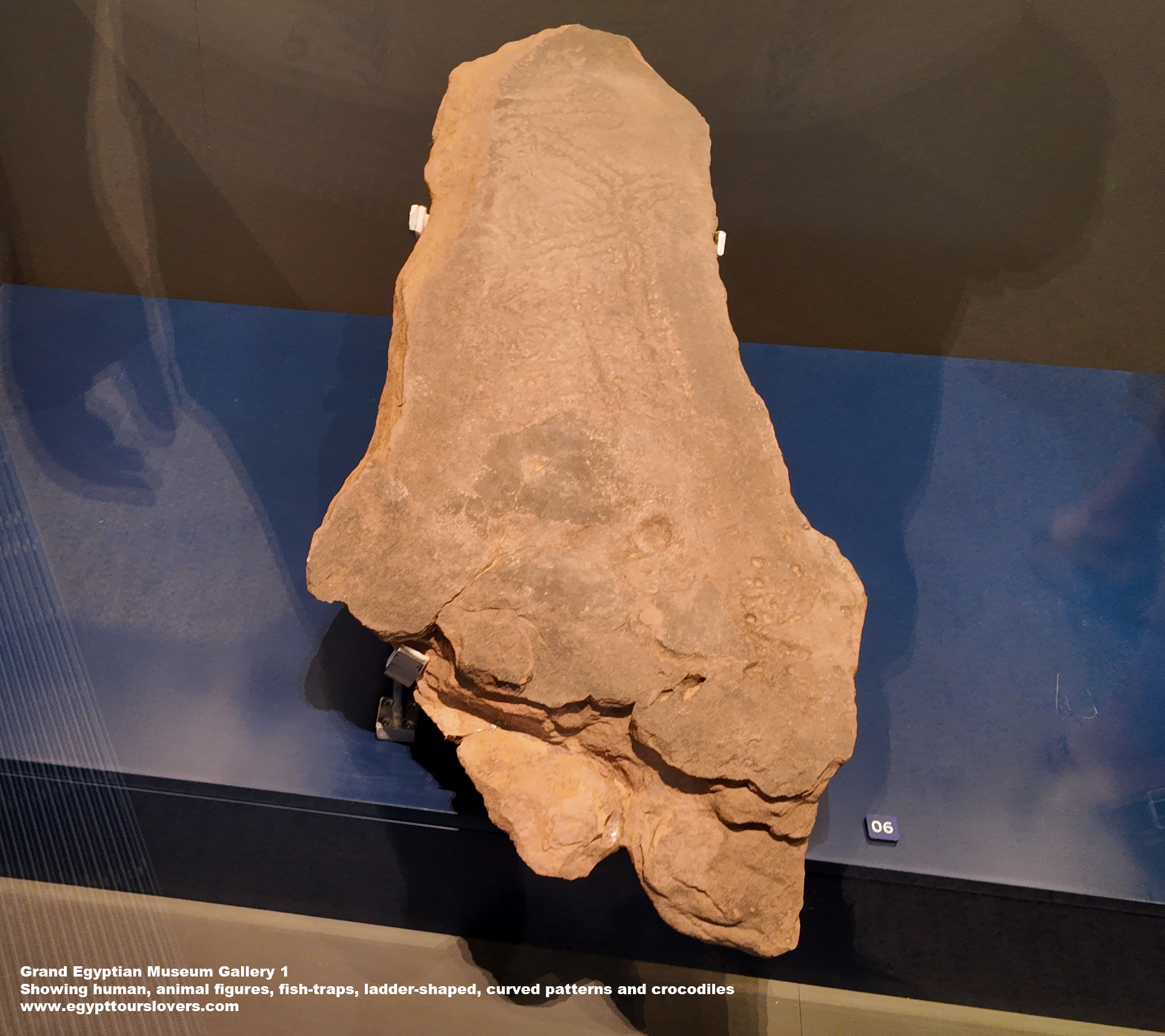
Paleolithic rock art | sandstone | el-hosh
From 8000-5000 BC.
Showing human, animal figures, fish-traps, ladder-shaped, curved patterns and crocodiles.
———– } ———– } ———– } ———– }
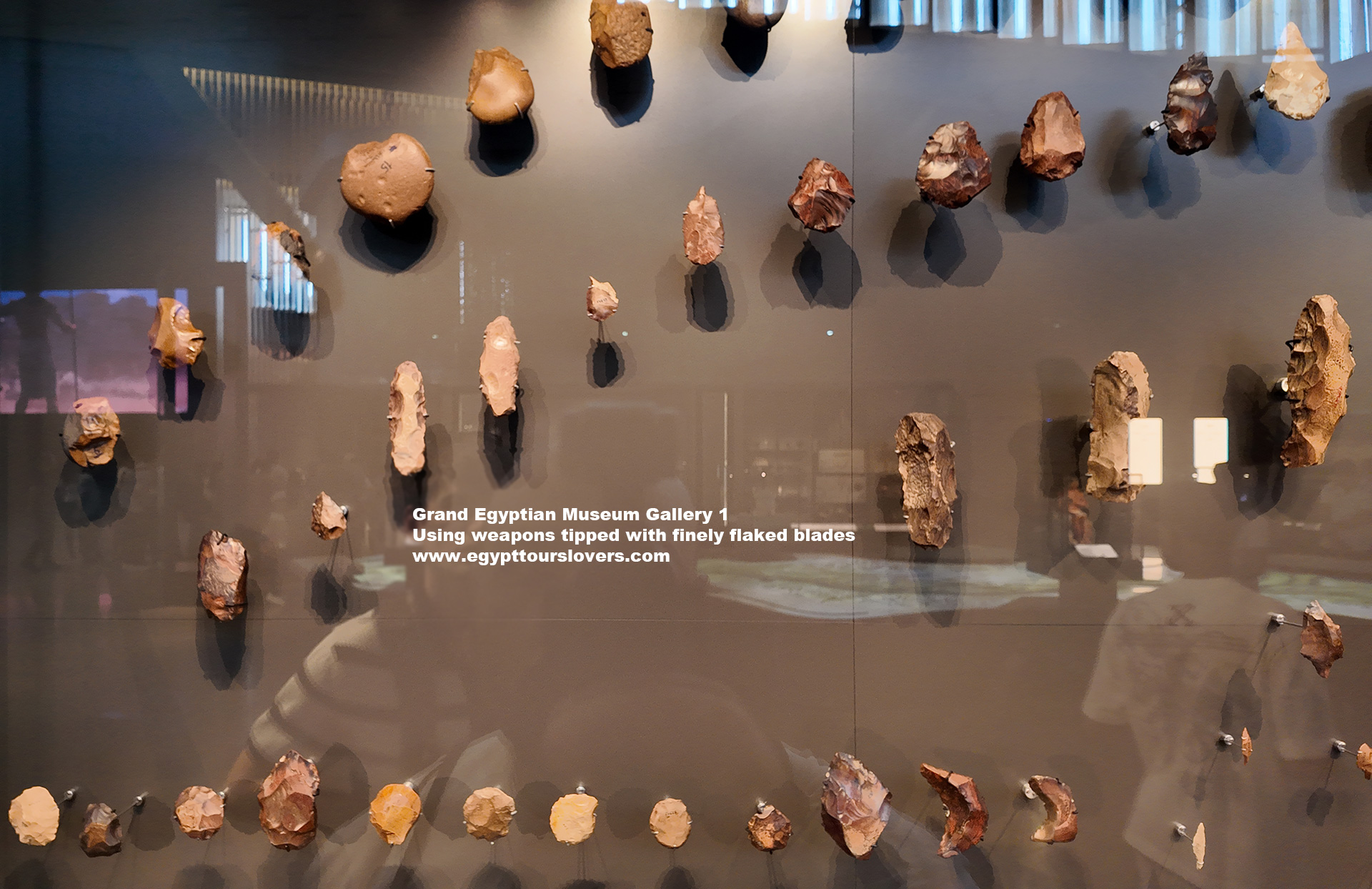
Epipaleoliyhic and Neolithic sahara stone tools | Flint stone | kharga oasis, gebel ahmar, fayum
From 12000-6000 BC.
Elaborate tools improved everyday life and influenced subsistence behavior.
Using weapons tipped with finely flaked blades.
Carving and piercing tools.
———– } ———– } ———– } ———– }
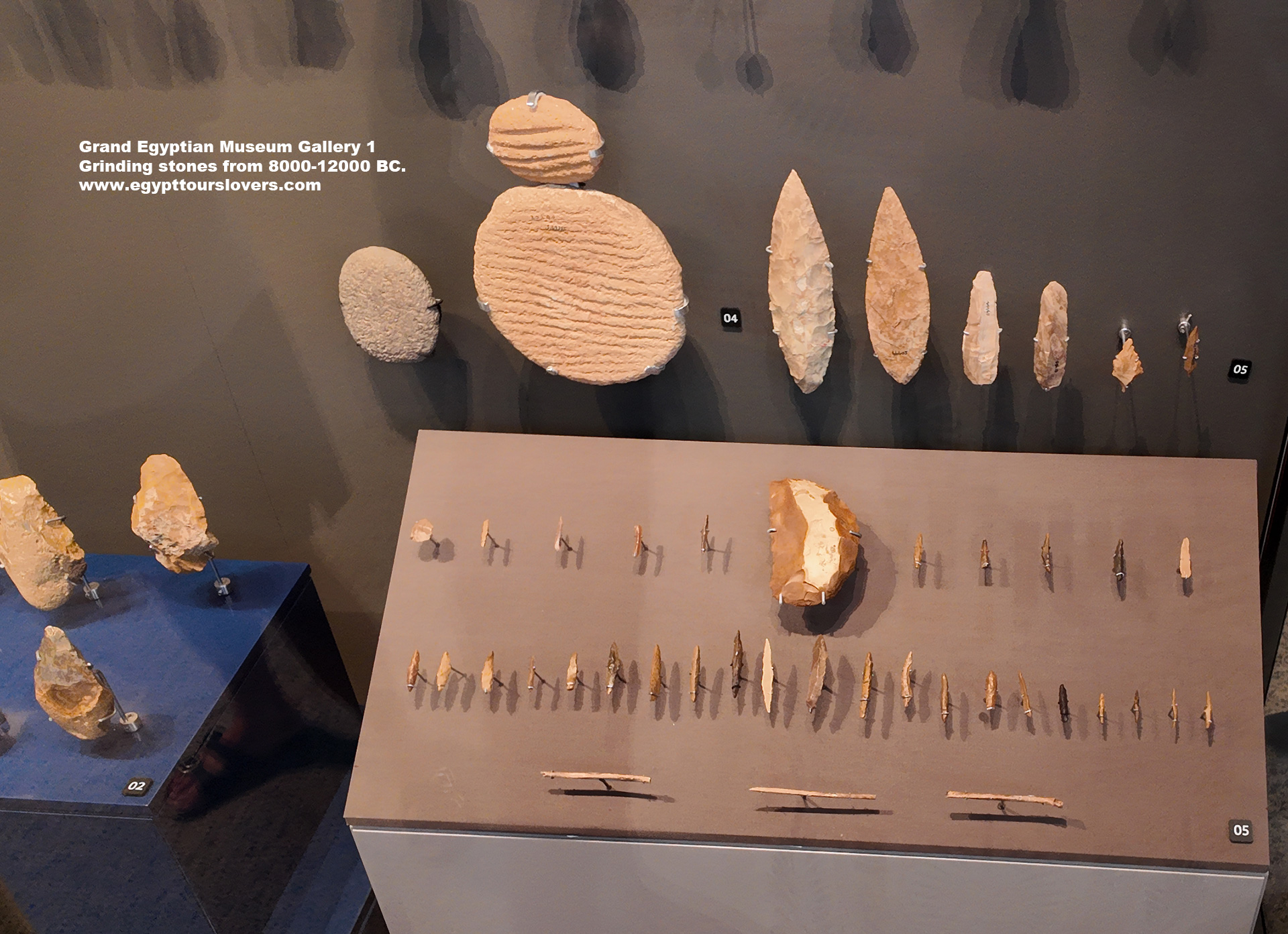
Epipaleoliyhic | sandstone | Gilf el-kebir, dakhla oasis
Grinding stones from 12000-8000 BC.
Used to transform grains into flour, minerals into pigments and break down plants and animal matter.
———– } ———– } ———– } ———– }
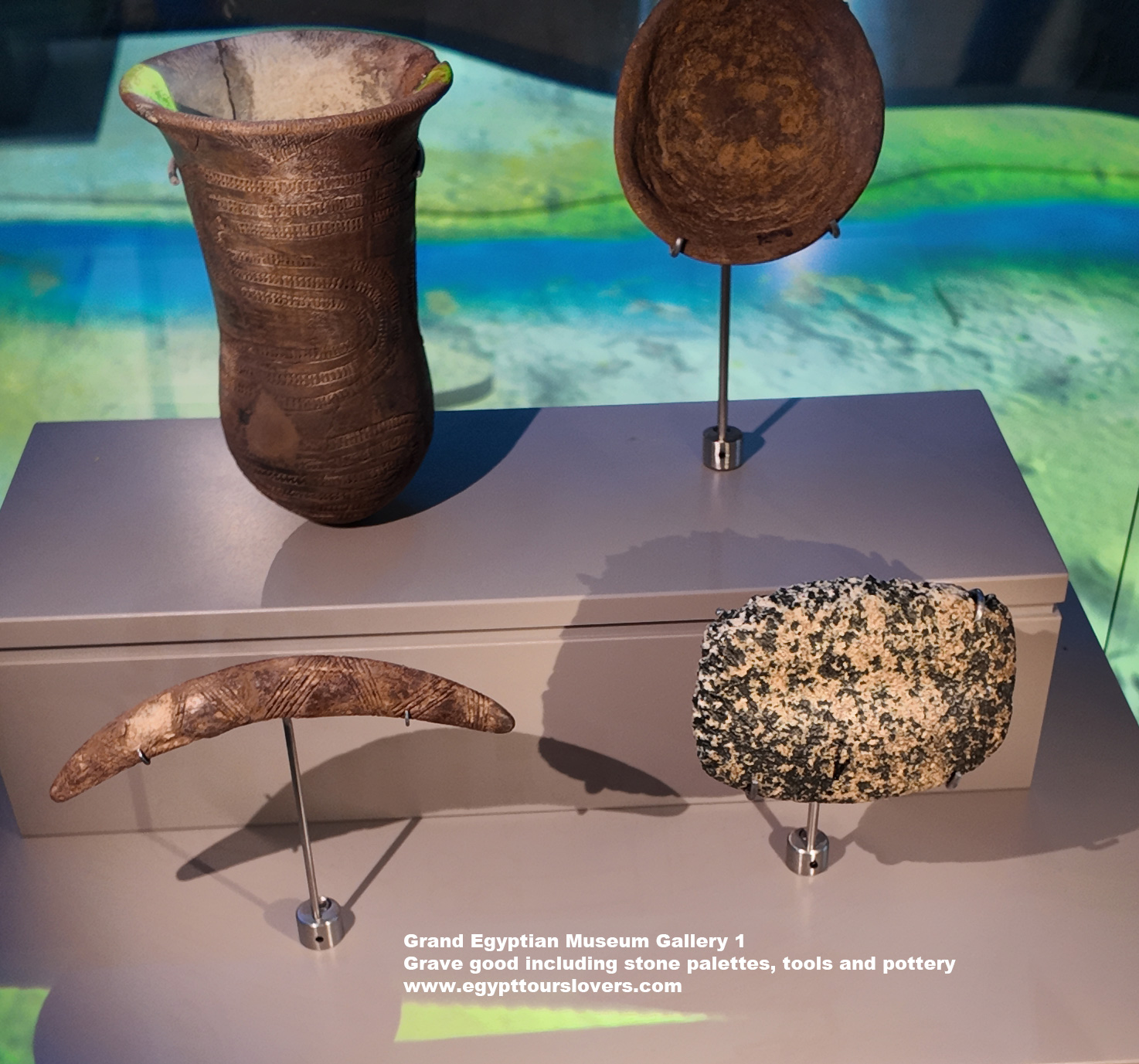
Neolithic period | pottery, granite, flint, bone | gebel ramlah
Grave good including stone palettes, tools and pottery.
Used for practiced animal husbandry and harvested wild crops.
———– } ———– } ———– } ———– }
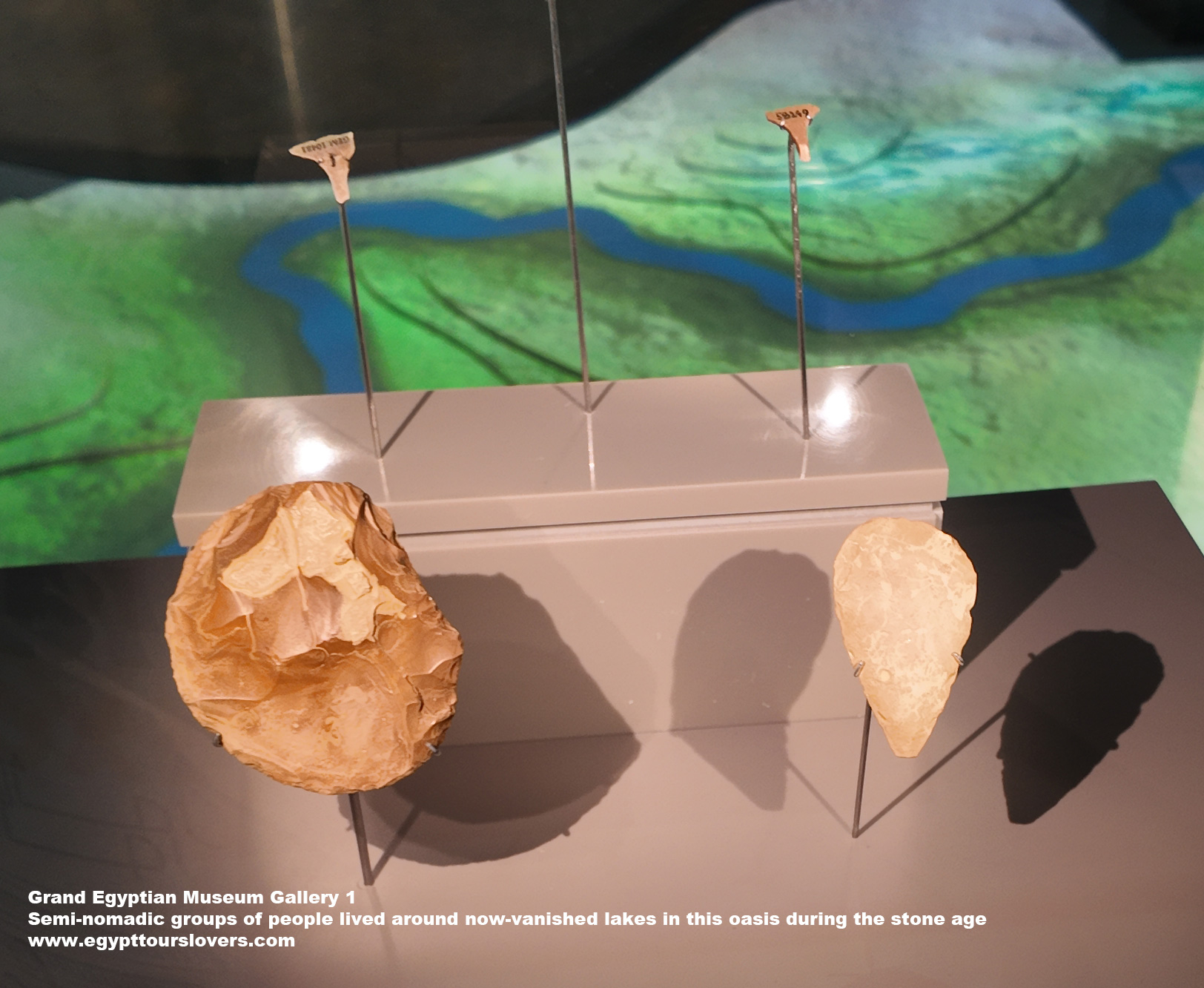
Neolithic period | flint | kharga oasis
Semi-nomadic groups of people lived around now-vanished lakes in this oasis during the stone age.
Used stone tools and arrowheads to hunt the rich variety of wild animals around lakes changing shores.
———– } ———– } ———– } ———– }
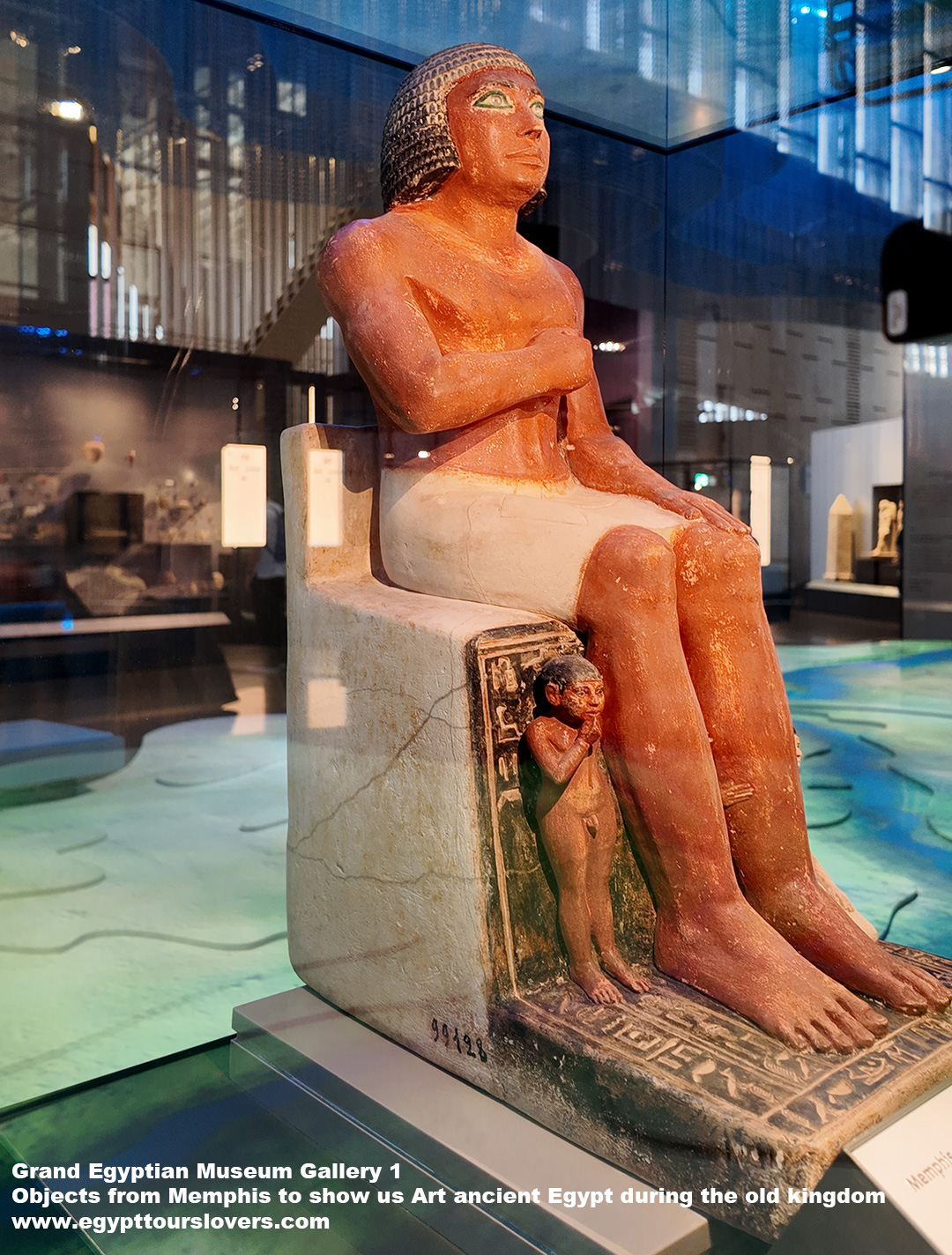
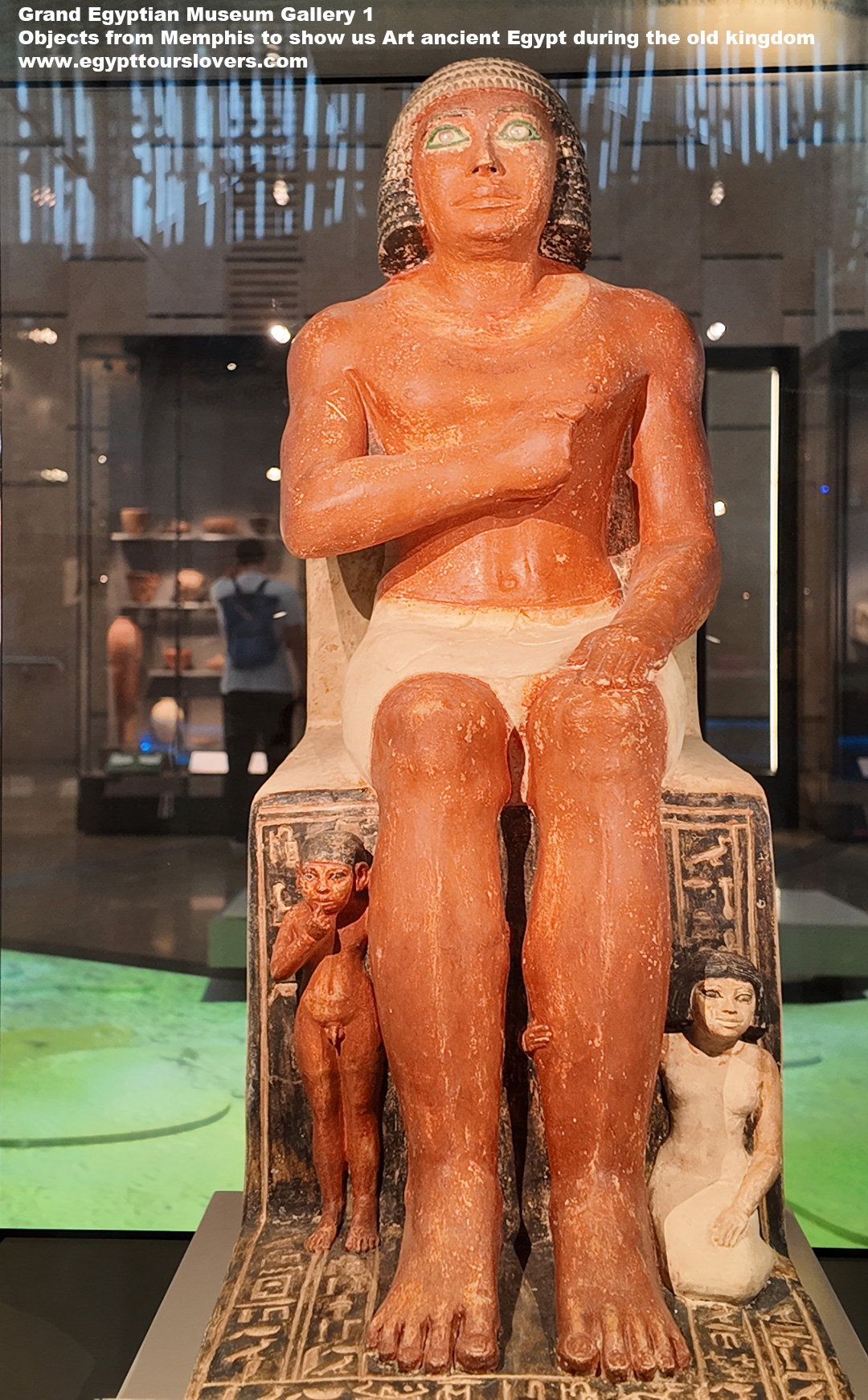
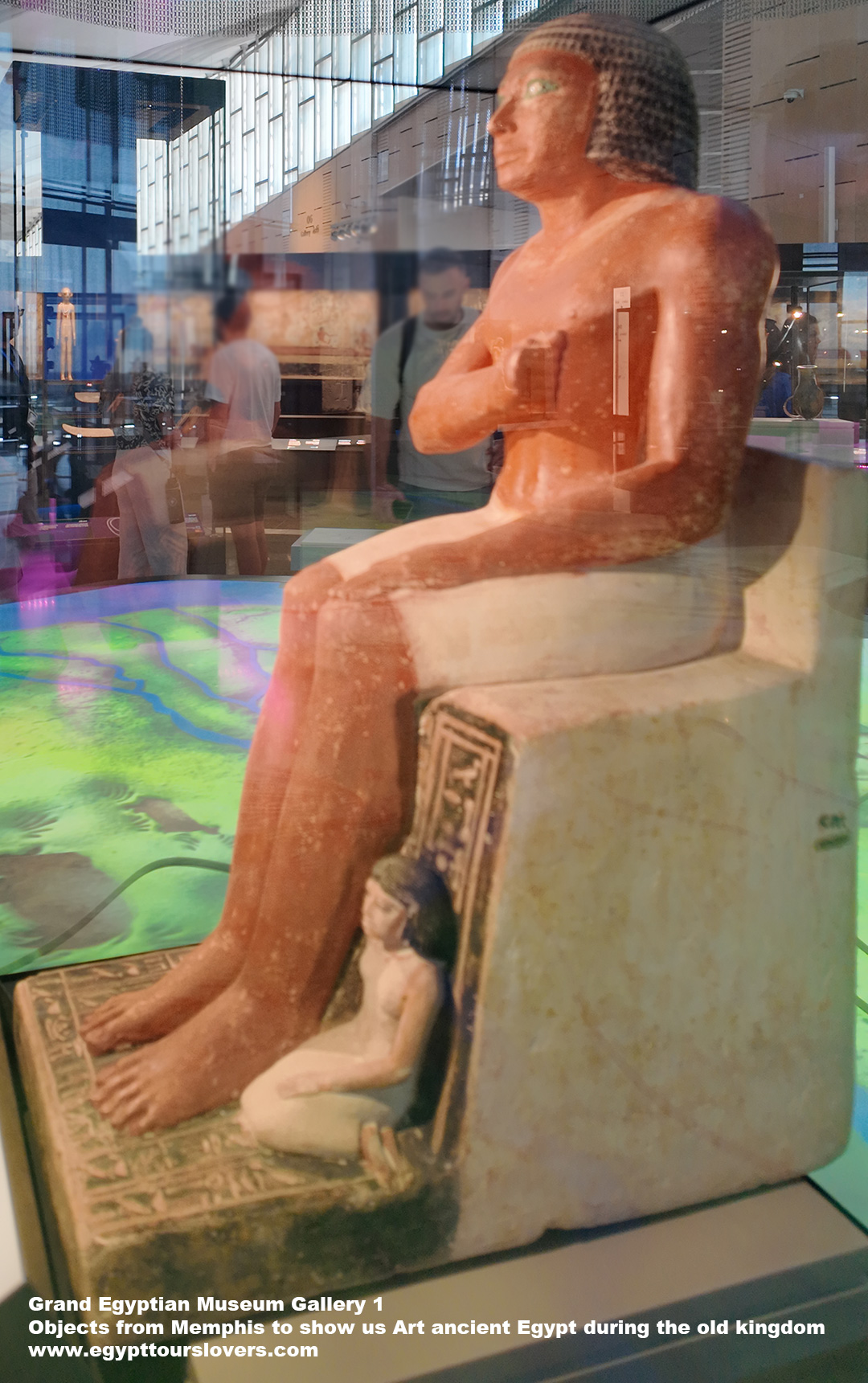
Dynasty 4 | limestone, pigment | Tombs in Giza
Objects from Memphis to show us Art ancient Egypt during the old kingdom.
———– } ———– } ———– } ———– }
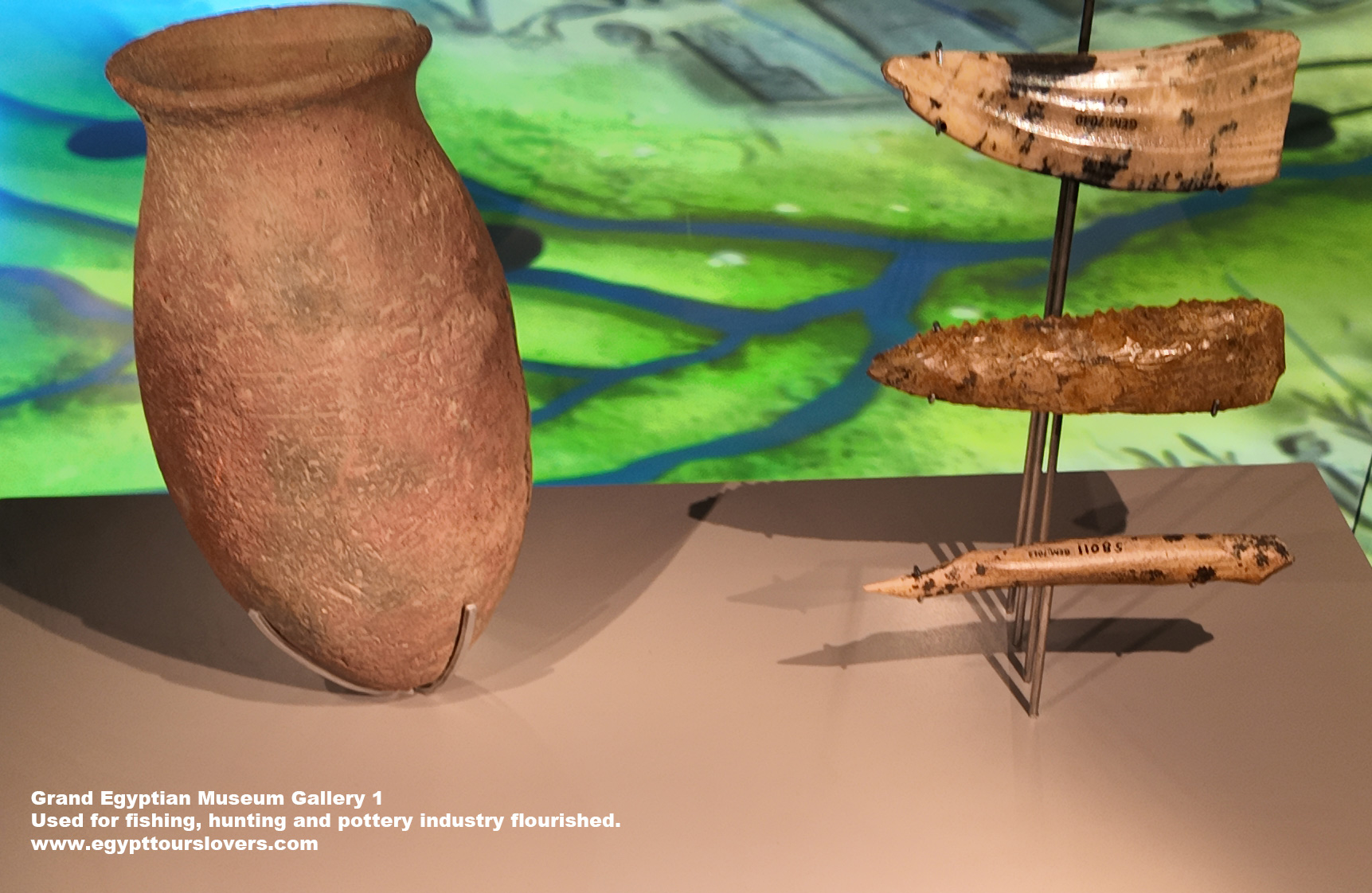
16 Neolithic period | pottery, ivory, flint, bone | Merimda Beni-Salama
Found in earliest and largest Neolithic villages.
Used for fishing, hunting and pottery industry flourished.
———– } ———– } ———– } ———– }
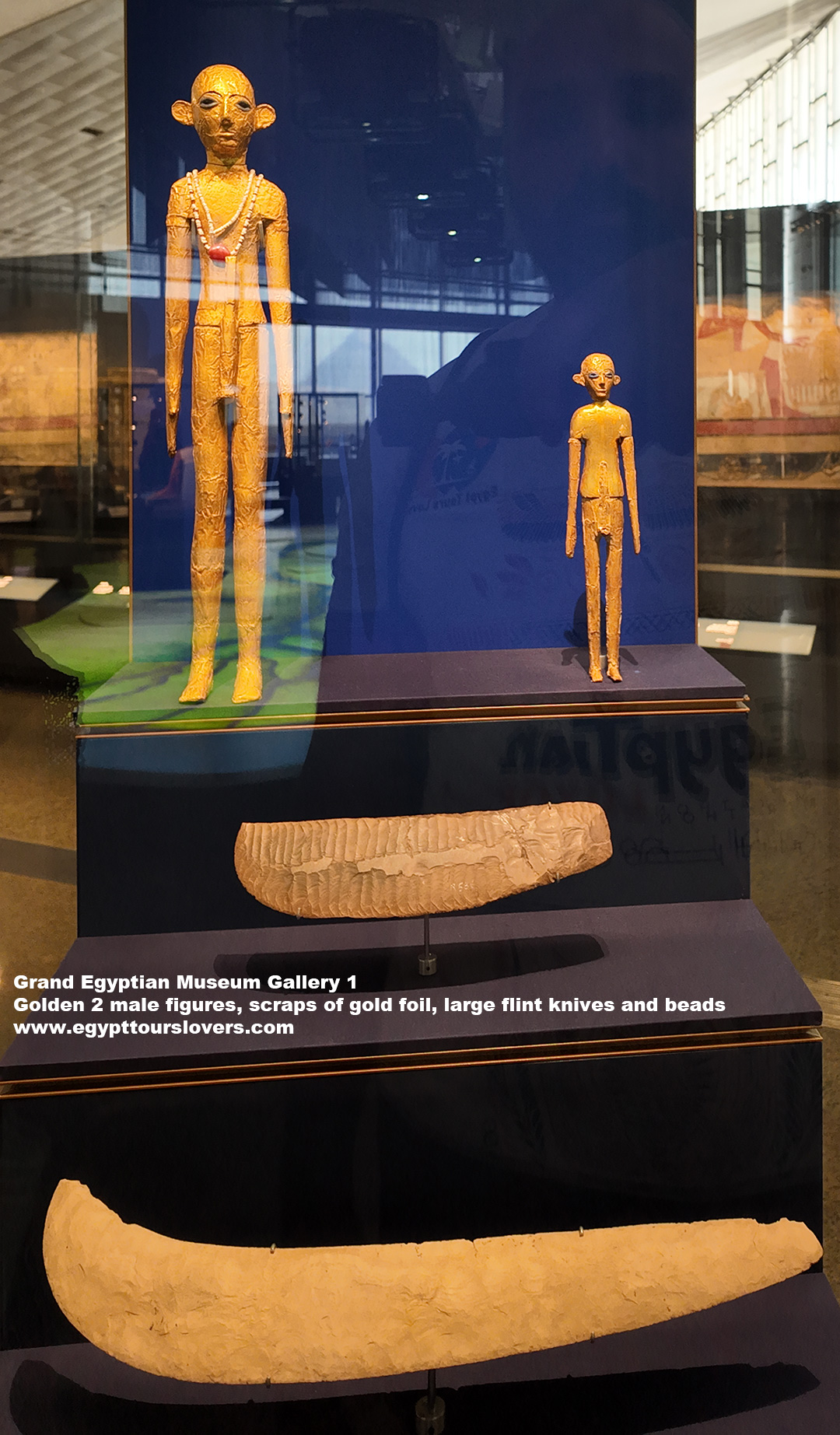
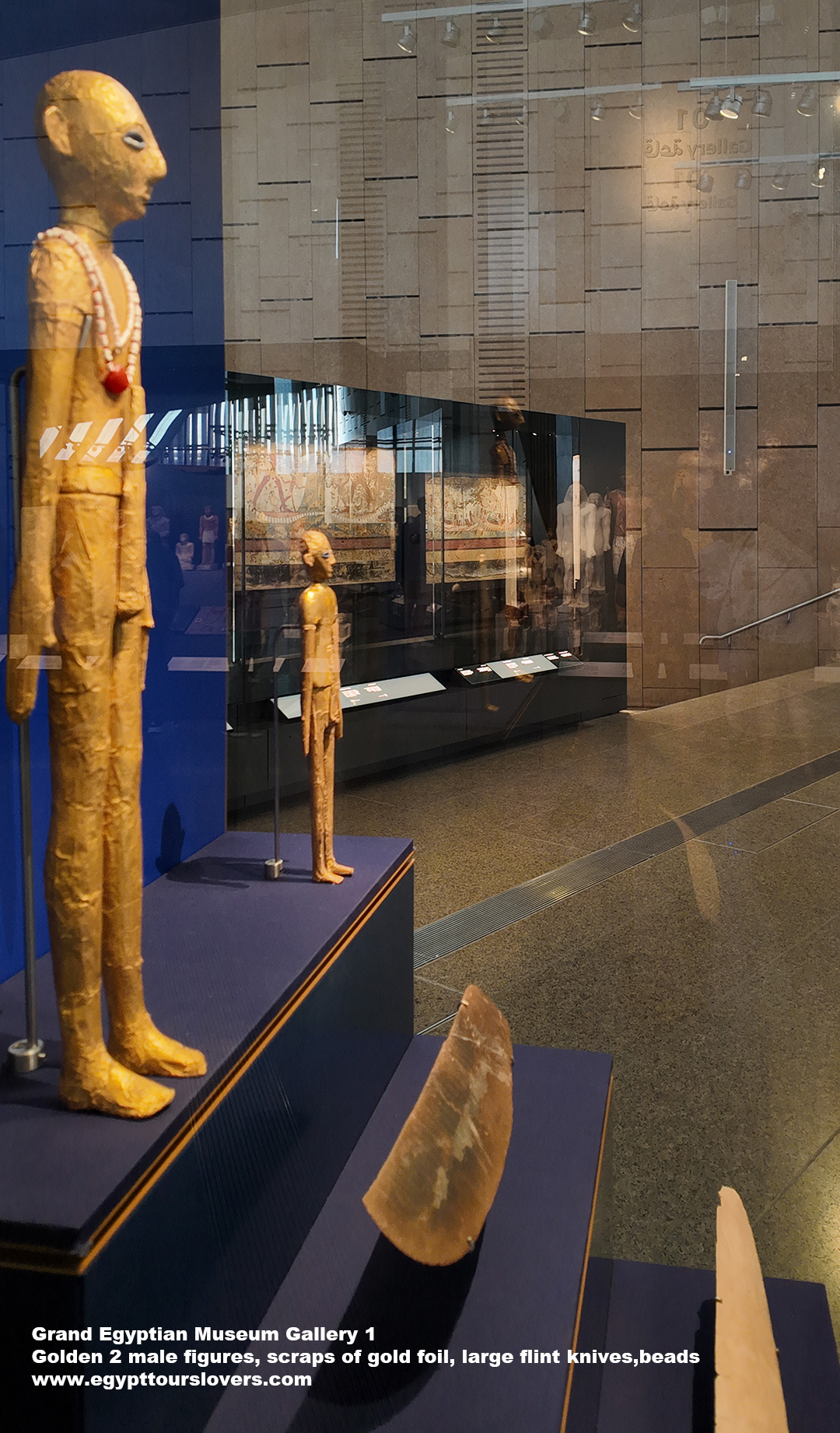
Naqada iii period | gold, lapis lazuli, carnelian, ostrich egg, wood, flint | Tal el-farkha Daqahliya, Delta
Golden 2 male figures, perhaps a local ruler and his son.
and scraps of gold foil, large flint knives and beads found in simple house in the eastern delta.
———– } ———– } ———– } ———– }
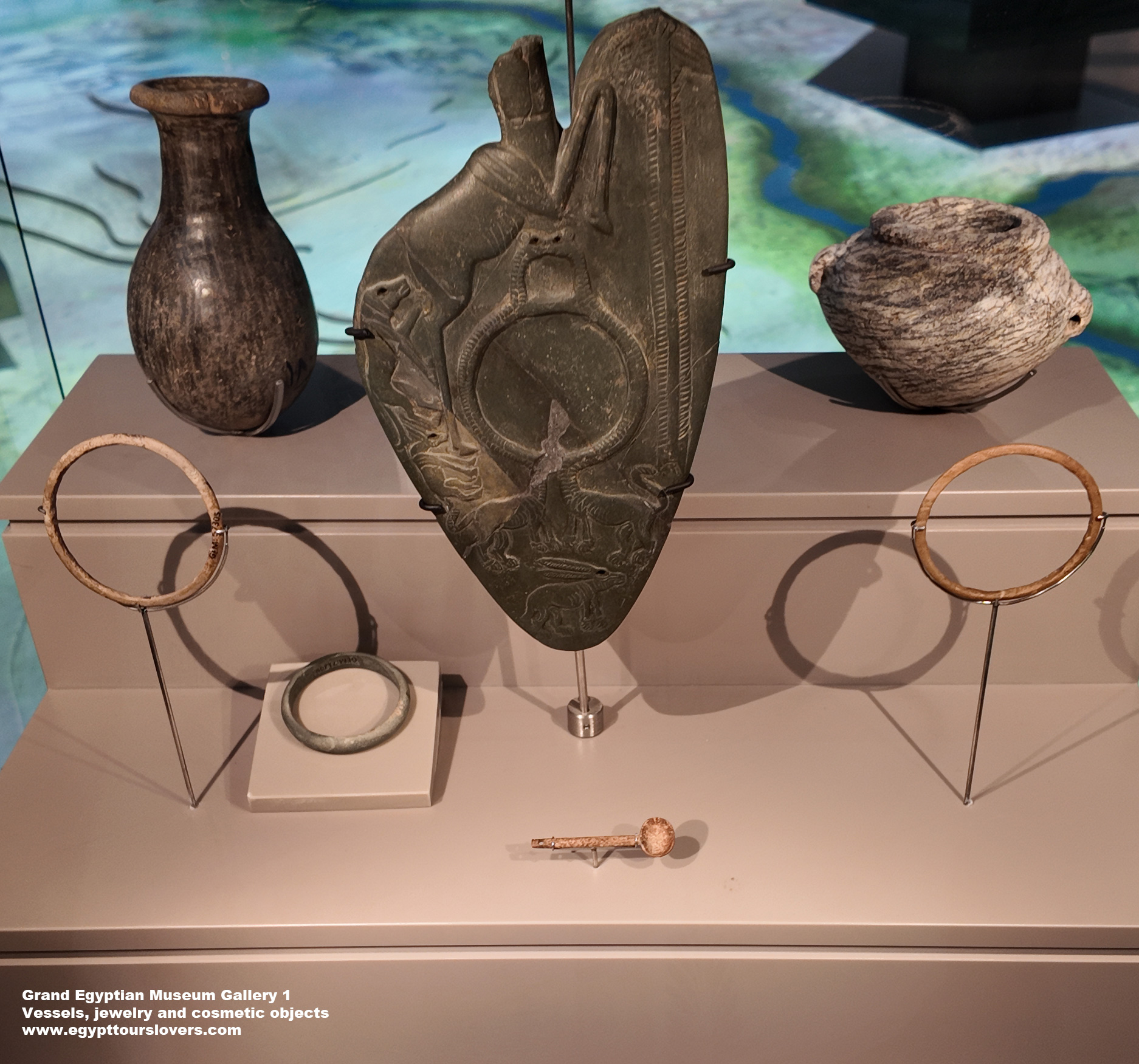
Dynasty 0-2 | limestone | diorite, pottery, greywacke, semi-precious stone, bone, flint | Minshat ezzat Daqahliya, Delta
Vessels, jewelry and cosmetic objects.
———– } ———– } ———– } ———– }
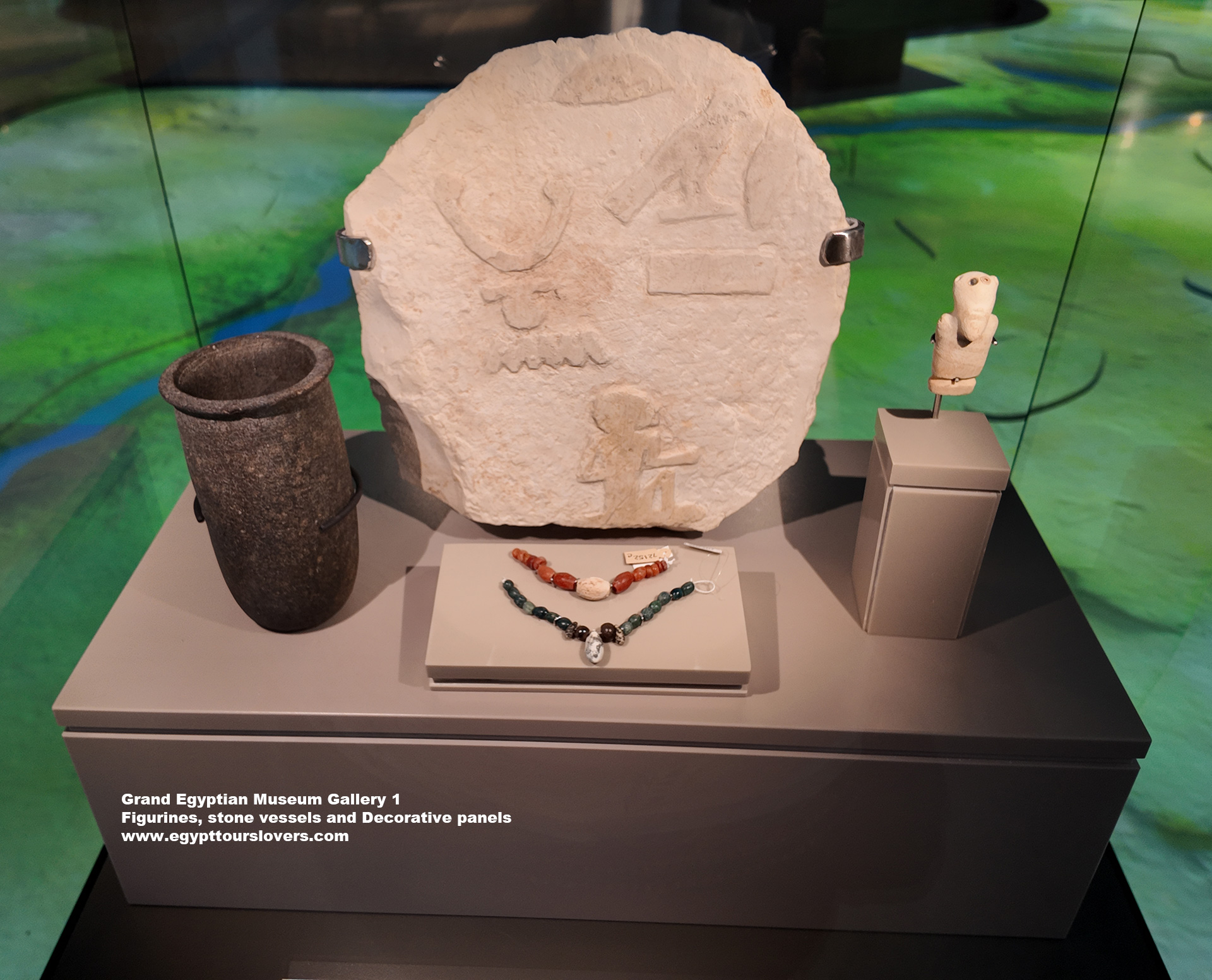
Naqada I + Dynasty 1 | Abydos | basalt, travertine “Egyptian Albaster stone”, lime stone, carnelian
Figurines, stone vessels and Decorative panels.
———– } ———– } ———– } ———– }
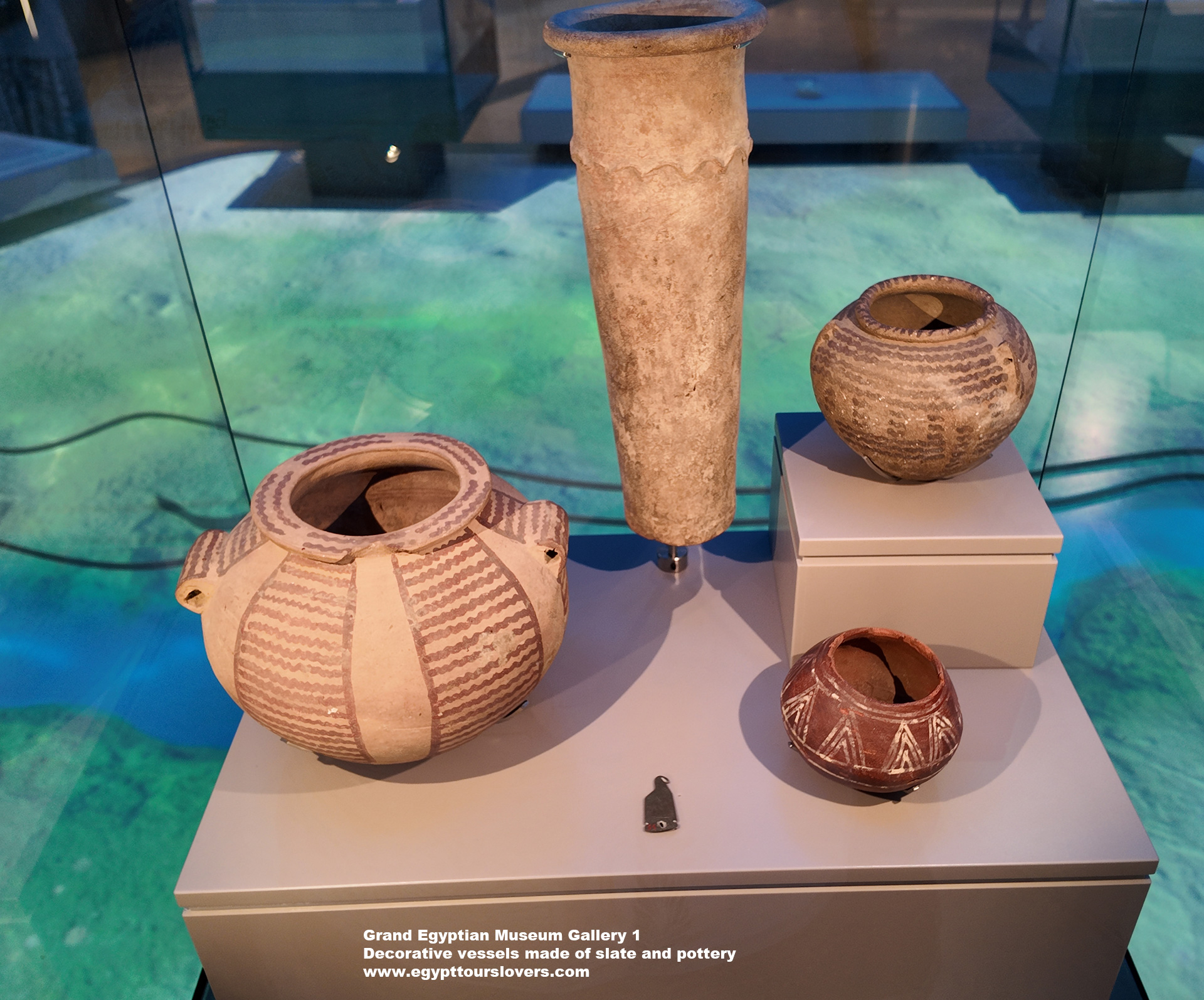
Naqada I + Naqada iii | pottery, pigment, slate stone | Delta
Decorative vessels made of slate and pottery
———– } ———– } ———– } ———– }
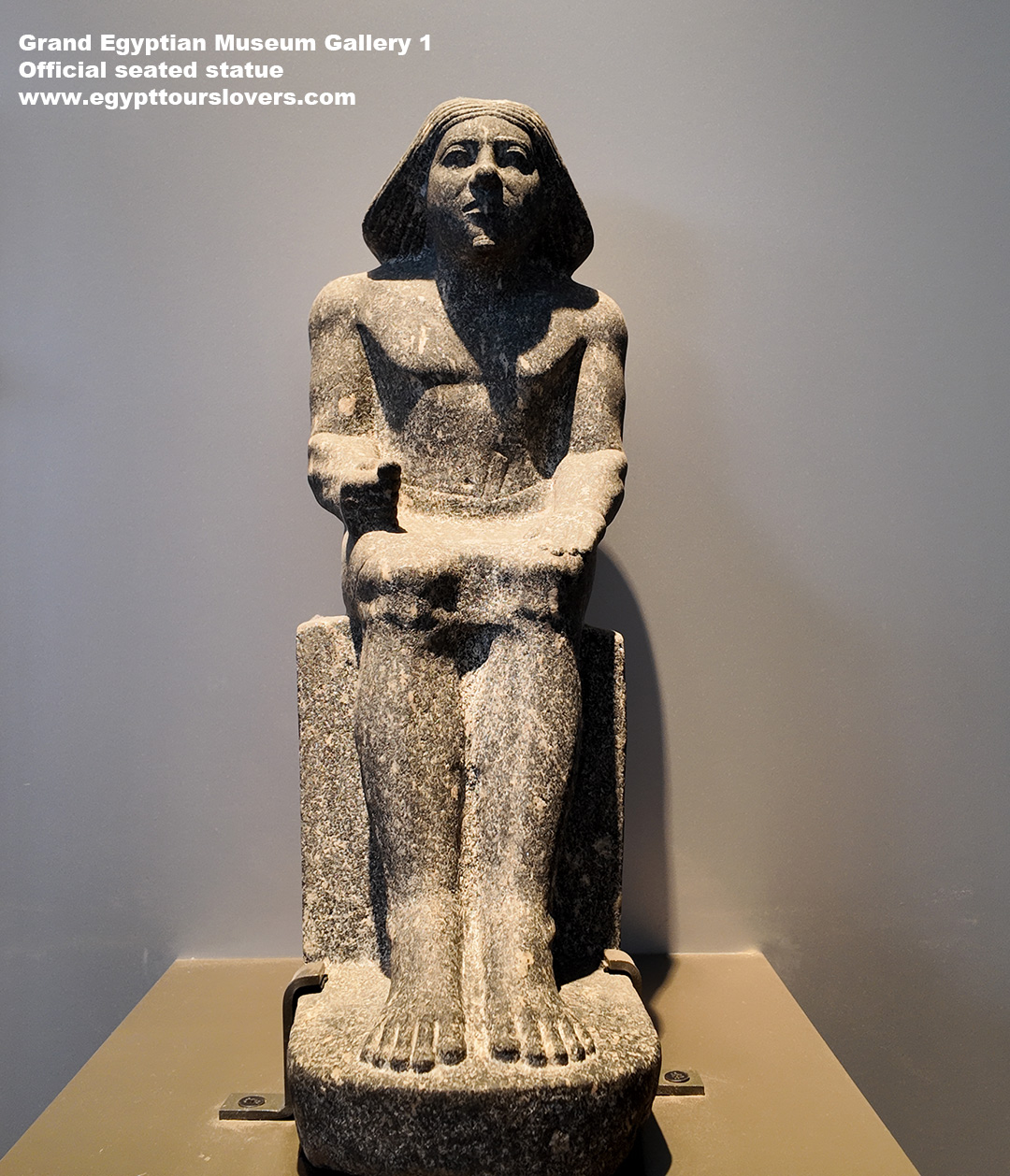
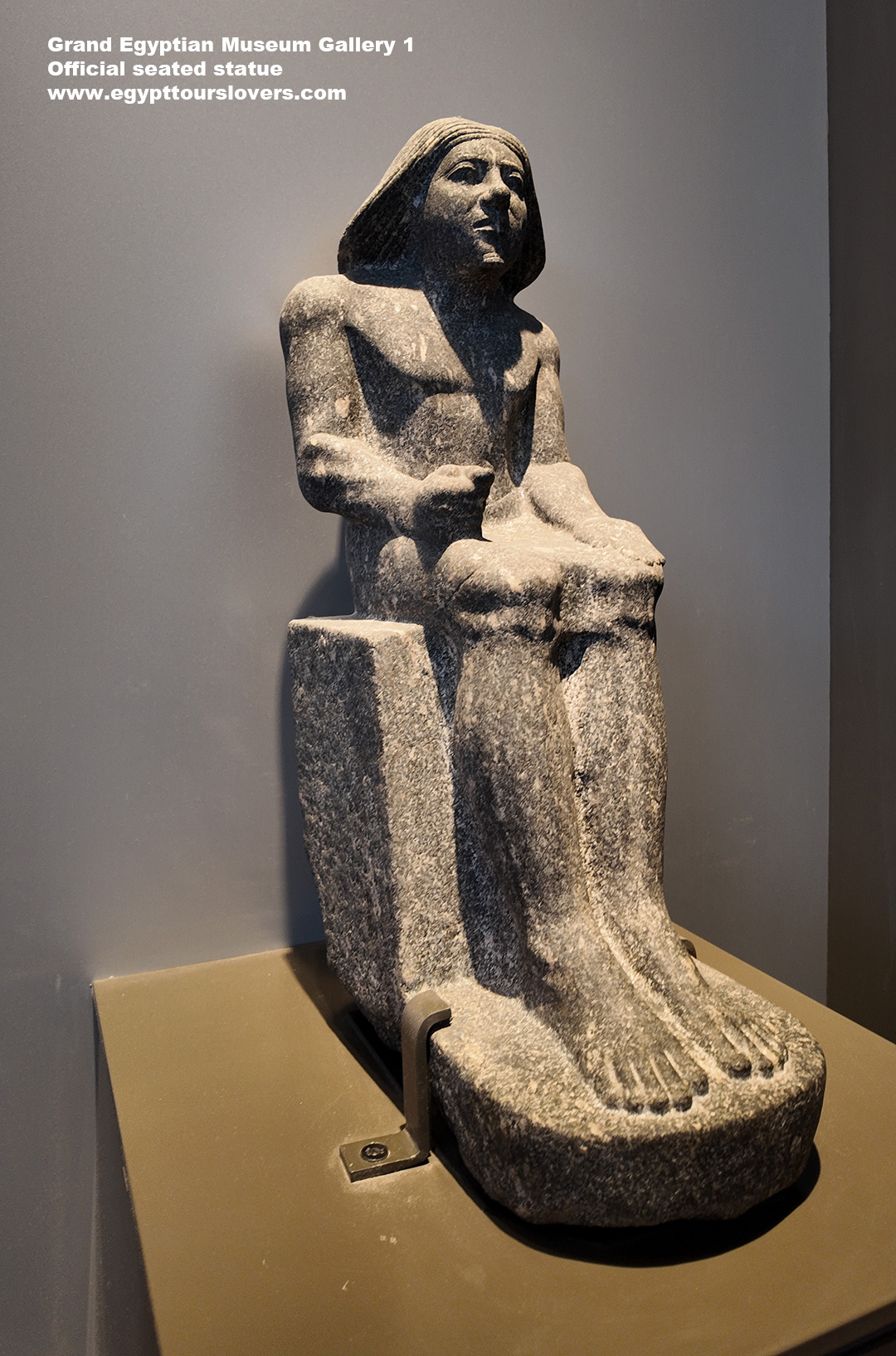
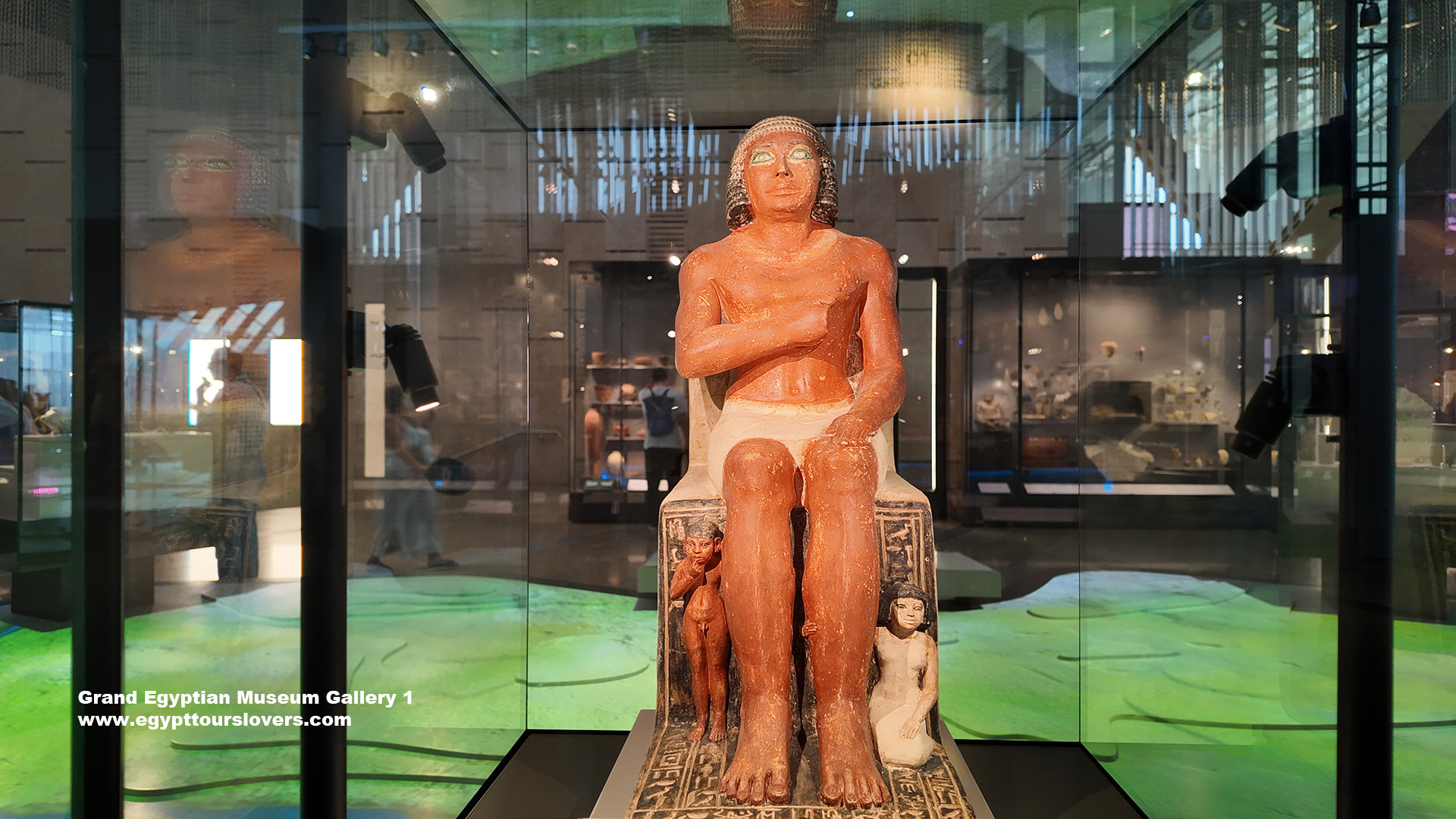
Dynasty 5 | granite, pigment | Tomb in Saqqara
Official seated statue “unnamed”
He wears a wig, a wide necklace, and a pleated kilt.
The sculpture accentuates the muscular arms.
High-quality sculpture. Sculpted in a royal workshop.
Found in tomb not have names? Find this tomb from inside
———– } ———– } ———– } ———– }
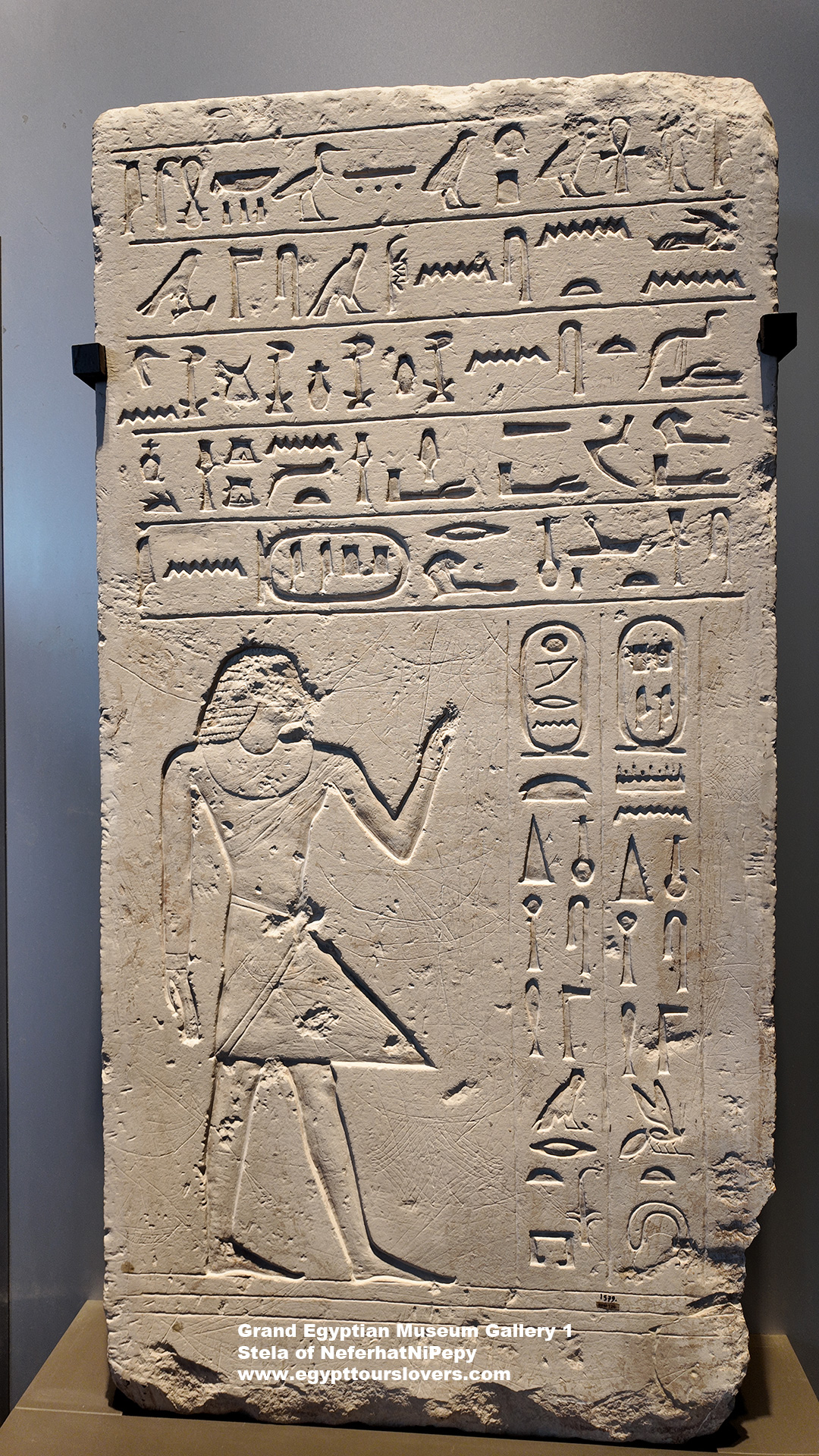
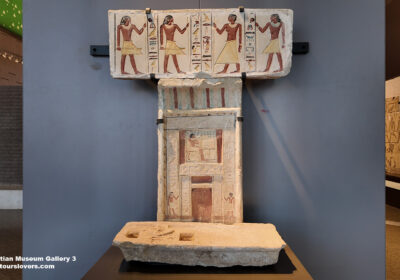
Dynasty 6 | Limestone | Abydos
Stela of NeferhatNiPepy
Text of the tablet: “all living beings on earth, hear my supplication and repeat it…. say: Thousands of breads, beer, oxen, birds for NeferhatNiPepy “. “Neferhatnipepy asks the living to recite offerings of bread, beer, oxen & birds for his afterlife.”
Jobs NeferhatNiPepy:
- The seal-bearer of the king.
- Overseer of the palace.
- Inspector of the pyramid priests of king pepy I and king merenre.
———– } ———– } ———– } ———– }
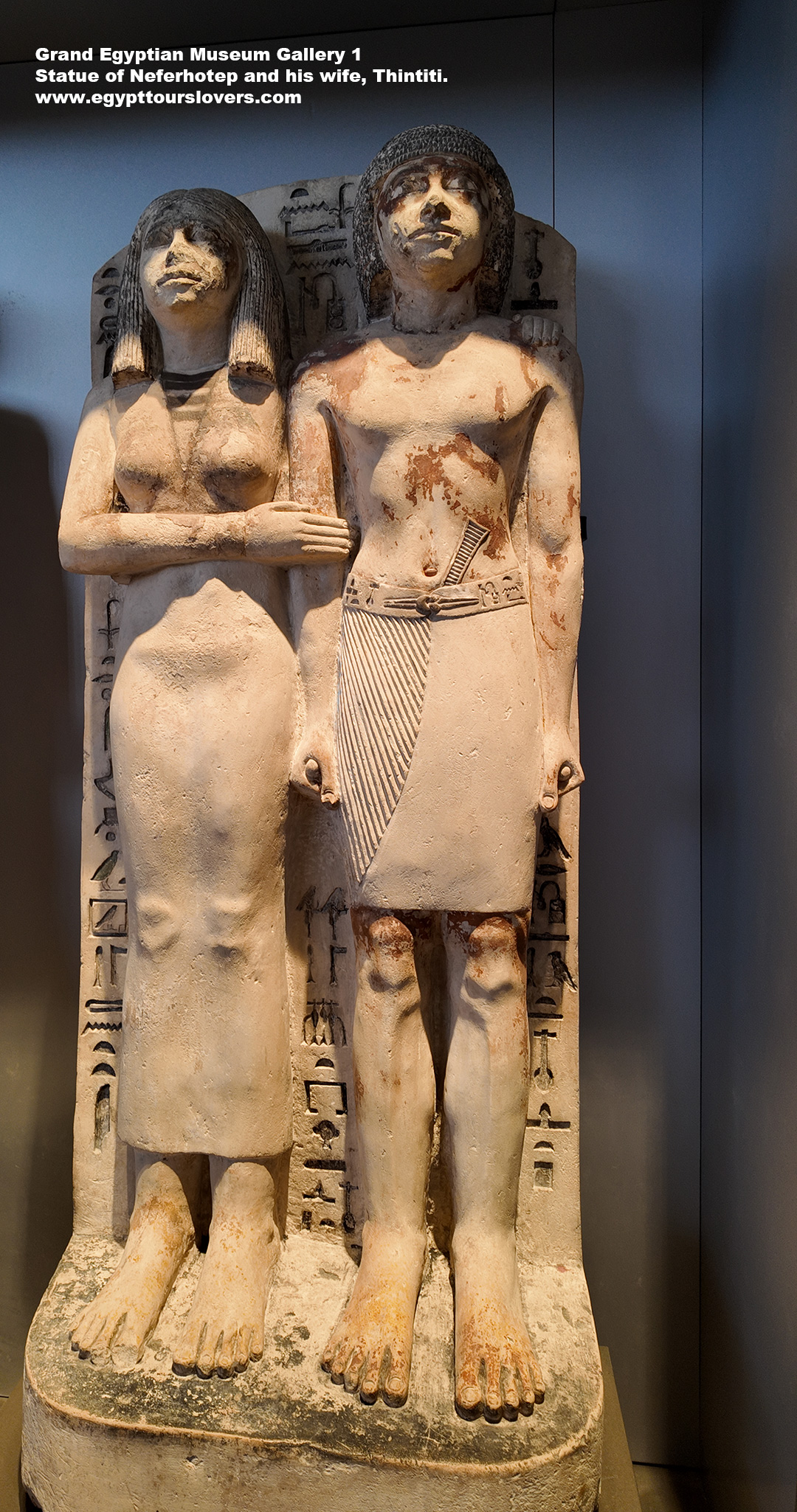
Dynasty 5 | Limestone, pigment | Saqqara
Statue of Neferhotep and his wife, Thintiti.
Neferhotep was the scribe of royal documents and overseer of surplus agricultural produce. Thintiti was a priestess of the temple of the goddess Hathor.
The fine craftsmanship of the statue reflects its wealth, and it was carved in the royal workshop.
———– } ———– } ———– } ———– }
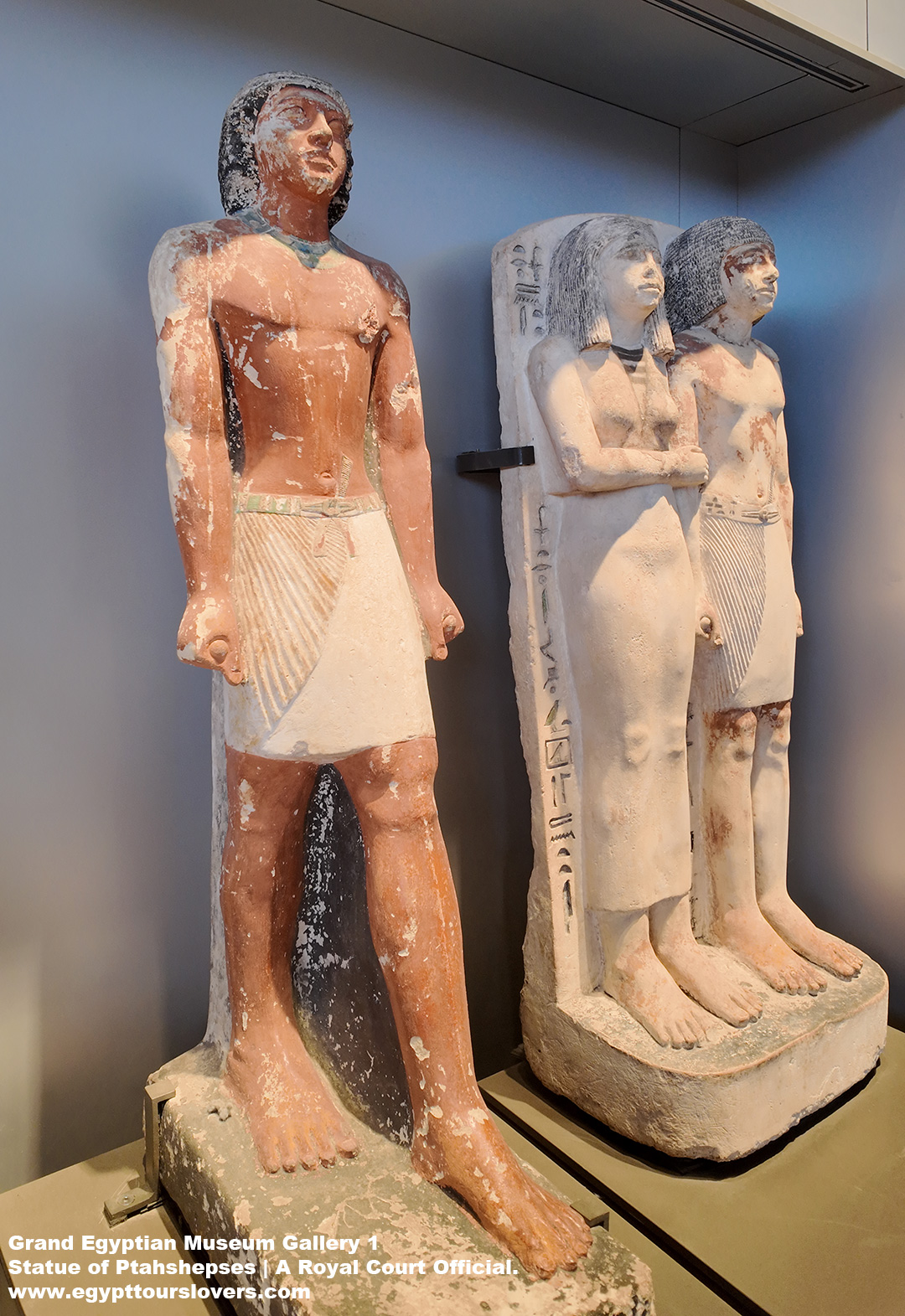
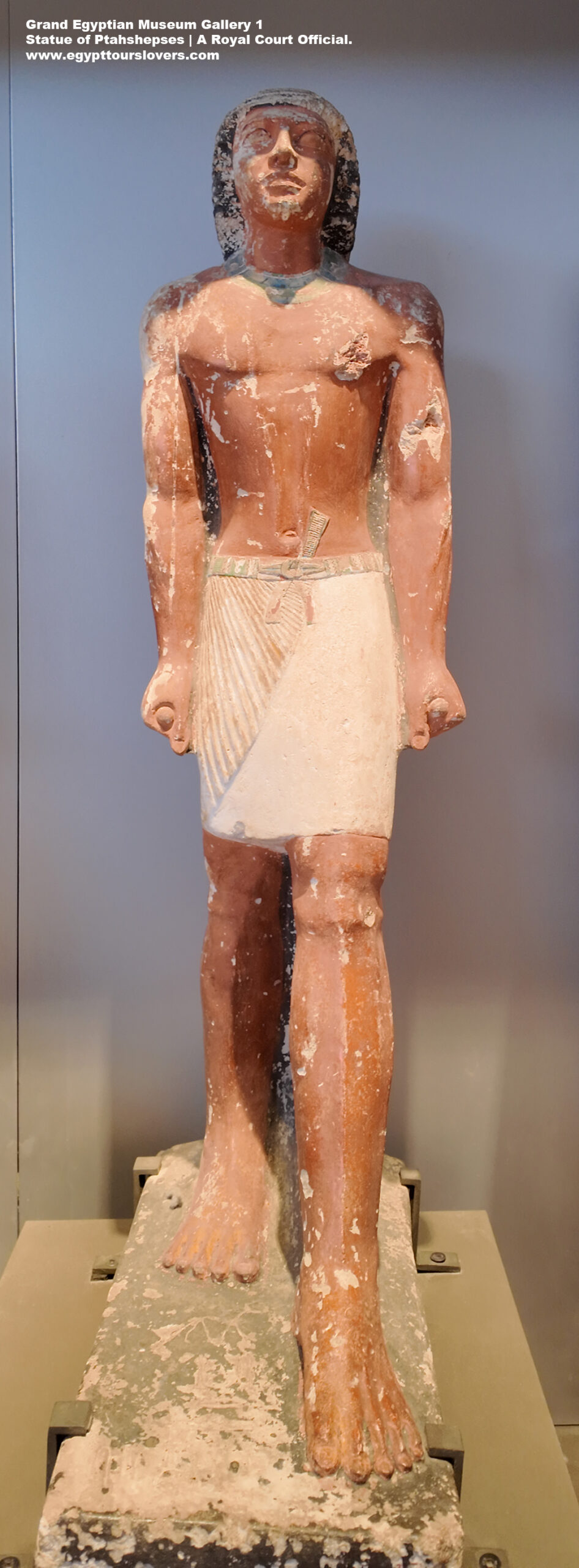
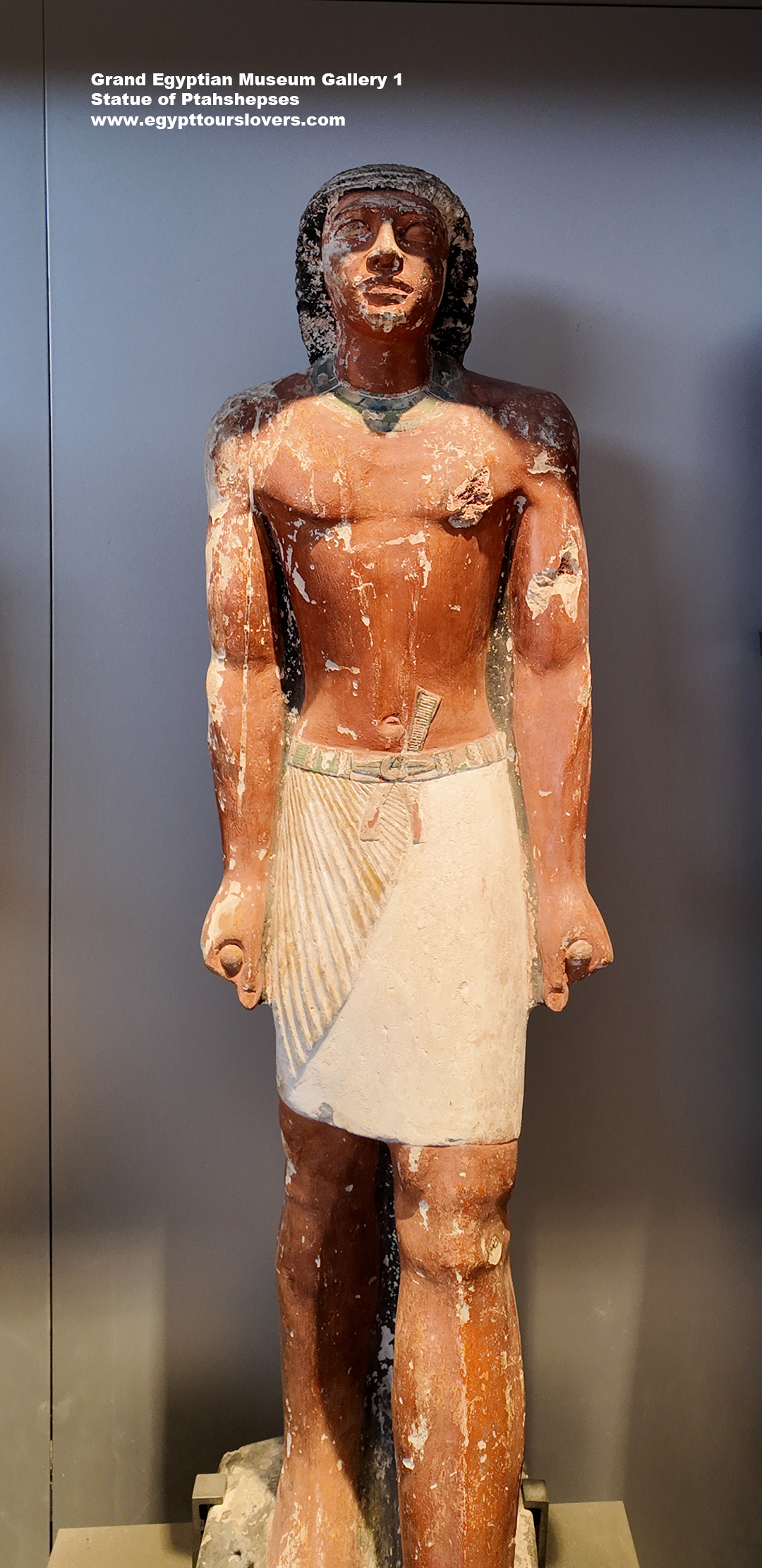
Dynasty 5 | Limestone, pigment | Saqqara
Statue of Ptahshepses.
- A Royal Court Official.
- Judge, Inspector, and Supervisor of the Royal Archivists and Correspondence.
- Priest in the Temples of Hathor and Ra.
- A Judge of Ma’at and of Justice in the Priesthood.
———– } ———– } ———– } ———– }
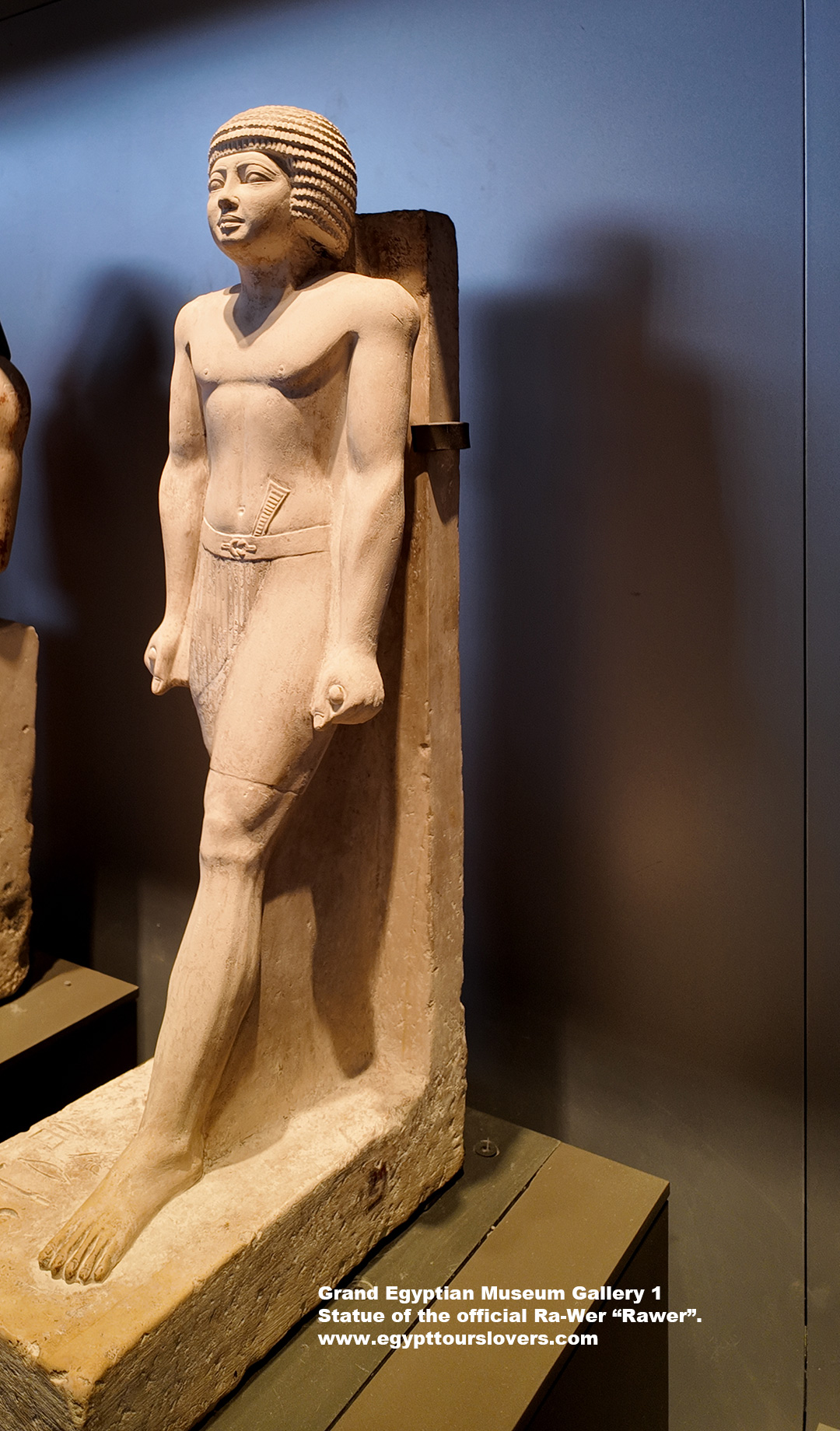
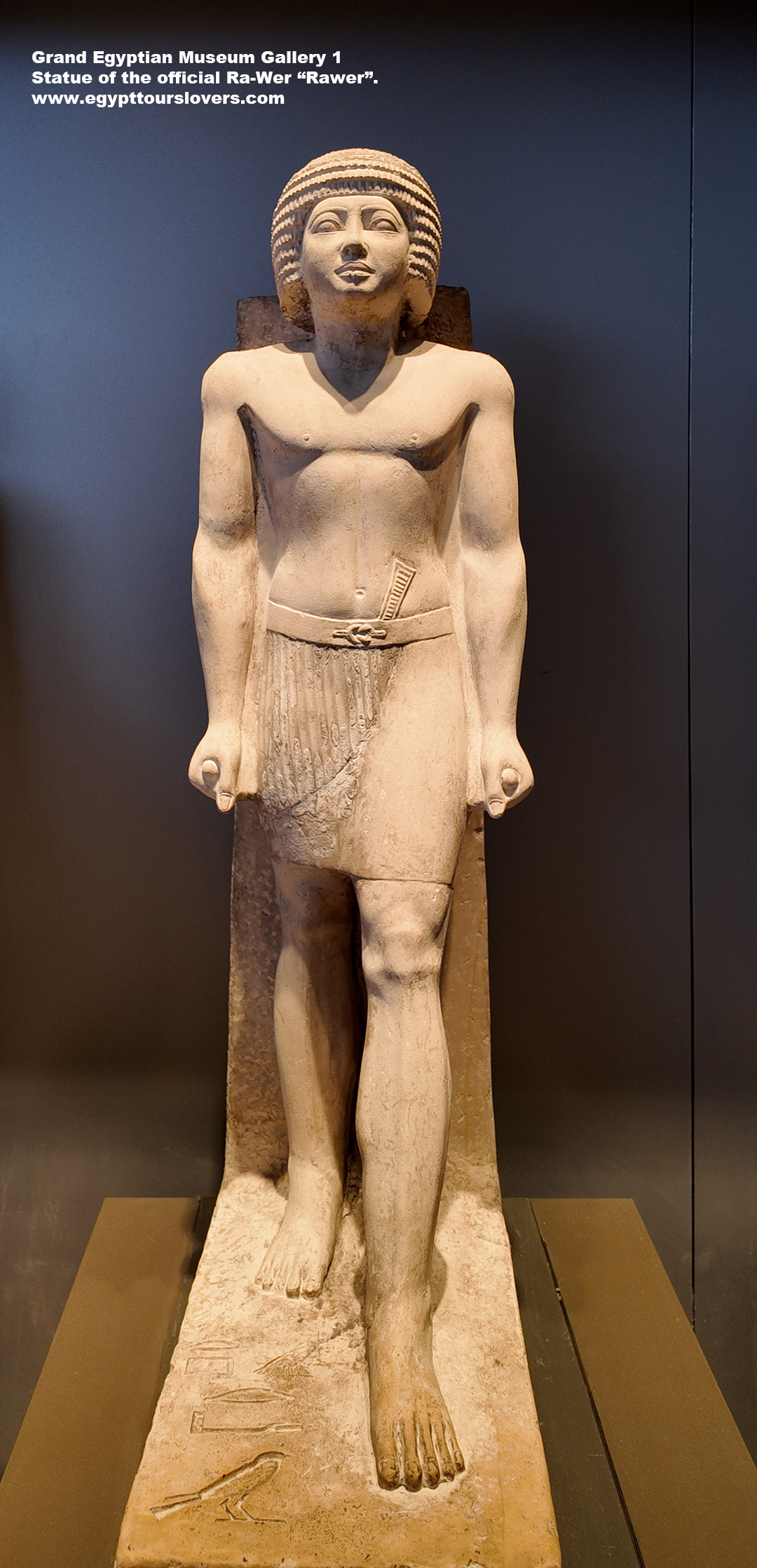
Dynasty 5 | Limestone | Saqqara
Statue of the official Ra-Wer “Rawer”.
The stone statue was found in a secret chamber (“the crypt”) in his tomb at Saqqara.
He served as the overseer of the royal palace.
———– } ———– } ———– } ———– }
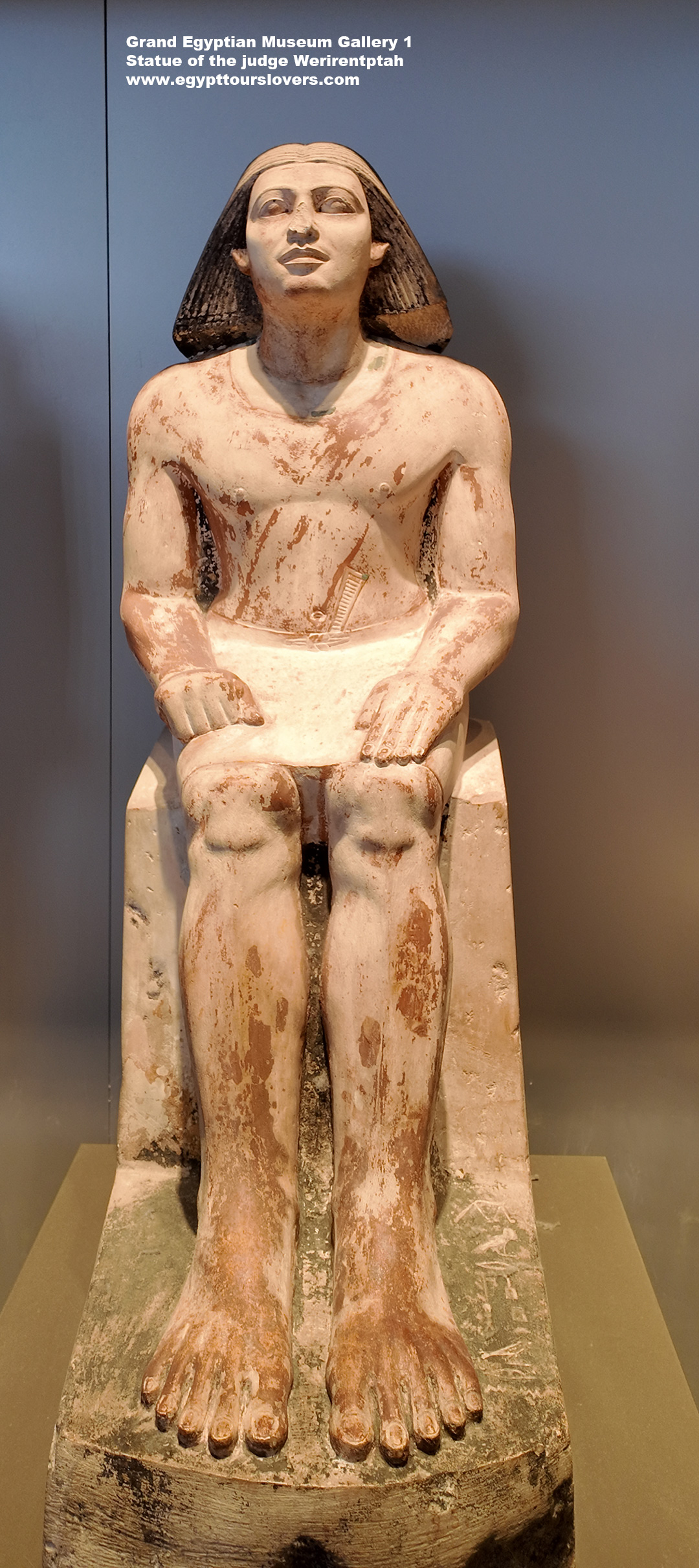
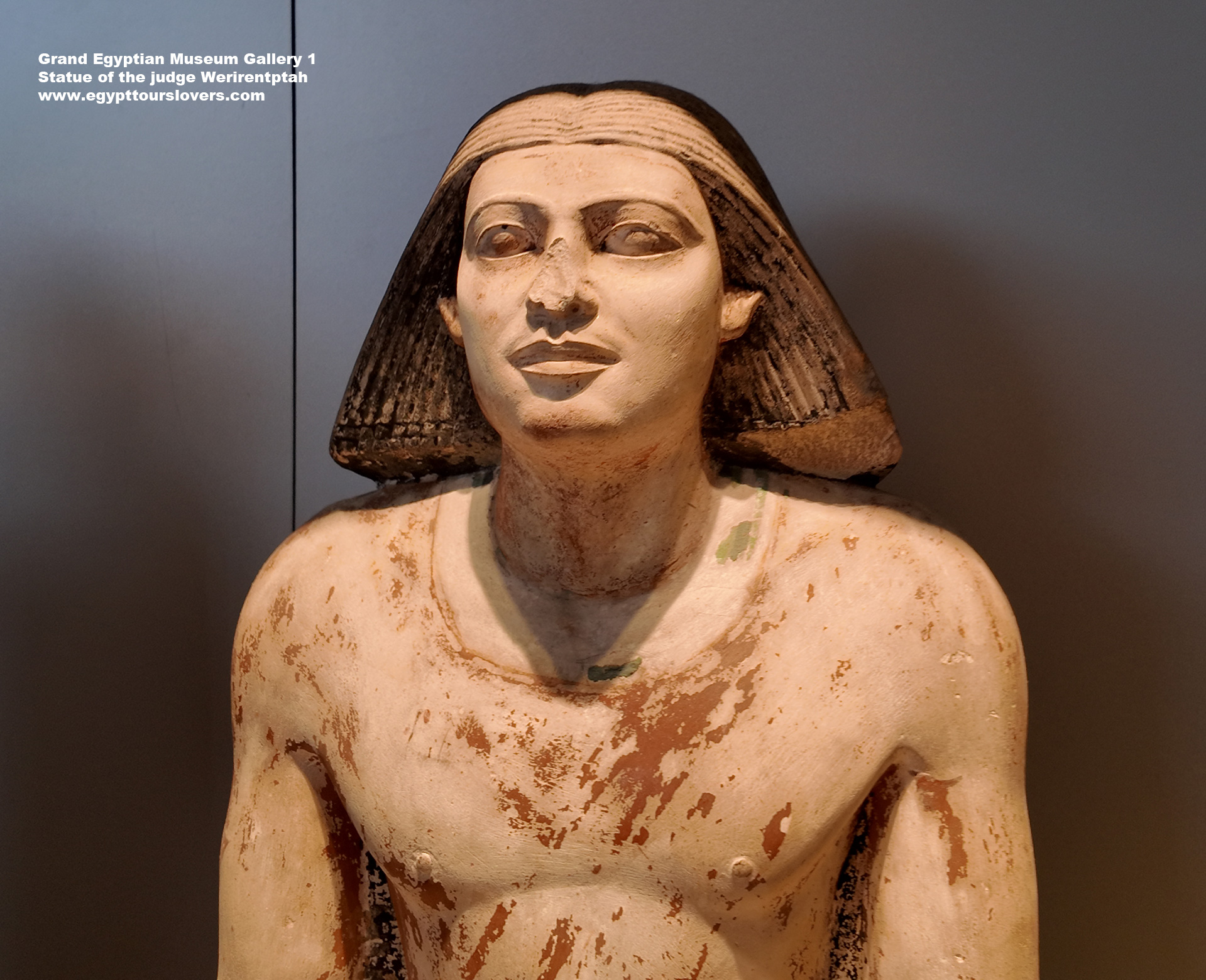
Dynasty 5 | Limestone, pigment | Saqqara
Statue of the judge Werirentptah.
Overseer of scribes, priest of Hathor and ra in the sun temple of king Neferirkae.
His name included Ptah “god of Memphis” this mean he get high level in the royal court.
———– } ———– } ———– } ———– }
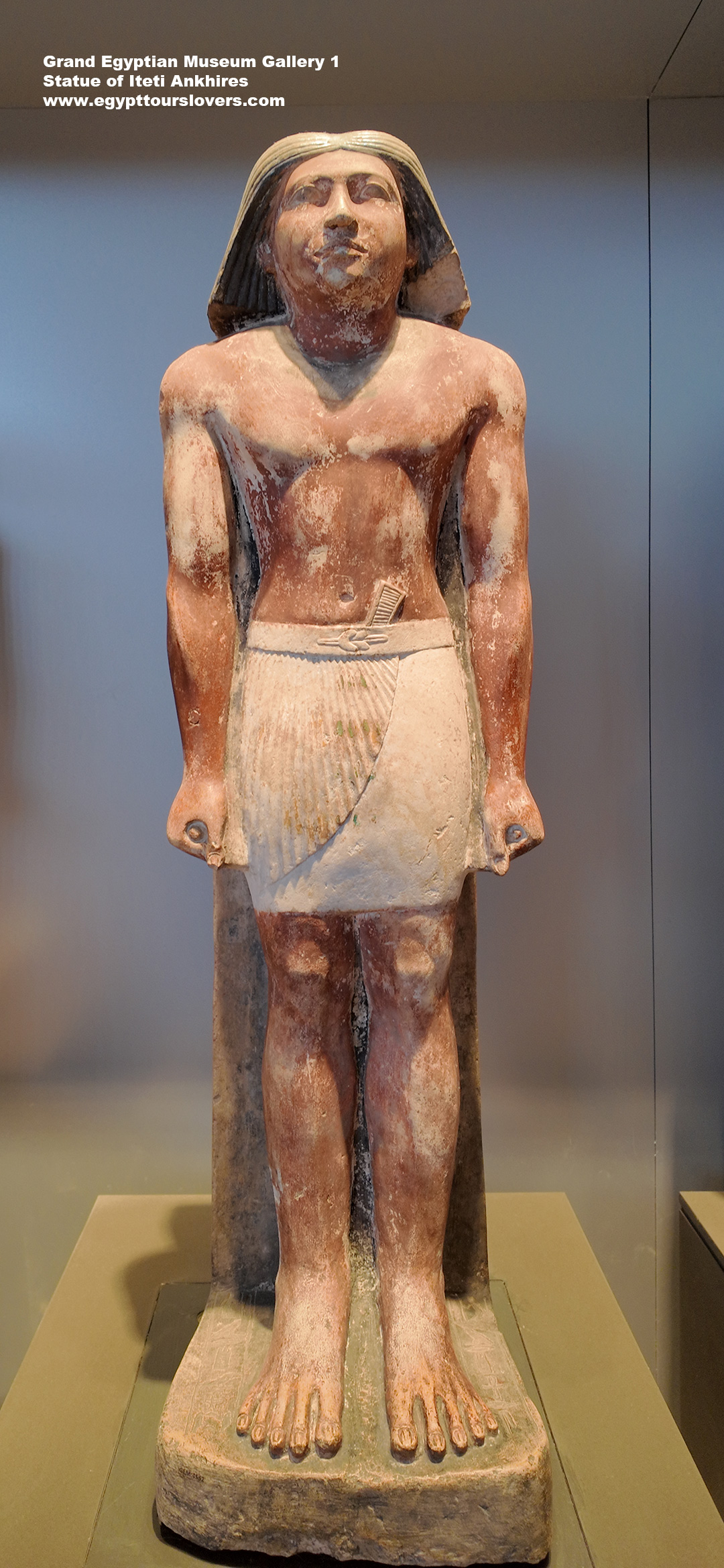
Dynasty 5 | Limestone, pigment | Saqqara
Statue of Iteti Ankhires.
The Great One of the Tens of Upper Egypt, The general supervisor of celebrations at the palace, the king’s deputy in organizing missions abroad and the governor of the provinces of Upper and Lower Egypt.
Found in his Saqqara Mastaba (D63).
———– } ———– } ———– } ———– }
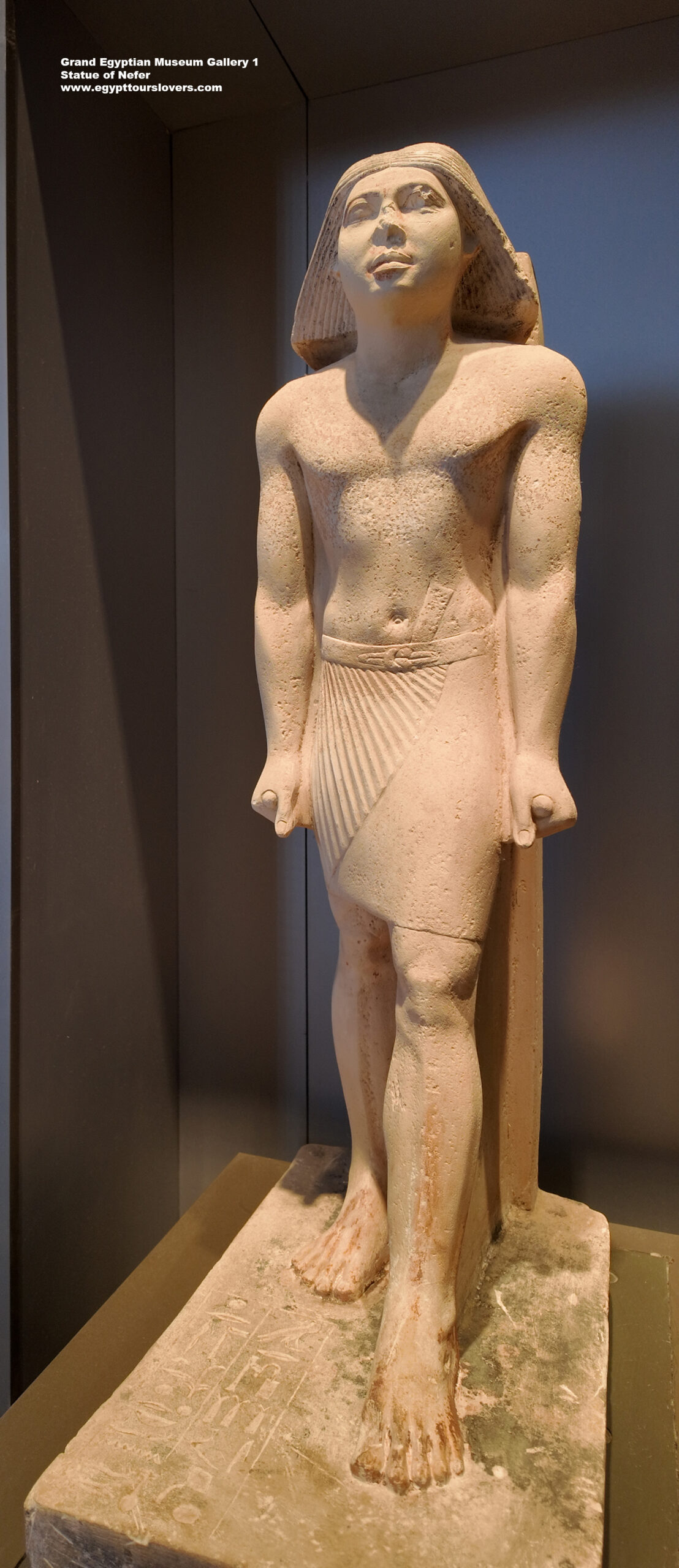
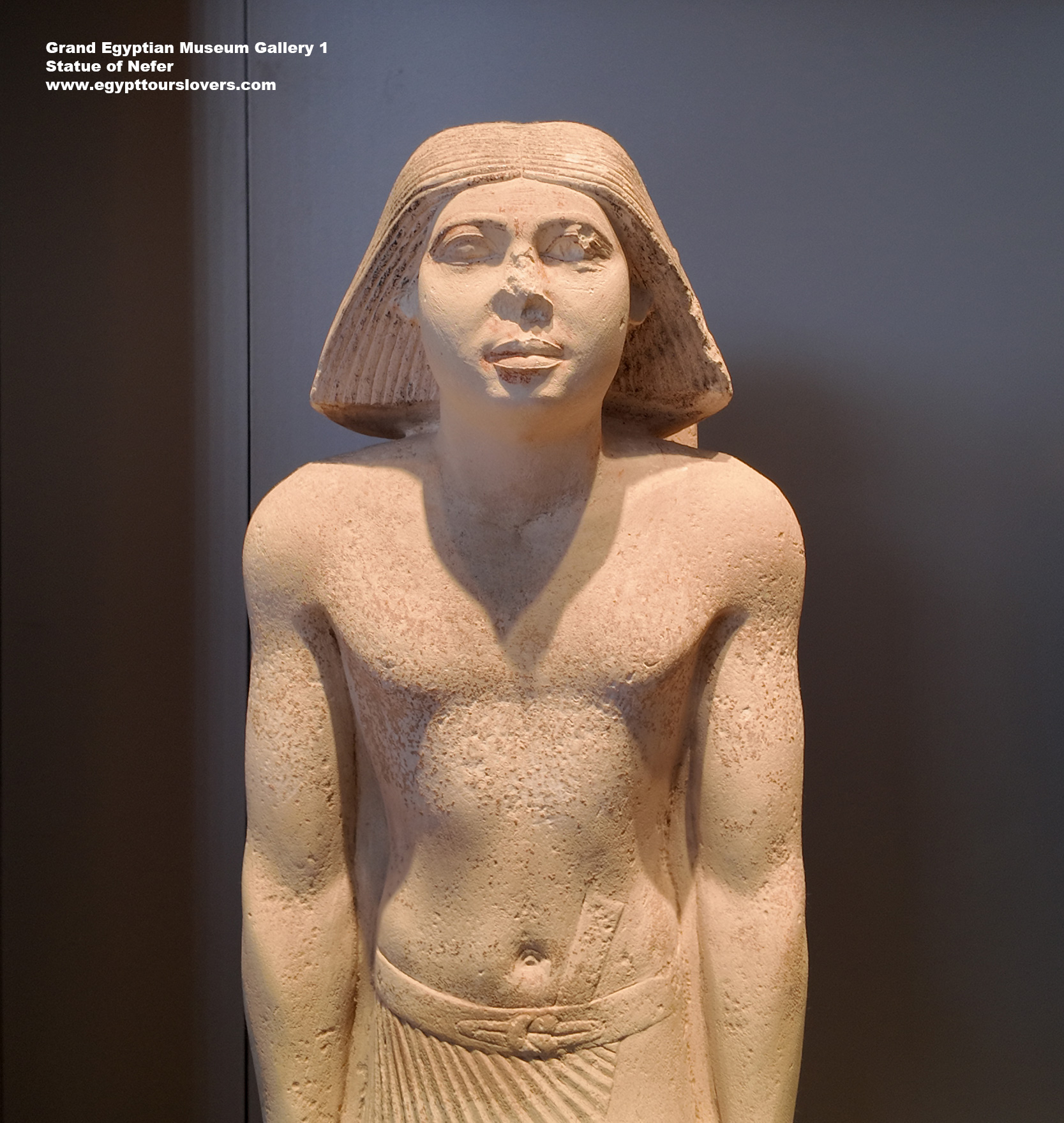
Dynasty 5 | Limestone | Abu Sir
Statue of Nefer.
Four stone statues were found in the crypt (secret chamber) of his tomb in Abusir.
He was the overseer of the scribes, known to the king and queen, and revered before the great god.
———– } ———– } ———– } ———– }
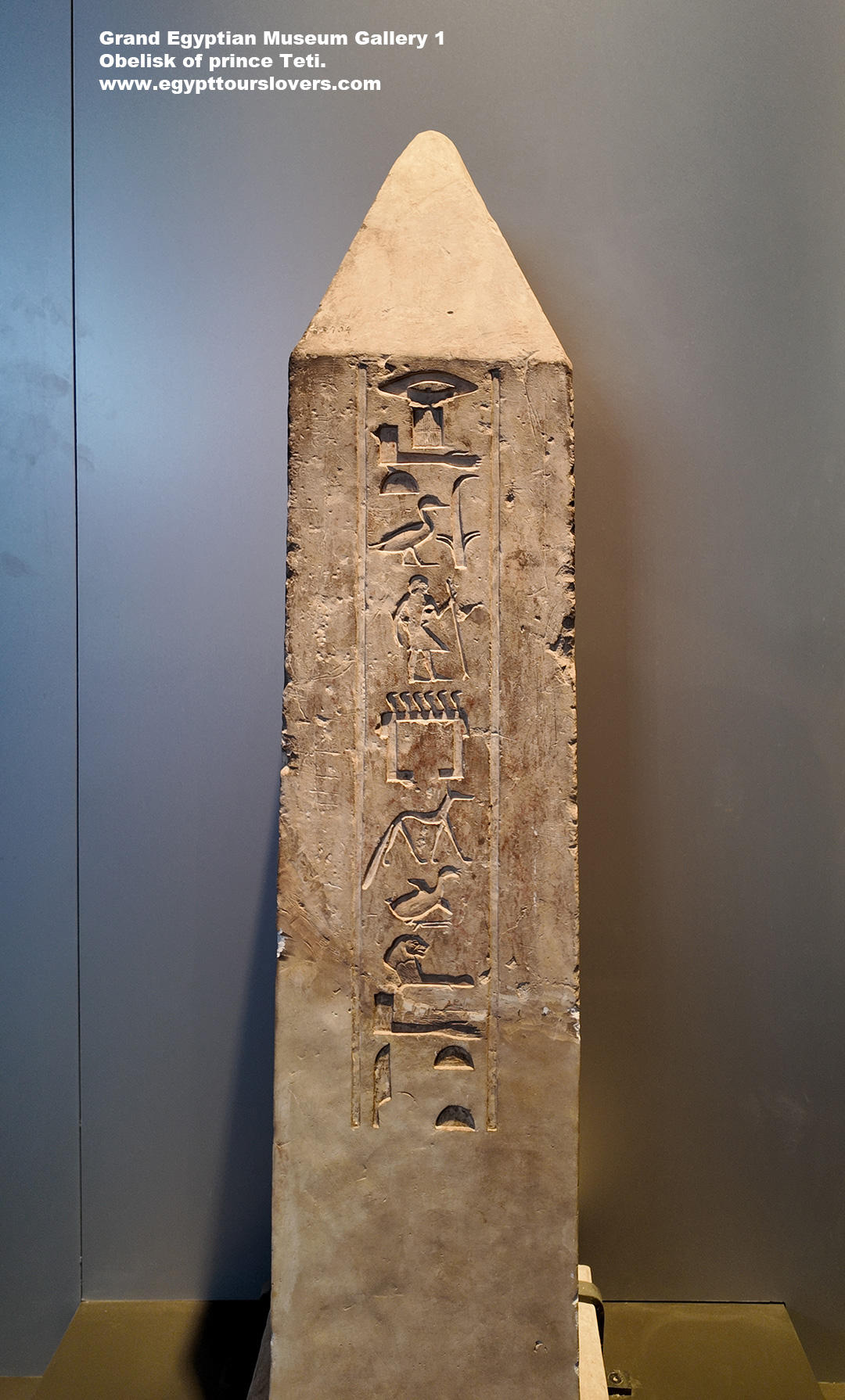
Dynasty 6 | Limestone | Saqqara
Obelisk of prince Teti.
The eldest son, King Teti, was present in front of the tomb of King Teti in Saqqara, along with another obelisk.
———– } ———– } ———– } ———– }
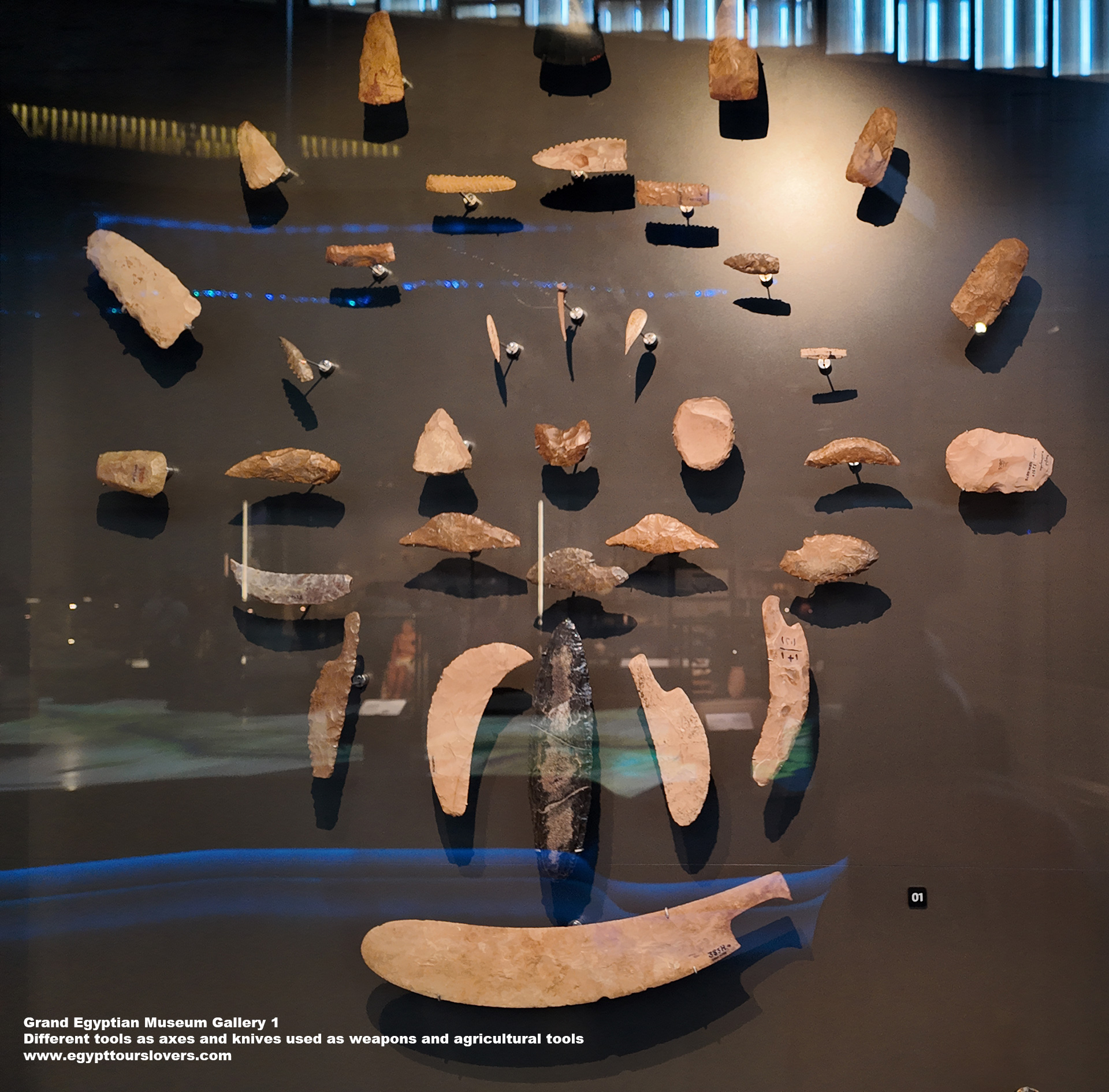
Dynasty 6 + Neolithic period | flint, bone | fayum, mishat ezzat, merimda beni salama, tell el-farkha, giza, badari, mostagidda, mendes
Different tools as axes and knives used as weapons and agricultural tools to cultivate land, harvest crops, butcher meat, carve wood and craft products.
———– } ———– } ———– } ———– }
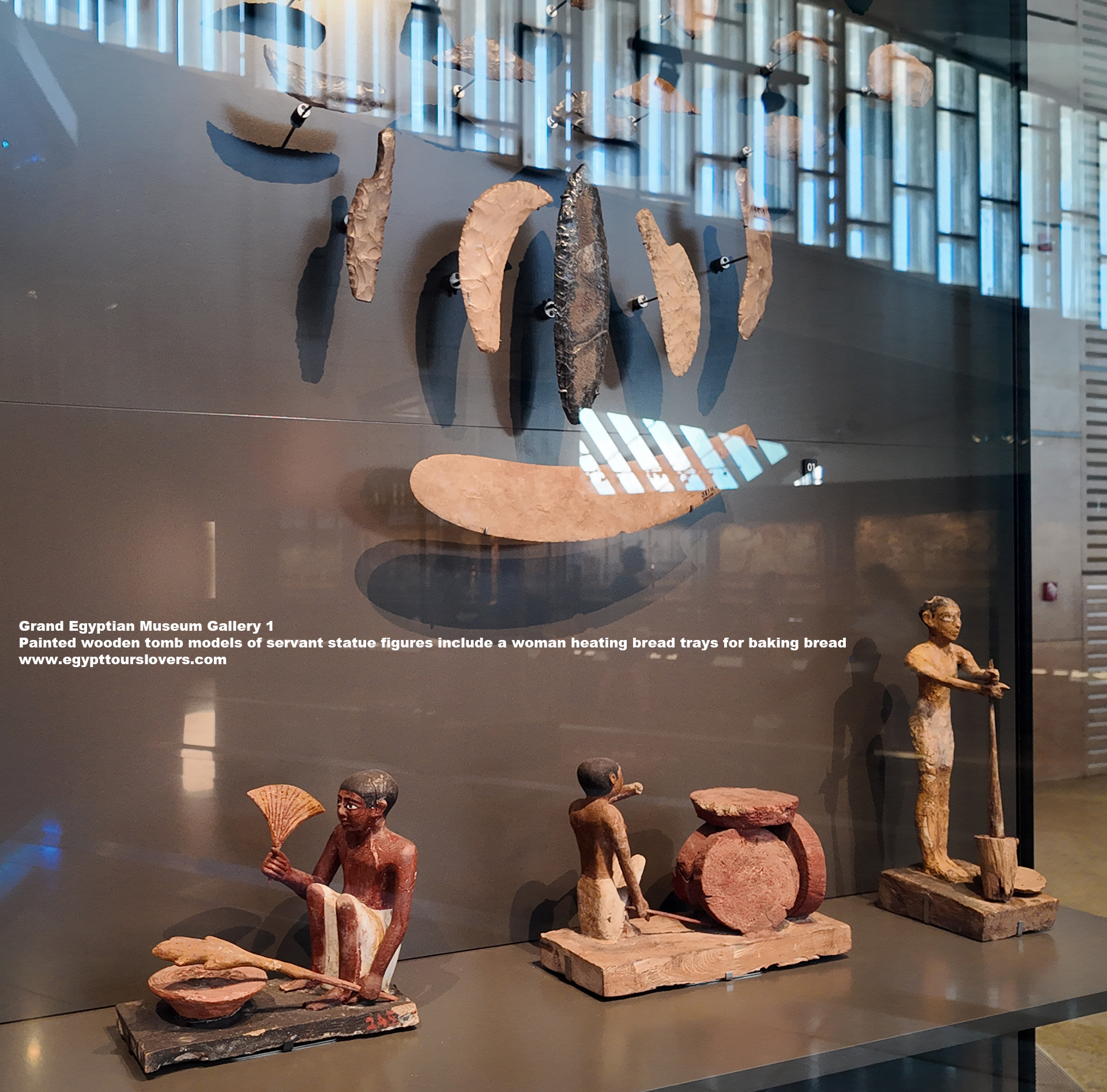
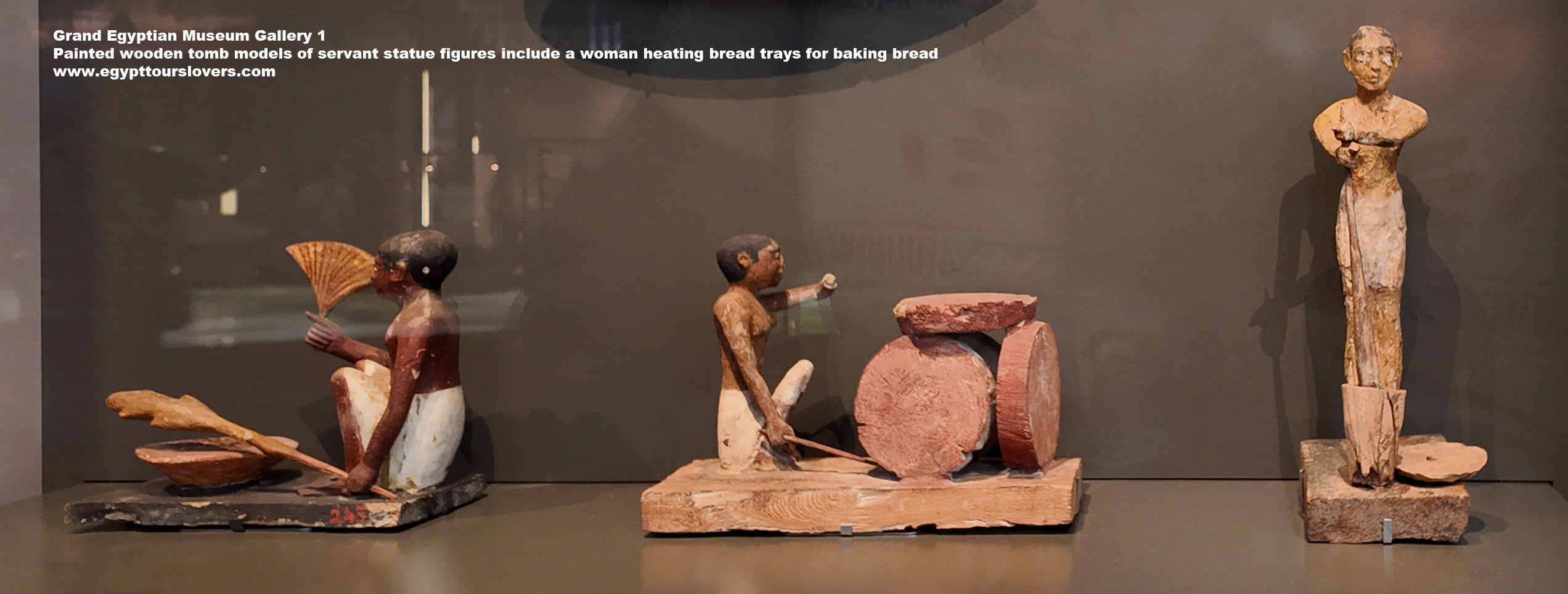
Dynasty 6 | wood, pigment | Saqqara, meir | food preparation
Painted wooden tomb models of servant statue figures include a woman heating bread trays for baking bread, a man grinding grain on a mortar and man fanning the flames as he roasts a duck.
———– } ———– } ———– } ———– }
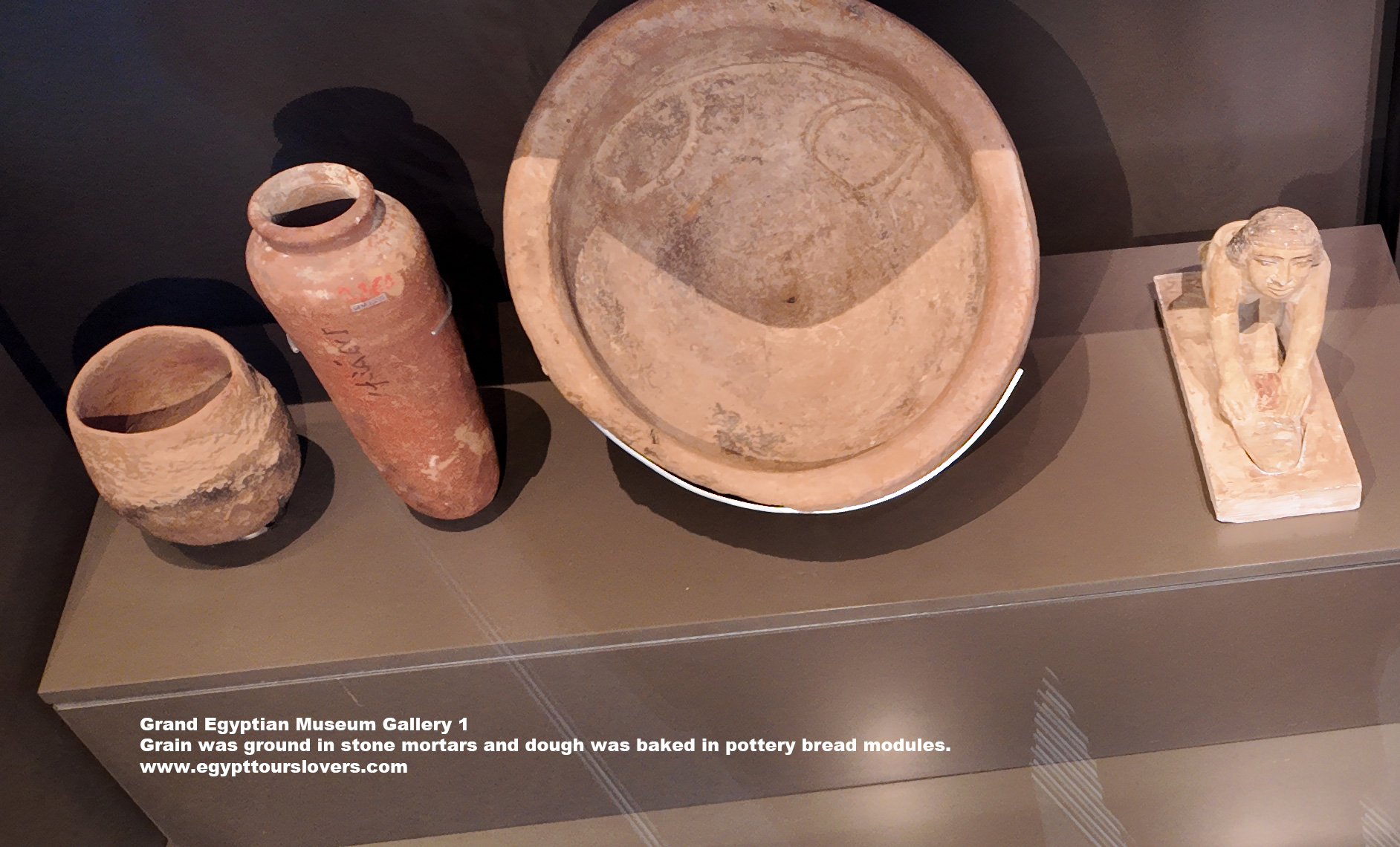
Dynasty 6 + Neolithic period | pottery, limestone, pigment | merimda beni salama, Giza, tell el-dab’a, meir | Egyptian grain
Grain was ground in stone mortars and dough was baked in pottery bread moudls.
A tall storage jar contained “roasted grains of wheat”.
———– } ———– } ———– } ———– }
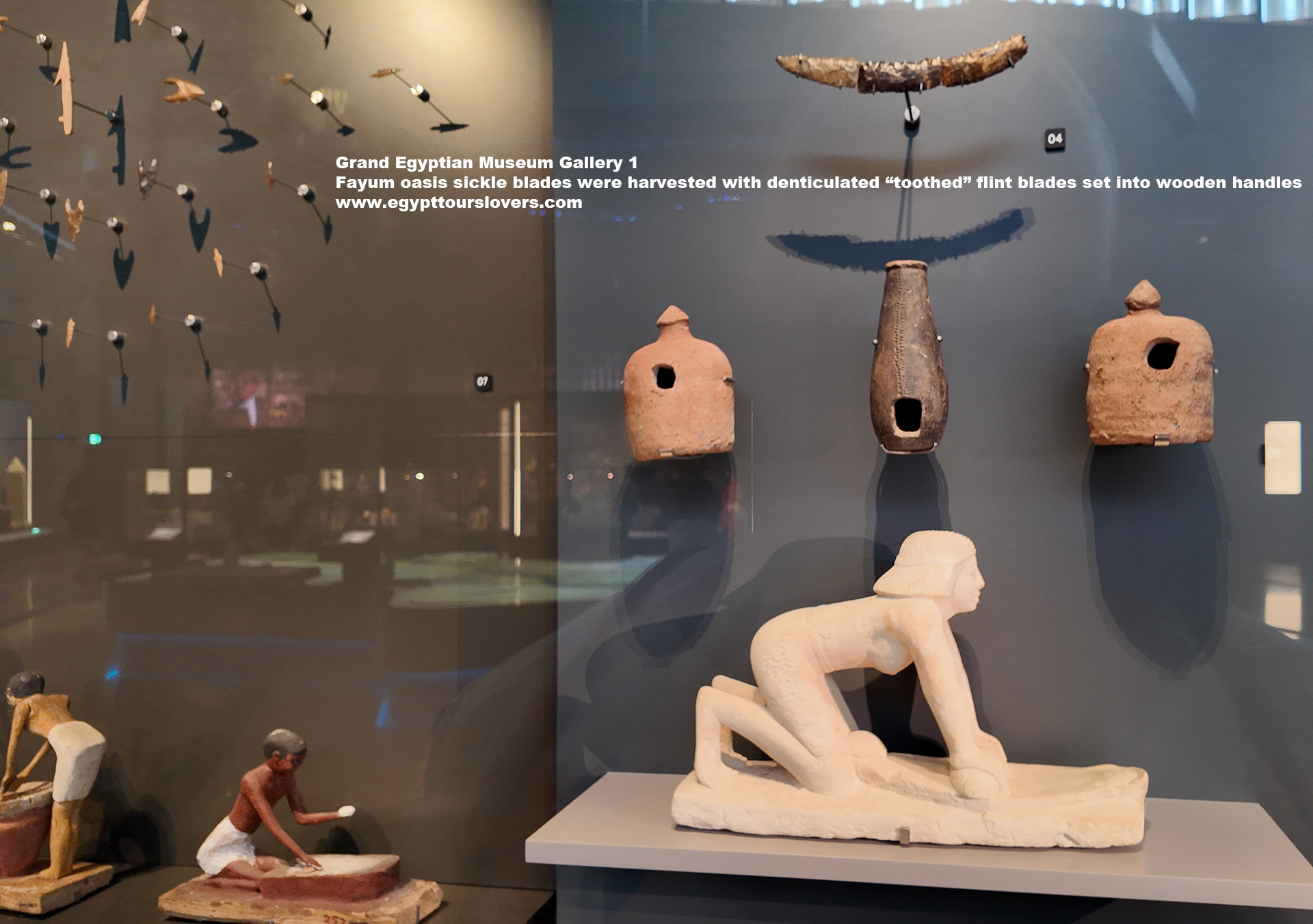
Neolithic period | flint | fayum | Agriculture
Fayum oasis sickle blades were harvested with denticulated “toothed” flint blades set into wooden handles.
Farming comes from 5500 BC when settlers around the fayum lake began to plant emmer wheat, barley and flax.
———– } ———– } ———– } ———– }
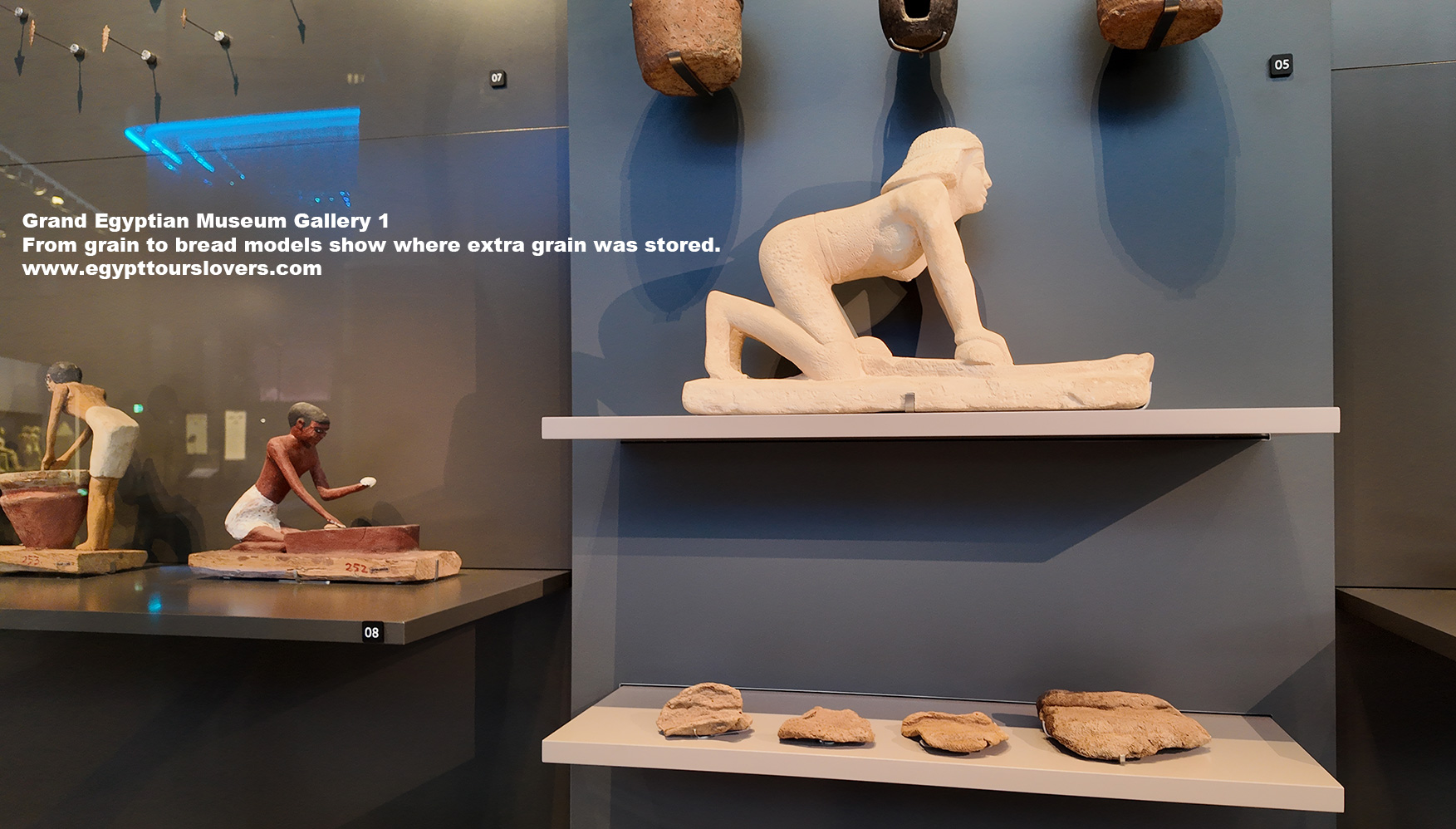
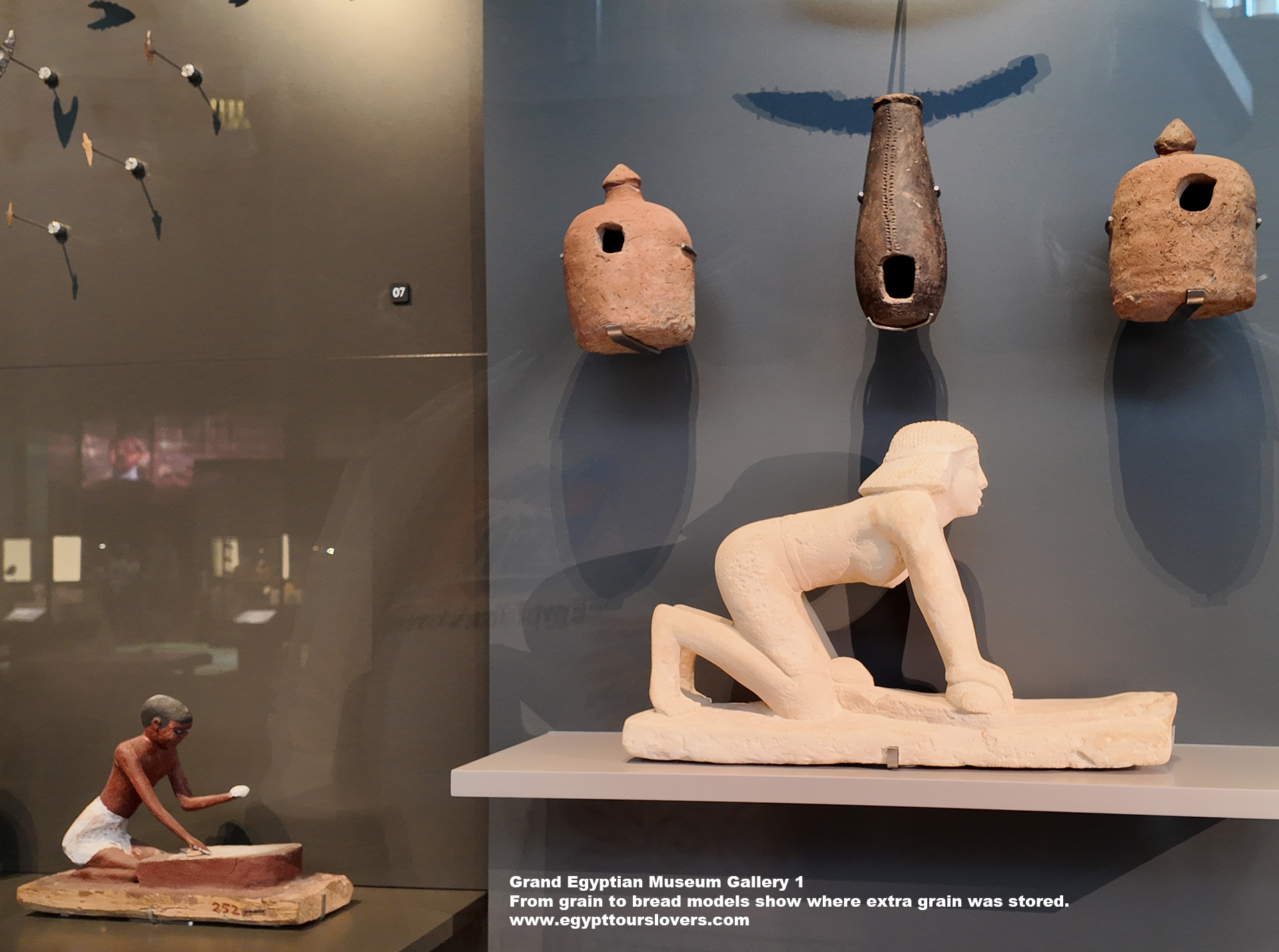
Dynasty 1-6 | pottery, limestone, bread | giza, el-qatta, mishat ezzat, tell el-samara | food preparation
From grain to bread models show where extra grain was stored.
Grinding grain to produce flour and make bread, a primary product in Egyptian food, was backbreaking but essential work in both this life and the afterlife.
———– } ———– } ———– } ———– }
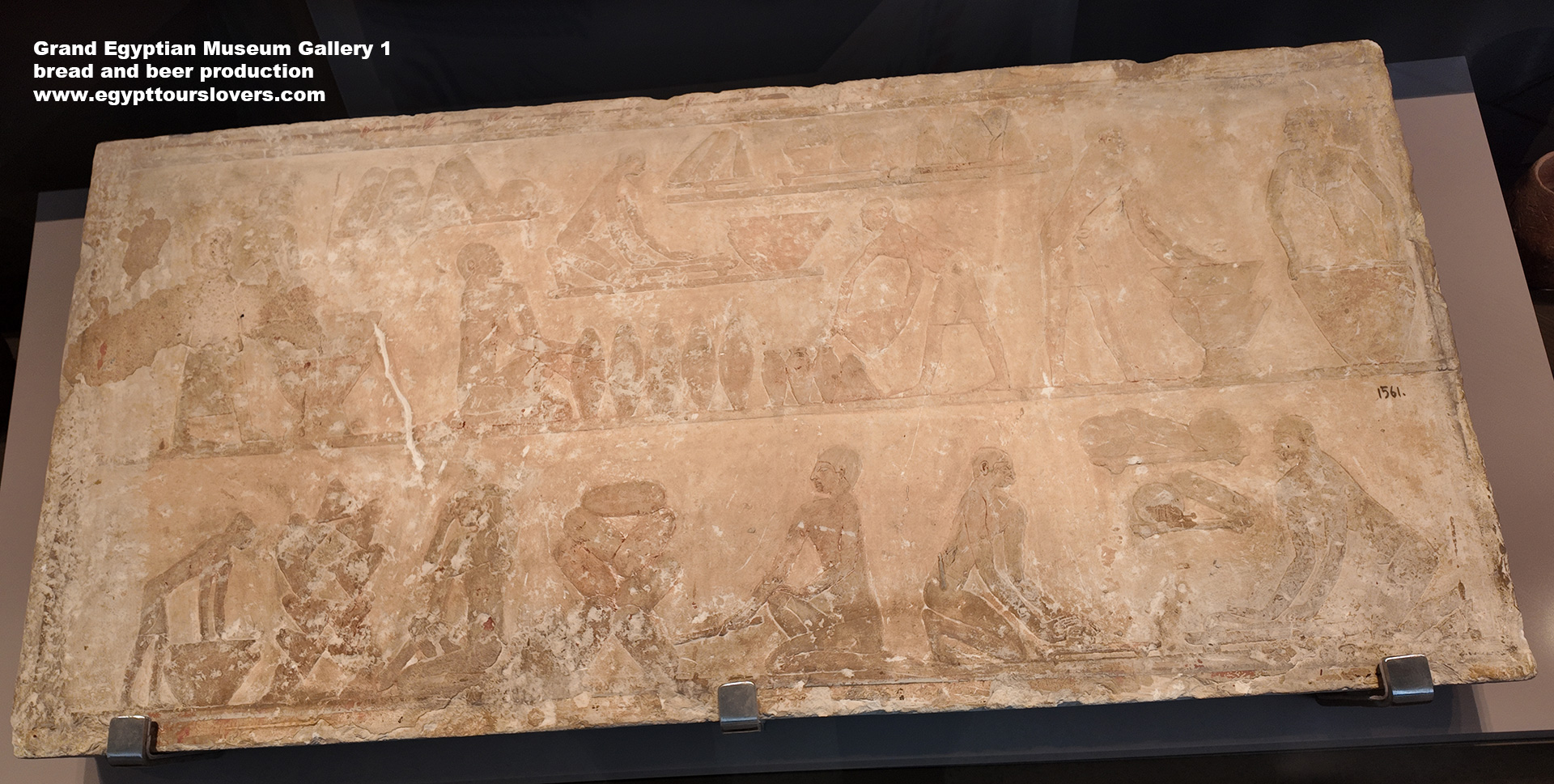
Dynasty 5| limestone, pigment | Saqqara | food preparation
bread and beer production
This relief from tomb show servant kneading dough, baking loaves, mashing beer and filling jars to use in food and in ritual offerings.
———– } ———– } ———– } ———– }
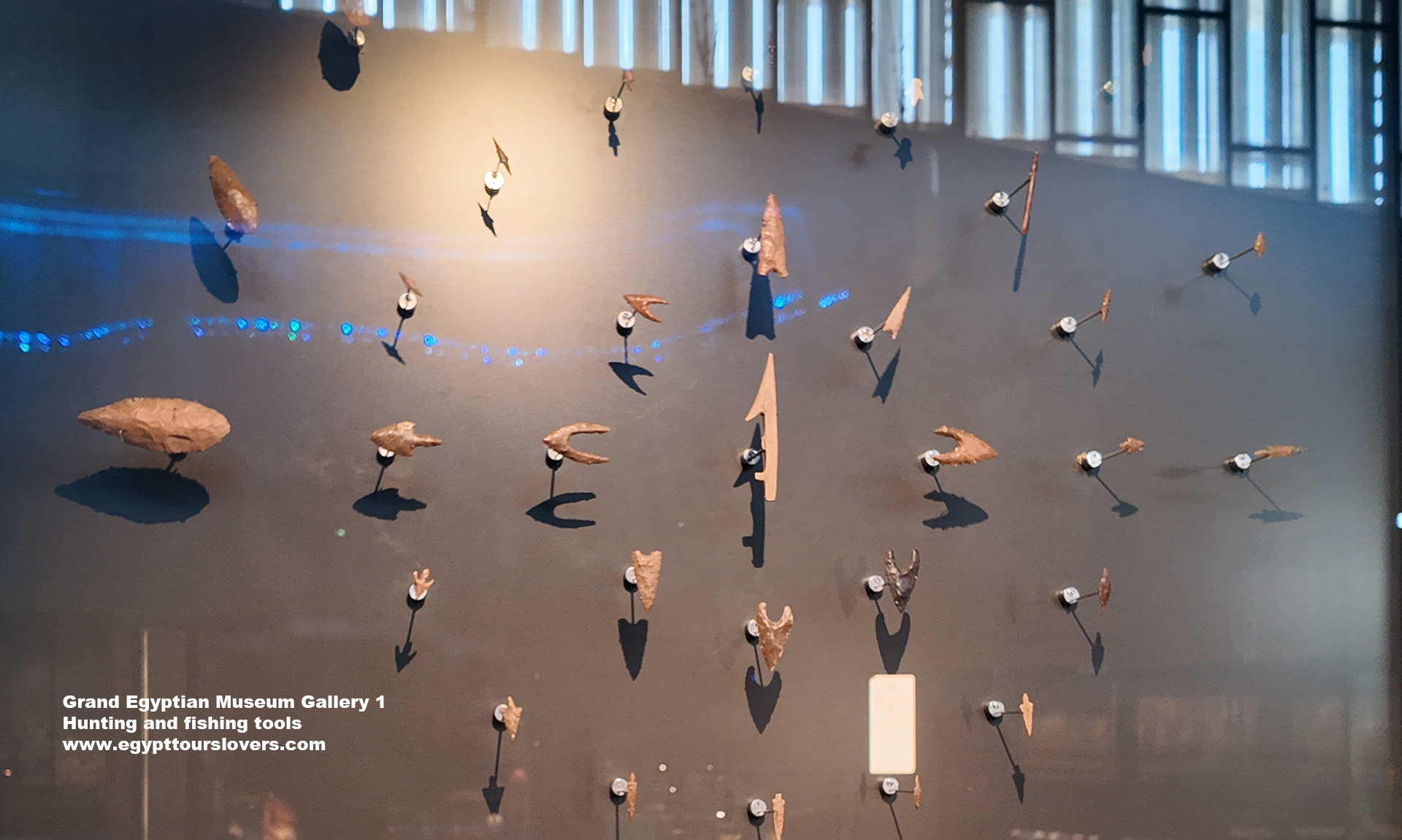
Neolithic period | flint, bone | fayum, kharge oasis, mansouria
Hunting and fishing tools
Harpoons and spears with concave-based tips allowed Egyptian to hunt dangerous animals as crocodiles and hippopotami.
———– } ———– } ———– } ———– }
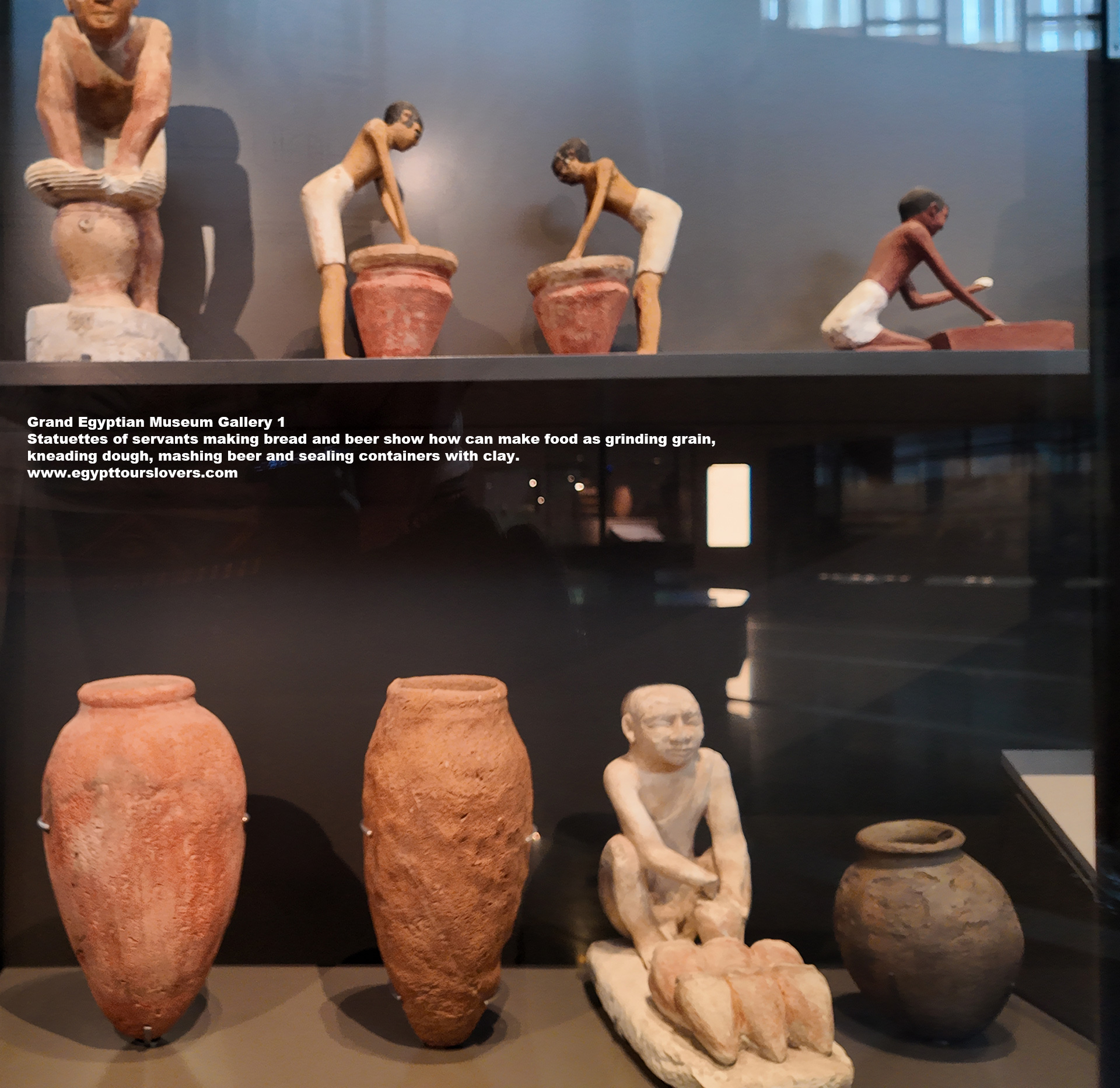
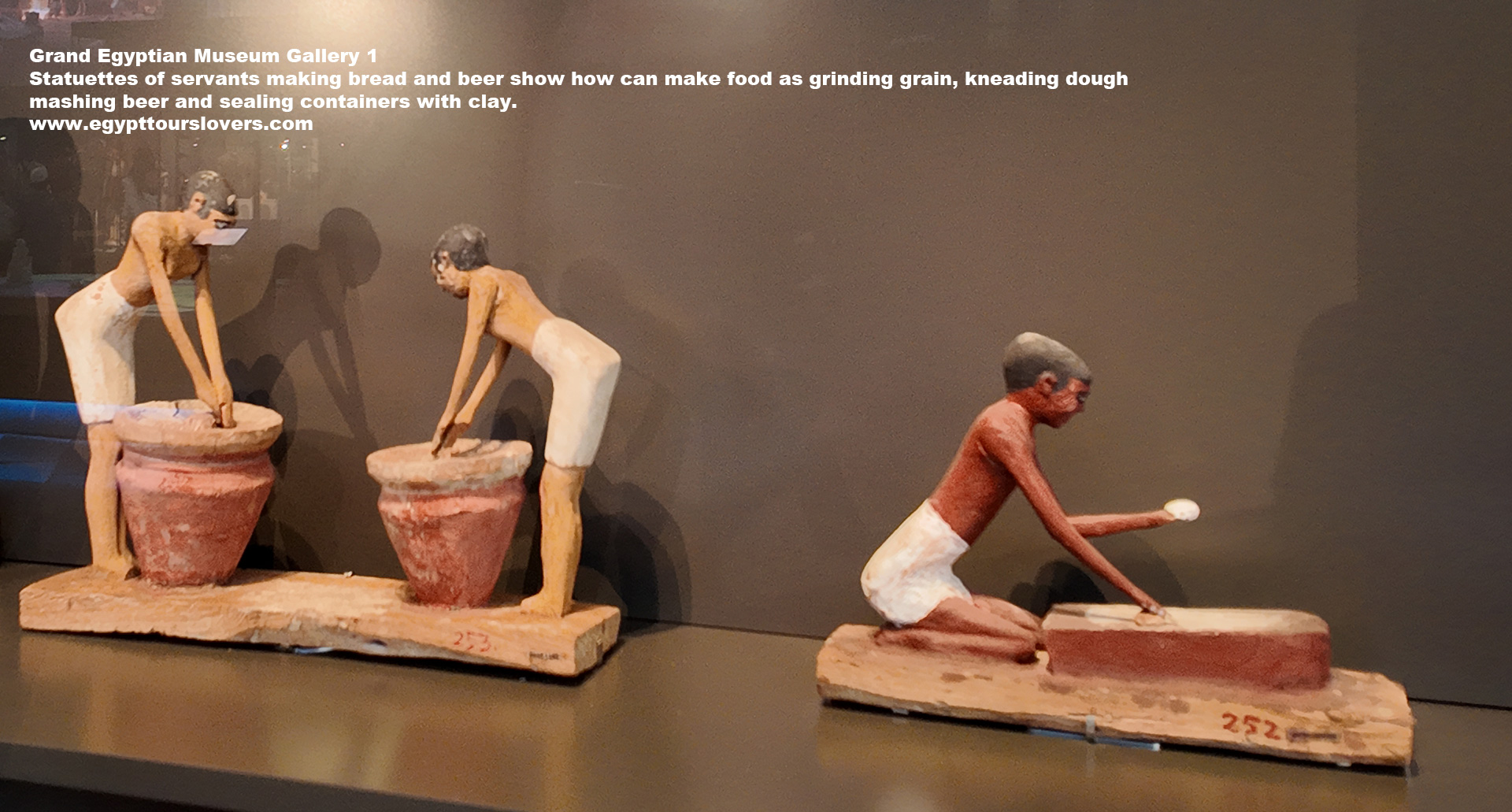
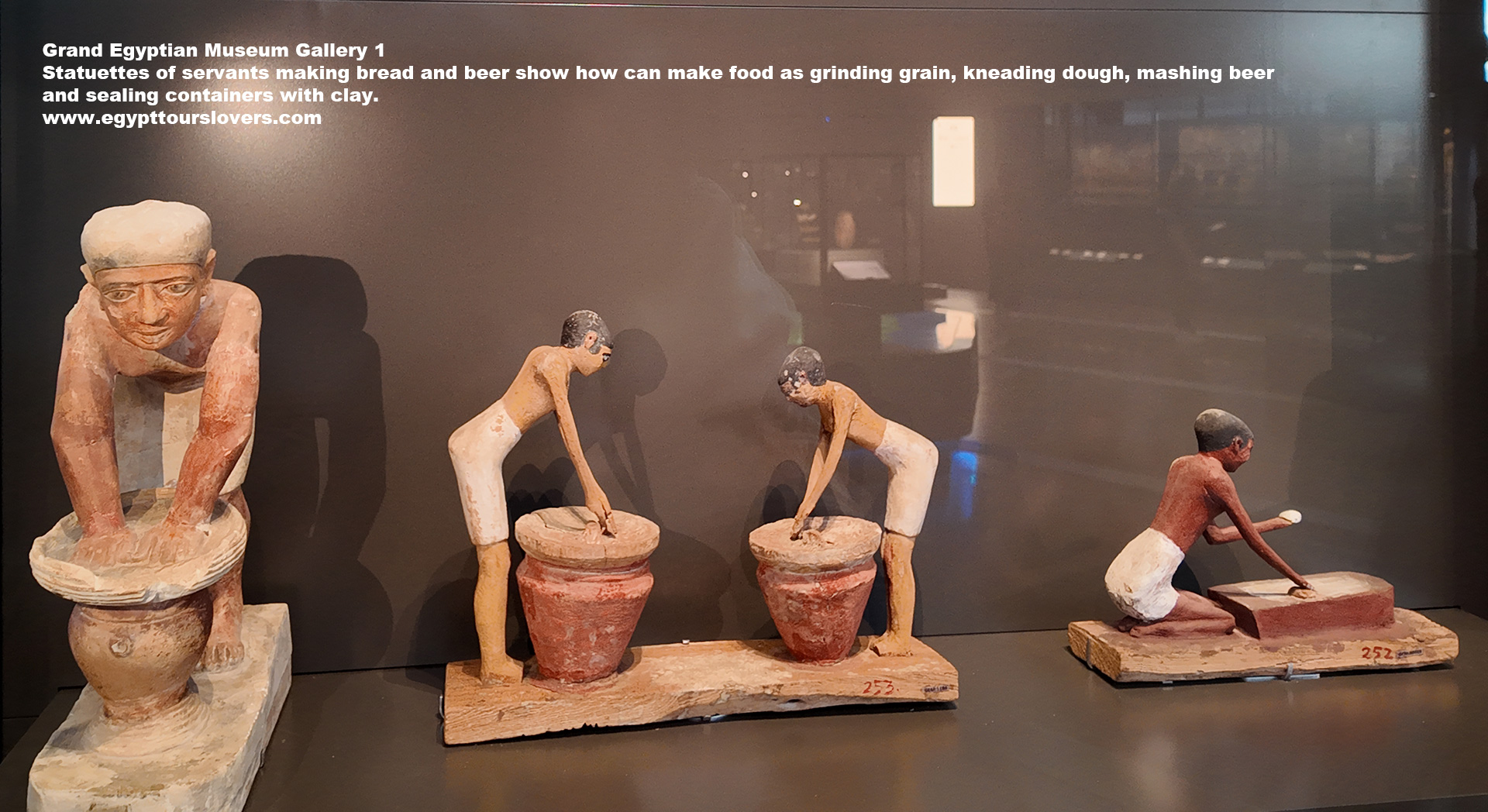
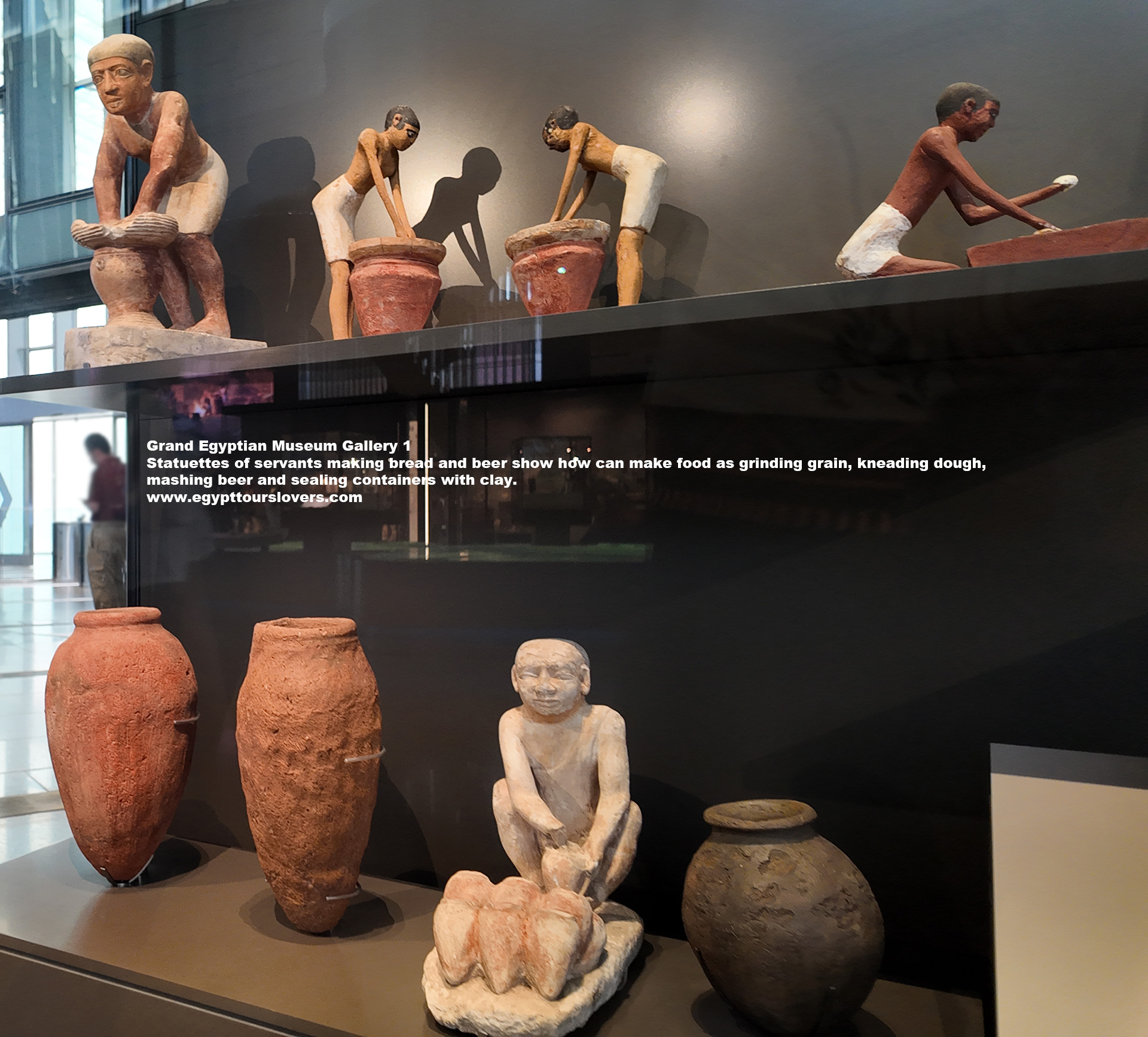
Dynasty 6 + Neolithic period | limestone, pigment, wood, pottery | giza, meir, abu rawash, merimda beni salama, tell el-dab’a | food preparation
Painted stone and wooden tomb models were designed to magically supply food and drink forever.
Statuettes of servants making bread and beer show how can make food as grinding grain, kneading dough, mashing beer and sealing containers with clay.
———– } ———– } ———– } ———– }
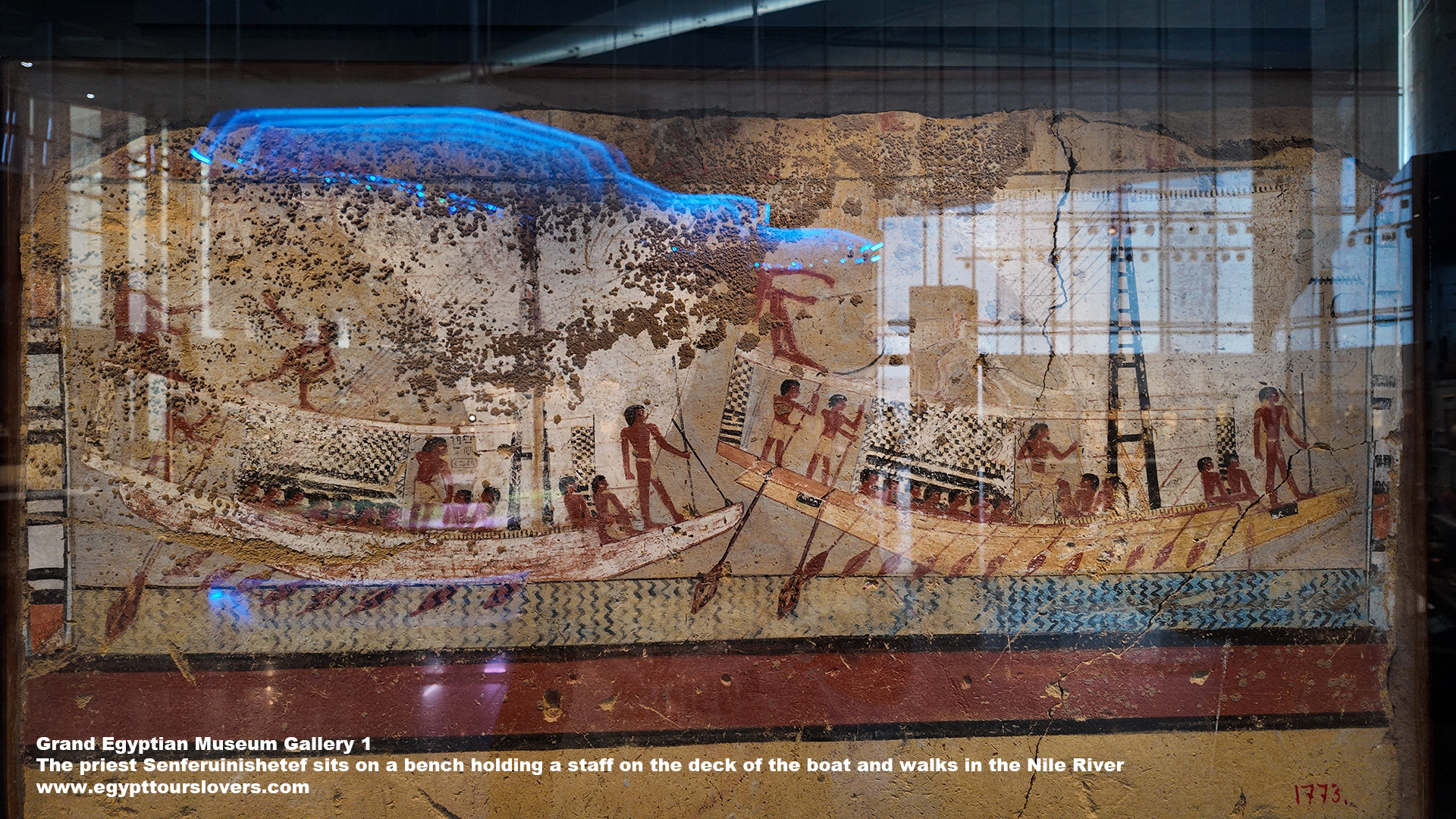
Dynasty 6 | pigment, Plaster, Mudbricks | Dahshur
Scene of the painting: The priest Senferuinishetef sits on a bench holding a staff on the deck of the boat and walks in the Nile River, surrounded by a monkey playing and a group of crew members on the sailboat.
———– } ———– } ———– } ———– }
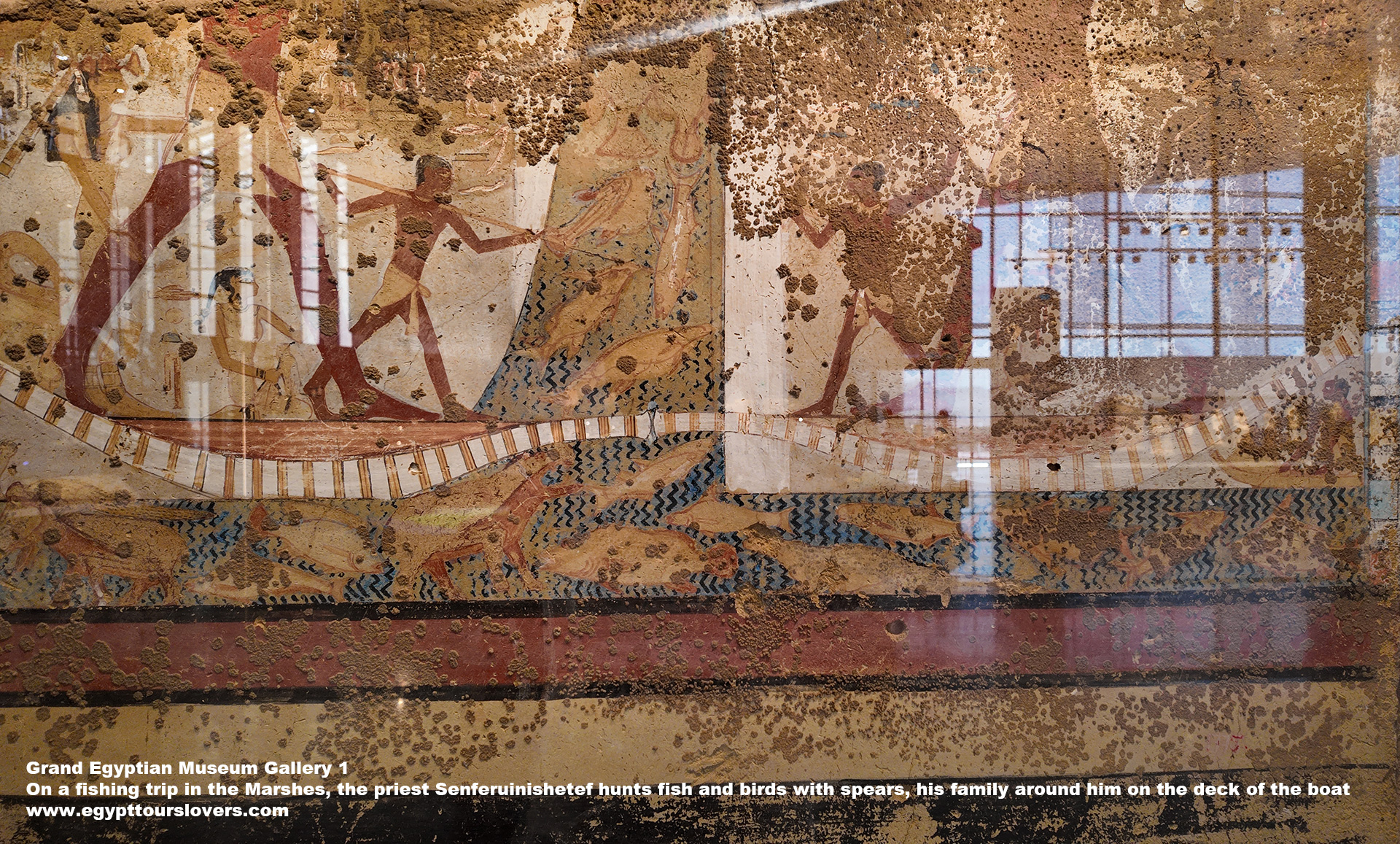
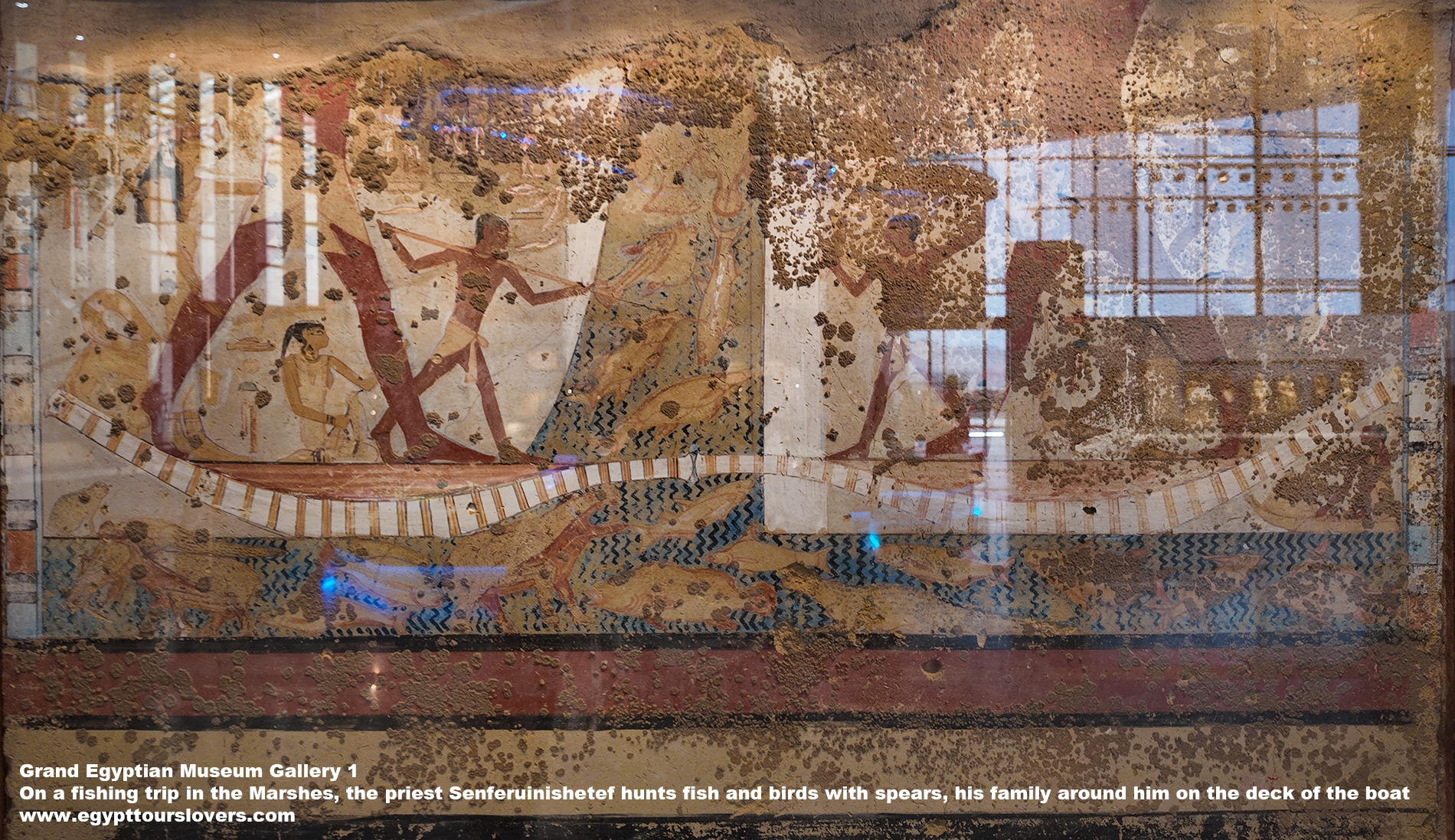
Dynasty 6 | pigment, Plaster, Mudbricks | Dahshur
Scene of the painting: On a fishing trip in the Marshes, the priest Senferuinishetef hunts fish and birds with spears, his family around him on the deck of the boat. Below the boat, a scene of struggle and fighting unfolds between hippos and crocodiles in the Nile River.
———– } ———– } ———– } ———– }
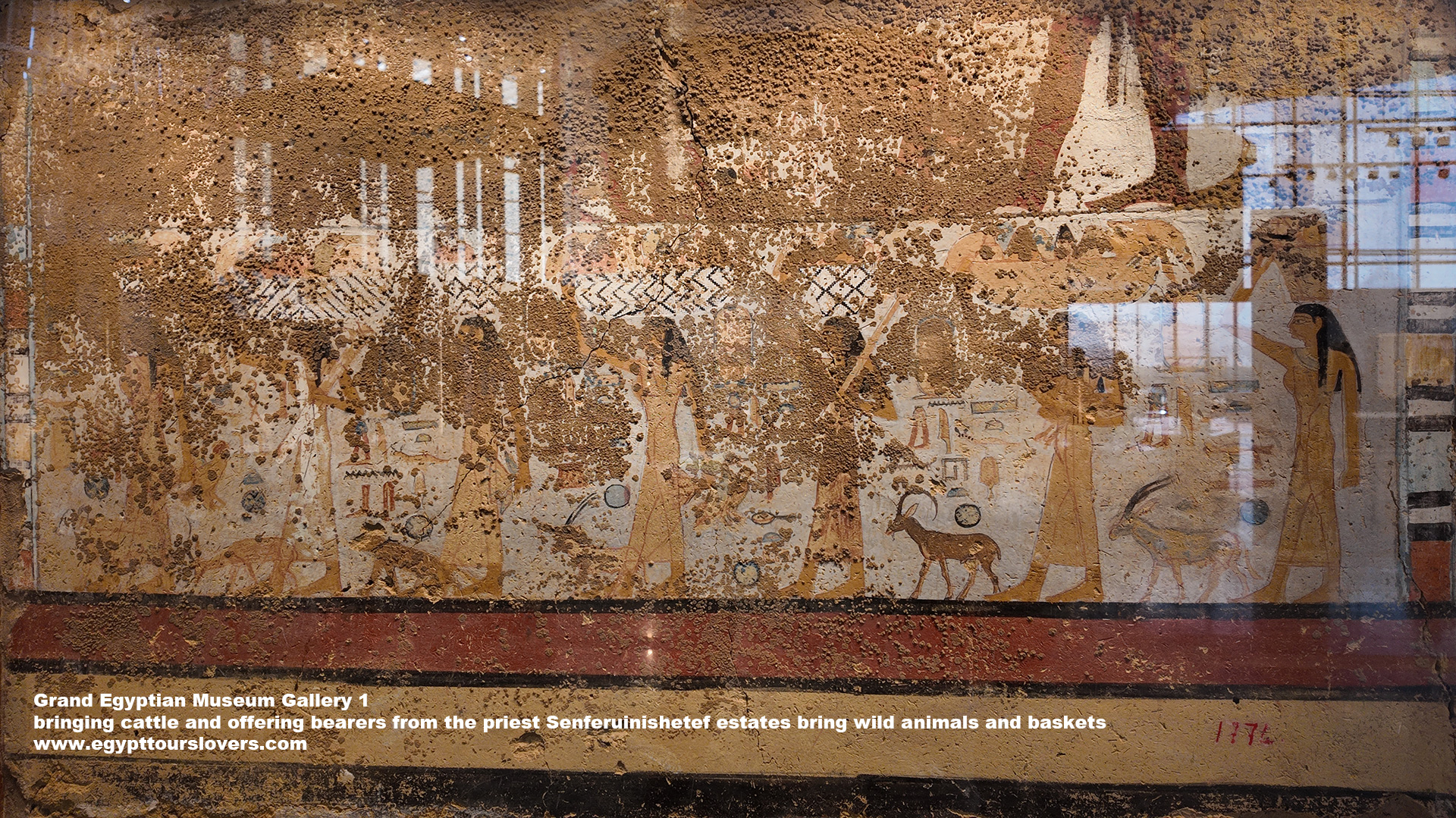
Dynasty 6 | pigment, Plaster, Mudbricks | Dahshur
Scene of the painting: bringing cattle and offering bearers from the priest Senferuinishetef estates bring wild animals and baskets filled with food to give energy to him and his family for their long journey to the afterlife.
———– } ———– } ———– } ———– }
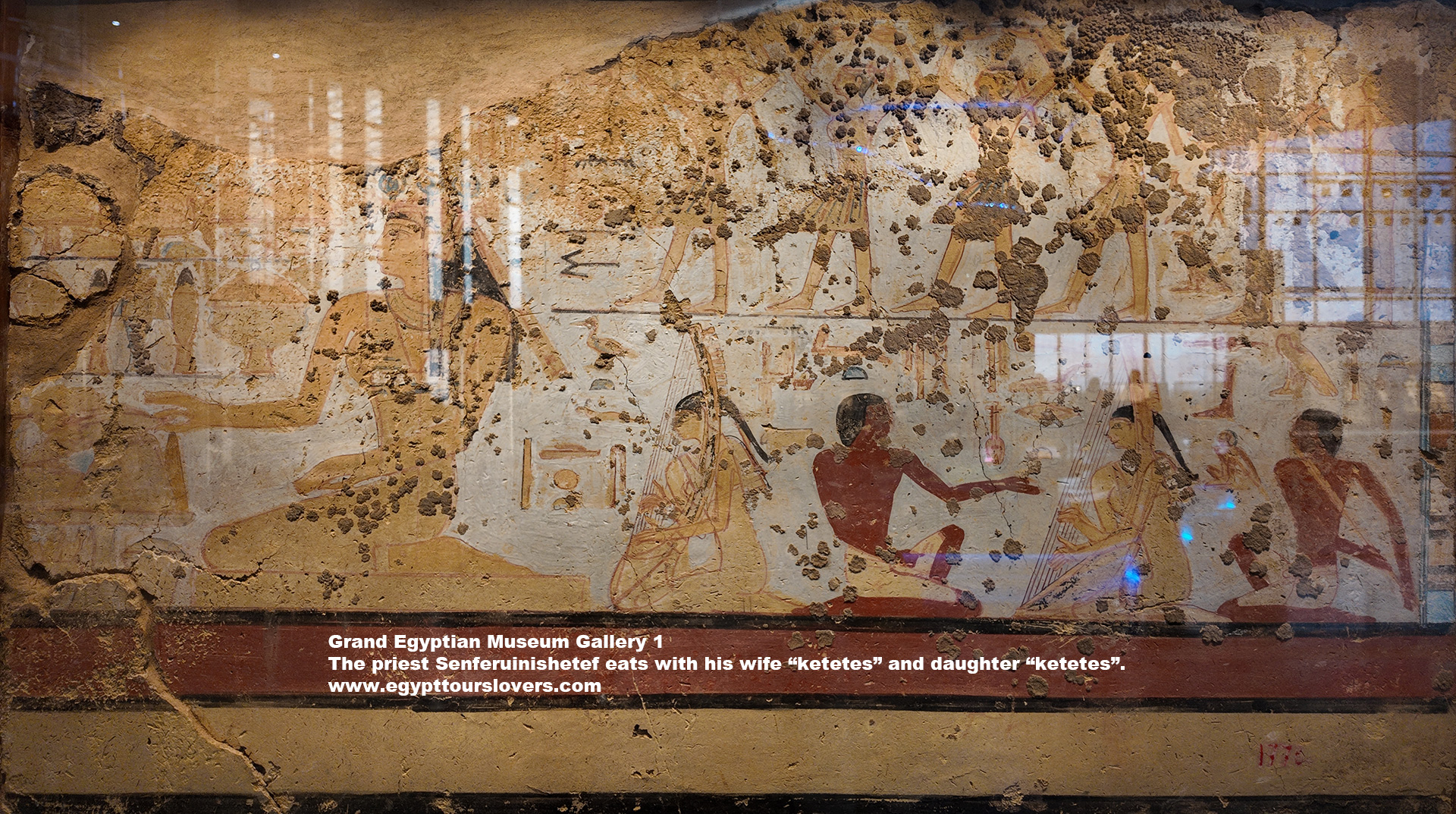
Dynasty 6 | pigment, Plaster, Mudbricks | Dahshur
Scene of the painting:
The priest Senferuinishetef eats with his wife “ketetes” and daughter “ketetes”, accompanied by dancers and musicians who play music using the harp and other instruments.
———– } ———– } ———– } ———– }
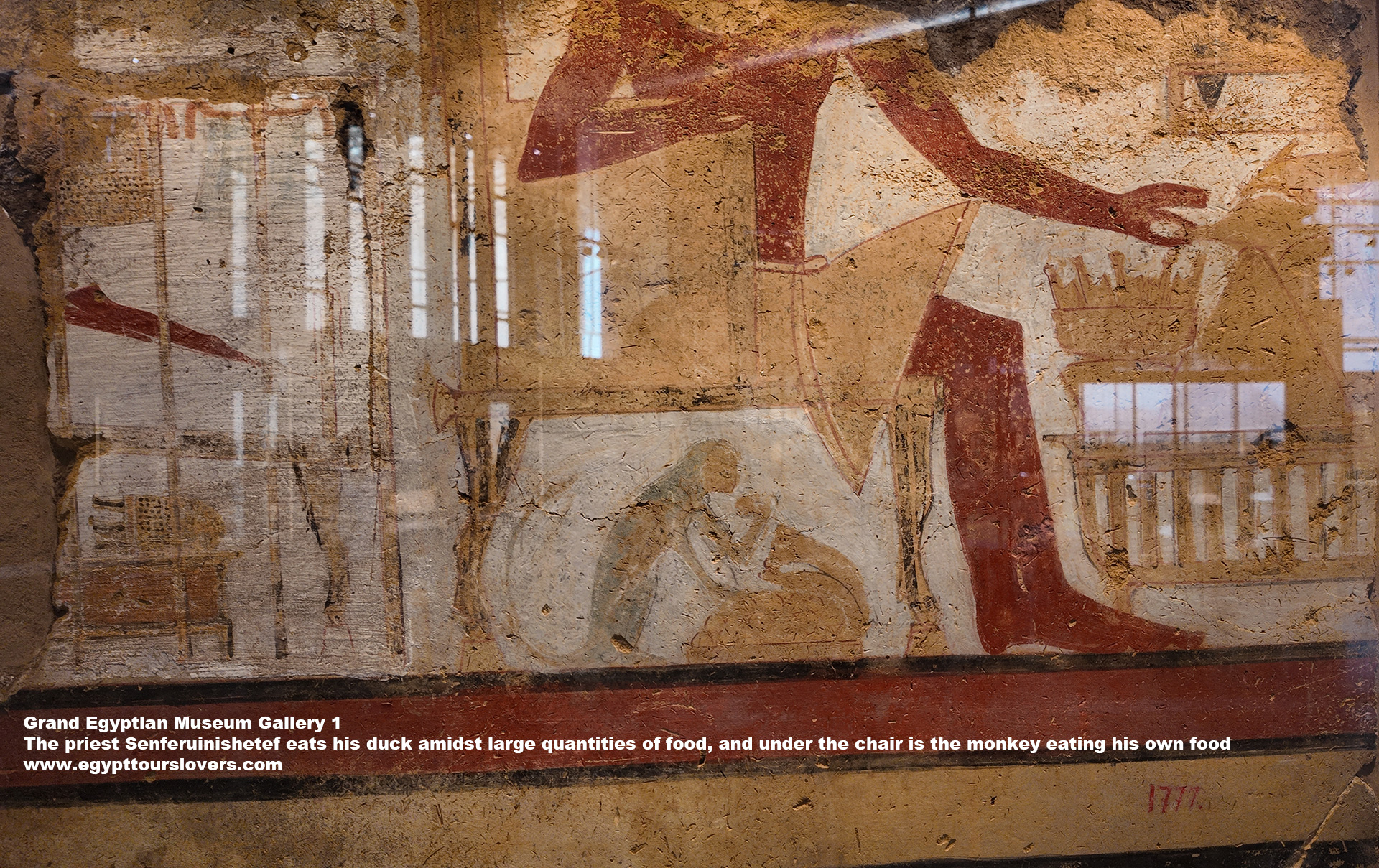
Dynasty 6 | pigment, Plaster, Mudbricks | Dahshur
Scene of the painting: The priest Senferuinishetef eats his duck amidst large quantities of food, and under the chair is the monkey eating his own food, and behind him is the servant preparing the bed.
———– } ———– } ———– } ———– }
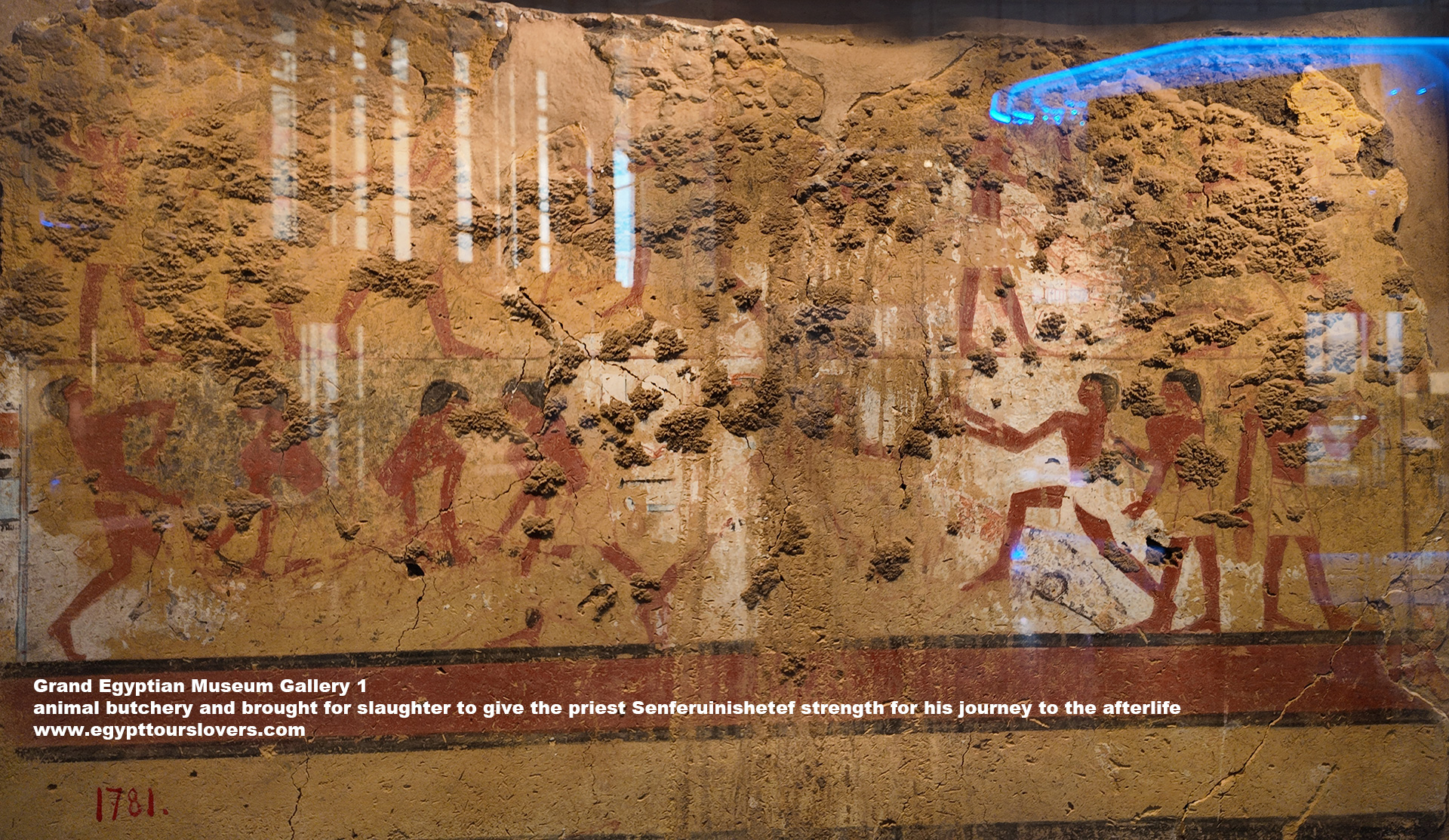
Dynasty 6 | pigment, Plaster, Mudbricks | Dahshur
Scene of the painting: showing animal butchery and brought for slaughter to give the priest Senferuinishetef strength for his journey to the afterlife.
———– } ———– } ———– } ———– }
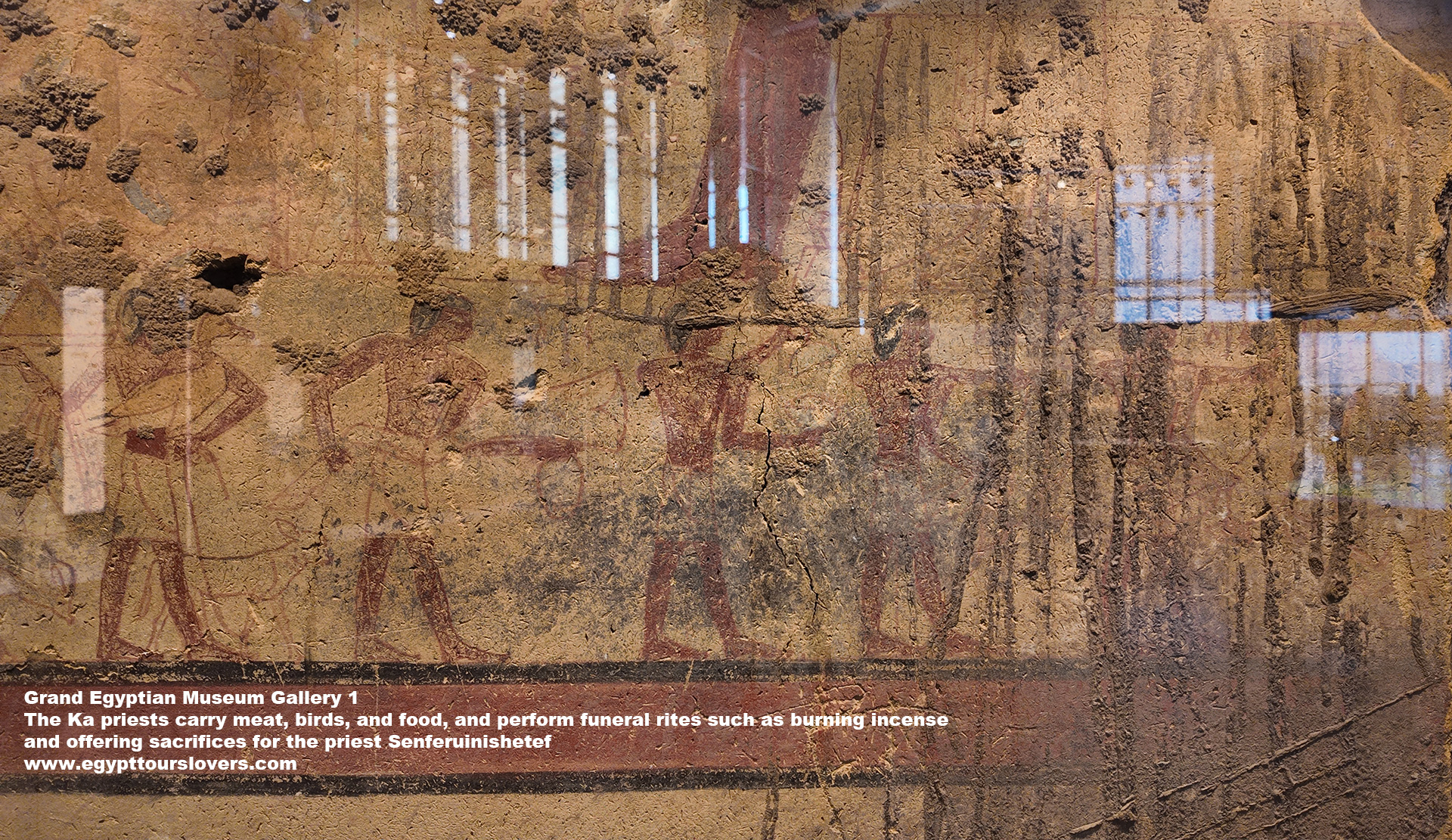
Dynasty 6 | pigment, Plaster, Mudbricks | Dahshur
Scene of the painting: The Ka priests carry meat, birds, and food, and perform funeral rites such as burning incense and offering sacrifices for the priest Senferuinishetef to use in the afterlife.
———– } ———– } ———– } ———– }
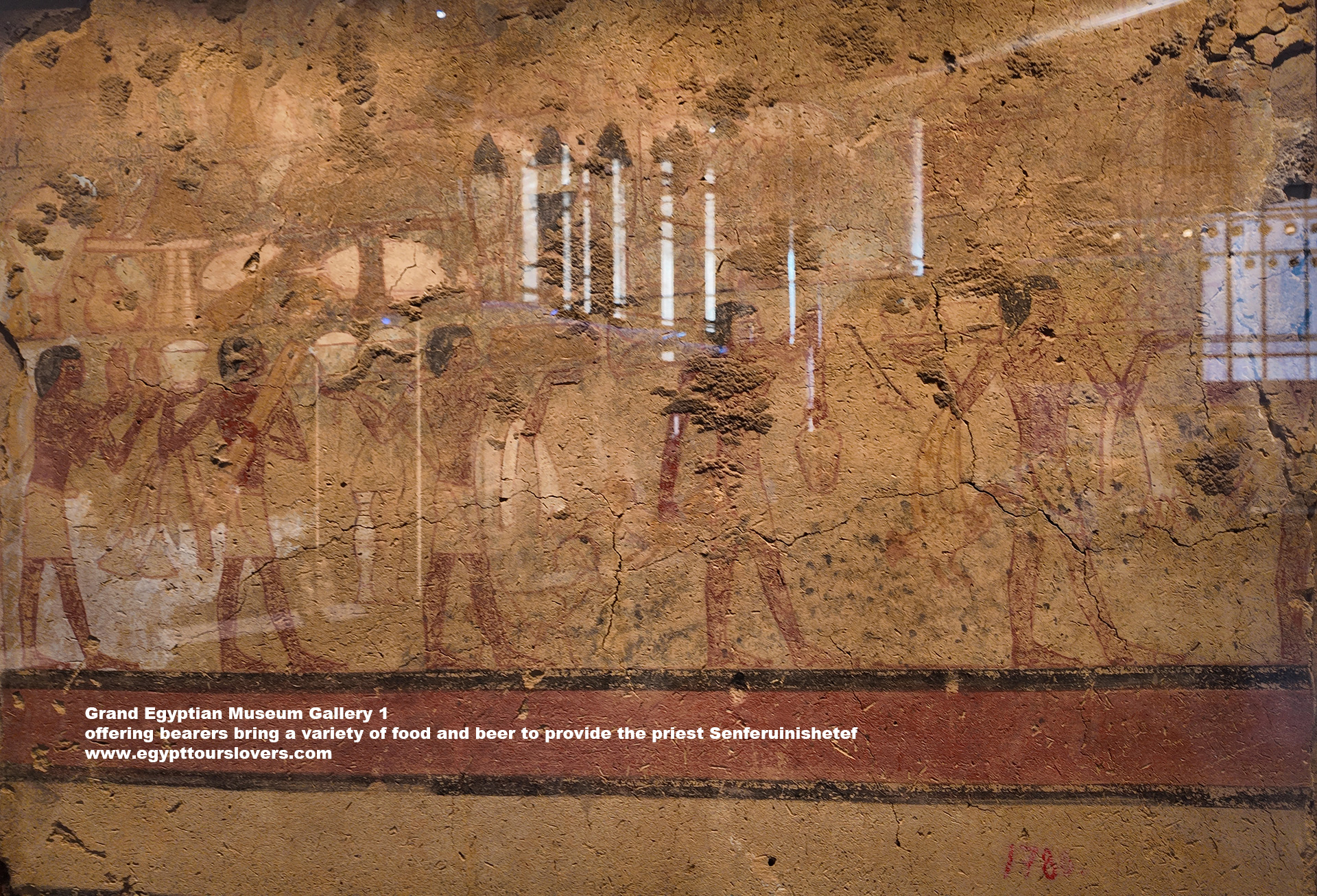
Dynasty 6 | pigment, Plaster, Mudbricks | Dahshur
Scene of the painting: offering bearers bring a variety of food and beer to provide the priest Senferuinishetef with everything need to use for his trip to the afterlife.
———– } ———– } ———– } ———– }
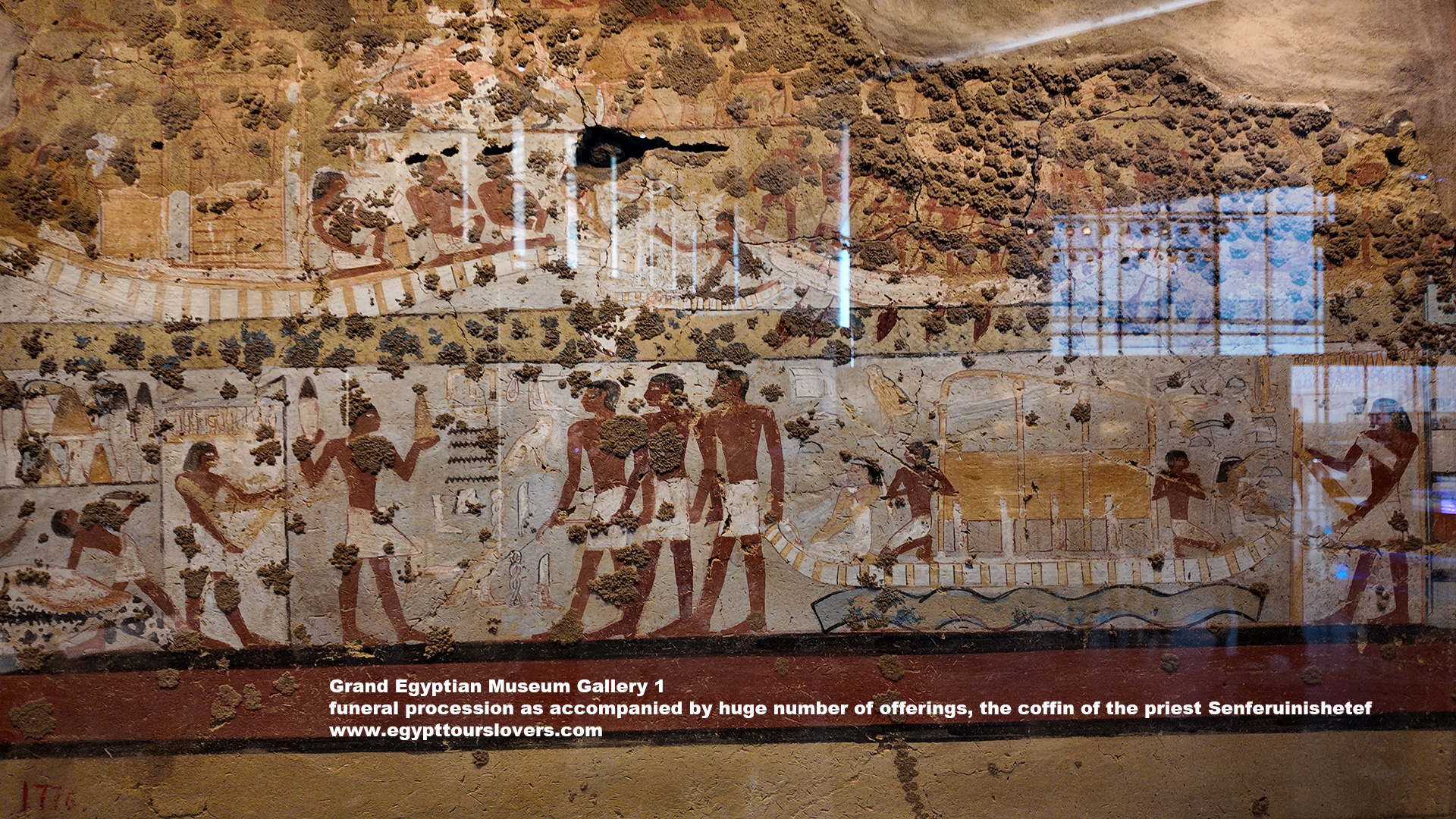
Dynasty 6 | pigment, Plaster, Mudbricks | Dahshur
Scene of the painting: showing funeral procession as accompanied by huge number of offerings, the coffin of the priest Senferuinishetef is brought by boat on his final journey.
Lector priests, holding papyrus rolls, Recite Funerary Spells that will guide him to the afterlife.
———– } ———– } ———– } ———– }
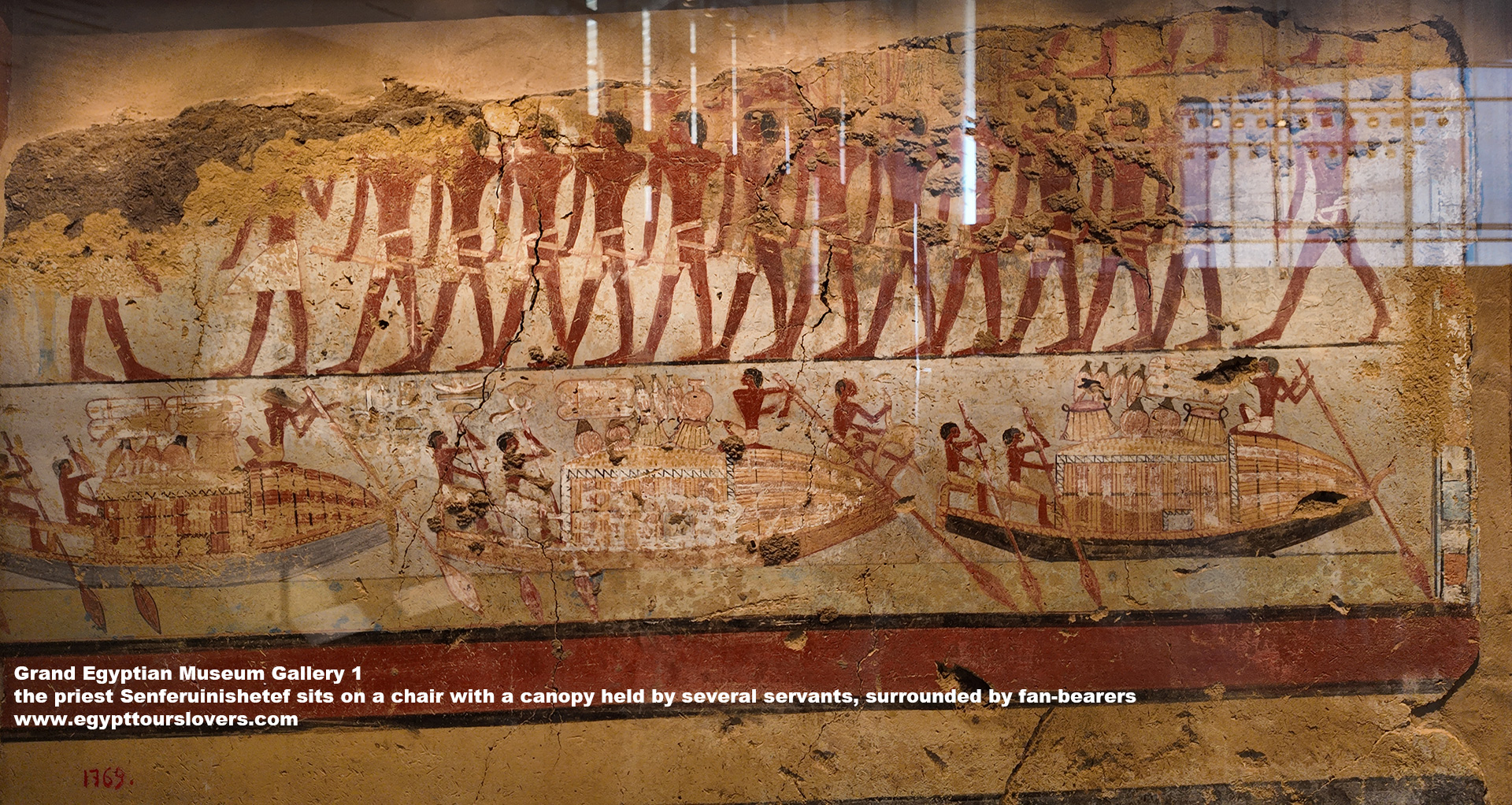
Dynasty 6 | pigment, Plaster, Mudbricks | Dahshur
Scene of the painting: the priest Senferuinishetef sits on a chair with a canopy held by several servants, surrounded by fan-bearers.
Below are boats carrying products from all regions of Egypt to show us Buying and selling in ancient Egypt.
———– } ———– } ———– } ———– }
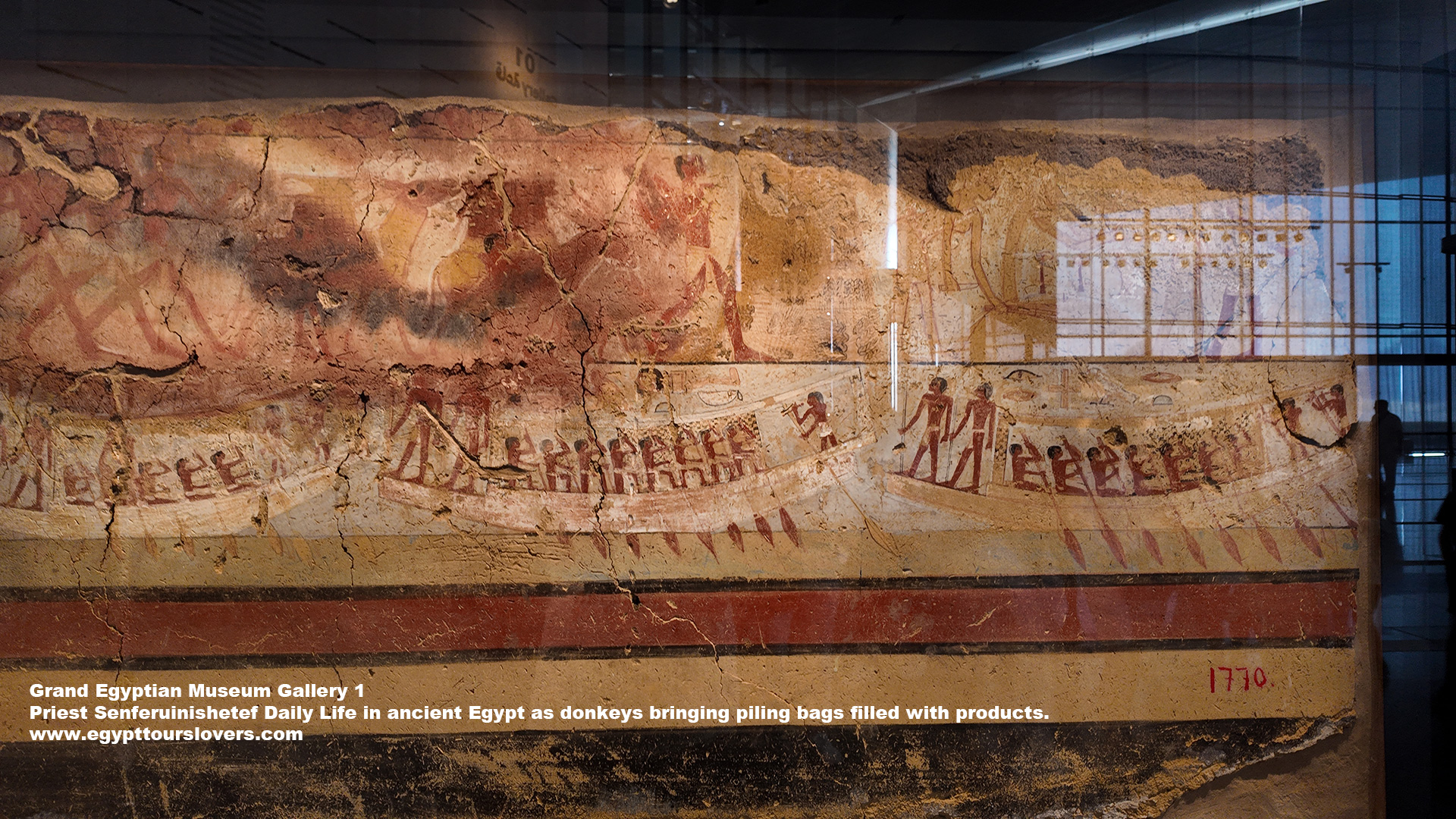
Dynasty 6 | pigment, Plaster, Mudbricks | Dahshur
Scene of the painting: show Daily Life in ancient Egypt as donkeys bringing piling bags filled with products, servants piling bundles of grain stalks and boat rowing up and down the river Nile.
———– } ———– } ———– } ———– }
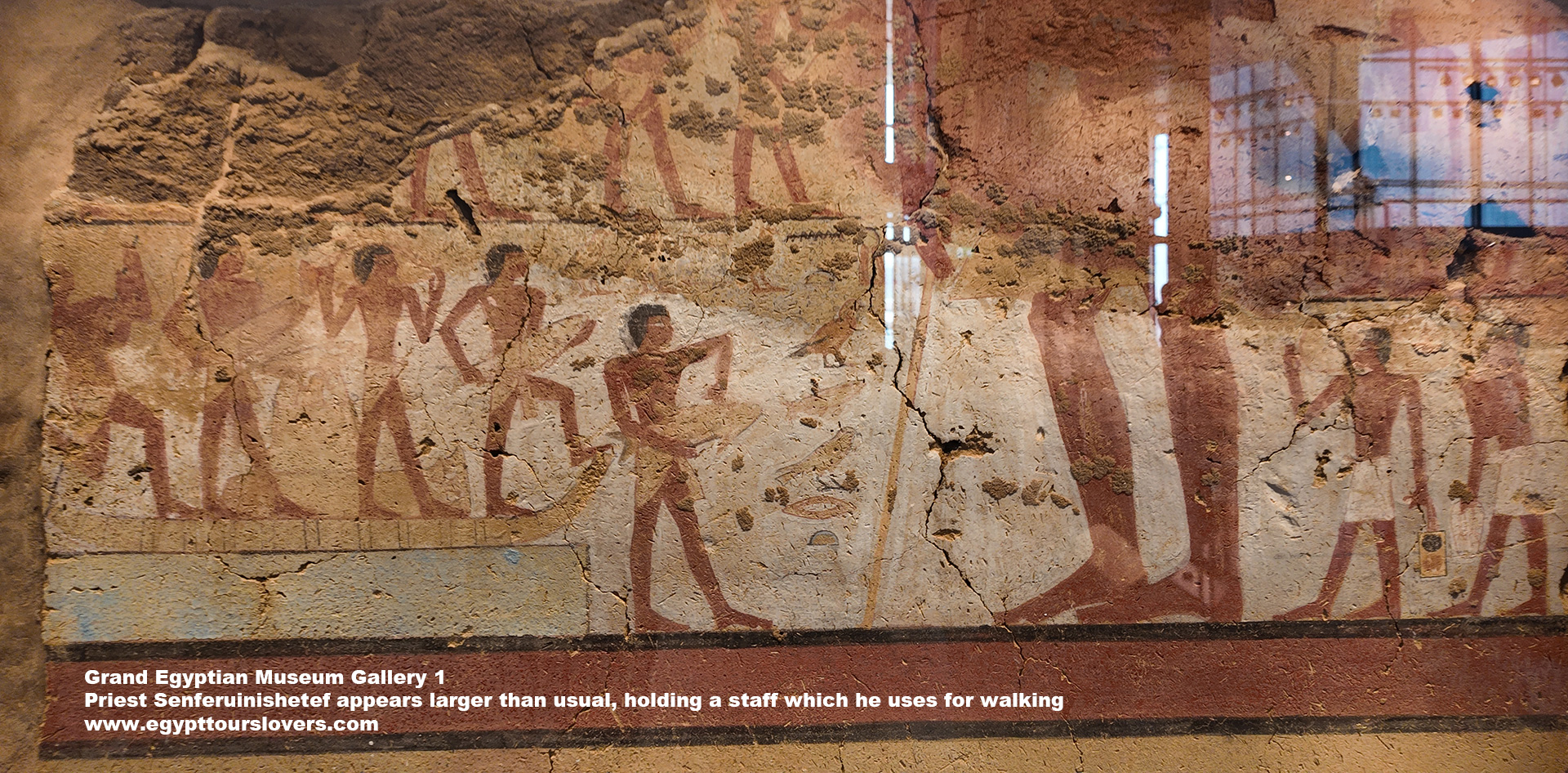
Dynasty 6 | pigment, Plaster, Mudbricks | Dahshur
Scene of the painting: show the priest Senferuinishetef appears larger than usual, holding a staff which he uses for walking, and offerings of large fish and various foods are presented for his use in his afterlife.
———– } ———– } ———– } ———– }
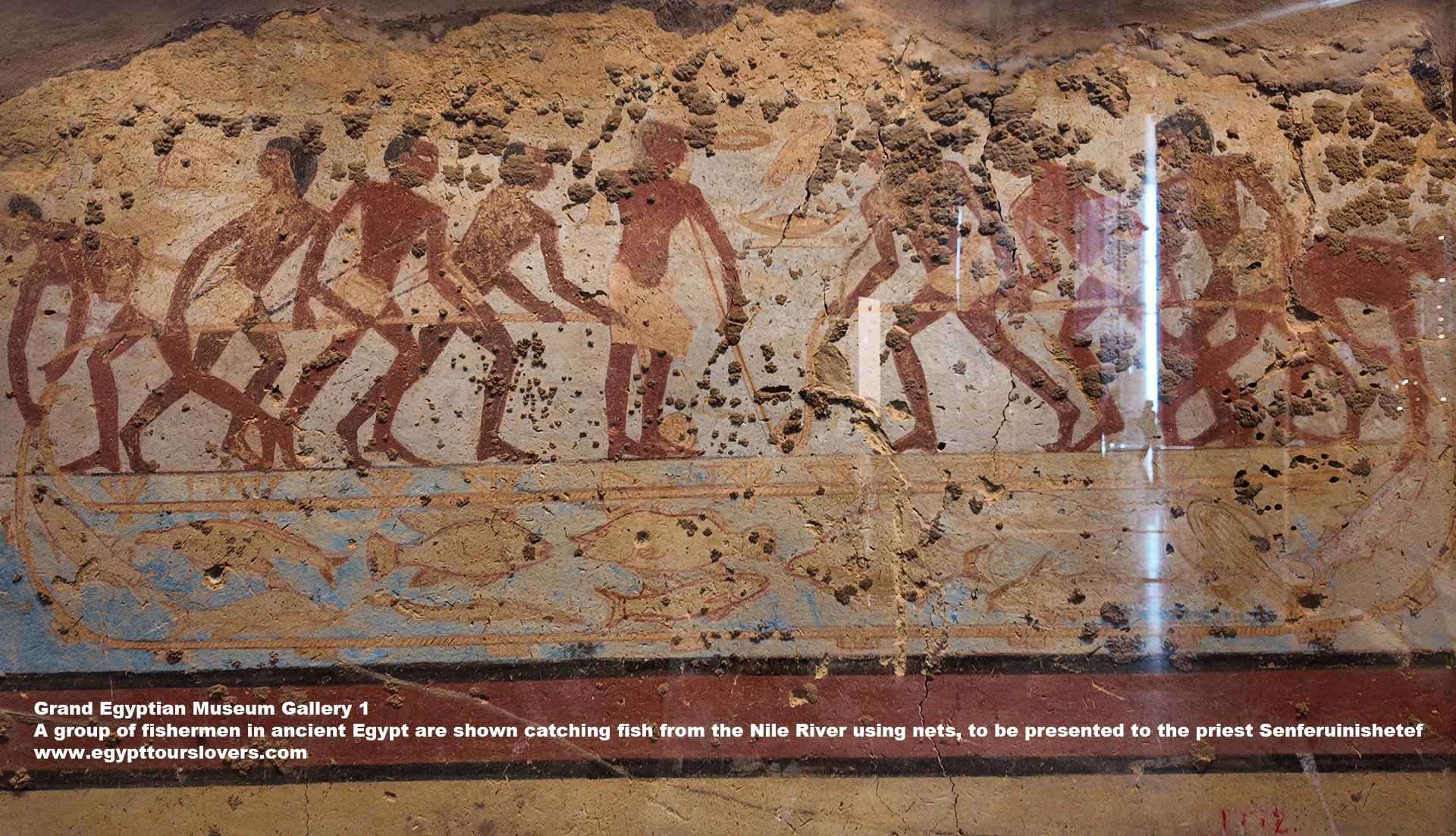
Dynasty 6 | pigment, Plaster, Mudbricks | Dahshur
A group of fishermen in ancient Egypt are shown catching fish from the Nile River using nets, to be presented to the priest Senferuinishetef in his afterlife.
———– } ———– } ———– } ———– }
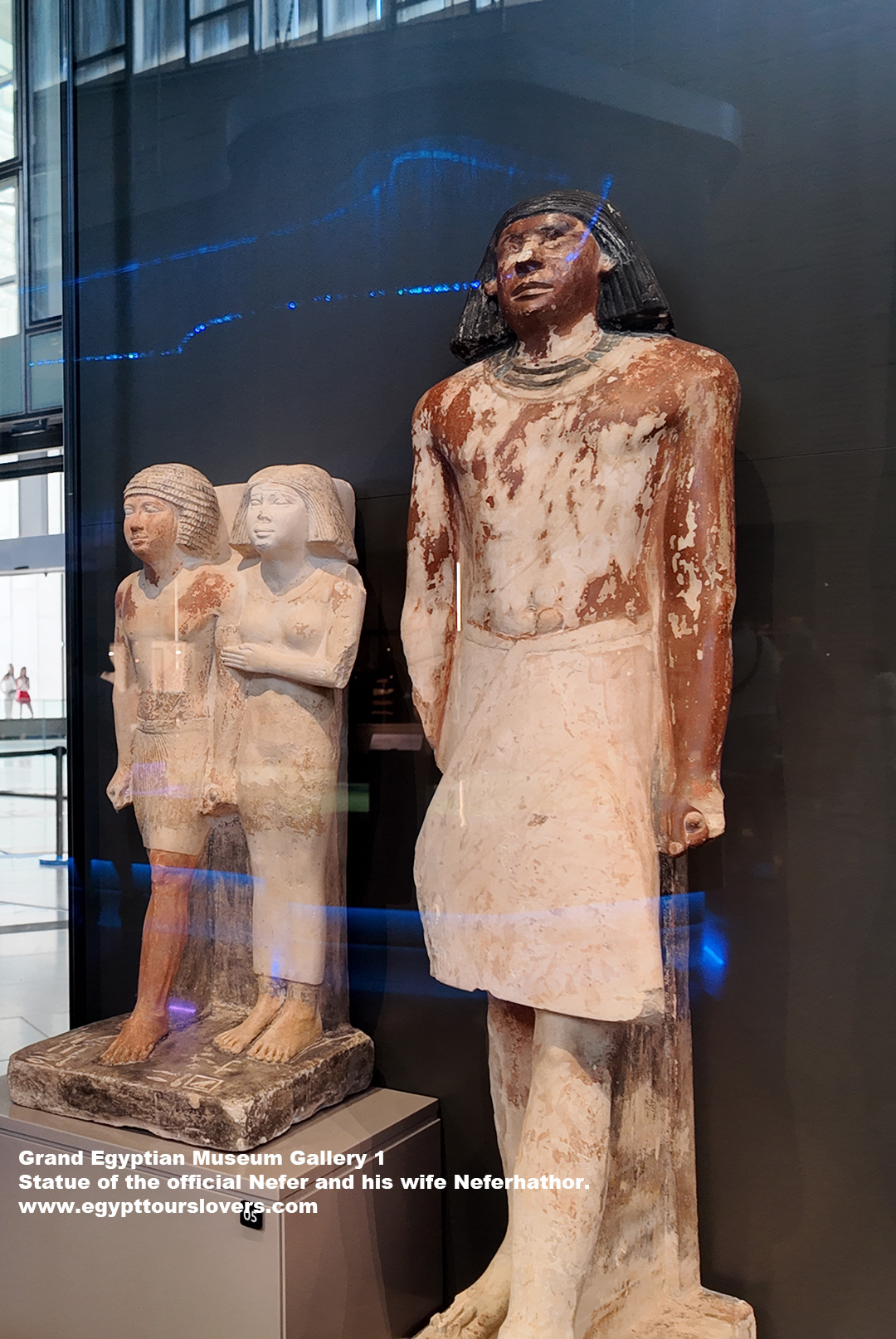
Dynasty 5 | limestone, pigment | Abu Sir
Statue of the official Nefer and his wife Neferhathor.
Nefer was the overseer of the royal records and granaries.
His wife Neferhathor was the guardian of the king’s estates.
———– } ———– } ———– } ———– }
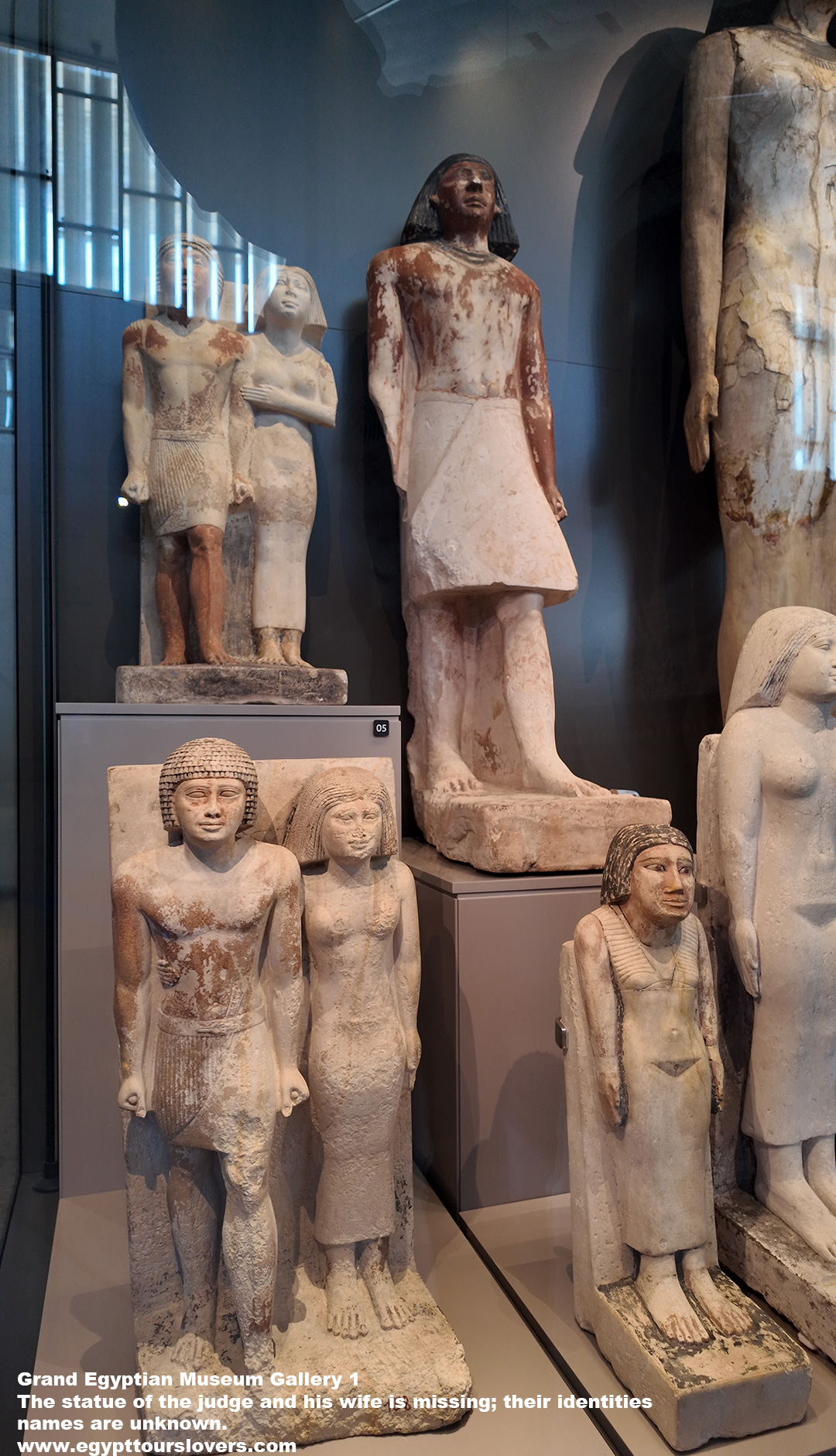
old kingdom | limestone, pigment | Saqqara
The statue of the judge and his wife is missing; their identities and names are unknown.
———– } ———– } ———– } ———– }
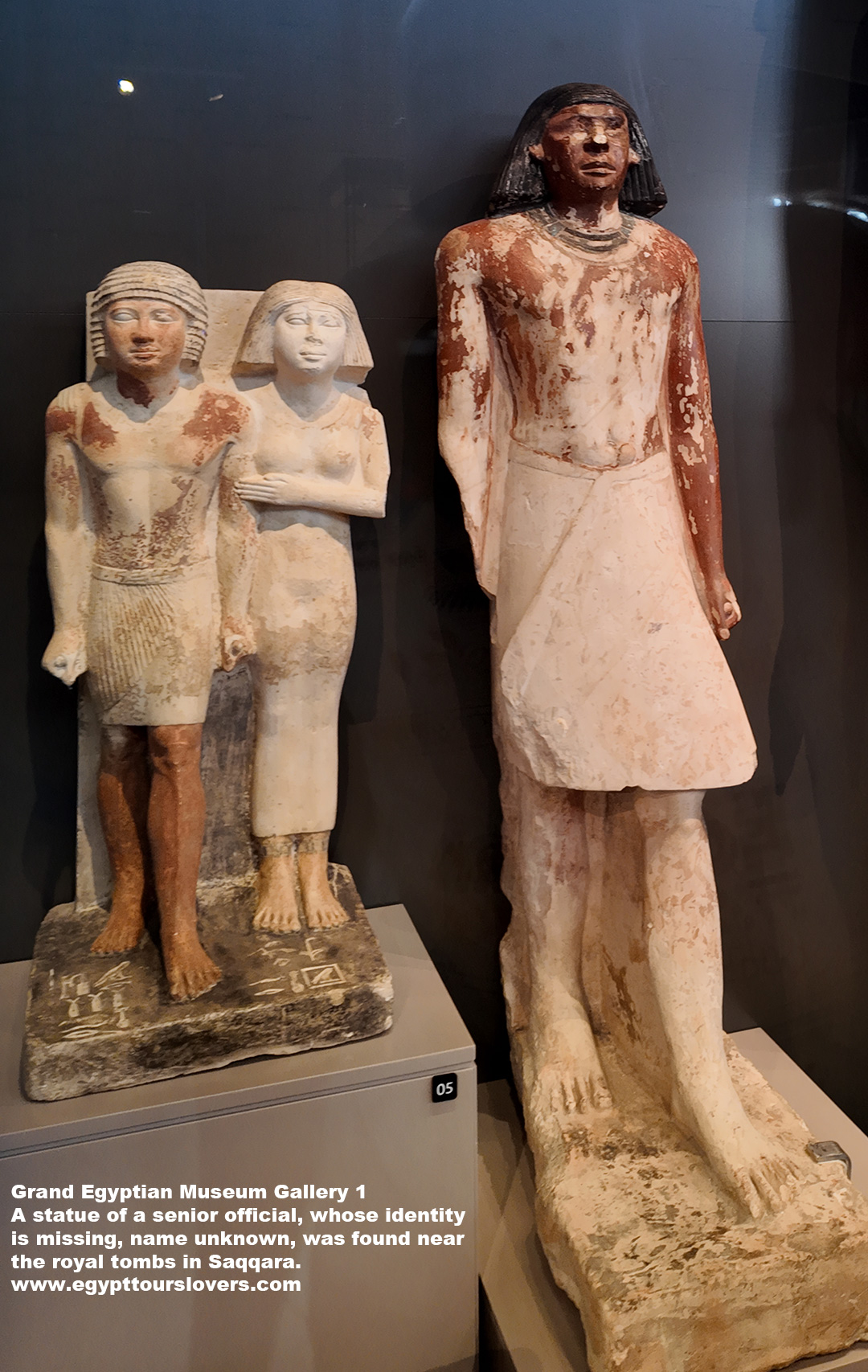
old kingdom | limestone, pigment | Saqqara
A statue of a senior official, whose identity is missing, name unknown, was found near the royal tombs in Saqqara.
———– } ———– } ———– } ———– }
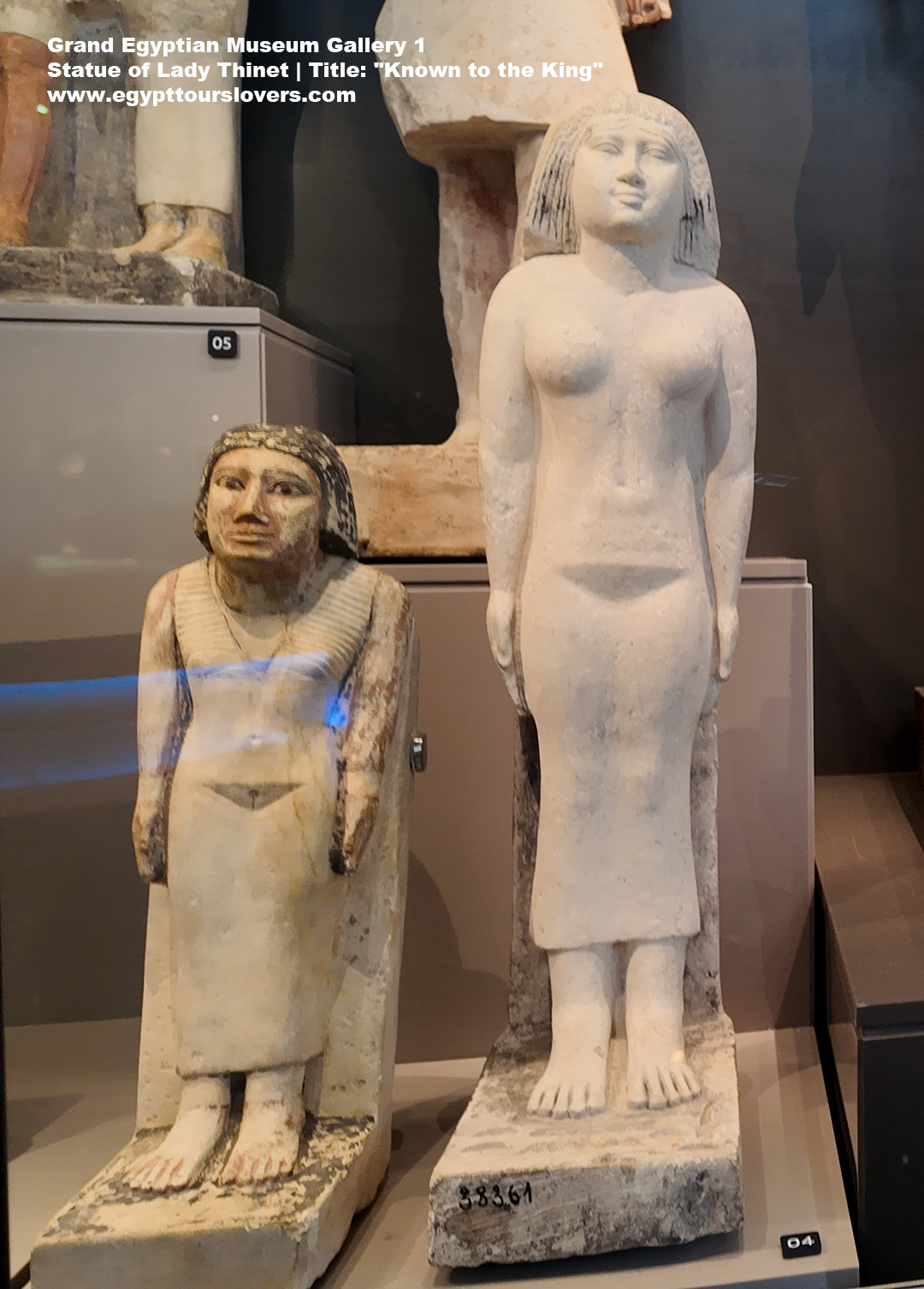
old kingdom | limestone, pigment | giza
Statue of Lady Thinet
Title: “Known to the King”
Statue of Lady Neferet
Funded near the royal tombs at Giza.
———– } ———– } ———– } ———– }
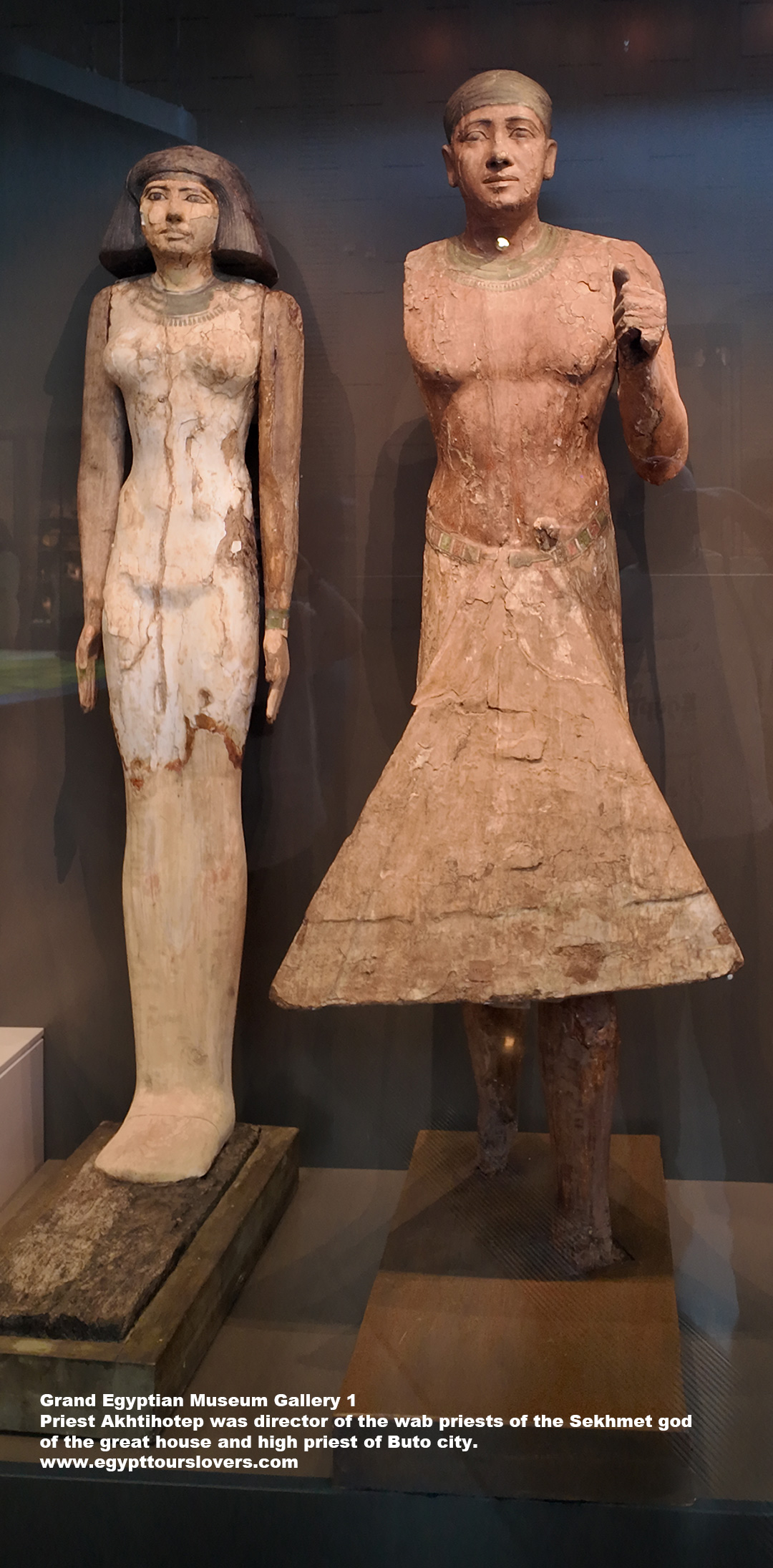
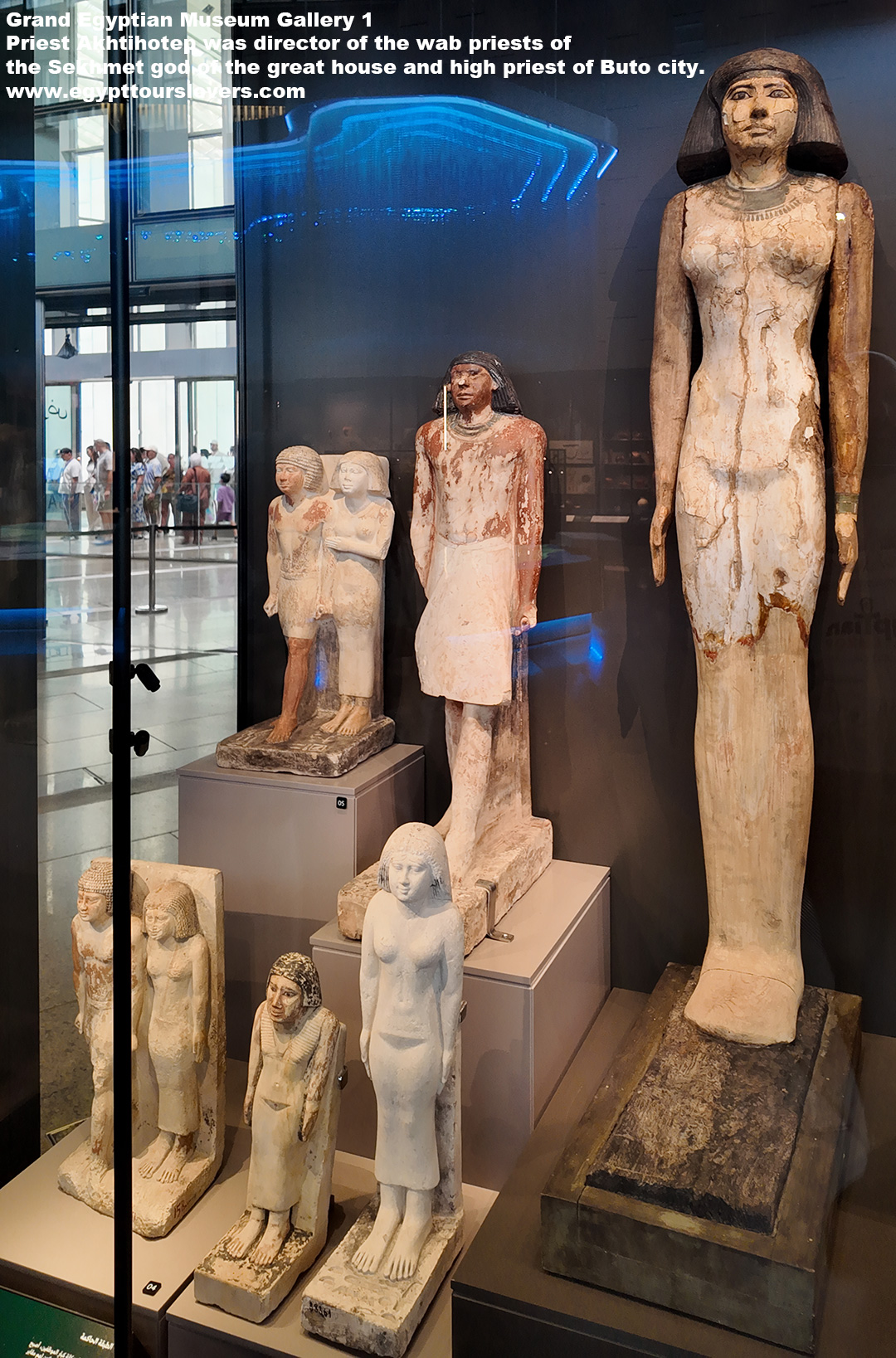
Dynasty 5 | wood, plaster, pigment | Saqqara
Priest Akhtihotep was director of the wab priests of the Sekhmet god of the great house and high priest of Buto city.
Found 9 statues in this tomb in saqqqara in tomb serdab “hidden room”.
Another statue fie his wife.
———– } ———– } ———– } ———– }
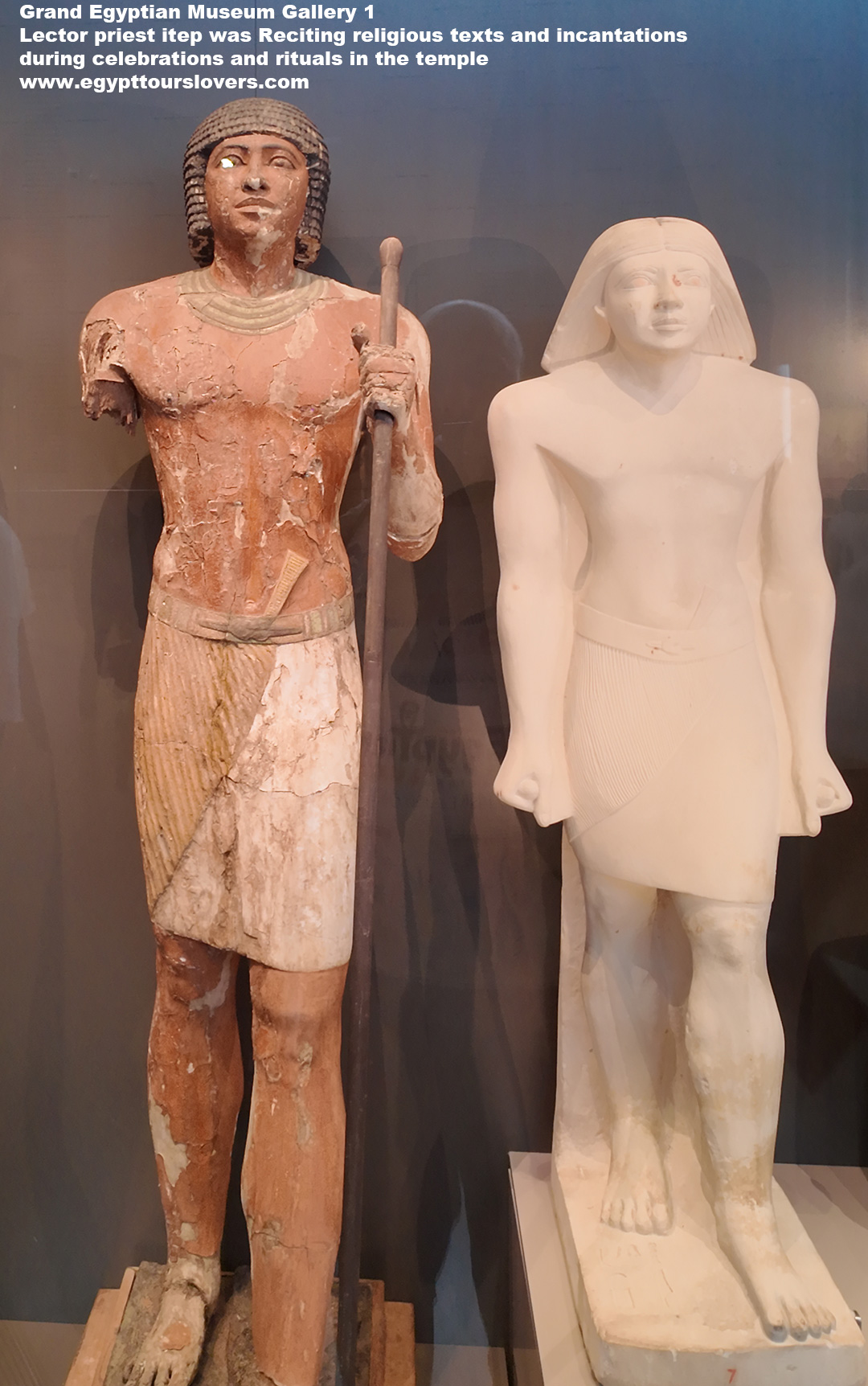
Dynasty 5 | limestone | Saqqara
Lector priest itep was Reciting religious texts and incantations during celebrations and rituals in the temple.
———– } ———– } ———– } ———– }
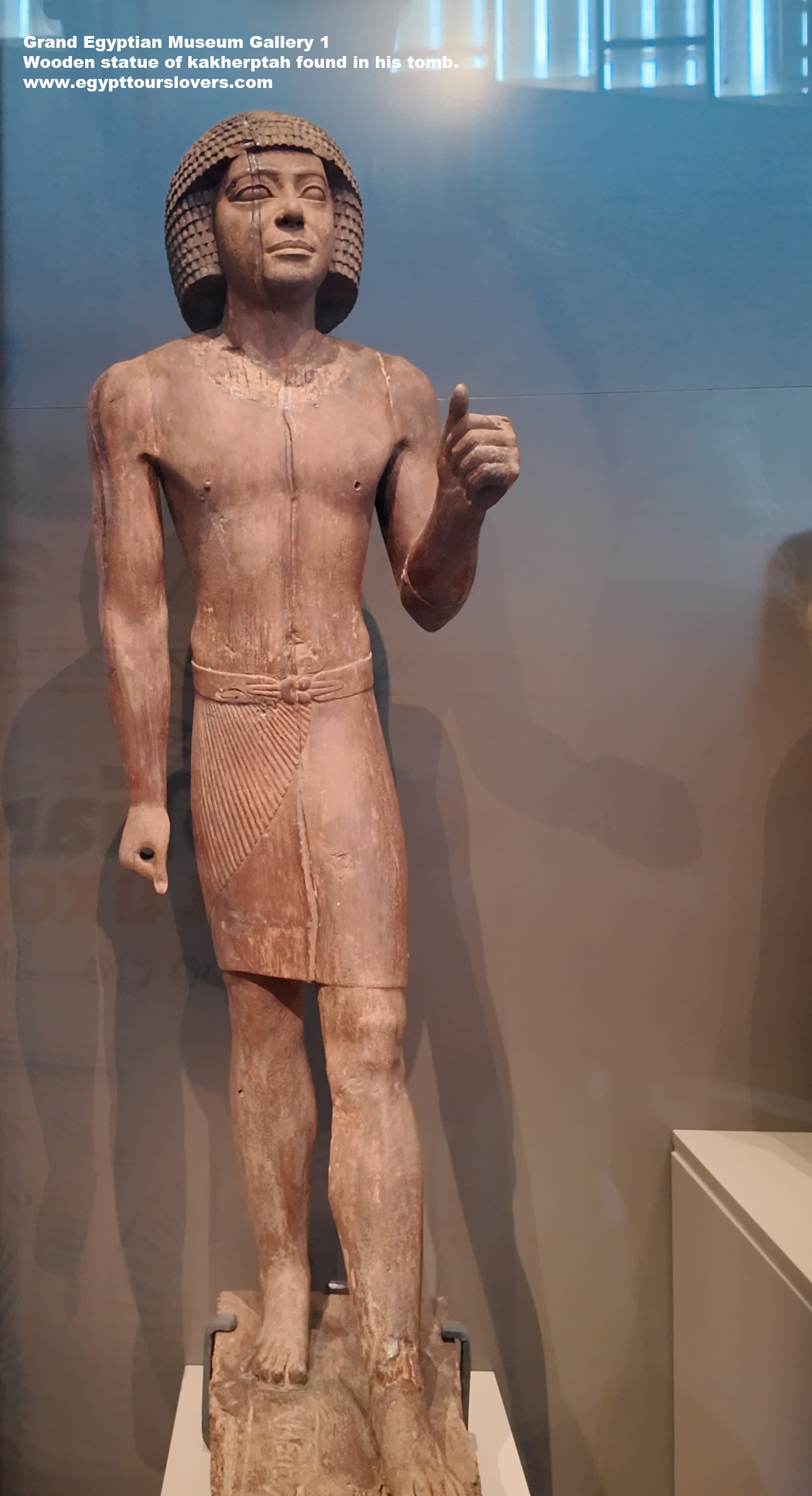
Dynasty 4-5 | wood | unkown
Wooden statue of kakherptah found in his tomb.
Job: overseer of metal workers.
Wearing a beaded broad collar and originally held a staff his right hand.
———– } ———– } ———– } ———– }
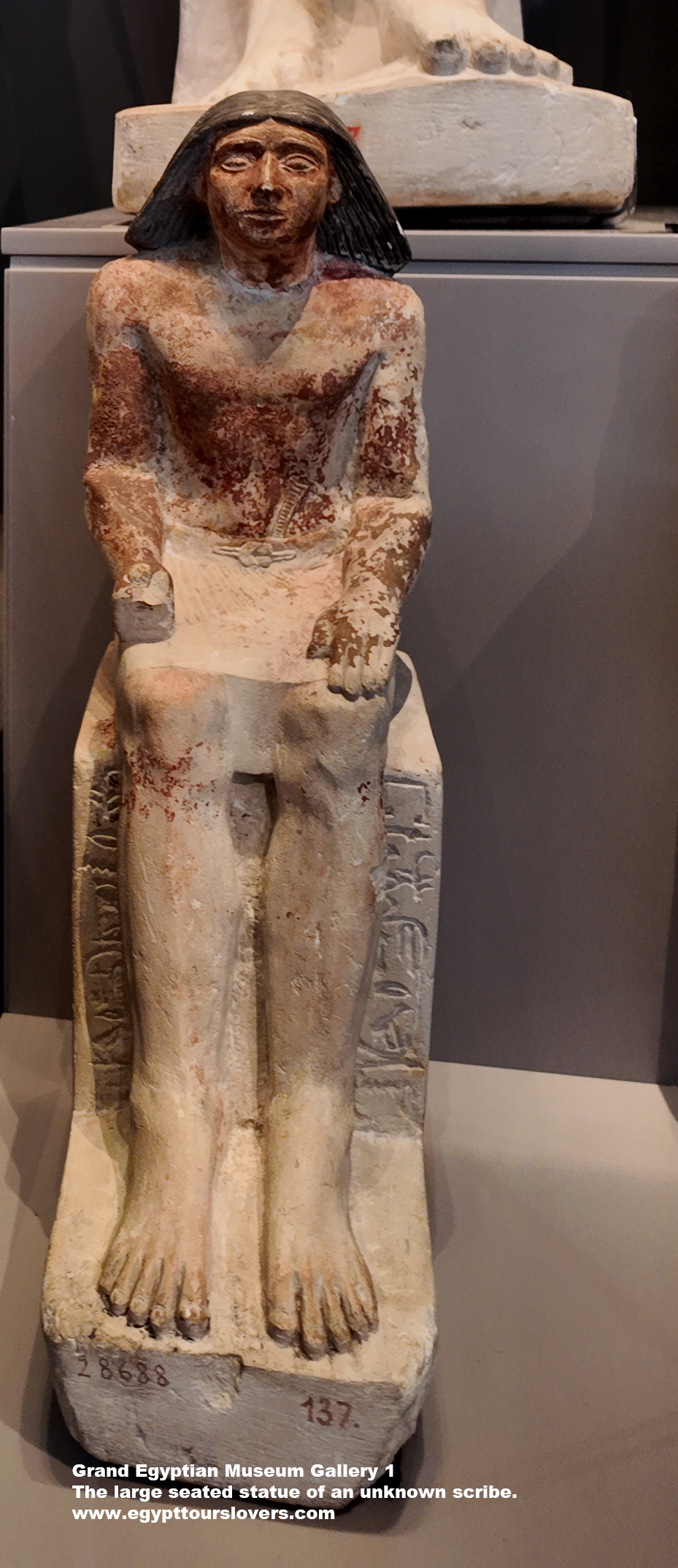
old kingdom | limestone, pigment | giza, Saqqara
The large seated statue of an unknown scribe.
———– } ———– } ———– } ———– }
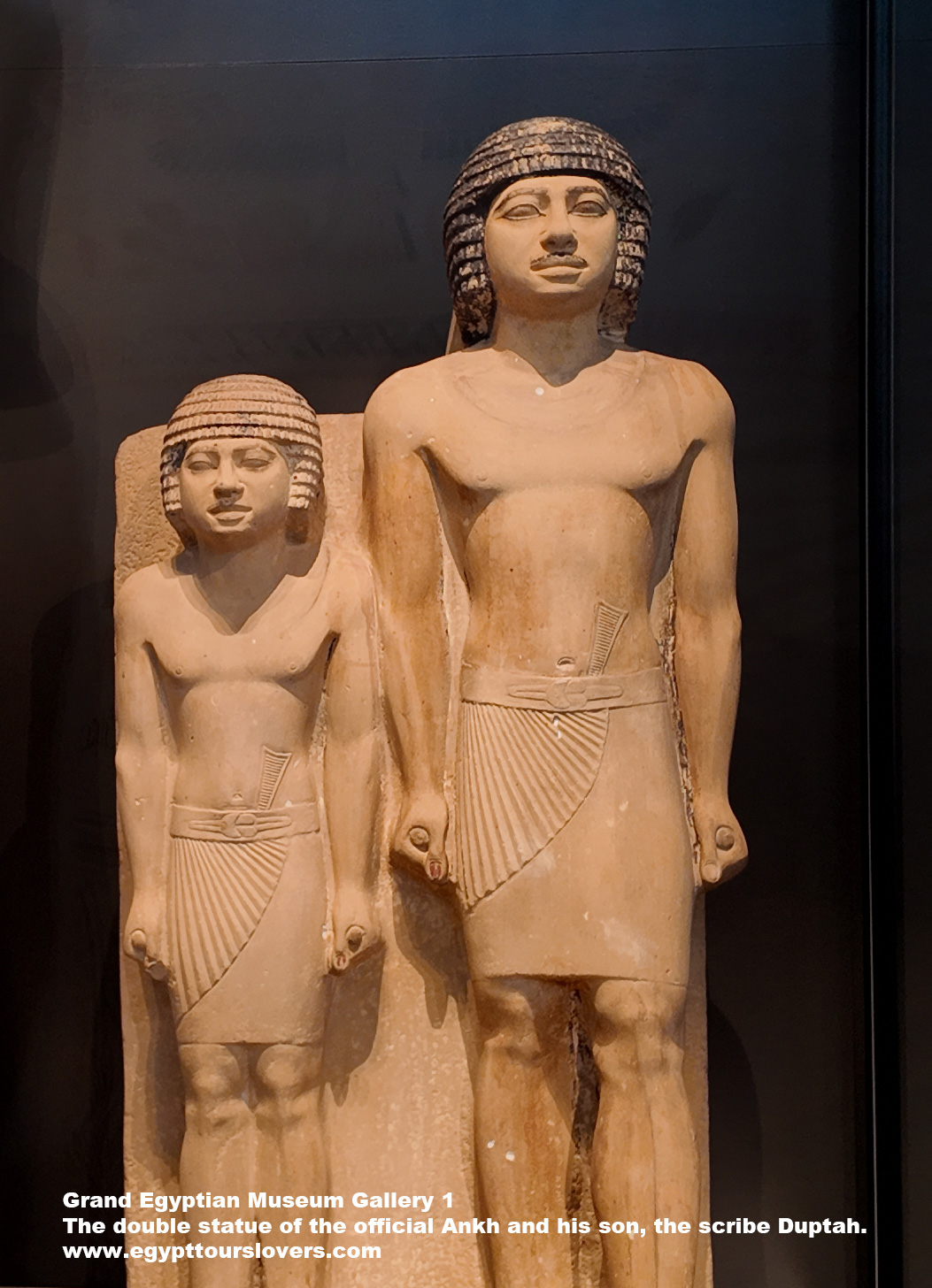
old kingdom | limestone, pigment | giza, Saqqara
The double statue of the official Ankh and his son, the scribe Duptah.
———– } ———– } ———– } ———– }
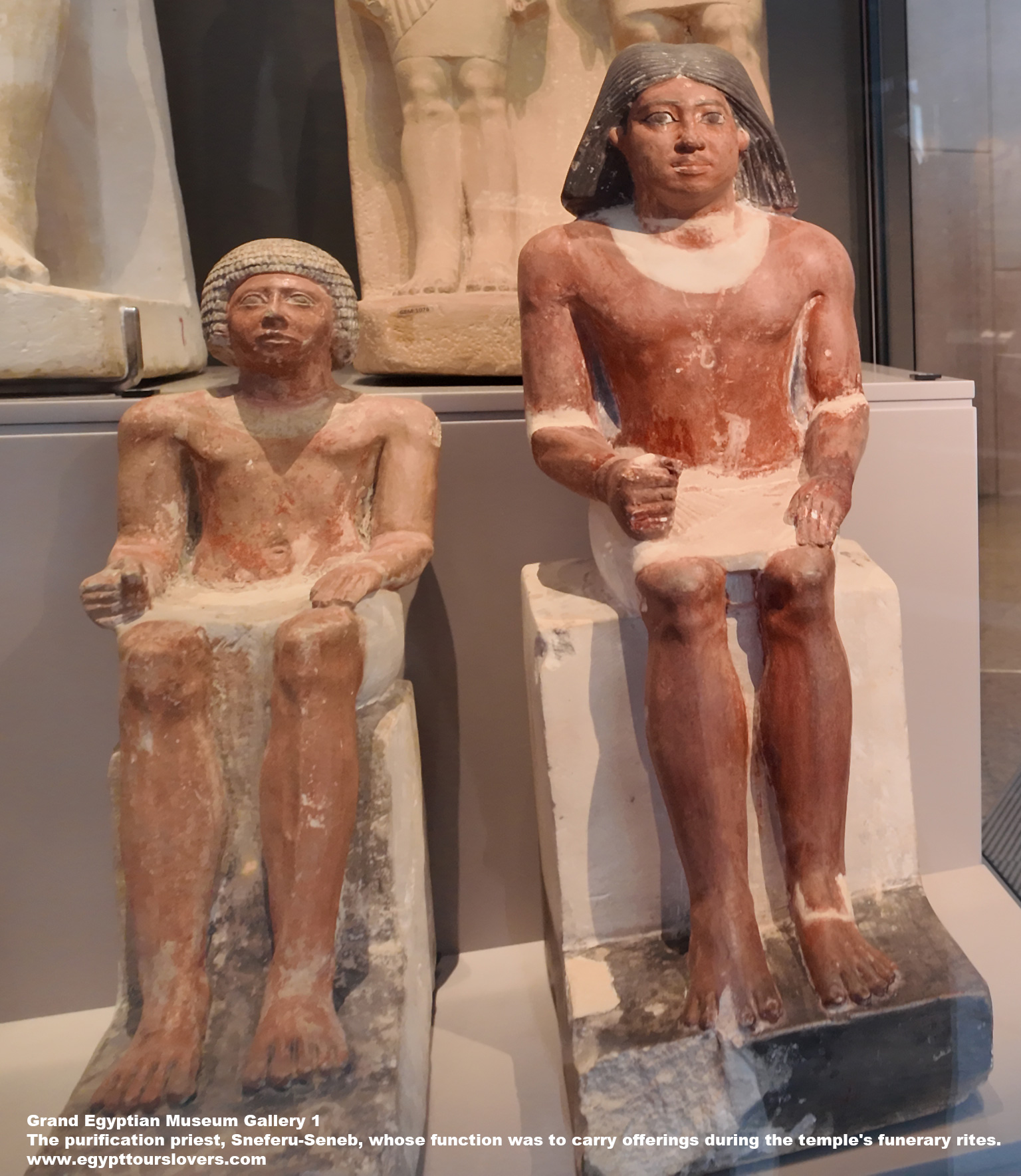
old kingdom | limestone, pigment | giza, Saqqara
The purification priest, Sneferu-Seneb, whose function was to carry offerings during the temple’s funerary rites.
———– } ———– } ———– } ———– }
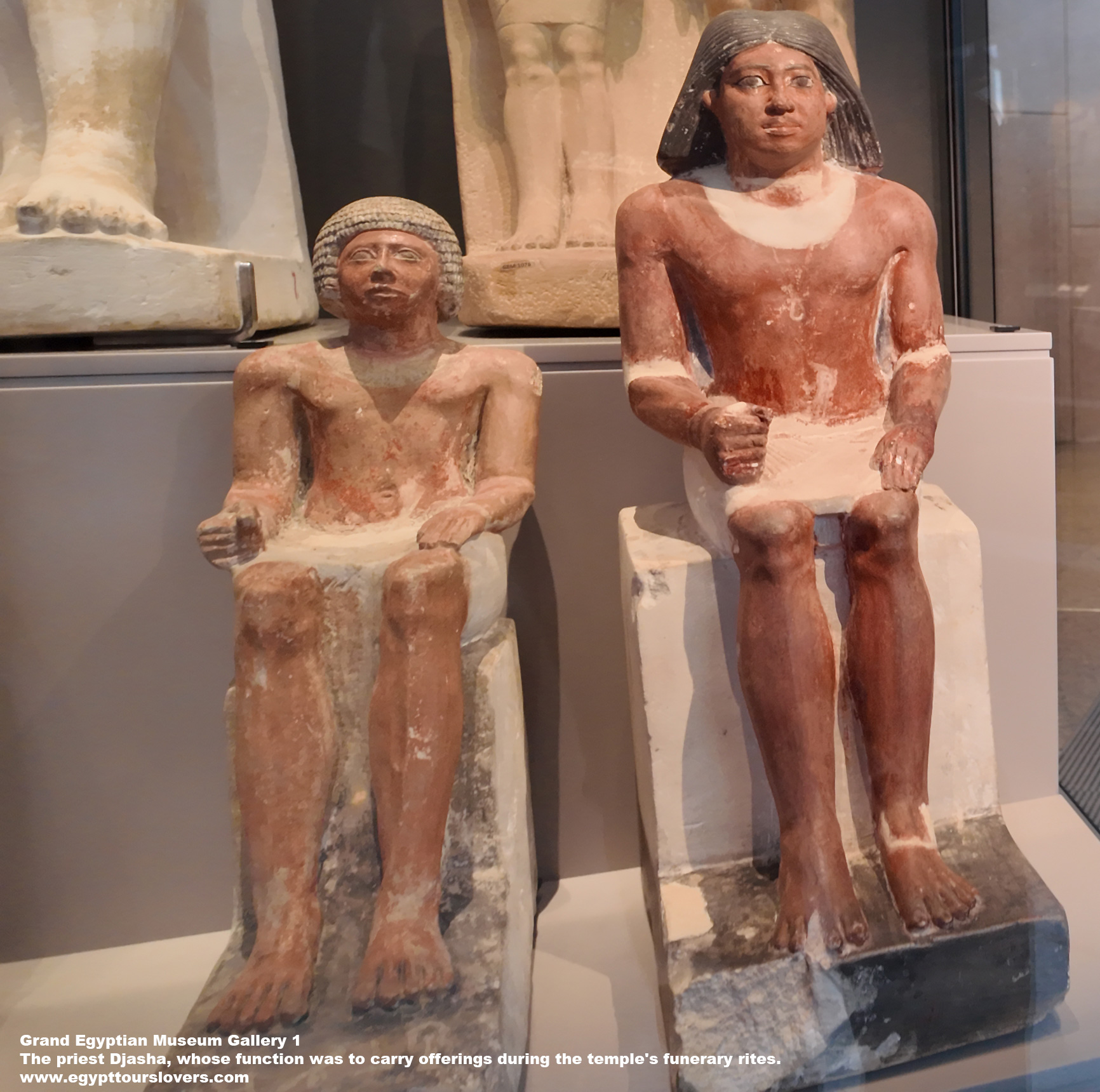
old kingdom | limestone, pigment | giza, Saqqara
The priest Djasha, whose function was to carry offerings during the temple’s funerary rites.
———– } ———– } ———– } ———– }
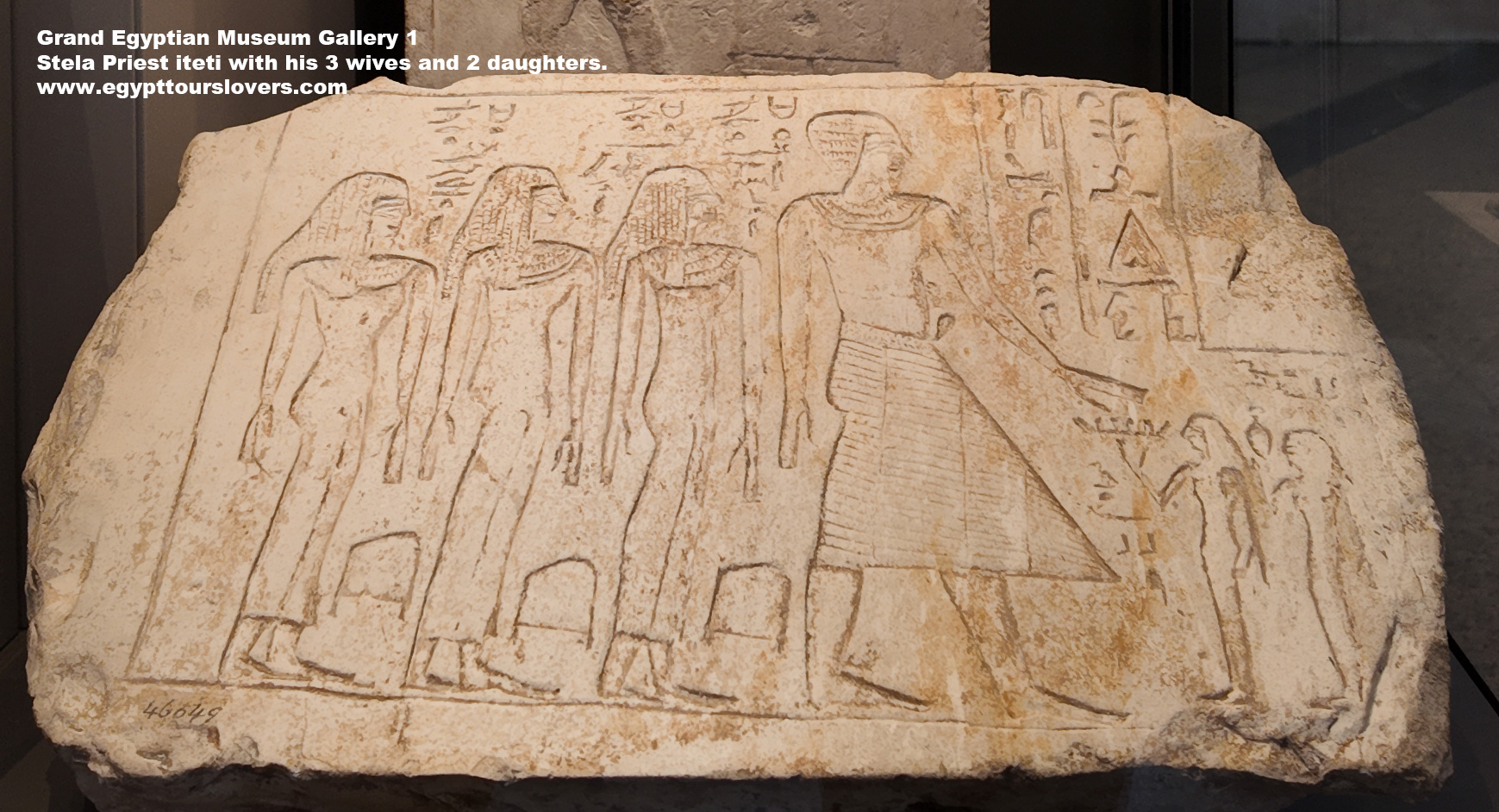
first intermediate period | limestone | Dendera
Stela Priest iteti with his 3 wives and 2 daughters.
———– } ———– } ———– } ———– }
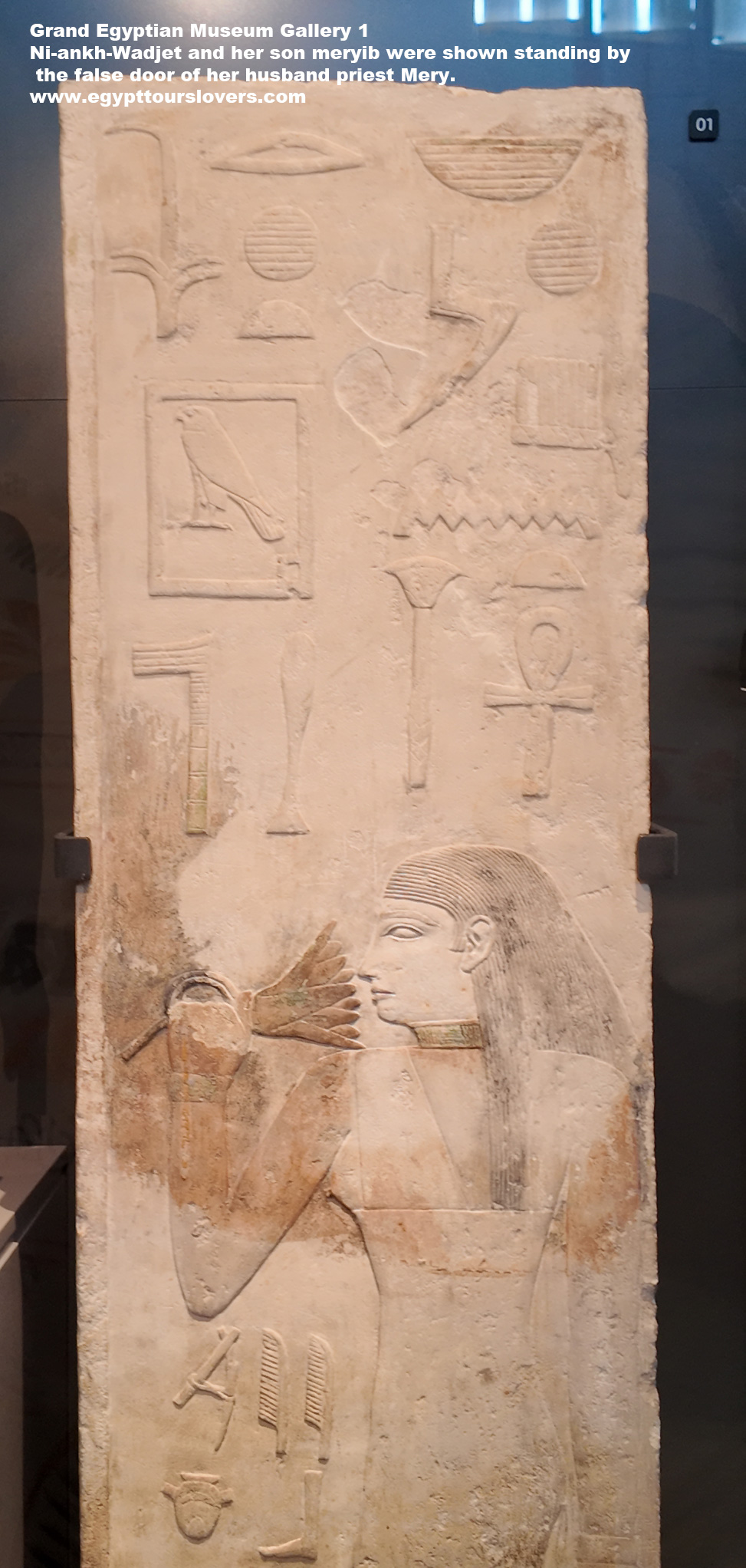
Dynasty 4 | limestone | abuser
Ni-ankh-Wadjet and her son meryib were shown standing by the false door of her husband priest Mery.
———– } ———– } ———– } ———– }
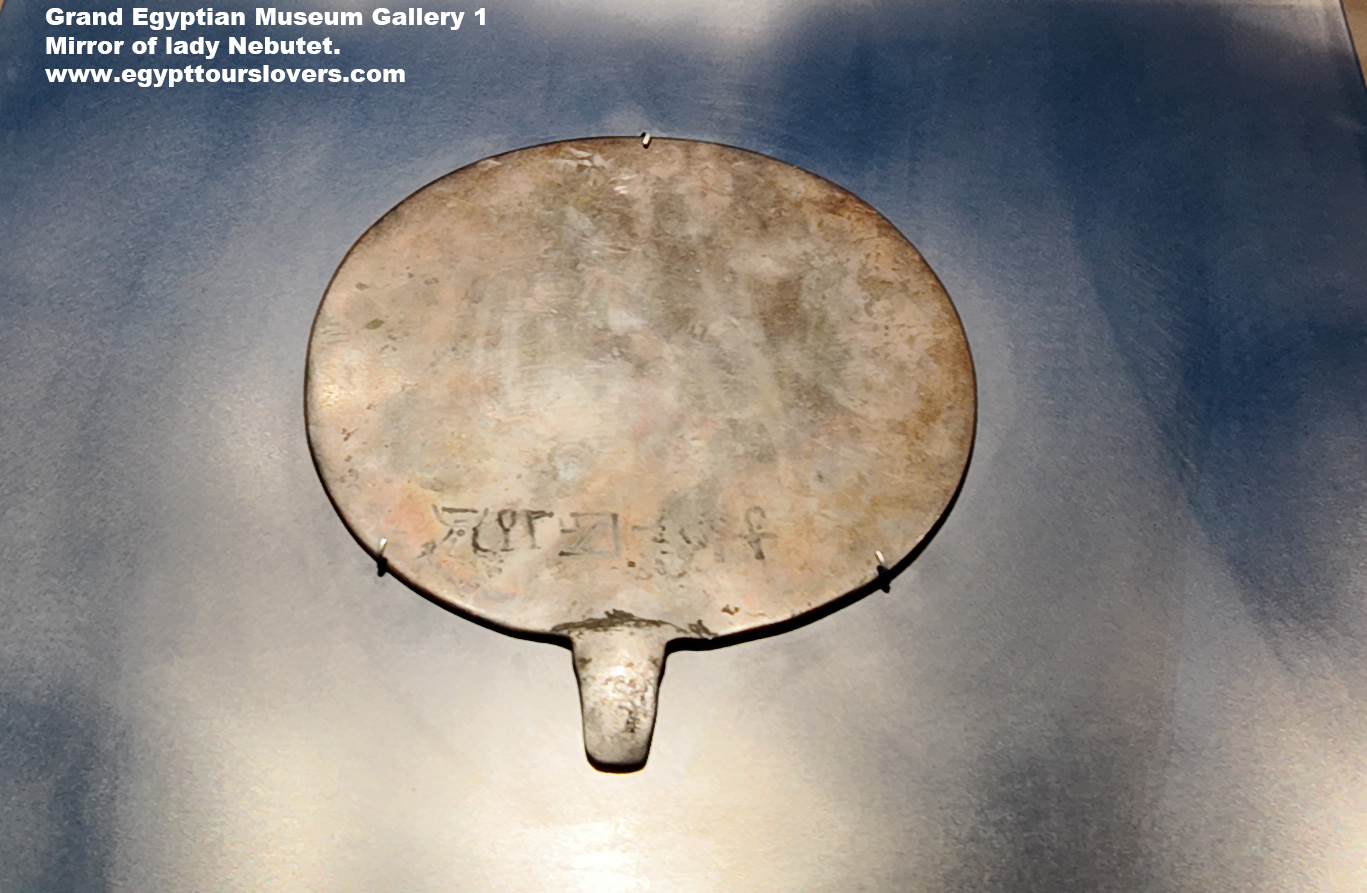
Dynasty 6 | copper, pigment | dara
Mirror of lady Nebutet.
Founded intact the tomb of lady Nebutet in dara area.
Text in Mirror: king sole ornament and priestess of god Hathor.
There 2 mirrors placed in tomb to can use to see her face in the afterlife.
———– } ———– } ———– } ———– }
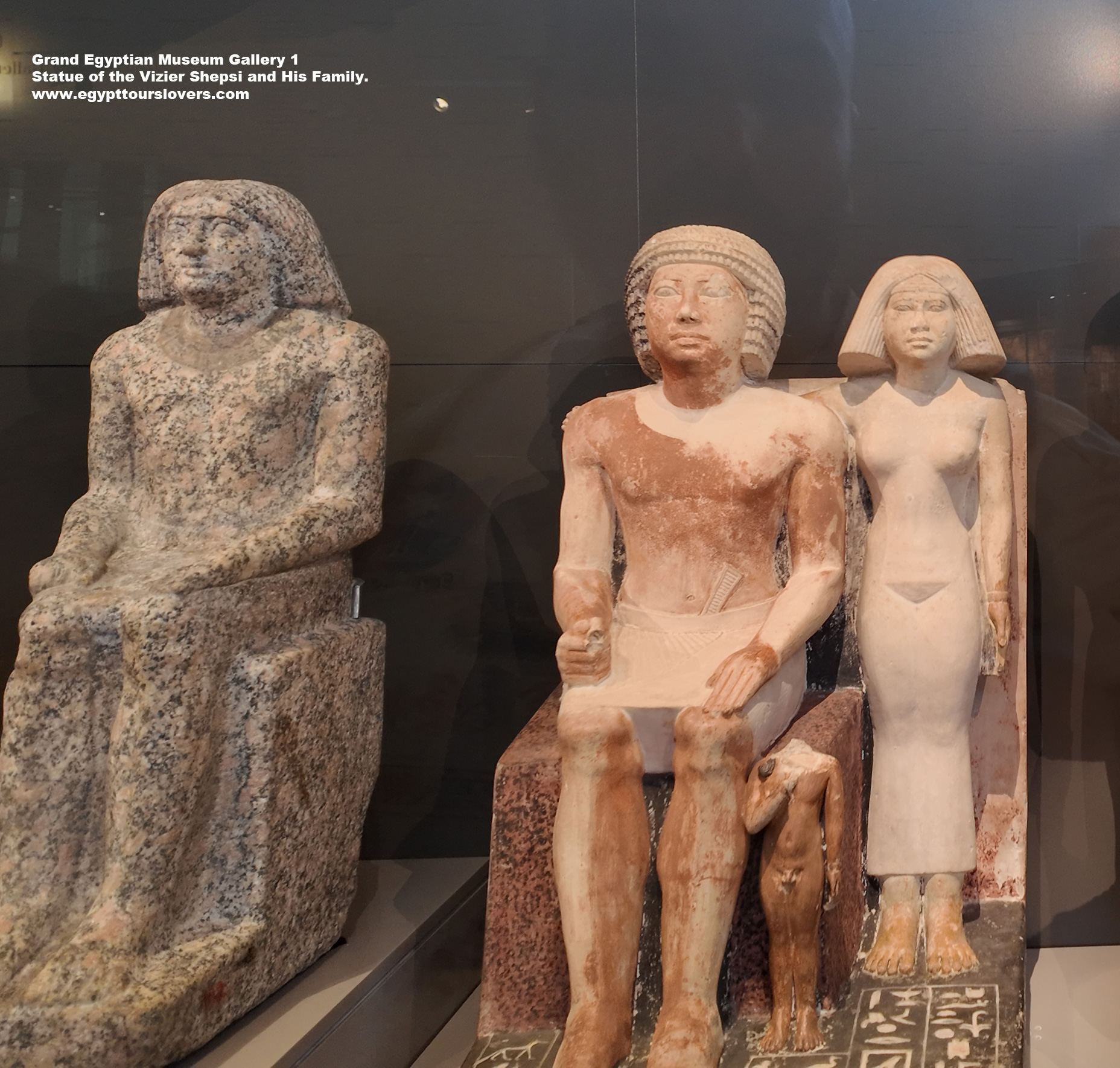
Dynasty 5 | limestone, pigment | Saqqara
Statue of the Vizier Shepsi and His Family.
———– } ———– } ———– } ———– }
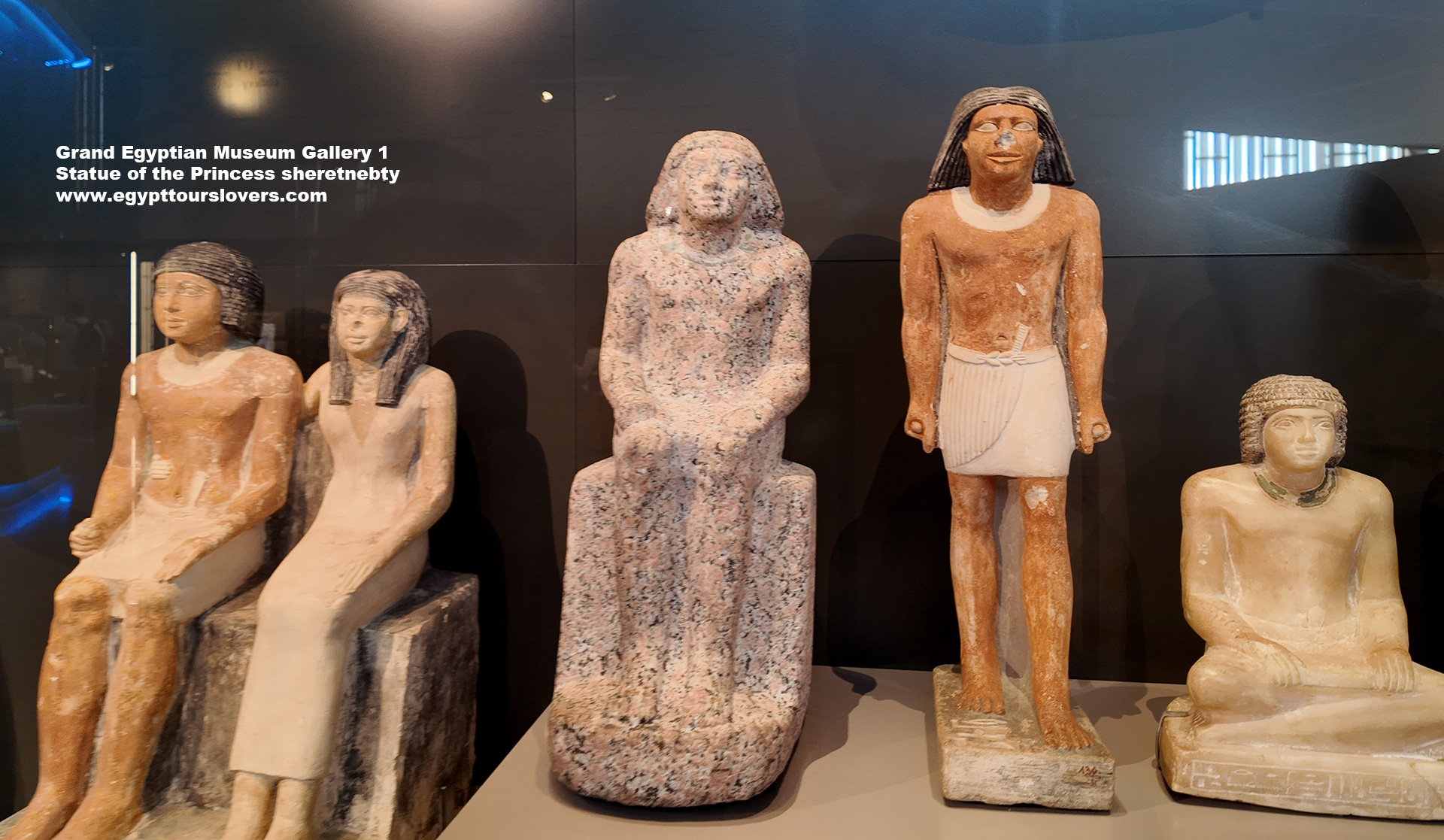
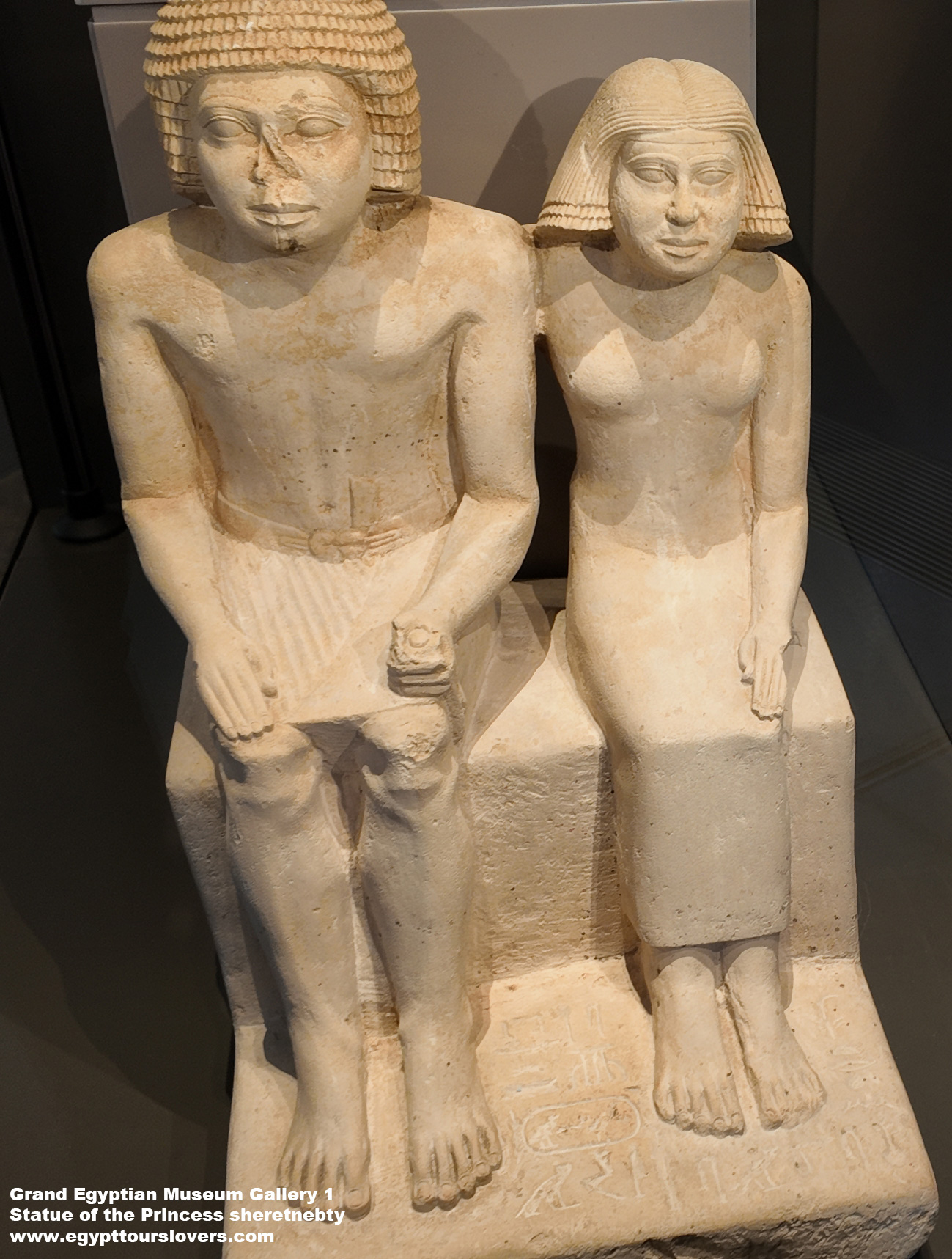
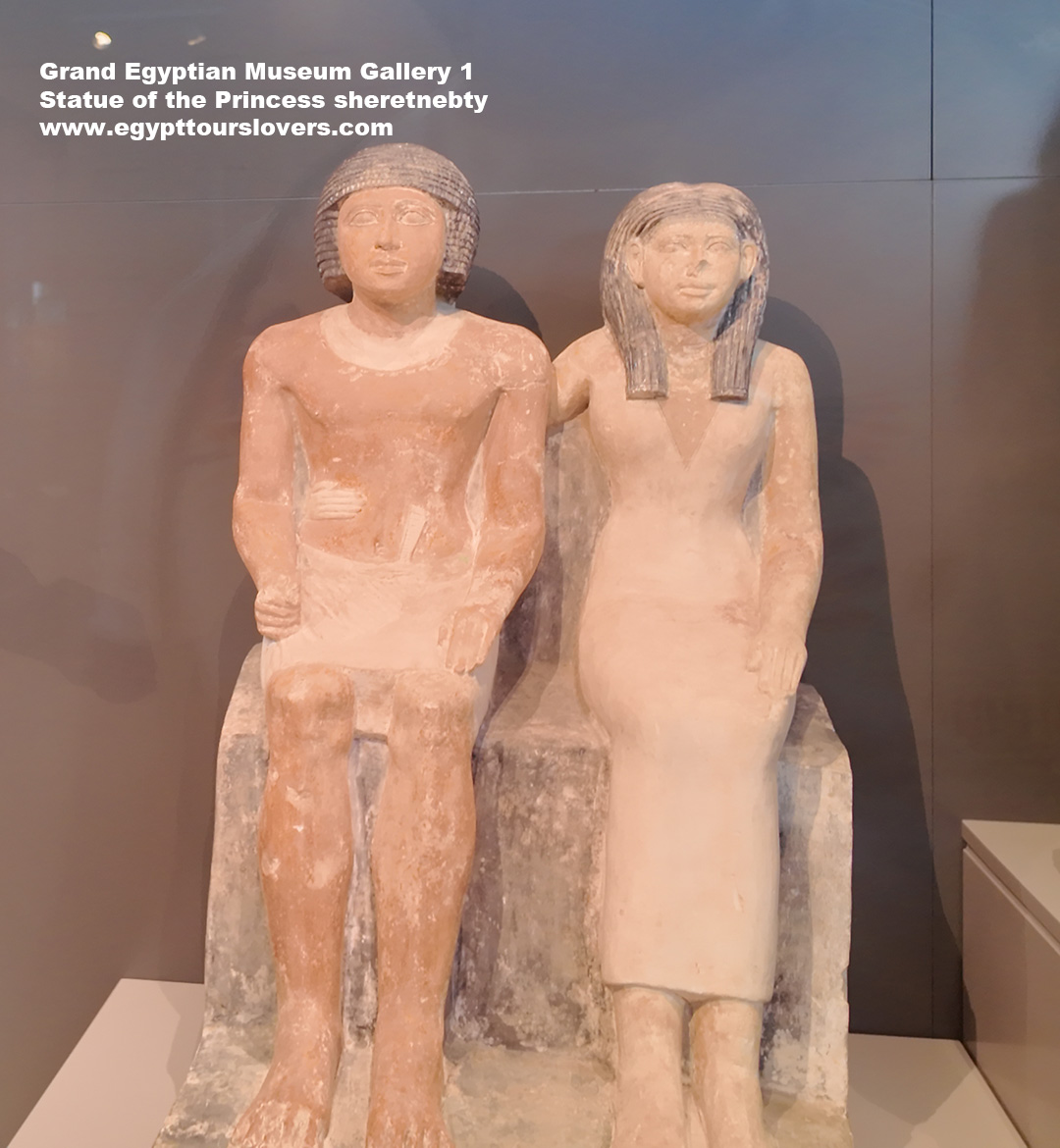
Dynasty 5 | limestone, pigment | abuser
Statue of the Princess sheretnebty…………
———– } ———– } ———– } ———– }
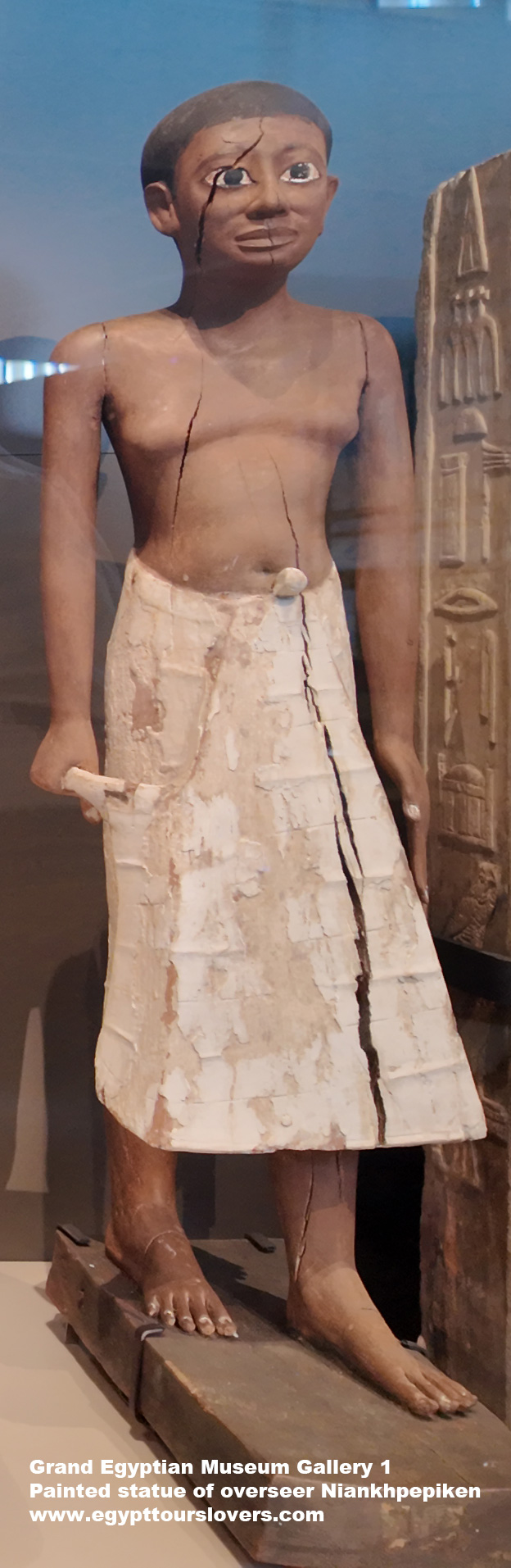
Dynasty 6 | wood, pottery, pigment | meir, giza, naga el-deir, kafr hassan Dawood
Painted statue of overseer Niankhpepiken
Job: overseer of upper Egypt.
Find in his tomb in cusae many models, nine boats and his statue.
———– } ———– } ———– } ———– }
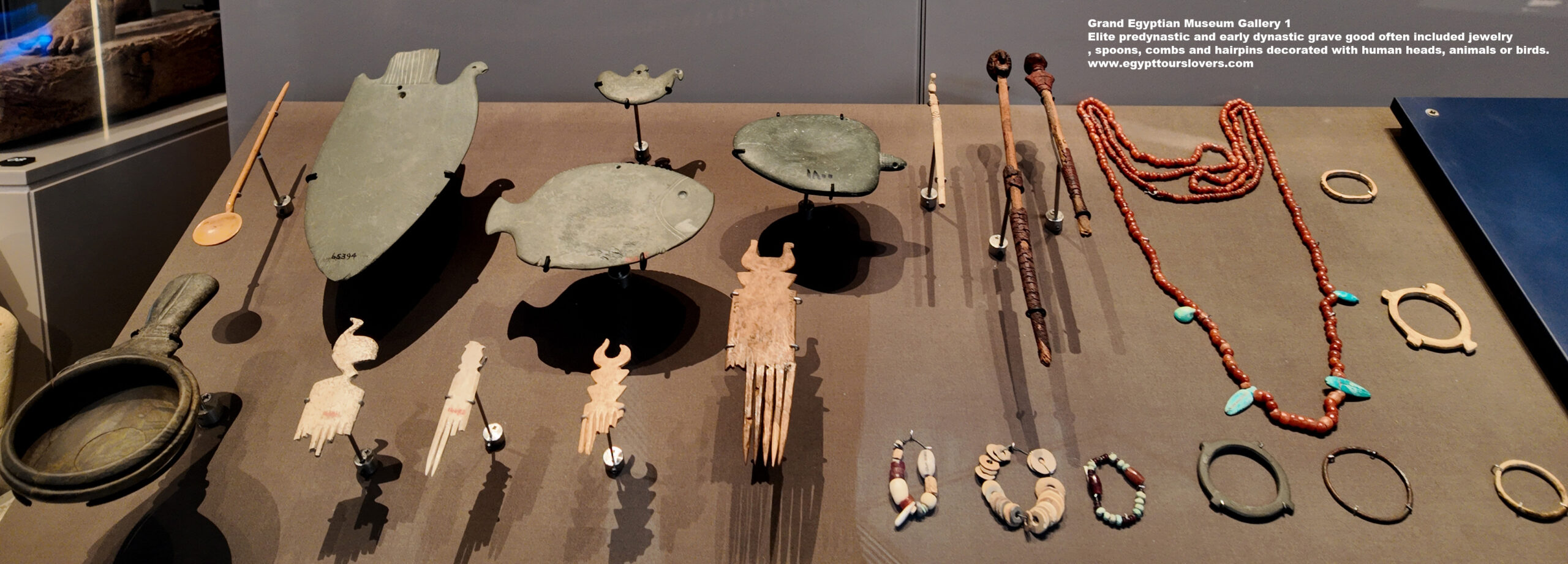
Neolithic period + Dynasty 2 | greywacke, ivory, bone,wood, shell, coper, semi-precious stone | adaima, gebel el-tarif, Hierakonpolis, gebelein, Helwan, mahasna, medium, tel el-daba, fayum | cosmetic and jewellery
Elite predynastic and early dynastic grave good often included jewelry, spoons, combs and hairpins decorated with human heads, animals or birds.
Different palettes shaped like birds, fish and turtle, were used to grind pigments for make-up.
———– } ———– } ———– } ———– }
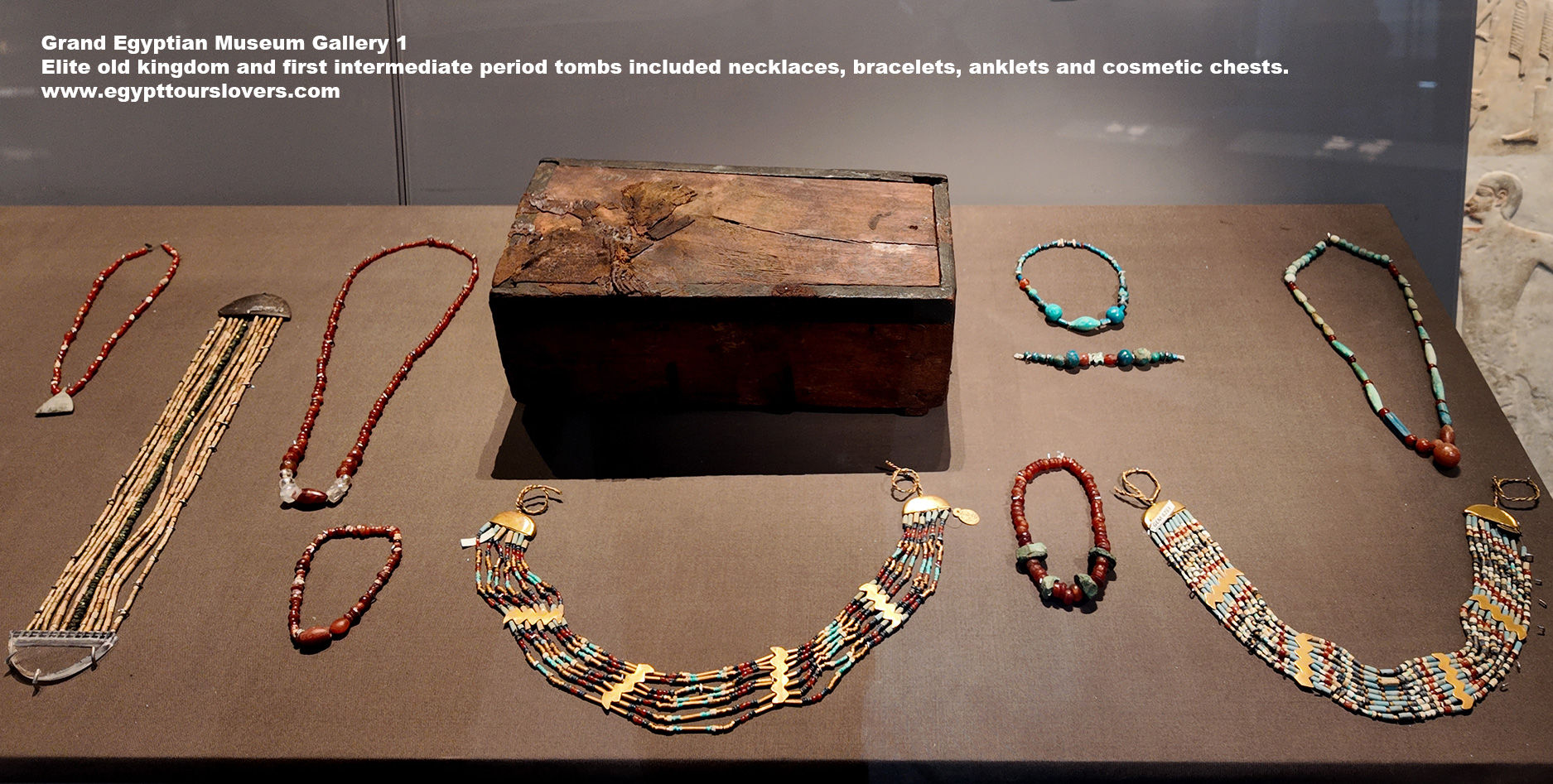
Dynasty 4 + first intermediate period | wood, gold, faience, shell, fruits, semi-precious stone | geleein, naga el-deir, giza, tell el-farkha, el-qatta, saff, kom el-hisn | Jewellery
Elite old kingdom and first intermediate period tombs included necklaces, bracelets, anklets and cosmetic chests.
The wooden chest contains beads, cowrie shells, fruits and minerals.
———– } ———– } ———– } ———– }
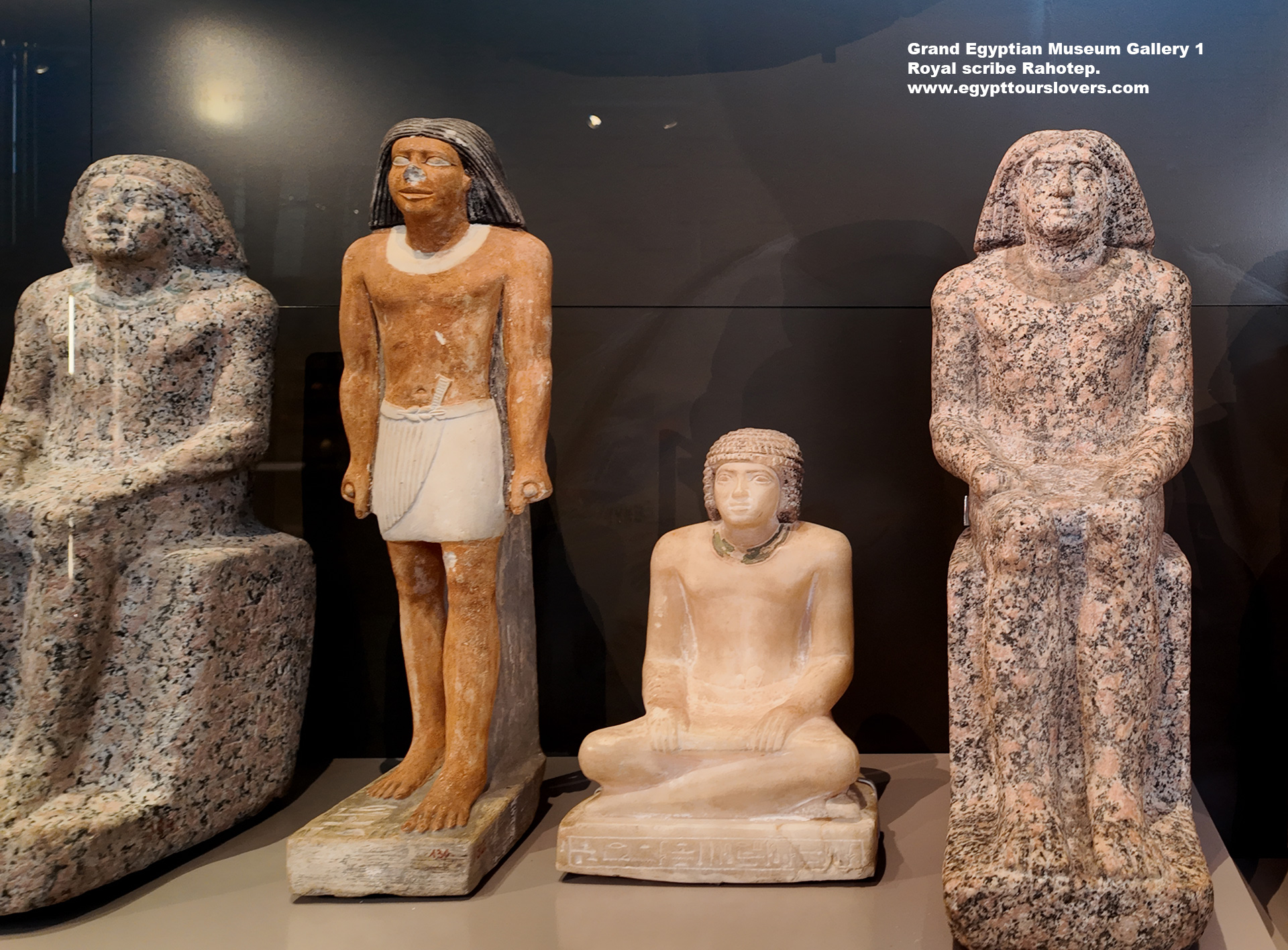
Dynasty 5 | limestone, pigment, granite, Egyptian alabaster | Saqqara
Royal scribe Rahotep.
4 statues depict Rahotep in different positions, cross-legged, standing with left leg advanced and sitting.
Job: scribe of the king documents, his document-case and royal decrees.
Buried with him in tomb a dozen granite statues, a rare privilege for a private person.
———– } ———– } ———– } ———– }
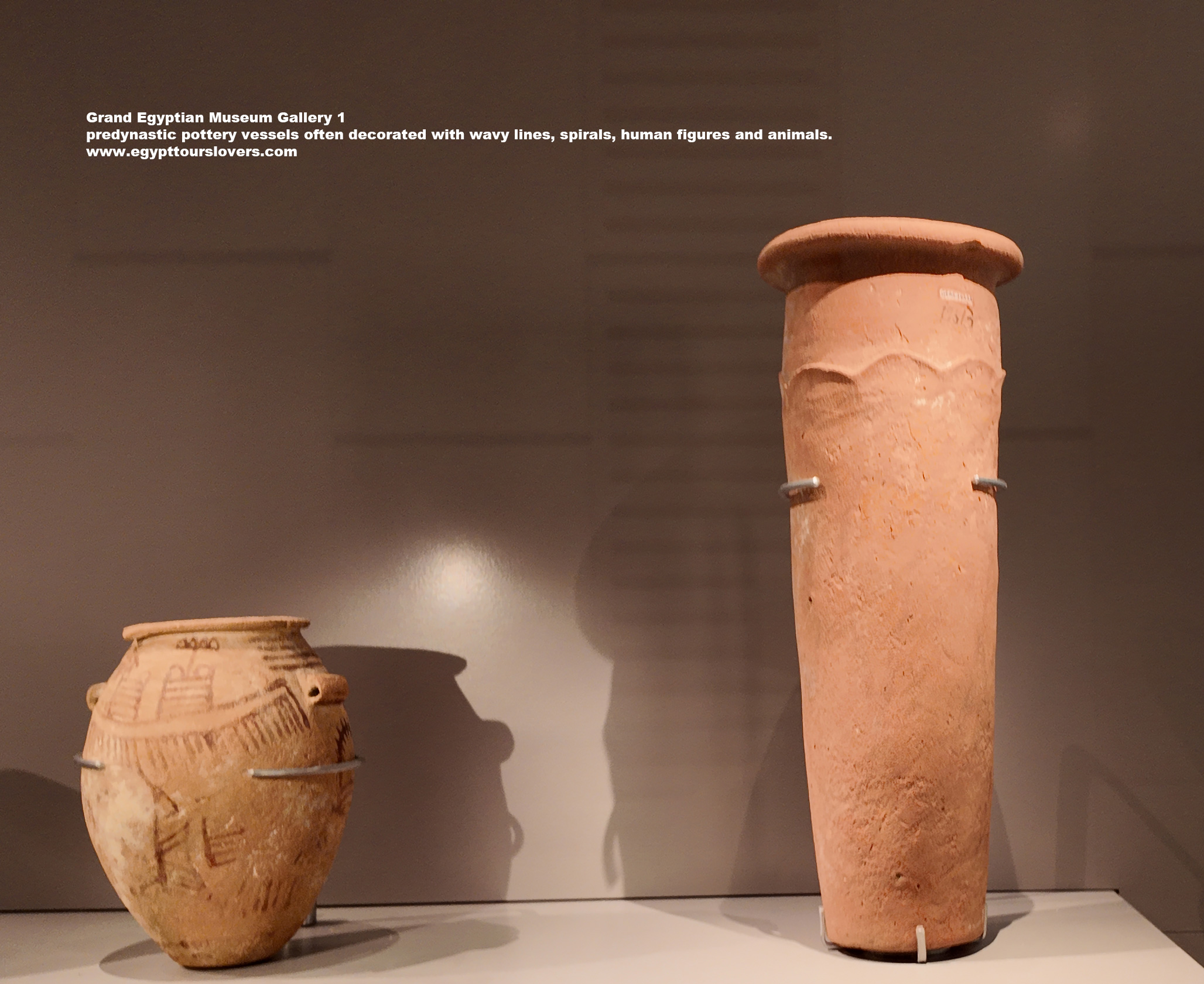
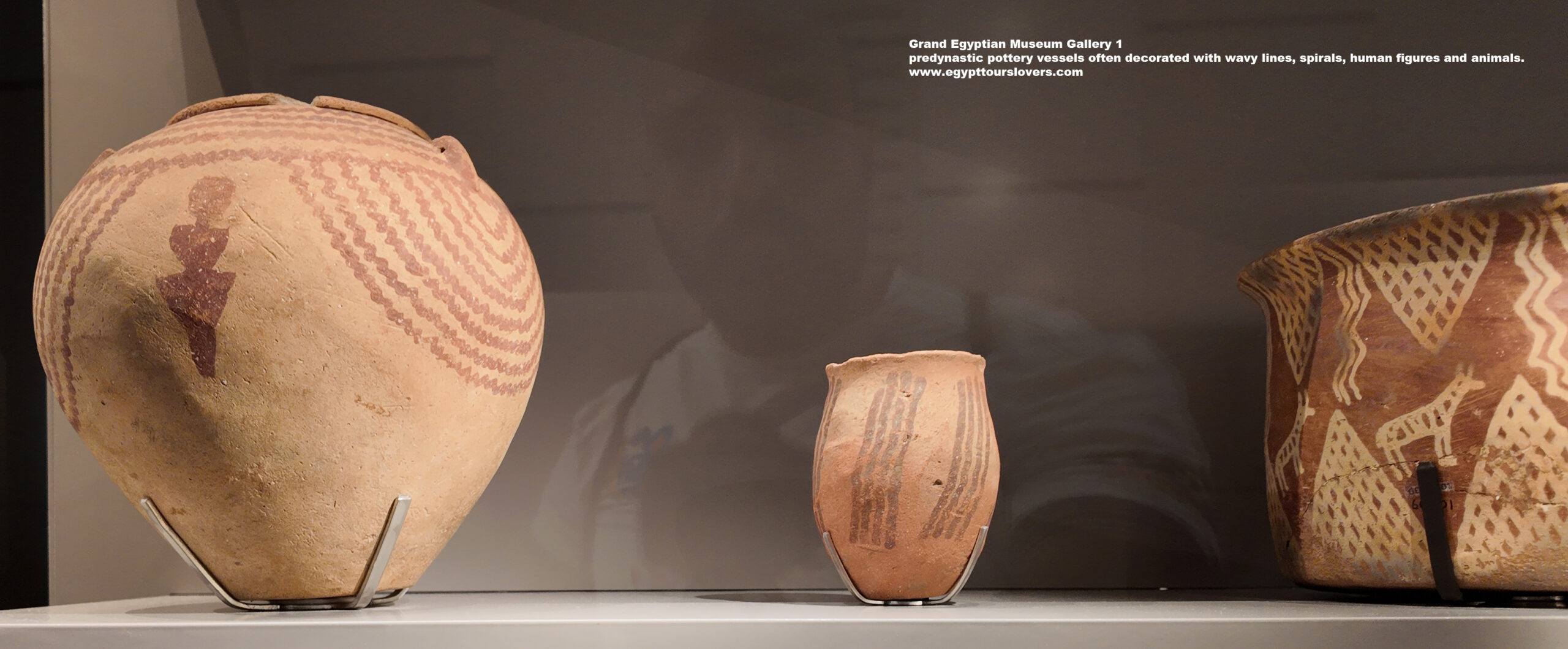
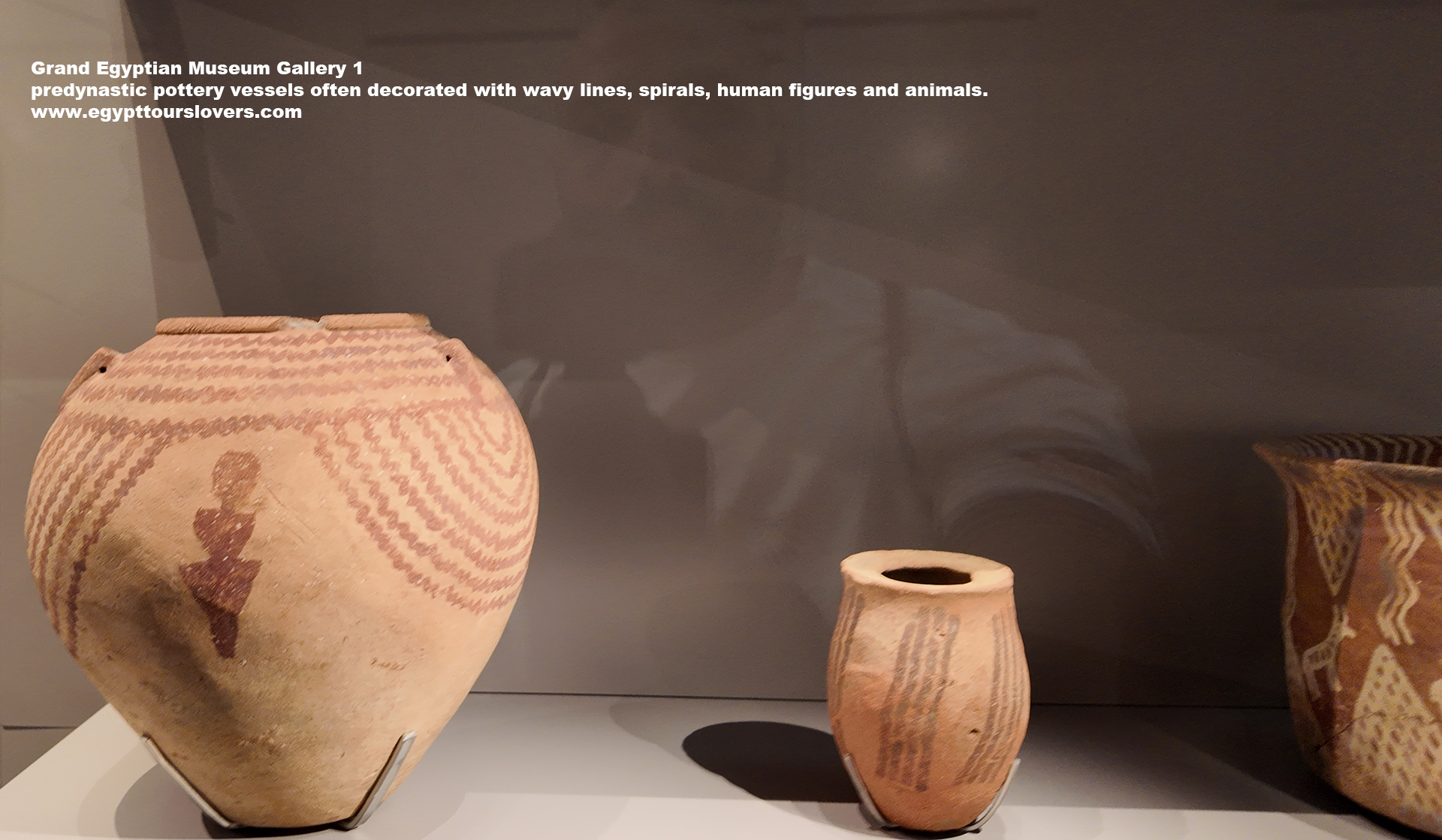
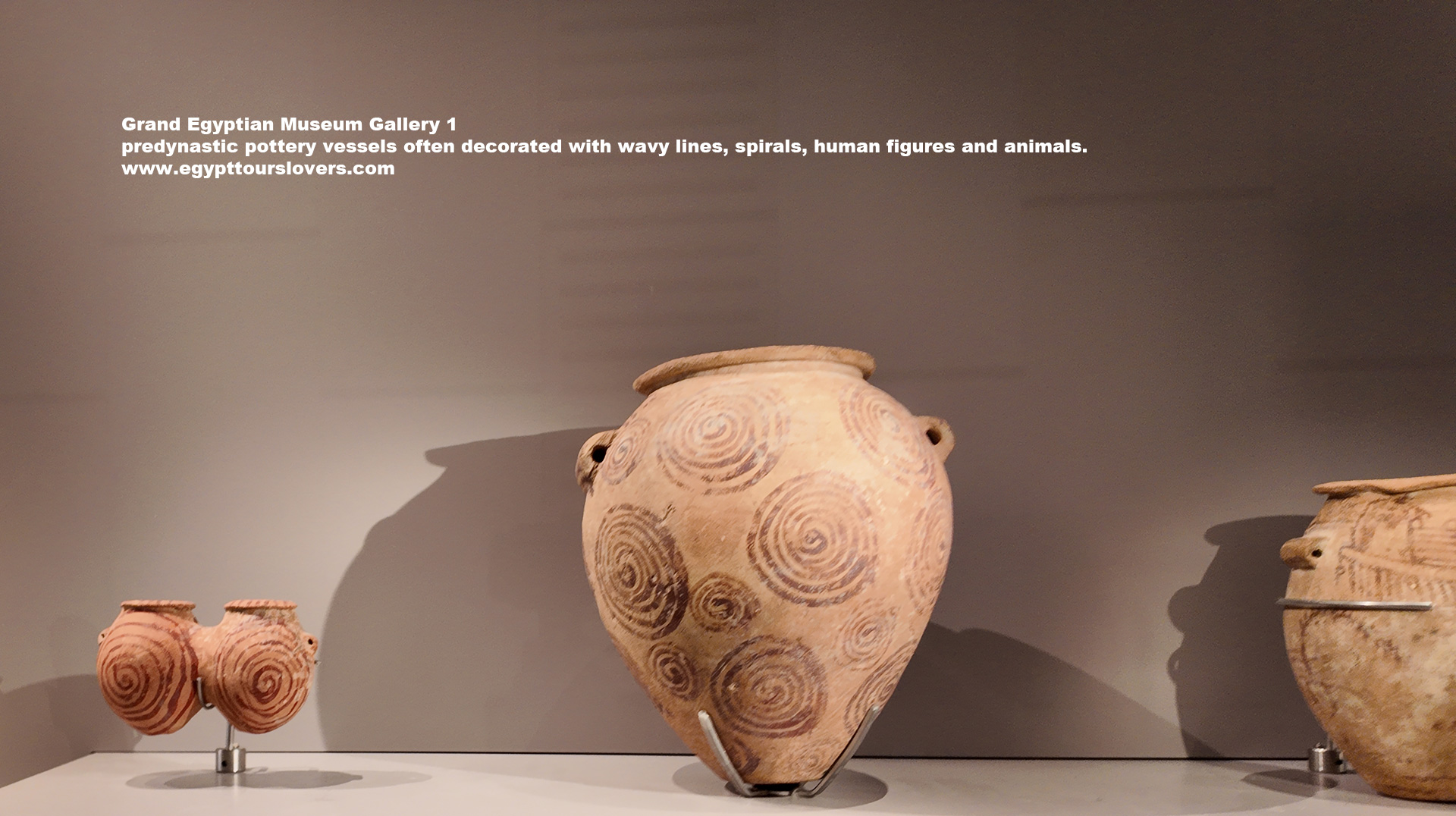
Naqada i-II periods | pottery, pigment | Abydos, fayum, mahlla, Luxor, gebelein, hierakonpolis
predynastic pottery vessels often decorated with wavy lines, spirals, human figures and animals.
Provided food and drinks for daily life and the afterlife.
———– } ———– } ———– } ———– }
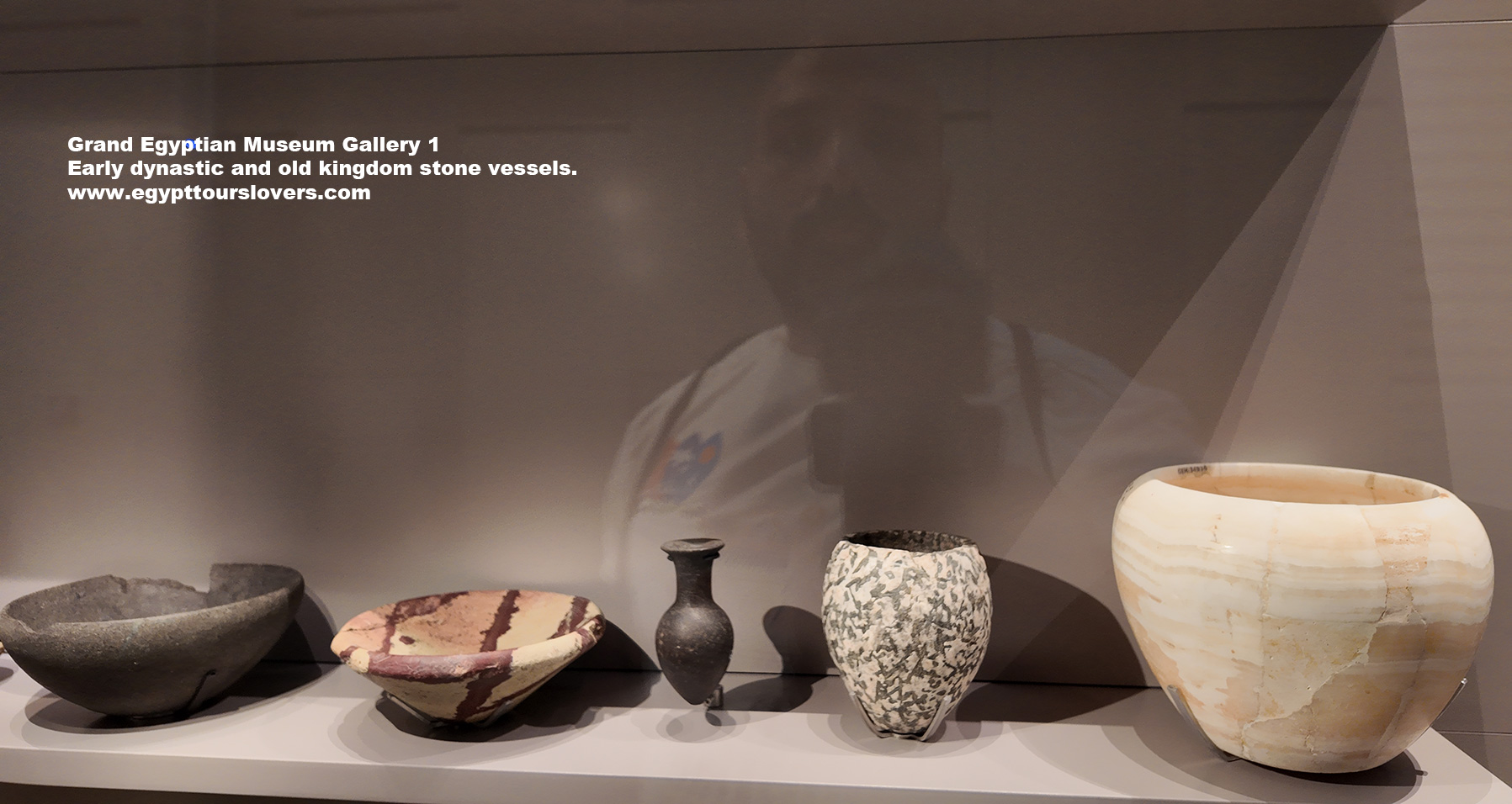
Dynasty 1-6 | diorite, greywacke, Egyptian alabaster, basalt, granite, limestone | giza, Saqqara, tell el-farkha, tell el-daba, minsht ezzat
Early dynastic and old kingdom stone vessels.
———– } ———– } ———– } ———– }
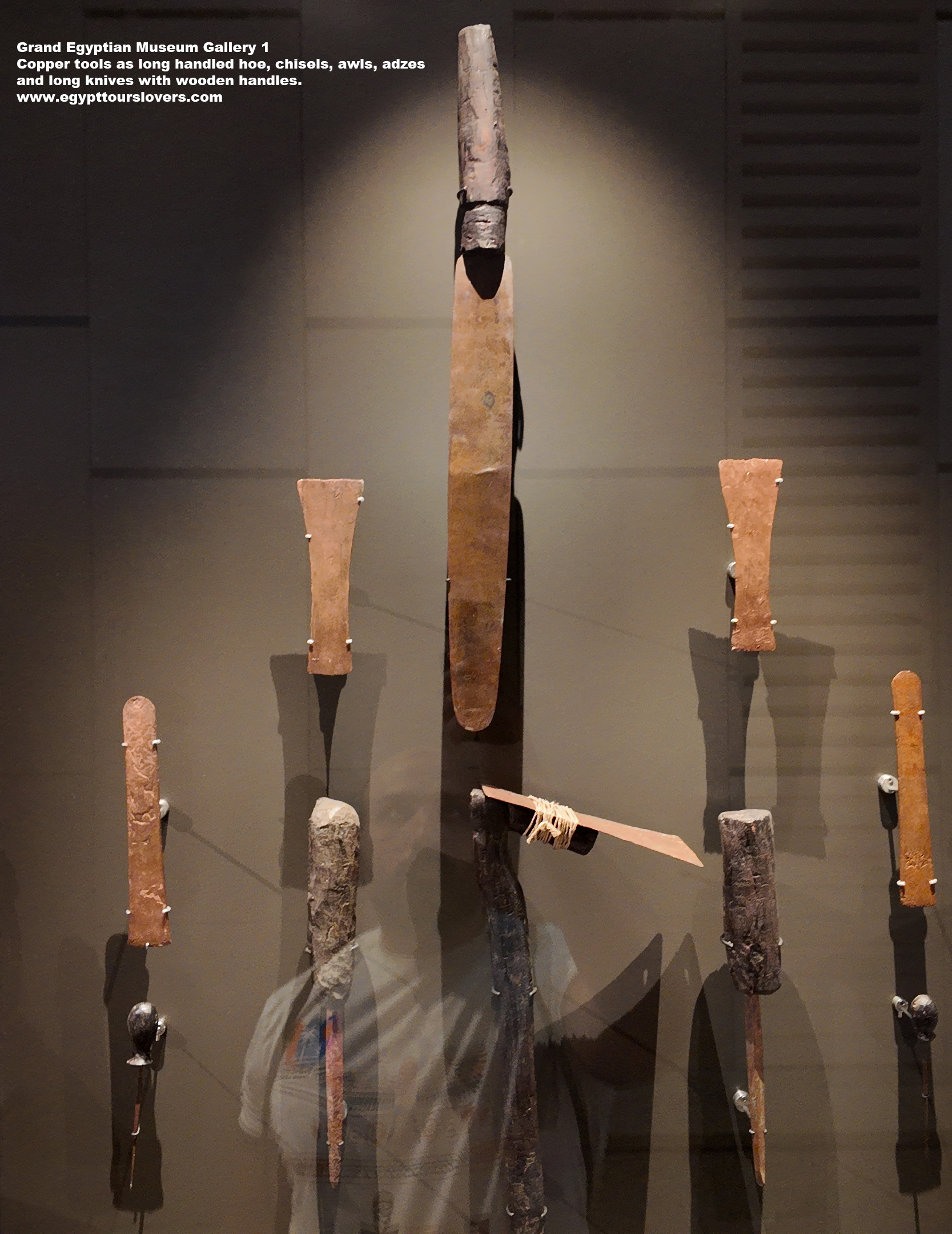
Dynasty 1 | copper, wood | Saqqara
Copper tools as long handled hoe, chisels, awls, adzes and long knives with wooden handles.
———– } ———– } ———– } ———– }
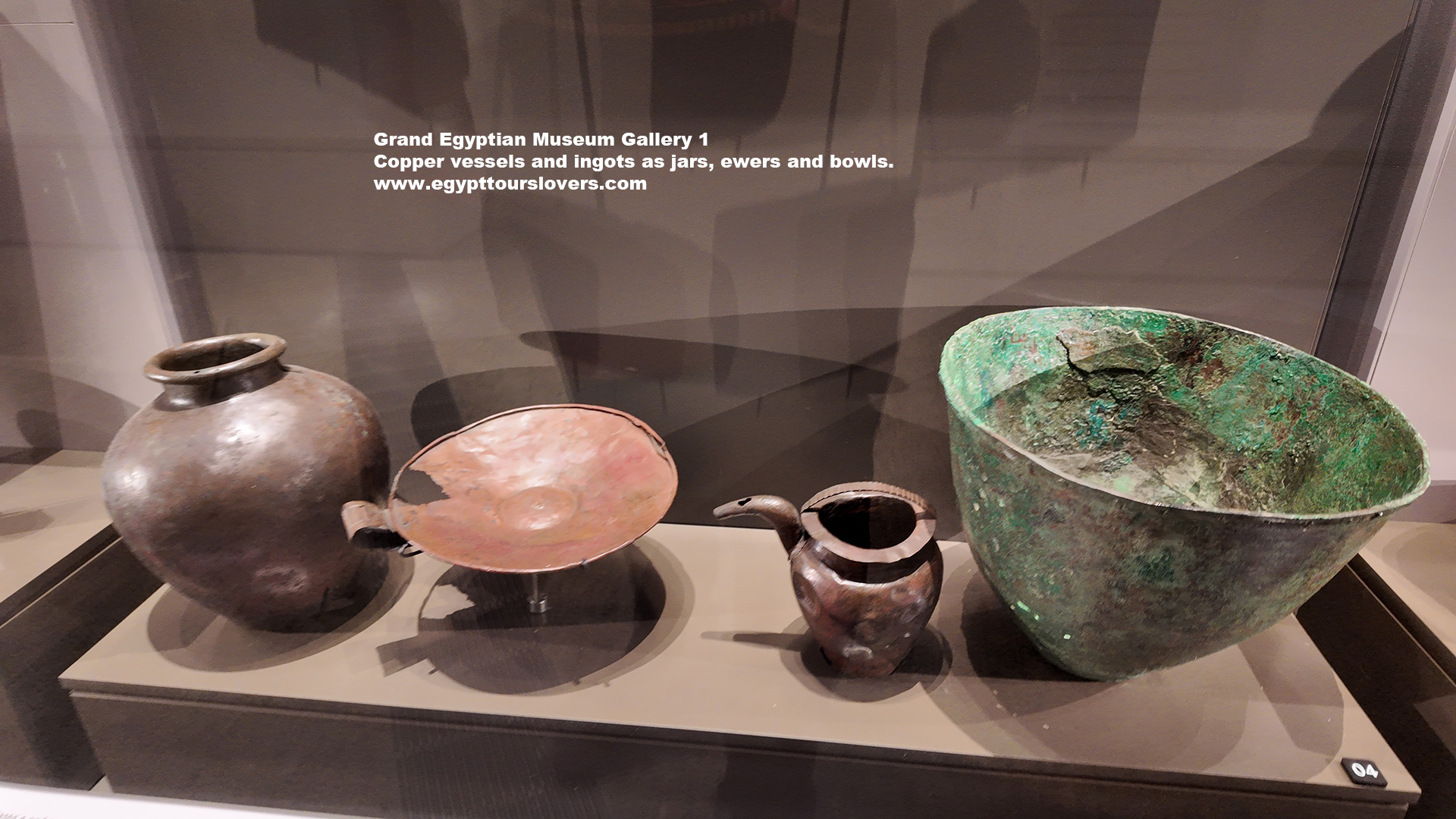
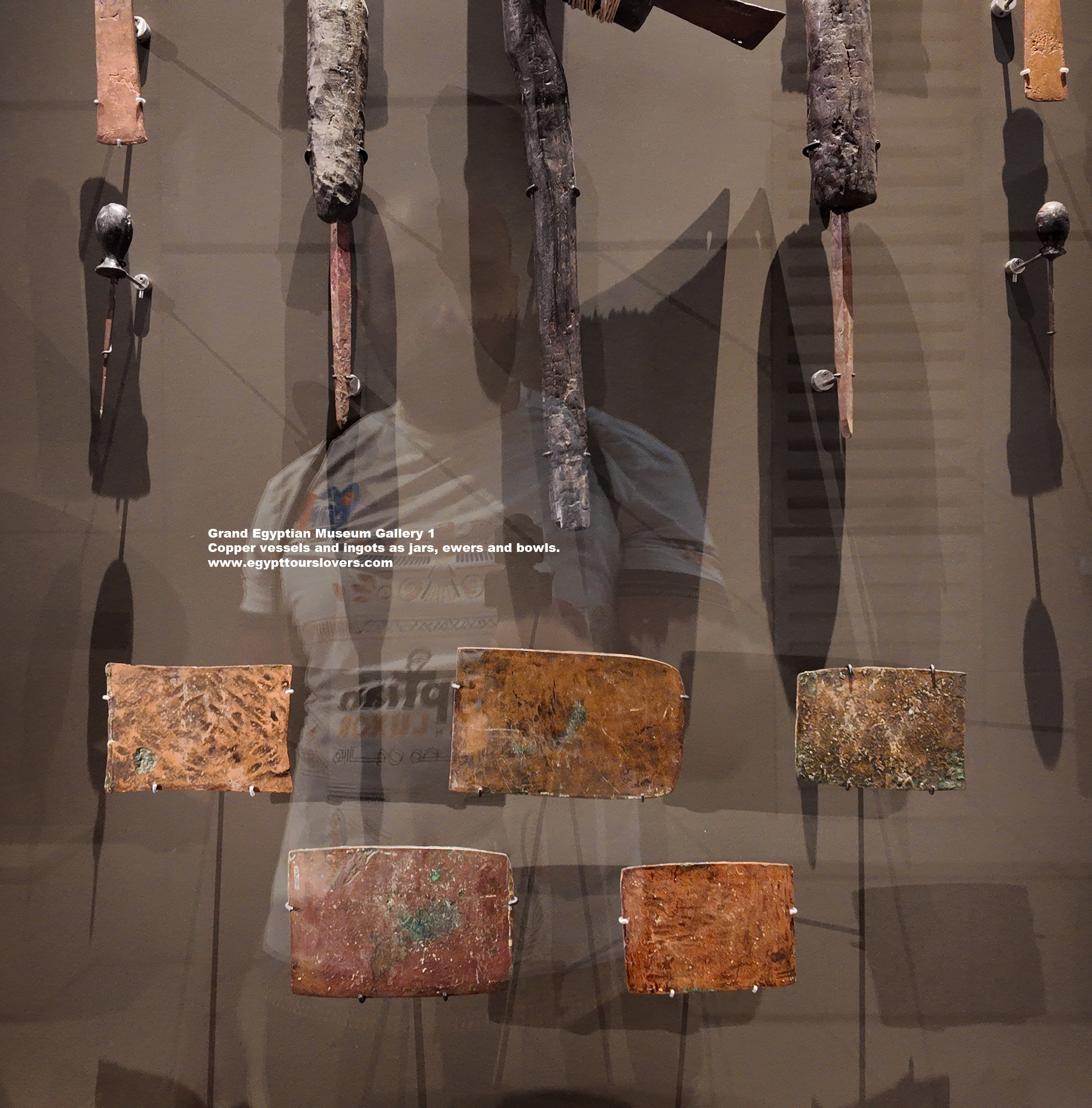
Dynasty 1 | copper | Saqqara
Copper vessels and ingots as jars, ewers and bowls.
Found more than 70 Copper vessels and 70 coper ingots in this tomb to use in the afterlife.
———– } ———– } ———– } ———– }
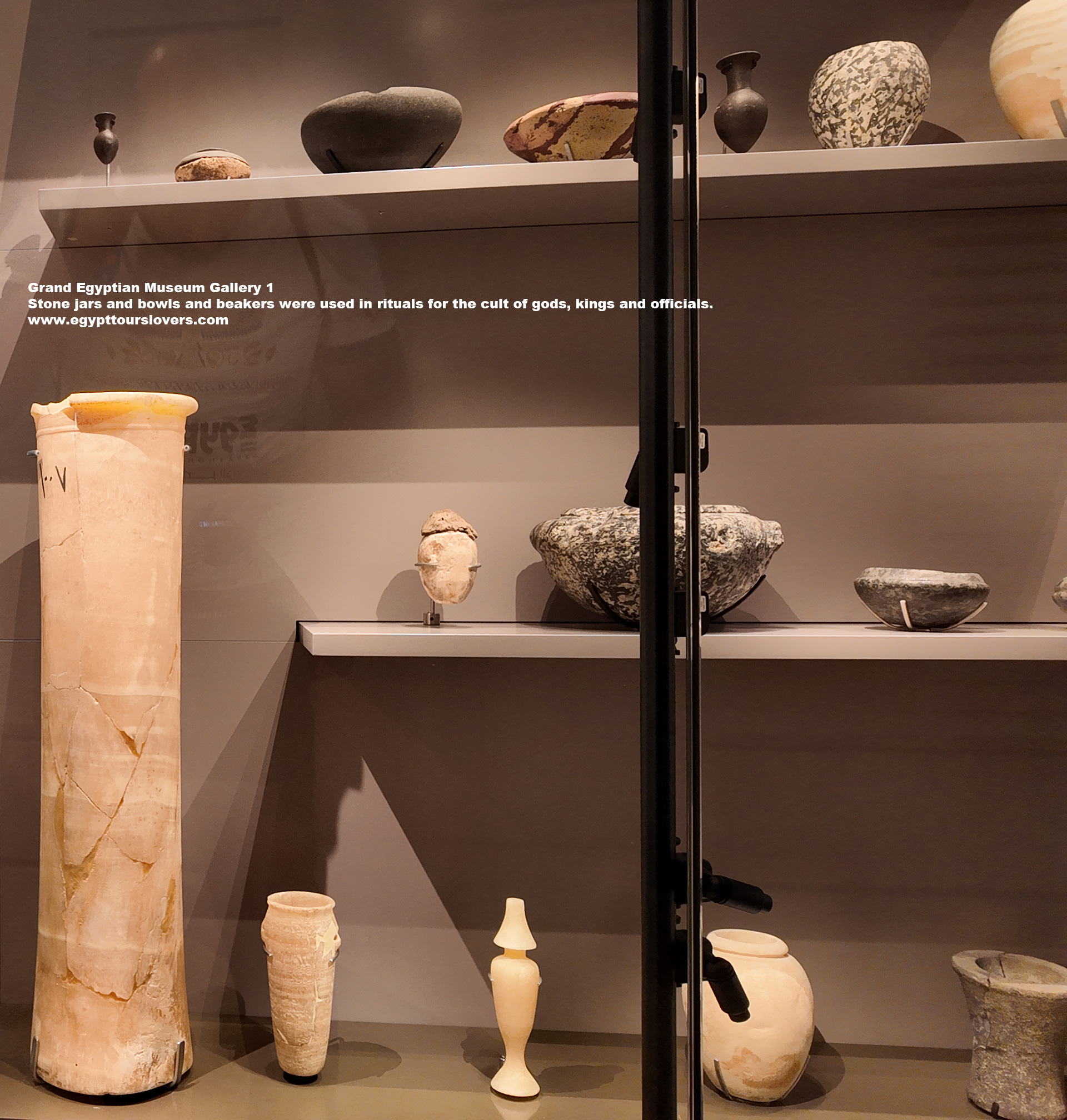
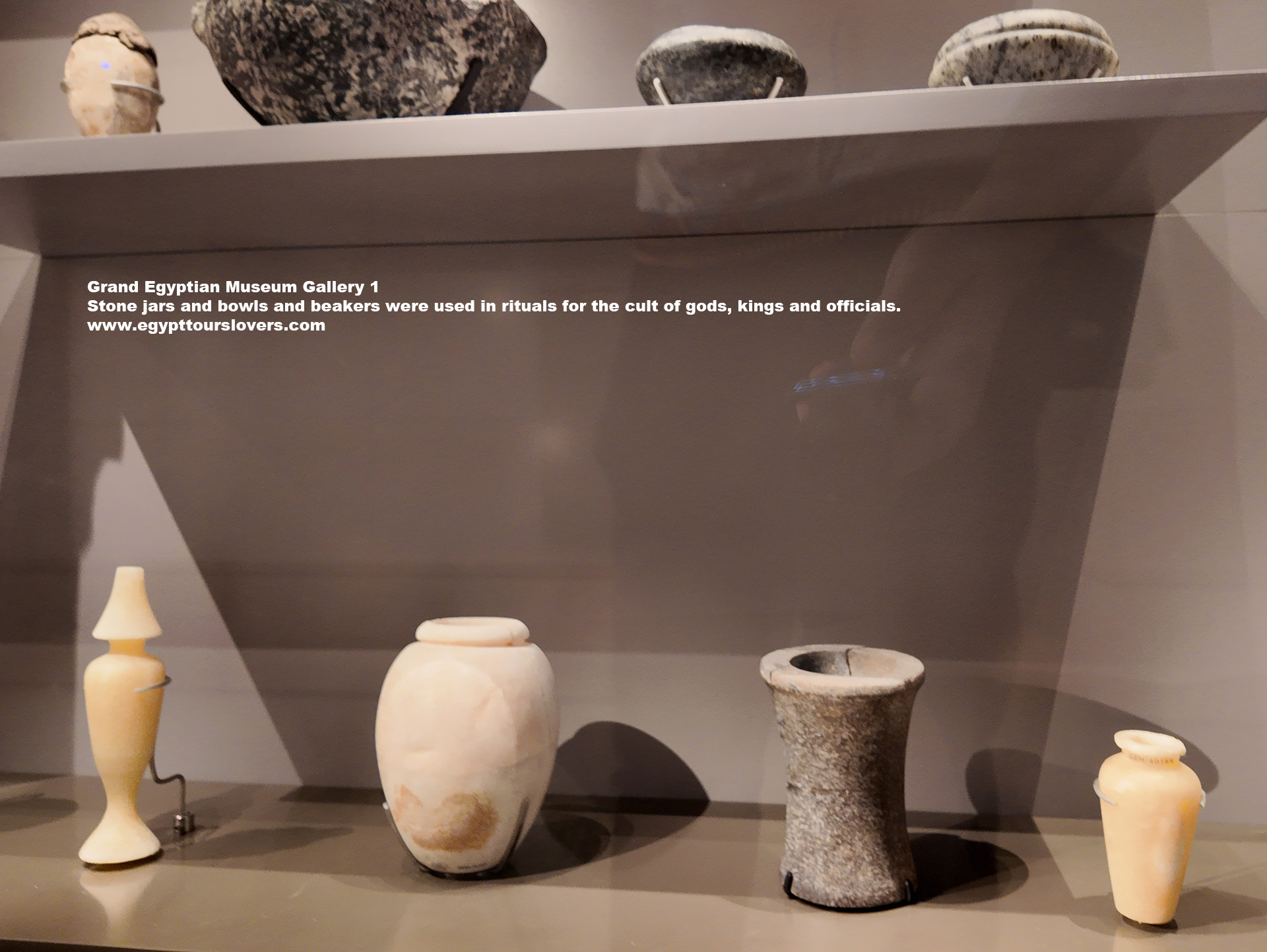
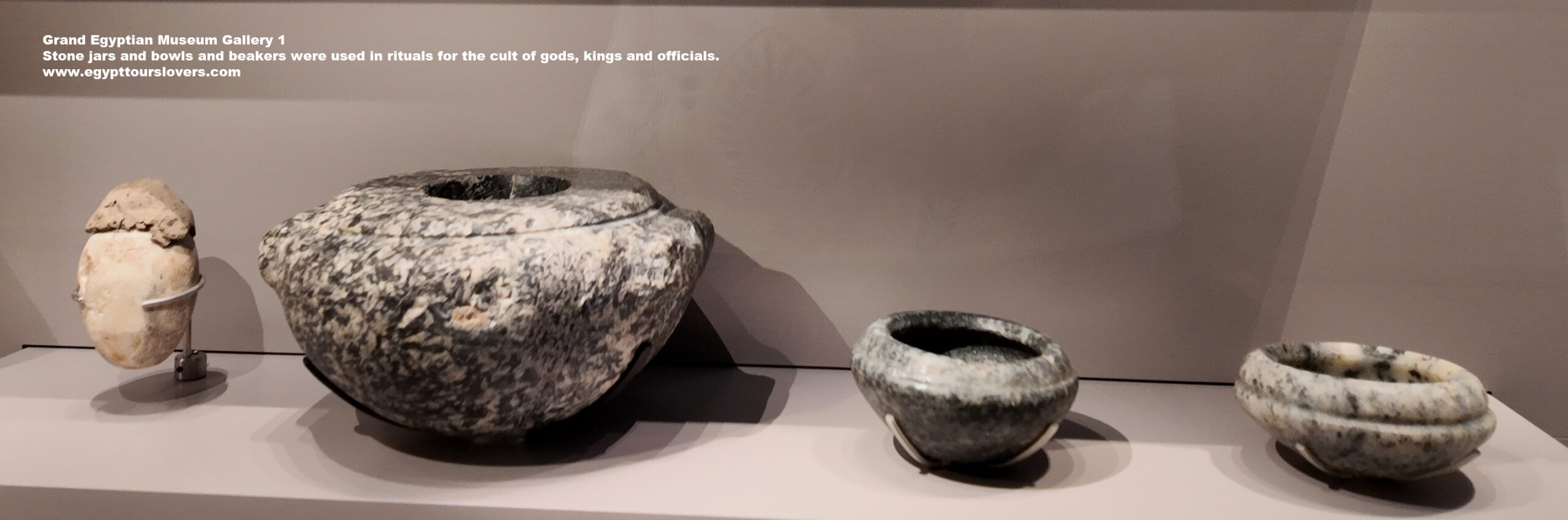
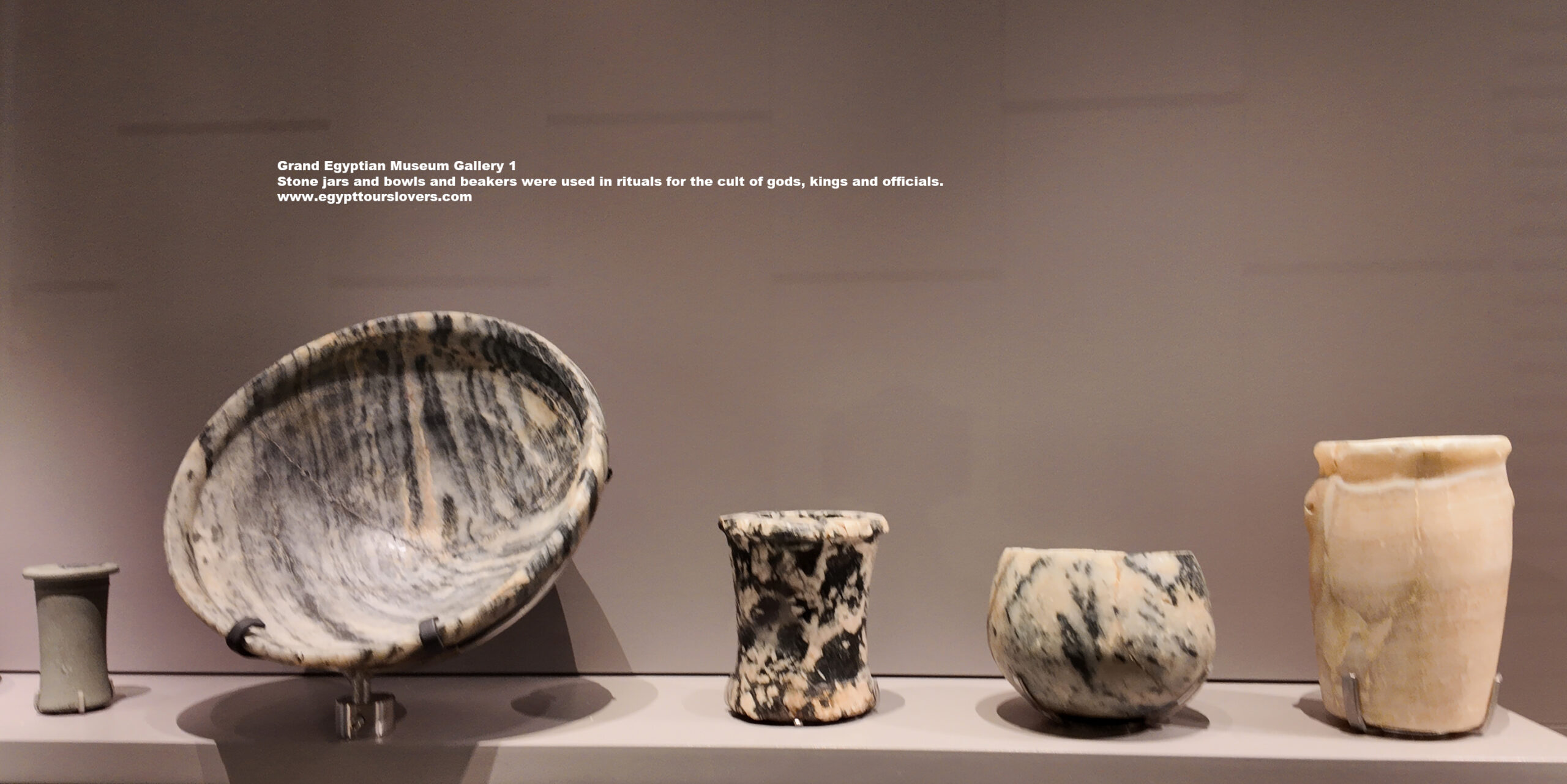
Dynasty 1-6 | Egyptian alabaster, diorite, granite, basalt | Saqqara, giza, abu rawash, dara, Helwan, tura, el qatta
Stone jars and bowls and beakers were used in rituals for the cult of gods, kings and officials.
———– } ———– } ———– } ———– }
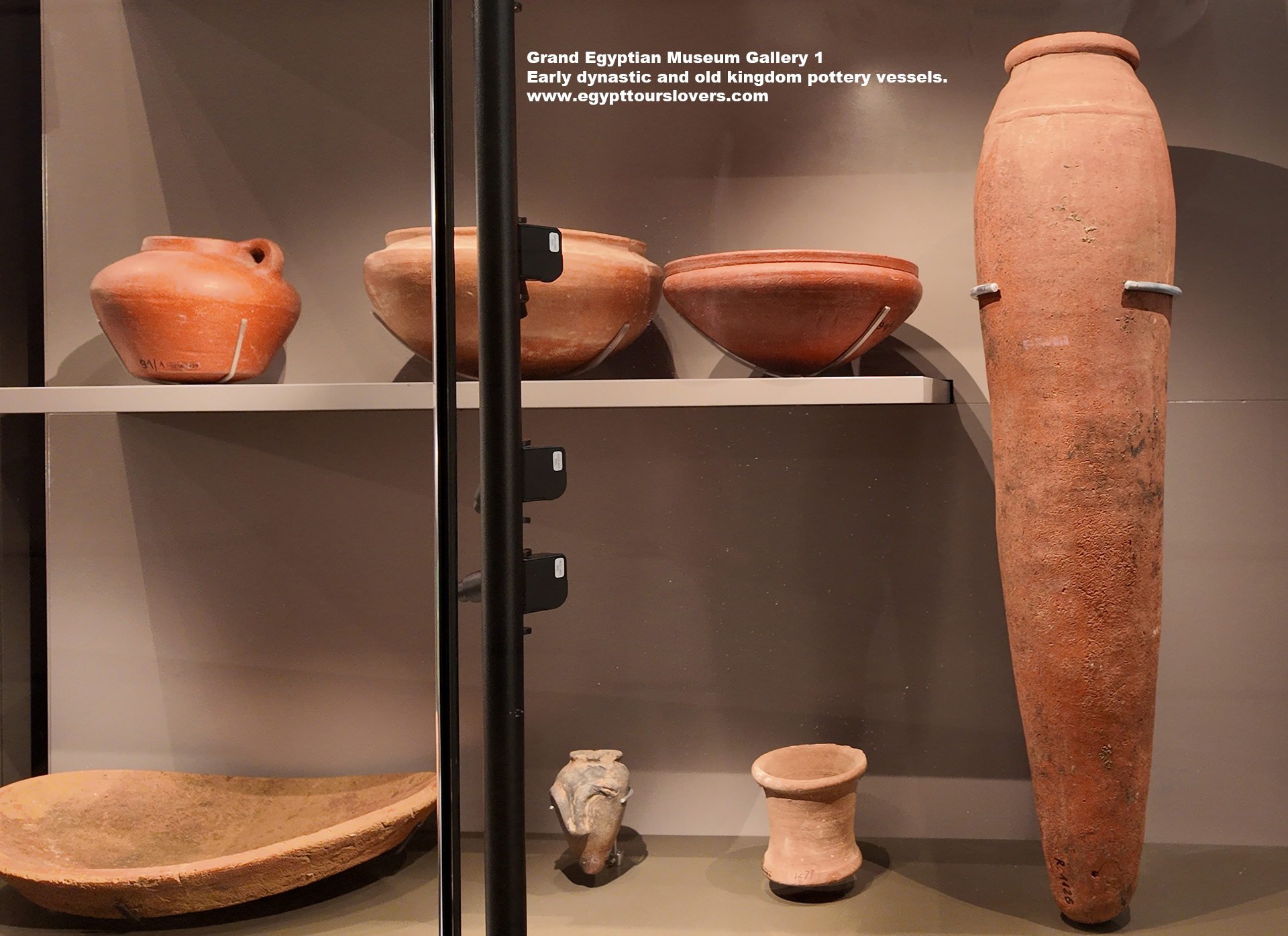
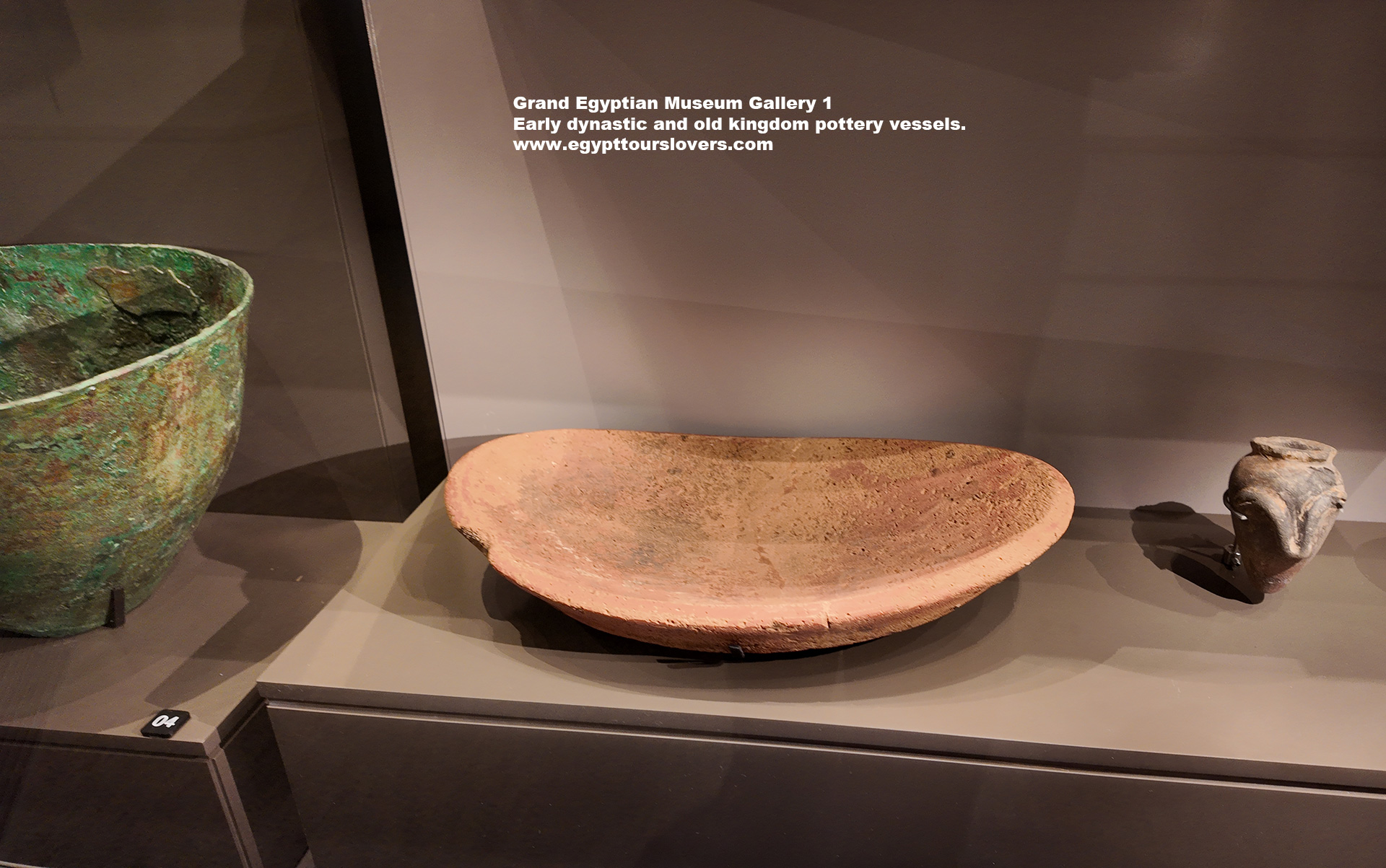
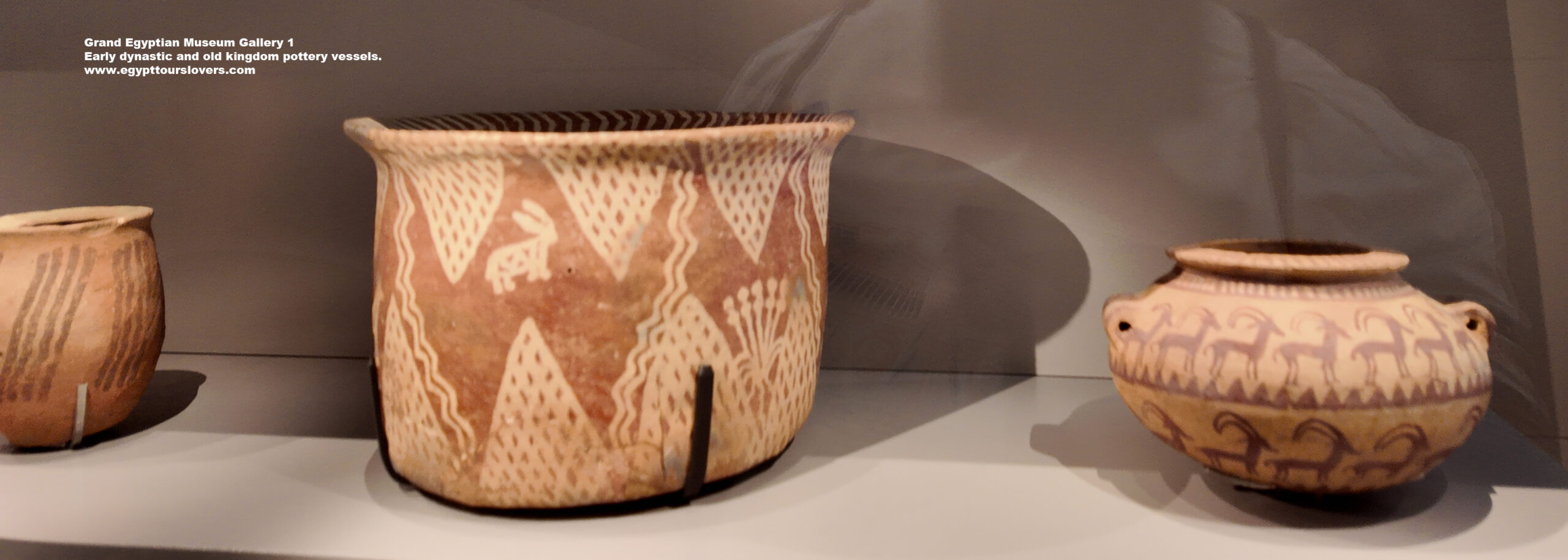
Dynasty 1-6 | pottery | giza, tell el-farkha, tell el-daba, qubet el-hawa, kharga oasis “ain amur”
Early dynastic and old kingdom pottery vessels.
———– } ———– } ———– } ———– }
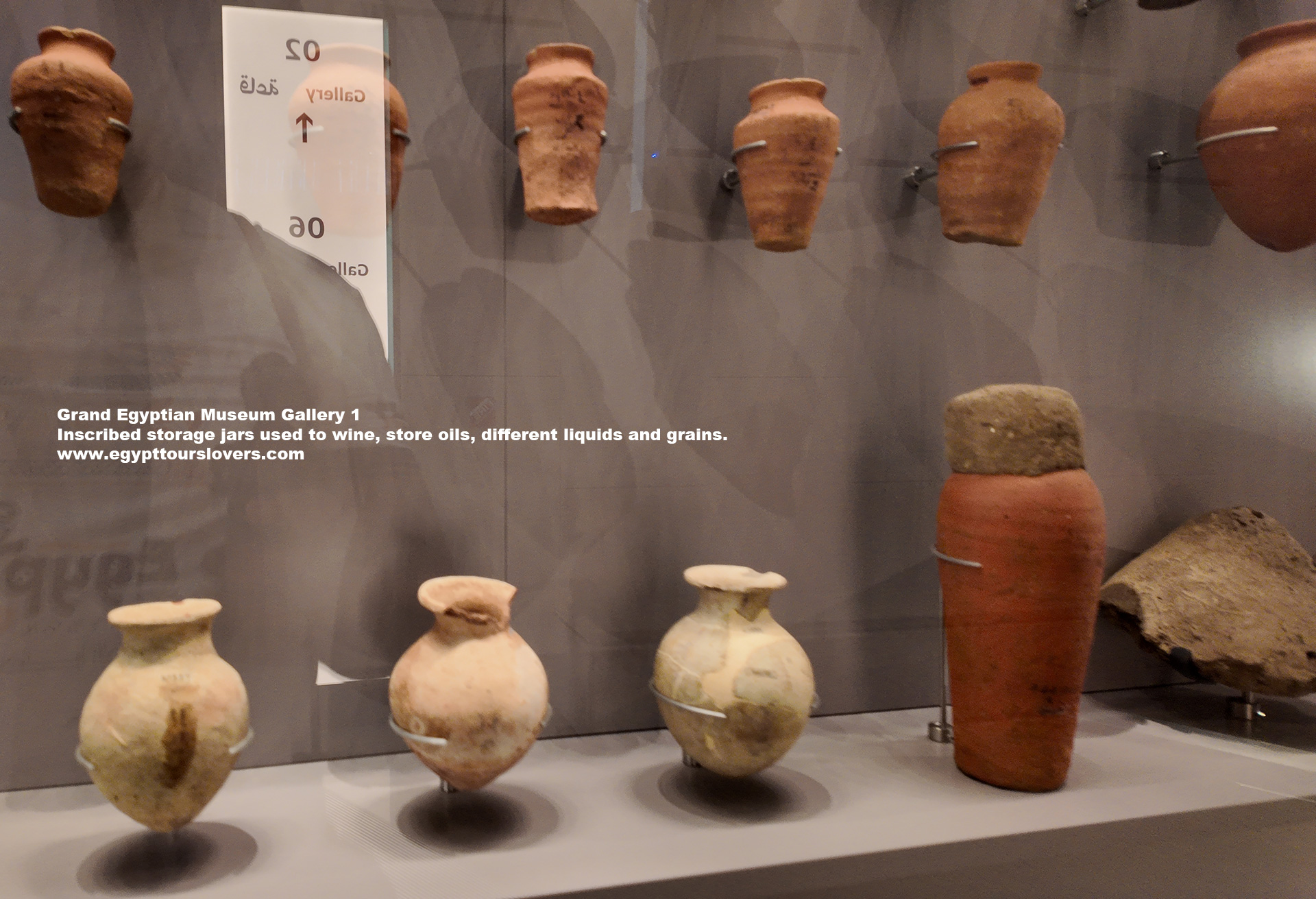
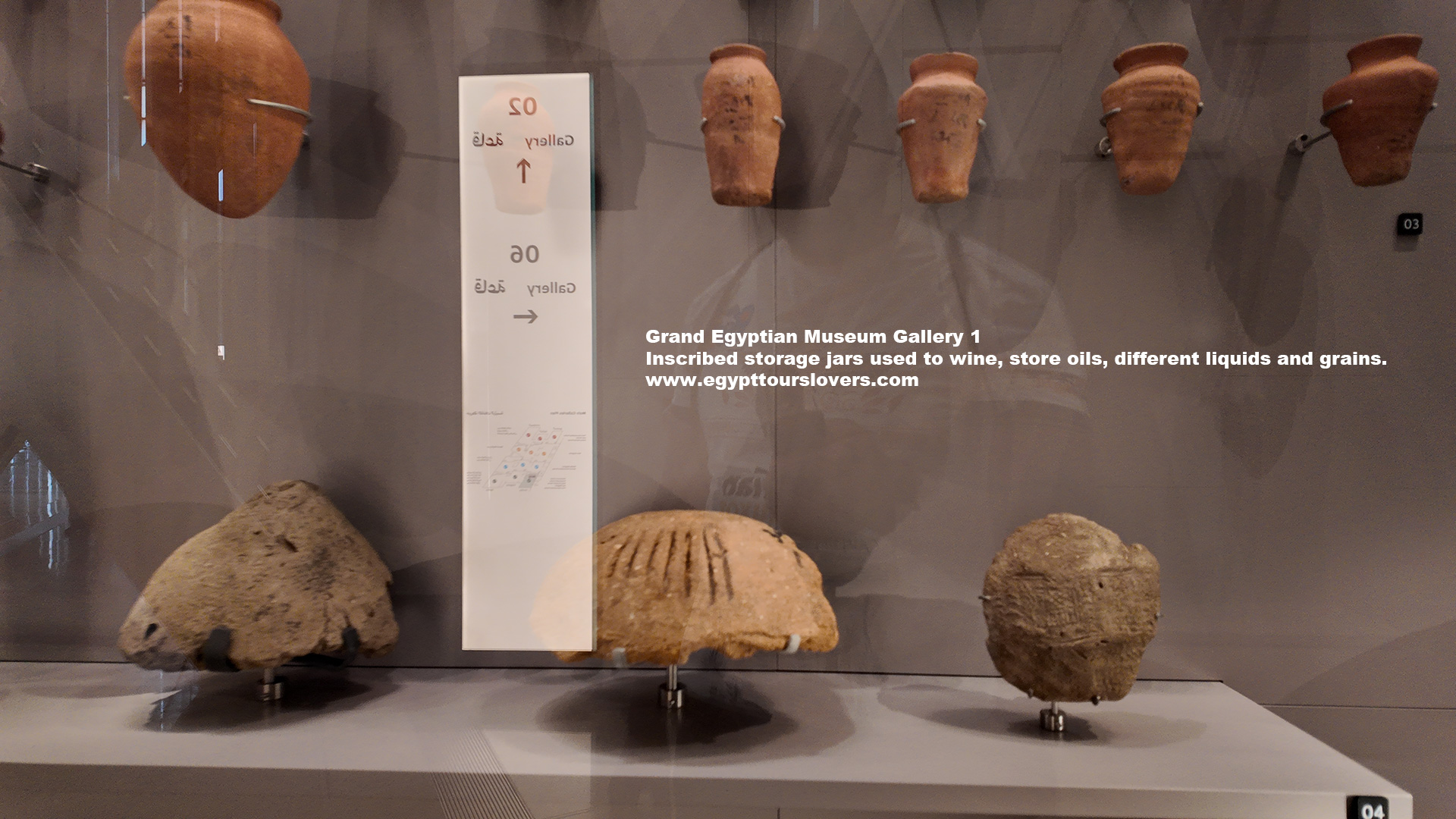
Dynasty 1-2 | pottery, pigment | Helwan
Inscribed storage jars used to wine, store oils, different liquids and grains.
There simple signs describe the product inside, its origin, destination and distribution.
———– } ———– } ———– } ———– }
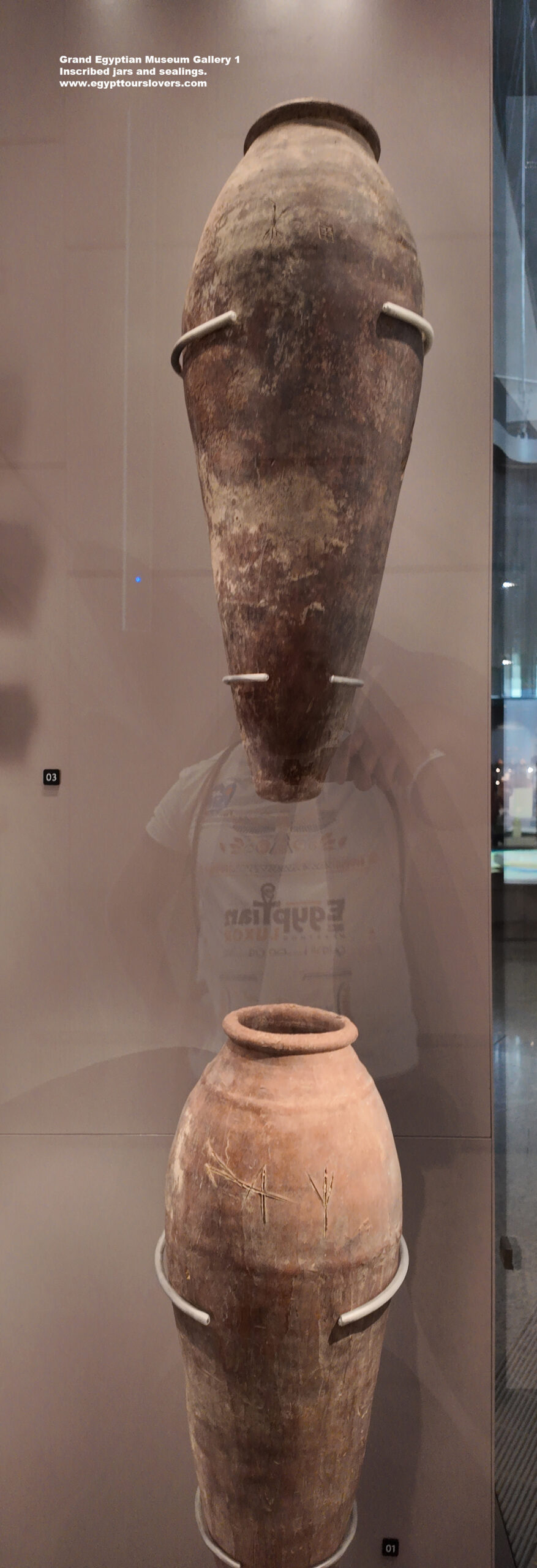
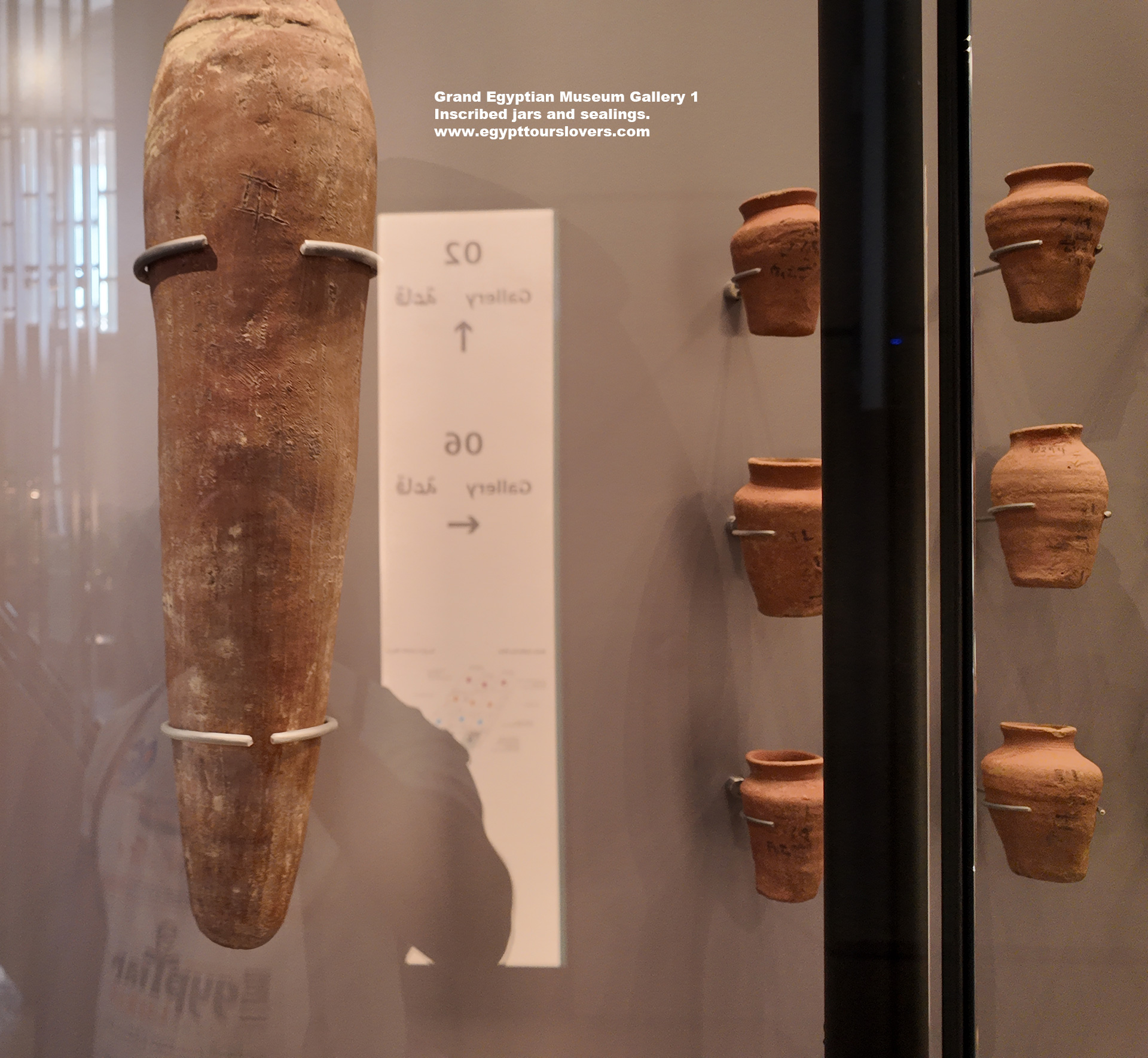
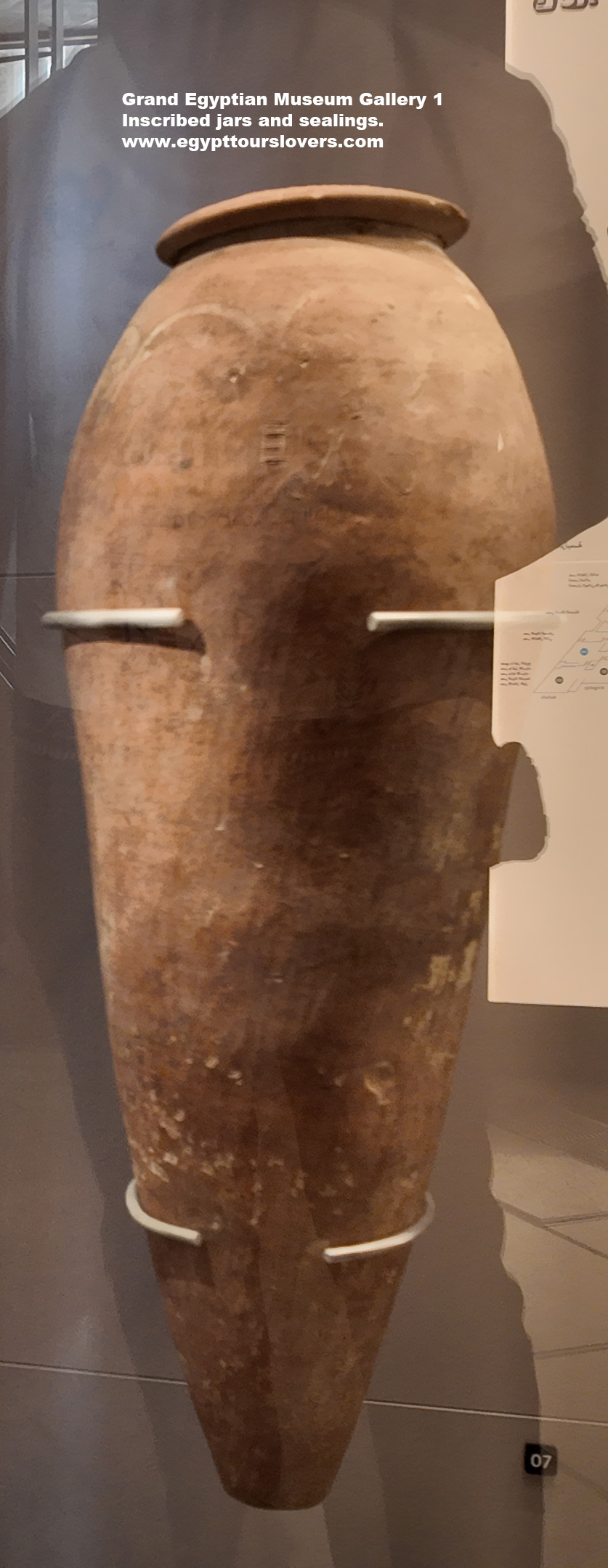
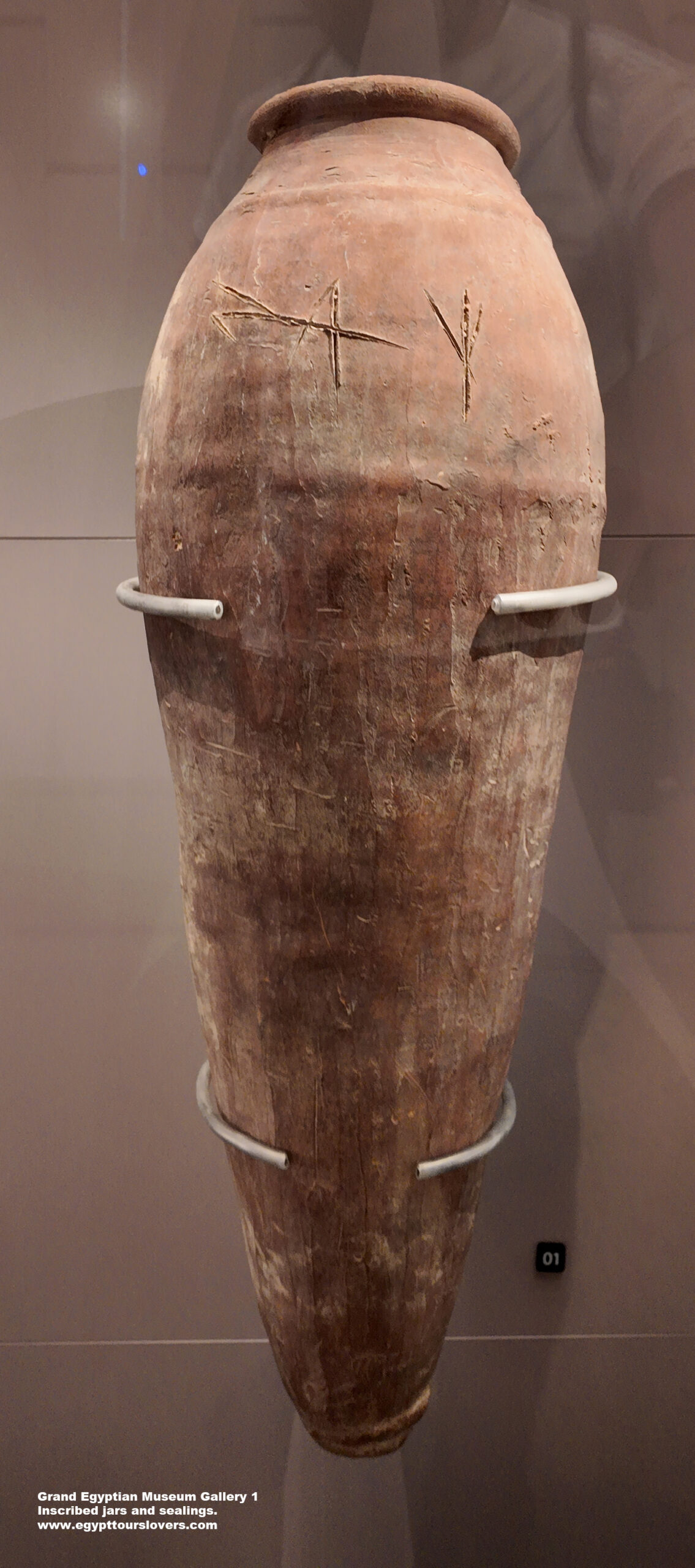
Dynasty 1 + first intermediate period | pottery, mud, pigment | fayum, meir,Abydos, kafr ammar
Inscribed jars and sealings.
The tall jar has a Hieratic Inscription saying that contains malt of wheat.
———– } ———– } ———– } ———– }
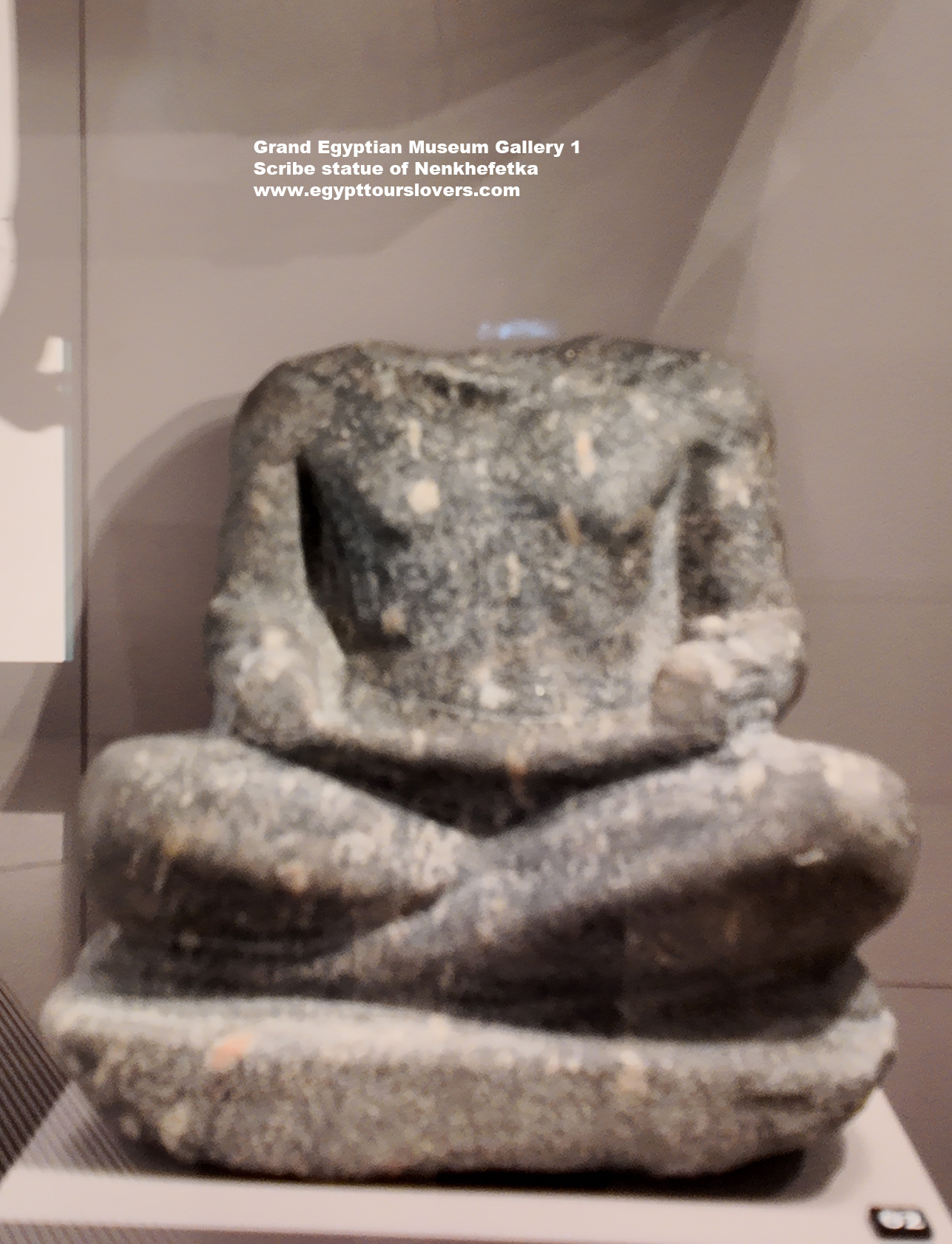
Dynasty 5 | Granite | Saqqara
Scribe statue of Nenkhefetka
Jobs: director of the ceremonial palace and beloved by his master.
———– } ———– } ———– } ———– }
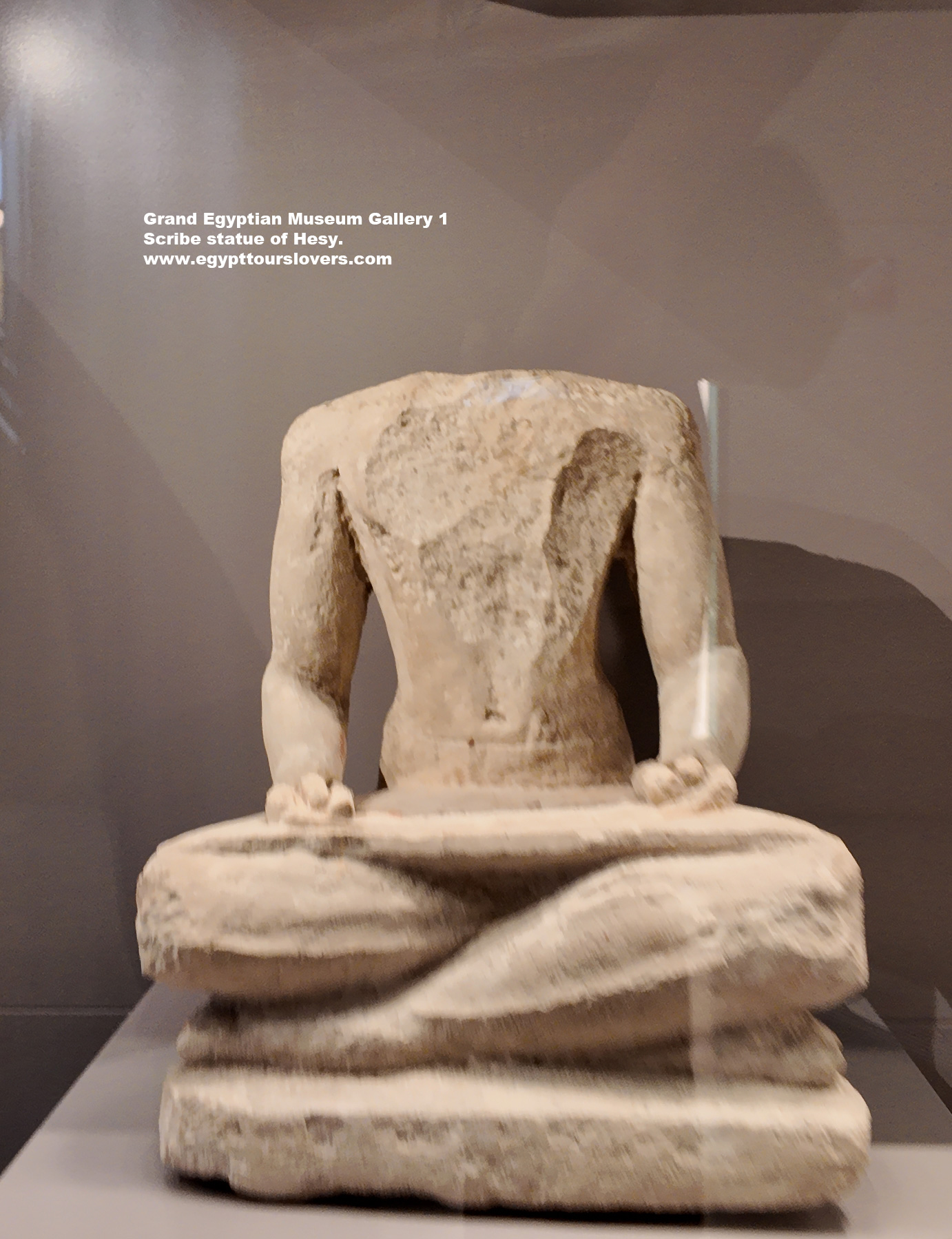
Dynasty 5 | Limestone | Saqqara
Scribe statue of Hesy.
Kings acquaintance and overseer of noblemen.
———– } ———– } ———– } ———– }
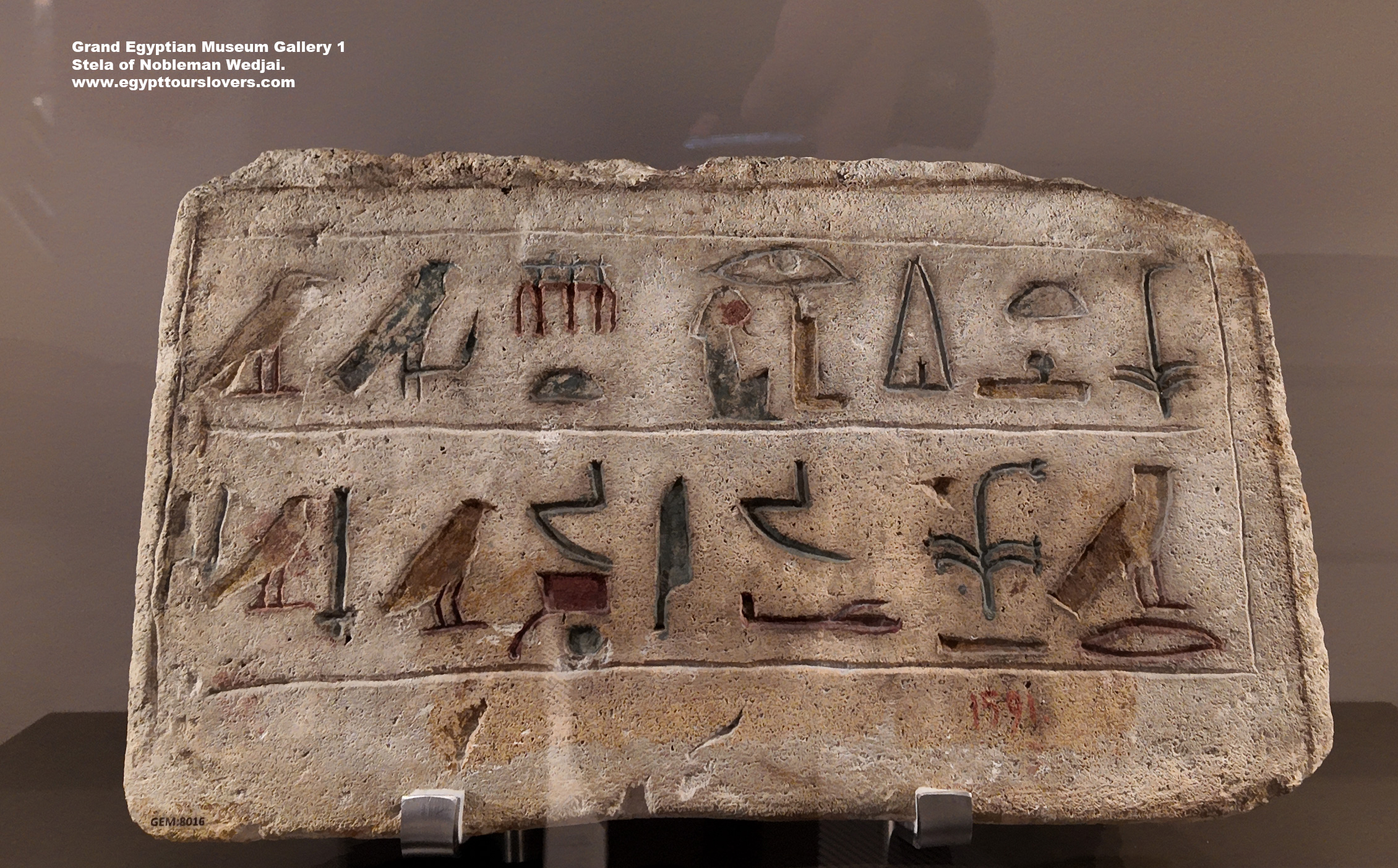
Dynasty 6 | Limestone, pigment | abydos
Stela of Nobleman Wedjai.
Jobs: true overseer of upper Egypt, he received offerings which the kings give to Osiris god and Khentyimentyw God.
Text hieroglyphs starting with the traditional offering formula, were carved on 2 lines for wedjai.
———– } ———– } ———– } ———– }
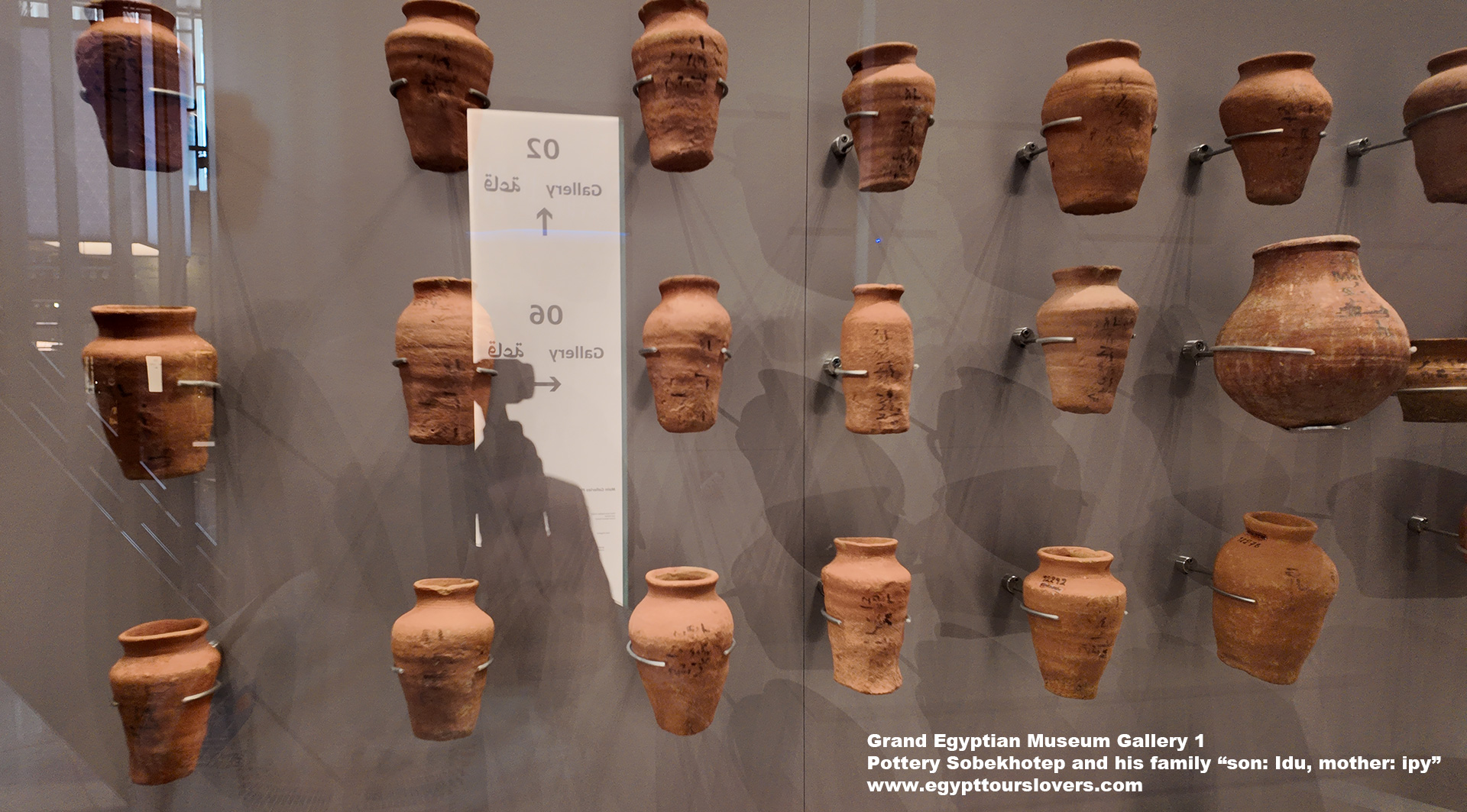
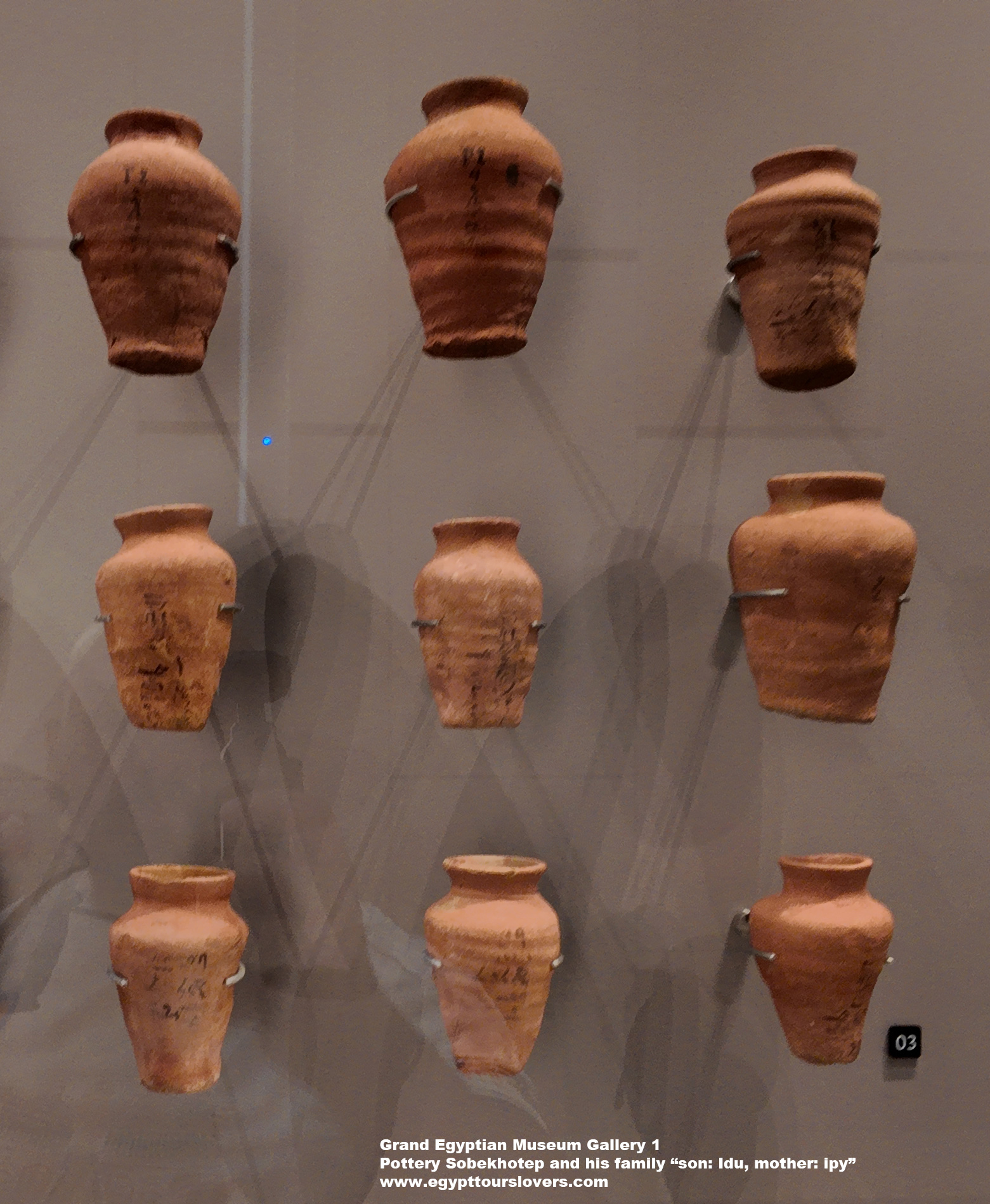
Dynasty 6 | pottery, pigment | qubbet el-hawa aswan
Pottery Sobekhotep and his family “son: Idu, mother: ipy”
Job: A Nobleman from Aswan.
This small pottery mention fruits and cereals offered to his mother or to him by his son.
———– } ———– } ———– } ———– }
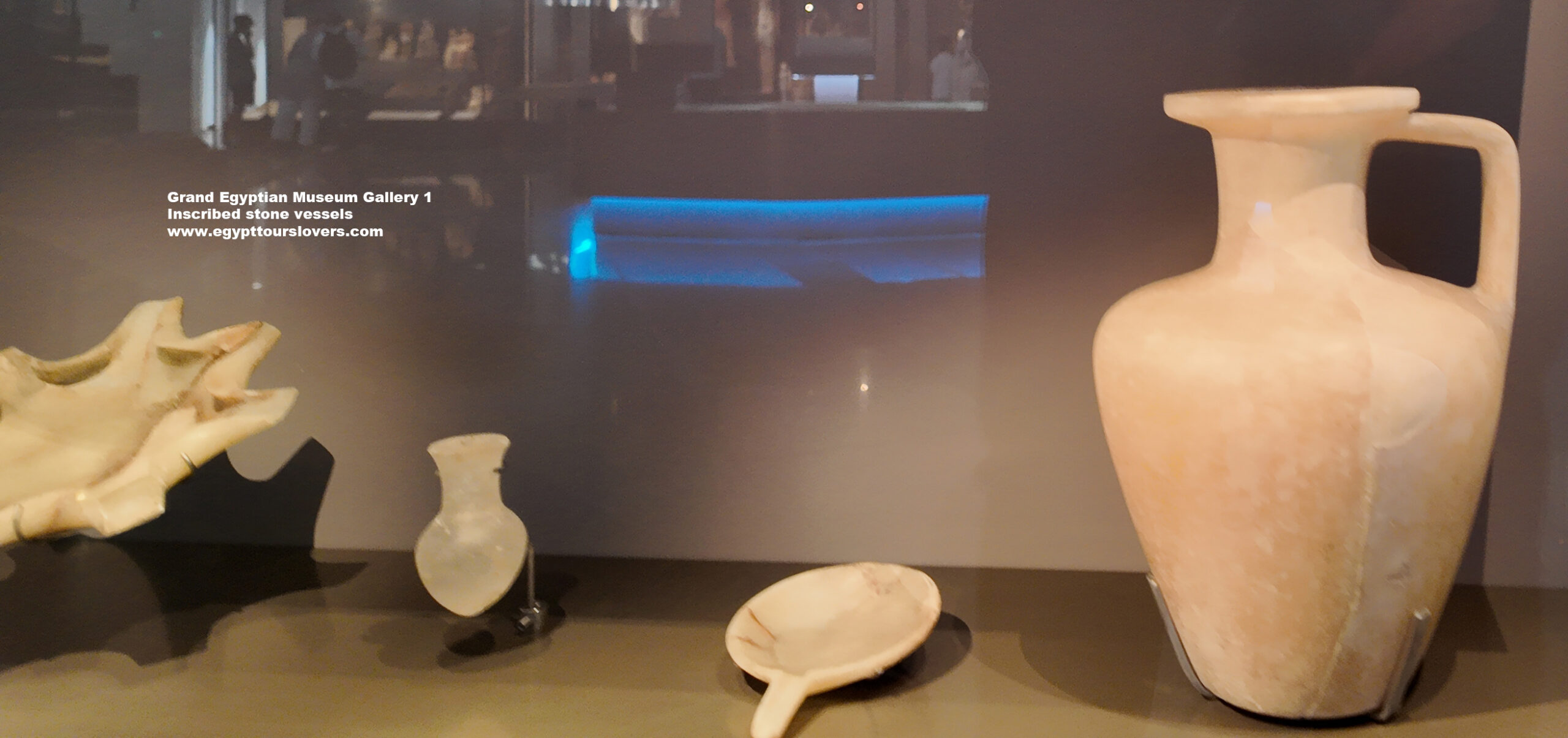
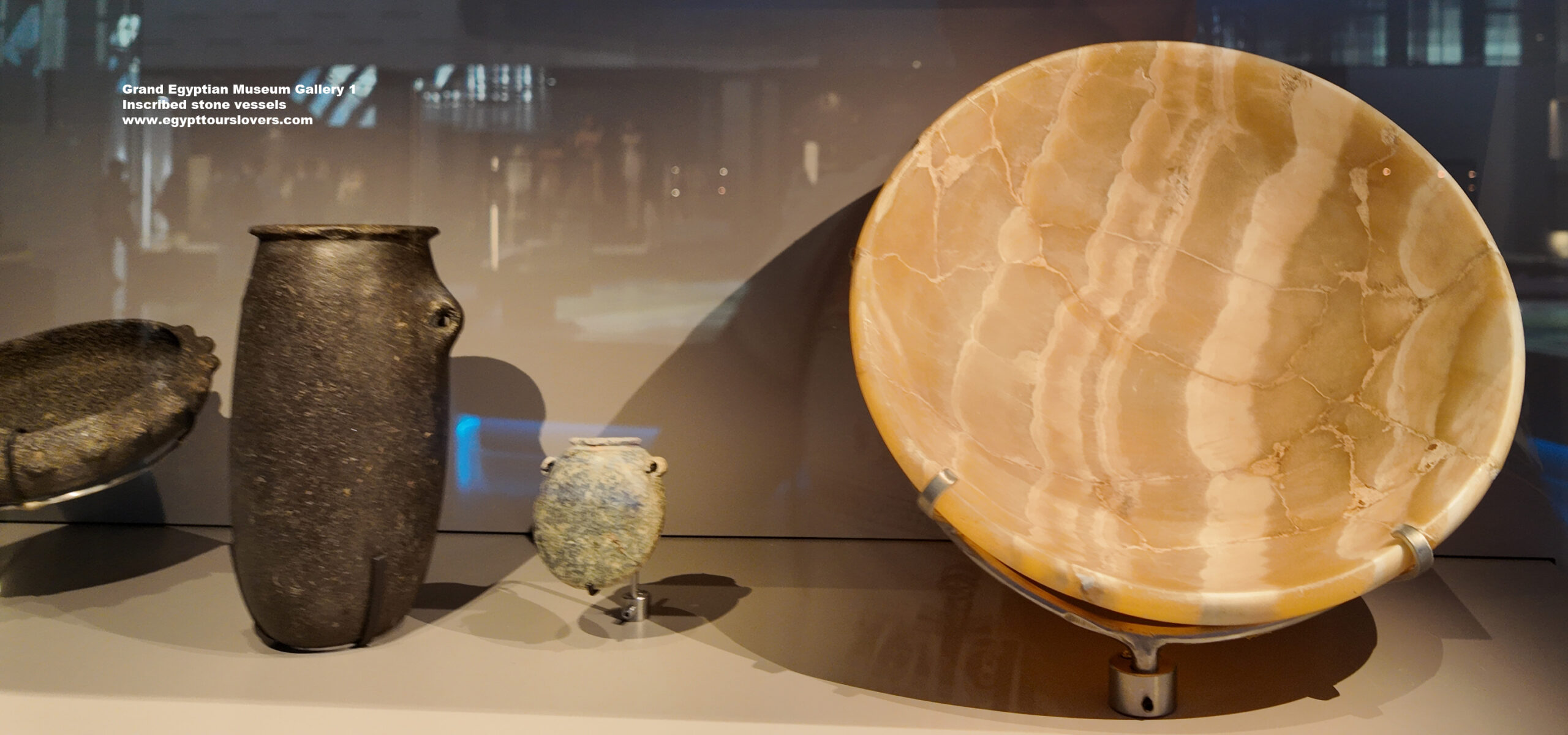
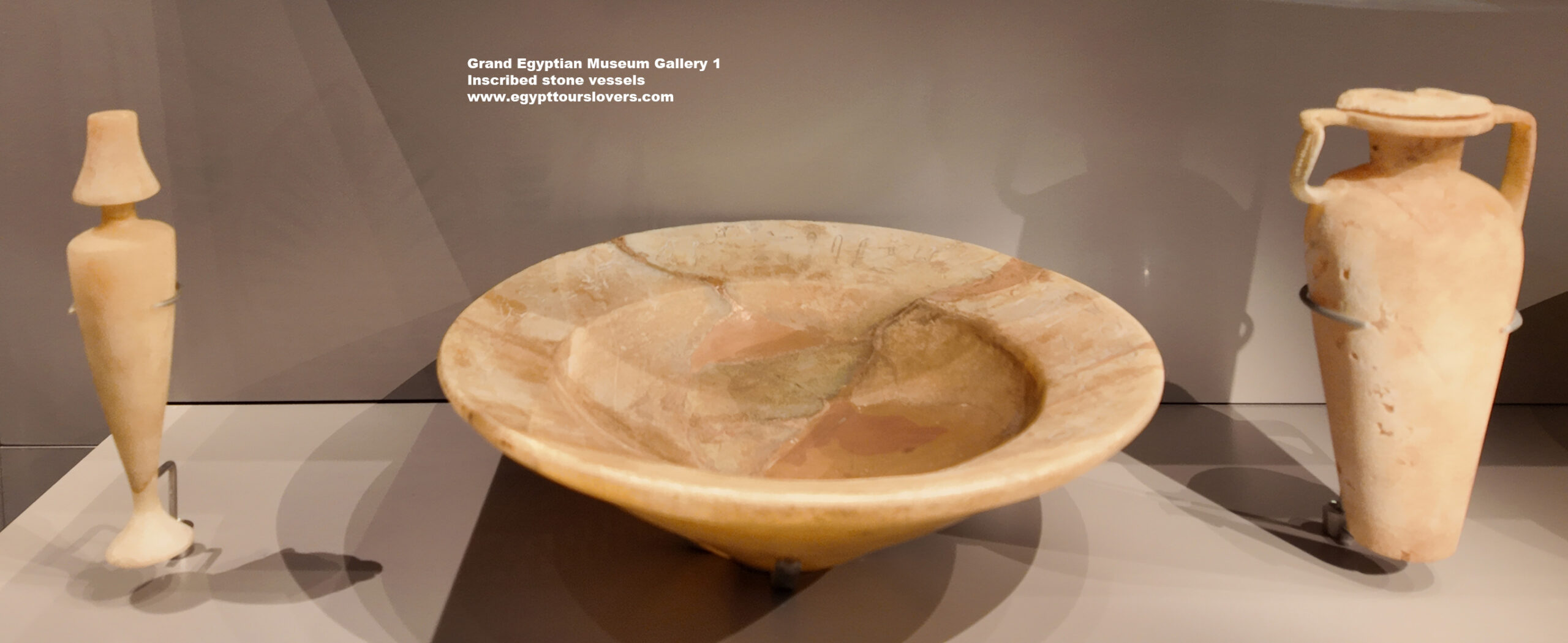
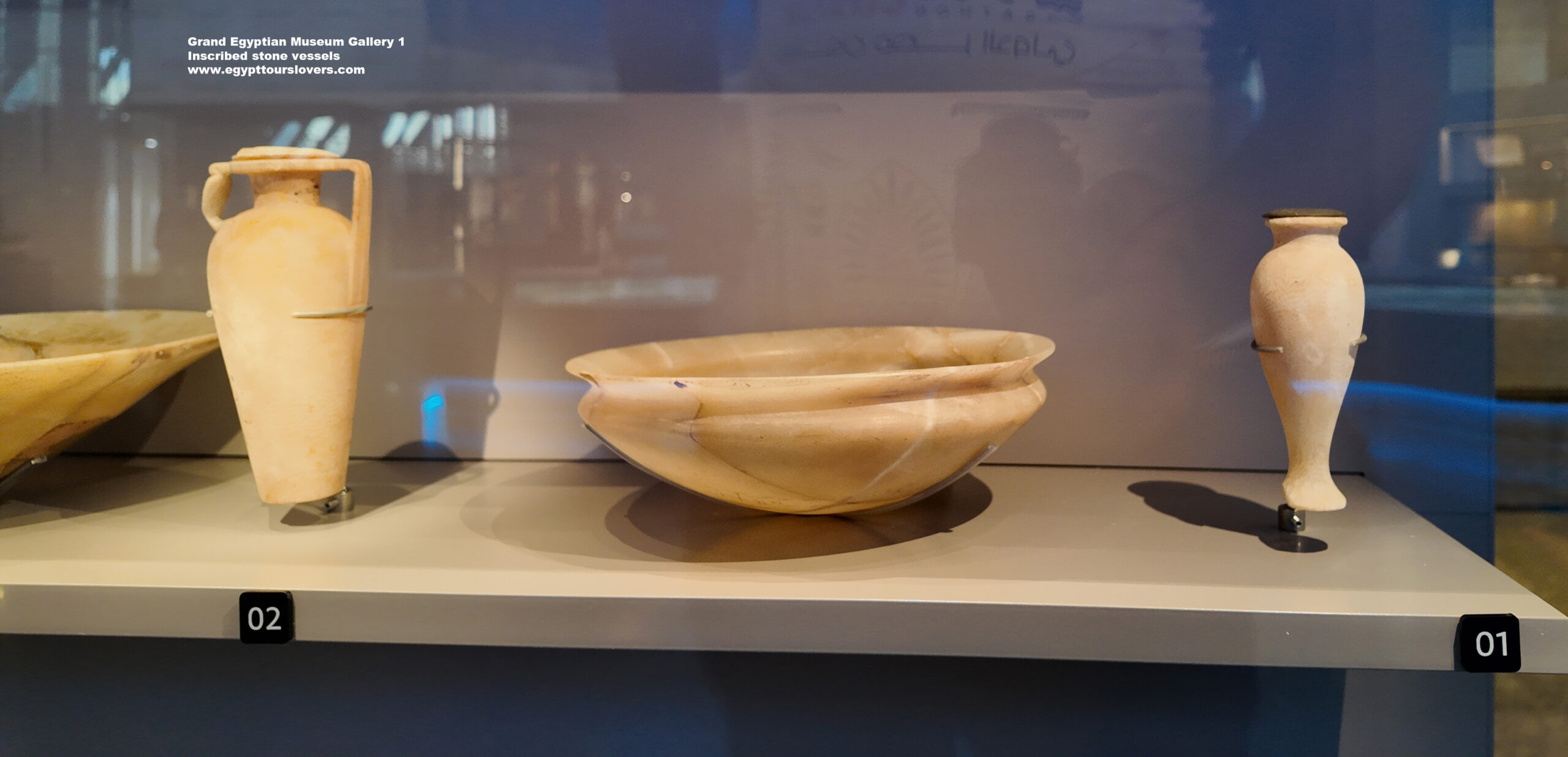
Dynasty 6 | Egyptian alabaster | Saqqara, edfu
Inscribed stone vessels
2 bowls are inscribed with the names queen neith and the vizier mereruka.
A two-handled jar with a uraeus-shaped left handle and slithering snake on its lid “this royal gift to a nobleman wife”.
———– } ———– } ———– } ———– }
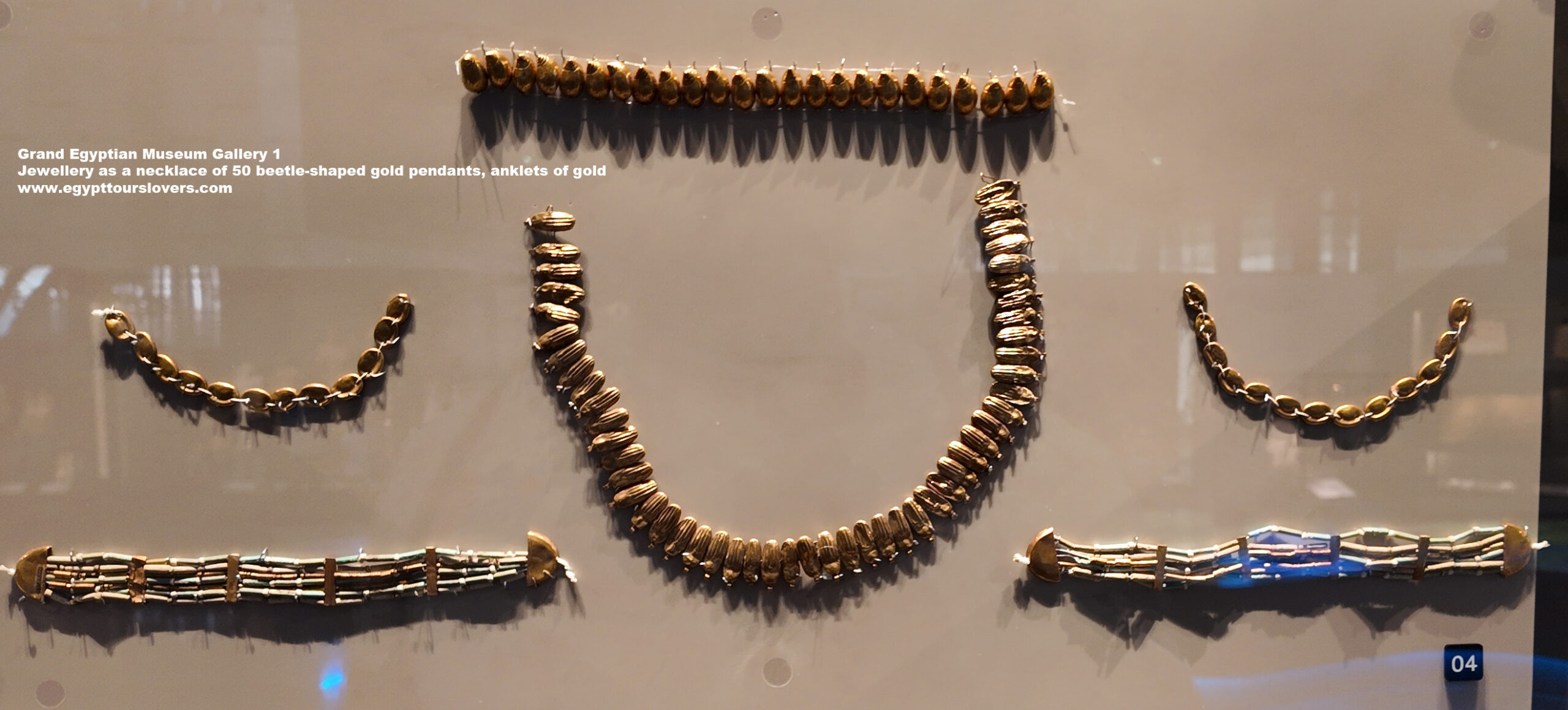
Dynasty 1 + first intermediate period | gold, faience, semi-precious stones | giza, kom el-hisn, naga el-deir
Jewellery as a necklace of 50 beetle-shaped gold pendants, anklets of gold, faience and semi-precious stones and necklaces and anklets of golden shells.
———– } ———– } ———– } ———– }
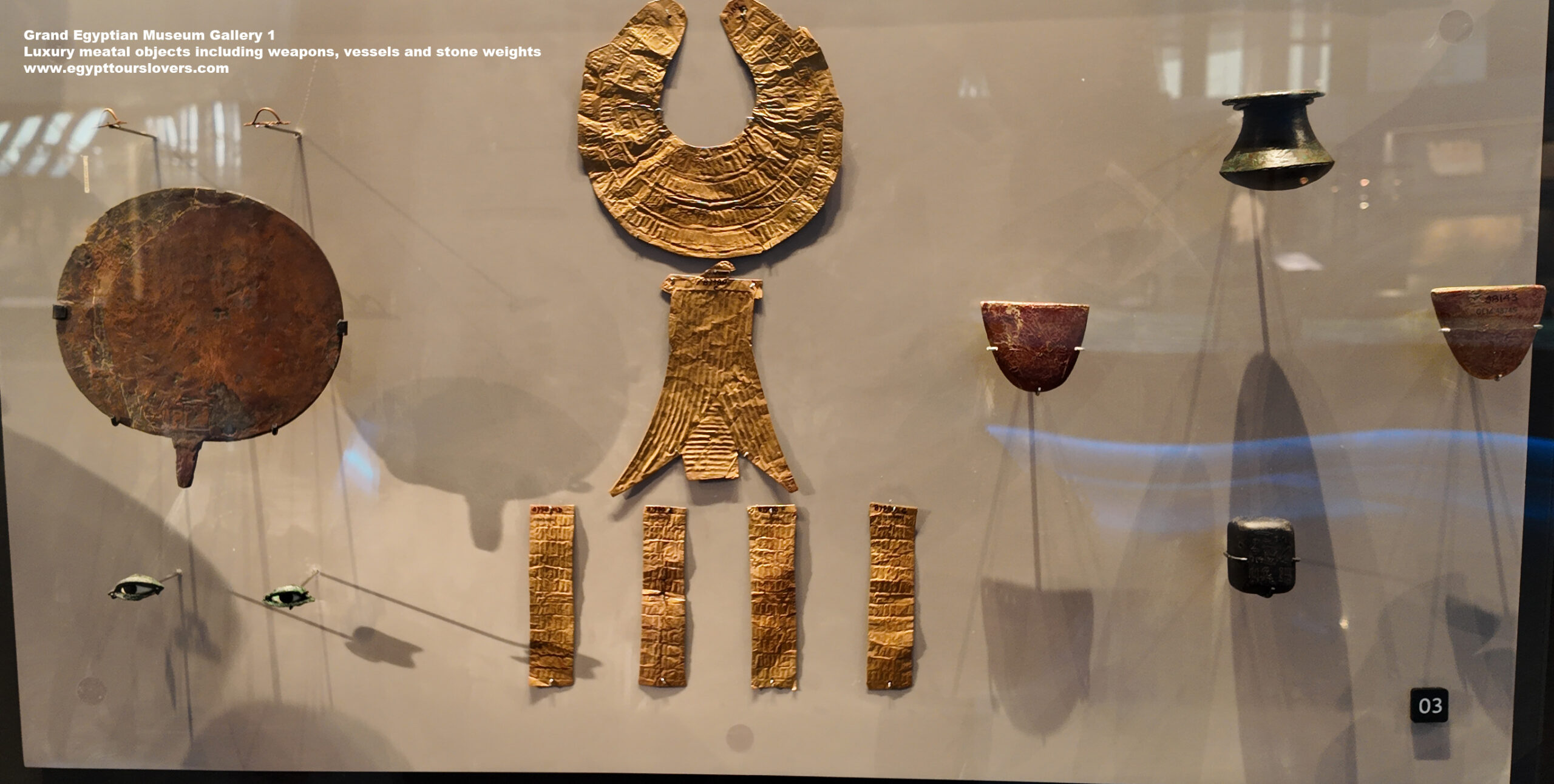
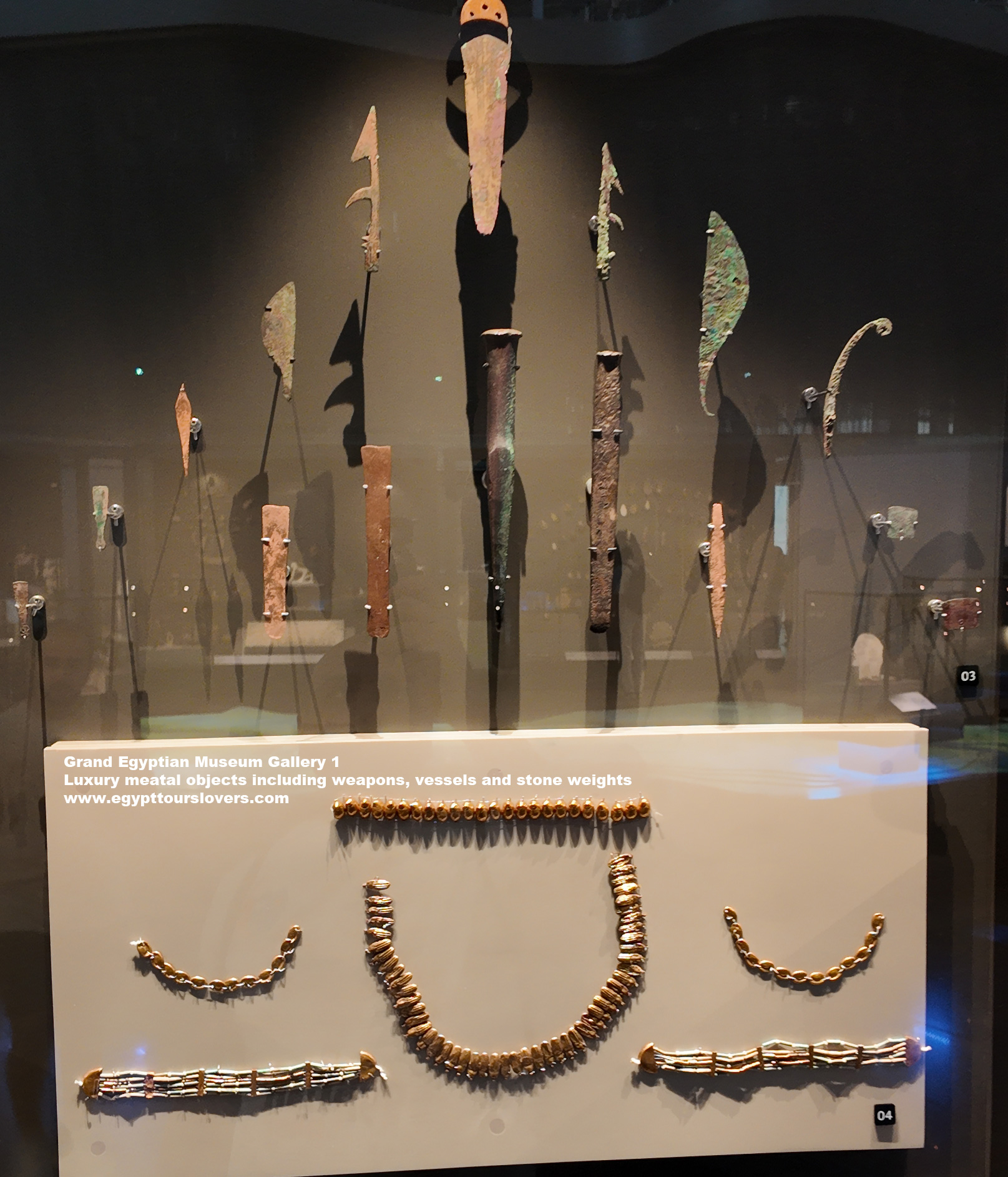
Naqada II period + Dynasty 6 | copper, gold, basalt | Saqqara, kom el-shin, giza, tell farkha, beit khallaf, edfu, el qatta, Abydos, gebel el-asr, herakleopolis, magna “ihnasya el-medina”
Luxury meatal objects including weapons, vessels and stone weights used to measure gold.
Small vase has the name of queen Iput “mother of king pepy I”.
———– } ———– } ———– } ———– }
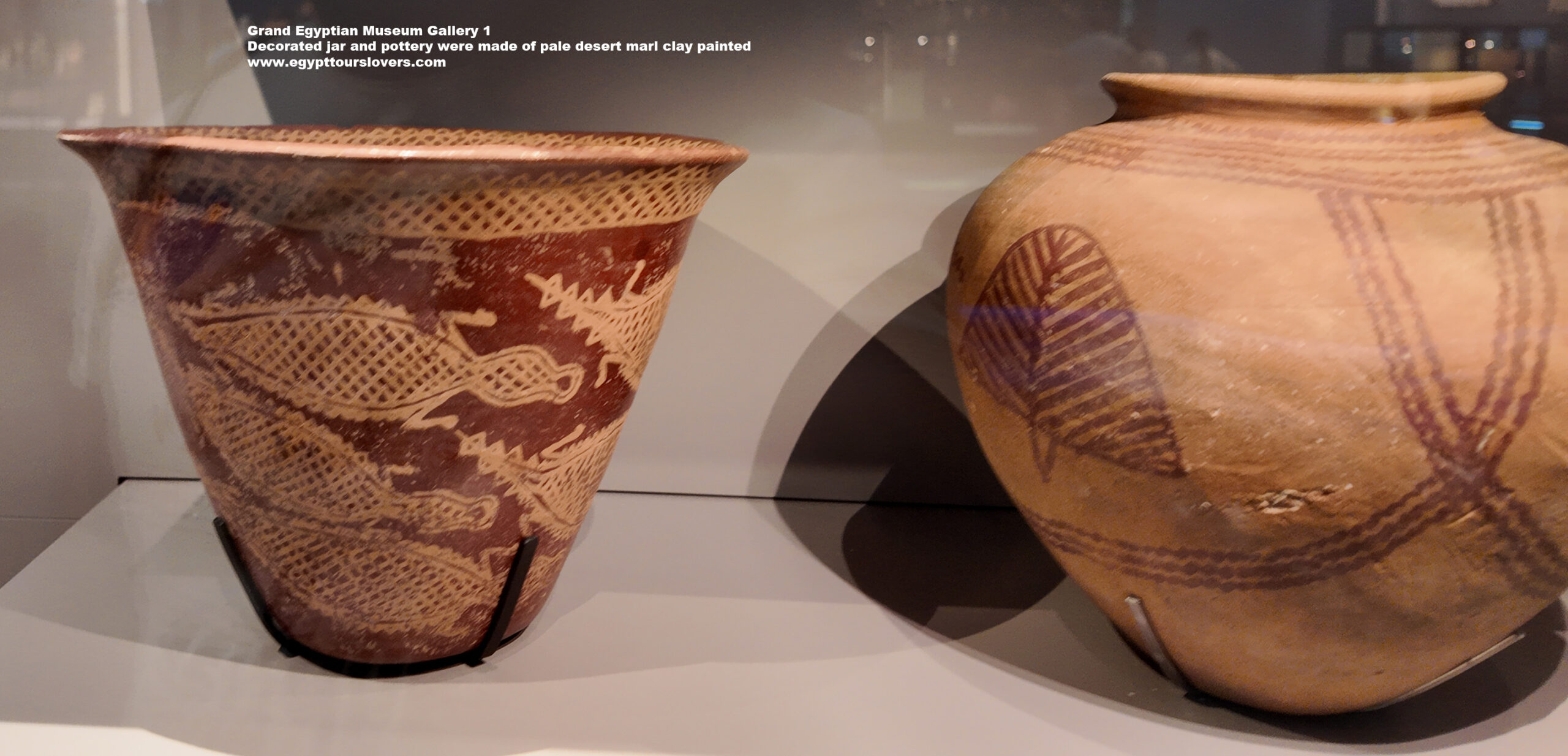
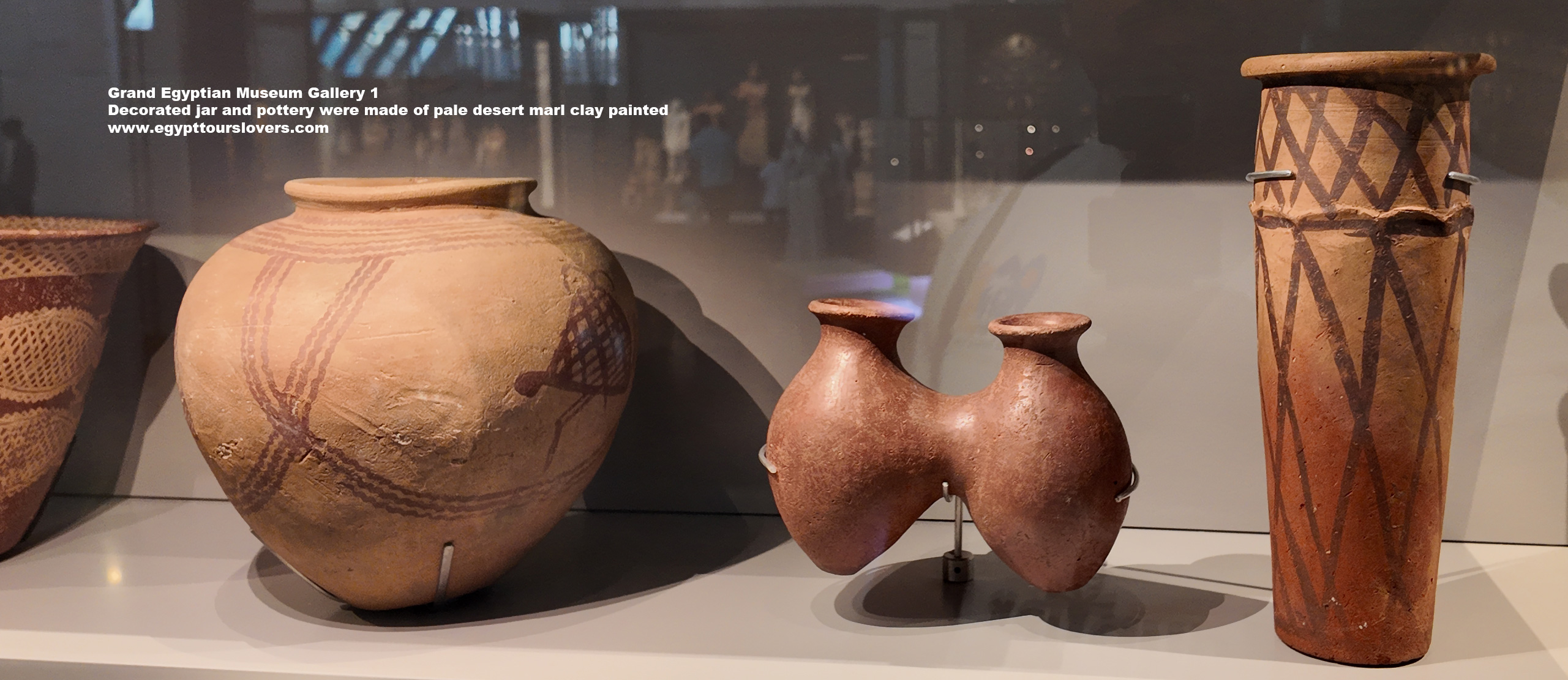
Naqada II period | pottery, pigment | gebelein
Decorated jar and pottery were made of pale desert marl clay painted with red-brown pigment.
Typical patterns included plants, animals and boats.
Design jar has a plant, wavy lines and a row of a repeated sign, perhaps, representing birds.
———– } ———– } ———– } ———– }
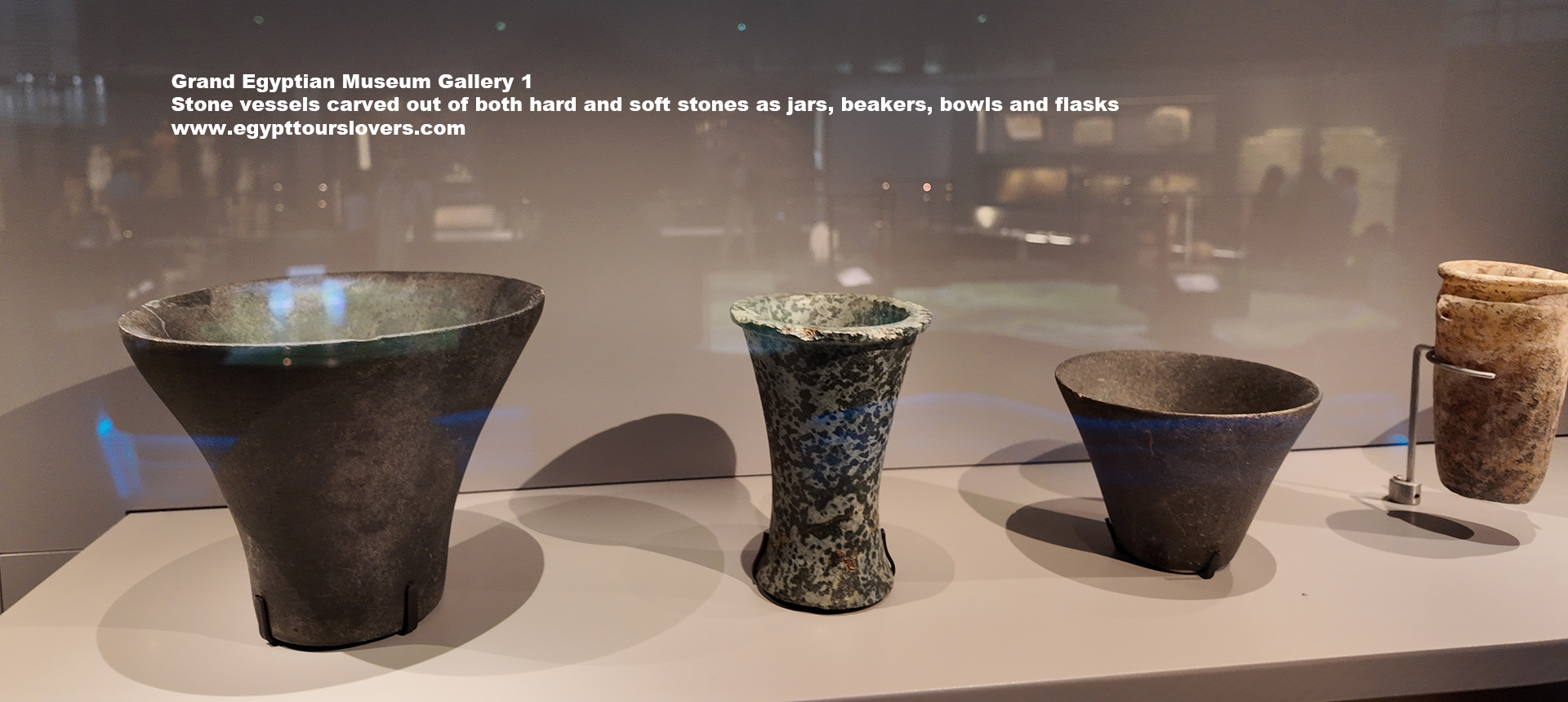
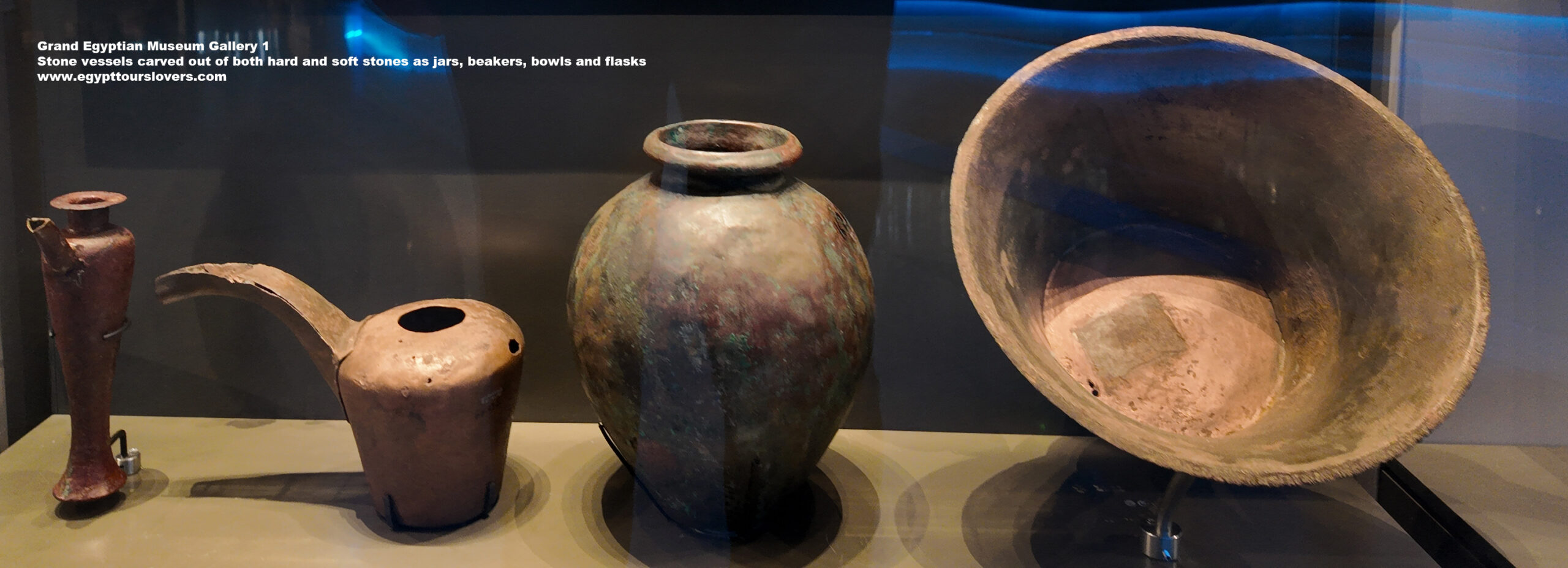
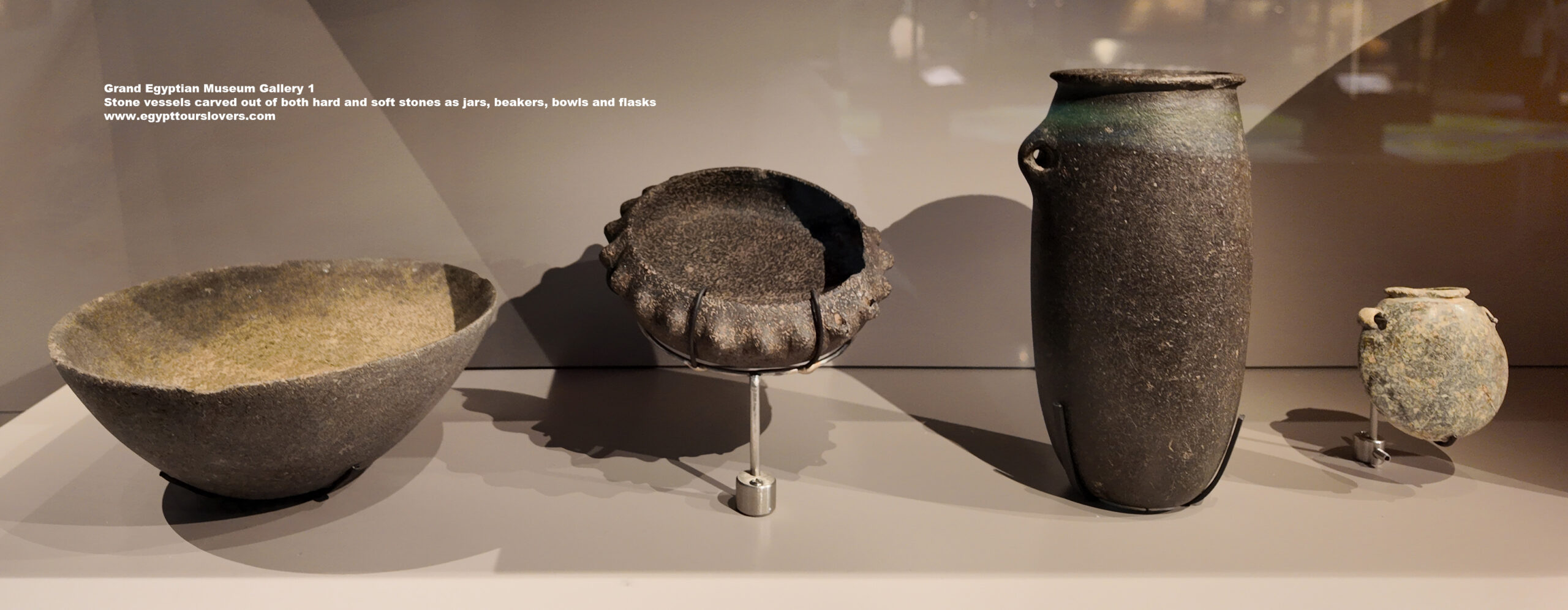
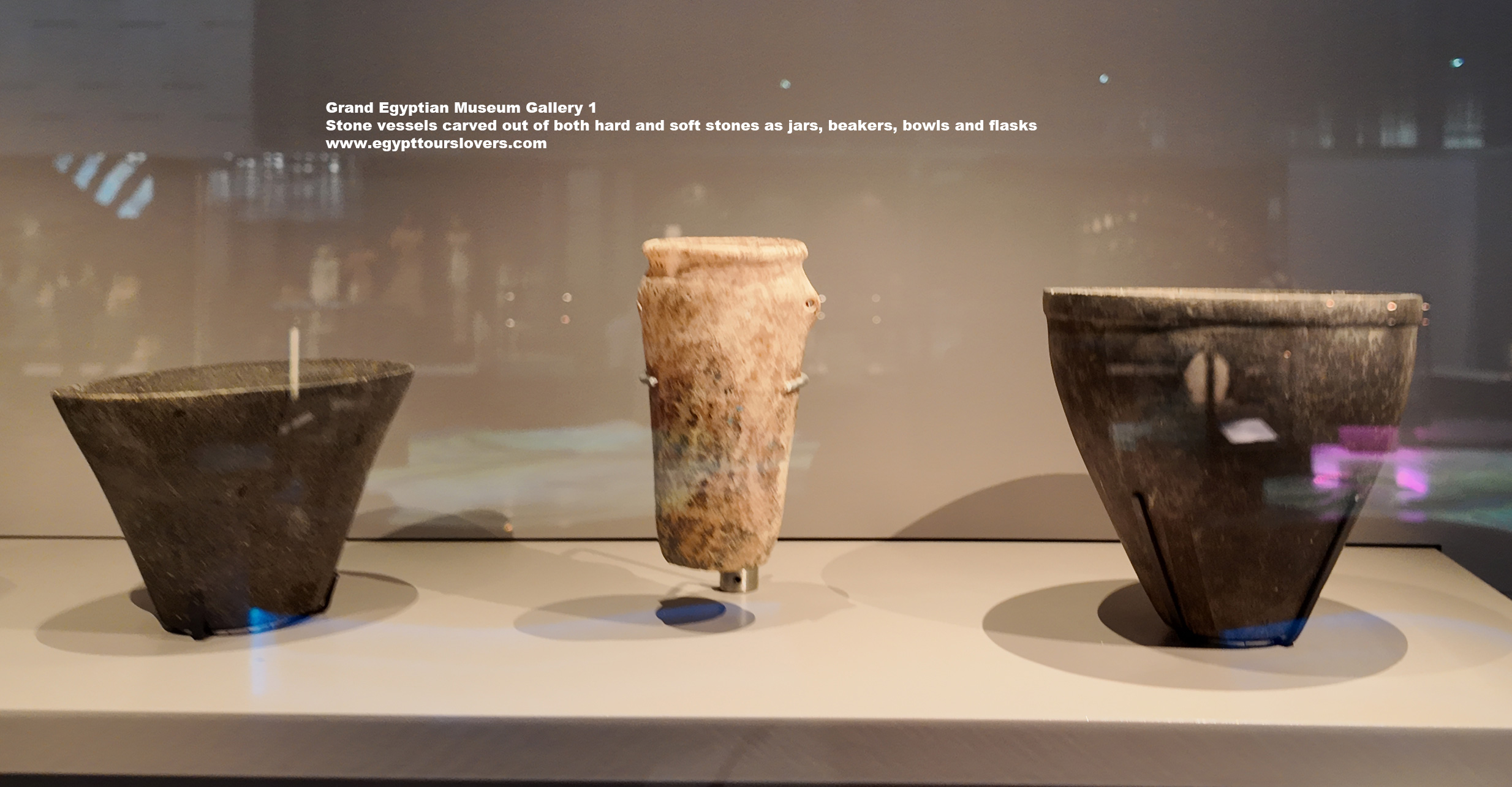
Naqada II period + Dynasty 6 | Egyptian alabaster, diorite, serpentine, rock crystal, gabbro, gerywecke, basalt | Saqqara, tell el-farkha, tell el-daba, minshat ezzat, hekwan, dara, edfu, karank
Stone vessels carved out of both hard and soft stones as jars, beakers, bowls and flasks.
Have design included spouted dishes used for feeding babies or dripping rare oils.
———– } ———– } ———– } ———– }
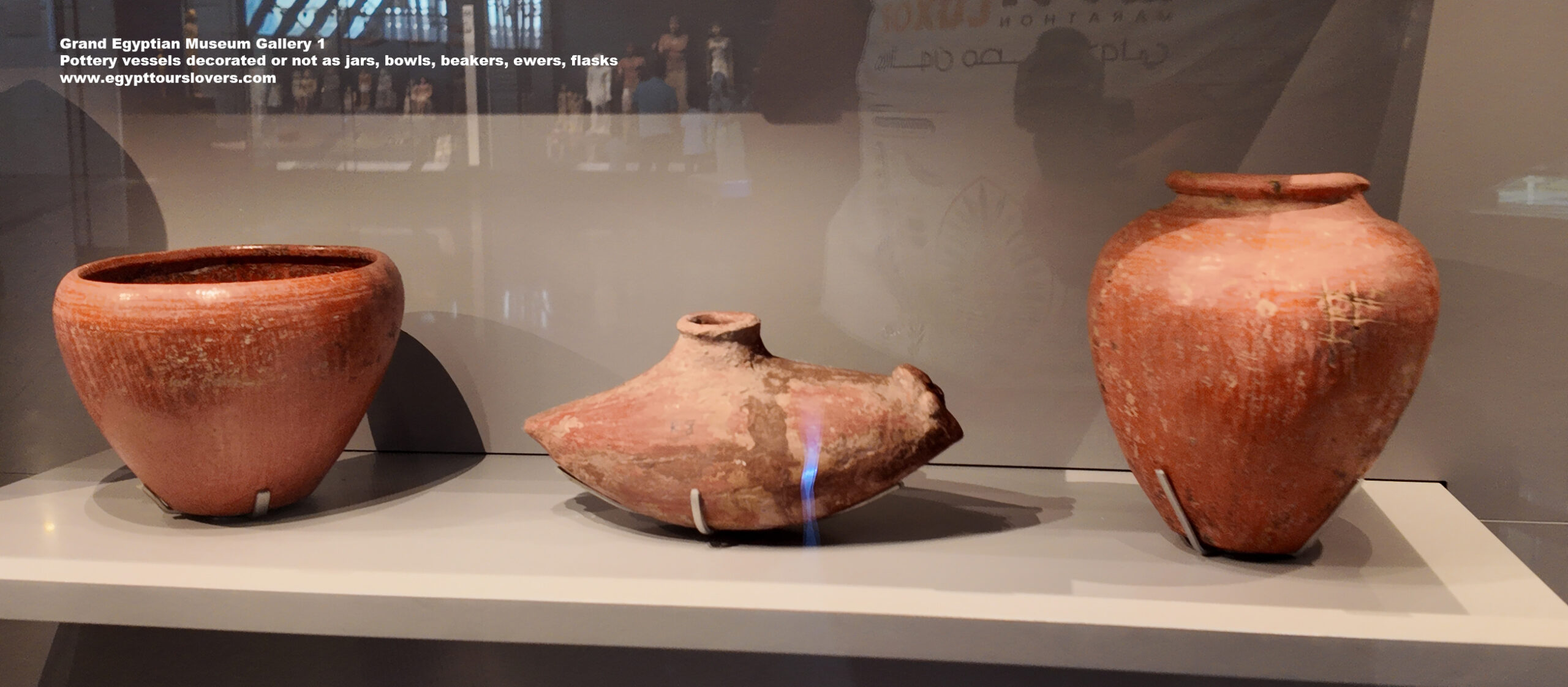
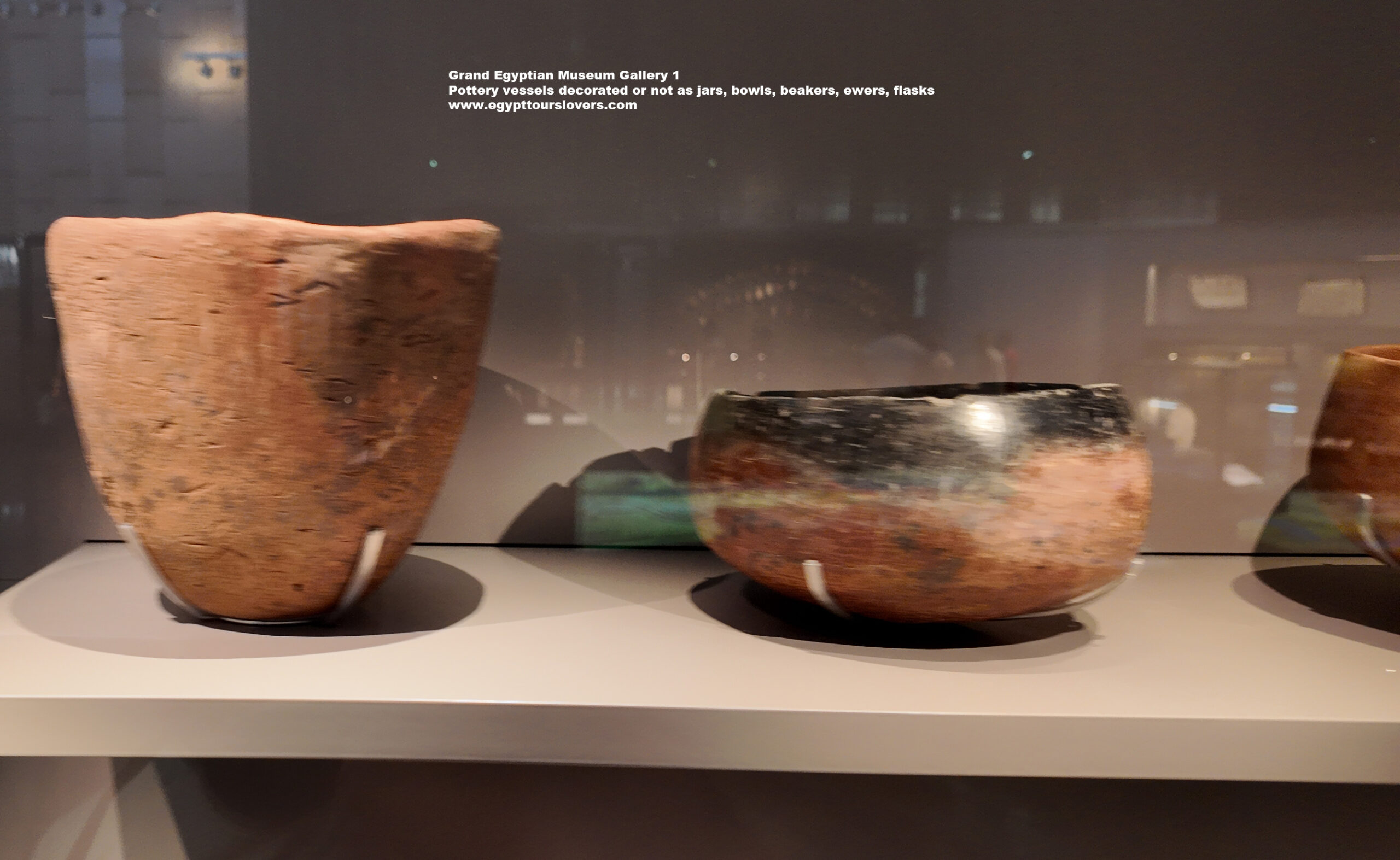
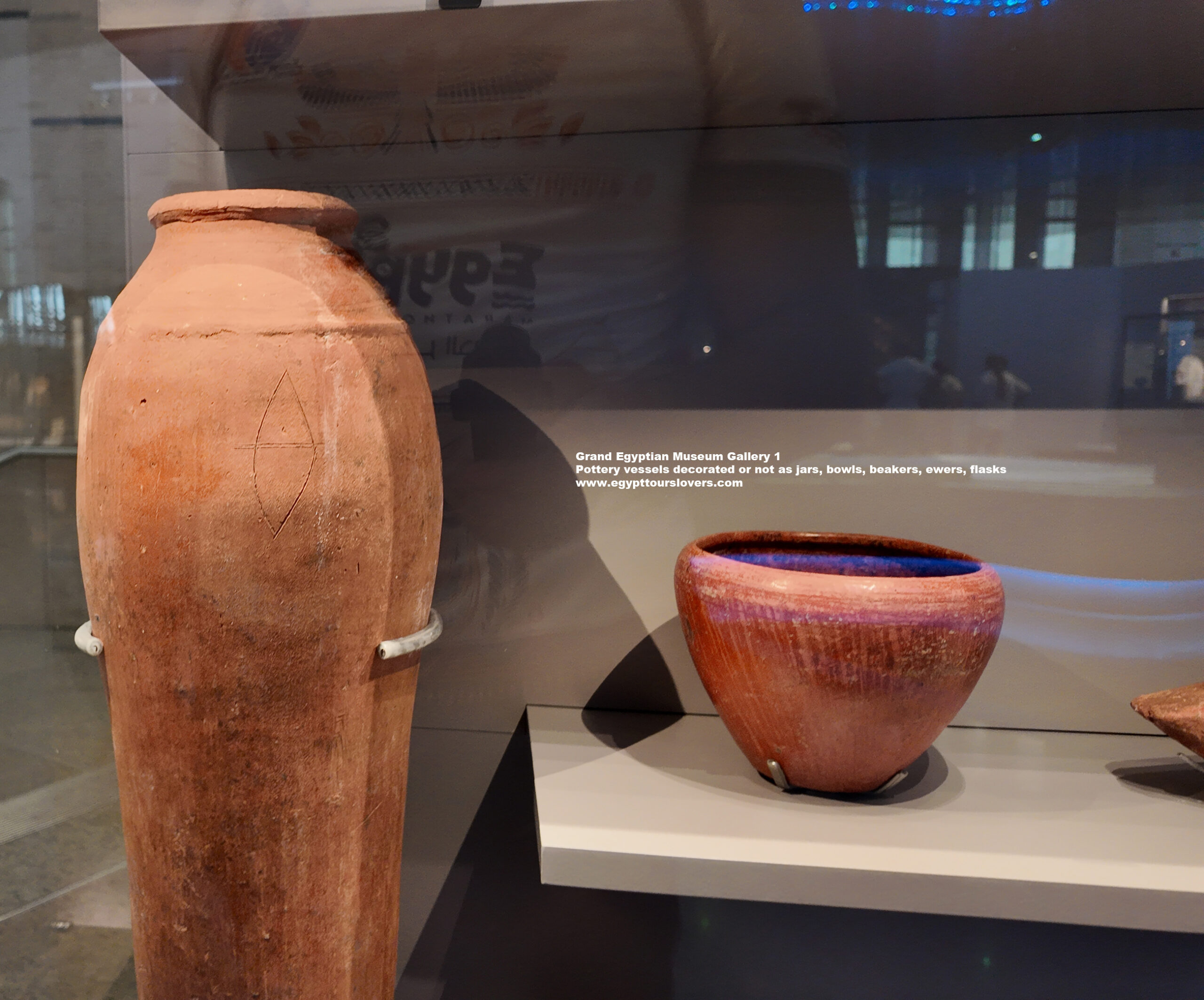
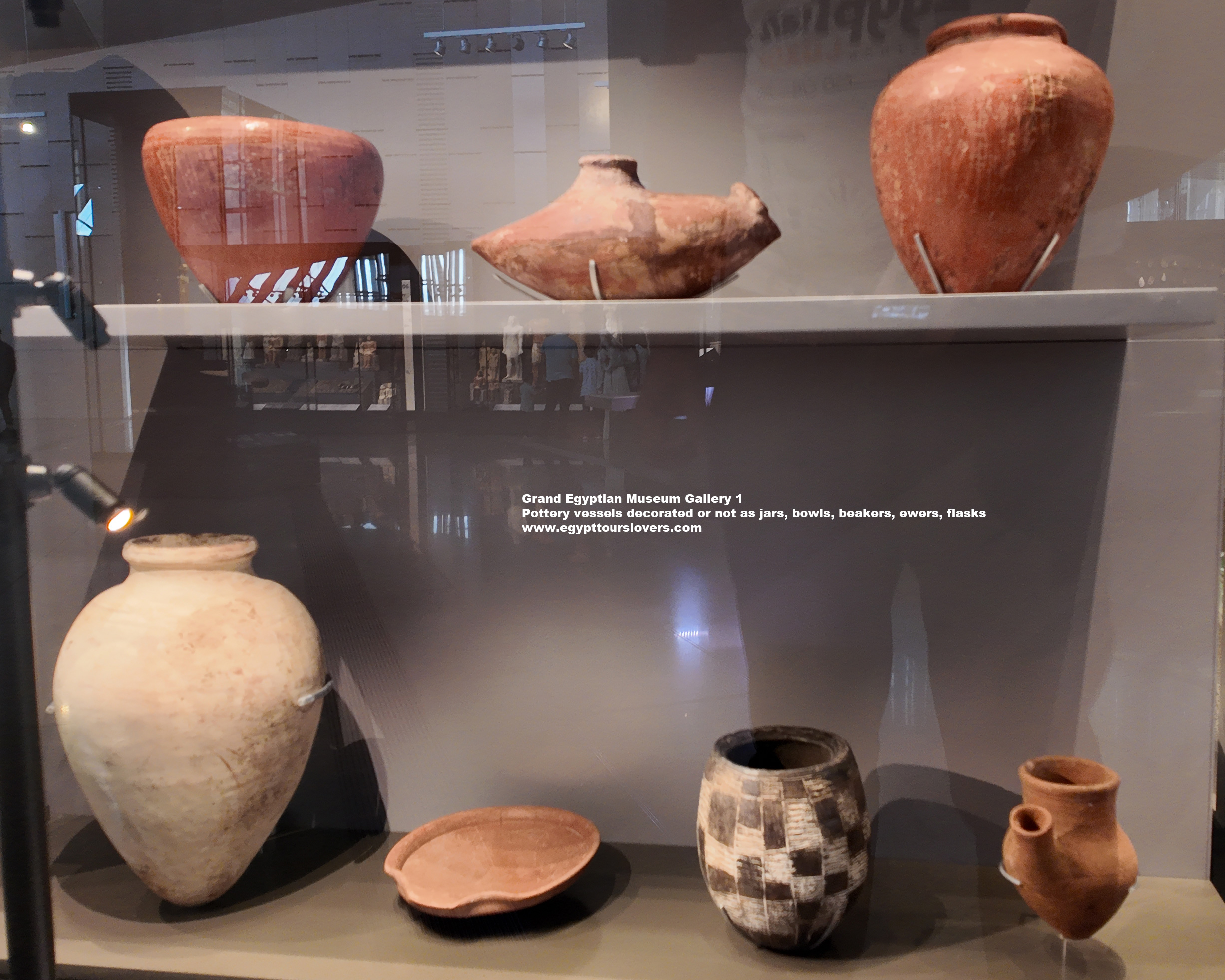
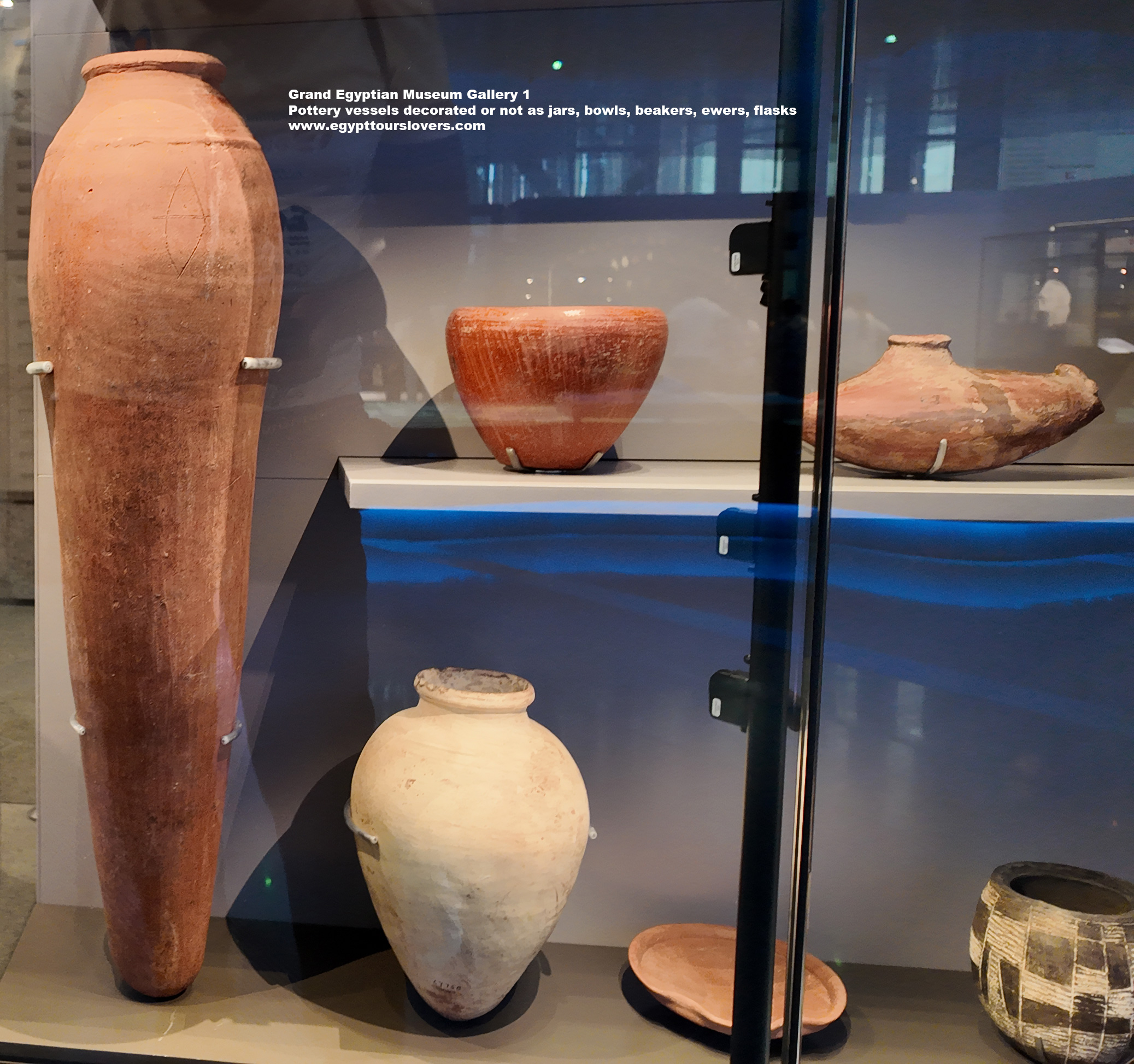
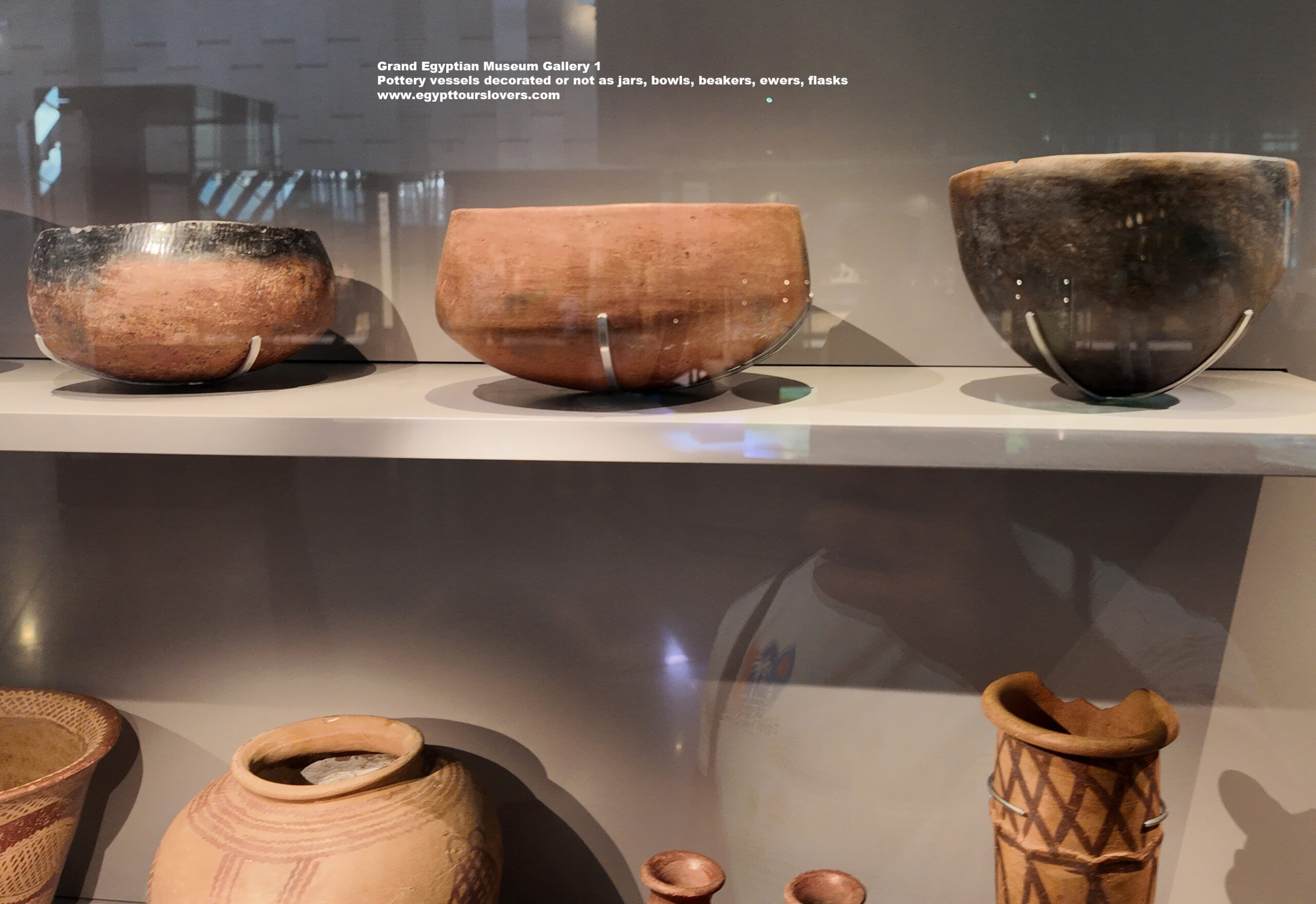
Neolithic period + Dynasty 6 | pottery, pigment | adima, abu rawash, gebel ramlah, merimeda beni salama, mansiuria, giza, Helwan, deir tasa, abu umuri, Abydos, naga el-deir, tell el-farkha, mosragidda
Pottery vessels decorated or not as jars, bowls, beakers, ewers, flasks and double pots came in various shapes and styles.
———– } ———– } ———– } ———– }
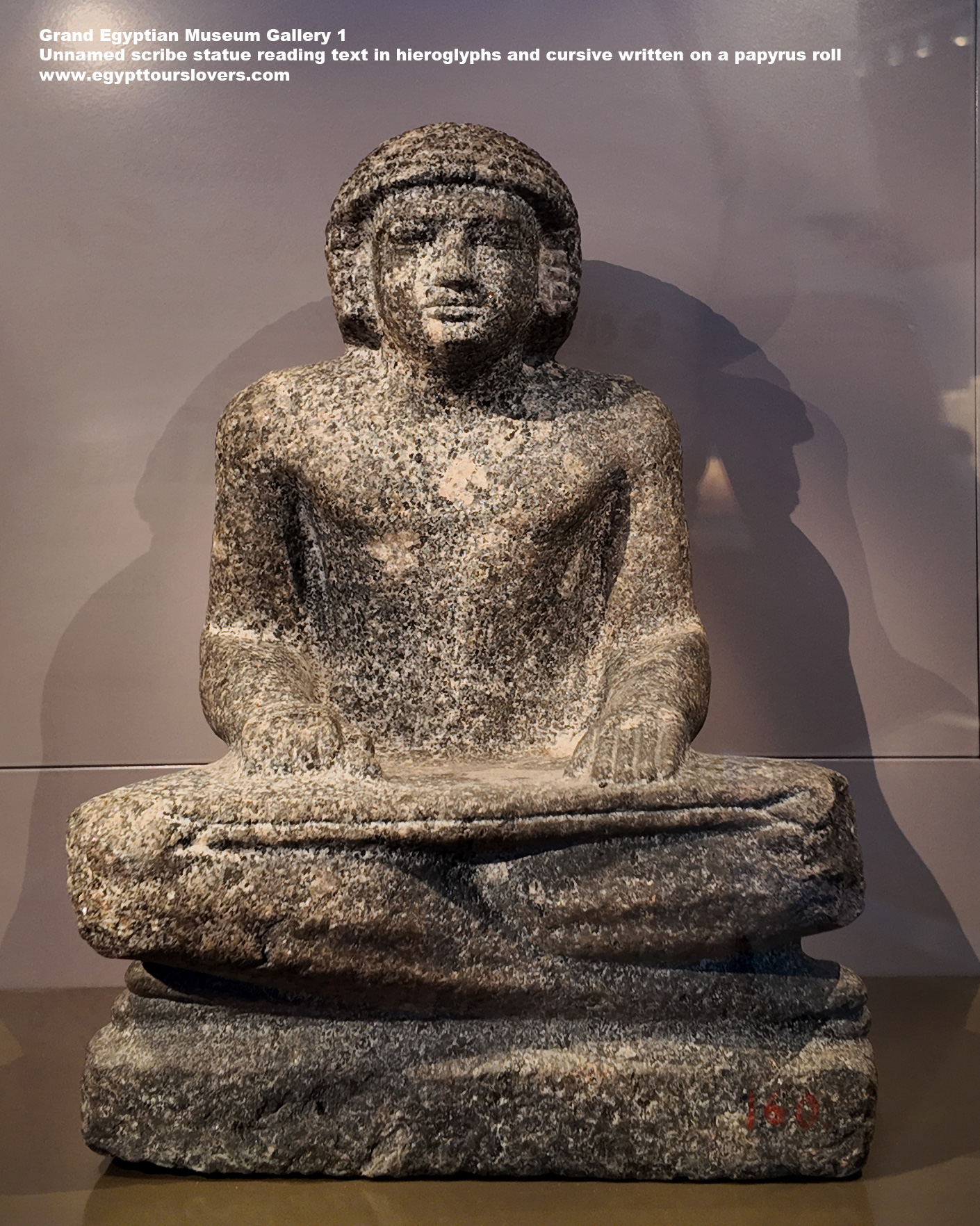
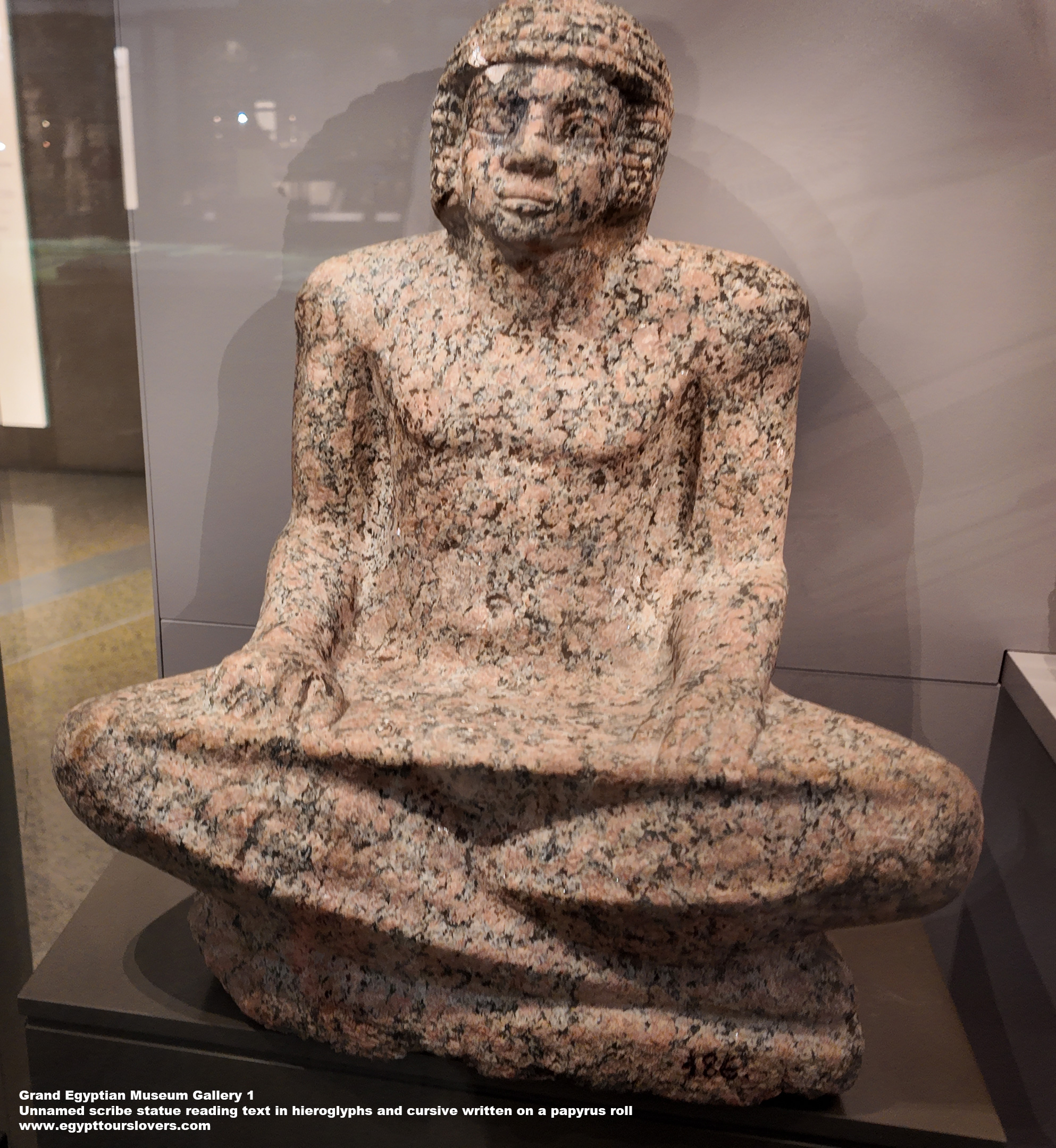
Dynasty 5 | granite | Saqqara
Unnamed scribe statue reading text in hieroglyphs and cursive written on a papyrus roll.
———– } ———– } ———– } ———– }
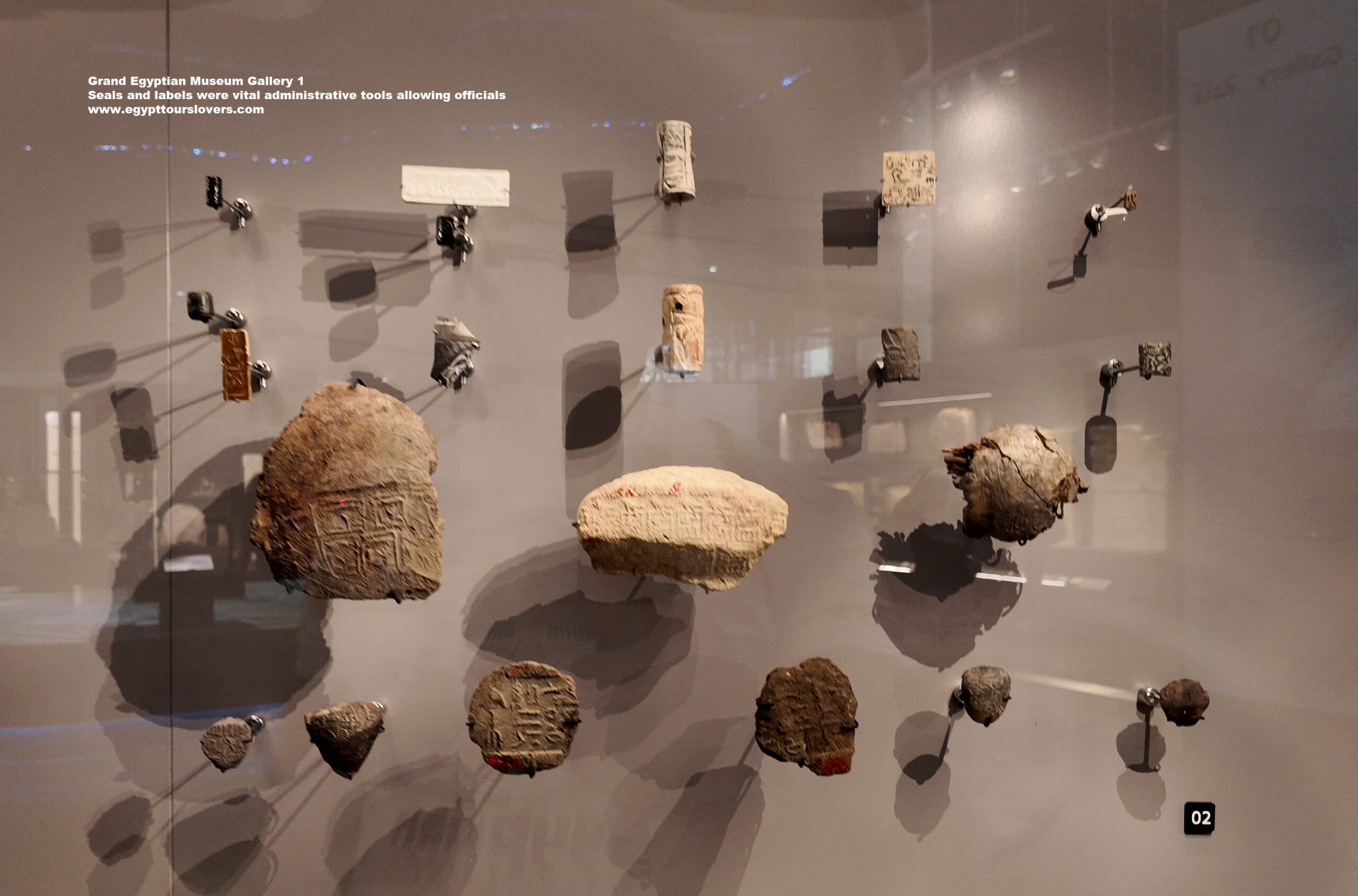
Dynasty 1 + first intermediate period | mud, ivory, limestone, steatite, wood, pigment | Abydos, Saqqara, Helwan, giza, qaw el-kebir, badari, kom el-hisn, kafr ammar, tell el-farkha
Seals and labels were vital administrative tools allowing officials to control the distributioa of goods.
Cylinder seals were used to stamp mud sealings with names of kings “Narmer, aha, raneferef”.
Labels recorded events and delivery of products.
———– } ———– } ———– } ———– }
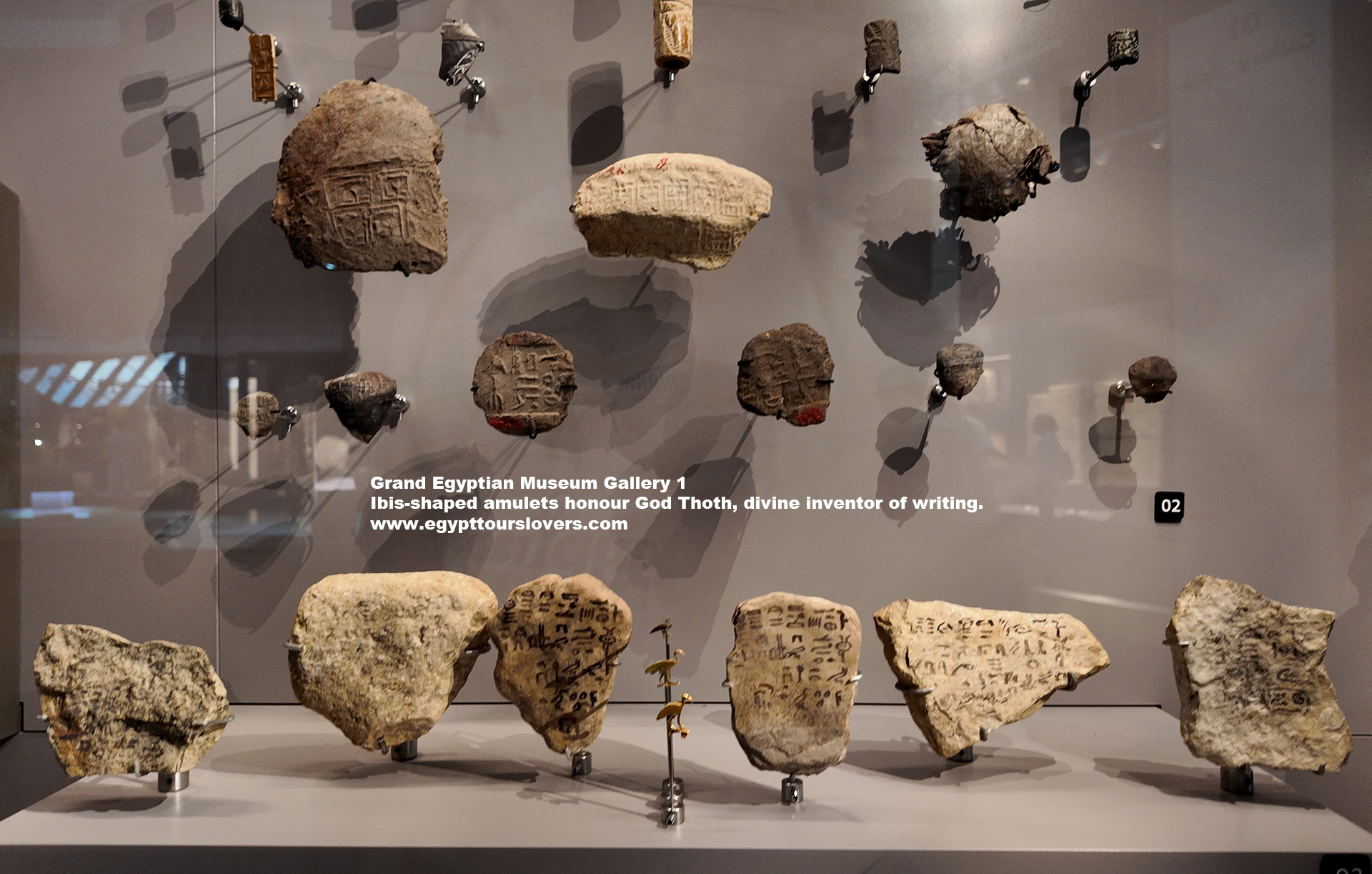
Dynasty 4 + first intermediate period | limestone, gold | Helwan, qaw el-kebir, mustagidda, kom el-hisn
Ibis-shaped amulets honour God Thoth, divine inventor of writing.
Hieratic texts on stone fragments tablets relate to kigns date and governor’s palace administration.
———– } ———– } ———– } ———– }
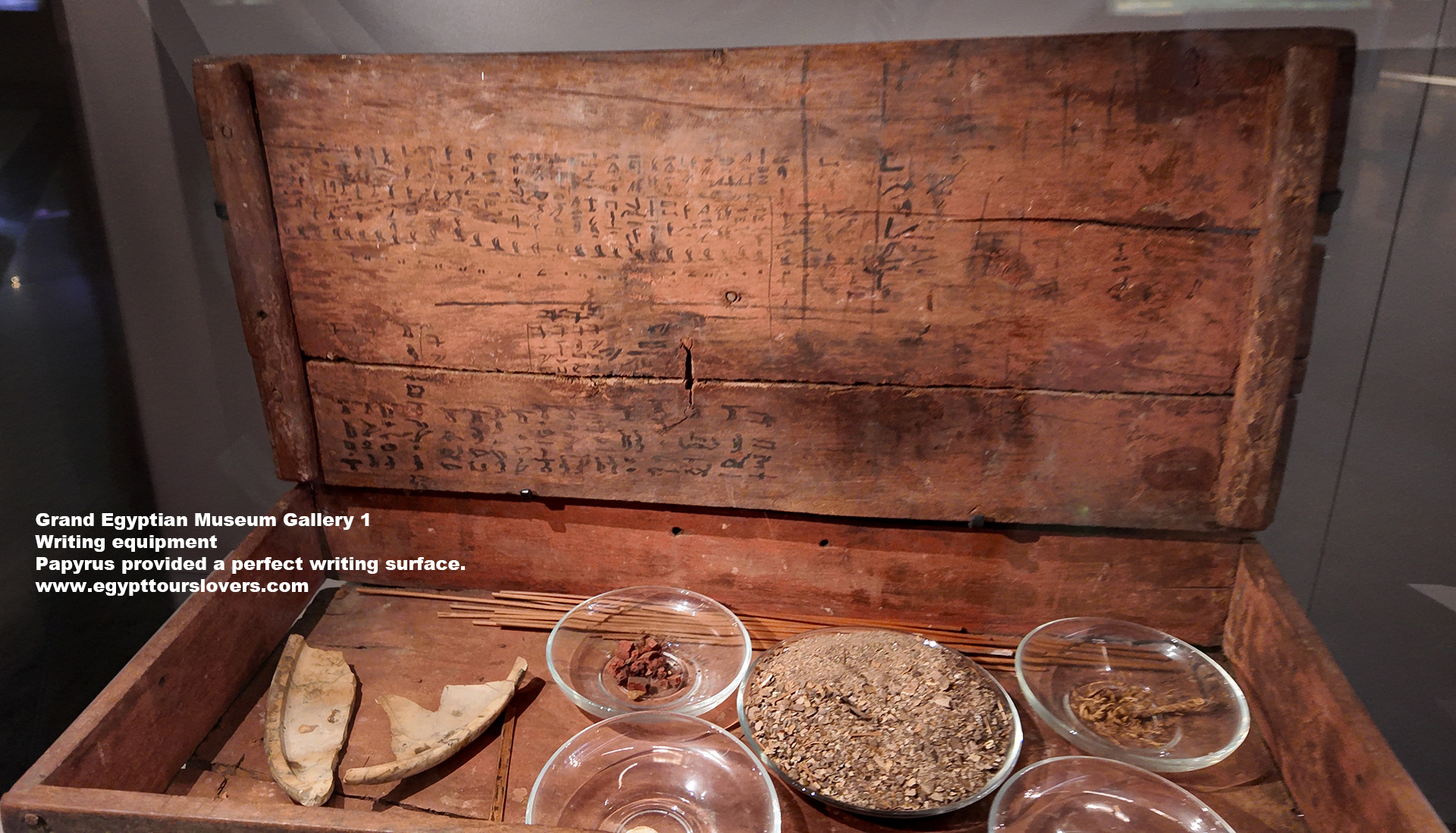
Dynasty 1-6 | wood, Egyptian alabaster, pibment, greywacke | gebelein, Saqqara, zawiyet el-maiytin, minshat ezzat
Writing equipment
Papyrus provided a perfect writing surface.
Scribes used reed pens and palettes with inkwells.
Box contained papyrus rolls, pens and black and red pigment cakes.
The inscribed lid has lists of names and accounts.
———– } ———– } ———– } ———– }
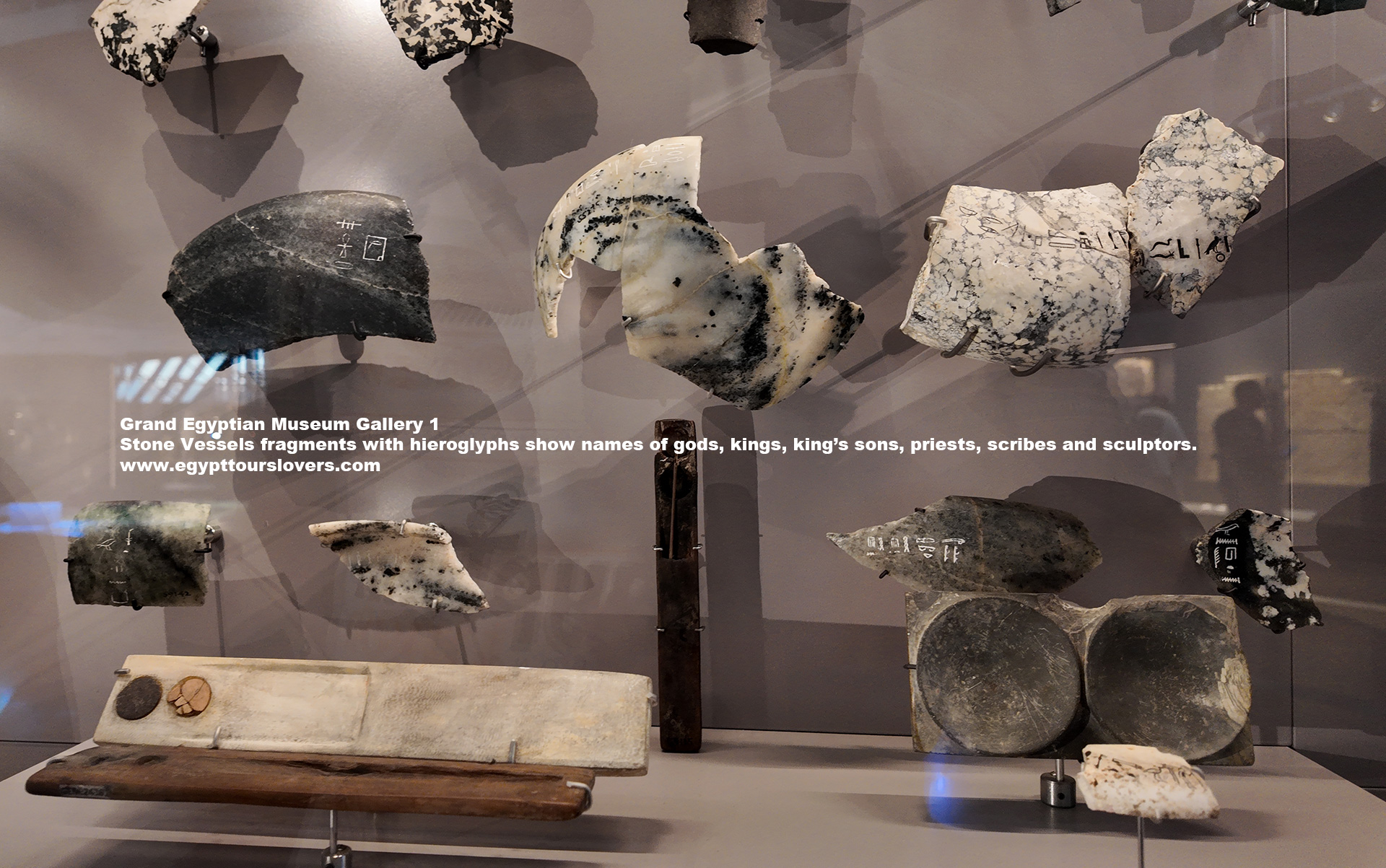
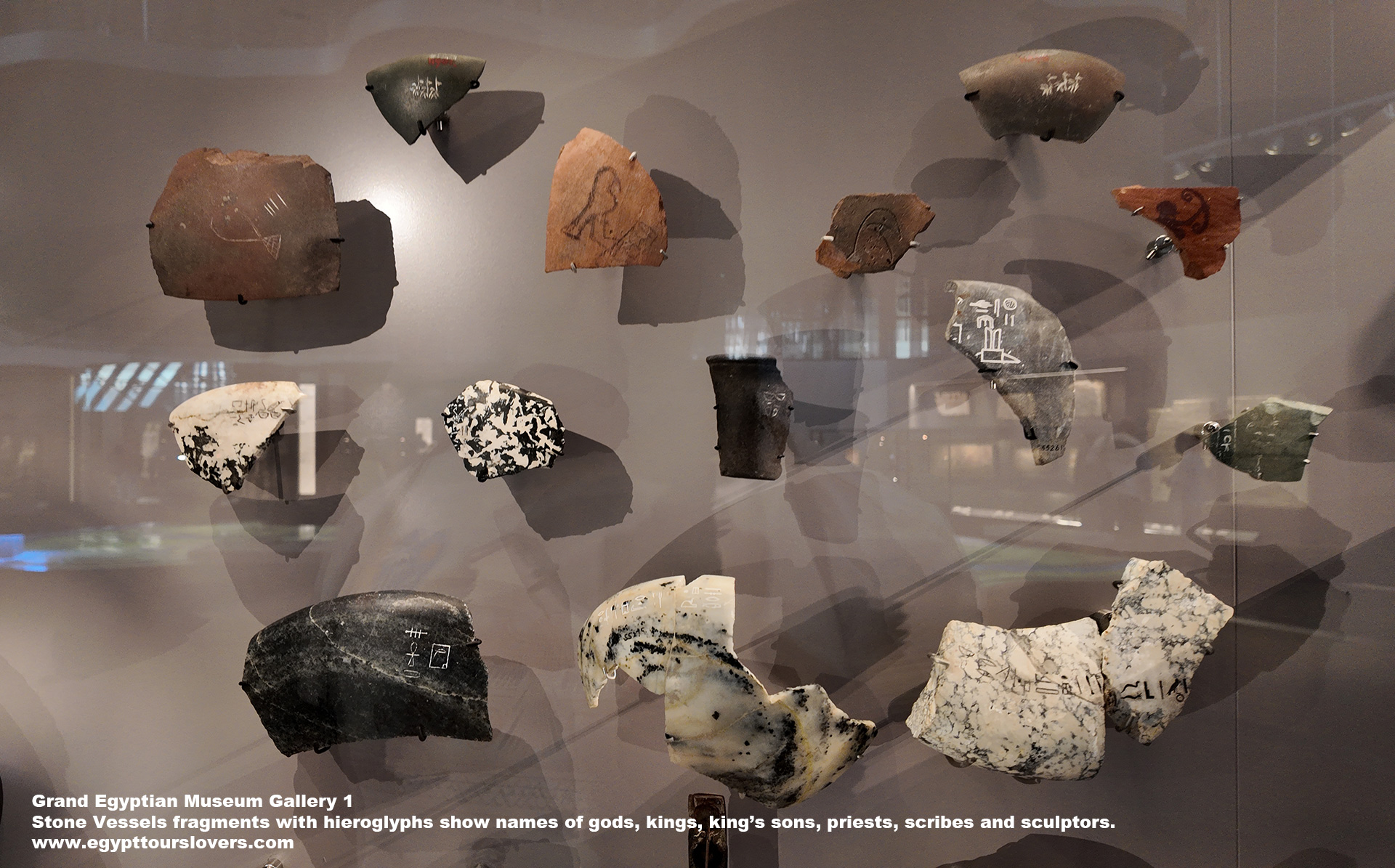
Naqada III period + Dynasty 3 |pottery, diorite, greywacke, breccia, pigment | Saqqara, naqada, Abydos, adaima
Stone Vessels fragments with hieroglyphs show names of gods, kings, king’s sons, priests, scribes and sculptors.
The potsherds show hieroglyphs of falcons, birds, fish and an archer.
———– } ———– } ———– } ———– }

Colored hieroglyphs offering lists provided food and drinks for the deceased in the afterlife.
———– } ———– } ———– } ———– }
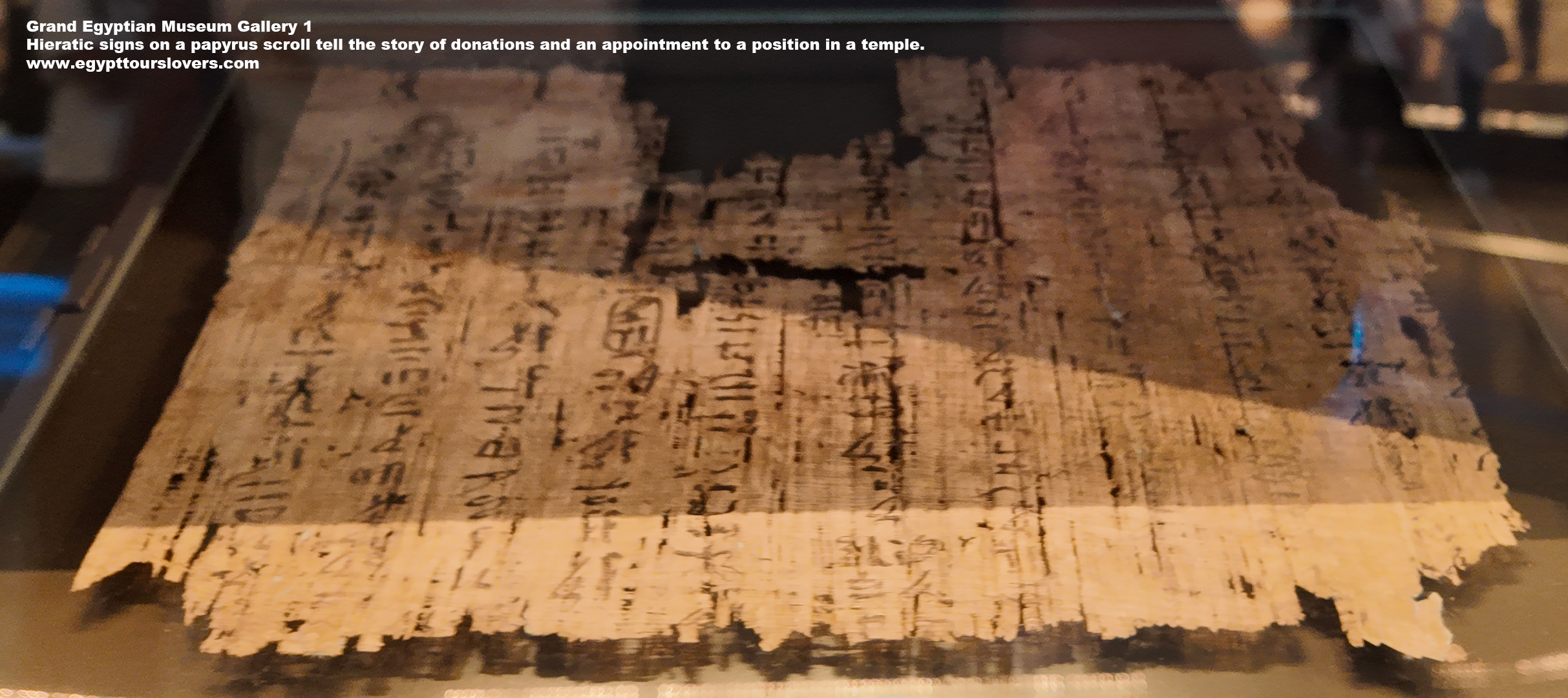
Dynasty 6 | pigment, papyrus | Saqqara
Hieratic signs on a papyrus scroll tell the story of donations and an appointment to a position in a temple.
———– } ———– } ———– } ———– }
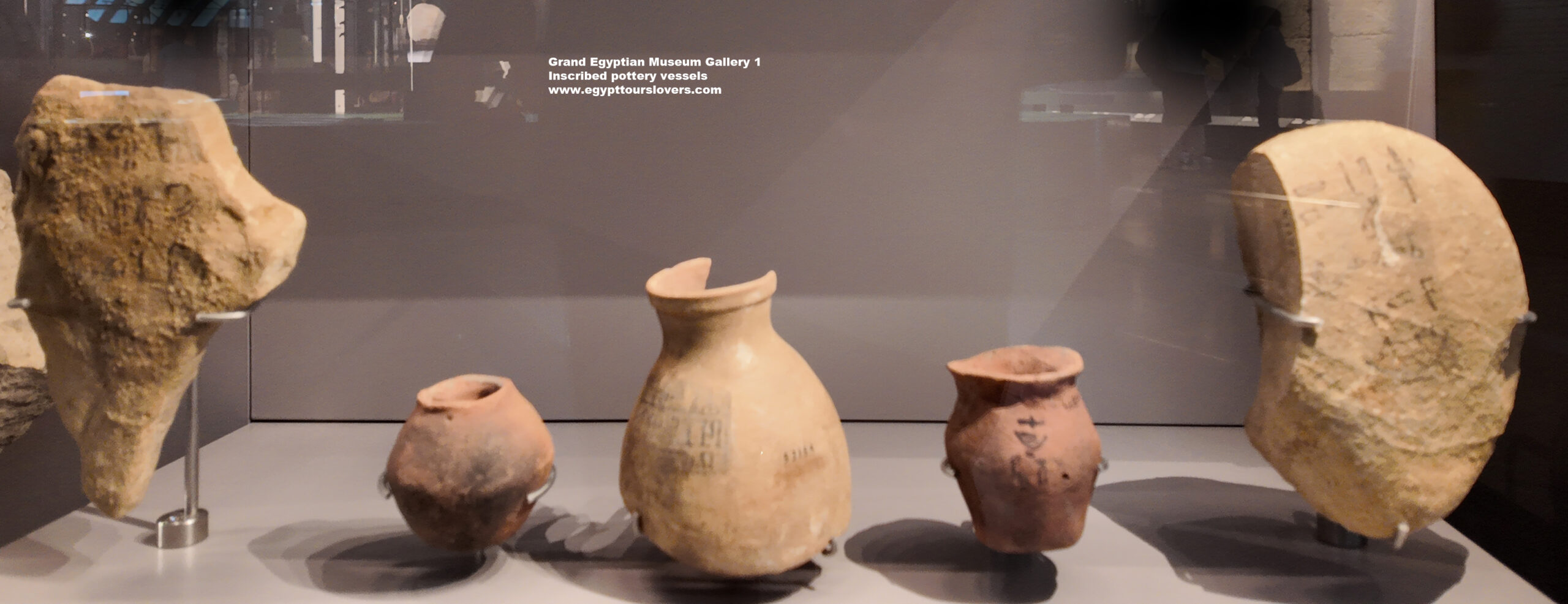
Naqada I period + Dynasty 6 | pottery, pigment | giza, gebelein, nag Hammadi
Inscribed pottery vessels
Whether decorated with formal hieroglyphs text, cursive hieratic writing or single signs, inscribed pottery provides information about the names and titles.
———– } ———– } ———– } ———– }
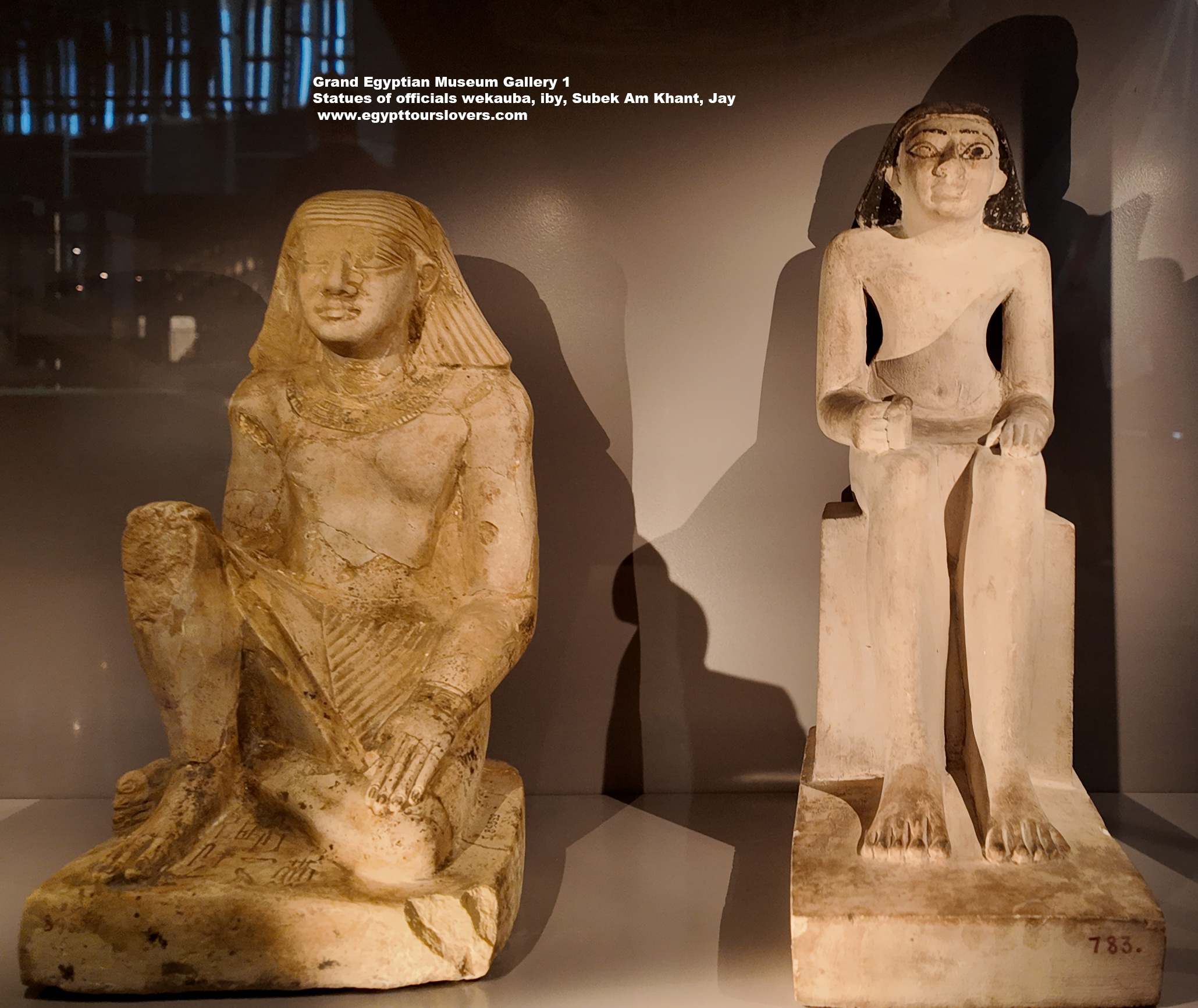
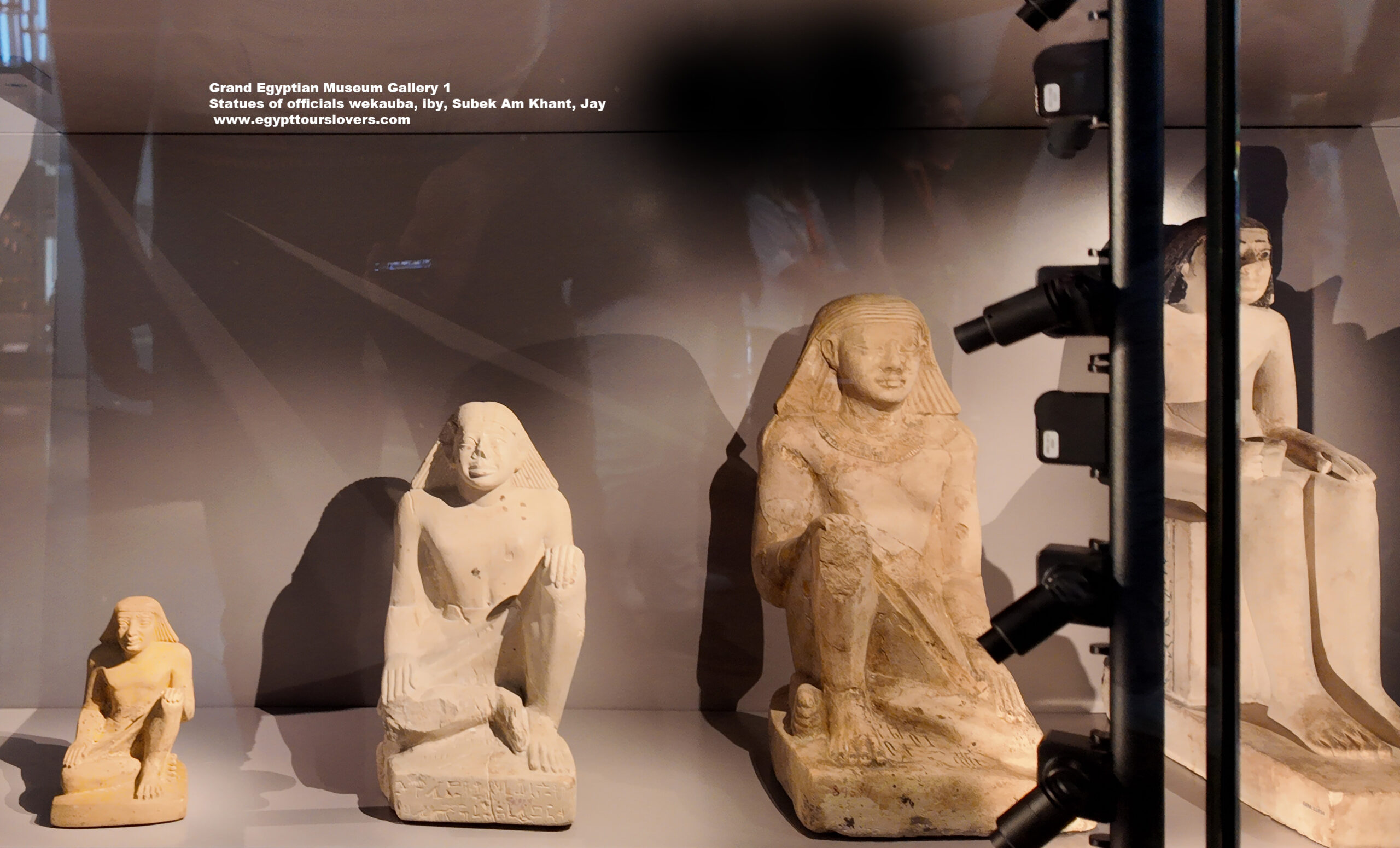
Dynasty 6 | limestone | giza, Saqqara, Al-Mahasneh
Statues of officials wekauba, iby, Subek Am Khant, Jay
The statues were found in their tombs and the temples they oversaw.
Their roles included government officials, overseeing royal estates, and serving as priests and temple administrators.
———– } ———– } ———– } ———– }
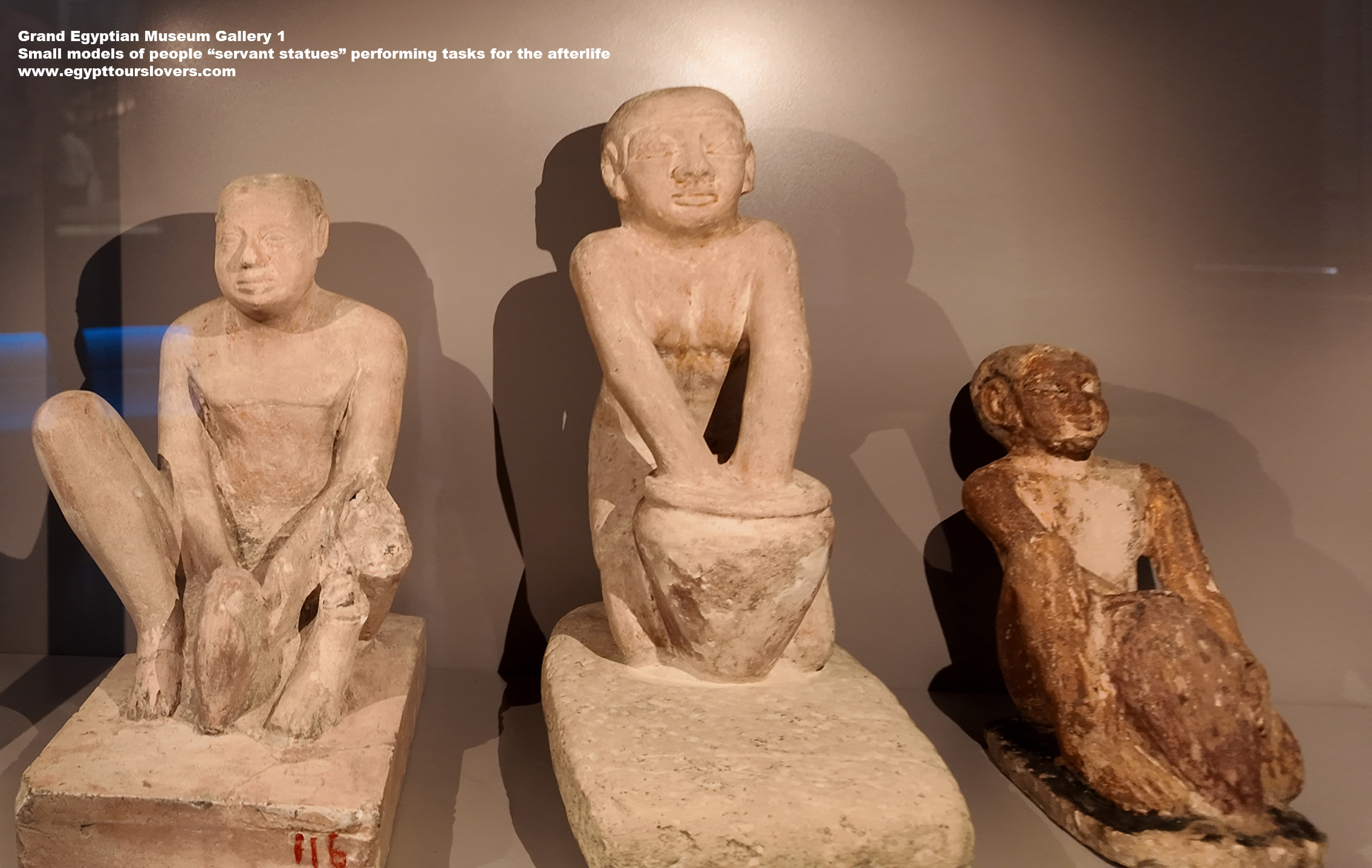
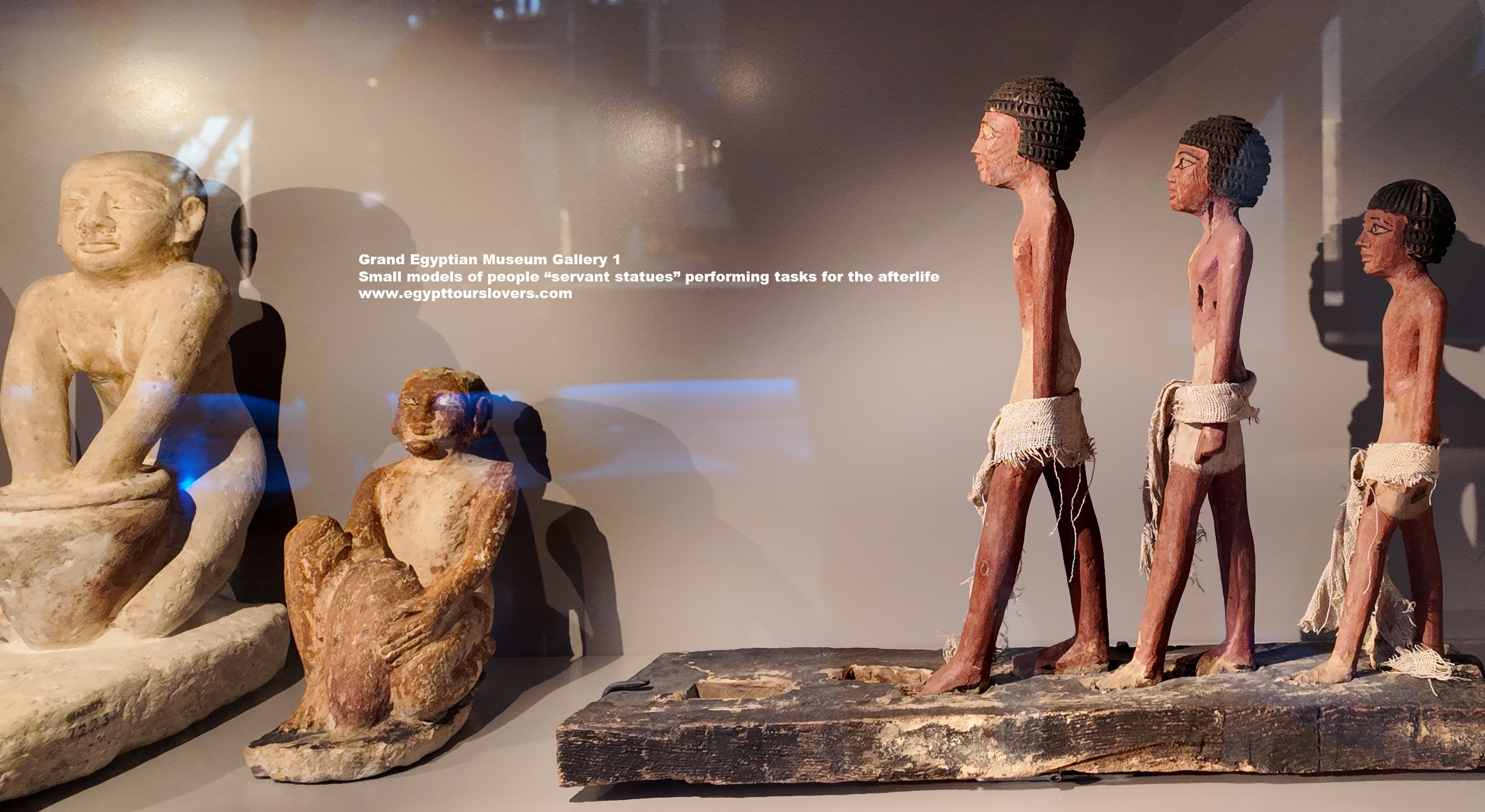
Dynasty 2-6 | limestone, wood, pigment | giza, Saqqara, dahshur
Small models of people “servant statues” performing tasks for the afterlife.
2 men are shaping or coating pottery vessels, a woman is grinding grian and a group of men bring something.
———– } ———– } ———– } ———– }
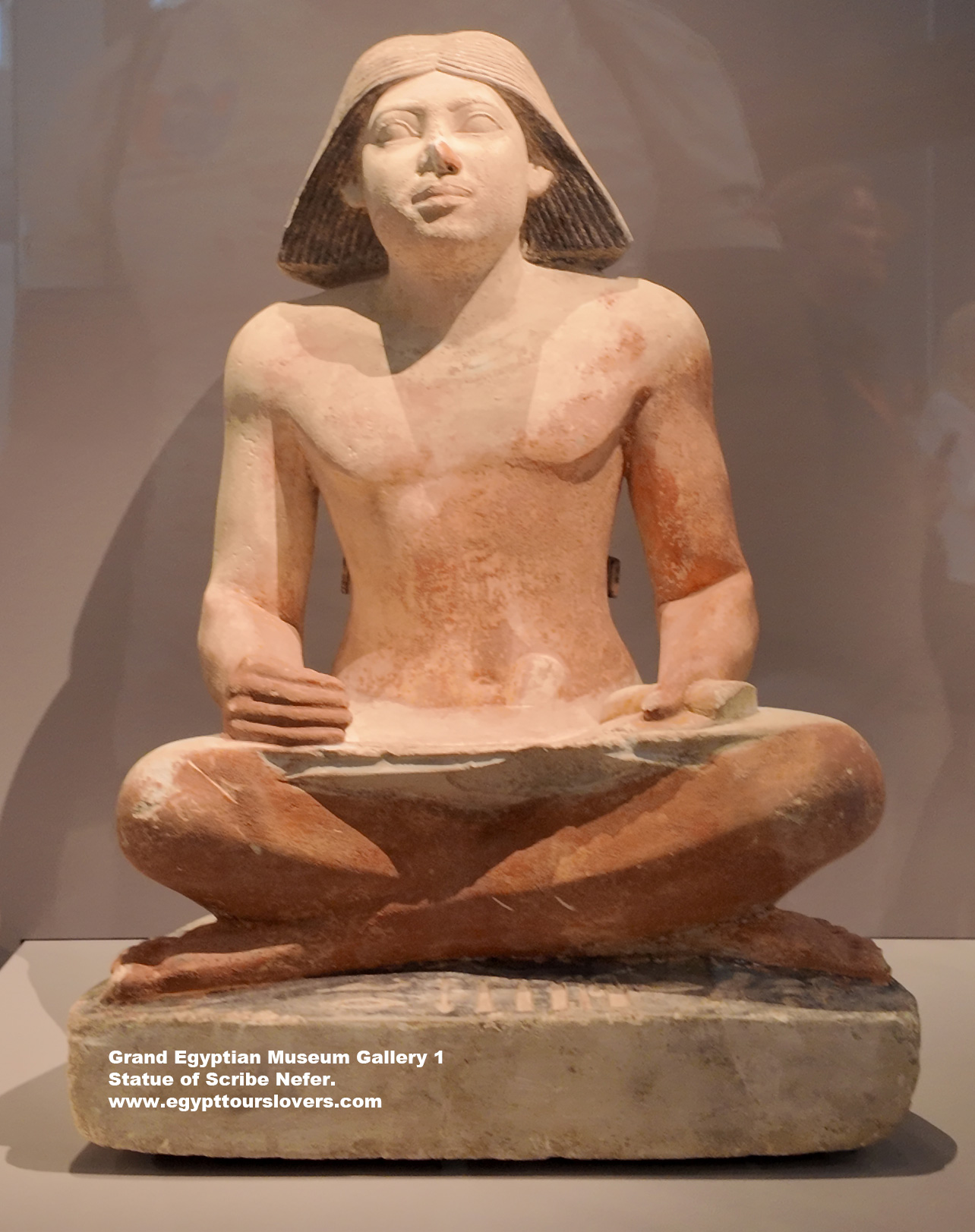
Dynasty 5 | limestone, pigment | abuser
Statue of Scribe Nefer.
Jobs: Known to the king, the overseer of the scribe.
Statue design: seated, writing texts on papyrus placed on his legs.
———– } ———– } ———– } ———– }
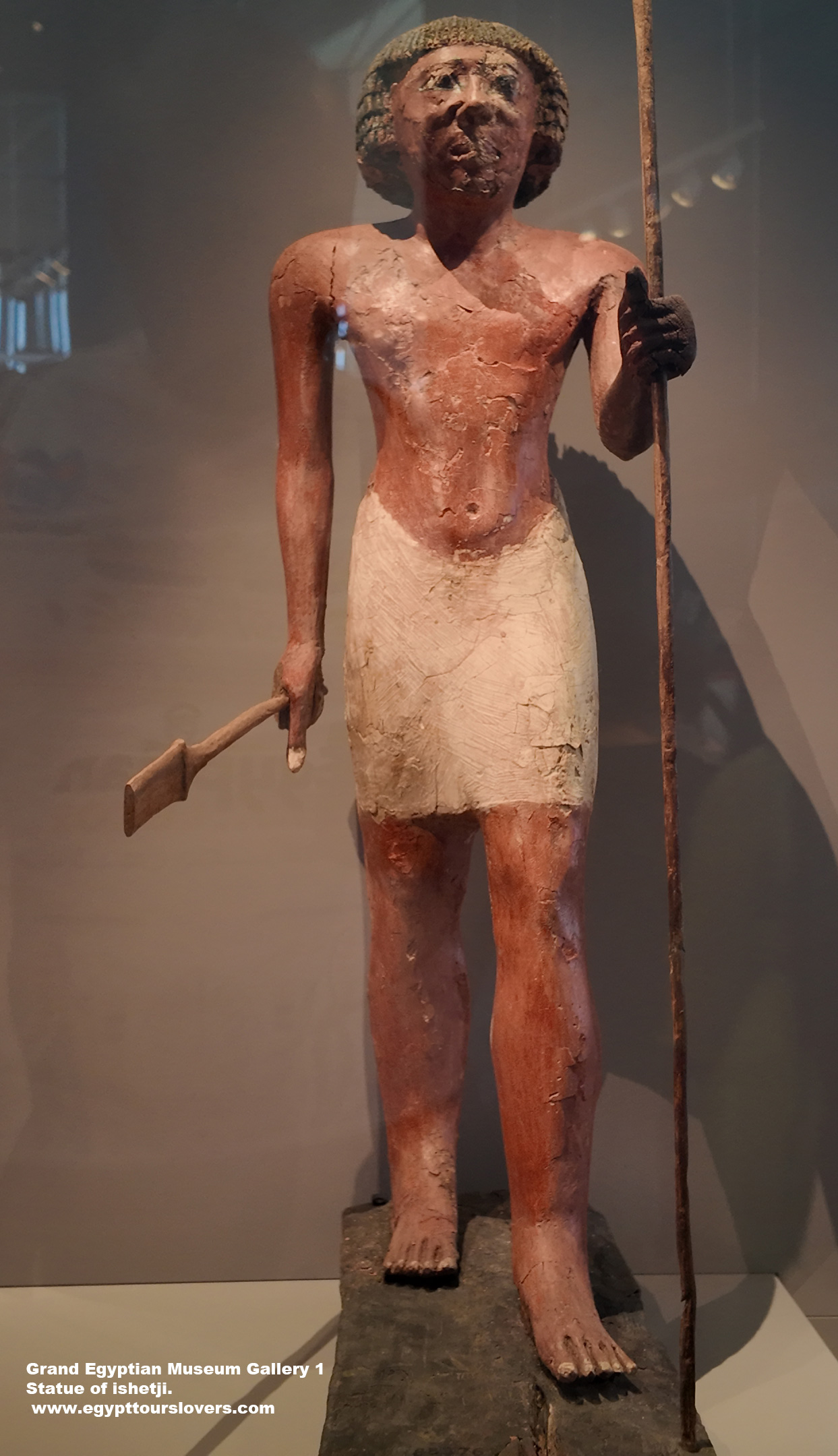
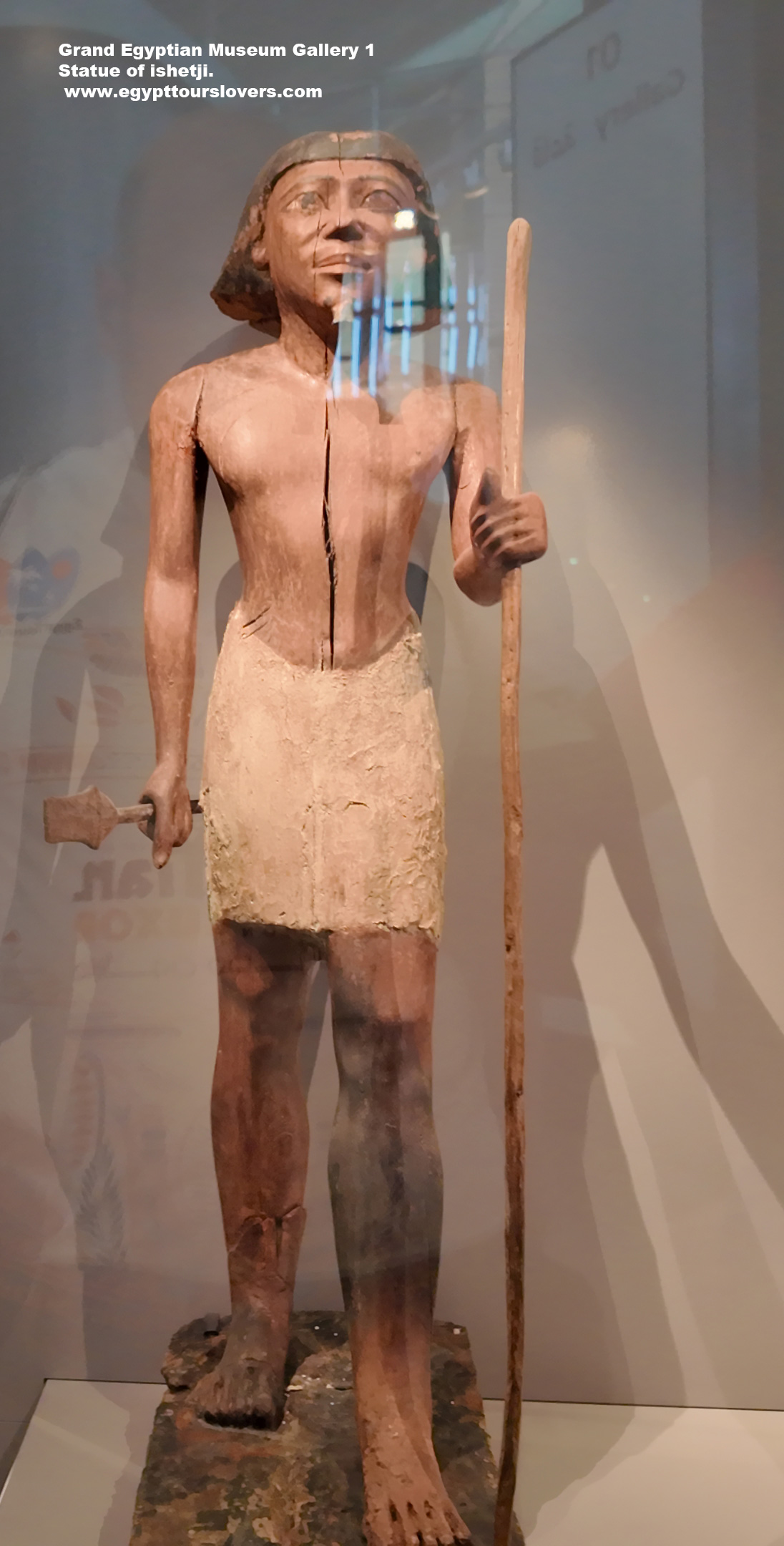
Dynasty 6 | wood, pigment | Saqqara
Statue of ishetji.
Jobs: seal-beaer of the king, administrator of funerary estates of kings pepy I and king pepy II, sole companion of the king.
Design statue holding kherep-sceptres and along staves.
———– } ———– } ———– } ———– }
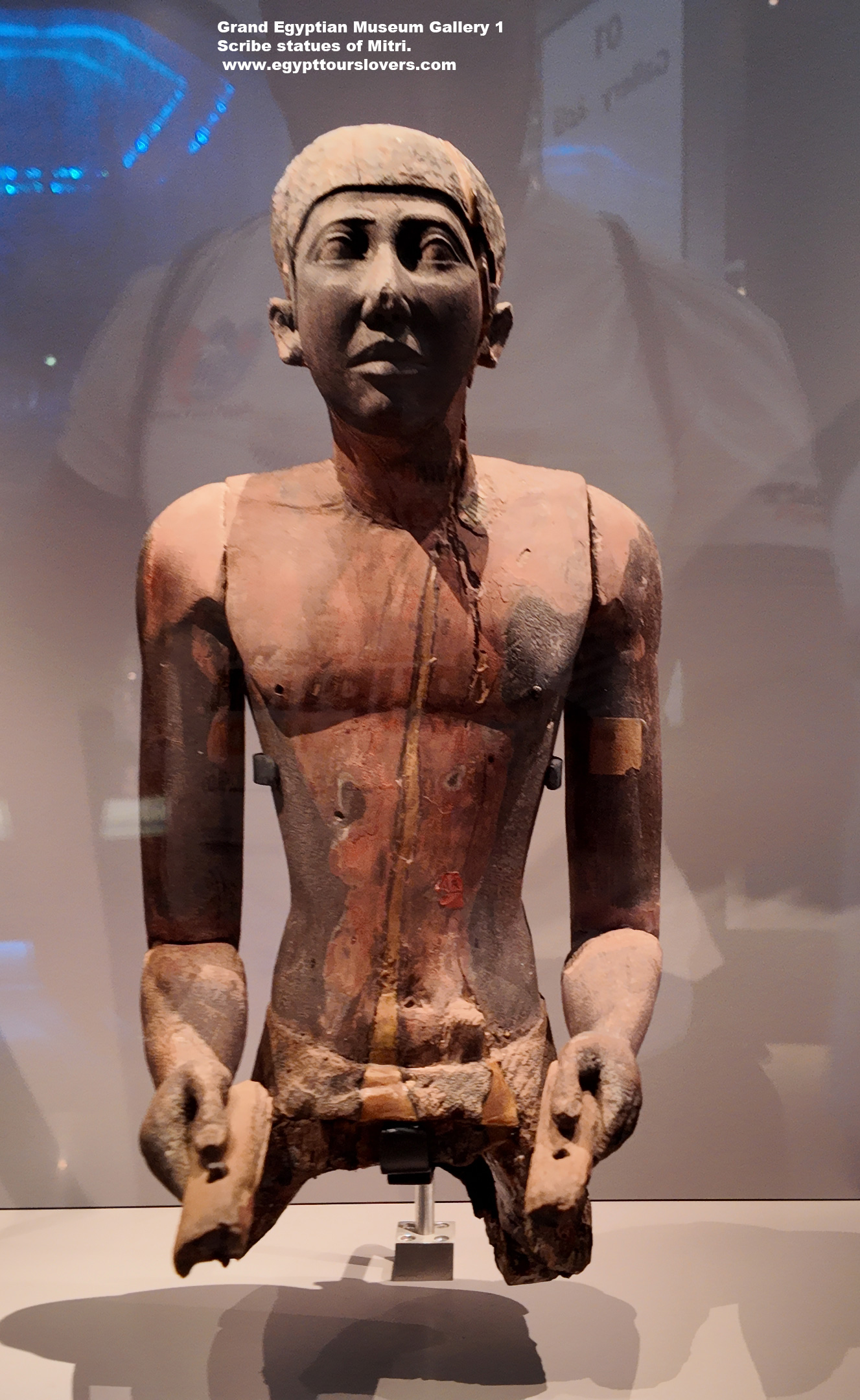
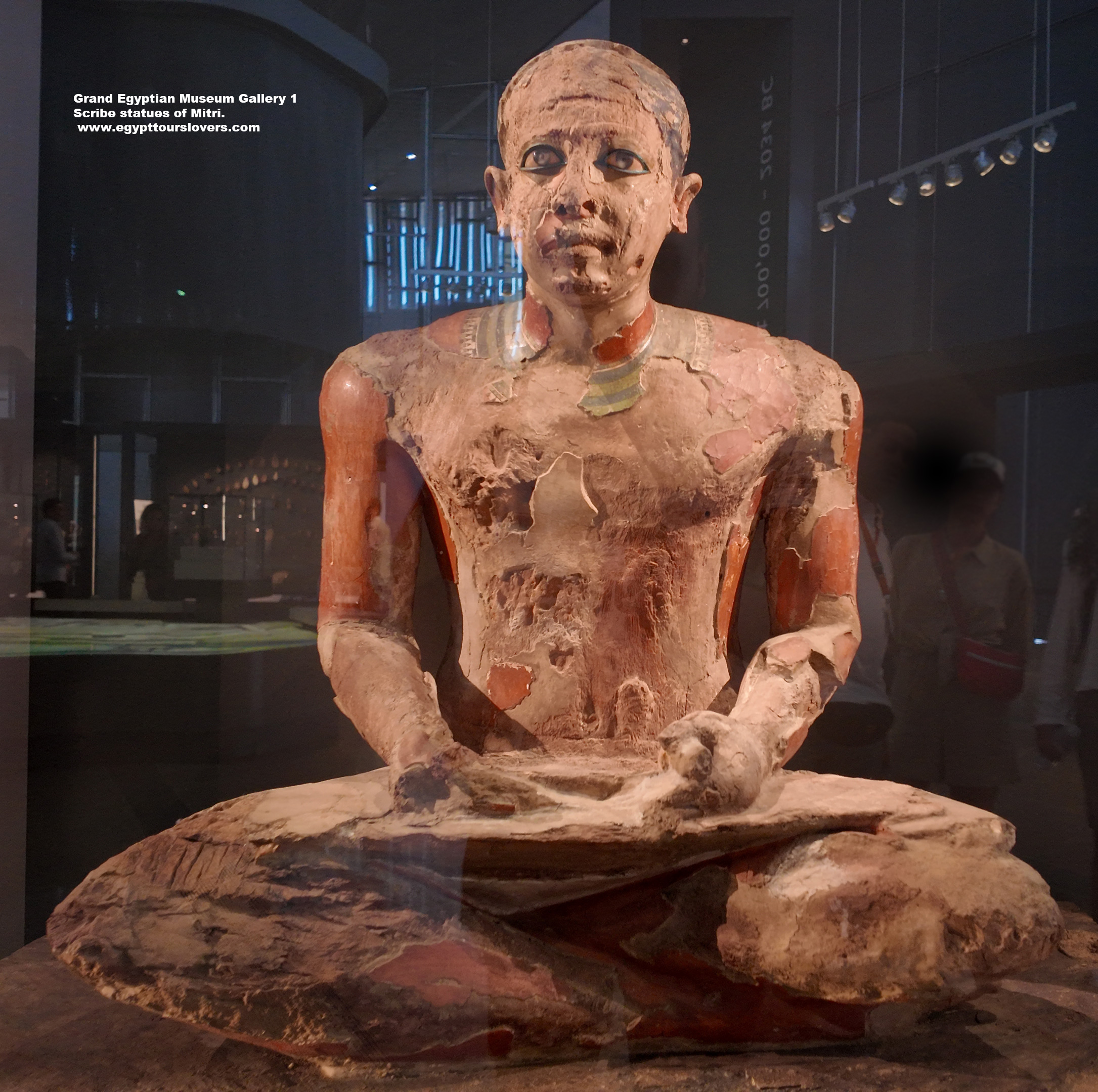
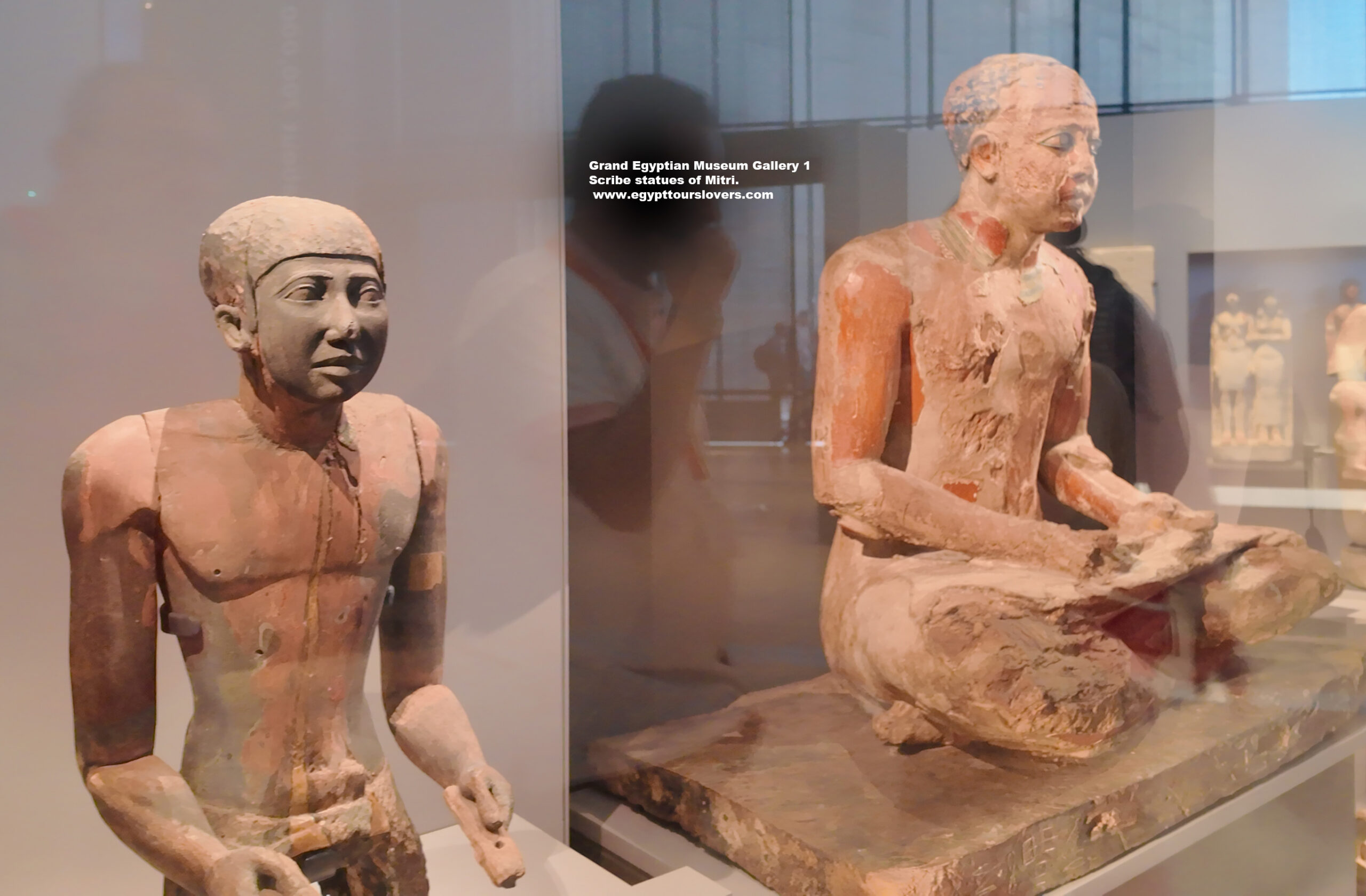
Dynasty 5-6 | plaster, wood, pigment | Saqqara
Scribe statues of Mitri.
Boundary official and priest of Goddess Maat.
Design statues as a scrive writing texts on papyrus,
Statues of mitri and his wife menkaure, priestess of Goddess Hathor, were found in the serdab “hidden room” inside his tomb.
———– } ———– } ———– } ———– }
Researcher & Photographer King Tutankhamun Treasures: Tamer Ahmed Abdel Fattah