King Tutankhamun Treasures in Grand Egyptian Museum – 4K Video & Images Stock Photos
King Tutankhamun Treasures Hall Galleries in Grand Egyptian Museum 4K Video & Images Stock Photos
5,400 precious artifacts, including a gold mask, three layers of solid gold Coffins, Royal Funerary Equipment and Royal Furniture, dried food, and chariots, were discovered in the Tomb of King Tutankhamun “KV 72” in the Valley of the Kings, Thebes, southern Egypt.
The Military Arsenal Protecting the Divine Body King Tutankhamun, more than 140 objects between 17 layers of thin linen bandages to magically assist the king Tut in his life after death.
King Tutankhamun Treasures 4K Video:
The world’s enduring fascination with the treasures and possessions of King Tutankhamun. The world yearned for exciting good news after the devastating First World War, until the story of the life, death, and treasures of King Tutankhamun.
Exhibitions of precious artifacts in one place New Egypt Museum Cairo “Grand Egyptian Museum“.
King Tutankhamun Treasures Hall Galleries in Grand Egyptian Museum 4K Video & Images Stock Photos
———– } ———– } ———– } ———– }
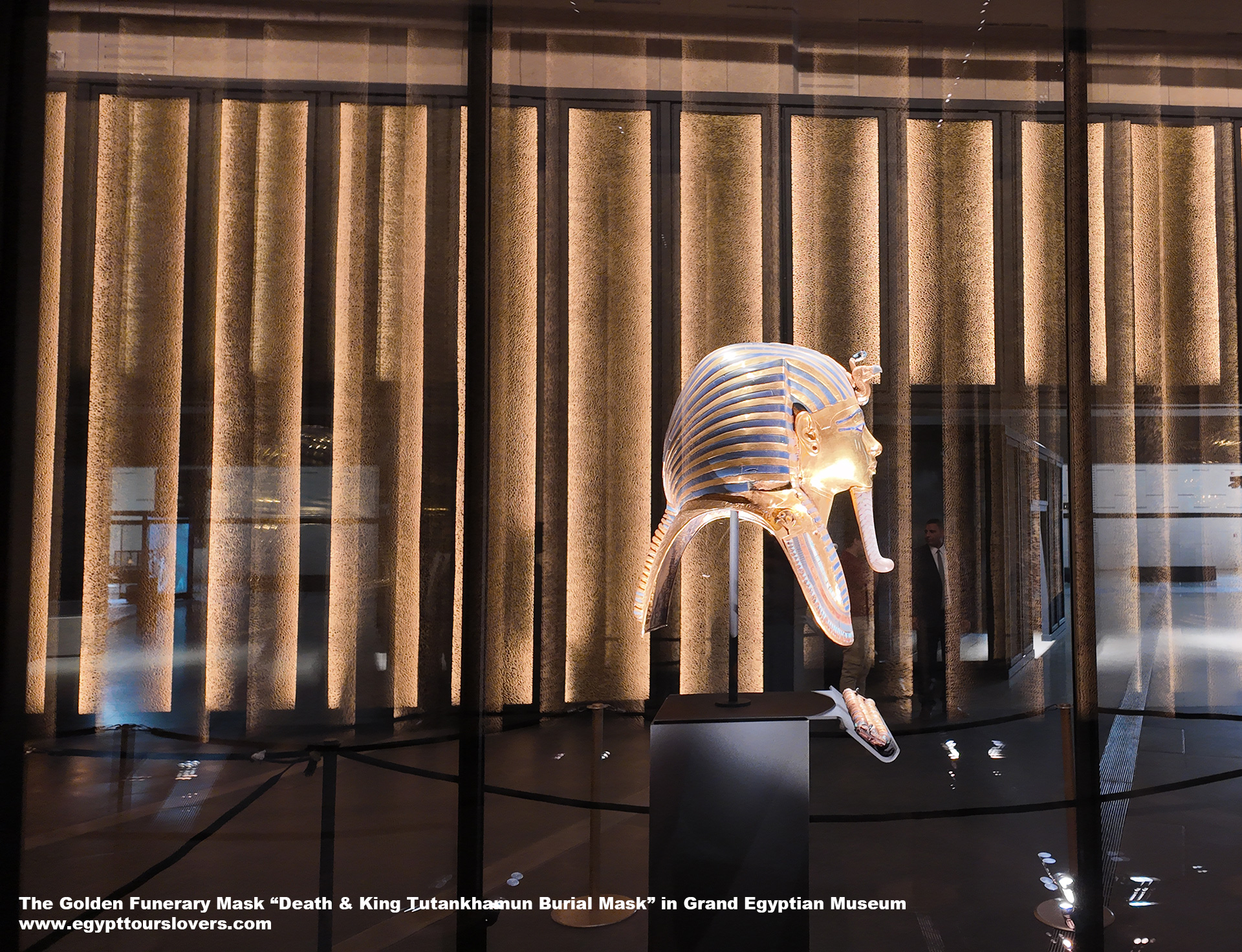
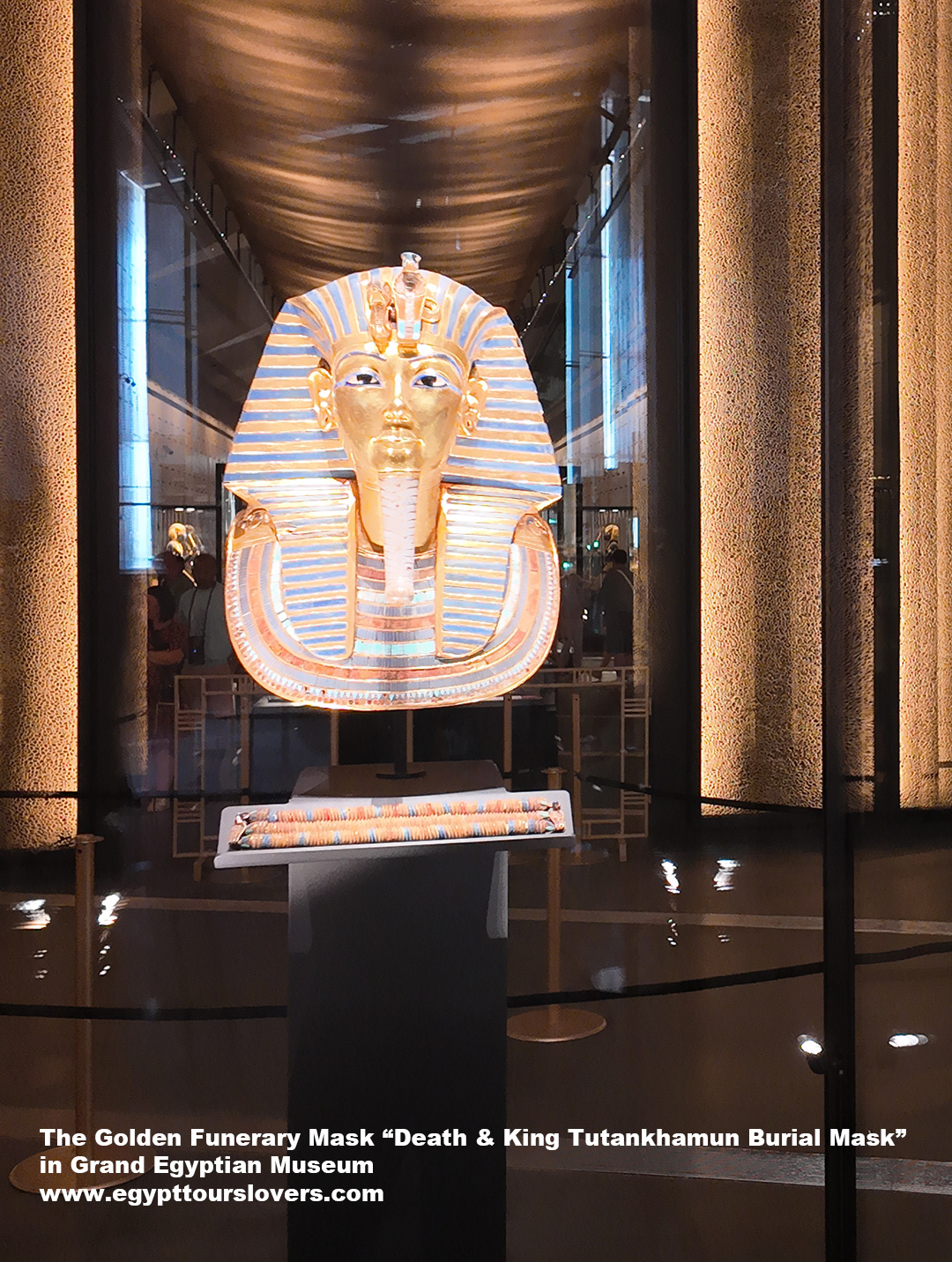
The Golden Funerary Mask “Death & King Tutankhamun Burial Mask”
Tutankhamun’s mask is made of gold, glass, and semi-precious stones. Above the king Tut’s head are the vulture Nekhbet and the cobra Wadjet, goddesses of protection for Upper and Lower Egypt.
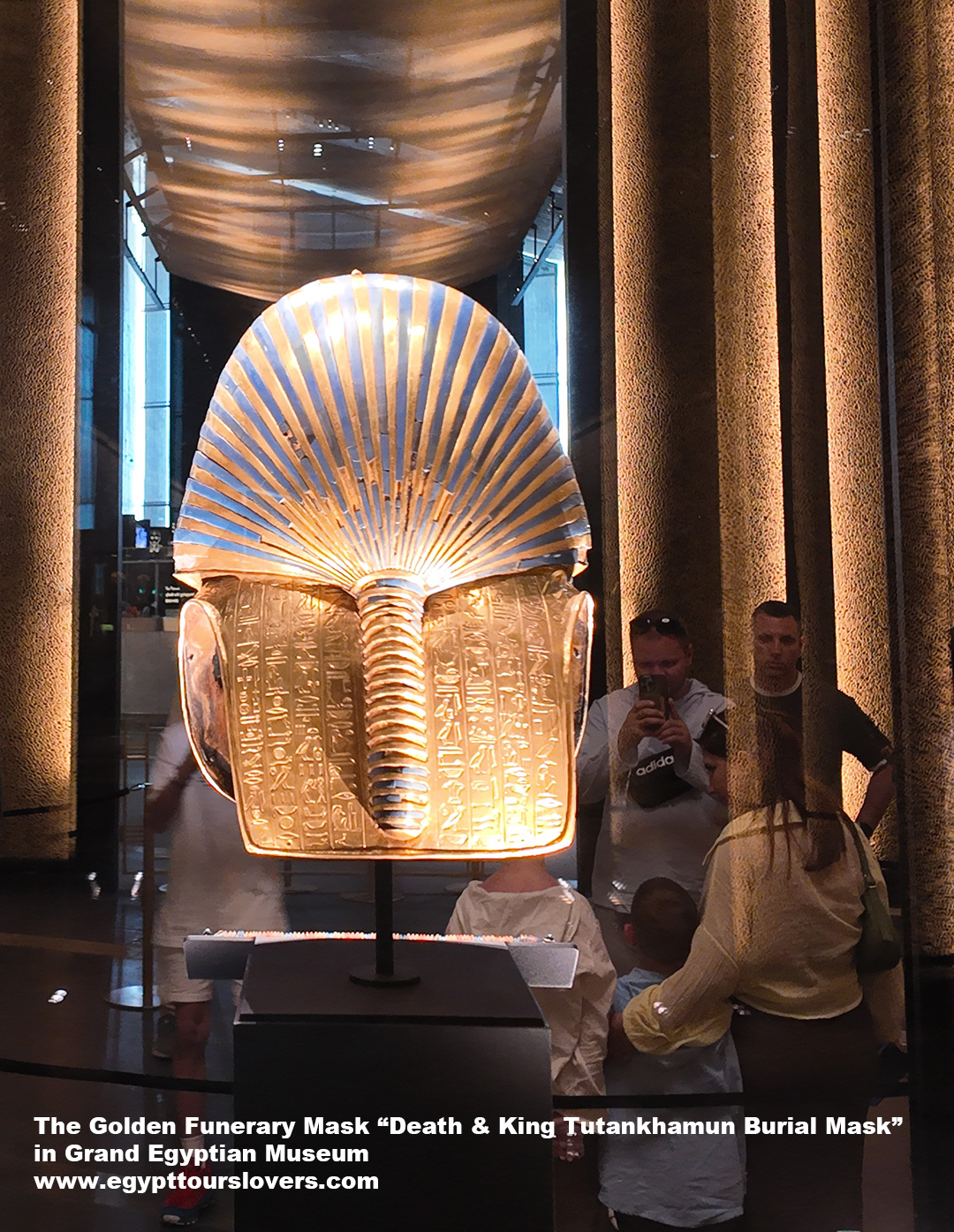
Priests of the Temple of Amun inscribed a Magical Spell on the back of Tutankhamun’s golden mask to invoke the protection of the gods of the underworld.
There was great fear among the high priests that the young king would be unable to overcome the monsters of the underworld during his journey, so tools to aid and protect him were inscribed and buried.
———– } ———– } ———– } ———– }
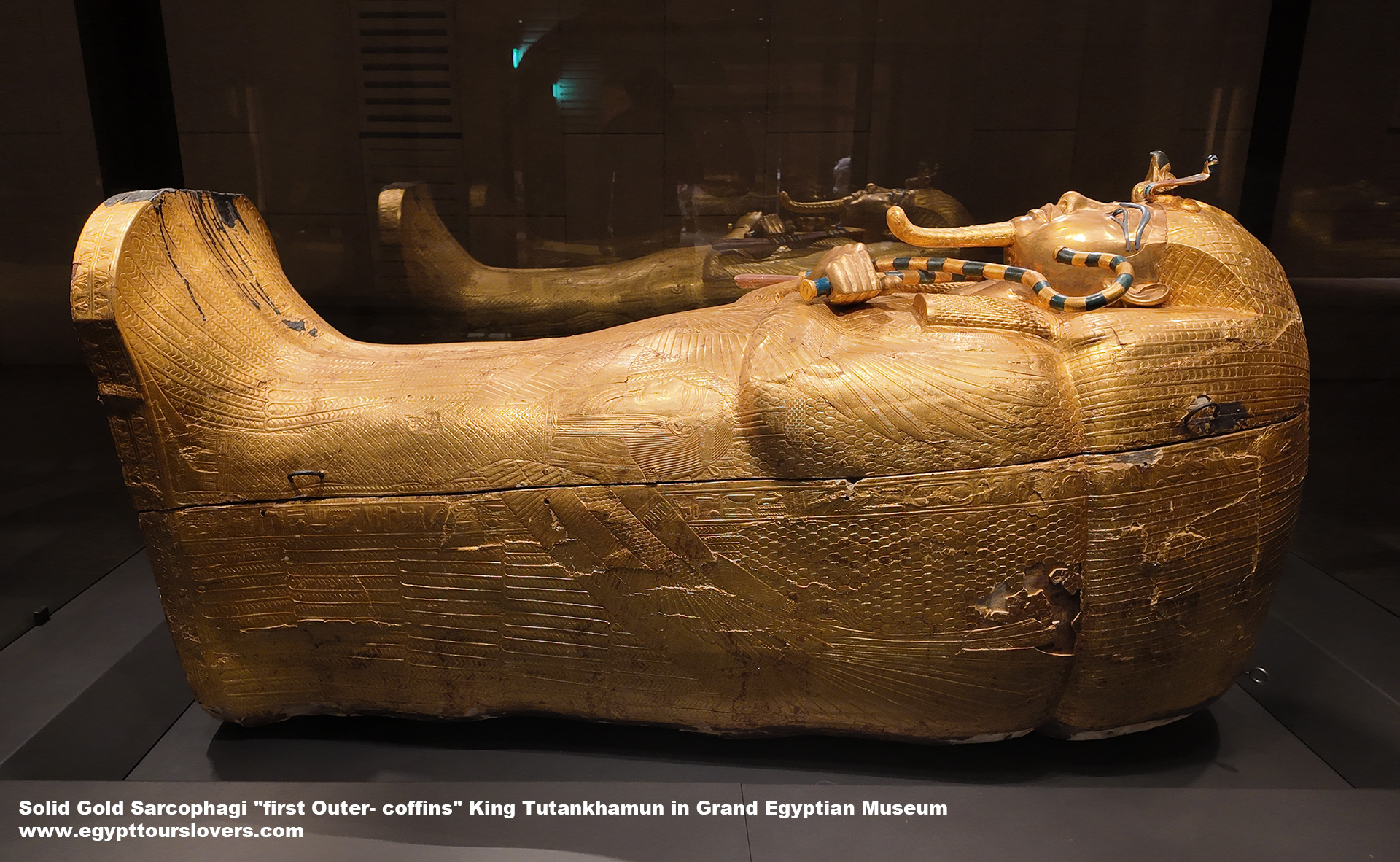
Solid Gold Sarcophagi “Outer- coffins”
A massive sarcophagus was carved from a single piece of solid Quartzite within King Tutankhamun’s tomb.
It contained Three Gilded Coffins shaped like mummies with curly beards, representing Osiris, holding a Crook and Flail, symbols of royal power and authority.
Guardian Deities with Spread Wings Wrap surrounded each coffin in a protective embrace, their forms representing the guardianship of King Tutankhamun on his journey to the afterlife.
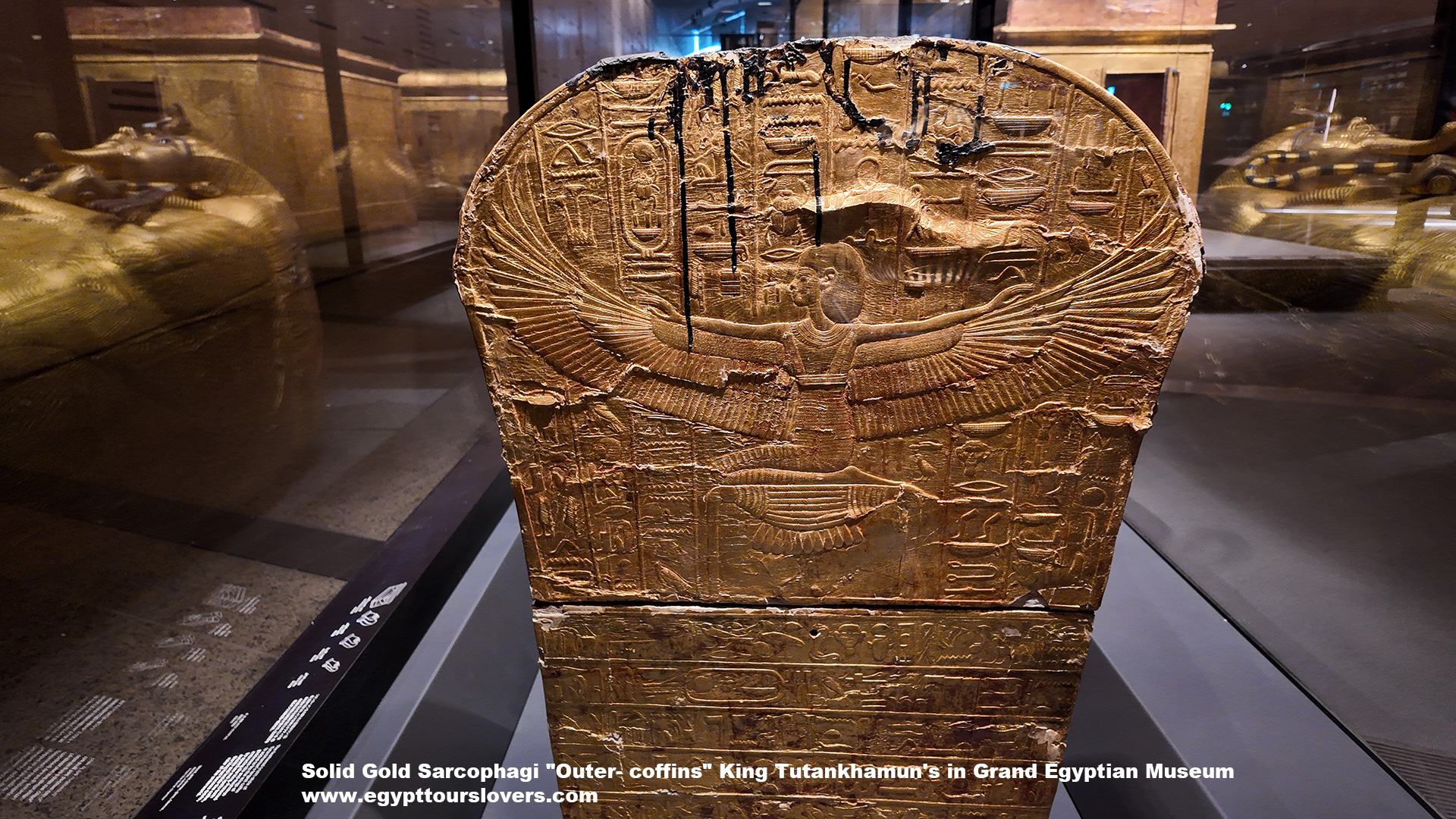
The first outer coffin:
Priests from the Temple of Amun “Precinct of Amun-Re, Karnak Temple” at Thebes discovered that the outer coffin was too long to fit within the quartzite sarcophagus carved in the tomb in the Valley of the Kings. Sections were cut from the bottom of the outer coffin to accommodate the larger stone sarcophagus.
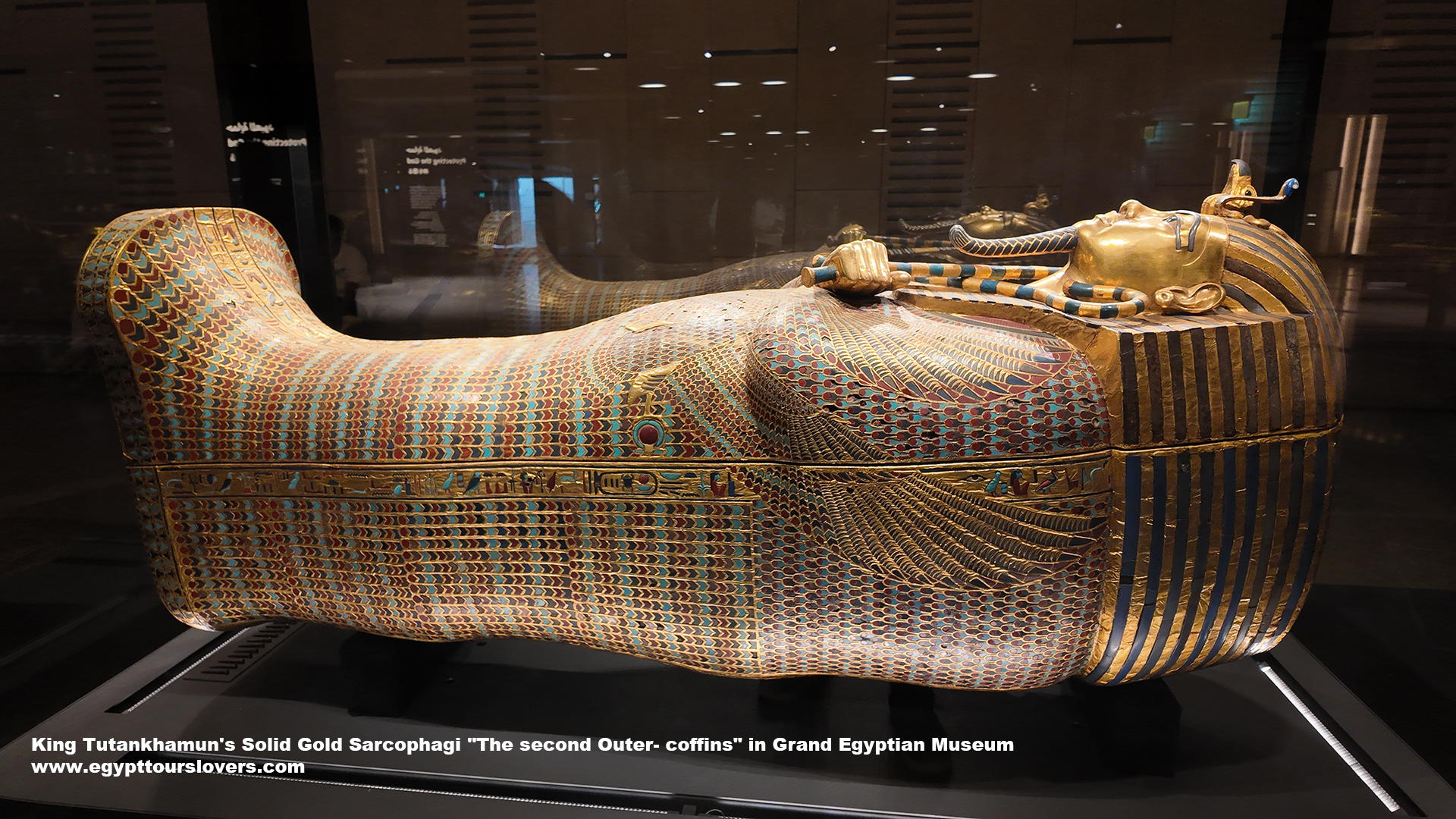
The Second outer coffin:
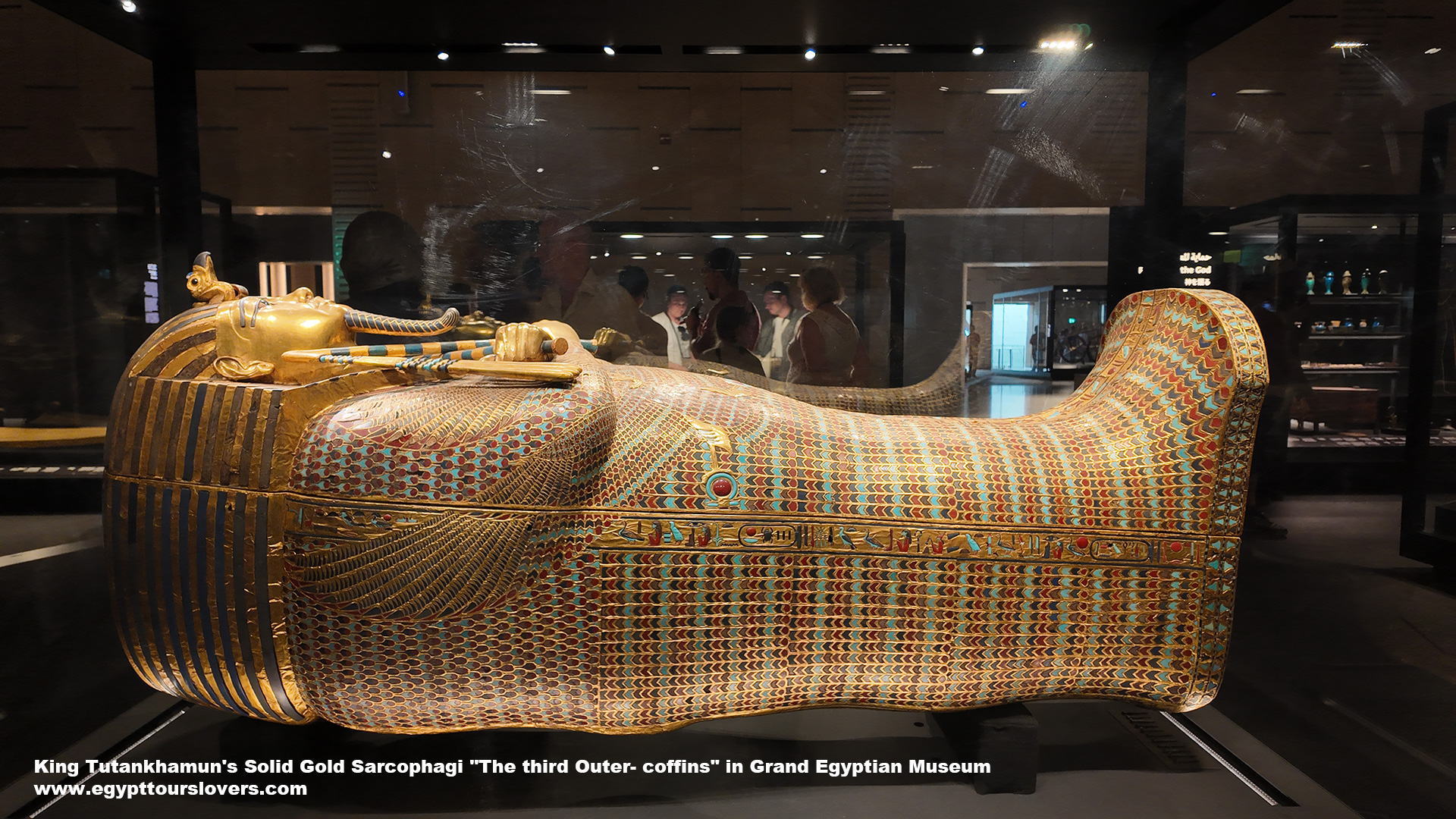
The third inner coffin:
It was made of 110 kilograms of pure gold to protect King Tut’s mummy from evil. Images of four ancient Egypt goddesses are engraved on the coffin:
- Nekhbet, vulture goddess of Upper Egypt
- Wadjet, snake goddess of Lower Egypt
- Isis, goddess of magic and sister-wife of Osiris
- Nephthys, goddess, protectress of the dead.
———– } ———– } ———– } ———– }
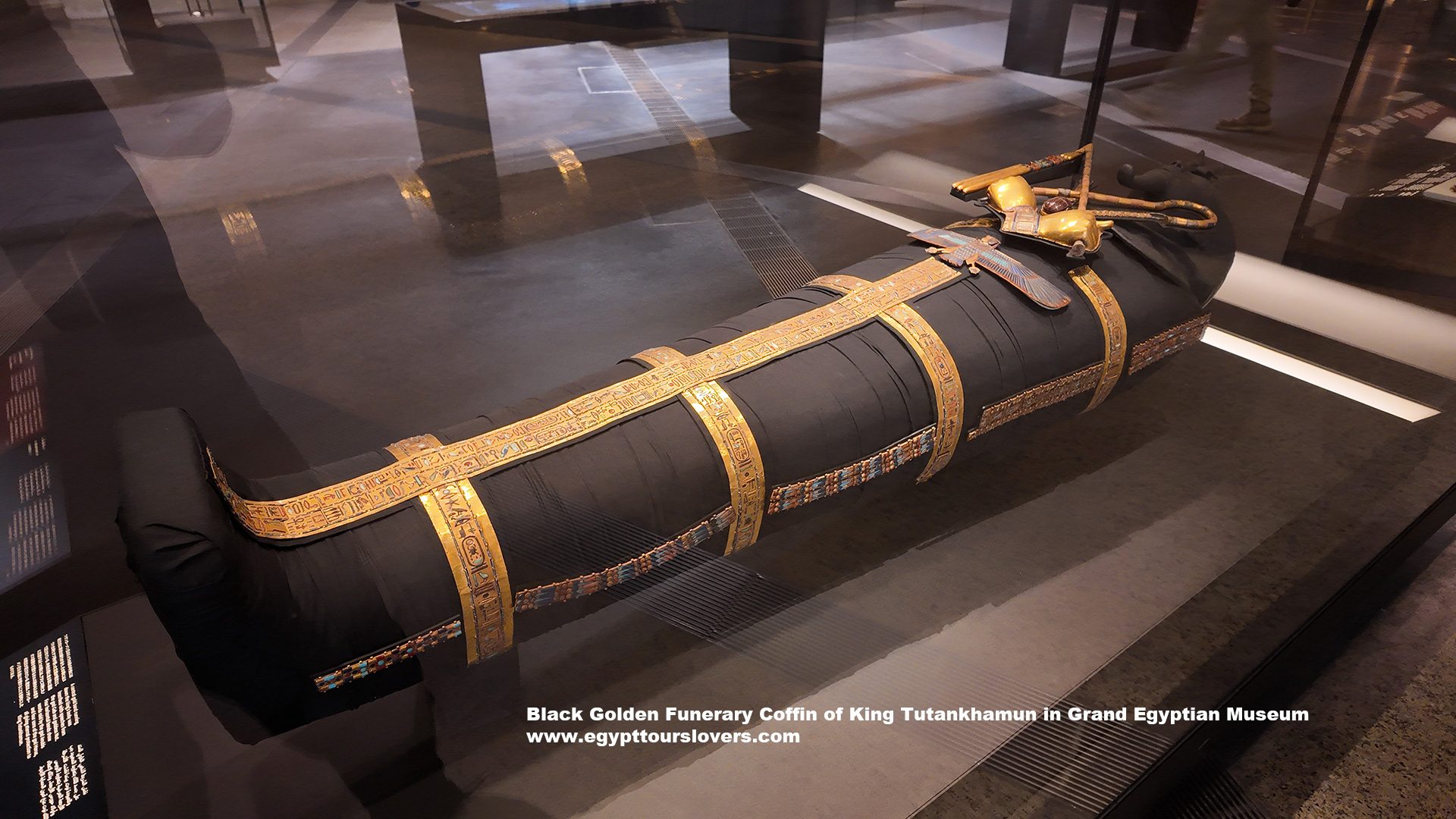
Black Golden Funerary Coffin
———– } ———– } ———– } ———– }
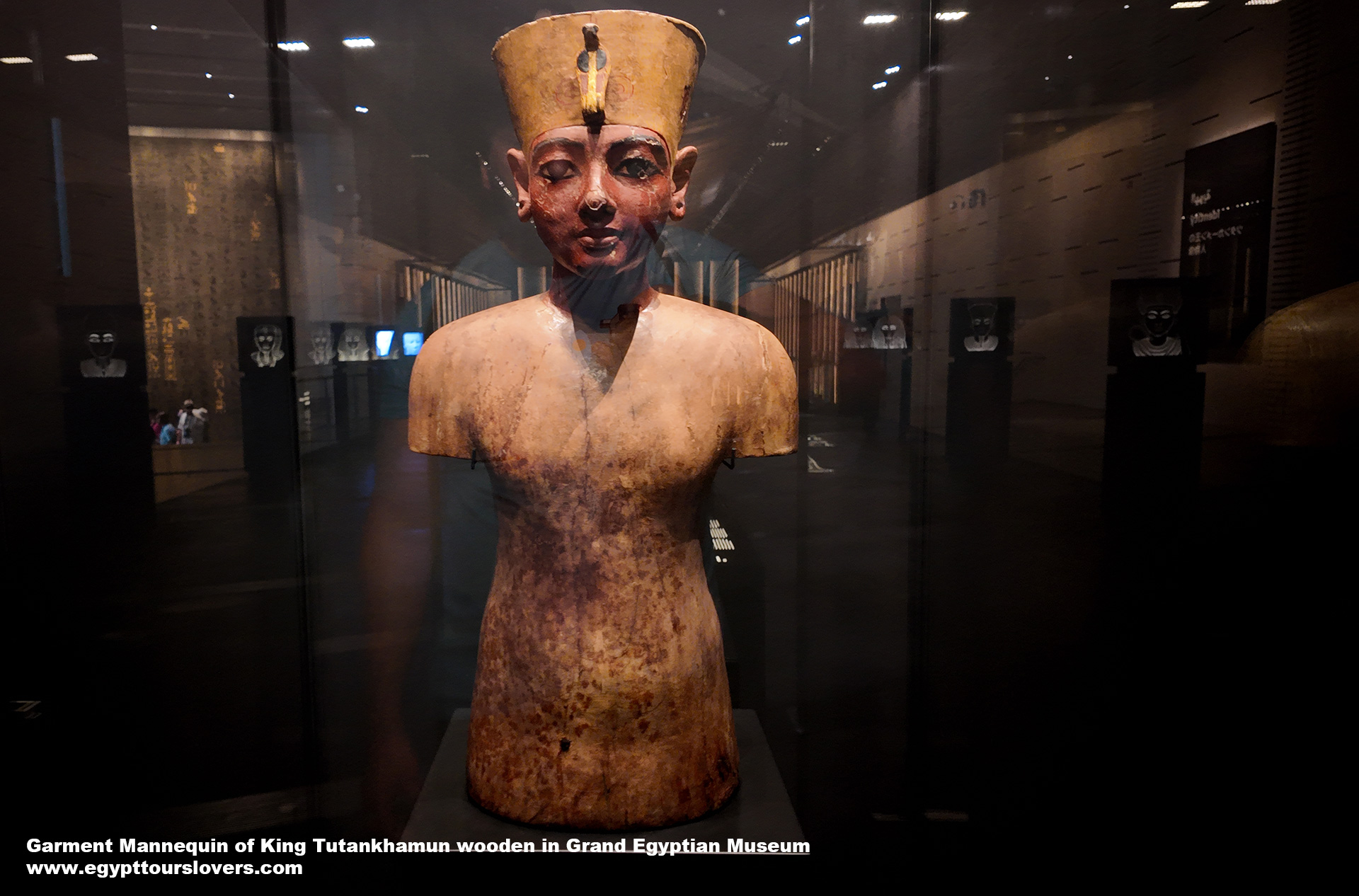
Garment Mannequin of King Tutankhamun wooden
The first royal fashion mannequin in history used for prepare and display King Tutankhamun royal garments choosing Clothing colors, Jewelry.
A life-size painted wooden statue of King Tutankhamun “A bust of Tutankhamun” at the age of nine, when he became the legitimate ruler of Upper and Lower Egypt, showing his true features as a child.
———– } ———– } ———– } ———– }
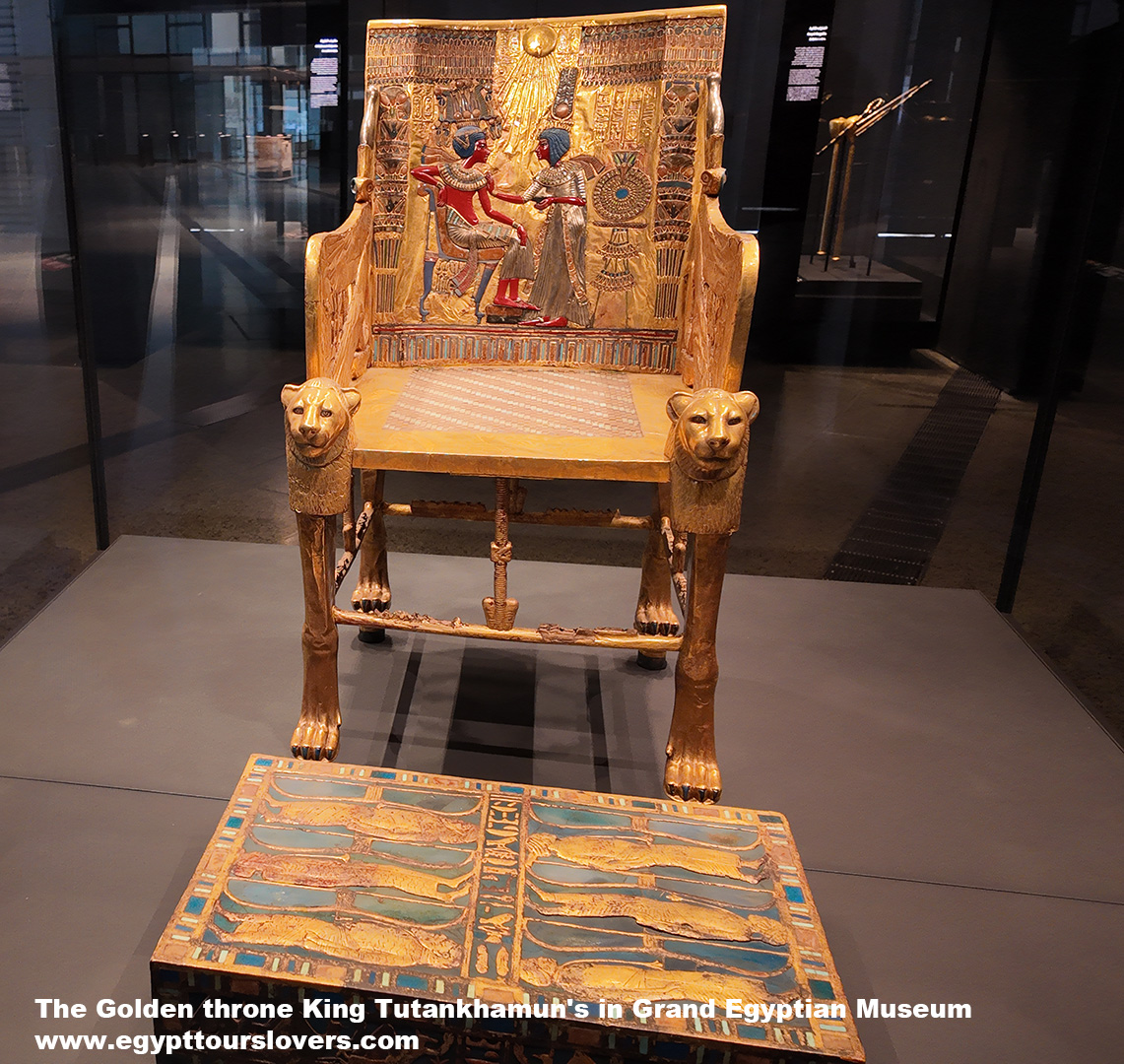
The Golden throne
Scenes depict King Tutankhamun and his wife, Queen Ankhesenamun (also his sister), resting beneath the sun disk (the Goddess Aten), with her anointing their shoulders and legs with fragrant oil for healing.
This golden throne was likely crafted and carved during the reign of his father, King Akhenaten, during the Amarna Period, when he sought to unify all the ancient Egyptian gods, making Aten the sole deity and mediator among them!
———– } ———– } ———– } ———– }
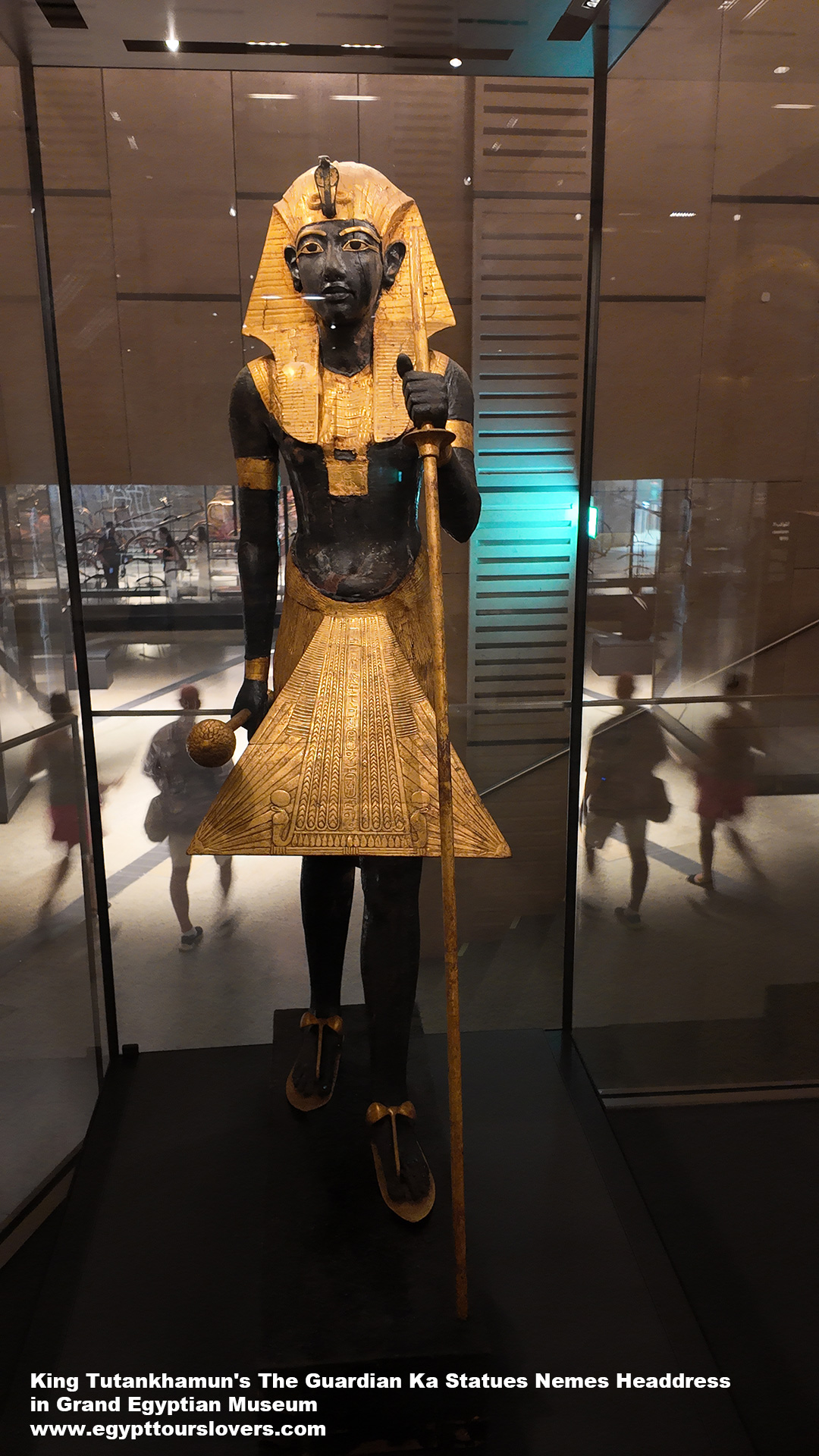
The Guardian Ka Statues…
The Ka statues guarding King Tutankhamun’s burial chamber are depicted as Osiris, the god of the underworld in ancient Egyptian religion.
Their bodies are painted black, symbolizing death or the color of the Nile’s black silt.
One statue wears the Nemes Headdress (found on the golden mask) with a cobra motif, while the other wears the Khat Headdress without folds or lines, open at the back.
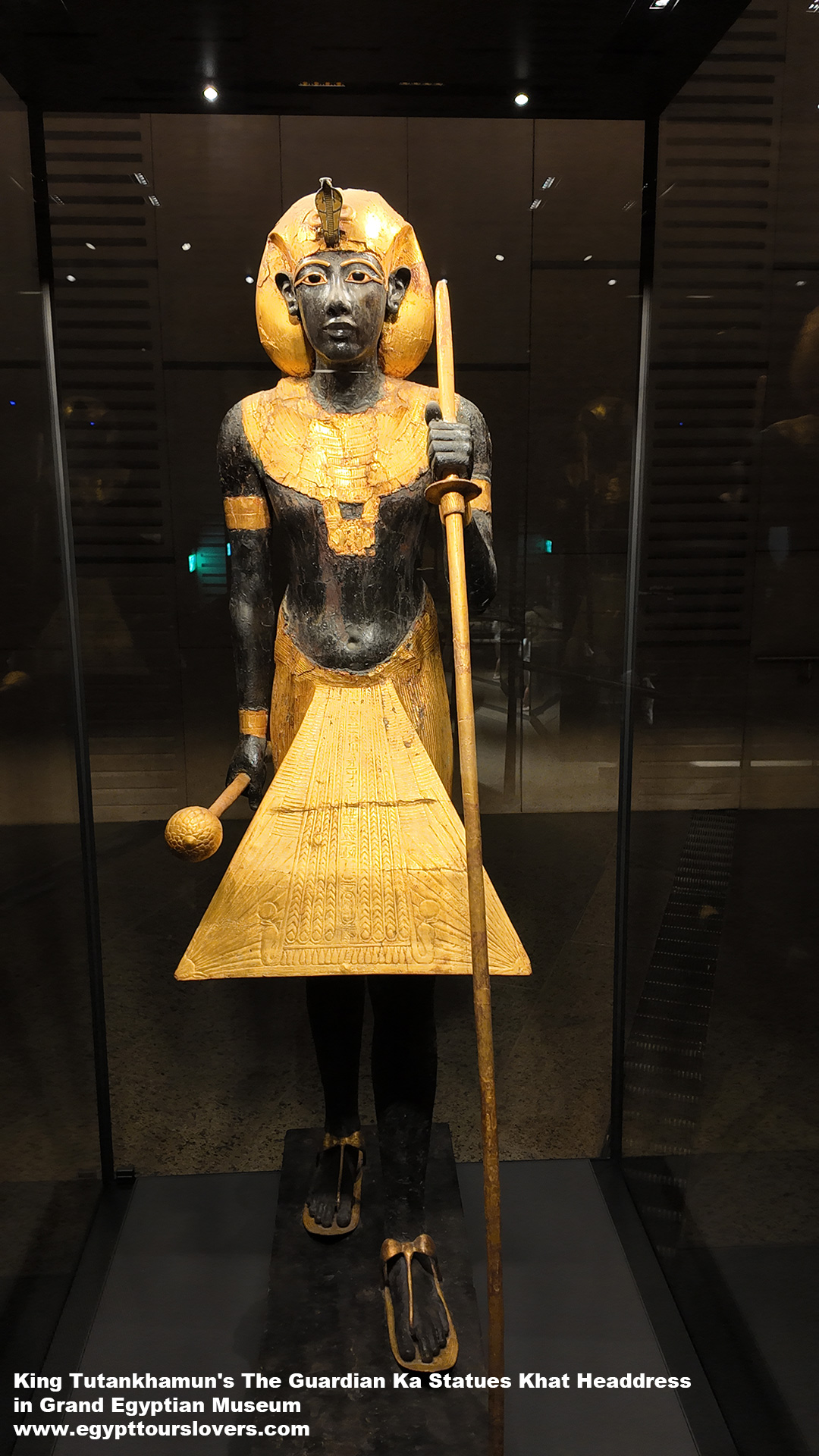
Each statue is depicted holding a staff and a club, and wearing a collar, skirt, and gold-plated sandals.
Inscription reads in a kilt “Guardian Ka Statue with nemes headdresses”: “Tutankhamun, forever alive like، Ra God each day.”
Inscription reads a kilt “Guardian Statue with Khat Headdress”: the king’s ka, or spiritual double.
———– } ———– } ———– } ———– }
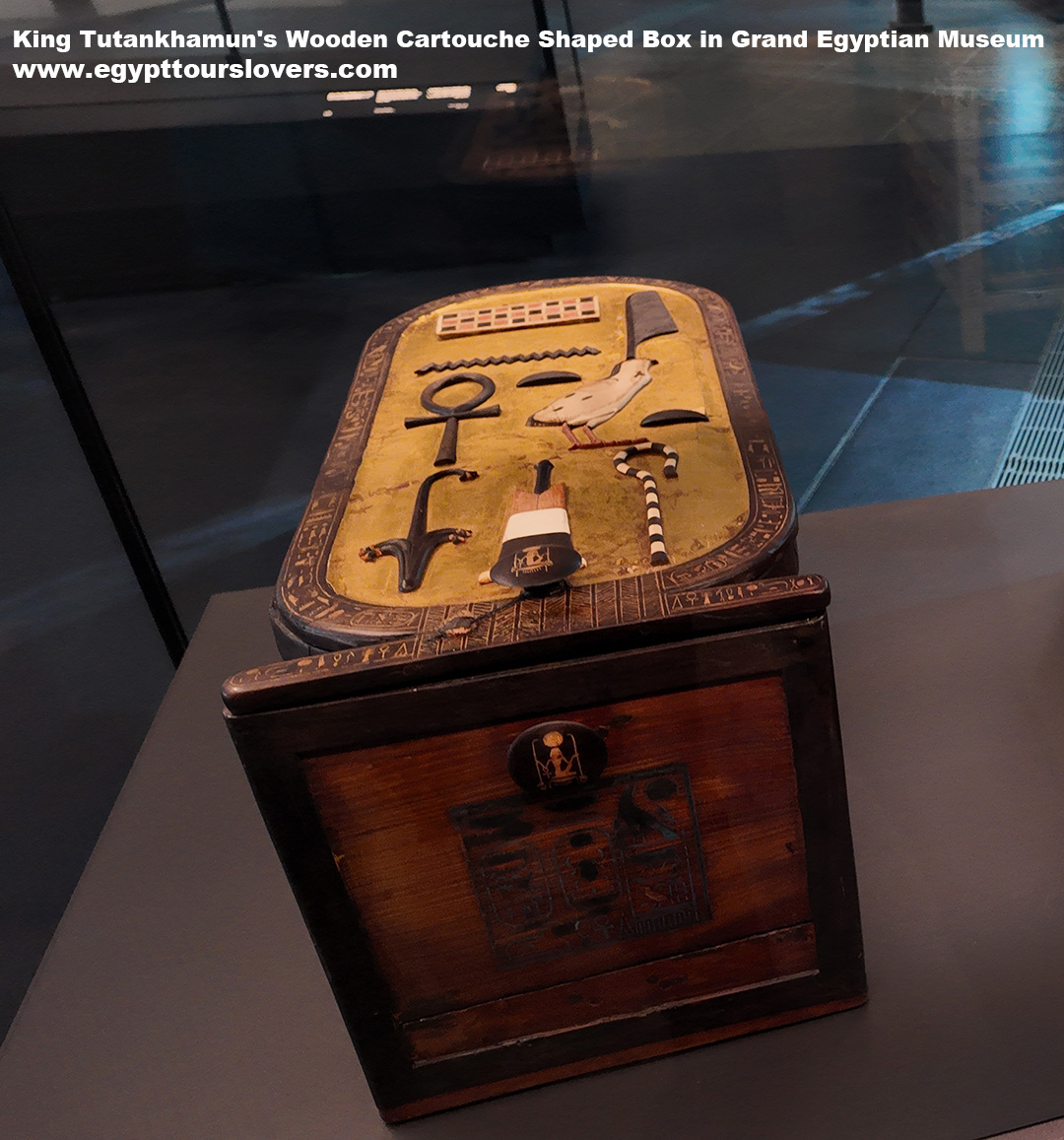
Wooden Cartouche Shaped Box
Artifacts: The wooden box is two feet long, designed in the shape of an oval Cartouche containing Hieroglyphic Inscriptions that symbolize the name and titles of King Tutankhamun.
Explanation of hieroglyphic inscriptions:
- “Tut-ankh-amun” means “living image of Amun,” king of the gods. The top three hieroglyphs spell Amun’s name.
- The Ankh (at left) symbolizes eternal life. The bird and two loaves spell “tut,” meaning “image,” hence “living image.”
- A crook (for “ruler”) plus two symbols for the city of Thebes “Luxor” declares Tutankhamun leader of Amun’s sacred city.
———– } ———– } ———– } ———– }
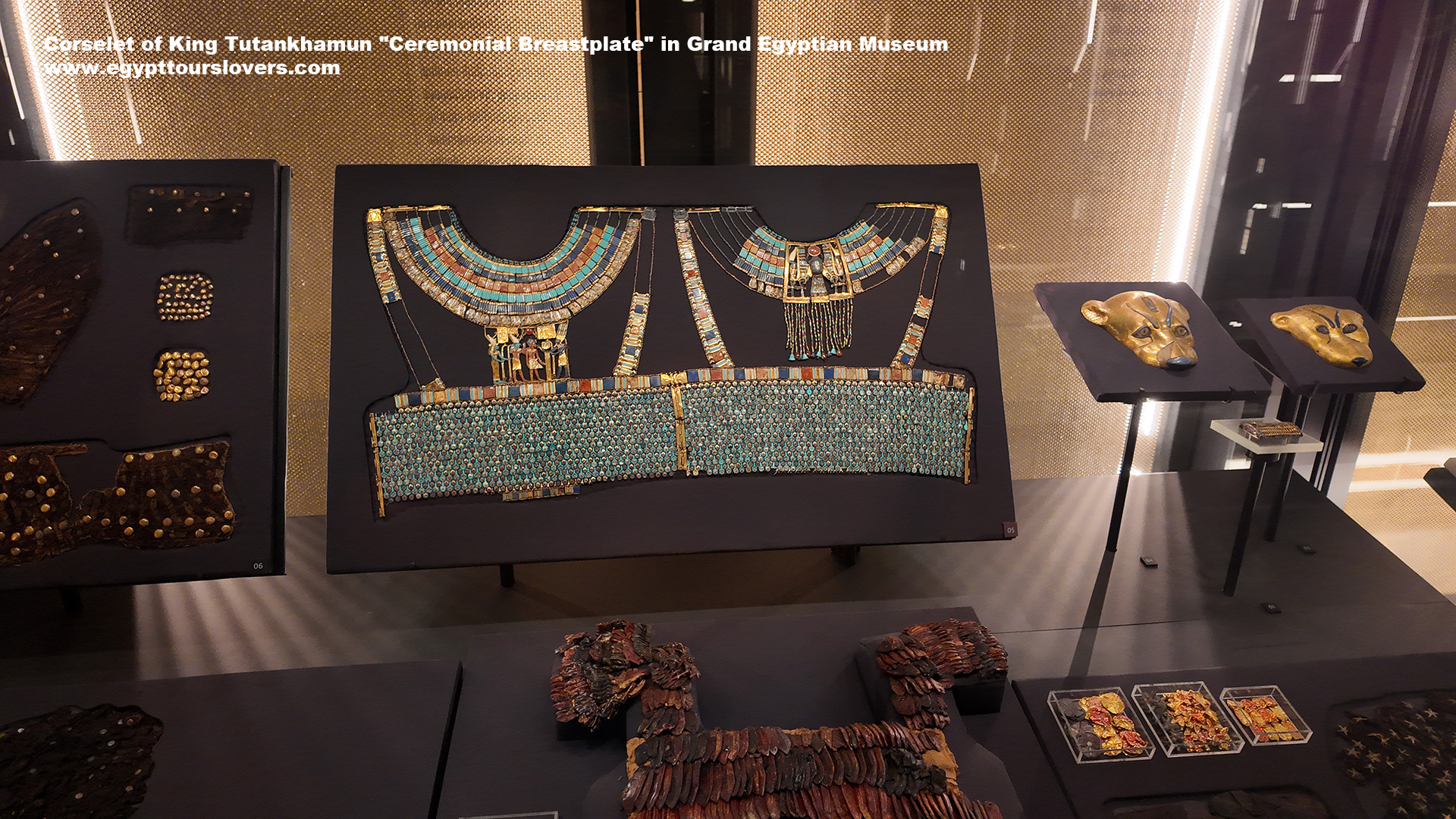
Corselet of King Tutankhamun “Ceremonial Breastplate”
The Corselet design depicts the God Amun offering the Ankh, the symbol of life, to King Tutankhamun.
At the top of the Corselet back hangs a Scarab beetle “symbol of eternal life”, with wings and a falcon’s tail, holding the sun disk high. Each claw bears an ankh, intended for presentation to King Tutankhamun during the sacred Opening of the Mouth ritual.
Flanking the scarab are two cobras, one wearing the white conical crown of Upper Egypt (on the left), and the other the red crown of Lower Egypt, with its Projecting Curl.
Howard Carter found fragments of the Ceremonial Armor scattered haphazardly in wooden boxes, even in a dried date dish. This suggests that the burial priests were hasty and careless in arranging King Tutankhamun’s Funerary Furniture, or that the tomb had been Robbed. What could be the key to solving this mystery?
The Ceremonial Armor was restored using curves and thread holes, but there are still gaps in Corselet design near the neckline, along with other gaps, indicating missing areas that were stolen either by Grave Robbers or by Howard Carter himself!
———– } ———– } ———– } ———– }
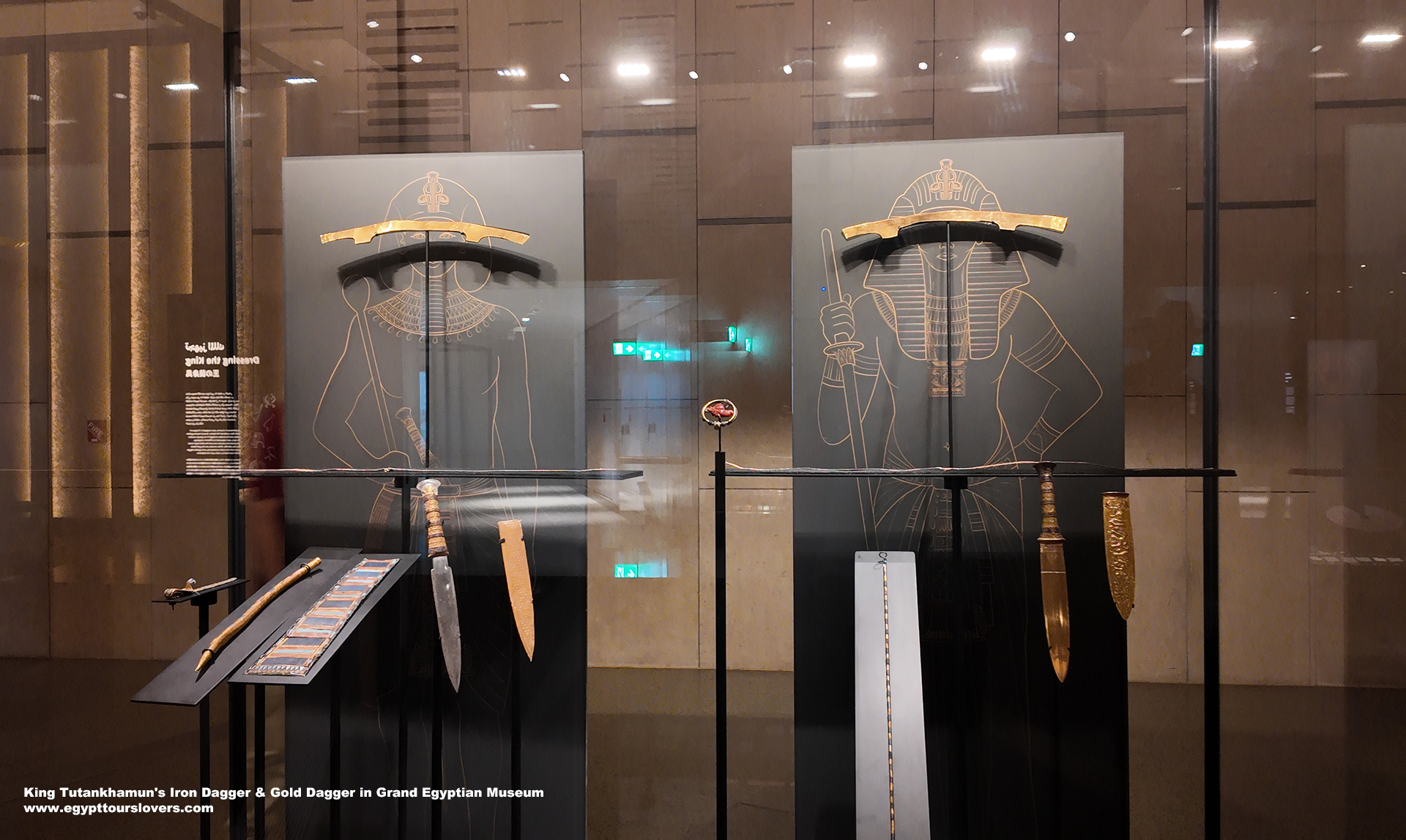
Iron Dagger & Gold Dagger
King Tut was a Warrior from a young age and learned to Hunt and Fight in the desert near the pyramids of Giza.
The Golden dagger was made of pure gold, and its scabbard is engraved with a depiction of hunting wild beasts. Was this golden dagger a gift from a foreign ruler, or was it specially made for King Tut?
Two daggers were placed with King Tut’s Mummy, wrapped in linen bandages, to fight the giant Serpent Apep in the underworld.
———– } ———– } ———– } ———– }
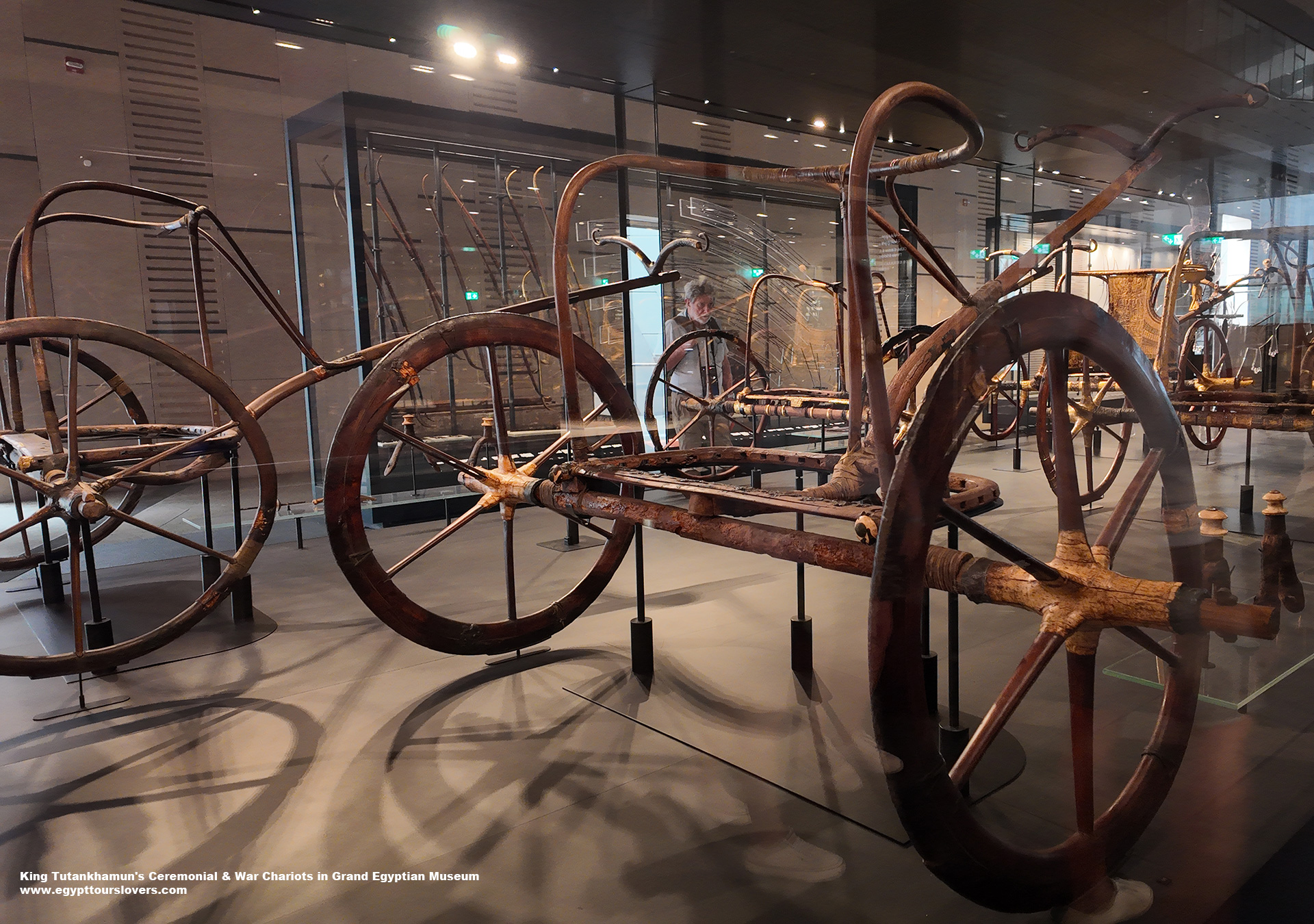
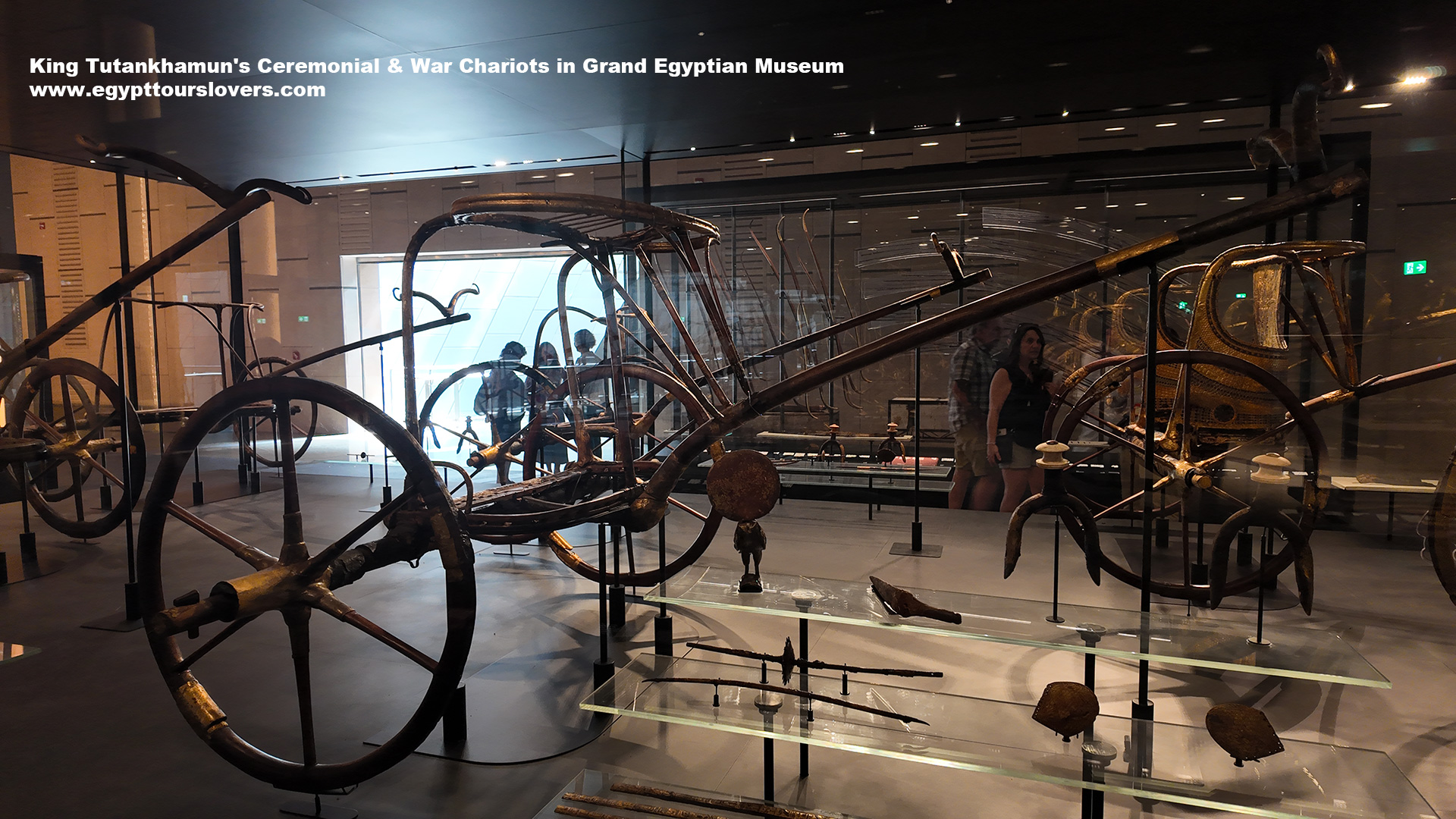
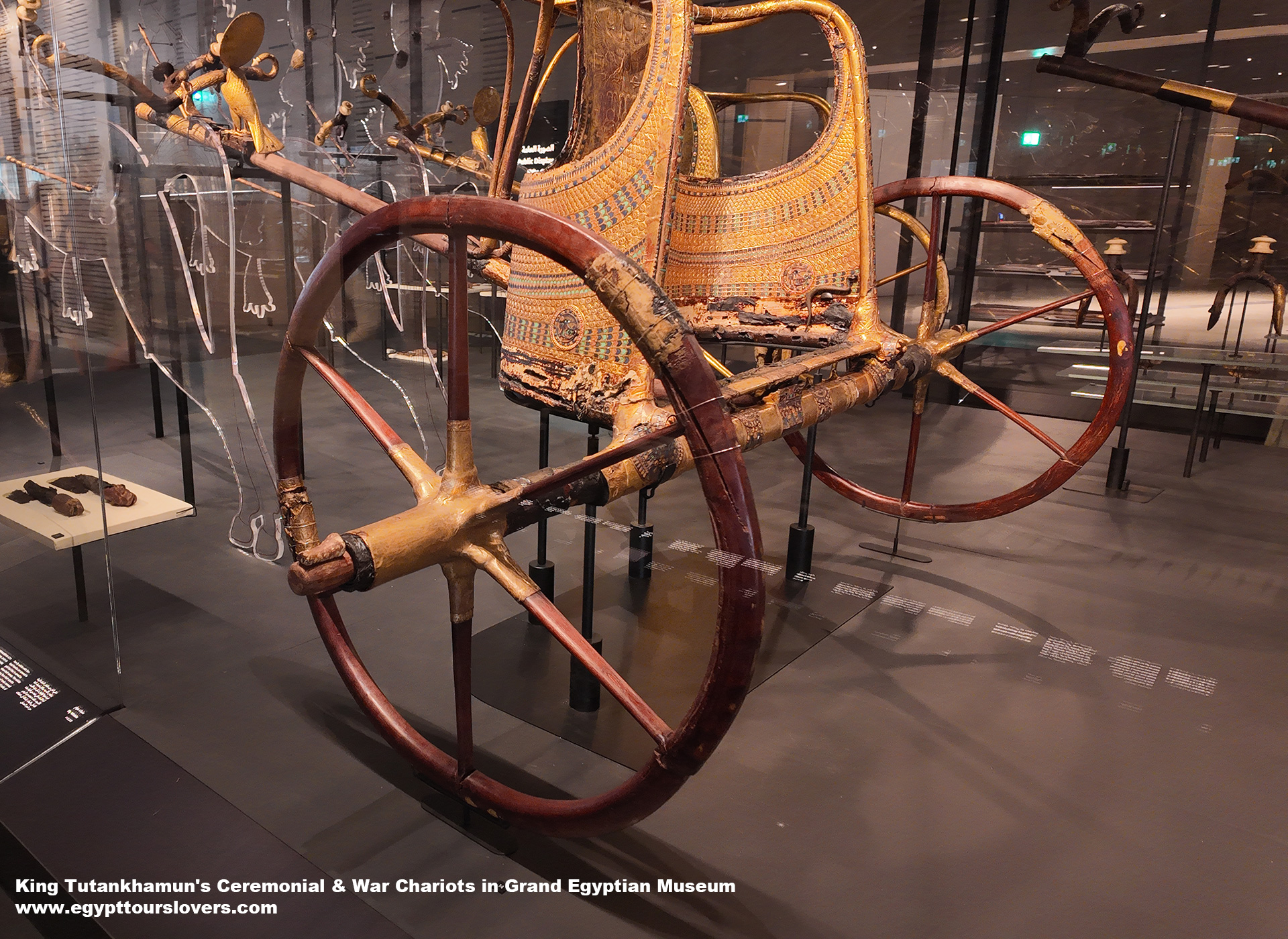
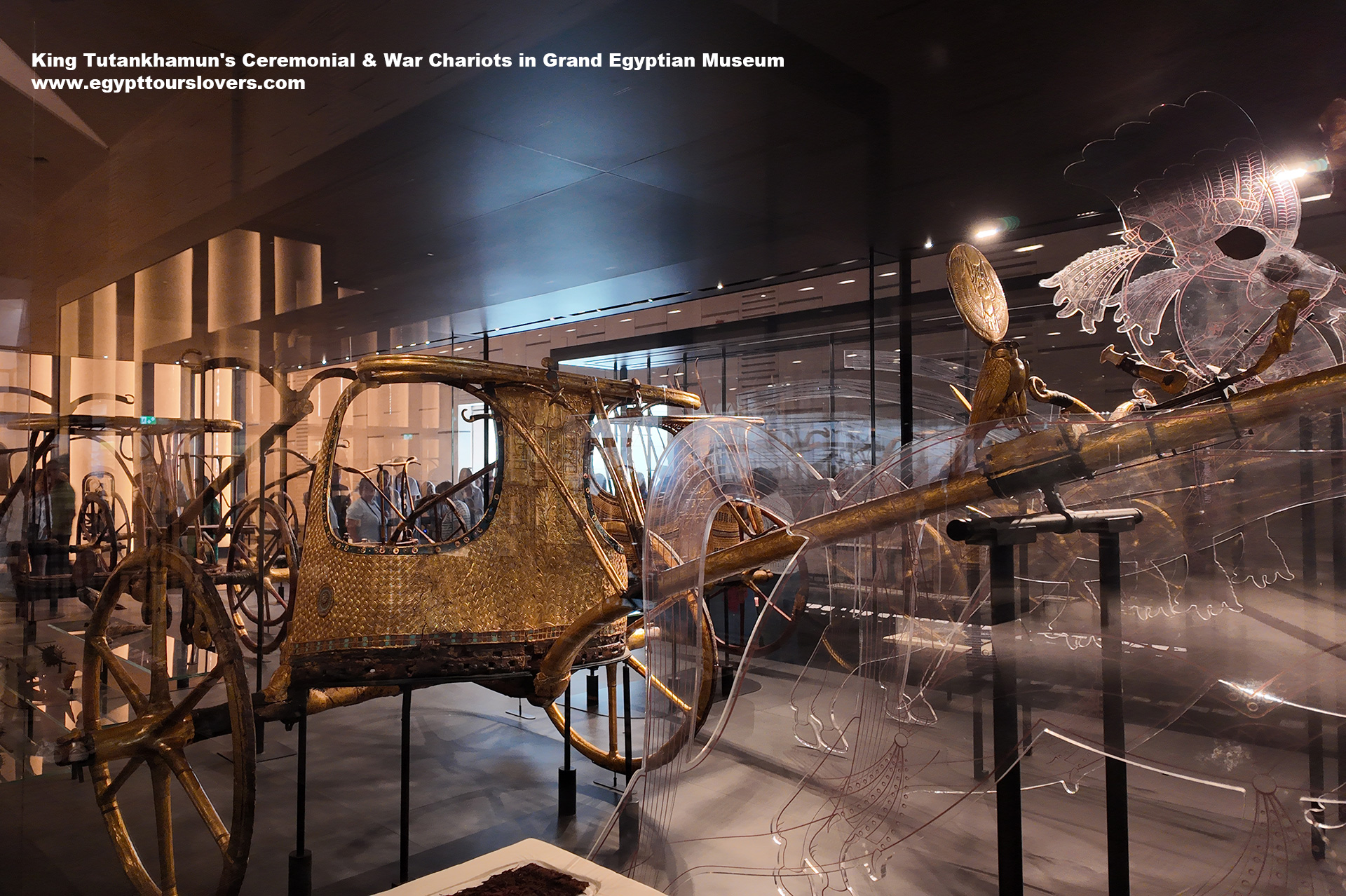
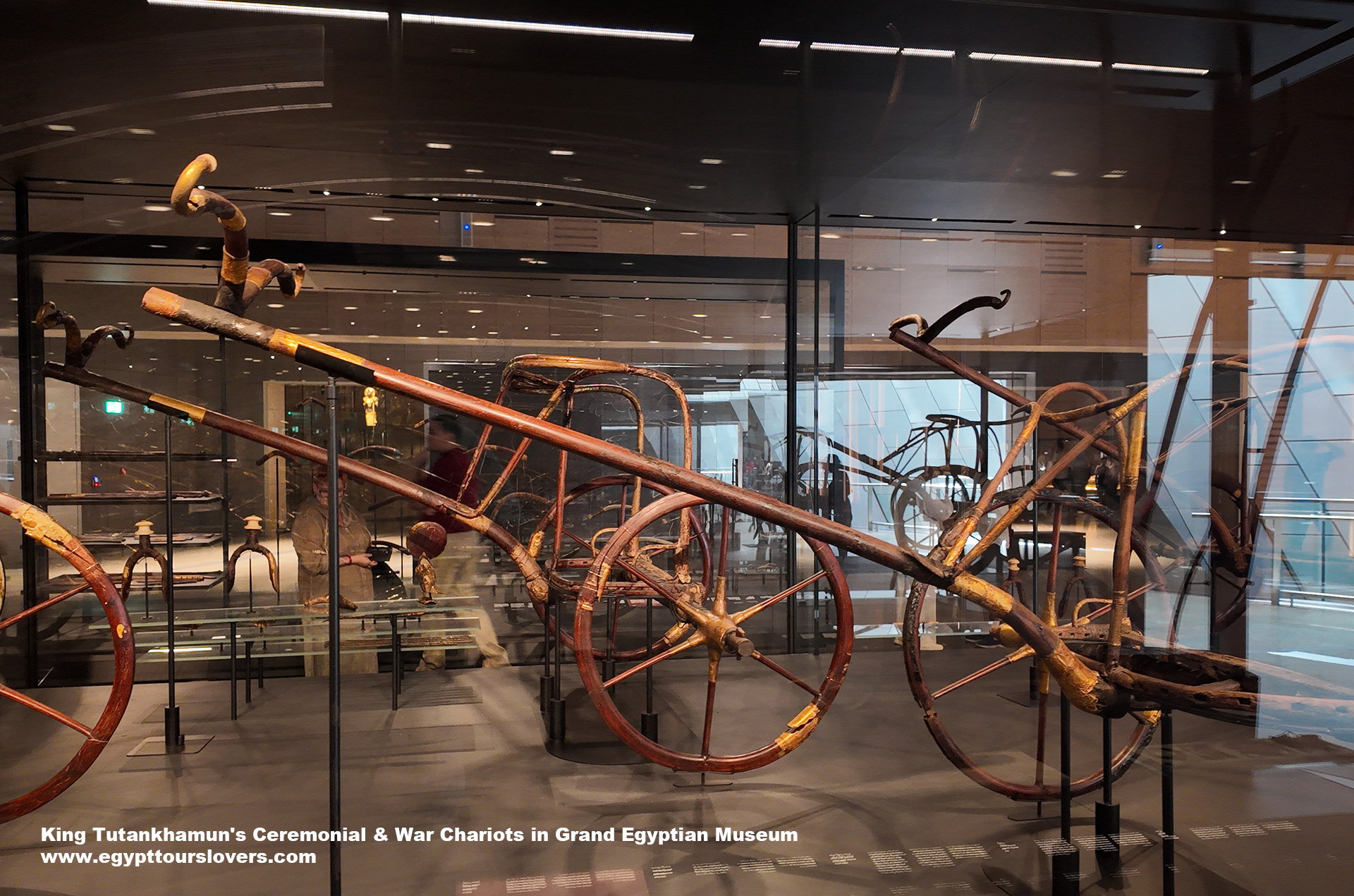
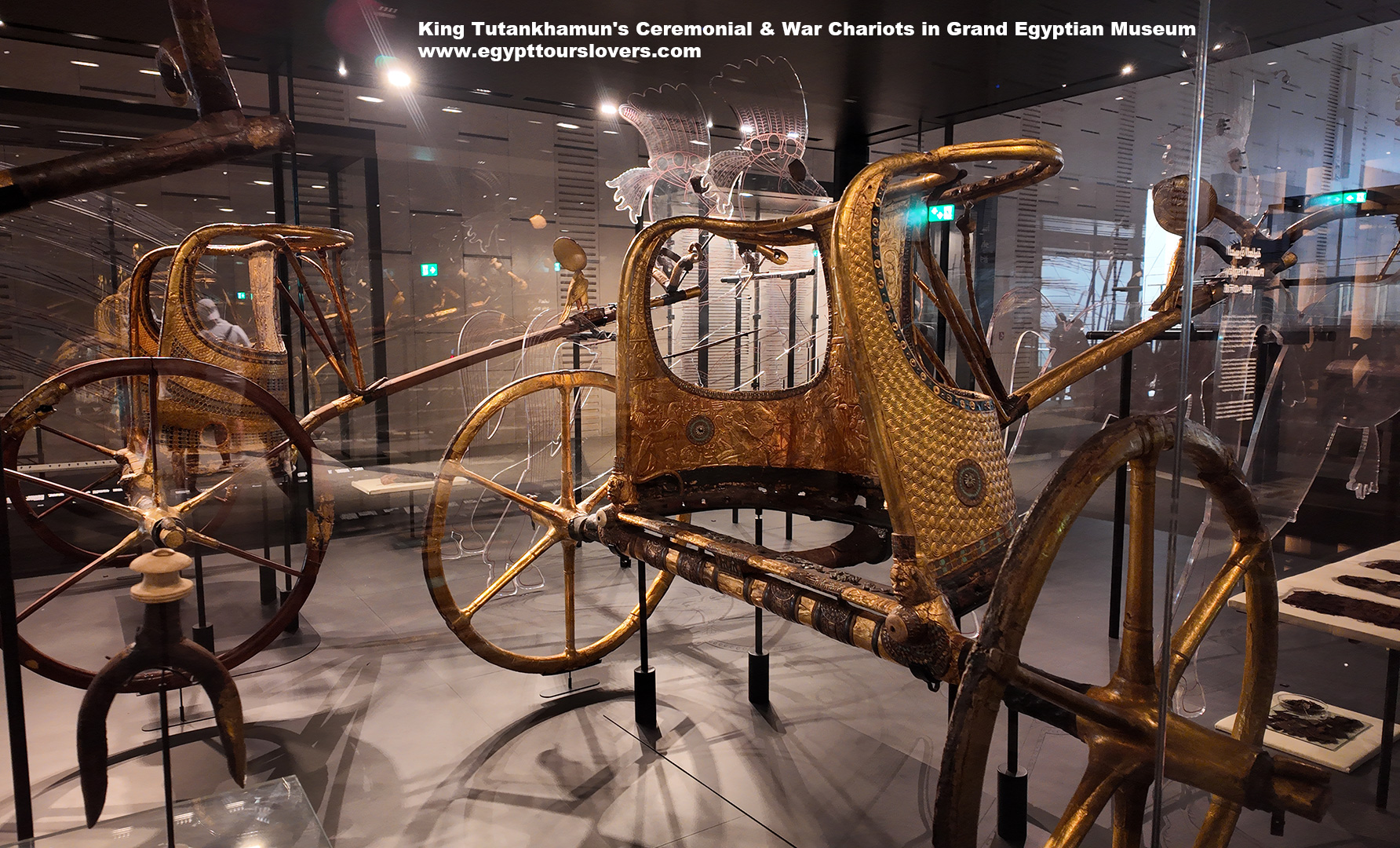
King Tutankhamun’s Ceremonial & War Chariots
6 chariots were added as War chariots, Ceremonial chariots, Gold Decorated Chariot, riding Chariot, hunting Chariot and fast travel Chariot to use in the afterlife for war and hunting.
2 Scenes were carved on the gilded interior of the Royal Decorated Chariot, adorned with lavish decorations.
These scenes depict King Tutankhamun’s victory over Egypt’s Foes, showcasing his power and control over all of Egypt’s borders.
One scene shows prisoners bound, with a lily branch tied around the neck of a Nubian captive, and another depicts an Asiatic enemy bound by a papyrus stalk.
———– } ———– } ———– } ———– }
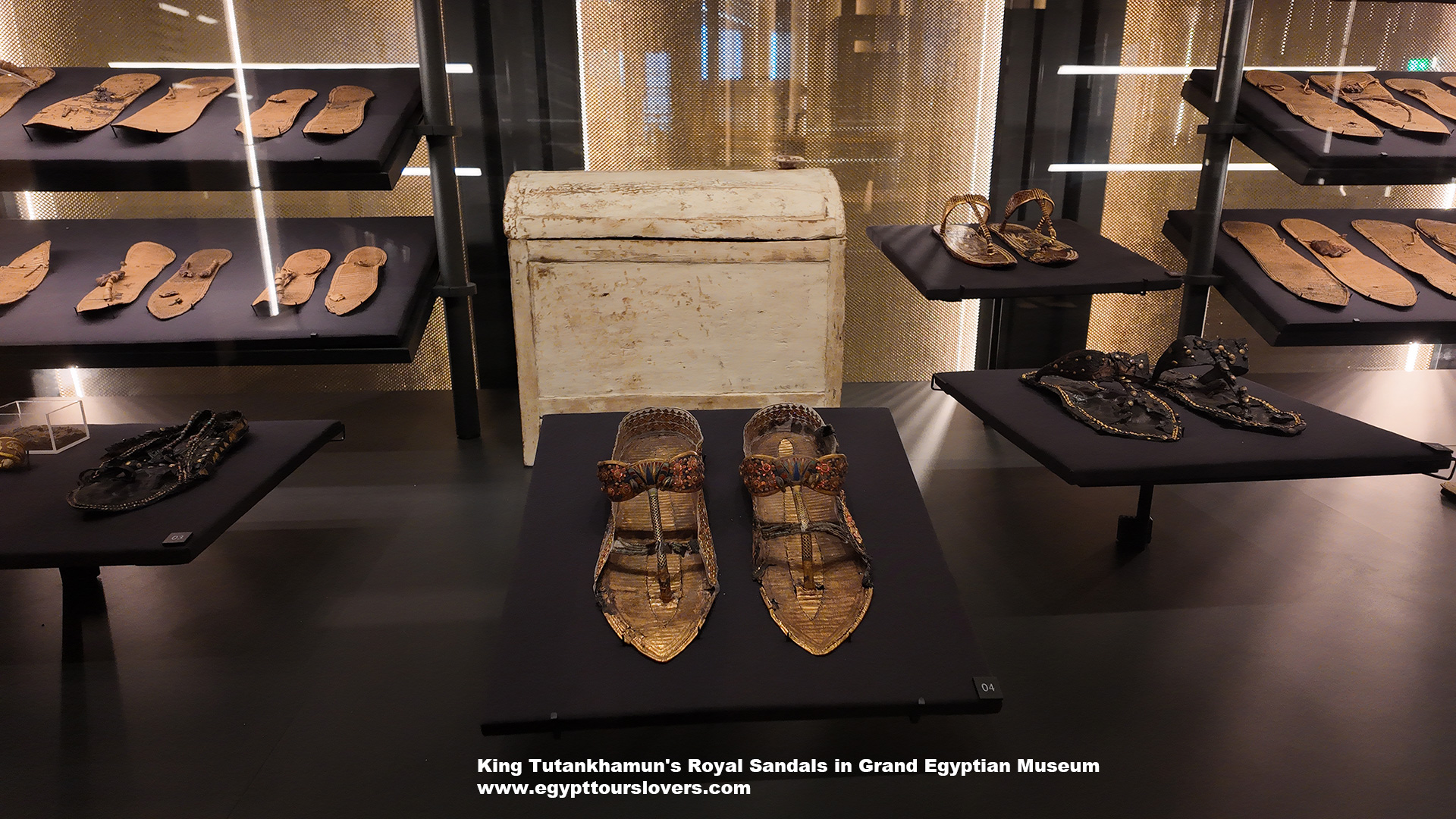
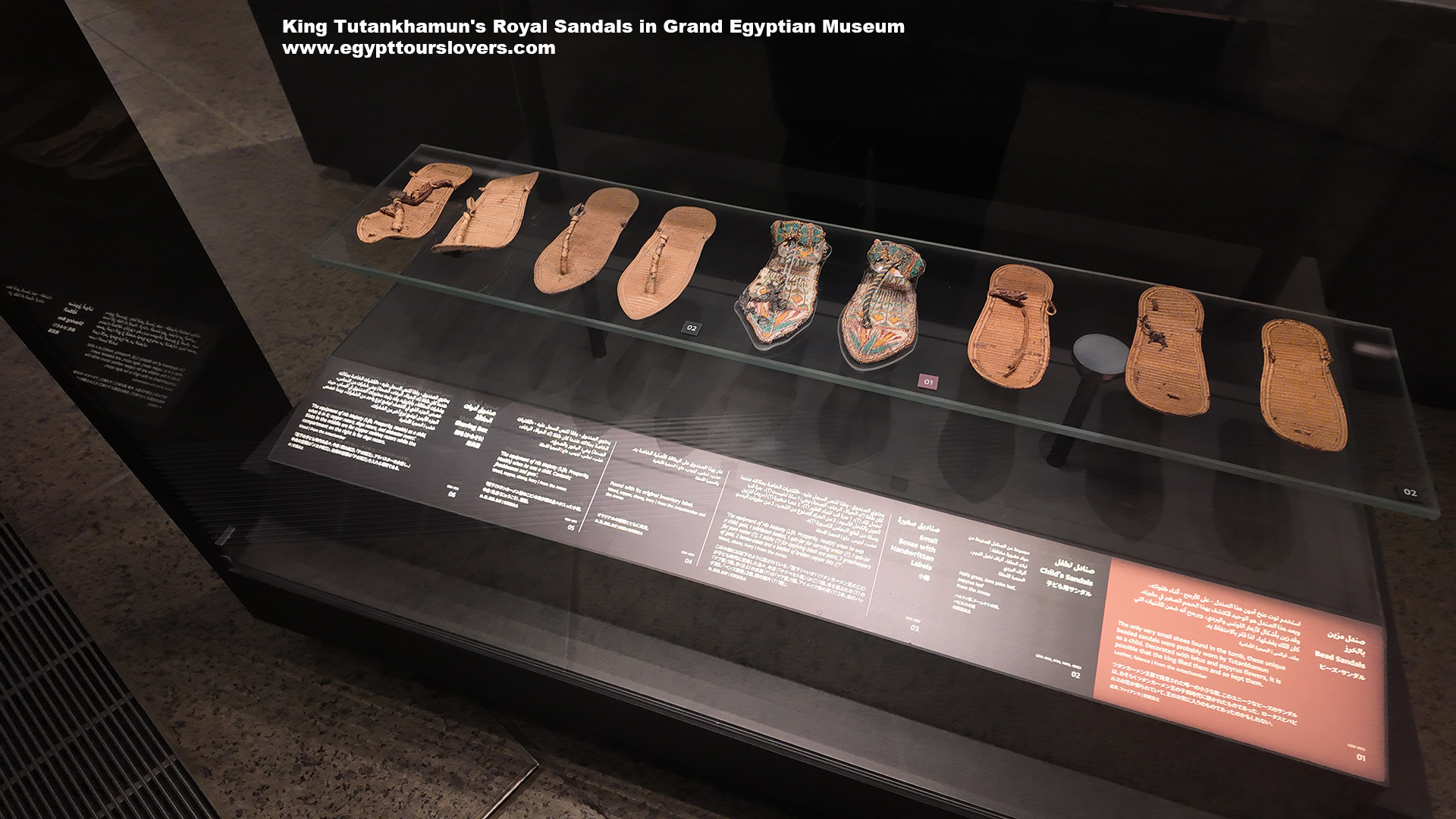
King Tutankhamun’s Royal Sandals
More than 80 pairs of royal sandals belonging to King Tutankhamun.
The King Tutankhamun’s sandals decorated with war captives “prisoners of war”, symbolizing his power and the defeat of Egypt’s enemies “Asiatic, Libyans, Nubian and Black Africans”with each step.
———– } ———– } ———– } ———– }
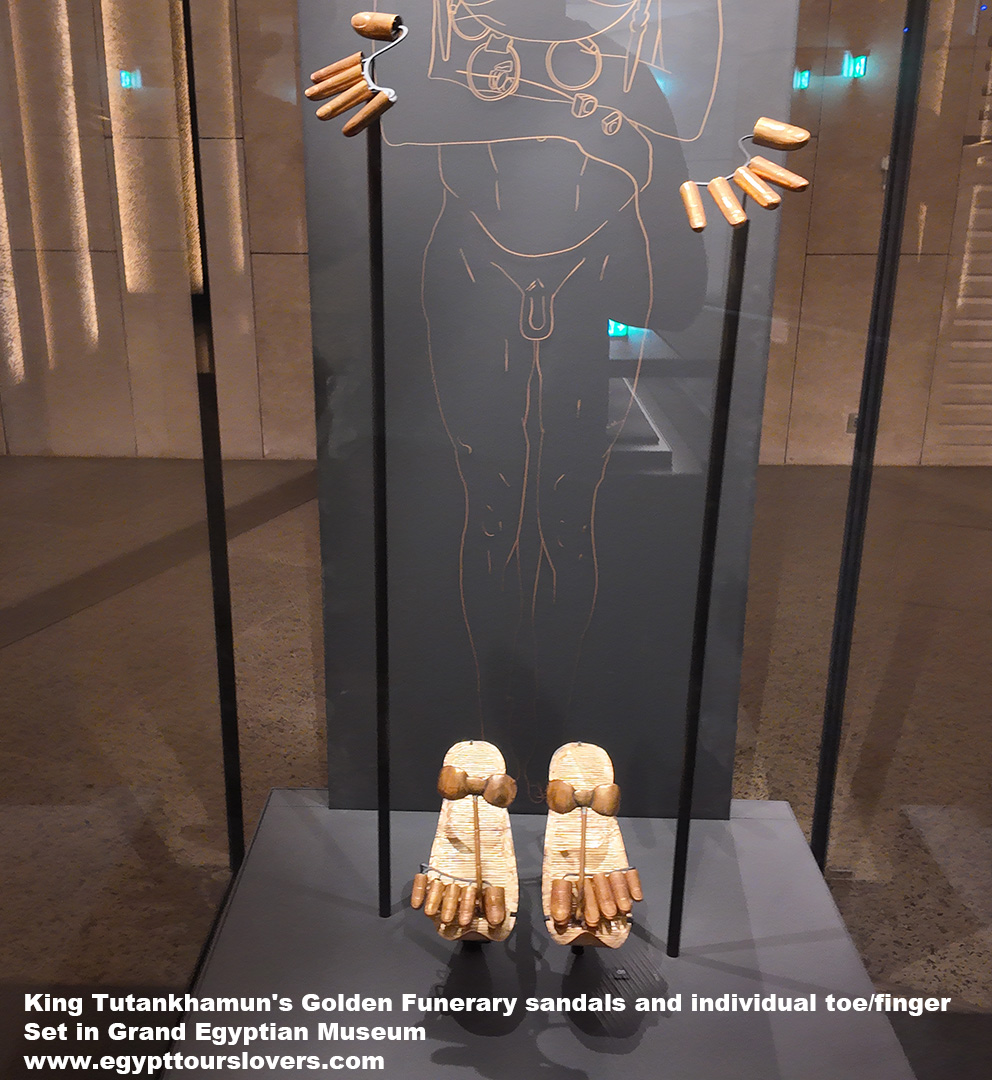
King Tutankhamun’s Golden Funerary sandals and individual toe/finger Set
———– } ———– } ———– } ———– }
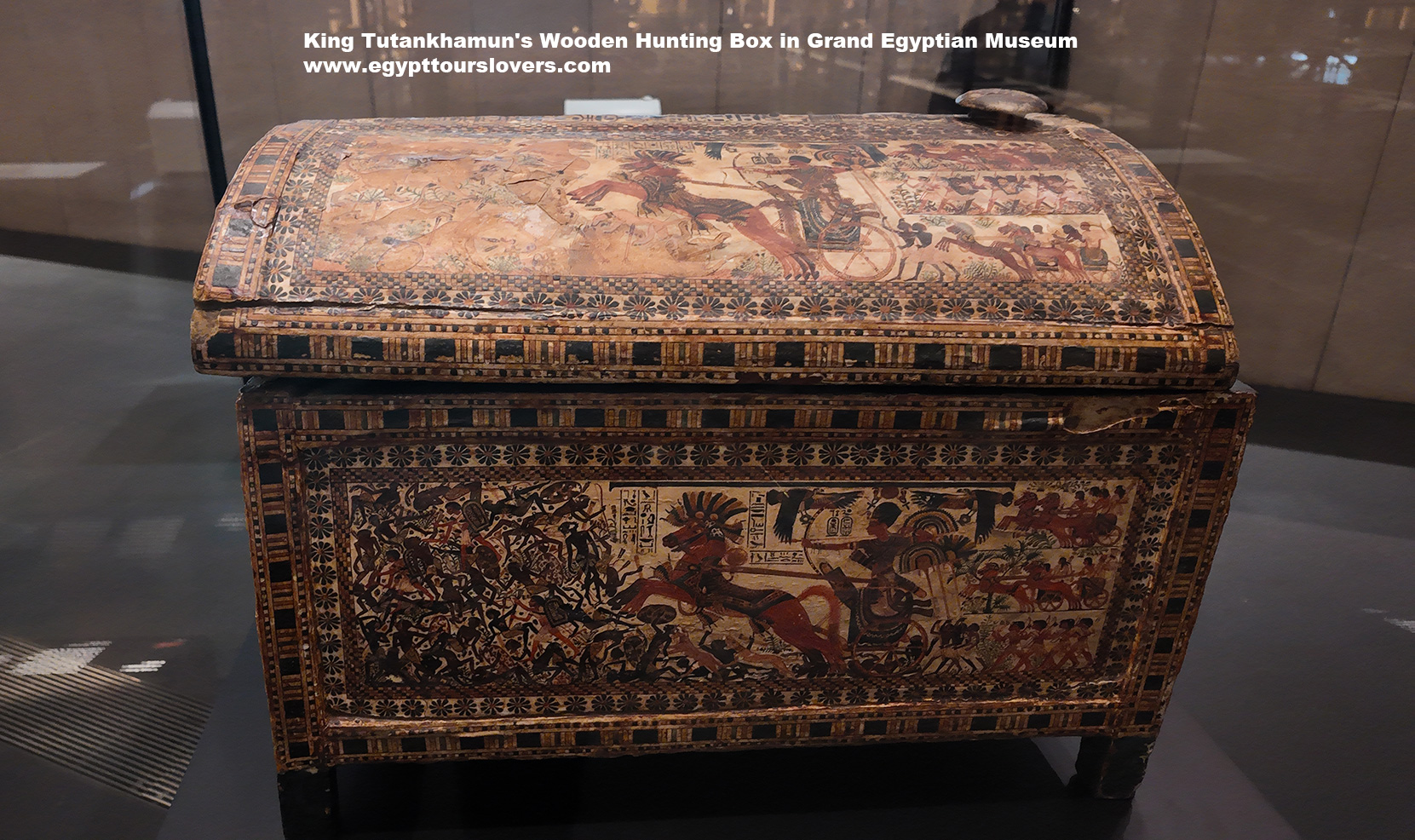
Wooden Hunting Box
The inscriptions on the side panels and scenes on the wooden hunting chest:
King Tutankhamun appears as a Sphinx trampling his defeated enemies’ “adversaries” from the Levant (Syria, Jordan, and Lebanon), portraying him as a valiant and victorious warrior.
King Tutankhamun is depicted riding in a chariot, protected by Vulture Goddesses. He fires an arrow, and his enemies fall beneath the powerful hooves of his horses. Around him, dogs devour the corpses of his foes.
The enemy army is transformed into a bewildered mob “a confused mass”, and he triumphs over them.
A Hieroglyphic inscription translates as: “a possessor of strength who tramples hundreds of thousands, who makes them into a pile of corpses.”
A scene of King Tutankhamun surrounded by servants and two fan-bearers, heading towards the battlefield.
———– } ———– } ———– } ———– }
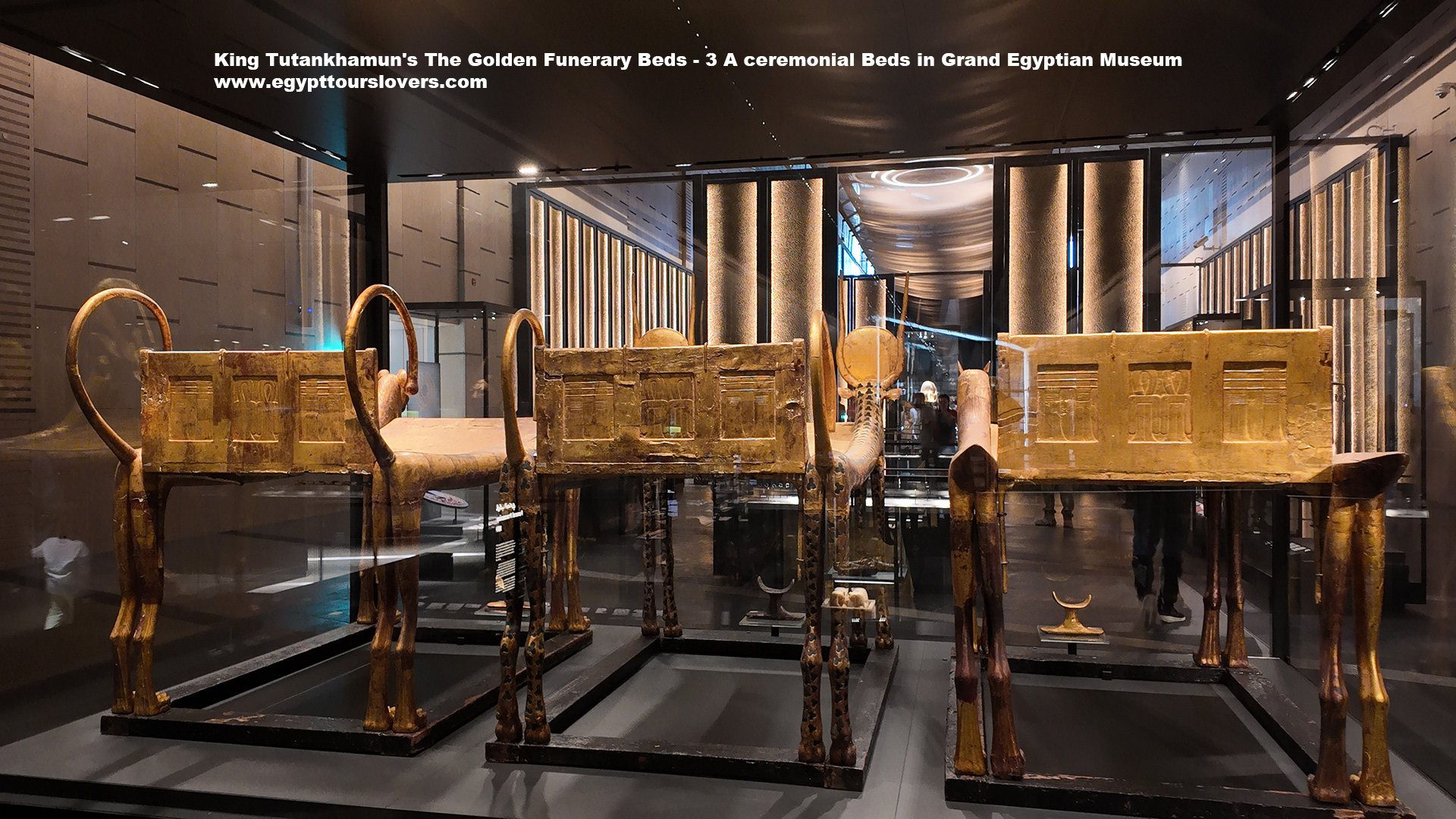
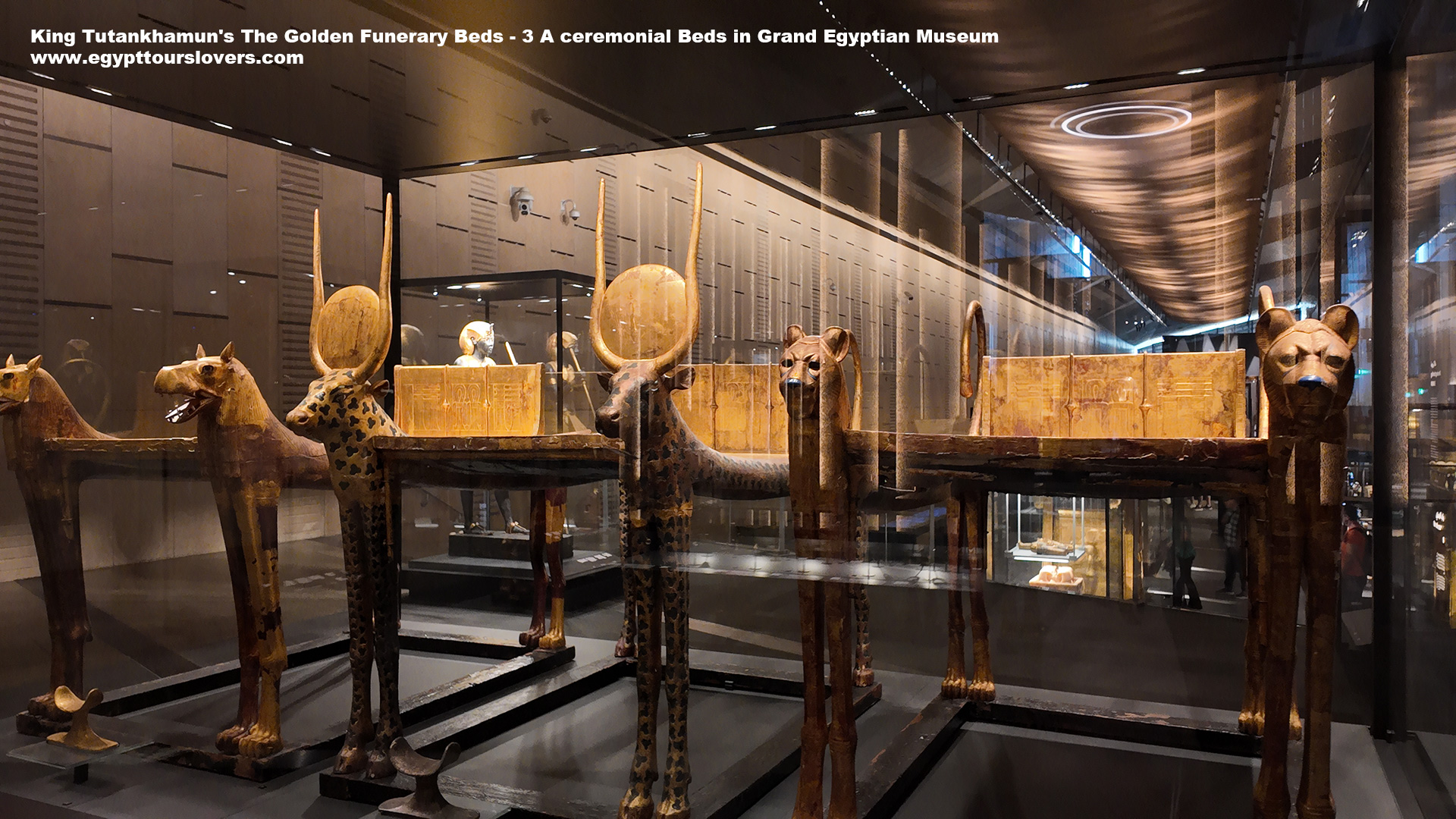
The Golden Funerary Beds – 3 A ceremonial Beds
Shaped like two sacred cows holding the sun disk of Ra, the sun god, between their horns, reveals the Ancient Egyptian Myth associated with the goddess Mehet-Weret, the cow goddess, who rose from the Primordial Sea carrying Re the god to the sky.
———– } ———– } ———– } ———– }
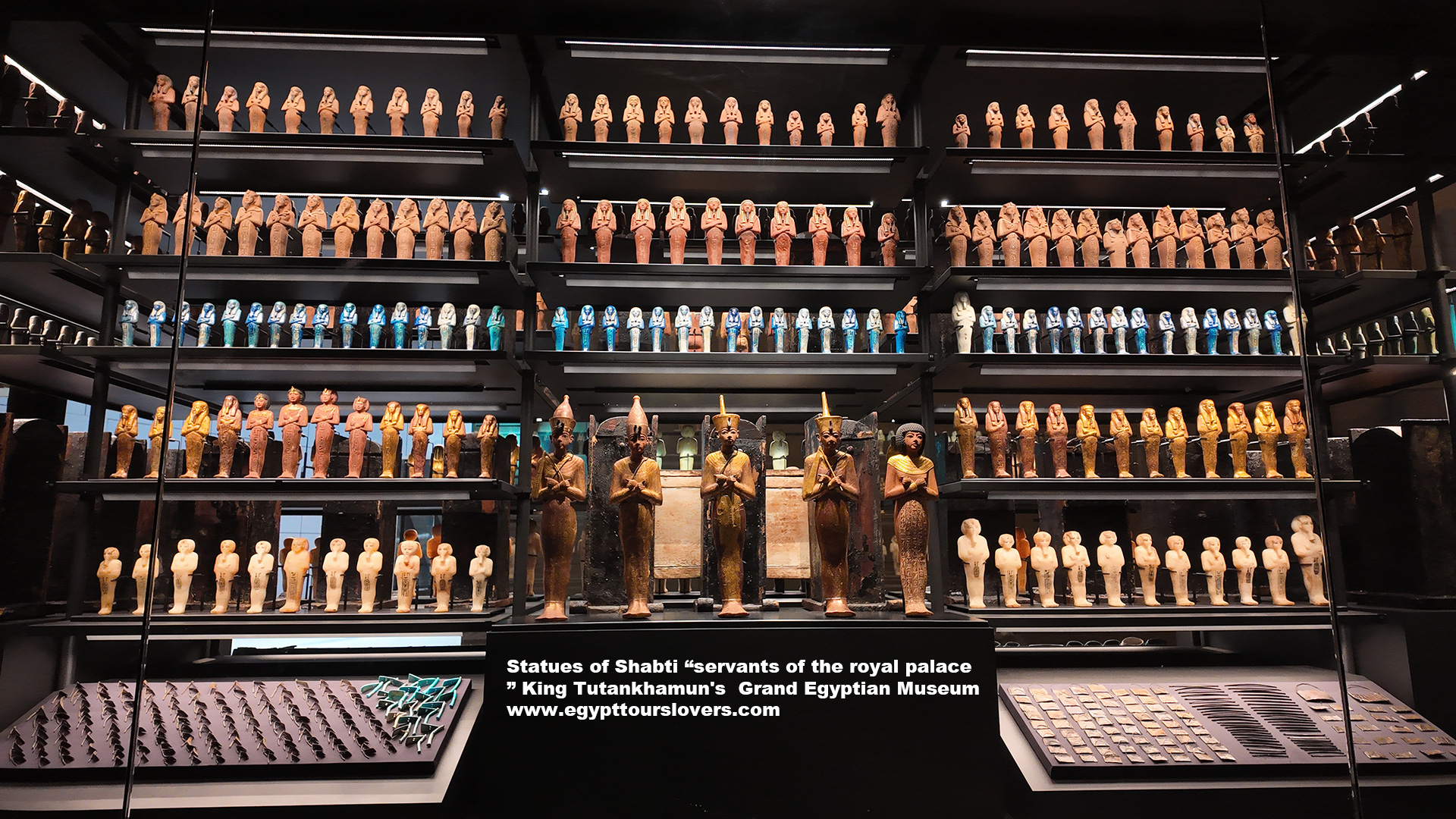
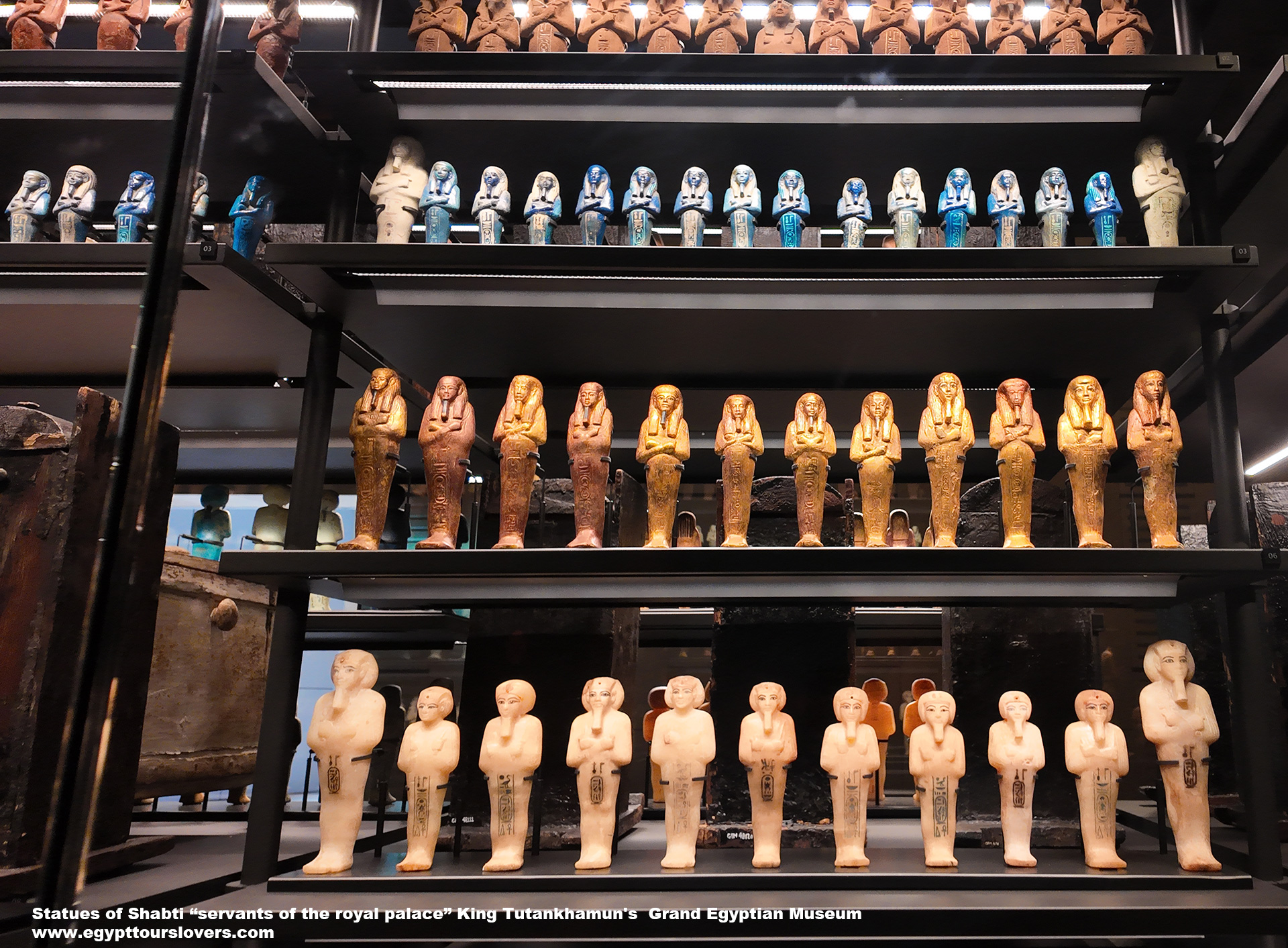
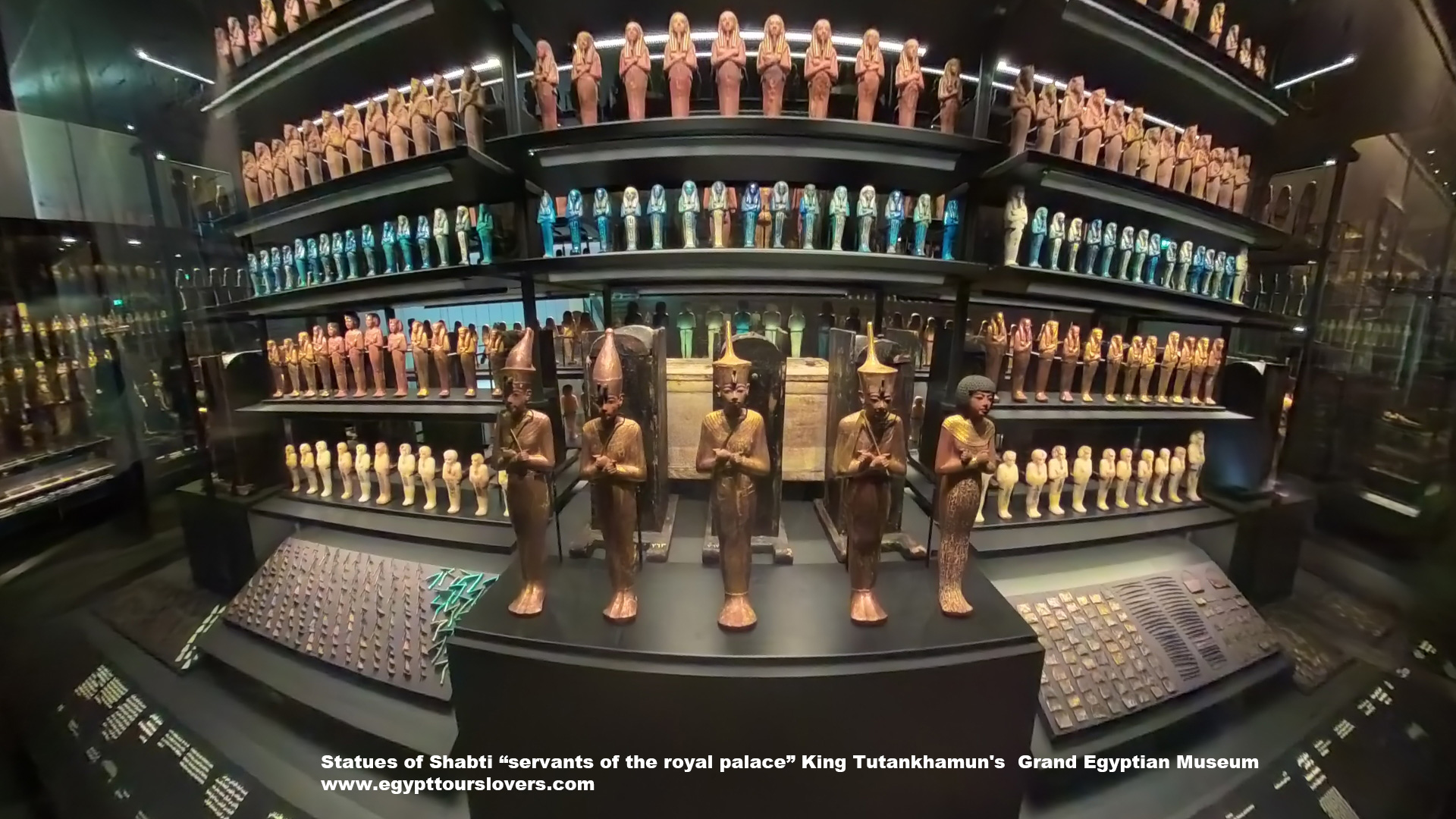
The Shabti
More than 400 statues of Shabti “servants of the royal palace”, ranging in length from 10 to 60 cm, each statue has its name, job title, and Magical Spells engraved on it, to bring the spirit back to it and to serve King Tutankhamun in the afterlife as he did.
———– } ———– } ———– } ———– }
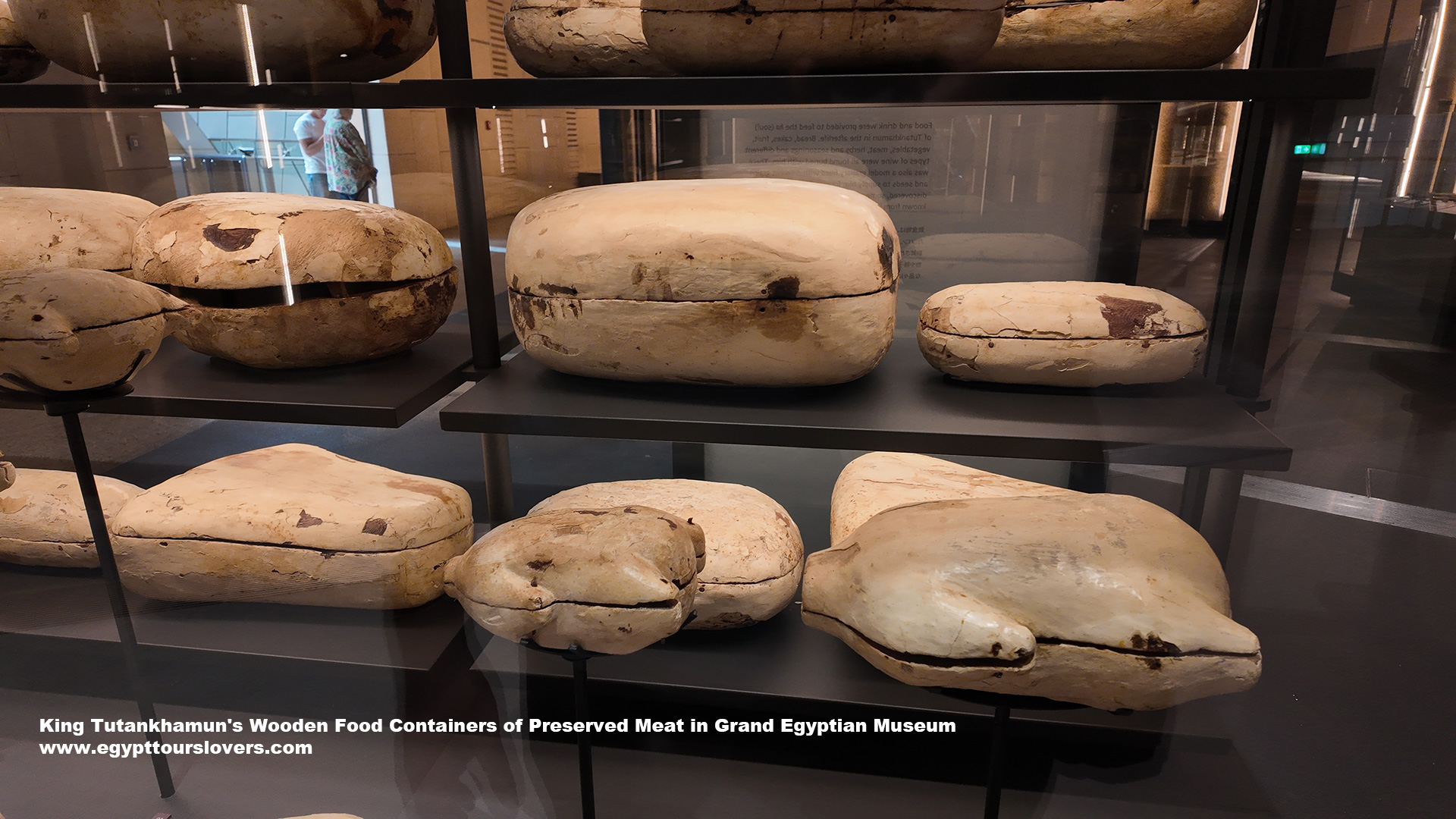
Wooden Food Containers of Preserved Meat
Beef, duck, and goat, wrapped in linen for Tutankhamun journey to the afterlife.
———– } ———– } ———– } ———– }
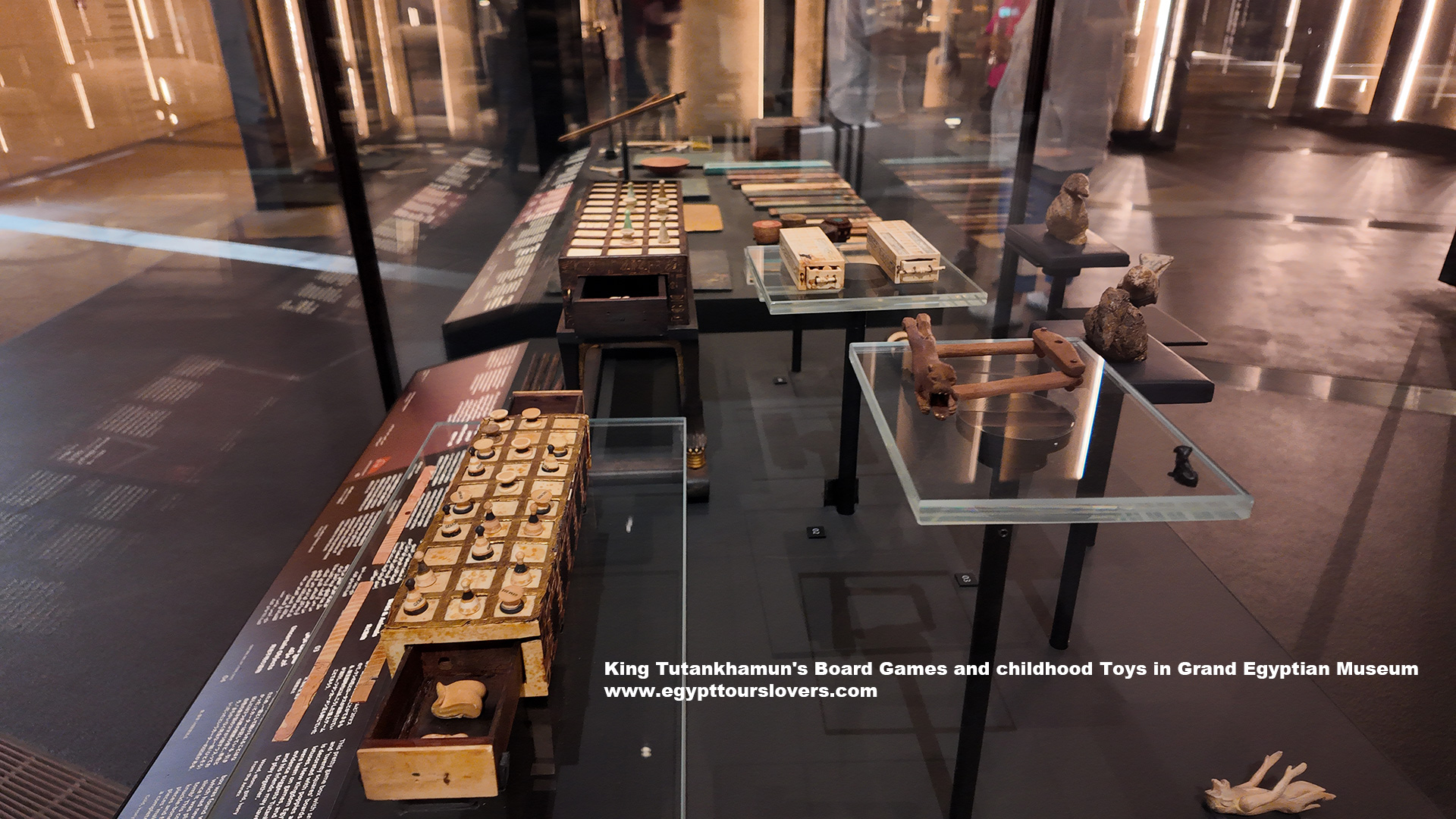
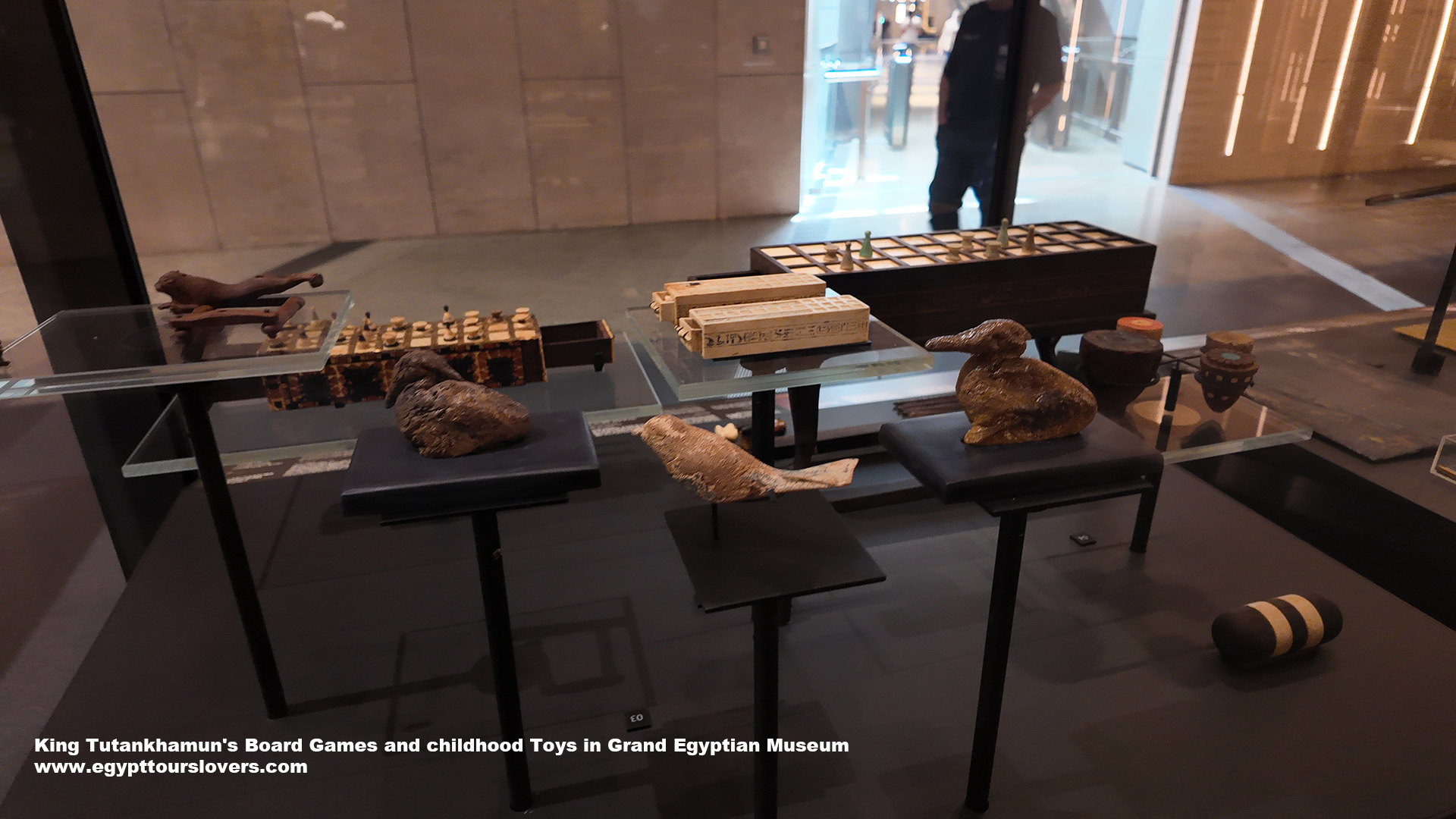
King Tutankhamun’s Board Games and childhood Toys
The Game of Senet, Twenty Squares, Mehen “Game of the Snake”, Gaming Pieces, Bee-shaped toy, Spinning tops, Miniatures.
———– } ———– } ———– } ———– }
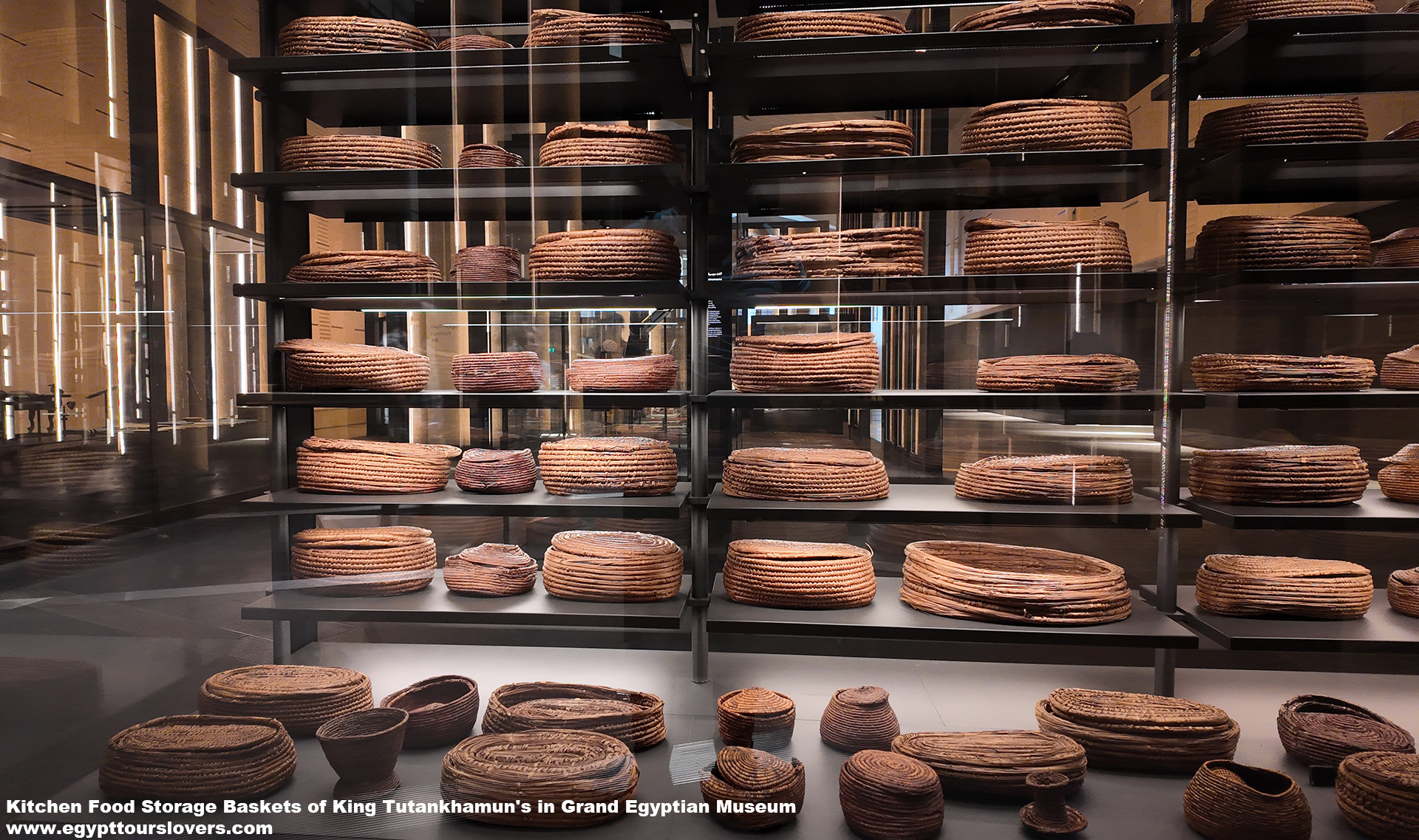
Kitchen Food Storage Baskets
130 baskets of various sizes made of grass or palm with a lid to contain dried foods such as nuts, dates or watermelon seeds.
———– } ———– } ———– } ———– }
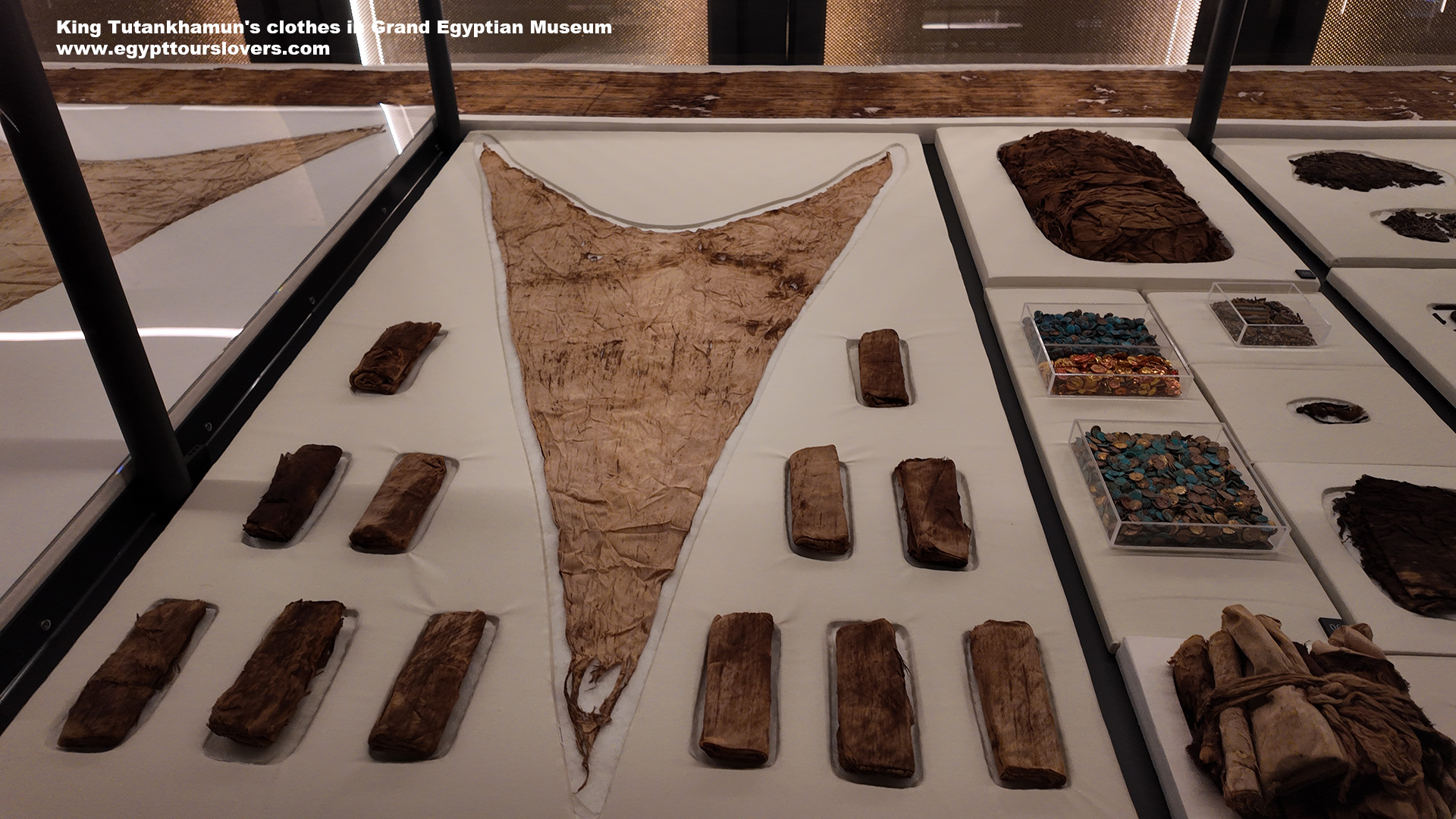
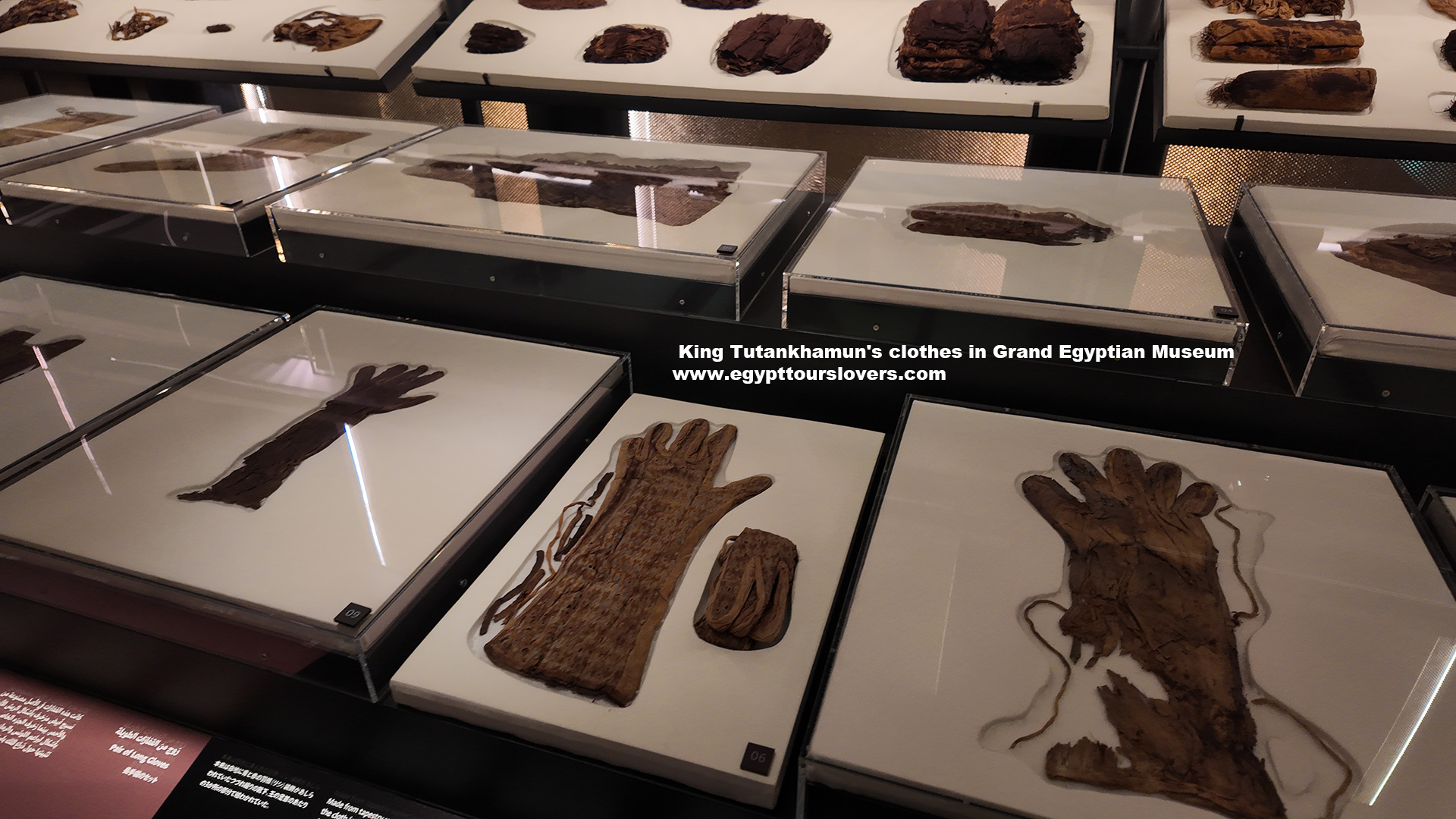
King Tutankhamun’s clothes
Pieces of Cloth, Undergarments more than 130 triangular-shaped king tut’s loincloths, Ceremonial Robes, Tunics, Accessories, gloves.
———– } ———– } ———– } ———– }
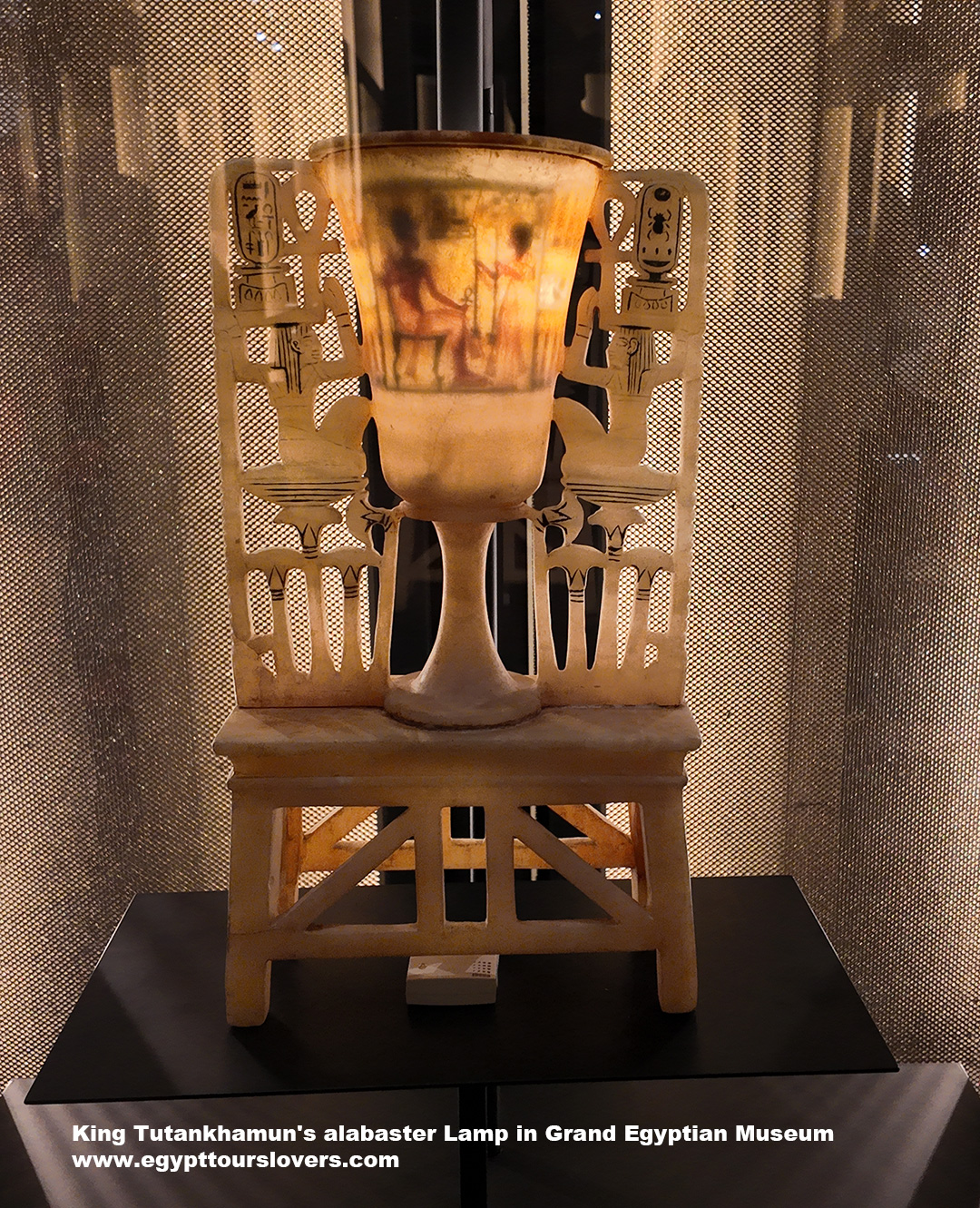
King Tutankhamun’s alabaster Lamp
Tutankhamun alabaster “translucent calcite” Lamp carved with Lotus Shapes featuring with god Heh.
When the lamp is lit, painted scenes for King tut seated on the throne offer offers him two palm branches to his wife queen Ankhesenamon in-between the two carved cups that form the shade “the symbols of a long reign”.
———– } ———– } ———– } ———– }
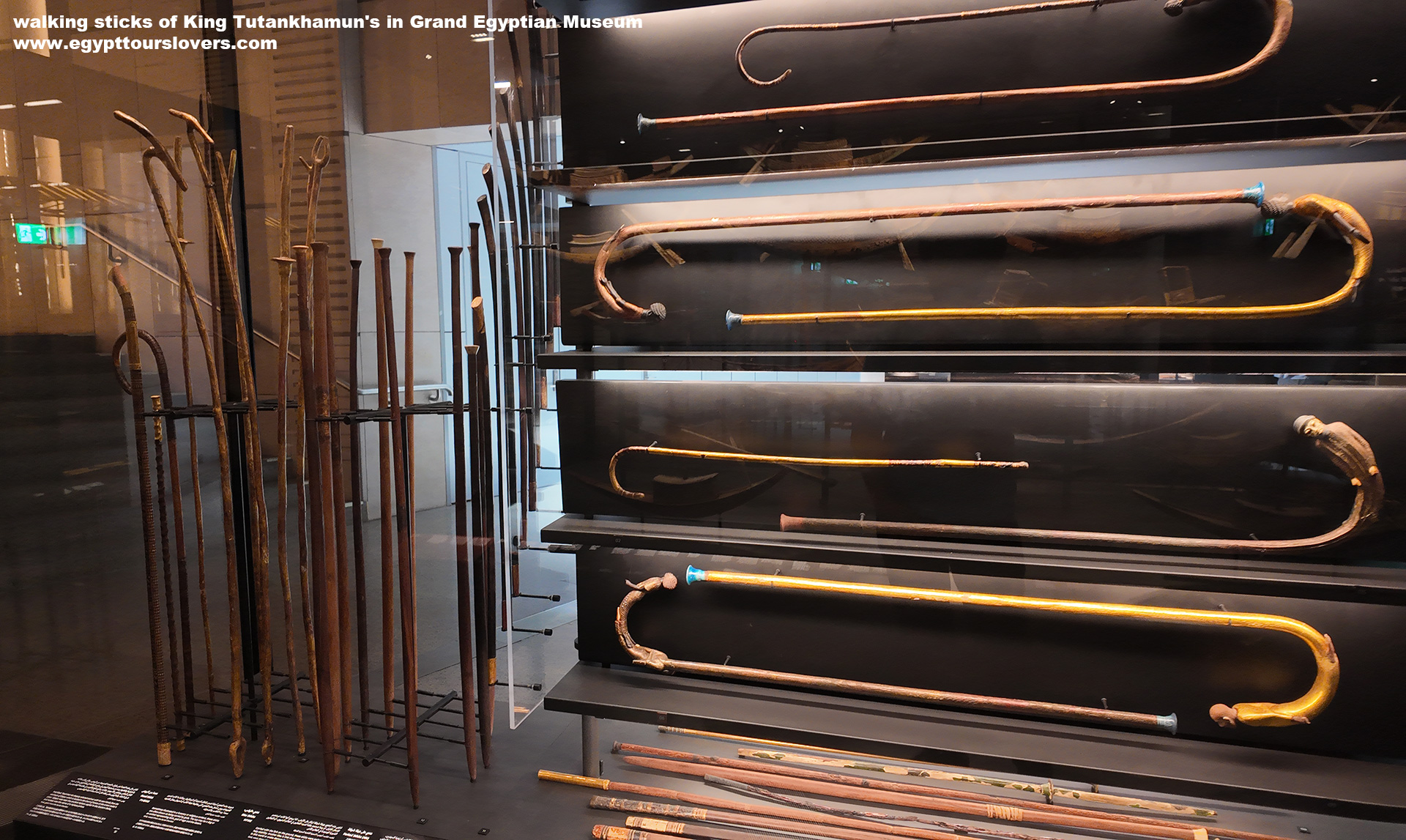
The Sticks
130 walking sticks made of decorated wood, painted with gold, and the stick has a carved image on the handle of bound prisoners from Egypt’s enemies, including Asians, black Africans, and Libyans.
———– } ———– } ———– } ———– }
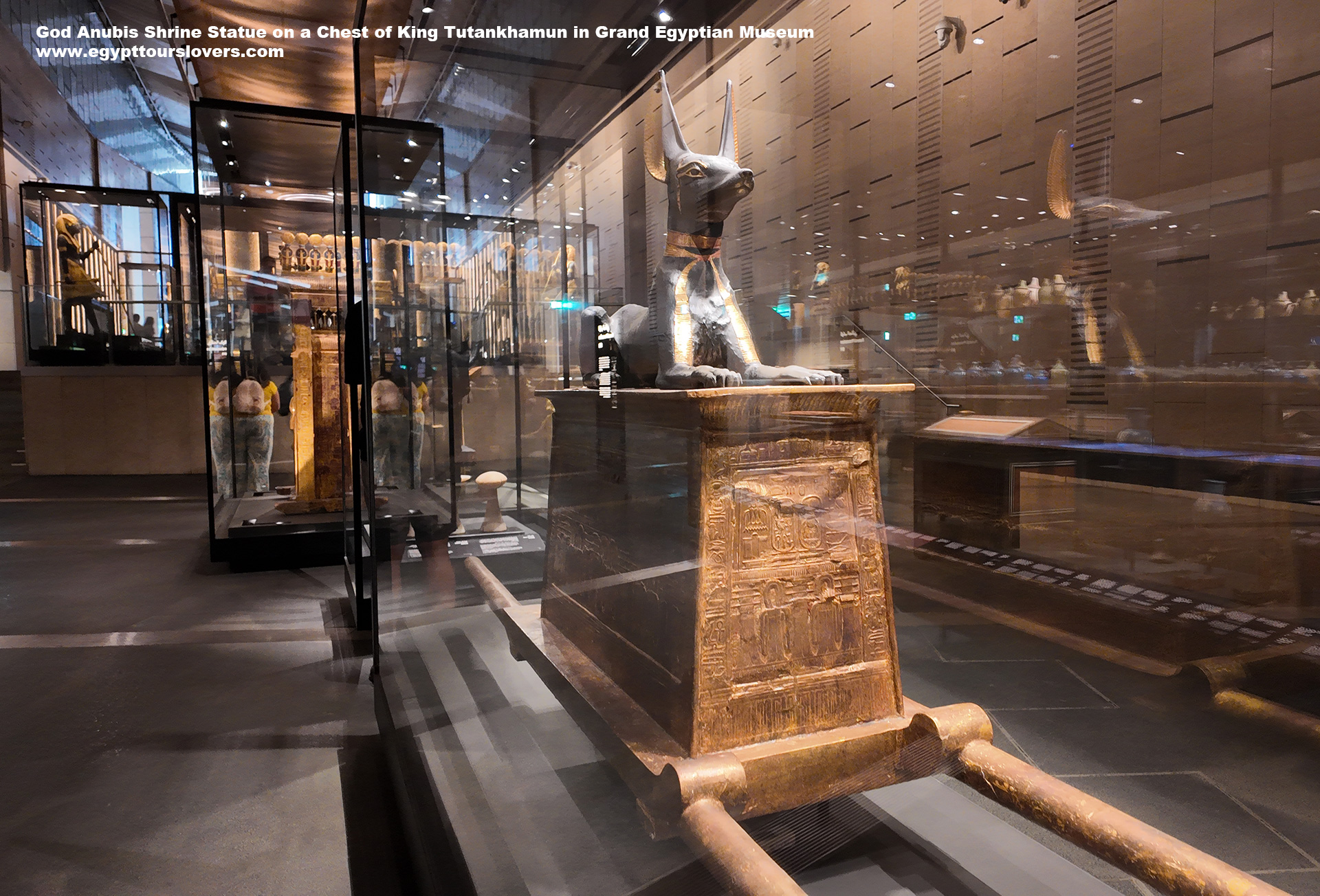
God Anubis Shrine Statue on a Chest of King Tutankhamun Treasures
A wooden statue of the god Anubis “jackal”, painted black “god Osiris and the black clay of Egypt” and gold, with his tail hanging behind him, is mounted on a wooden box shaped like the gates of ancient Egyptian temples.
The box is inscribed with magical spells and is mounted on a gilded wooden platform with long poles.
The wooden box is designed with four compartments inside. One compartment contains funerary ritual objects wrapped in linen, and another compartment contains the jewelry and ornaments of King Tutankhamun.
Anubis: The god of embalming and protector of tombs in ancient Egyptian religion.
Dimensions:
Height: 54.3 cm
Width: 37 cm
Length: 95 cm
———– } ———– } ———– } ———– }
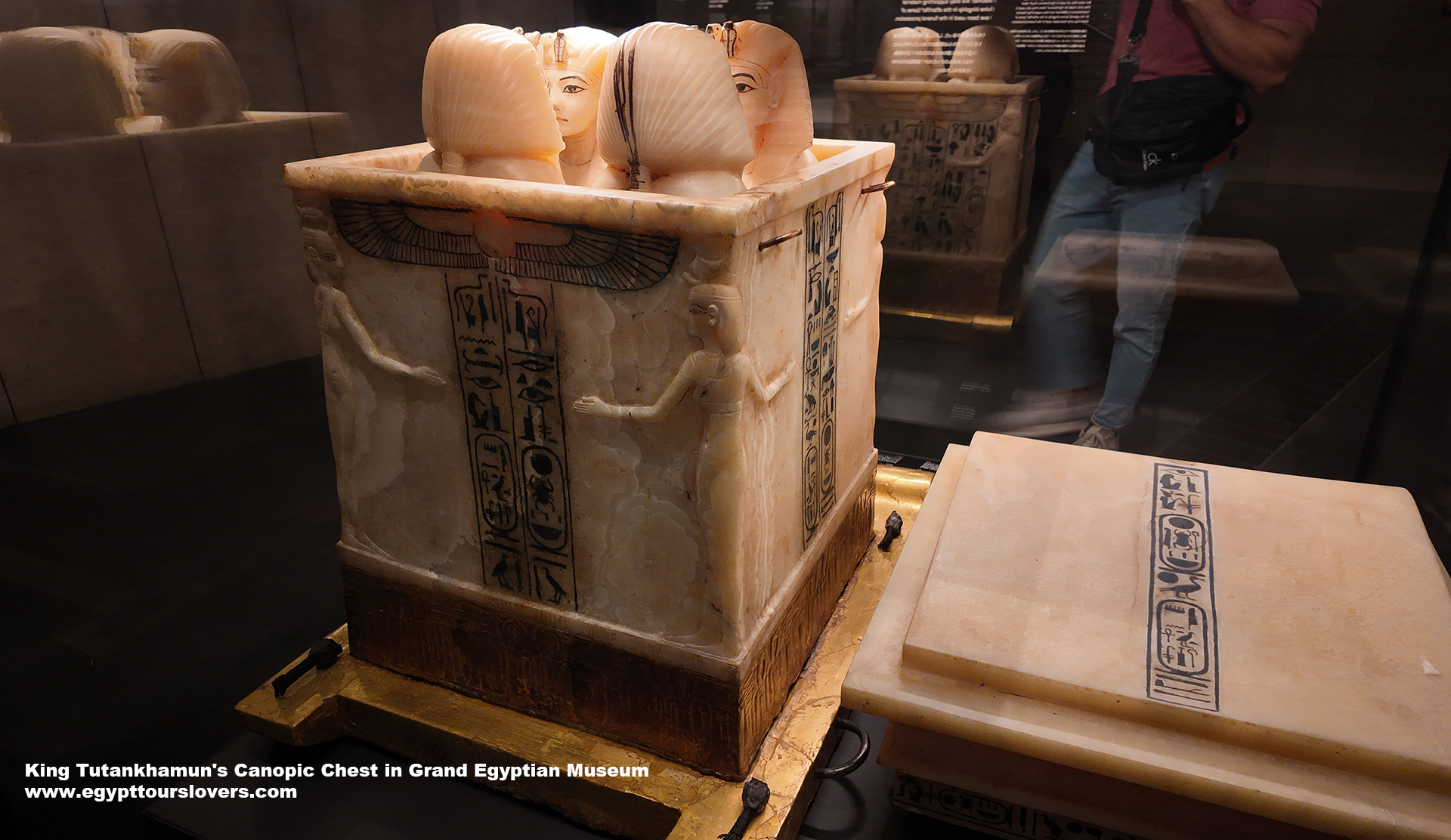
Canopic Chest
A funerary sarcophagus made of Egyptian alabaster, mounted on a wooden base covered in pure gold leaf, with a slanted lid secured by a linen cord.
It contains four cylindrical chambers, each topped with a stopper in the shape of King Tutankhamun’s head.
Black inscriptions and drawings adorn the sides of the box and the lid.
Each chamber contained a small coffin, made of pure gold, intended to house an organ of King Tutankhamun.
On each corner of the box are prominently carved depictions of ancient Egyptian goddesses who protected the king’s internal organs: Isis, Nephthys, Selket, and Neith.
A gold band at the bottom of the box contains the symbols of the Djed pillar (steadfastness) and the tyet knot (protection).
Dimensions:
Height: 85.5 cm
Length: 54 cm
———– } ———– } ———– } ———– }
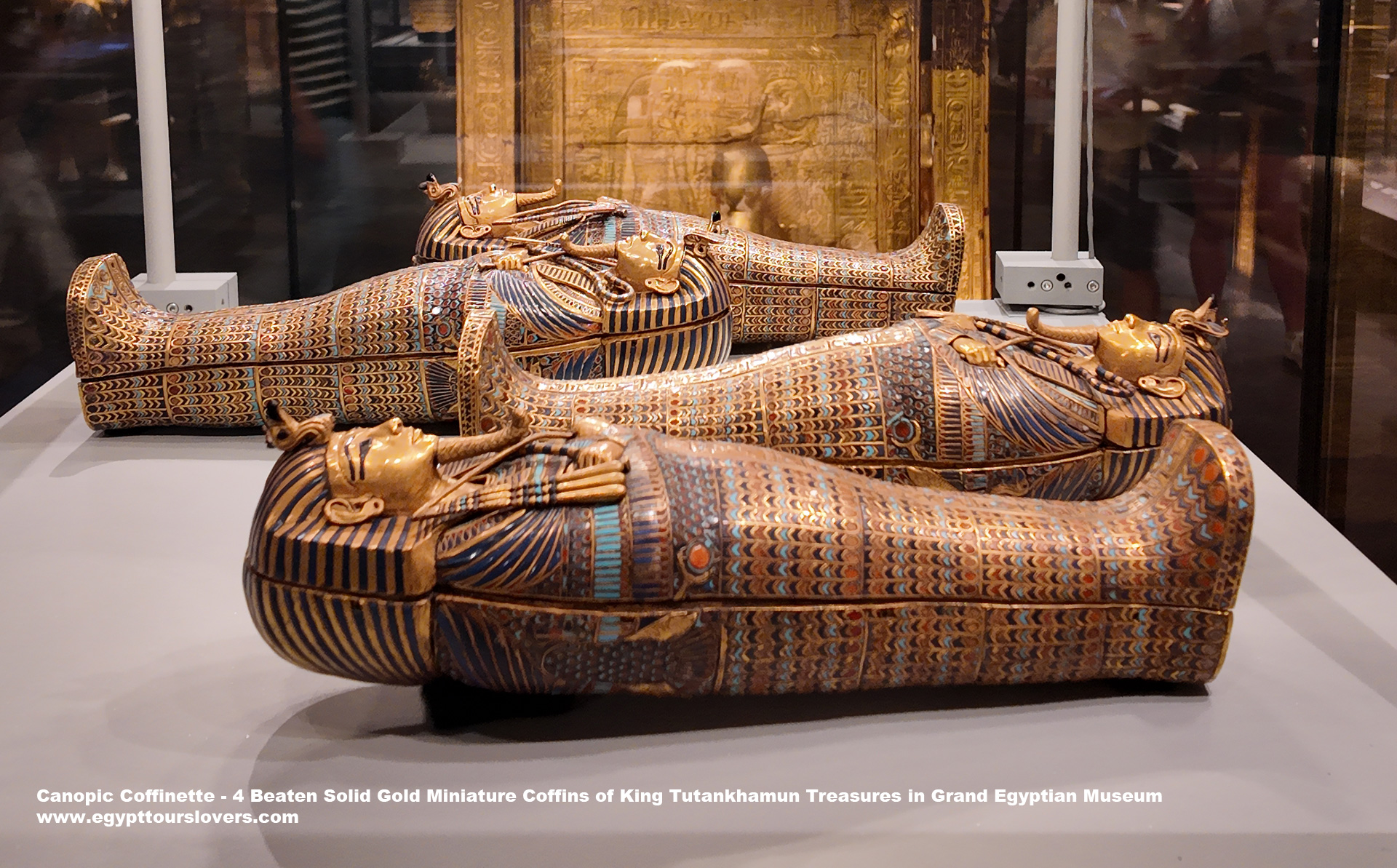
Canopic Coffinette – 4 Beaten Solid Gold Miniature Coffins – King Tutankhamun Treasures
4 small coffins made of beaten solid gold and decorated with feathered pattern protect the contents of the box” the mummified liver, lungs, intestines, and stomach”, which are inlaid with carnelian and colored glass.
The coffin’s design is identical to that of the royal coffin of King Tutankhamun II, depicting him in the pose of the god Osiris (god of death and the underworld).
King Tut wears the royal nemes headdress, surmounted by the eagle and the cobra (symbols of protection), and holds a scepter and flail (symbols of power and control). Each coffin contains inscriptions and magical spells invoking the protection of the goddess Nephthys.
Dimensions:
Height: 12 cm
Length: 39 cm
———– } ———– } ———– } ———– }
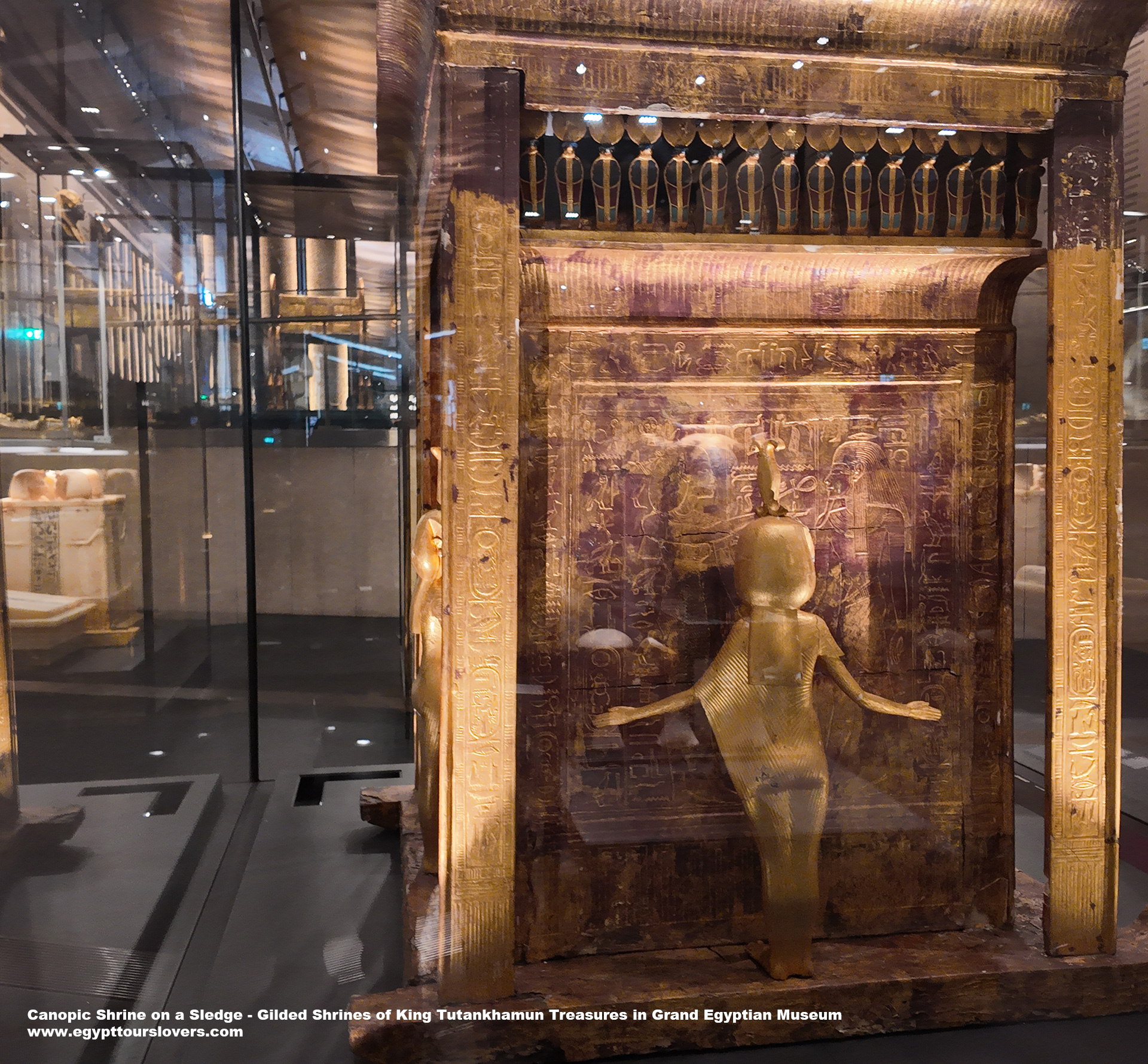
Canopic Shrine on a Sledge – Gilded Shrines
A wooden shrine covered in gold leaf once held the mummified viscera of King Tutankhamun “Canopic Coffinette & Canopic Chest”.
The upper structure contains the shape of repeated cobra snakes for protection, studded with red, blue, and green glass. In the middle is a wooden box engraved with drawings, funerary texts, and magical spells on a sledge.
4 statues of the goddesses Isis, Nephthys, Selket, and Neith are carved embracing the shrine with their arms to protect it from evil in the afterlife.
Dimensions:
Height: 198 cm
Length: 122 cm
Length: 165 cm
———– } ———– } ———– } ———– }
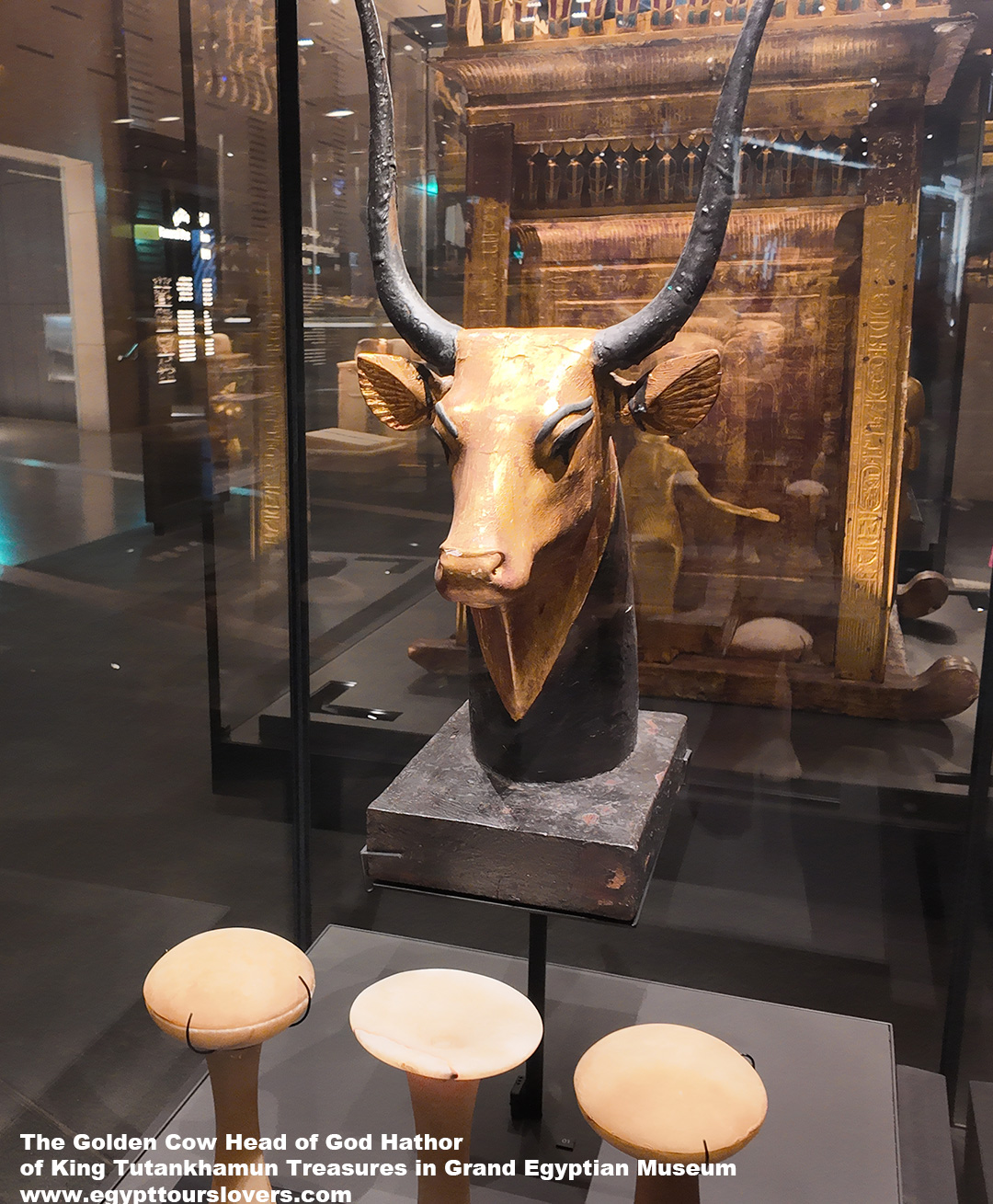
The Golden Cow Head of God Hathor of King Tutankhamun Treasures
Dimensions:
Height: 92 cm
Length: 40 cm
Length: 45 cm
———– } ———– } ———– } ———– }
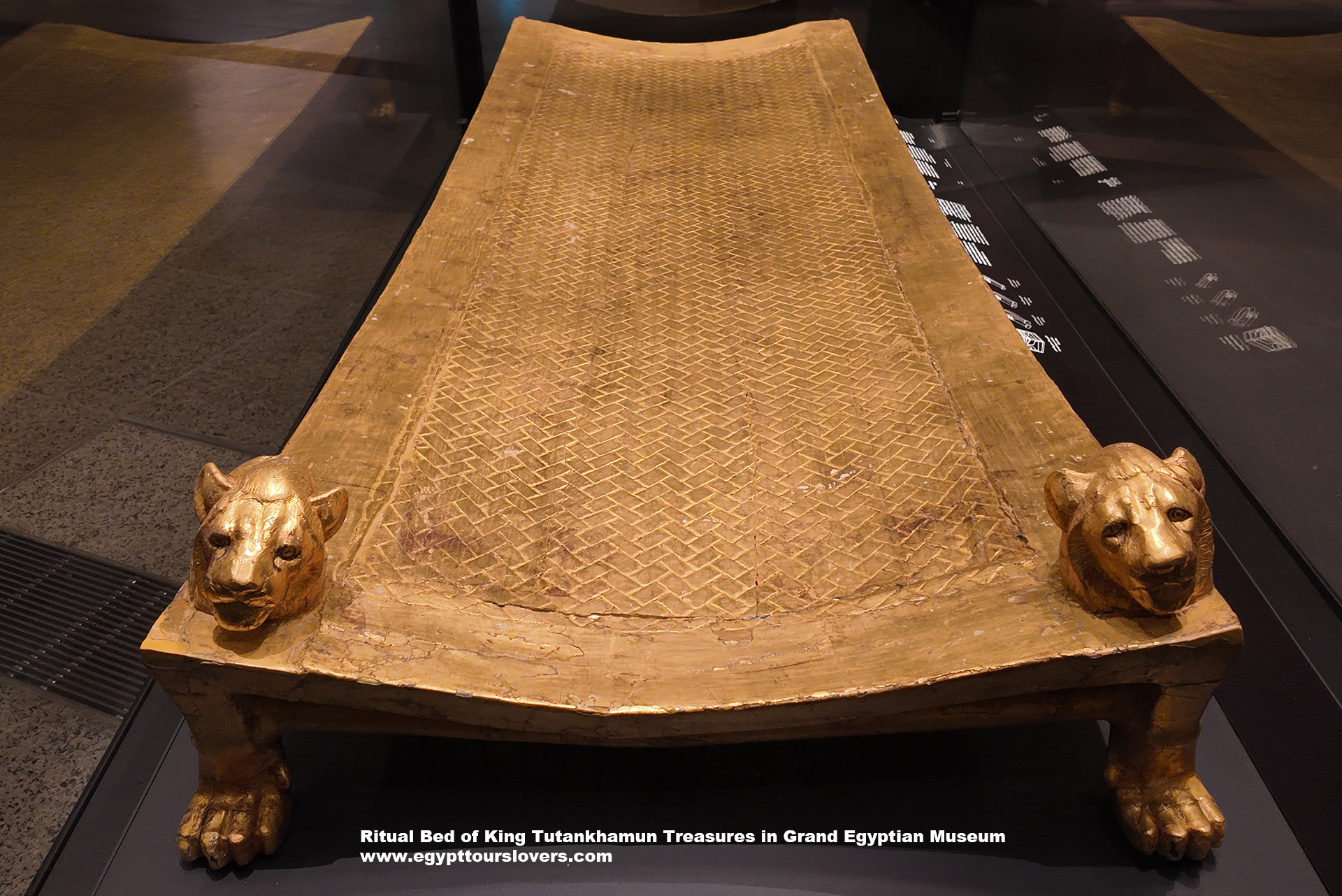
Ritual Bed
———– } ———– } ———– } ———– }
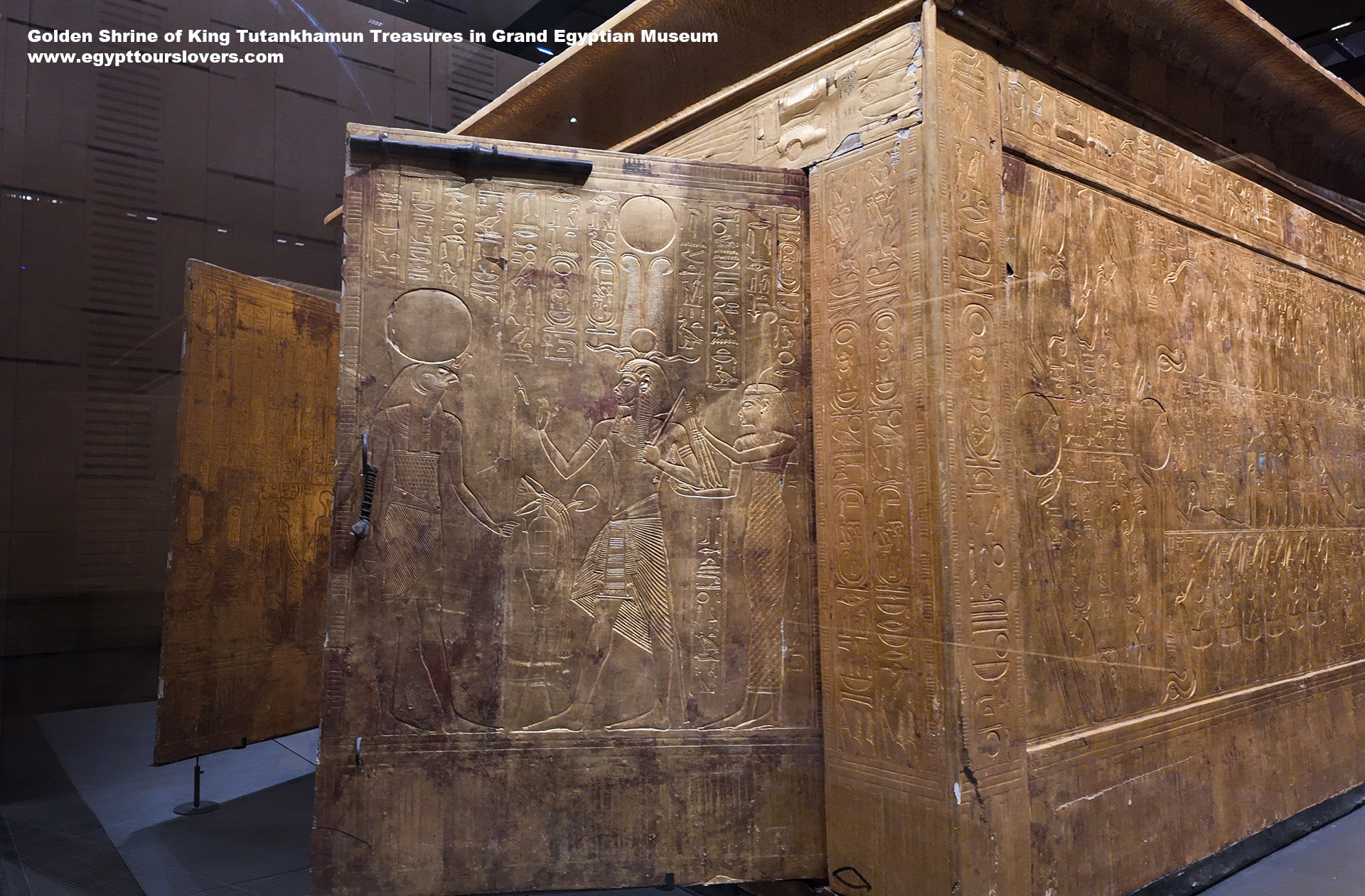
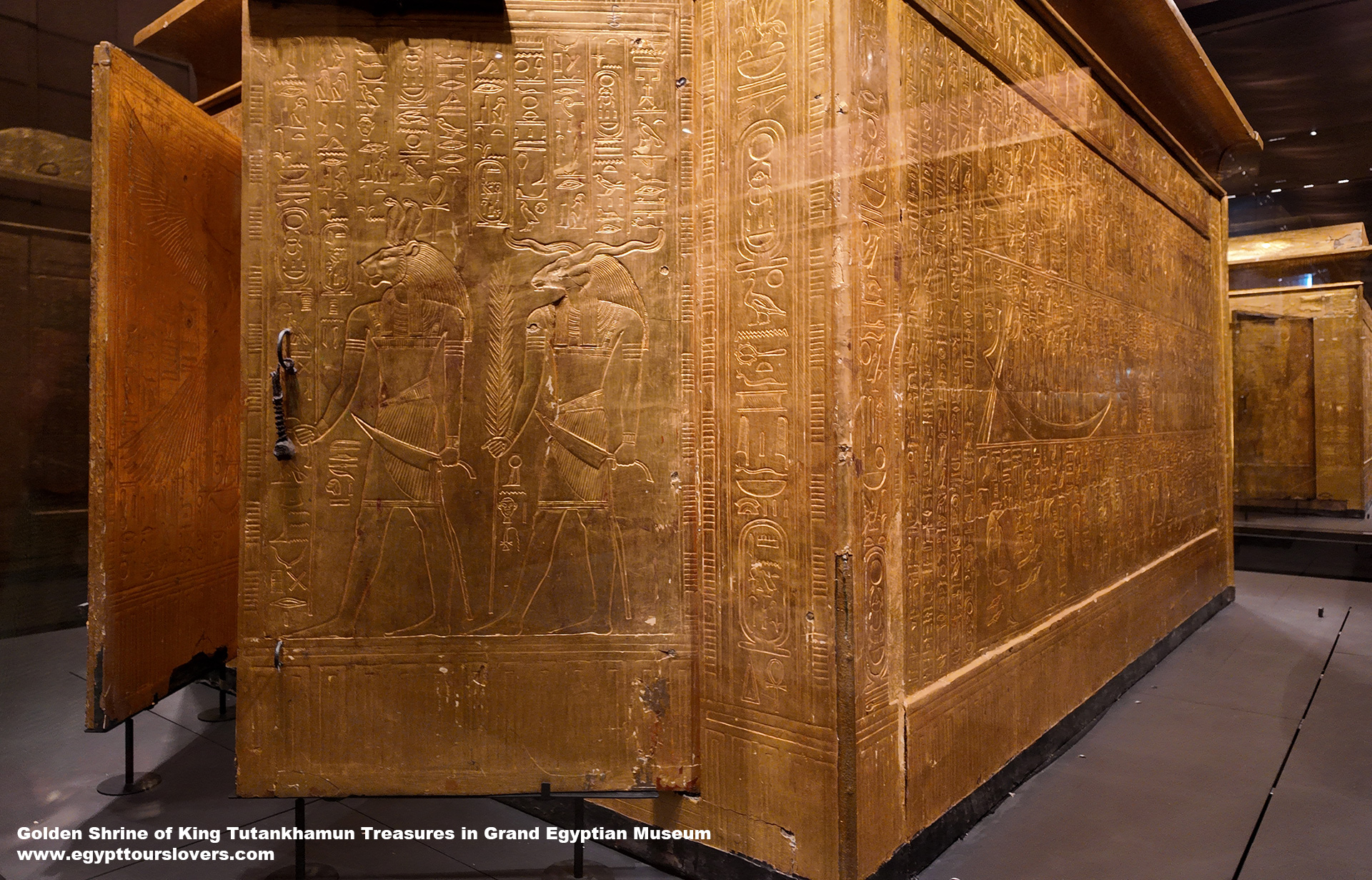
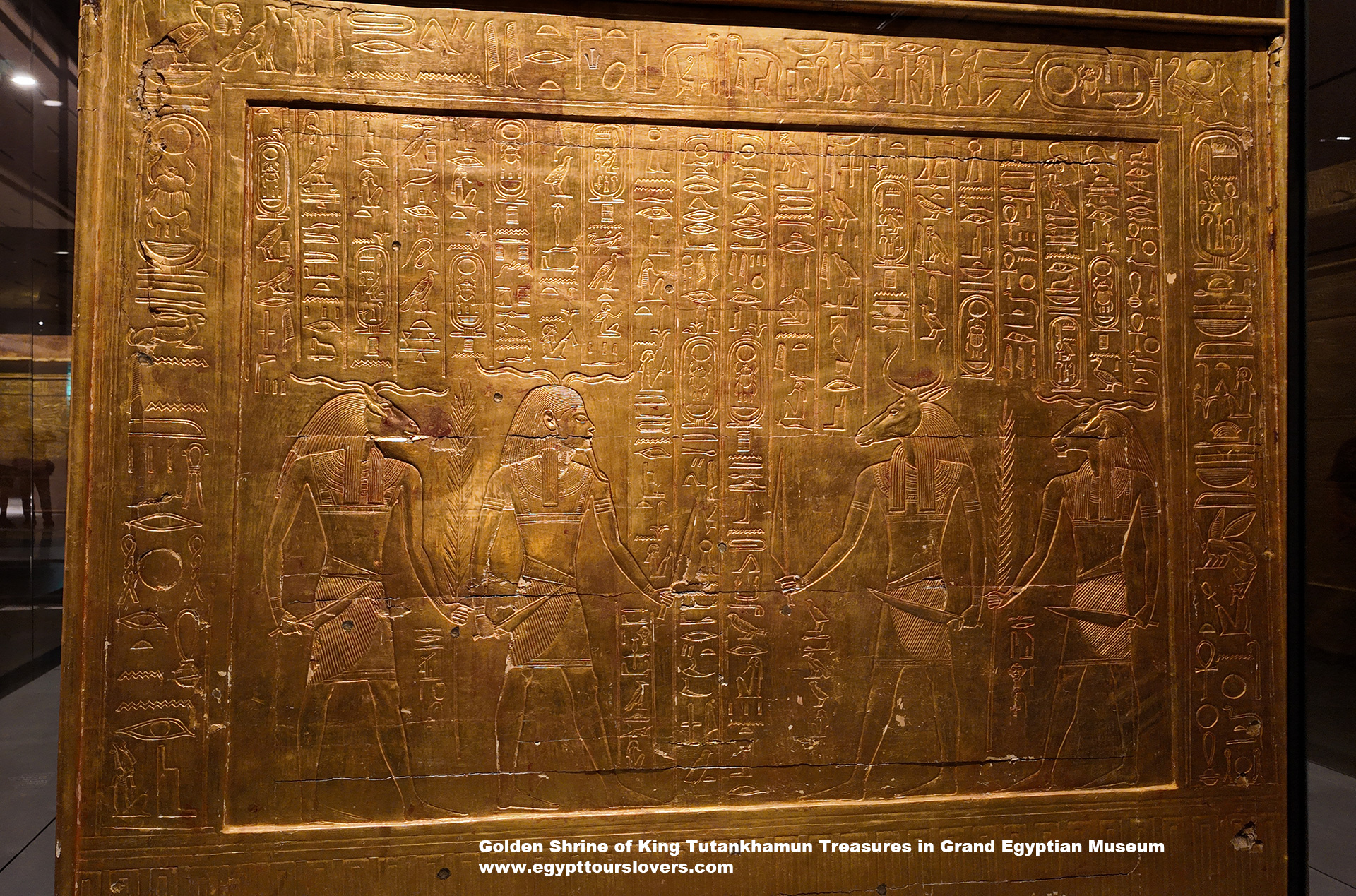
Golden Shrine of King Tutankhamun Treasures
———– } ———– } ———– } ———– }
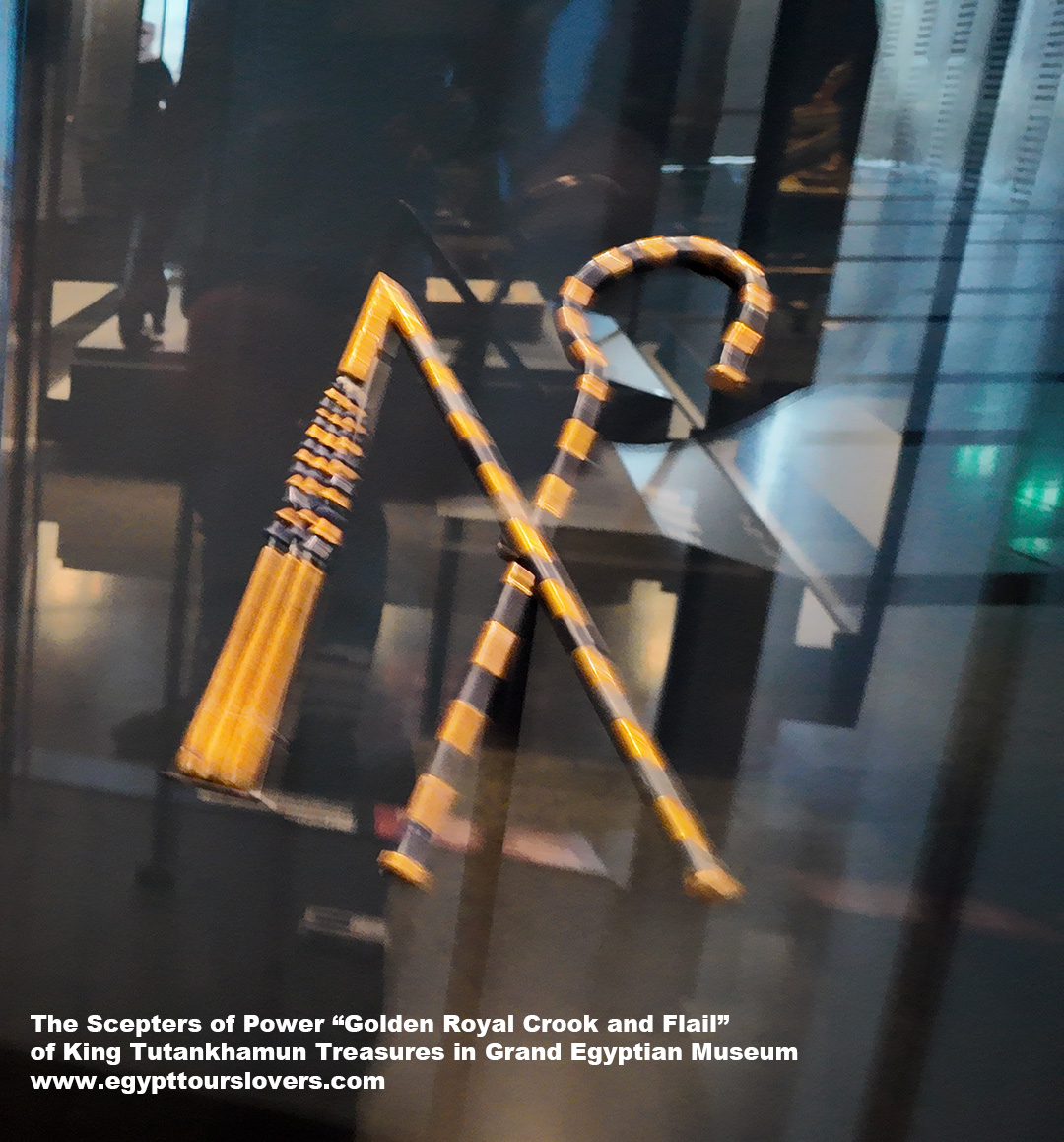
The Scepters of Power “Golden Royal Crook and Flail”
———– } ———– } ———– } ———– }
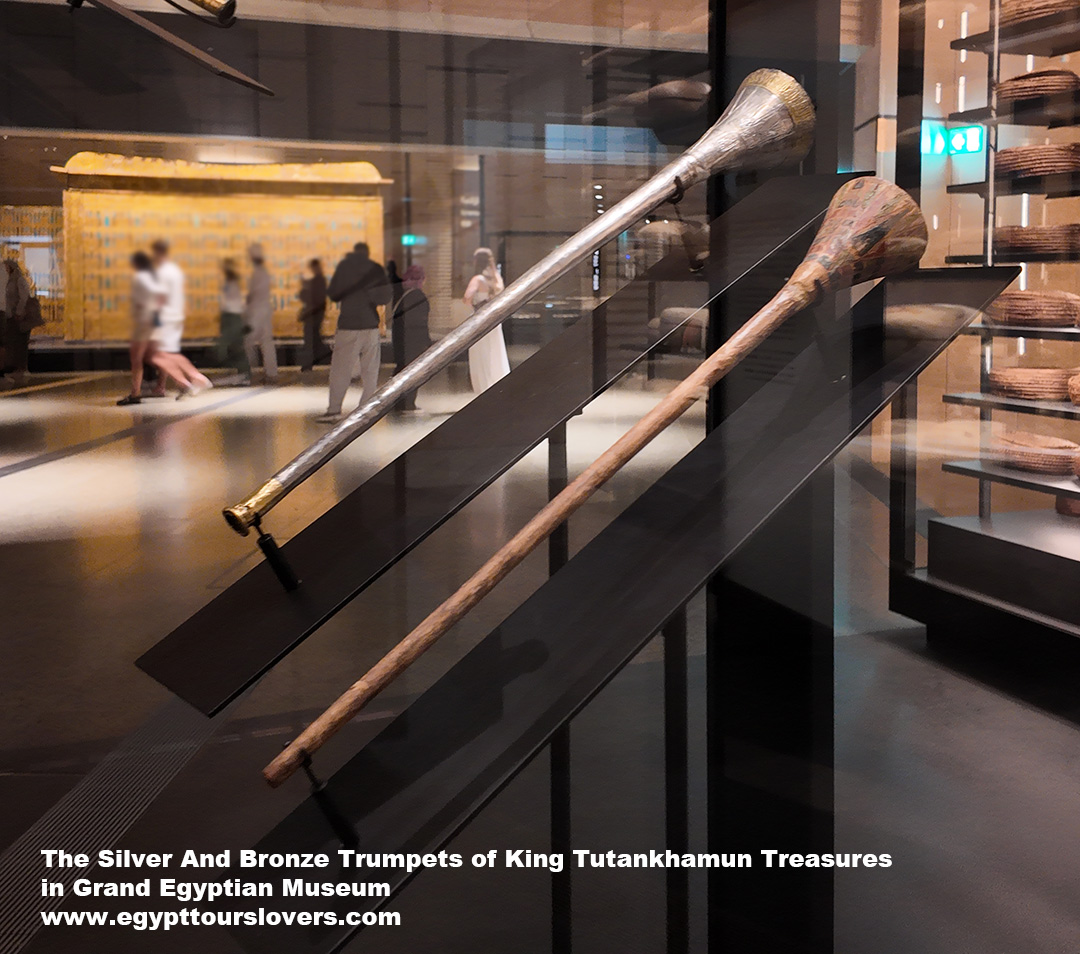
The Silver & Bronze Trumpets
———– } ———– } ———– } ———– }
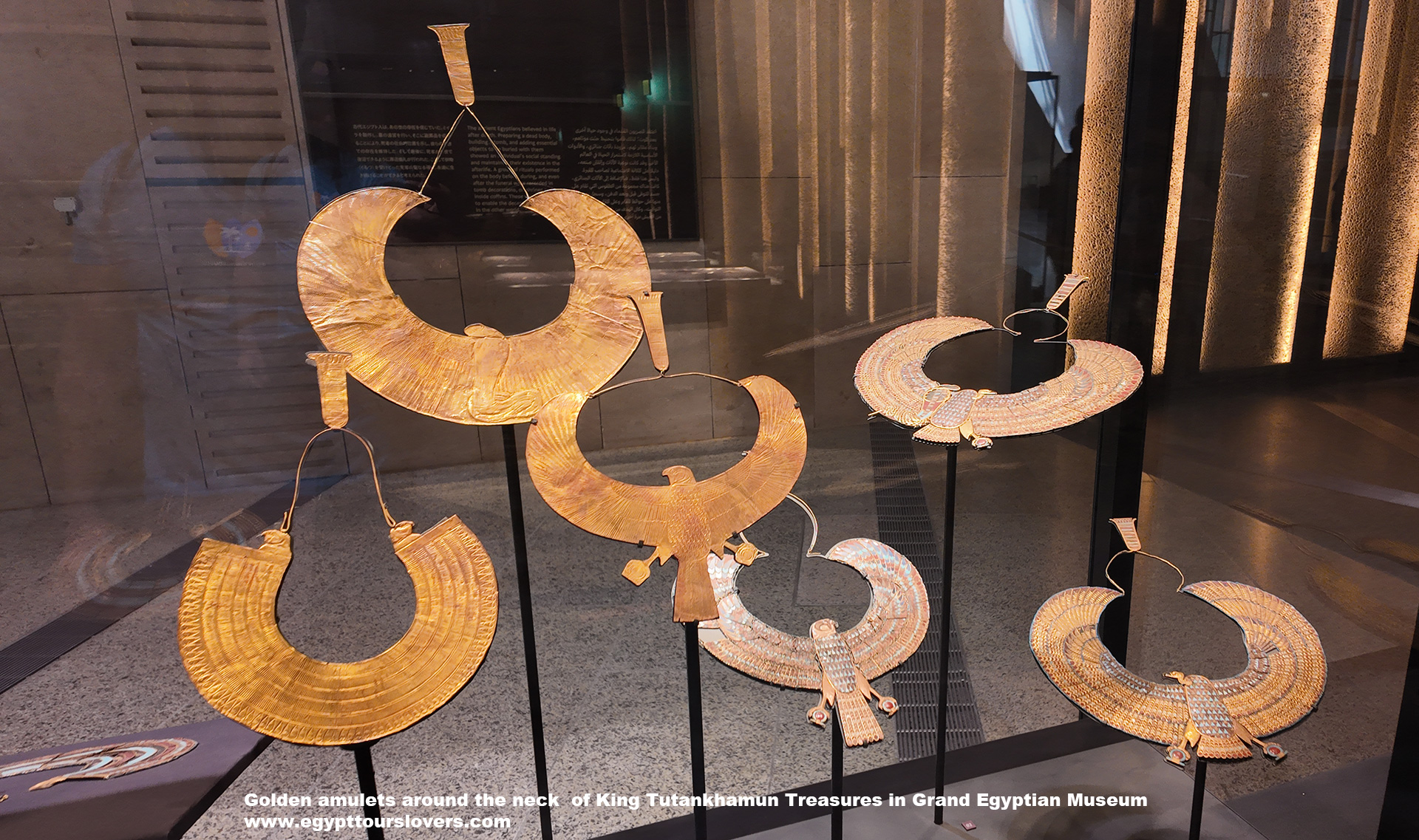
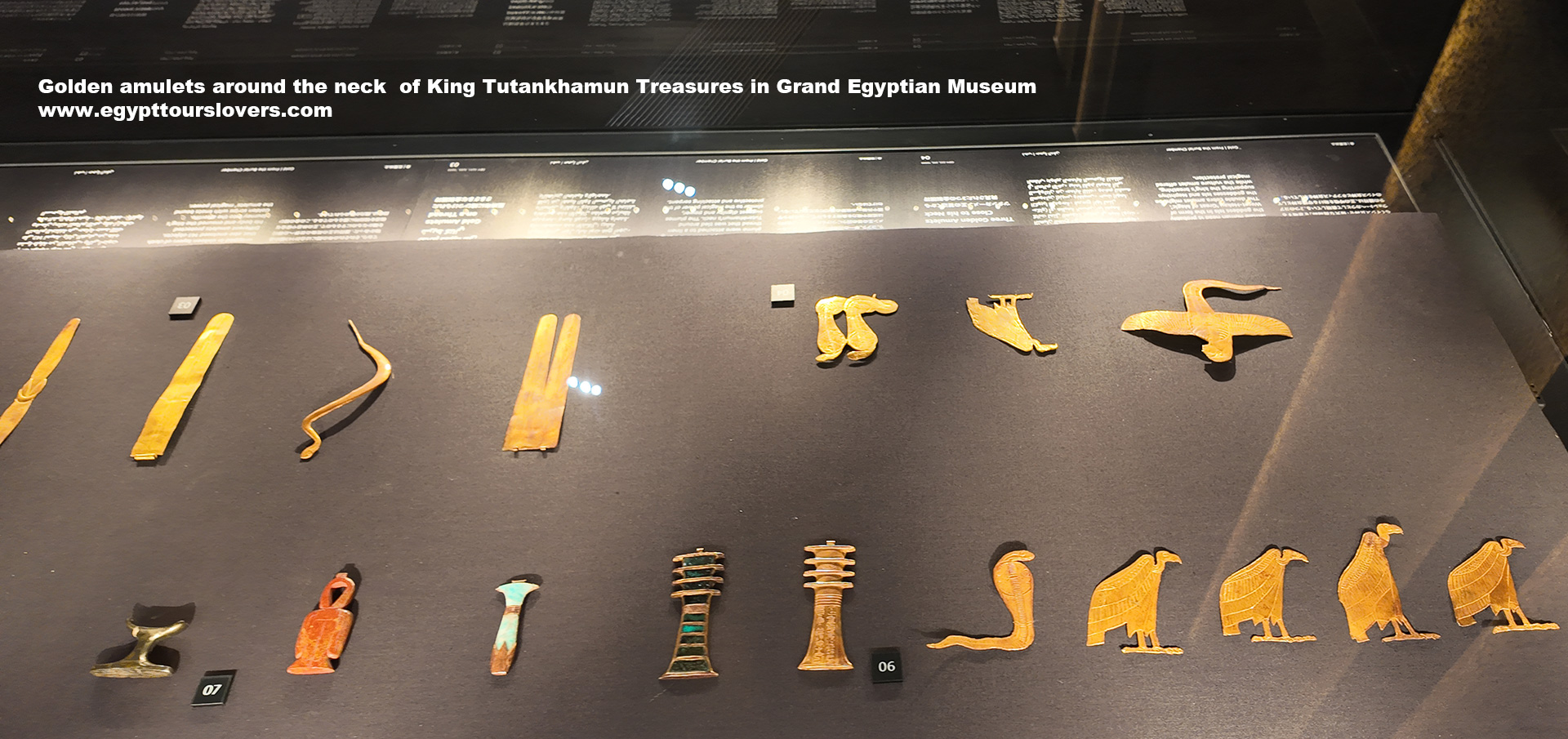
Golden amulets around the neck
———– } ———– } ———– } ———– }
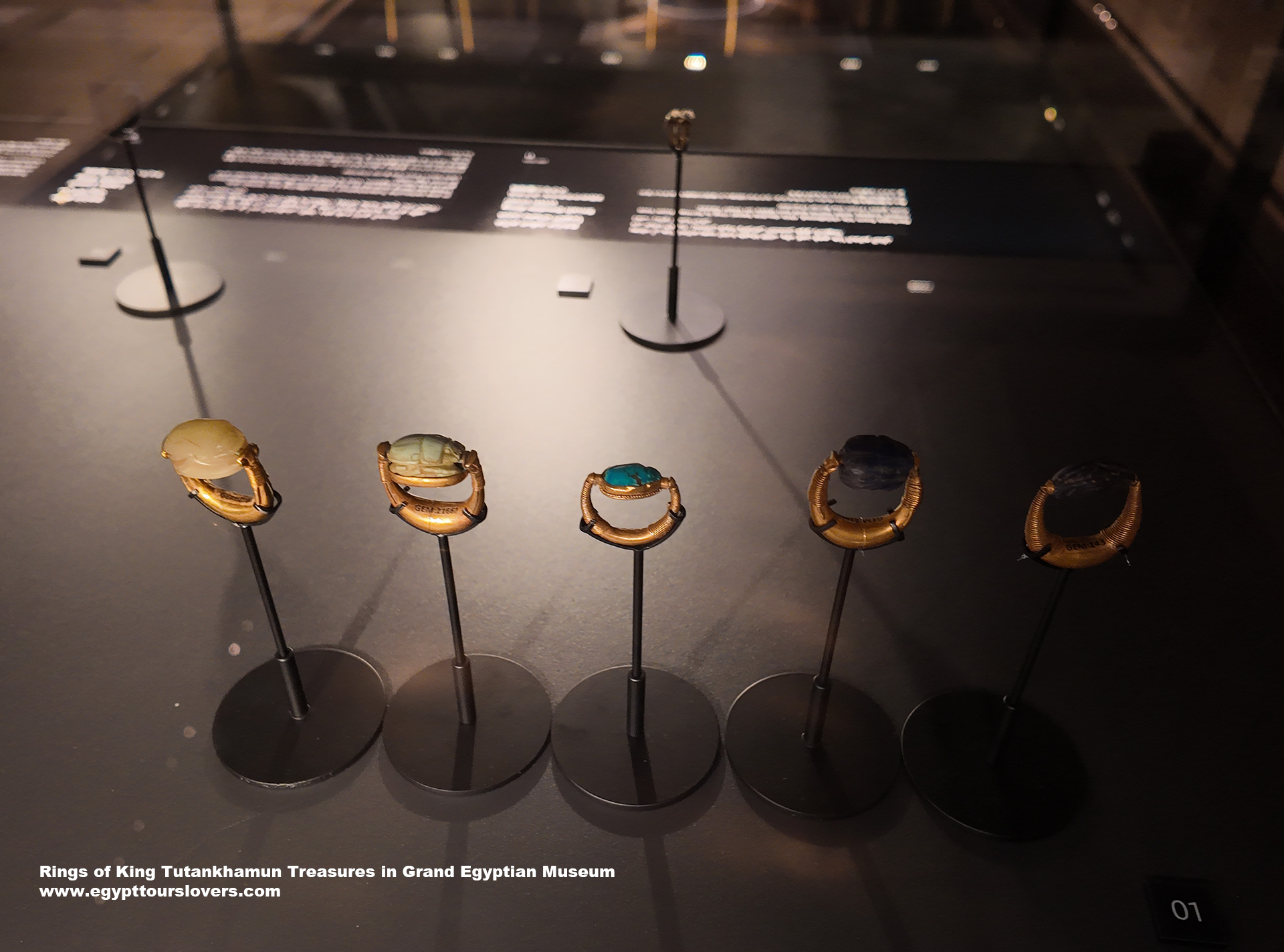
Rings
———– } ———– } ———– } ———– }
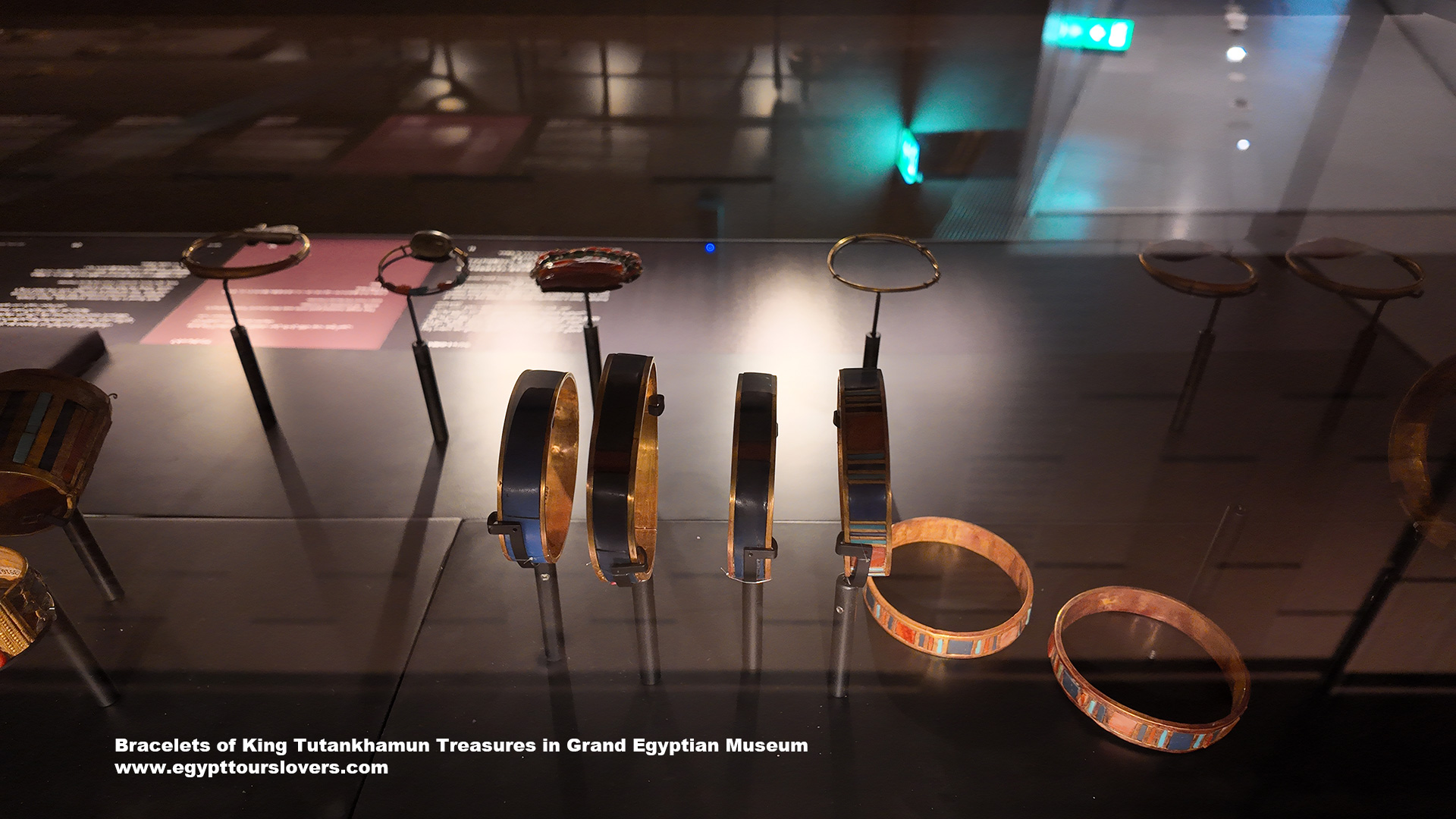
Bracelets
“Duck Head Earrings, Festival Earrings”
———– } ———– } ———– } ———– }
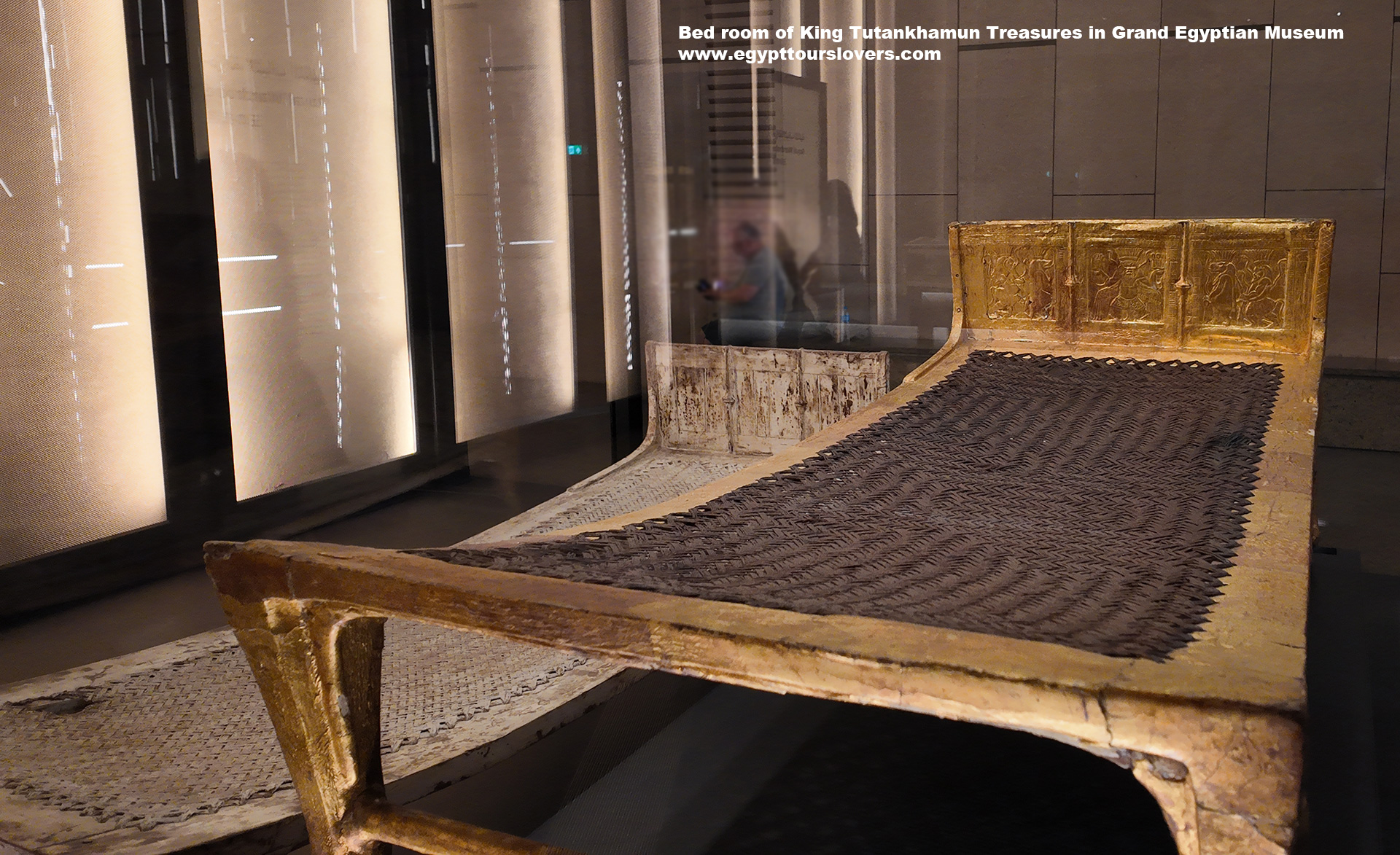
Bed room
———– } ———– } ———– } ———– }
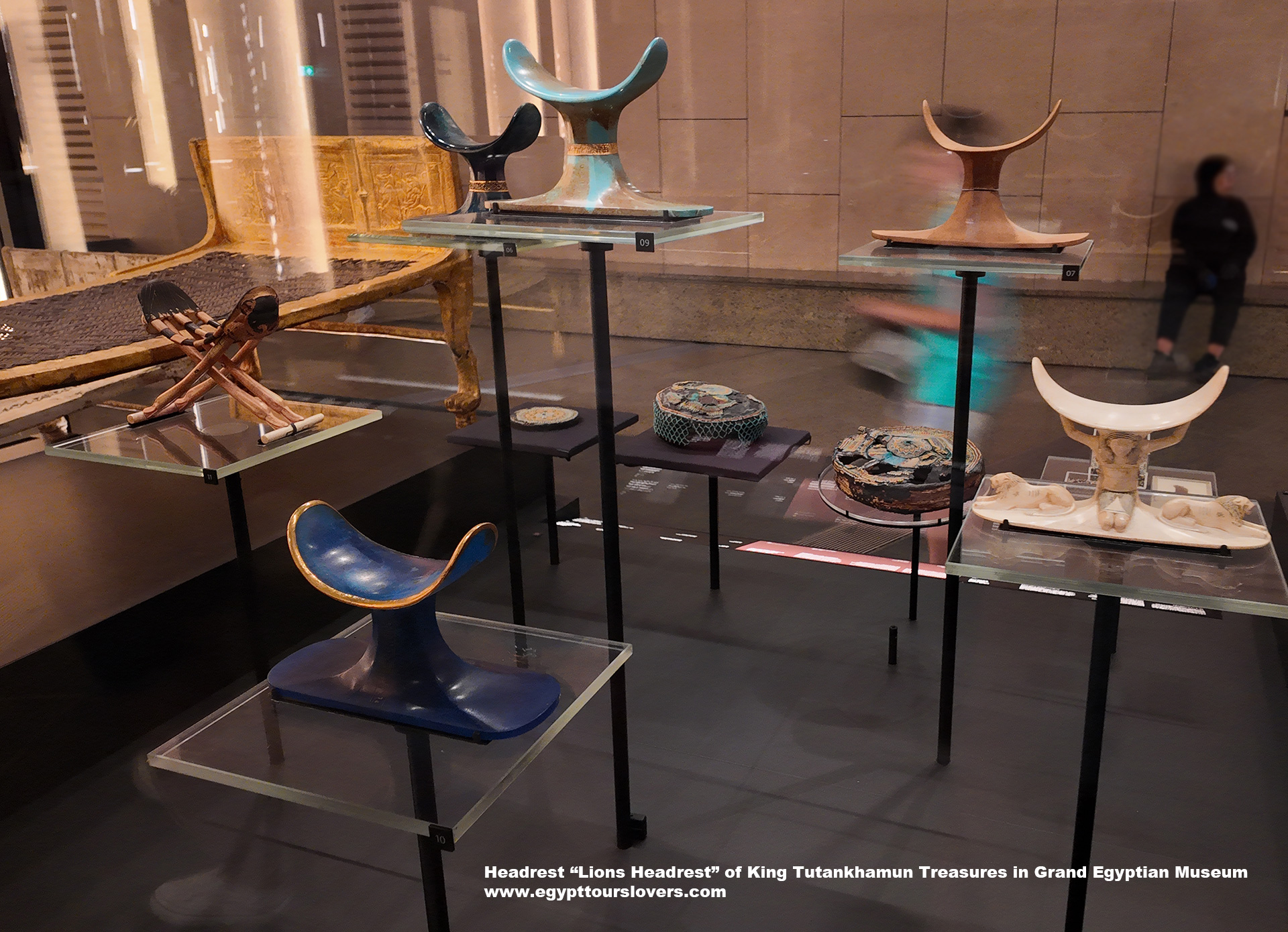
Headrest “Lions Headrest” of King Tutankhamun Treasures
———– } ———– } ———– } ———– }
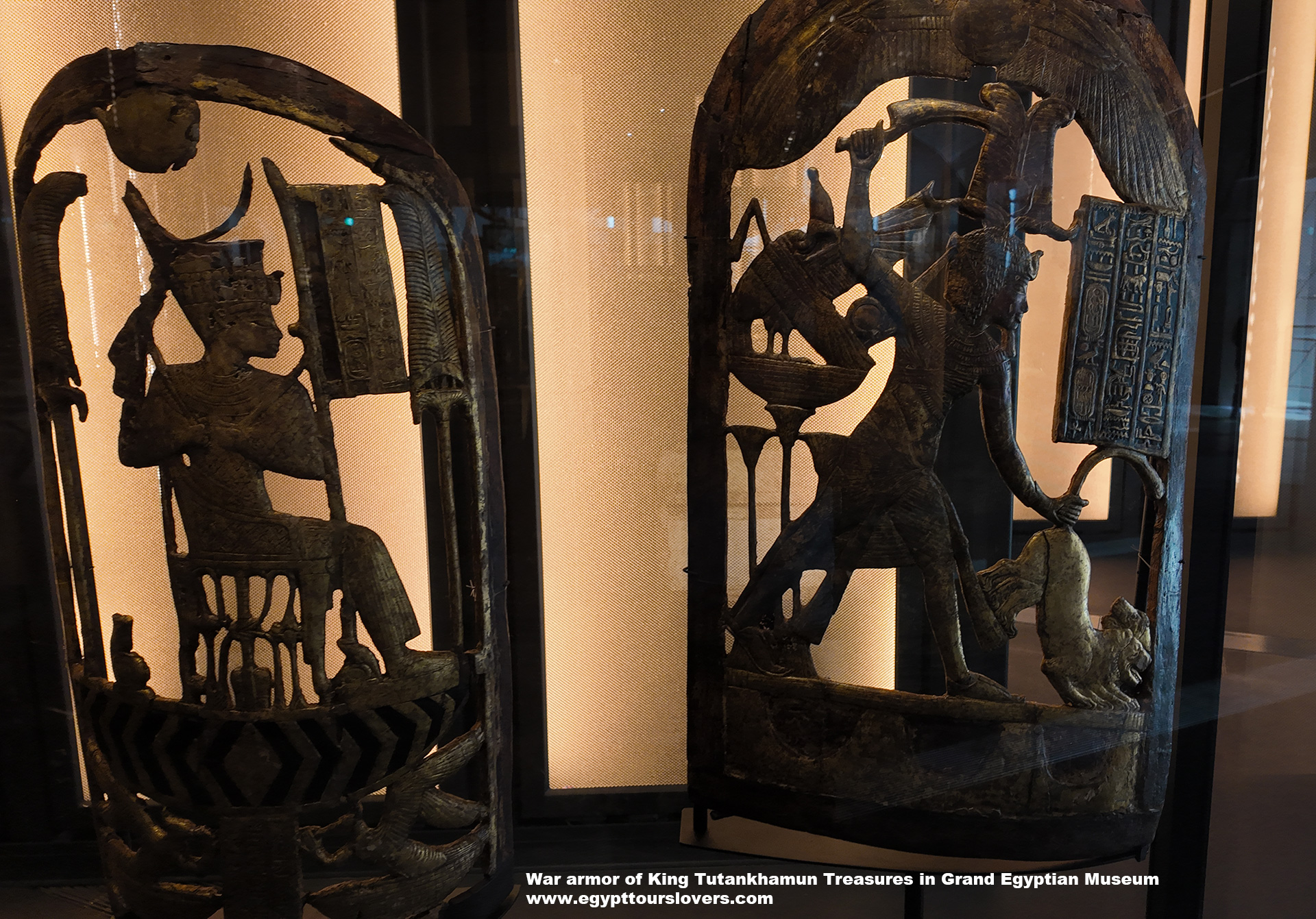
War armor
———– } ———– } ———– } ———– }
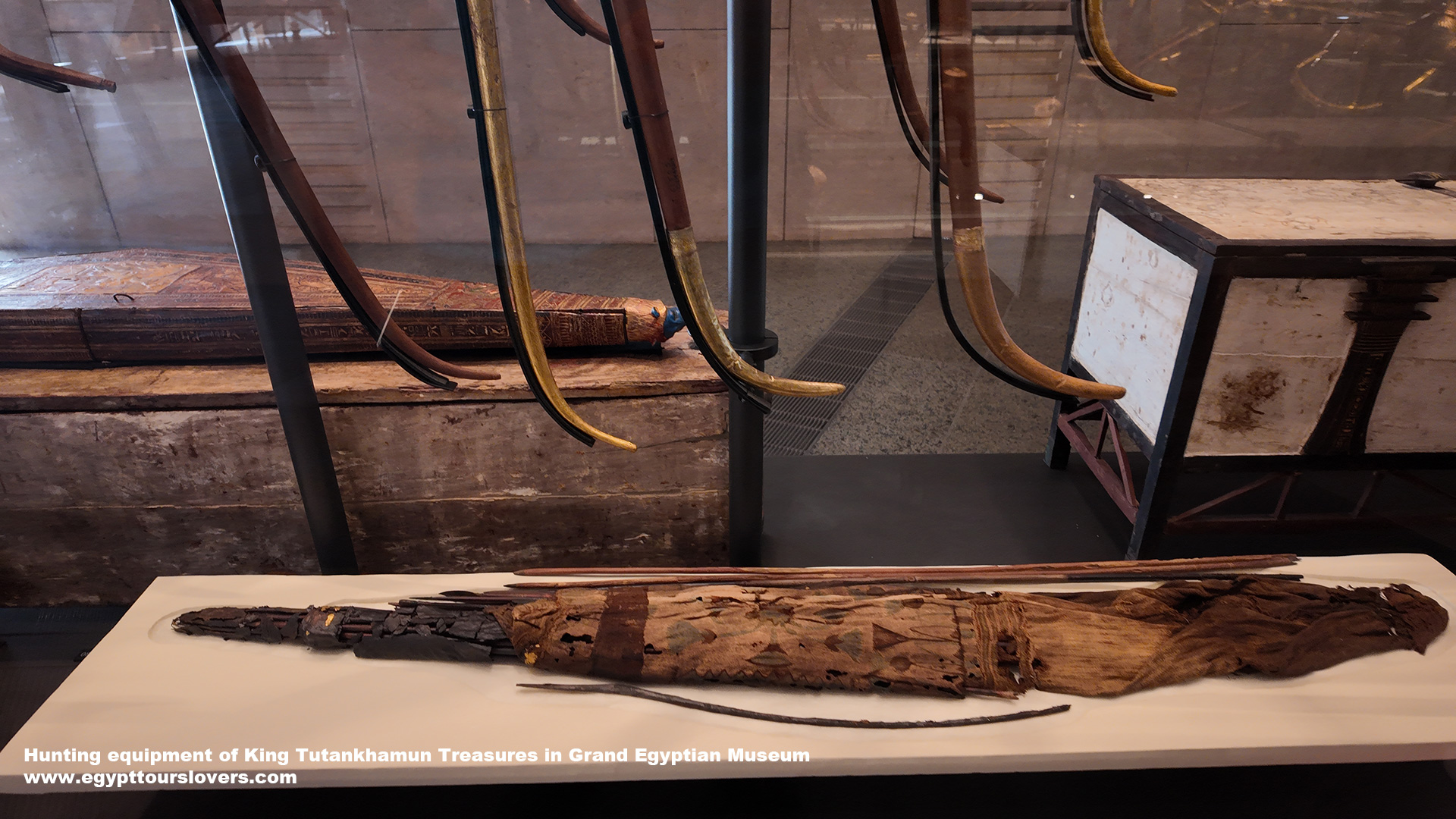
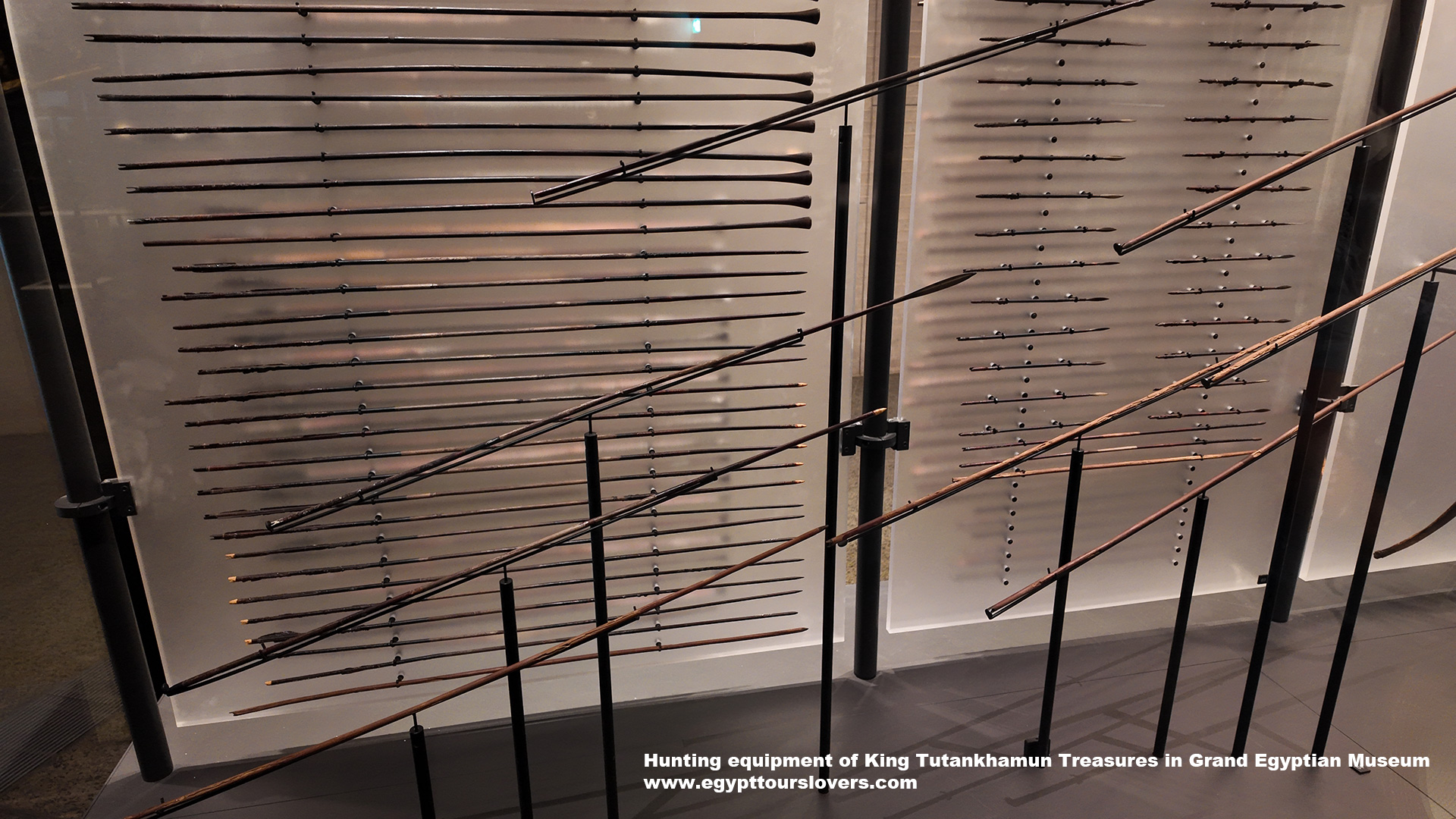
Hunting equipment
chariots, bows, arrows, shields, and other weaponry.
———– } ———– } ———– } ———– }
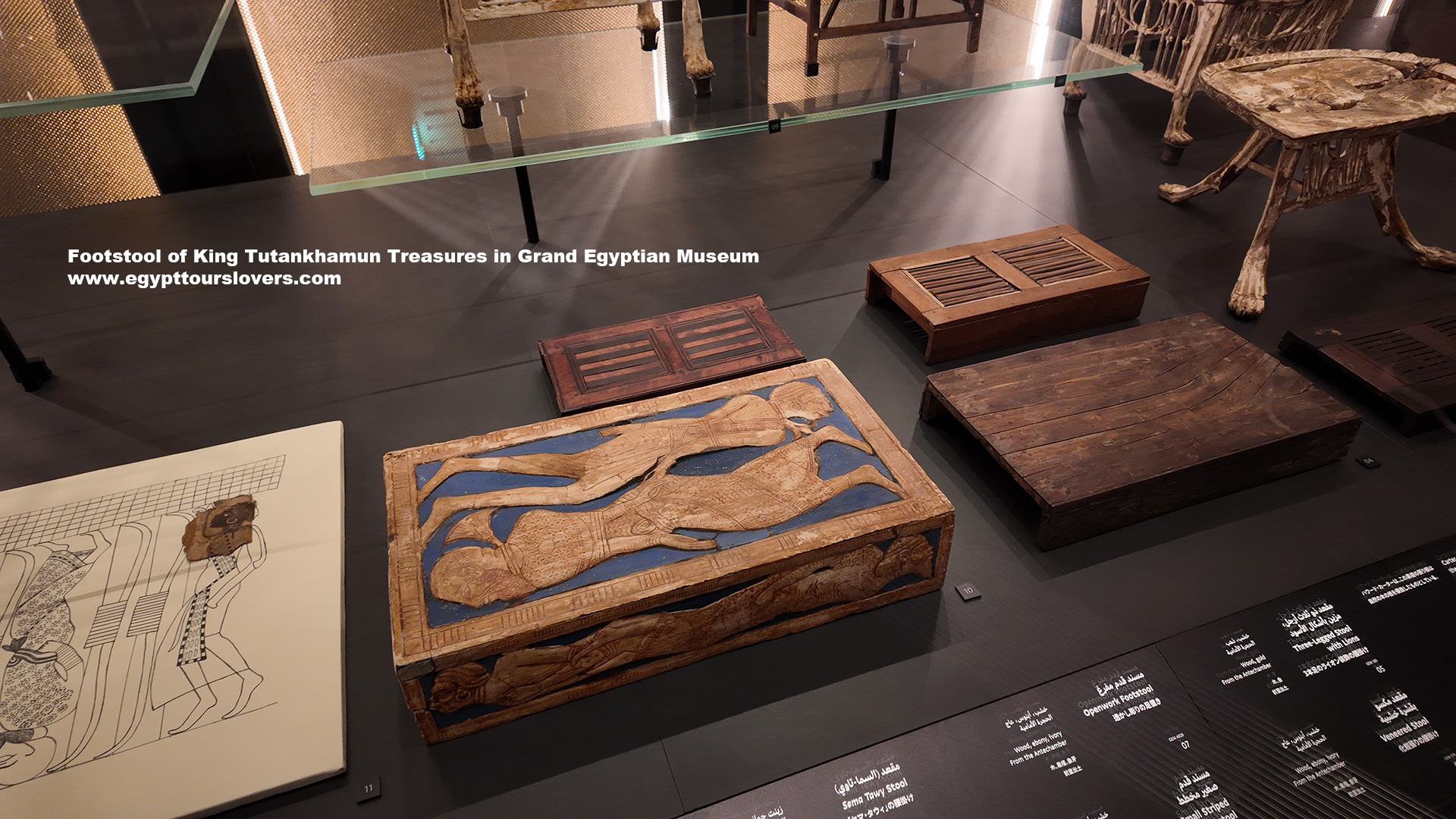
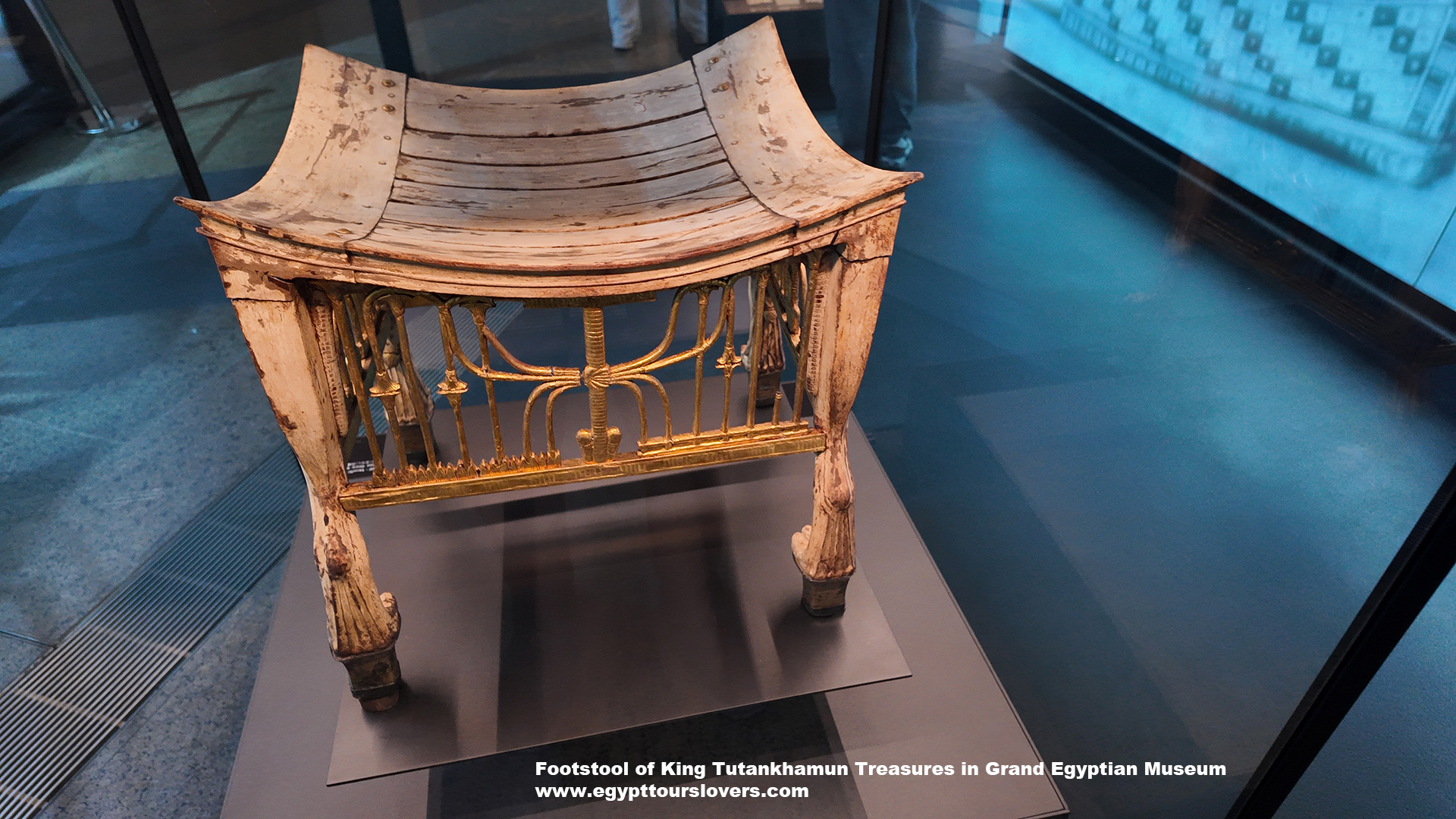
Footstool
———– } ———– } ———– } ———– }
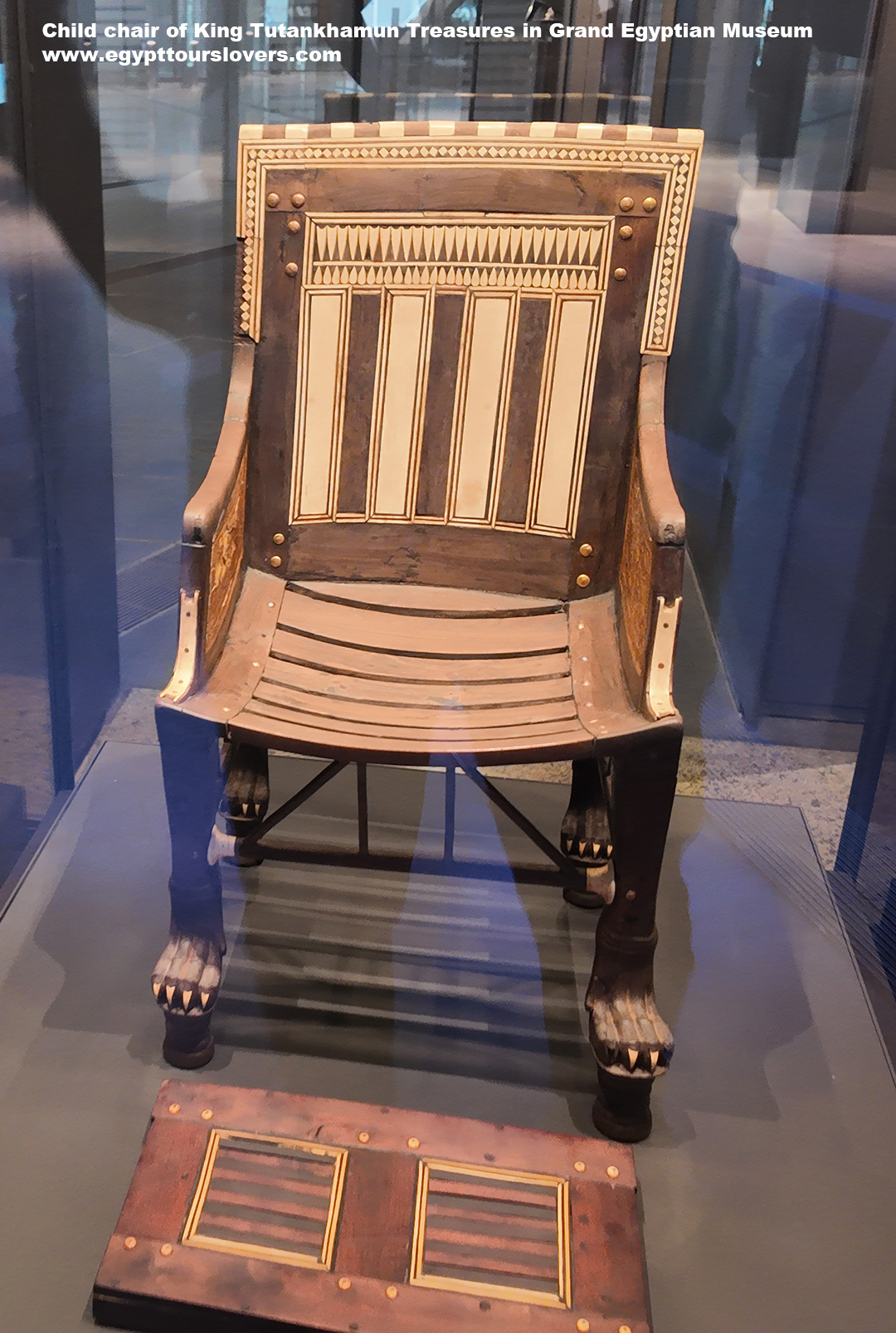
Child chair
———– } ———– } ———– } ———– }
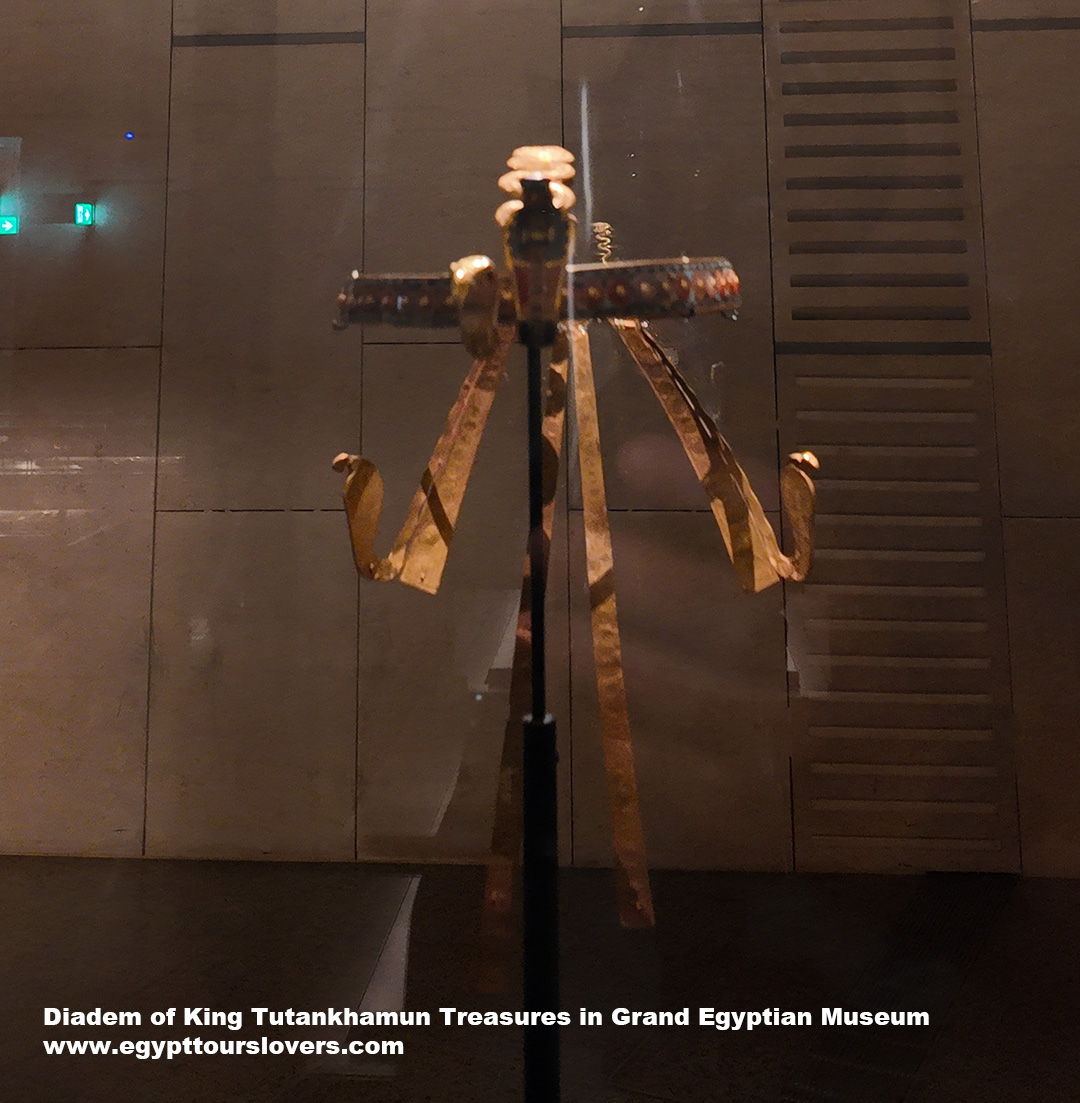
Diadem of King Tutankhamun Treasures
———– } ———– } ———– } ———– }
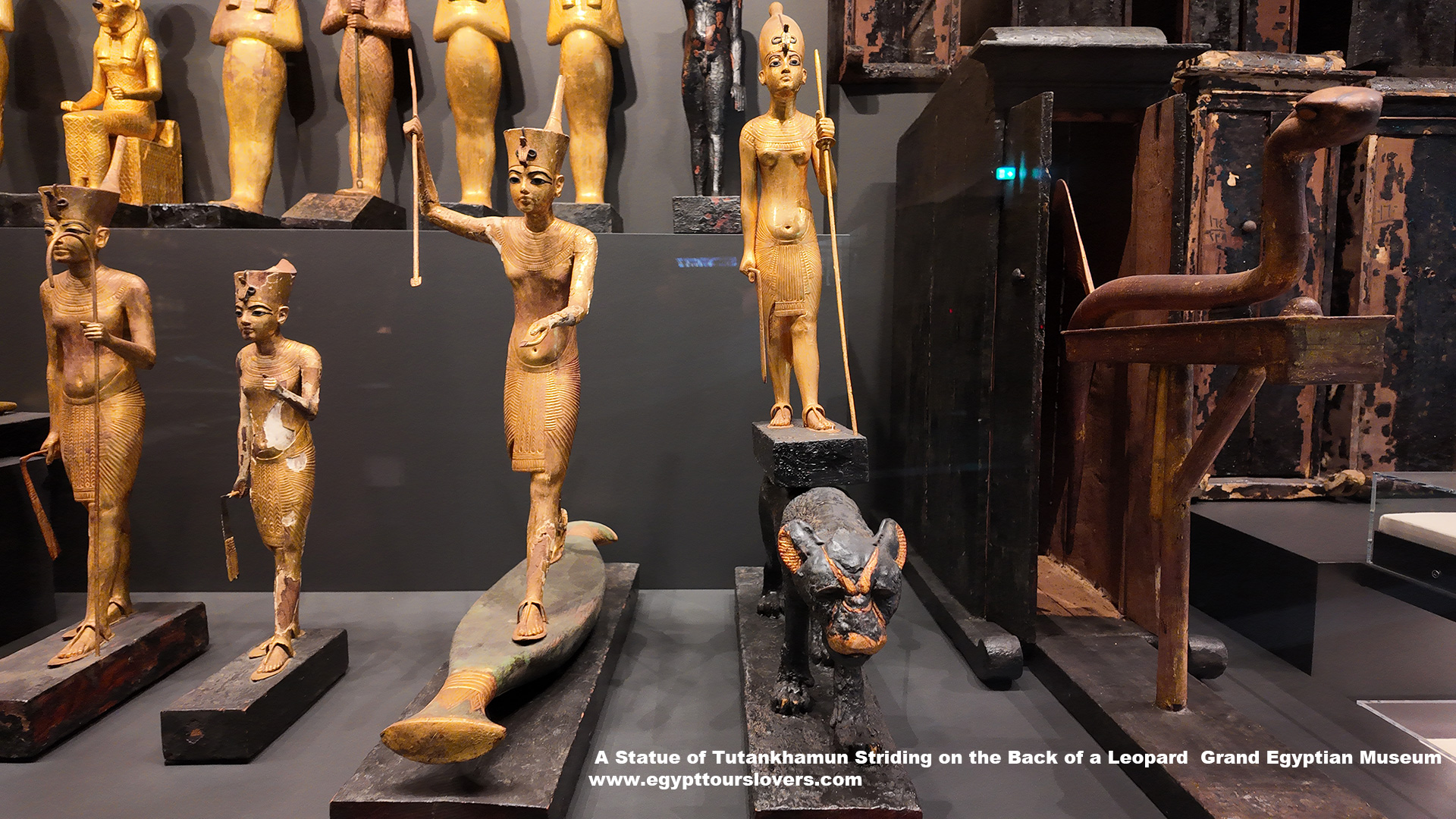
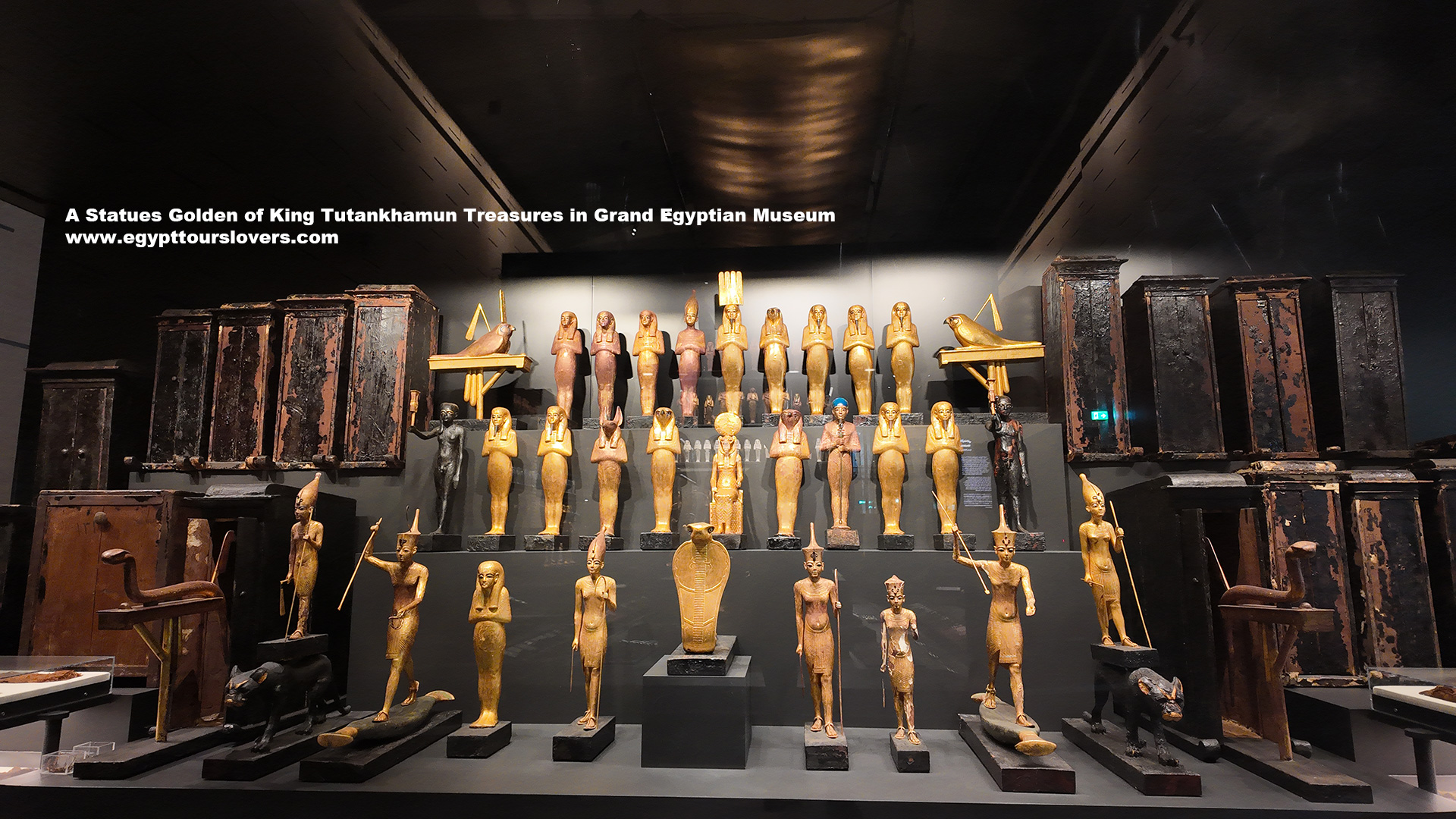
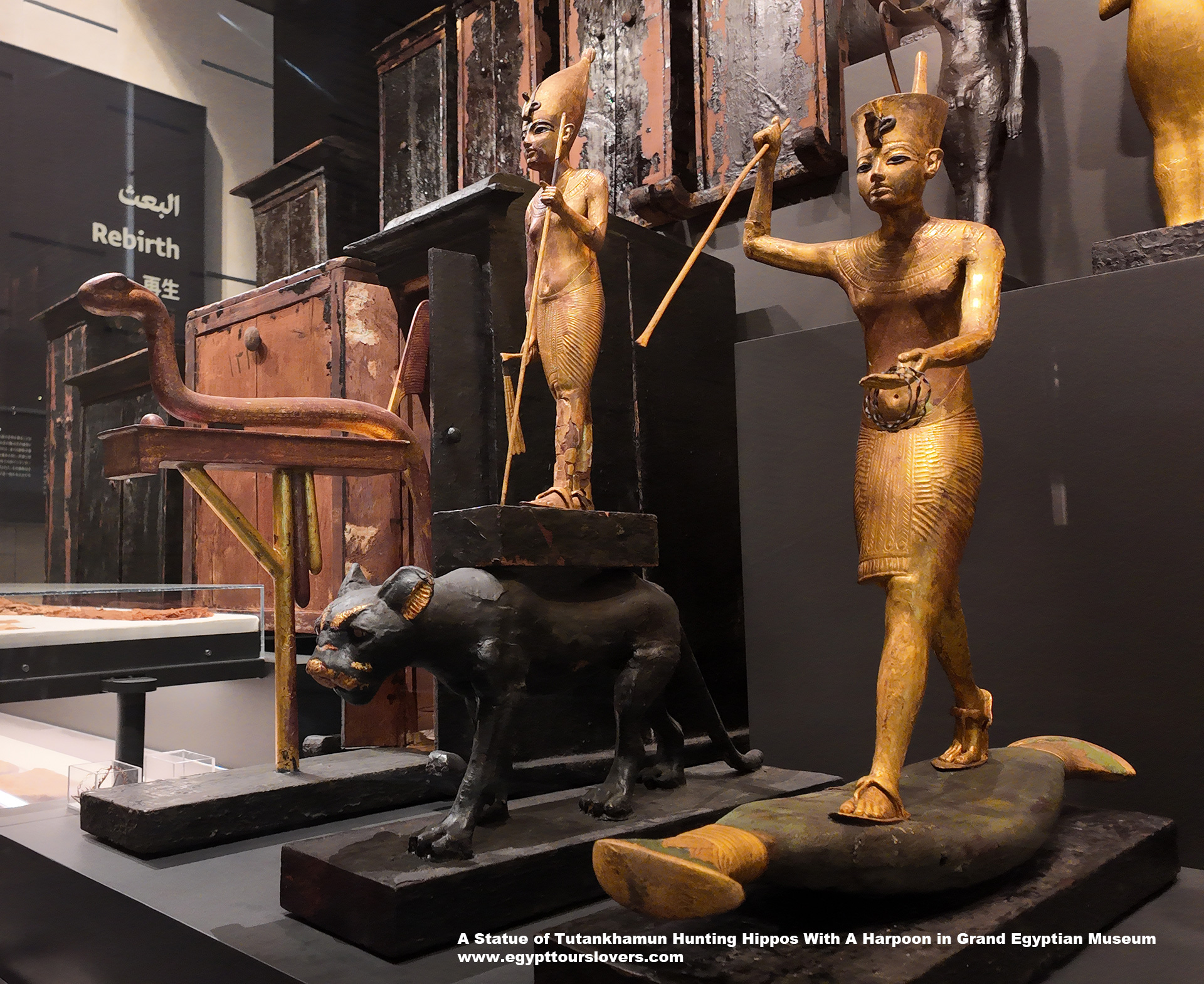
A Statues of Tutankhamun Golden
“Tutankhamun Striding on the Back of a Leopard, Hunting Hippos With A Harpoon, “
———– } ———– } ———– } ———– }
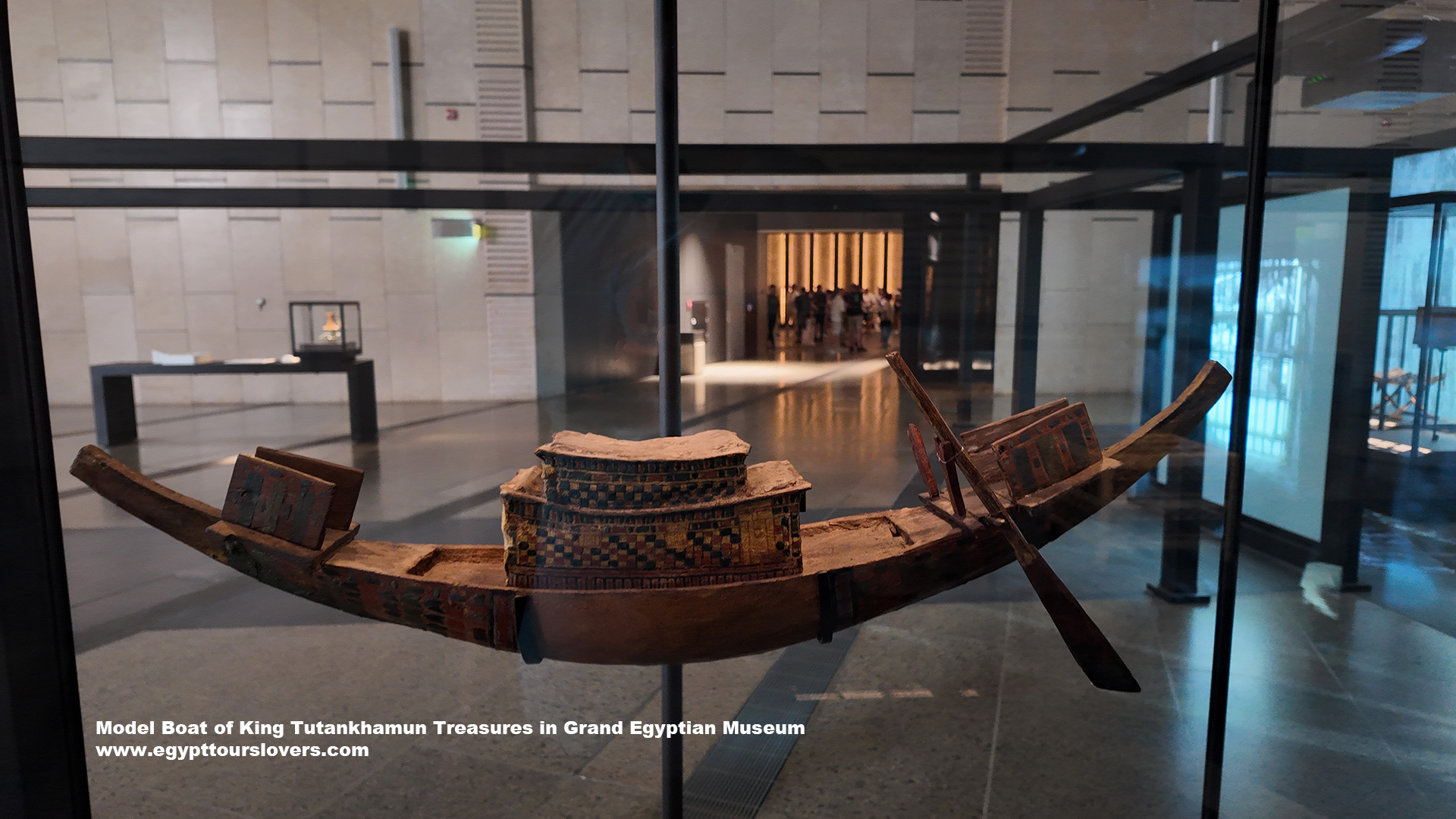
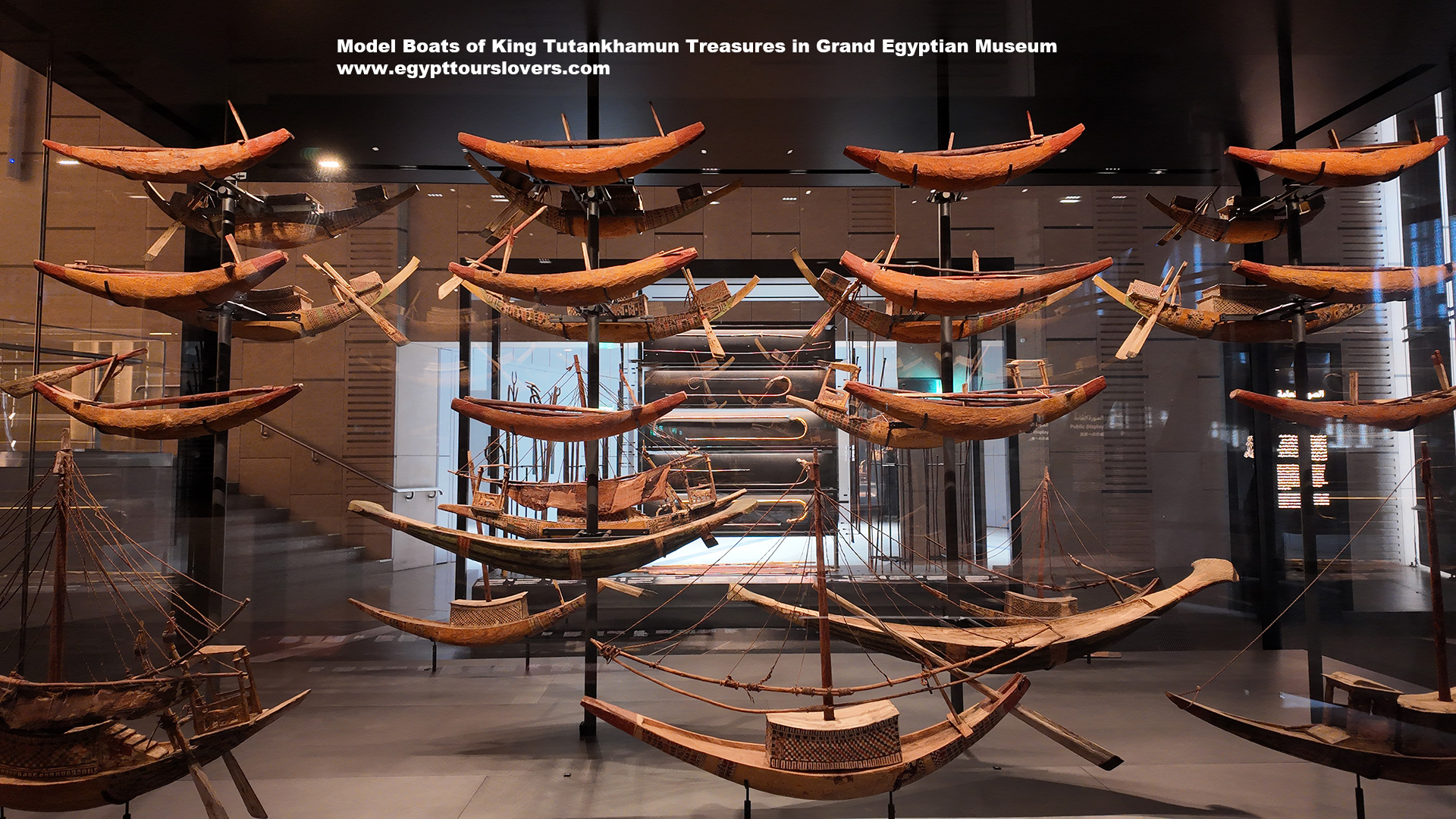
Model Boats
———– } ———– } ———– } ———– }
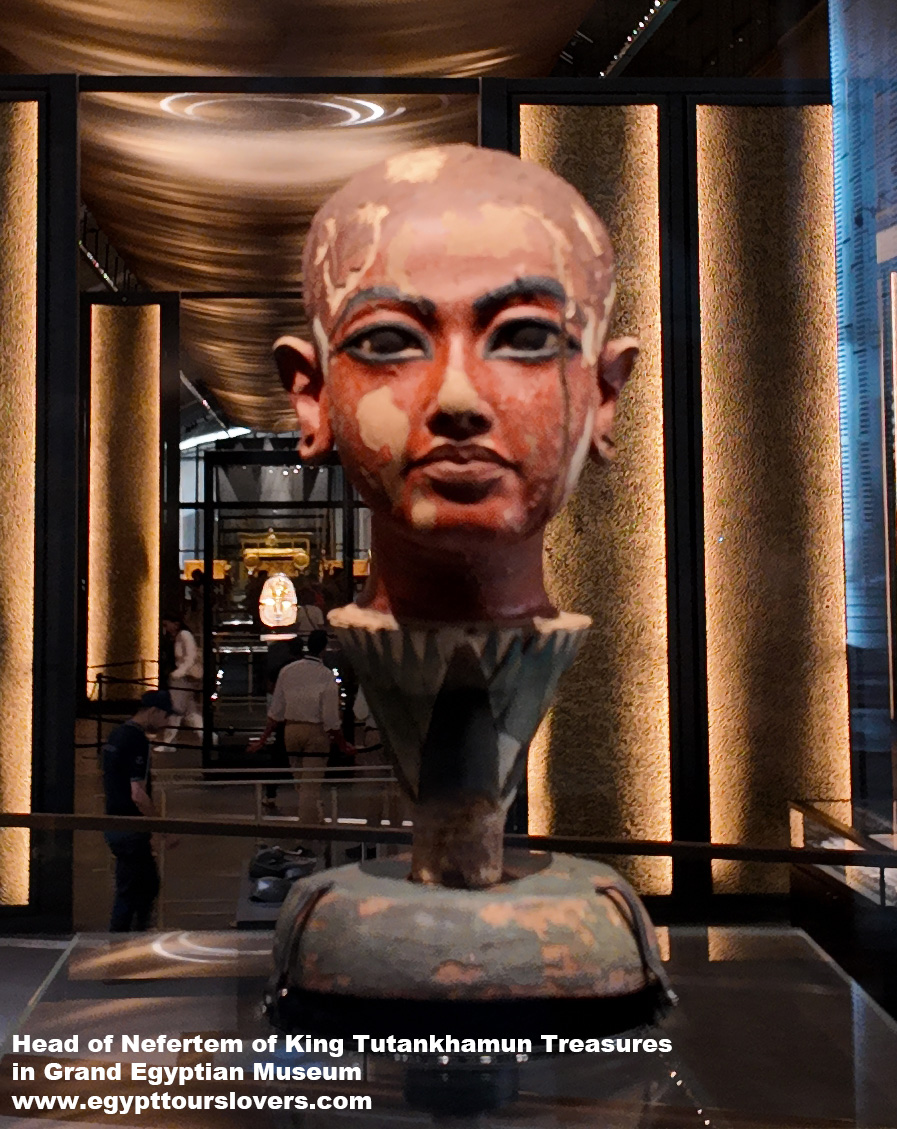
Head of Nefertem
———– } ———– } ———– } ———– }
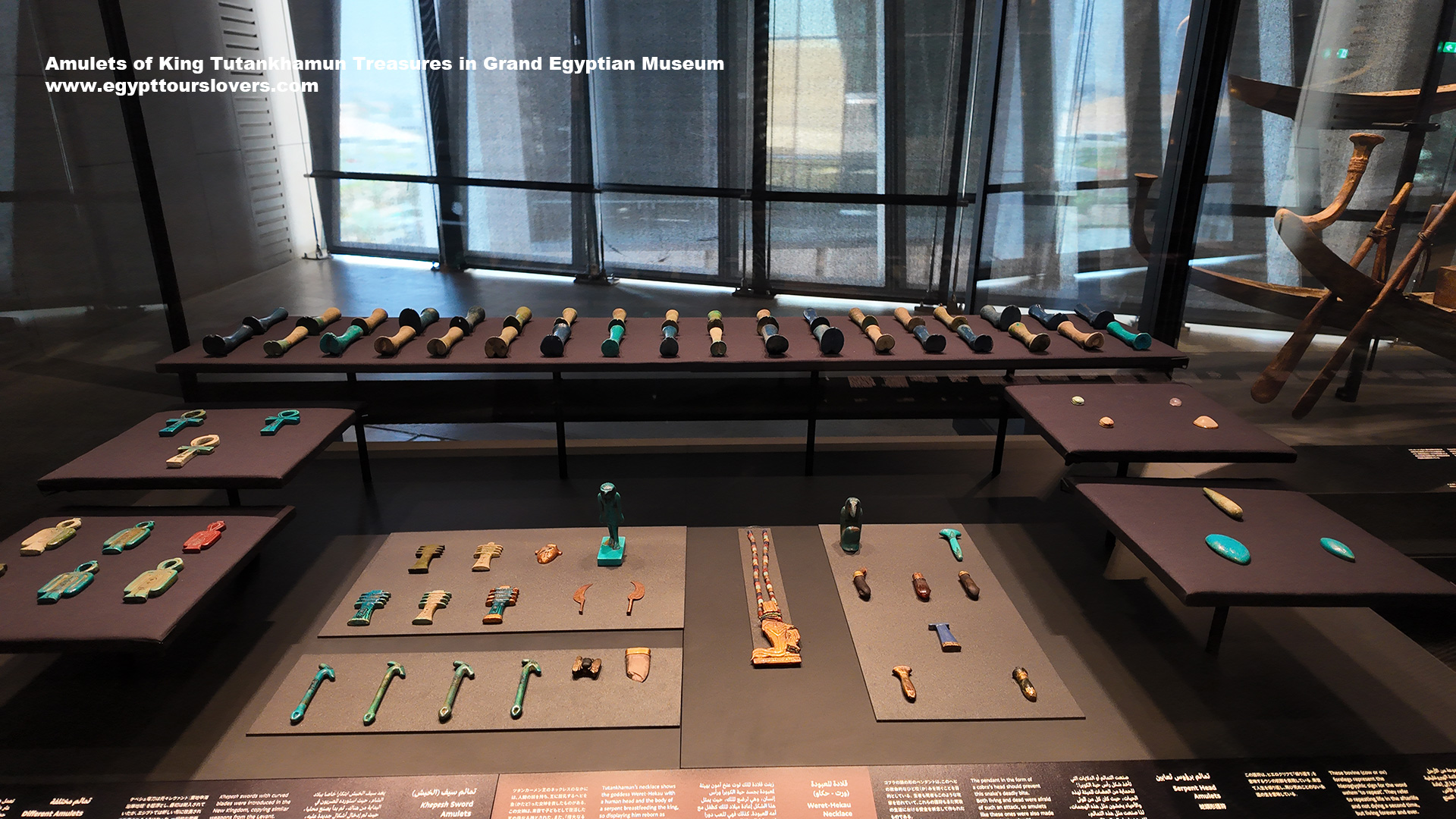
Amulets
———– } ———– } ———– } ———– }
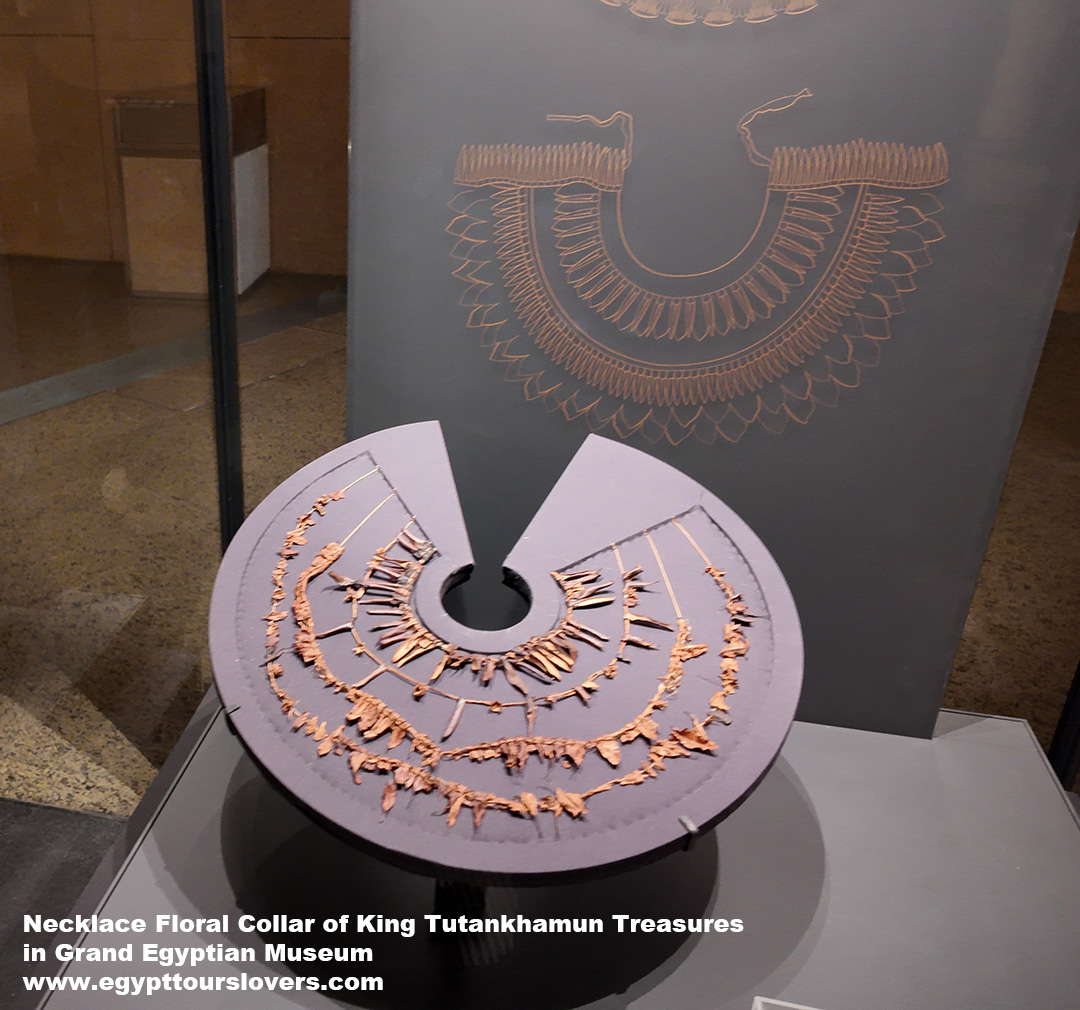
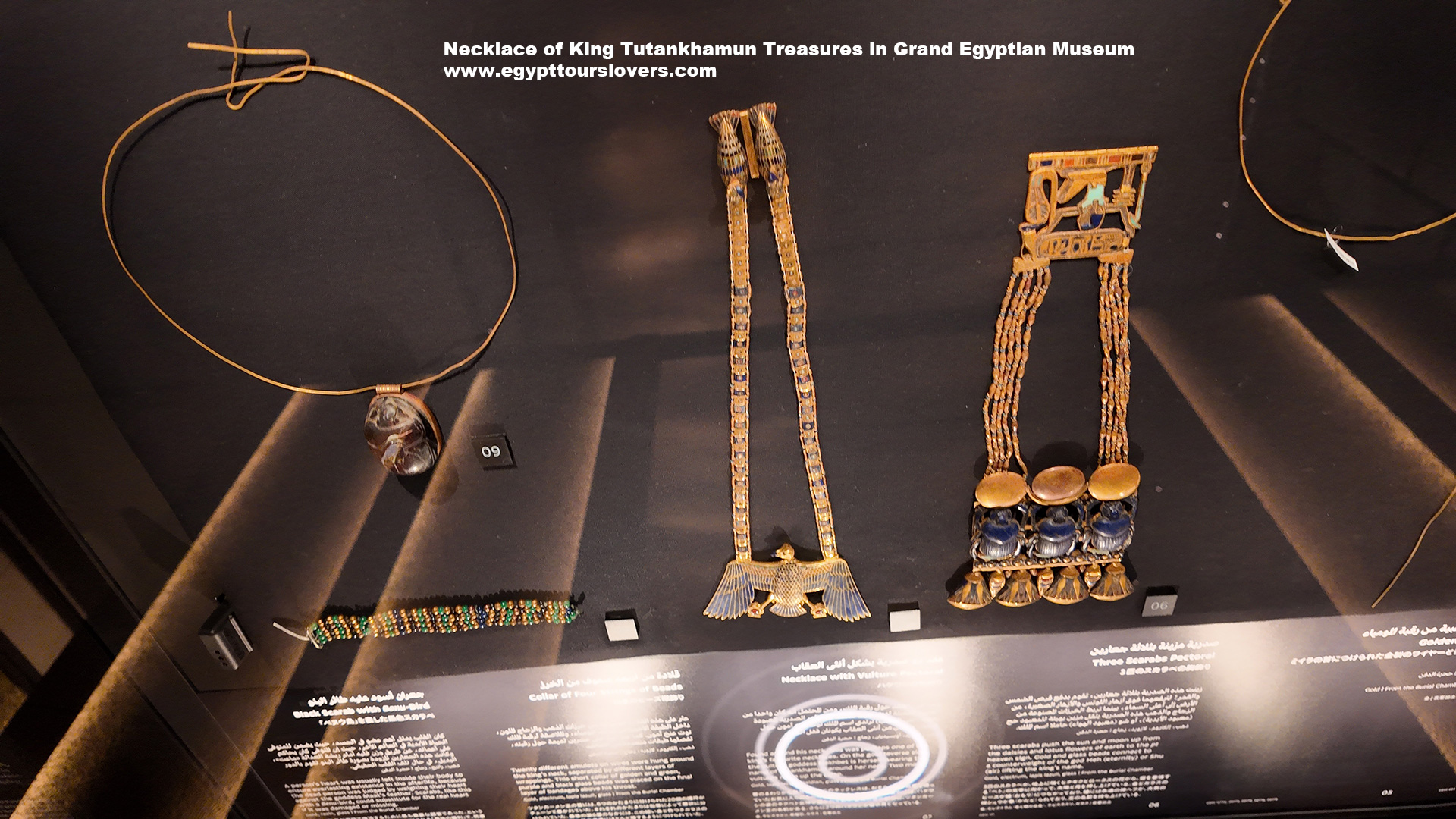
Necklace & Floral Collar of King Tutankhamun Treasures
———– } ———– } ———– } ———– }
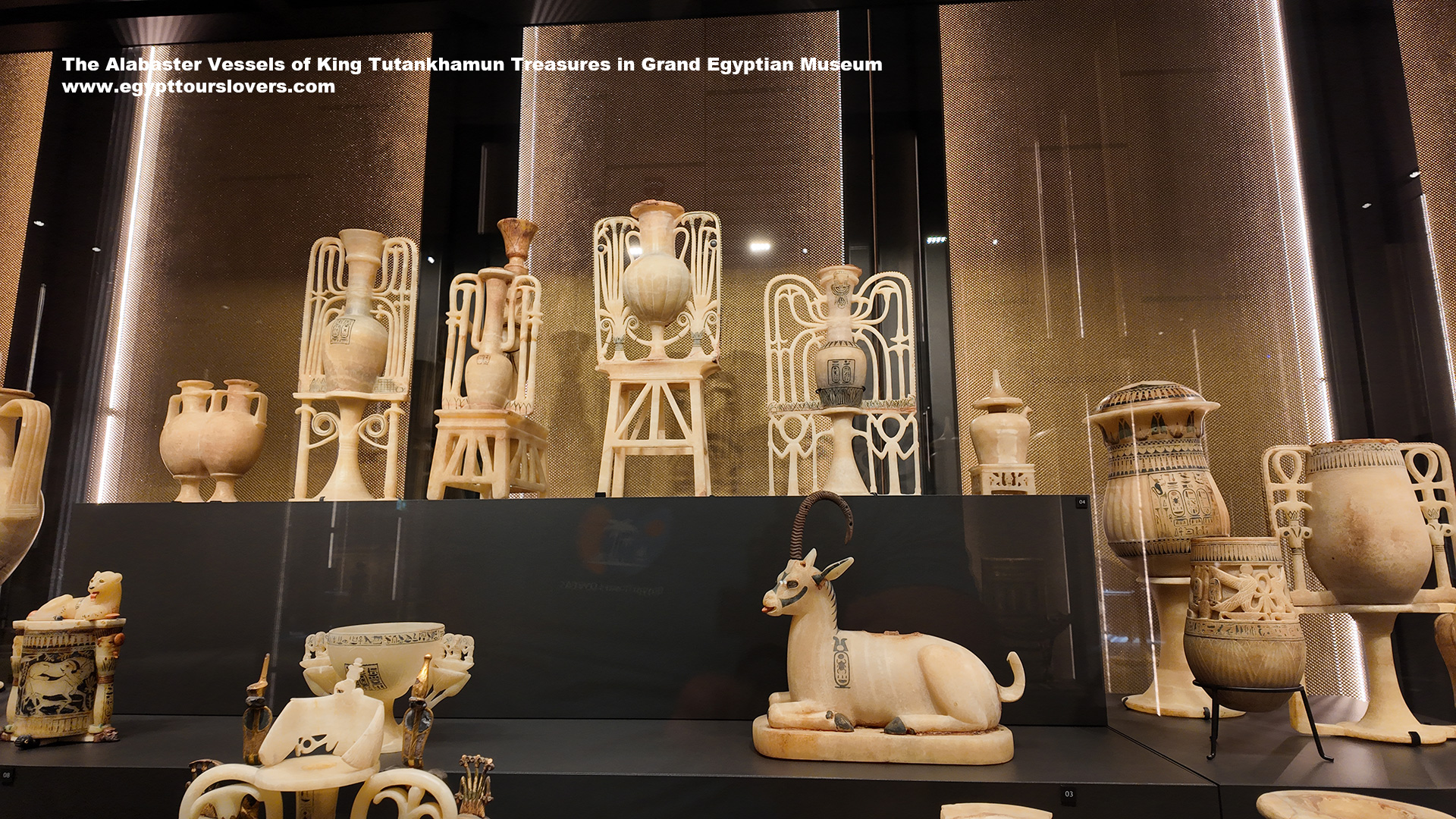
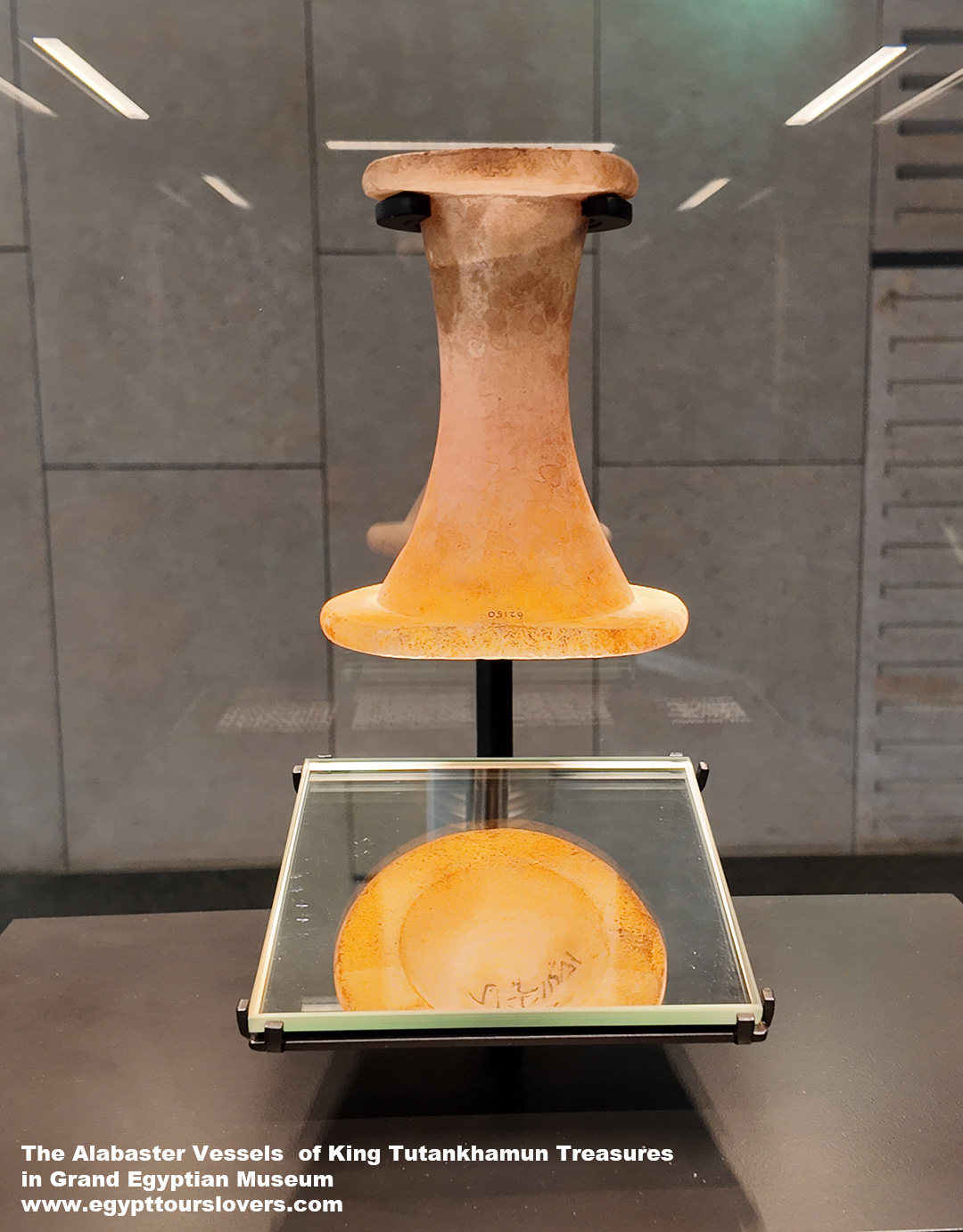
The Alabaster Vessels
“Jar Alabaster, Lion-Shaped Perfume Jar, Fancy Perfume Vase, Lotus Cup”
———– } ———– } ———– } ———– }
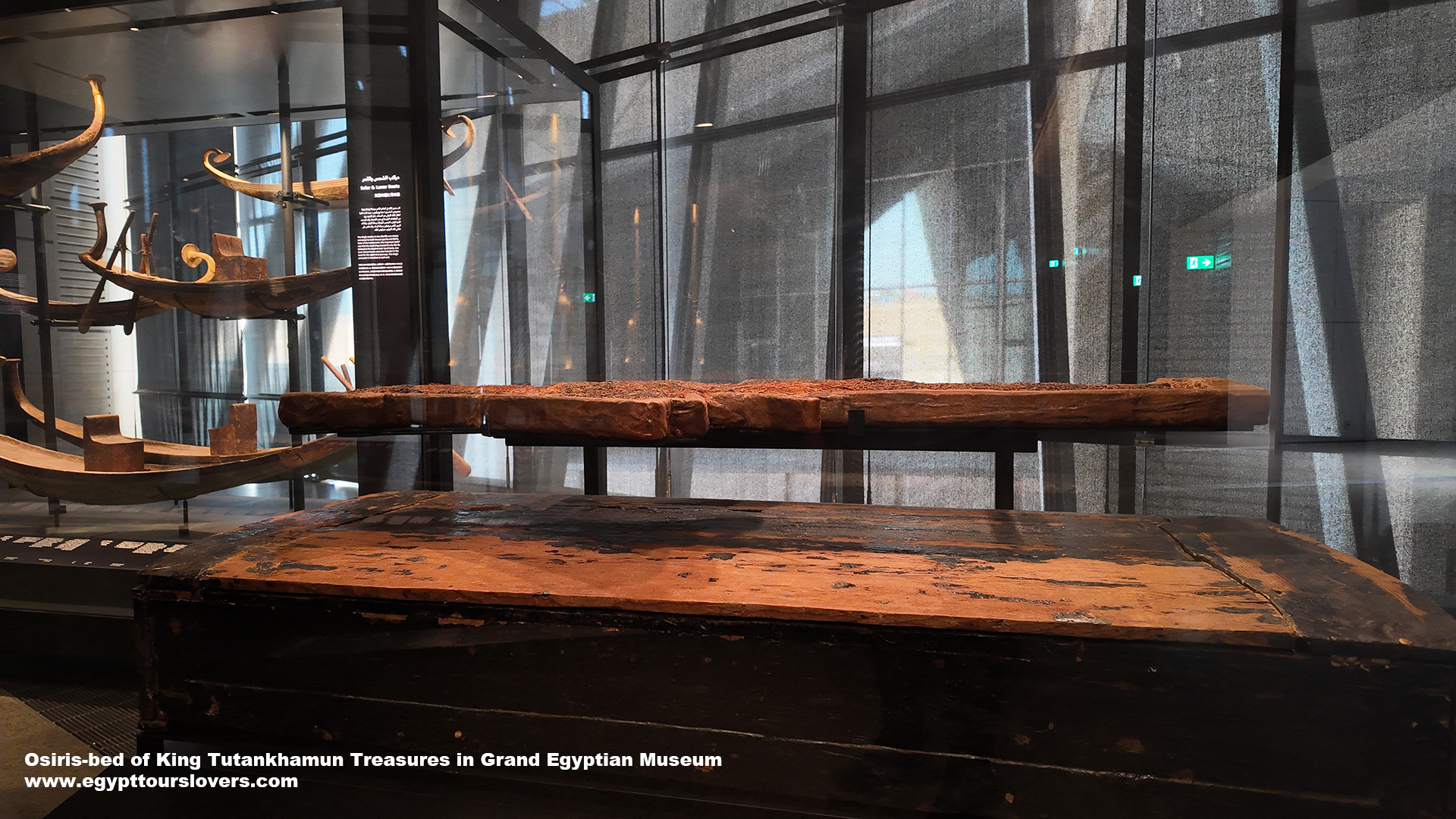
Osiris-bed
———– } ———– } ———– } ———– }
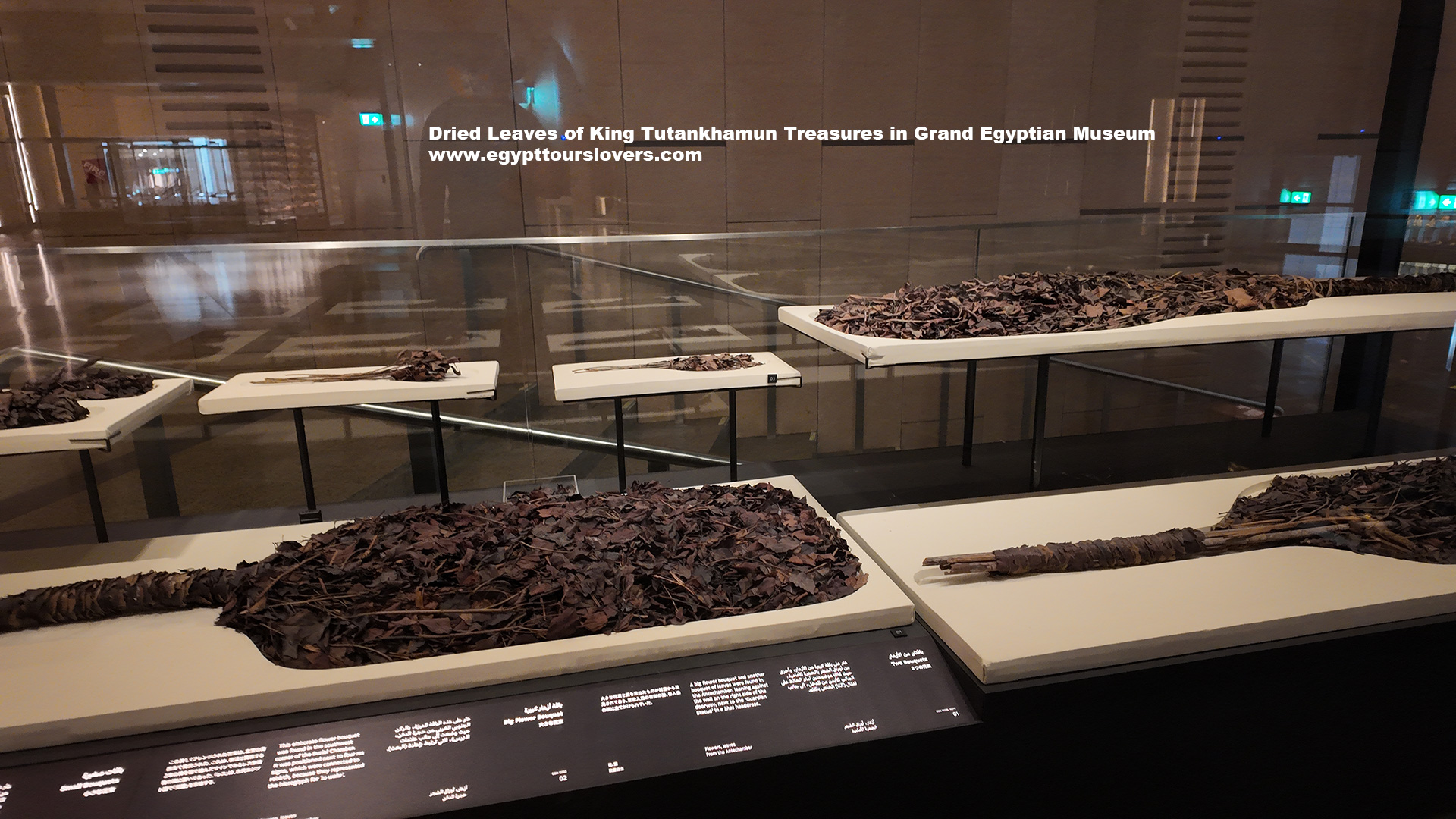
Dried Leaves of King Tutankhamun Treasures
———– } ———– } ———– } ———– }
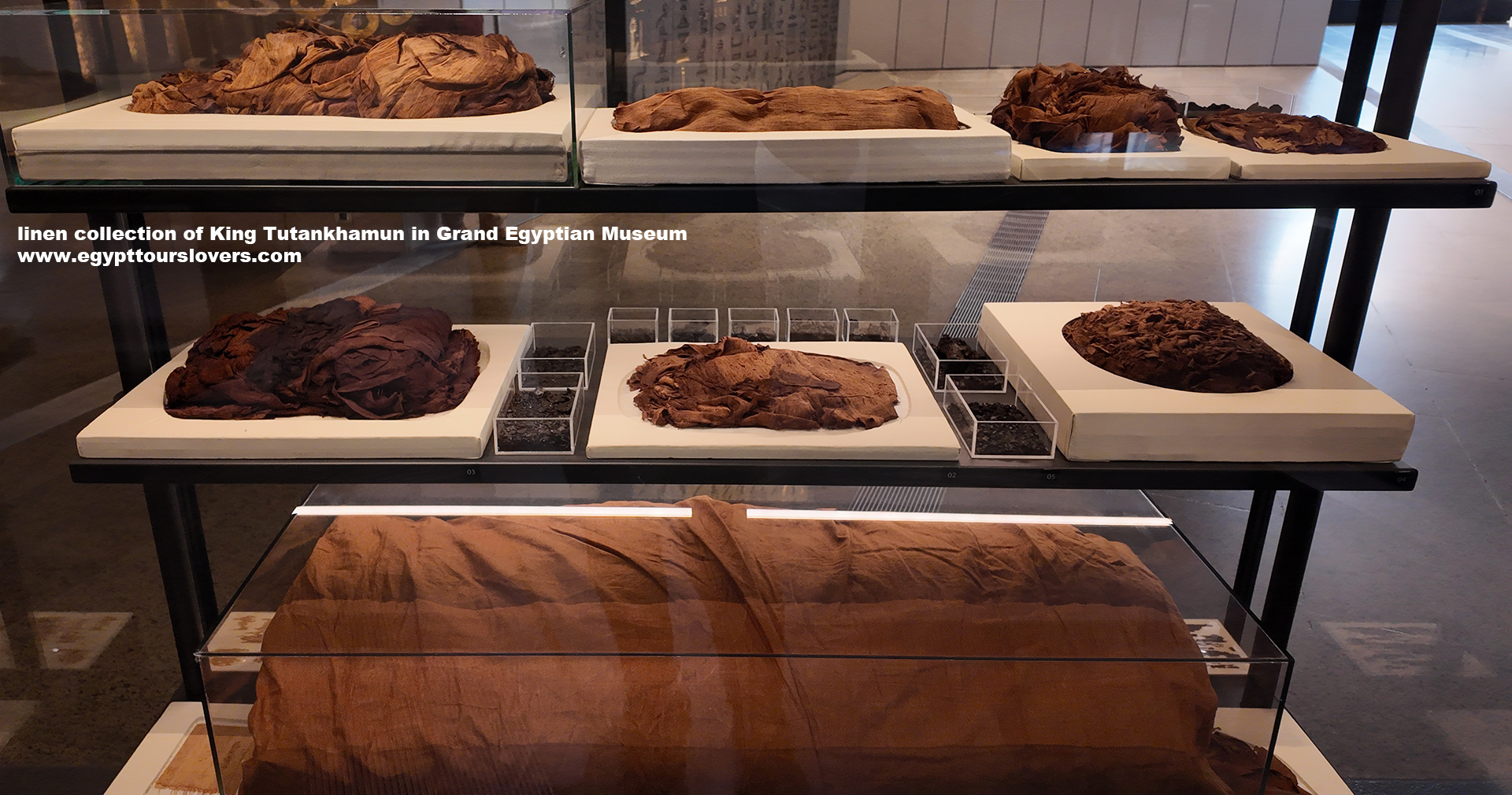
linen collection
———– } ———– } ———– } ———– }
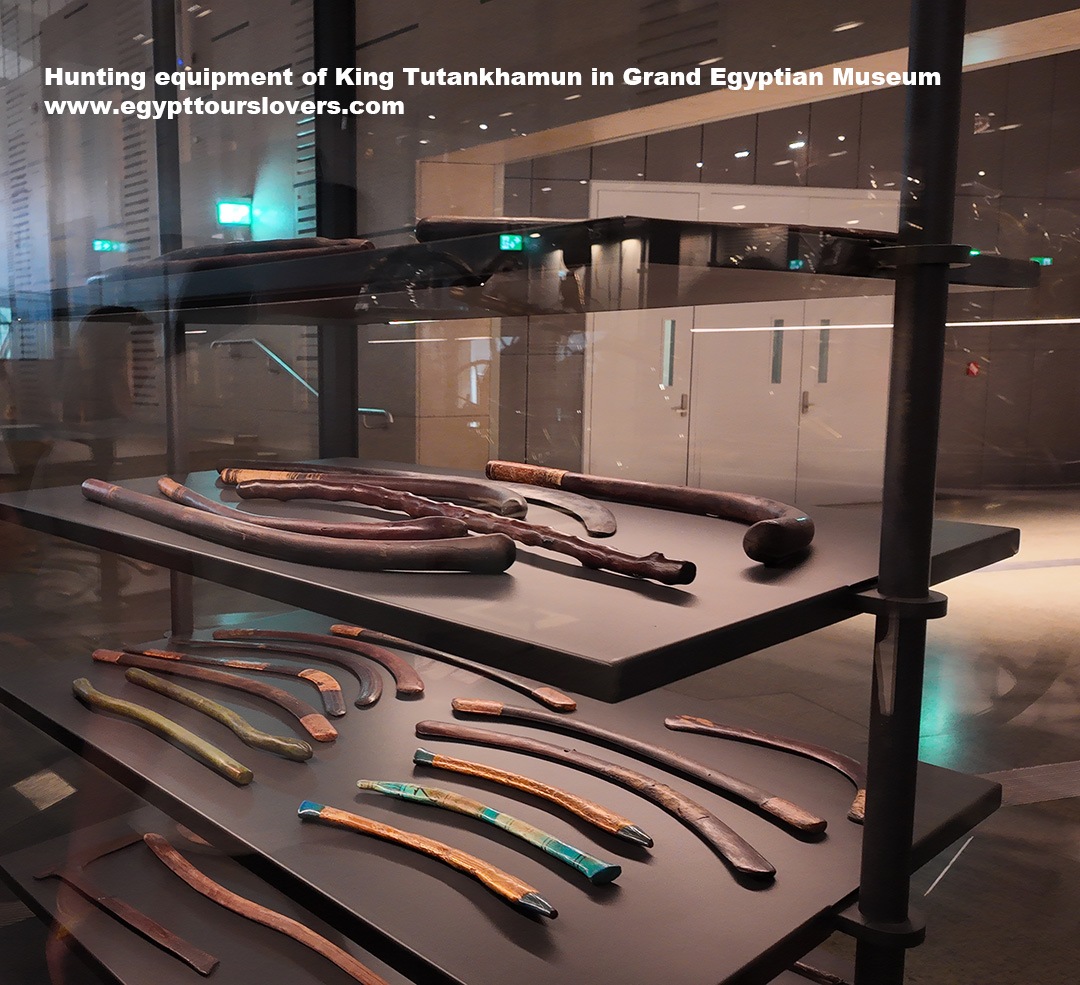
Hunt tools of King Tutankhamun Treasures
———– } ———– } ———– } ———– }
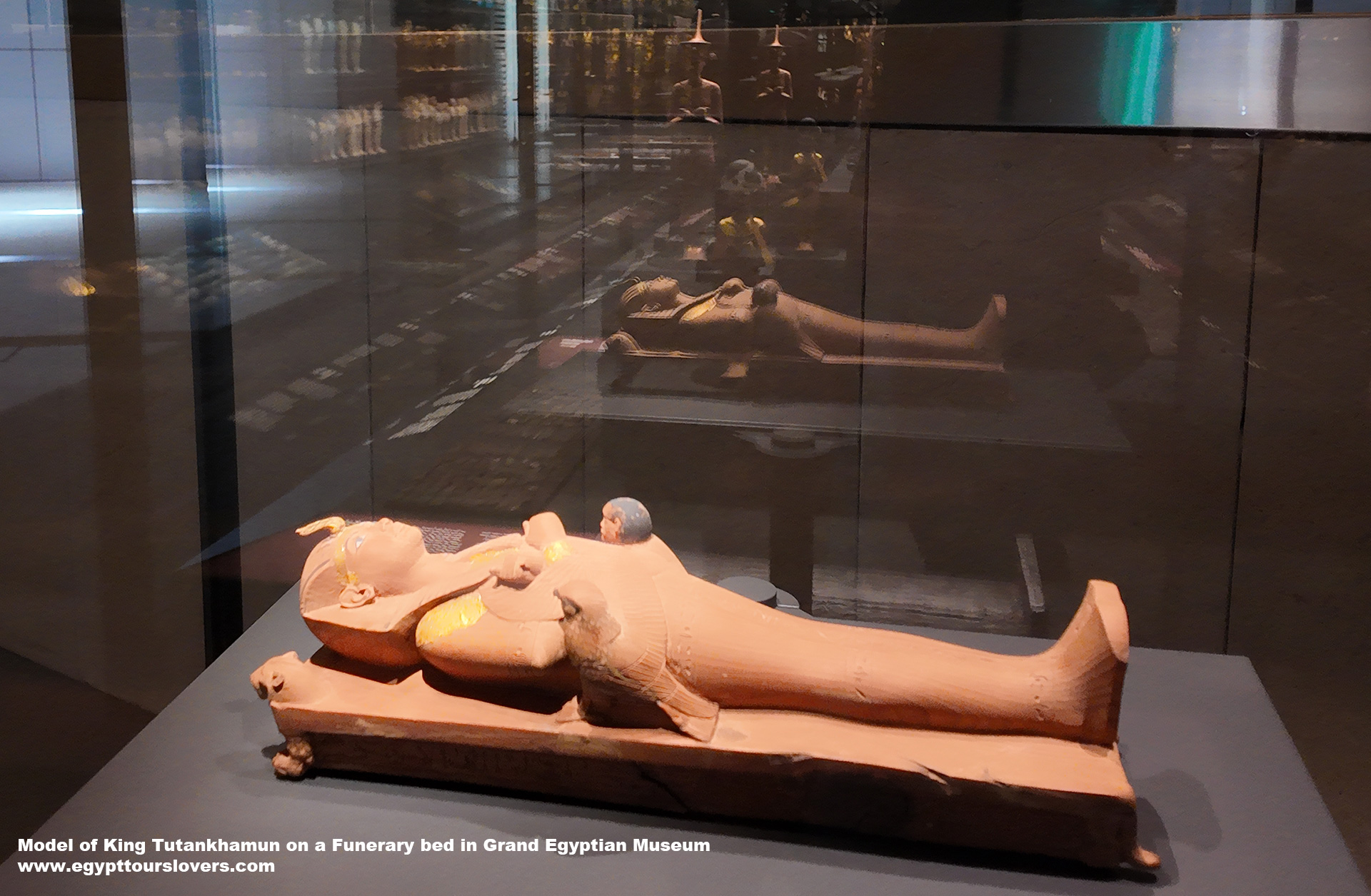
Model of King Tutankhamun on a Funerary bed
———– } ———– } ———– } ———– }
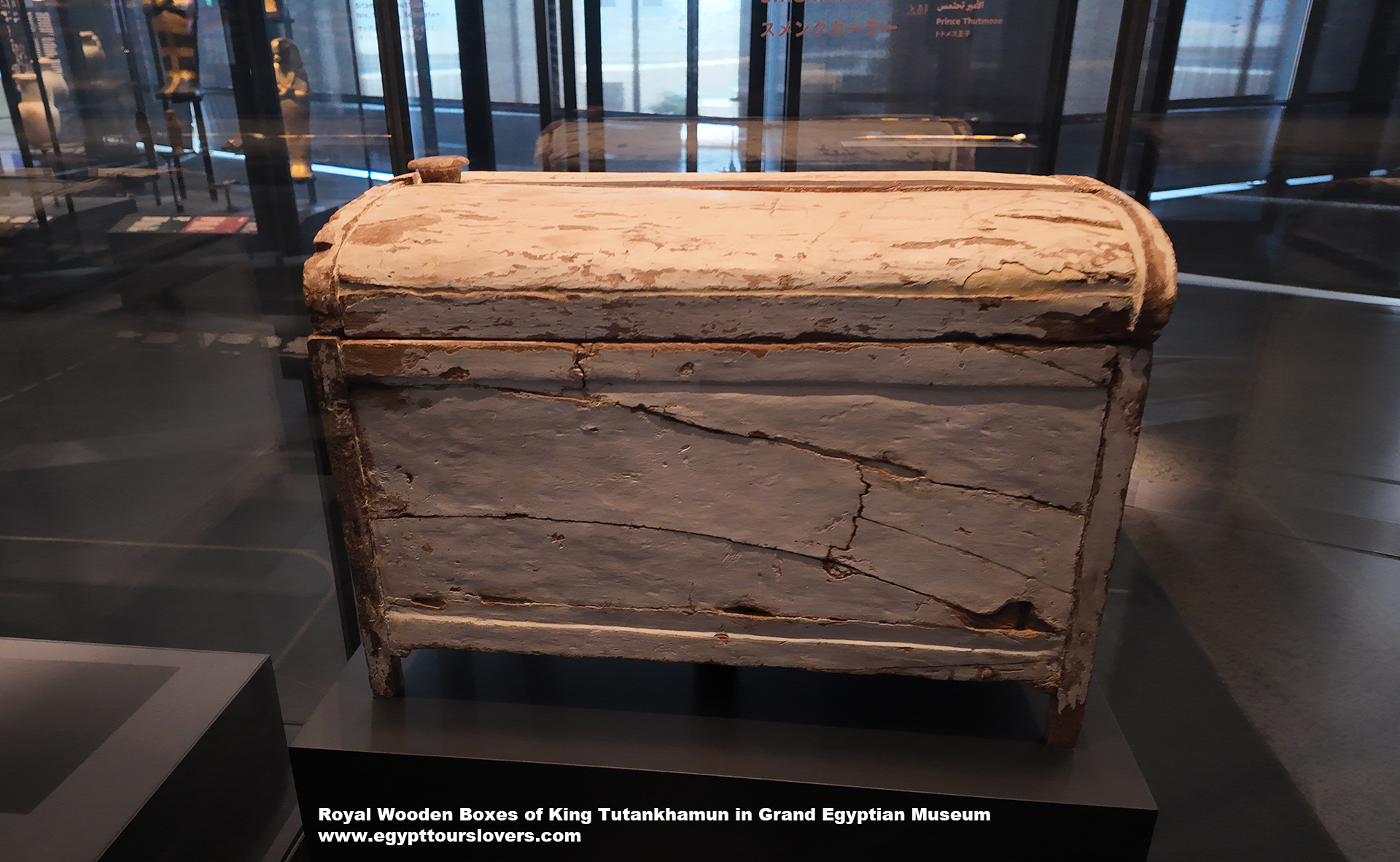
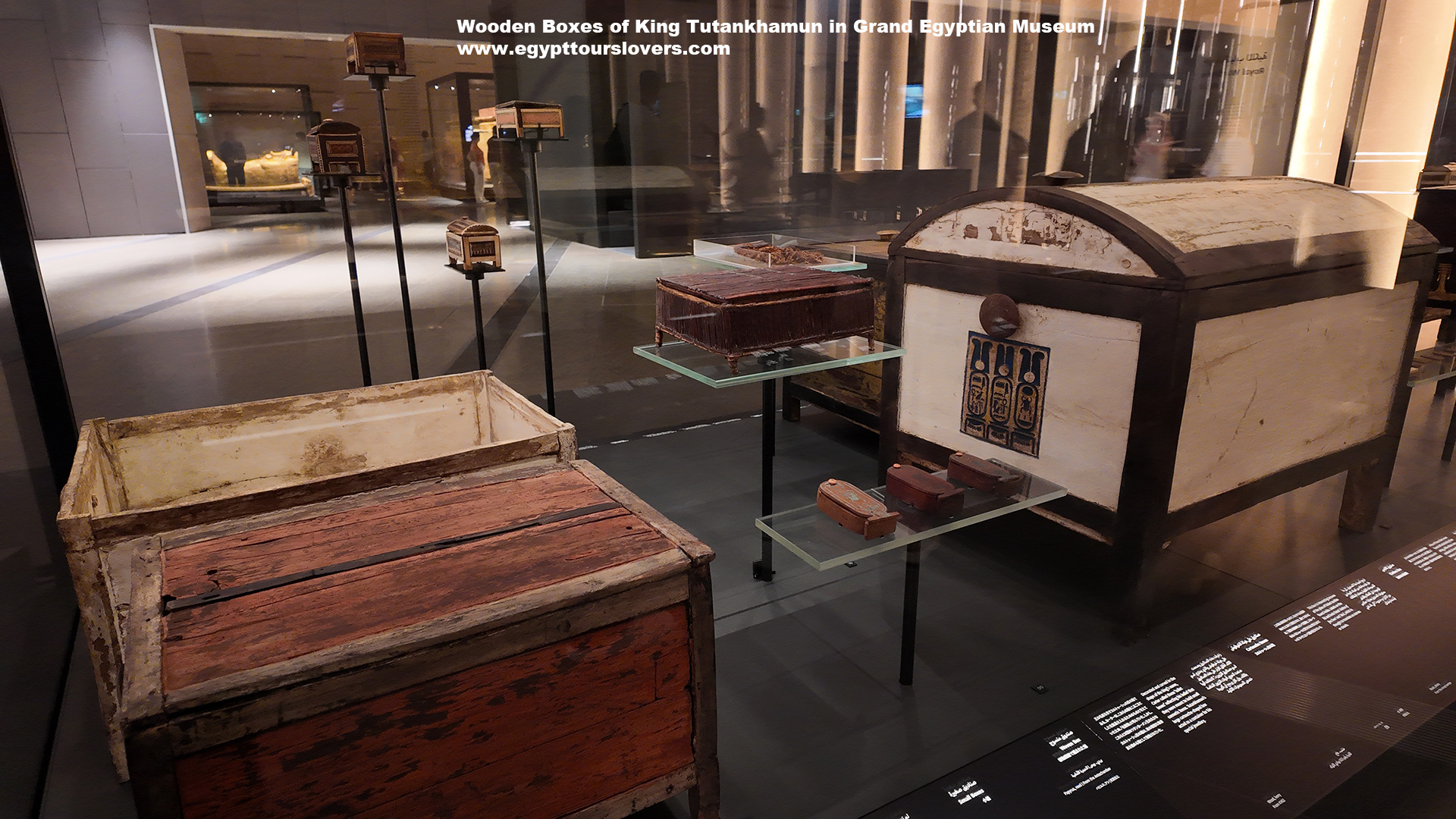
Wooden Boxes
———– } ———– } ———– } ———– }
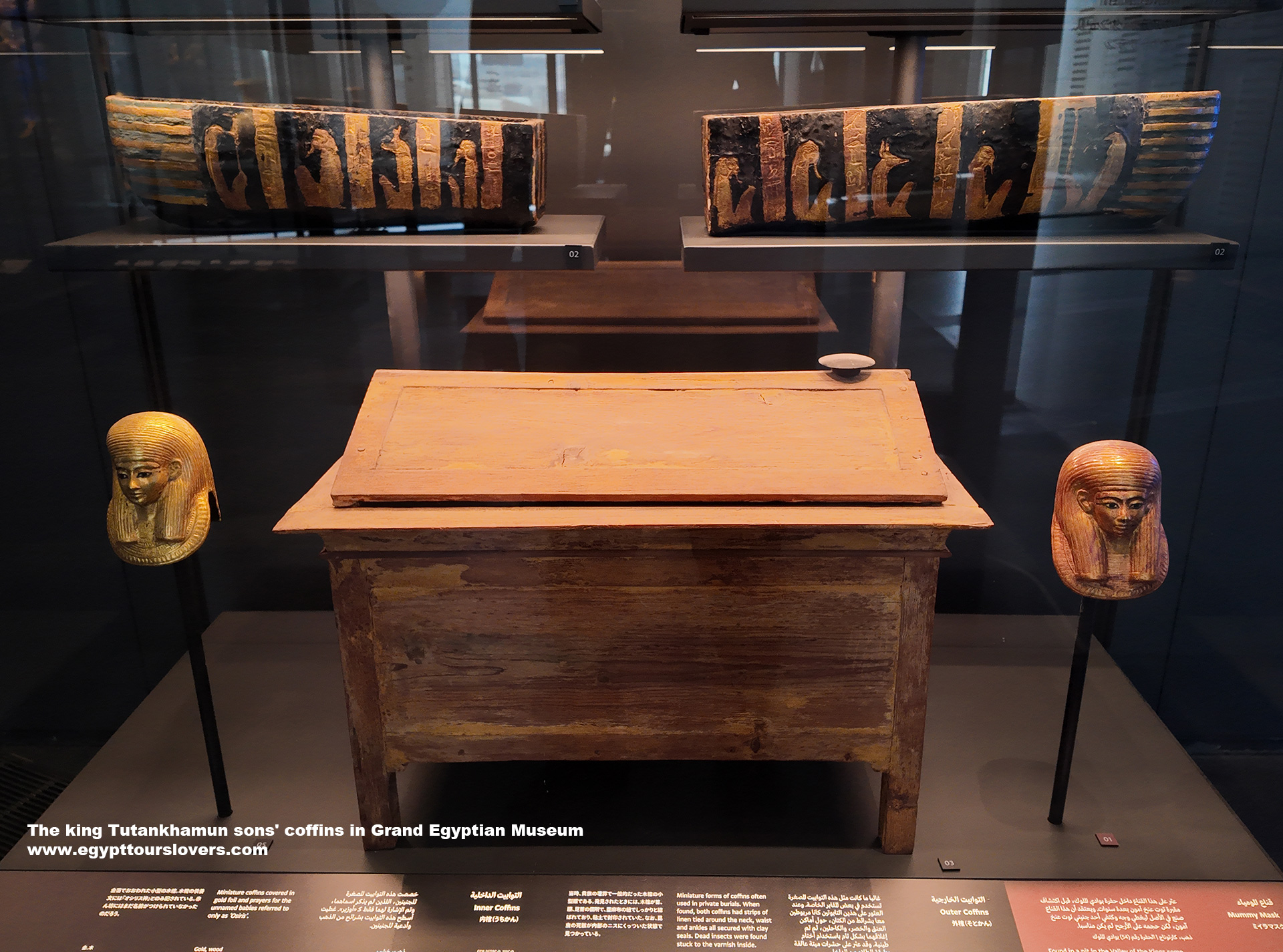
The King Tutankhamun sons’ coffins
———– } ———– } ———– } ———– }
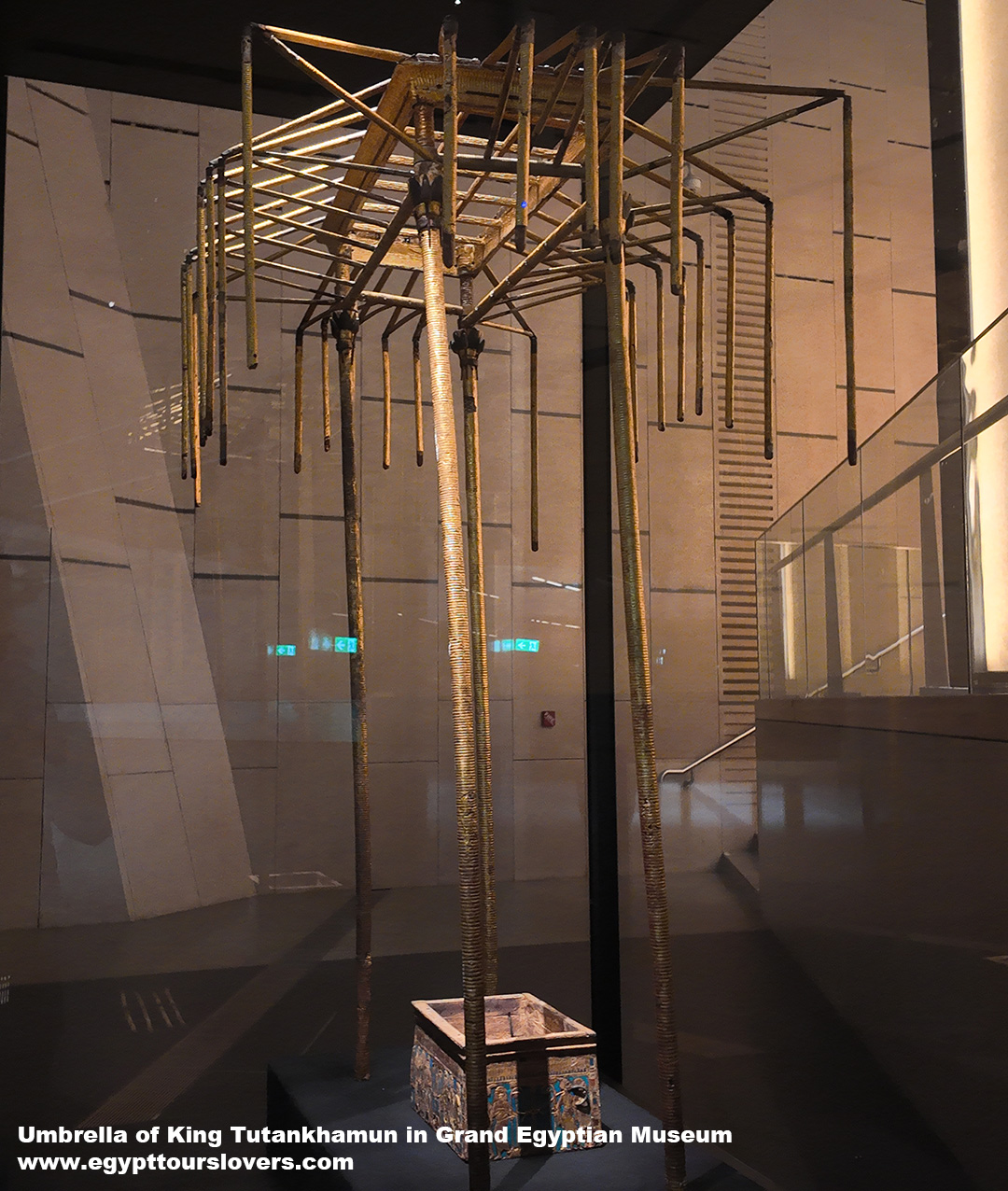
King Tutankhamun umbrella
———– } ———– } ———– } ———– }
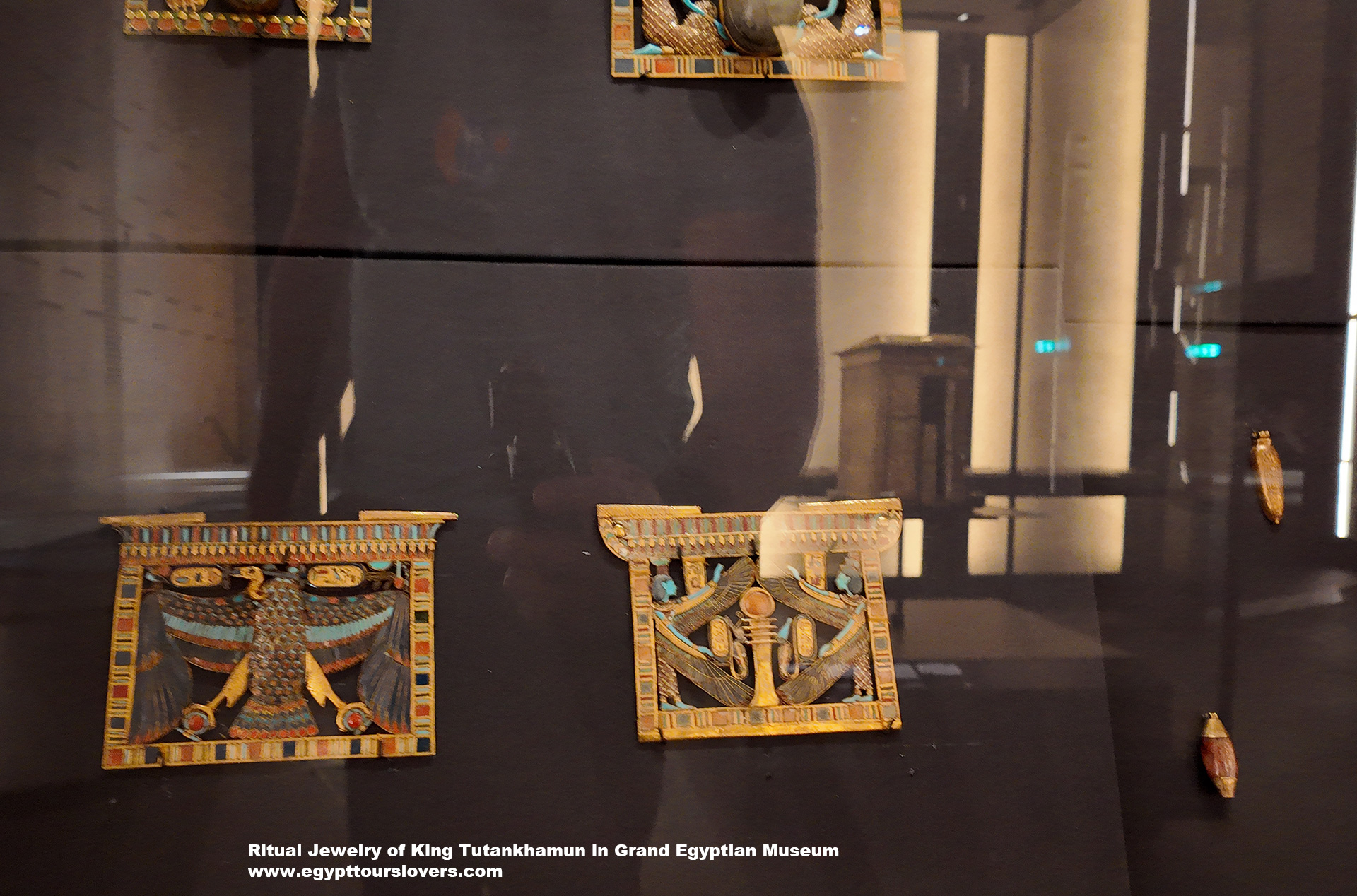
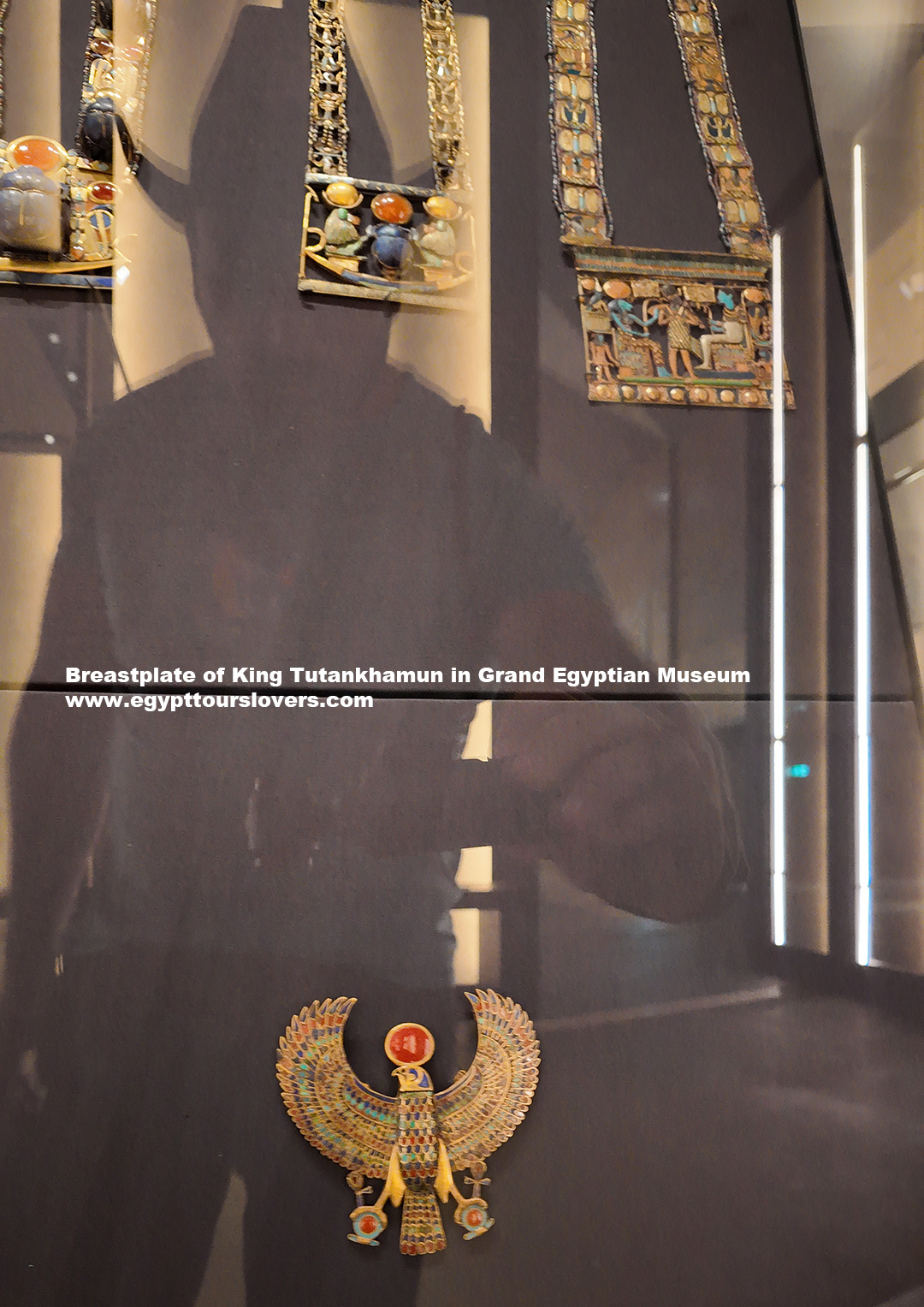
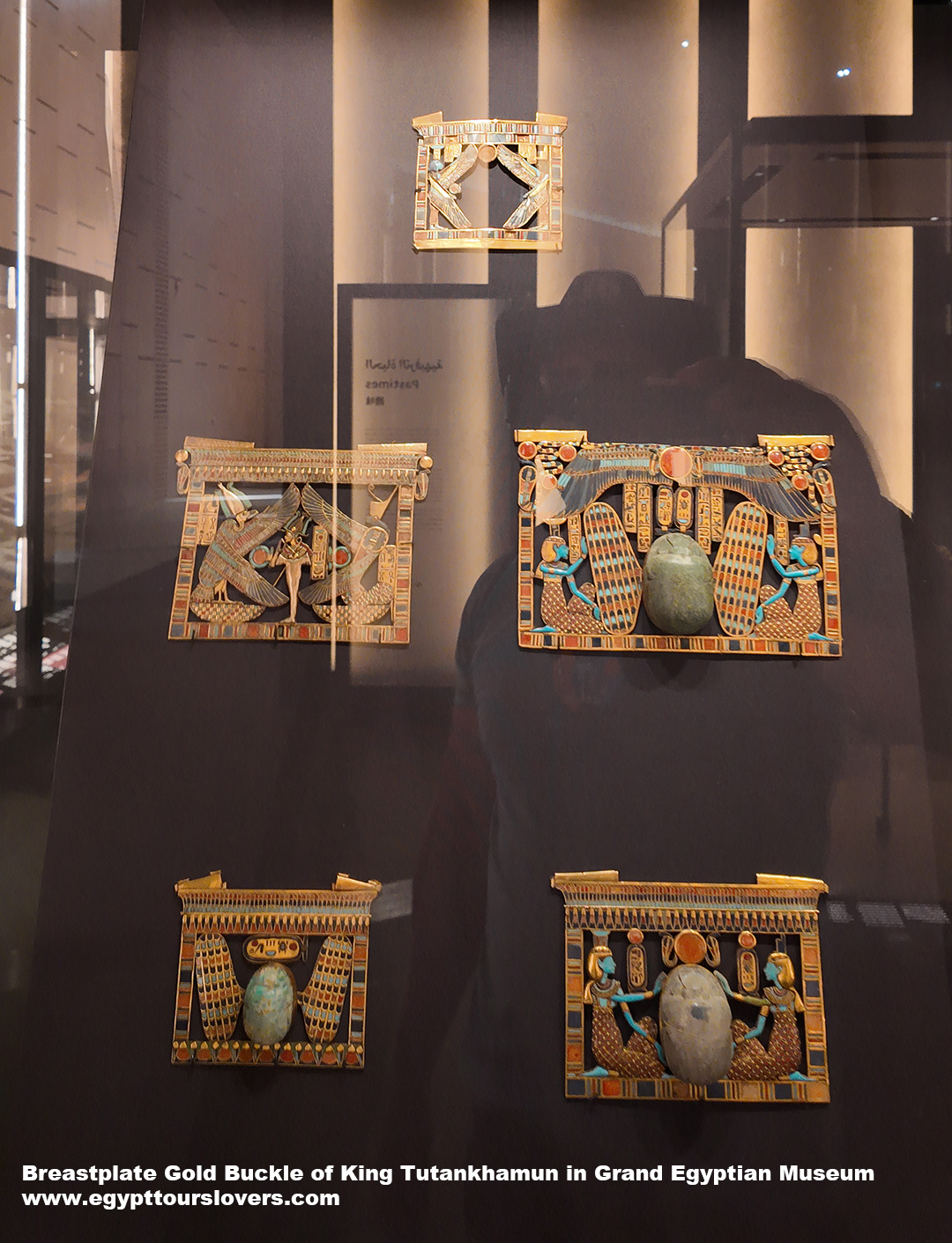
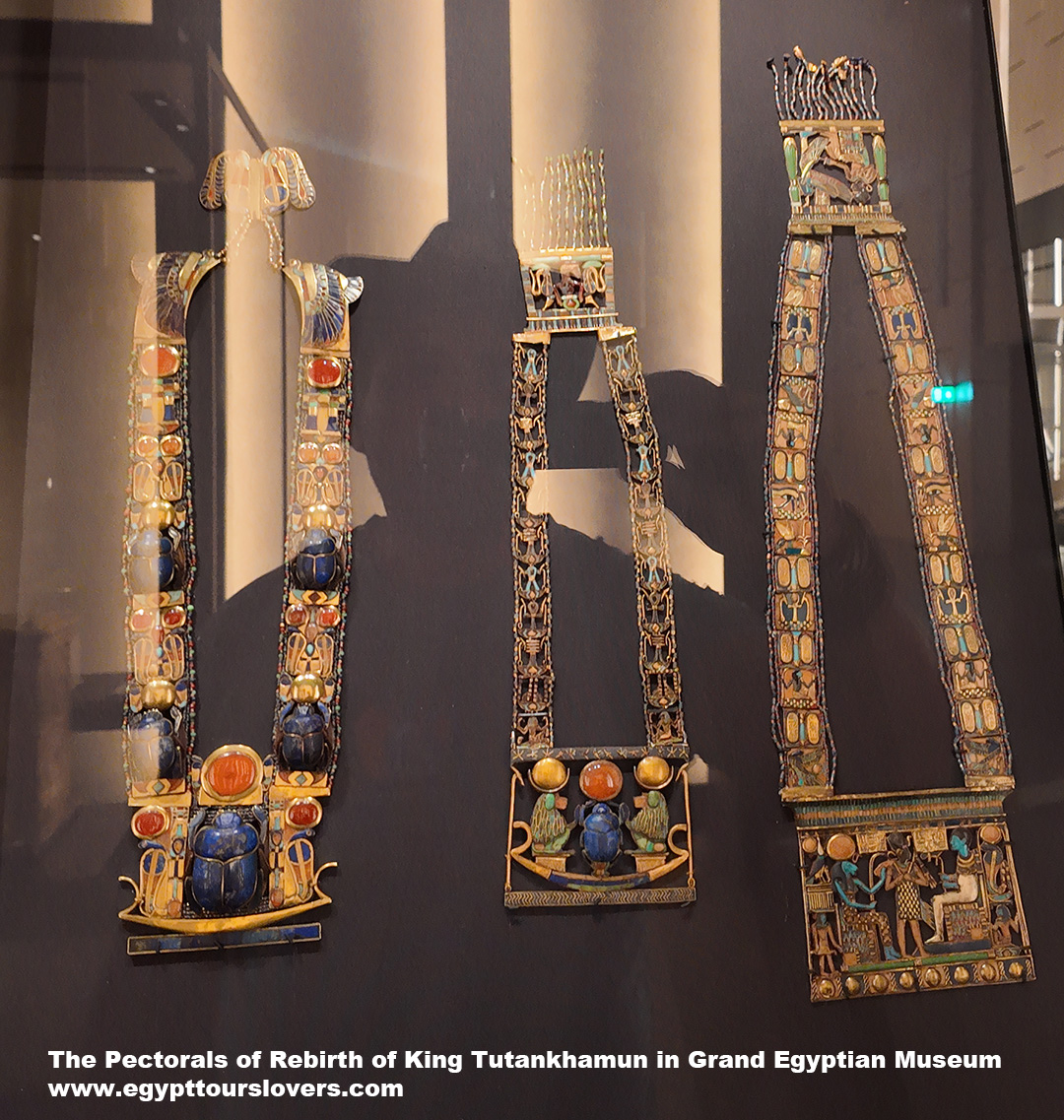
Breastplate of King Tutankhamun Treasures
“The Ritual Jewelry, The Pectorals of Rebirth, Gold Buckle,”
———– } ———– } ———– } ———– }
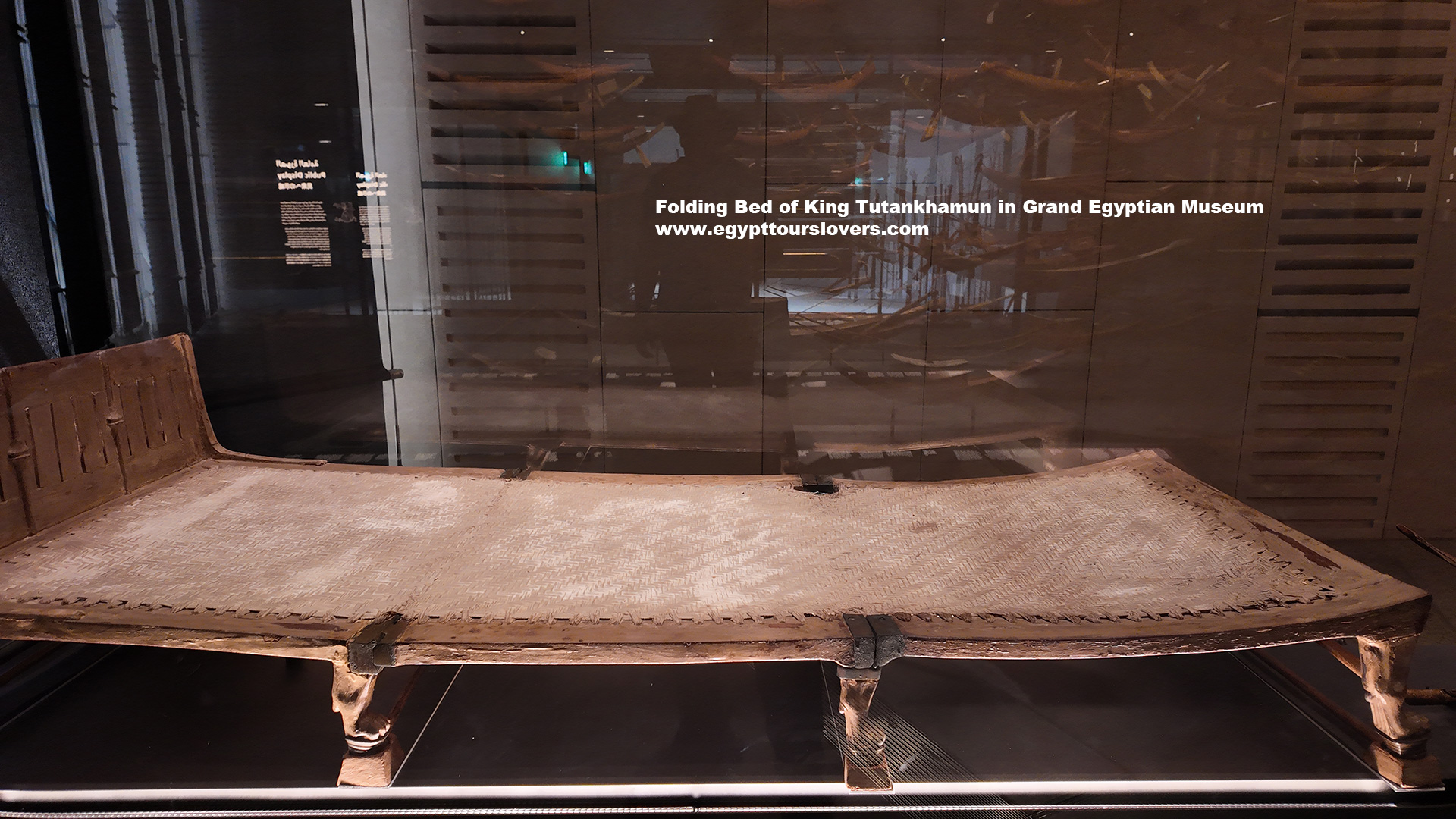
Folding Bed
———– } ———– } ———– } ———– }
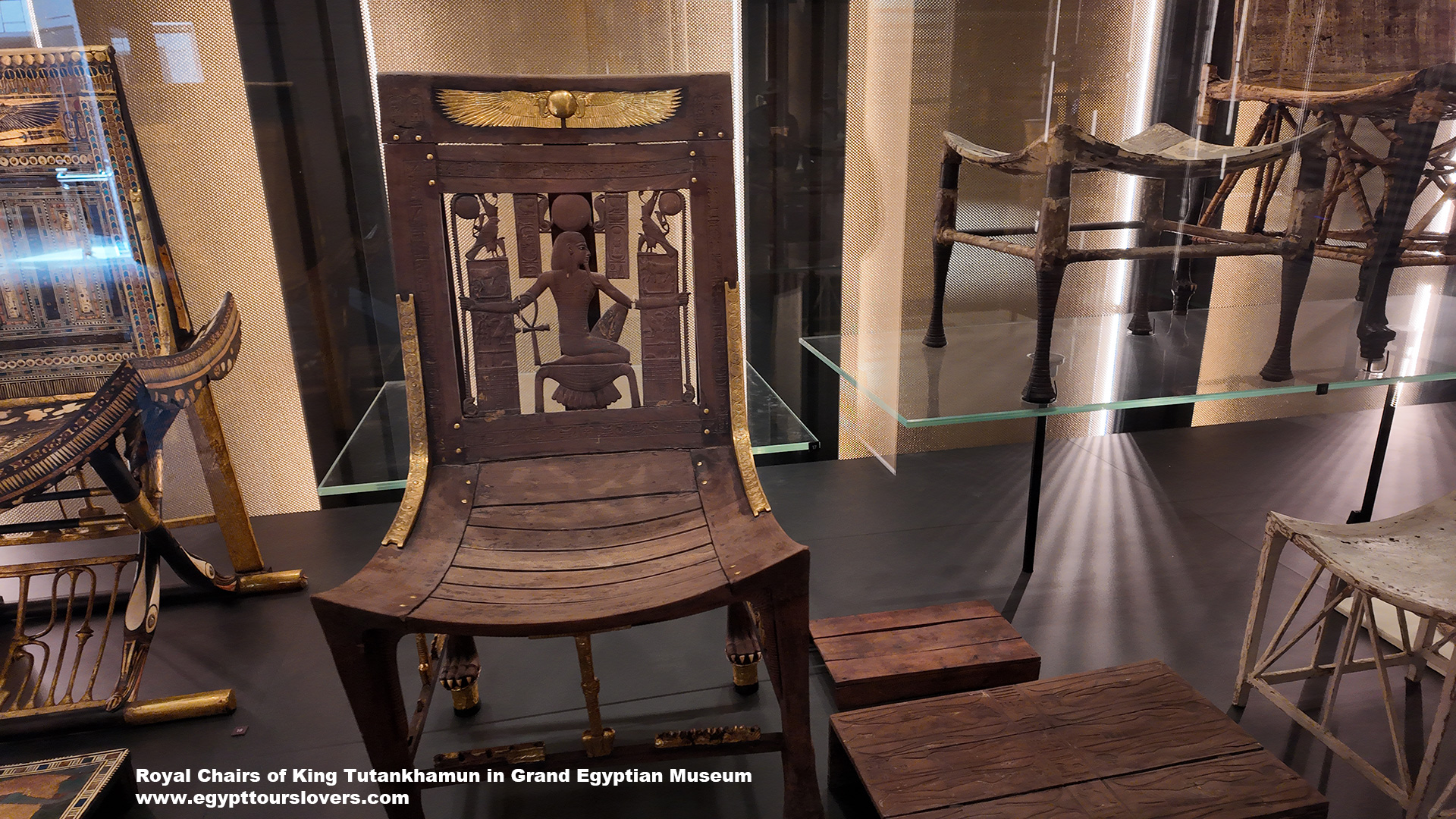
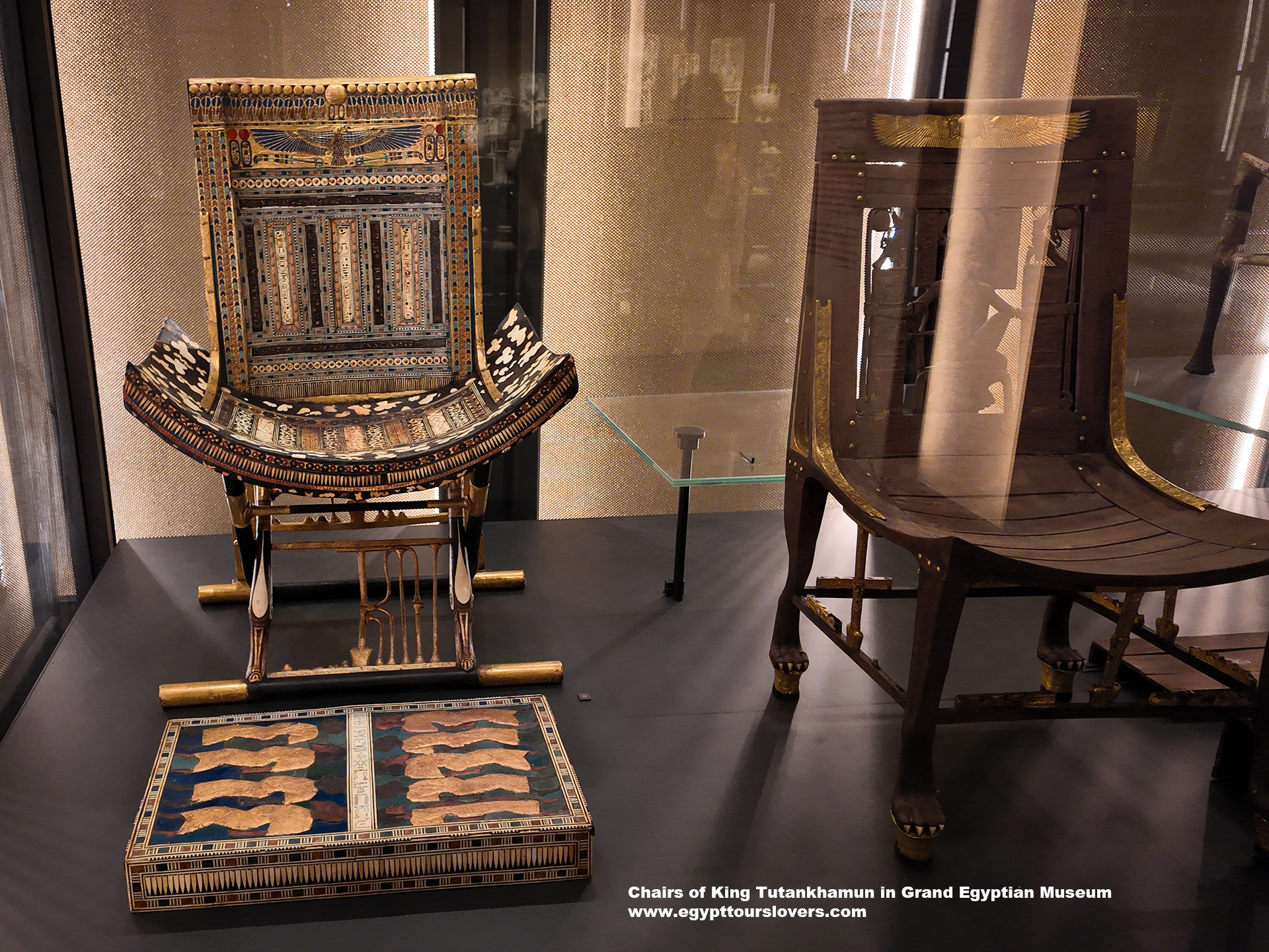
Royal Chairs of King Tutankhamun Treasures
———– } ———– } ———– } ———– }
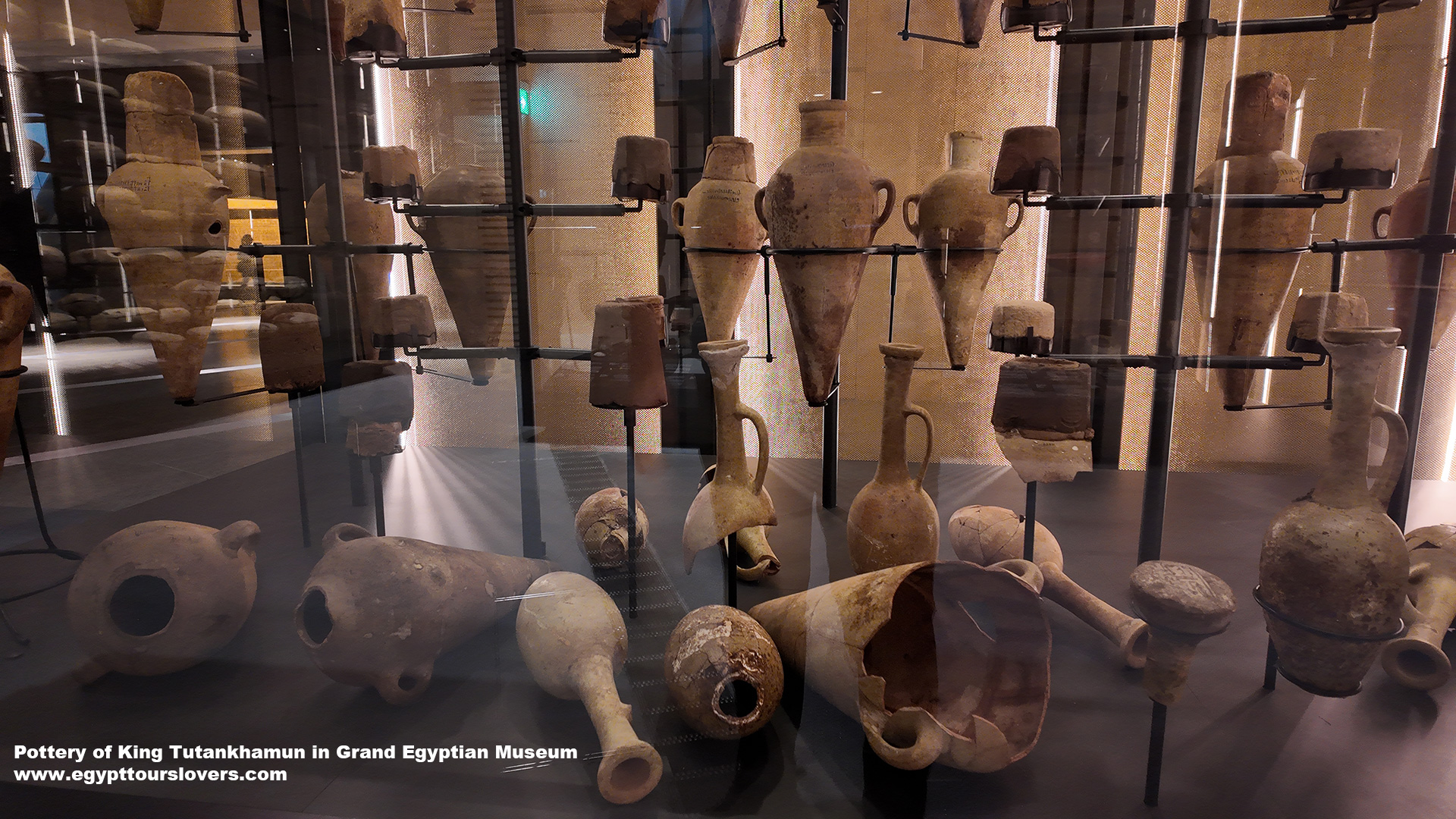
Pottery
———– } ———– } ———– } ———– }
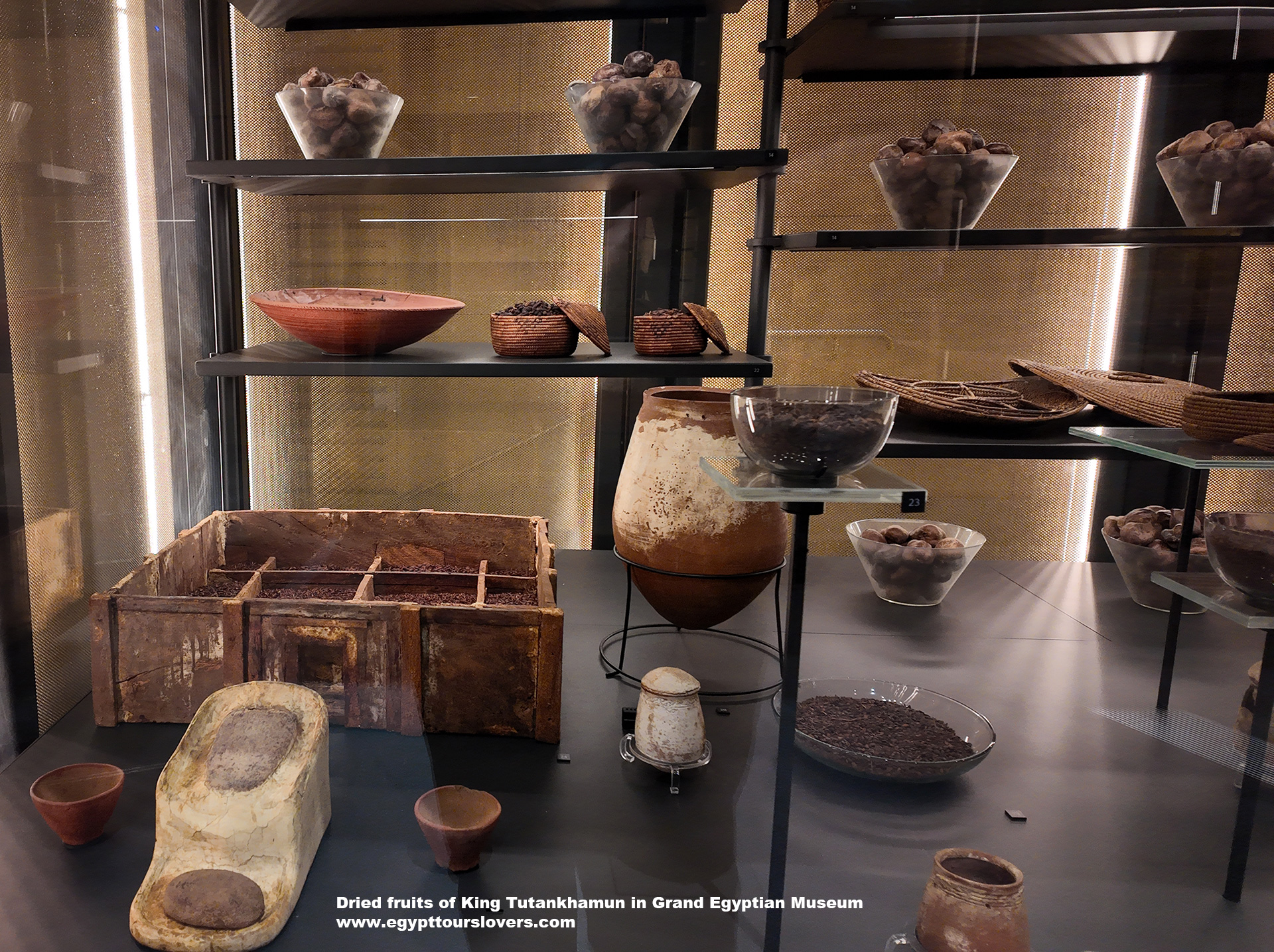
Dried fruits
———– } ———– } ———– } ———– }
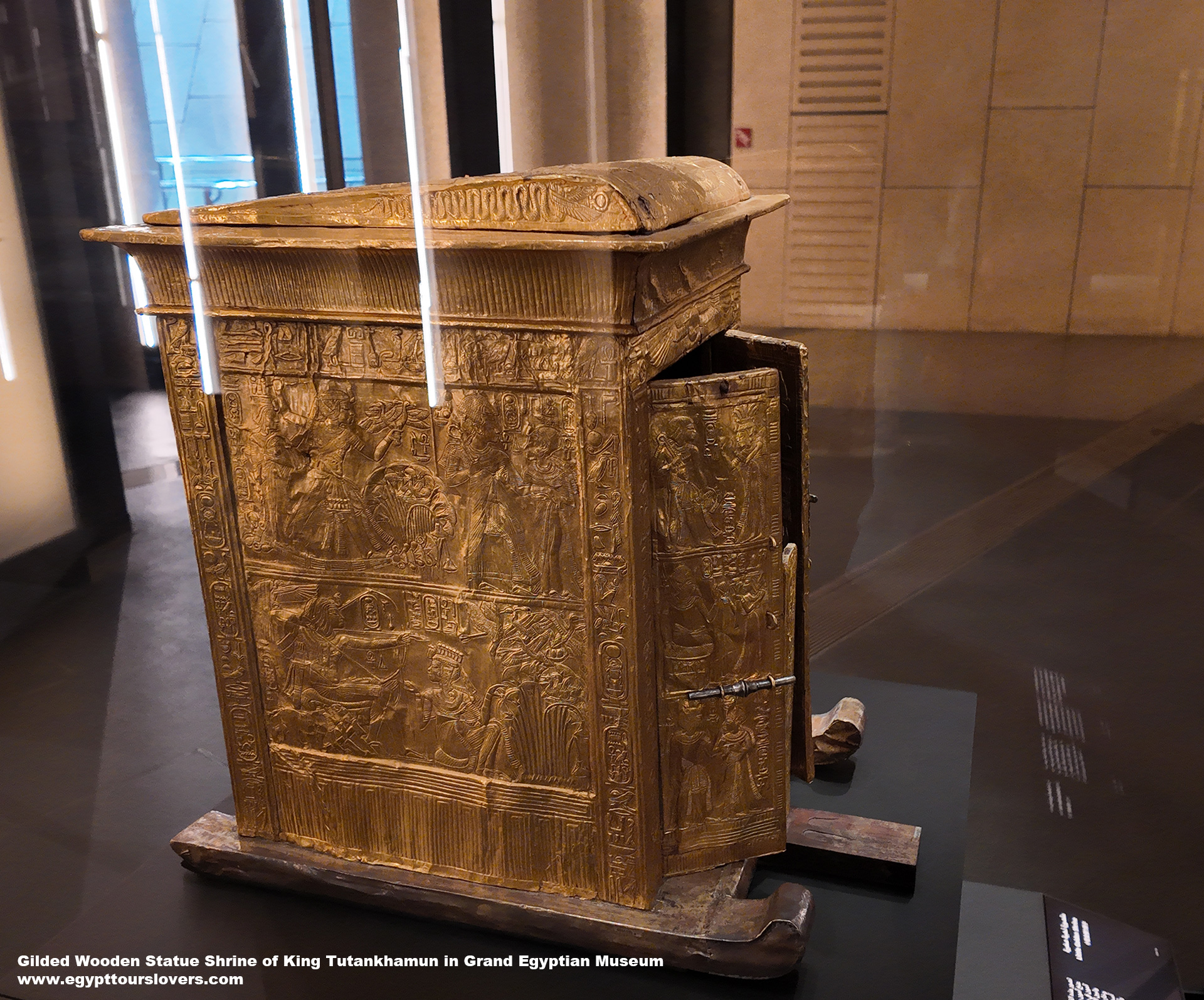
Gilded Wooden Statue Shrine
———– } ———– } ———– } ———– }
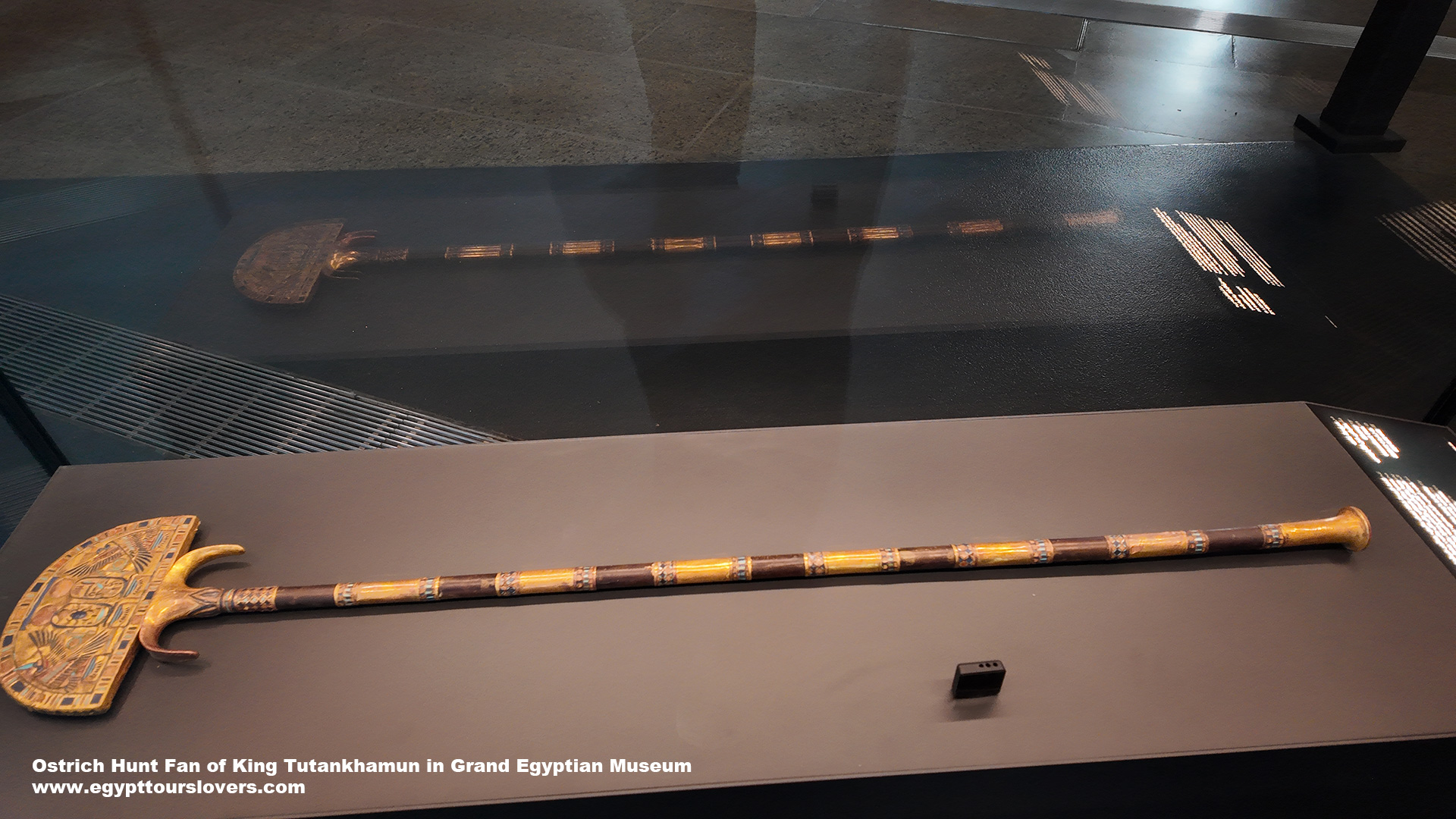
Ostrich Hunt Fan of King Tutankhamun Treasures
———– } ———– } ———– } ———– }
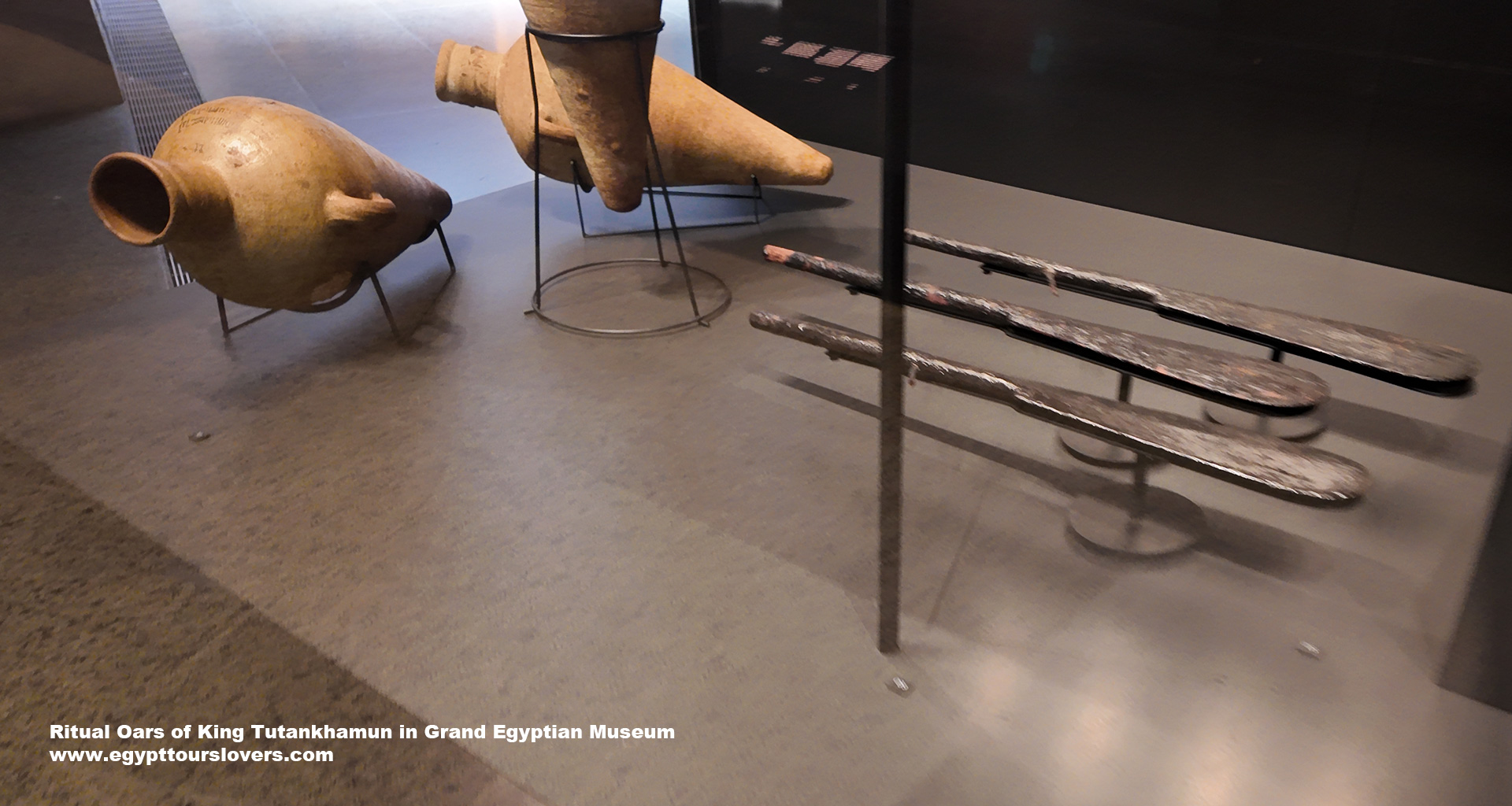
Ritual Oars of King Tutankhamun Treasures
———– } ———– } ———– } ———– }
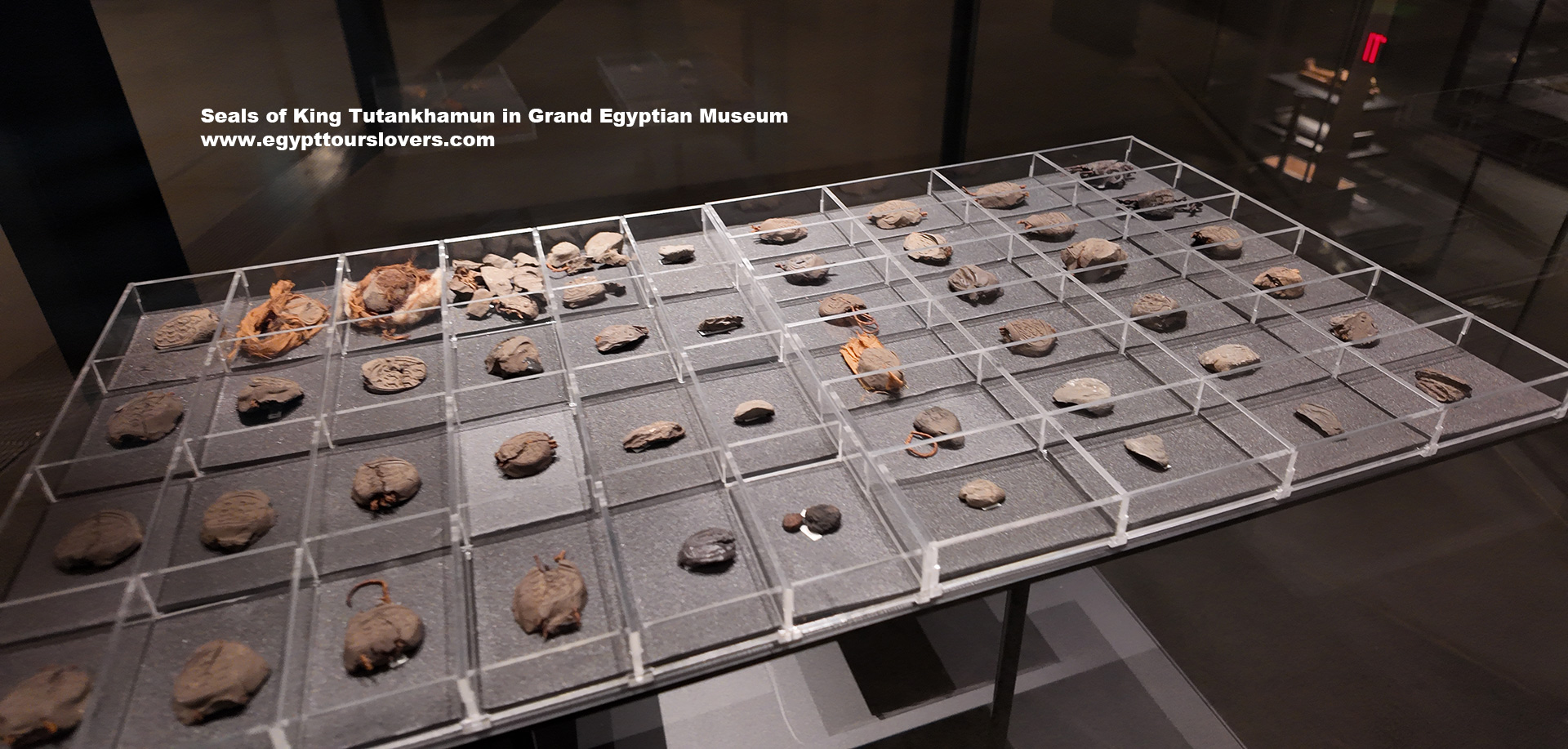
Clay and Mud Seals
———– } ———– } ———– } ———– }
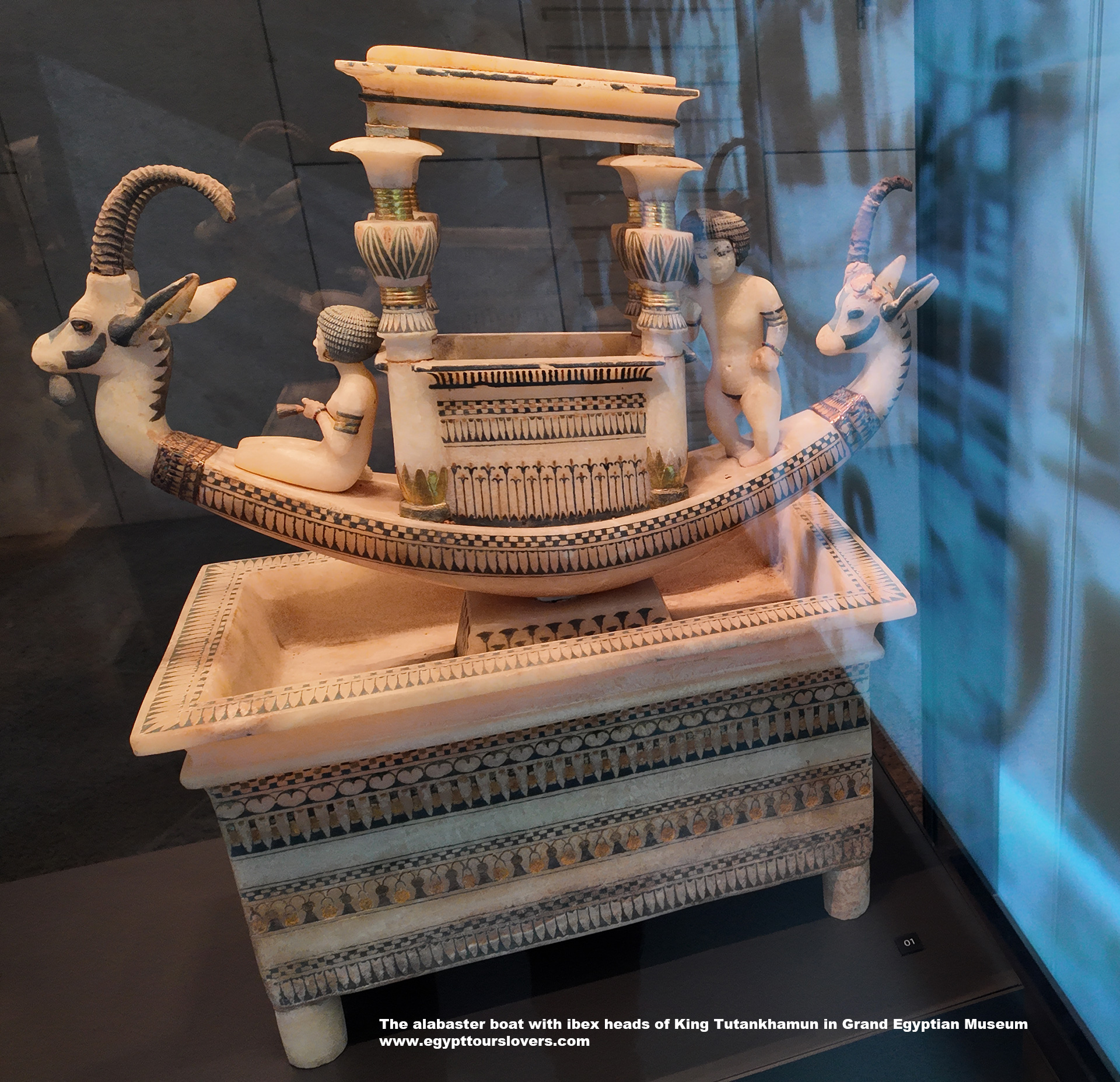
The alabaster boat with ibex heads of King Tutankhamun Treasures
———– } ———– } ———– } ———– }
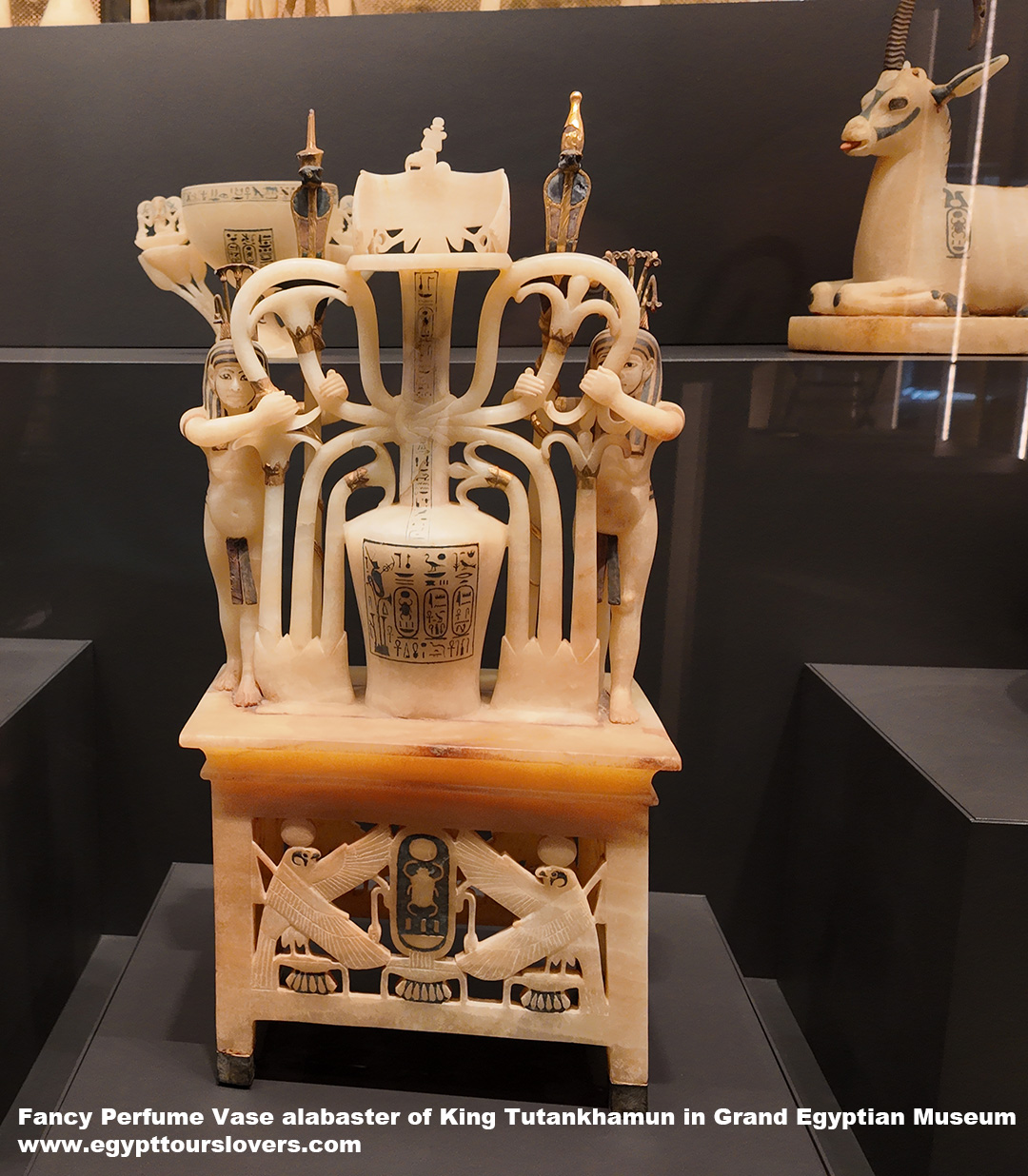
Fancy Perfume Vase alabaster of King Tutankhamun Treasures
———– } ———– } ———– } ———– }
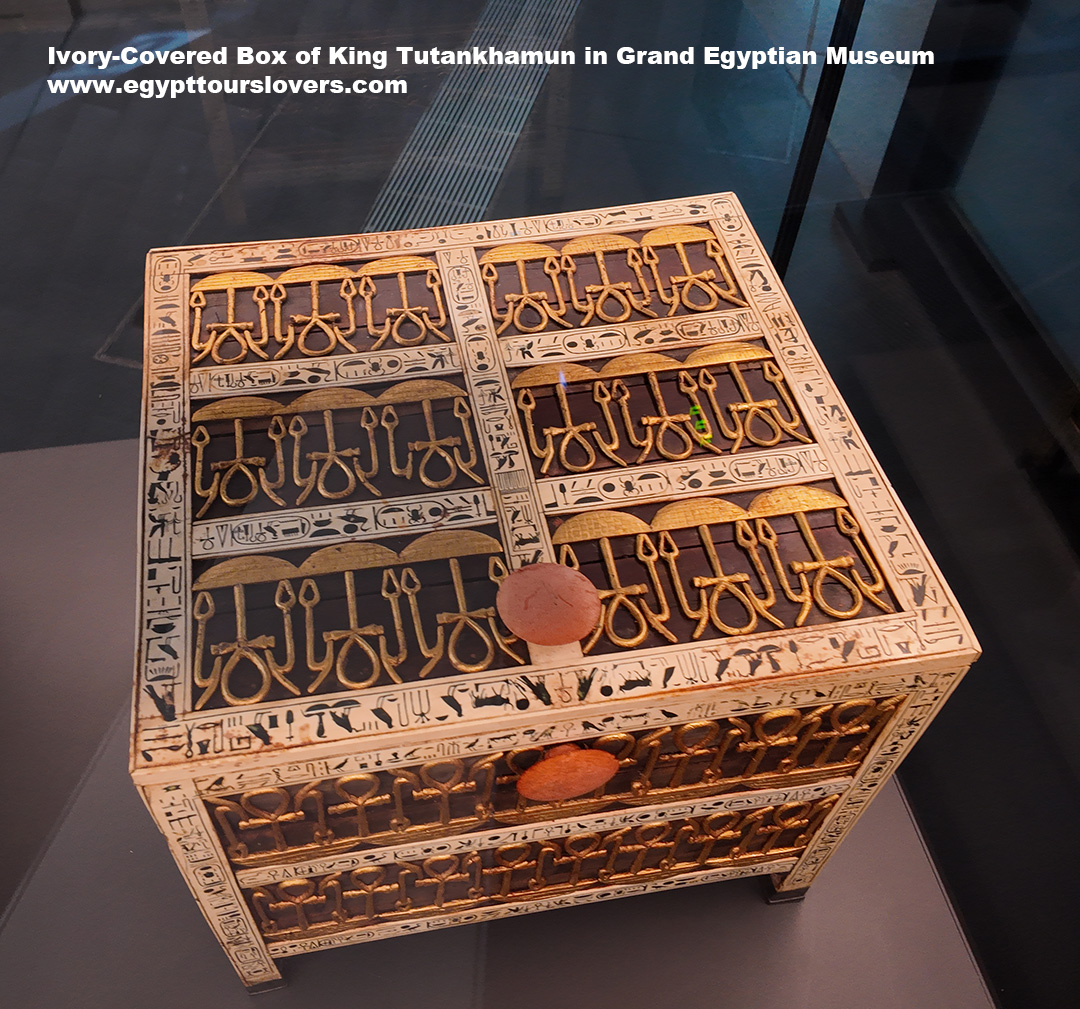
Ivory-Covered Box
———– } ———– } ———– } ———– }
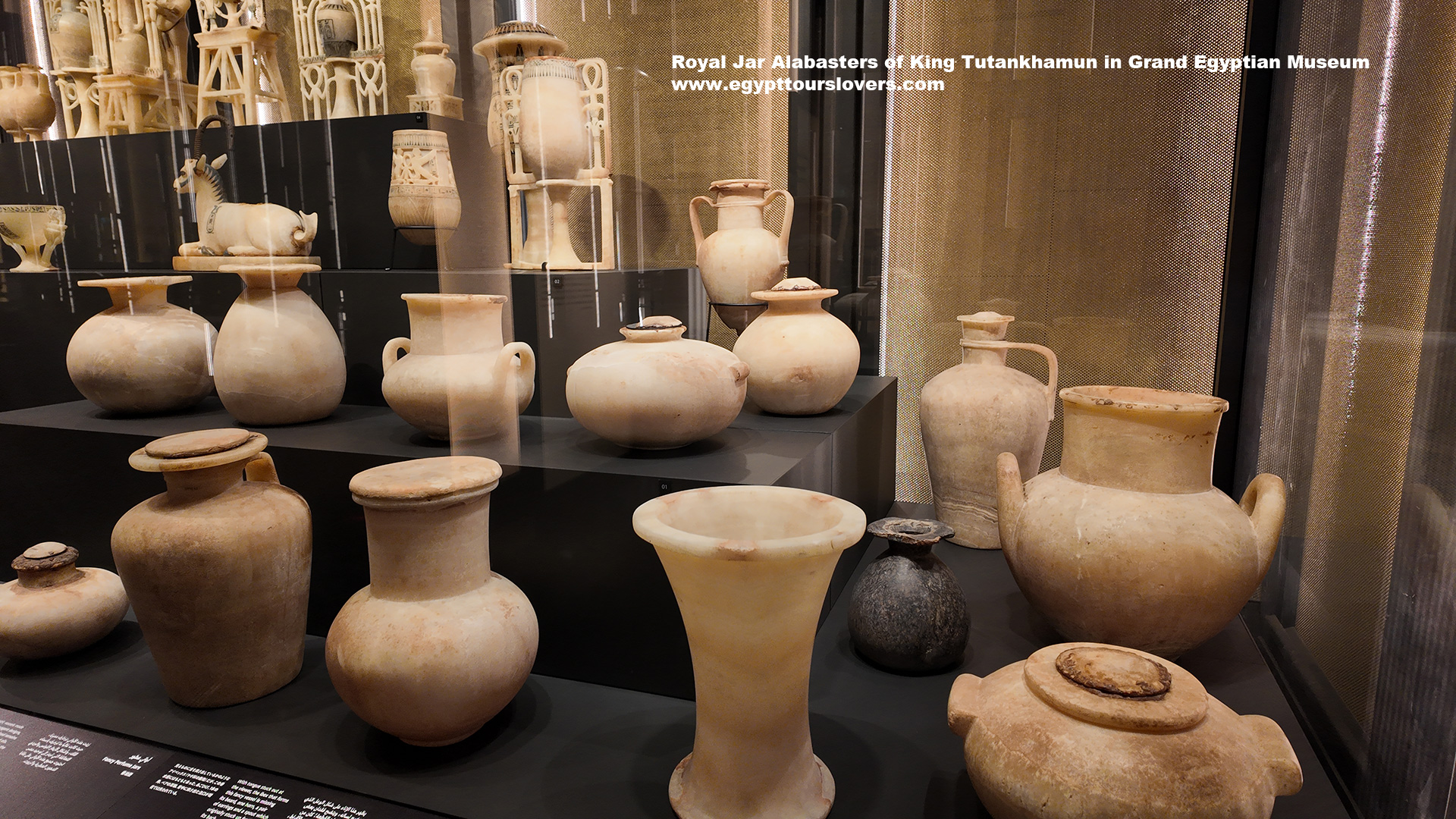
Royal Jar Alabasters of King Tutankhamun Treasures
———– } ———– } ———– } ———– }
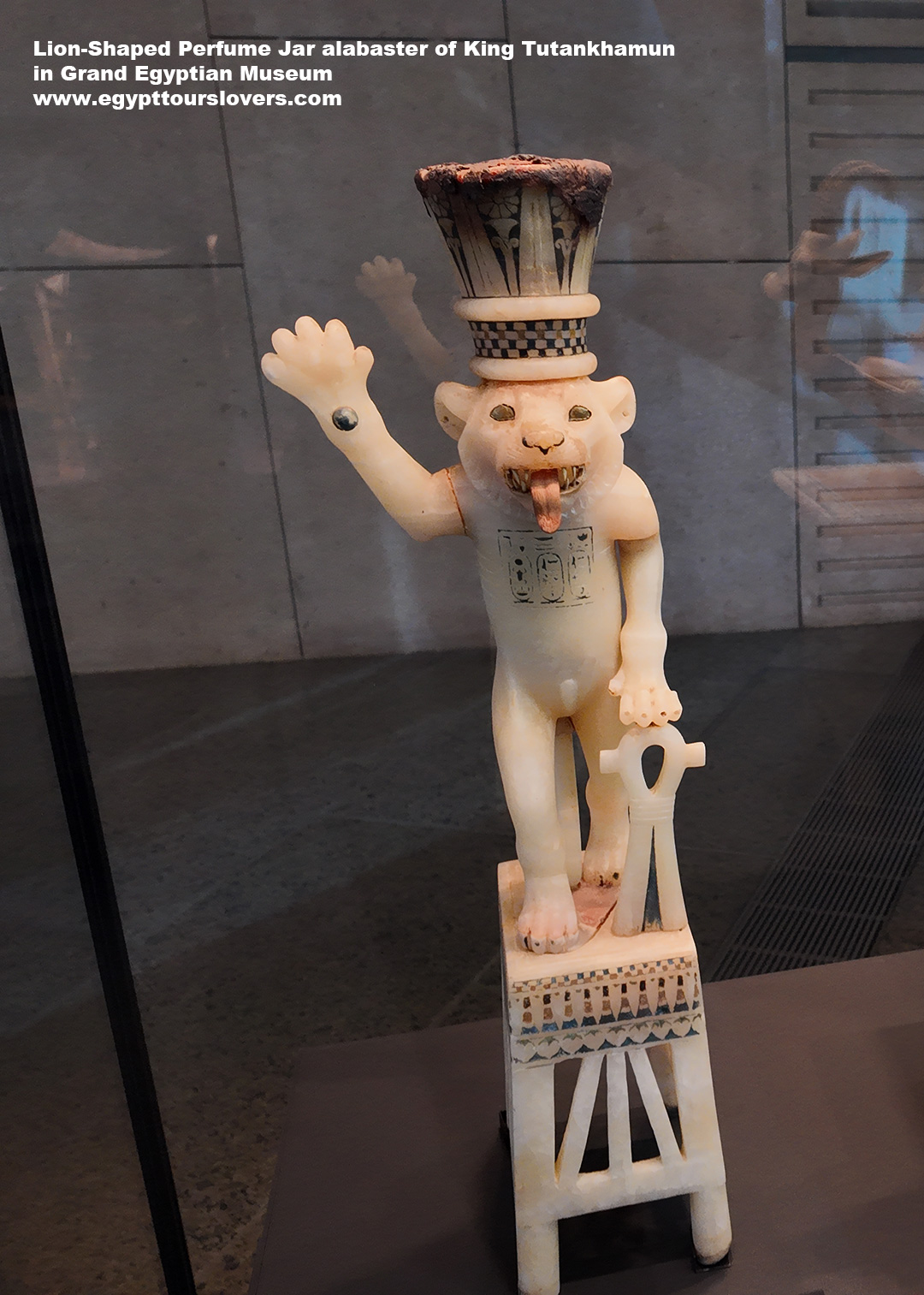
Lion-Shaped Perfume Jar alabaster
———– } ———– } ———– } ———– }
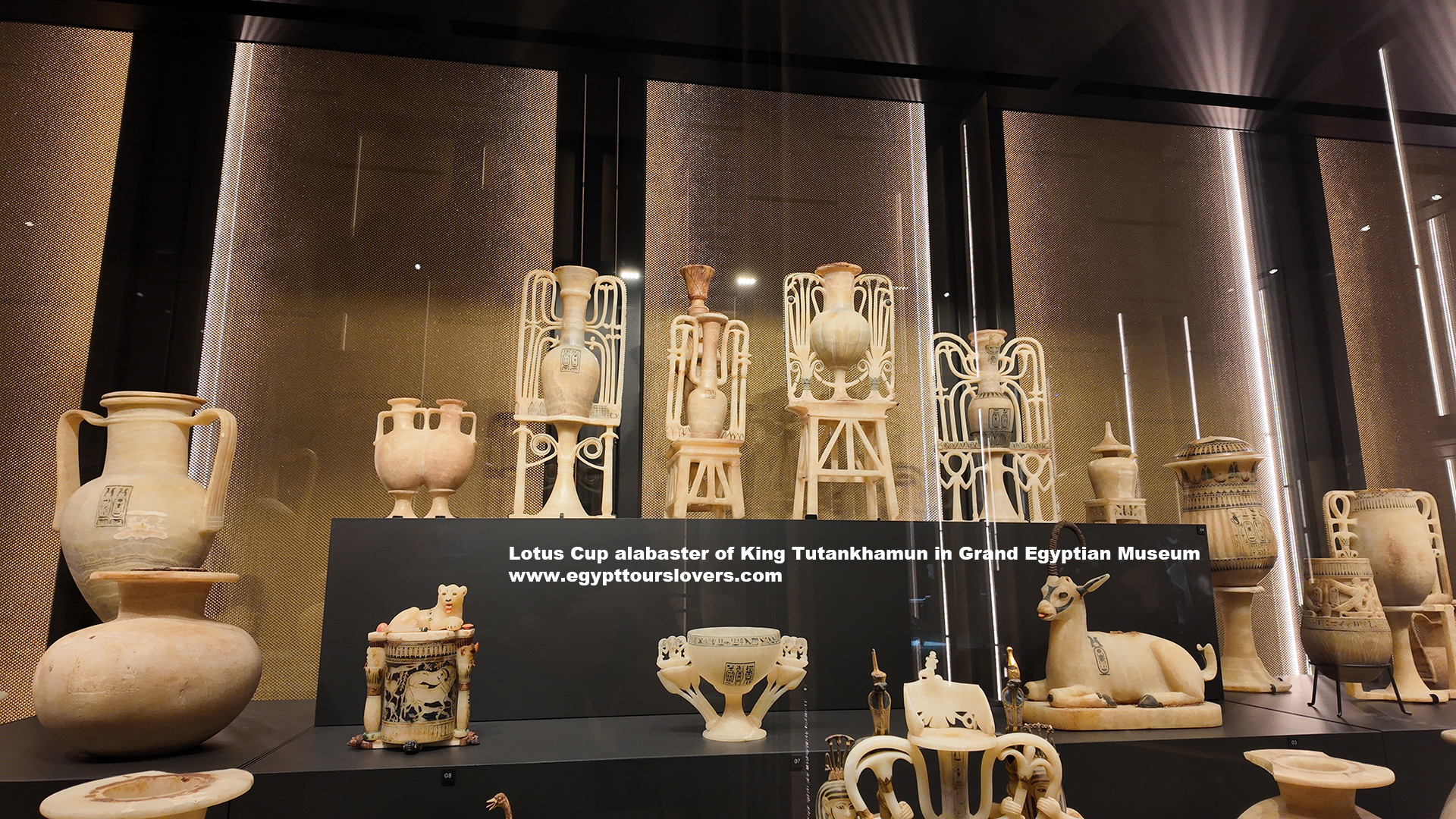
Lotus Cup alabaster
———– } ———– } ———– } ———– }
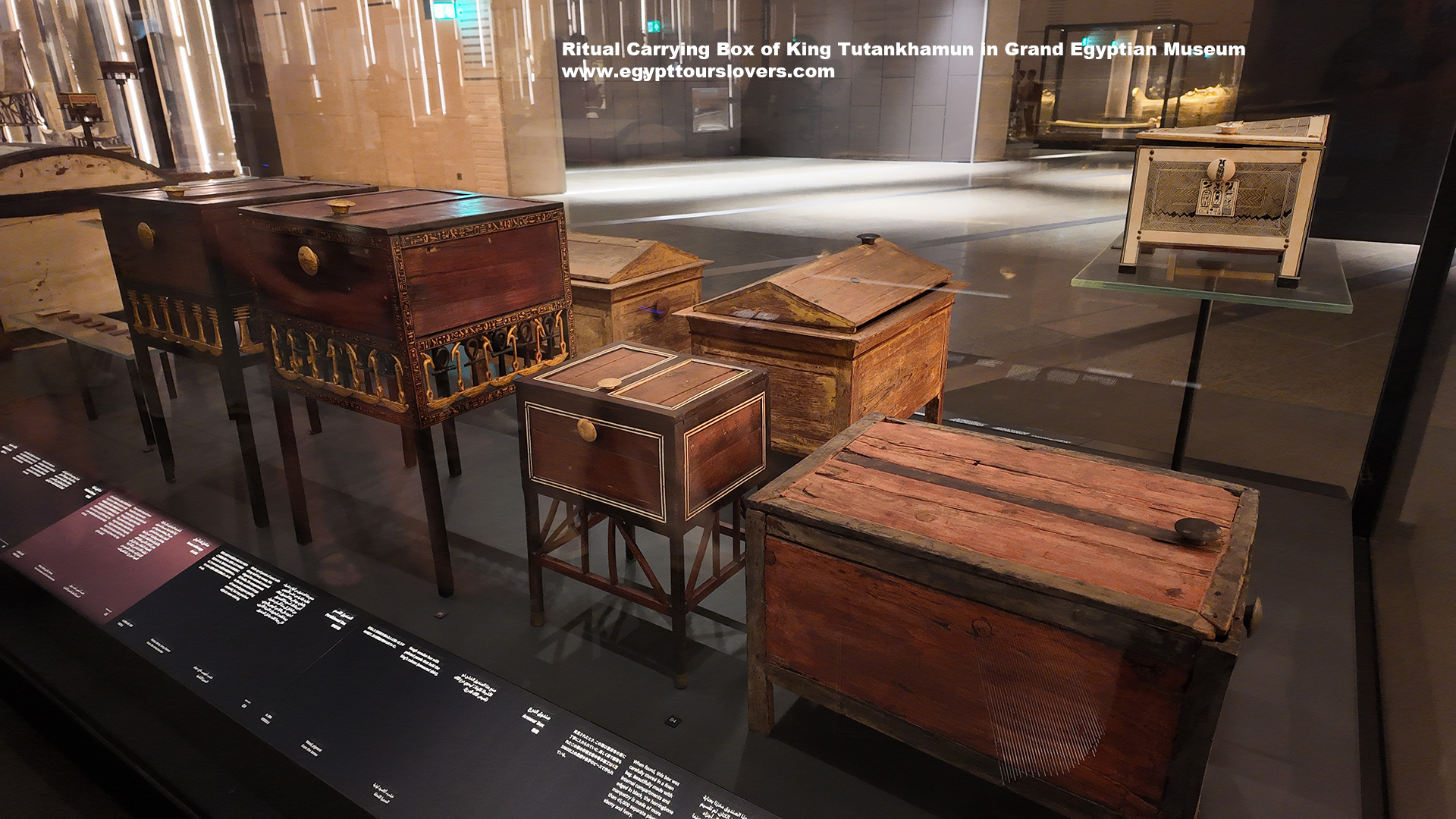
Ritual Carrying Box of King Tutankhamun Treasures
———– } ———– } ———– } ———– }
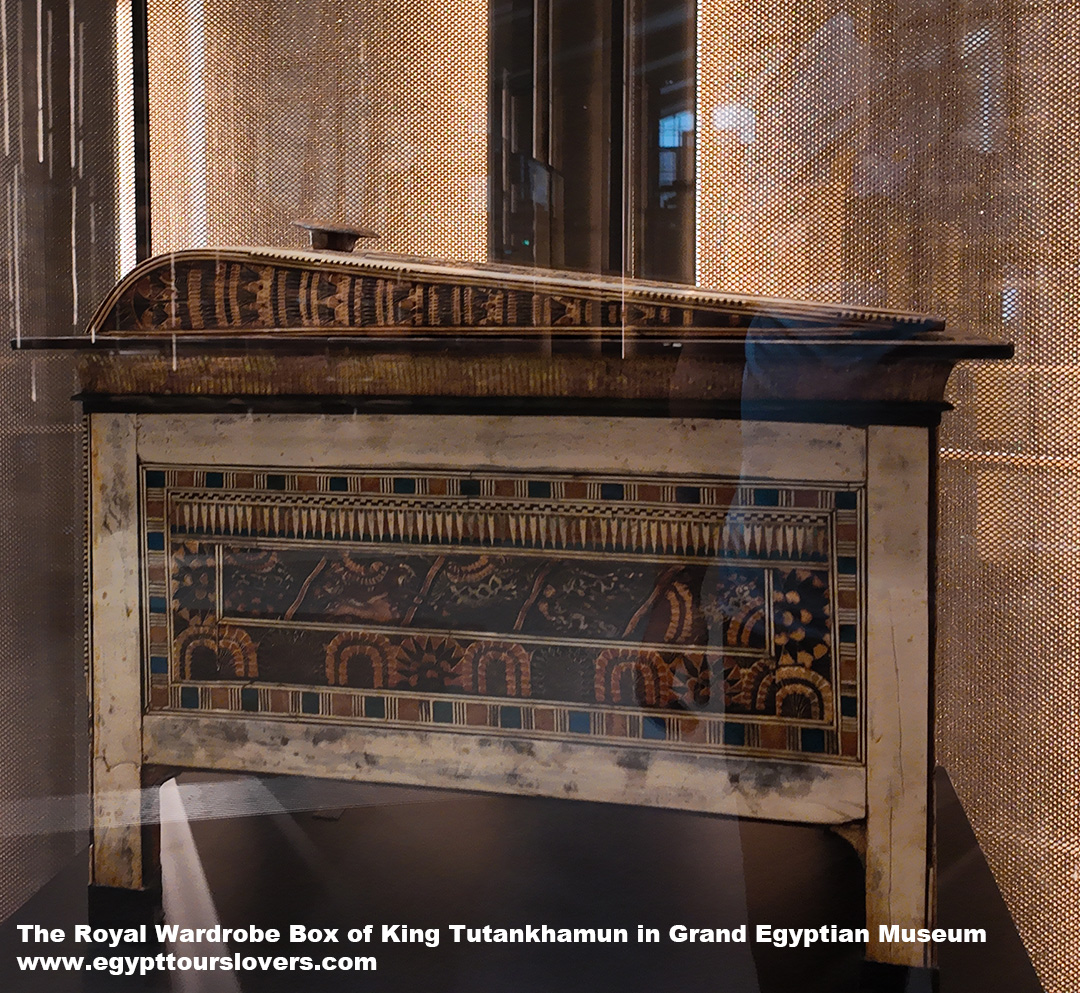
The Royal Wardrobe Box
———– } ———– } ———– } ———– }
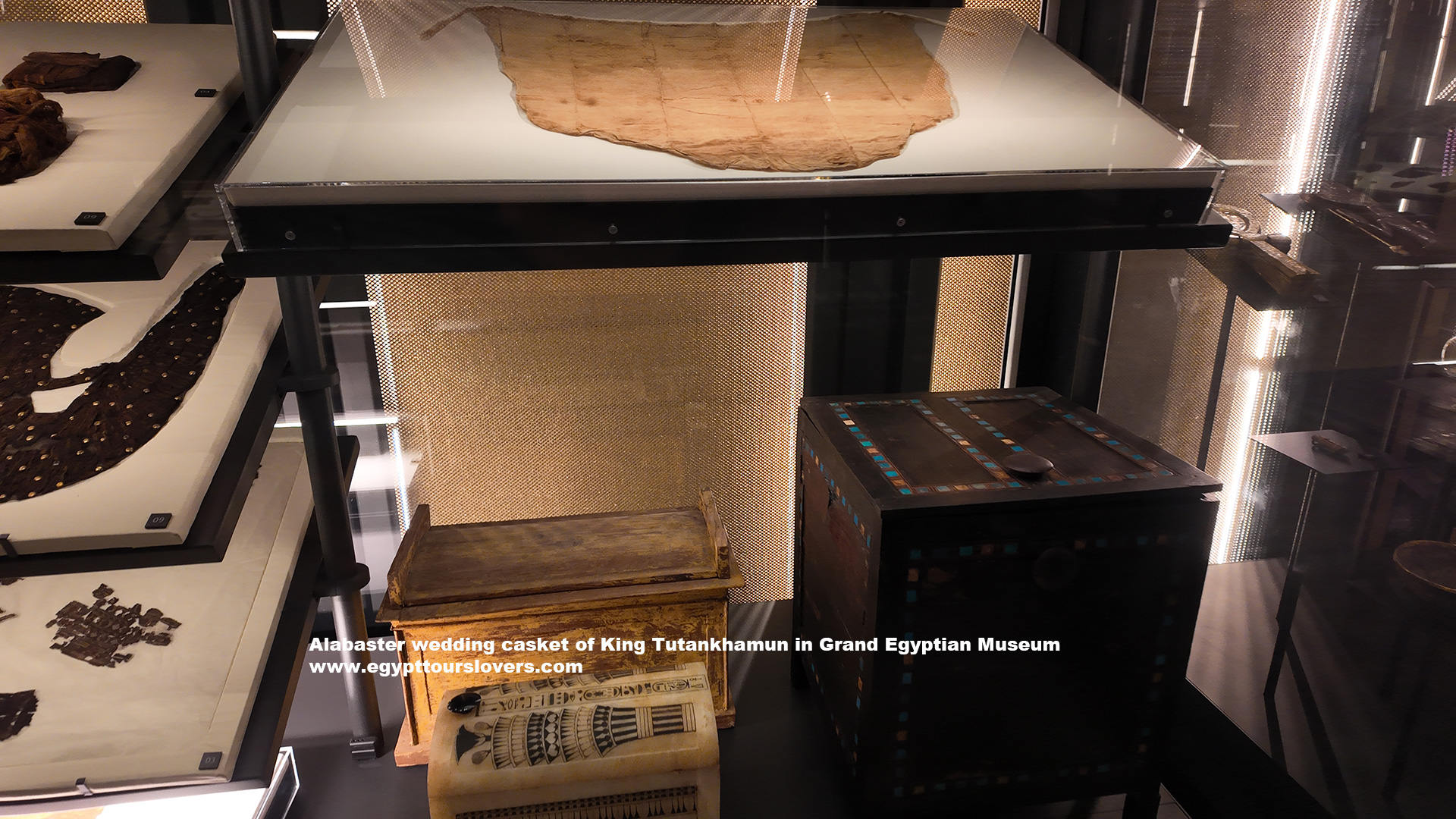
Alabaster wedding casket
———– } ———– } ———– } ———– }
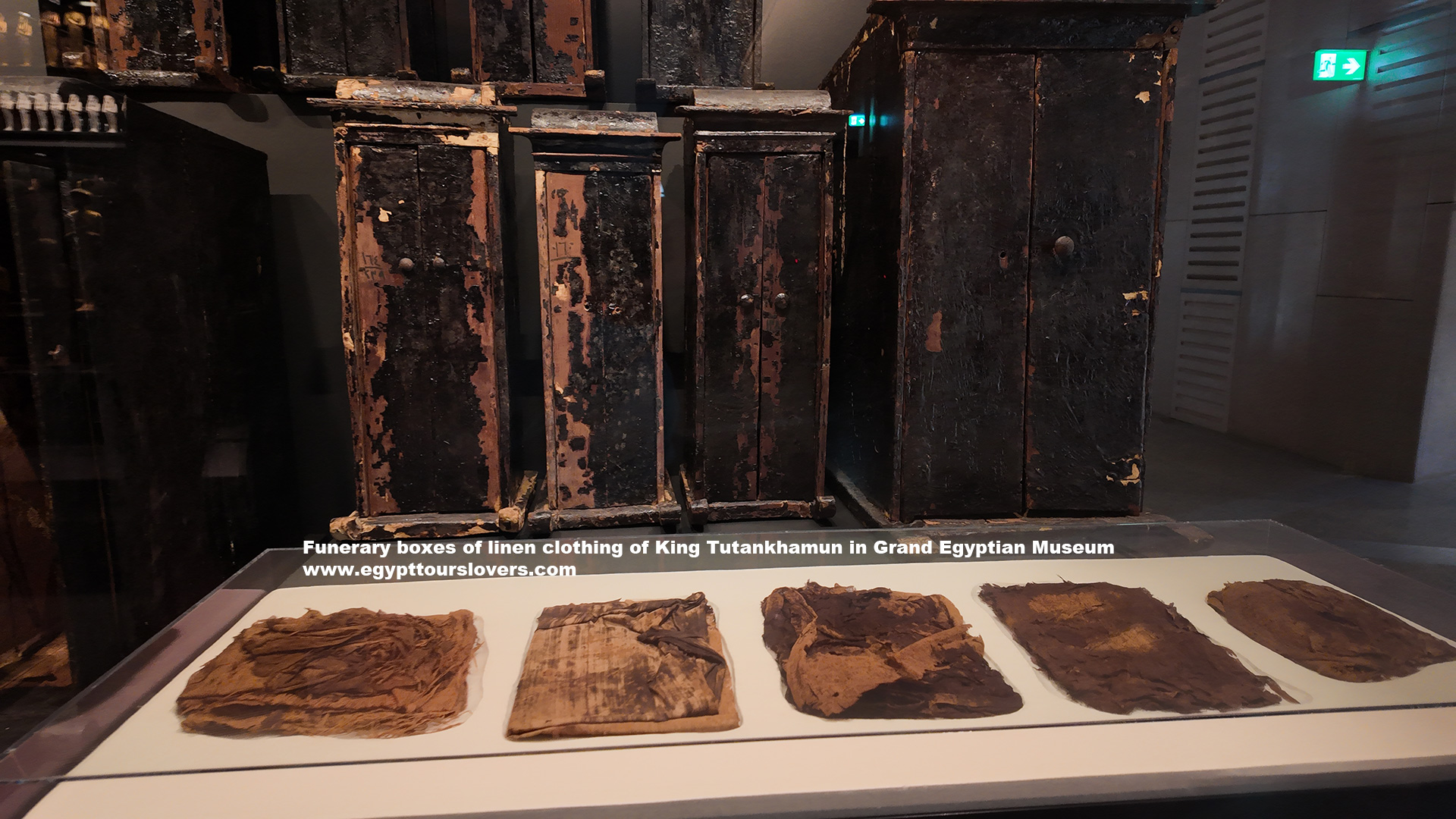
Funerary boxes of linen clothing of King Tutankhamun Treasures
———– } ———– } ———– } ———– }
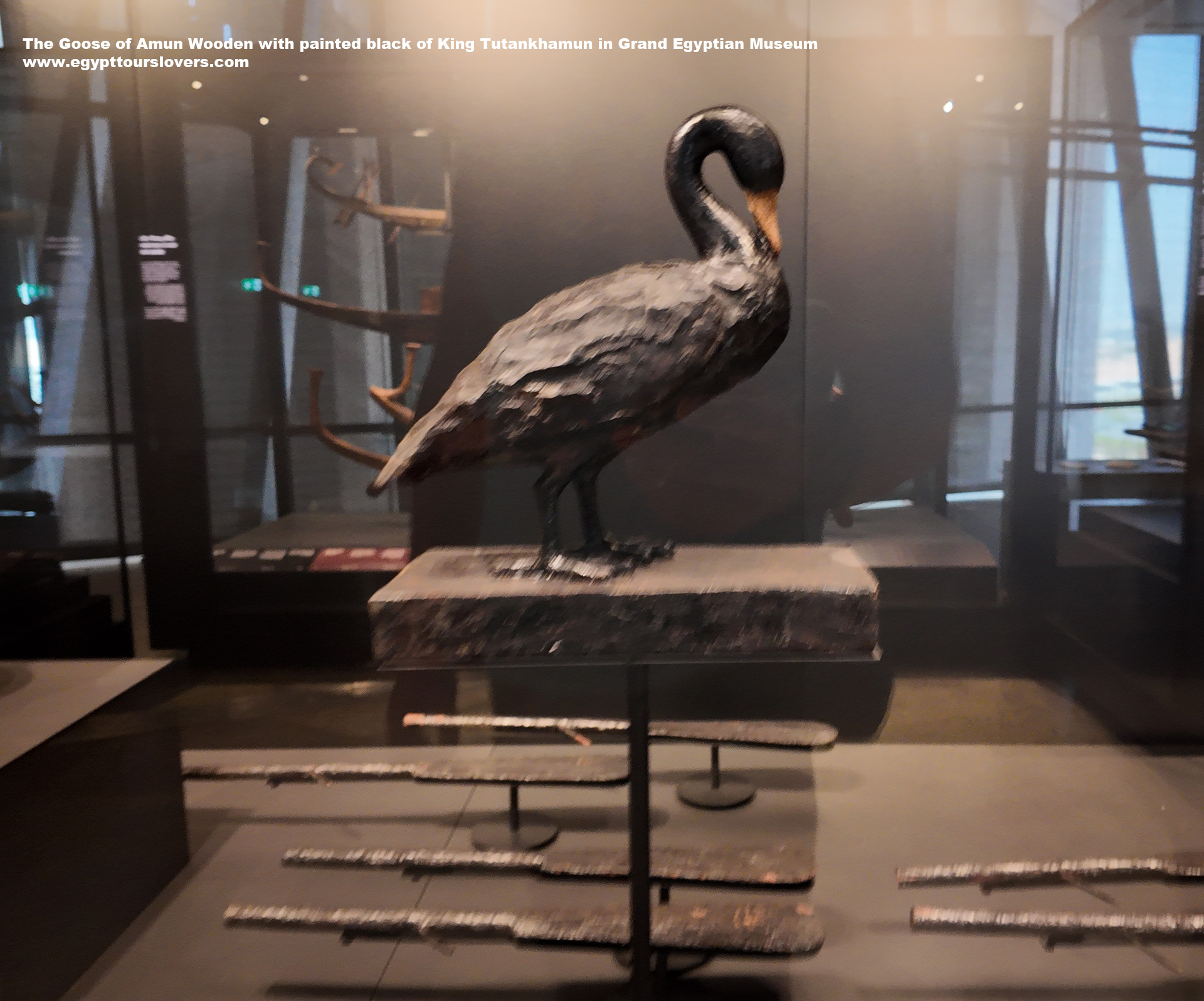
The Goose of Amun Wooden with painted black of King Tutankhamun
———– } ———– } ———– } ———– }
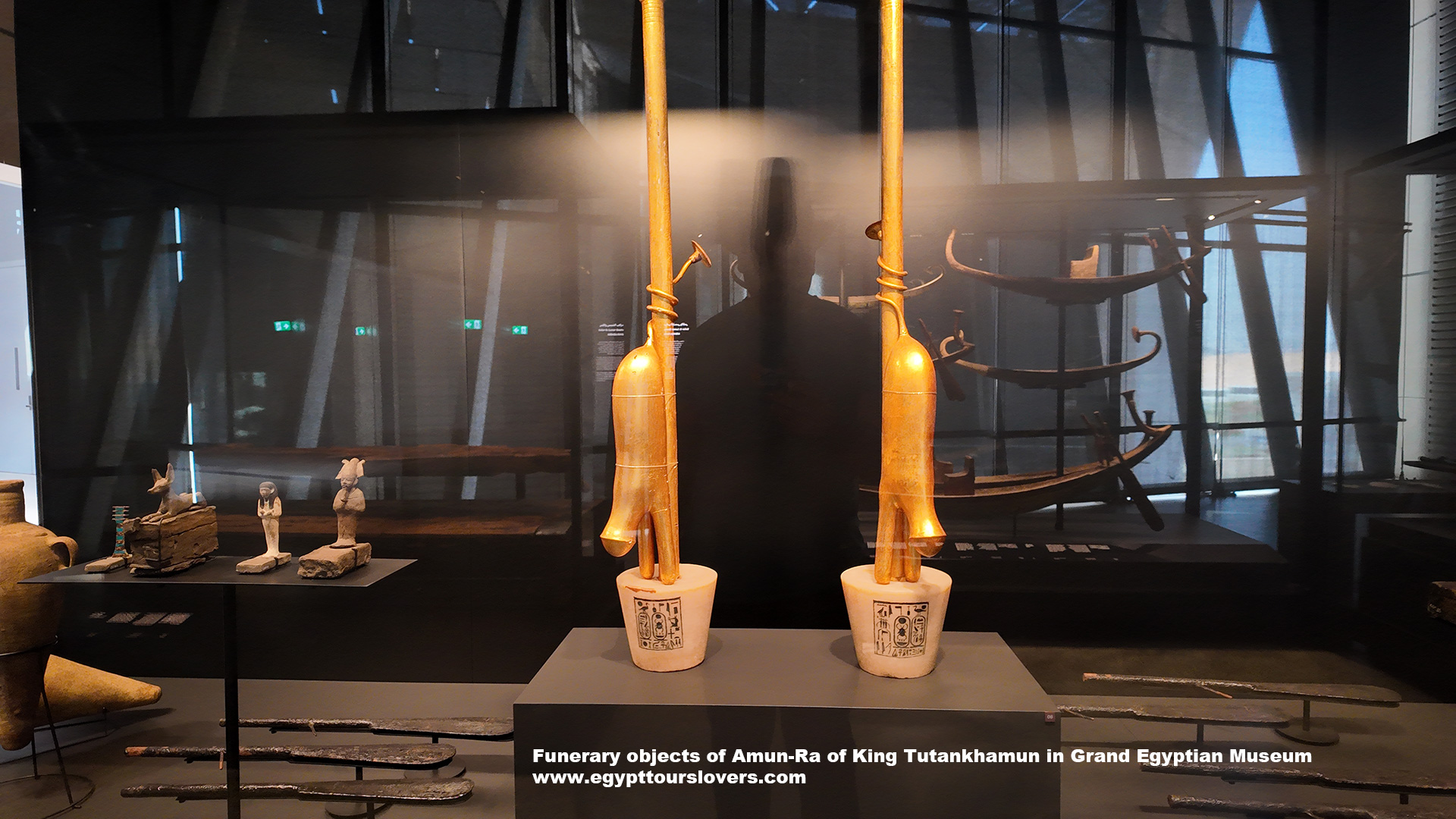
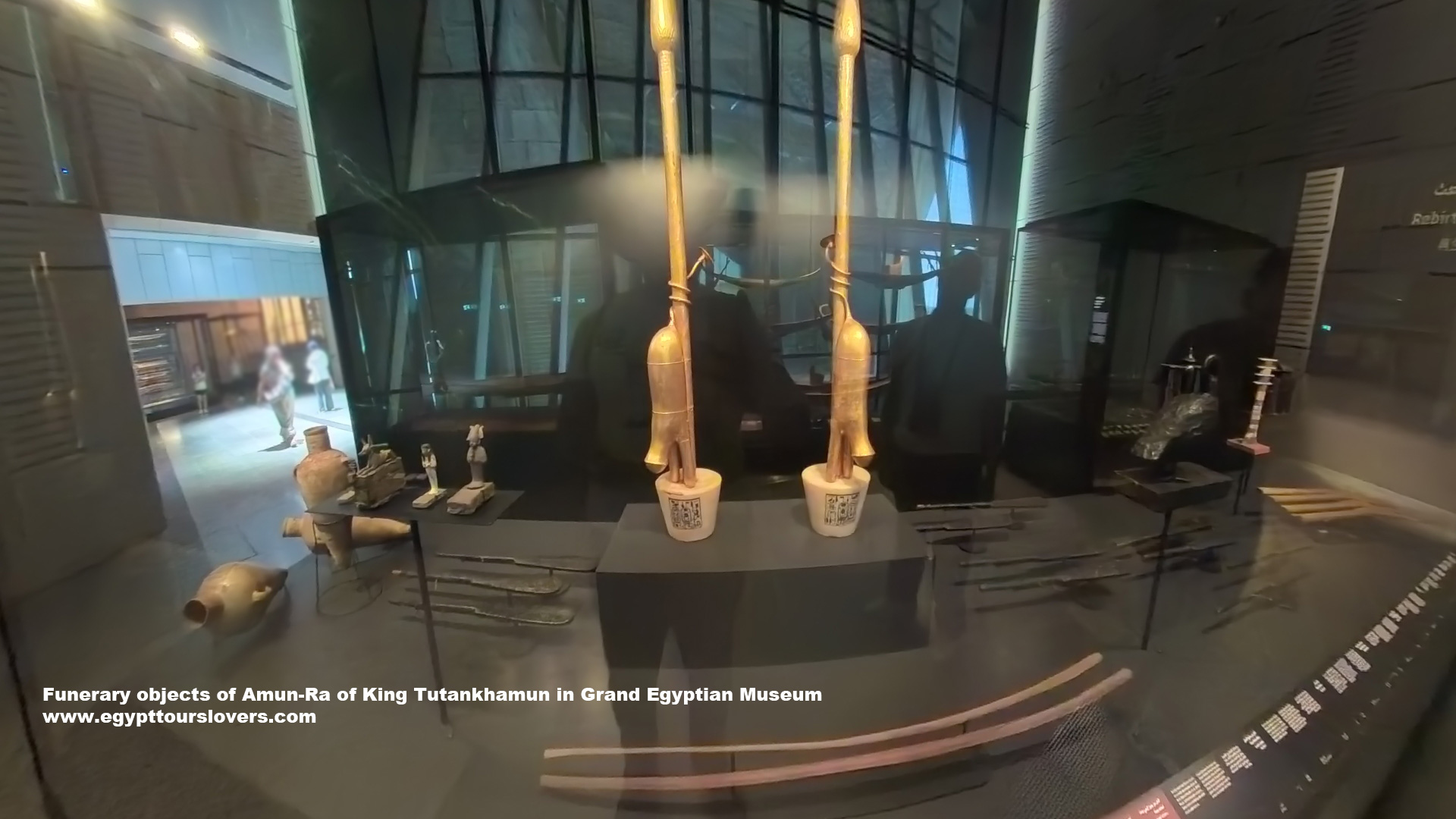
Funerary objects of Amun-Ra for King Tutankhamun
———– } ———– } ———– } ———– }
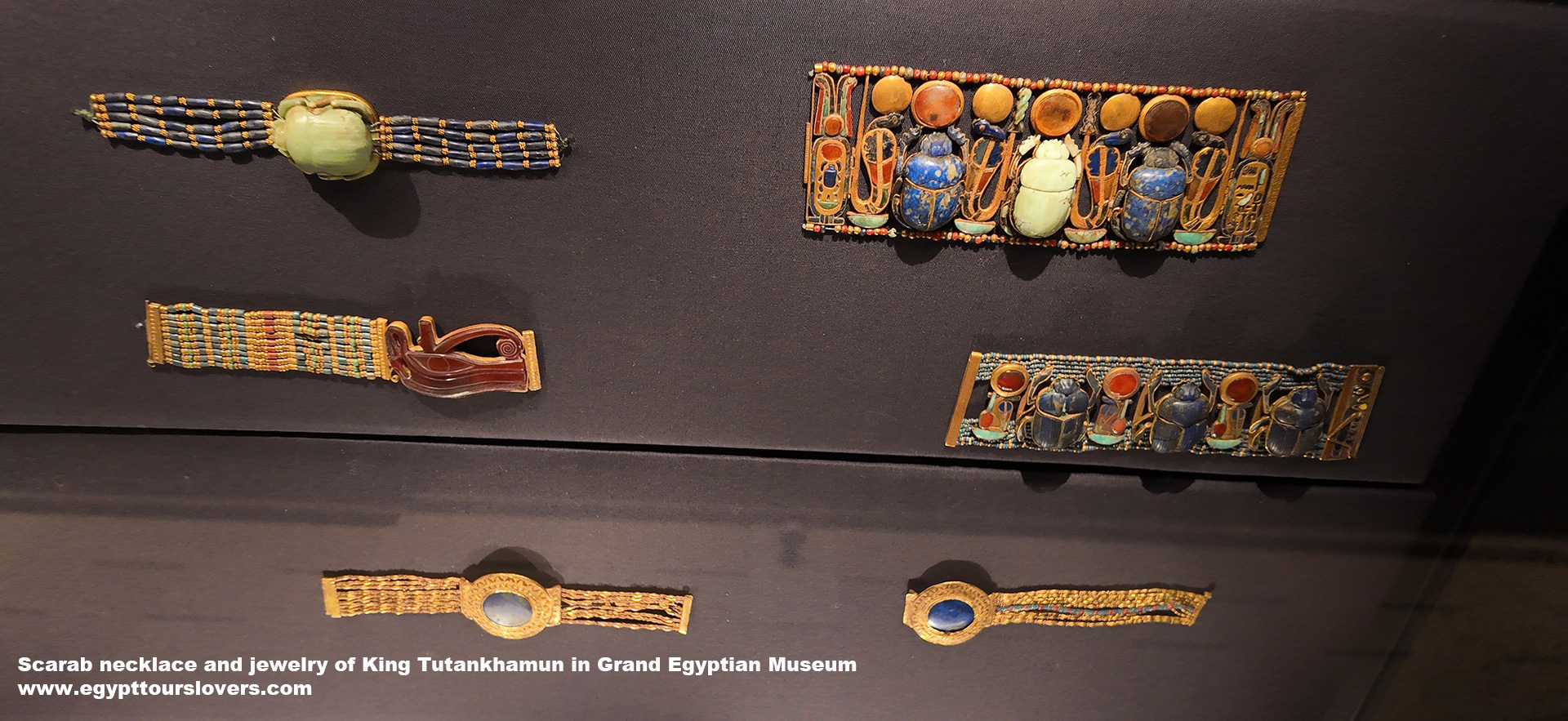
Scarab necklace and jewelry
———– } ———– } ———– } ———– }
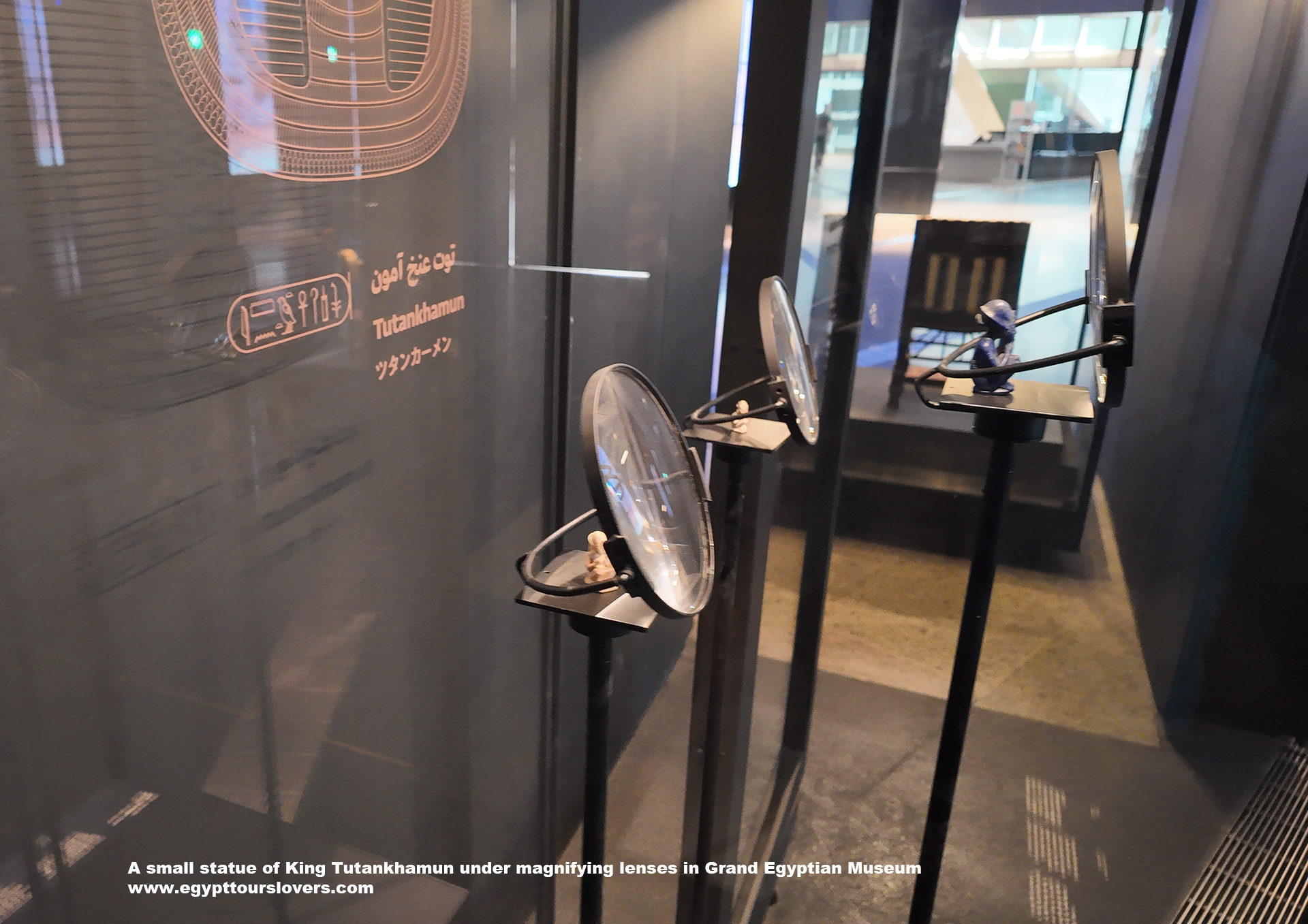
A small statue of King Tutankhamun under magnifying lenses
———– } ———– } ———– } ———– }
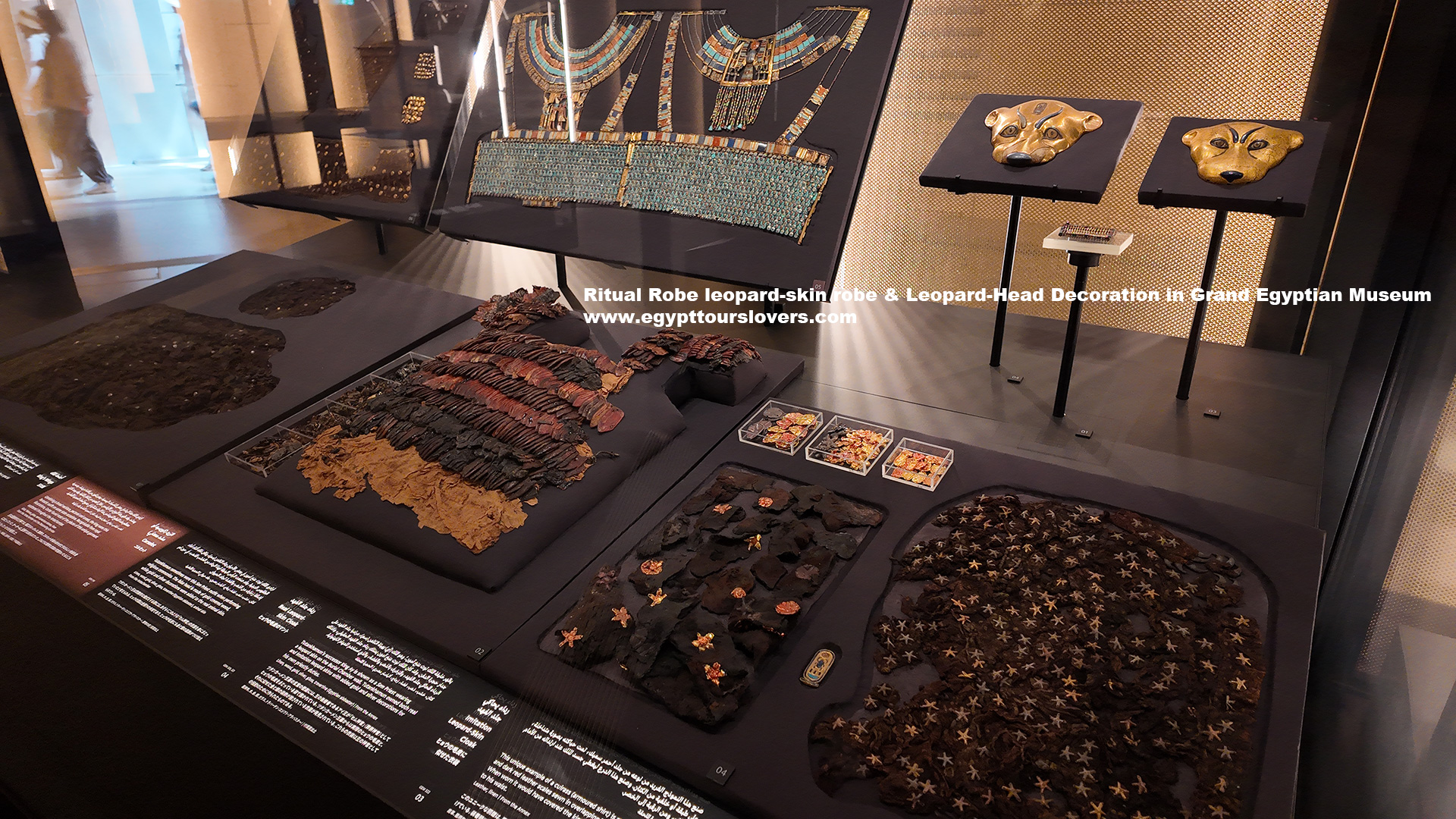
Ritual Robe leopard-skin robe & Leopard-Head Decoration of King Tutankhamun Treasures
———– } ———– } ———– } ———– }
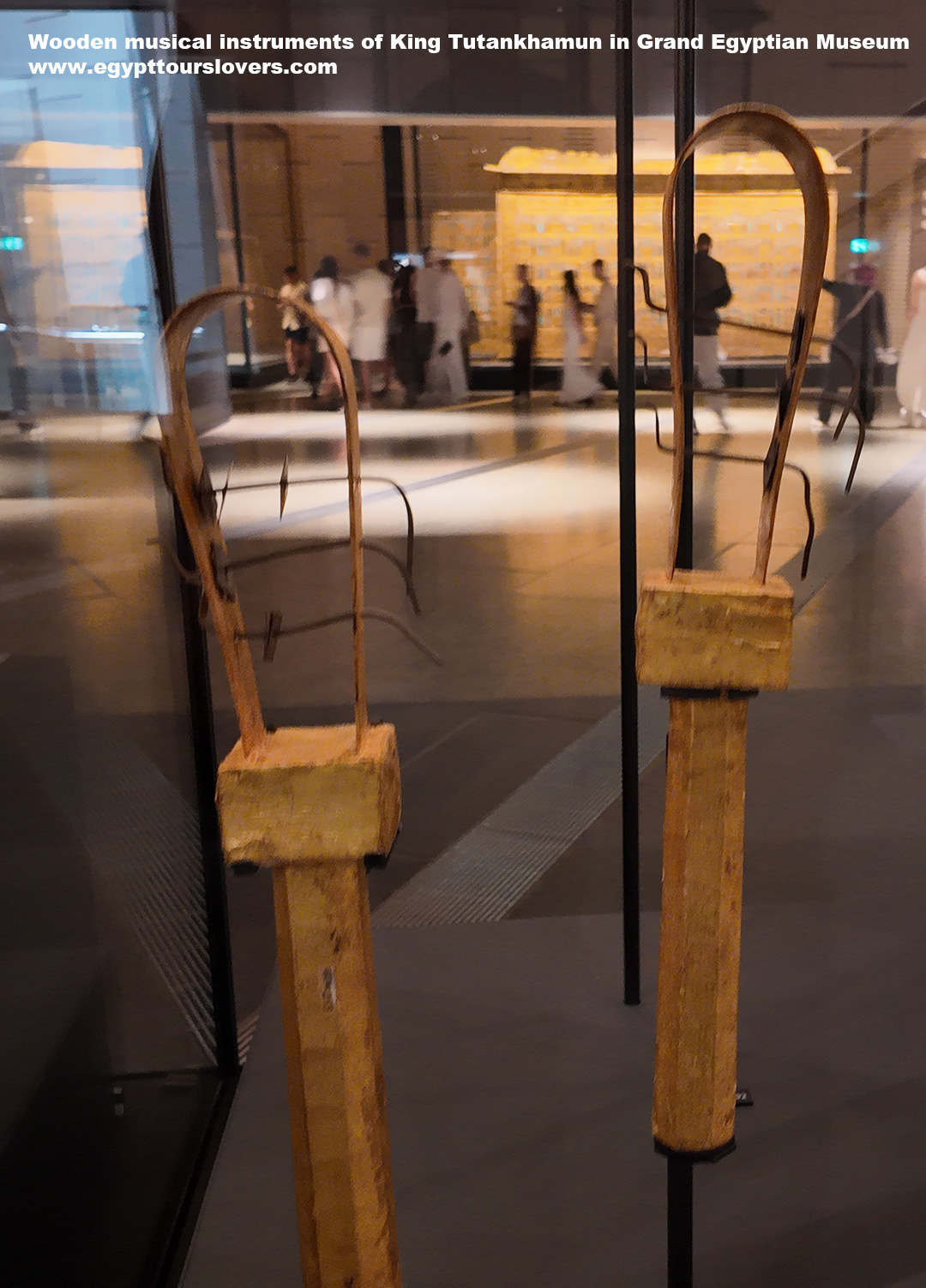
Wooden musical instruments
———– } ———– } ———– } ———– }
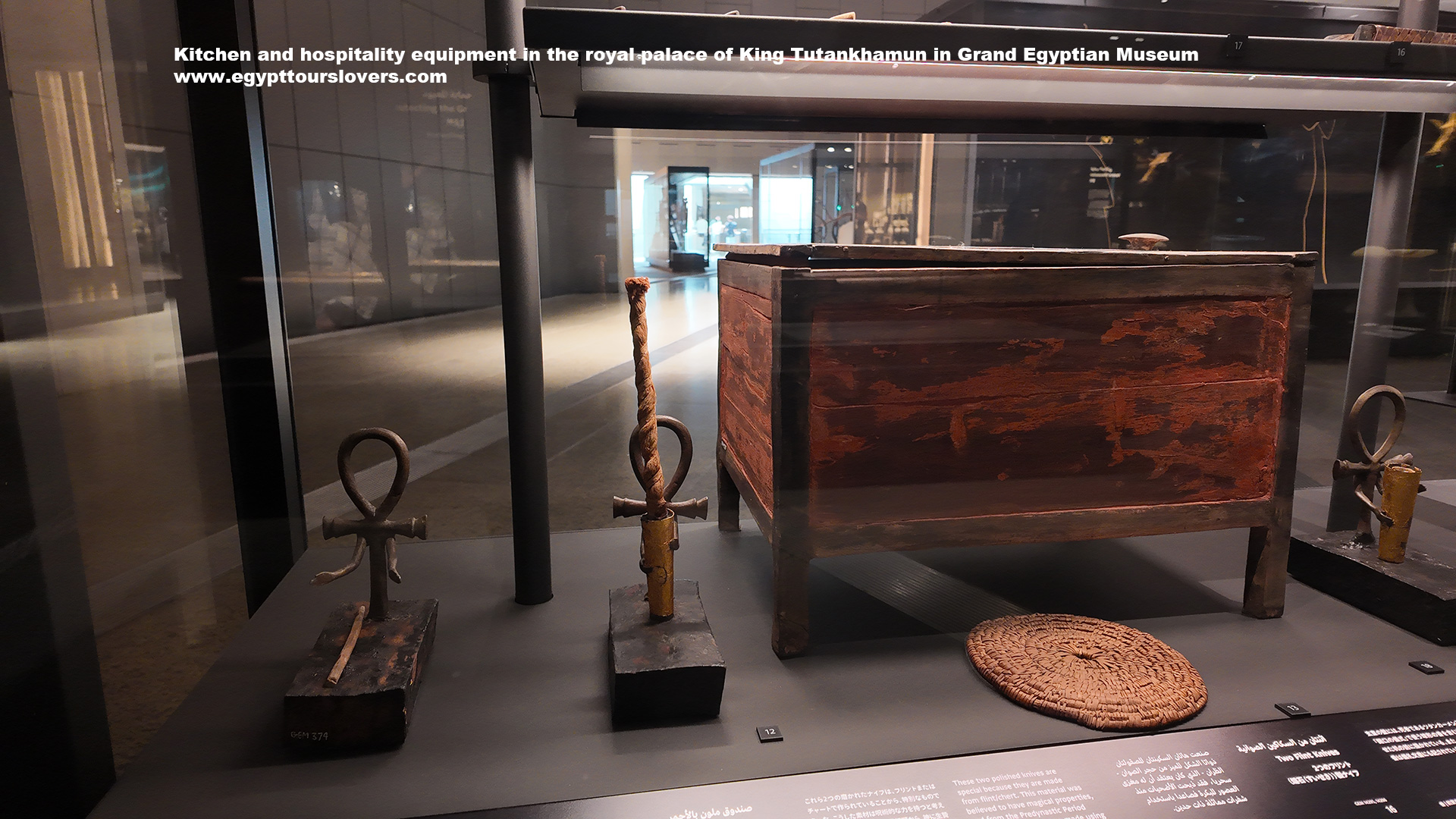
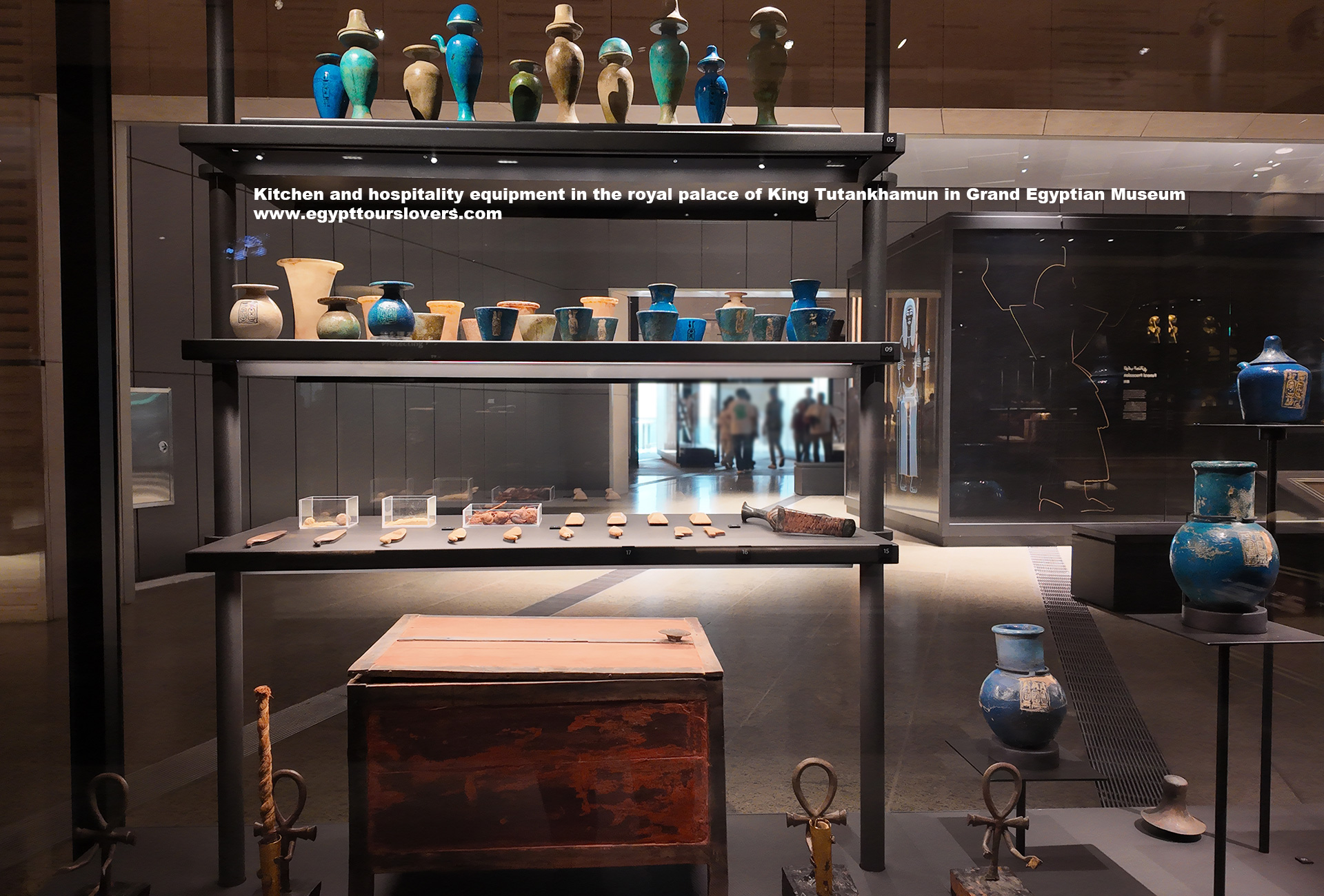
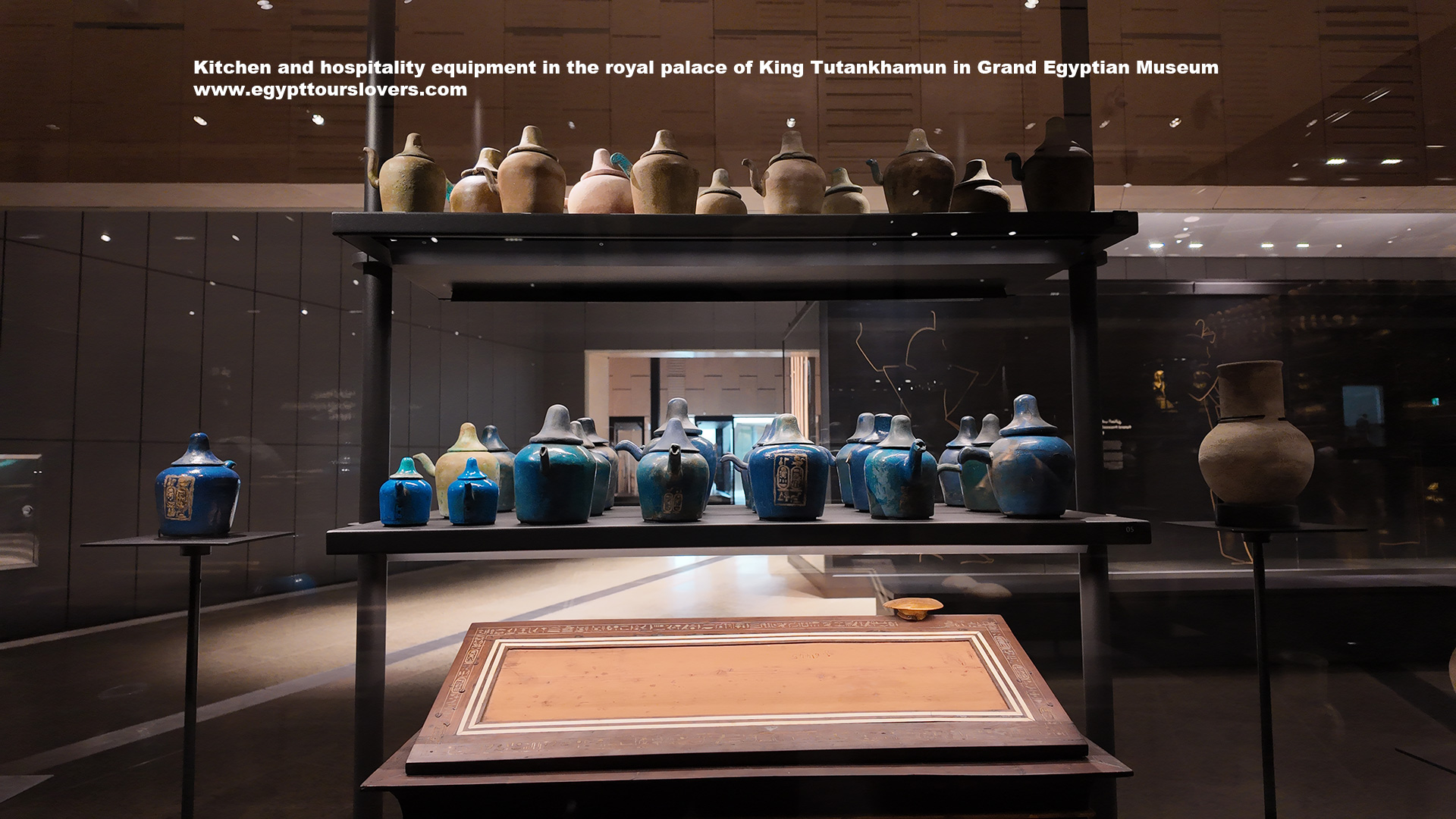
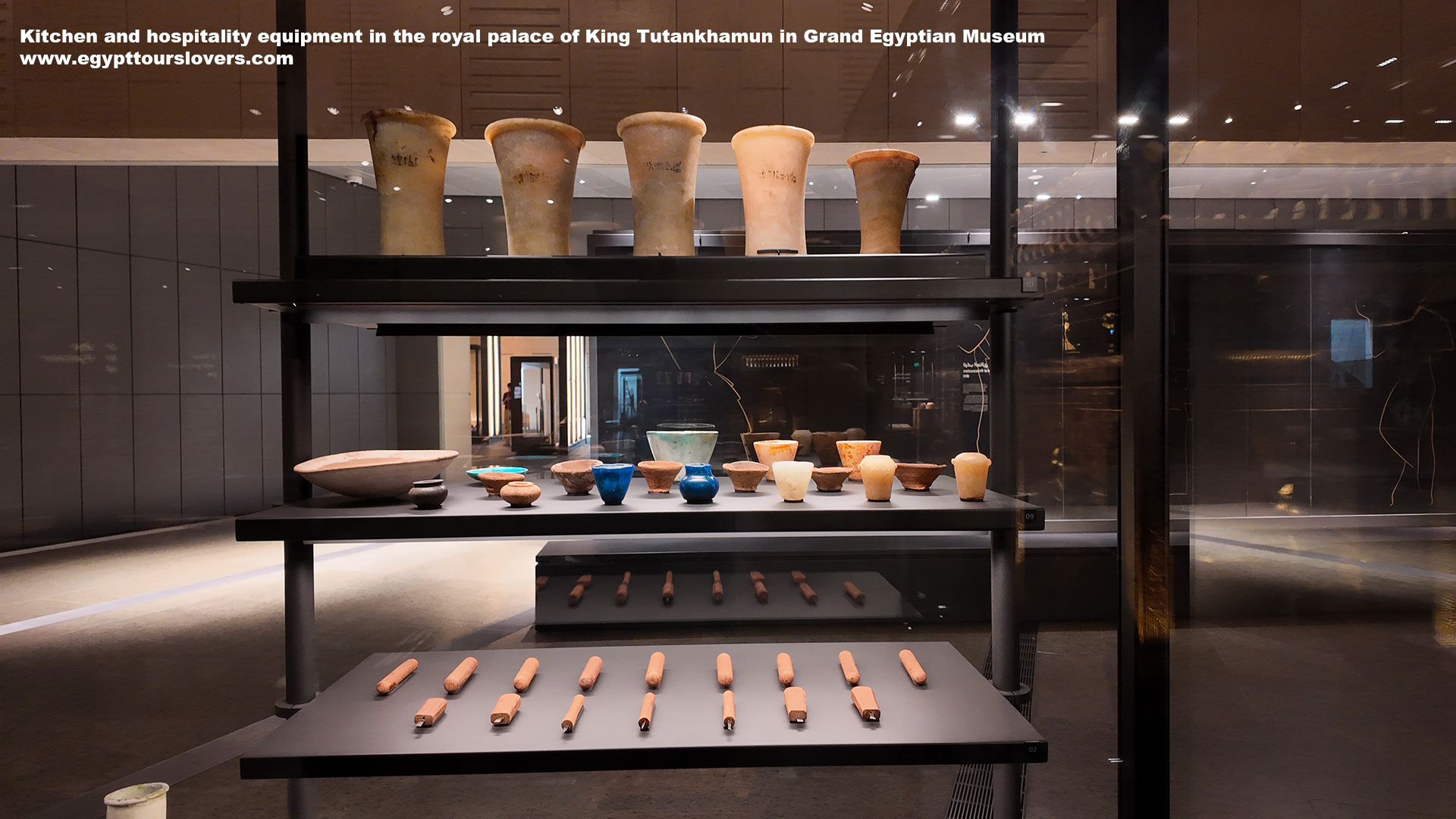
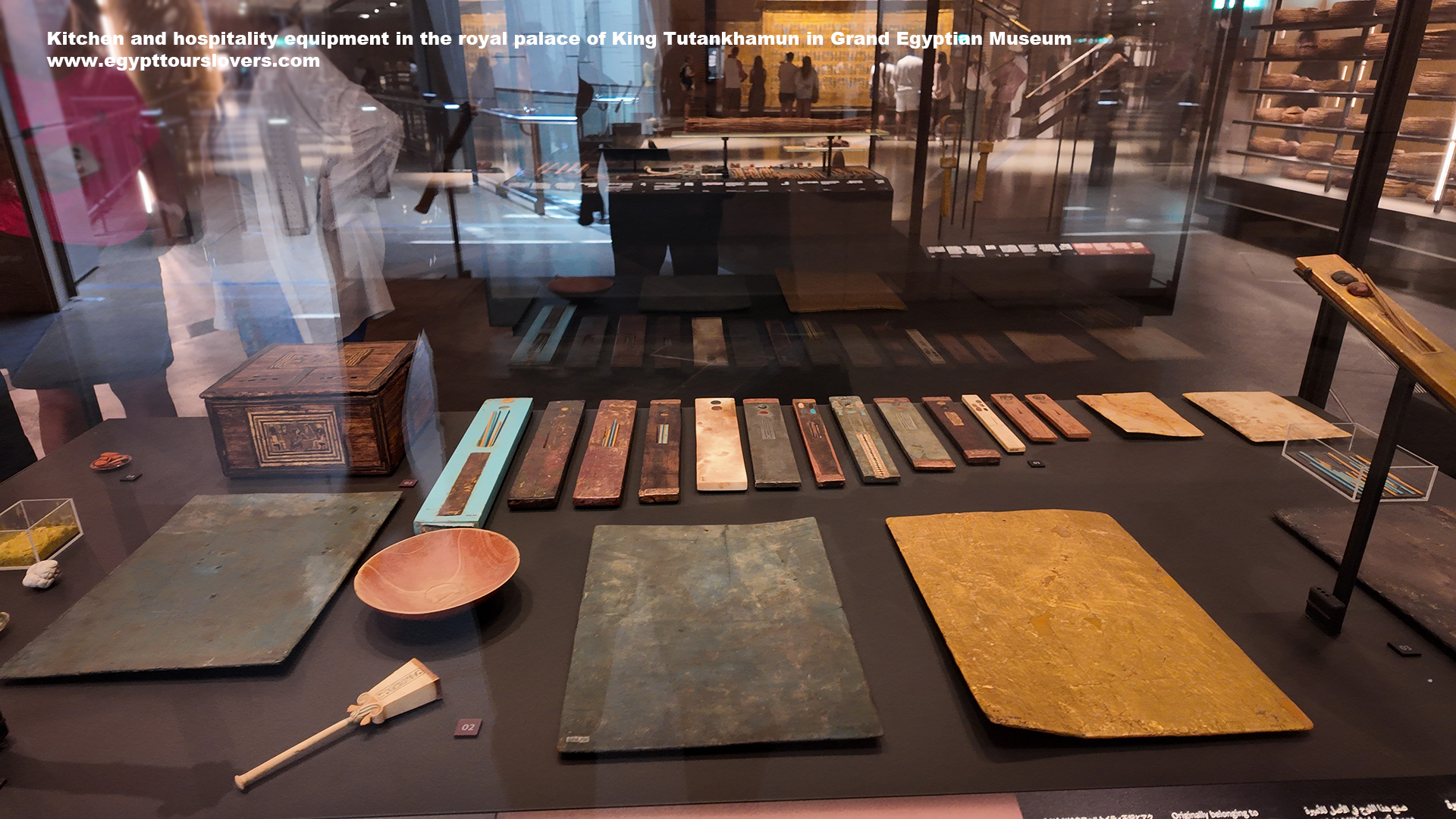
Kitchen and hospitality equipment in the royal palace
———– } ———– } ———– } ———– }
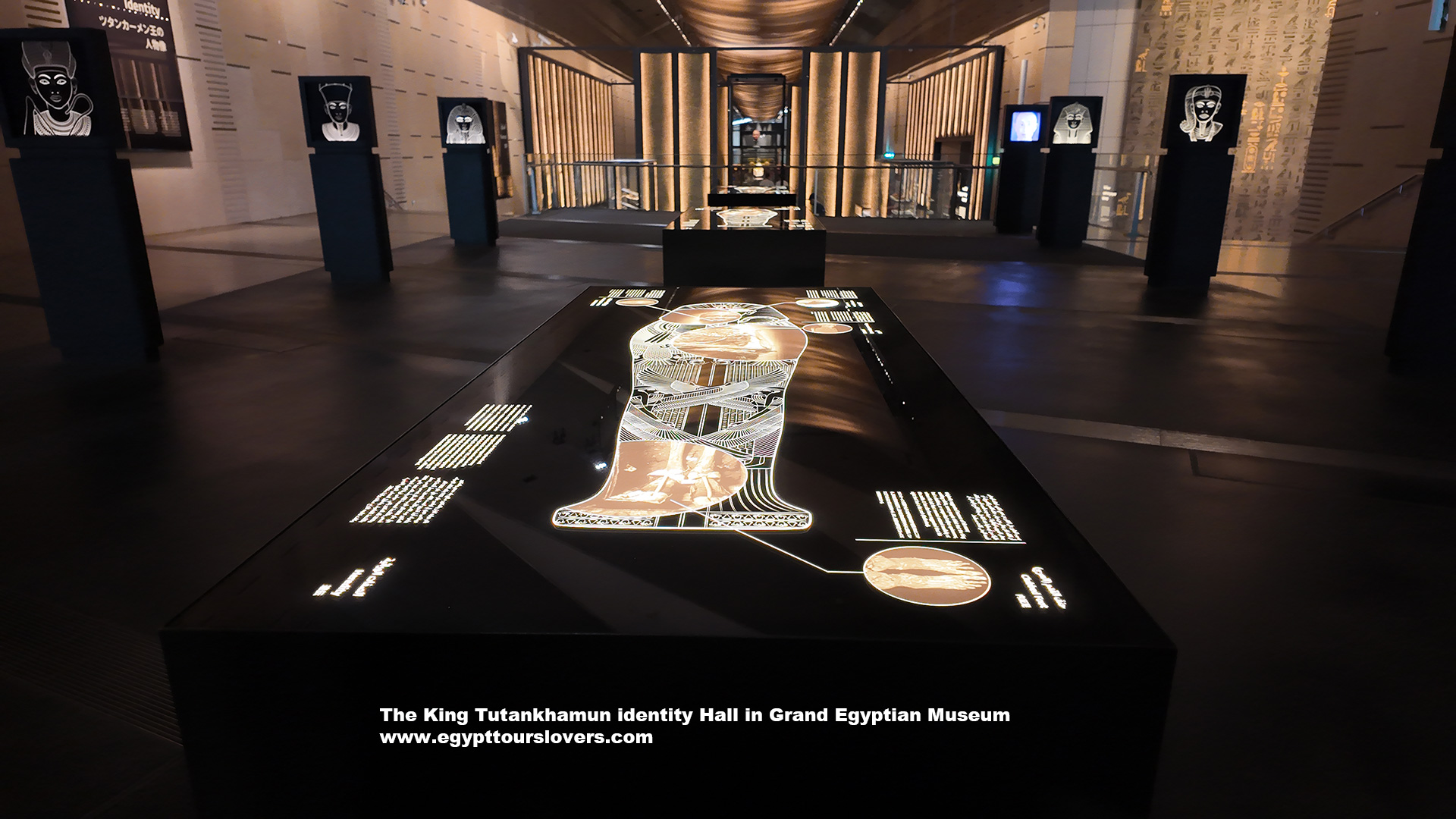
The King Tutankhamun identity Hall in Grand Egyptian Museum
———– } ———– } ———– } ———– }
The royal furniture in the palace: more than 80 pieces of luxury furniture, including three thrones for adults and one throne for children.
Jewelry and amulets: Over 200 pieces inlaid with semi-precious stones and colored glass, containing symbols of nature and ancient Egyptian gods – to give King Tut power and protection in the afterlife.
Became the most famous archaeological site and the most important landmark of ancient civilization in the minds of people around the world of all nationalities and cultures.
The north and west walls of King Tutankhamun’s burial chamber are decorated with paintings and reliefs depicting the burial rituals of the boy king.
After three rounds of radar scans, no open spaces were found behind the walls, nor were there any hidden chambers or unidentified objects made of metallic or organic materials behind the north and west walls, suggesting that this might be the tomb of Queen Nefertiti.
Researchers speculate that there is an unusual void, chamber, or cavity on the other side of that wall, and that something lies within it.
———– } ———– } ———– } ———– }
Researcher & Photographer King Tutankhamun Treasures: Tamer Ahmed Abdel Fattah