Grand Egyptian Museum Gallery 2 – Details of each artifacts with 4K Video & Stock Photos
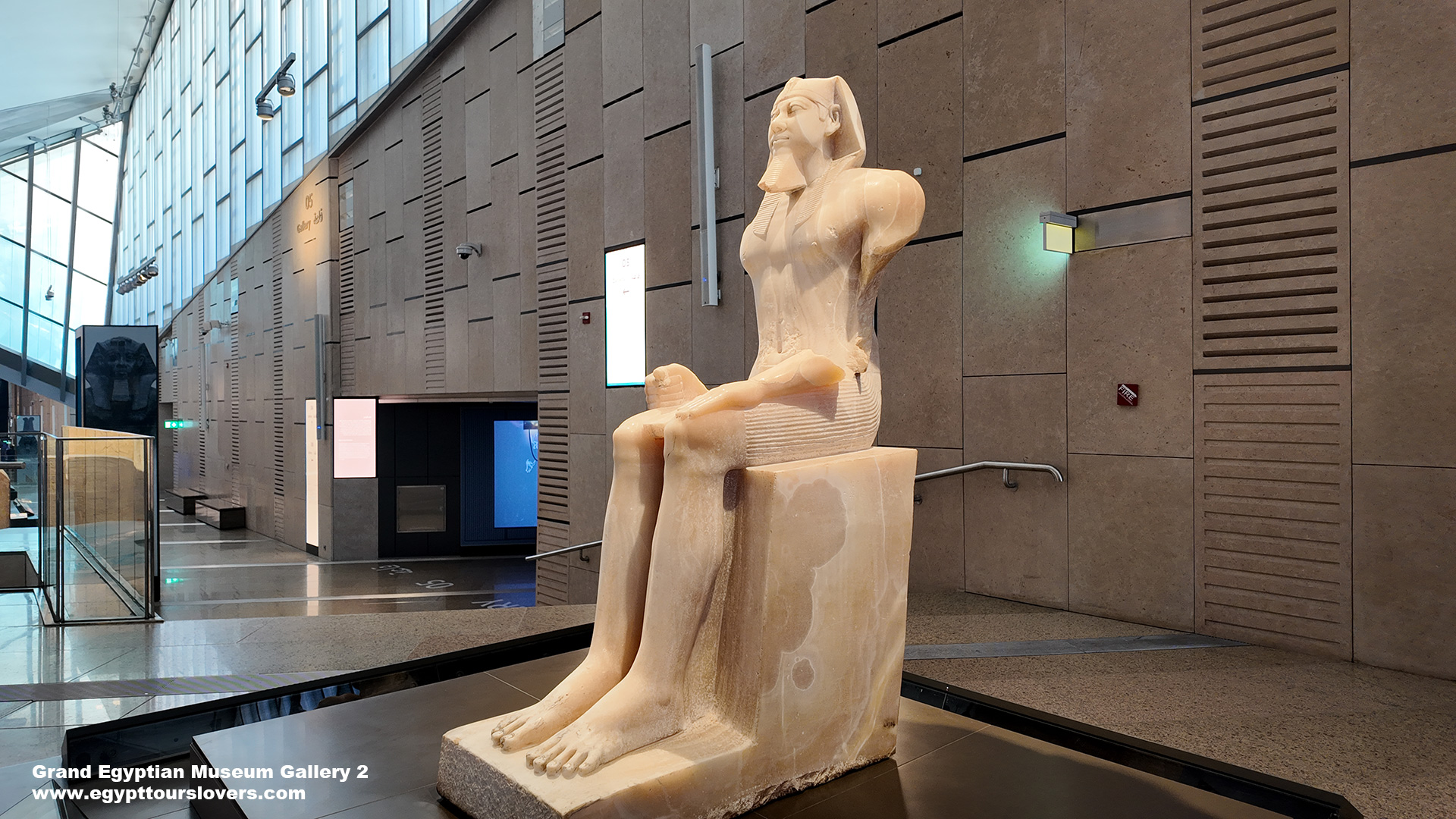
Grand Egyptian Museum Gallery 2 – Details of each artifacts with 4K Video & Stock Photos.
Learn the secrets of the pharaohs and the civilization of ancient Egypt and Prehistoric times, the pre-dynastic period (followers of the god Horus، Shemsu Hor).
Grand Egyptian Museum Gallery 2
———– } ———– } ———– } ———– }
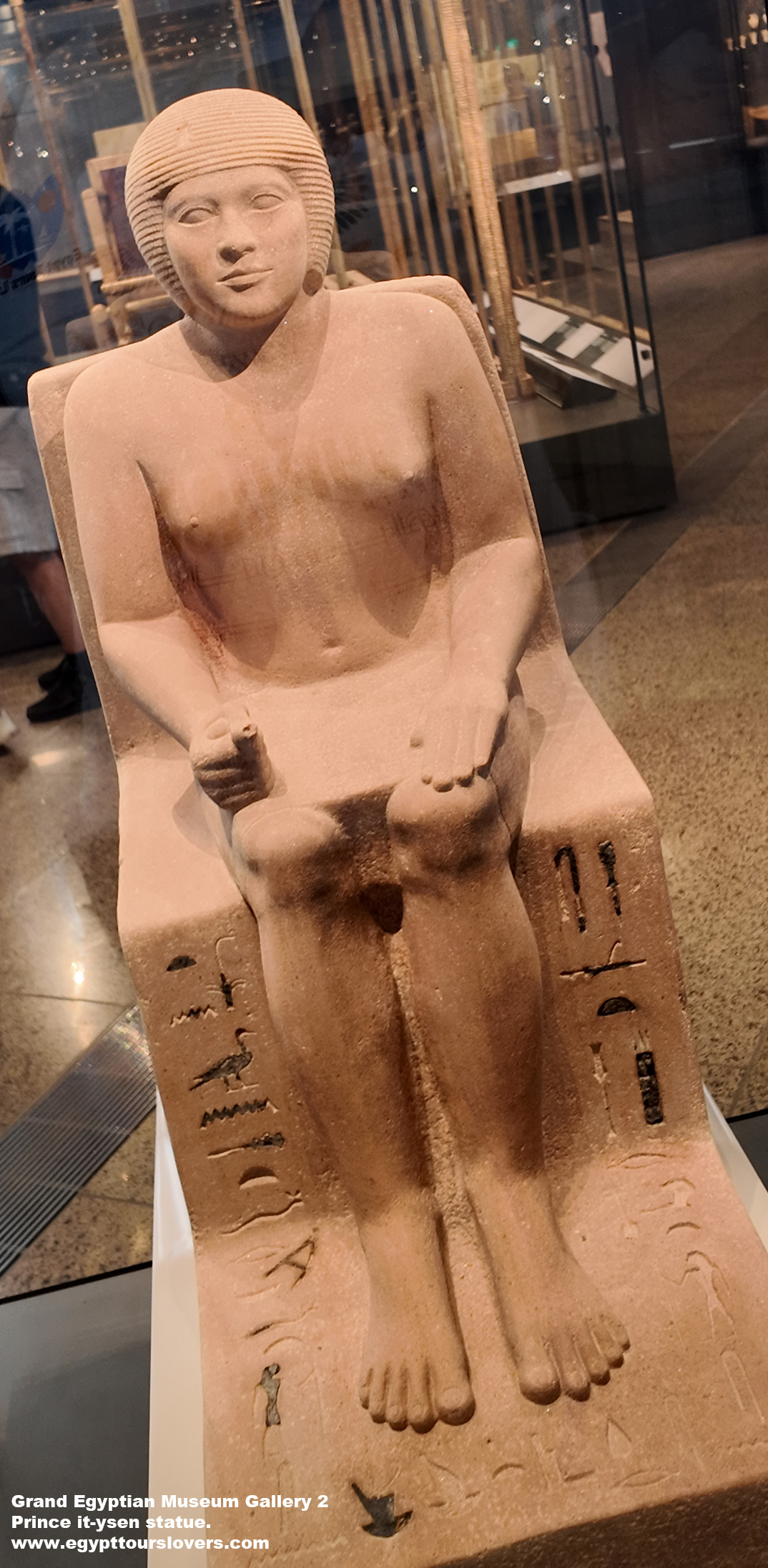
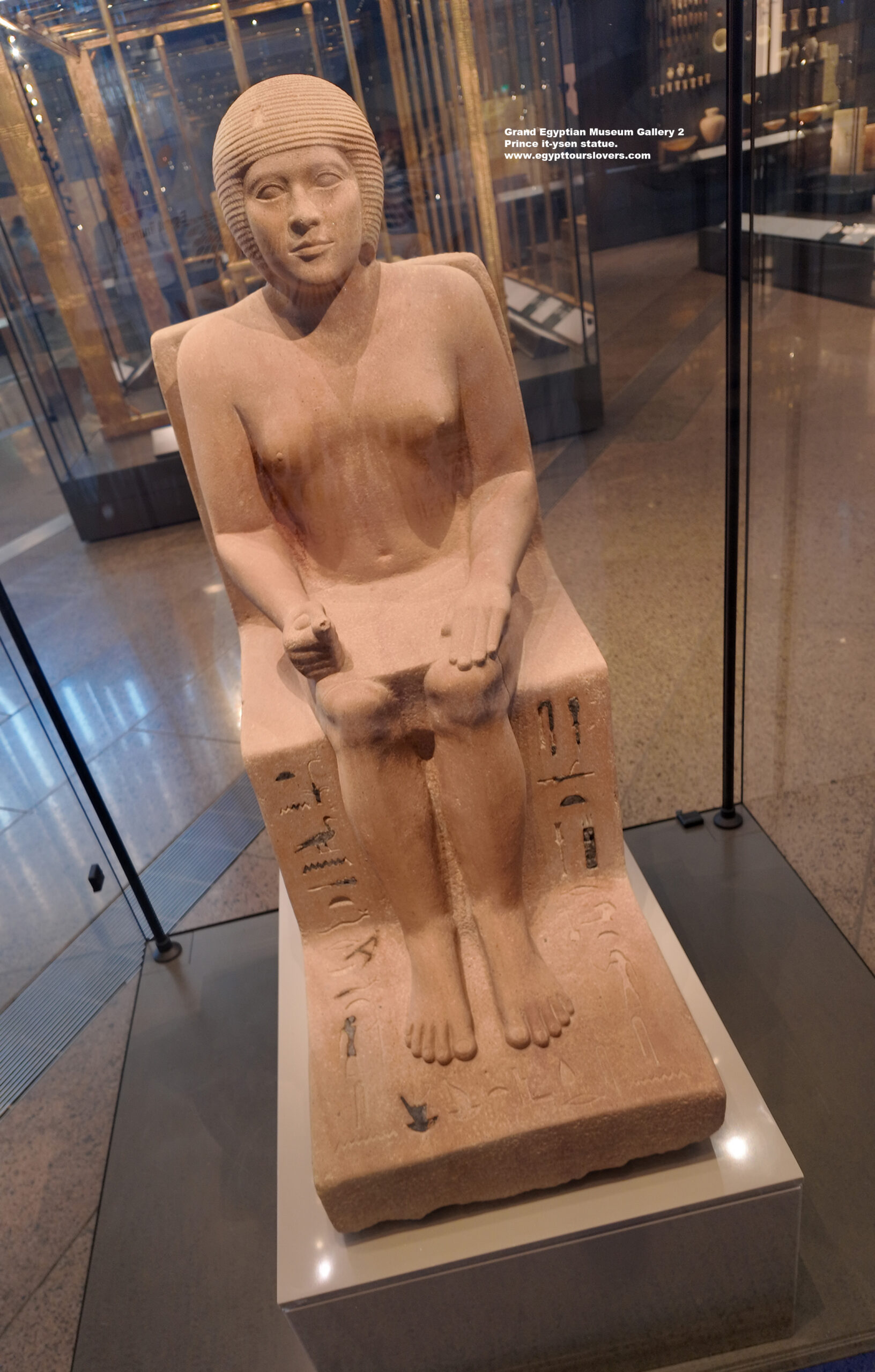
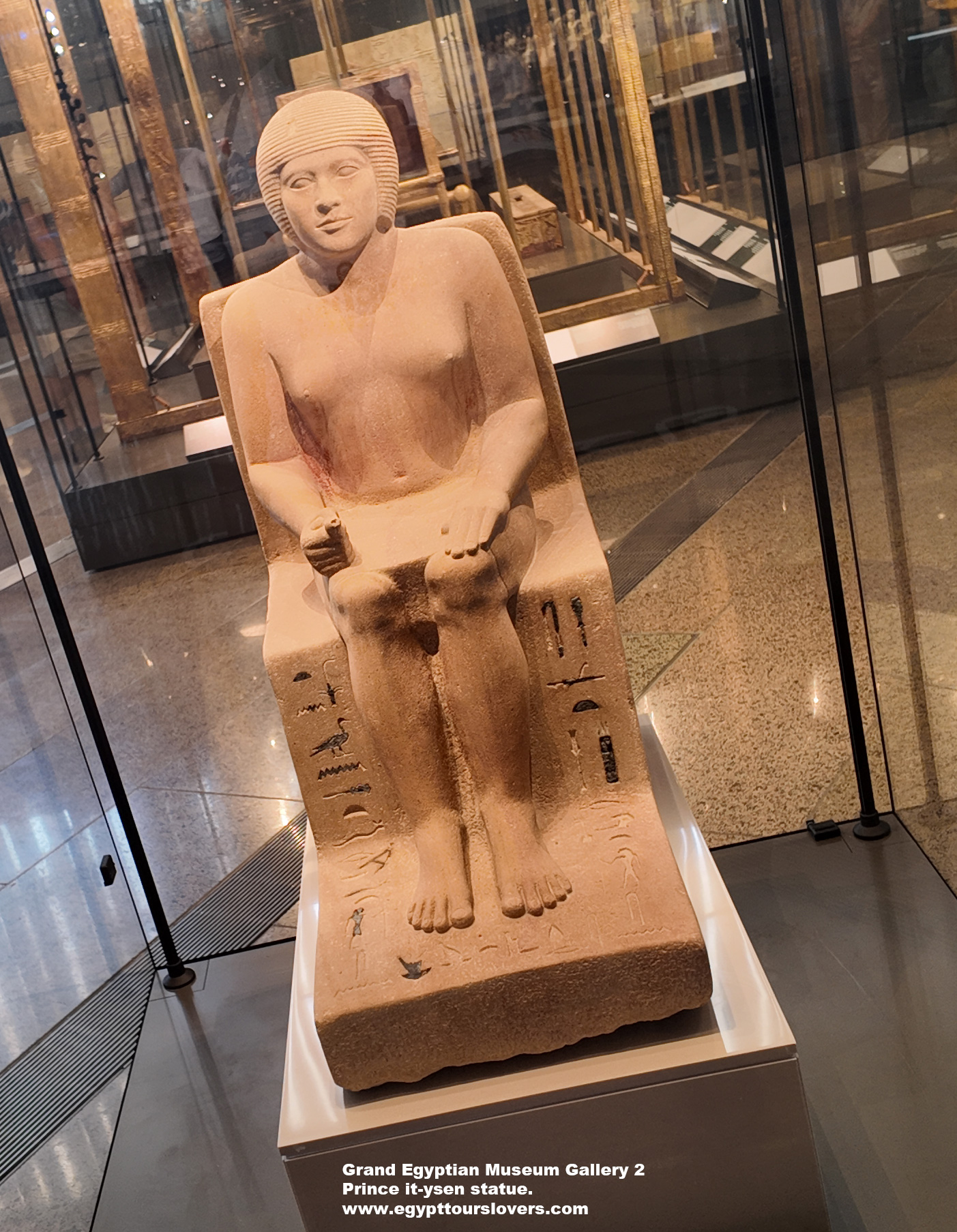
dynasty 4 | sandstone, pigment | aby rawash
Prince it-ysen statue.
Sone of king djedefre.
———– } ———– } ———– } ———– }
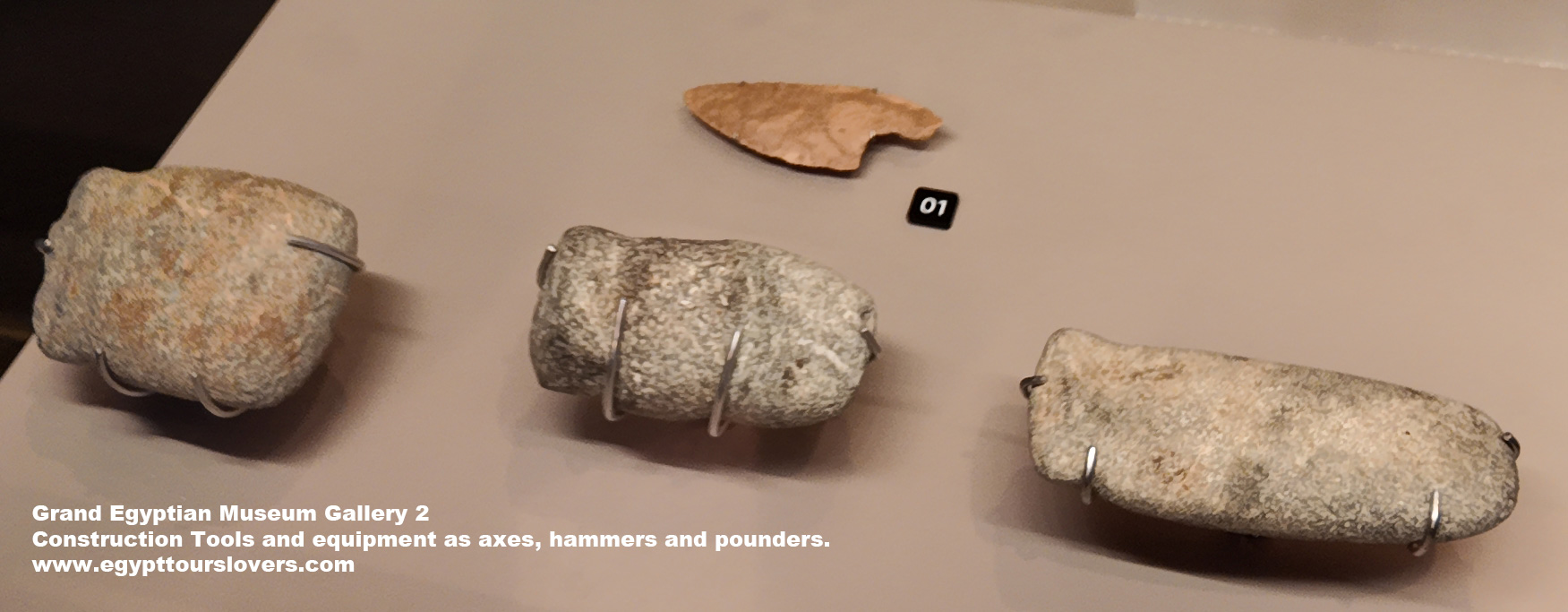
dynasty 4 | diorite, granite flint, bone | heit el-ghurab
Construction Tools and equipment as axes, hammers and pounders.
These tools assisted workers at giza turn flax fibers into yarn, which was then used to make textiles and rope.
———– } ———– } ———– } ———– }
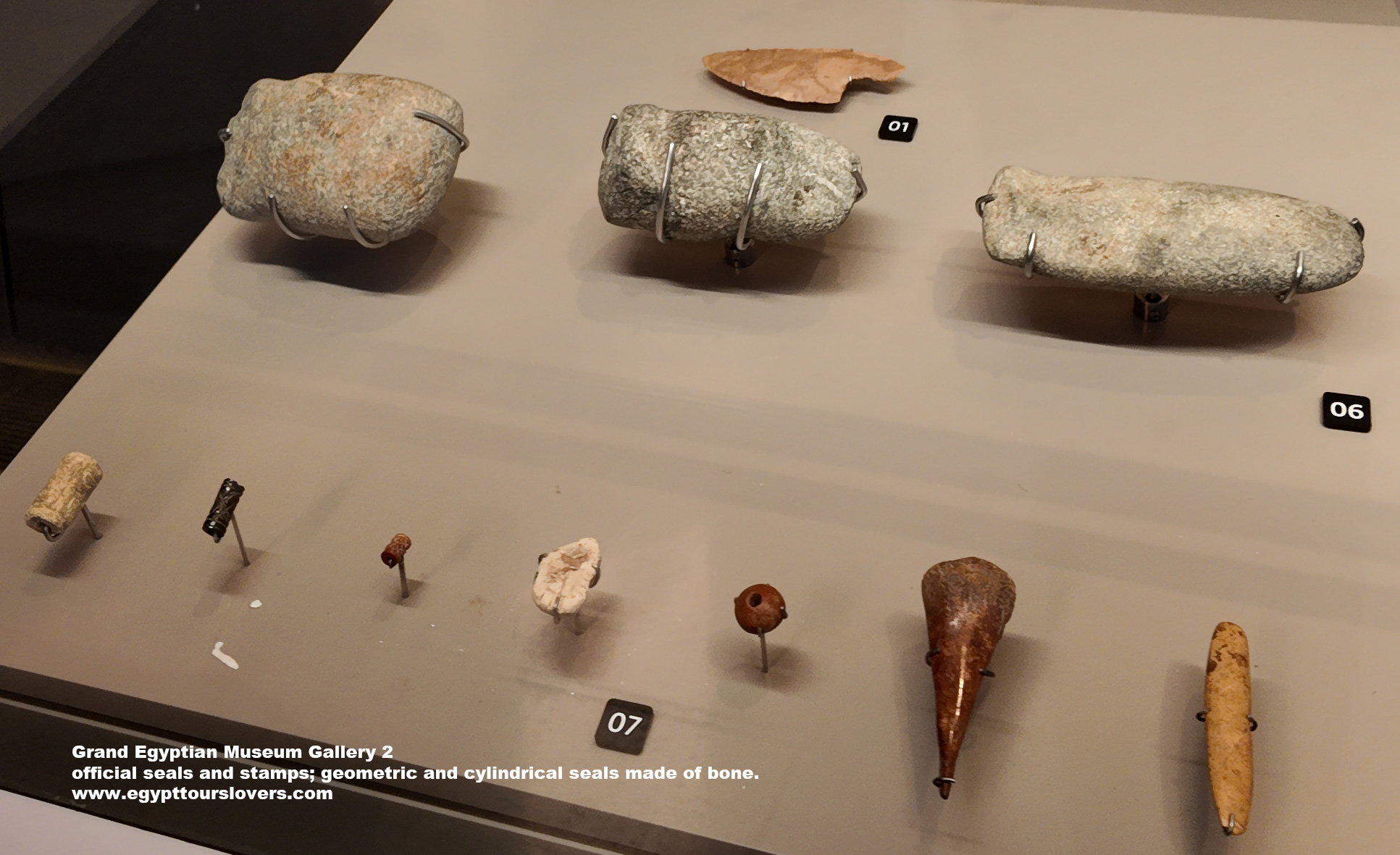
dynasty 4 | limestone, bone | heit el-ghurab
official seals and stamps; geometric and cylindrical seals made of bone.
The seals contain hieroglyphic texts and symbols for official government use.
———– } ———– } ———– } ———– }
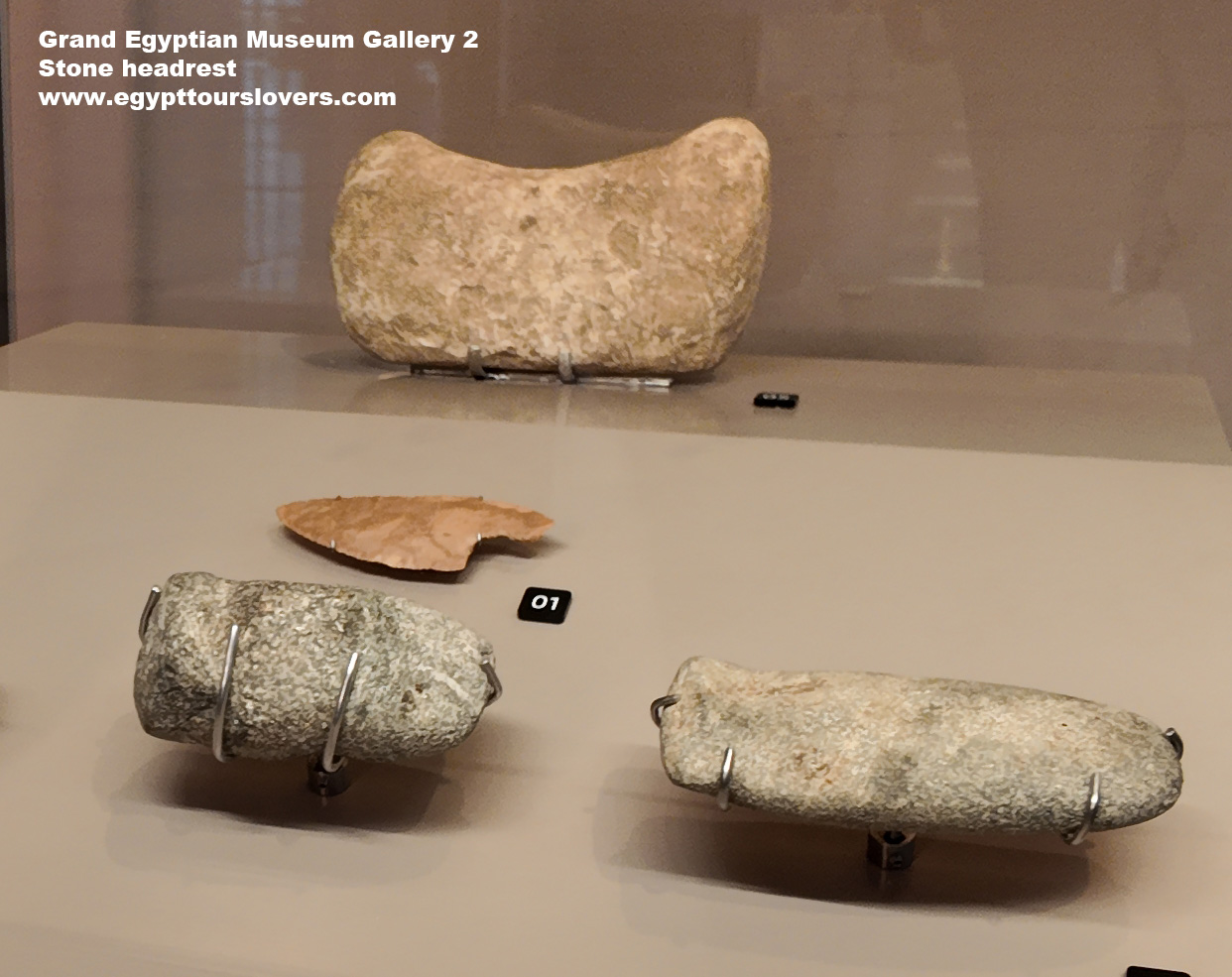
dynasty 4 | limestone | heit el-ghurab
Stone headrest
———– } ———– } ———– } ———– }
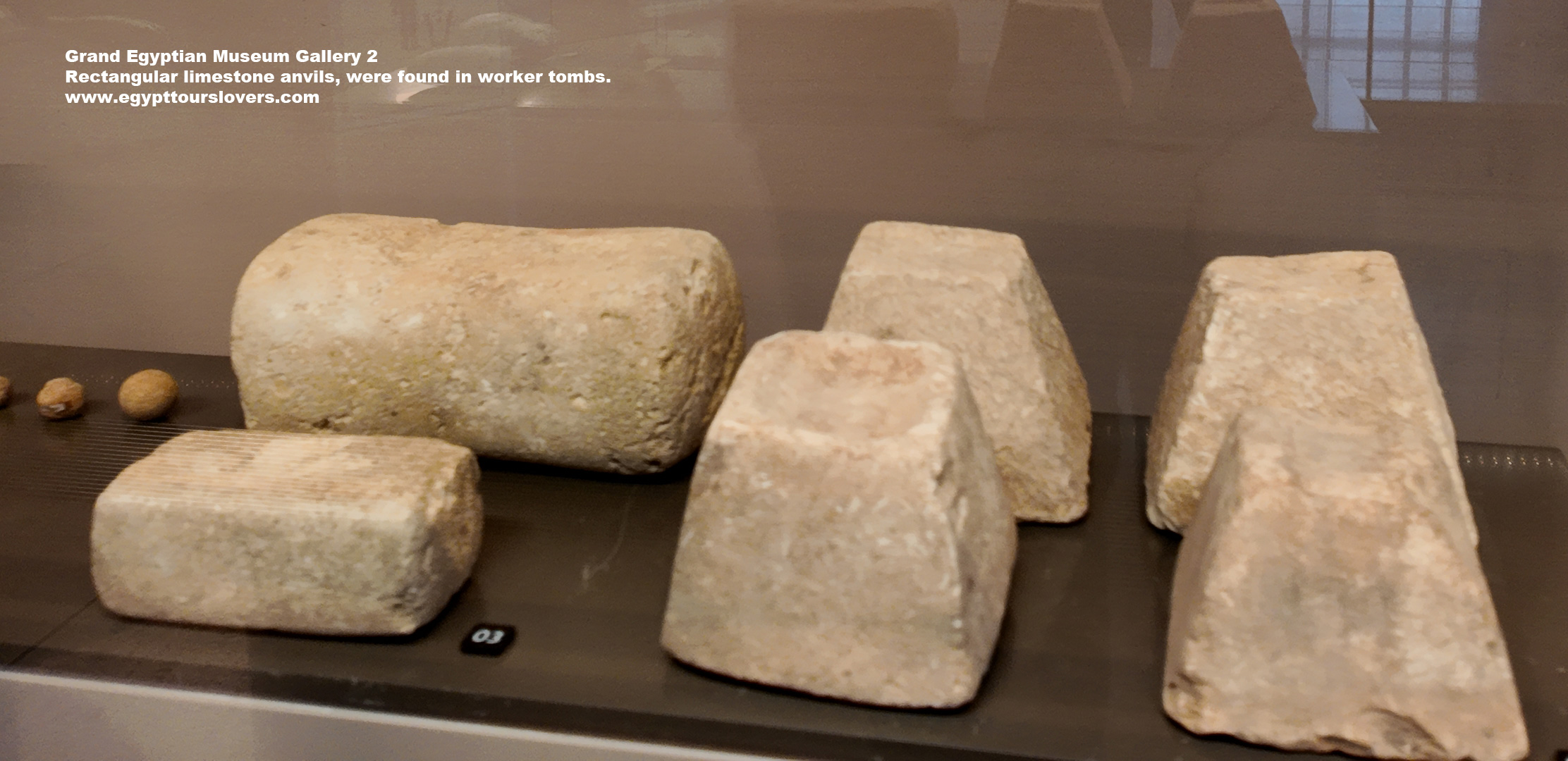
dynasty 4 | limestone | heit el-ghurab
Rectangular limestone anvils, were found in worker tombs.
its worn surfaces bear characteristic striations and oval depressions from repeated use in stone tool production and metal working.
The brick-like form with flattened working surfaces matches depictions of craft activities in the tomb, suggesting specialized workshop areas.
———– } ———– } ———– } ———– }
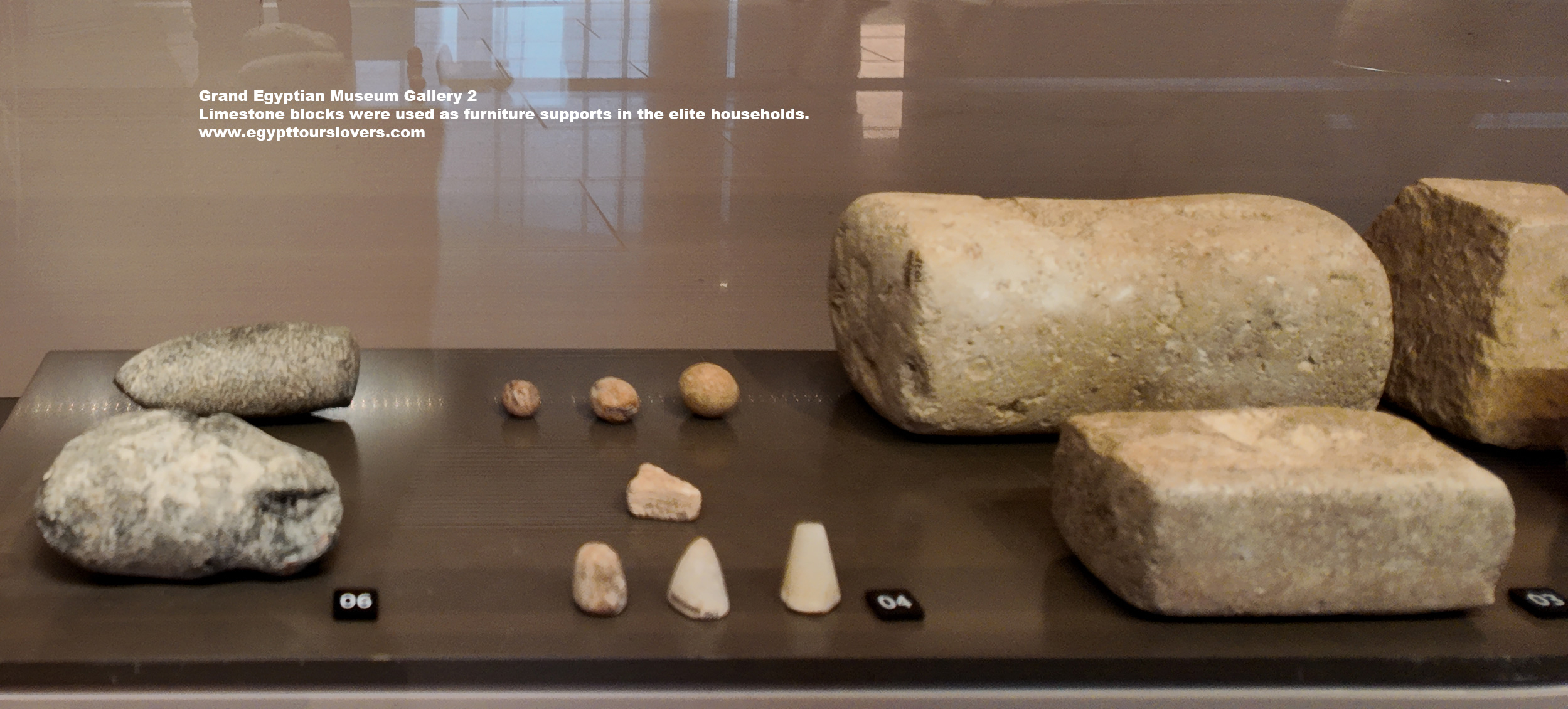
dynasty 4 | limestone | heit el-ghurab
Limestone blocks were used as furniture supports in the elite households.
Placed under the legs of chairs and beds, the elevated furniture to protect against dampness and pests.
High officials are often depicted in tomb paintings seat on chairs with similar supports…
———– } ———– } ———– } ———– }
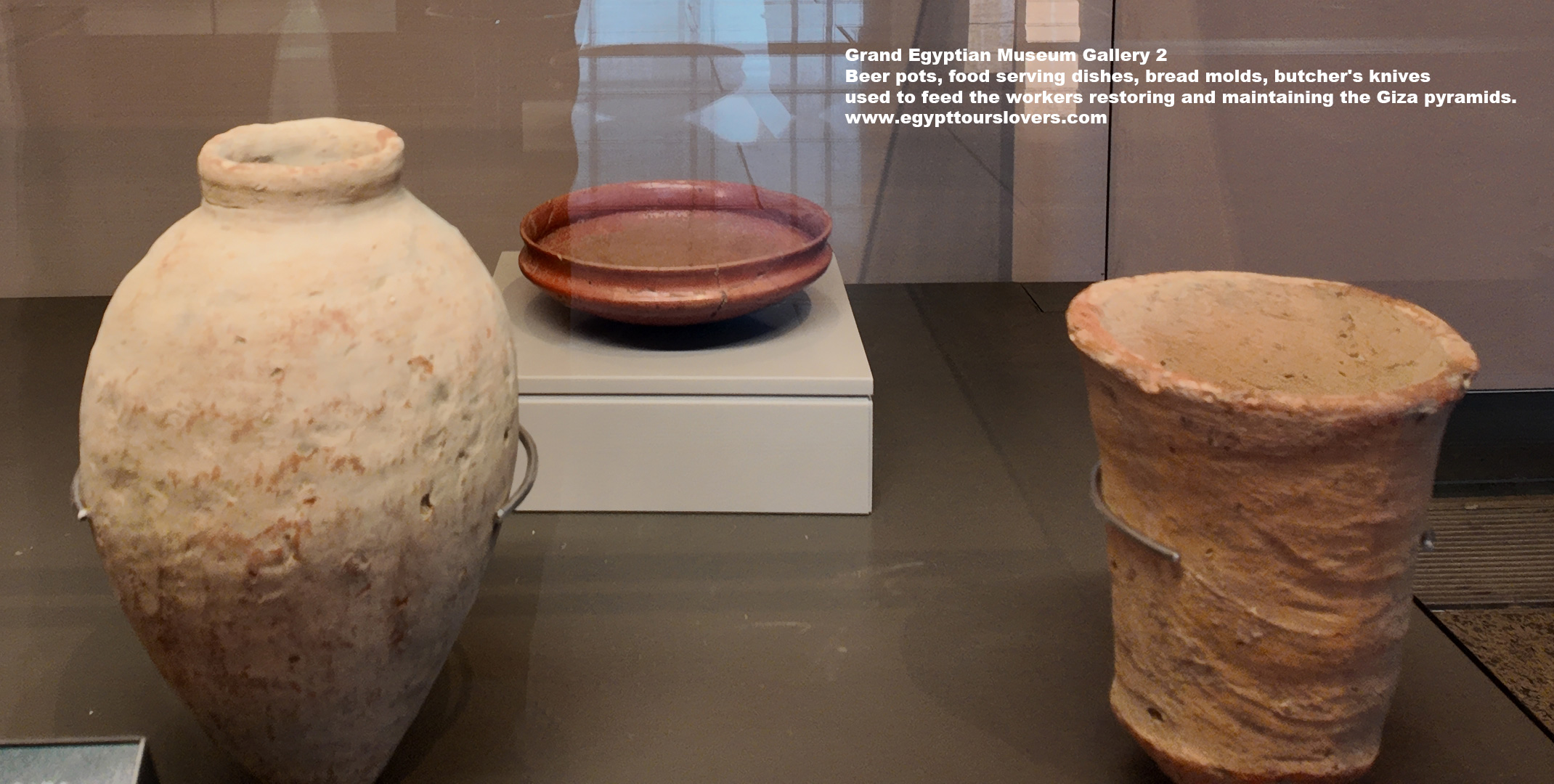
dynasty 4 | flint, pottery | heit el-ghurab
Beer pots, food serving dishes, bread molds, butcher’s knives used to feed the workers restoring and maintaining the Giza pyramids.
———– } ———– } ———– } ———– }
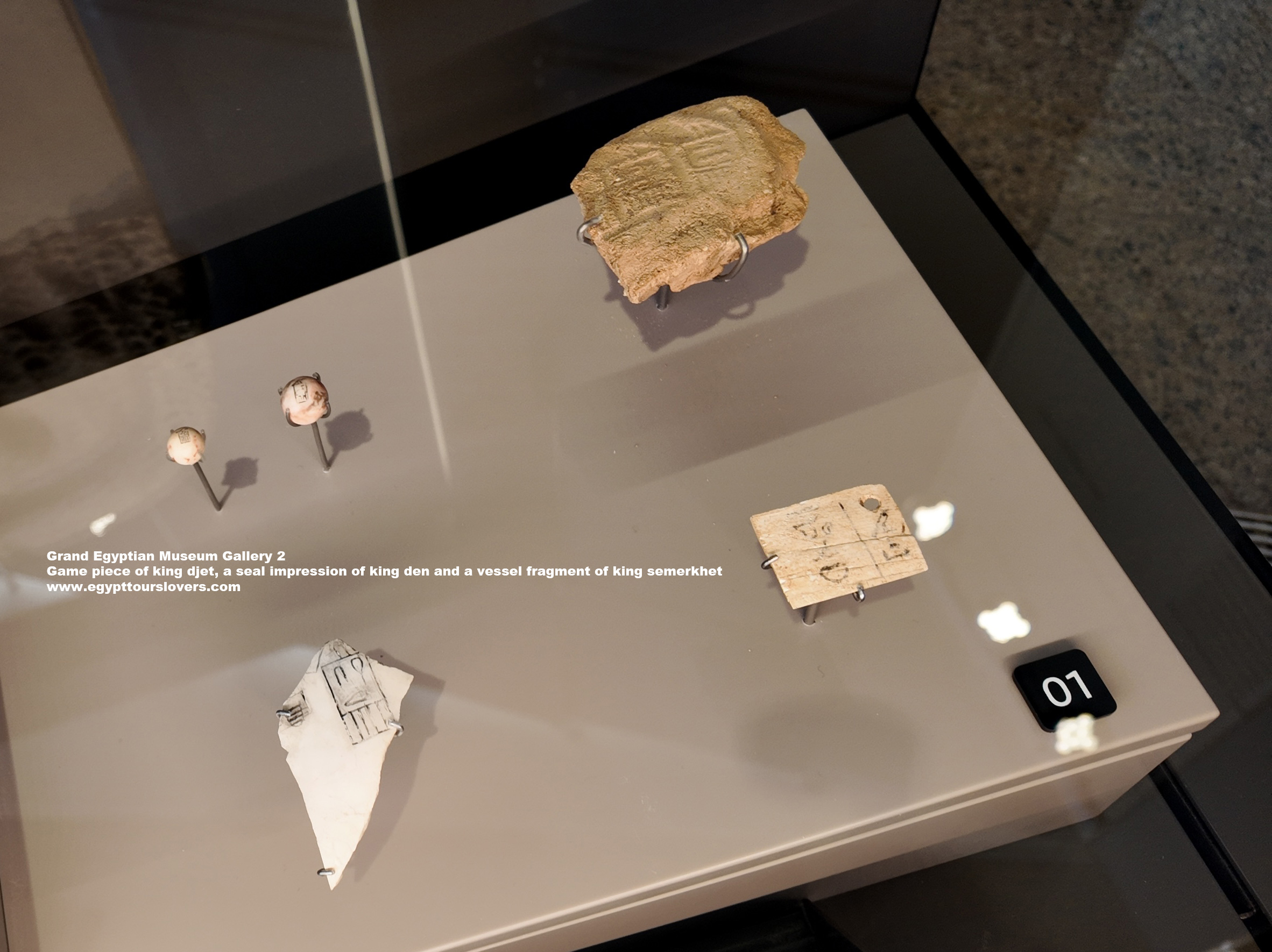
dynasty 1 | limestone, ivory, clay, breccia | Abydos
Game piece of king djet, a seal impression of king den and a vessel fragment of king semerkhet.
Ivory tags labelled fine quality products brought to honour king qaa.
———– } ———– } ———– } ———– }
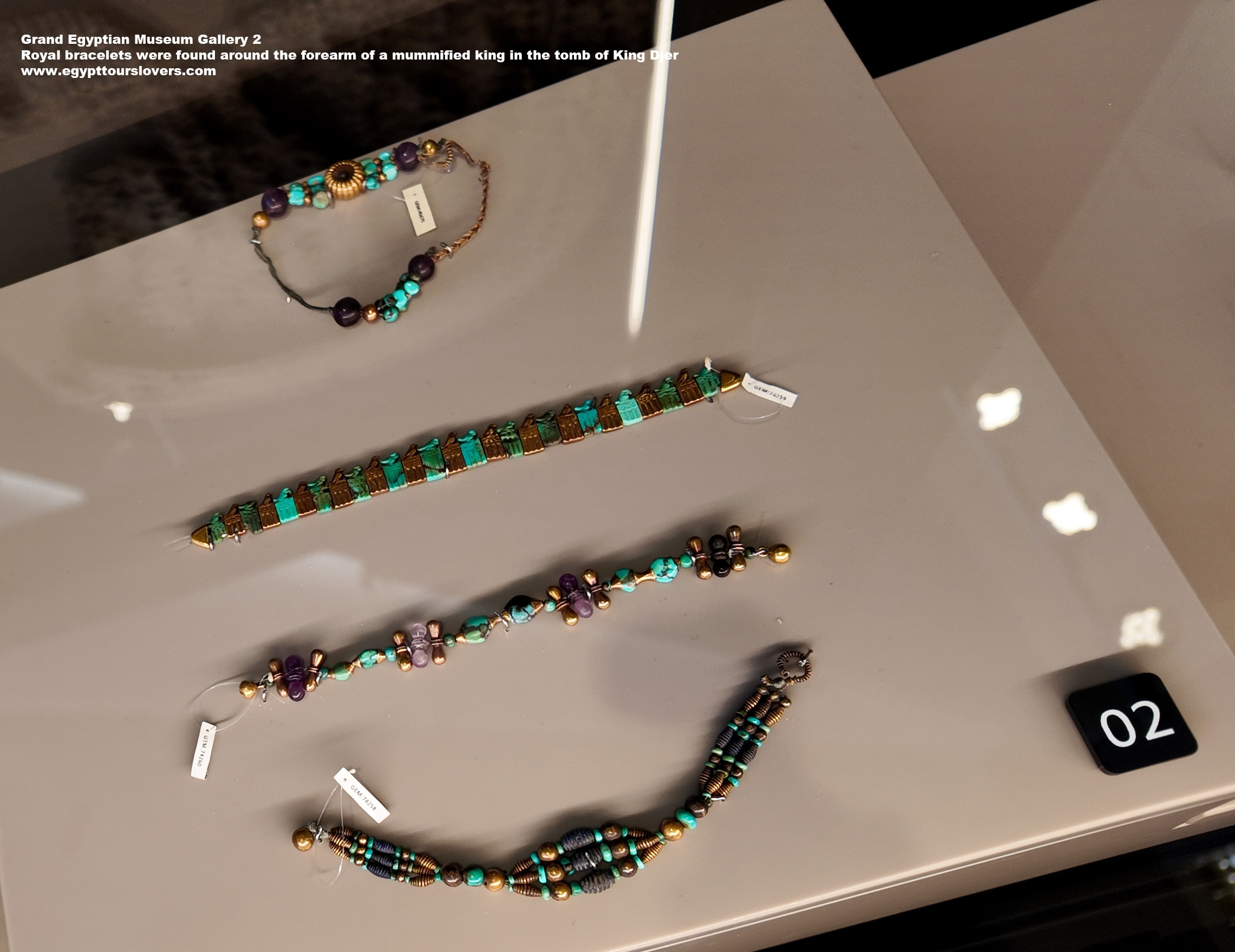
dynasty 1 | gold, Turquoise, lapis lazuli, amethyst | Abydos
Royal bracelets were found around the forearm of a mummified king in the tomb of King Djer, “hidden within a wall.”
The design is very elaborate, featuring a collection of gold beads and bracelets made of gold, turquoise, and precious stones.
———– } ———– } ———– } ———– }
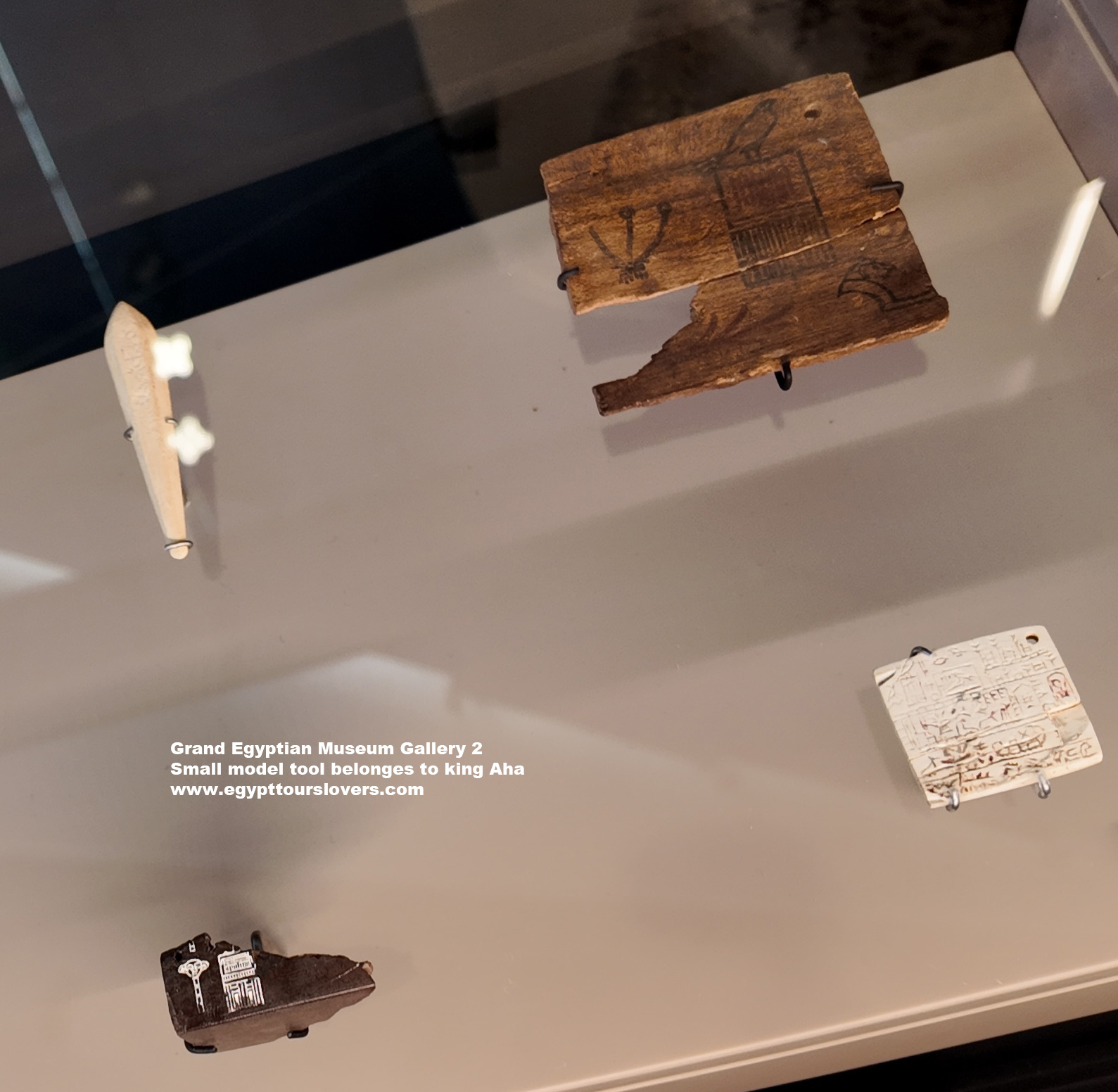
dynasty 1 | ivory, wood, Egyptian alabaster | Abydos, Saqqara
Small model tool belonges to king Aha and box fragment and ivory label were name for king djer.
Wooden label for king djer found in Saqqara “djer’s finest oil”.
———– } ———– } ———– } ———– }
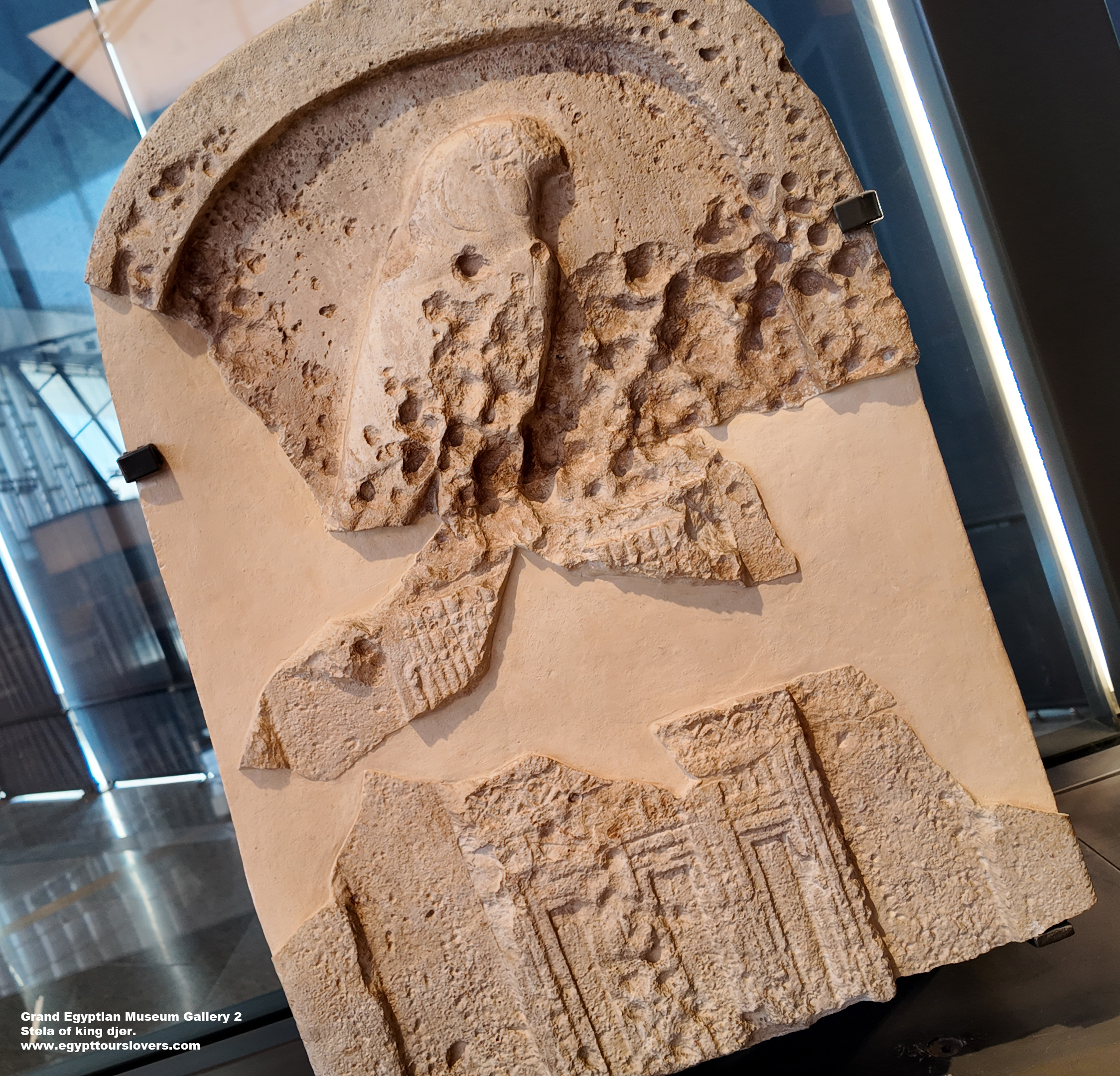
dynasty 1 | limestone | Abydos
Stela of king djer.
Horus the flacon god of the kingship, is perched on a rectangular serekh containing king djer horus name.
This oldest way of writing royal names and it linked the king to the god power on earth.
Royal tombs at Abydos were marked with matching pairs of named stelae…
———– } ———– } ———– } ———– }
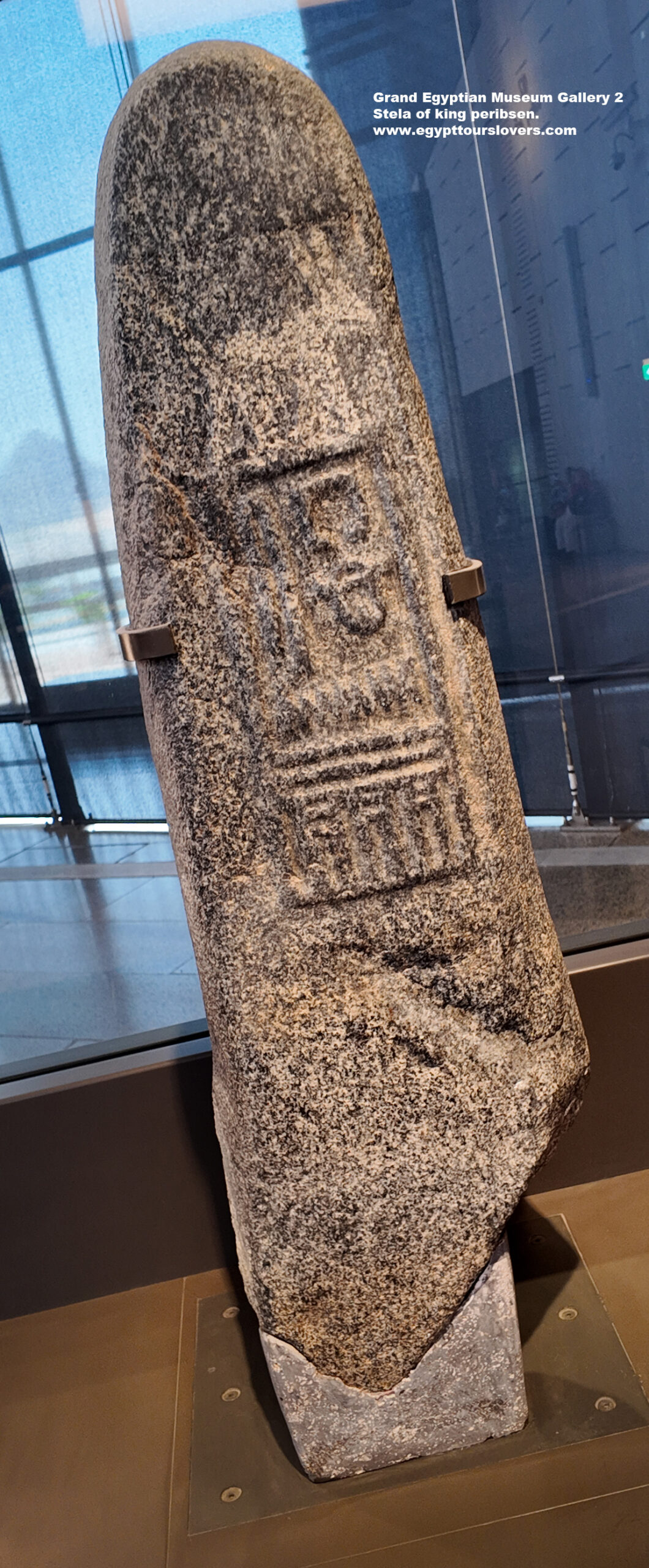
dynasty 2 | granite | Abydos
Stela of king peribsen.
The funerary stela depicts the god Set.
There was religious and political unrest at the end of the Second Dynasty, due to the replacement of Horus as the dominant deity and the rise of Set as the chief god….
———– } ———– } ———– } ———– }
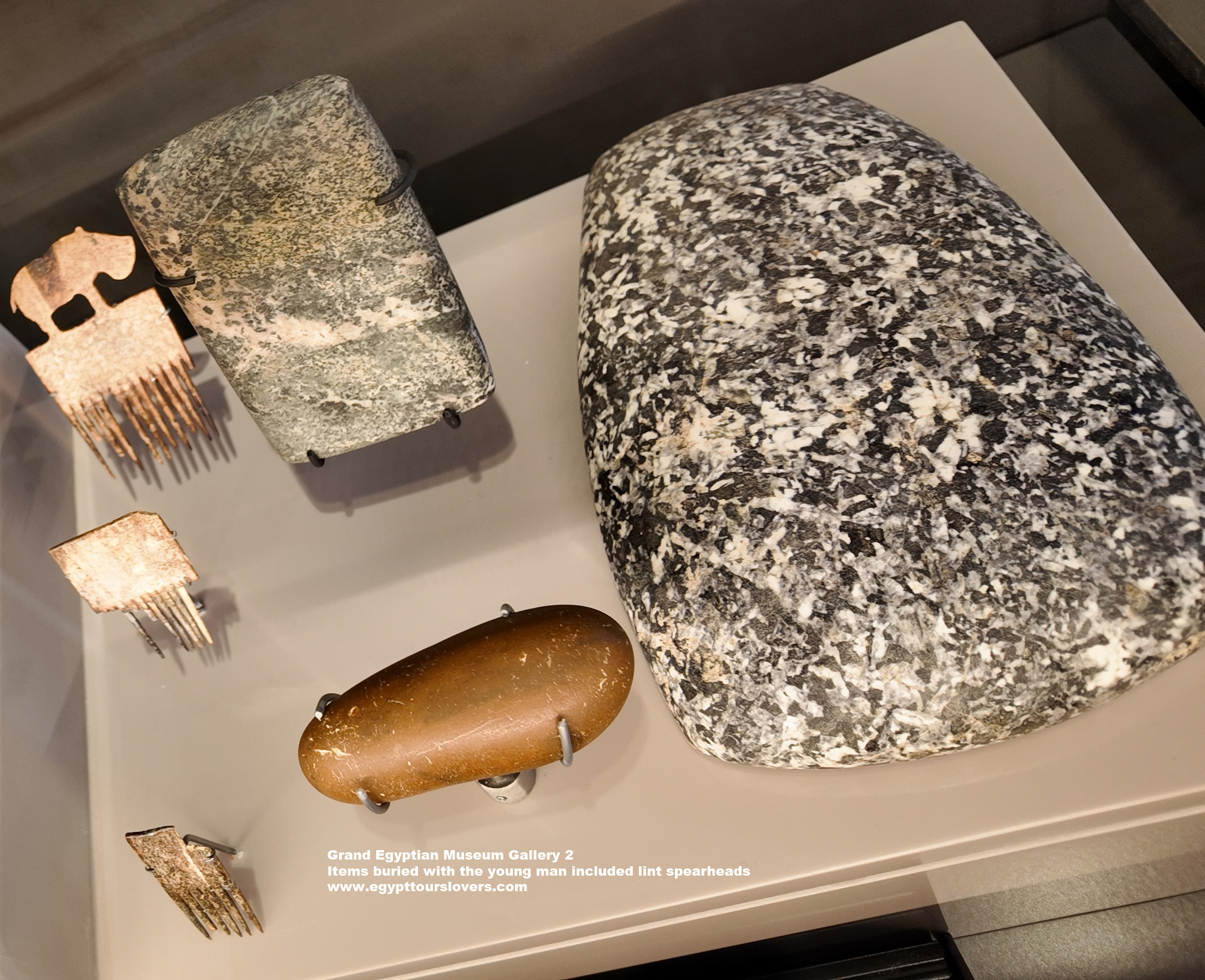
Naqada ii period | Ivory, flint, dioritet | Hierakonpolis
Items buried with the young man included lint spearheads, arrowheads and blades ivory combs, hippopotamus-tusk containers, palettes and rubbing stones found with traces of yellow, green and red pigments.
———– } ———– } ———– } ———– }
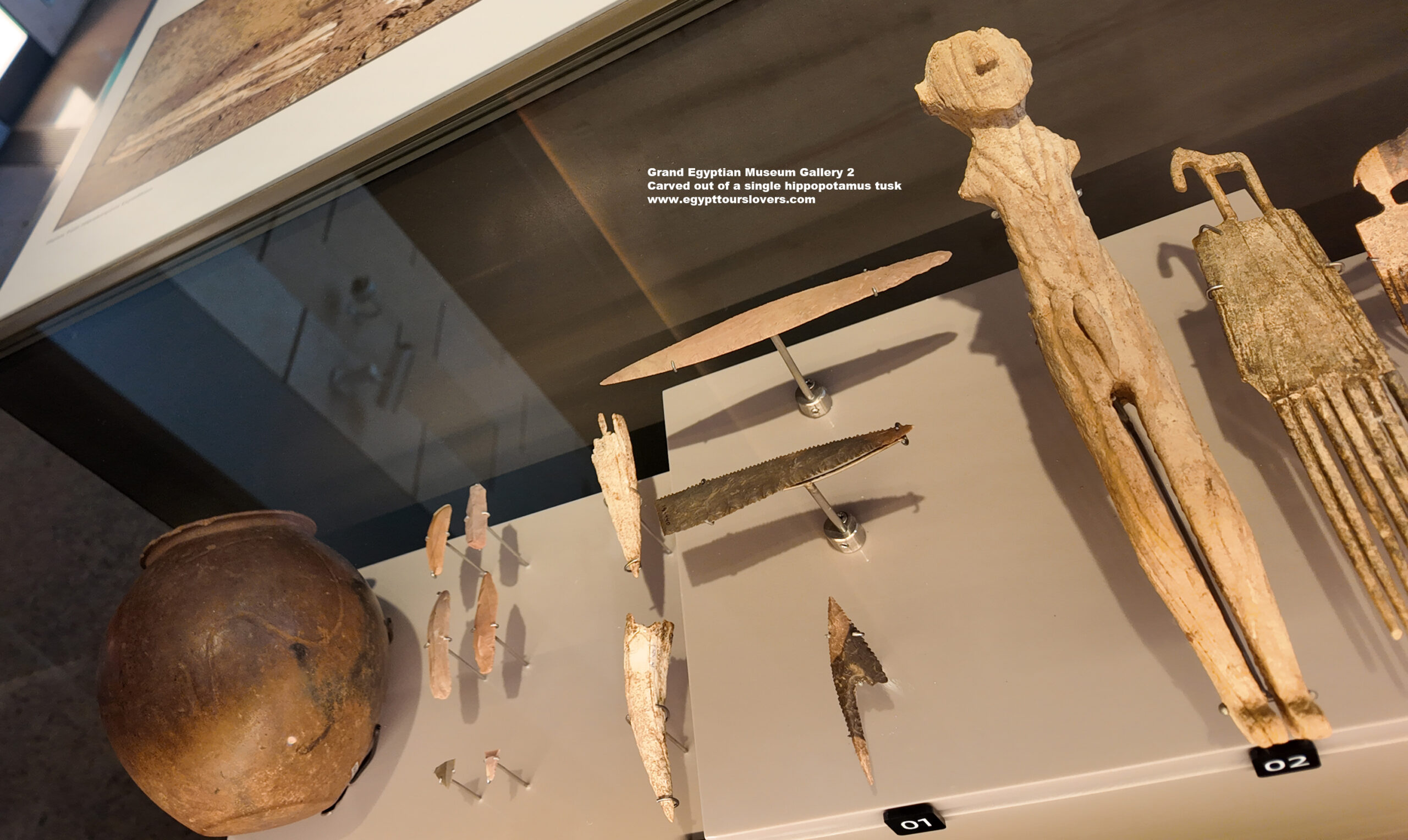
Naqada ii period | Ivory, flint | Hierakonpolis
Carved out of a single hippopotamus tusk, this naked figure of a standing man with a short pointe beard and penis sheath may have represented a local ruler or an early god worshipped at Hierakonpolis.
———– } ———– } ———– } ———– }
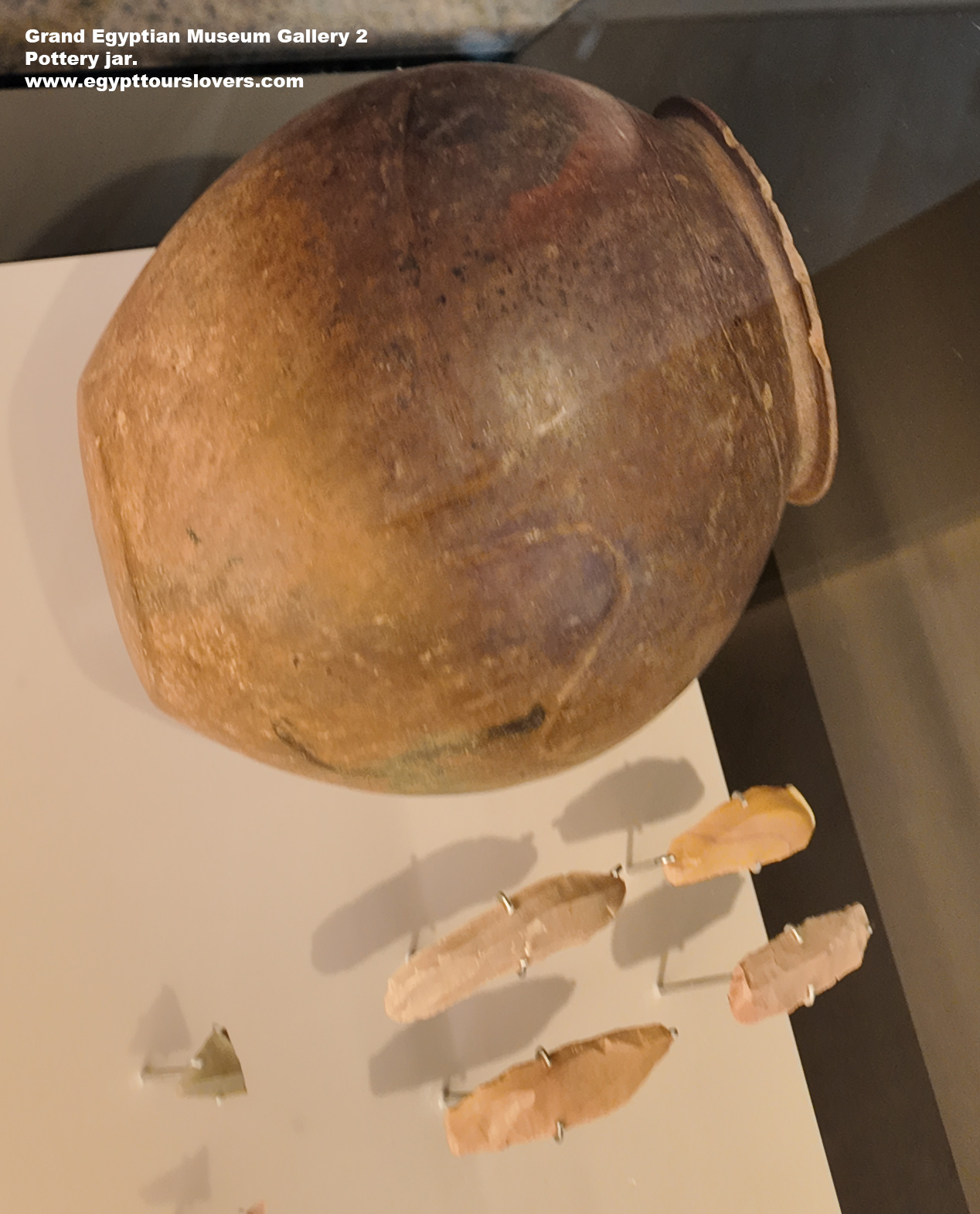
Naqada ii period | pottery | Hierakonpolis
Pottery jar.
An image of a lion was carved into the clay before this fine, brown-polished jar was fired.
Lions were rare in predynastic art, later used as symbols of royal power throughout Egyptian history.
———– } ———– } ———– } ———– }
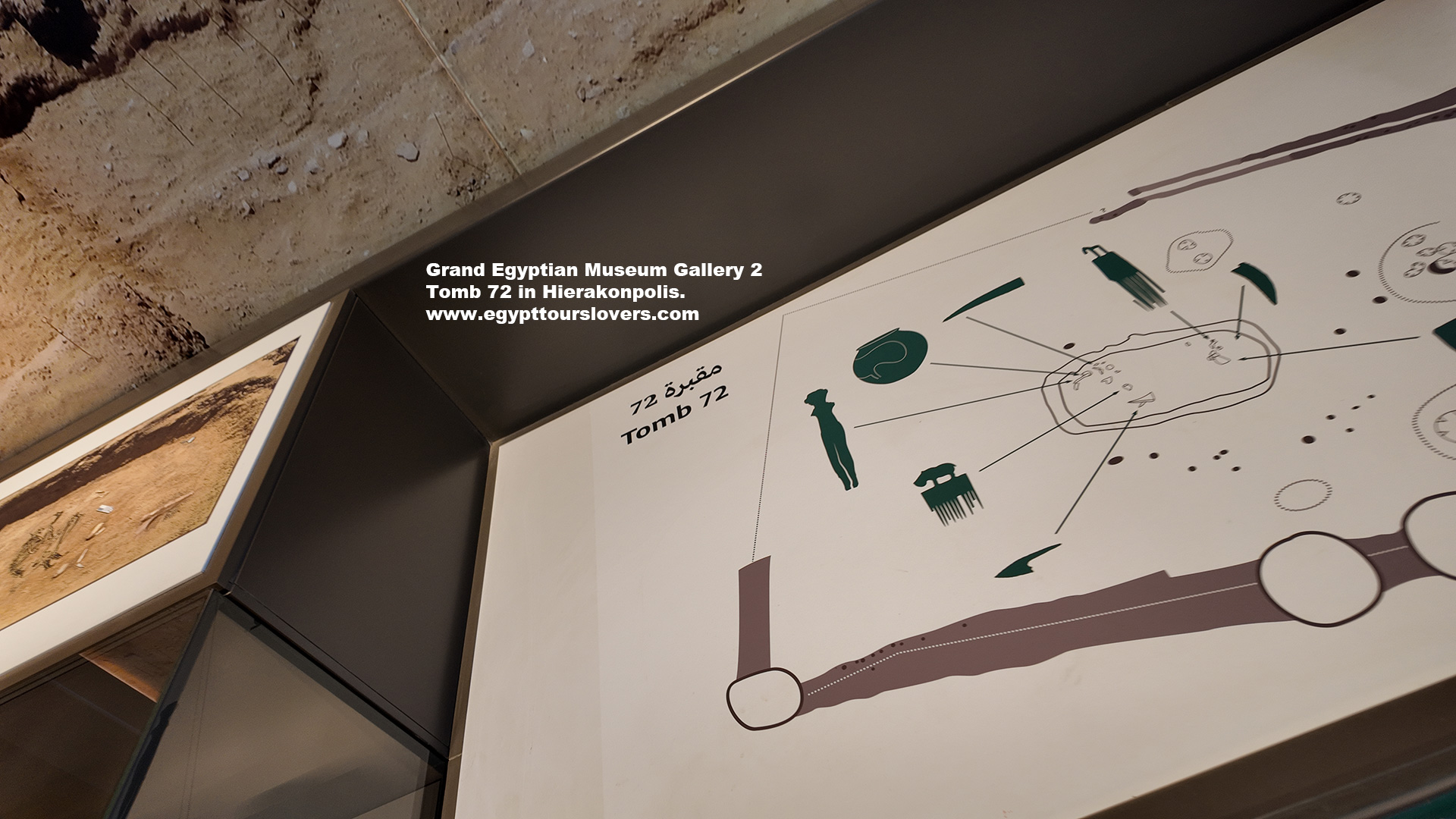
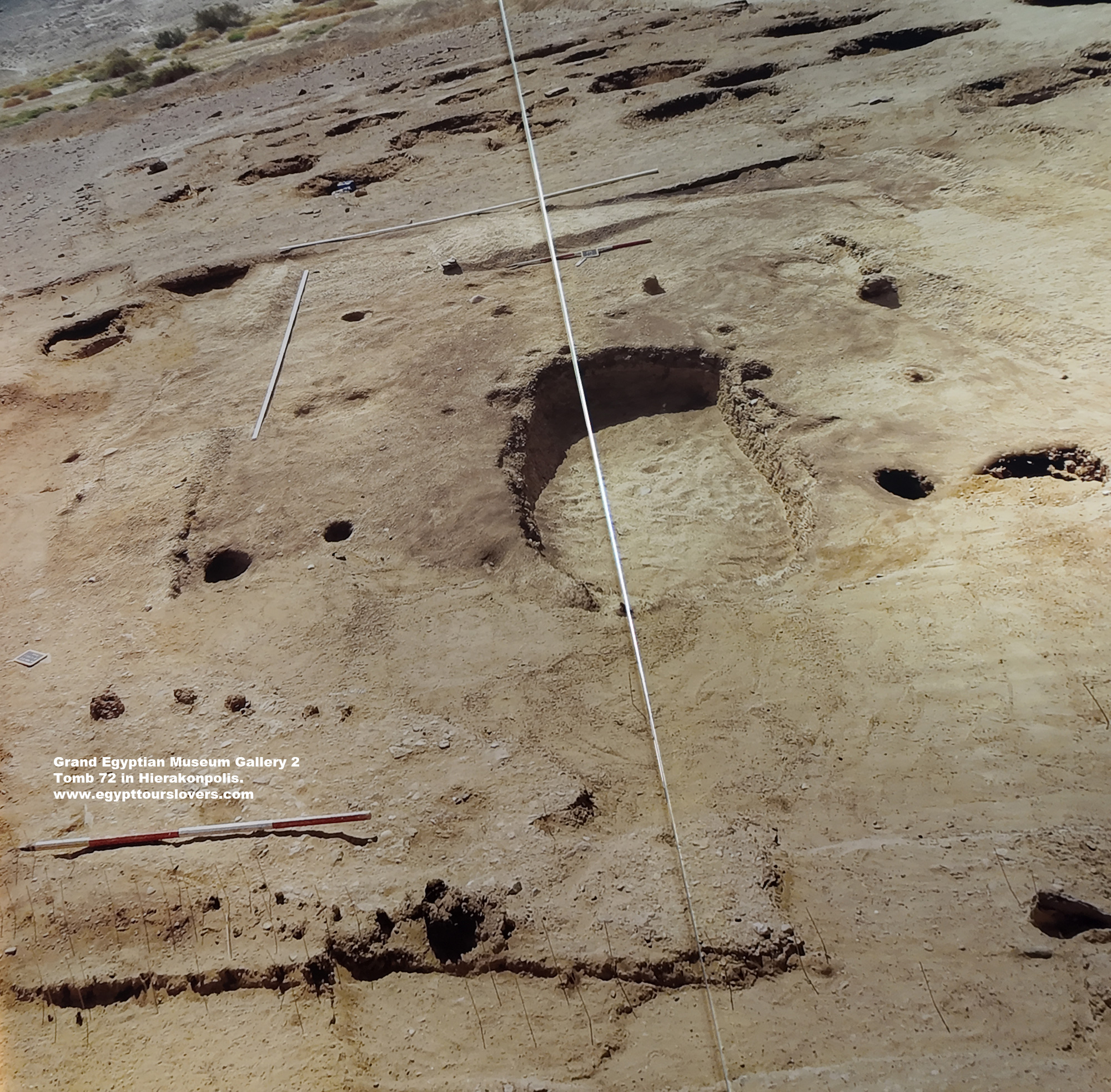
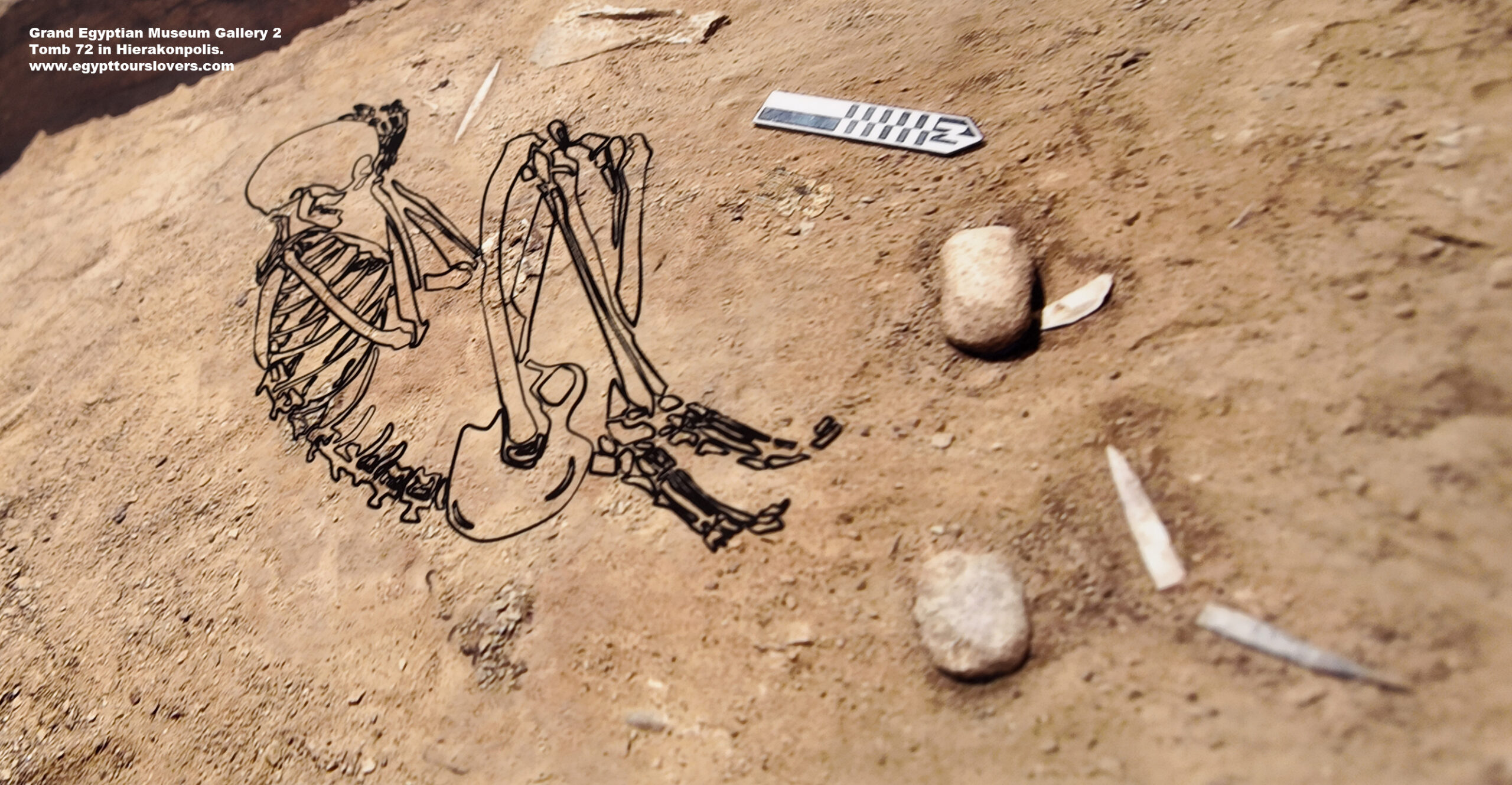
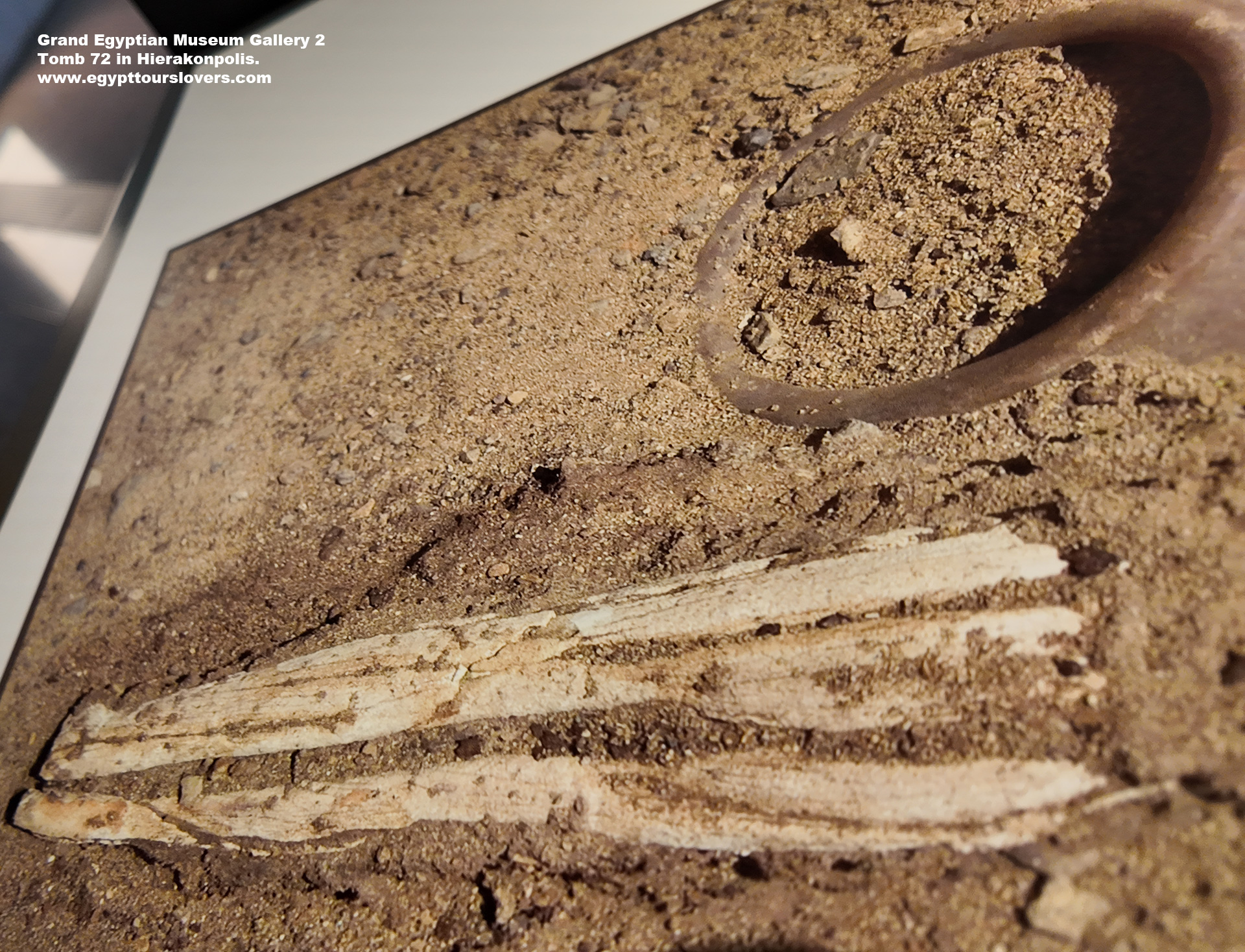
Naqada ii period | Hierakonpolis
Tomb 72 in Hierakonpolis.
This was one of the largest tombs.
It was accompanied by graves of men, women, cattle, dogs, sheep, goats, a leopard and an ostrich.
The young man buried inside tomb was a local ruler.
———– } ———– } ———– } ———– }
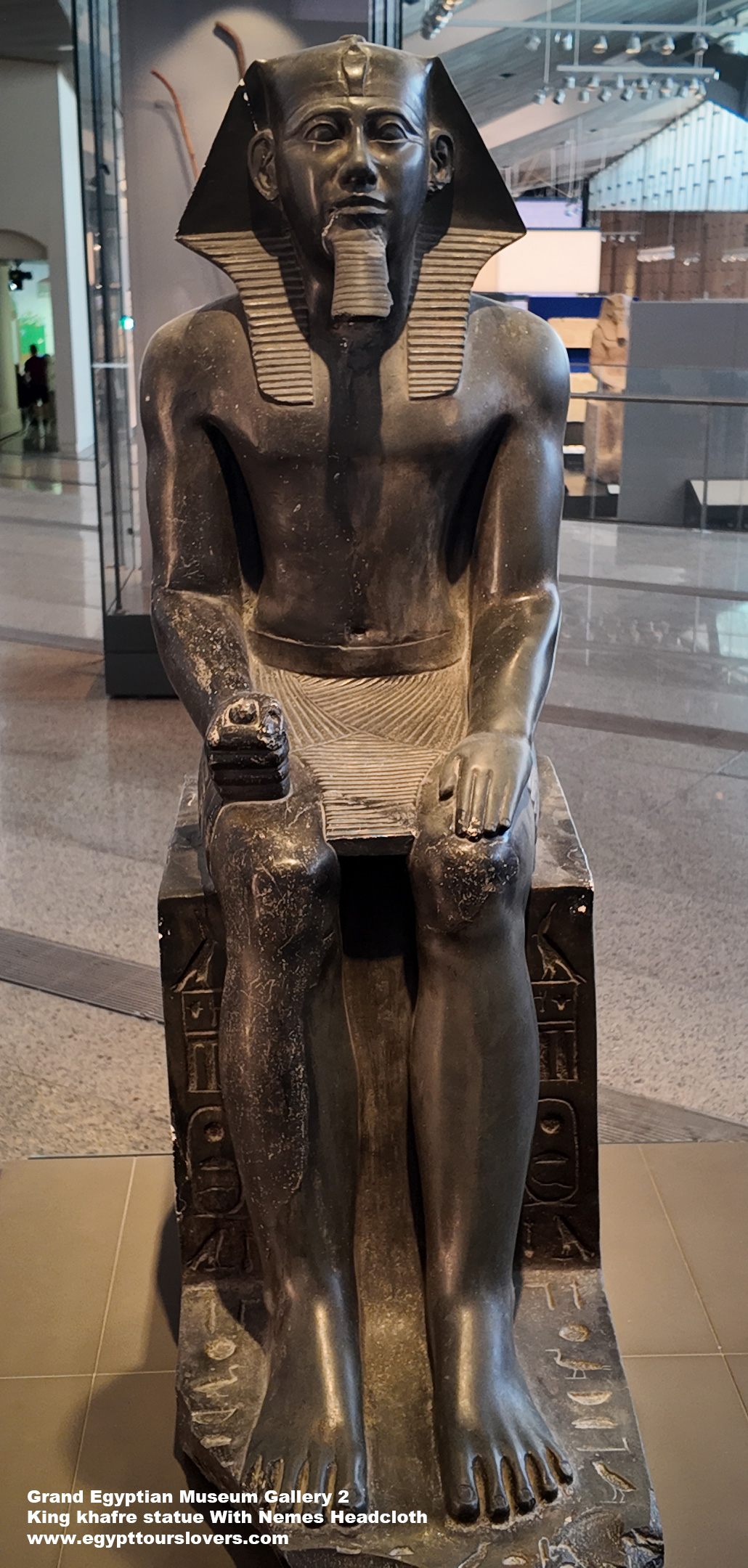
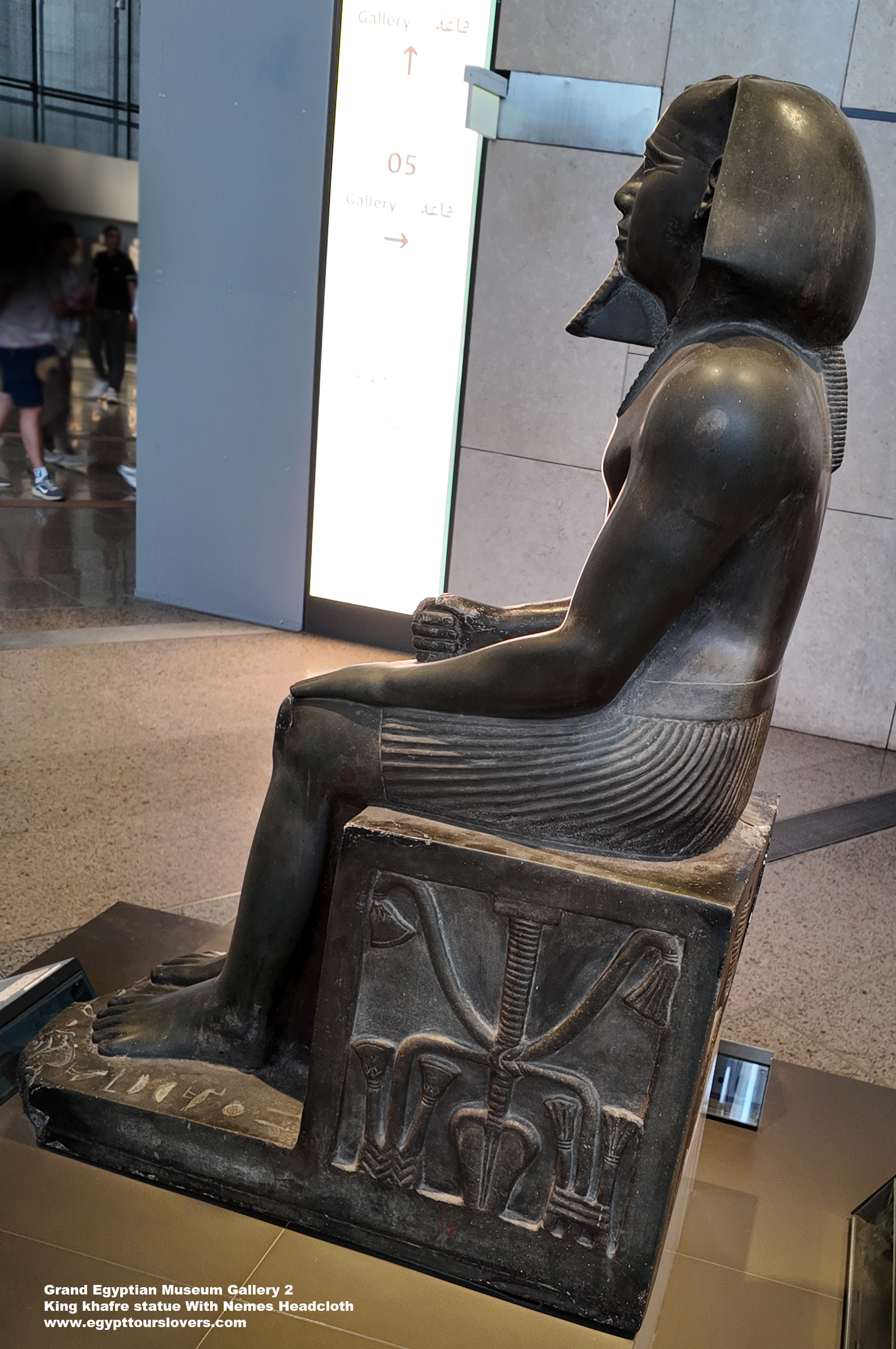
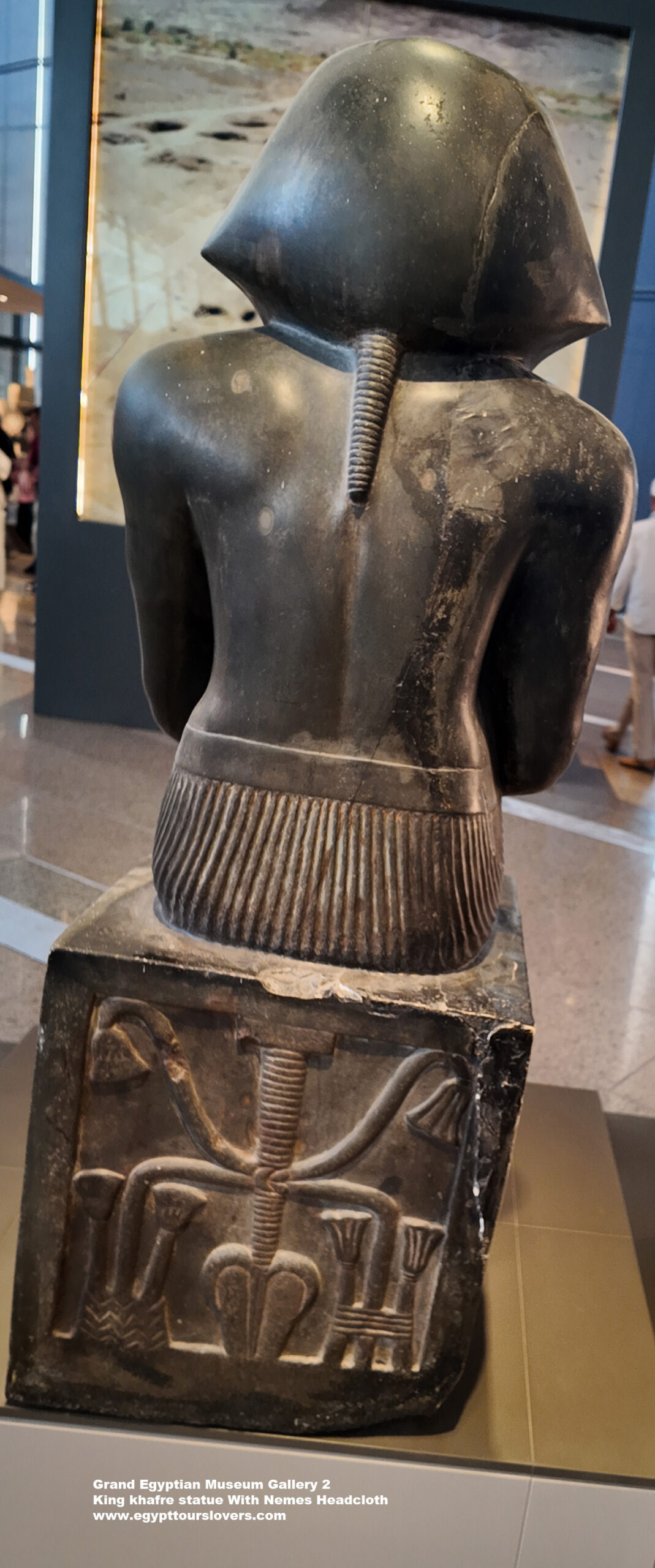
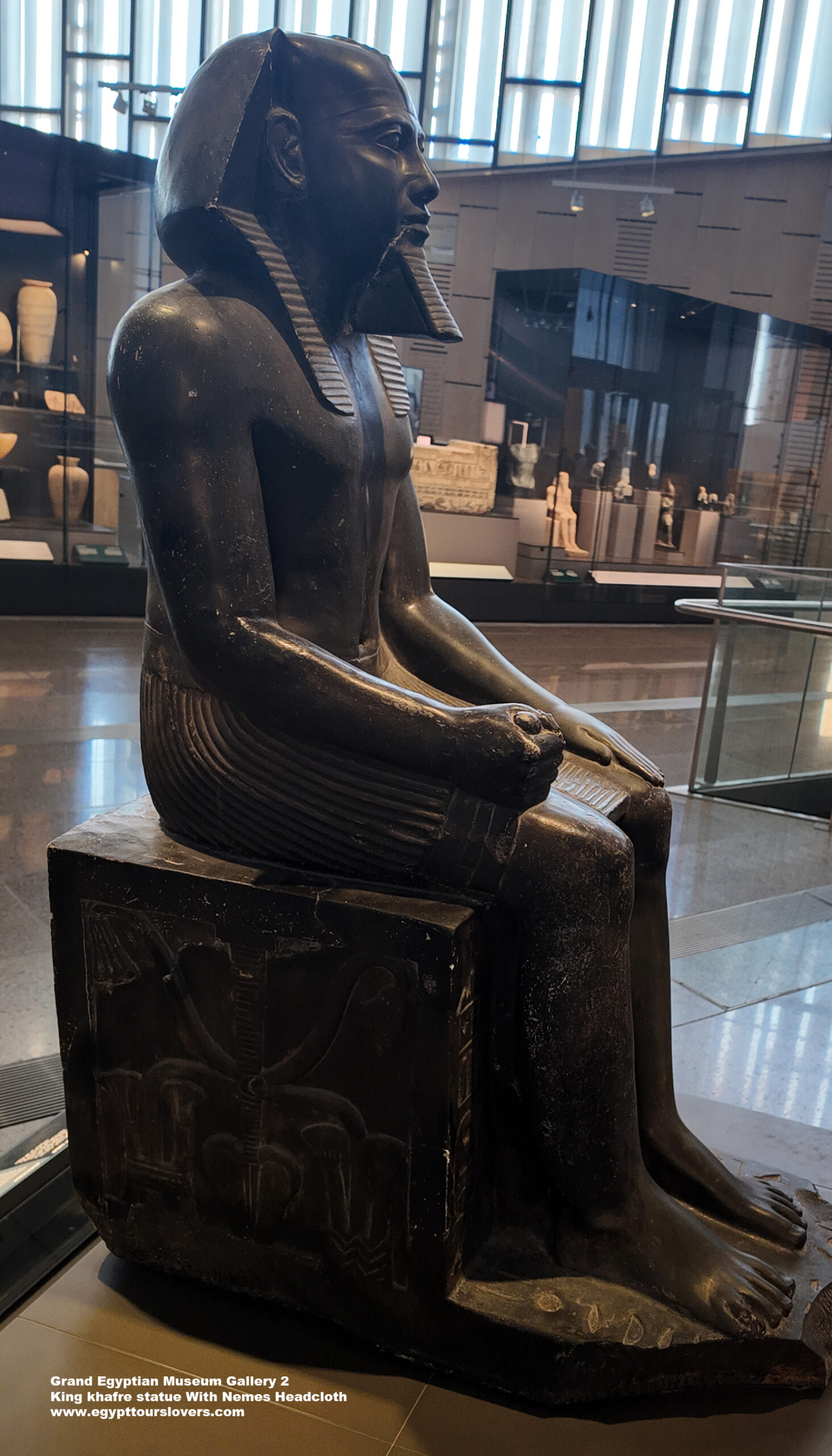
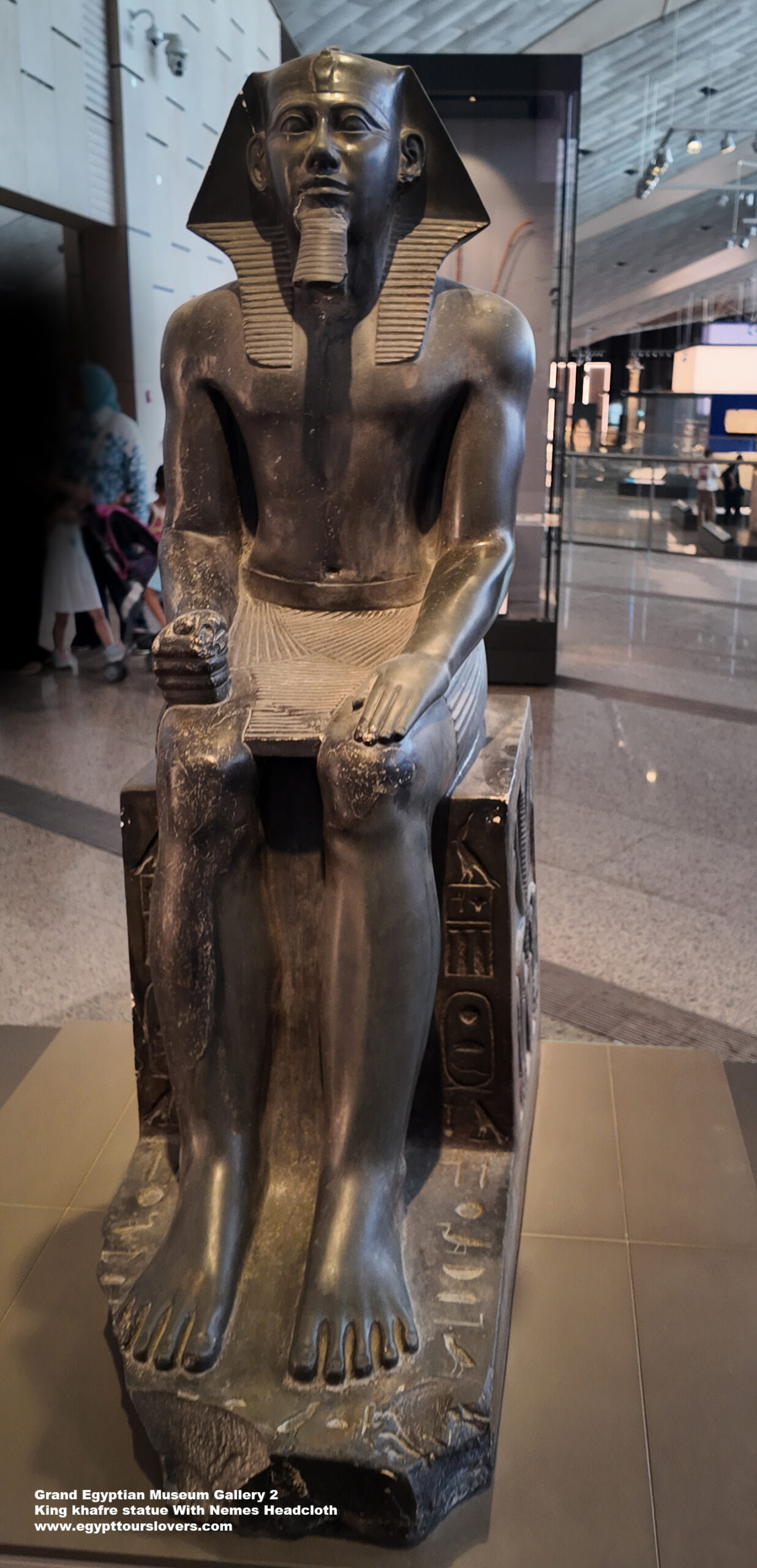
dynasty 4 | Gneiss stone | giza
King khafre statue.
With Nemes Headcloth, ureaus snake, royal beard and pleated kilt, king khafre site on a throne decorated with Louts and Papyrus Flowers tied together to represent upper and lower Egypt.
The inscriptions describe him as: great and perfect god, beautiful falcon, sone or ra, master of apperances.
———– } ———– } ———– } ———– }
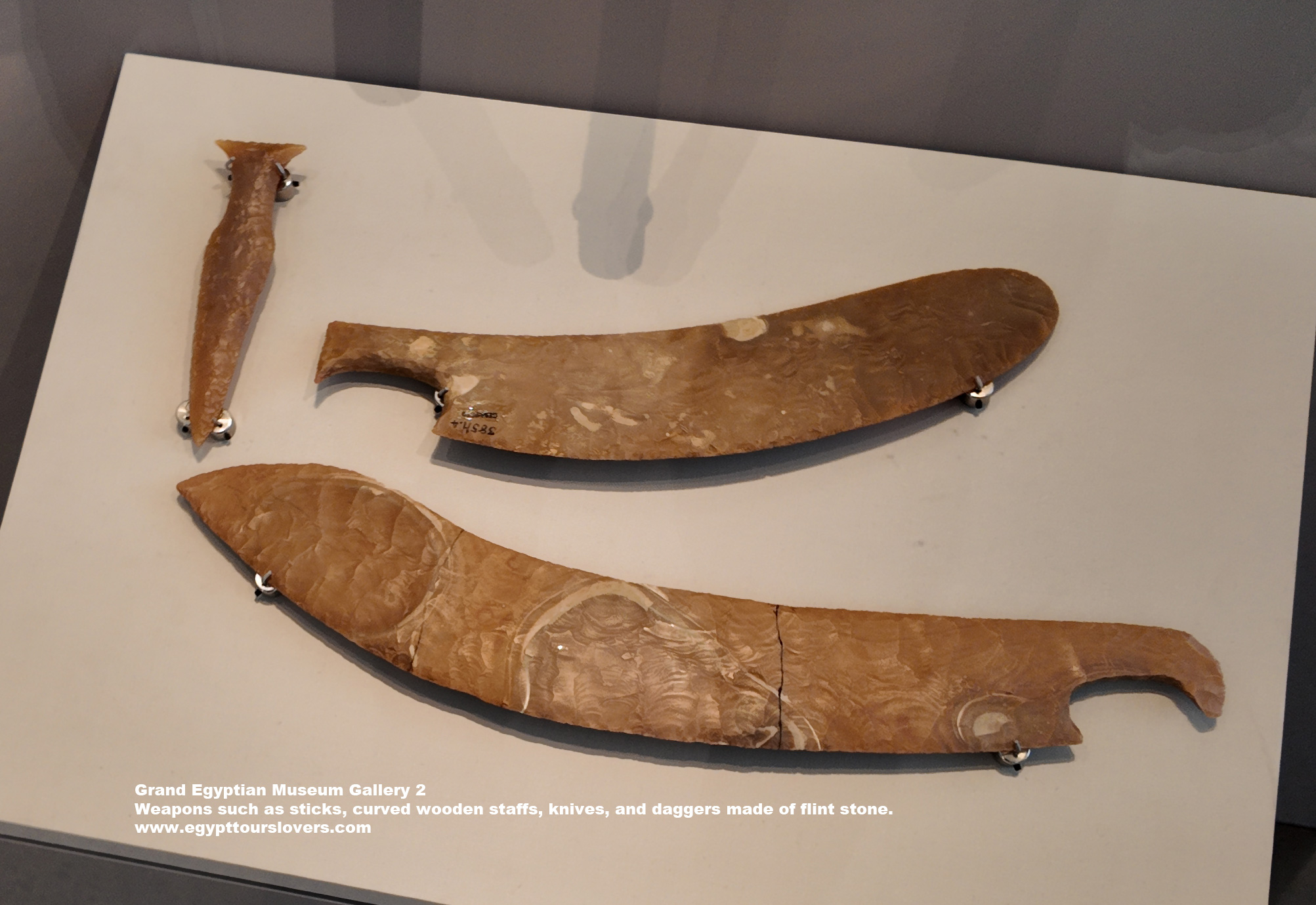
Dynasty 1 + first intermediate period | wood, flint | moalla
Weapons such as sticks, curved wooden staffs, knives, and daggers made of flint stone.
———– } ———– } ———– } ———– }
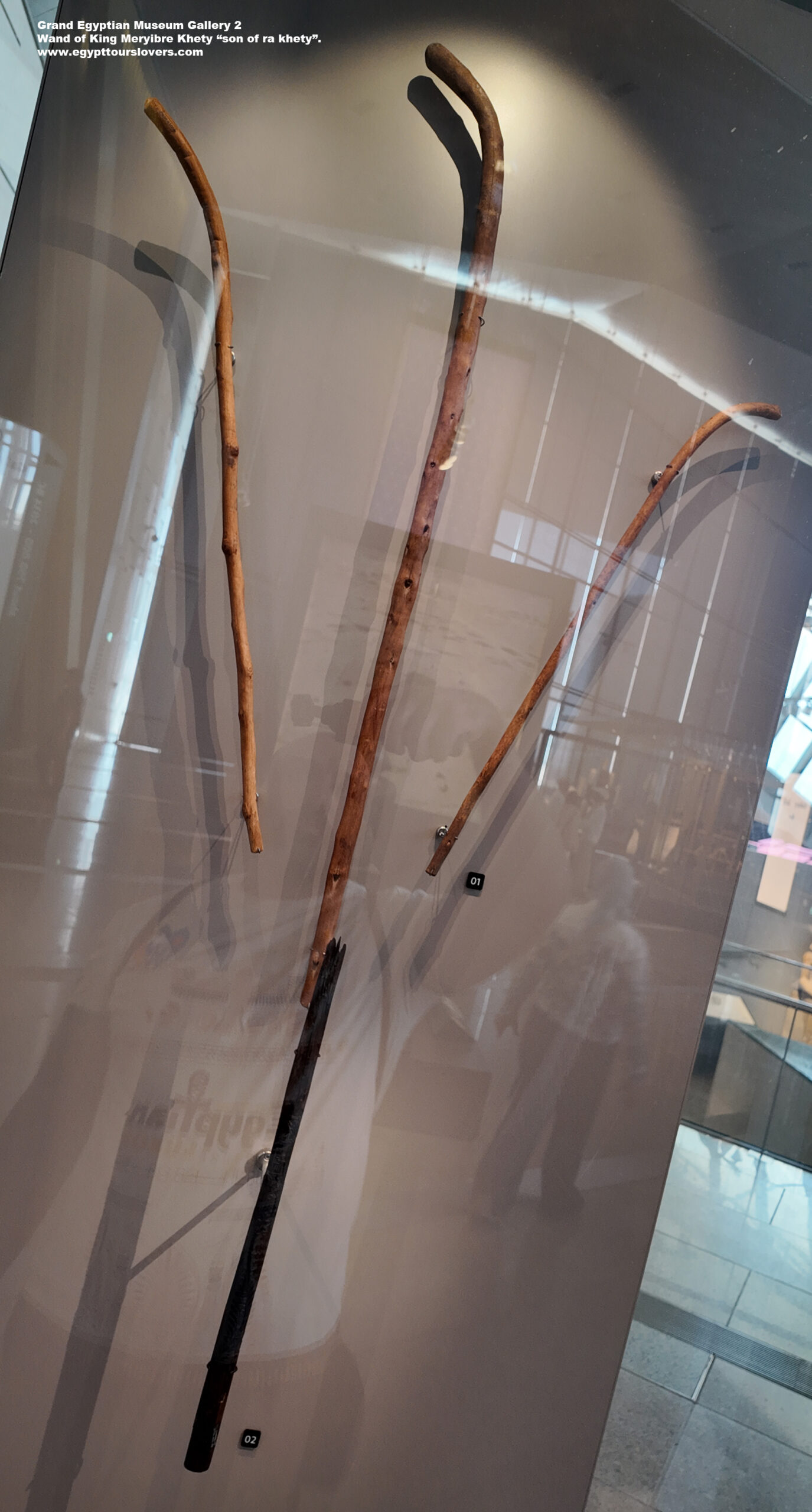
Dynasty 9-10 | wood | meir
Wand of King Meryibre Khety “son of ra khety”.
———– } ———– } ———– } ———– }
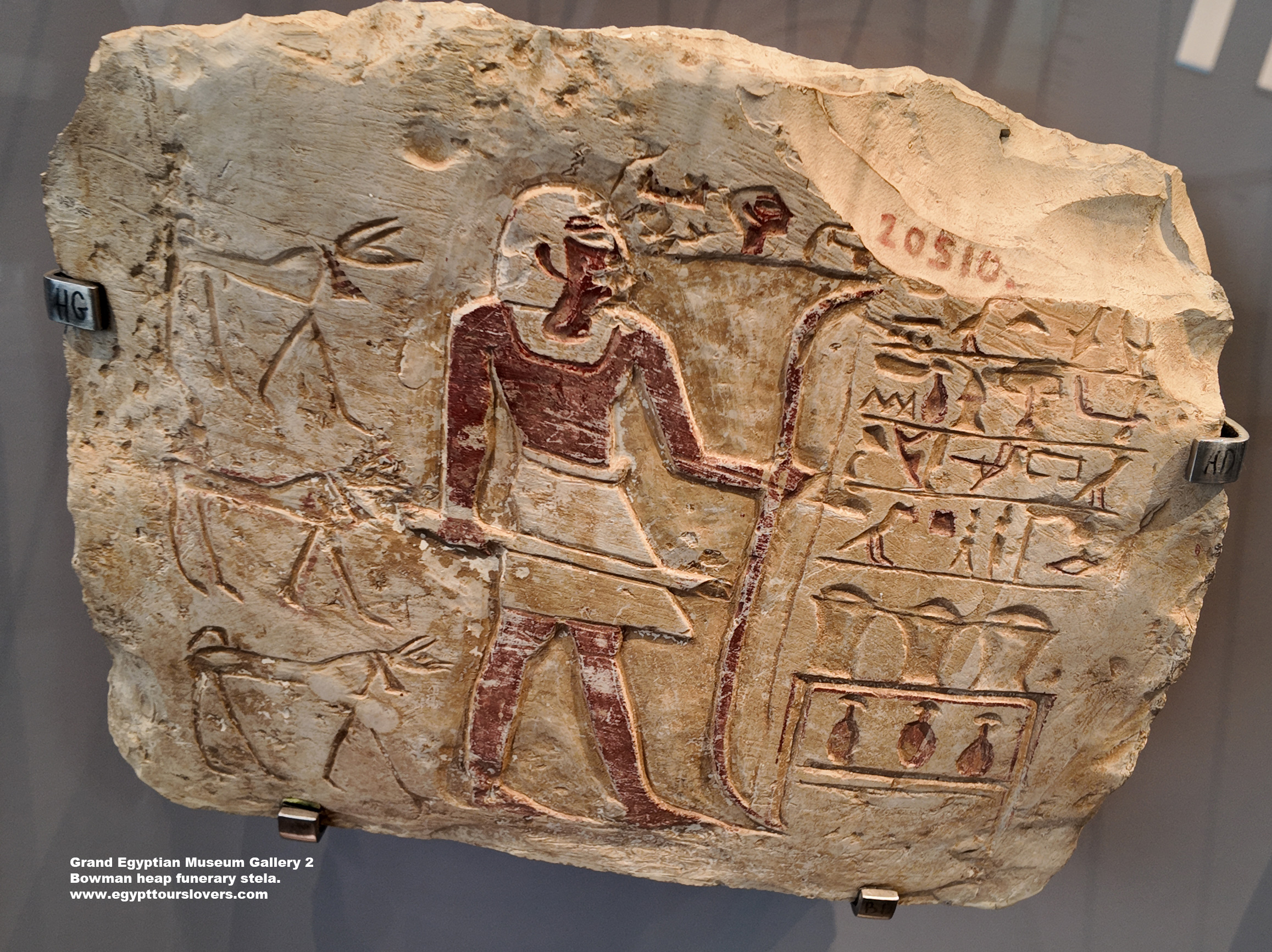
first intermediate period | wood, limestone, pigment
Bowman heap funerary stela.
Bowmen fought with simple bows and stone or metal-tipped wooden arrow.
He also took his dogs with him hunting and to wars.
———– } ———– } ———– } ———– }
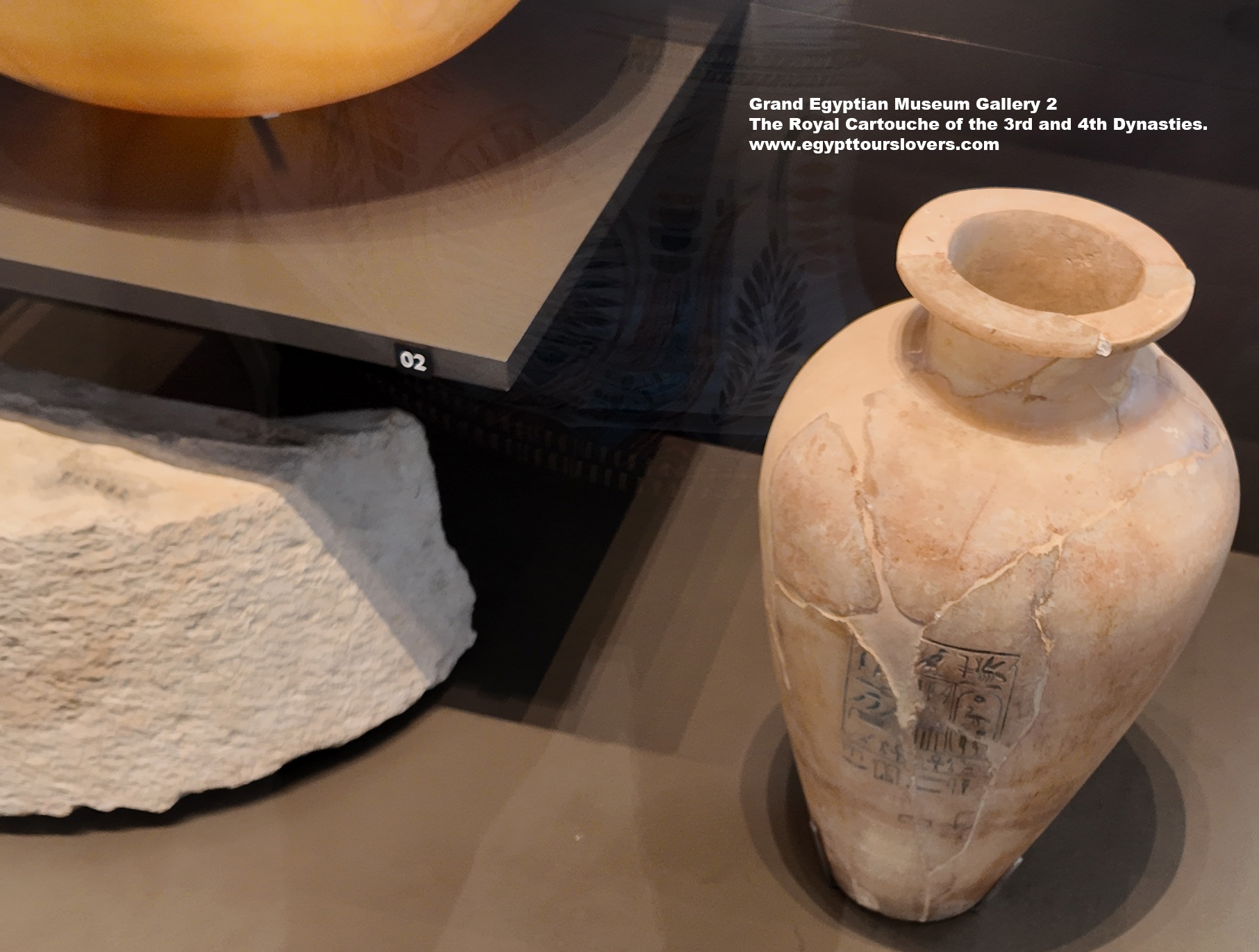
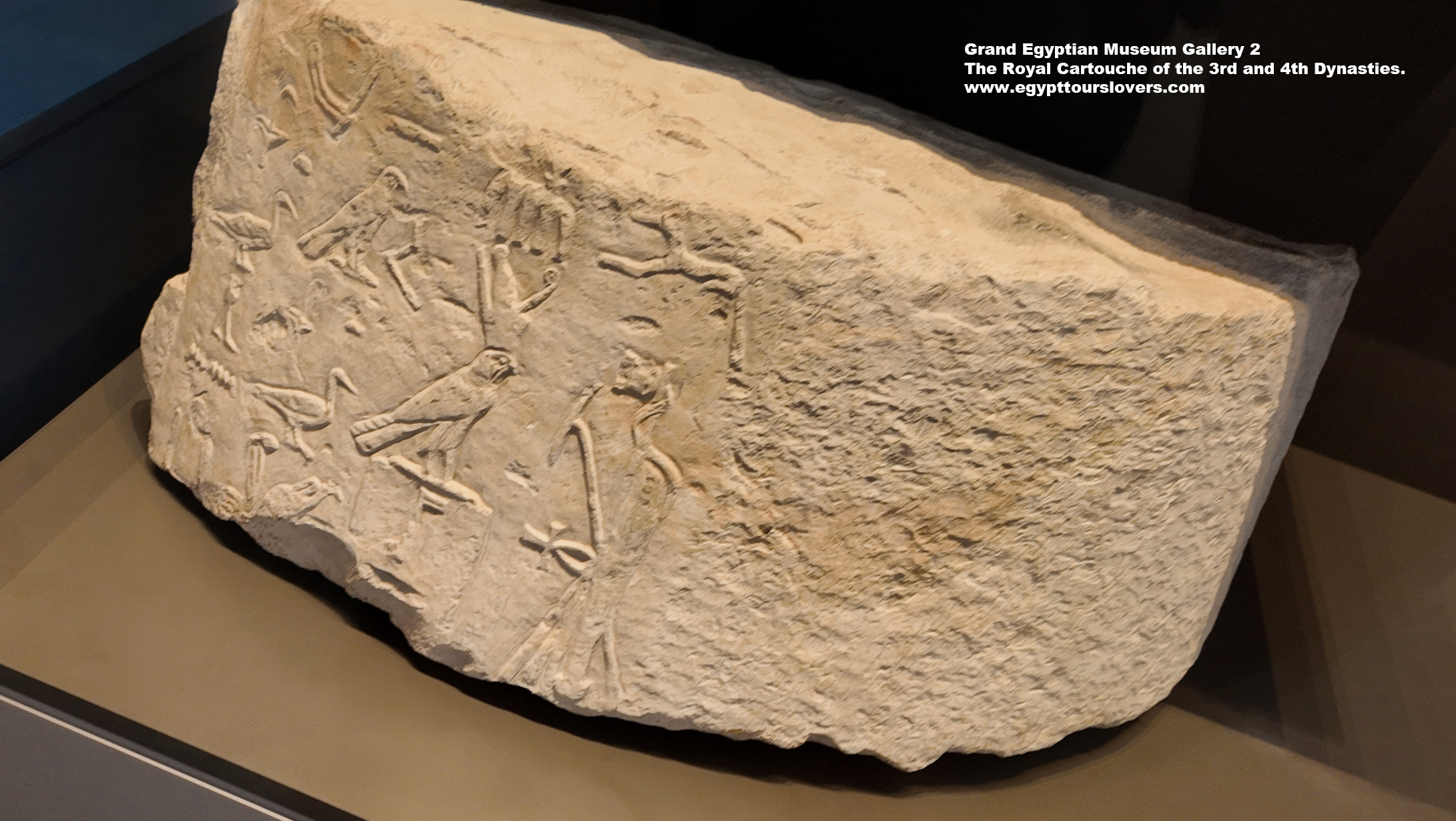
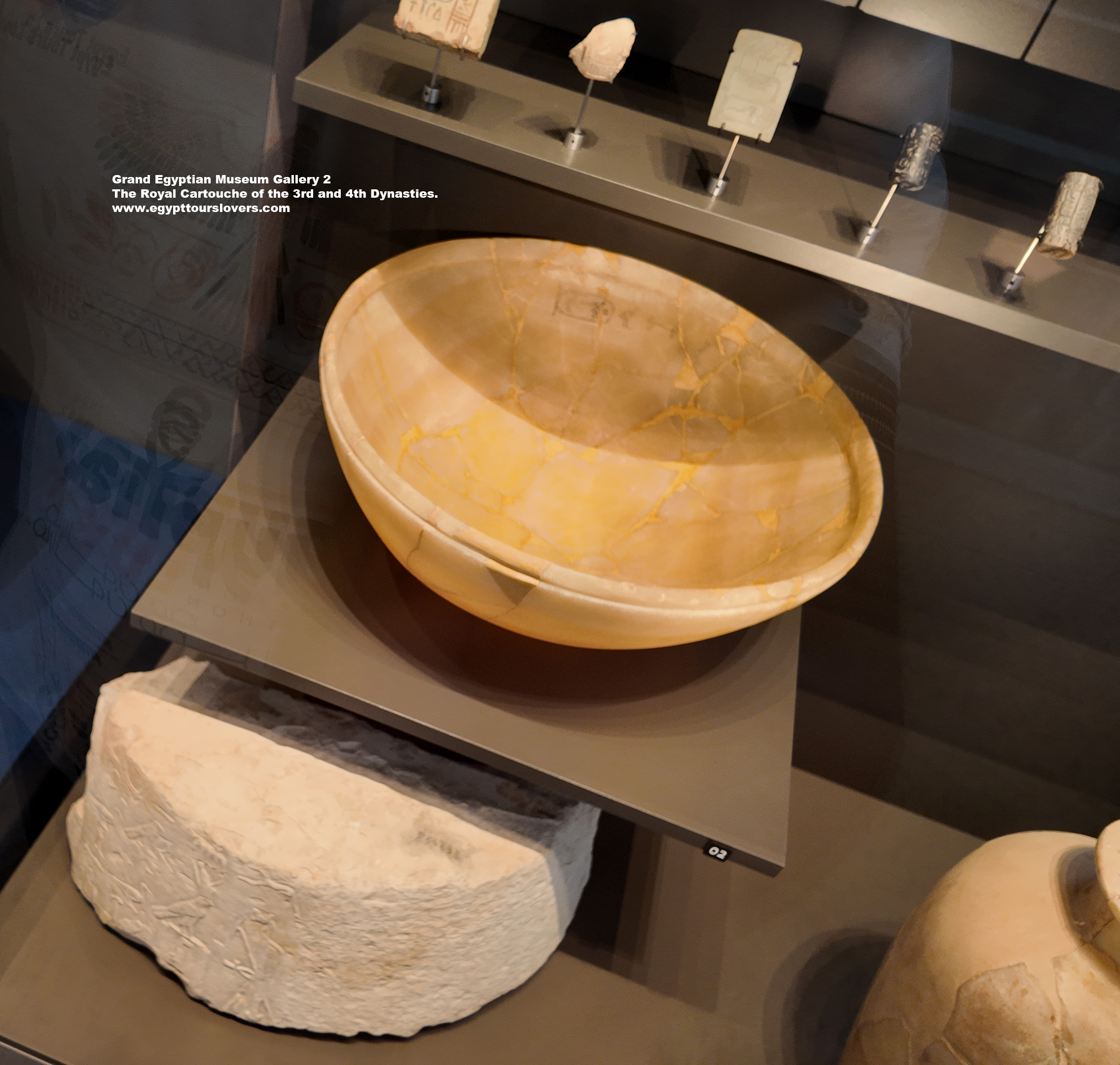
Dynasty 3-4 | limestone, Egyptian alabaster | Saqqara, abu rawash
The Royal Cartouche of the 3rd and 4th Dynasties.
King Sneferu is considered the first king to have his name recorded within a cartouche.
The cartouche is designed as an oval frame made of knotted rope, similar to the hieroglyphic symbol “shen,” meaning “protection.”
———– } ———– } ———– } ———– }
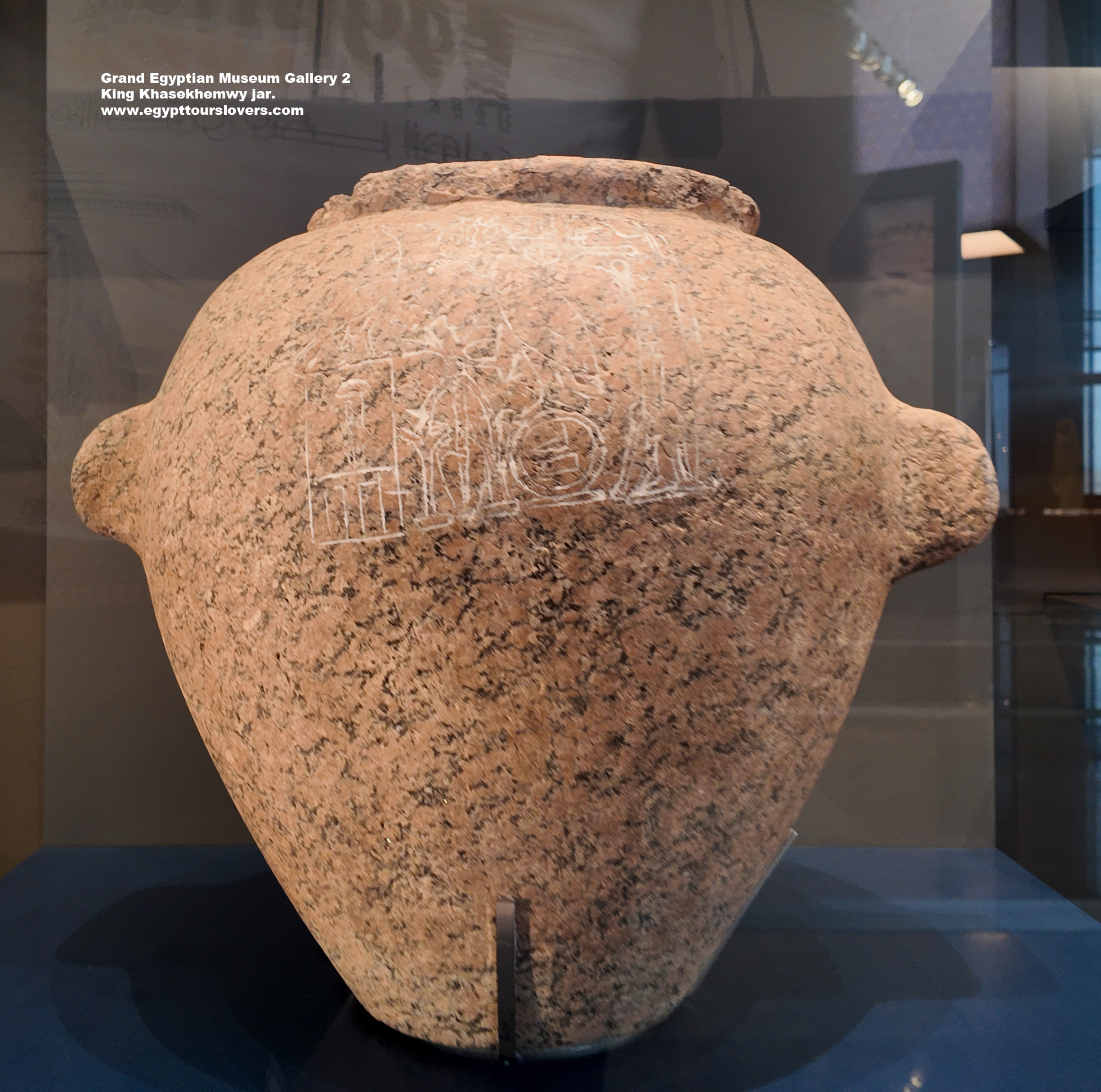
Dynasty 2 | granite | Hierakonpolis
King Khasekhemwy jar.
———– } ———– } ———– } ———– }
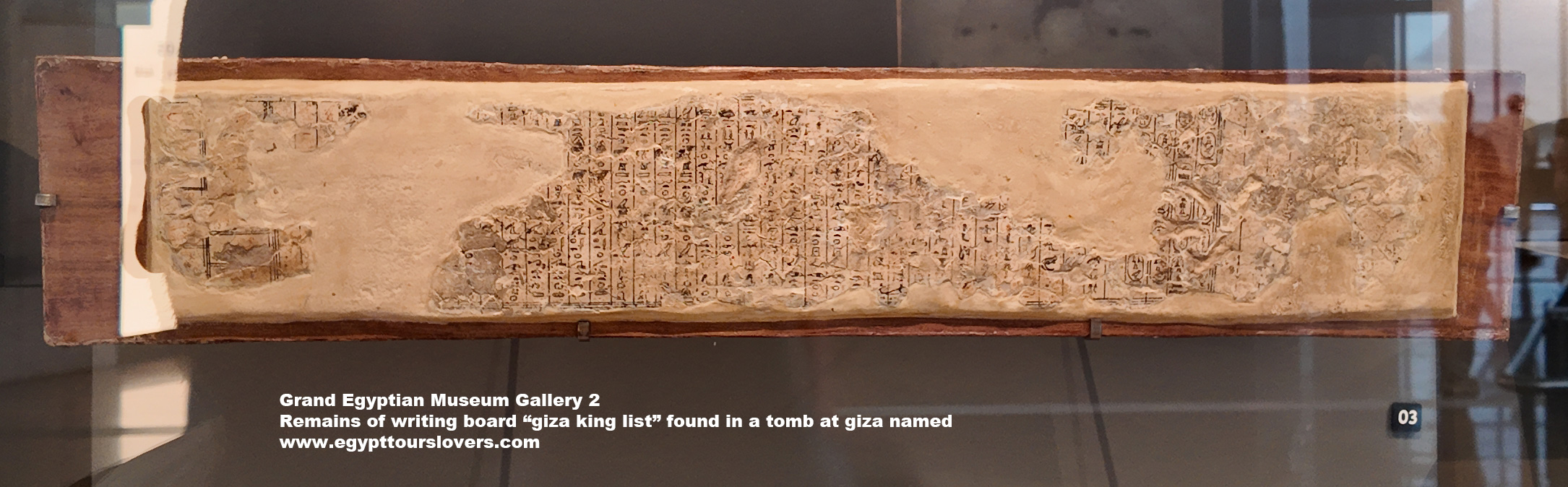
Dynasty 5 | cedar, plaster, pigment | giza
Remains of writing board “giza king list” found in a tomb at giza named 6 kings from Dynasty 2-5.
———– } ———– } ———– } ———– }
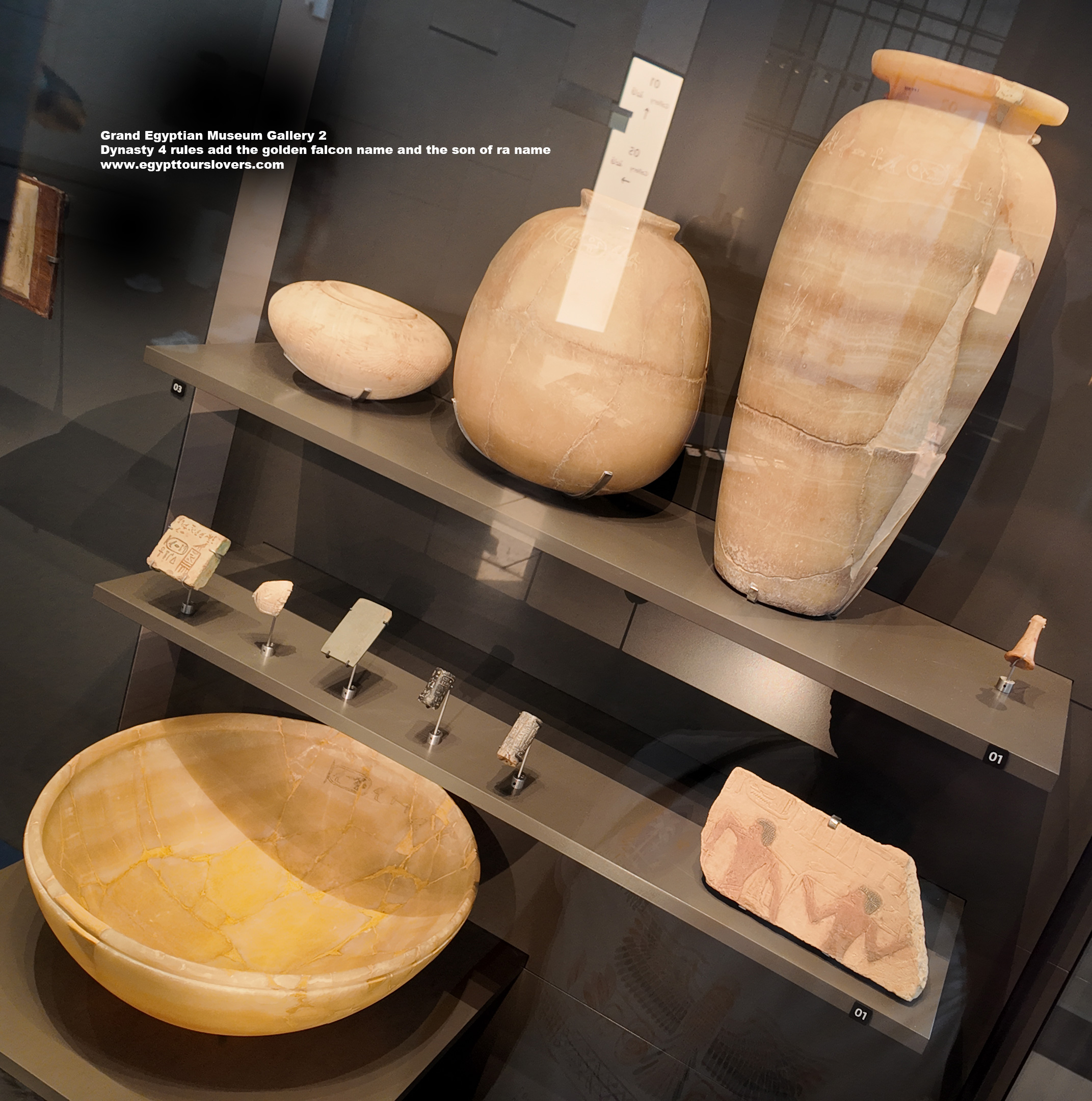
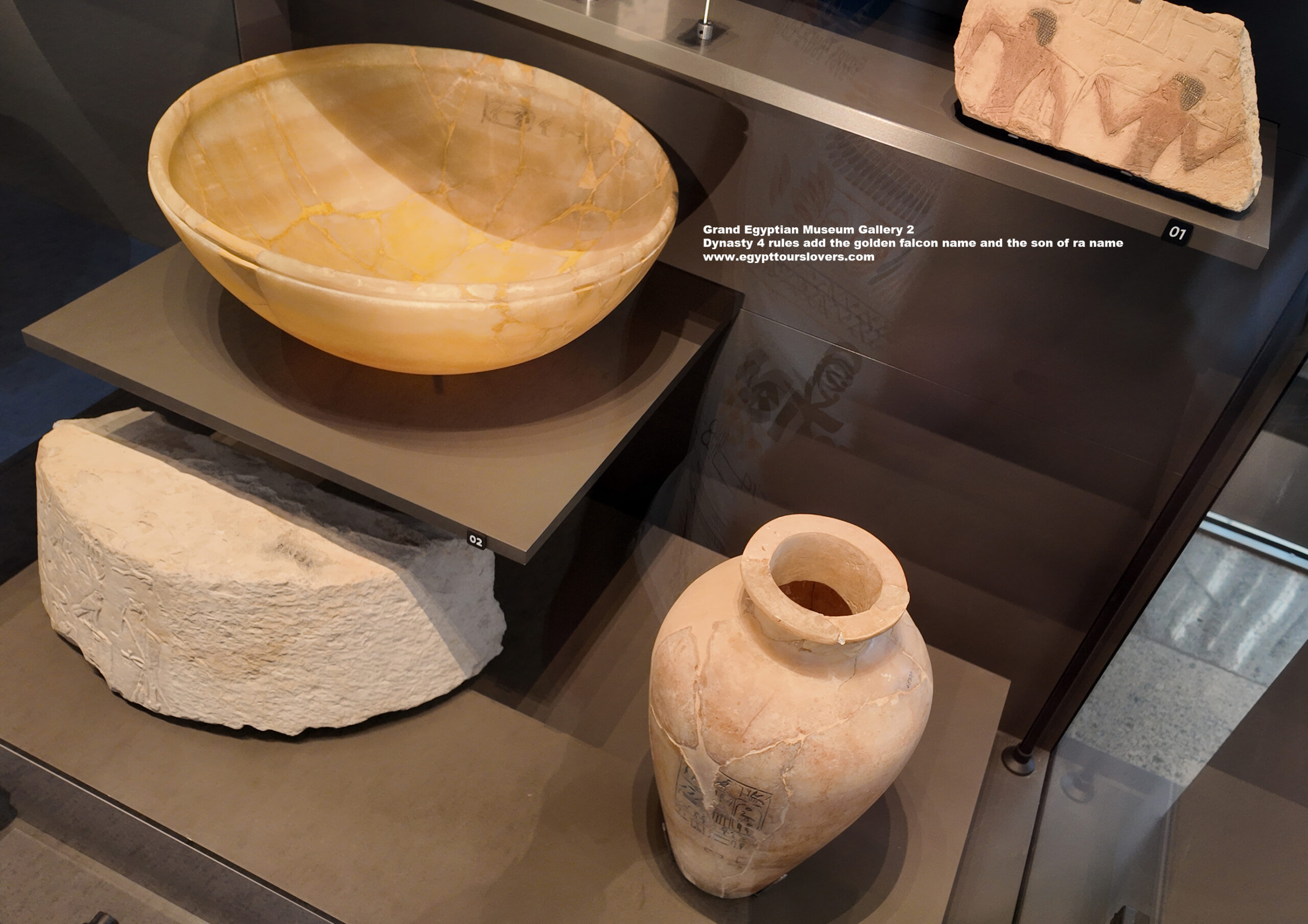
Dynasty 4-6 | limestone, Egyptian alabaster, diorite, pottery, pigment, faience, steatite | giza, Saqqara, luxor, abuser, helioplis, edfu
Dynasty 4 rules add the golden falcon name and the son of ra name.
During Dynasty 5 birth and throne names were put inside cartouches and in Dynasty 6 all 5 royal names were used by kings at jars.
———– } ———– } ———– } ———– }
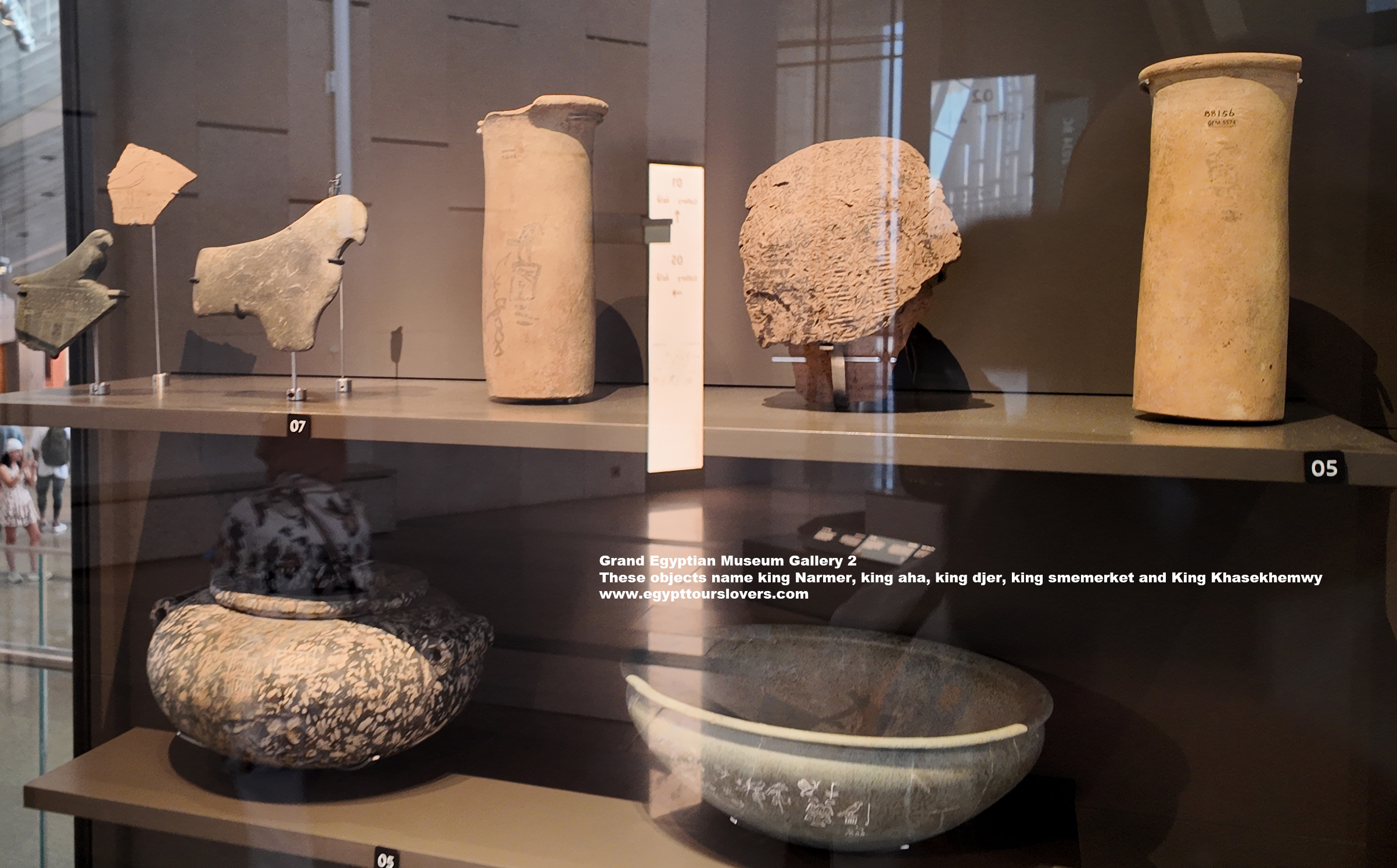
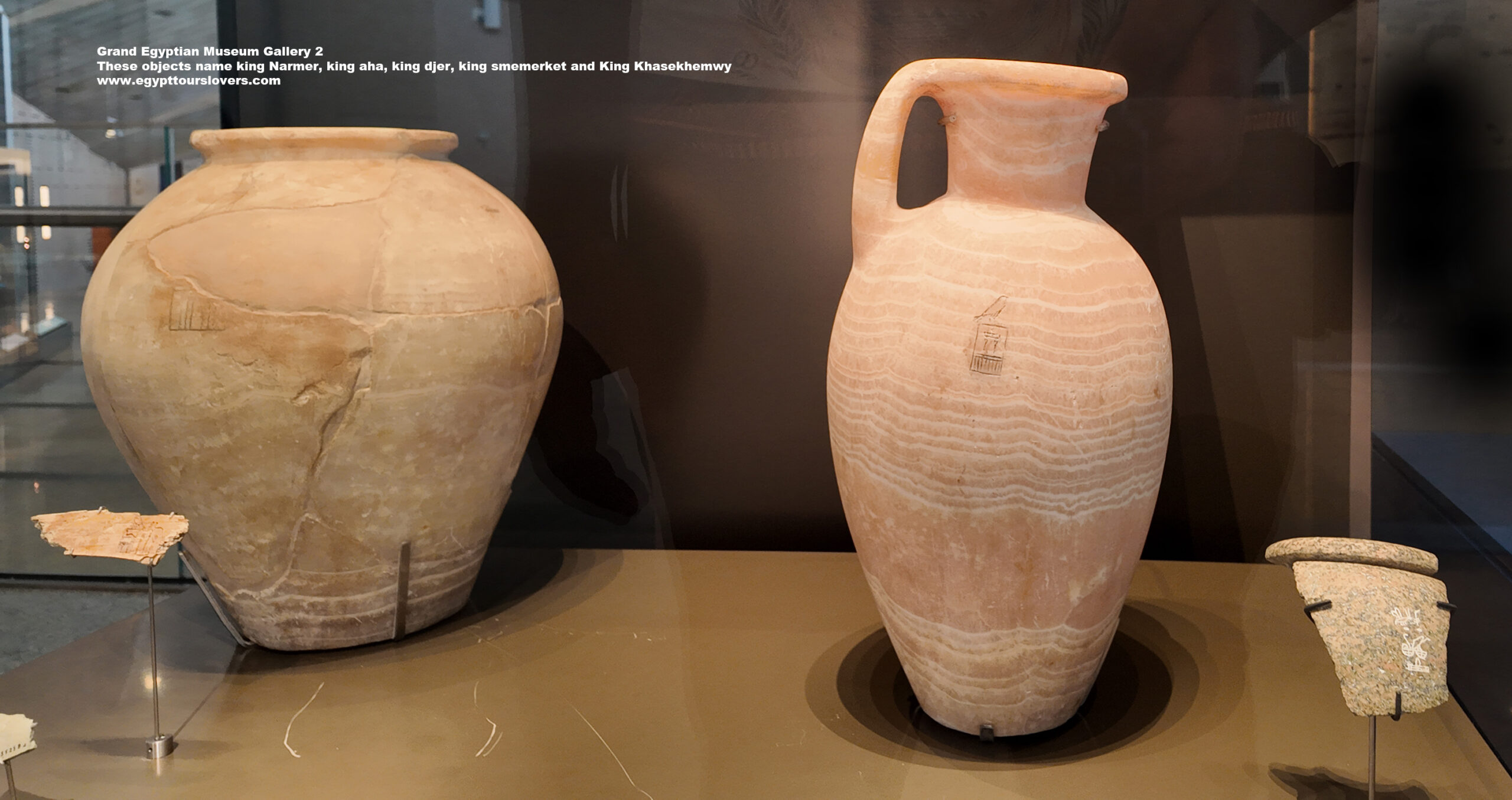
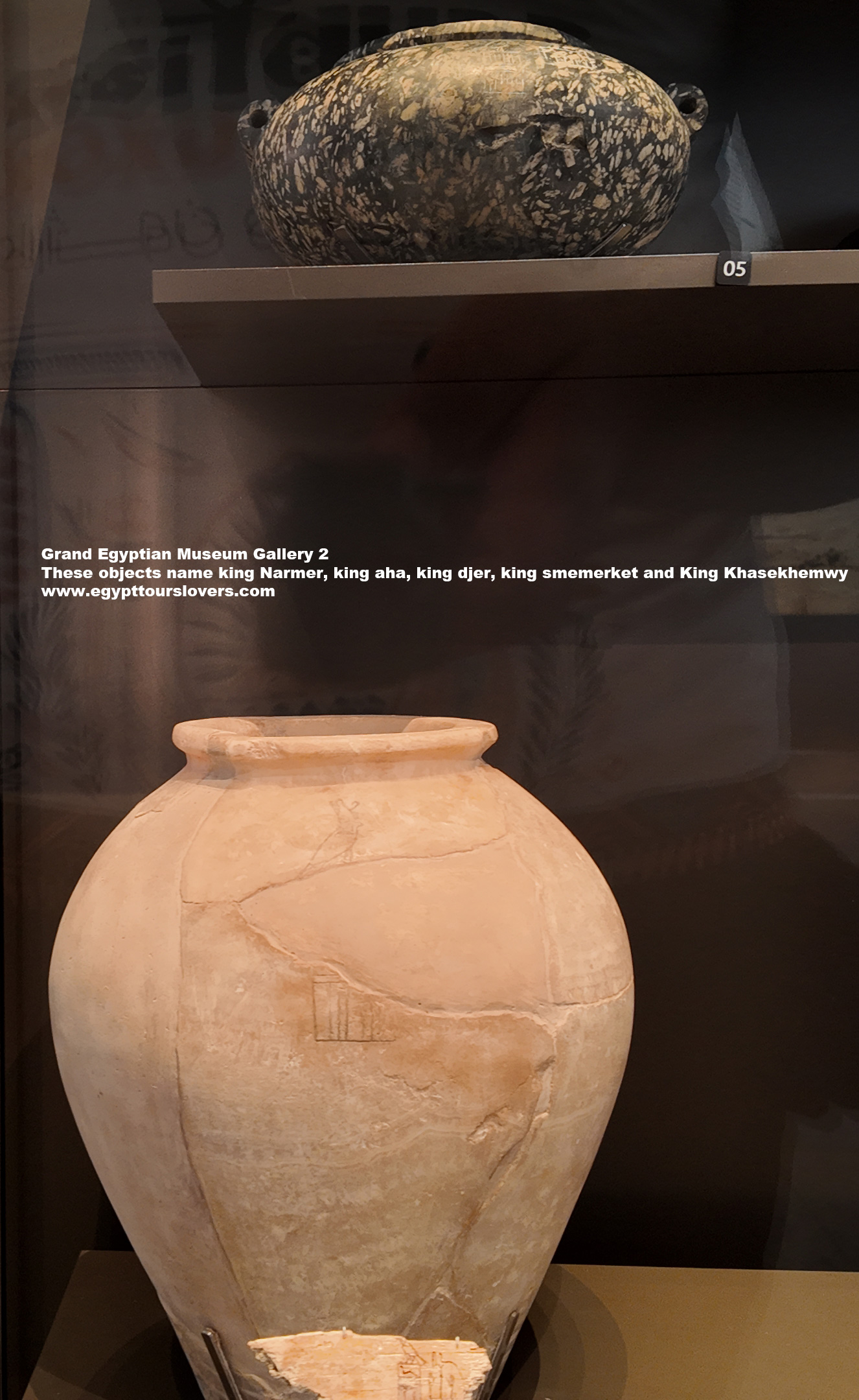
Dynasty 1-6 | greywacke, granite, Egyptian alabaster, ivory, clay, pottery, piment | Saqqara, tarkhan, Helwan, kafr ammar
By the end of dynasty 1 more royal titles were added, two ladies “vulture and cobra goddesses”, golden Horus and king of upper and lower Egypt”.
These objects name king Narmer, king aha, king djer, king smemerket and King Khasekhemwy.
———– } ———– } ———– } ———– }
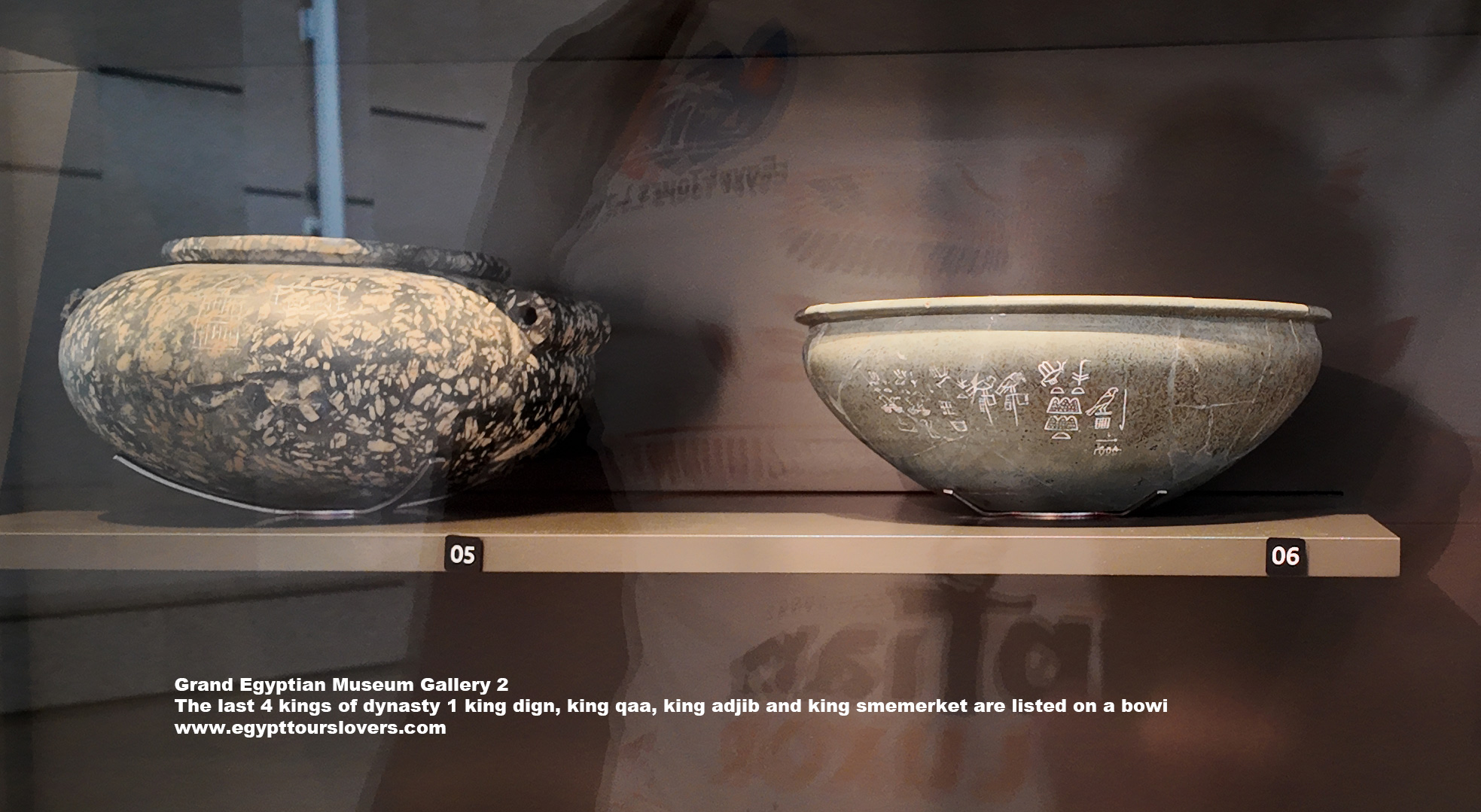
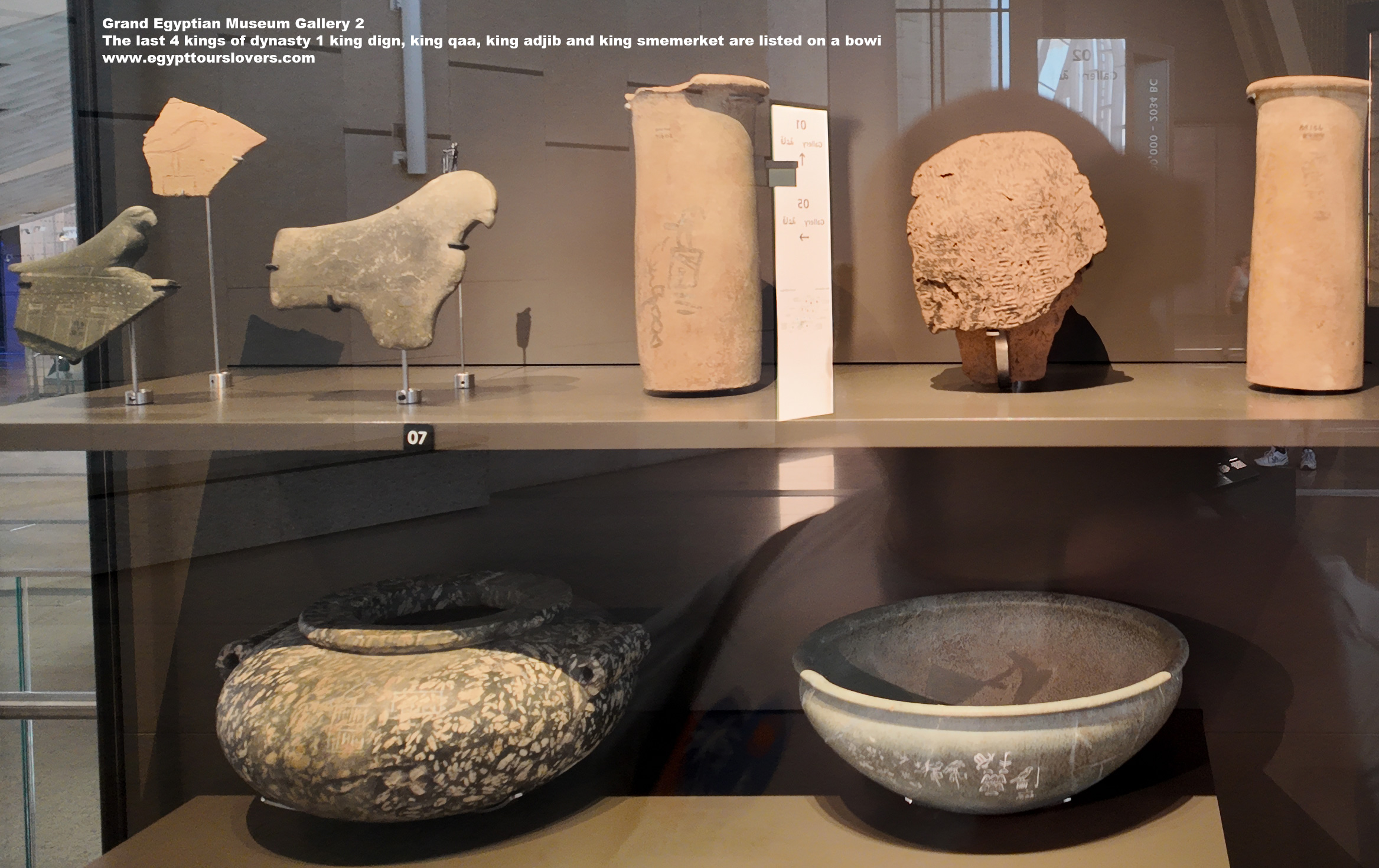
Dynasty 1 | greywacke | Saqqara
The last 4 kings of dynasty 1 king dign, king qaa, king adjib and king smemerket are listed on a bowi with their “king of upper and lower egypt” and their “2 ladies name”.
This is one of the earliest king lists in egypt history….
———– } ———– } ———– } ———– }
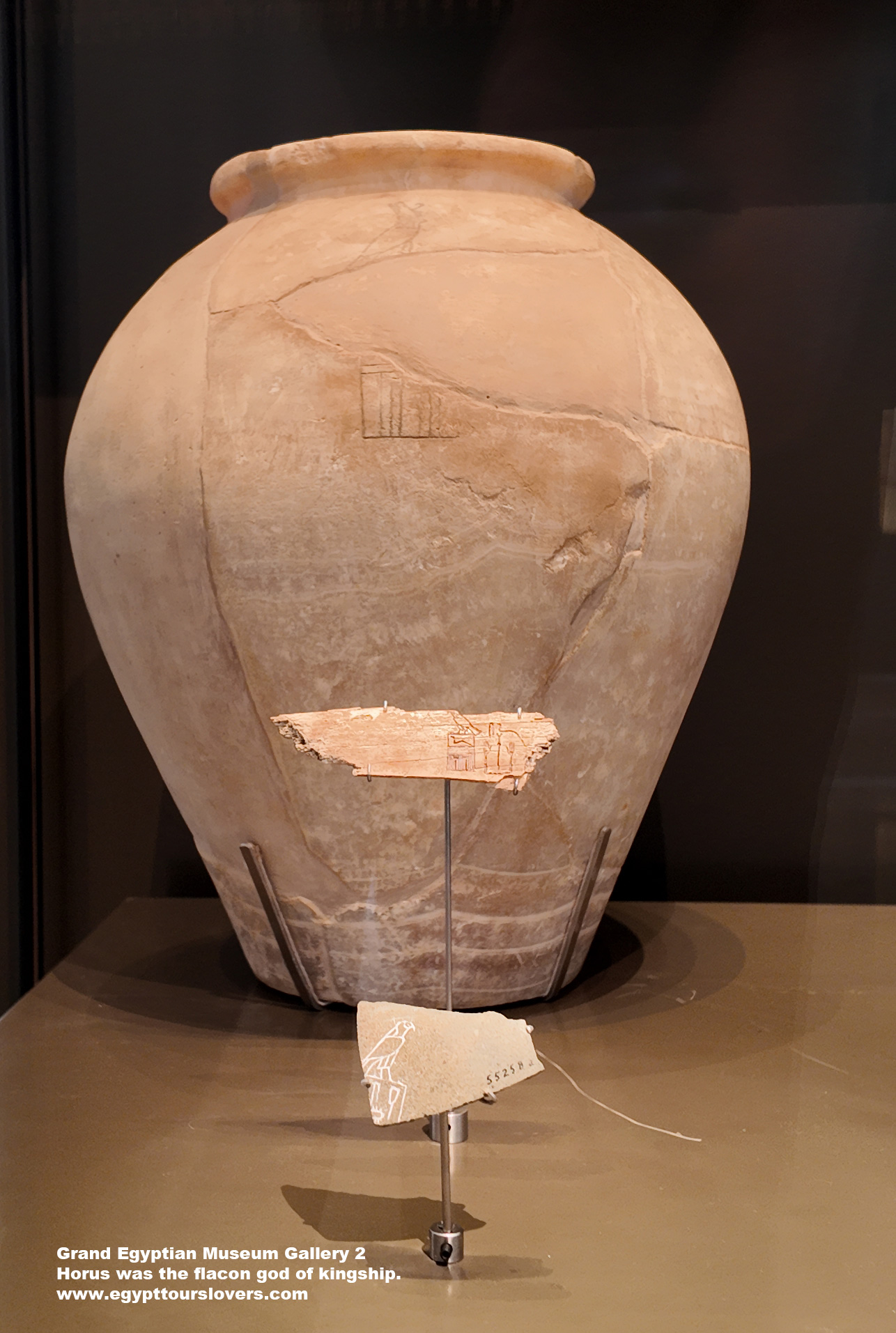
Naqada ii period + Dynasty 2 | pottery, slate stone | Abydos, tell el-farkha, tarkhan, el-daima
Horus was the flacon god of kingship.
The earliest royal title was the hours name, showm by a falcon sitting on a rectangular sereth “the façade of the royal palace” containing hieroglyphic spelling out the kings name.
———– } ———– } ———– } ———– }
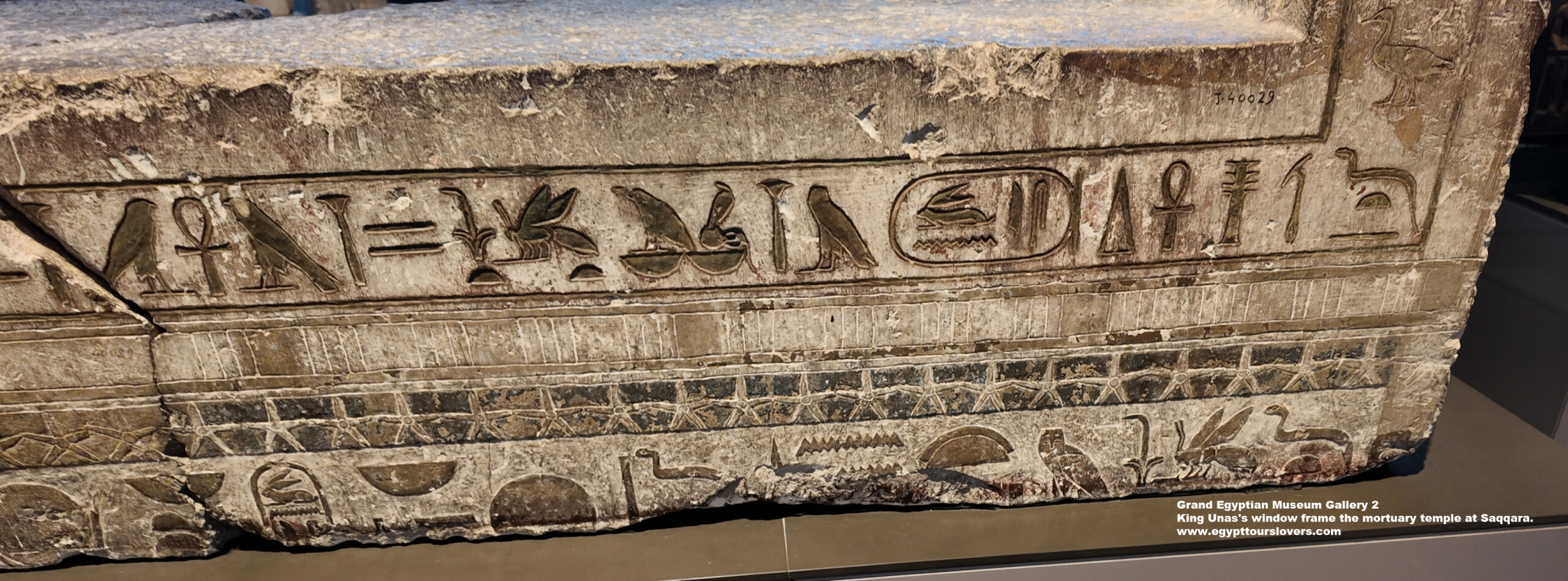
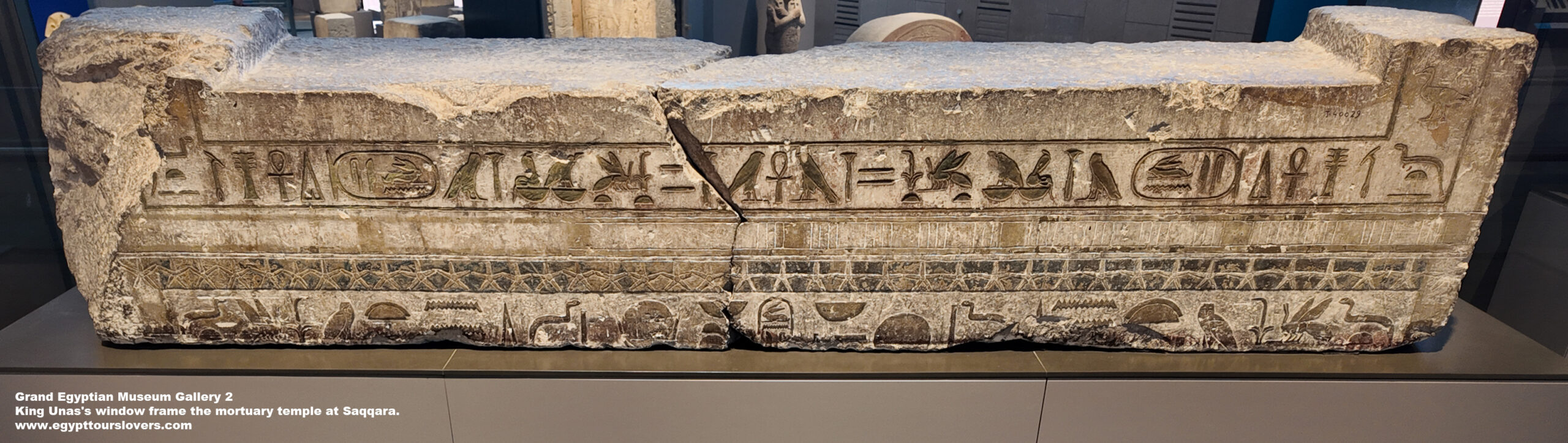
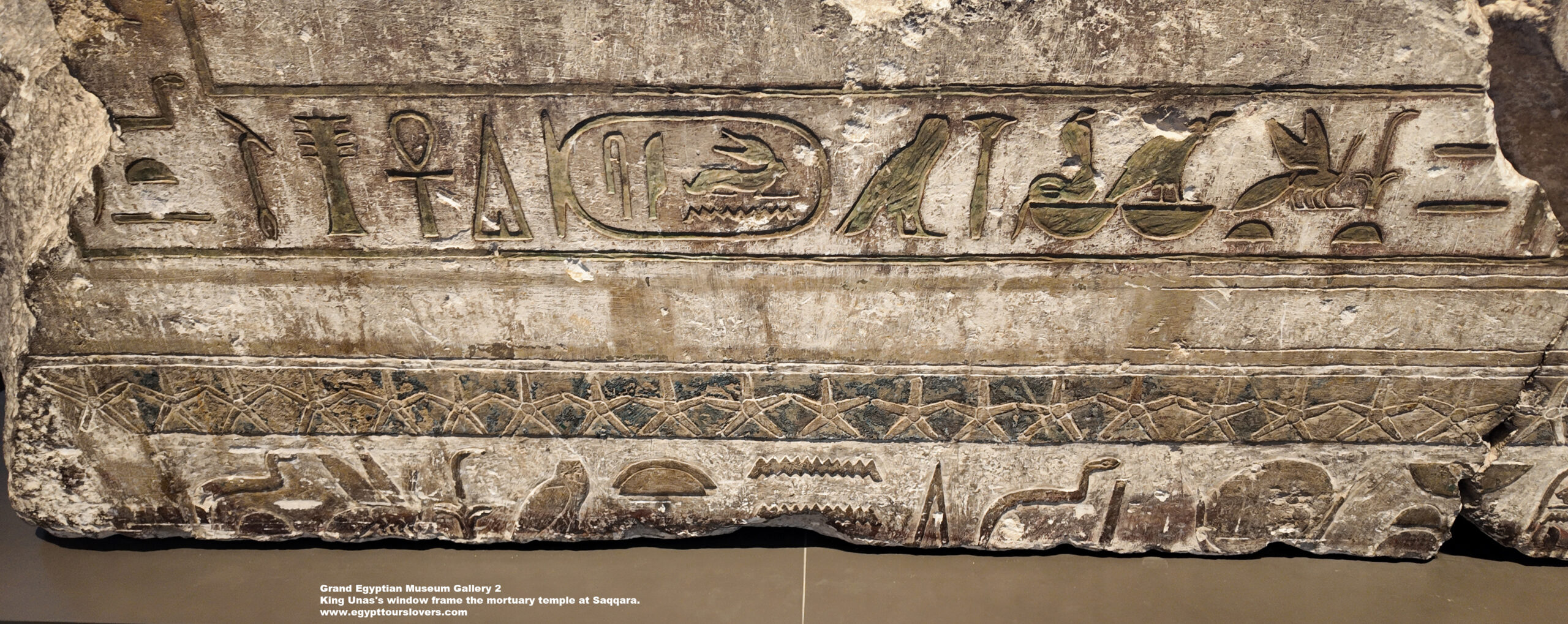
Dynasty 5 | limestone, pigment | Saqqara
King Unas’s window frame the mortuary temple at Saqqara.
Inscribed with the three royal names of the king:
Horus name: Horus
The Two Ladies
King of Upper and Lower Egypt
Text: Gives life and stability, eternal power.
———– } ———– } ———– } ———– }
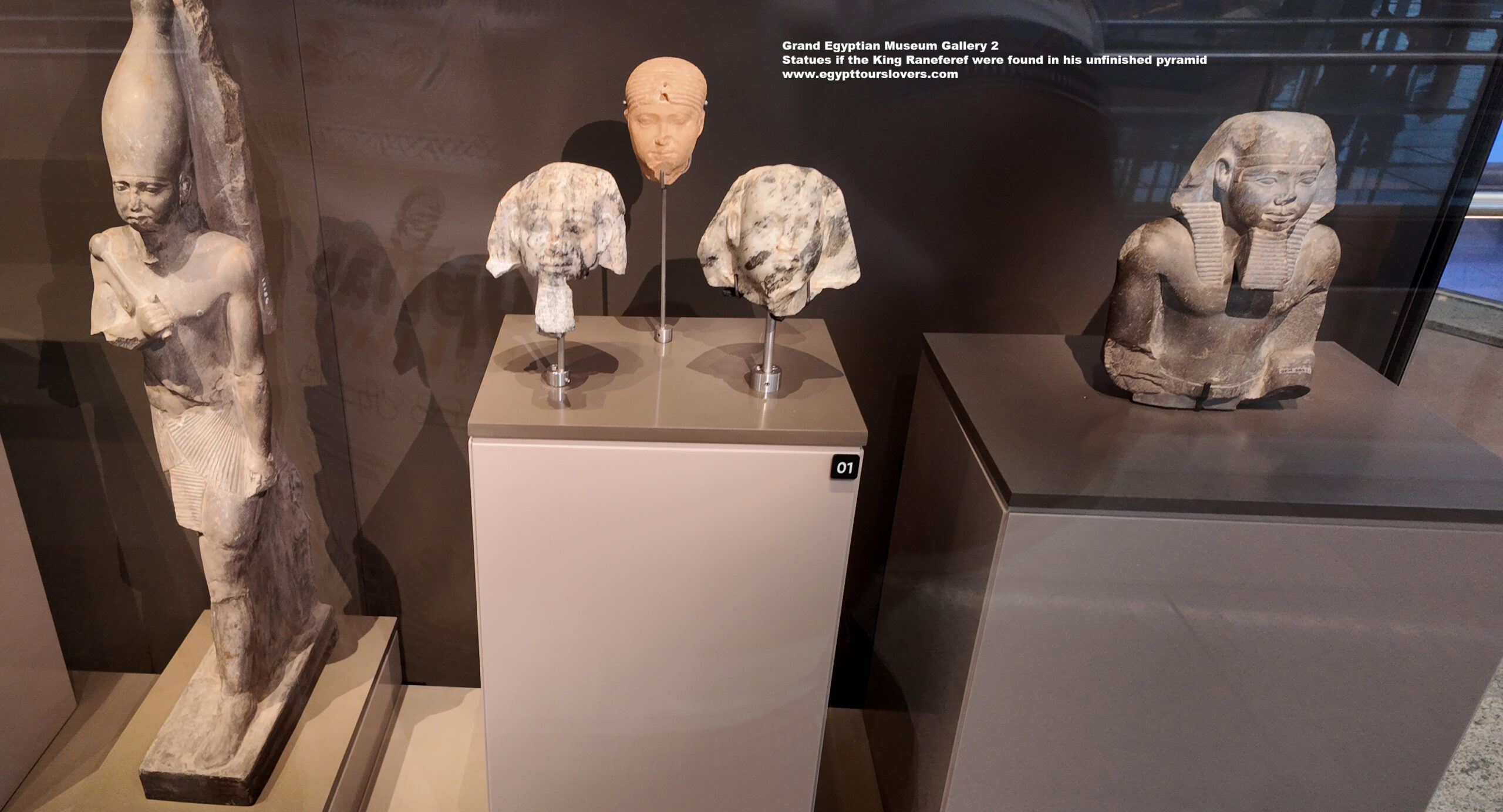
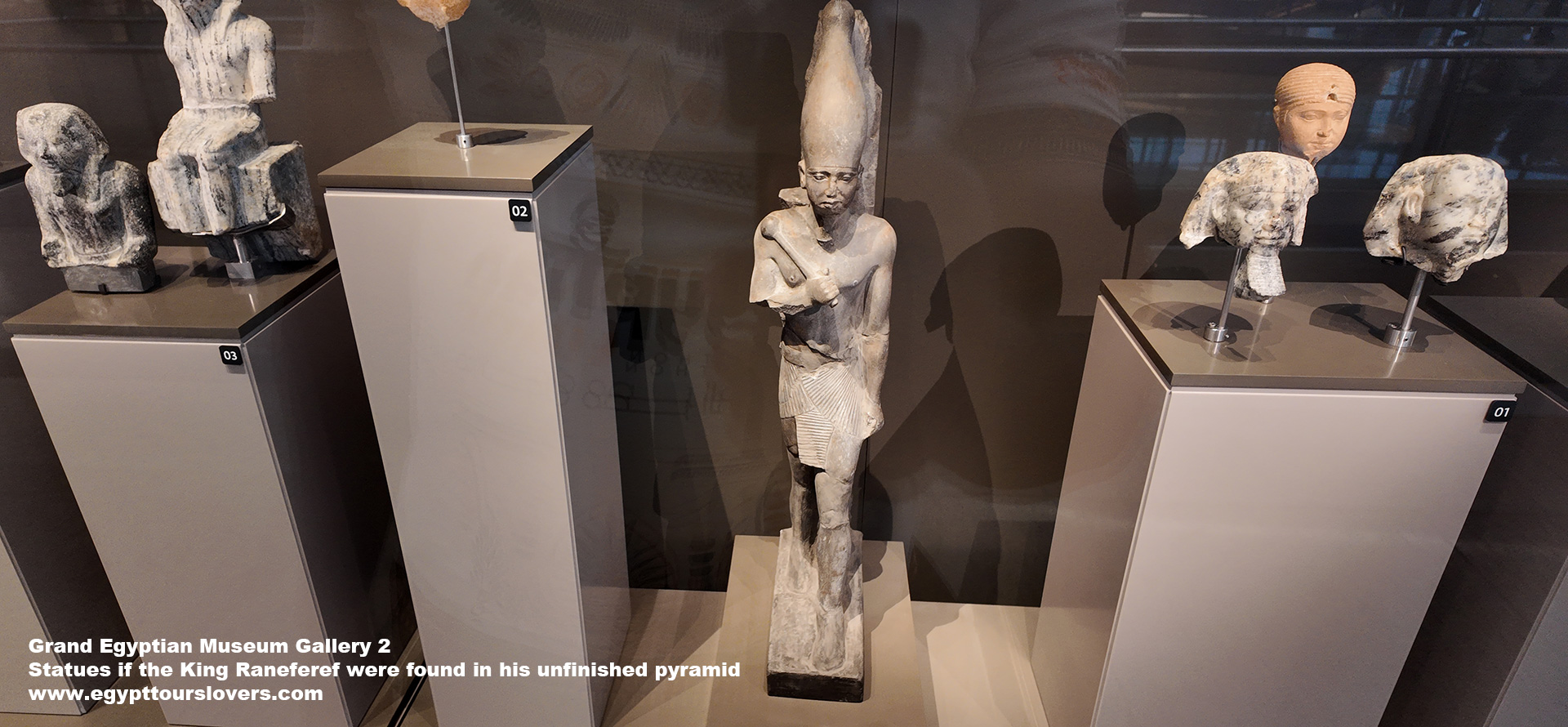
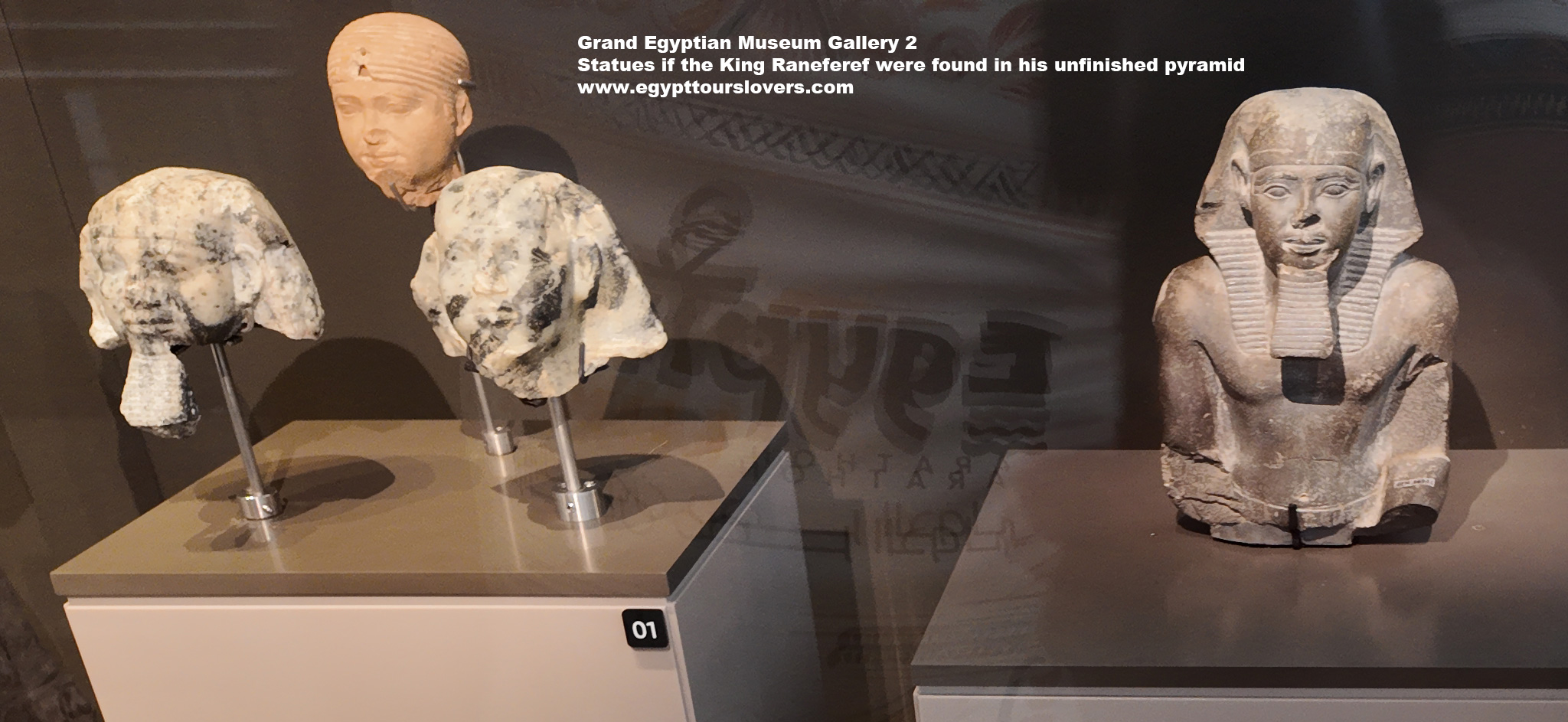
Dynasty 5 | basalt, diorite | abusir
Statues if the King Raneferef were found in his unfinished pyramid “divine are the bas of Raneferef”in abusir.
———– } ———– } ———– } ———– }
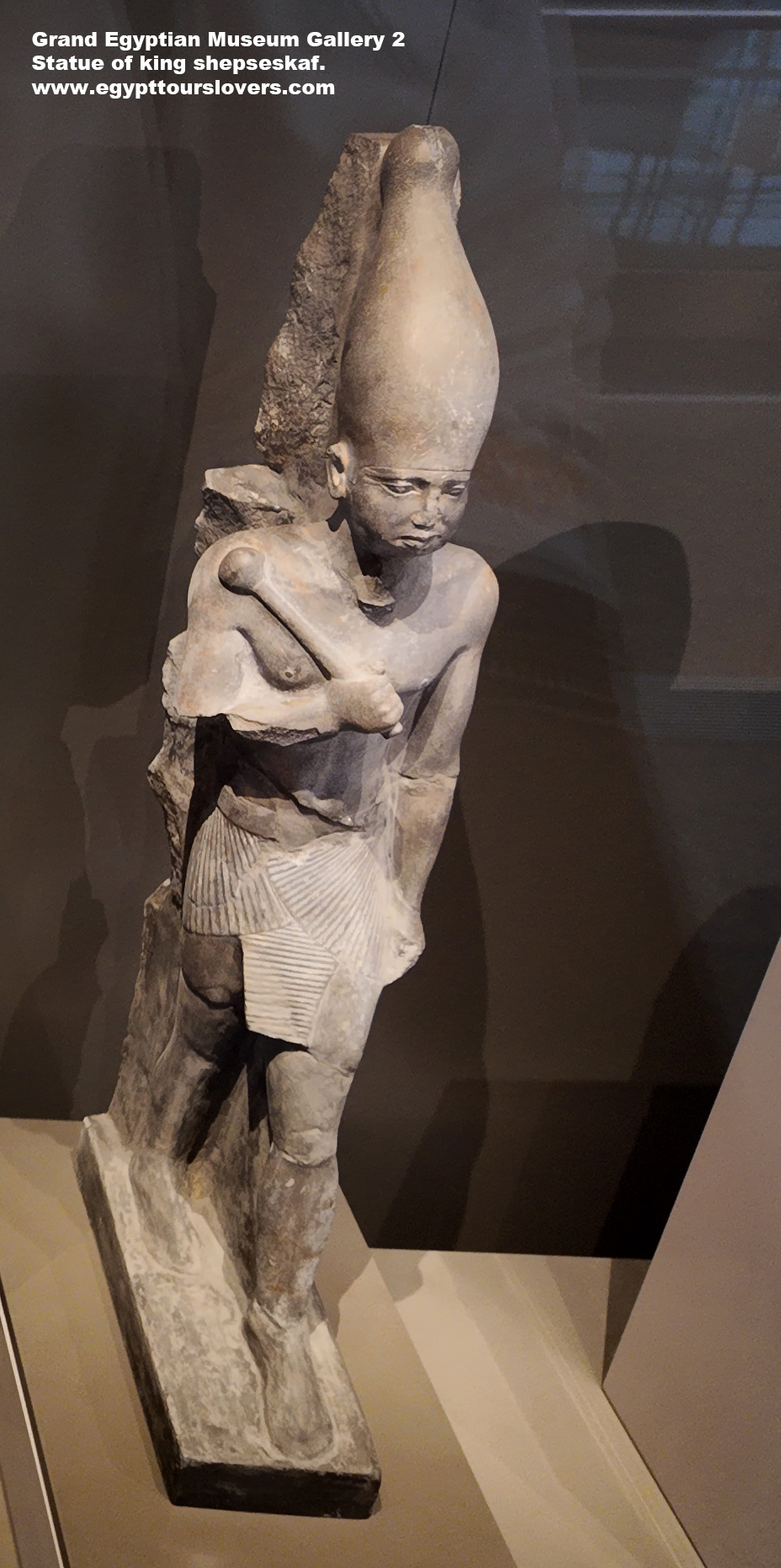
Dynasty 4 | Egyptian alabaster | Giza
Statue of king shepseskaf.
———– } ———– } ———– } ———– }
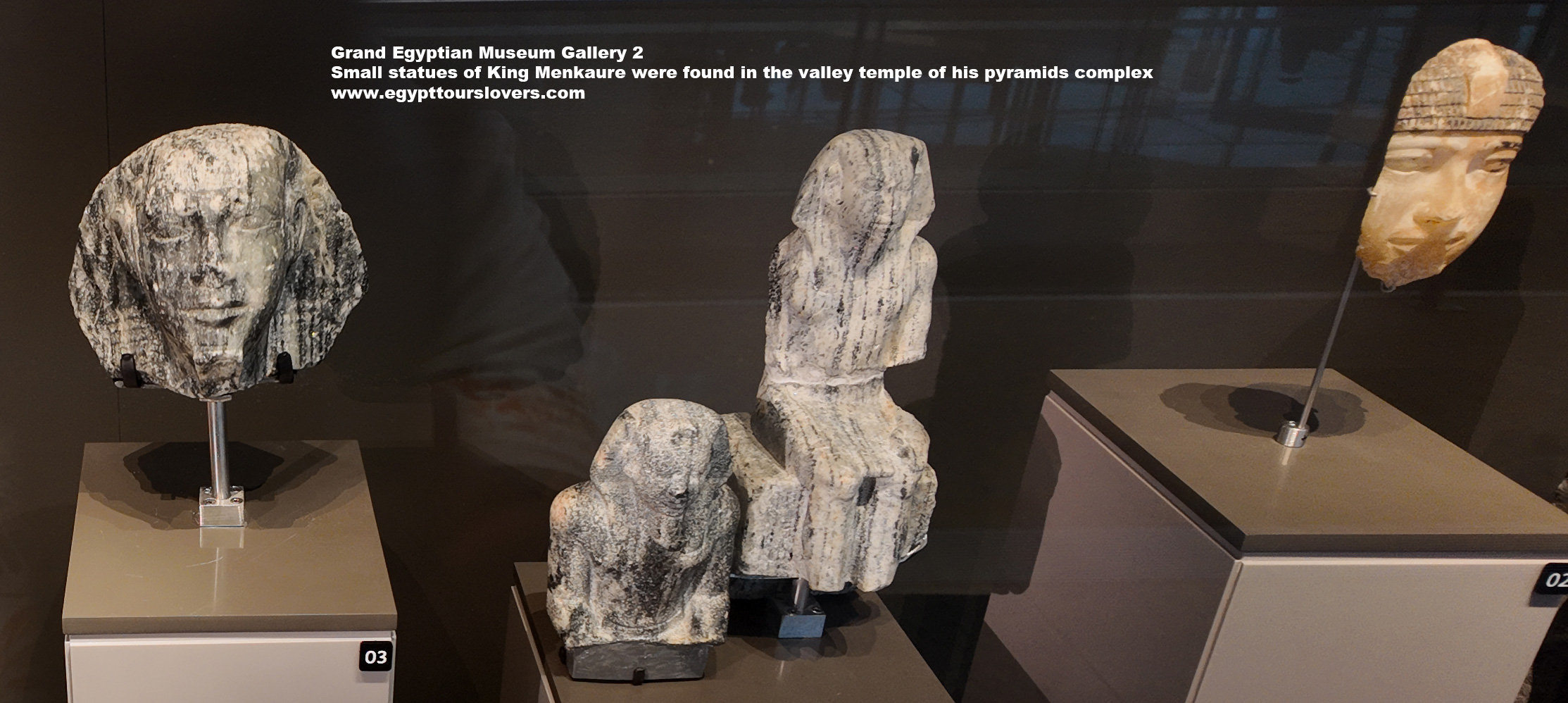
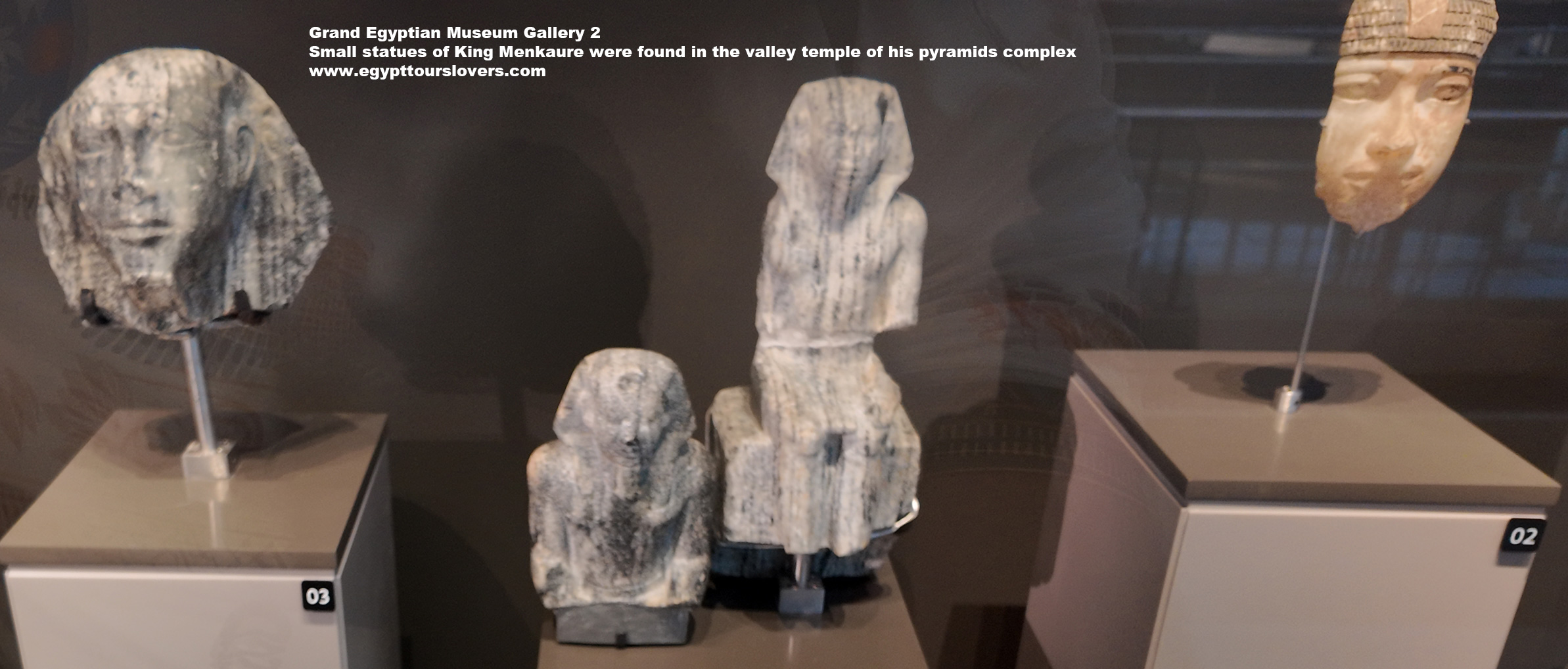
Dynasty 4 | diorite | Memphis, giza
Small statues of King Menkaure were found in the valley temple of his pyramids complex “Menkaure is divine”.
———– } ———– } ———– } ———– }
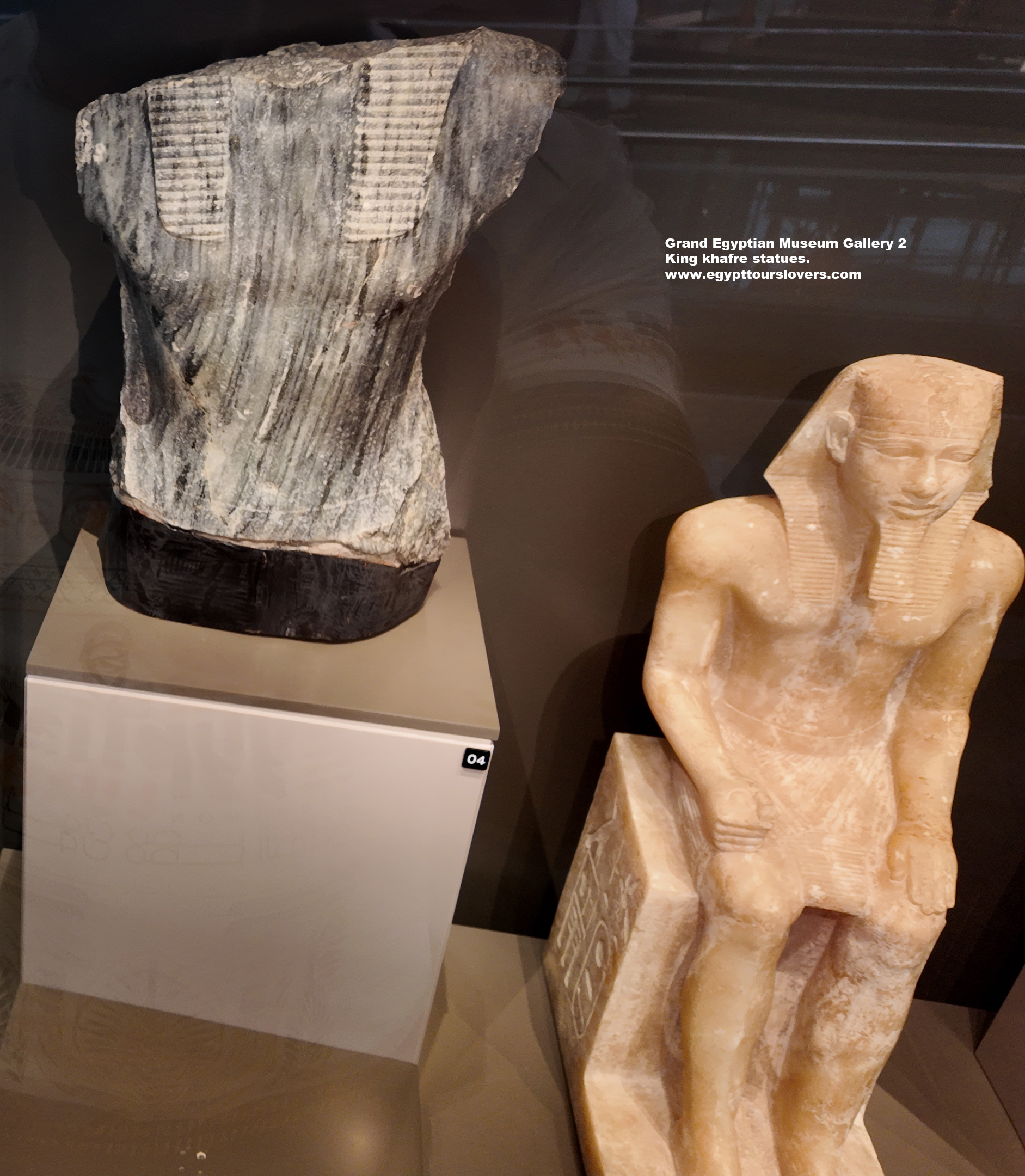
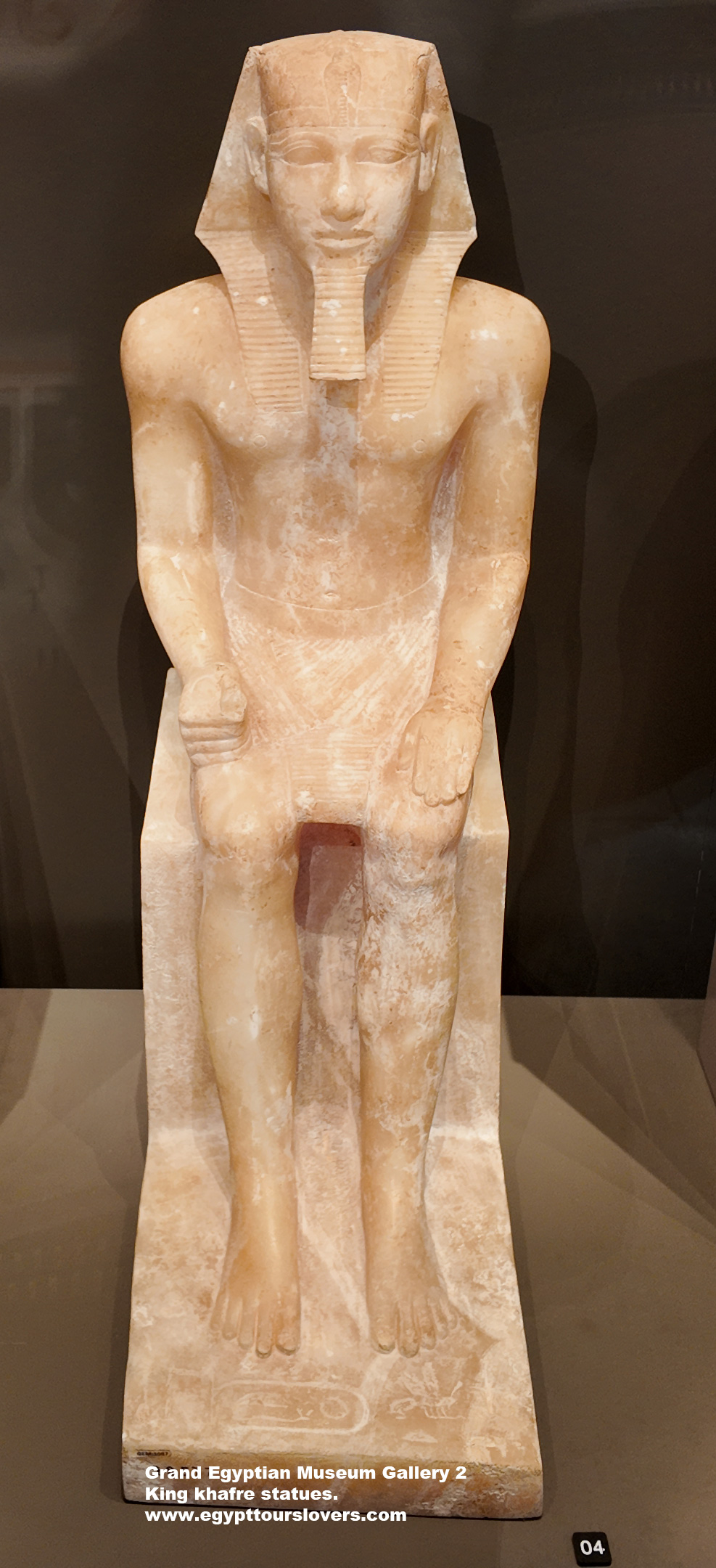
Dynasty 4 | diorite, Egyptian alabaster | Memphis, giza
King khafre statues.
———– } ———– } ———– } ———– }
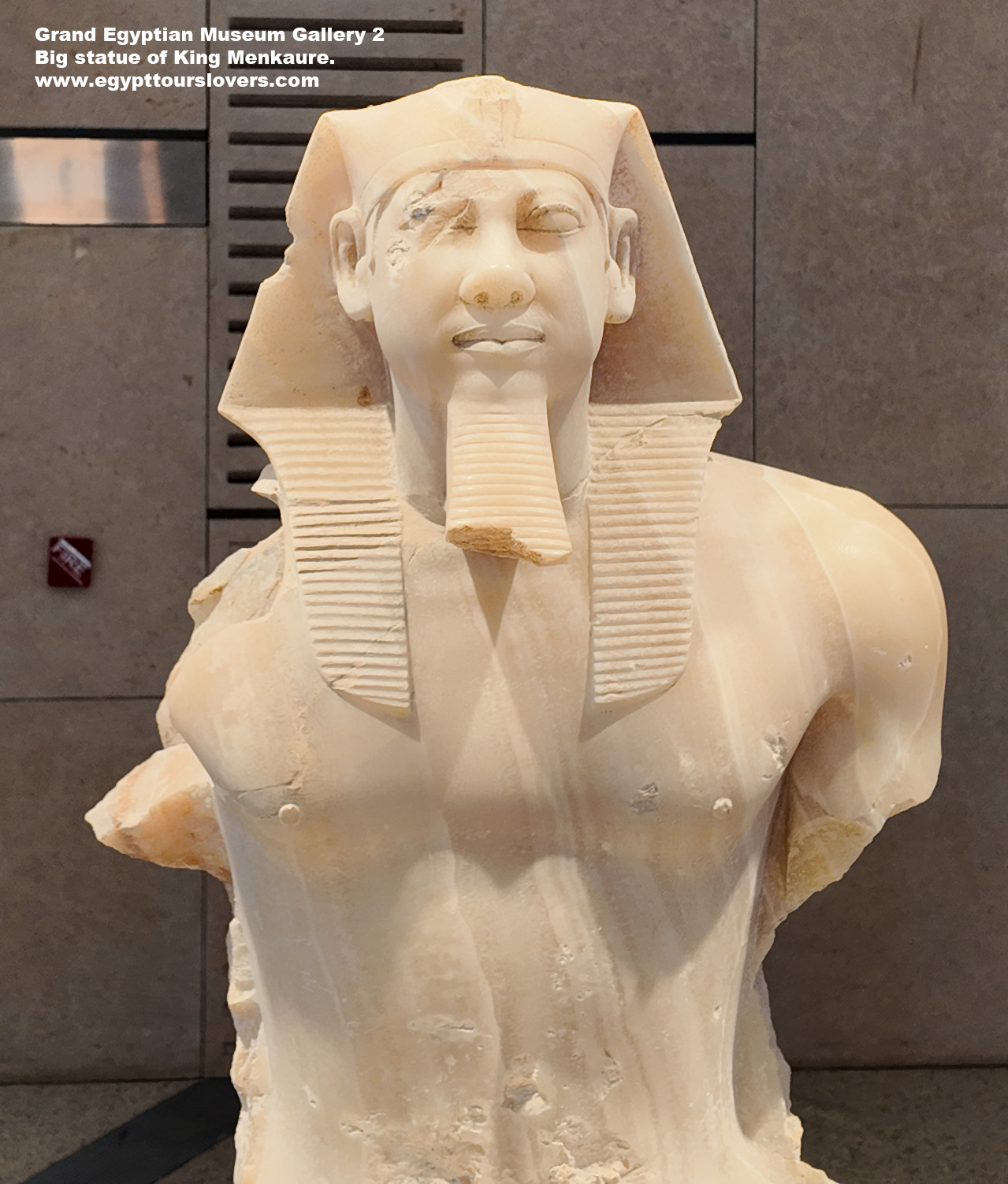
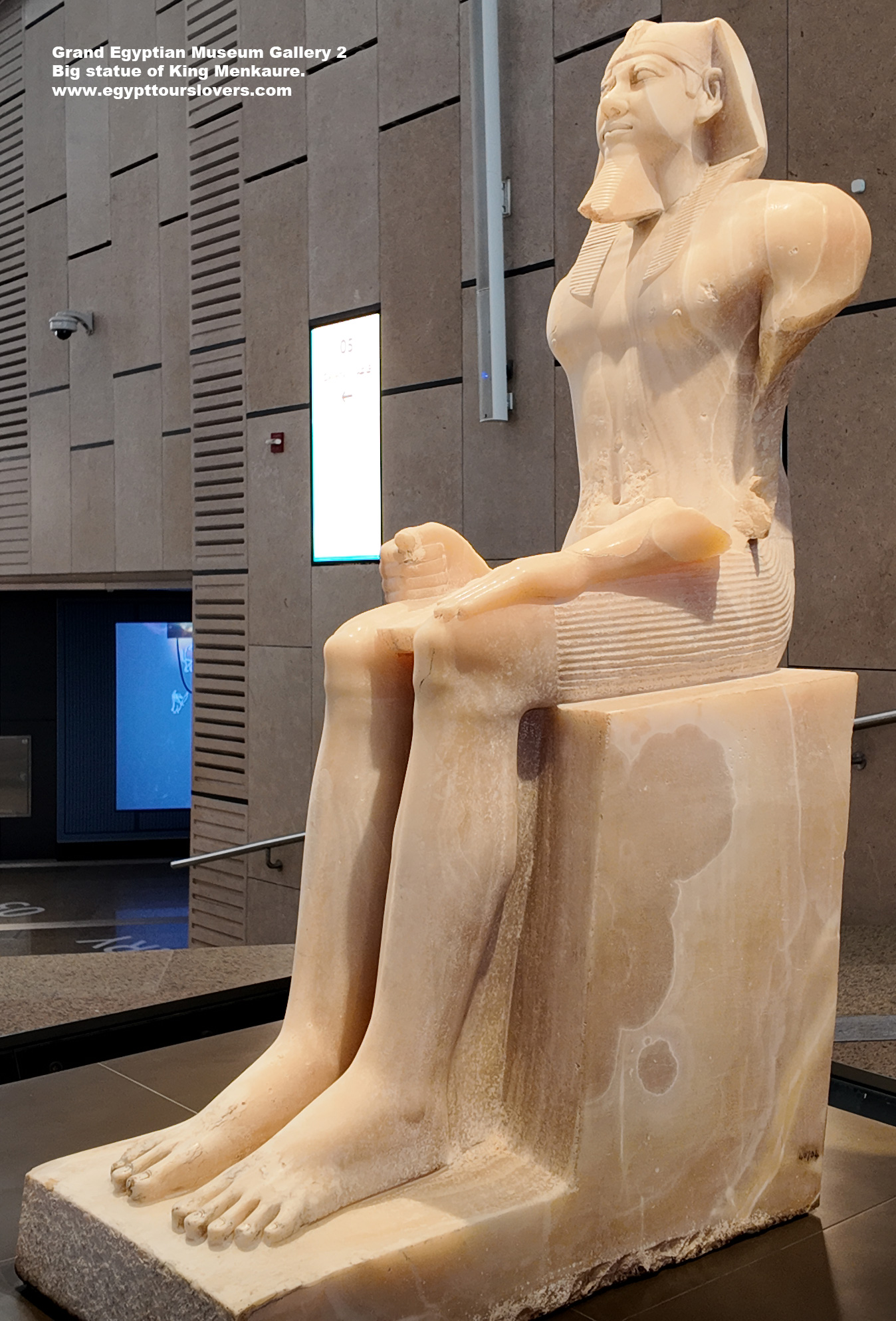
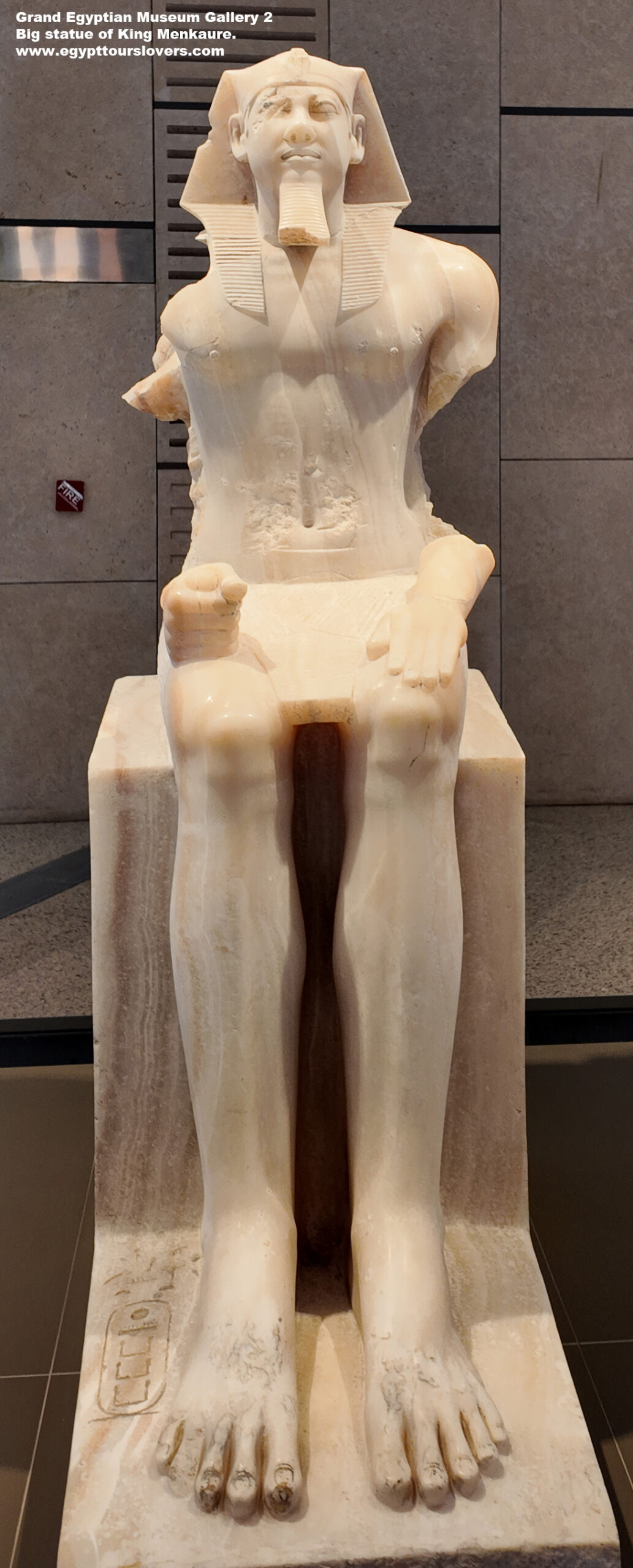
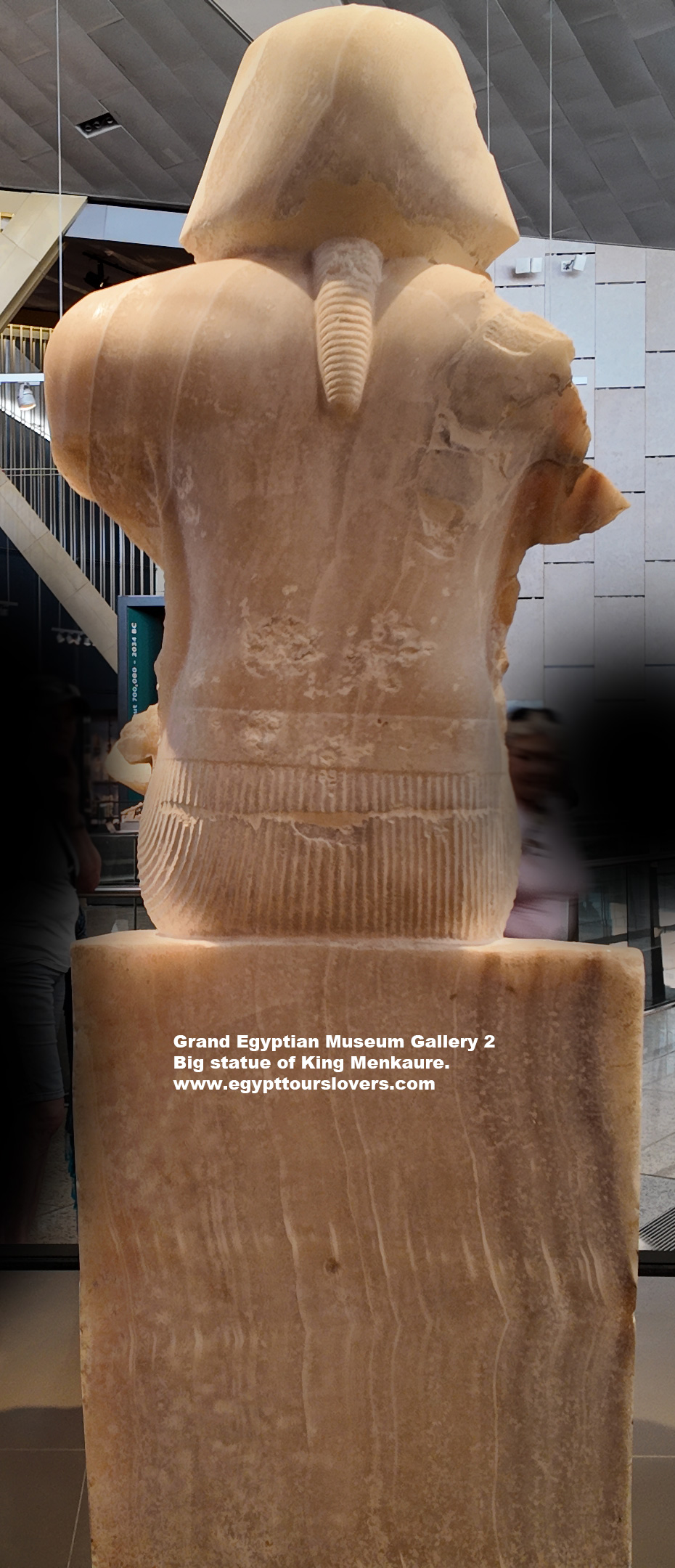
Dynasty 4 | Egyptian alabaster | giza
Big statue of King Menkaure.
The statue was found in the unfinished mortuary temple.
Design: Detailed depiction of the king Menkaure muscular body, small head, and large arms and feet.
Was the statue re-carved and desecrated?
———– } ———– } ———– } ———– }
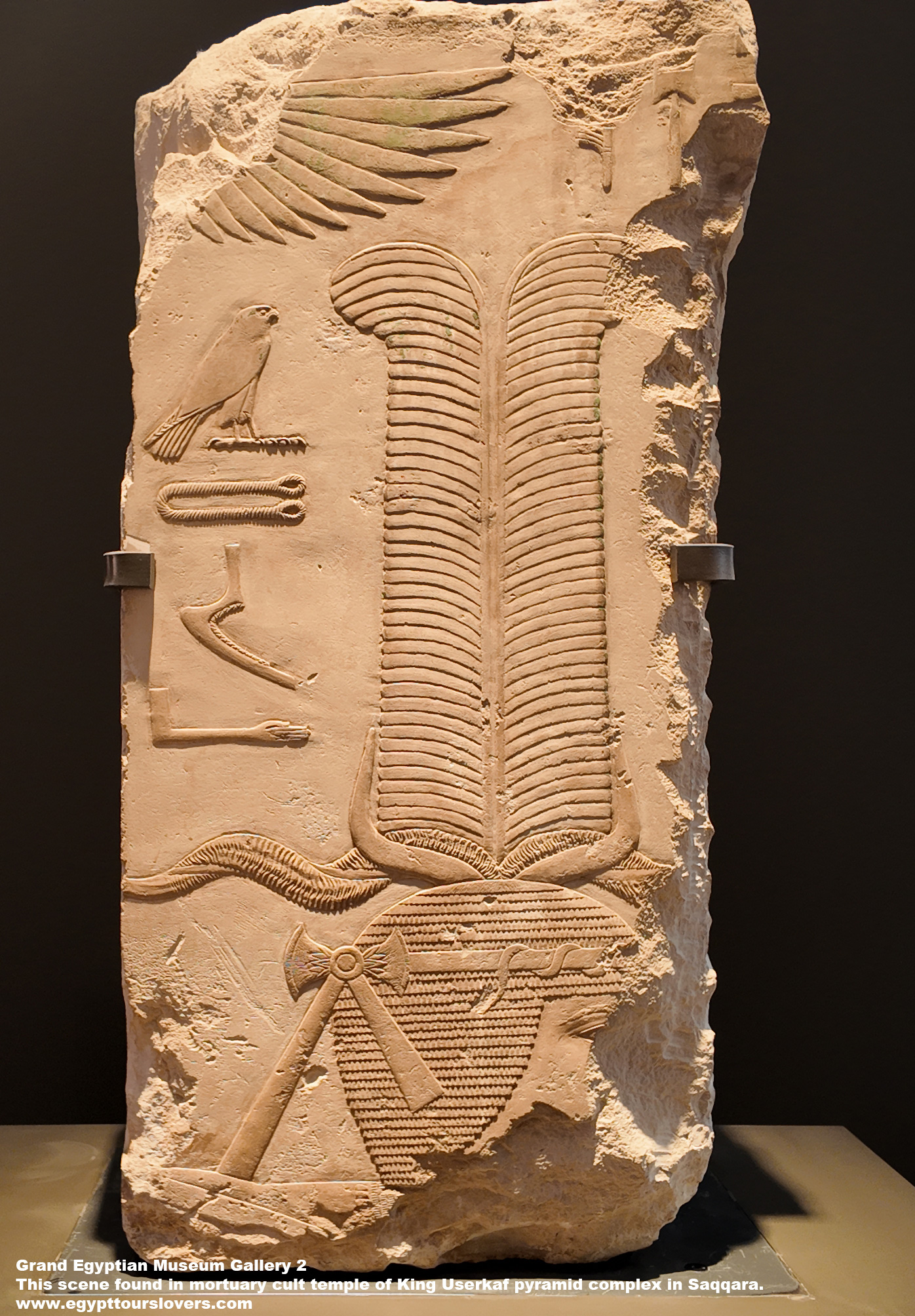
Dynasty 5 | limestone, pigment | Saqqara
This scene found in mortuary cult temple of King Userkaf pyramid complex in Saqqara.
Under protective wings of the god horus, the king wearing a headband with snake and crown of horns and ostrich feathers.
———– } ———– } ———– } ———– }
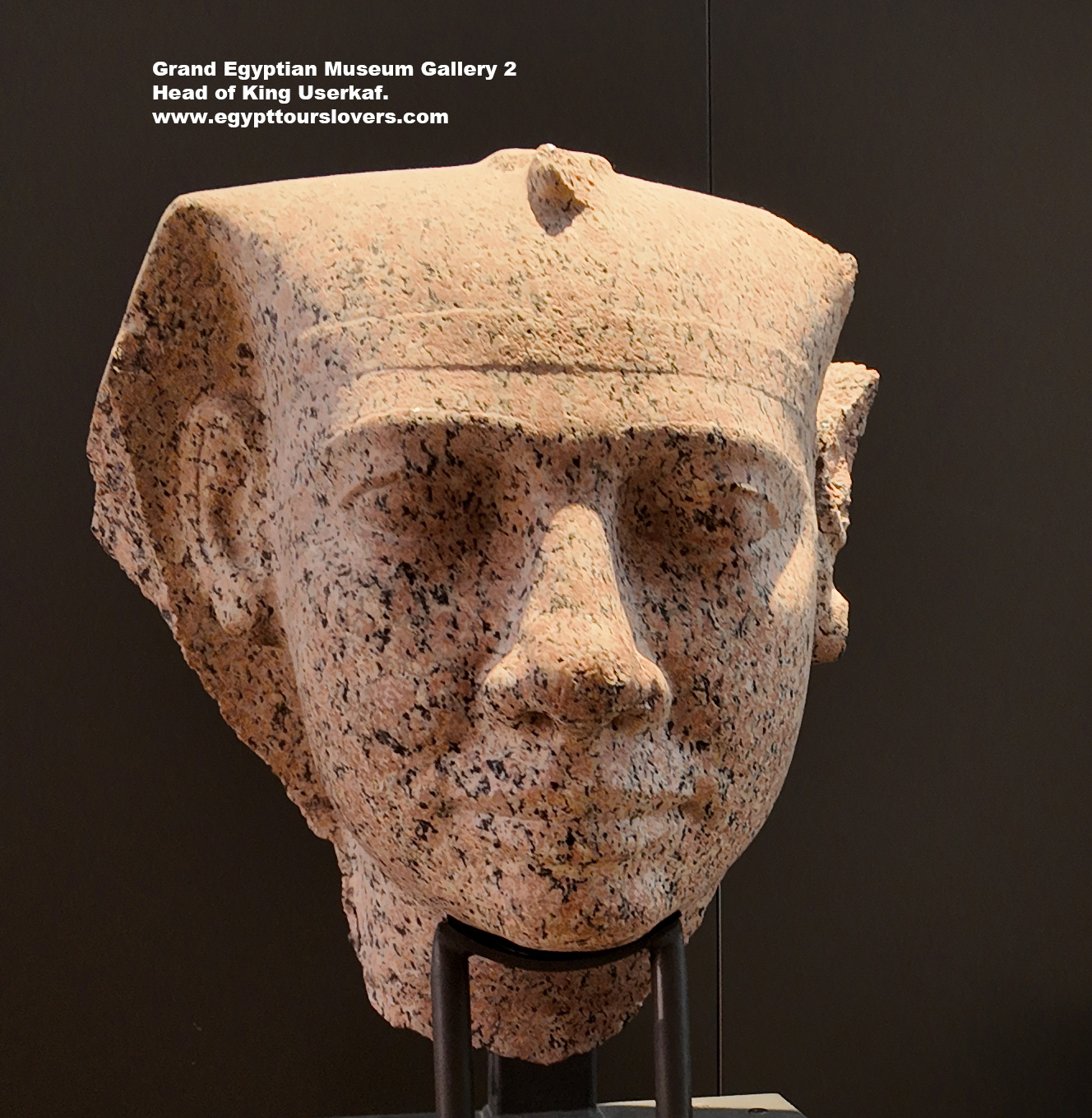
Dynasty 5 | granite | Saqqara
Head of King Userkaf.
Complete statue was probably originally over 4m tall.
———– } ———– } ———– } ———– }
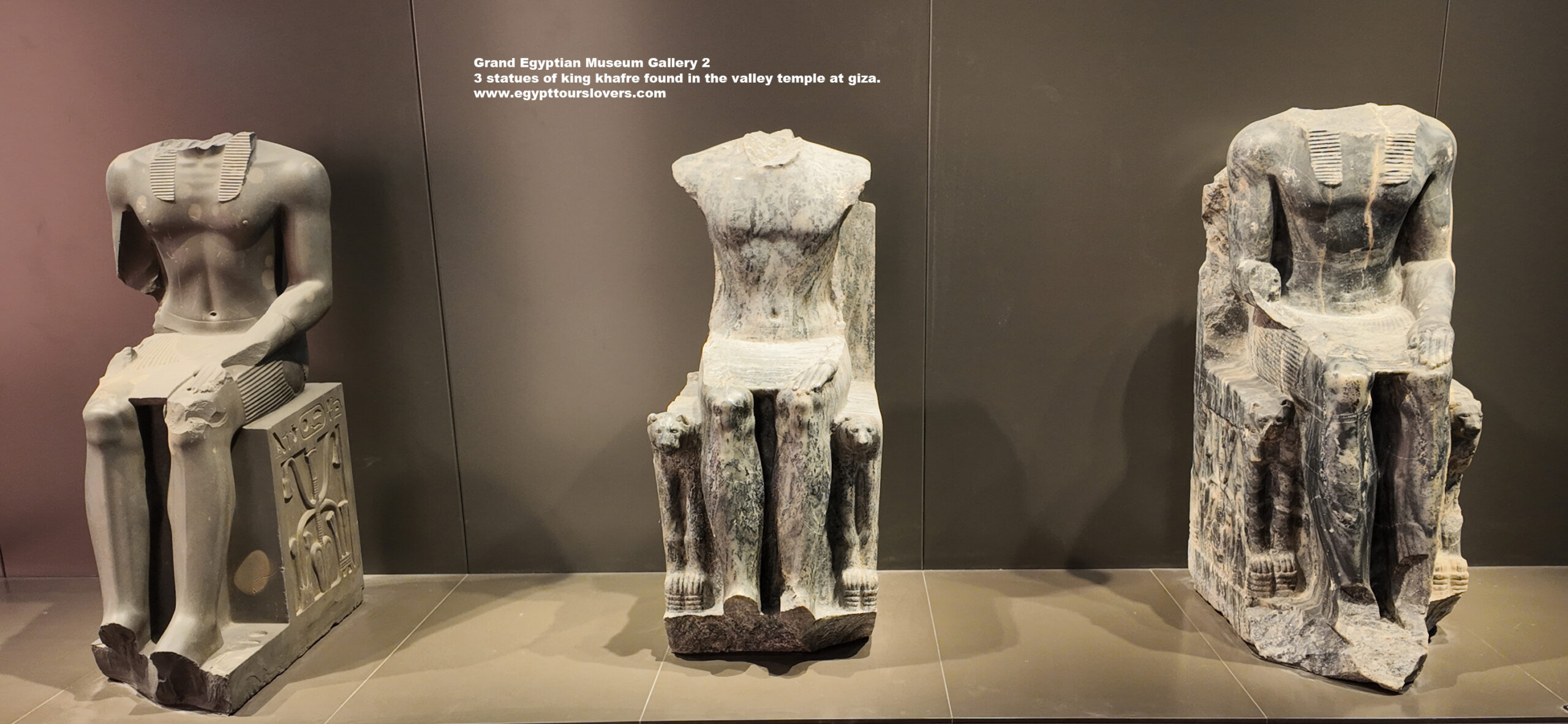
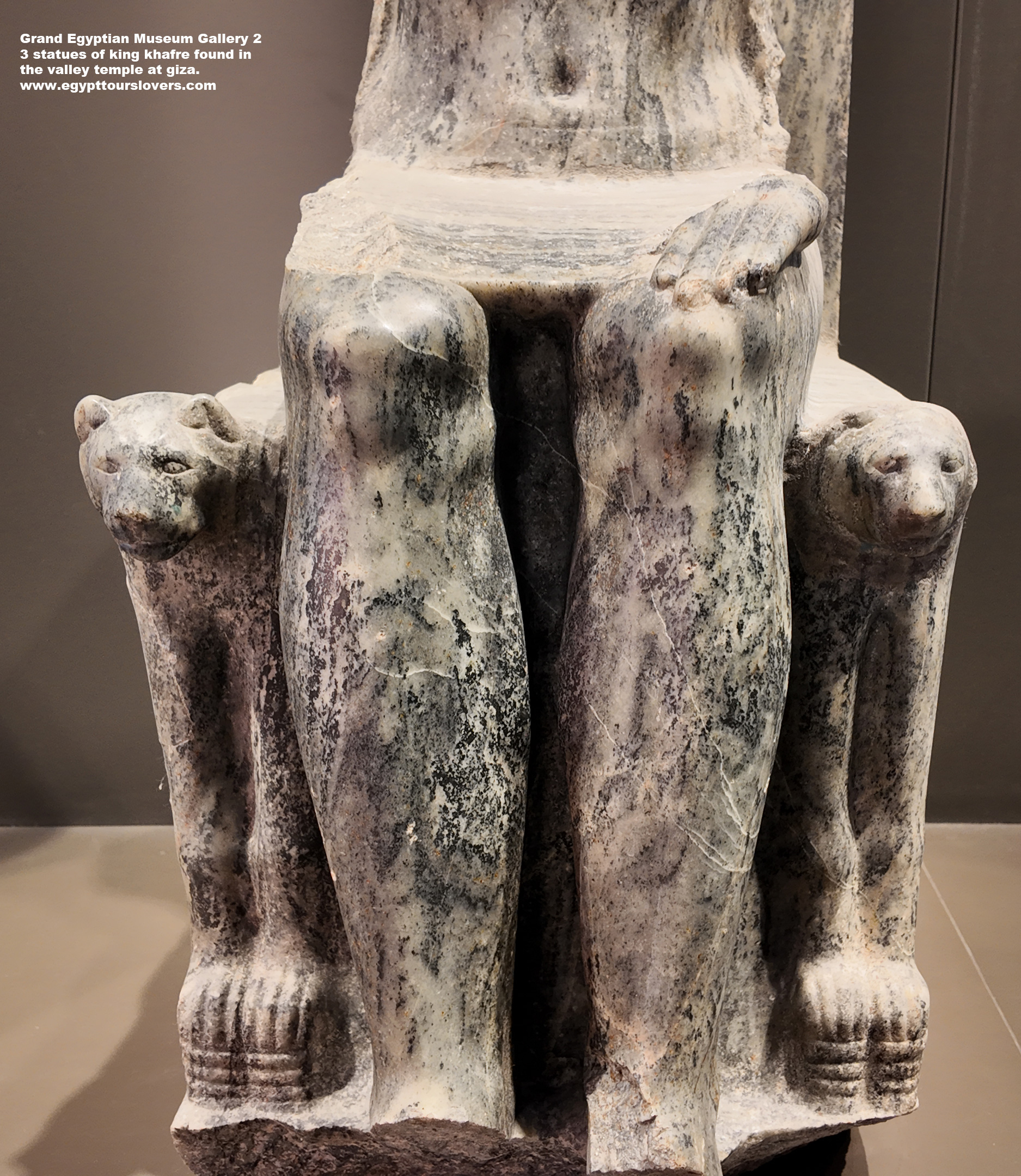
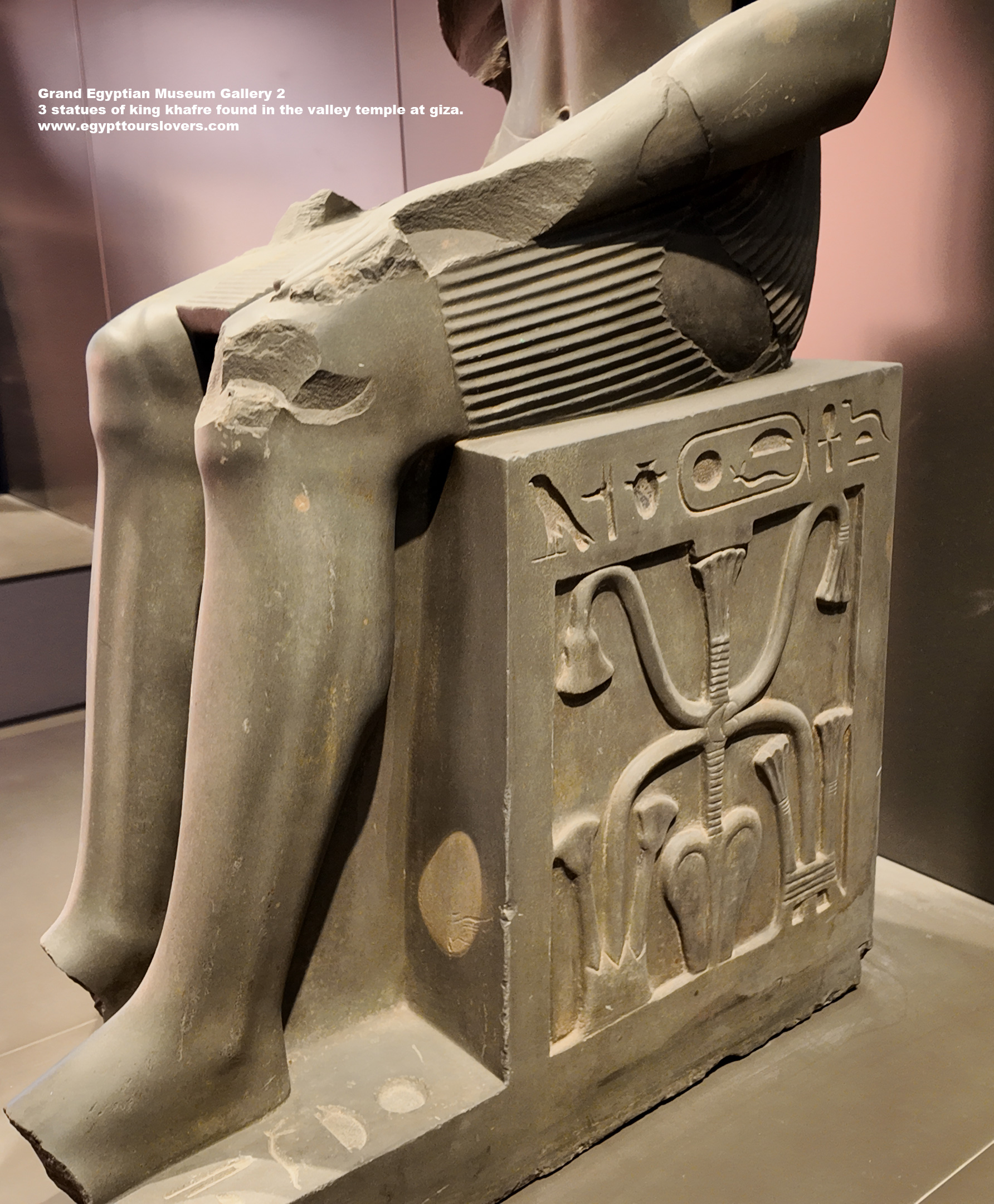
Dynasty 4 | granite | giza
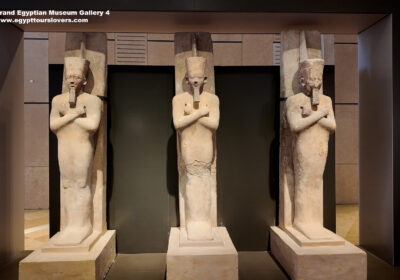
3 statues of king khafre found in the valley temple at giza.
———– } ———– } ———– } ———– }
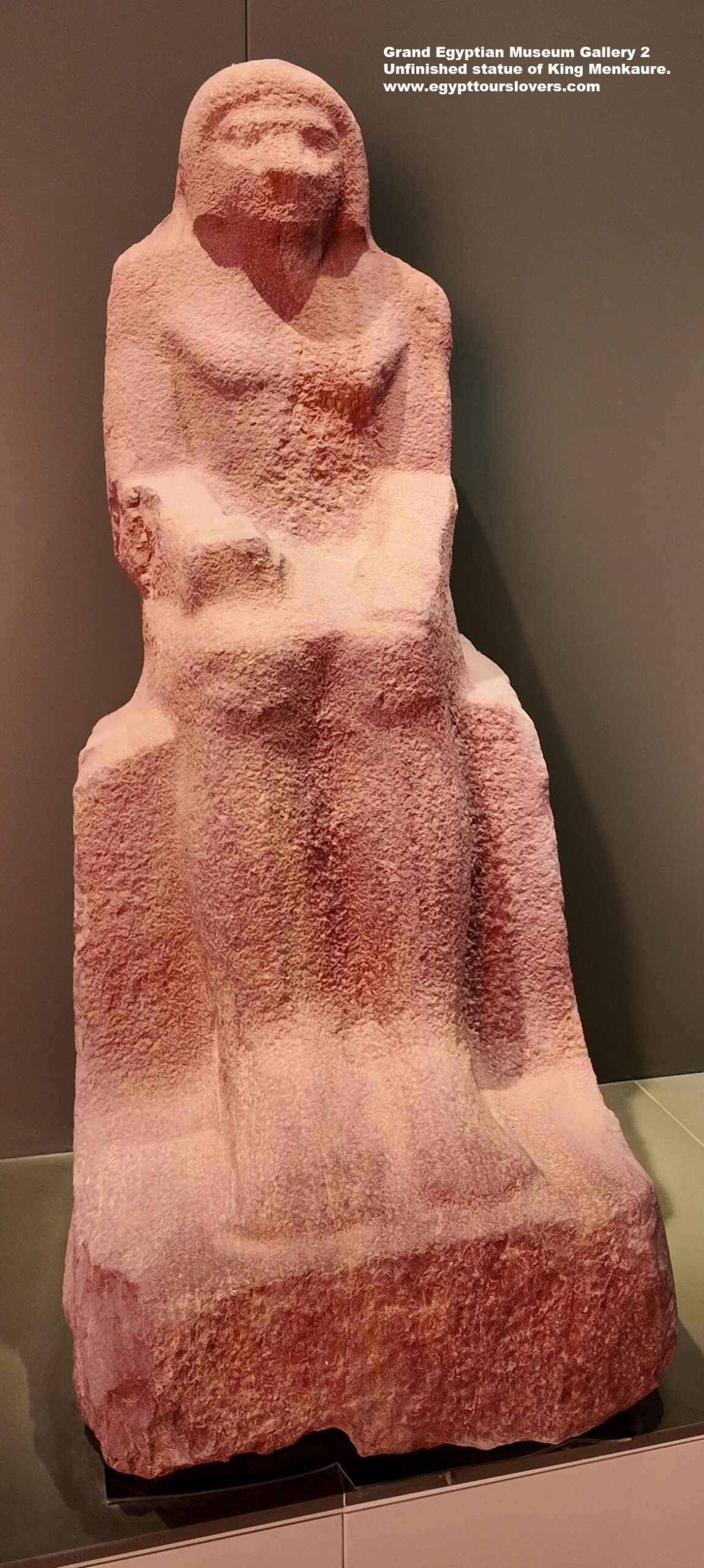
Dynasty 4 | Quartzite | giza
Unfinished statue of King Menkaure.
The statue was discovered in a Royal Sculpture Workshop near the king’s valley temple in the pyramid complex.
———– } ———– } ———– } ———– }
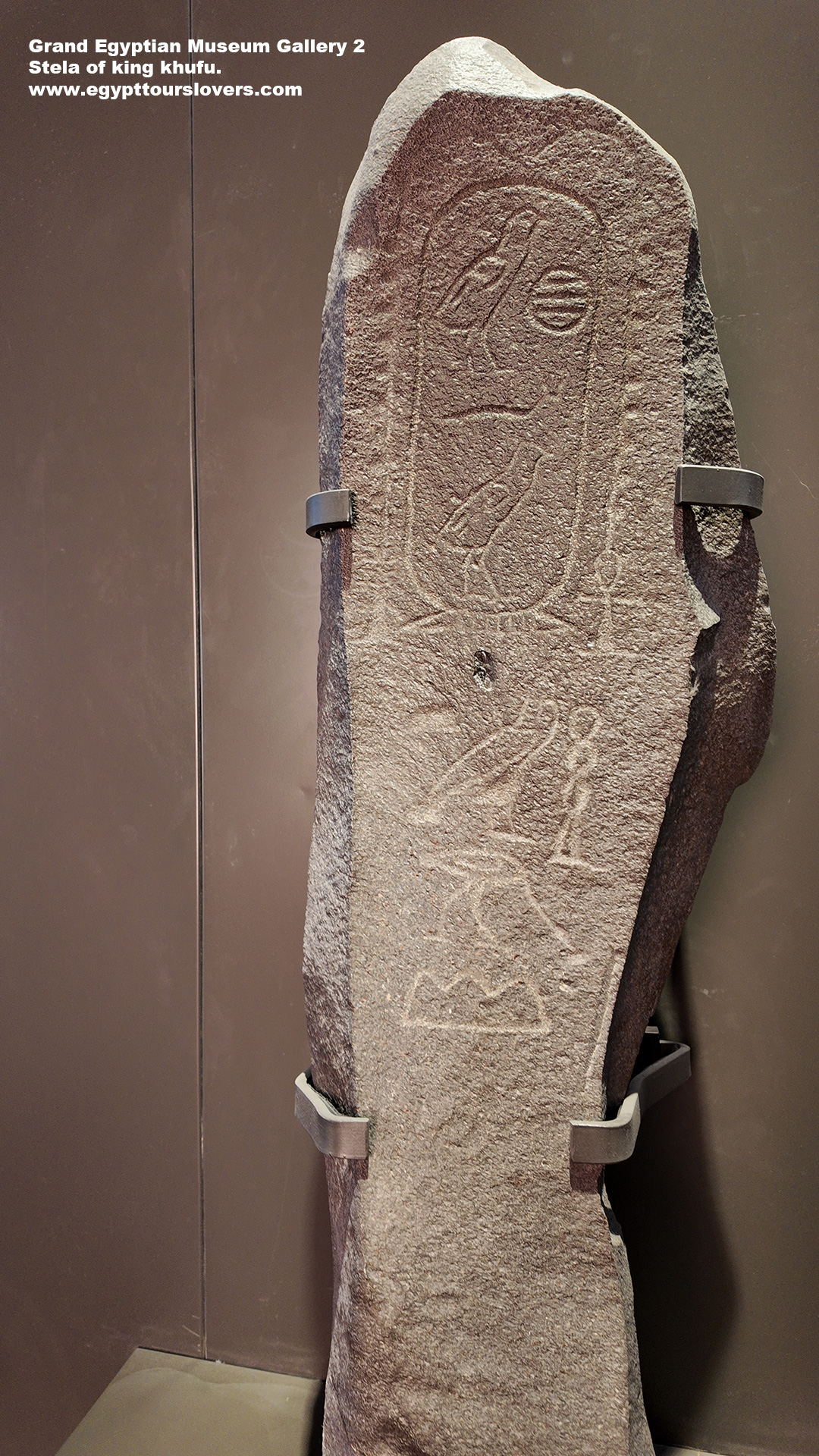
Dynasty 4 | granite | Nubian
Stela of king khufu.
Found in Gneiss Quarries west of modern lake Nasser.
———– } ———– } ———– } ———– }
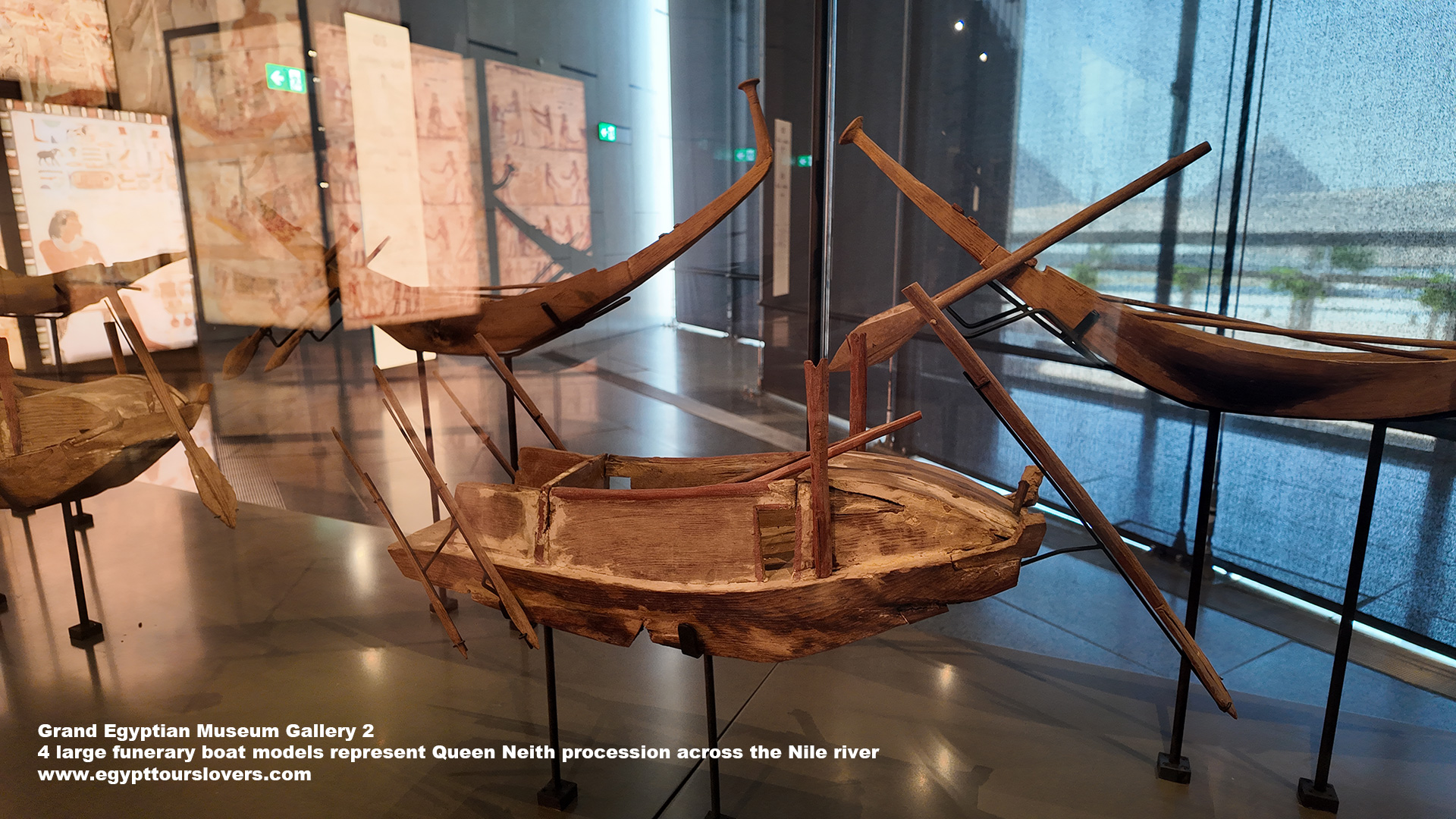
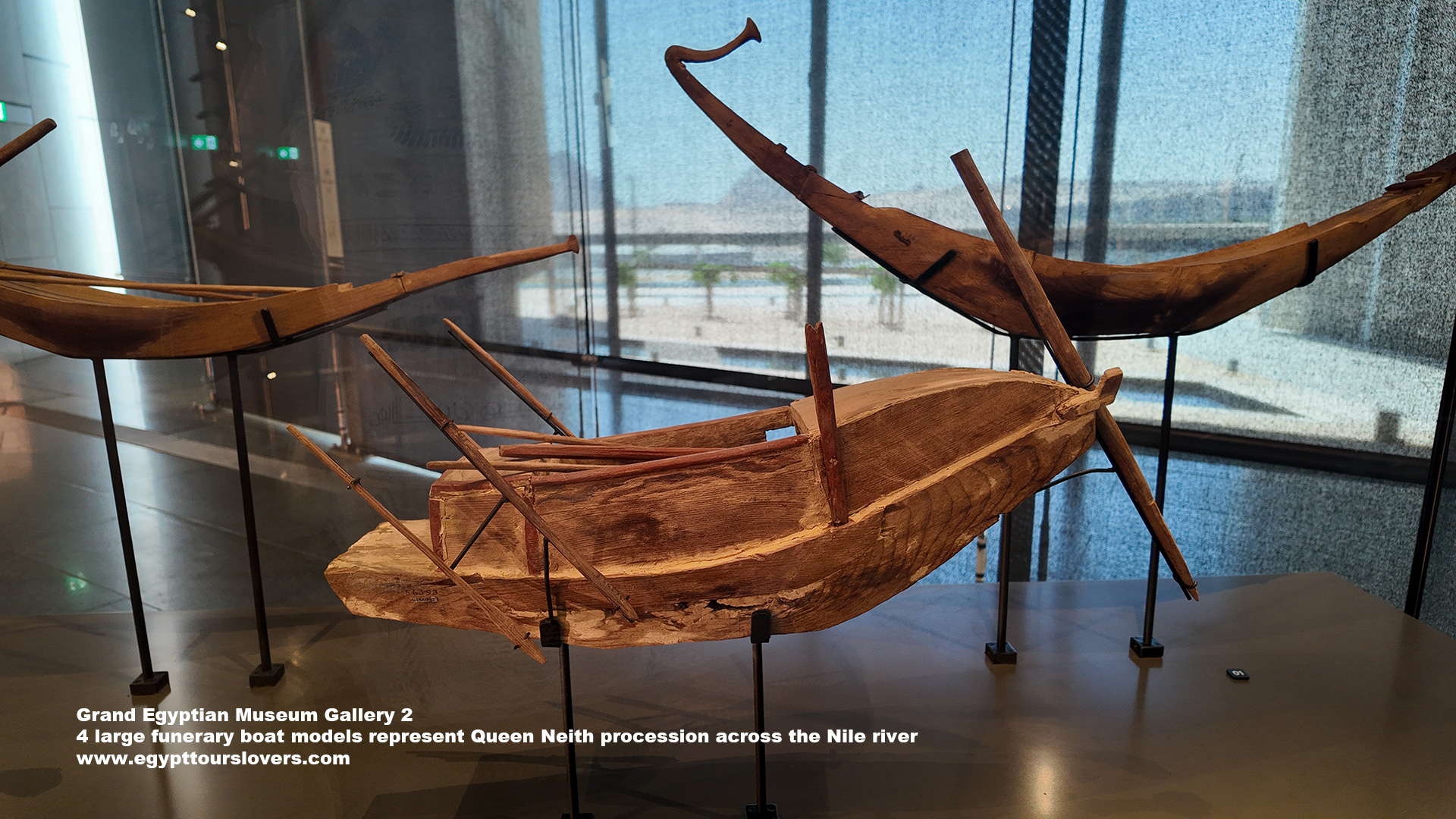
Dynasty 6 | wood, pigment | giza
4 large funerary boat models represent Queen Neith procession across the Nile river, when the queen coffin, canopic chest, furniture…
———– } ———– } ———– } ———– }
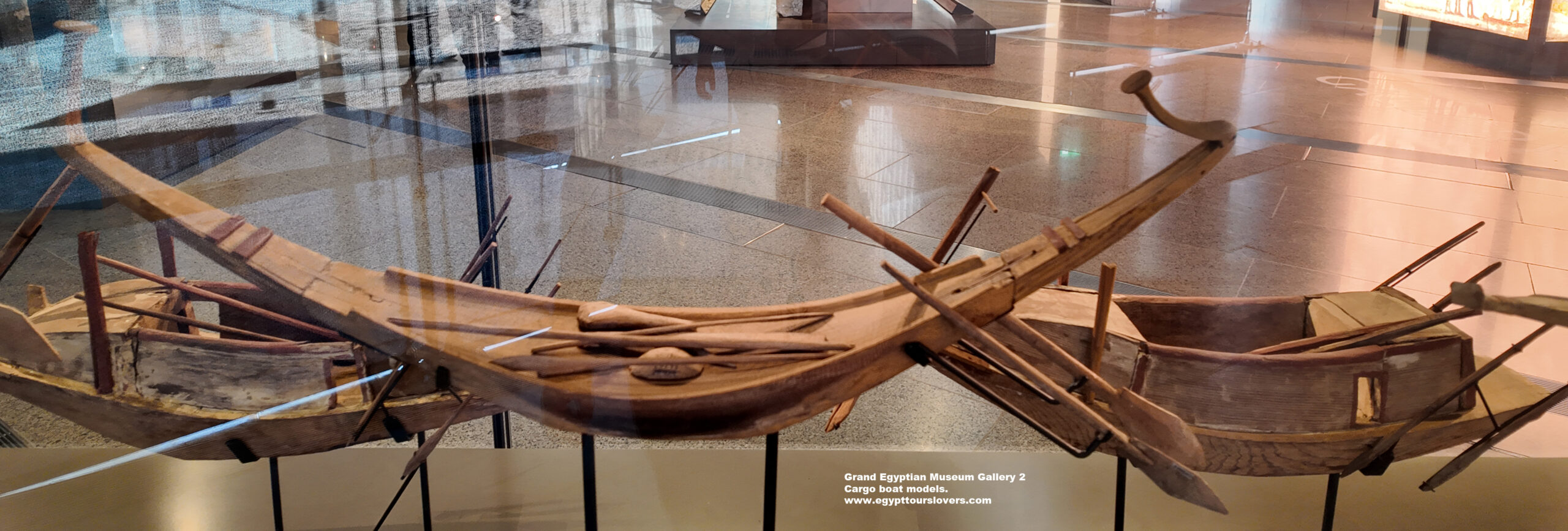
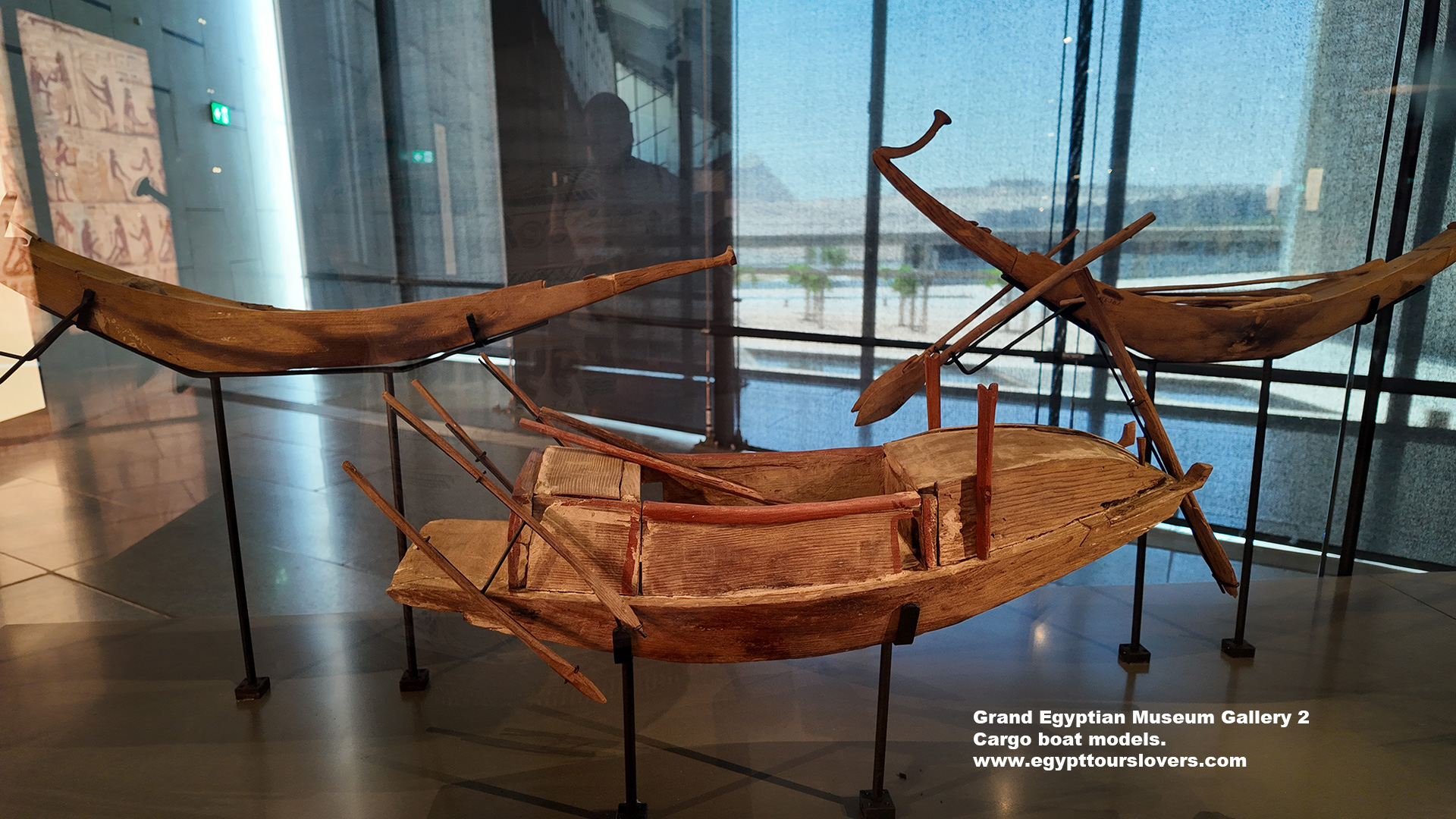
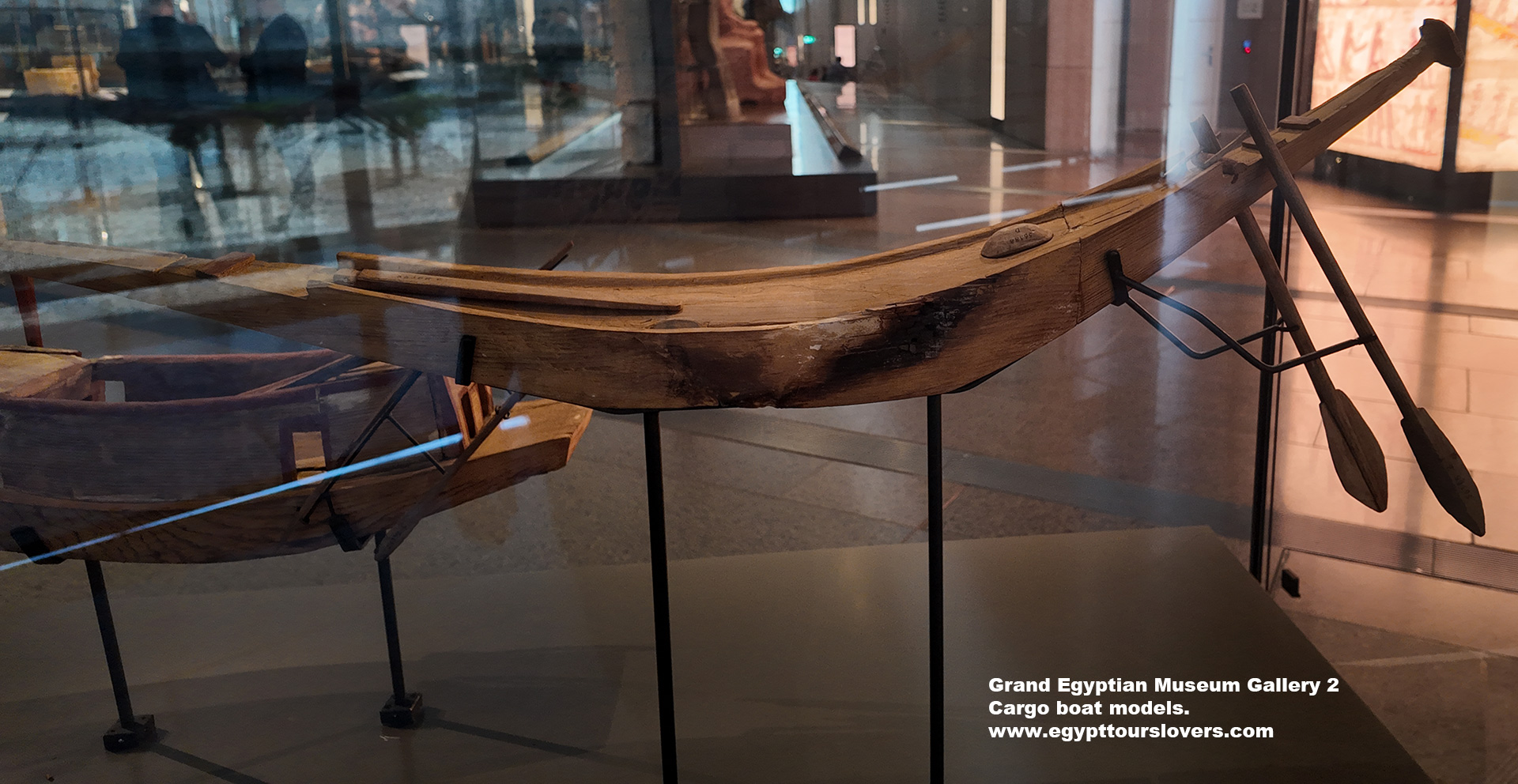
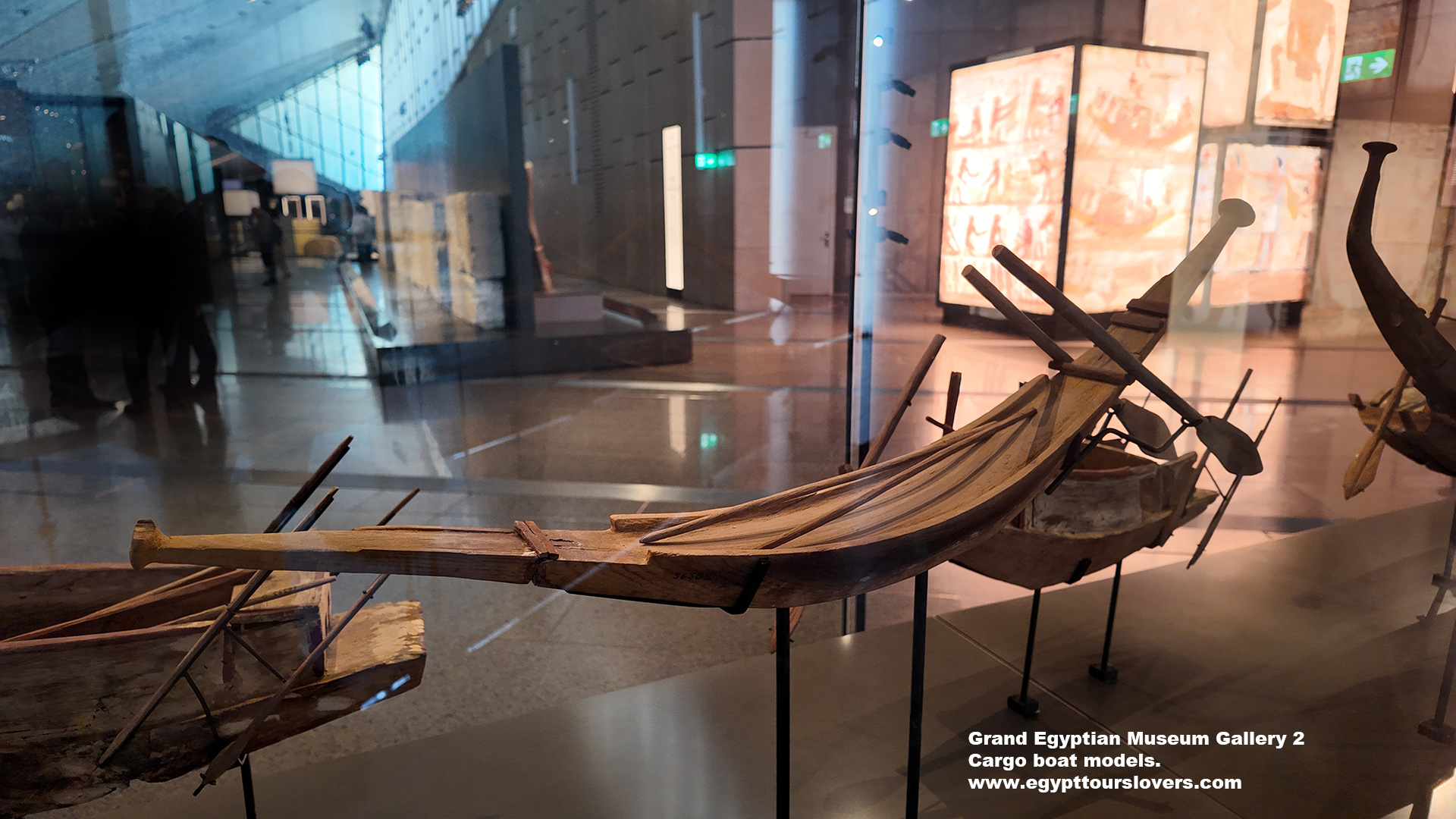
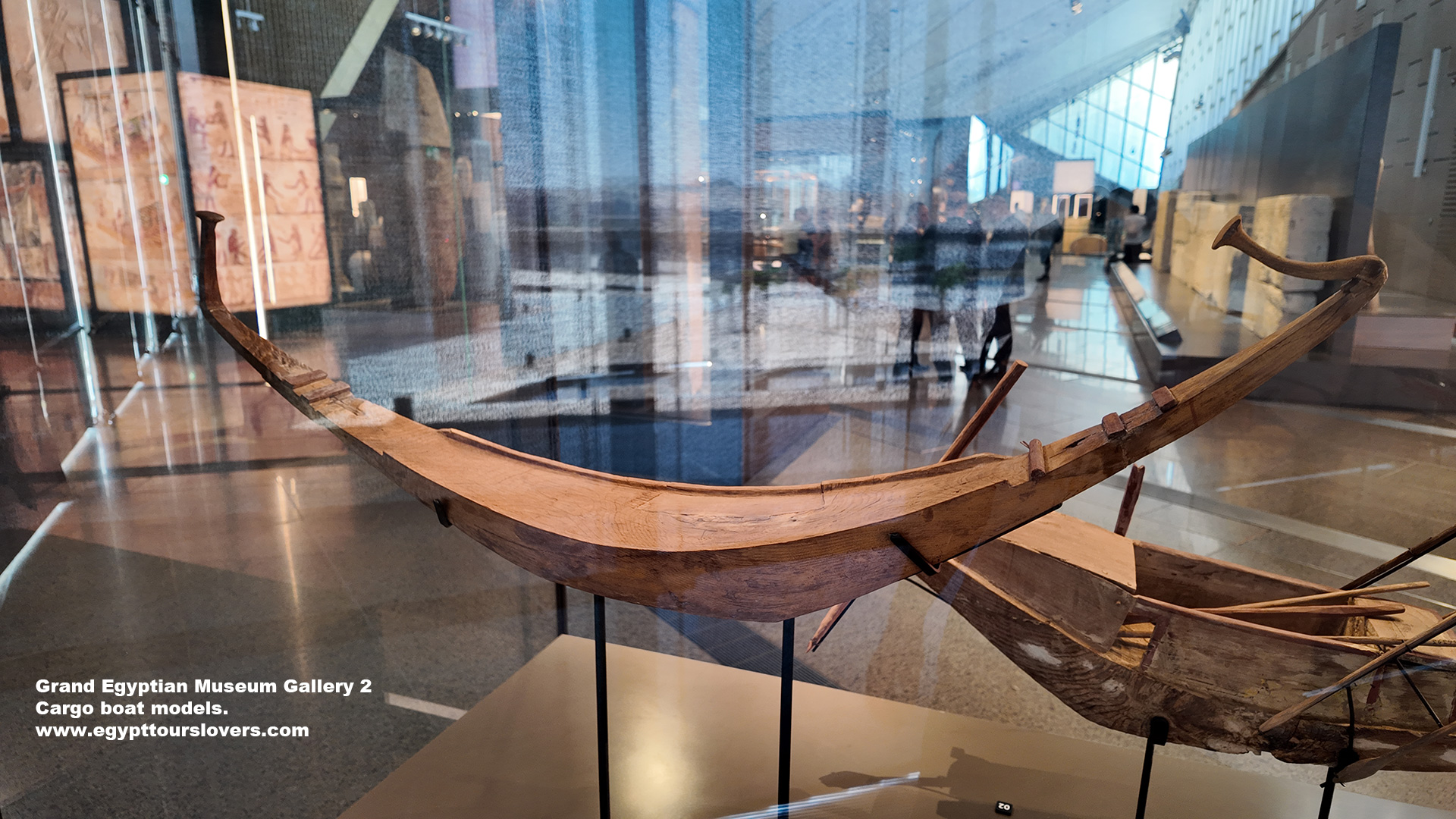
Dynasty 6 | wood, pigment | giza
Cargo boat models.
Boat used to carry cargo from one site to the nile river to the other.
Every boat contains a small cabin and platform at the front.
———– } ———– } ———– } ———– }
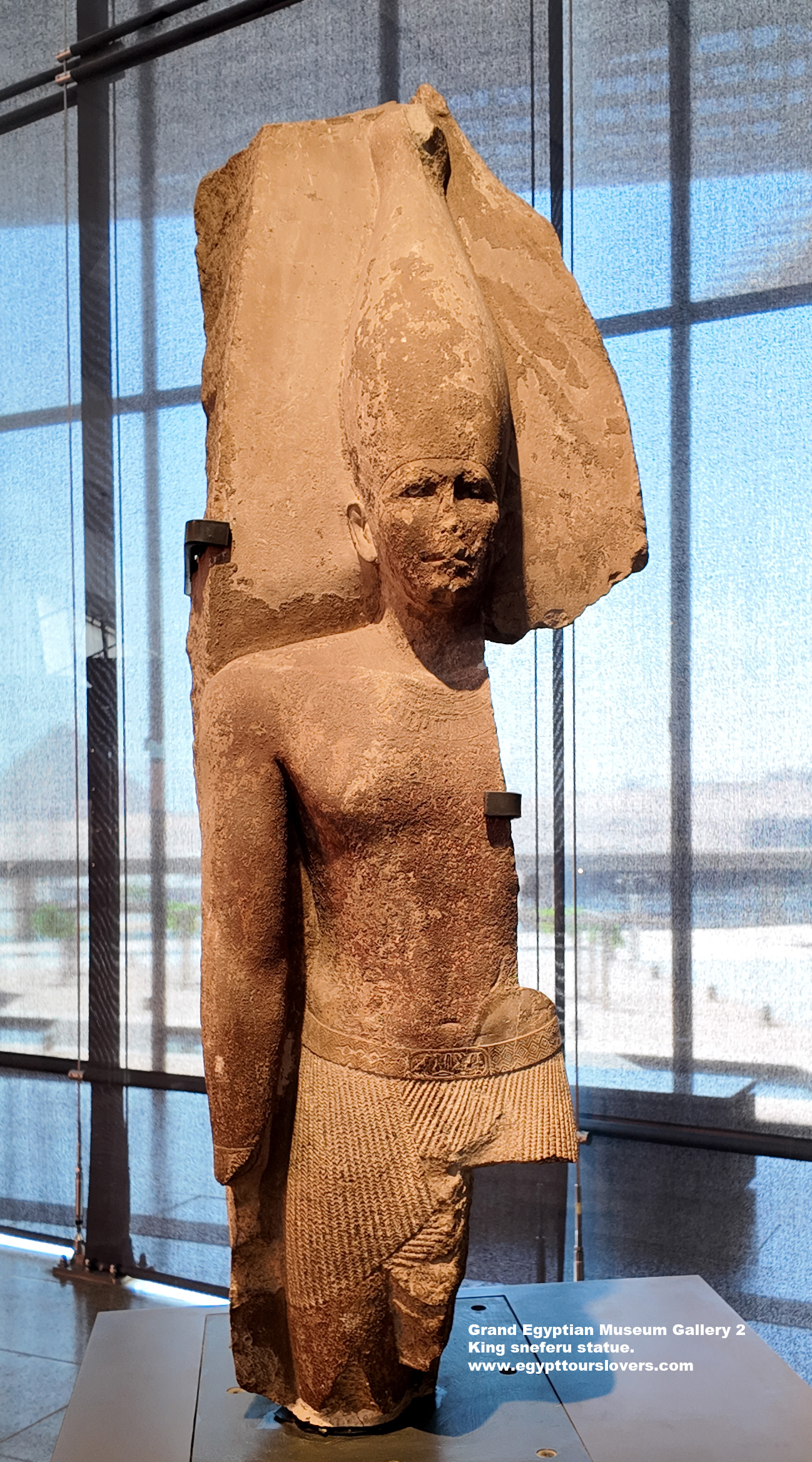
Dynasty 4 | limestone, pigment | dahshur
King sneferu statue.
A life-sized royal image was carved coming out of the back wall of each of 6 chapels in sneferu Bent Pyramid complex in Dahshur.
Design statue: the king in the white crown of upper Egypt with his cartouche carved one the belt buckle.
———– } ———– } ———– } ———– }
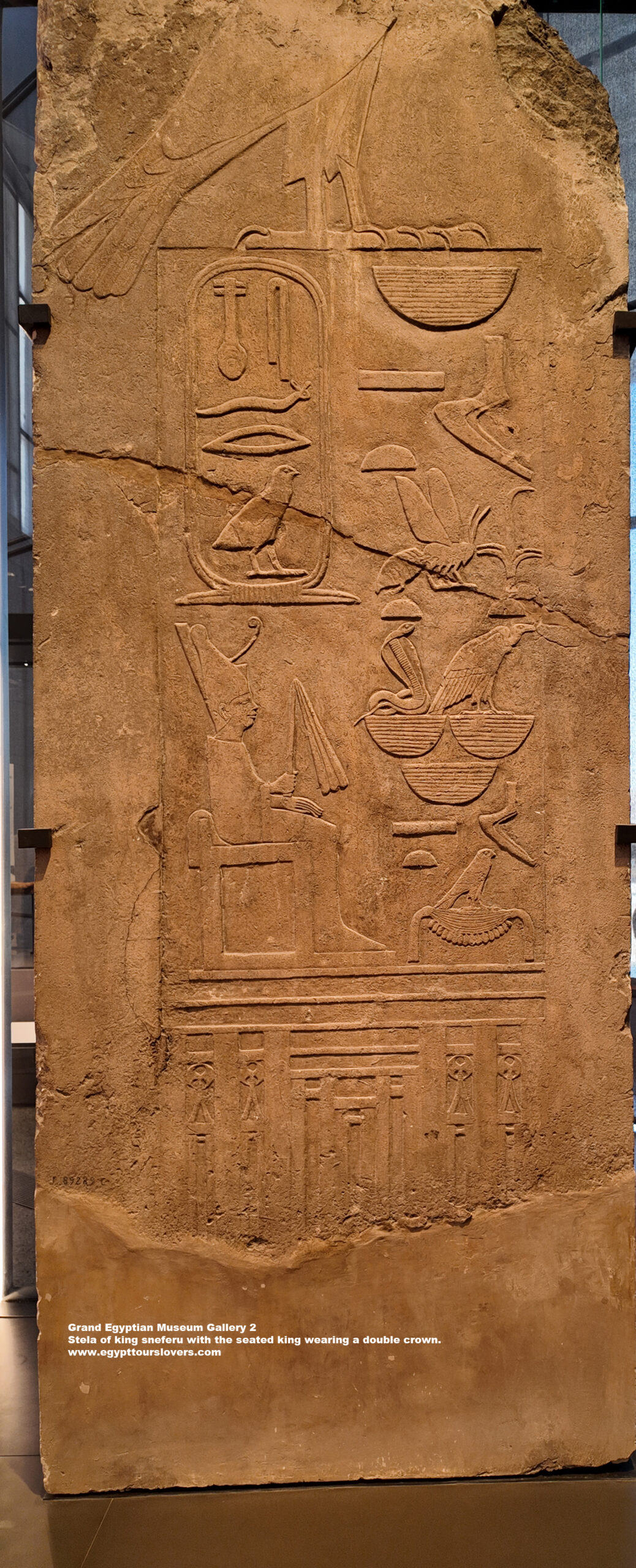
Dynasty 4 | limestone | dahshur
Stela of king sneferu with the seated king wearing a double crown.
One of the earliest examples of a cartouche.
king sneferu first king add “king of upper and lower Egypt” names inside cartouche to protect and encircle…
———– } ———– } ———– } ———– }
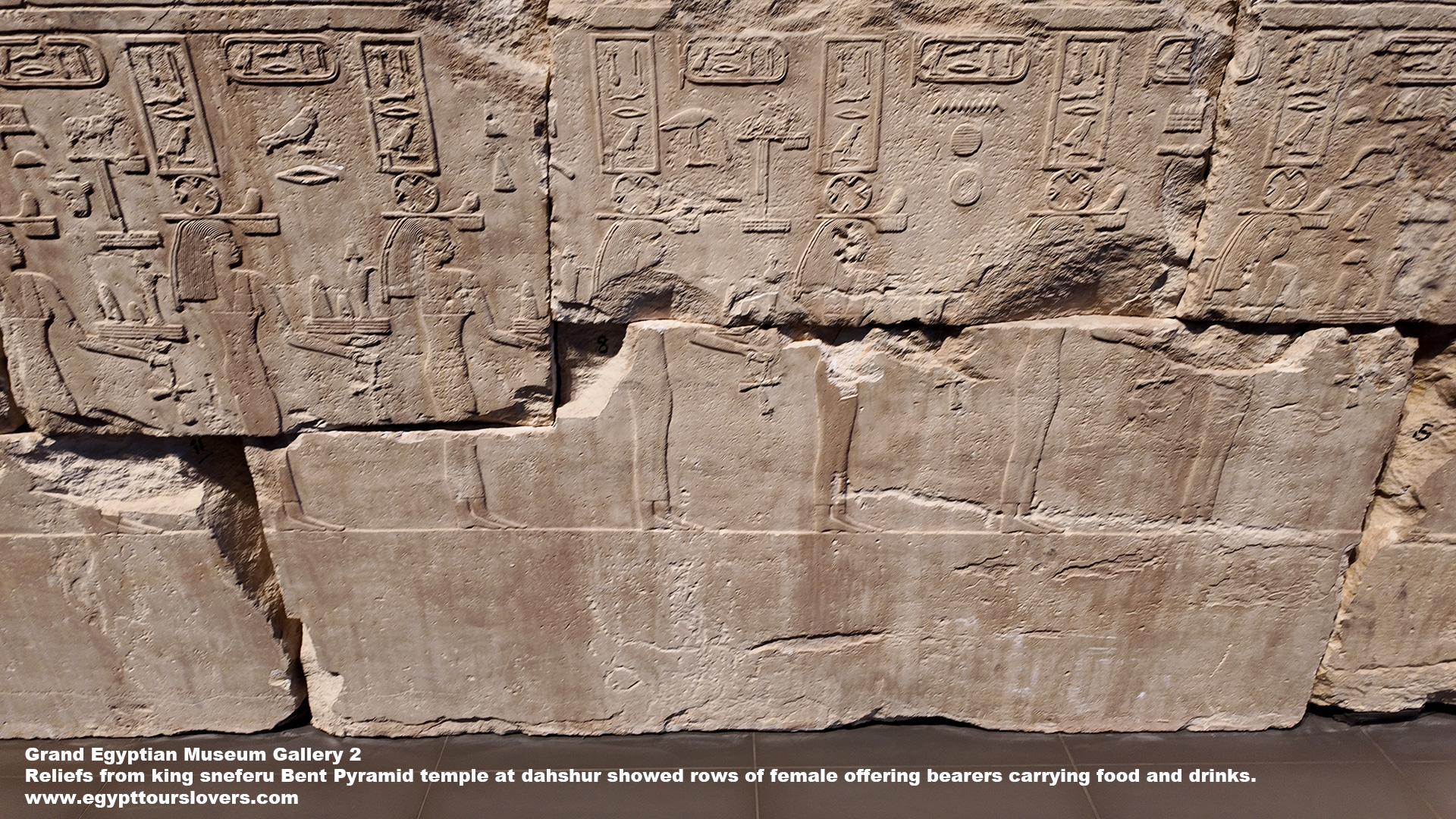
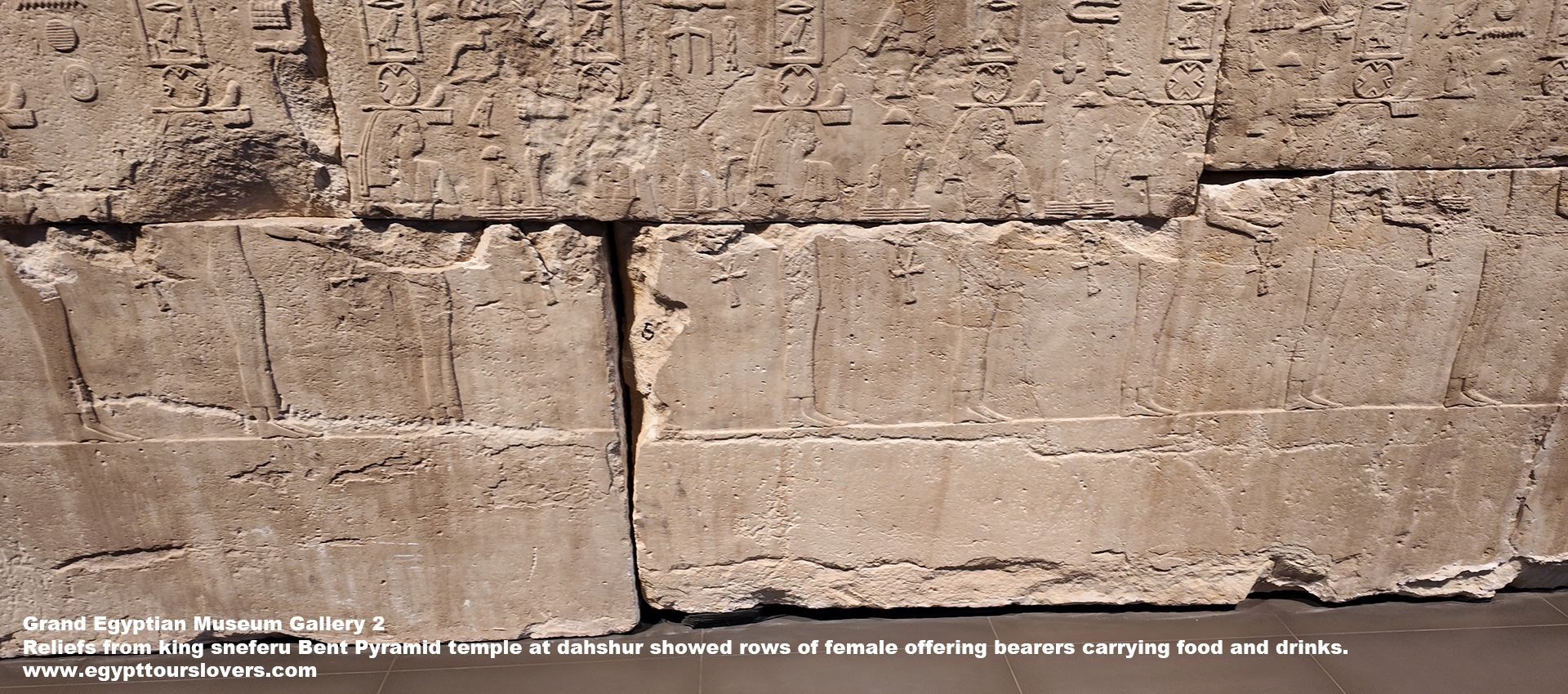
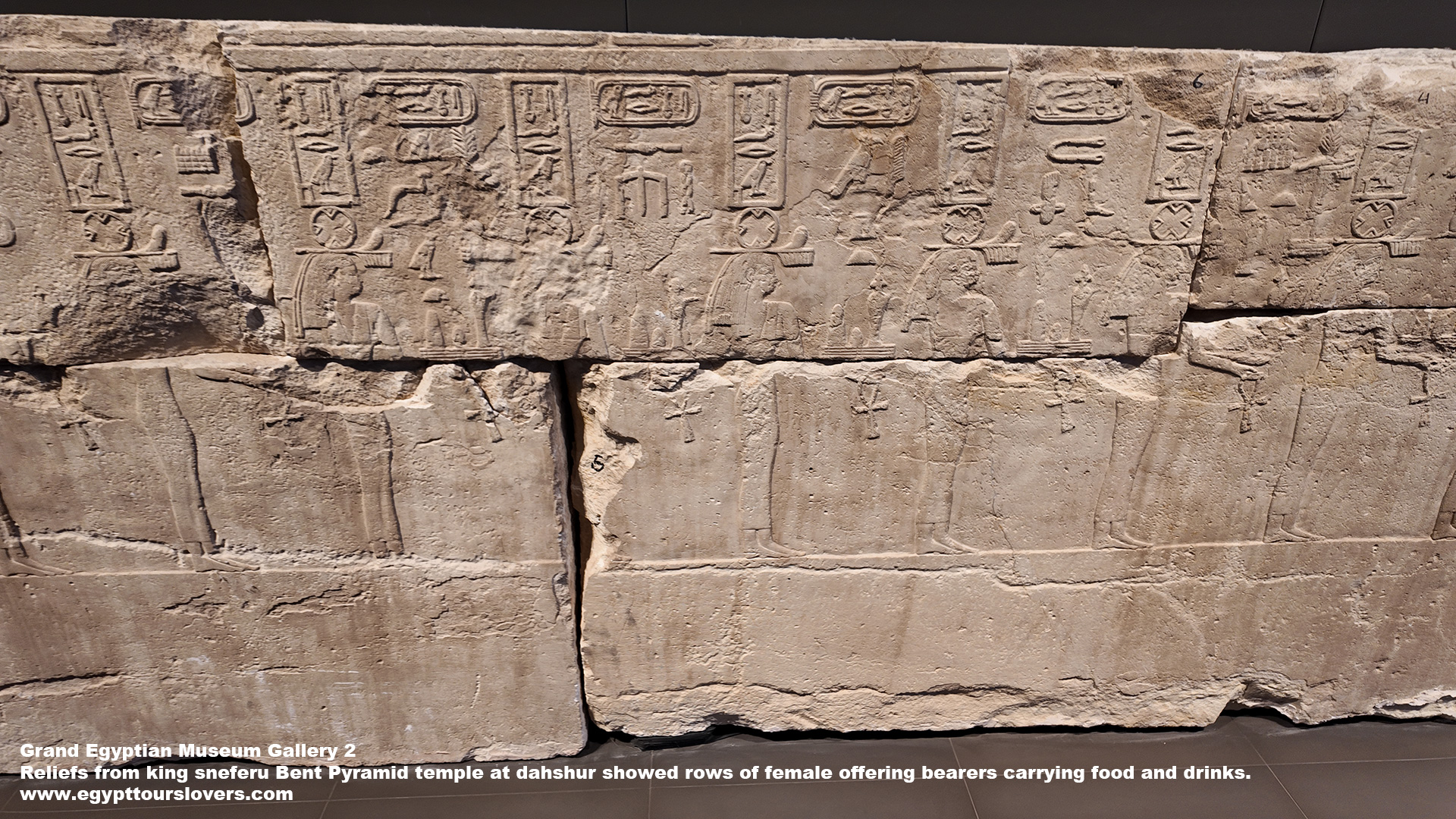
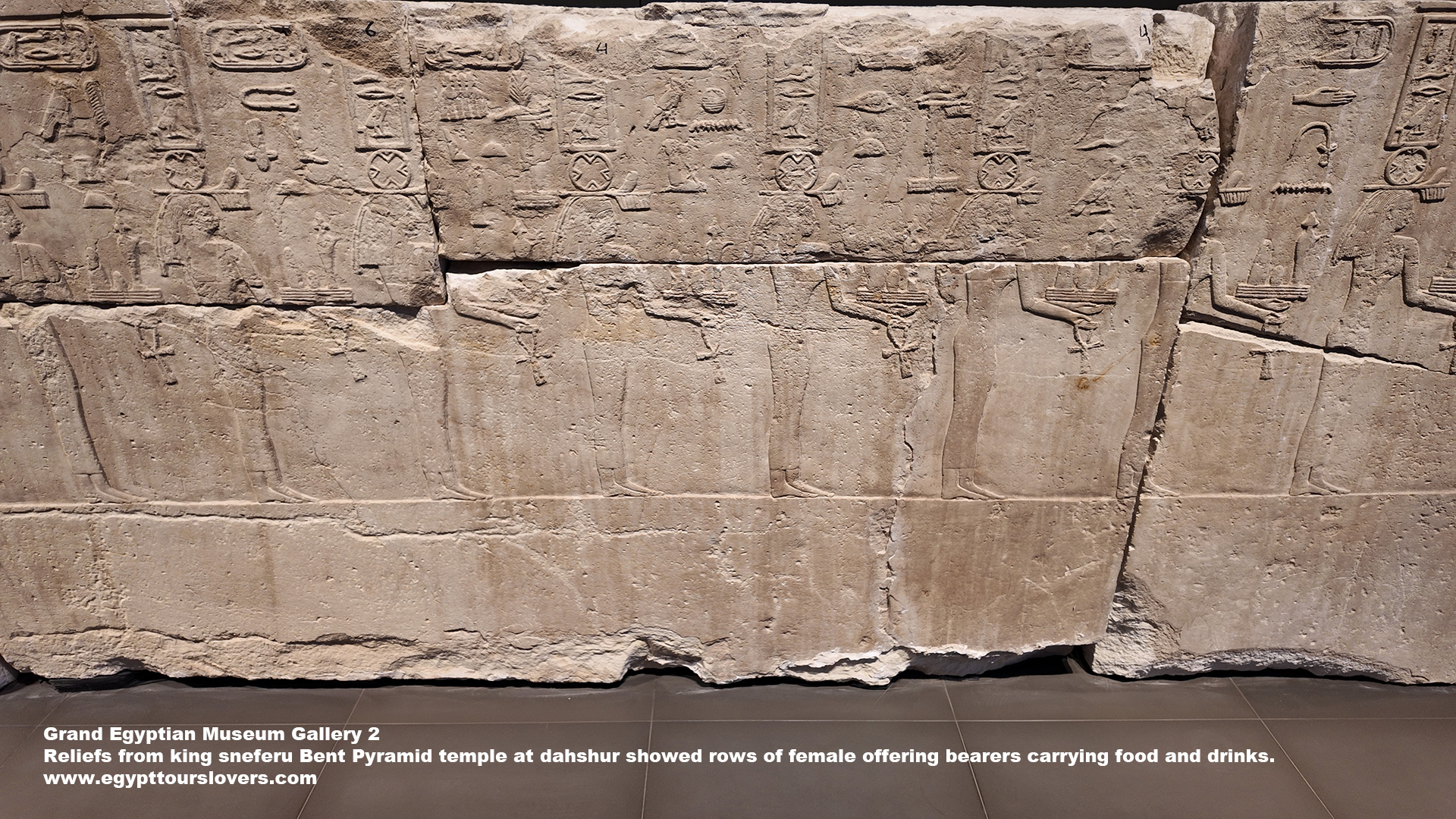
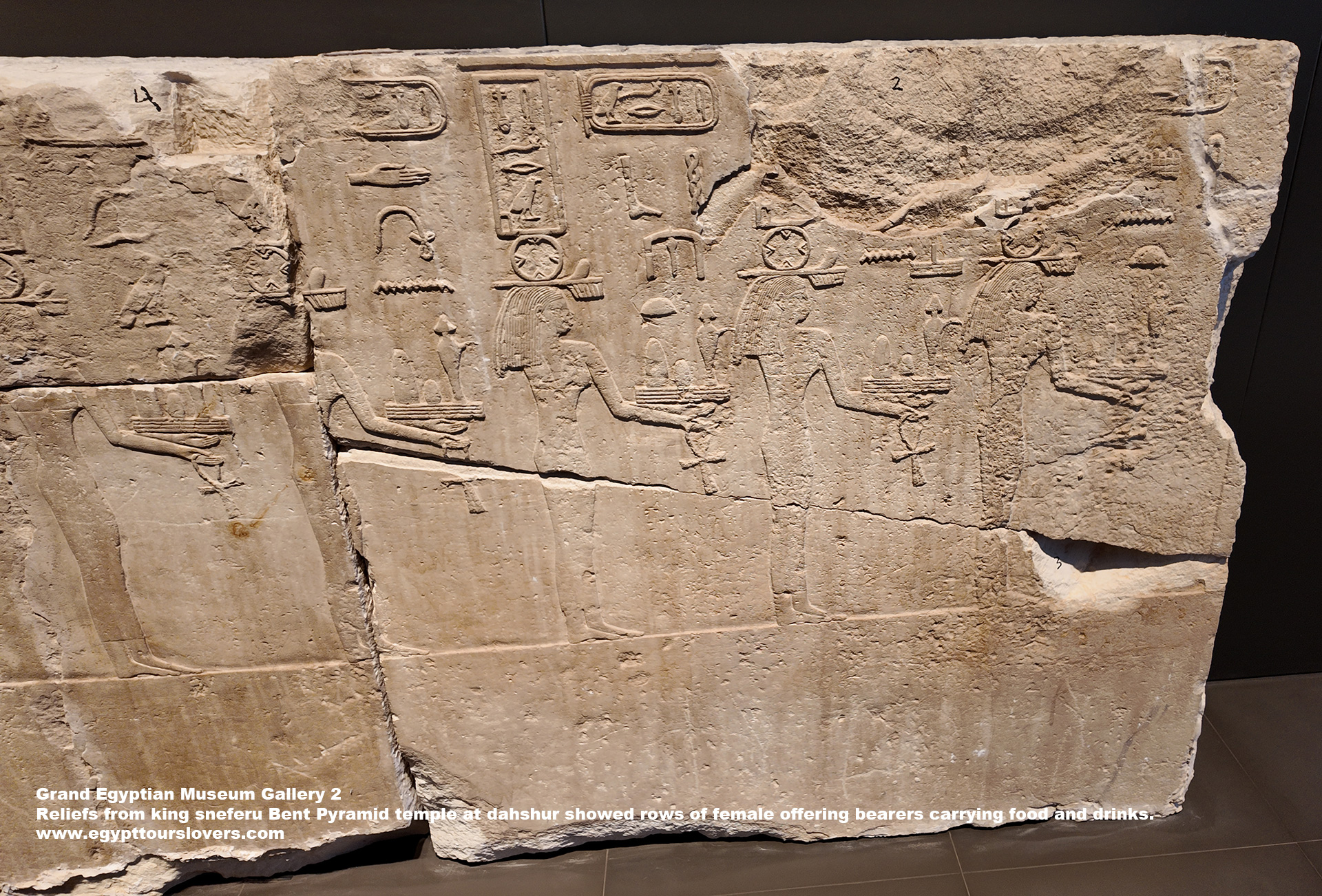
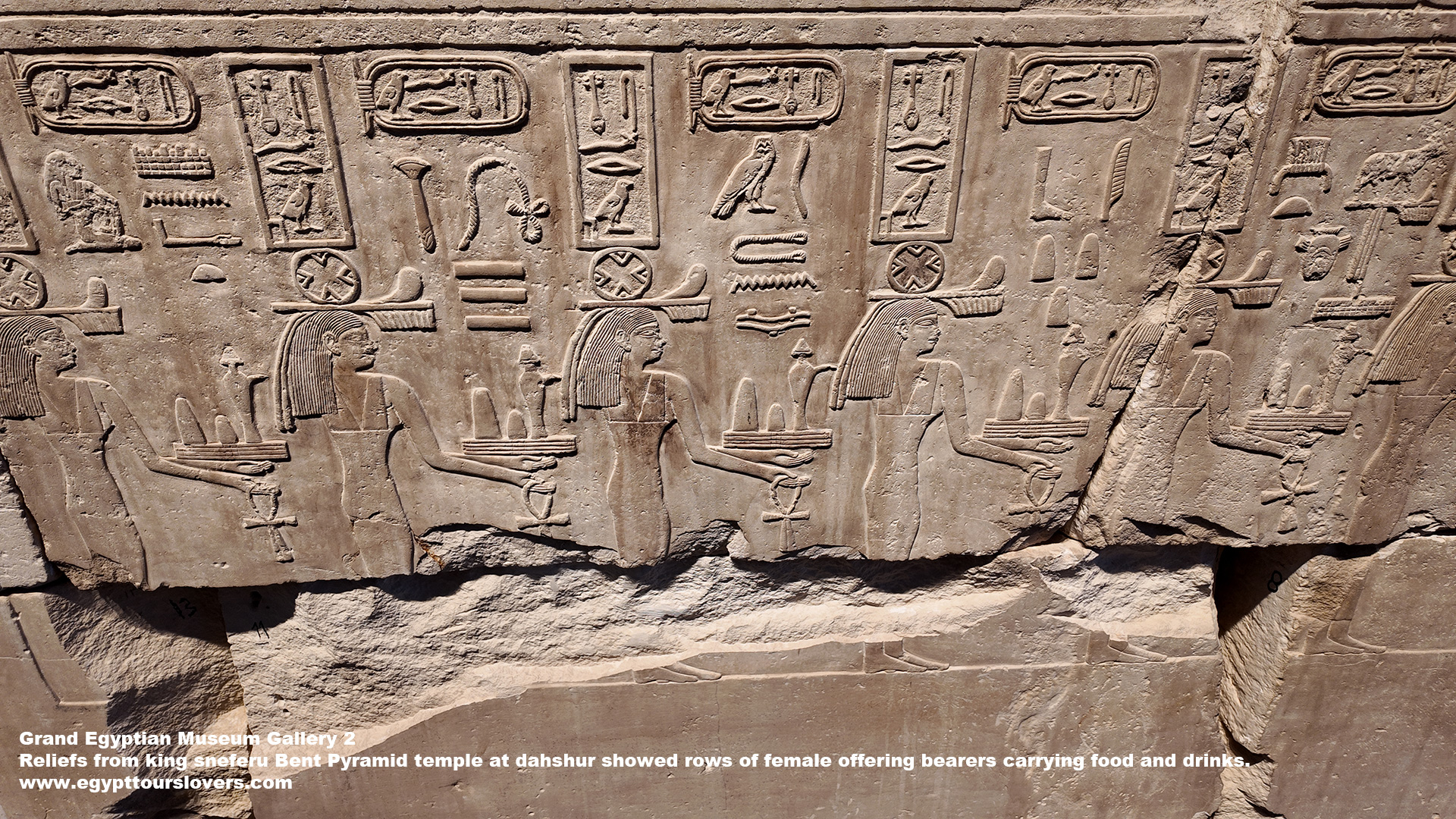
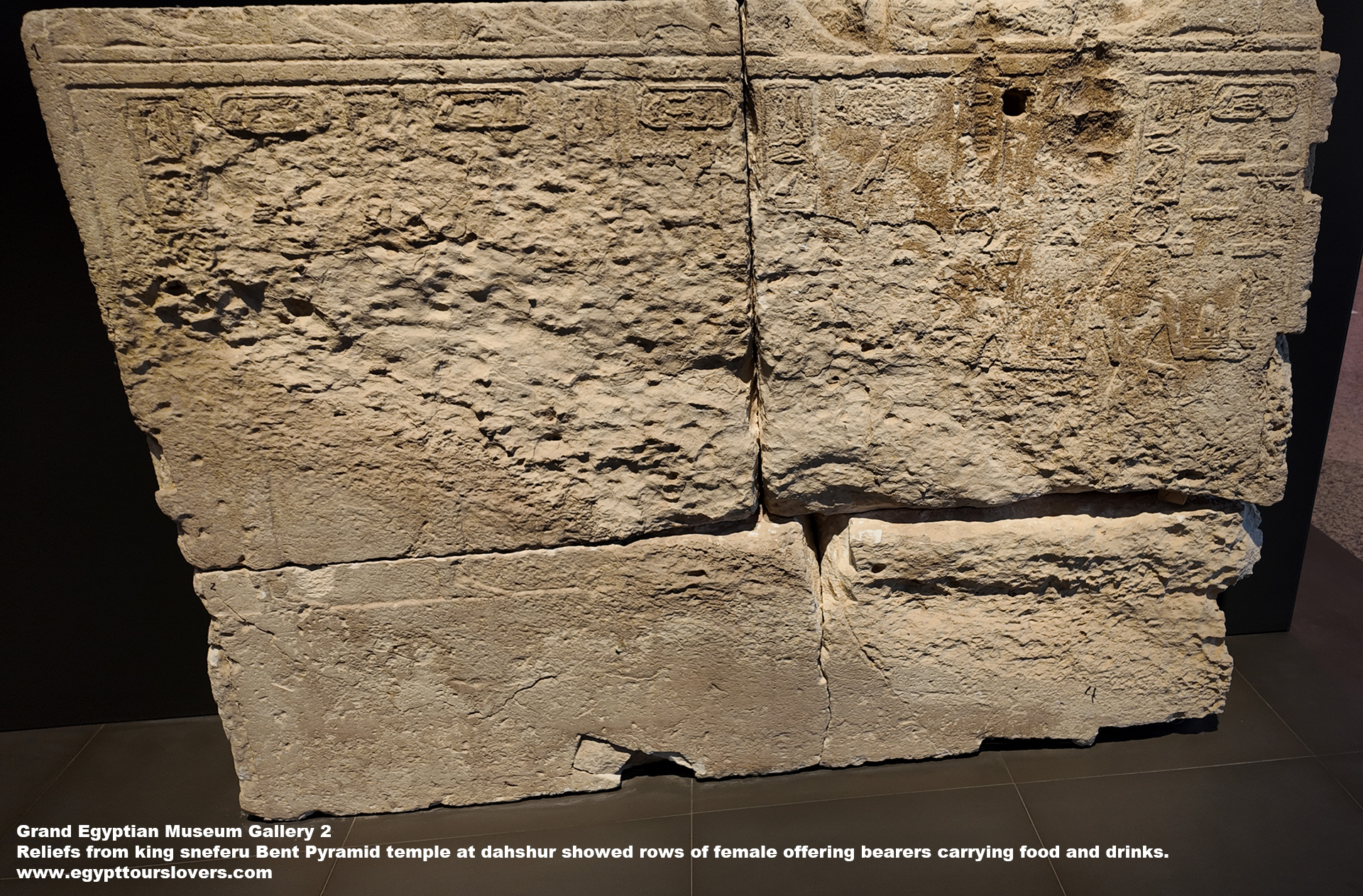
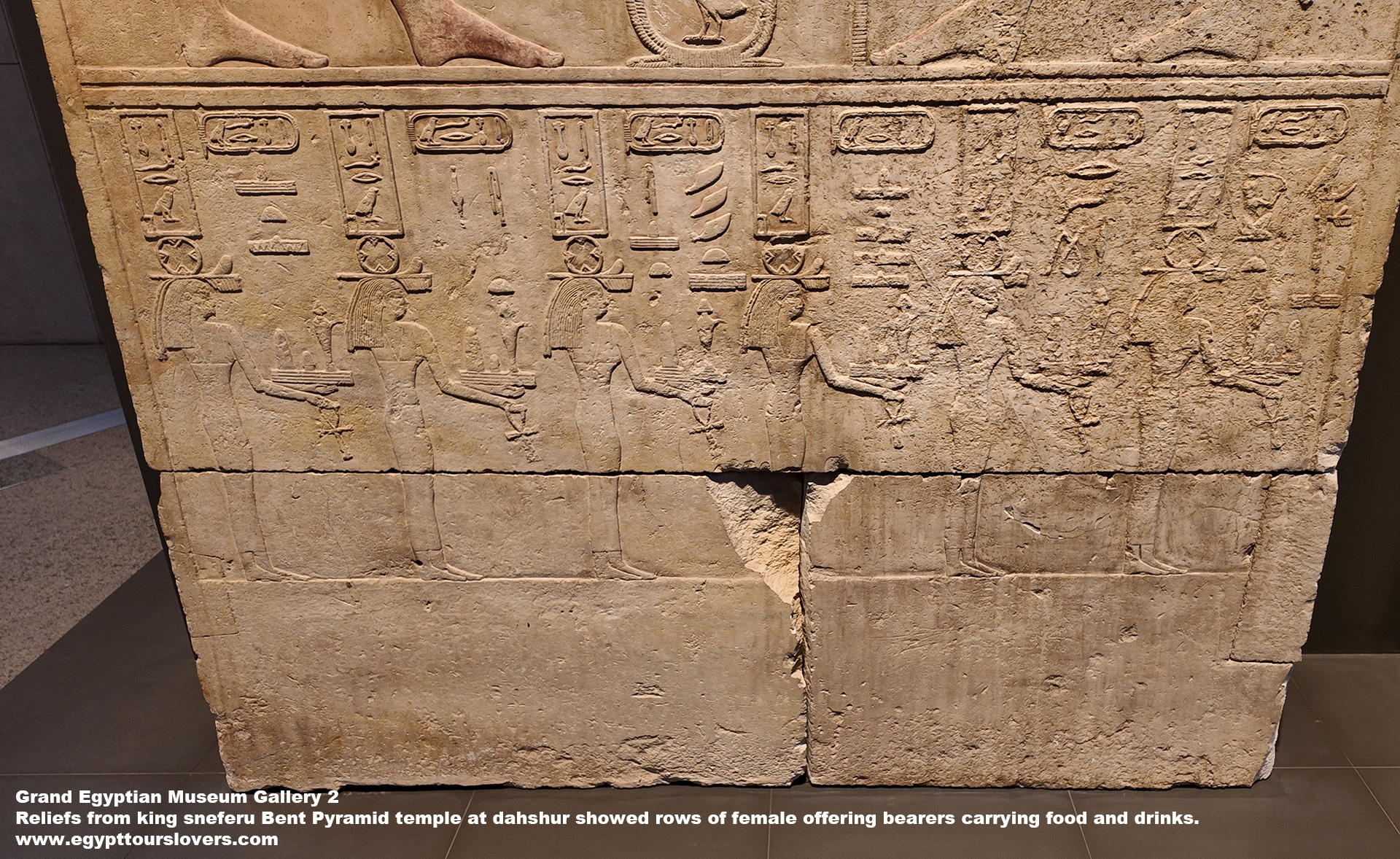
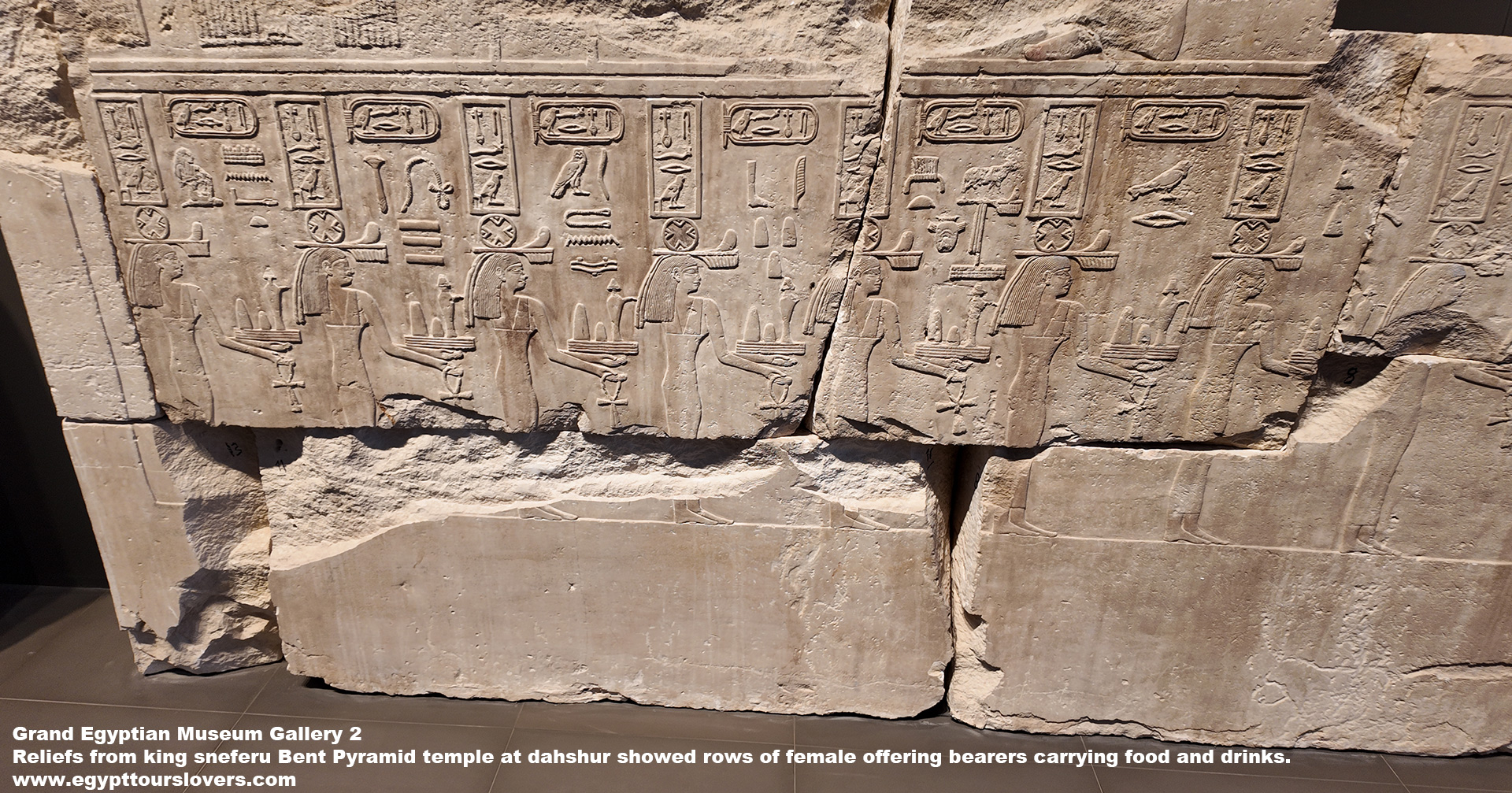
Dynasty 4 | limestone | dahshur
Reliefs from king sneferu Bent Pyramid temple at dahshur showed rows of female offering bearers carrying food and drinks.
These represented his estates in upper Egypt “personification of estates”.
———– } ———– } ———– } ———– }
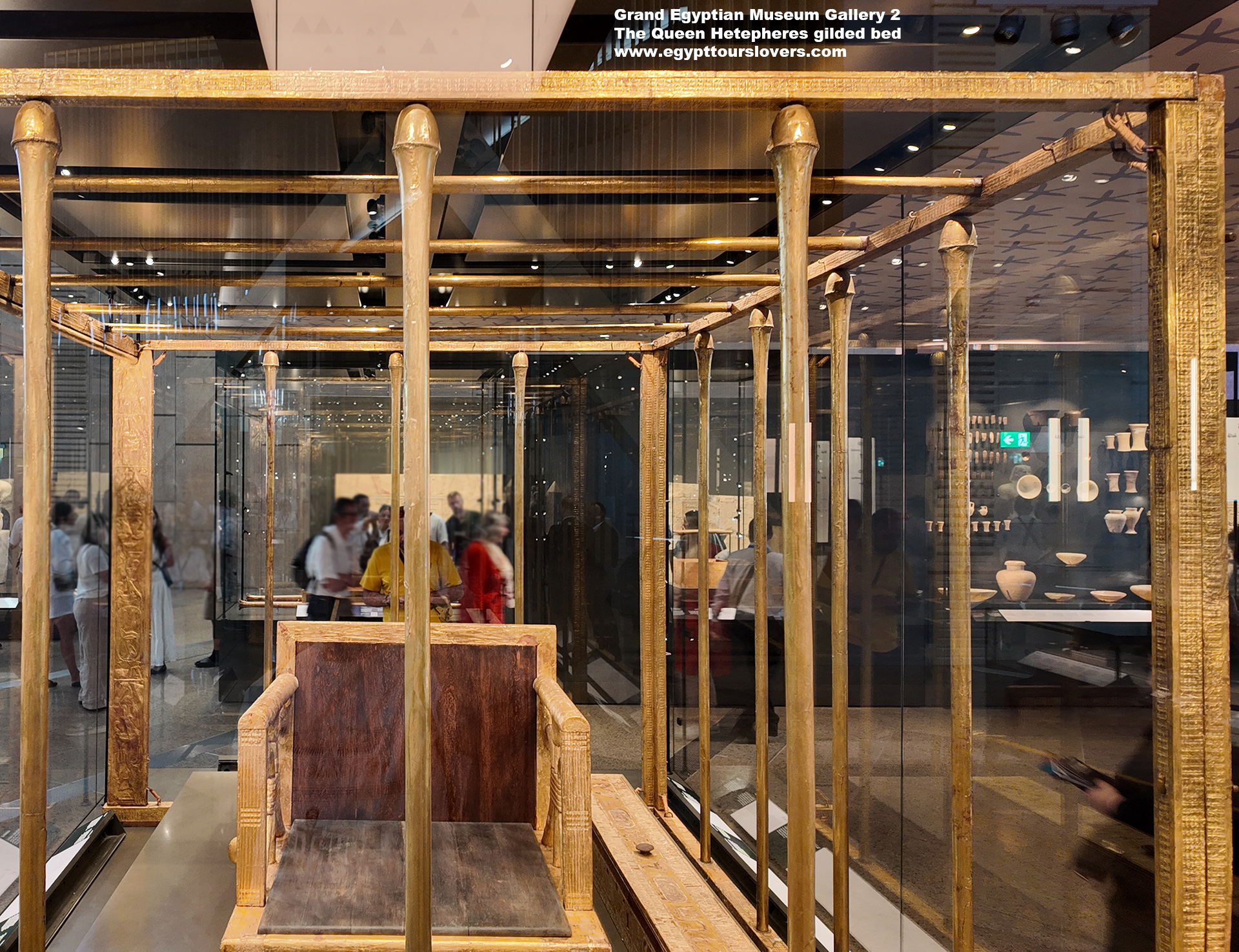
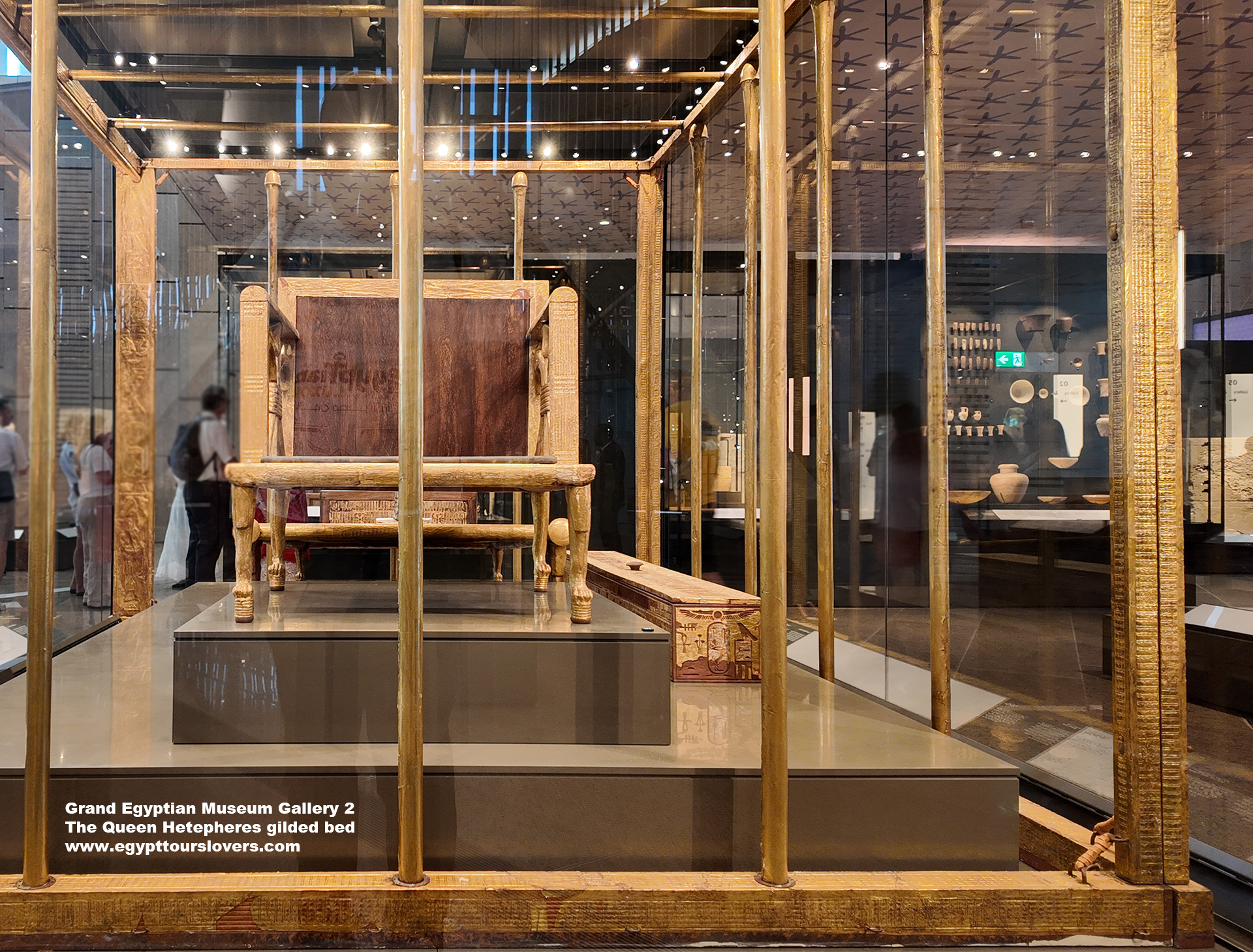
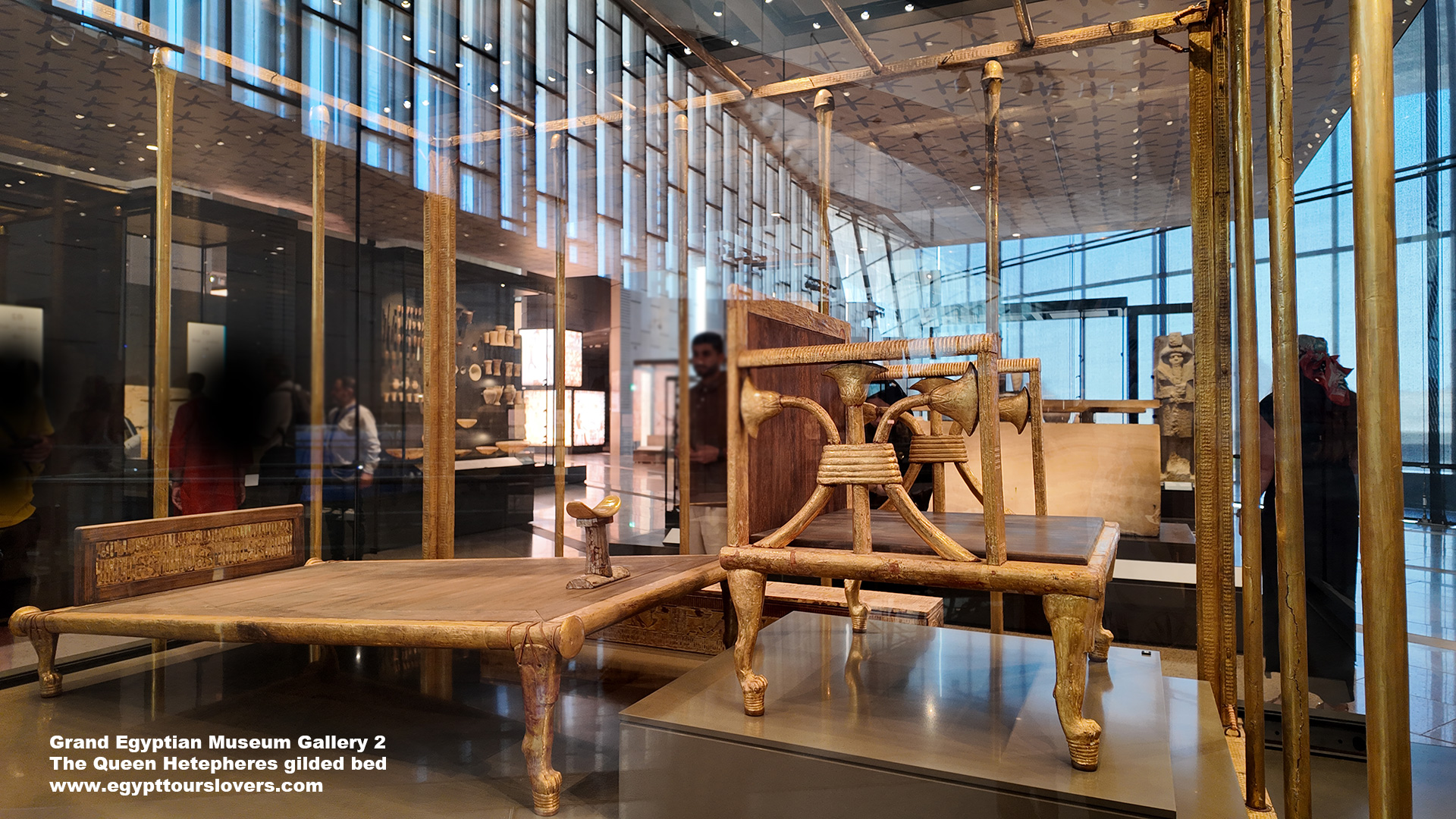
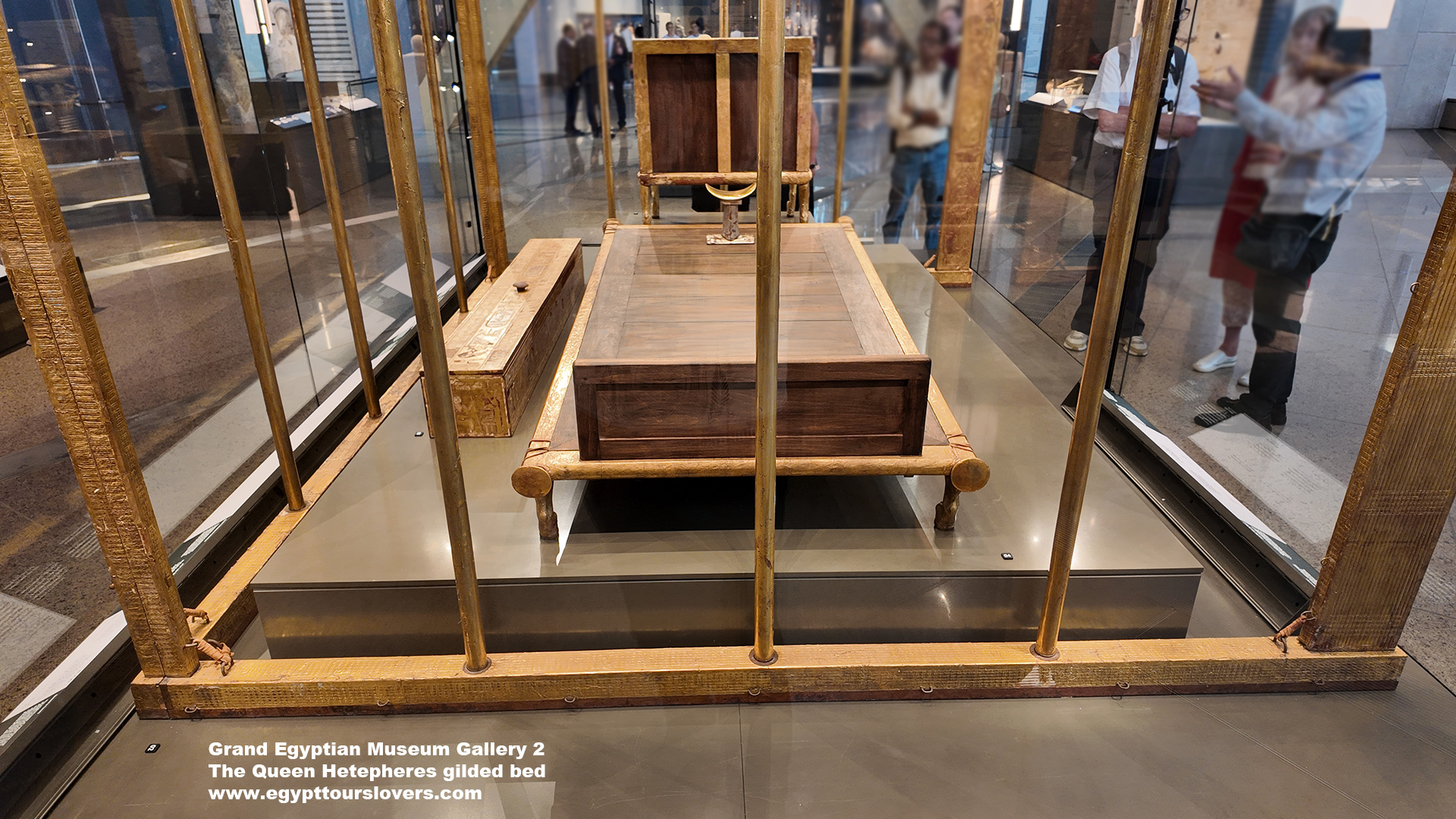
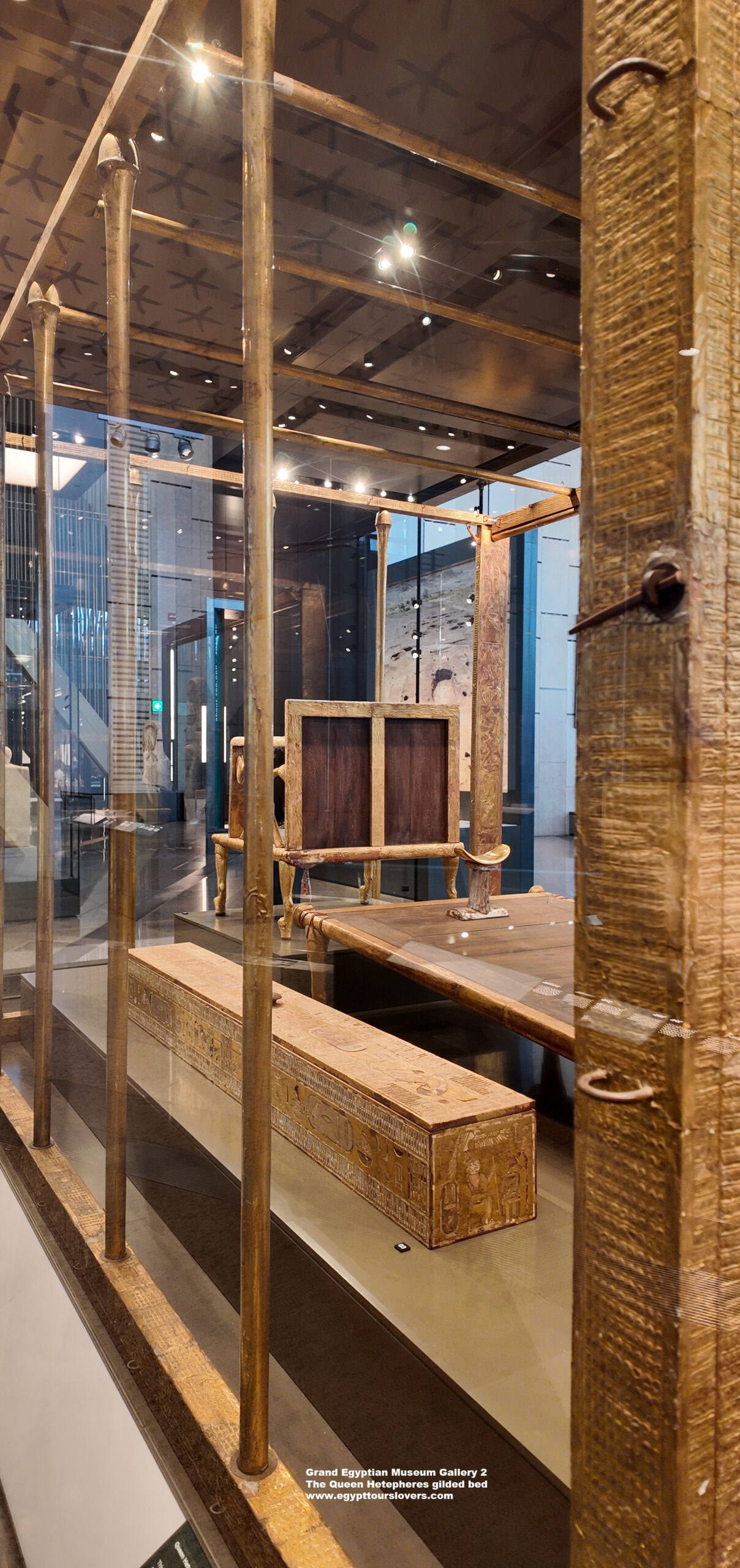
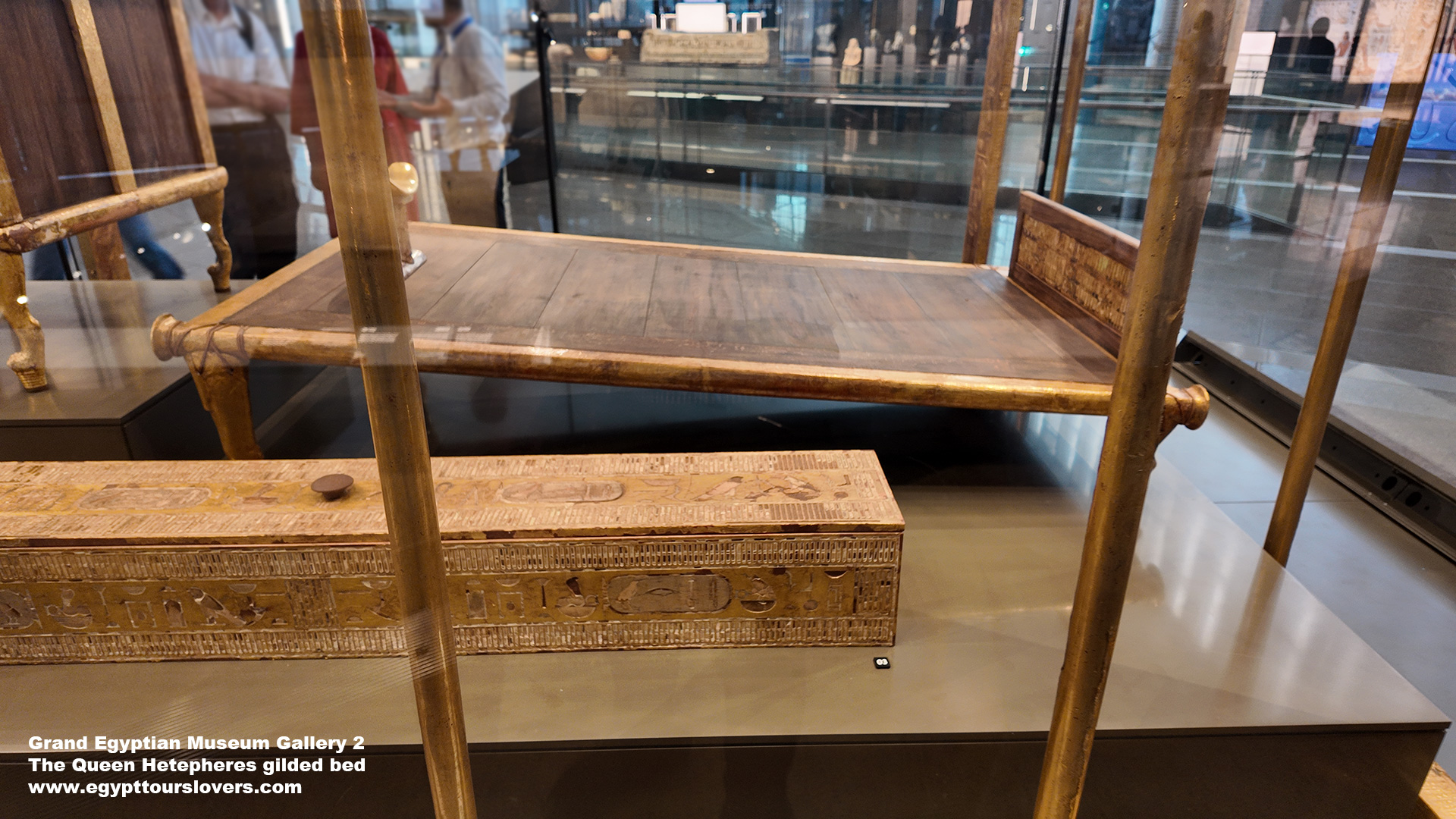
Dynasty 4 | gold, silver, copper, faience, wood | giza
The Queen Hetepheres gilded bed, sloping down towards the foot end, it decorated with geometric shapes and plants.
The headrest covered in sheets of gold and silver would have been padded with a linen and feather pillow.
———– } ———– } ———– } ———– }
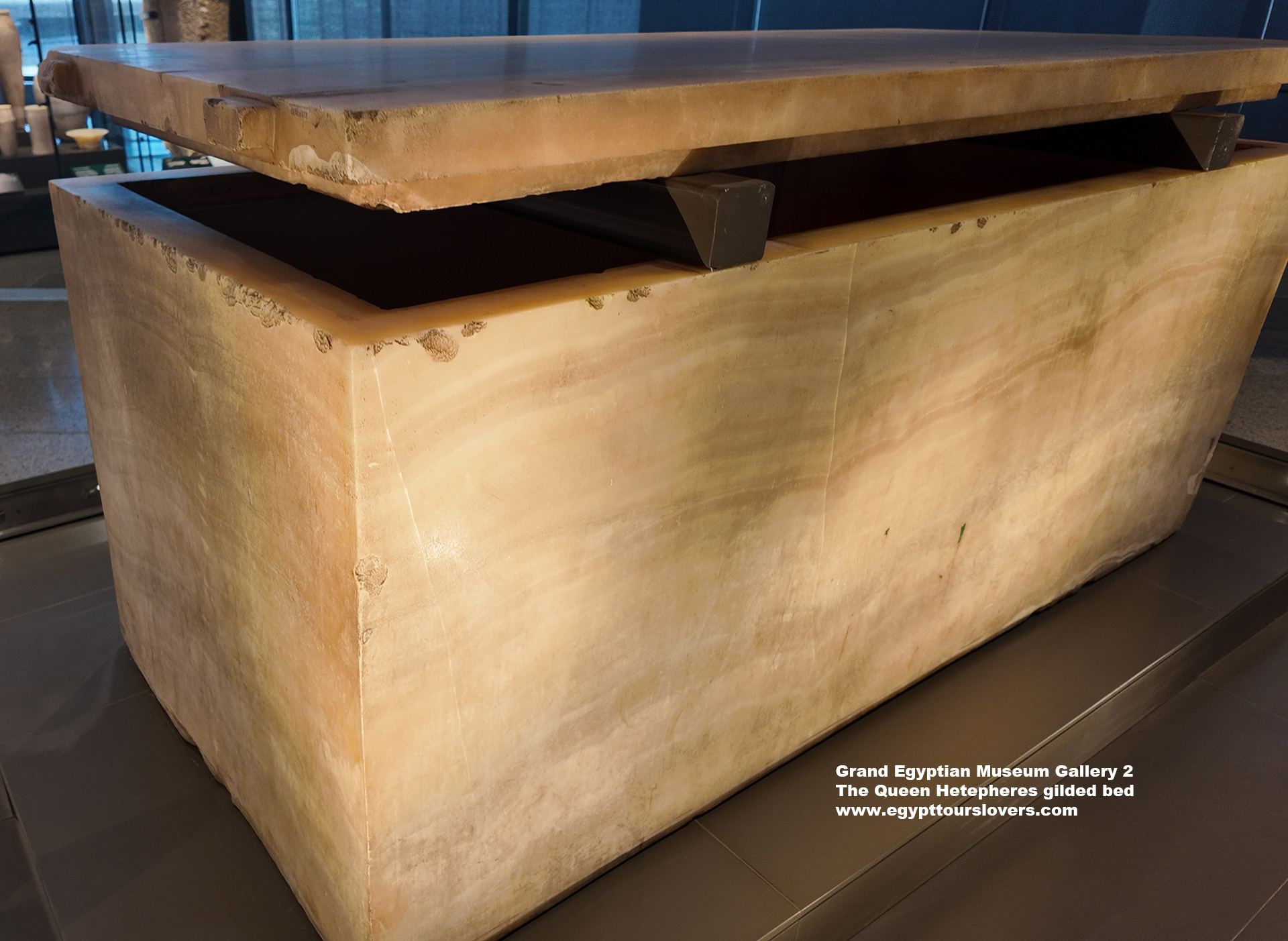
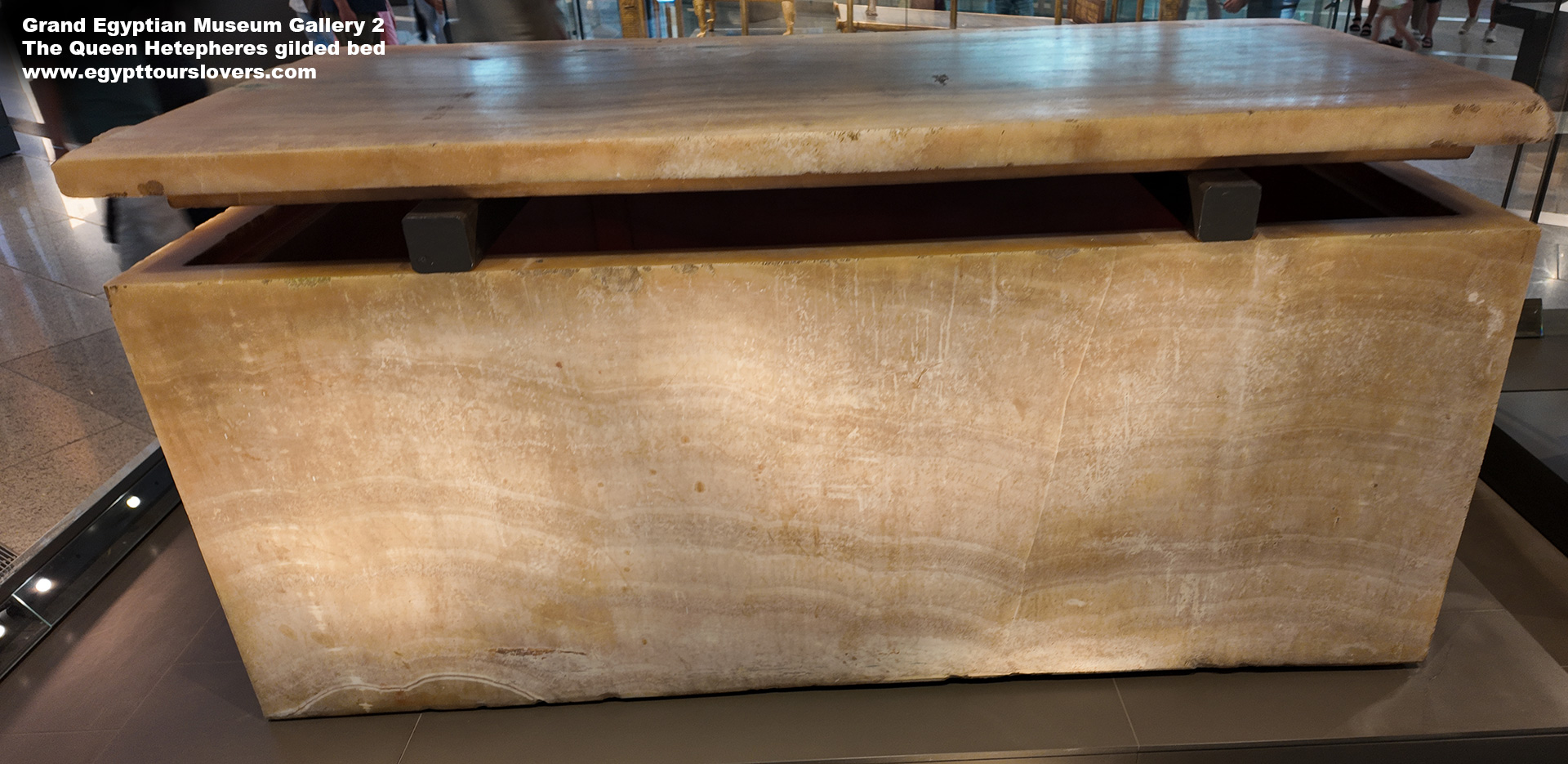
Dynasty 4 | Egyptian alabaster | giza
Sarcophagus found in Queen Hetepheres tomb.
Placed against the western wall of the hidden burial chamber of Queen Hetepheres, this intact sarcophagus was supposed to contain the queen body “Mummy”, but it was found completely empty, why?
———– } ———– } ———– } ———– }
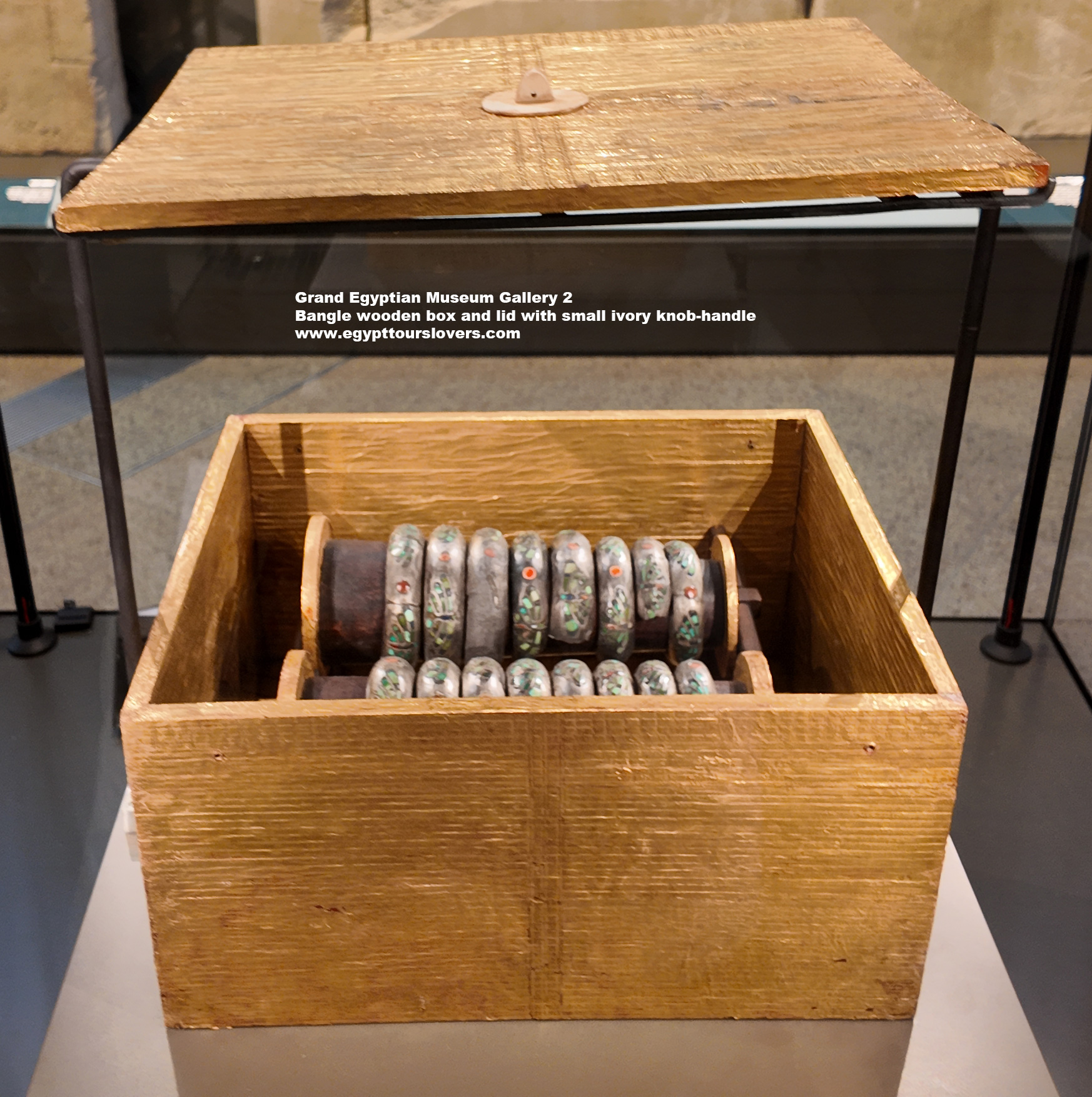
Dynasty 4 | gold, ivory, pigment, wood | giza
Bangle wooden box and lid with small ivory knob-handle were covered with ribbed sheets of gold bordered with a matting pattern.
The box contained 2 rows of the bangles stored on cylinders.
Inscriptions on the lid say “mother of the king of upper and lower Egypt Hetepheres, box carrying rings”.
———– } ———– } ———– } ———– }
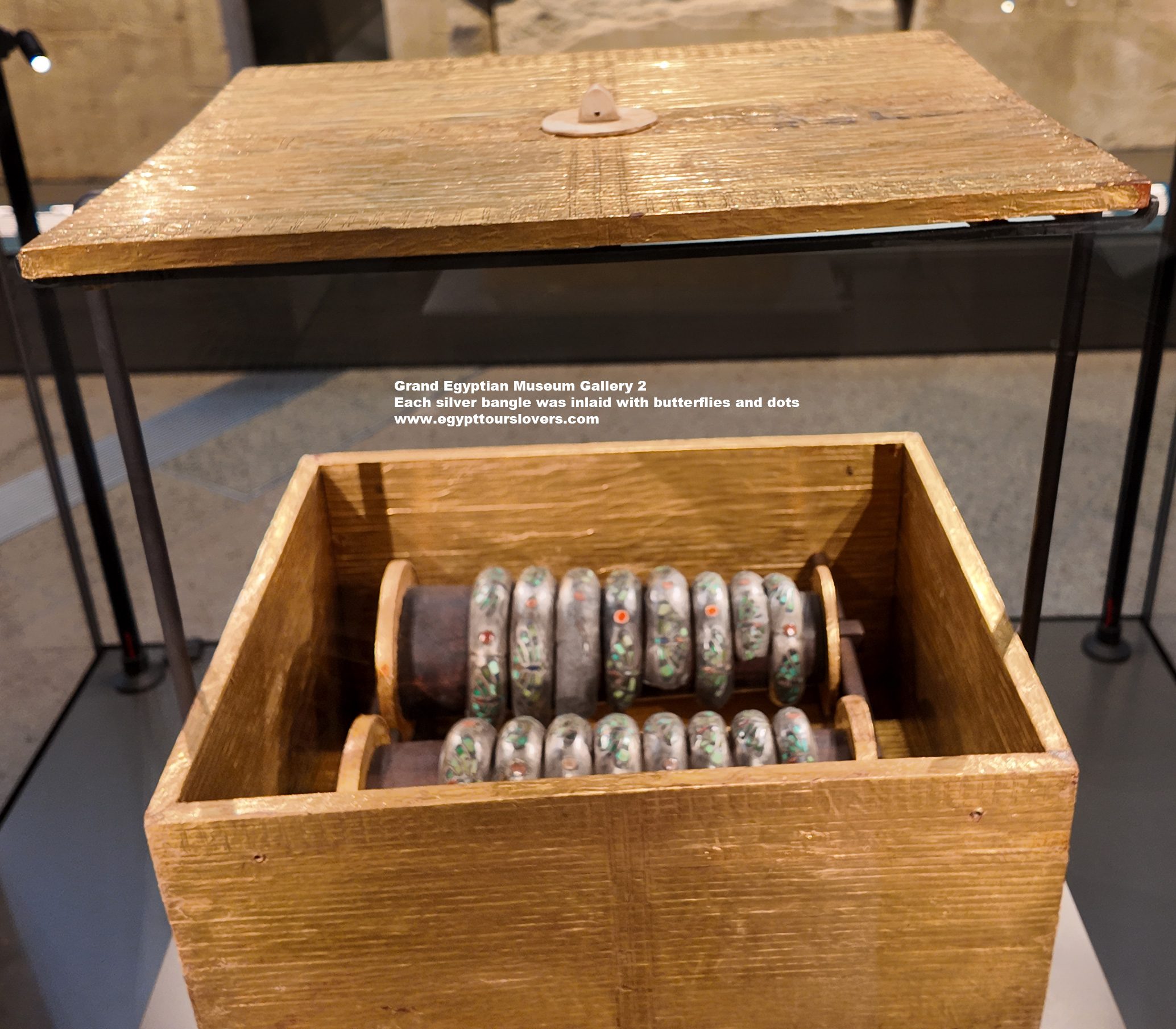
Dynasty 4 | silver, carnelian, turquoise, lapis lazuil | giza
Each silver bangle was inlaid with butterflies and dots make of semi-precious stones.
The silver, thought to come from Greece, was rare and more valuable than gold.
———– } ———– } ———– } ———– }
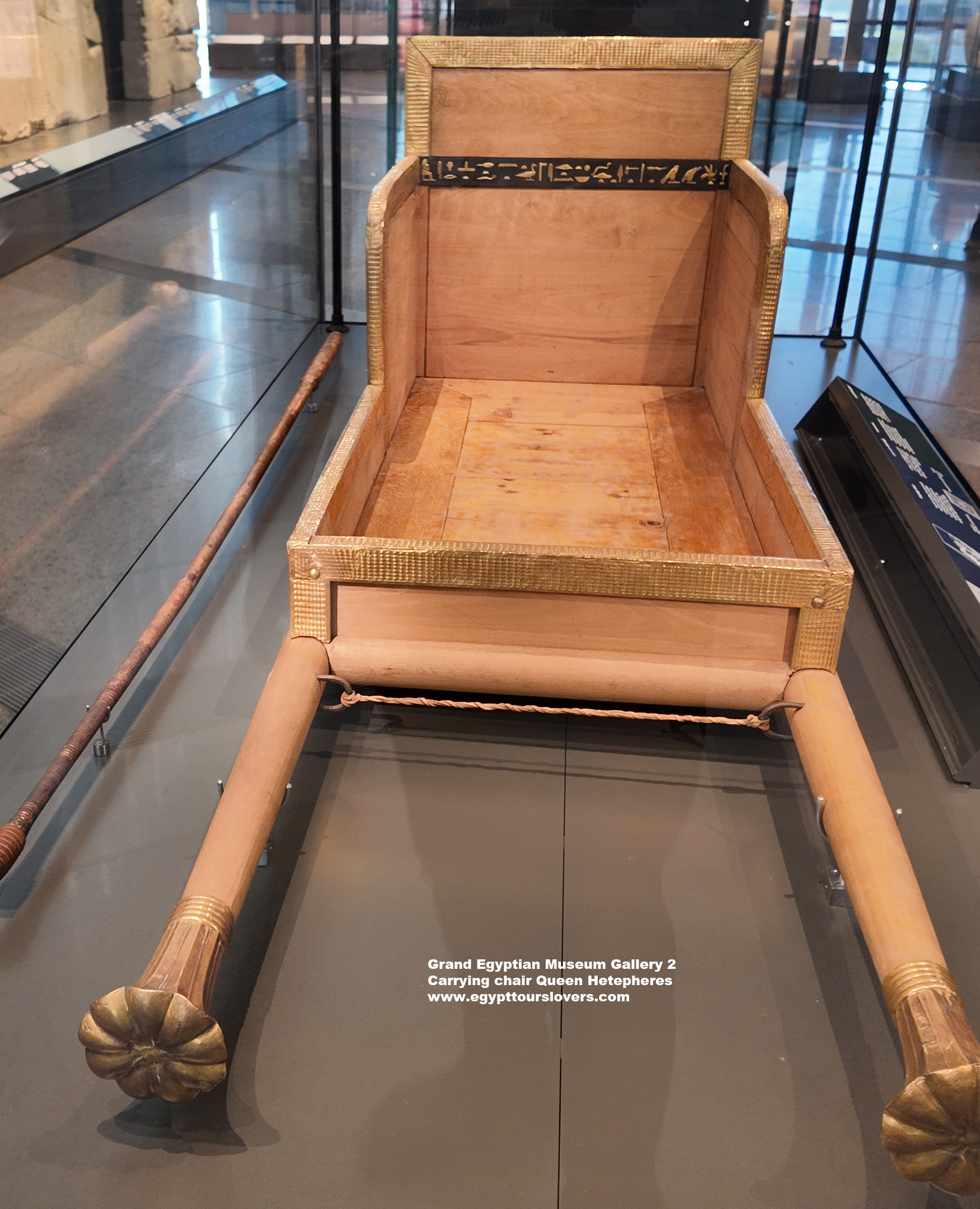
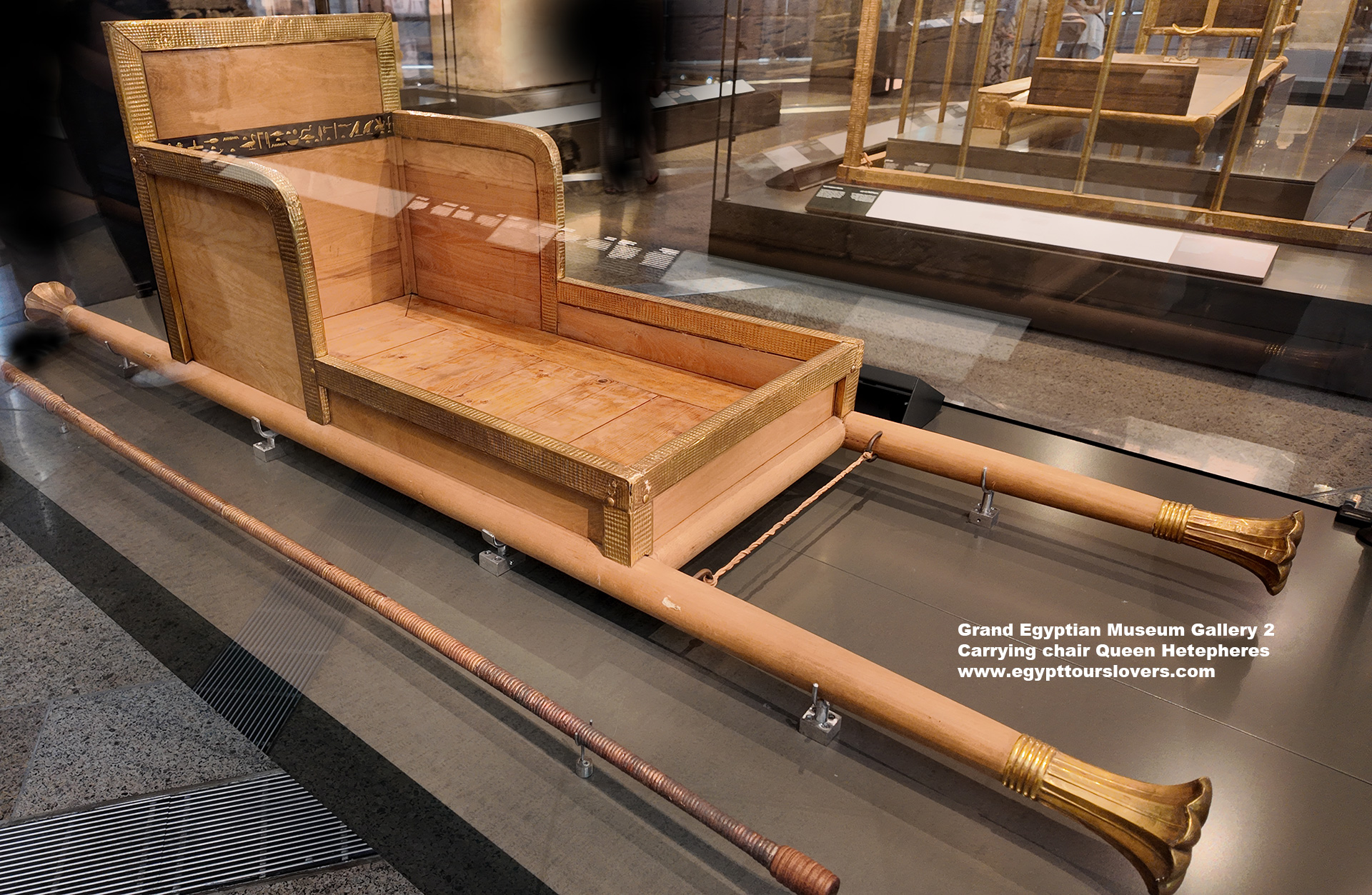
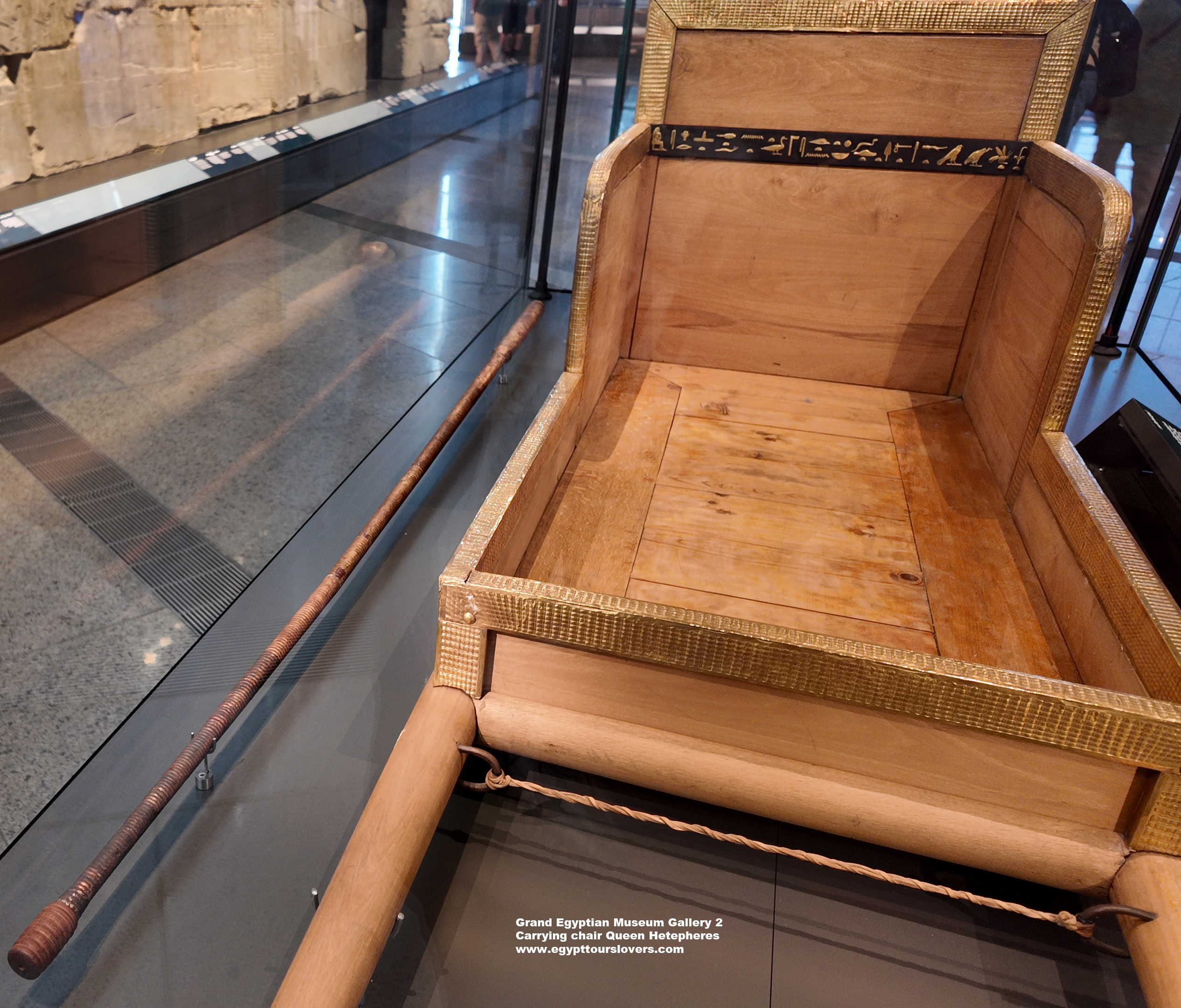
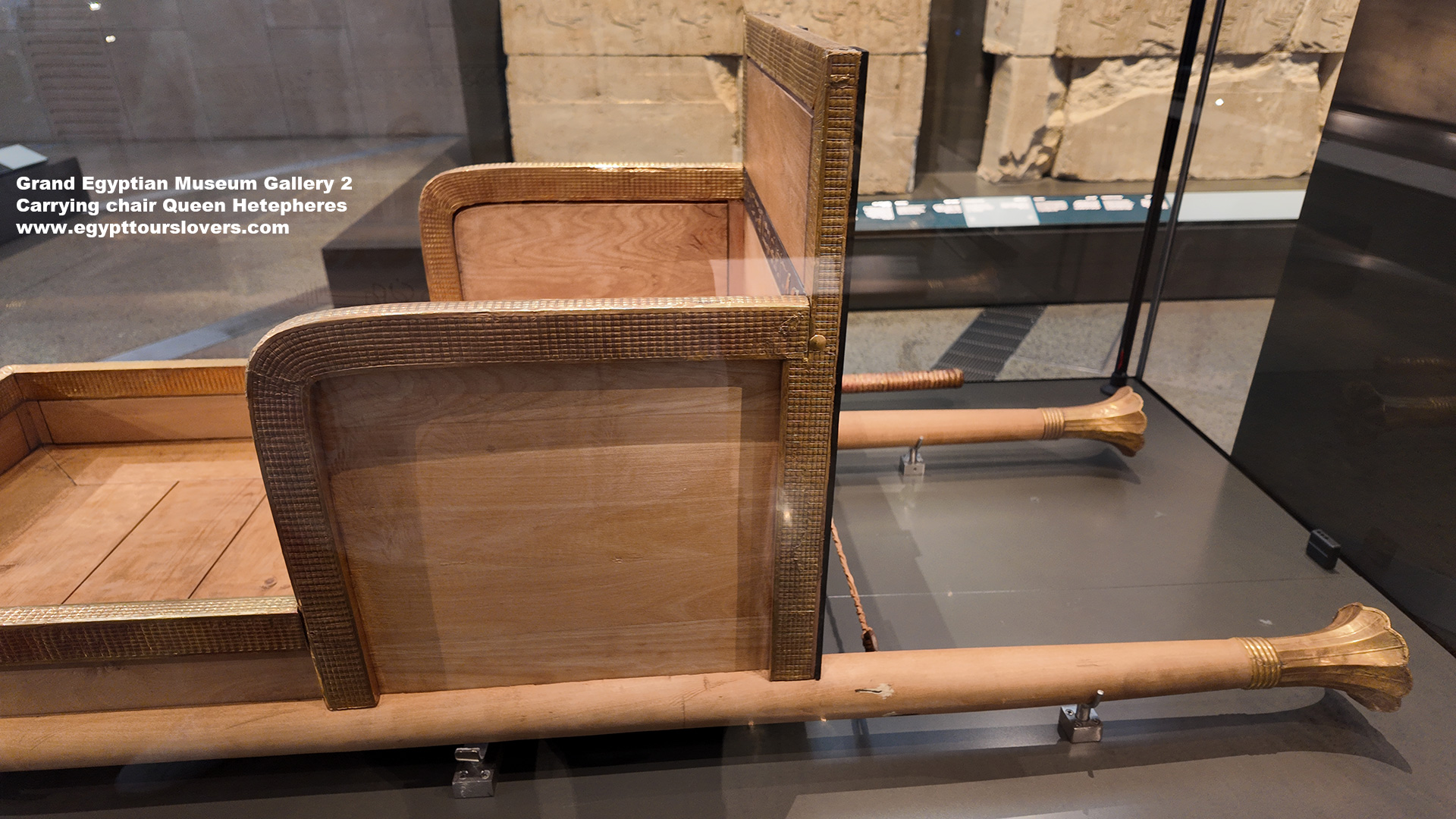
Dynasty 4 | gold, ebony, wood | giza
Carrying chair Queen Hetepheres.
Used for travelling, chair carried on the shoulders of attendants while queen sat on soft feather-filled pillows.
The inscription suggests it was made during the reign of her son king khufu.
———– } ———– } ———– } ———– }
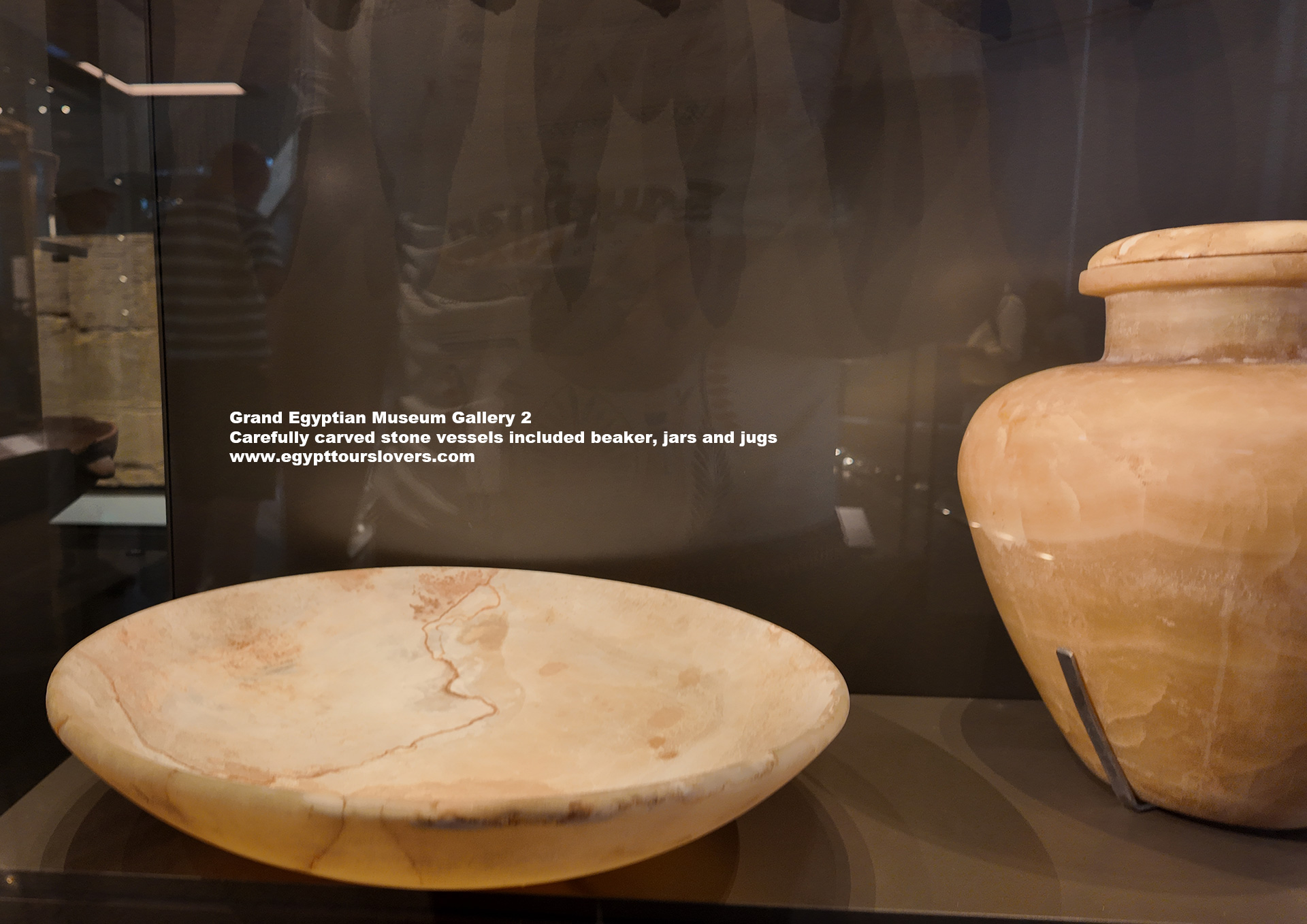
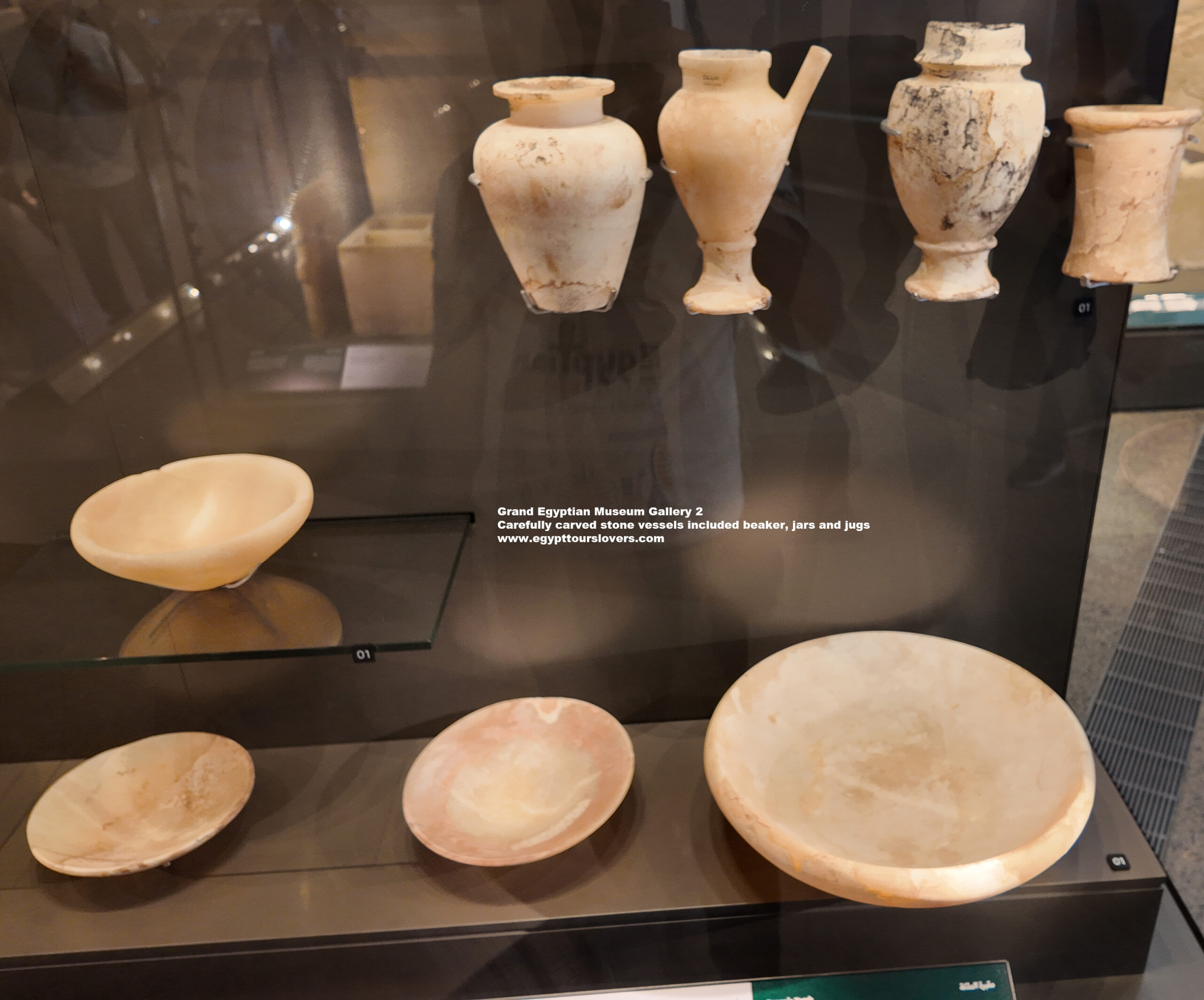
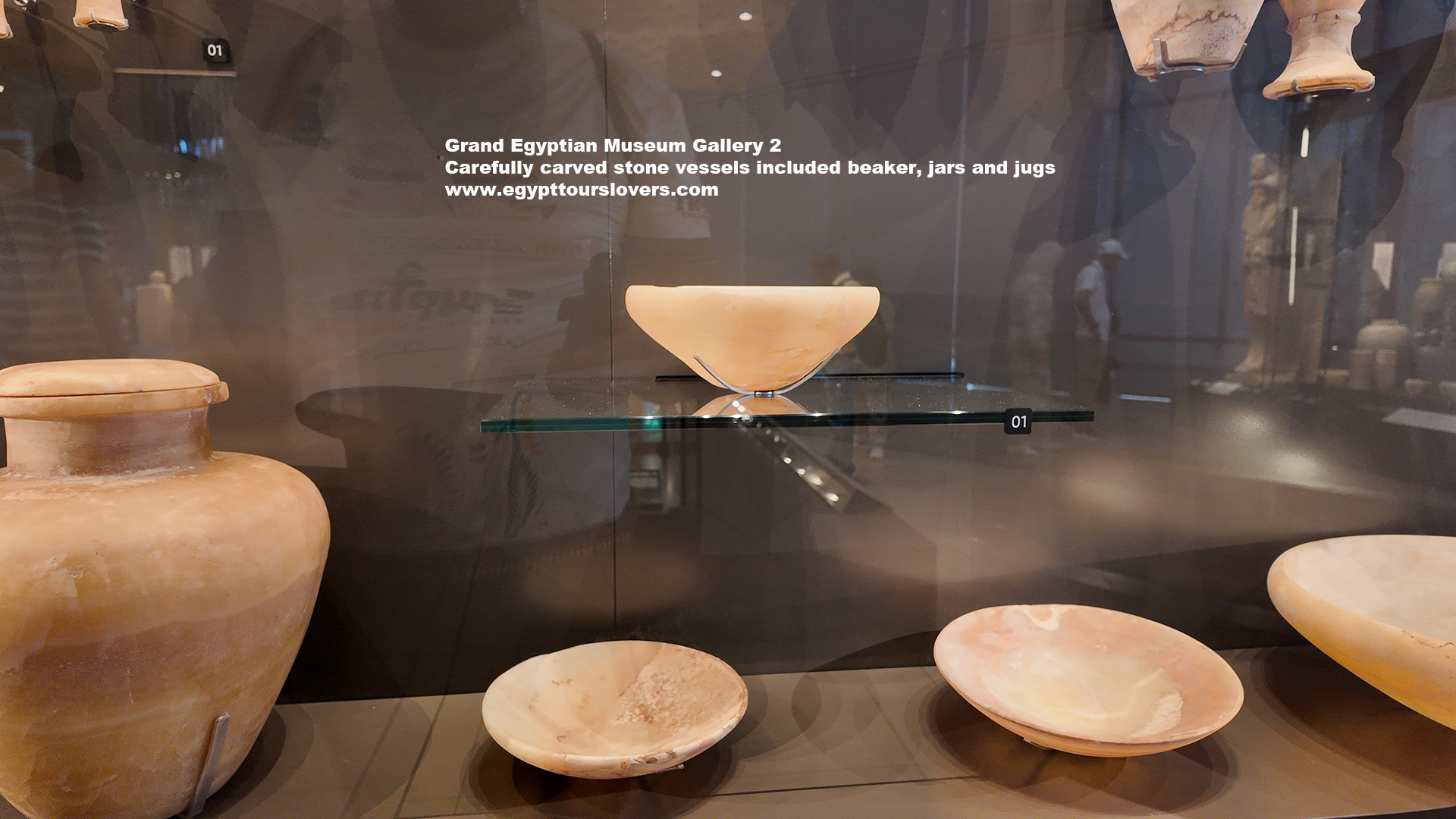
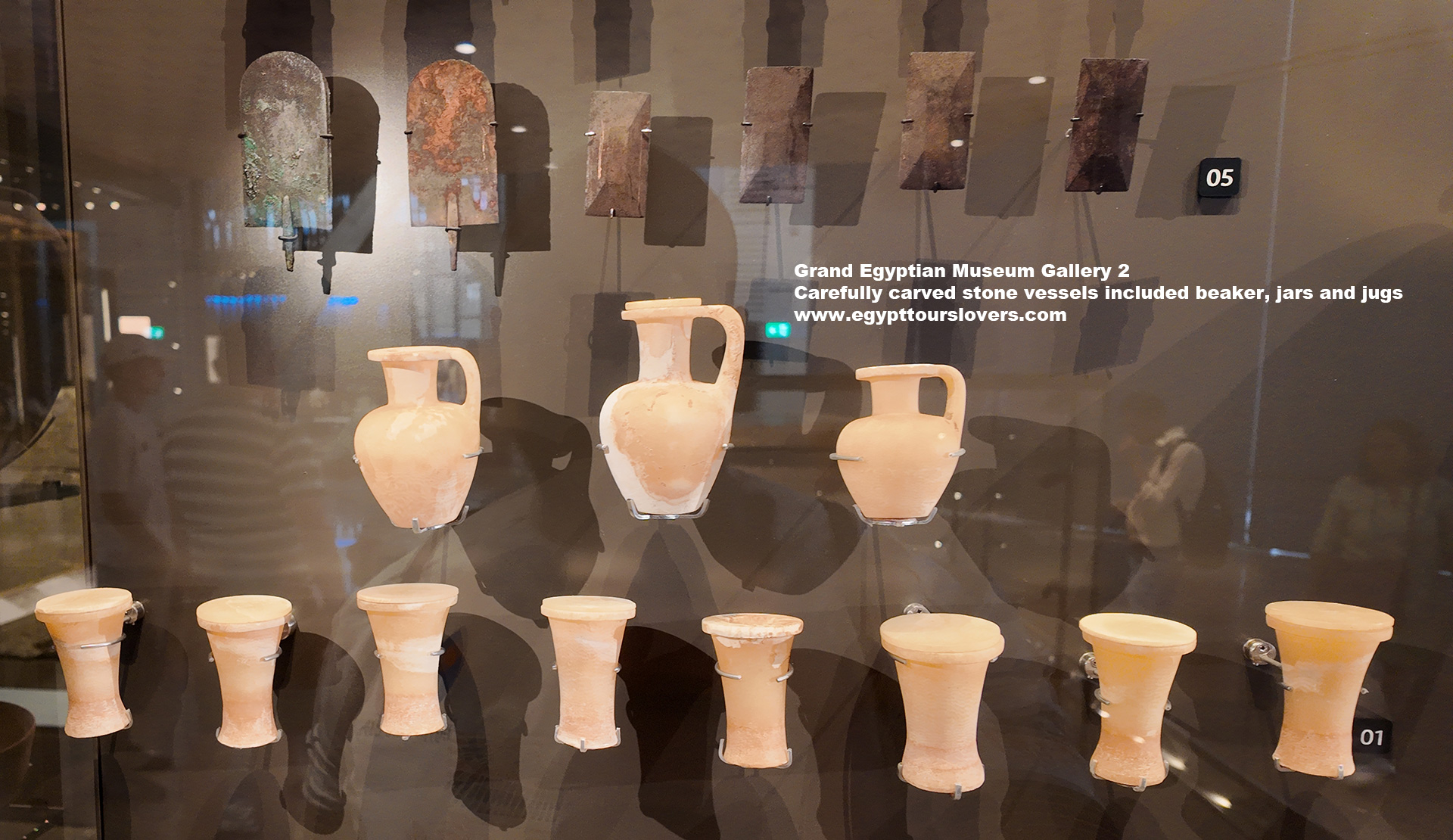
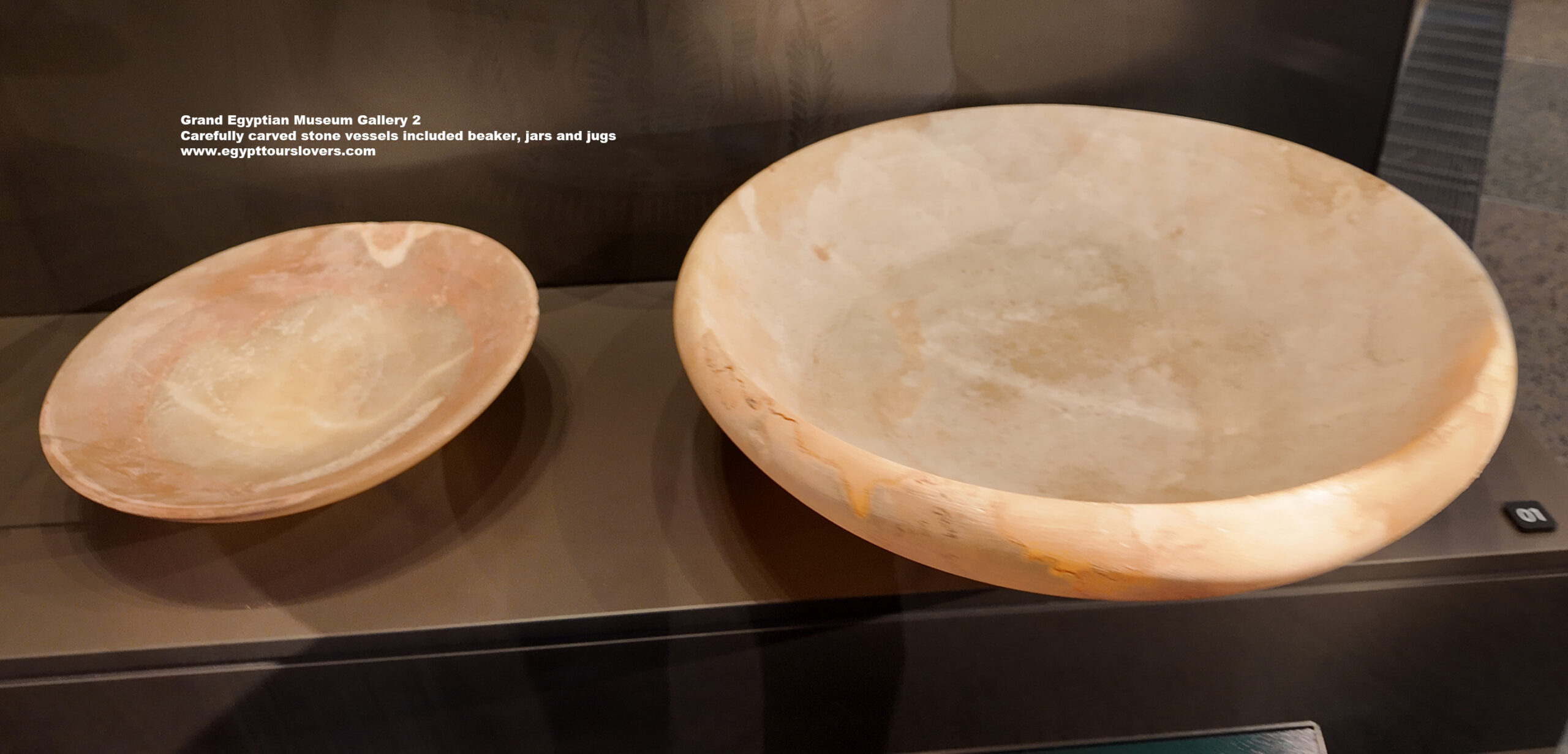
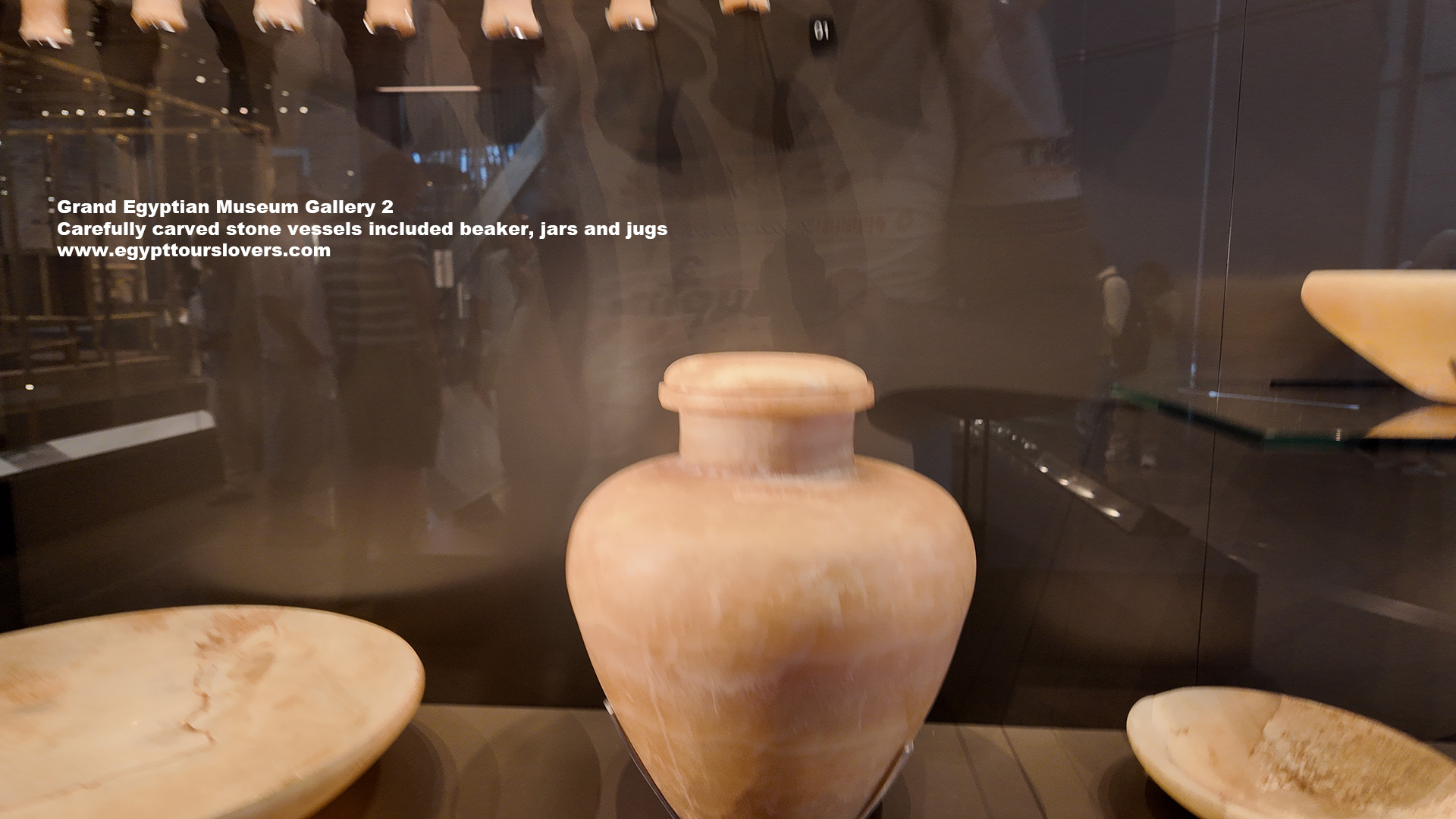
Dynasty 4 | Egyptian alabaster | giza
Carefully carved stone vessels included beaker, jars and jugs in different sizes.
Used to contain liquids, sacred oils and ointments.
Were placed in the Queen Hetepheres tomb for use in the queen afterlife.
———– } ———– } ———– } ———– }
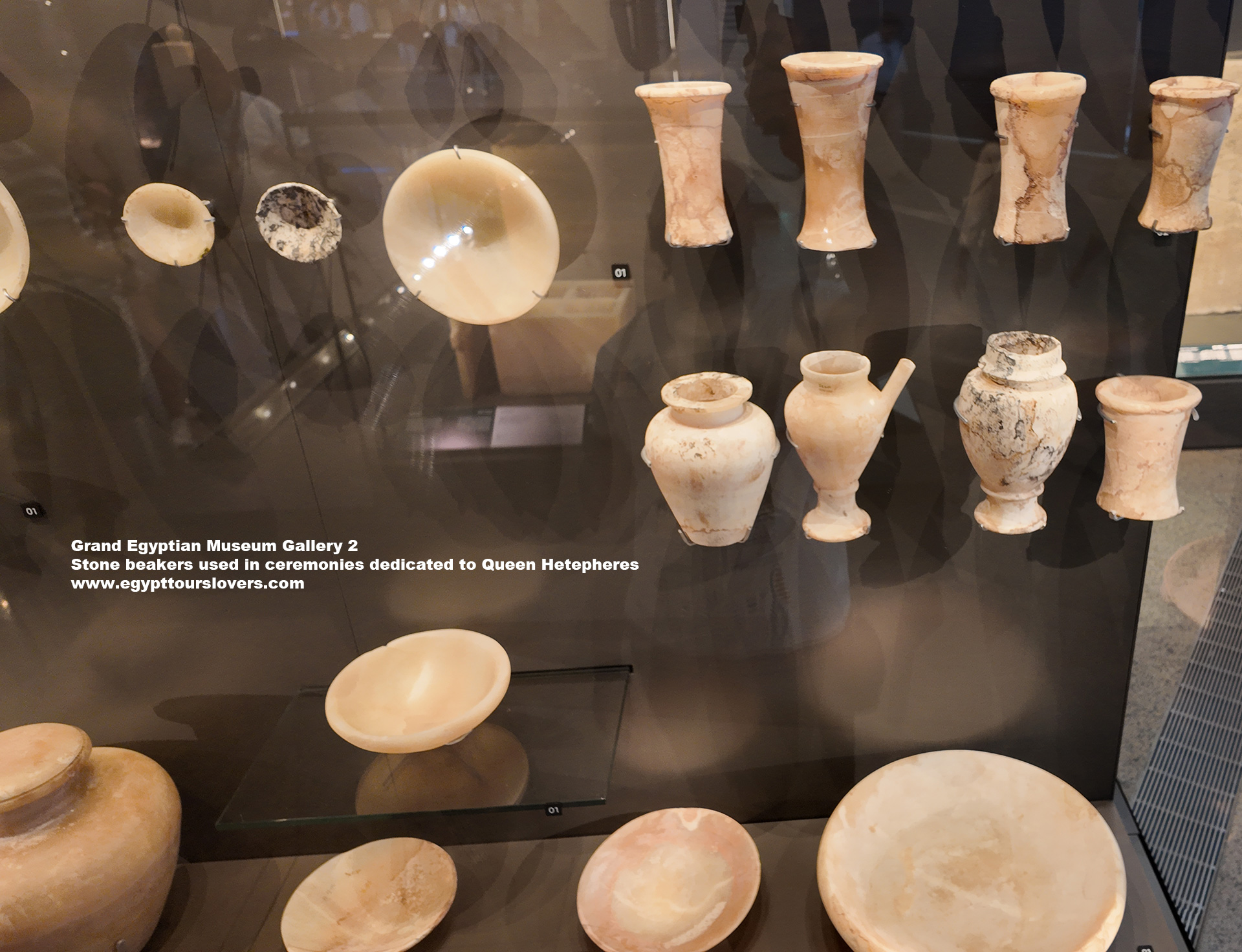
Dynasty 4 | Egyptian alabaster | giza
Stone beakers used in ceremonies dedicated to Queen Hetepheres, these stone beakers would have contained different types of precious Ritual Oils.
Vessels like these were often gifts given by the king to family.
———– } ———– } ———– } ———– }
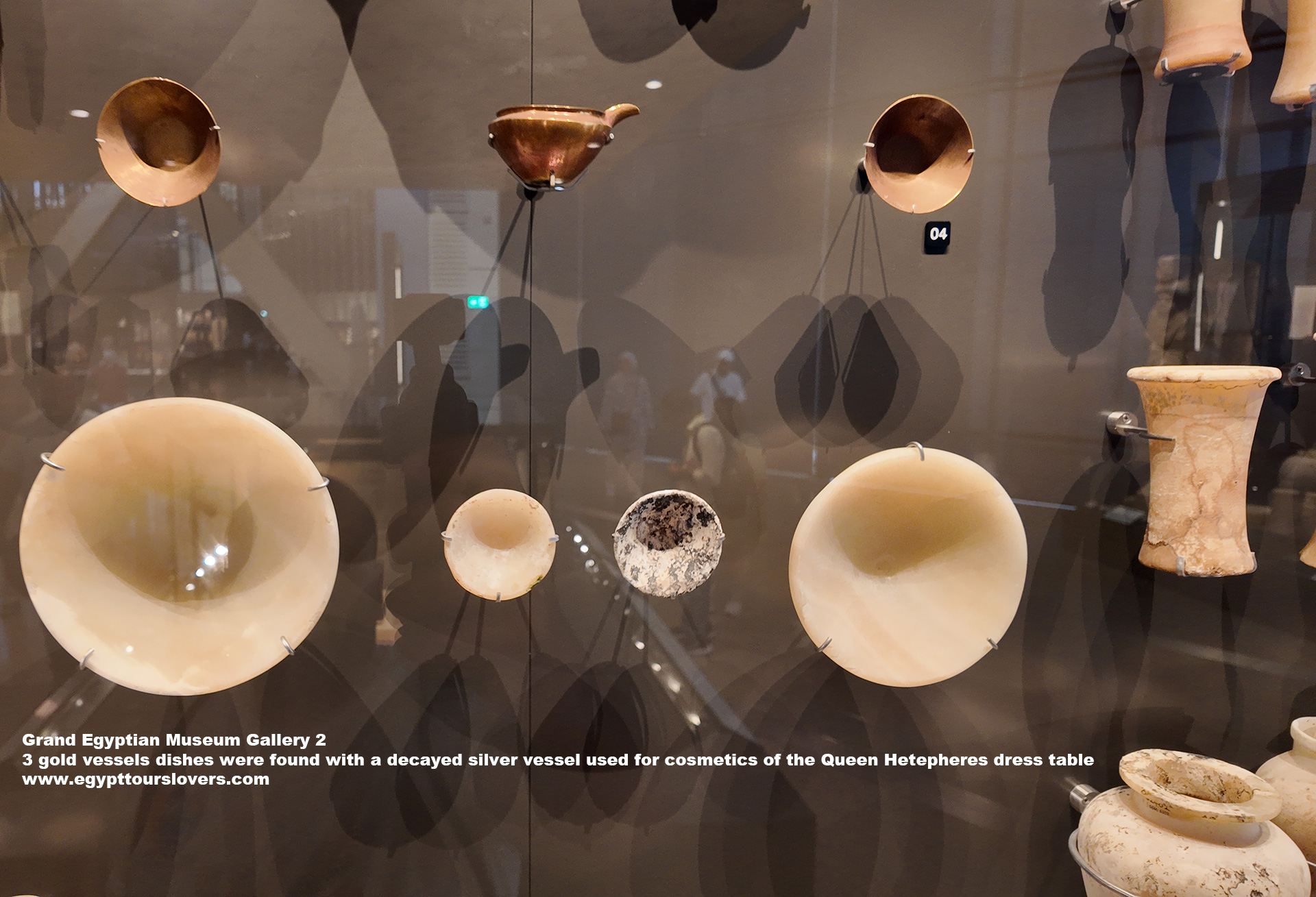
Dynasty 4 | gold | giza
3 gold vessels dishes were found with a decayed silver vessel.
2 identical gold dishes and a spouted bowl were all formed from single sheets of god, and may have been used for cosmetics of the Queen Hetepheres dress table.
———– } ———– } ———– } ———– }
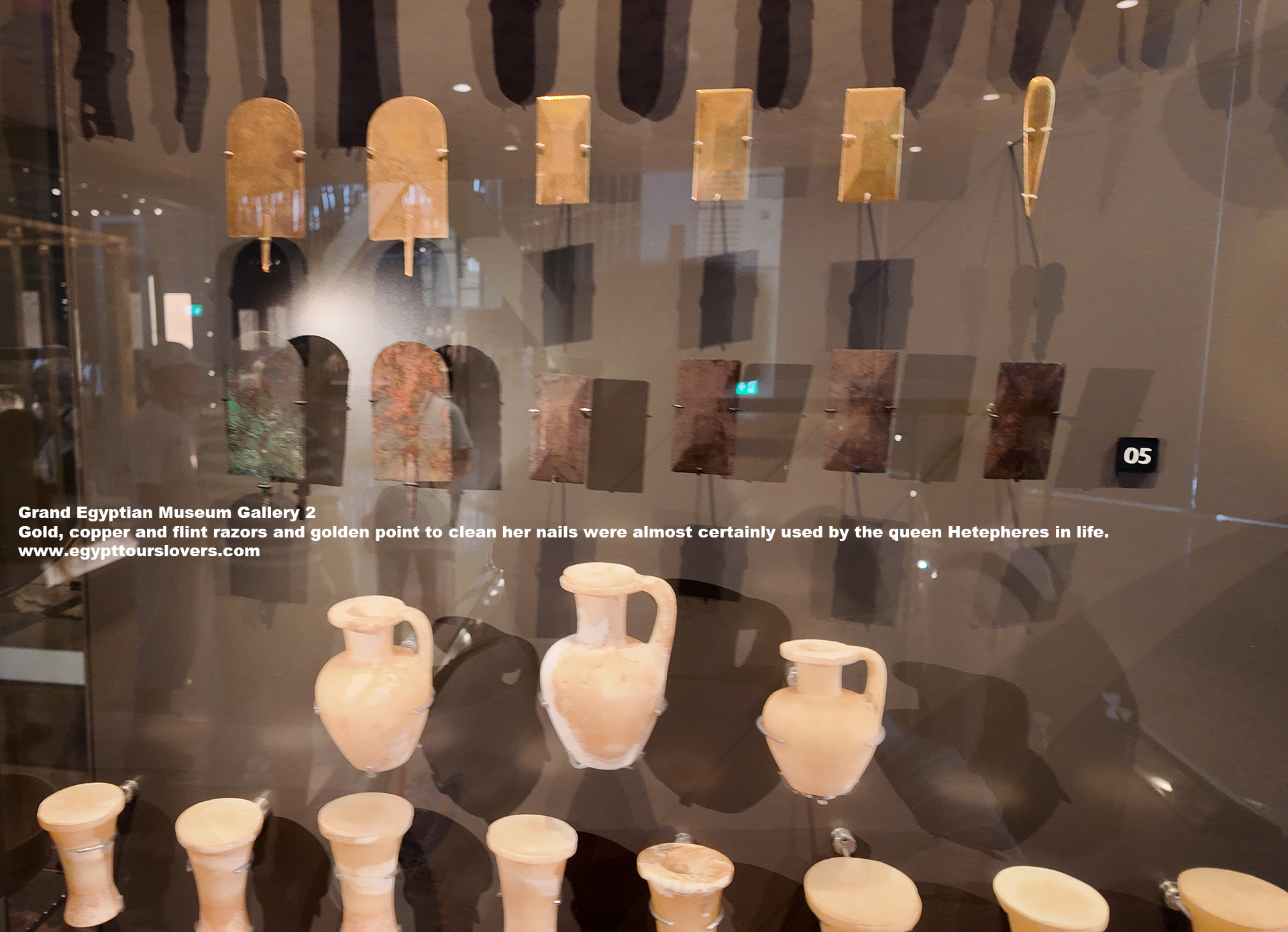
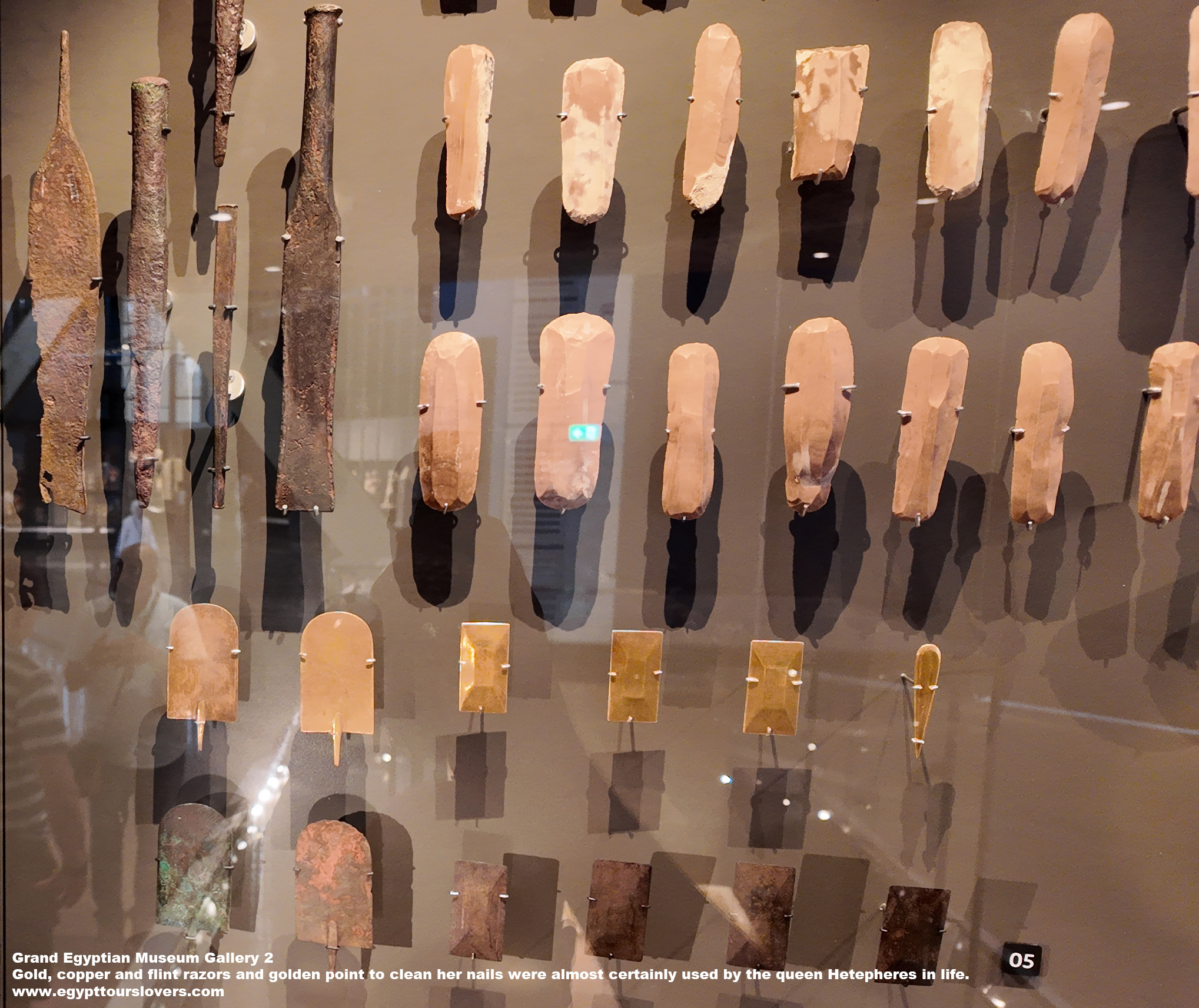
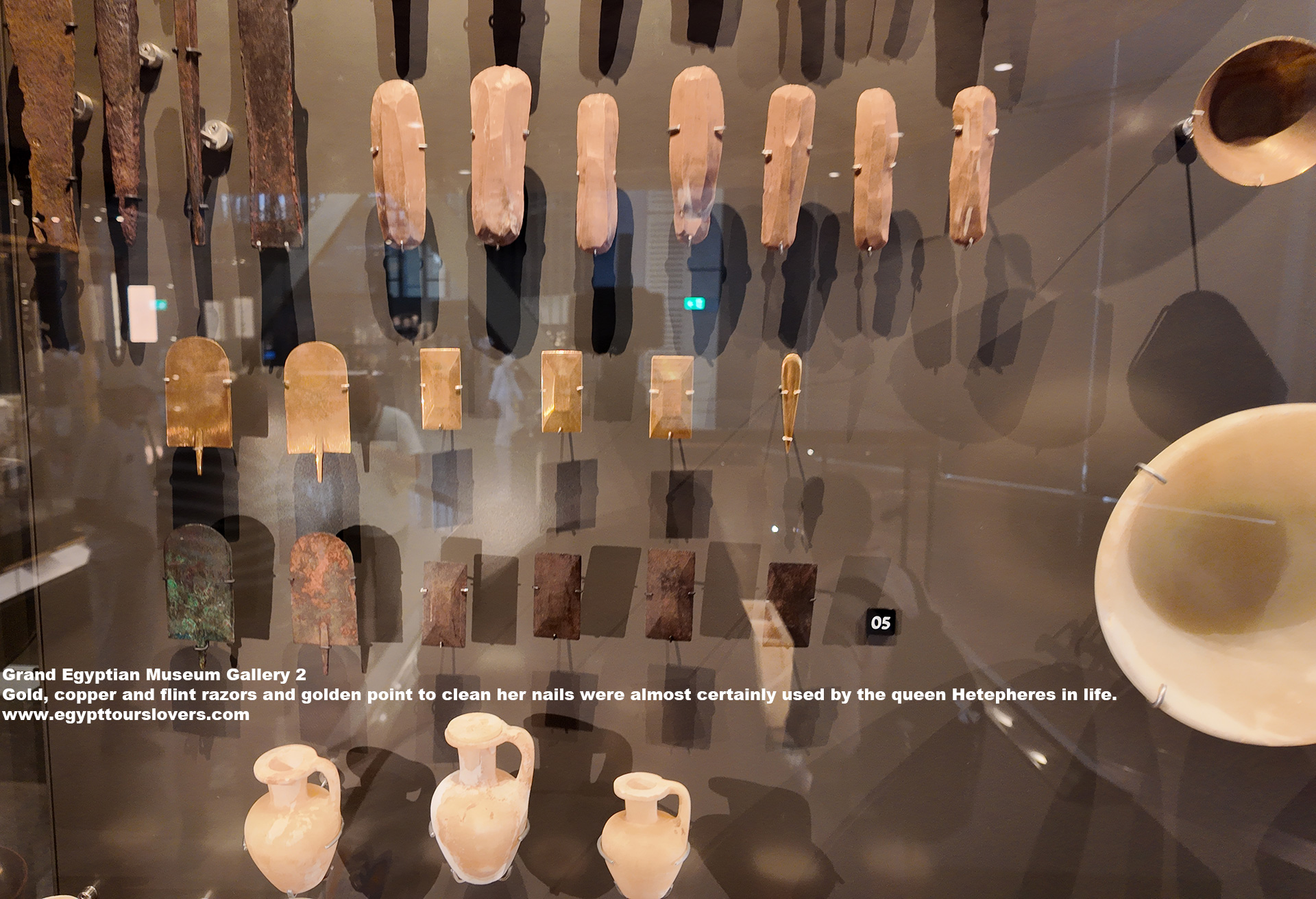
Dynasty 4 | gold, copper, flint | giza
Gold, copper and flint razors and golden point to clean her nails were almost certainly used by the queen Hetepheres in life.
Other copper knives and chisels were used in the afterlife.
———– } ———– } ———– } ———– }
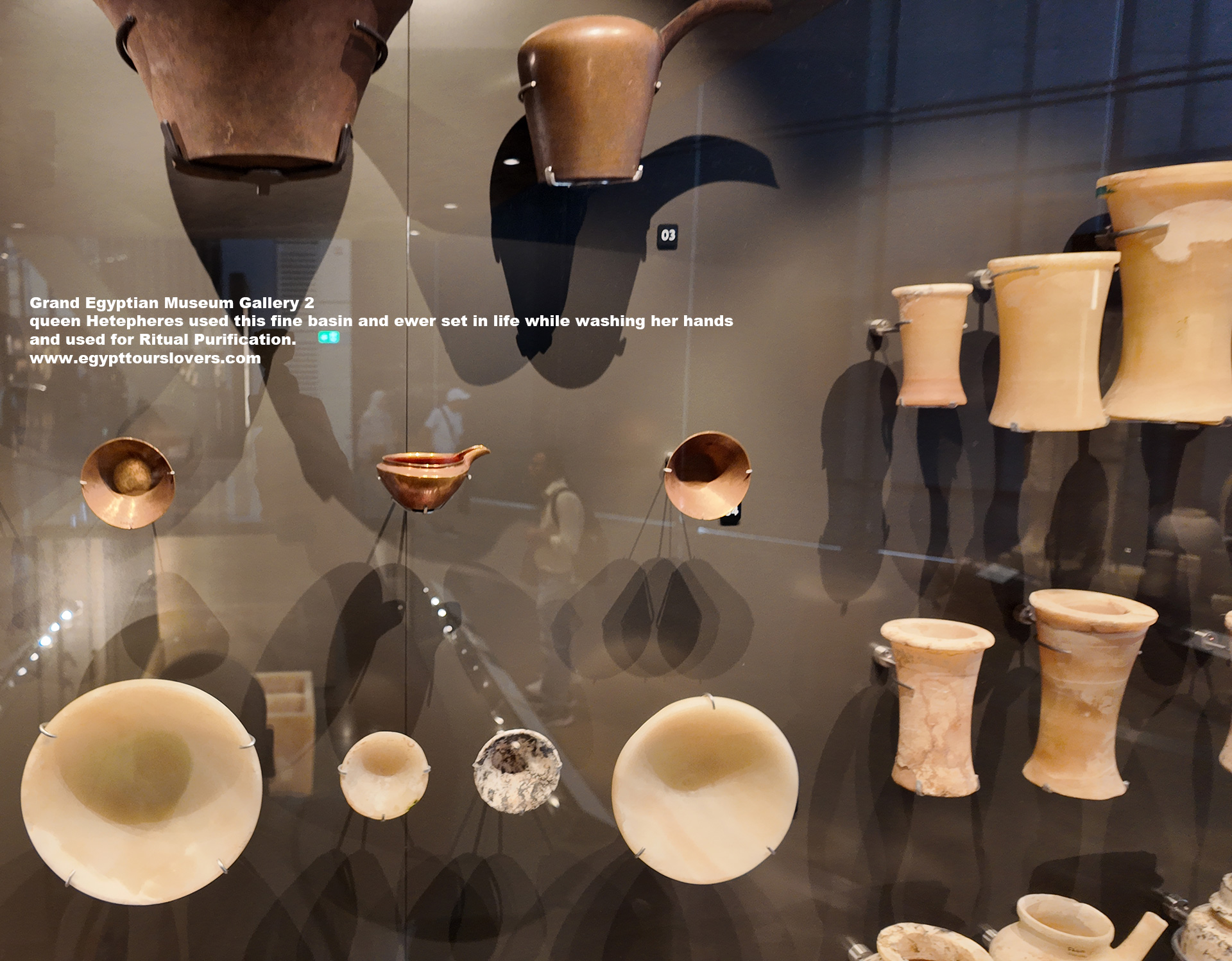
Dynasty 4 | copper | giza
queen Hetepheres used this fine basin and ewer set in life while washing her hands and used for Ritual Purification.
———– } ———– } ———– } ———– }
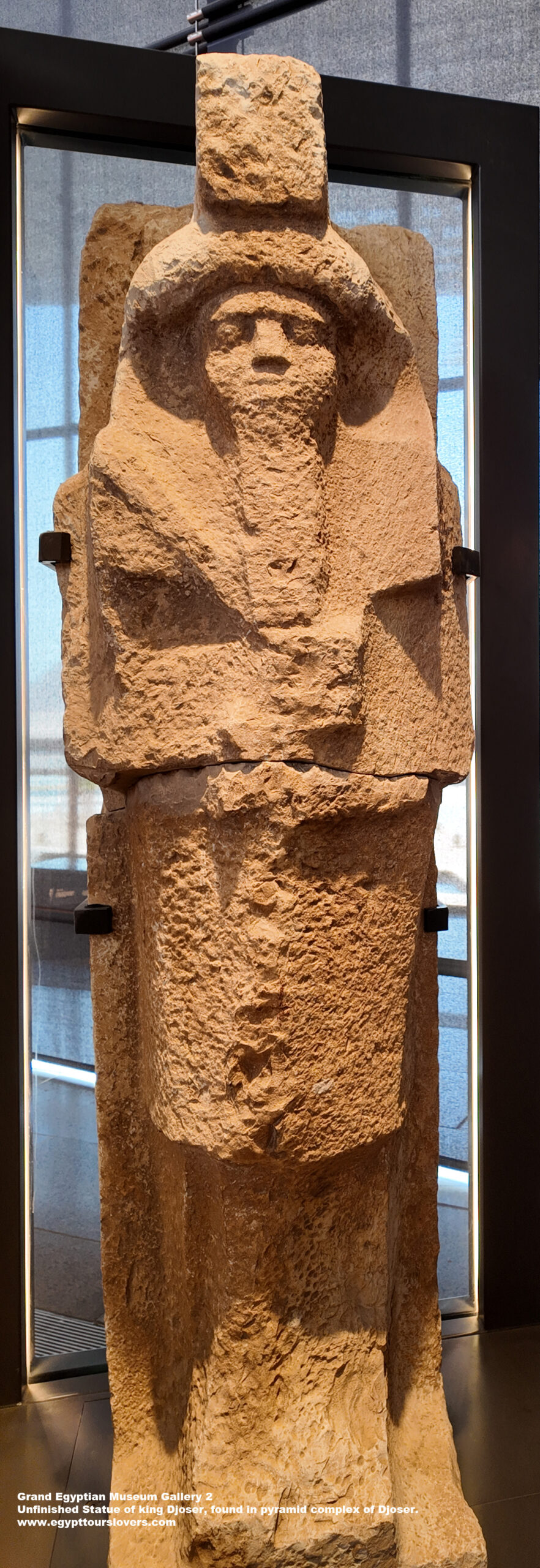
Dynasty 3 | limestone | Saqqara
Unfinished Statue of king Djoser, found in pyramid complex of Djoser.
———– } ———– } ———– } ———– }
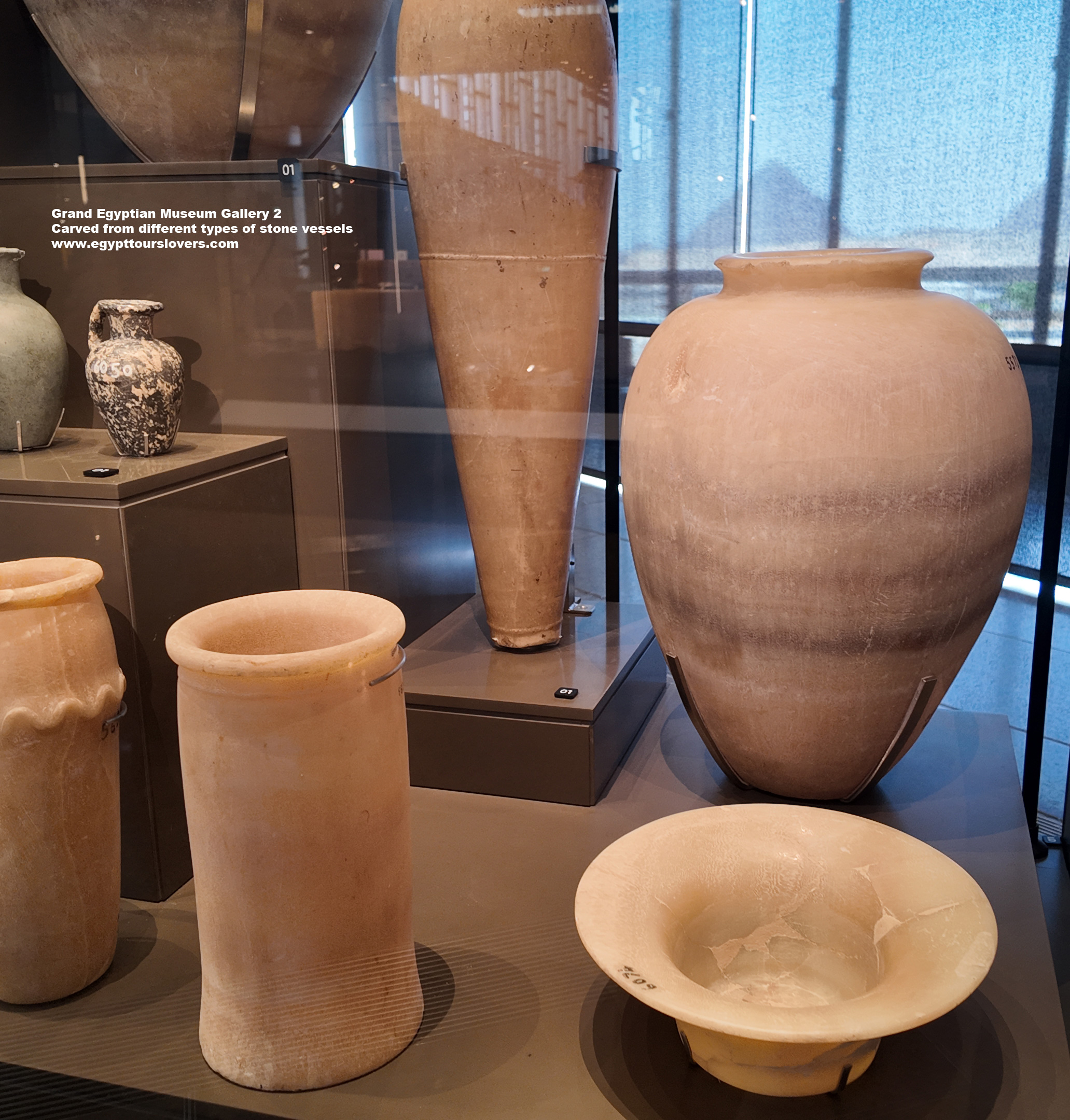
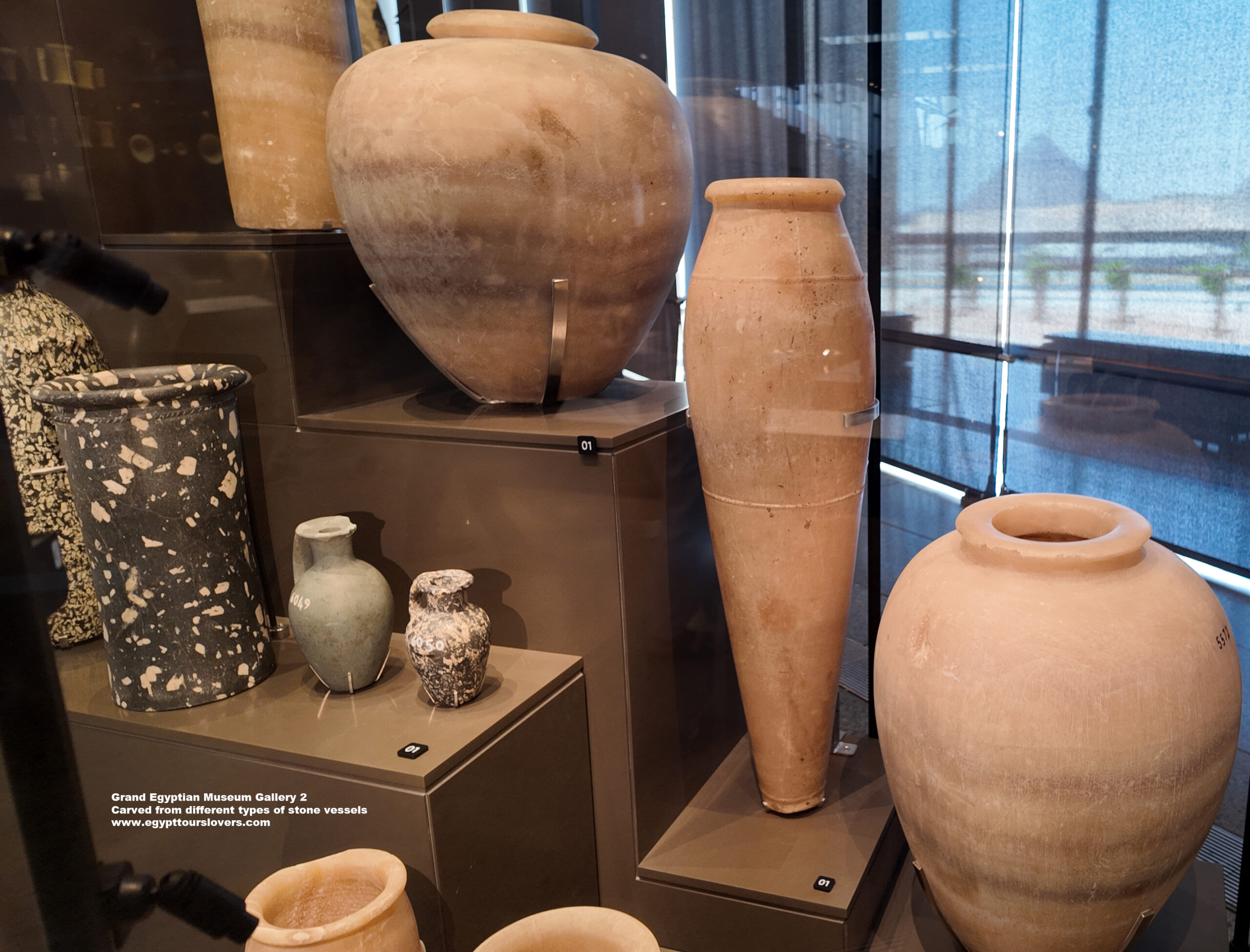
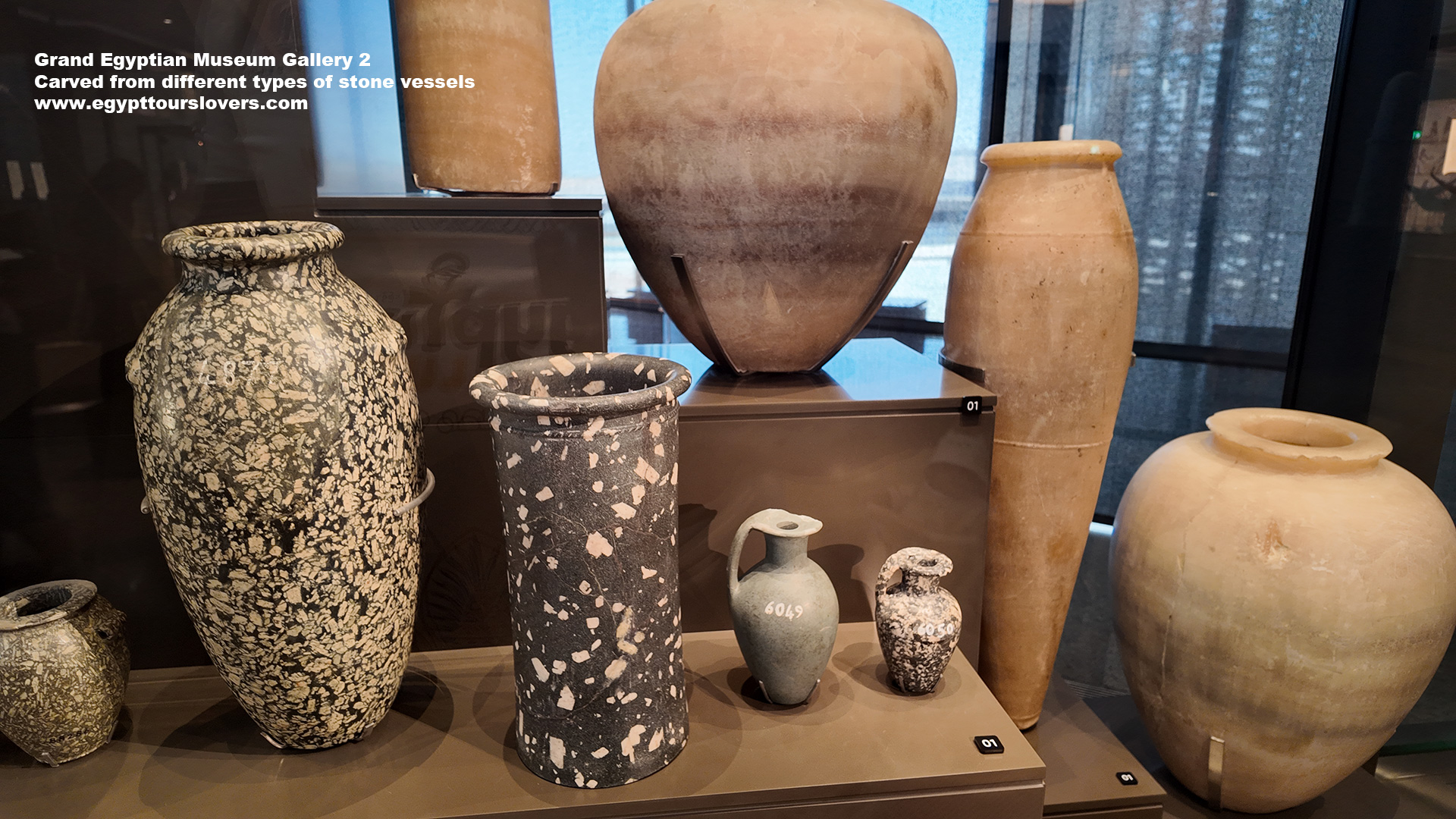
Dynasty 1-2 | Egyptian alabaster, greywacke, breccia, diorite, basalt, pigment | Saqqara
Carved from different types of stone vessels, were found packed into a series of long underground storerooms.
———– } ———– } ———– } ———– }
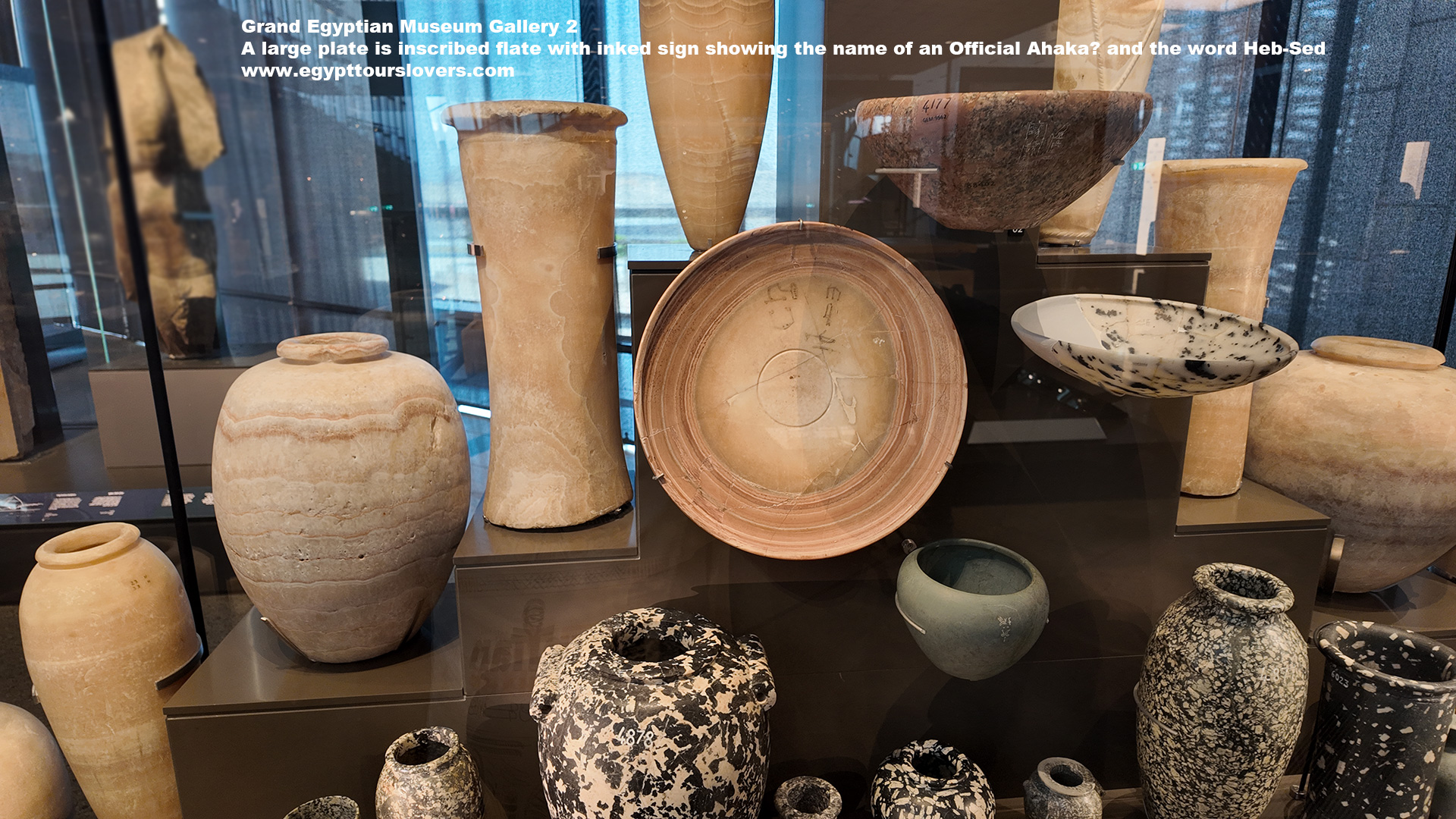
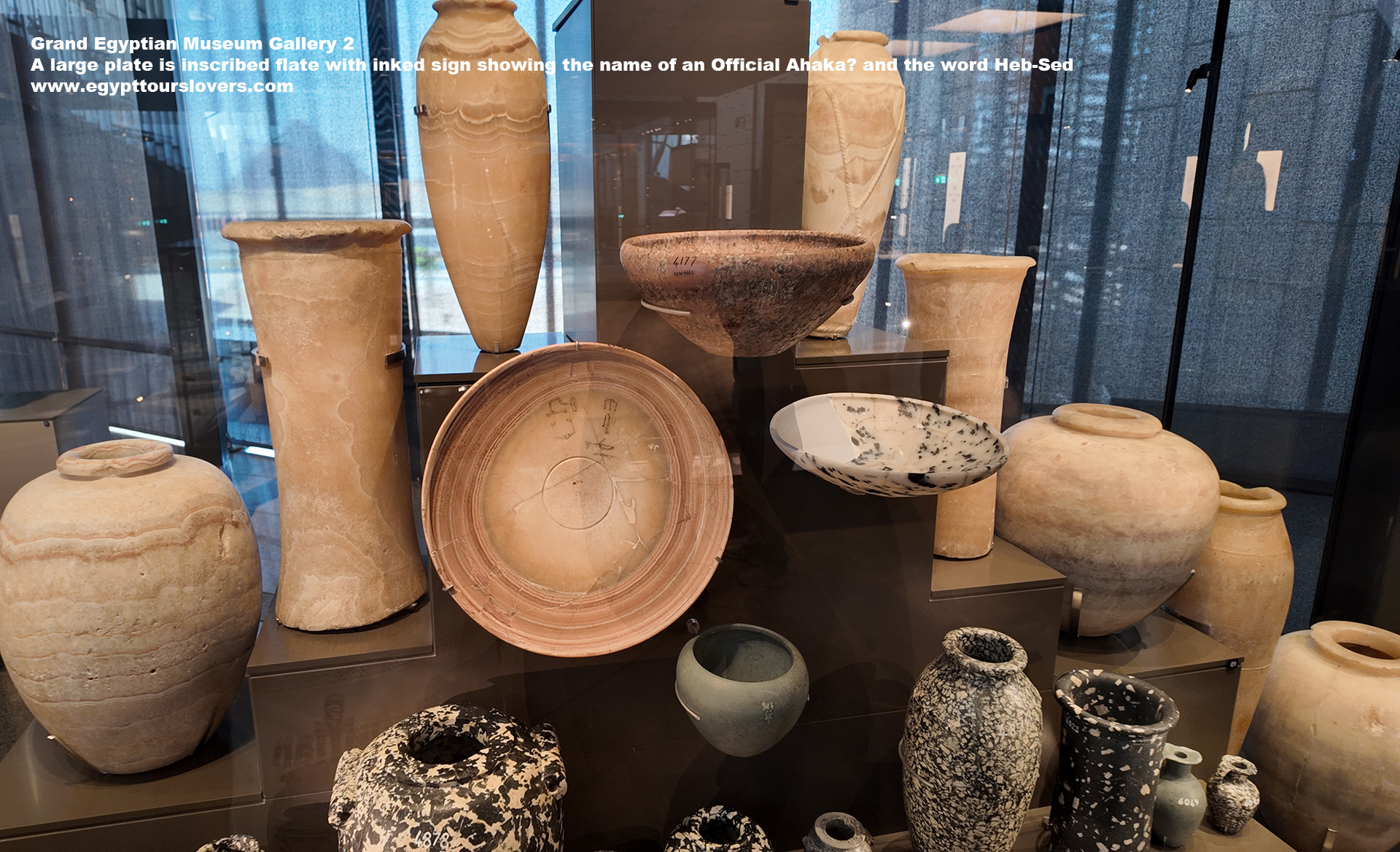
Dynasty 1-2 | Egyptian alabaster, pigment | Saqqara
A large plate is inscribed flate with inked sign showing the name of an Official Ahaka? and the word Heb-Sed.
Heb-sed is royal jubilee festival that renewed the king power and his right to rule.
———– } ———– } ———– } ———– }
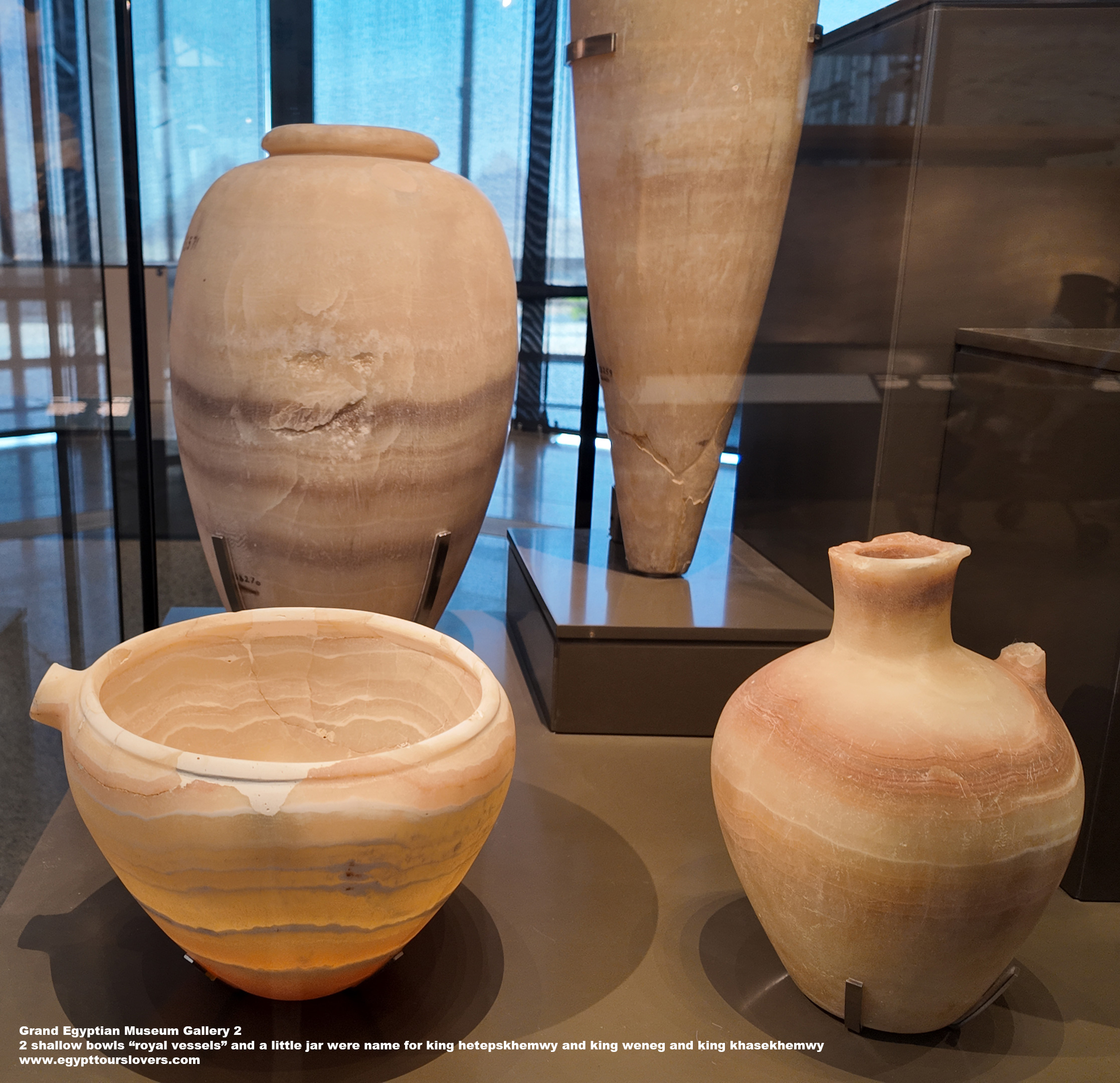
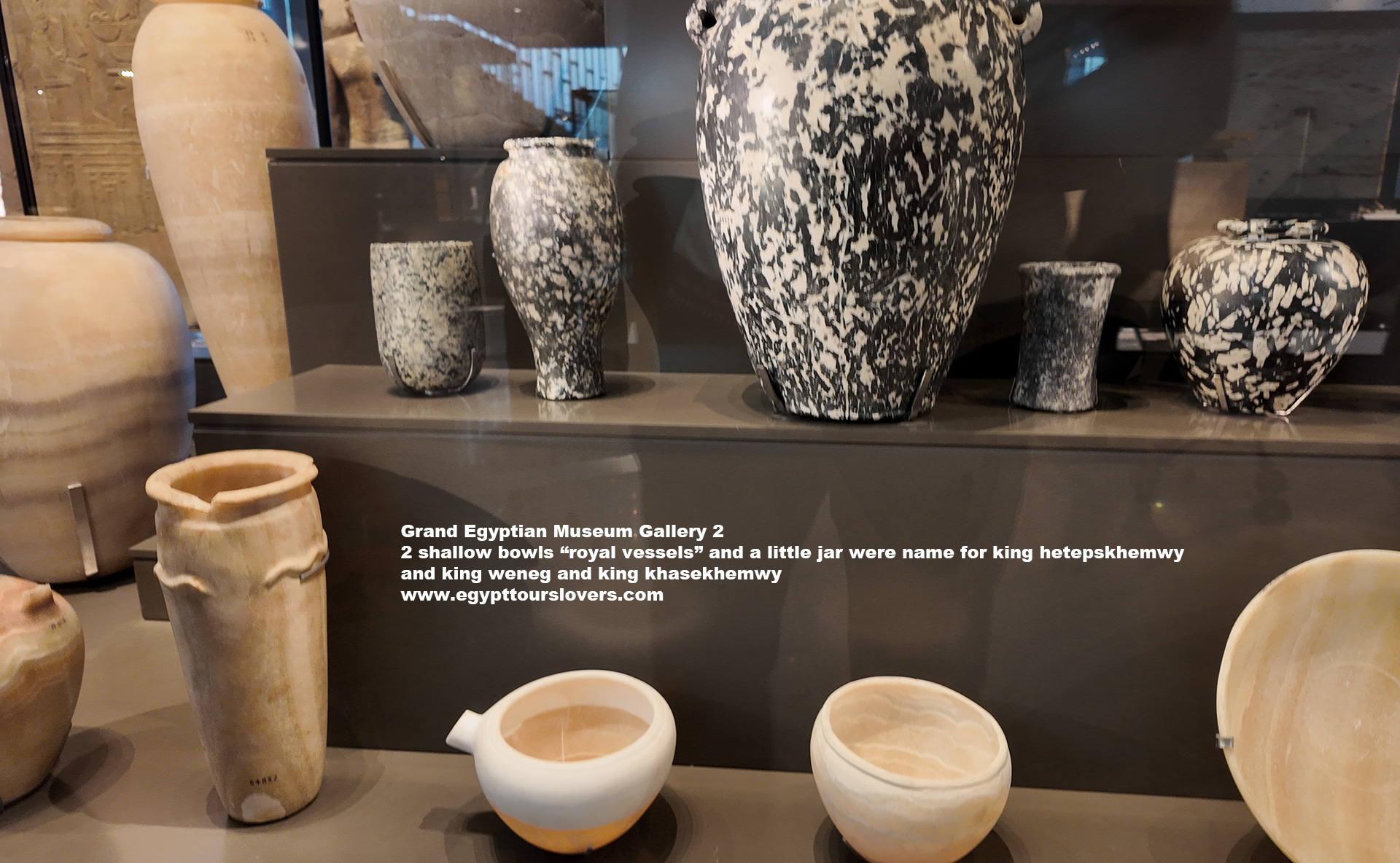
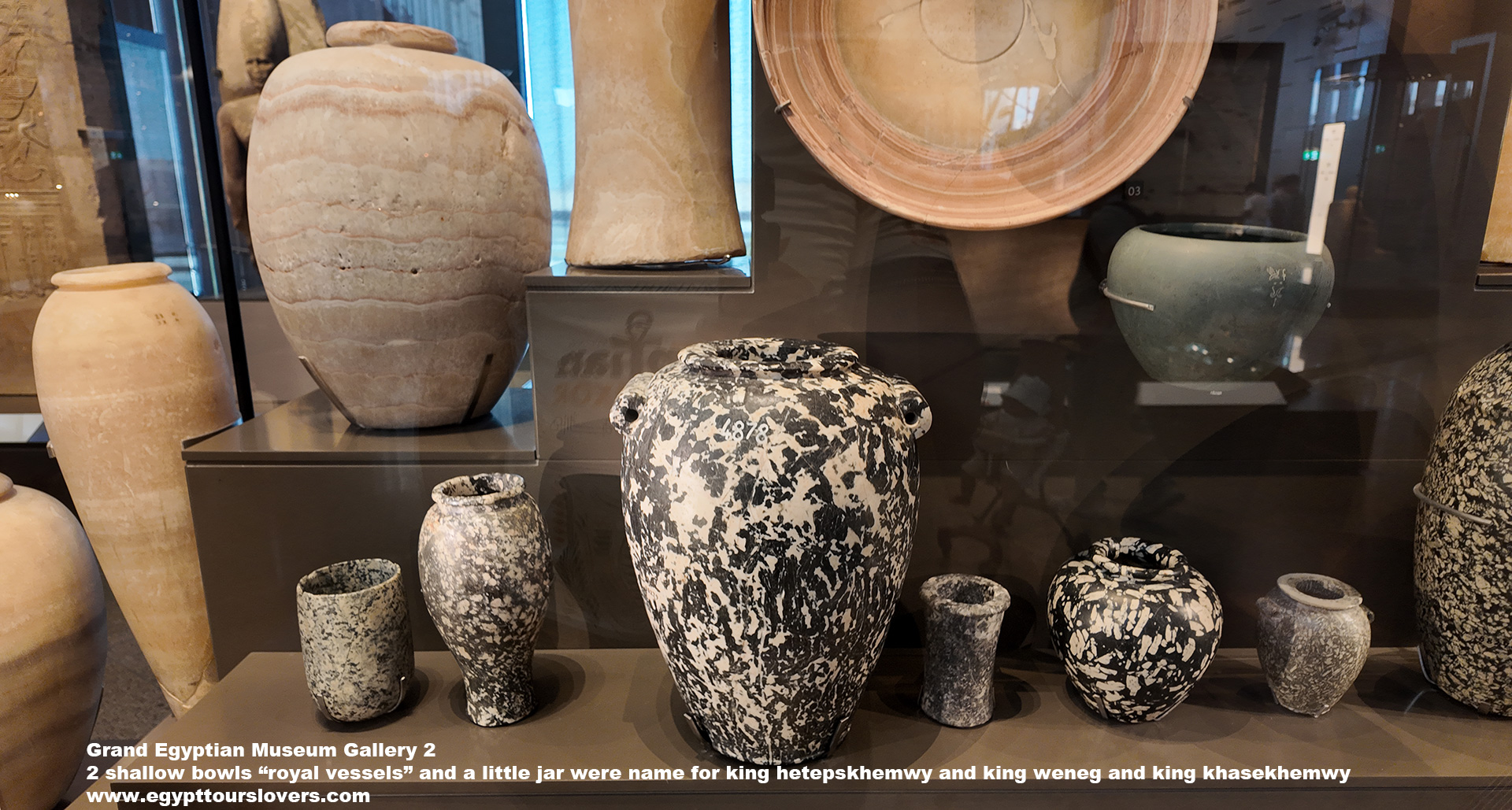
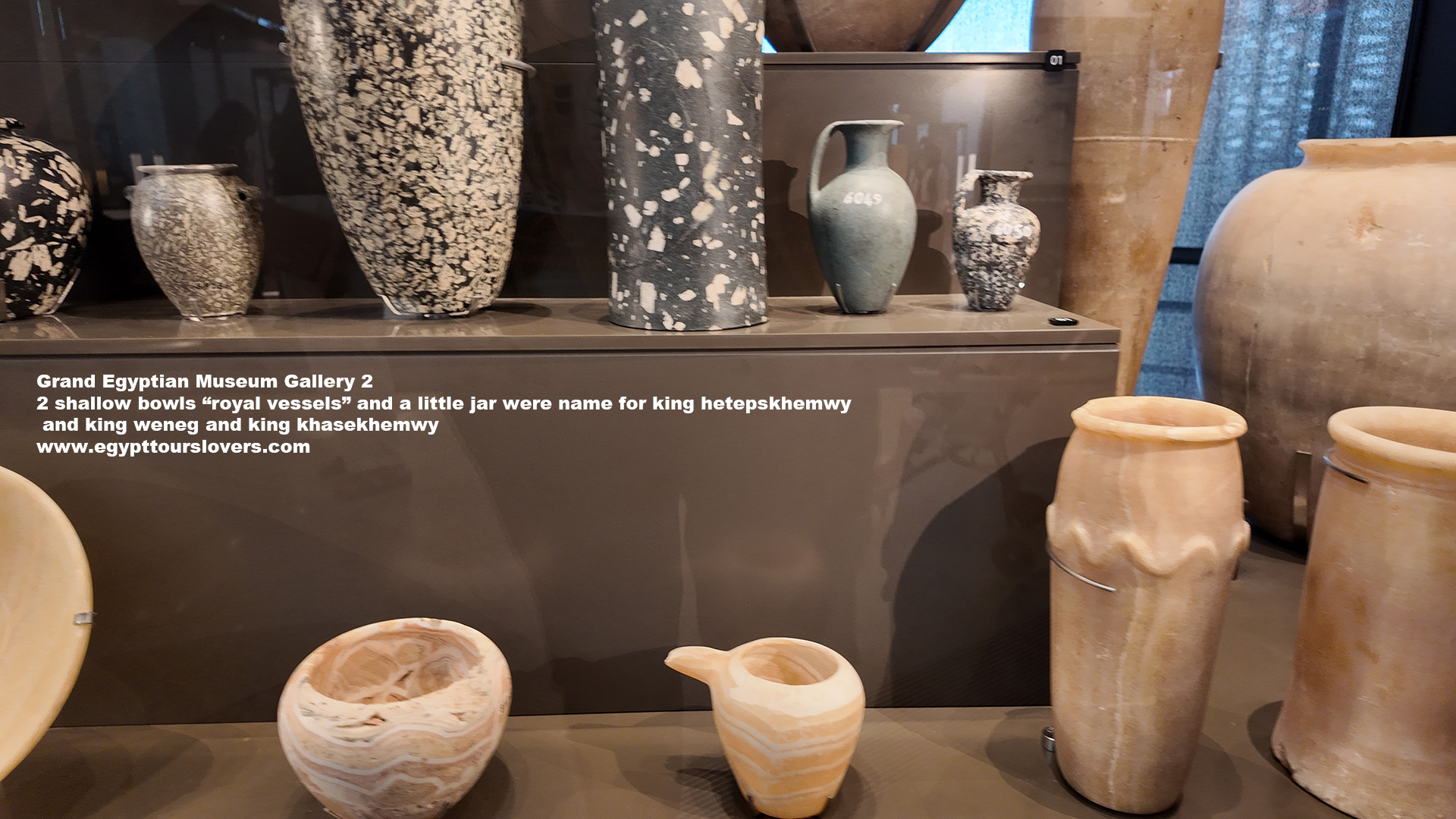
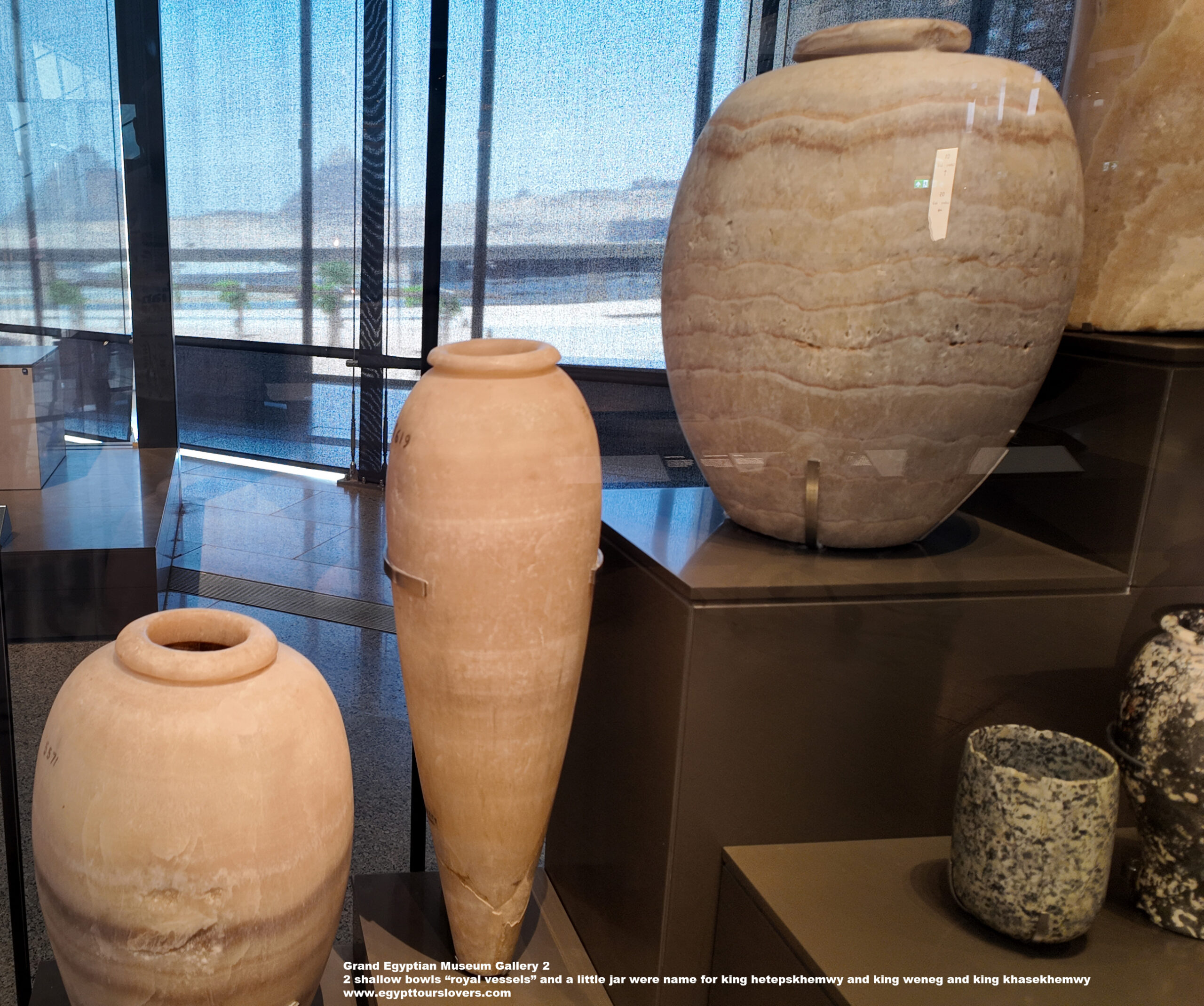
Dynasty 2 | greywacke, granite, diorite | Saqqara
2 shallow bowls “royal vessels” and a little jar were name for king hetepskhemwy and king weneg and king khasekhemwy.
———– } ———– } ———– } ———– }
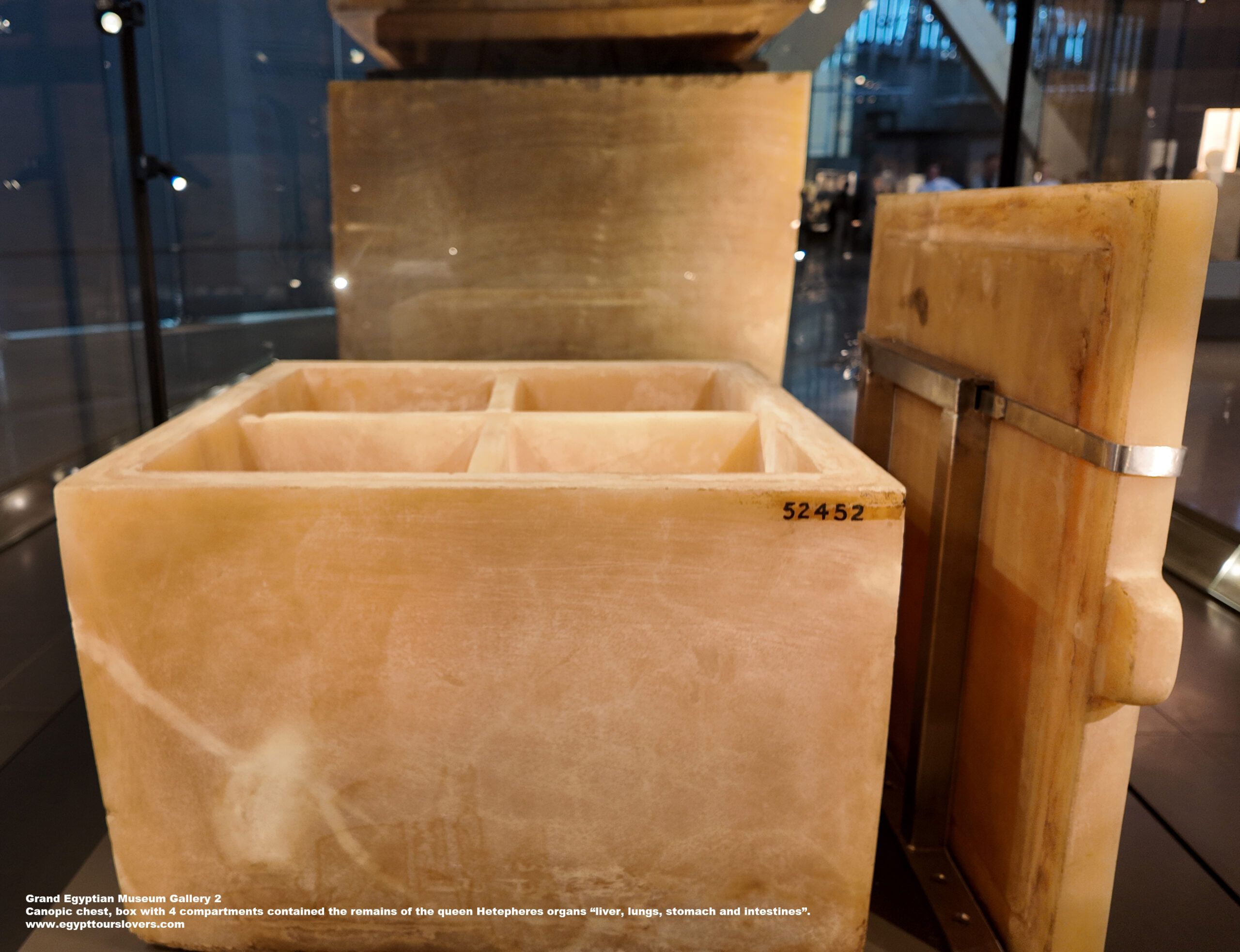
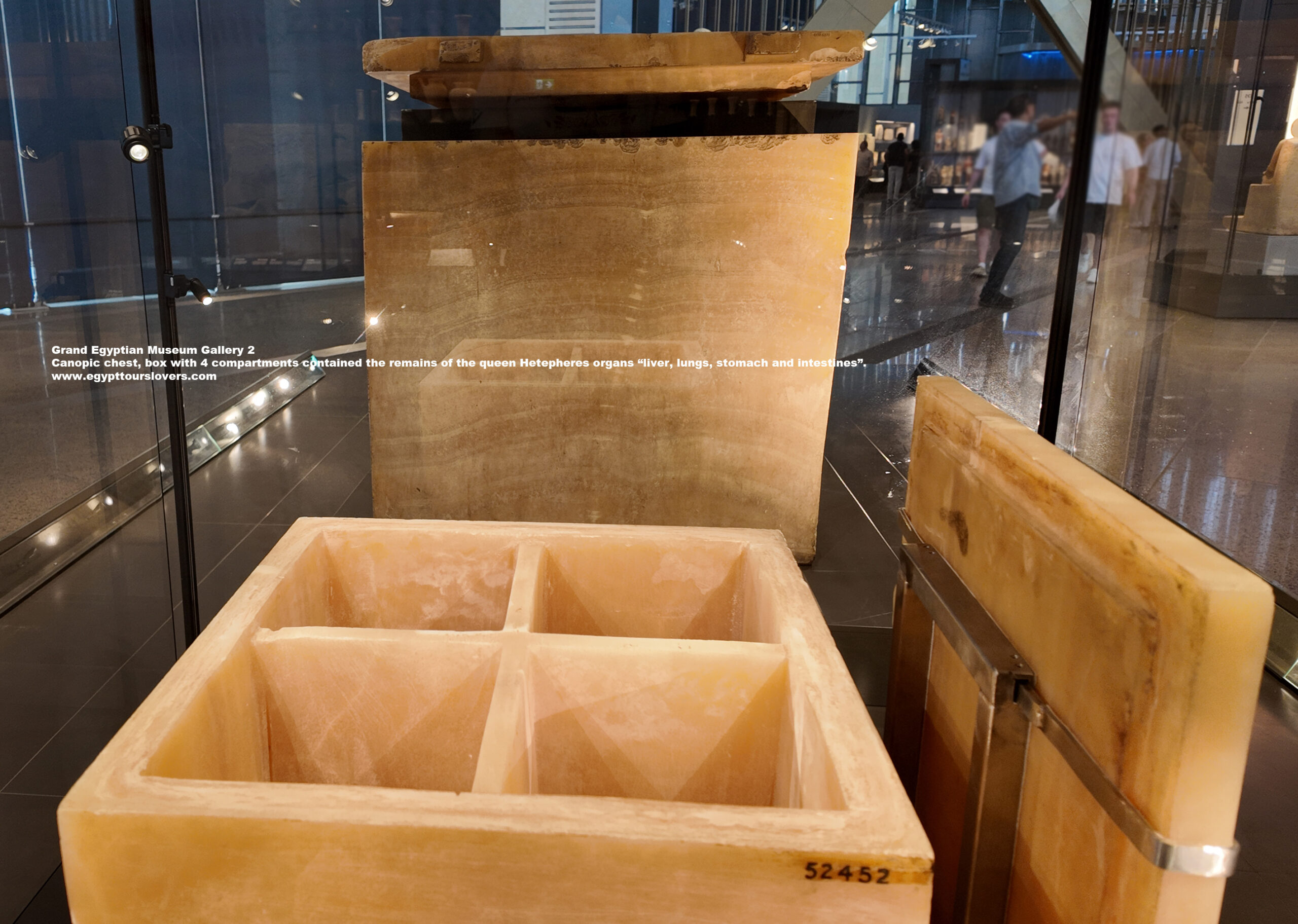
Dynasty 4 | Egyptian alabaster | giza
Canopic chest
Sealed in a slot cut in the west wall of the burial chamber, this box with 4 compartments contained the remains of the queen Hetepheres organs “liver, lungs, stomach and intestines”.
———– } ———– } ———– } ———– }
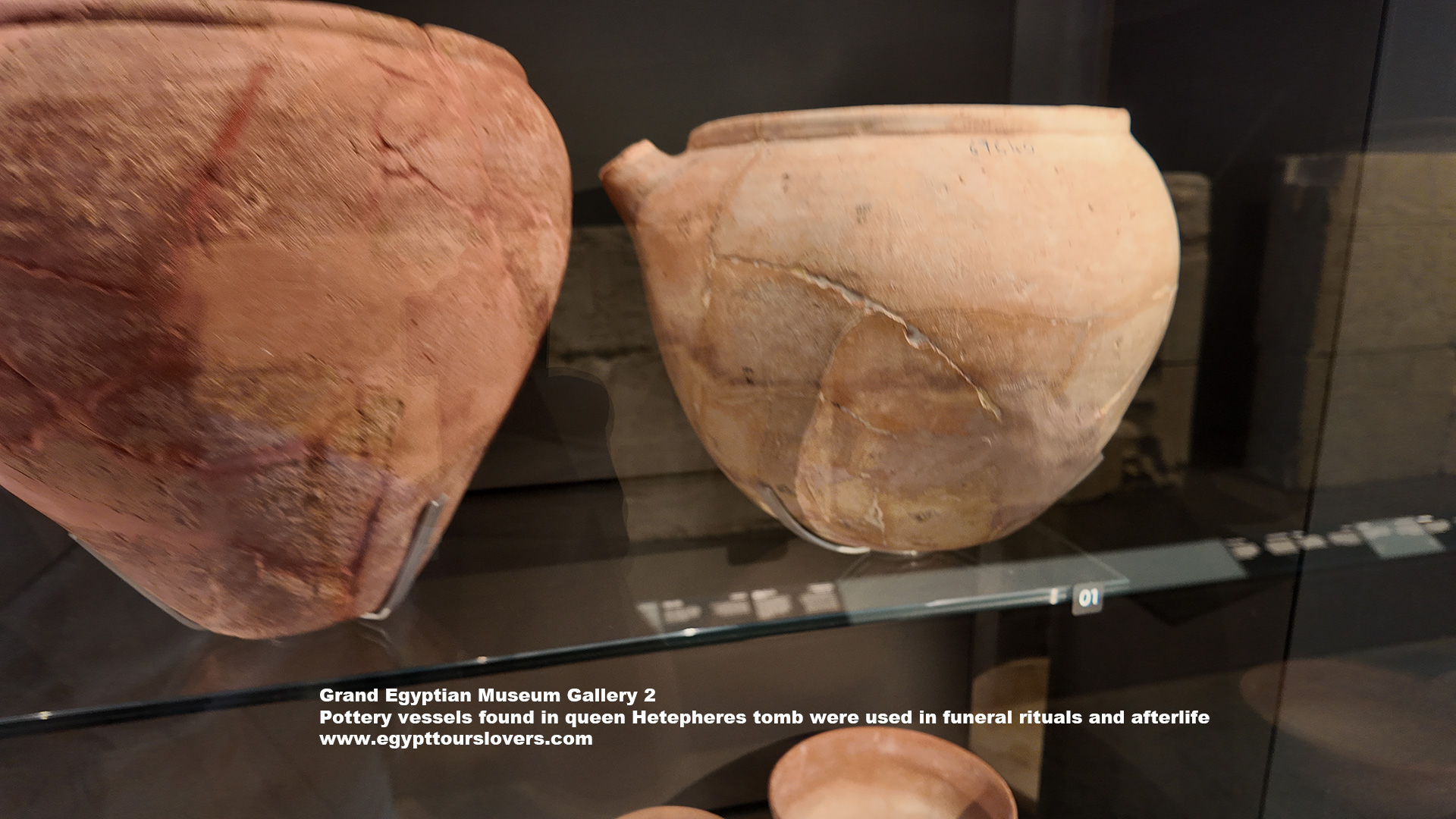
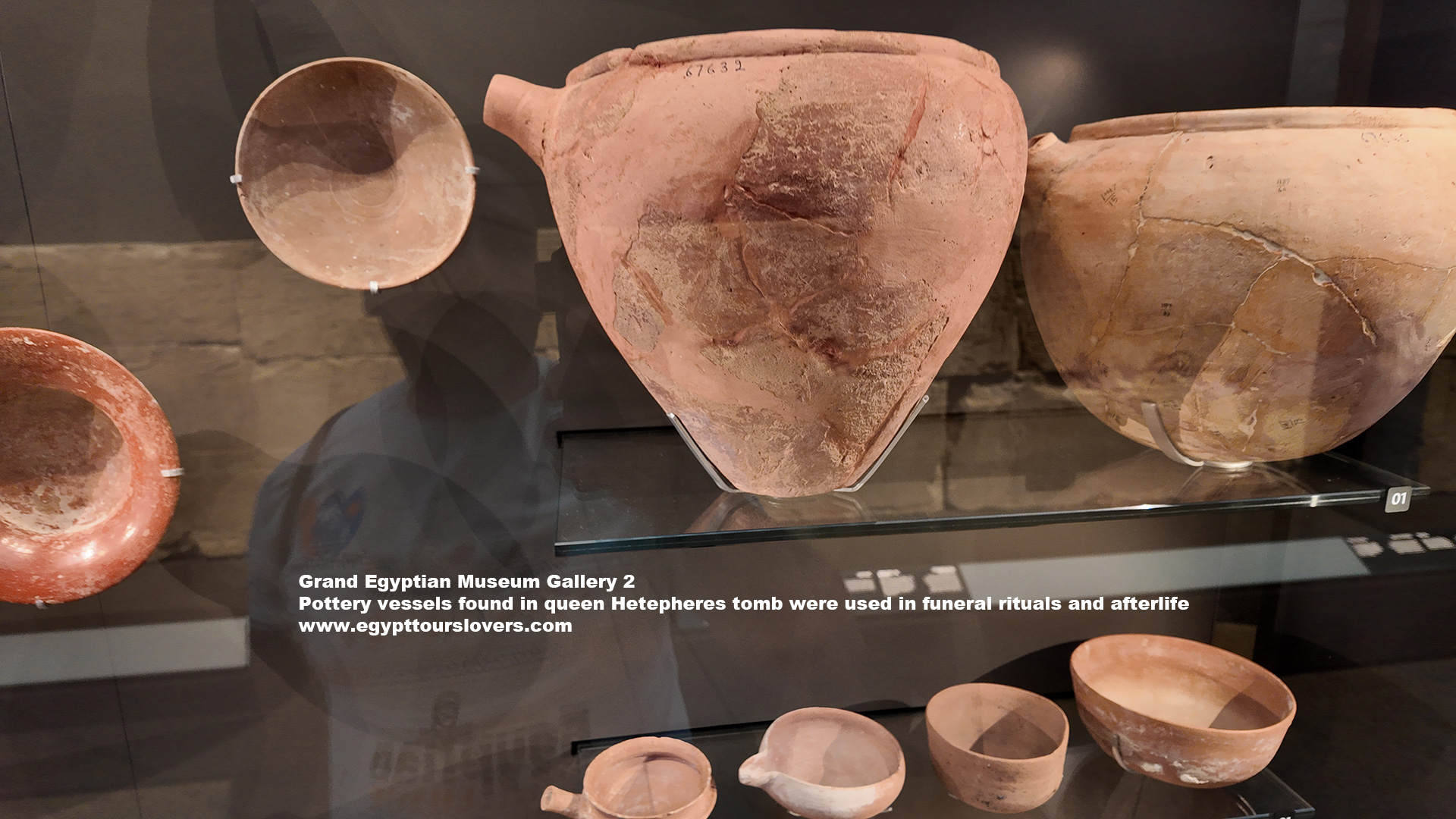
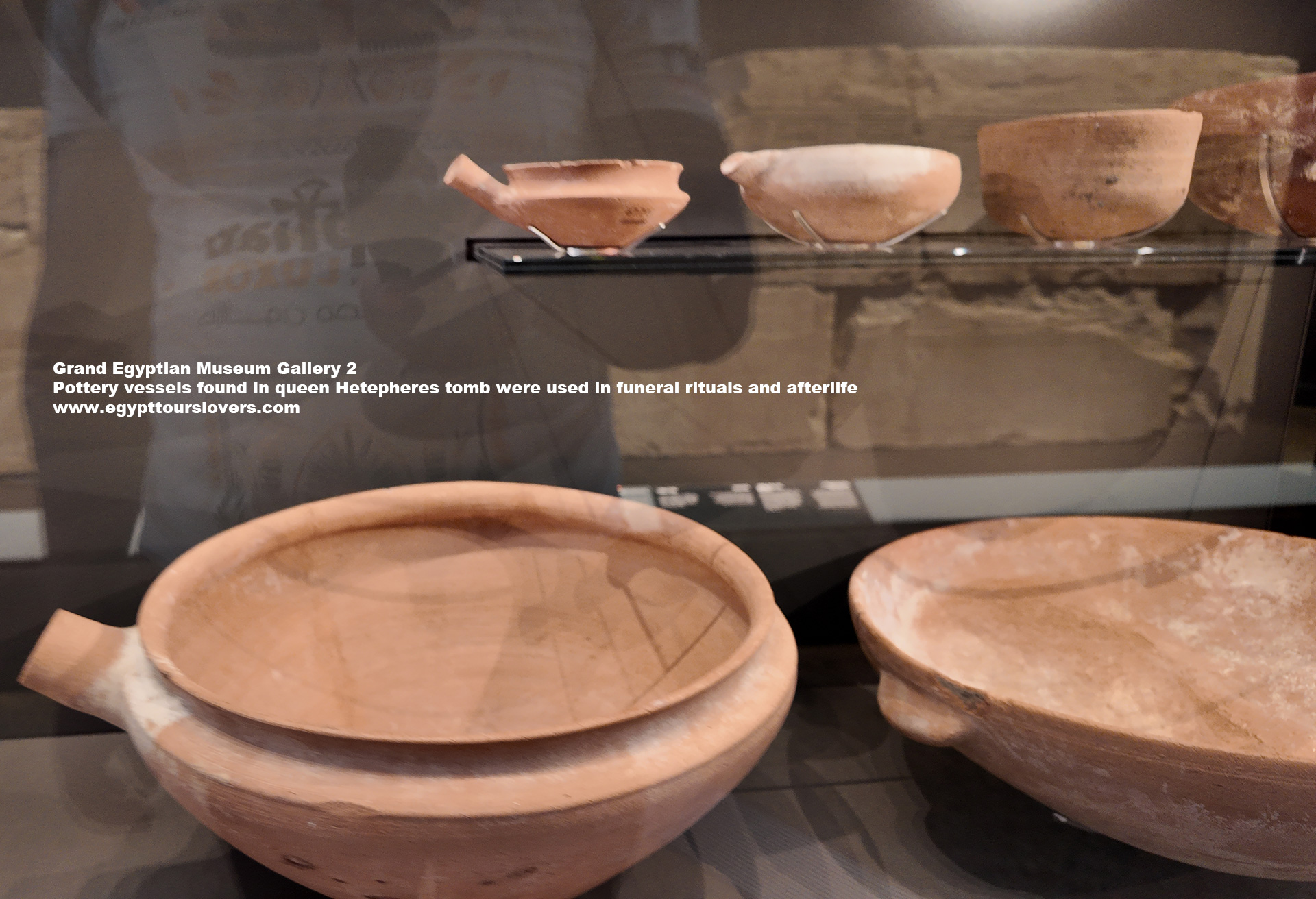
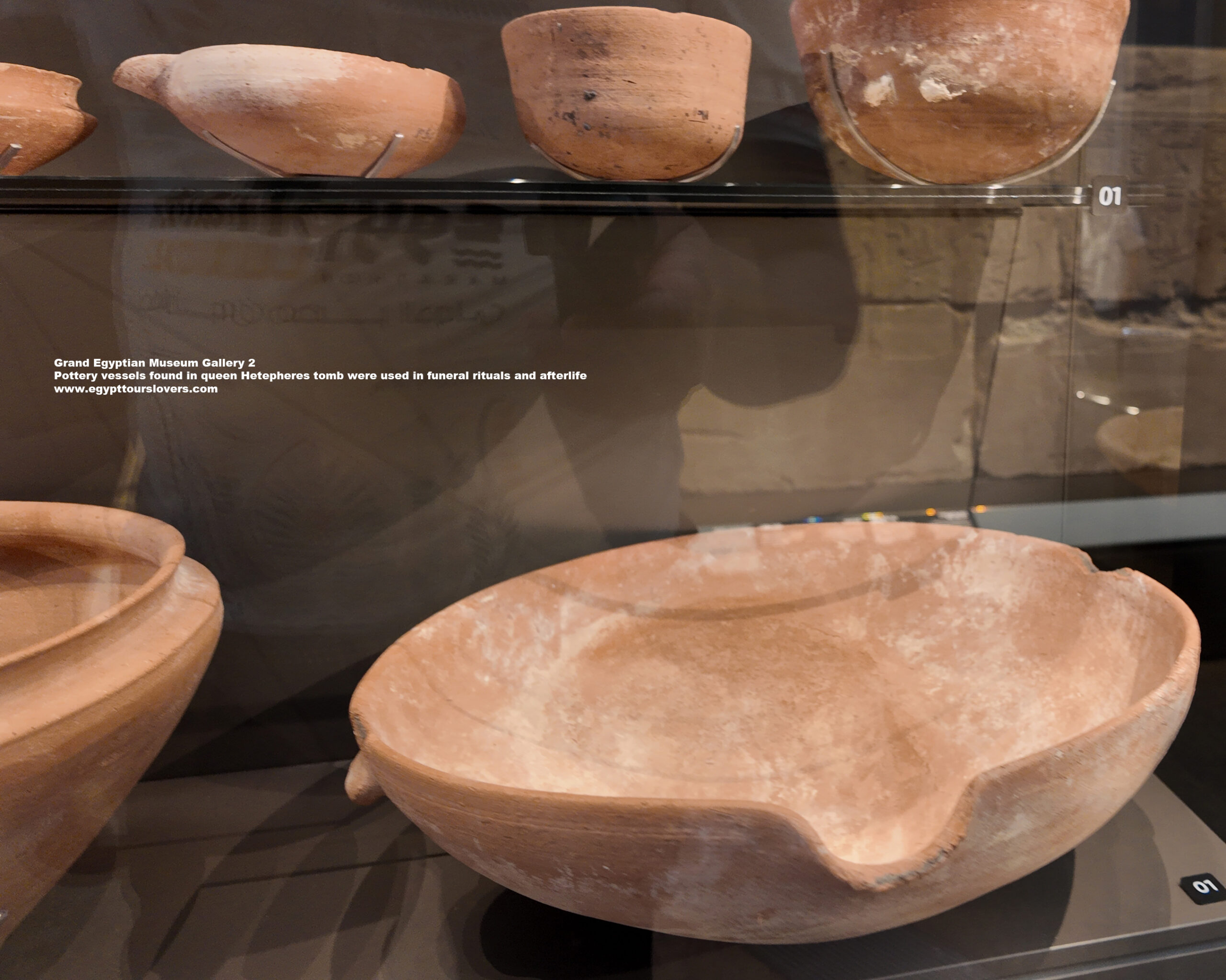
Dynasty 4 | pottery | giza
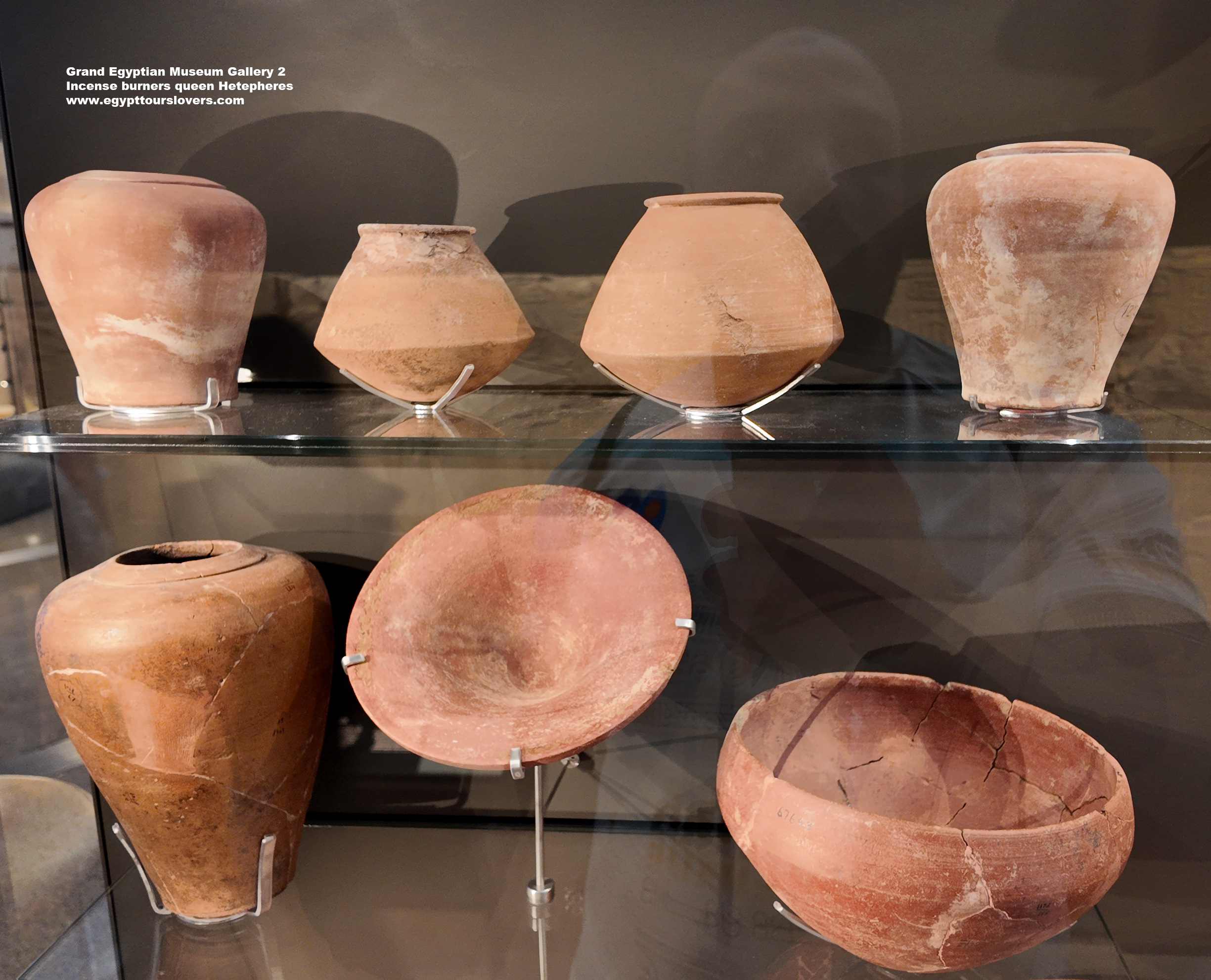
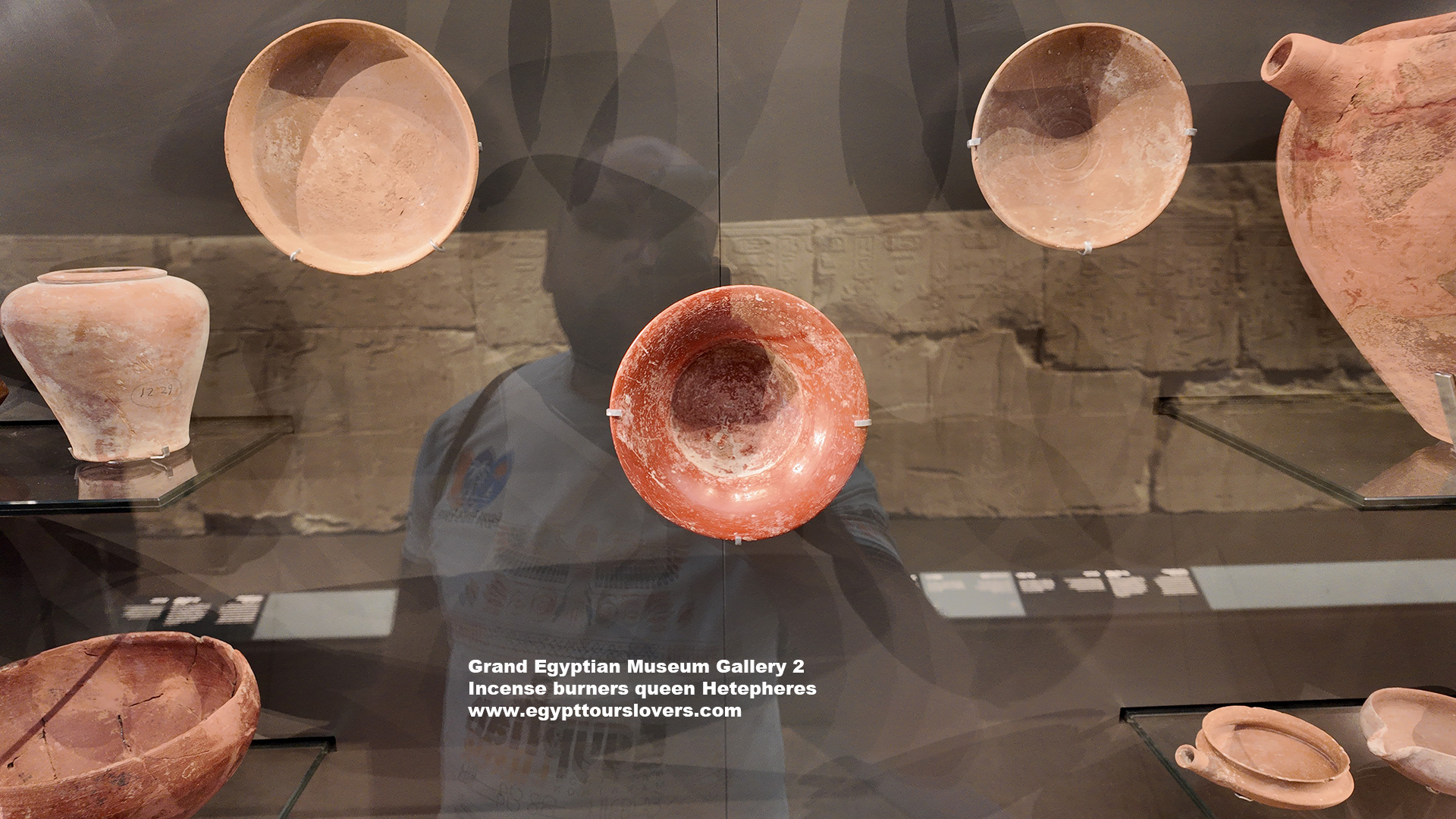
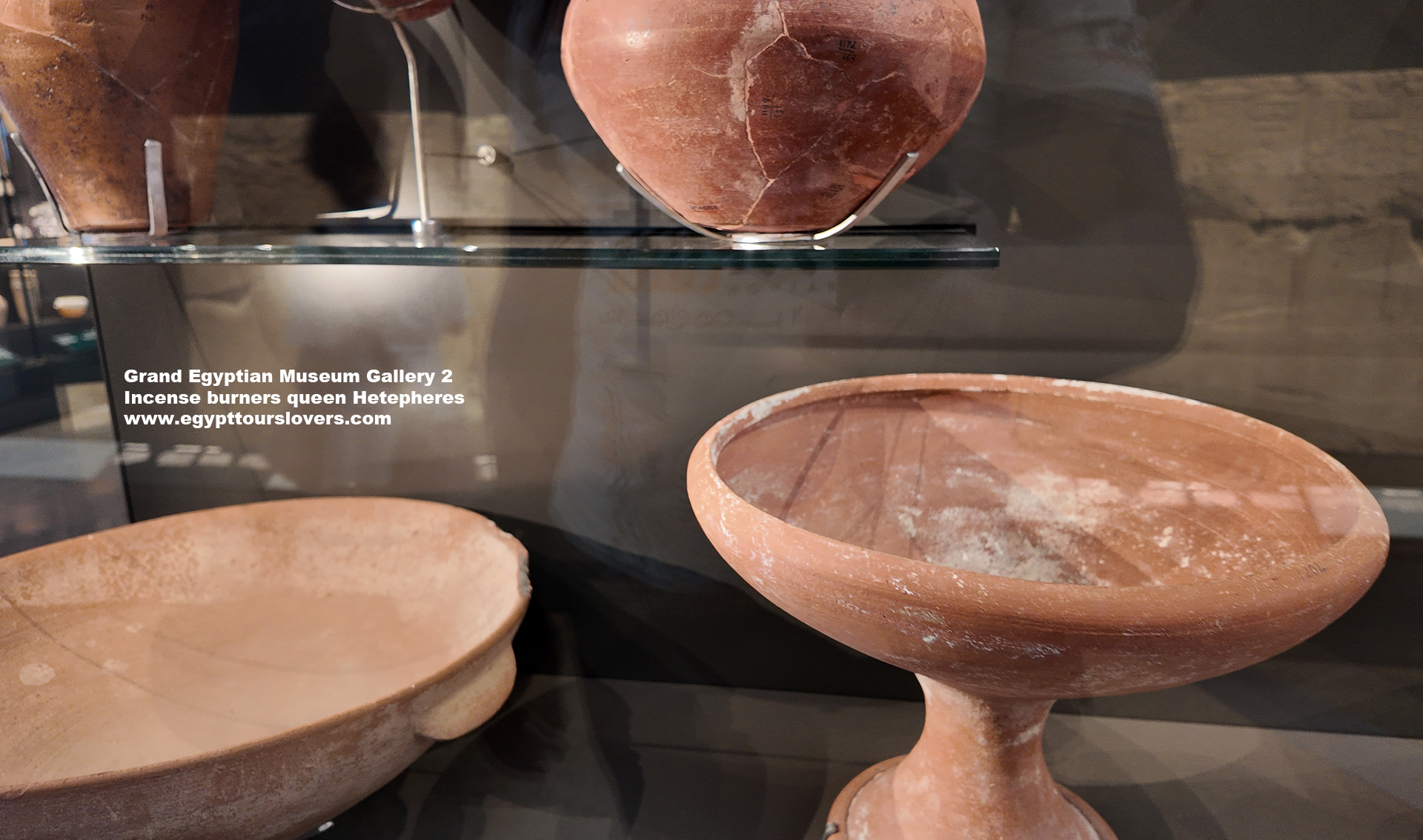
Pottery vessels found in queen Hetepheres tomb were used in funeral rituals and afterlife.
Forms included flat-bottomed plates, bag-shaped pots and bowls with spouts and also large storage containers, wide-shouldered jars and small dishes.
———– } ———– } ———– } ———– }
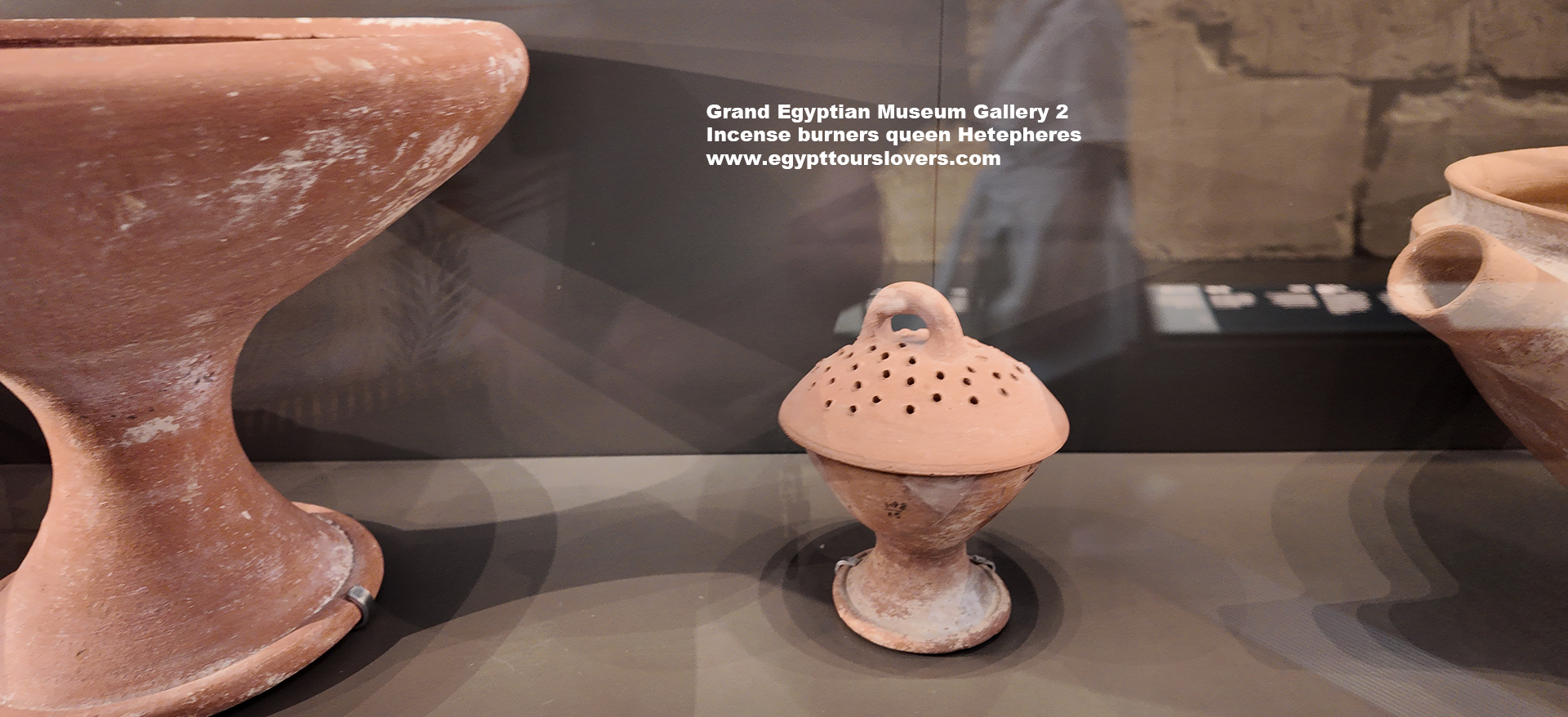
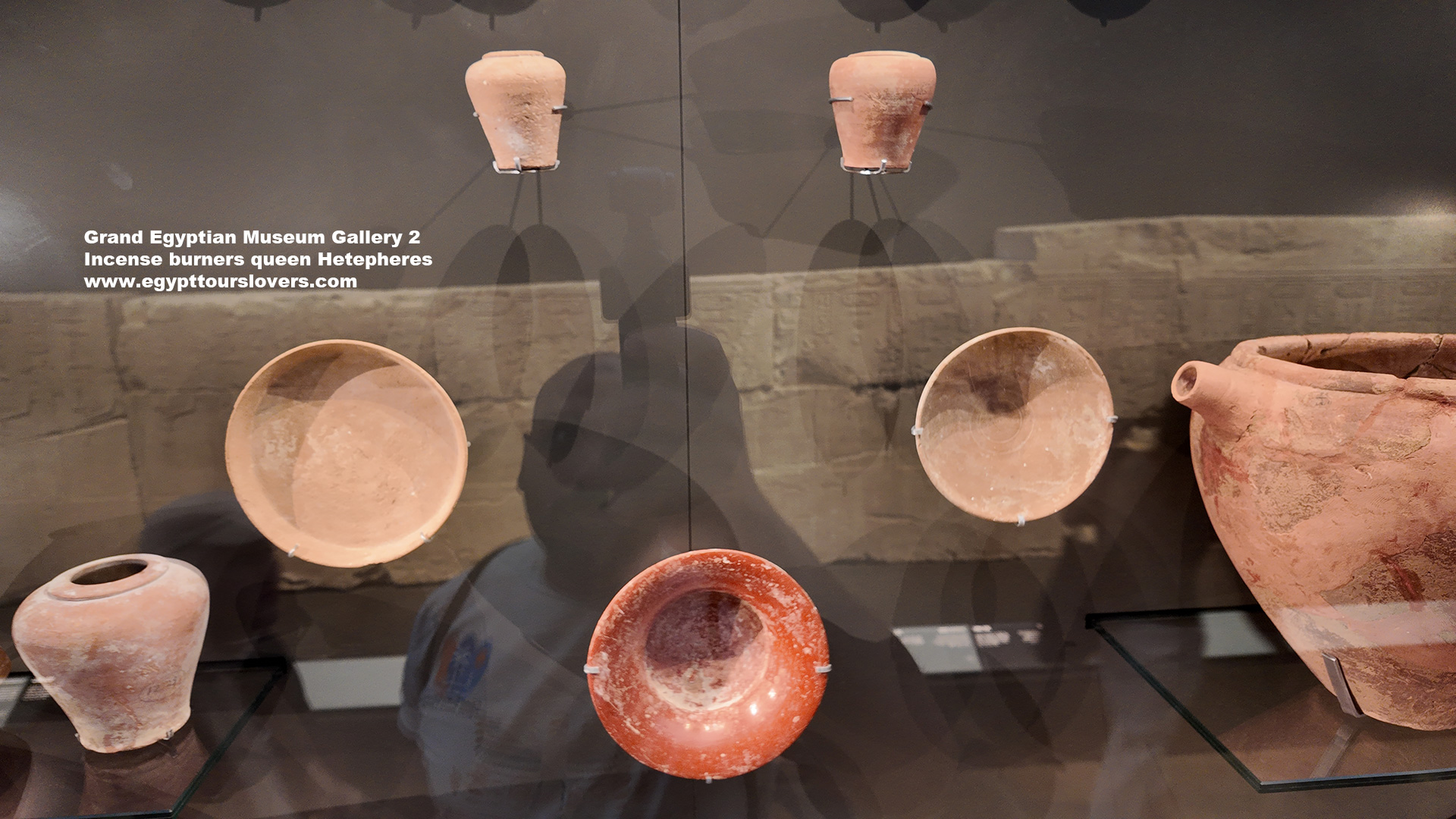
Dynasty 4 | pottery | giza
Incense burners queen Hetepheres
These footed bowls or goblets held perfumed wood, herbs, spices or incense that was burnt over charcoal, with the lids allowing the fragrance to escape through the holes.
———– } ———– } ———– } ———– }
Dynasty 6 | limestone | Saqqara
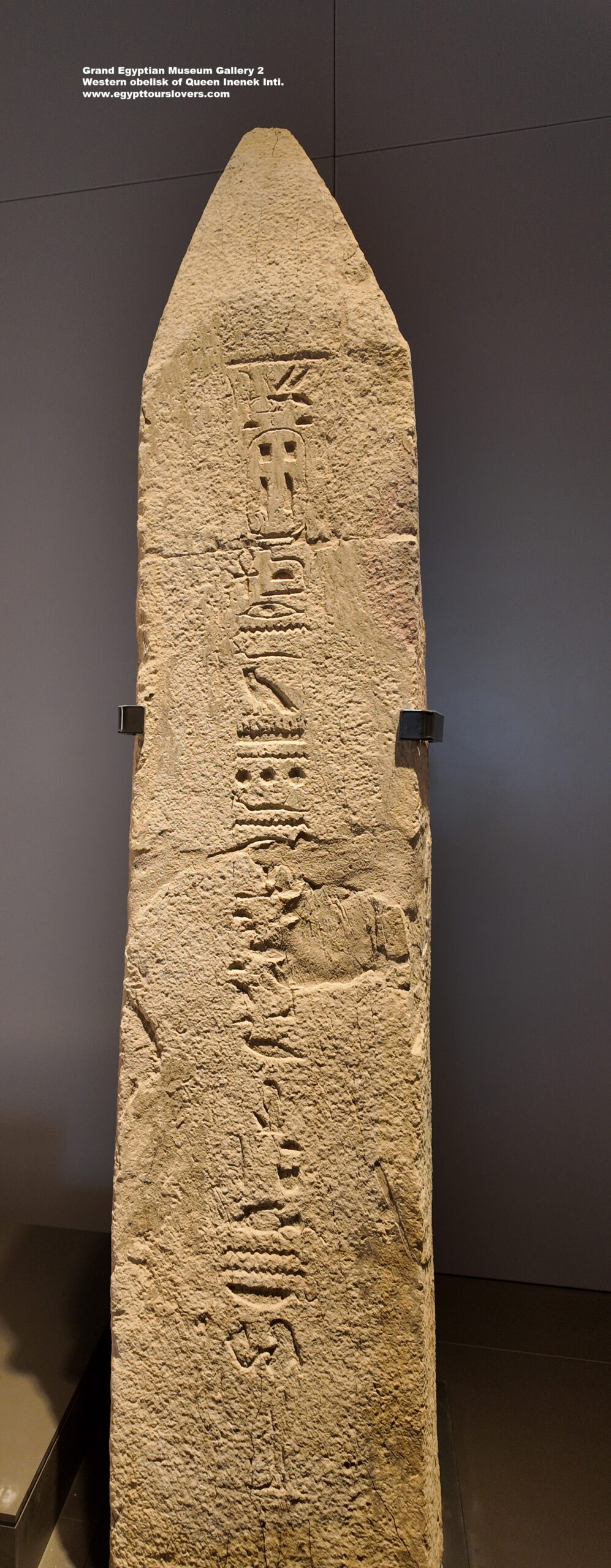
Western obelisk of Queen Inenek Inti.
Queen Inenek Inti received 2 obelisks from her husband king pepy I.
———– } ———– } ———– } ———– }
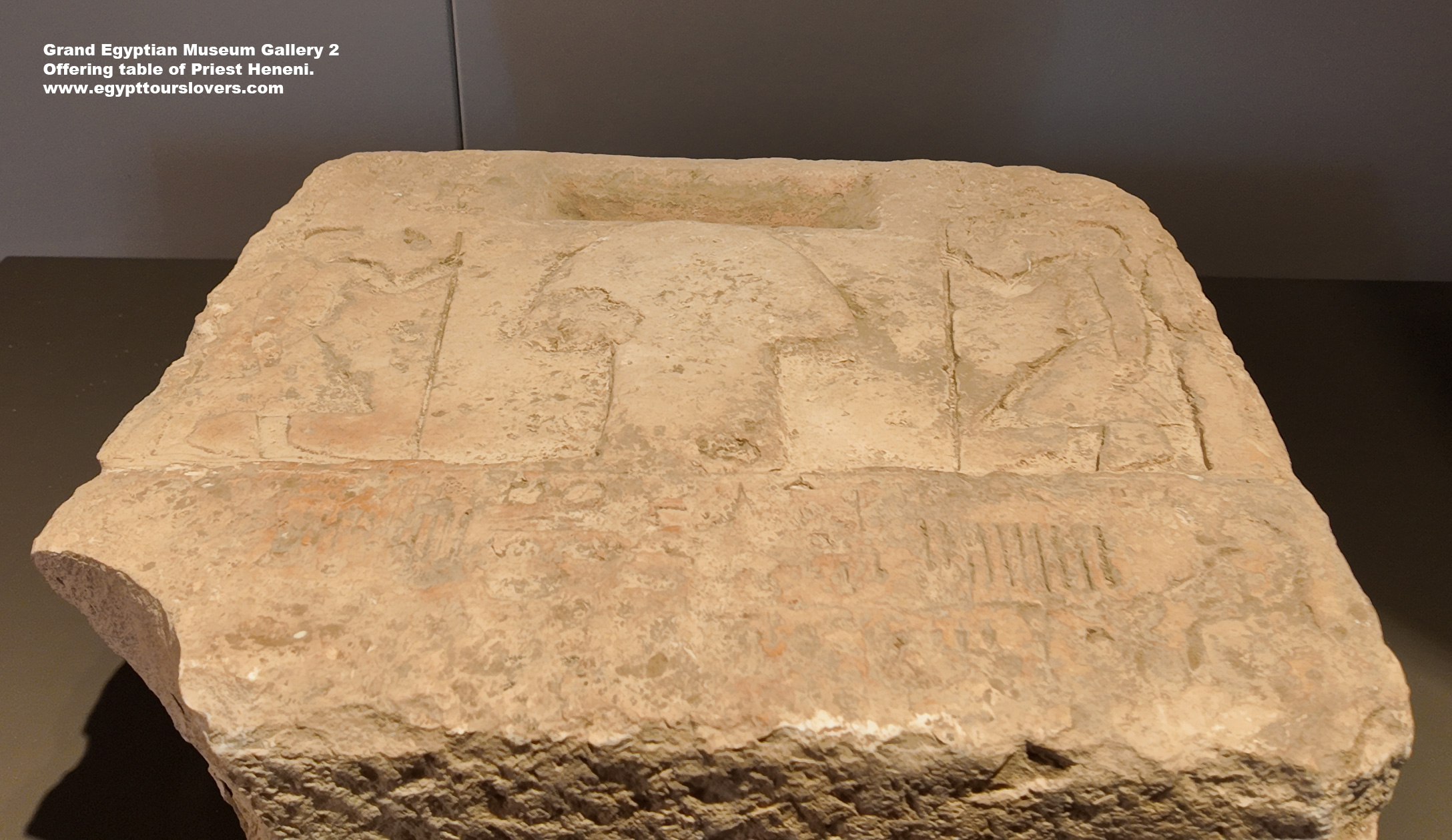
Dynasty 6 | limestone | Saqqara
Offering table of Priest Heneni.
Noble of the king and scribe for a group of priests, Priest Heneni hoped to receive all kind of offerings, as he had helped set up the mortuary cult of Queen Inenek Inti.
———– } ———– } ———– } ———– }
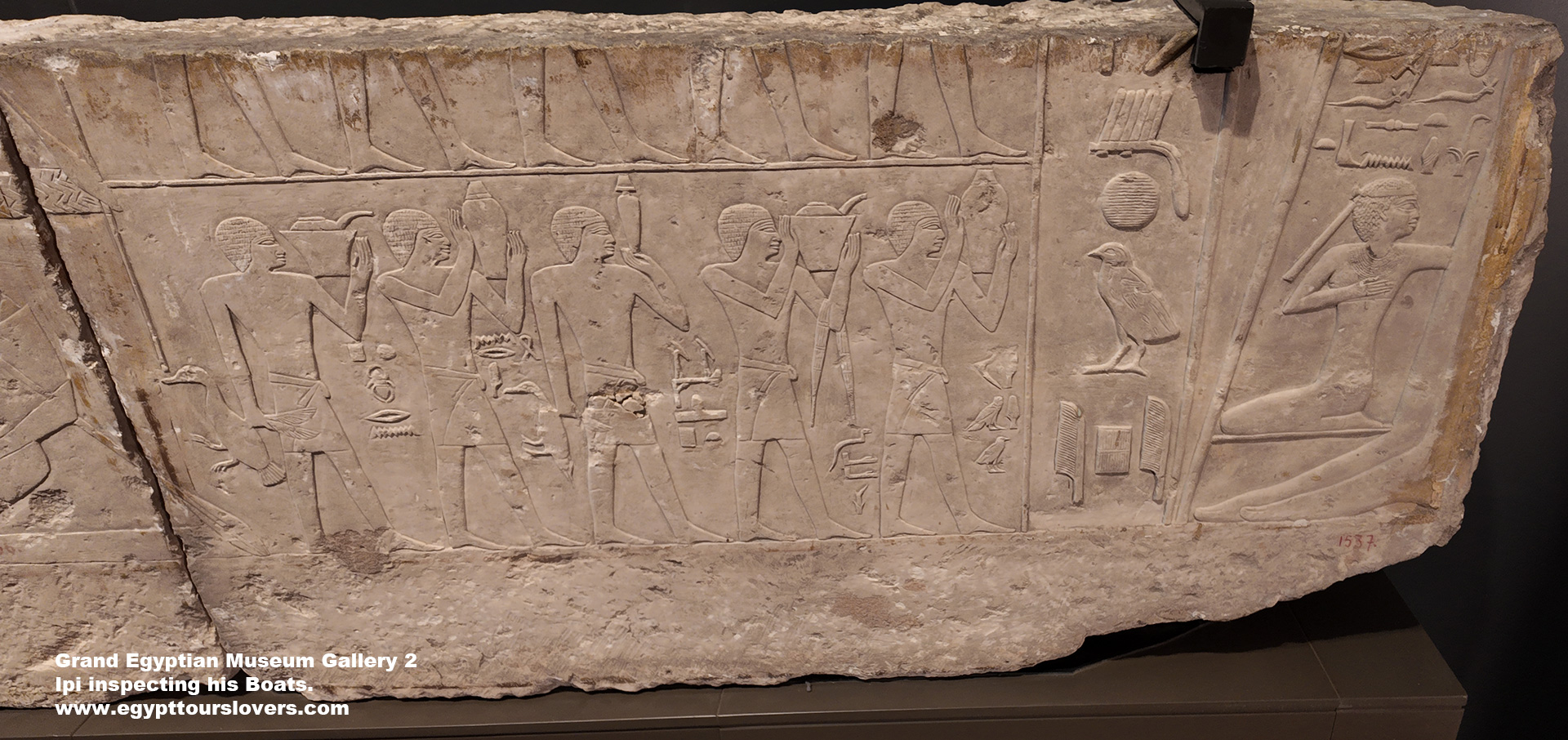
Ipi inspecting his Boats.
6 boats brought products from all around Egypt and from abroad “offering scenes in his tomb”.
———– } ———– } ———– } ———– }
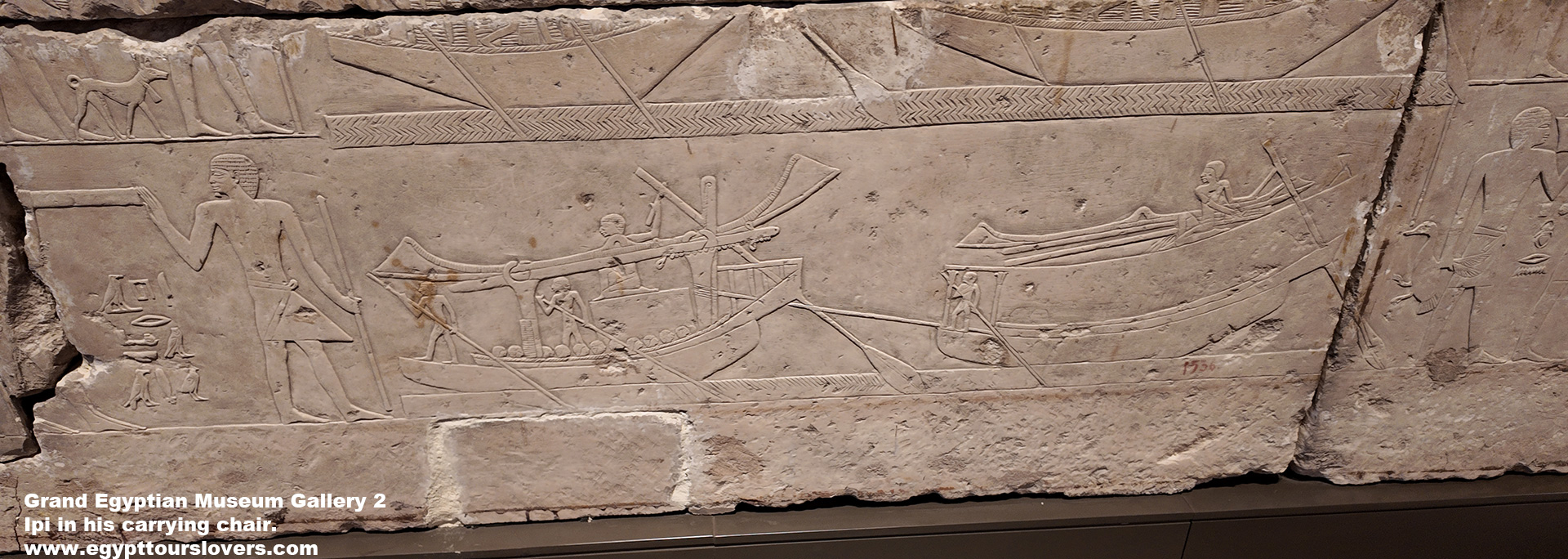
Dynasty 6 | limestone | Saqqara
Ipi in his carrying chair.
Carried by several men, ipi holds a sceptre and a fly-whisk as symbols of his high status.
Escorted by sunshade and fan bearers, servants and supervisors, and his dog, he was going to the port to welcome his boats.
———– } ———– } ———– } ———– }
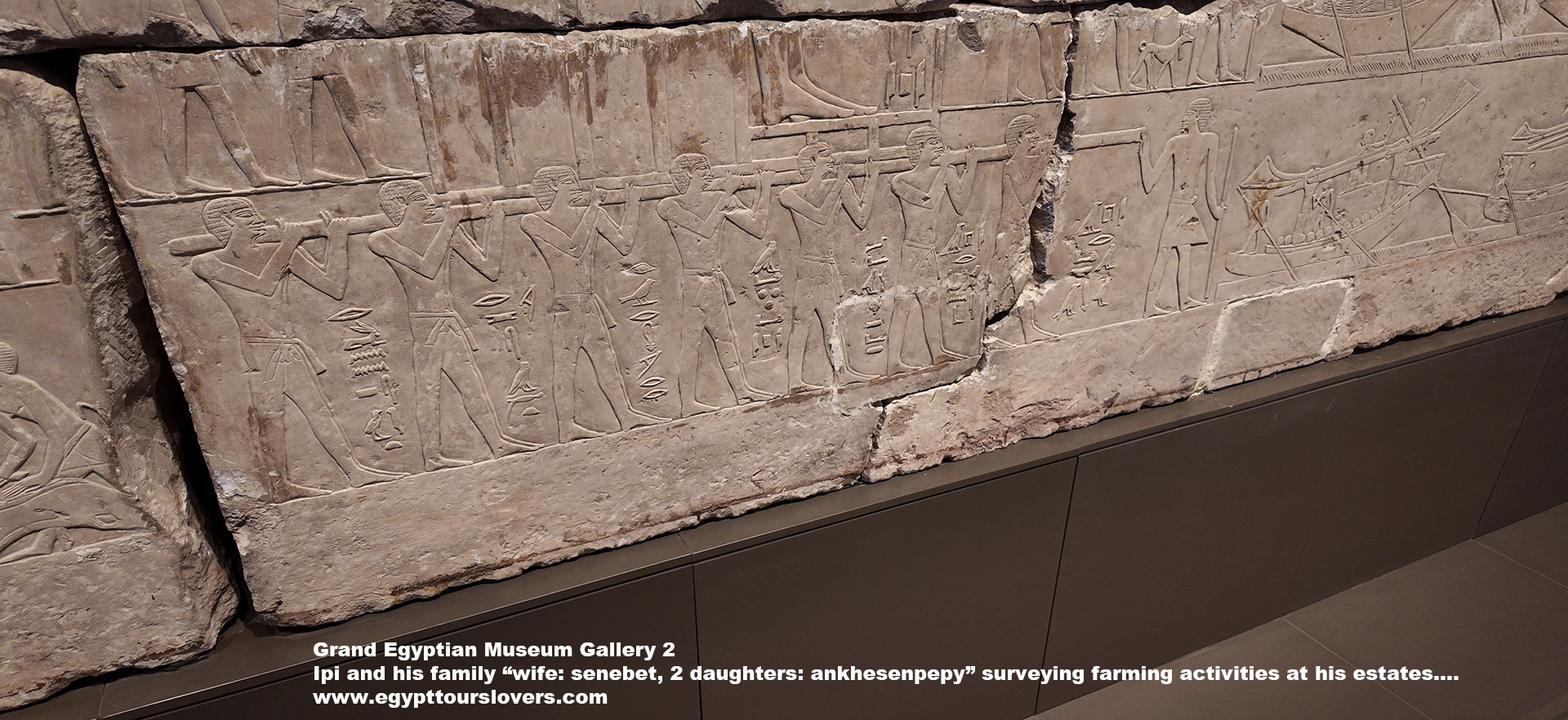
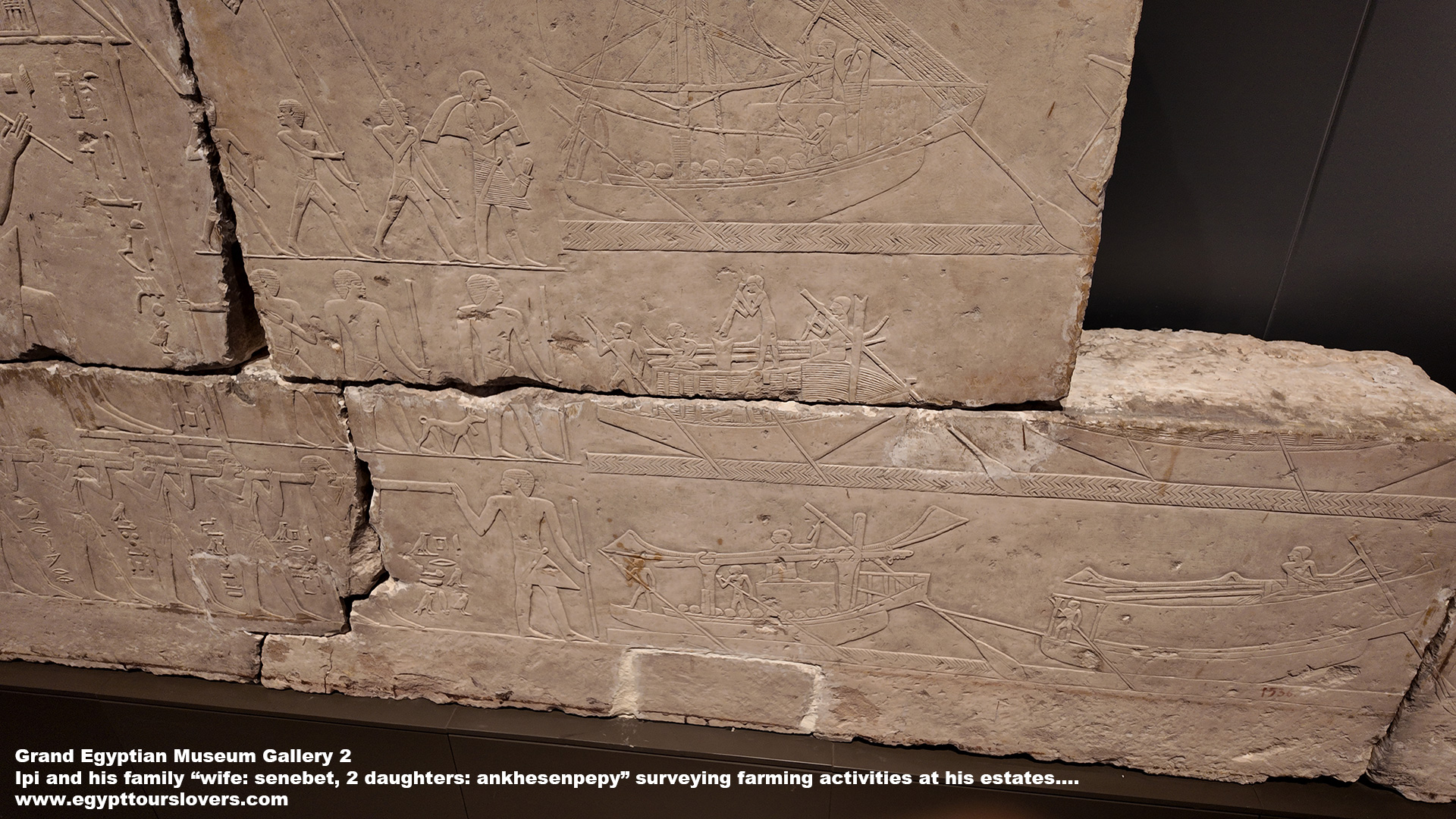
Dynasty 6 | limestone | Saqqara
Ipi and his family “wife: senebet, 2 daughters: ankhesenpepy” surveying farming activities at his estates….
———– } ———– } ———– } ———– }
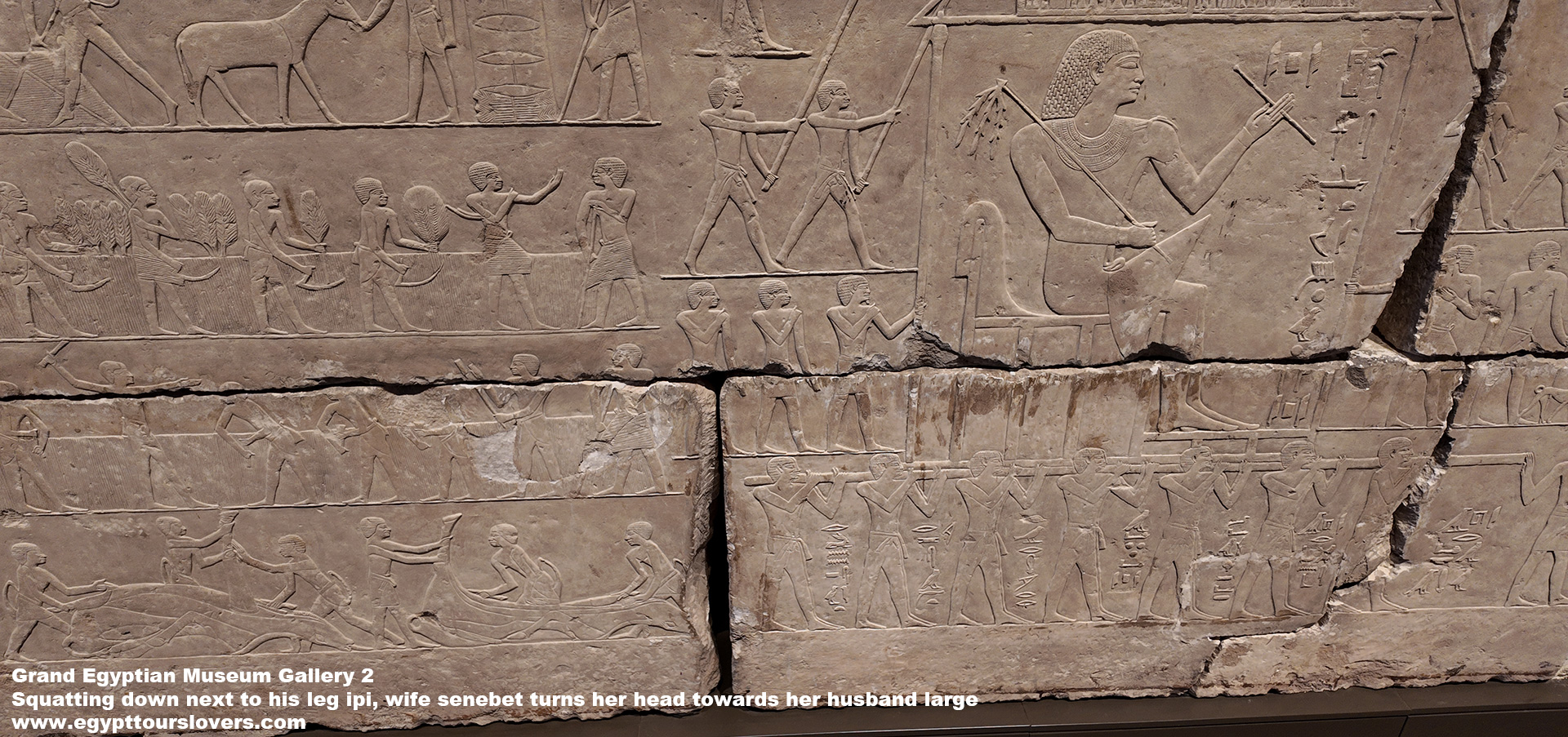
Dynasty 6 | limestone | Saqqara
Squatting down next to his leg ipi, wife senebet turns her head towards her husband as they both receive offerings of food and drinks for their afterlives.
———– } ———– } ———– } ———– }
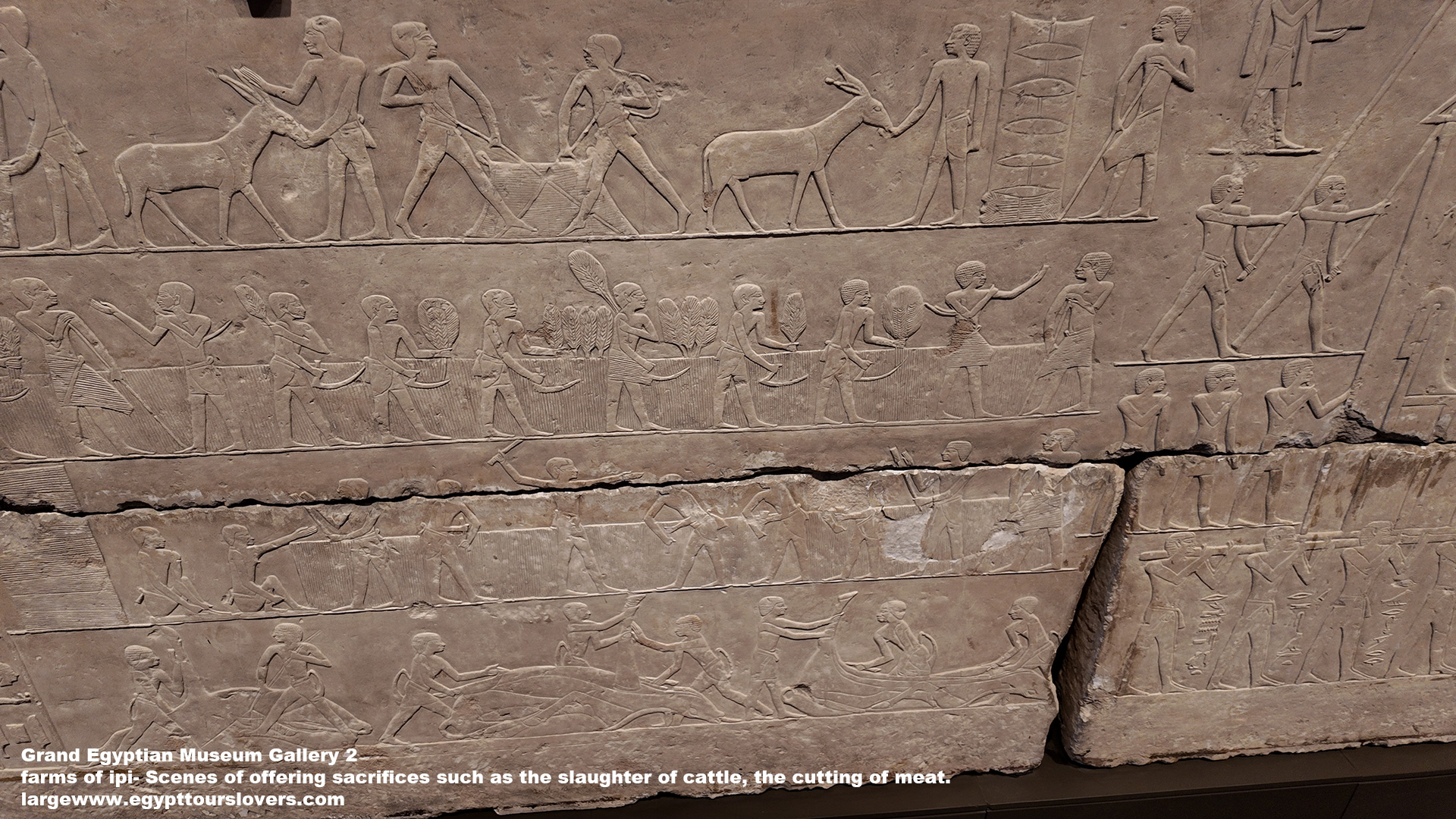
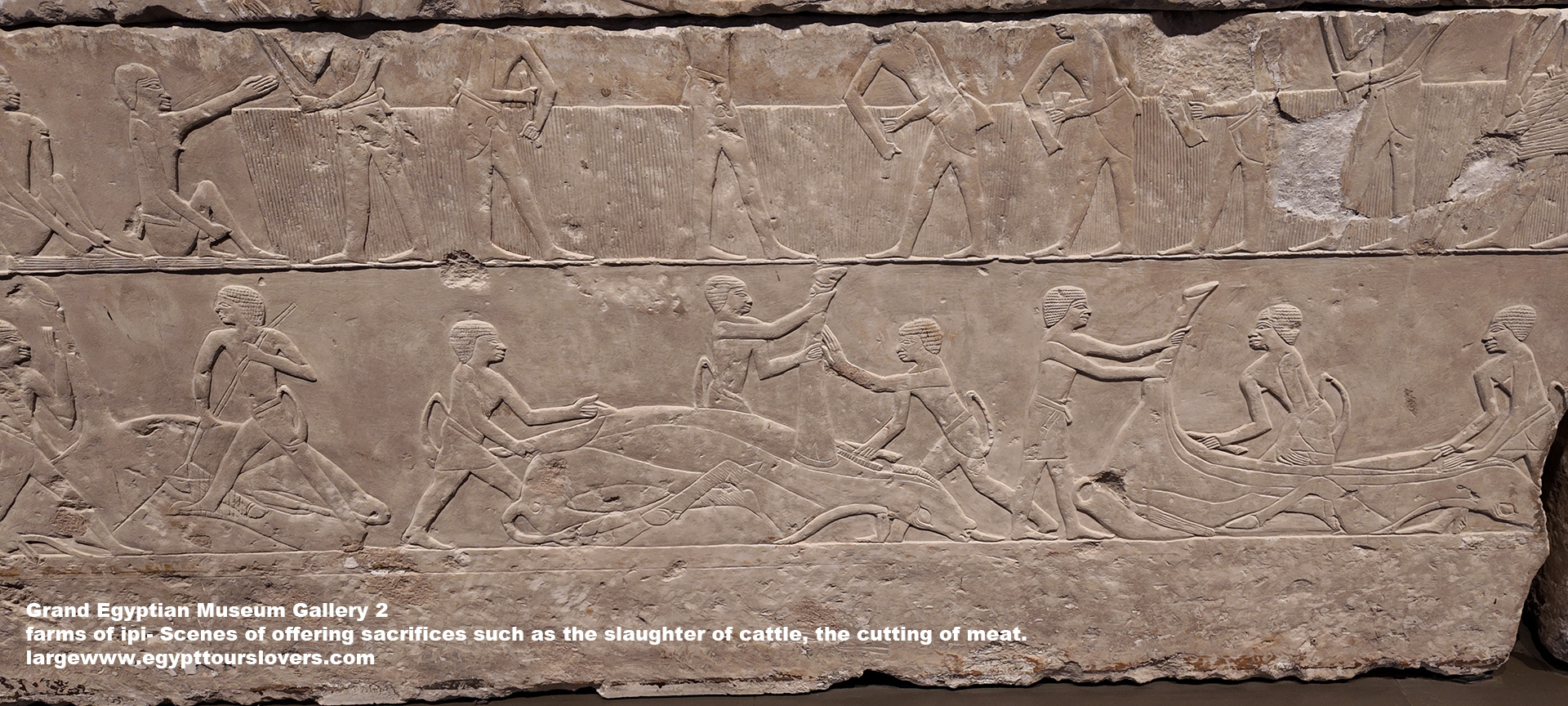
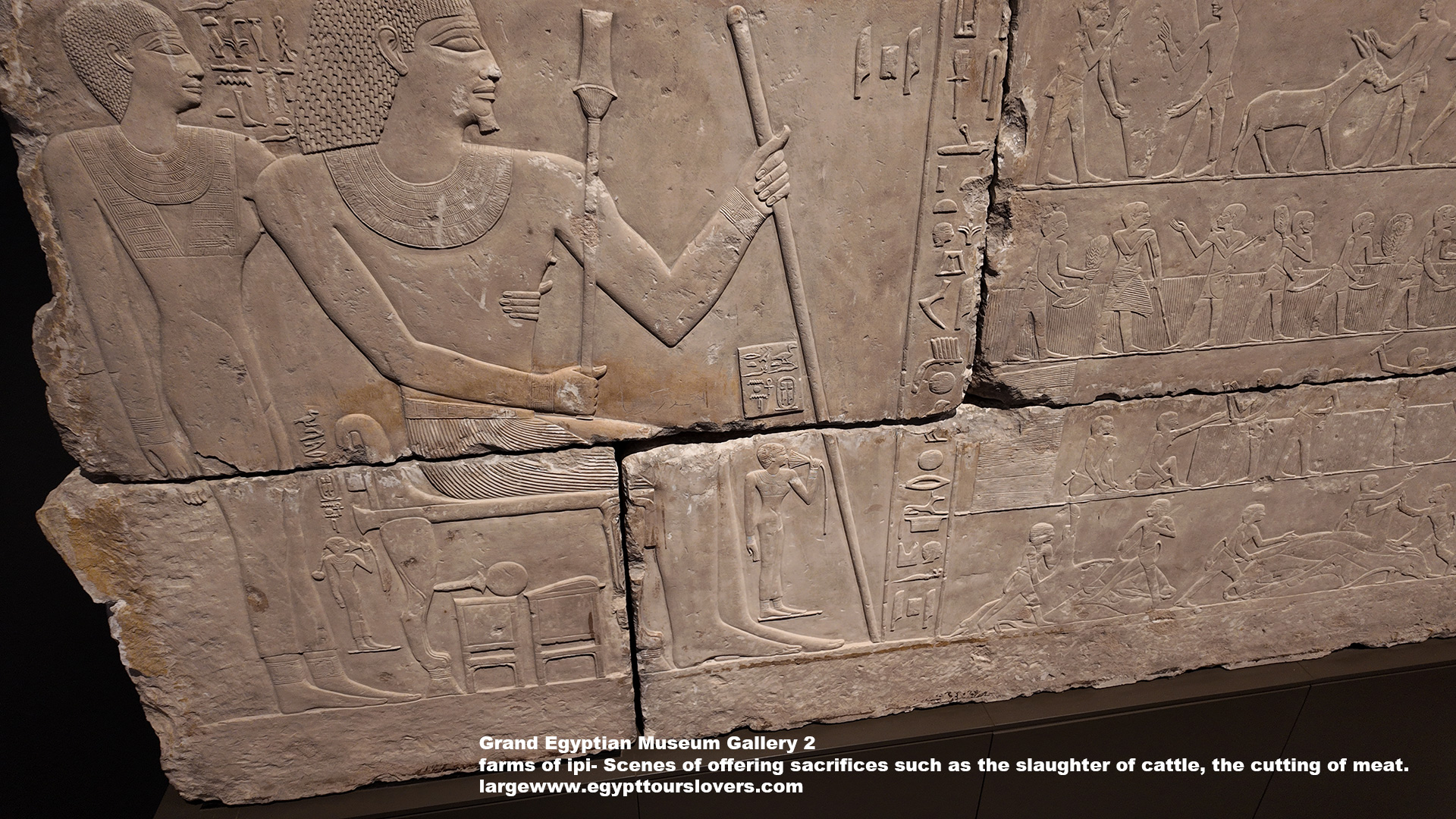
Dynasty 6 | limestone | Saqqara
Scenes of offering sacrifices such as the slaughter of cattle, the cutting of meat, the harvesting of flax crops, and the carrying of grain by donkeys from the large farms of ipi.
———– } ———– } ———– } ———– }
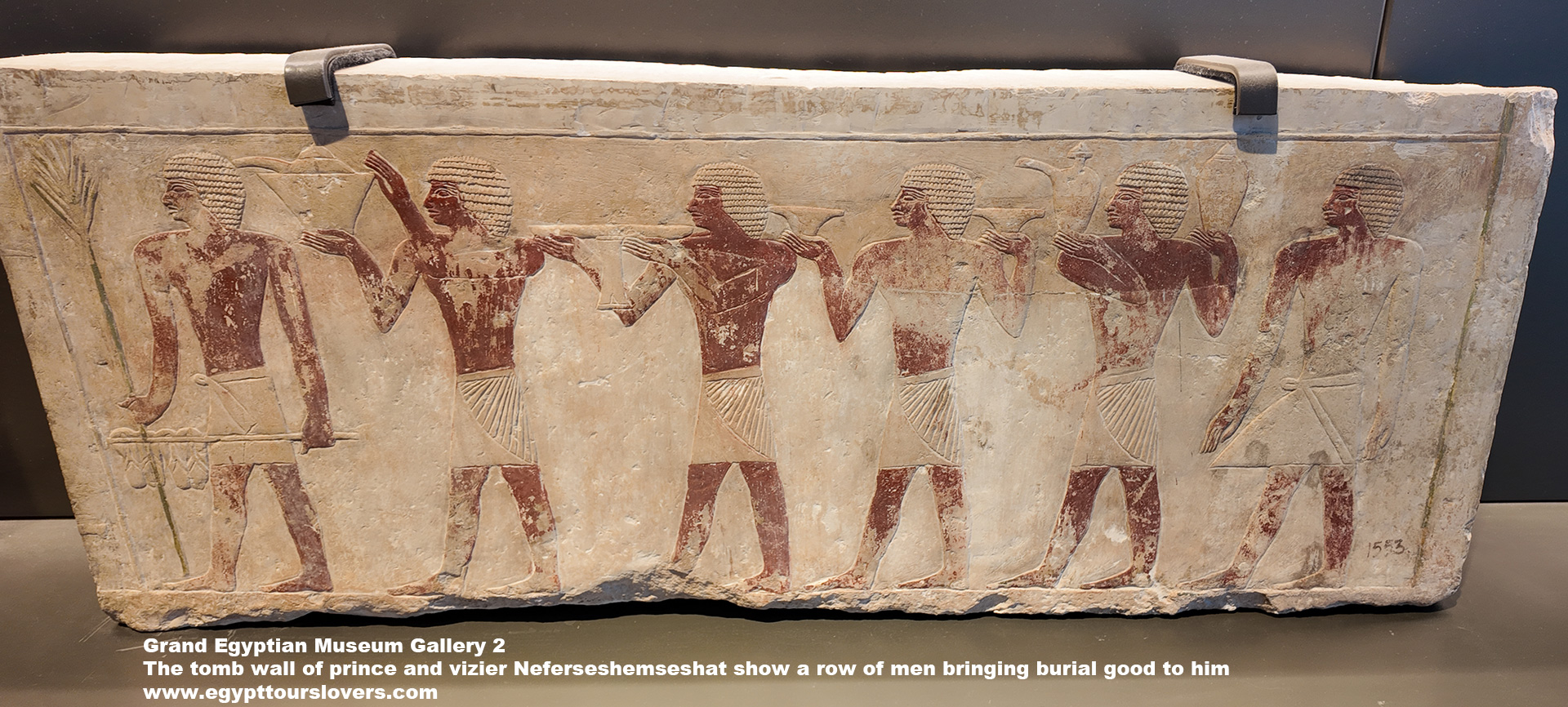
Dynasty 6 | limestone | Saqqara
The tomb wall of prince and vizier Neferseshemseshat show a row of men bringing burial good to him.
The offerings included 2 pairs of sandals, a table and different vessels.
———– } ———– } ———– } ———– }
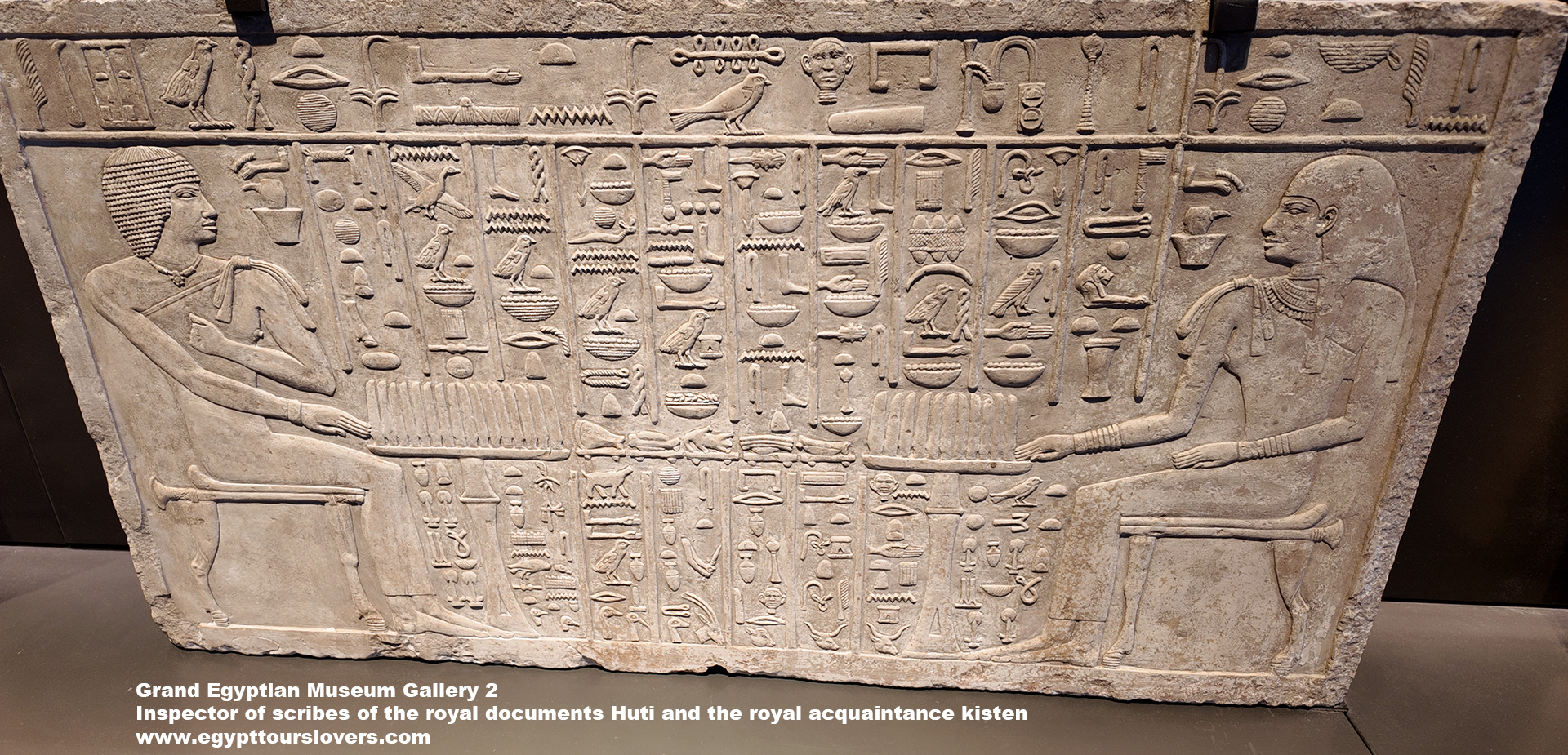
Dynasty 5-6 | limestone | Saqqara
Inspector of scribes of the royal documents Huti and the royal acquaintance kisten, probably his wife, are shown seated before tables full of bread.
Many other types of food and drinks offerings are listed around them.
———– } ———– } ———– } ———– }
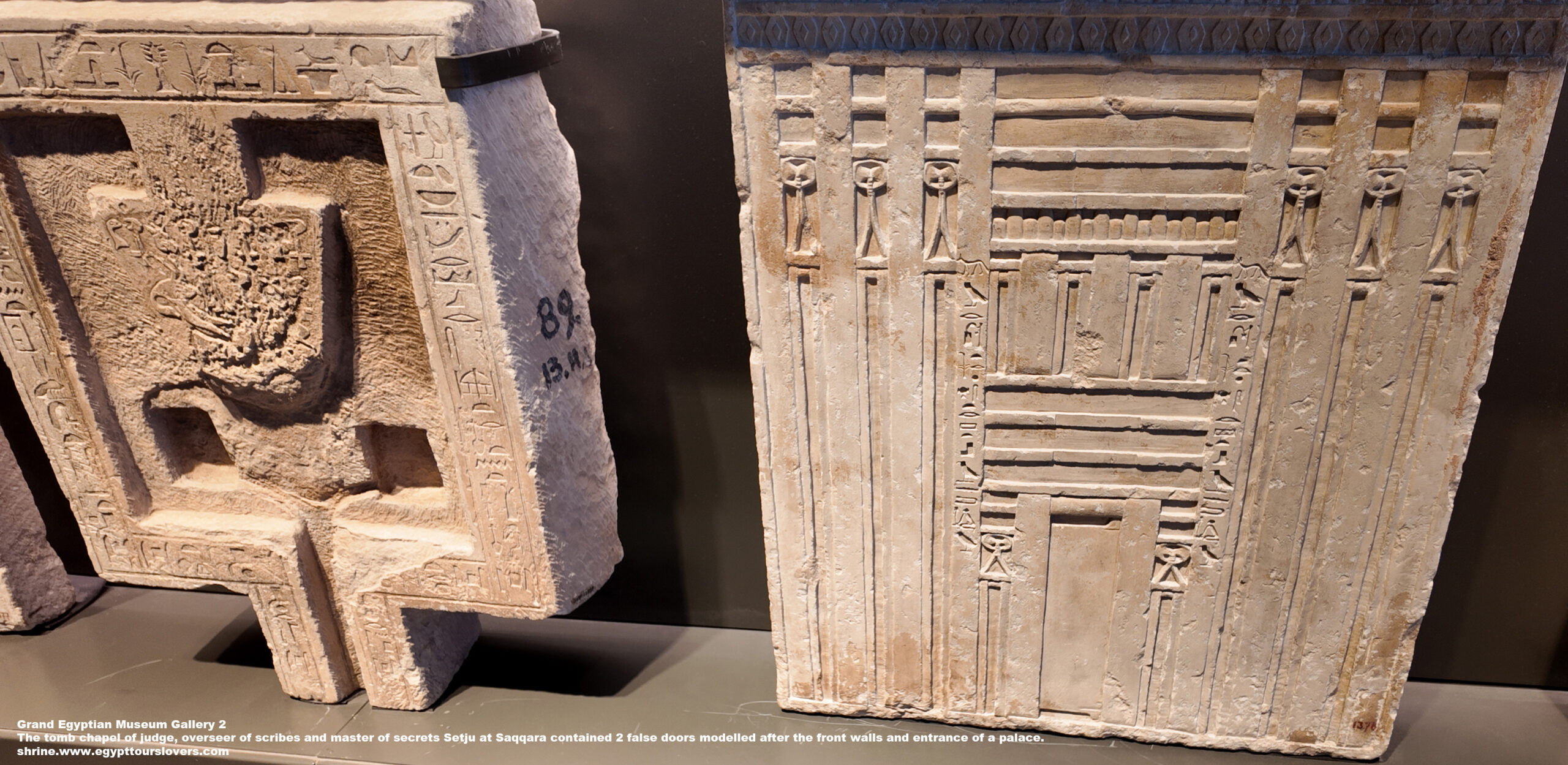
171 Dynasty 4 | limestone | Saqqara
The tomb chapel of judge, overseer of scribes and master of secrets Setju at Saqqara contained 2 false doors modelled after the front walls and entrance of a palace.
———– } ———– } ———– } ———– }
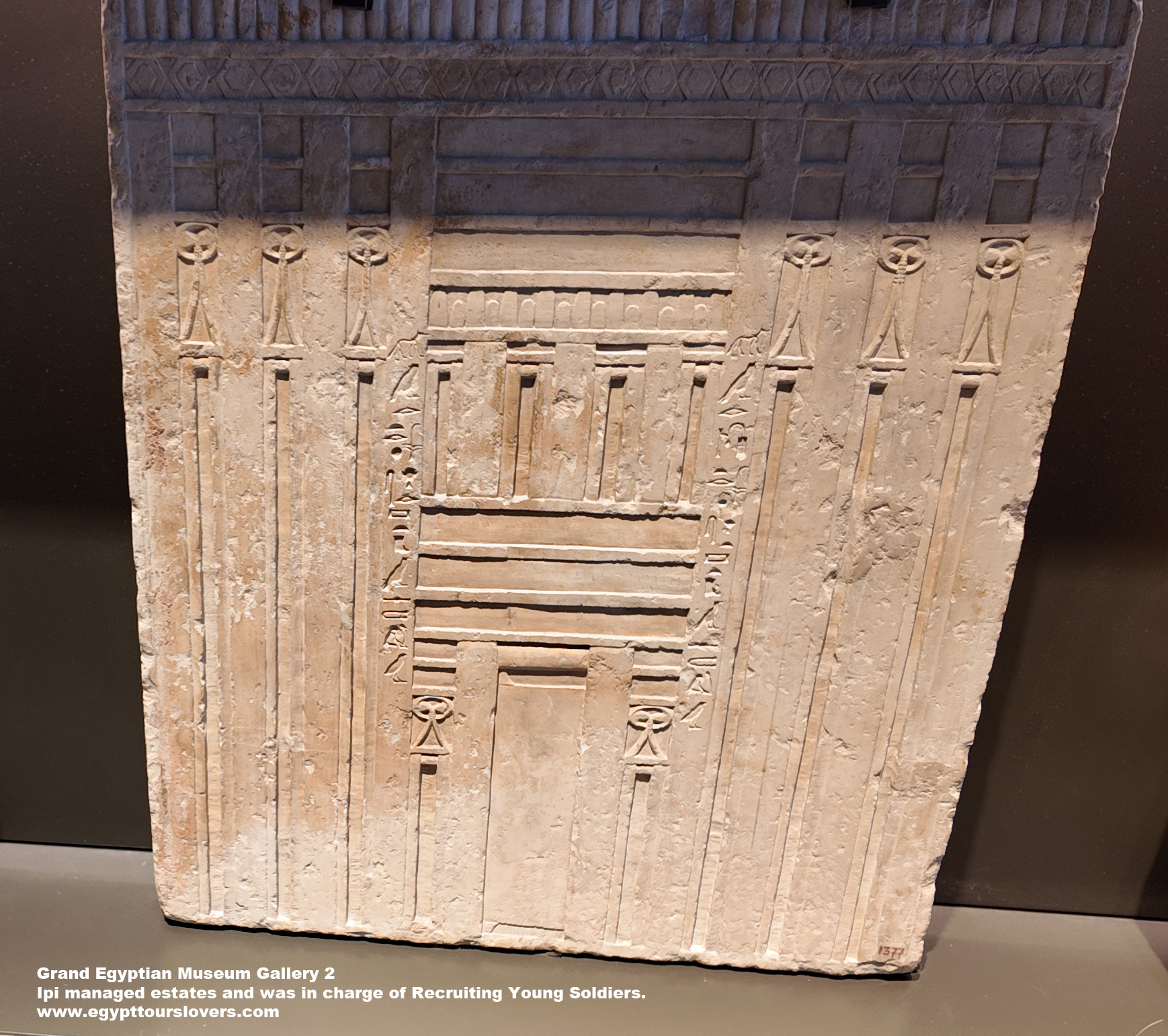
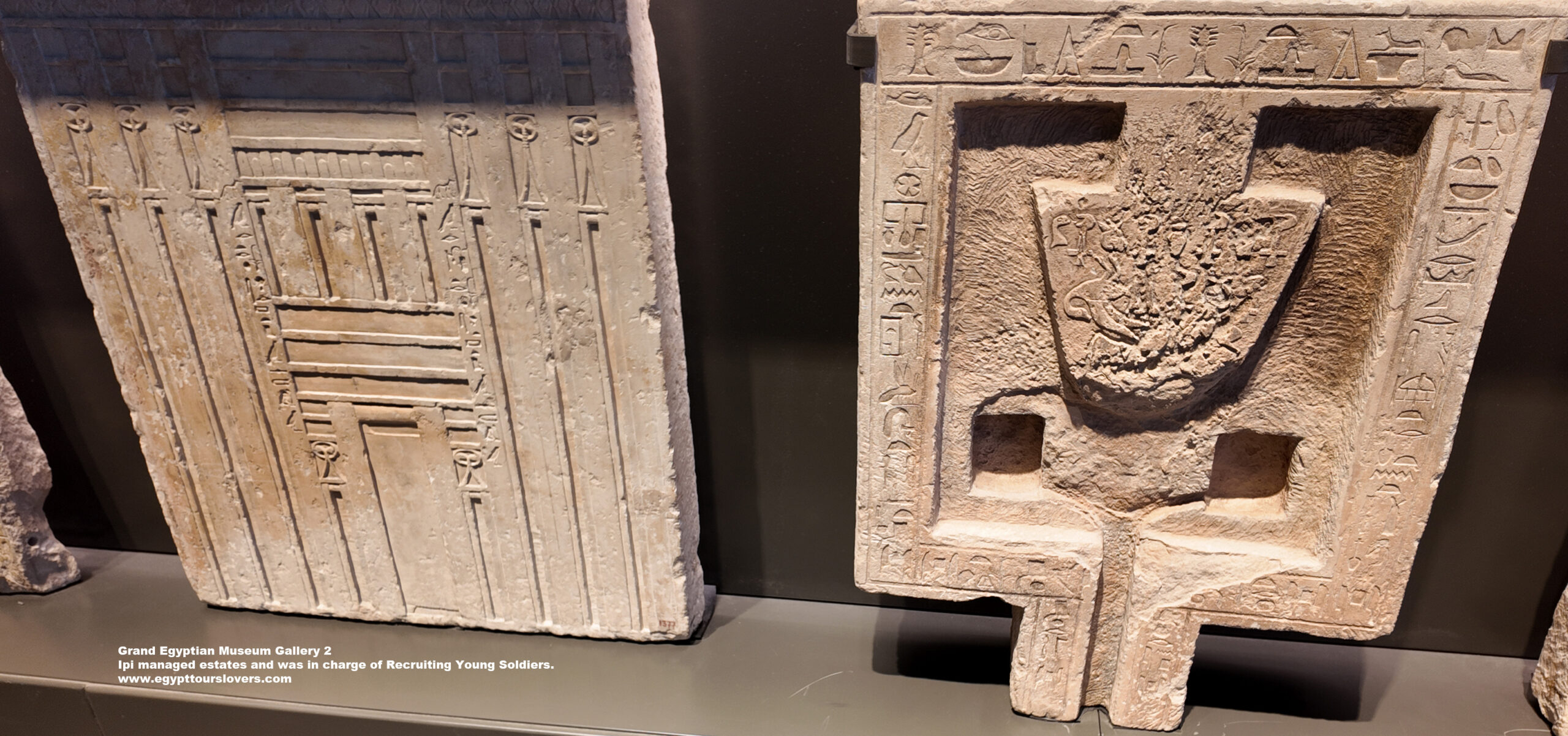
Dynasty 6 | limestone | Saqqara
Ipi managed estates and was in charge of Recruiting Young Soldiers.
His offering table with 2 basins and a spout reinforces it own ritual role with a large hetep offering sign.
———– } ———– } ———– } ———– }
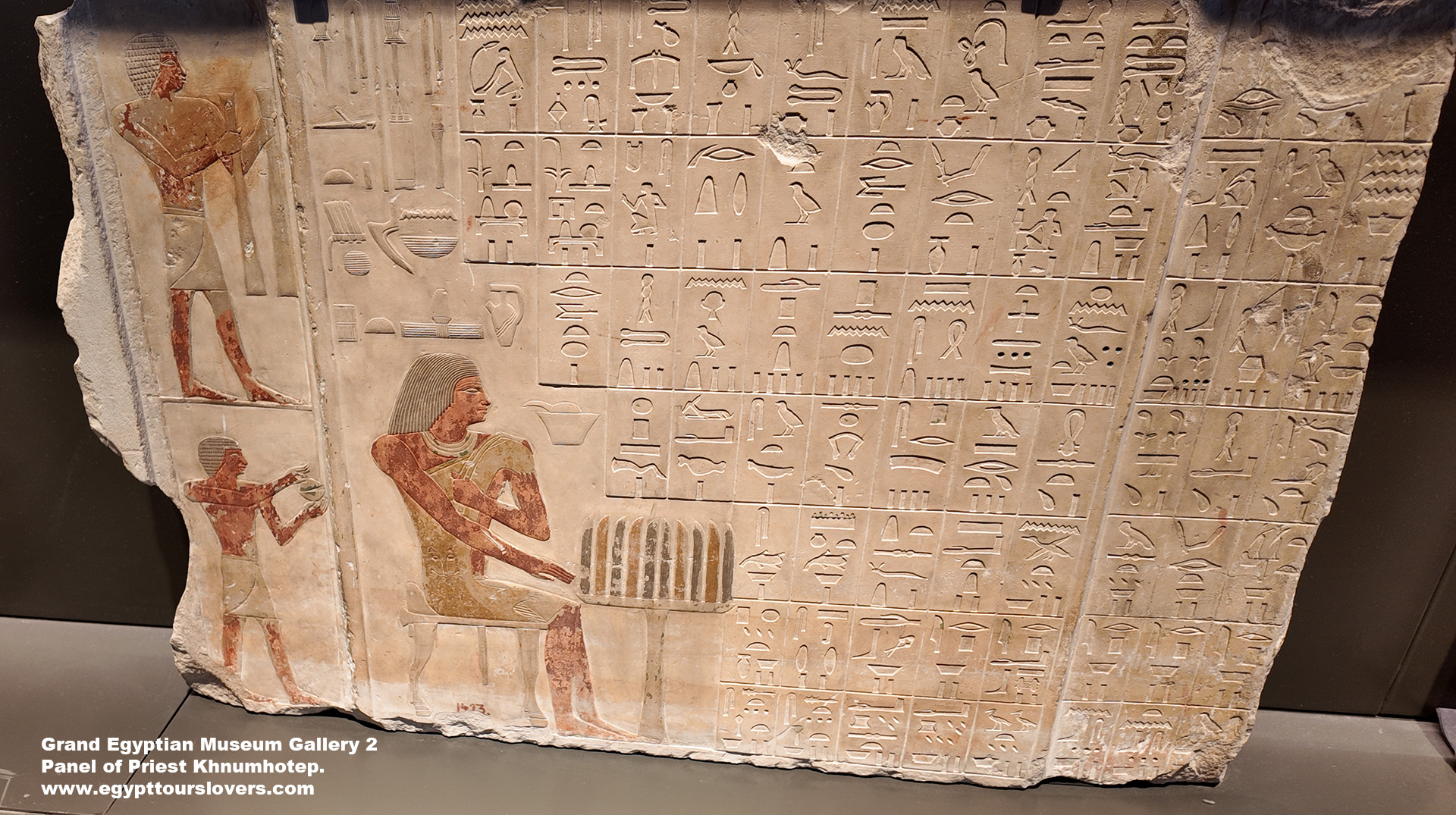
Dynasty 5 | limestone | Saqqara
Panel of Priest Khnumhotep.
Priest of king Userkaf cult, Khnumhotep received many offerings.
The list included 7 sacred oils, meat, birds, beer and 5 types of wine.
A man behind him offers linen, another burns incense.
———– } ———– } ———– } ———– }
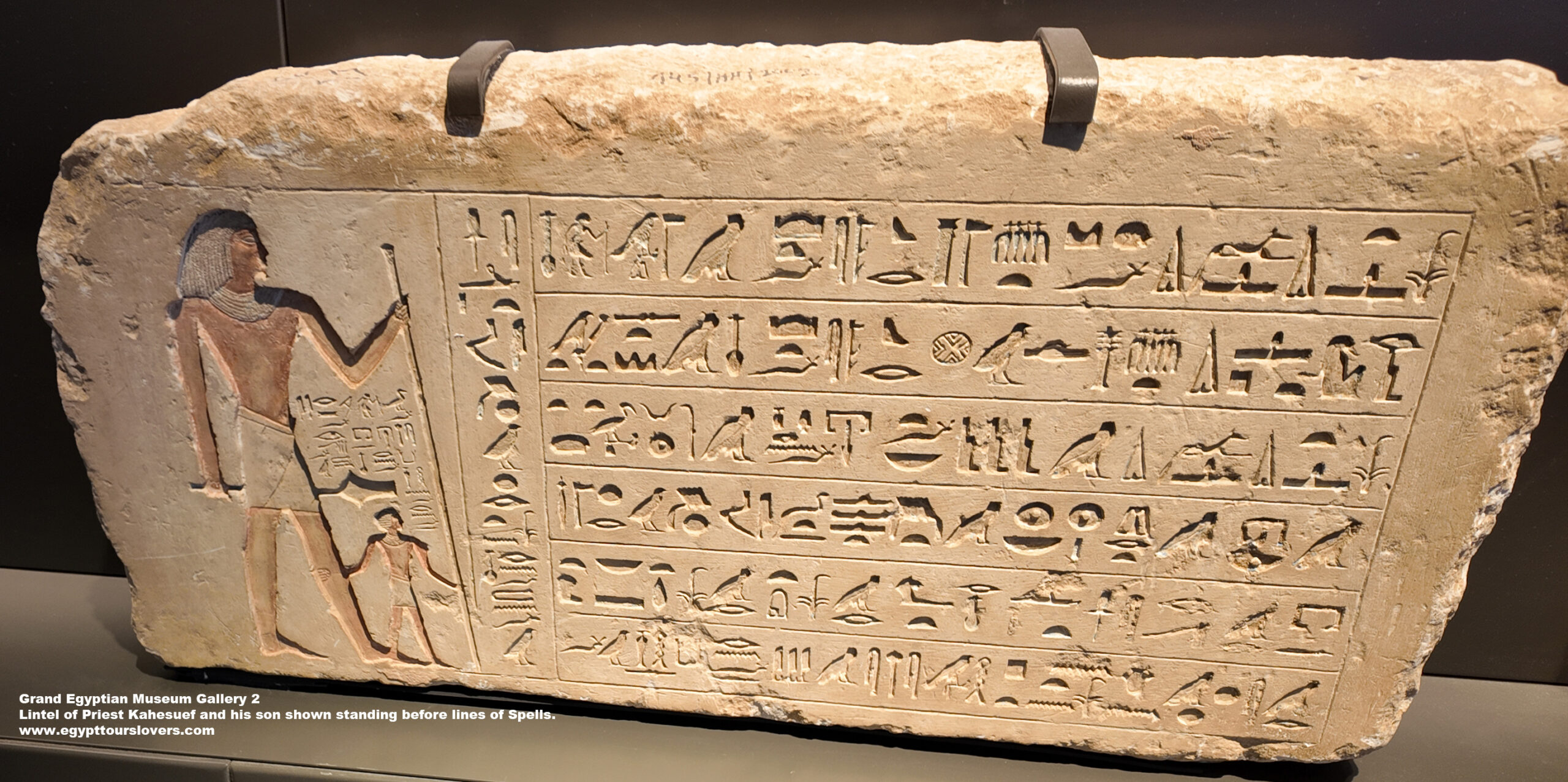
Dynasty 6 | limestone | abusir
Lintel of Priest Kahesuef and his son shown standing before lines of Spells.
These Magical Words promised they would receive offerings during feasts of different gods.
———– } ———– } ———– } ———– }
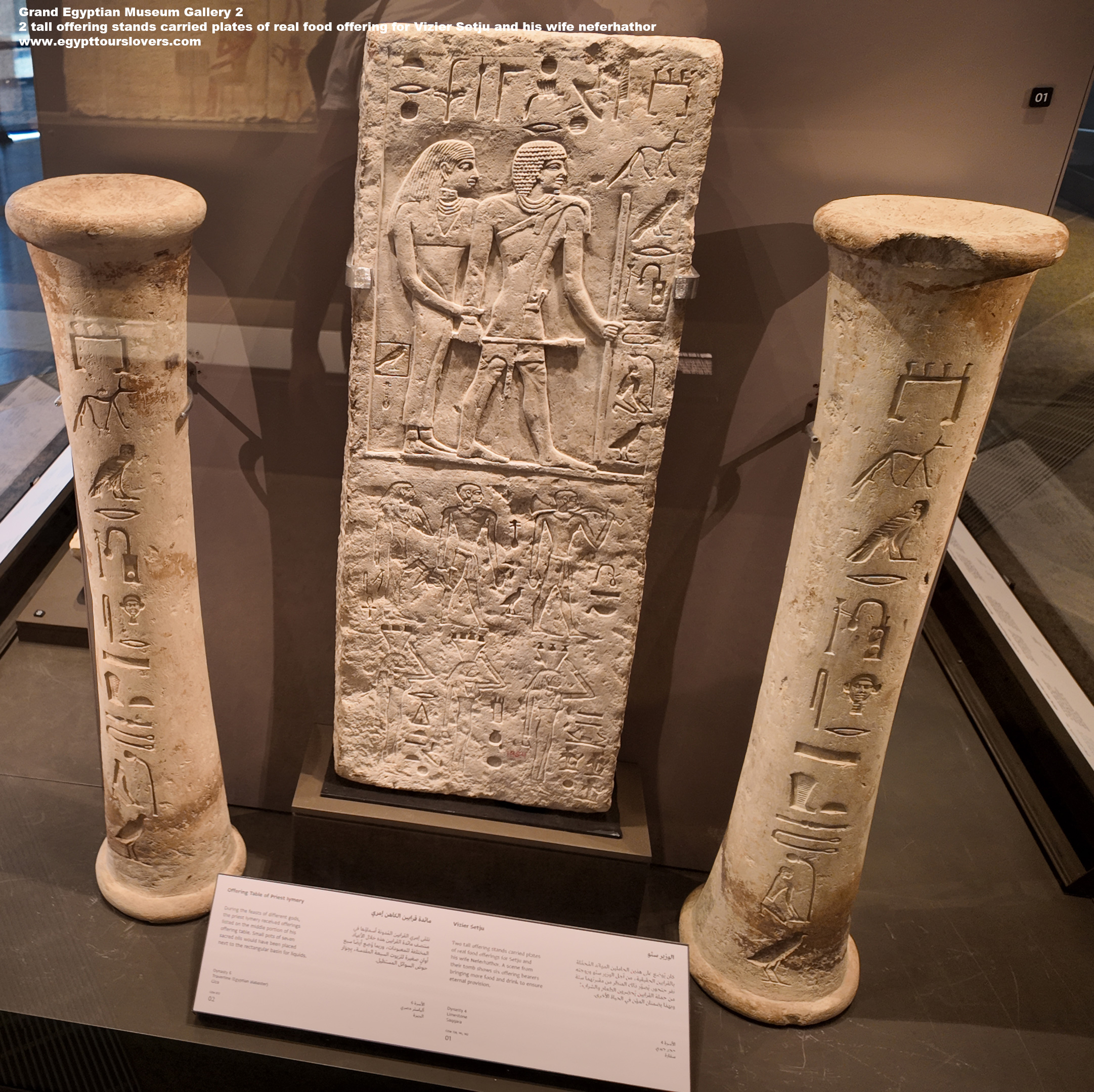
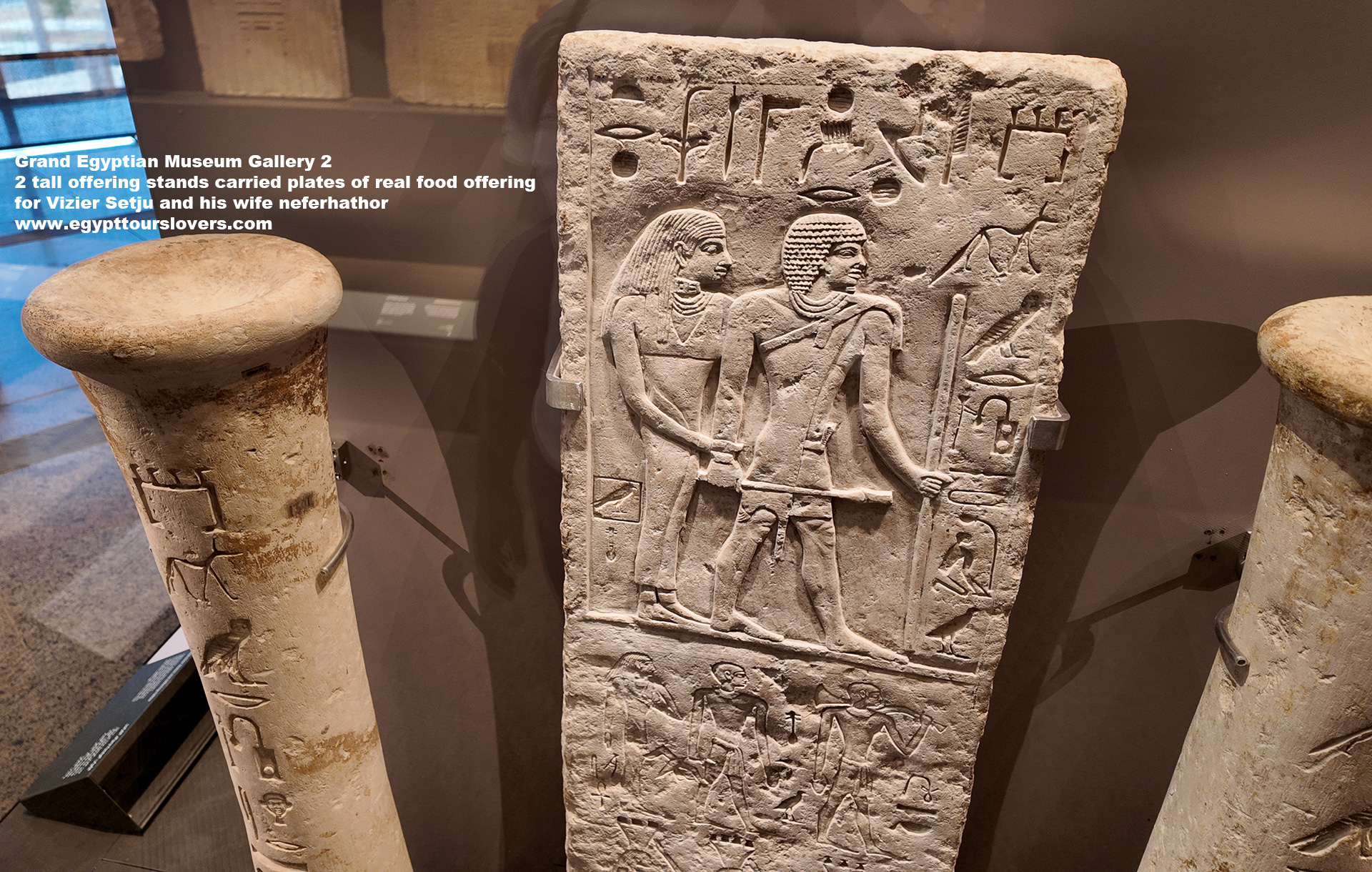
Dynasty 4 | limestone | Saqqara
2 tall offering stands carried plates of real food offering for Vizier Setju and his wife neferhathor.
A scene from their tomb shows 6 offering bearers brining more food and drink to ensure eternal provision.
———– } ———– } ———– } ———– }
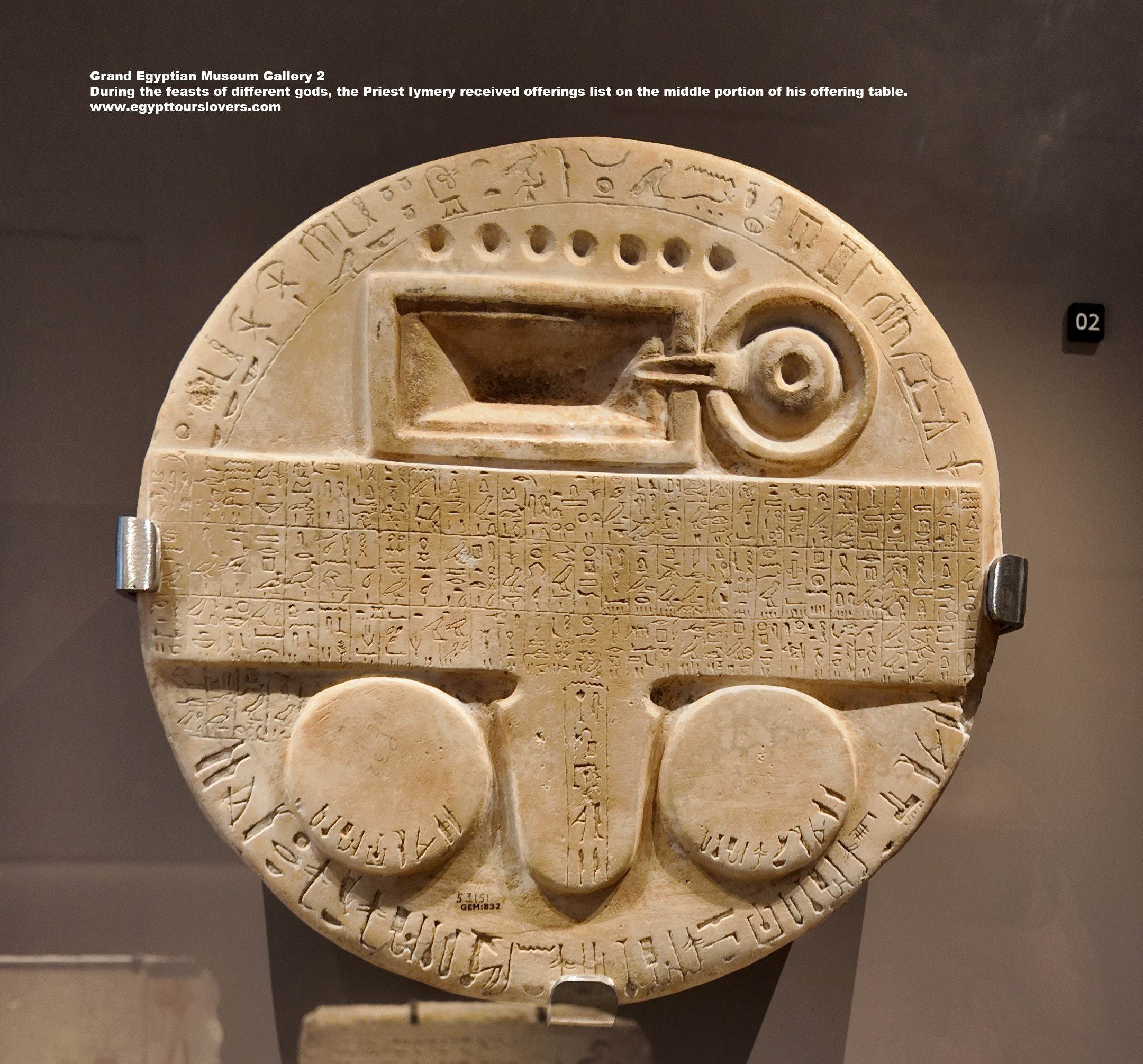
Dynasty 6 | Egyptian alabaster | giza
During the feasts of different gods, the Priest Iymery received offerings list on the middle portion of his offering table.
Smail pots of 7 sacred oils placed next to the rectangular basin for liquids.
———– } ———– } ———– } ———– }
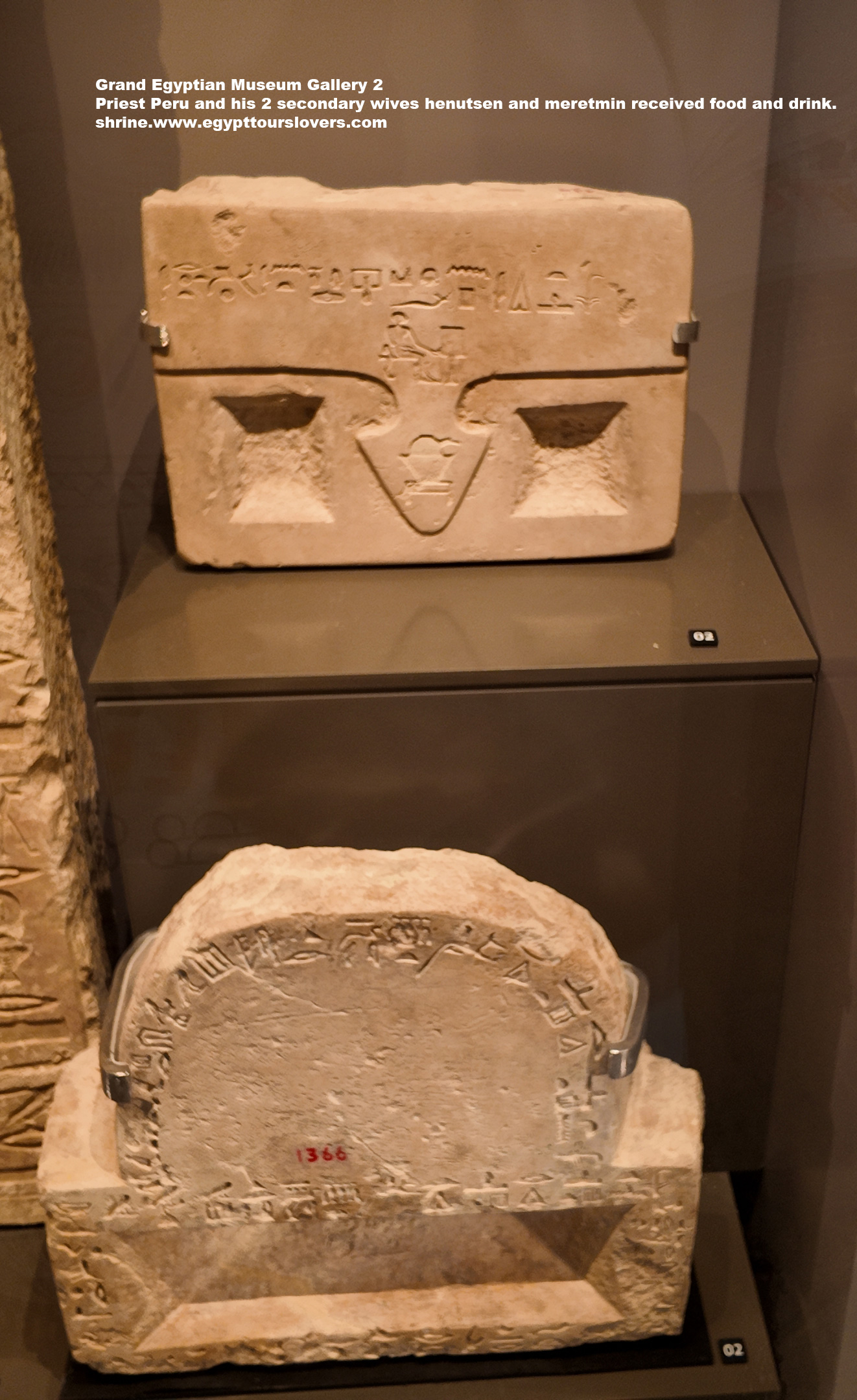
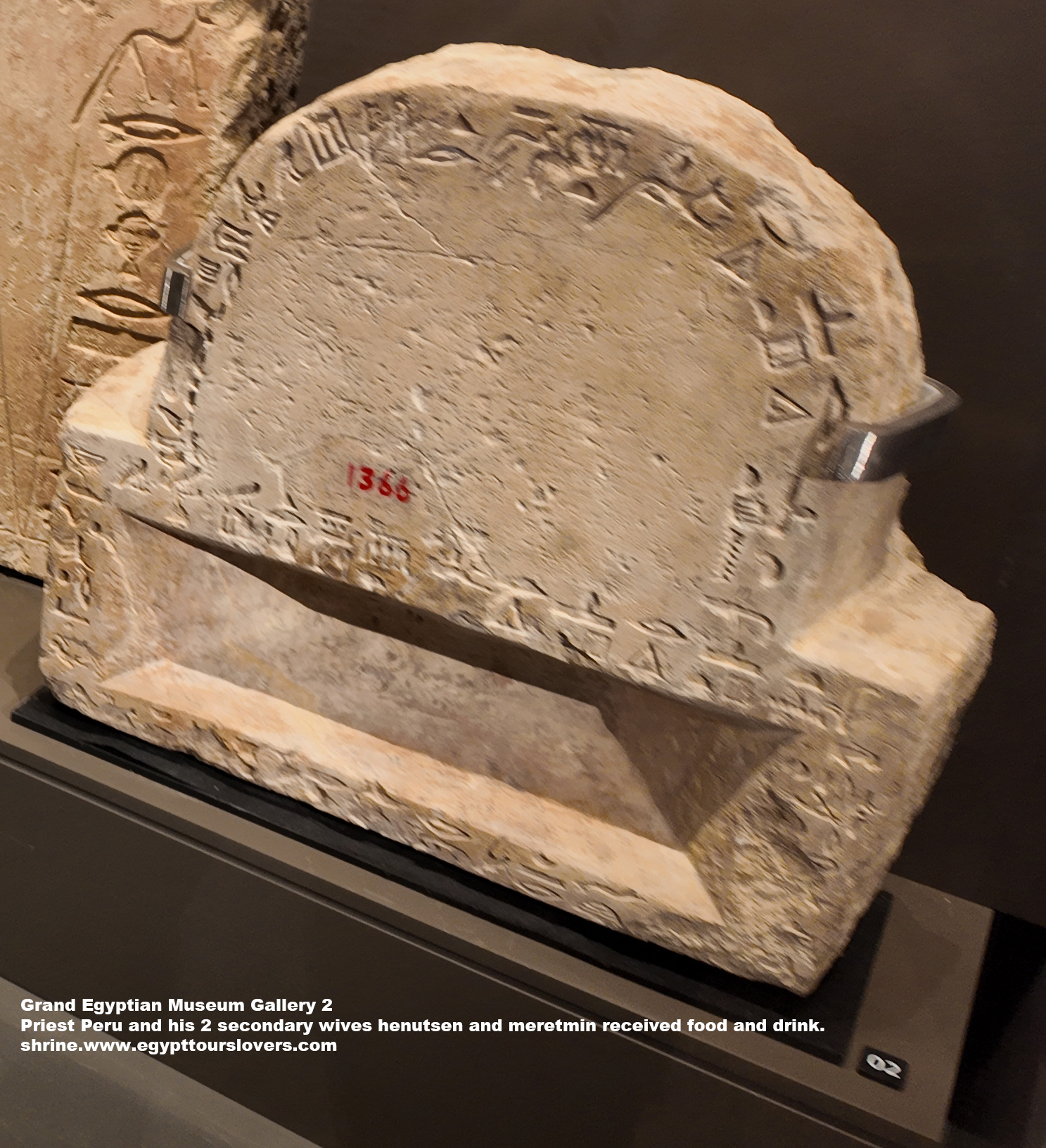
Dynasty 5-6 | limestone | Saqqara
Priest Peru and his 2 secondary wives henutsen and meretmin received food and drink that was left on their offering table with a large basin.
Rhkhti received offerings on her table with double basins.
———– } ———– } ———– } ———– }
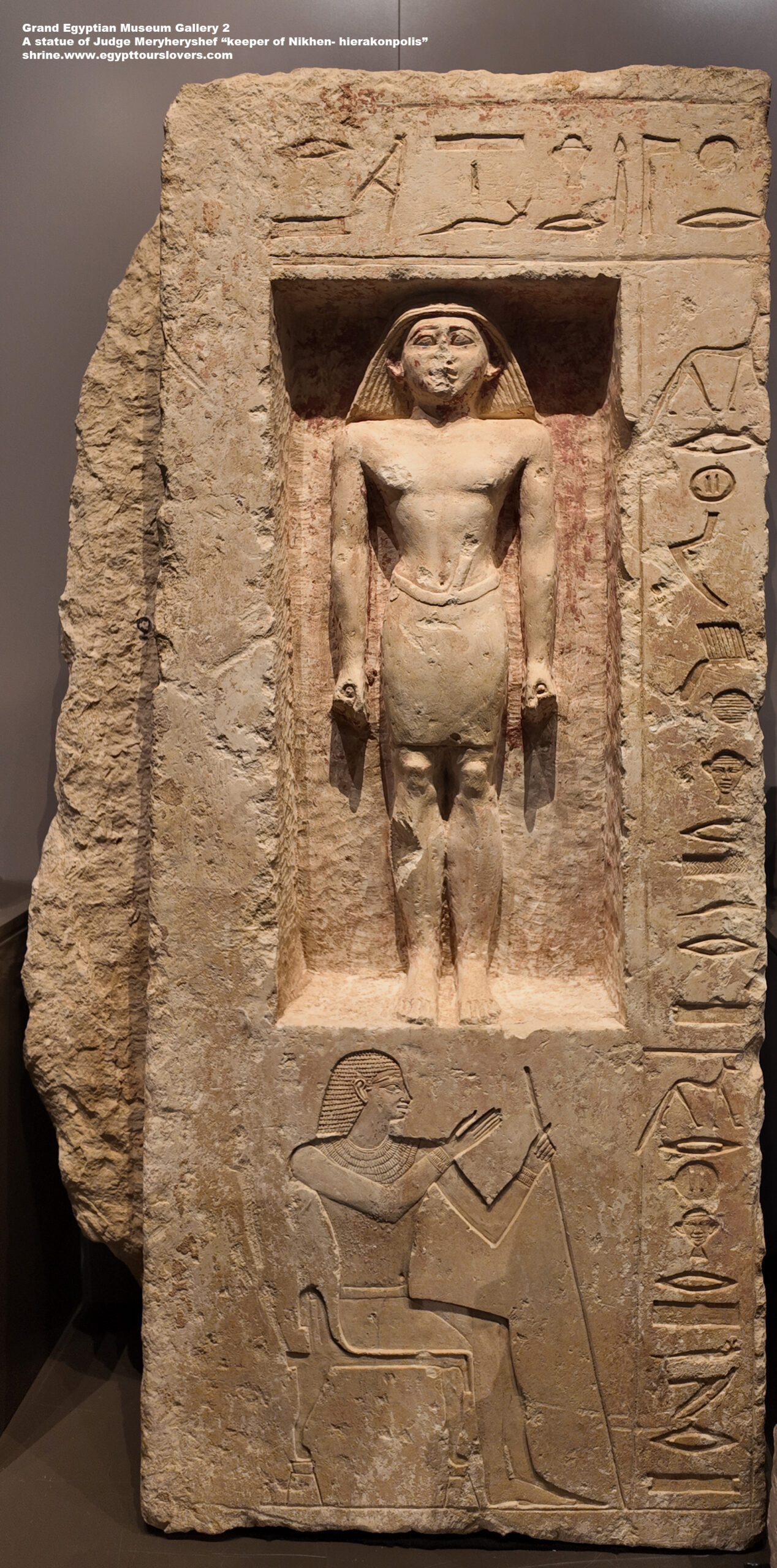
Dynasty 6 | limestone | abuser
A statue of Judge Meryheryshef “keeper of Nikhen- hierakonpolis”, was carved into this tomb wall as if it stood in a shrine.
The seated raising below shows Judge Meryheryshef raising a hand to receive offerings.
———– } ———– } ———– } ———– }
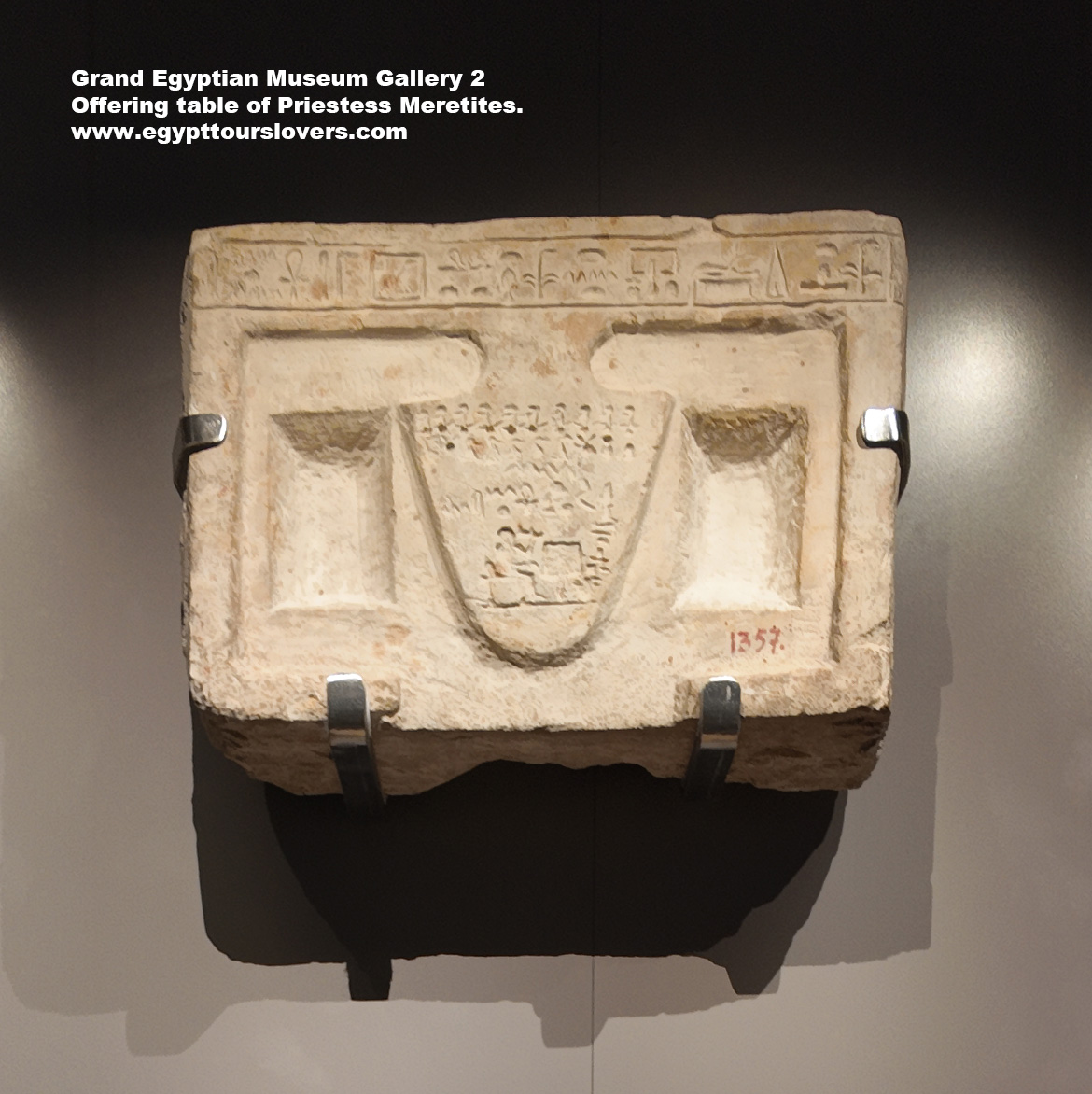
Dynasty 4-6 | limestone | giza
Offering table of Priestess Meretites.
This rectangular table has 3 basins for liquids behind a hetep-sign with meant offering.
The inscription starts with a spell that magically gave offerings to Priestess Meretites.
———– } ———– } ———– } ———– }
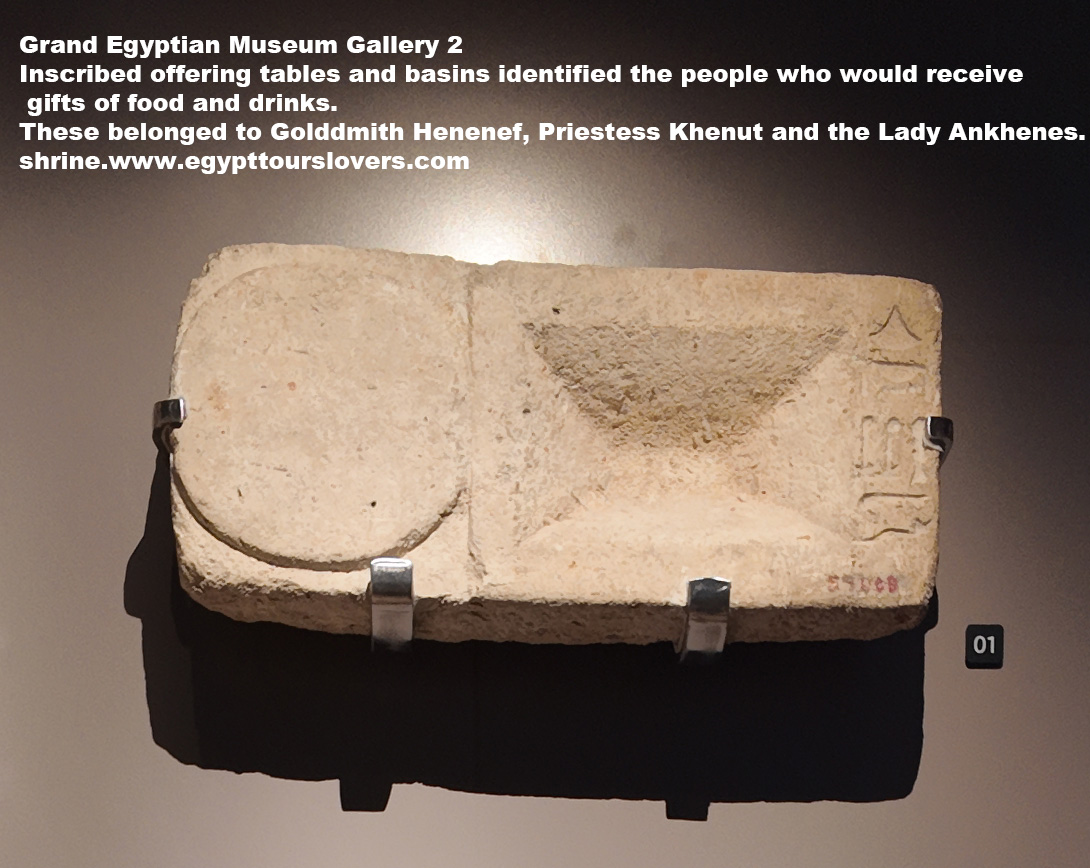
Dynasty 6 | limestone | abuser, giza, Saqqara
Inscribed offering tables and basins identified the people who would receive gifts of food and drinks.
These belonged to Golddmith Henenef, Priestess Khenut and the Lady Ankhenes.
———– } ———– } ———– } ———– }
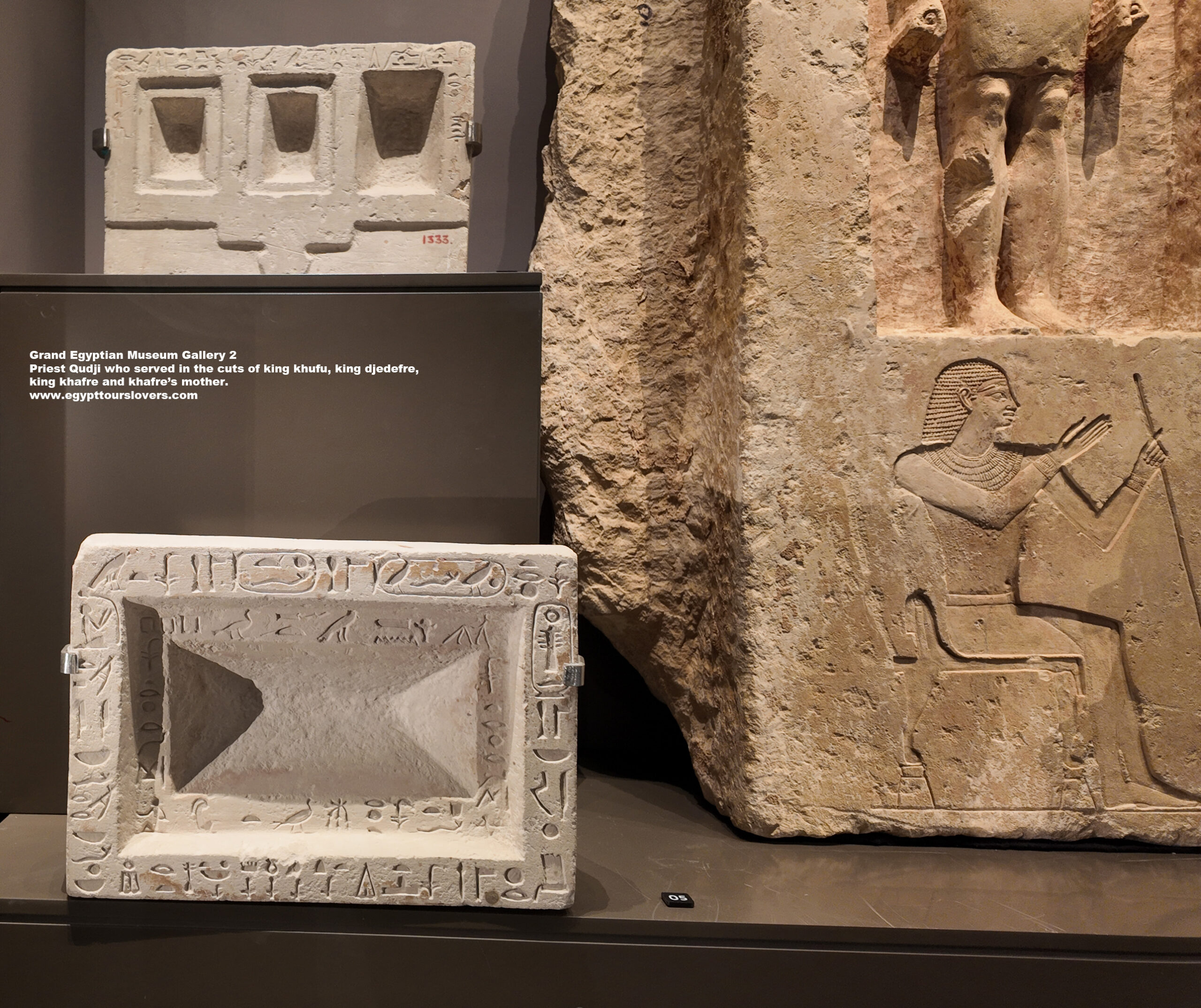
Dynasty 6 | limestone | giza
Priest Qudji who served in the cuts of king khufu, king djedefre, king khafre and khafre’s mother.
Priest Qudji and his wife received liquid offerings in this basin.
———– } ———– } ———– } ———– }
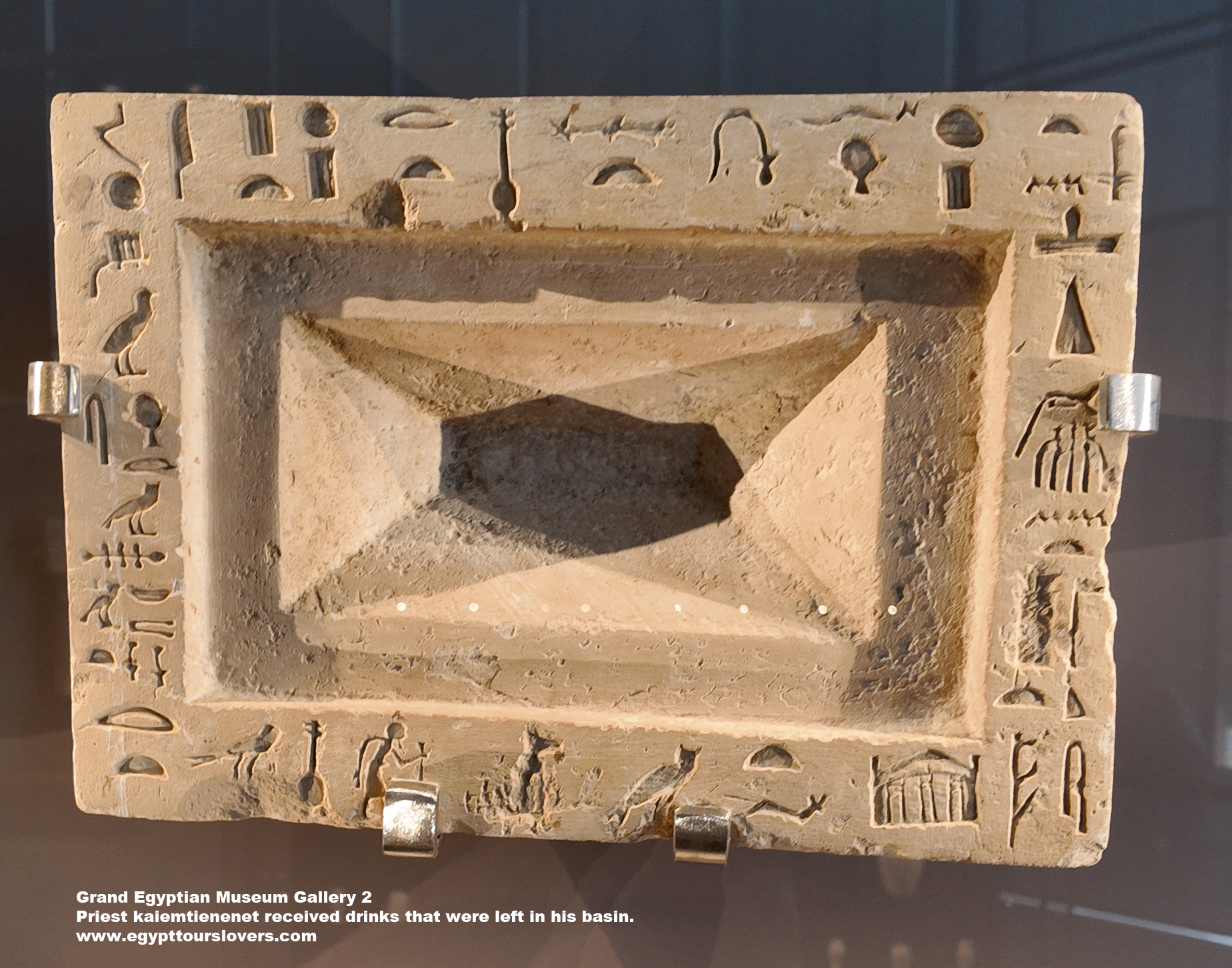
Dynasty 4-6 | limestone | abuser, giza
Priest kaiemtienenet received drinks that were left in his basin.
As well a king’s acquaintance, whose name is lost, receives various offerings.
———– } ———– } ———– } ———– }
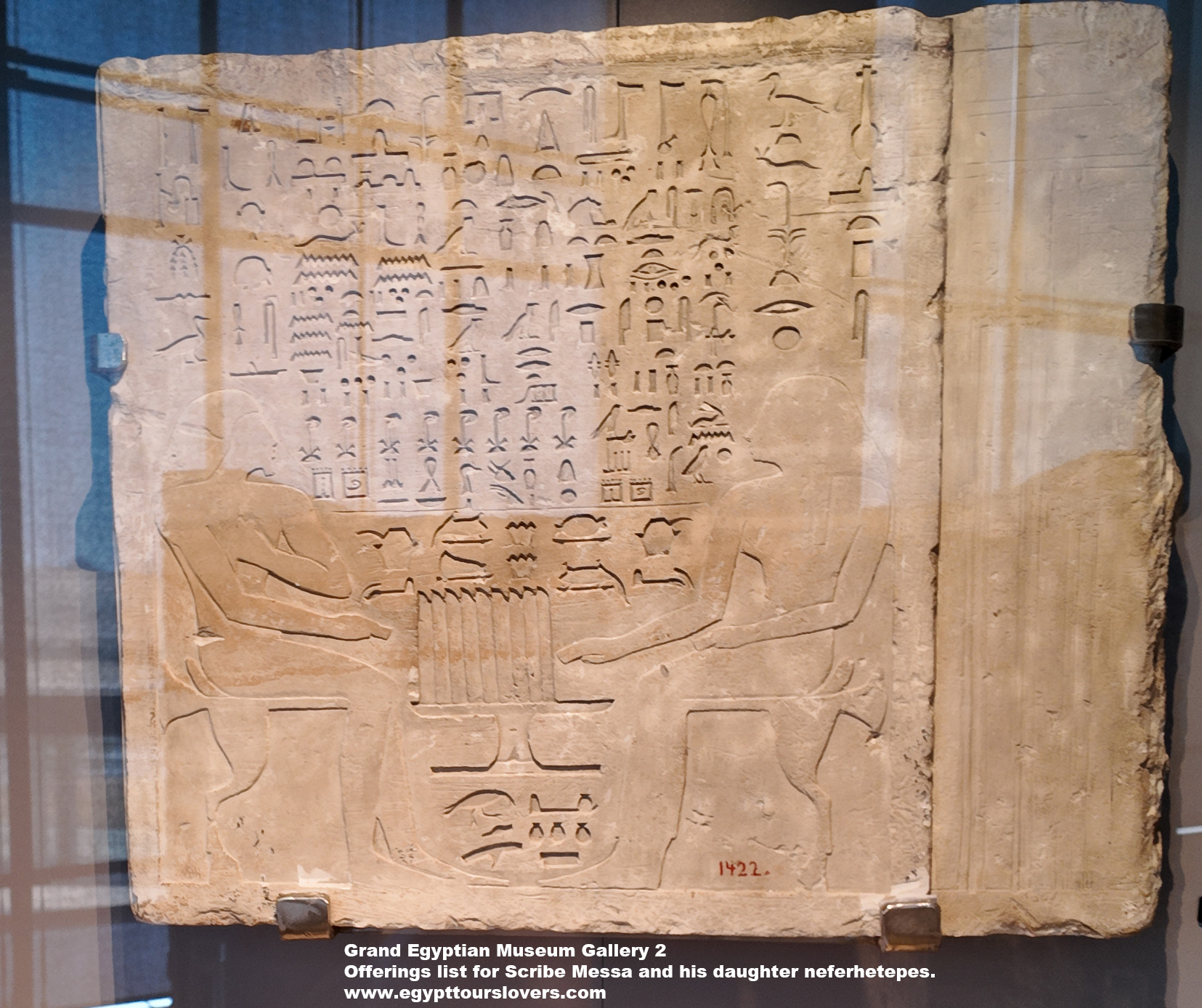
Dynasty 4 | limestone | Saqqara
Offerings list for Scribe Messa and his daughter neferhetepes.
The central panel of this false door stela shows Scribe Of Gods Documents messa and his daughter neferhetepes receiving thousands of offerings needed in their well-provided for afterlife.
———– } ———– } ———– } ———– }
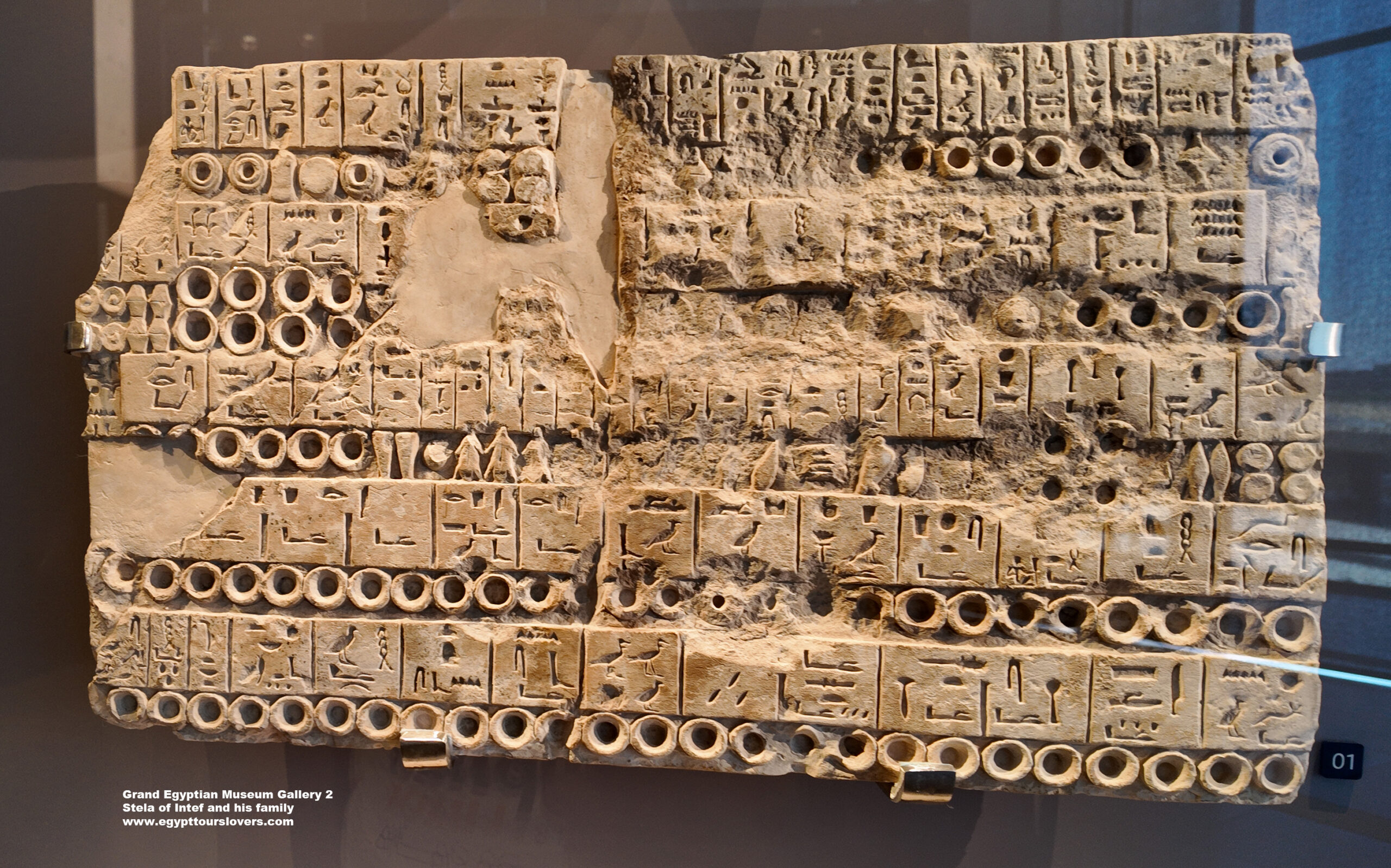
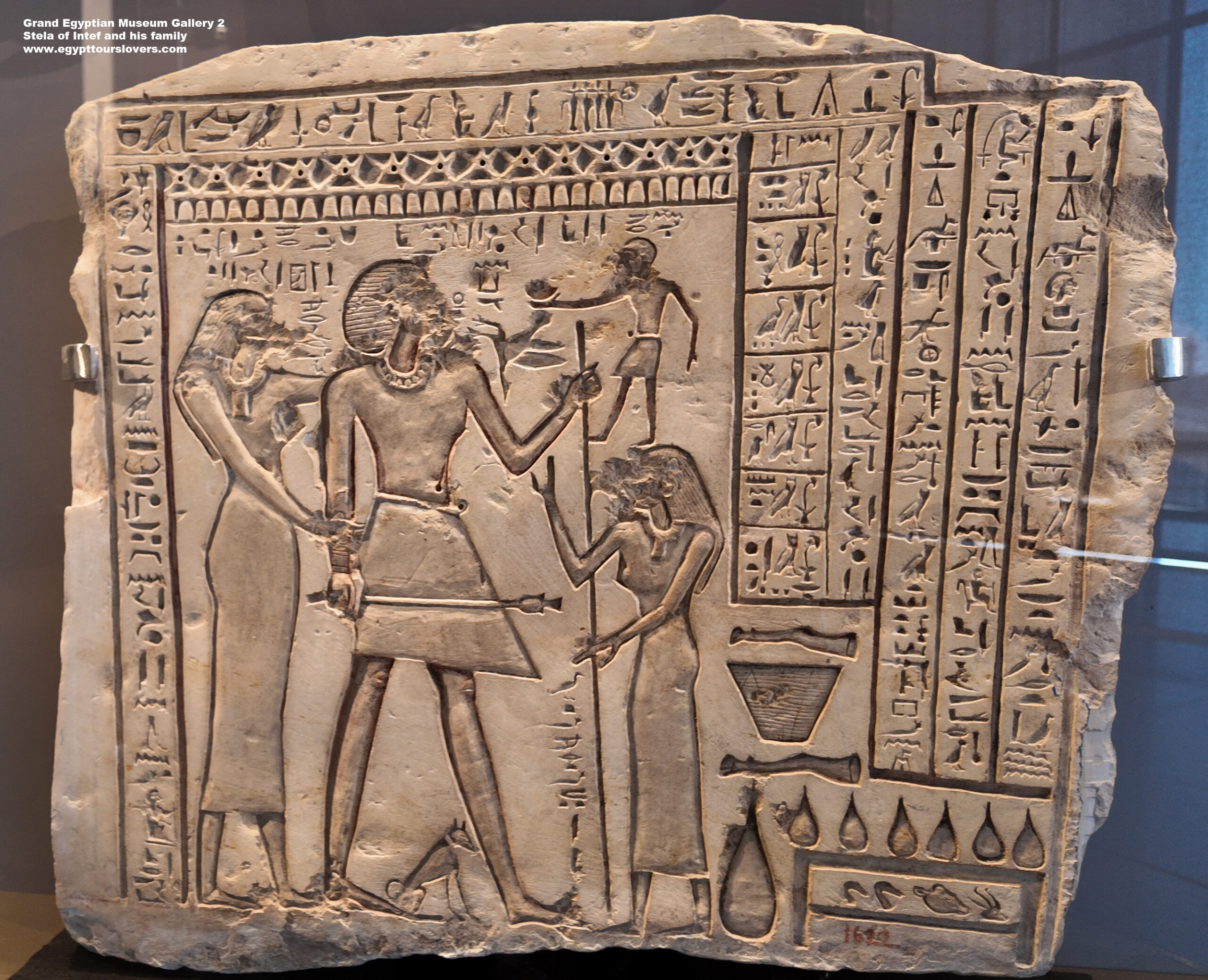
first intermediate period | limestone | Gebelein
Stela of Intef and his family
Intef is the tallest and most important figure in this scene, while his wife Mennaef and daughter Tjeteti are smaller,
An even smaller servant offers him food.
———– } ———– } ———– } ———– }
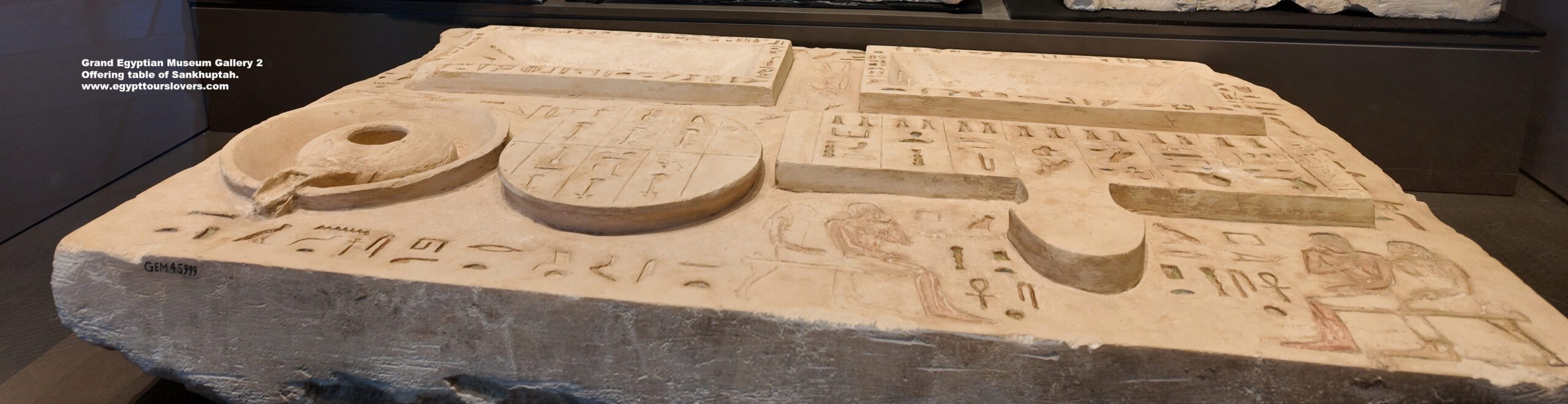
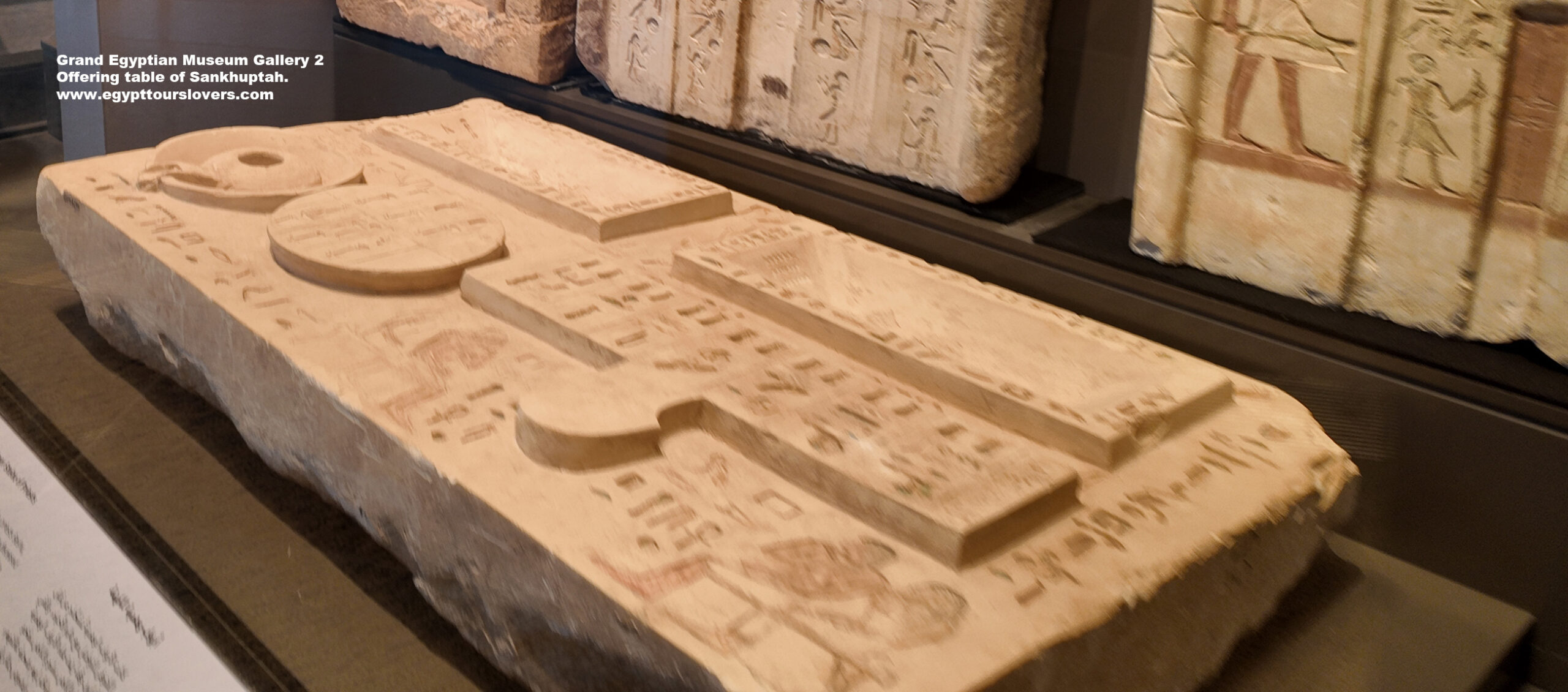
Dynasty 5 | limestone | abuser
Offering table of Sankhuptah.
2 rectangular basins for liquids, a tablet for the 7 sacred oils, around-topped table with an offerings list and an ewer and basin set for washing hands.
Sankhuptah, his wives and children are also shown.
———– } ———– } ———– } ———– }
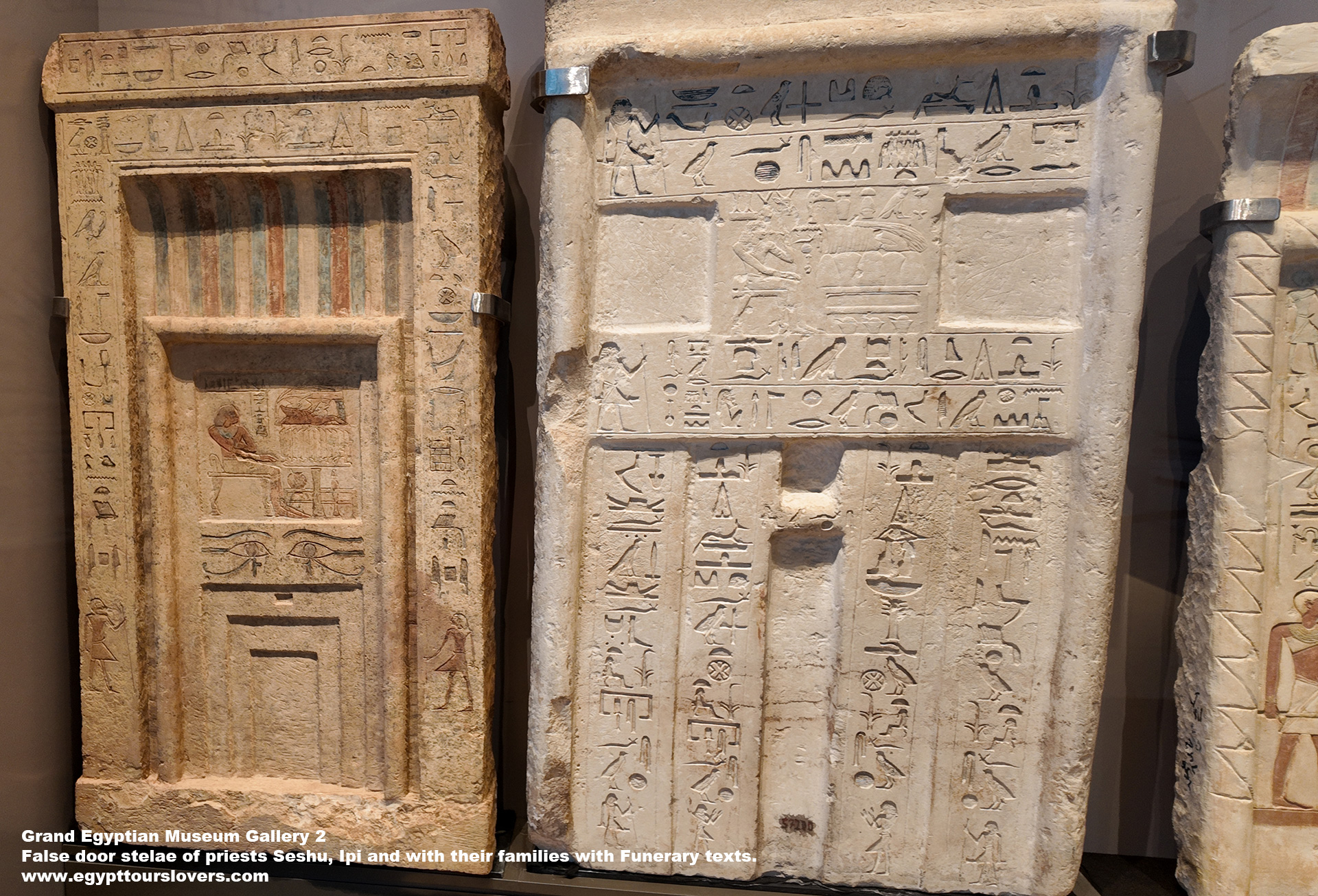
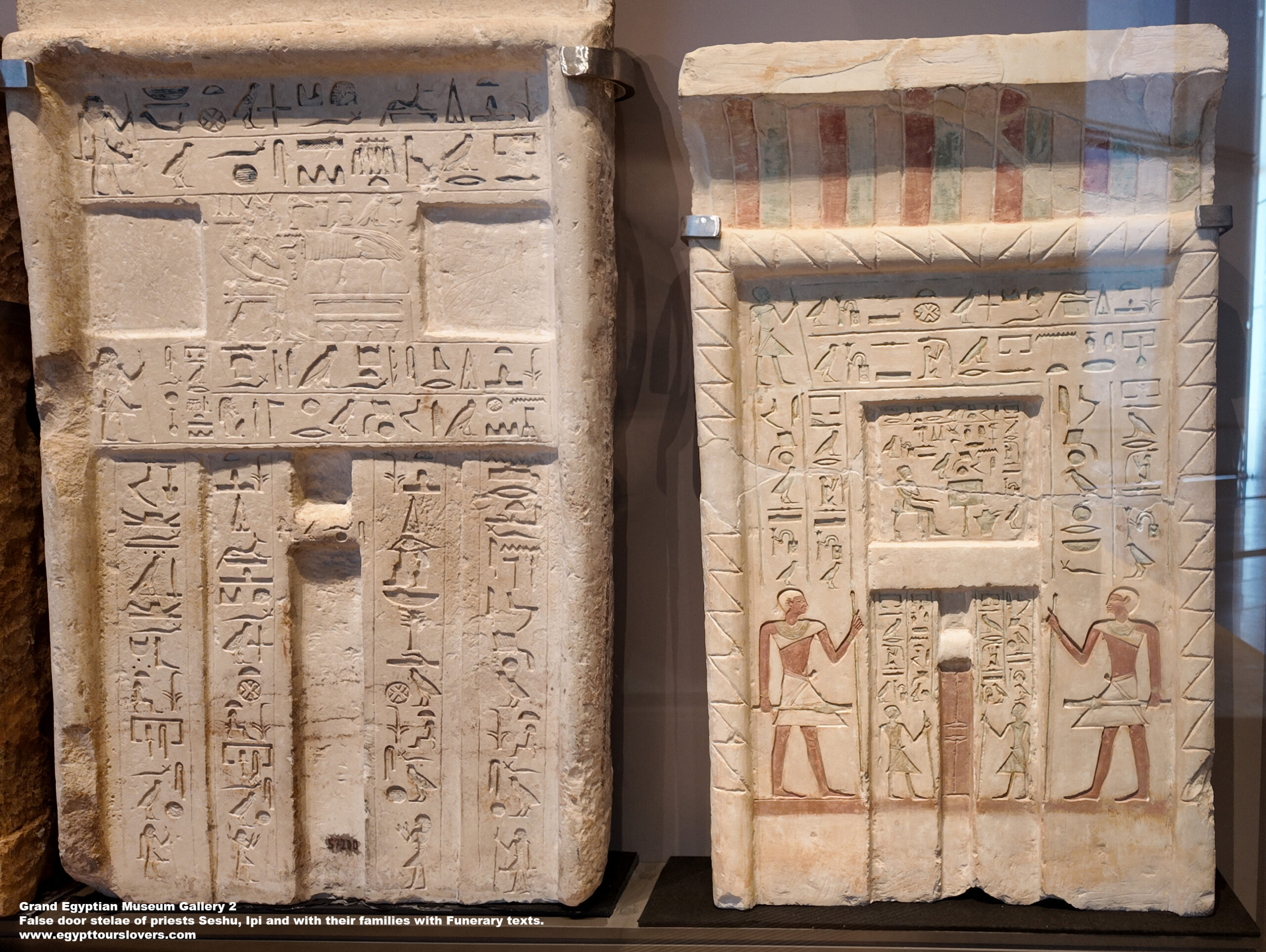
Dynasty 4-6 | limestone | Saqqara, hierakonpolis
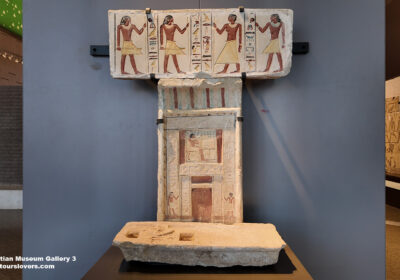
False door stelae of priests Seshu, Ipi and with their families with Funerary texts.
———– } ———– } ———– } ———– }
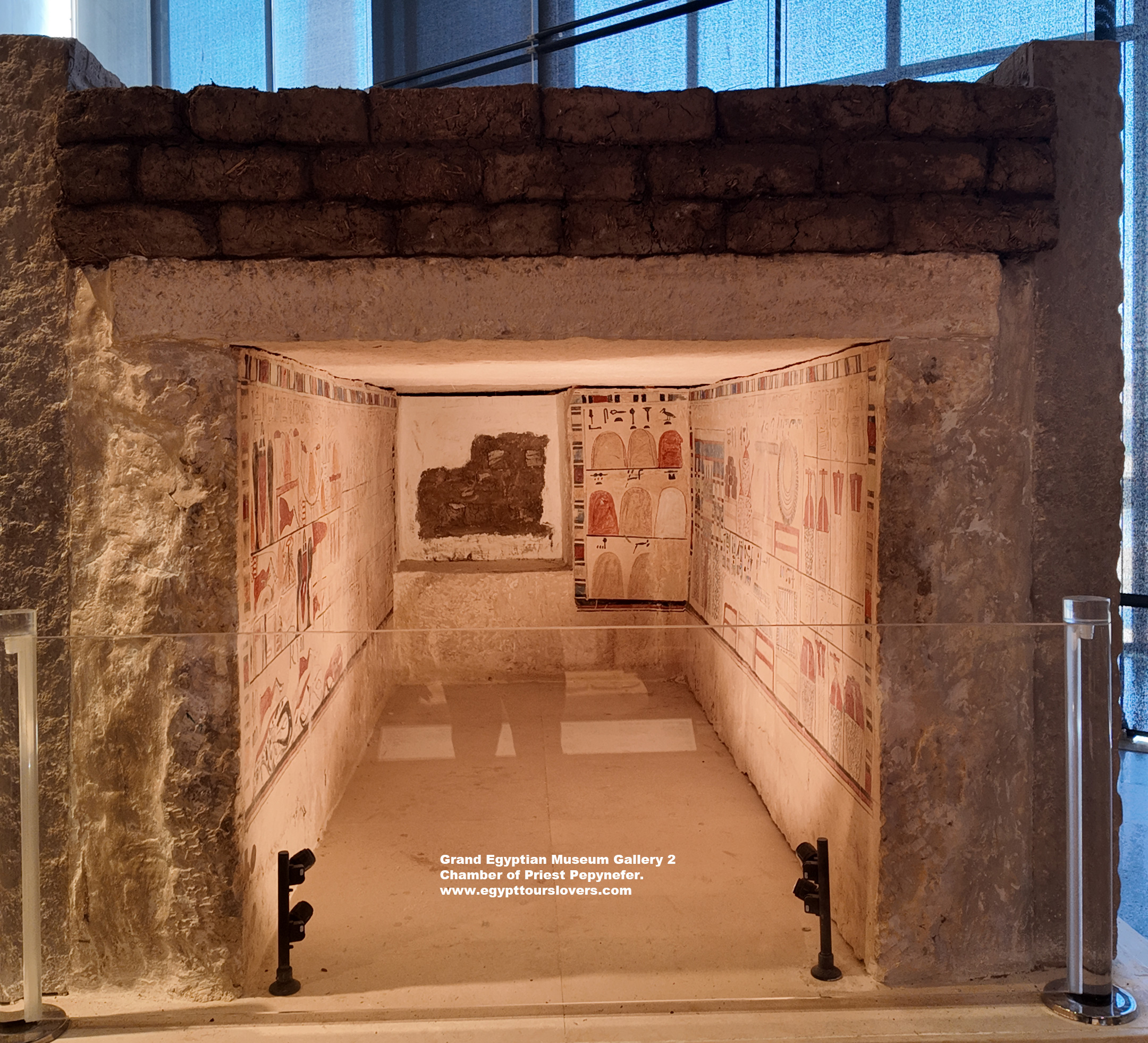
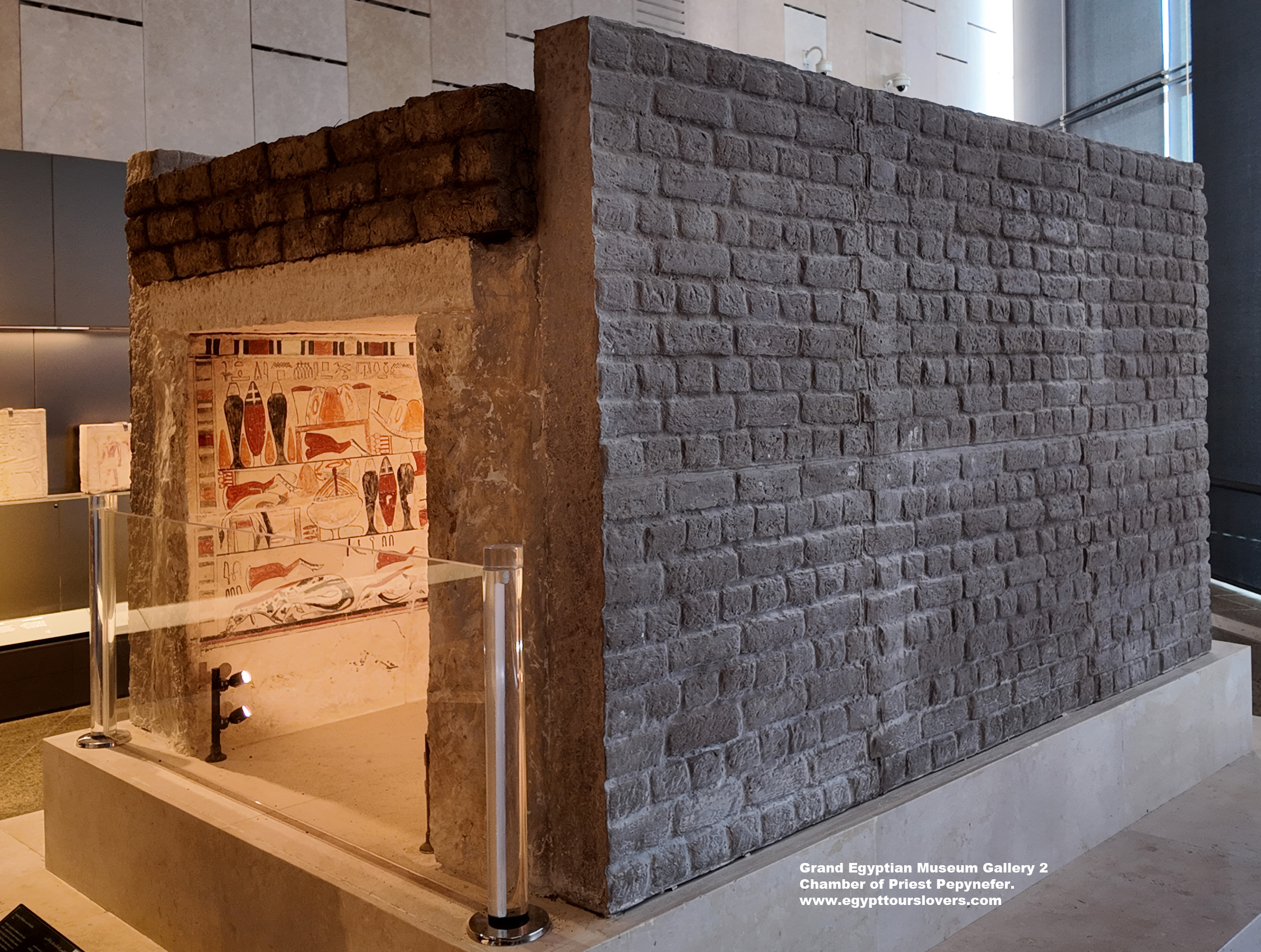
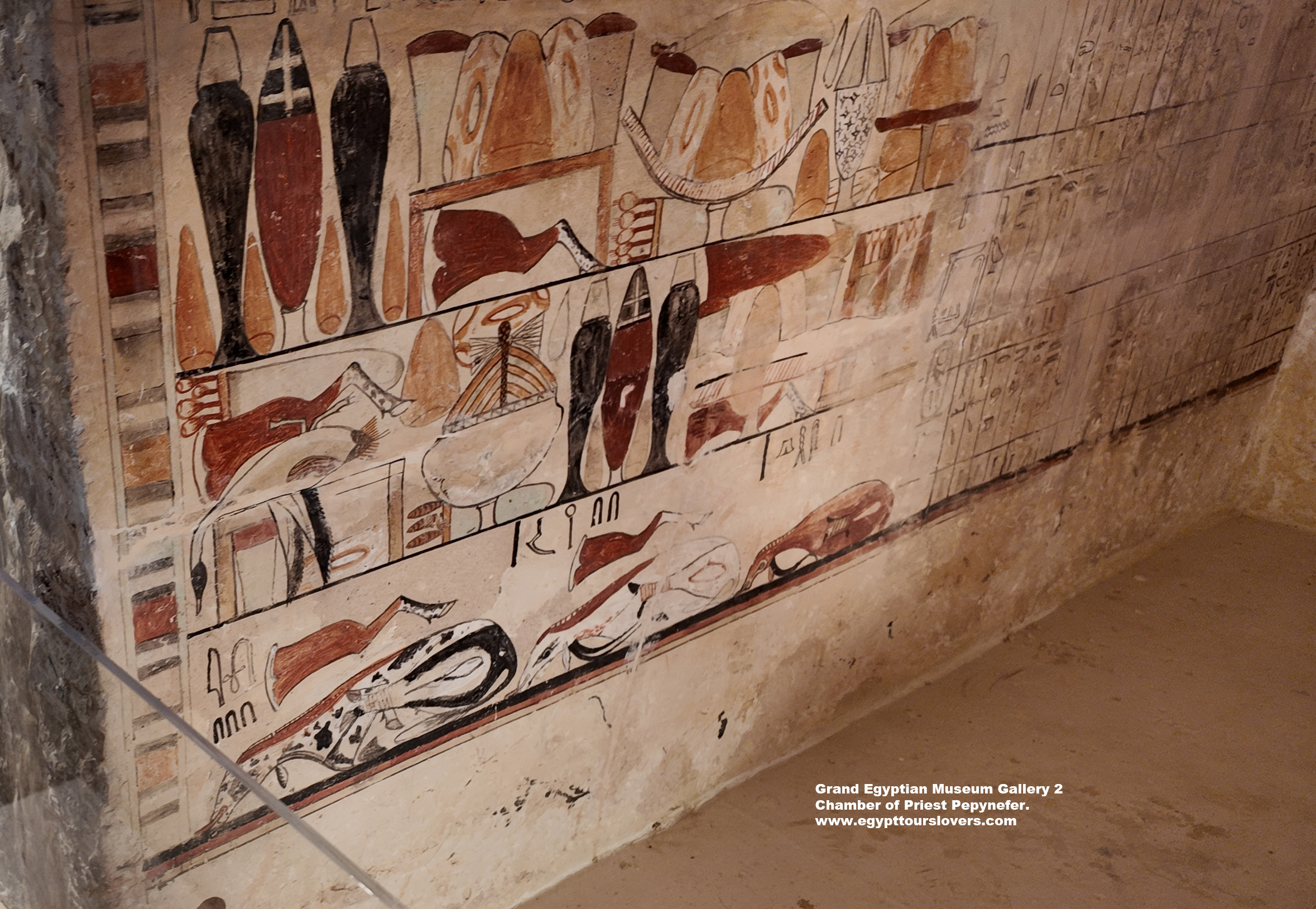
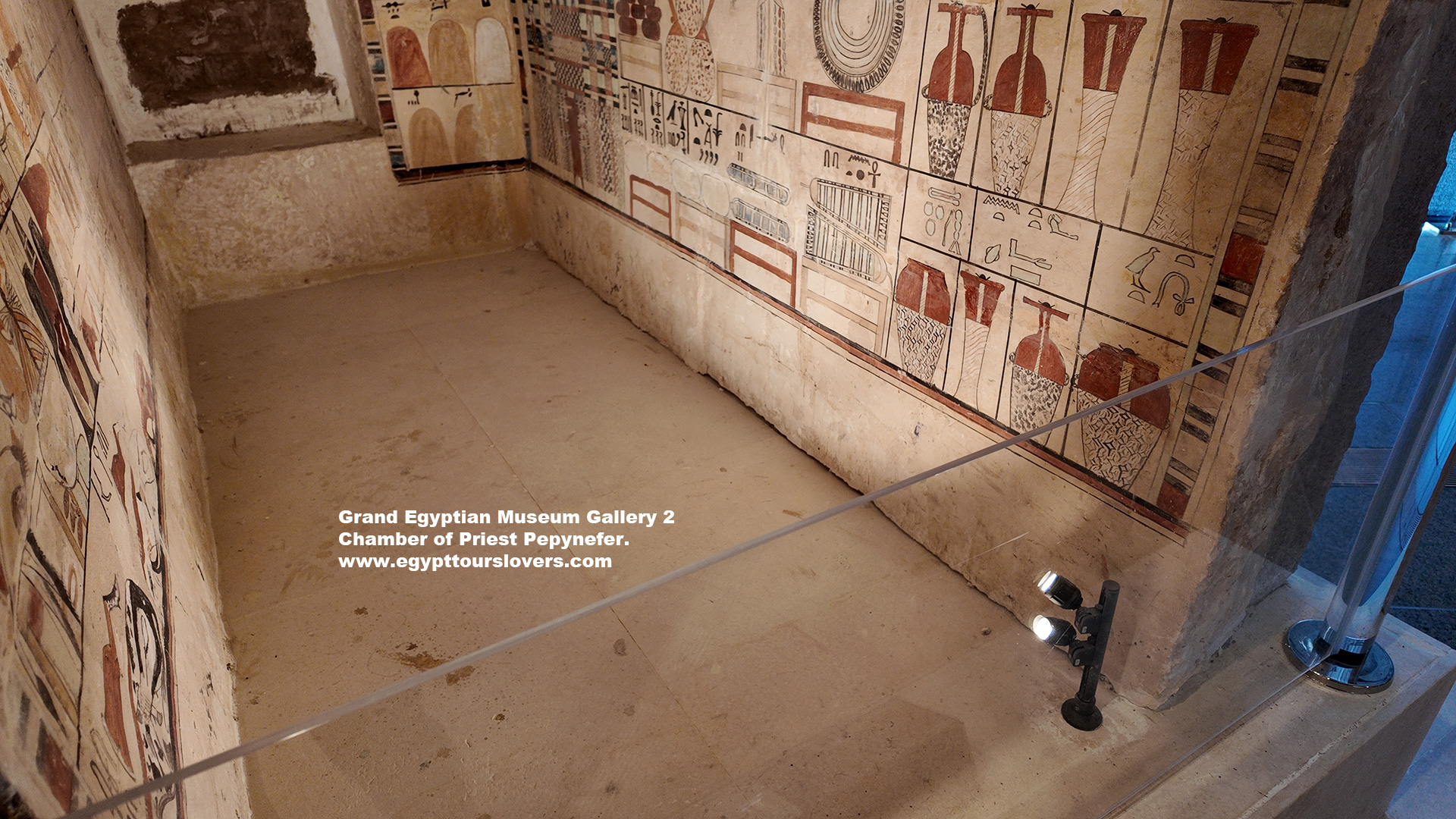
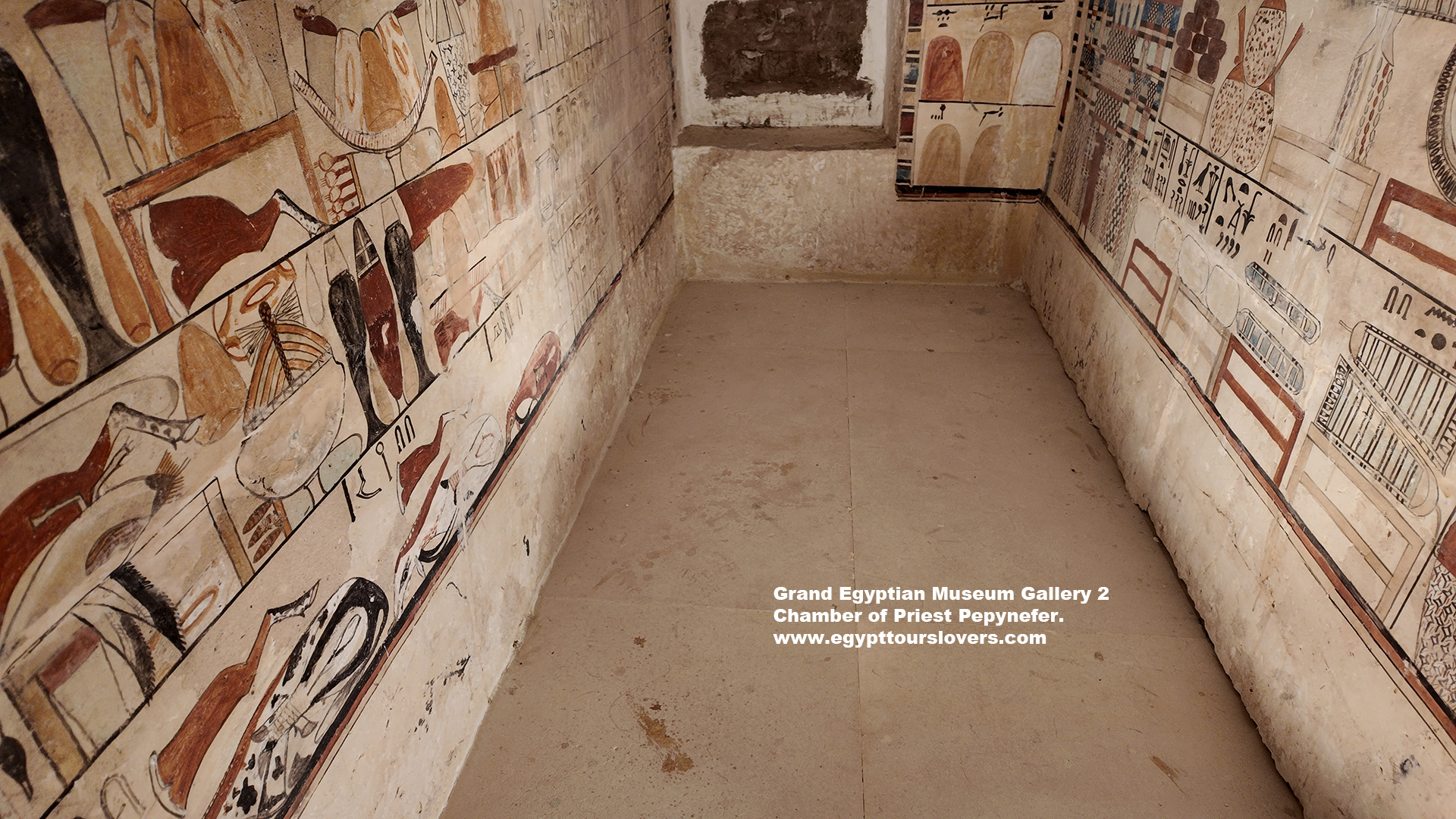
Dynasty 6 + first intermediate period | limestone | Saqqara
Chamber of Priest Pepynefer.
———– } ———– } ———– } ———– }
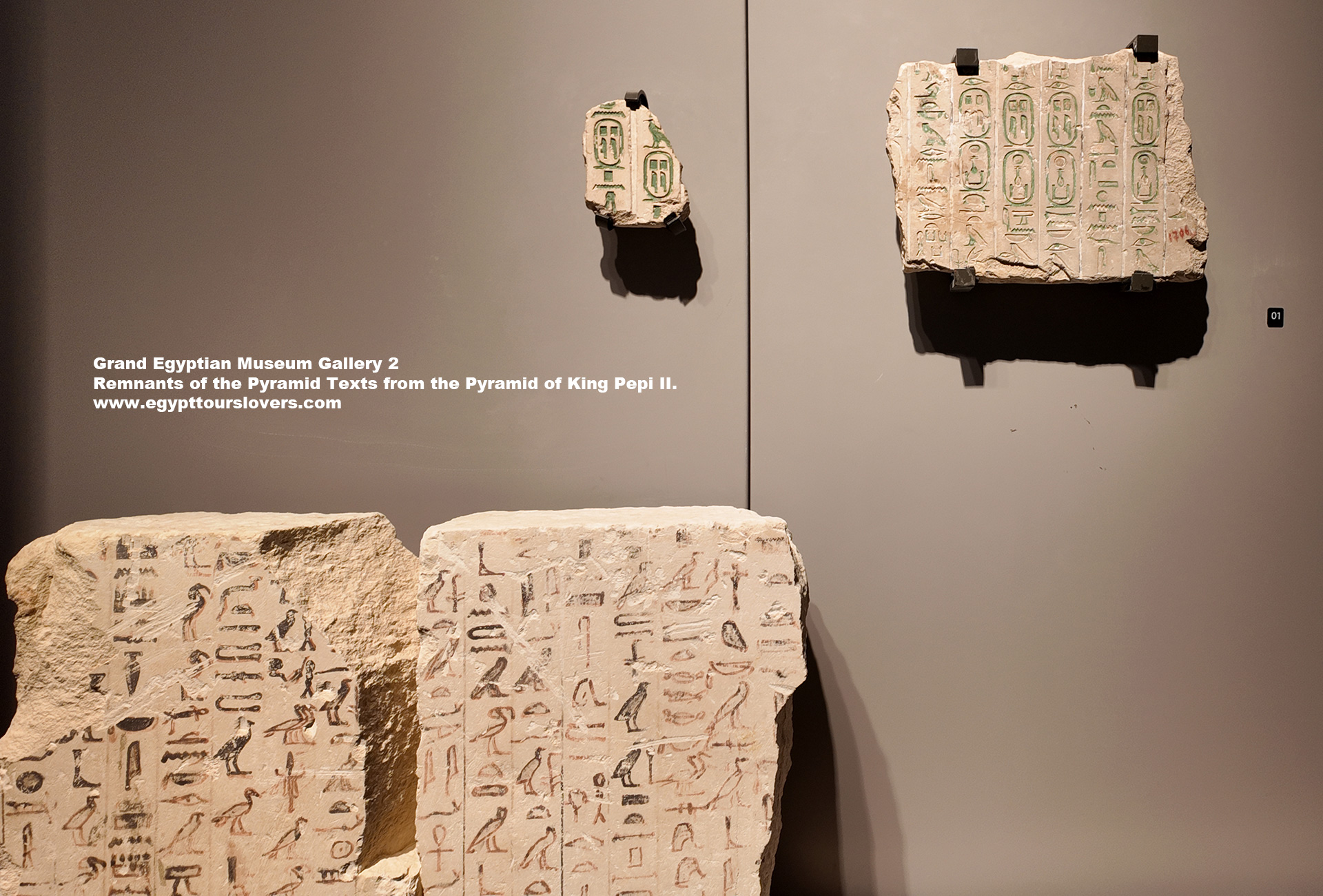
Dynasty 6 | limestone | Saqqara
Remnants of the Pyramid Texts from the Pyramid of King Pepi II.
The inscriptions are in green, symbolizing resurrection.
The walls of King Pepi II’s pyramid were inscribed with spells to guide him in the afterlife.
———– } ———– } ———– } ———– }
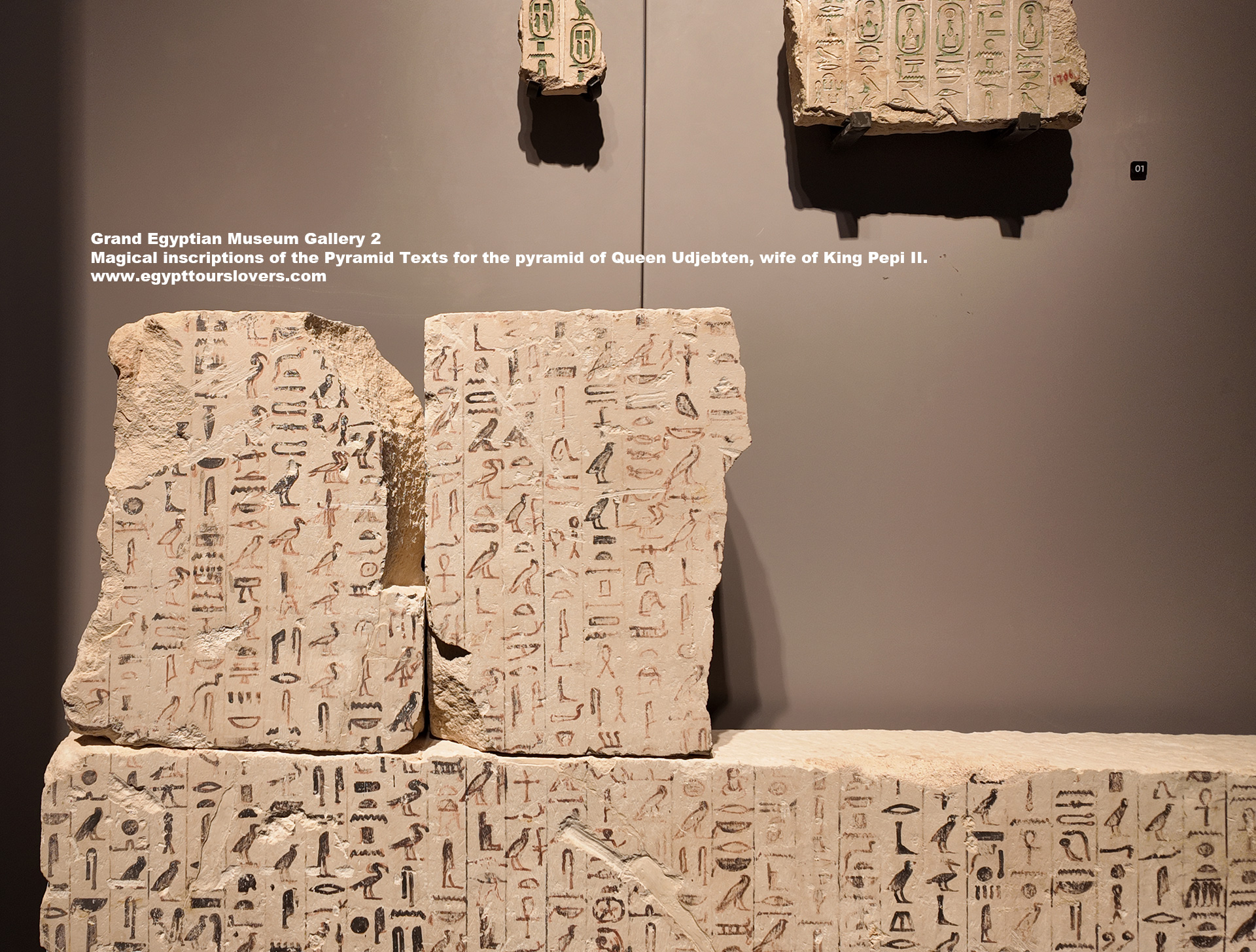
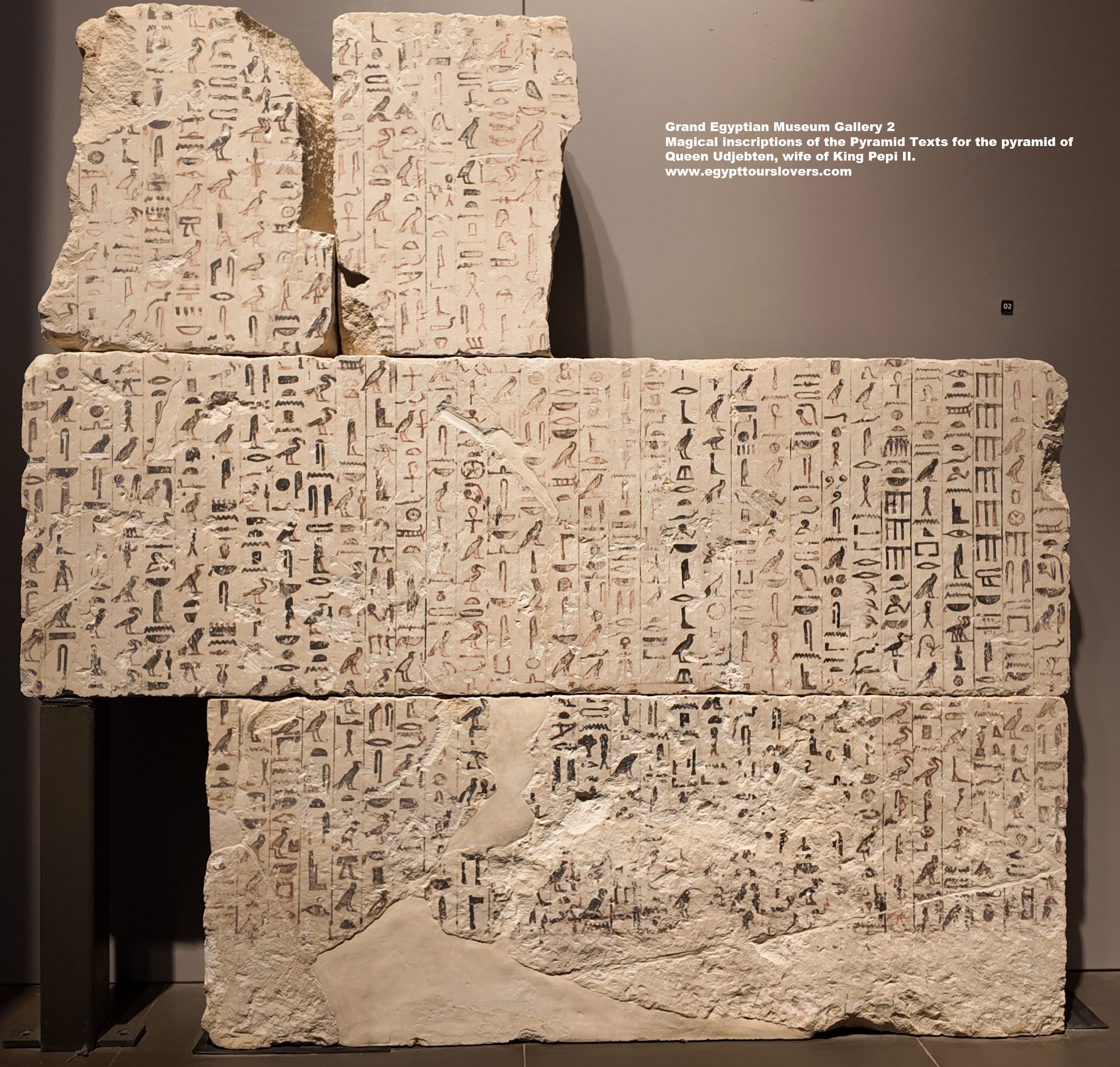
Dynasty 6 | limestone | Saqqara
Magical inscriptions of the Pyramid Texts for the pyramid of Queen Udjebten, wife of King Pepi II.
Translation of the text: The queen ascended to the heavens like an immortal star…
———– } ———– } ———– } ———– }
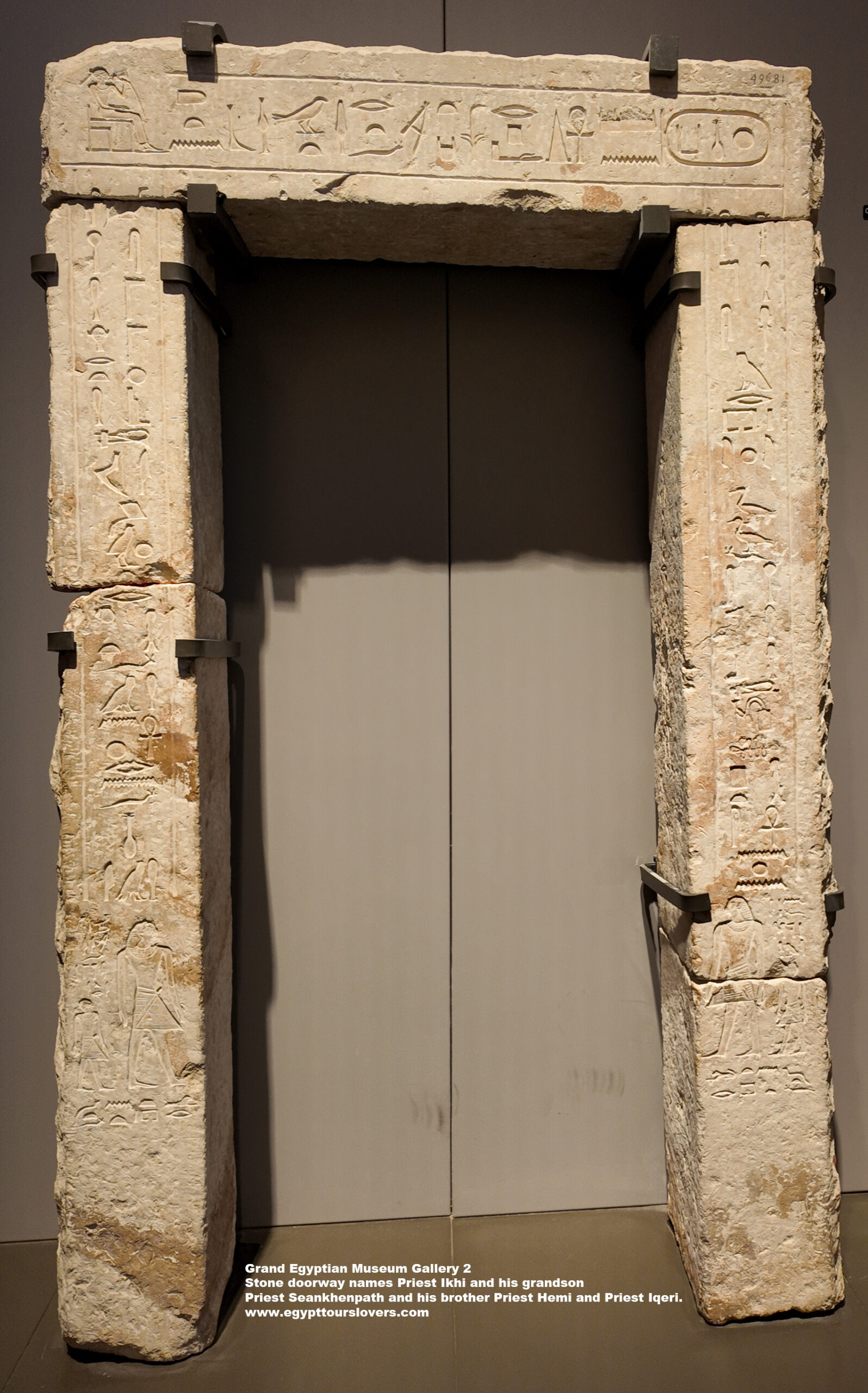
Dynasty 6 | limestone | Saqqara
Stone doorway names Priest Ikhi and his grandson Priest Seankhenpath and his brother Priest Hemi and Priest Iqeri.
Houses and storerooms of priests for the cult of queen Udjebten, surrounded her pyramid complex.
———– } ———– } ———– } ———– }
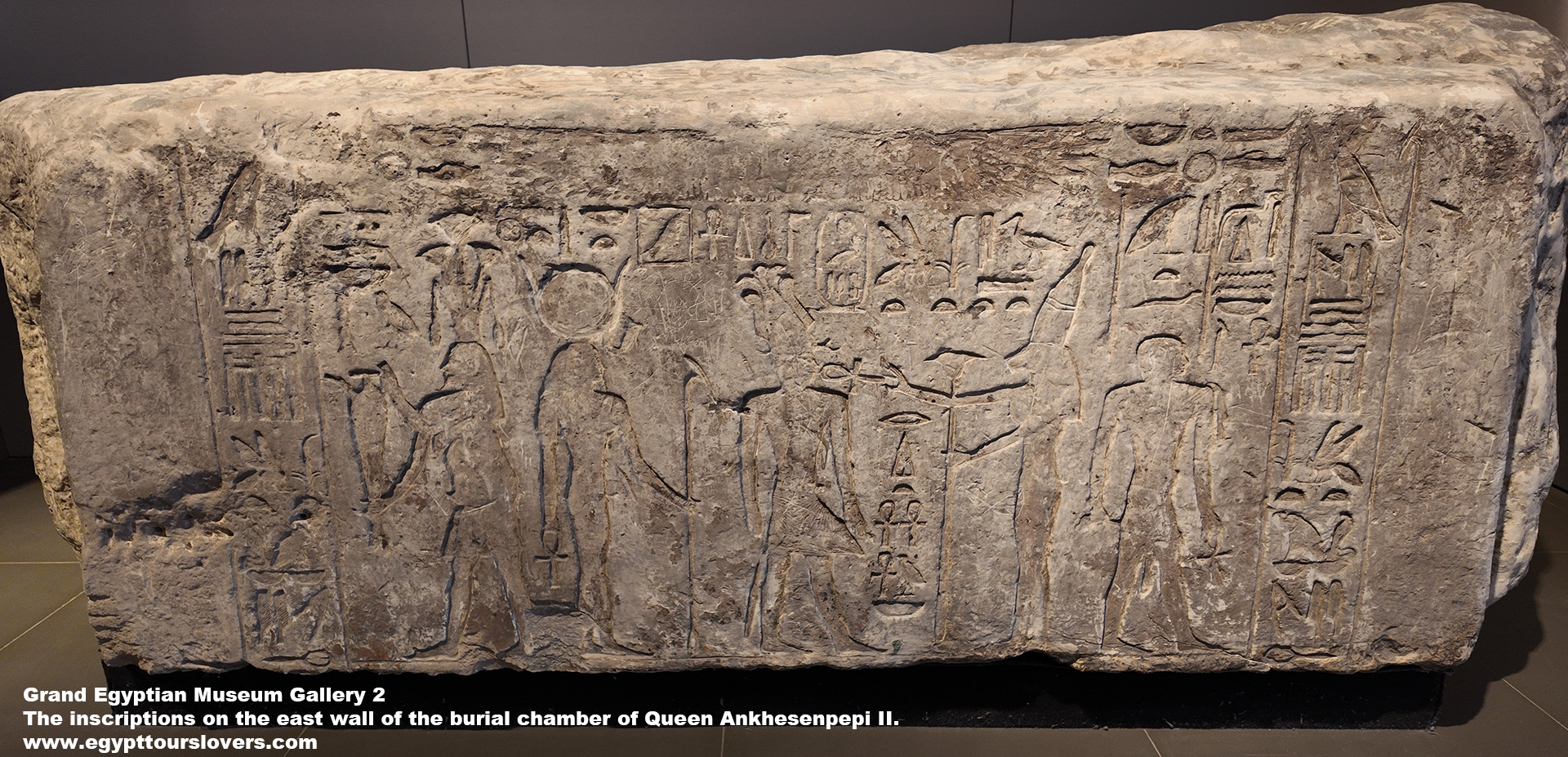
Dynasty 6 | limestone | Saqqara
The inscriptions on the east wall of the burial chamber of Queen Ankhesenpepi II.
———– } ———– } ———– } ———– }
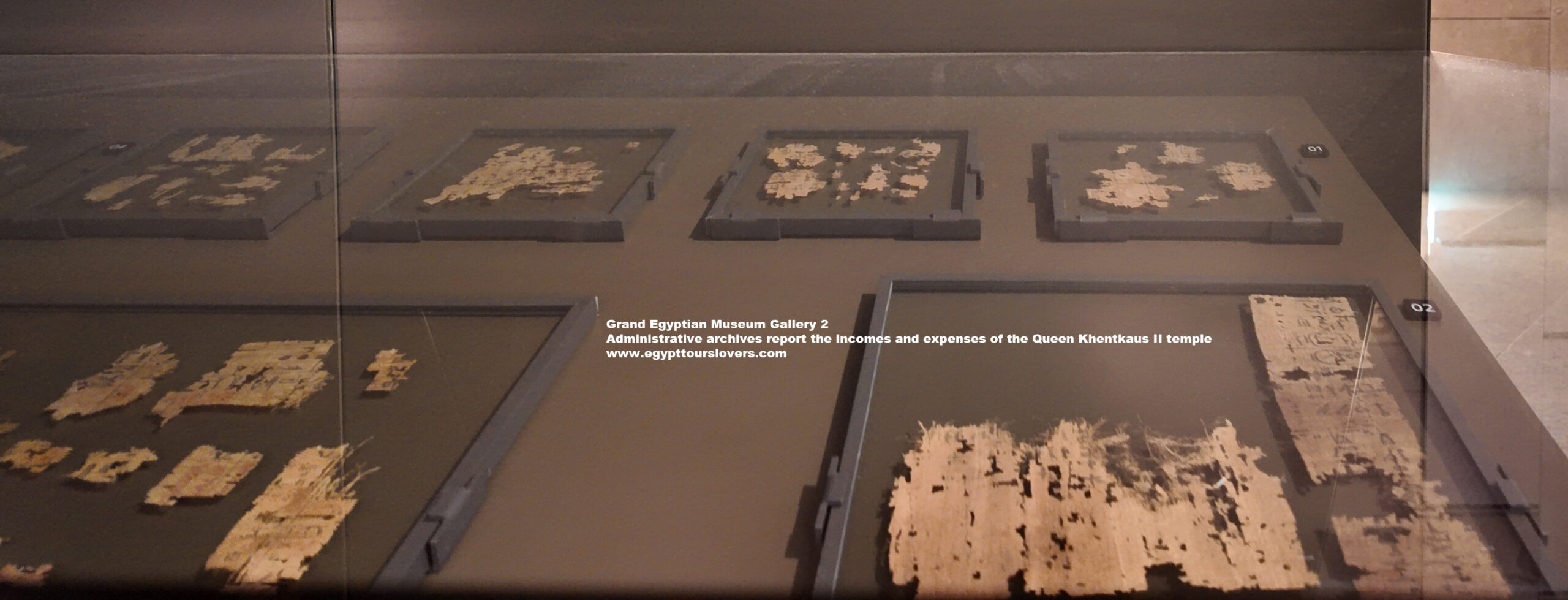
Dynasty 5 | Papyrus, pigment | abusir
Administrative archives report the incomes and expenses of the Queen Khentkaus II temple, give the inventory of cult objects, document various products brought in and list priests who served in the worship of Queen Khentkaus II.
———– } ———– } ———– } ———– }
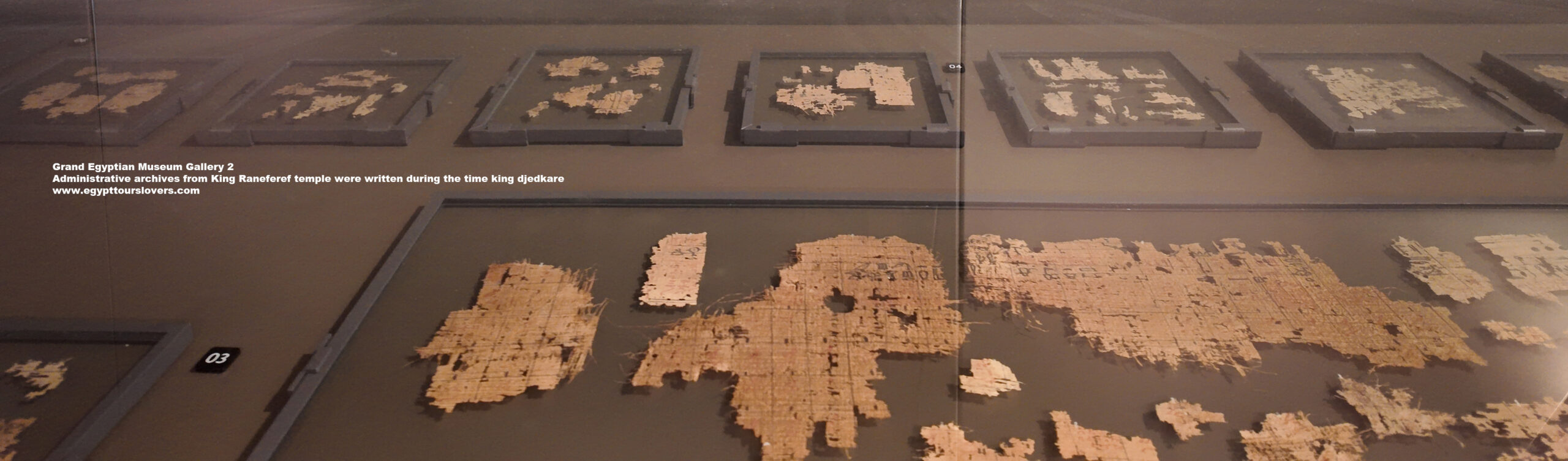
Dynasty 5 | Papyrus, pigment | abusir
Administrative archives from King Raneferef temple were written durinf the time king djedkare “isesi” who reigned than 30 years after king Raneferef.
———– } ———– } ———– } ———– }
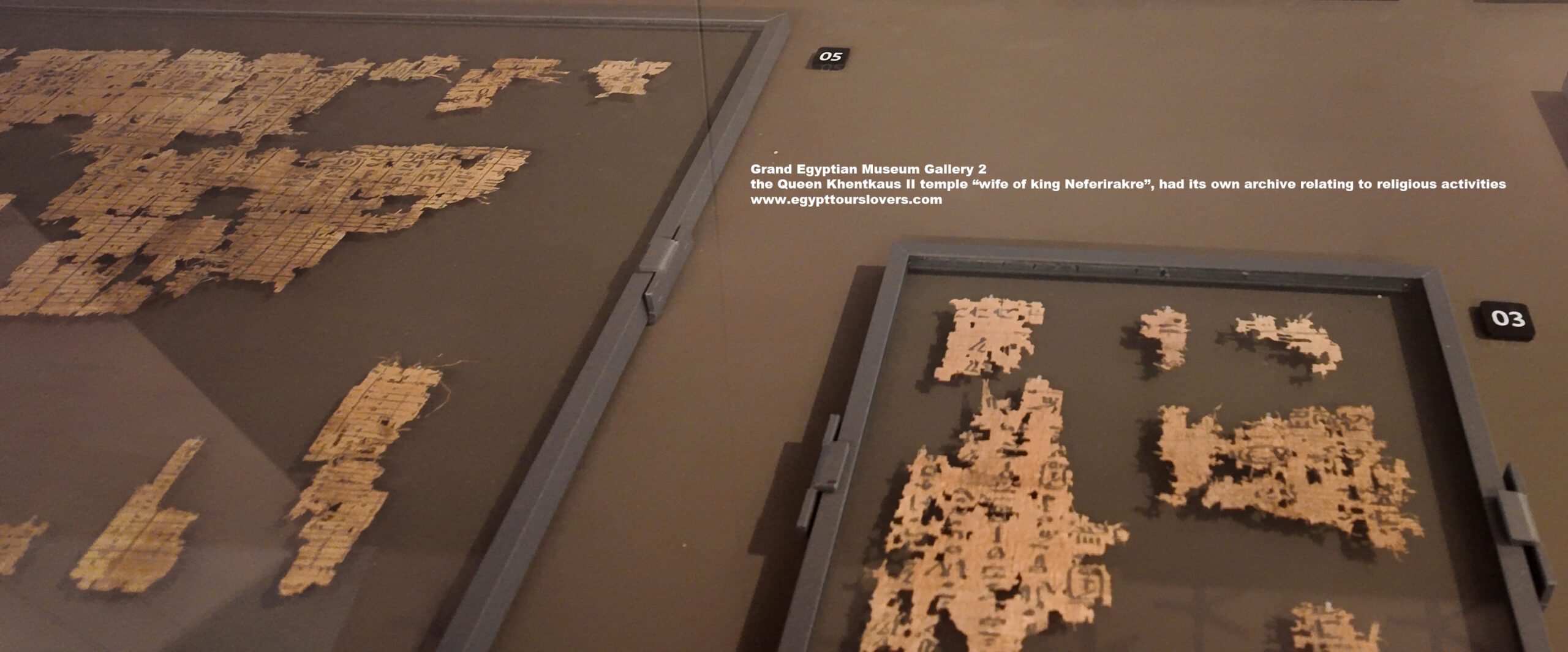
Dynasty 5 | Papyrus, pigment | abusir
the Queen Khentkaus II temple “wife of king Neferirakre”, had its own archive relating to religious activities.
Several papyri describe cult statues of the queen and the shrines in which they were placed.
———– } ———– } ———– } ———– }
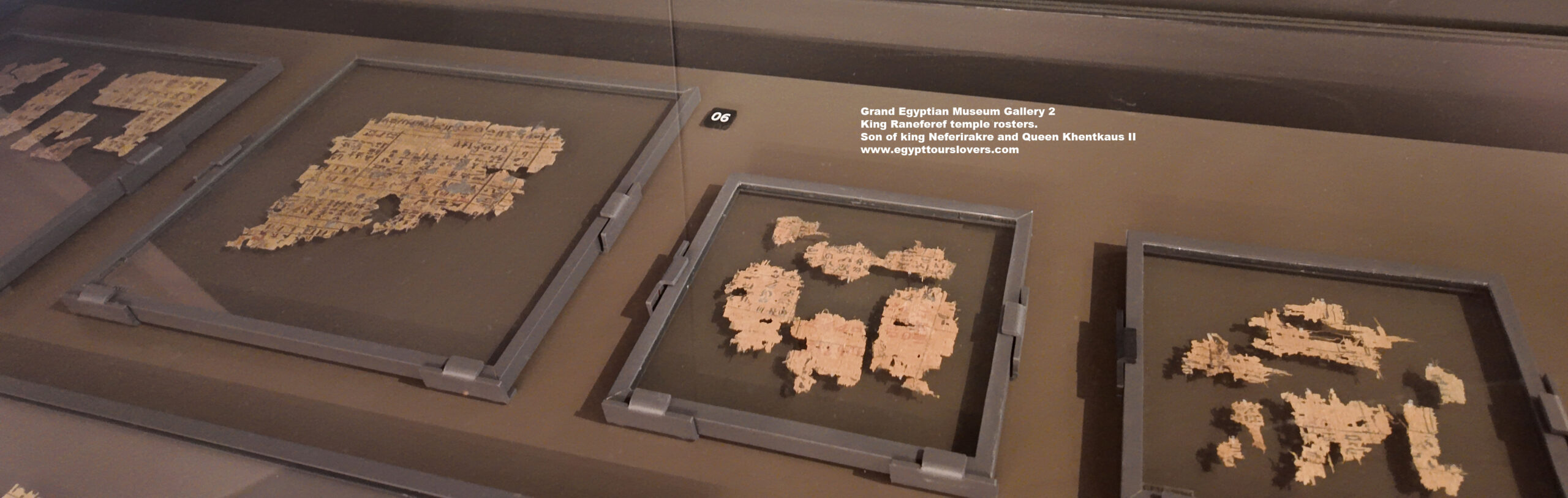
Dynasty 5 | Papyrus, pigment | abusir
King Raneferef temple rosters.
Son of king Neferirakre and Queen Khentkaus II, reigned 2-3 years.
His cult continued after his death as shown by these rosters of temple guards and priests.
———– } ———– } ———– } ———– }
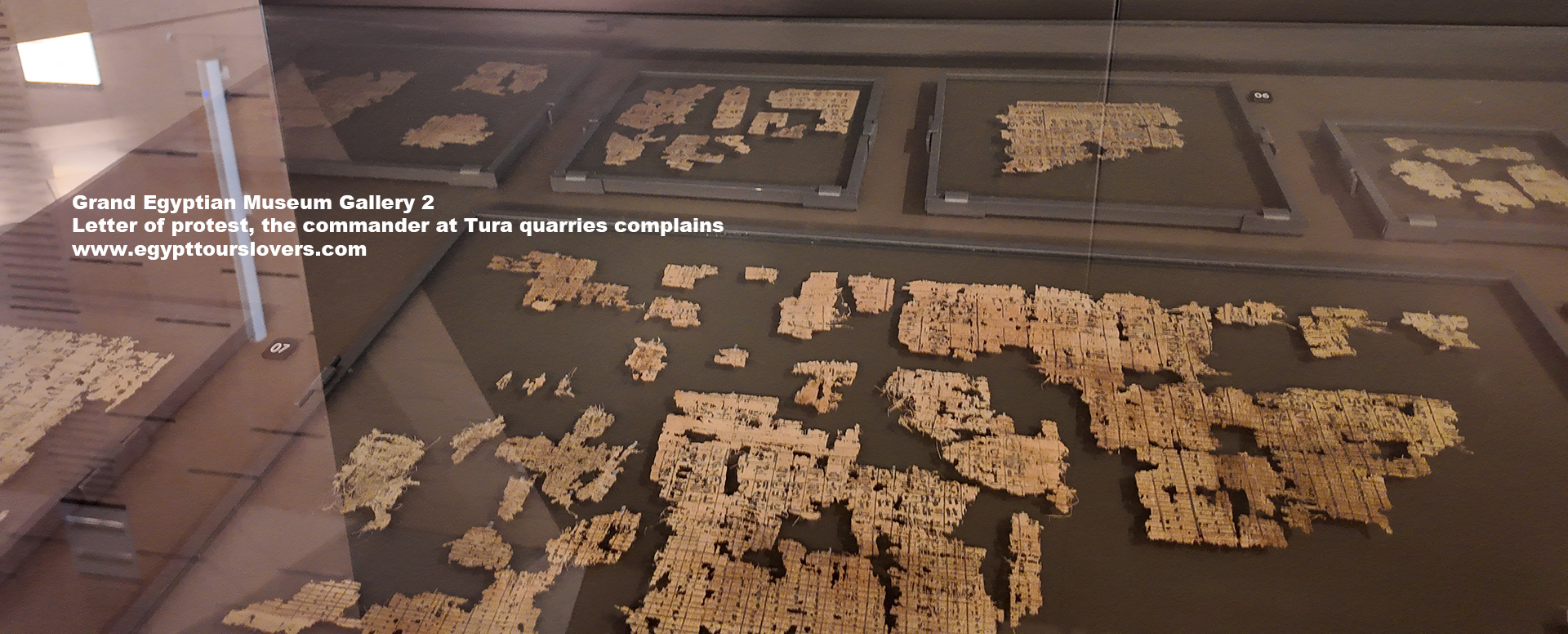
Dynasty 6 | Papyrus, pigment | Saqqara
Letter of protest, the commander at Tura quarries complains about the vizier order to send his troops to Saqqara to receive clothes, as they could be transported more efficiently by boats going back to Tura.
———– } ———– } ———– } ———– }
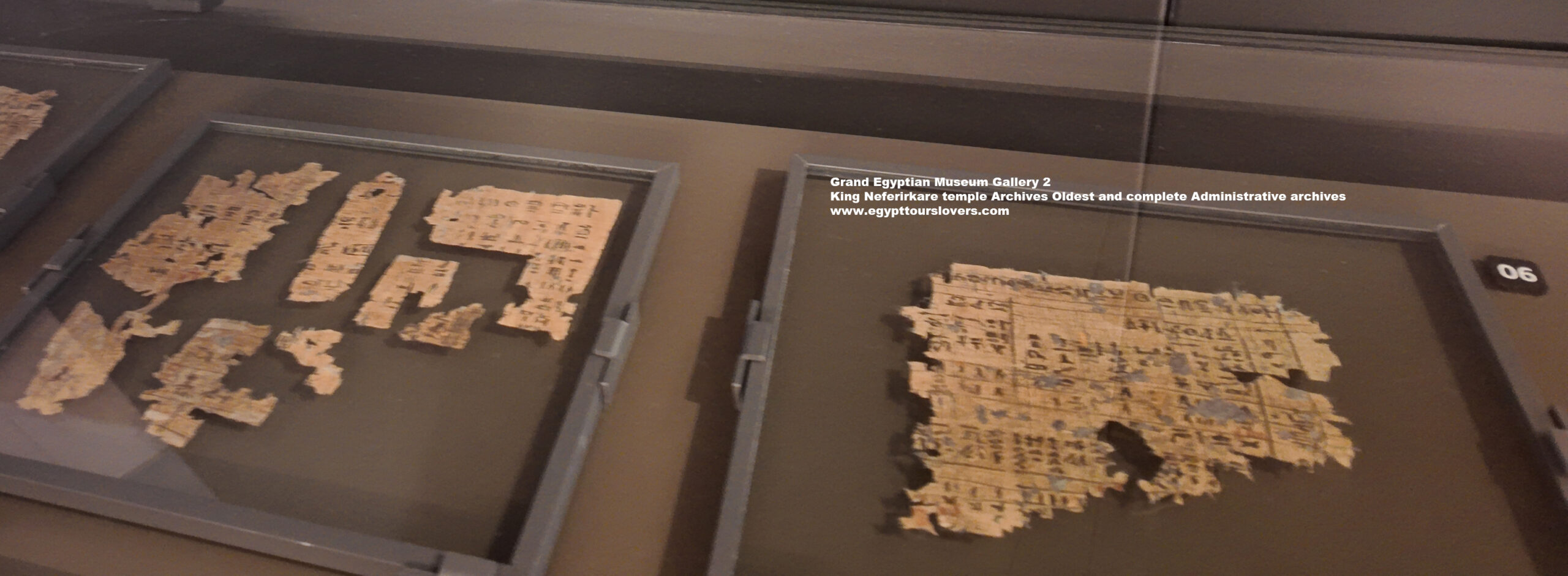
Dynasty 5 | Papyrus, pigment | abusir
King Neferirkare temple Archives Oldest and complete Administrative archives.
They reveal everyday activities in a royal temple and its Economy.
Staff rosters, inventory and accounting lists and letters.
———– } ———– } ———– } ———– }
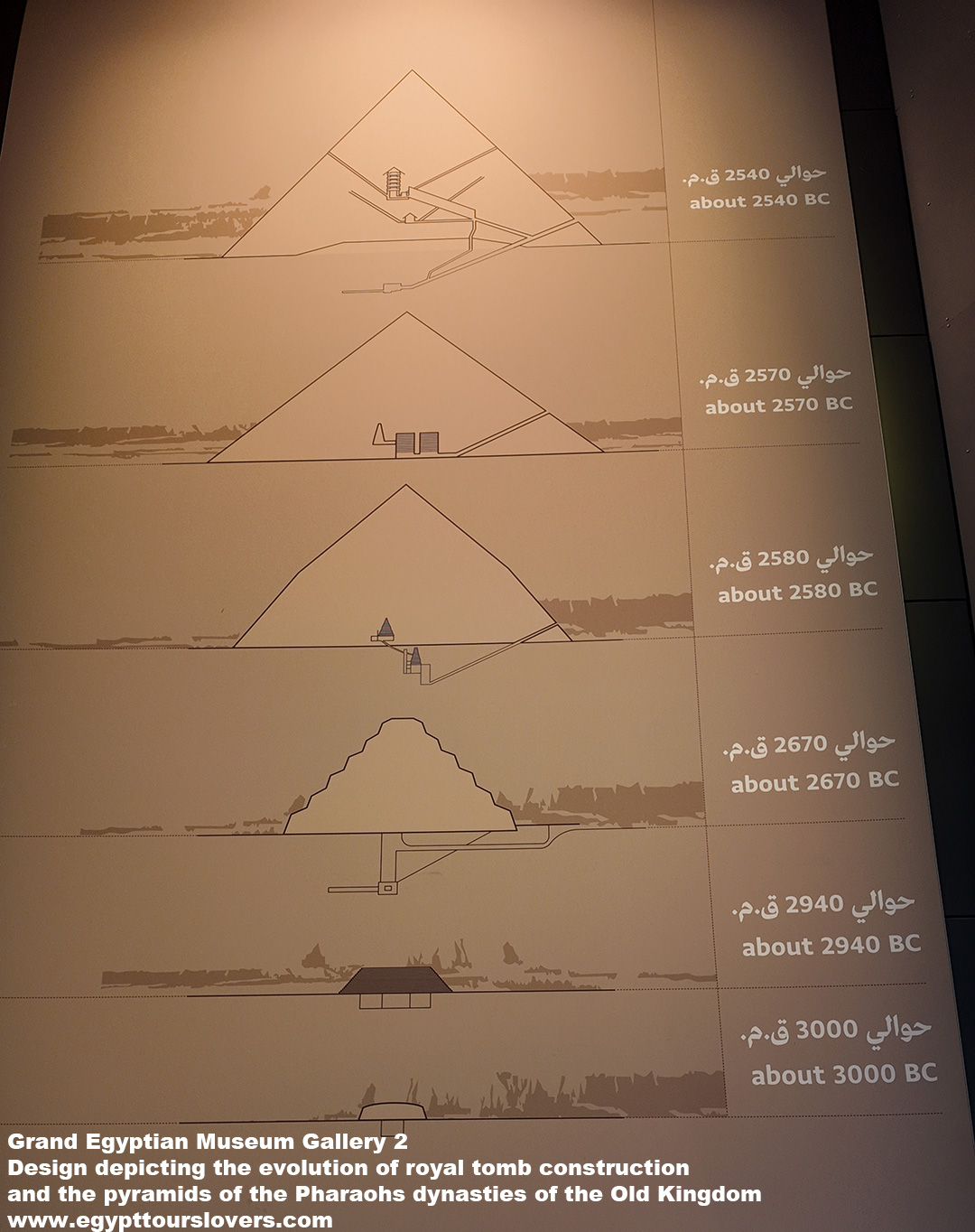
Design depicting the evolution of royal tomb construction and the pyramids of the Pharaohs dynasties of the Old Kingdom on the wall of the Grand Egyptian Museum، Ancient Egypt.
Researcher & Photographer King Tutankhamun Treasures: Tamer Ahmed Abdel Fattah