Grand Egyptian Museum Gallery 4
Grand Egyptian Museum Gallery 4 – 4K Video & Stock Photos with Details of each artifacts
Grand Egyptian Museum Gallery 4
———– } ———– } ———– } ———– }
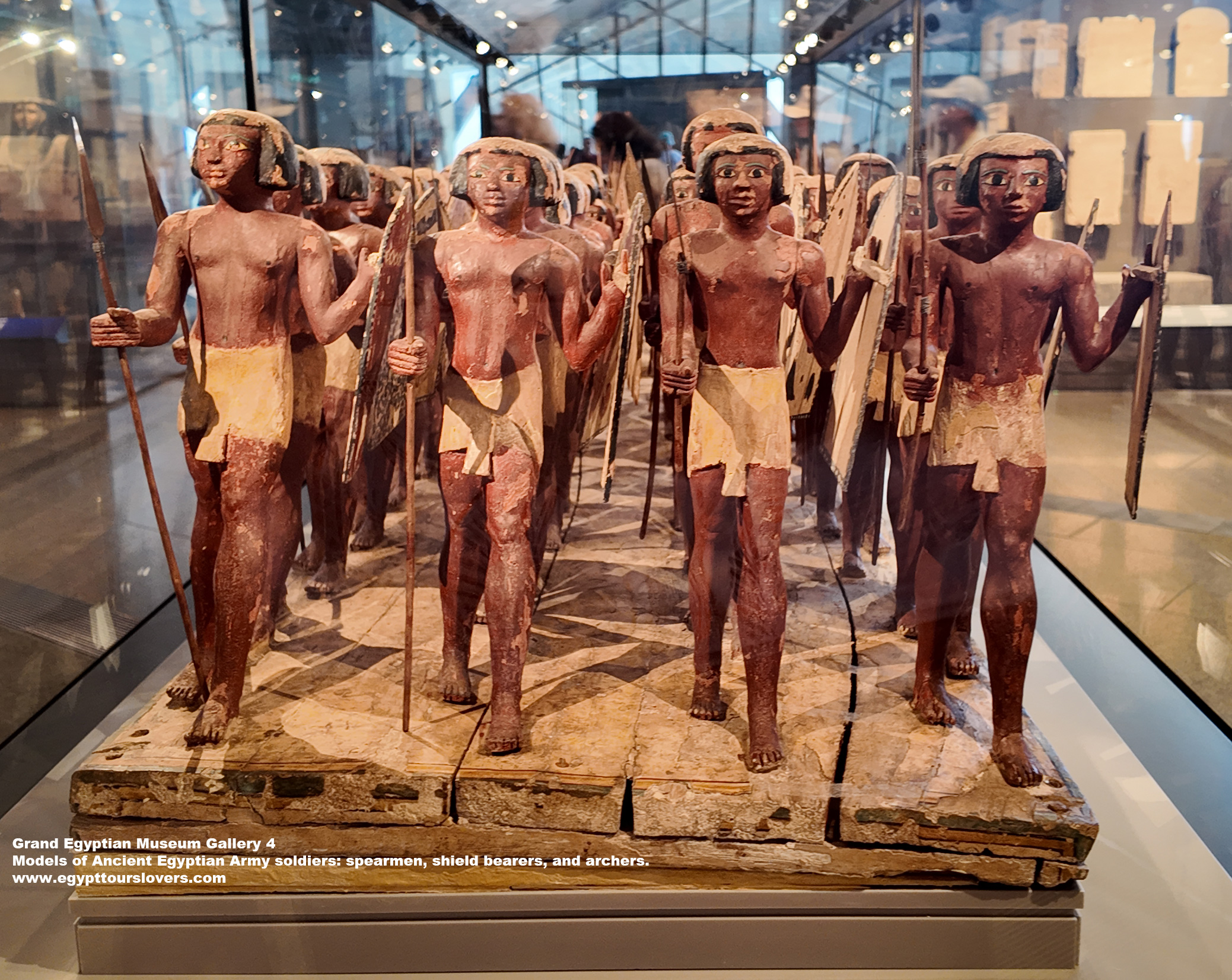
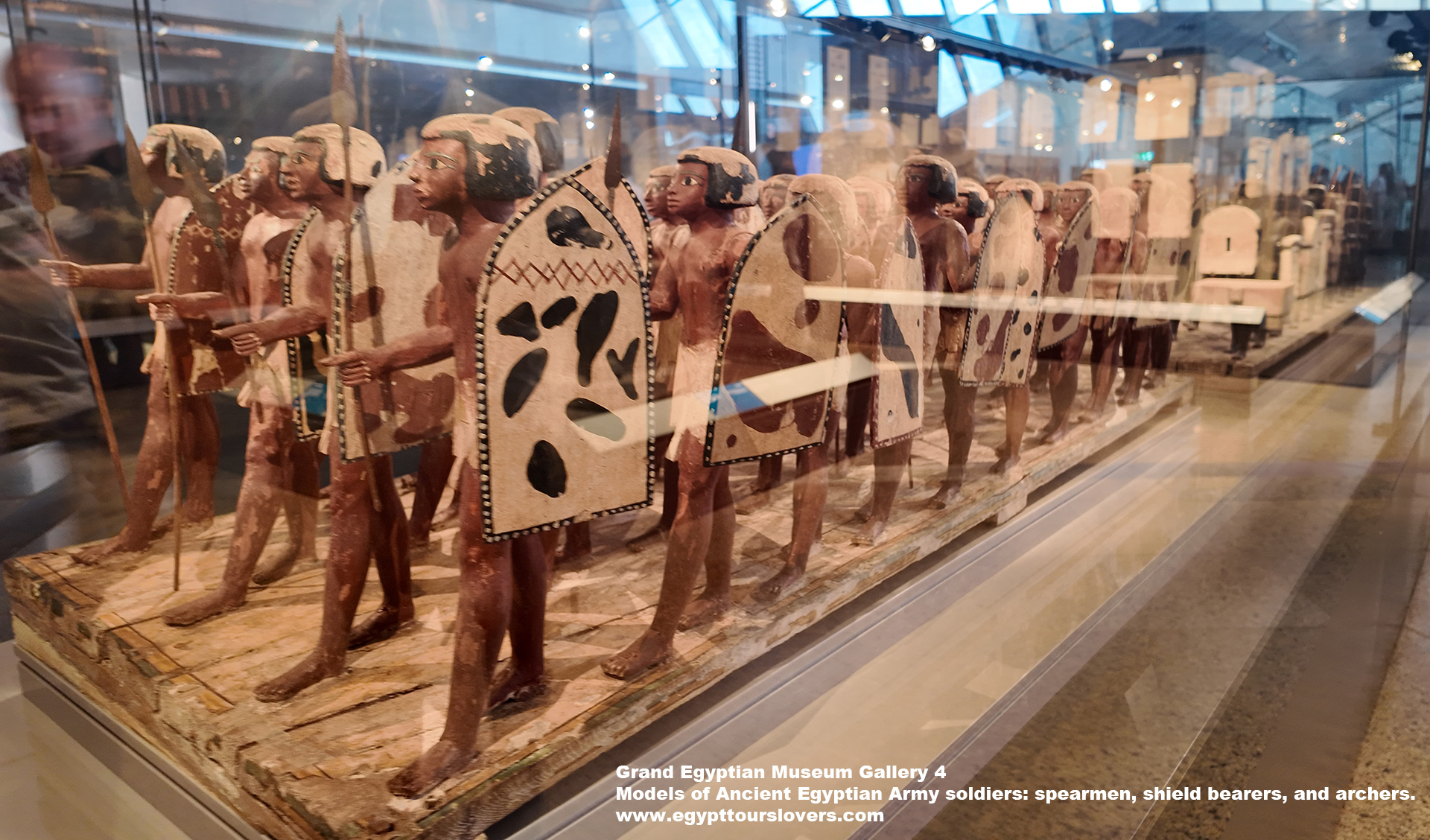
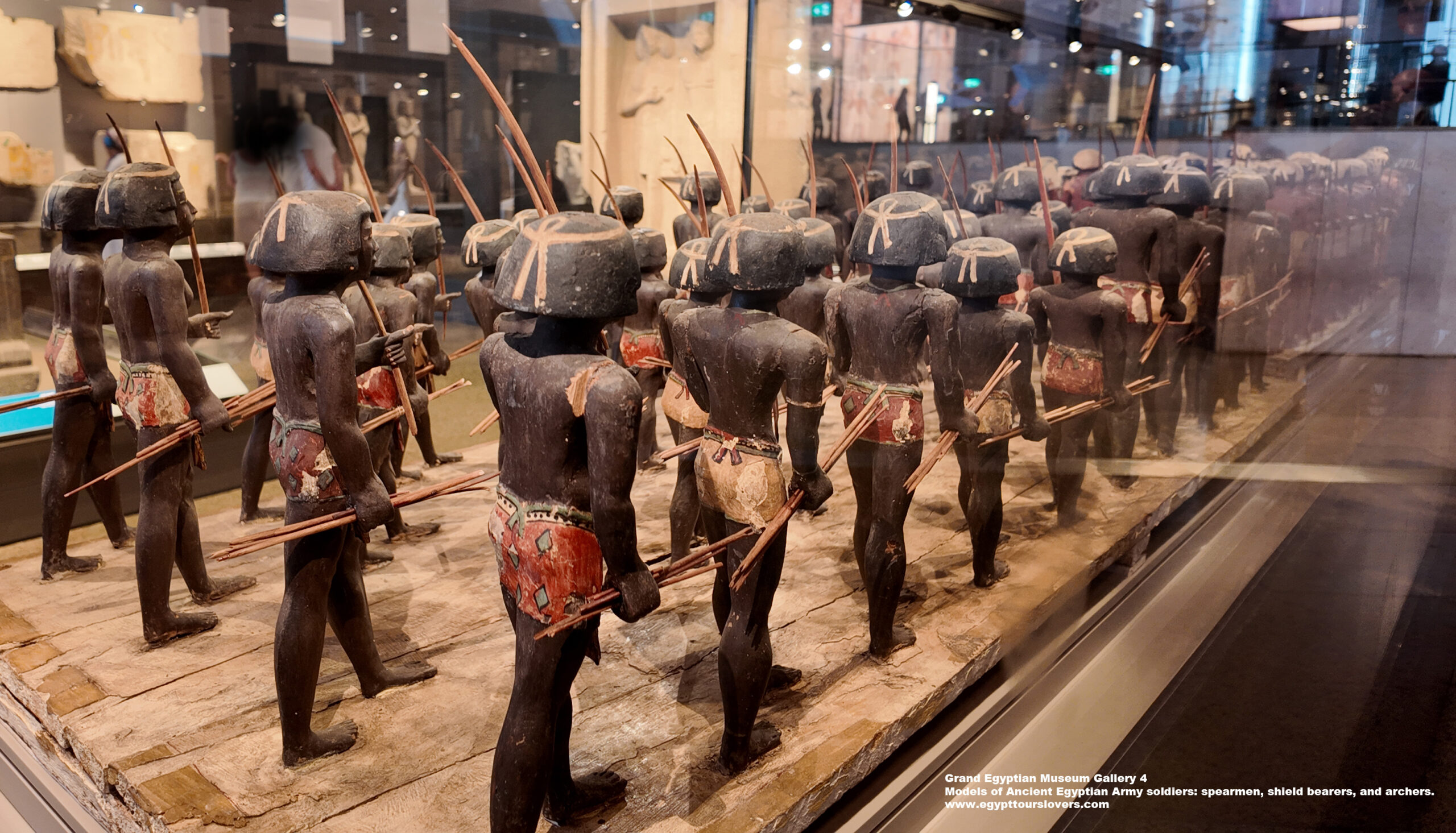
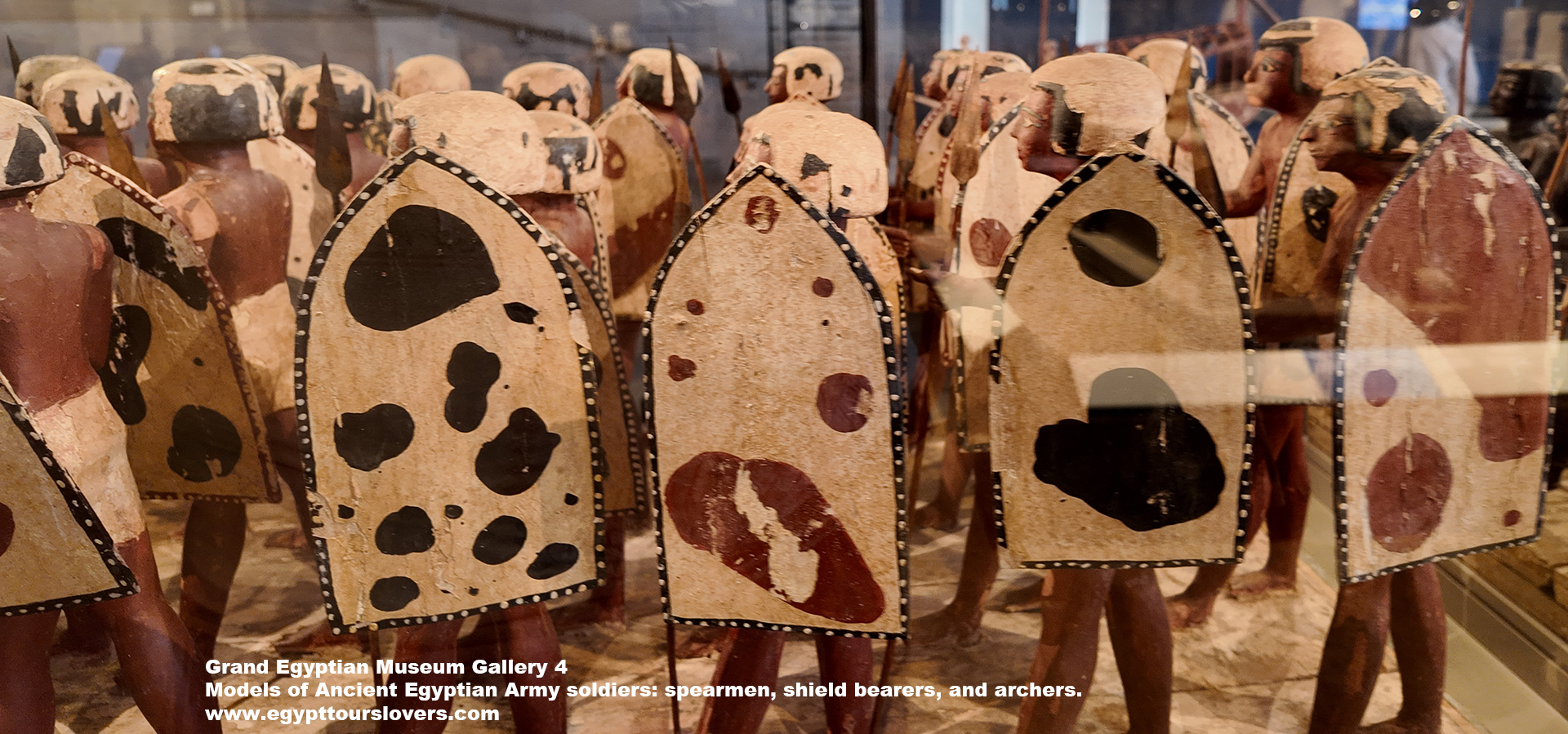
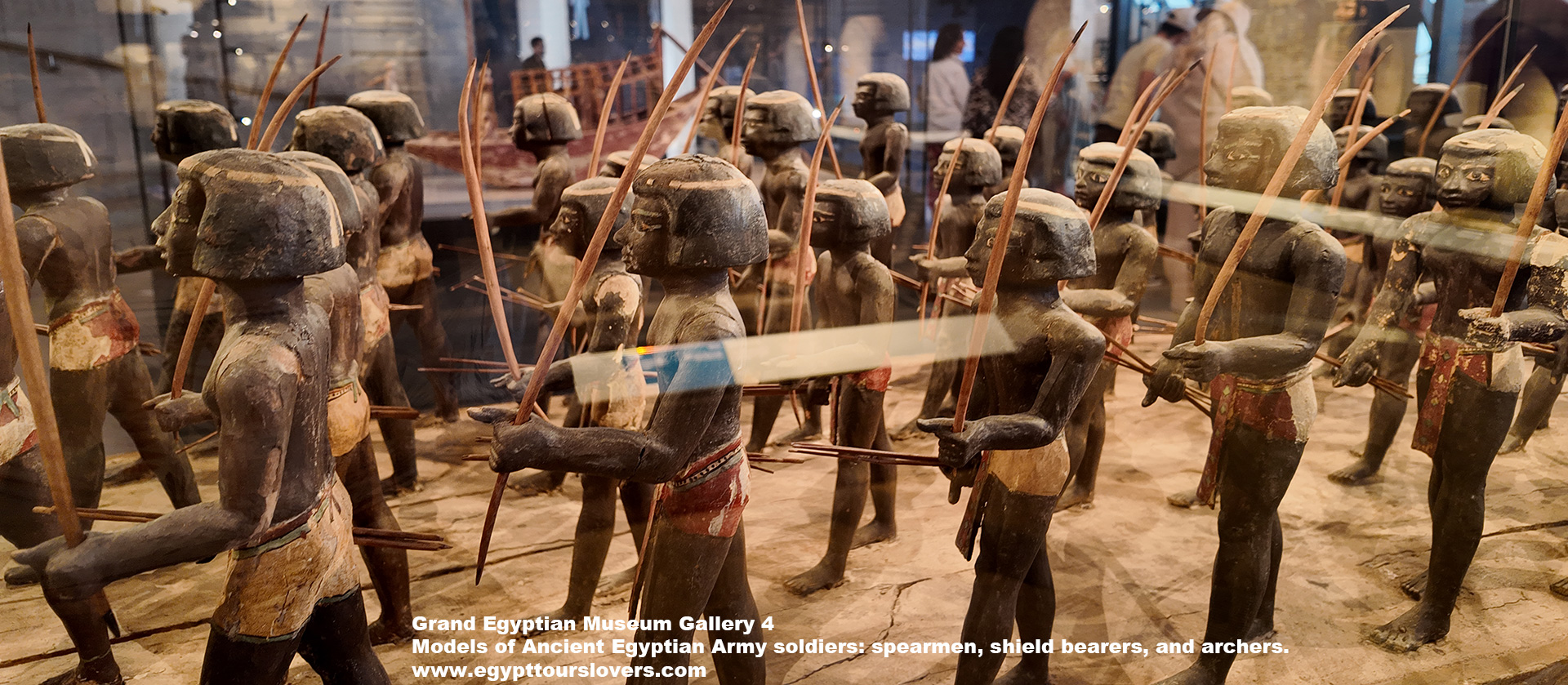
Dynasty 11 | plaster, wood | Assiut
Models of Ancient Egyptian Army soldiers: spearmen, shield bearers, and archers.
———– } ———– } ———– } ———– }
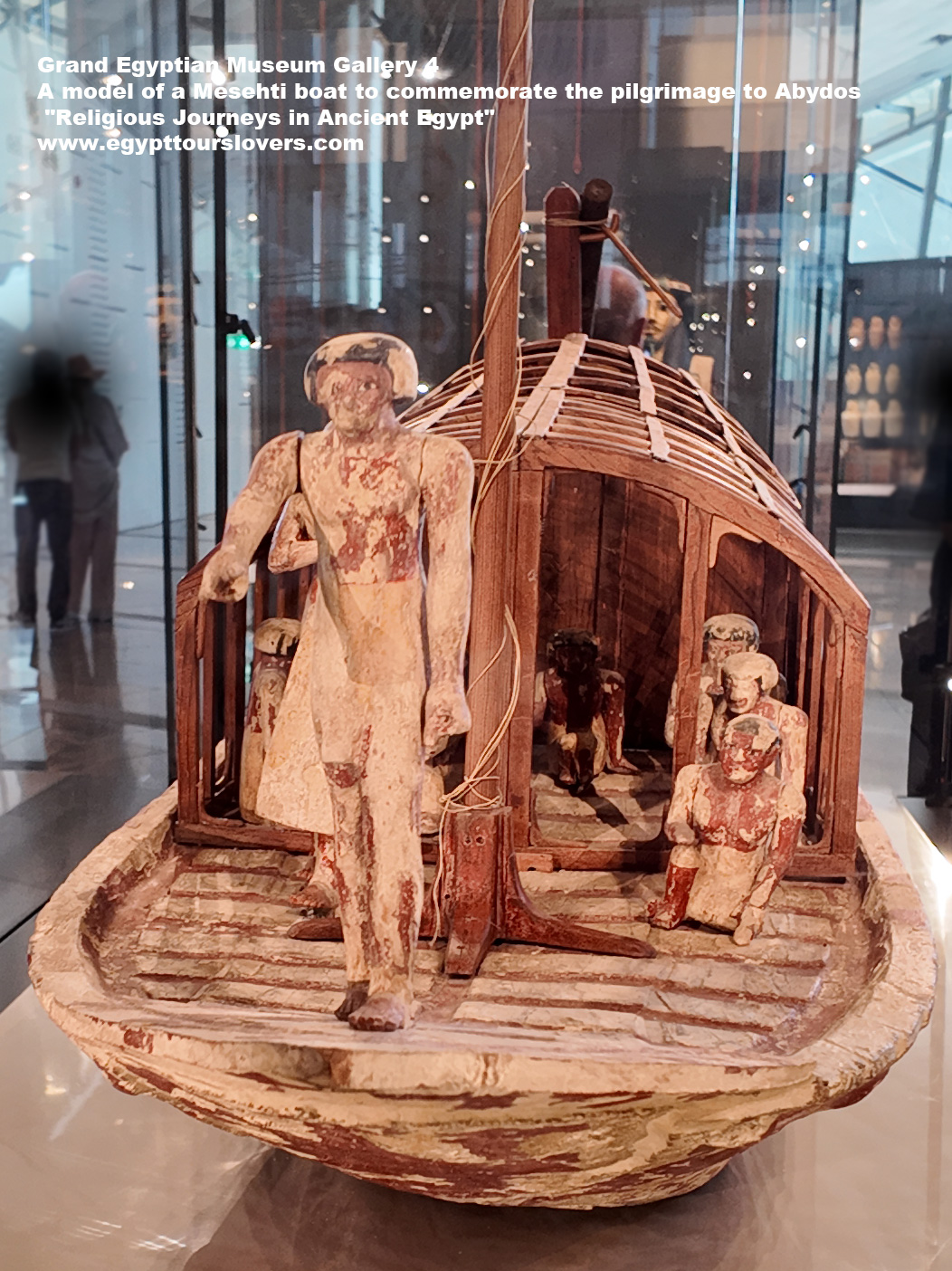
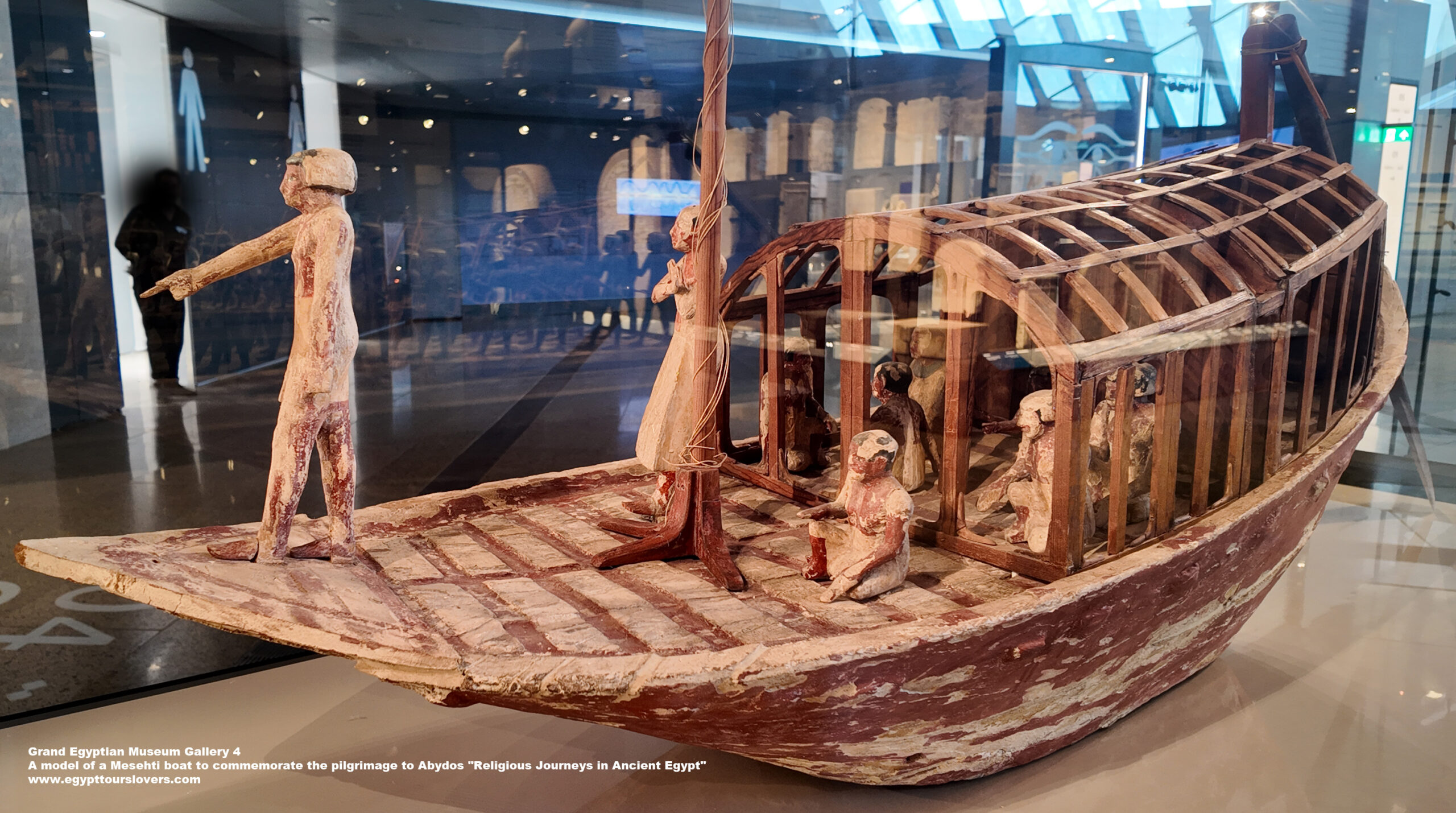
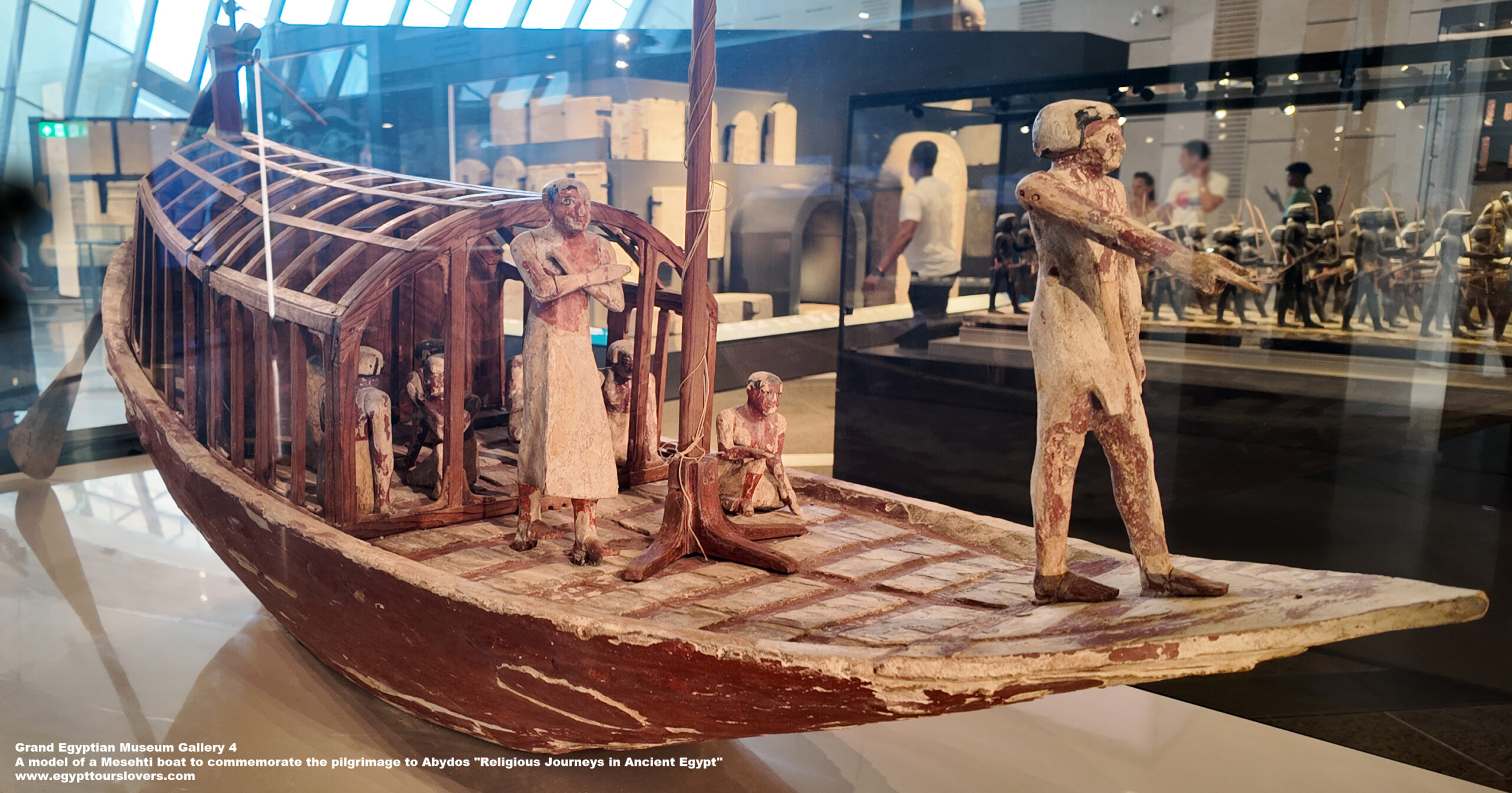
Dynasty 11 | plaster, wood | Assiut
A model of a Mesehti boat to commemorate the pilgrimage to Abydos “Religious Journeys in Ancient Egypt”
Mesehti wears a white robe and is surrounded by friends, servants and service crew to monitor the sandy banks, with one priest reciting religious rites and prayers and another leading the prow of the boat.
———– } ———– } ———– } ———– }
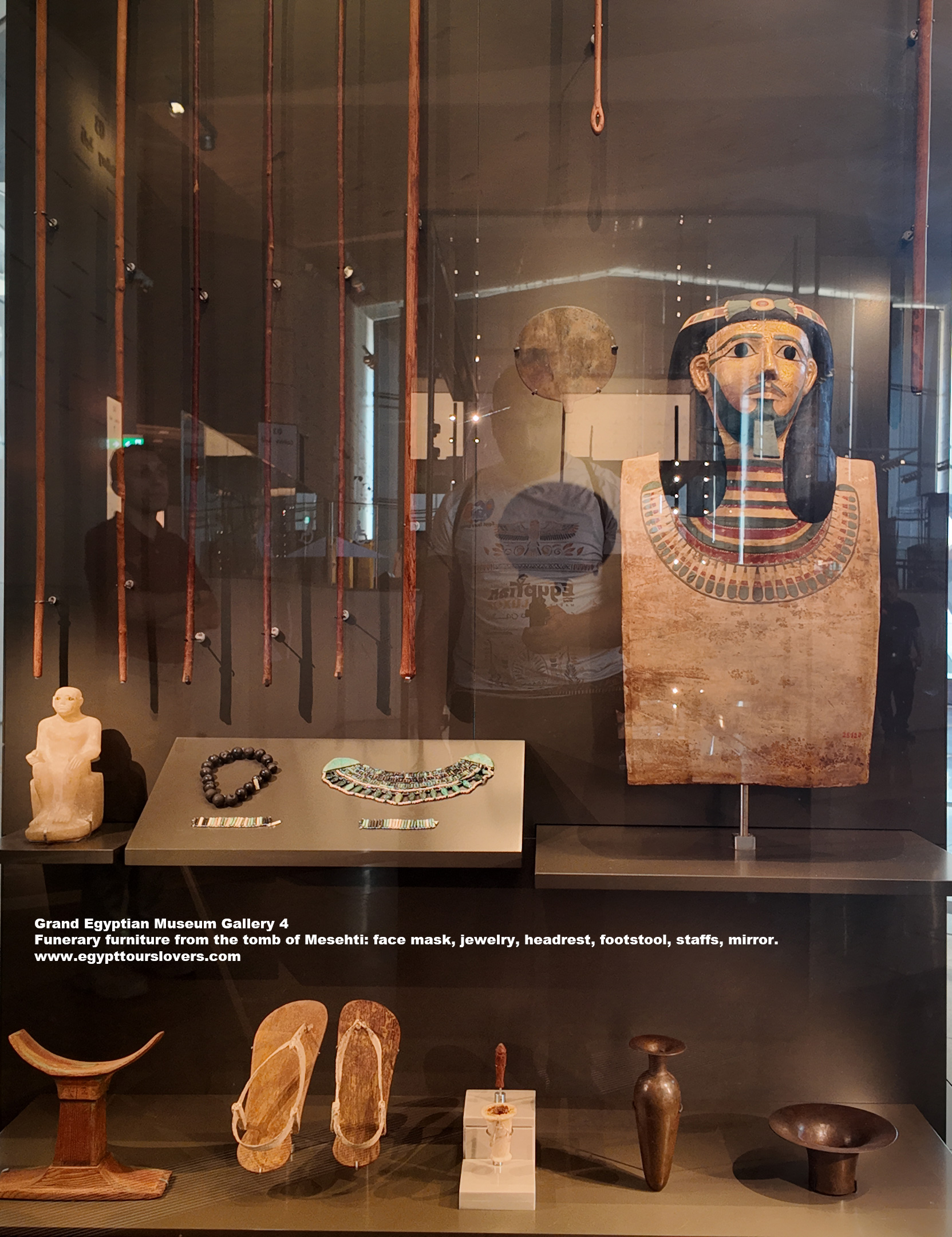
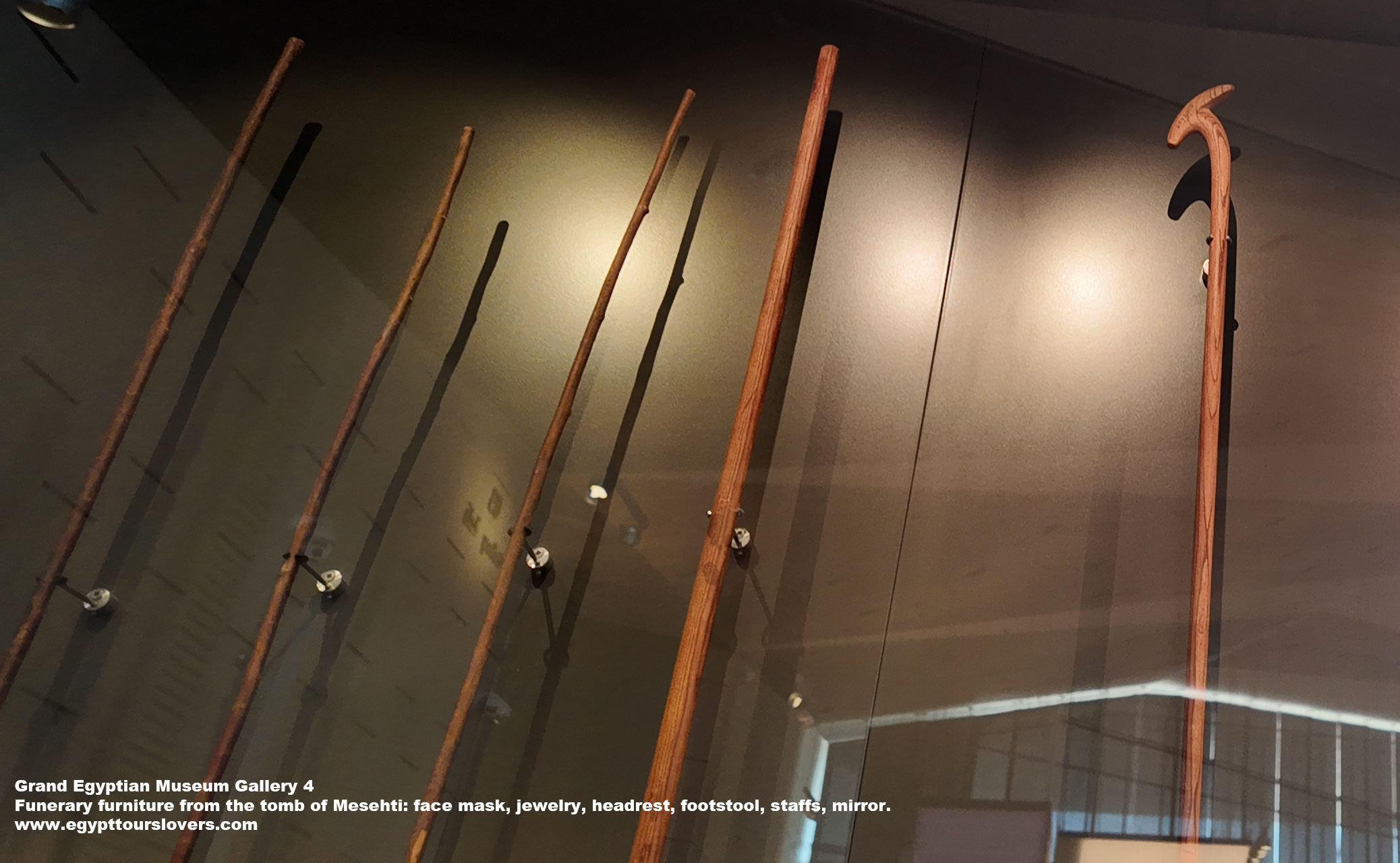
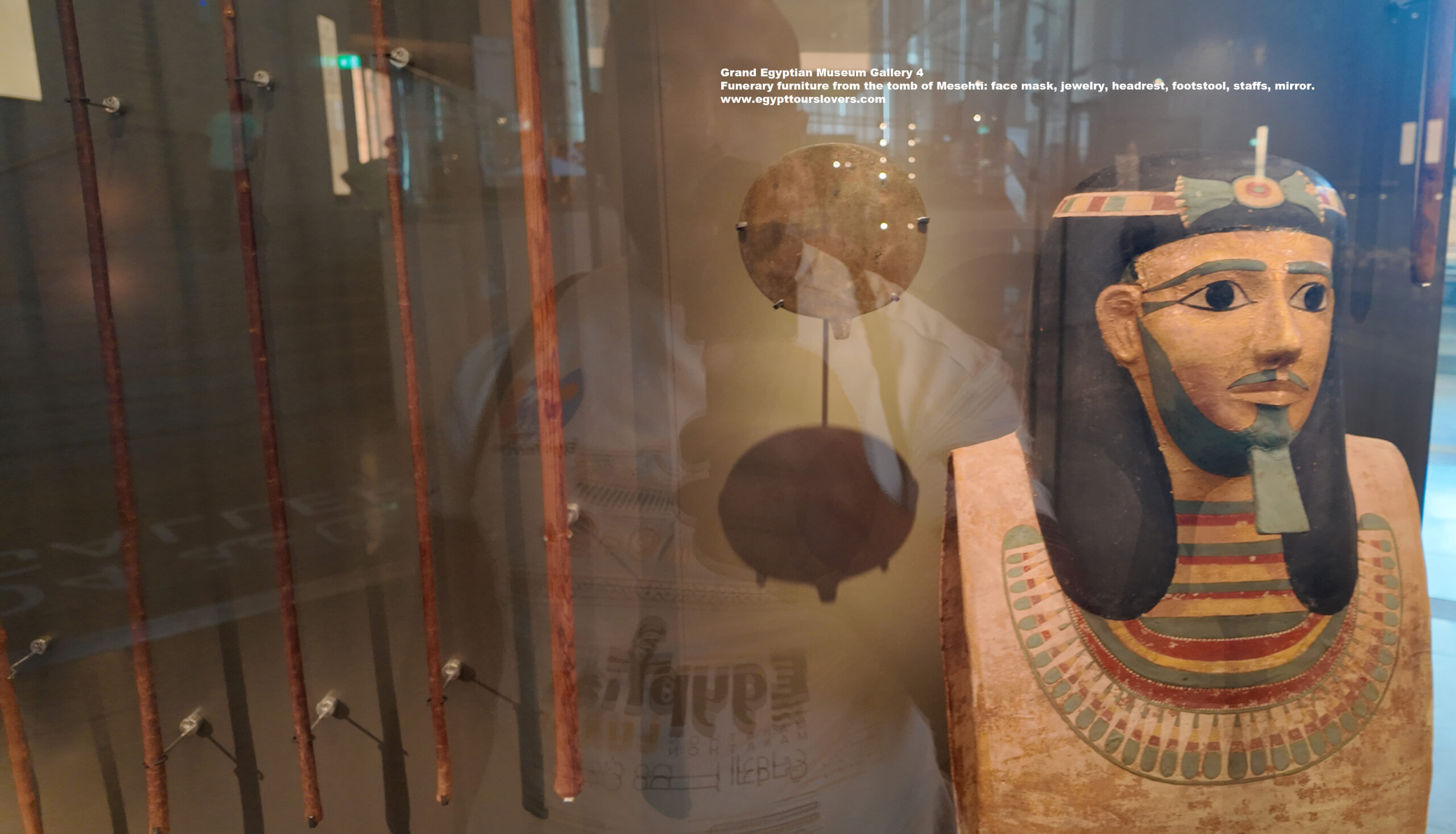
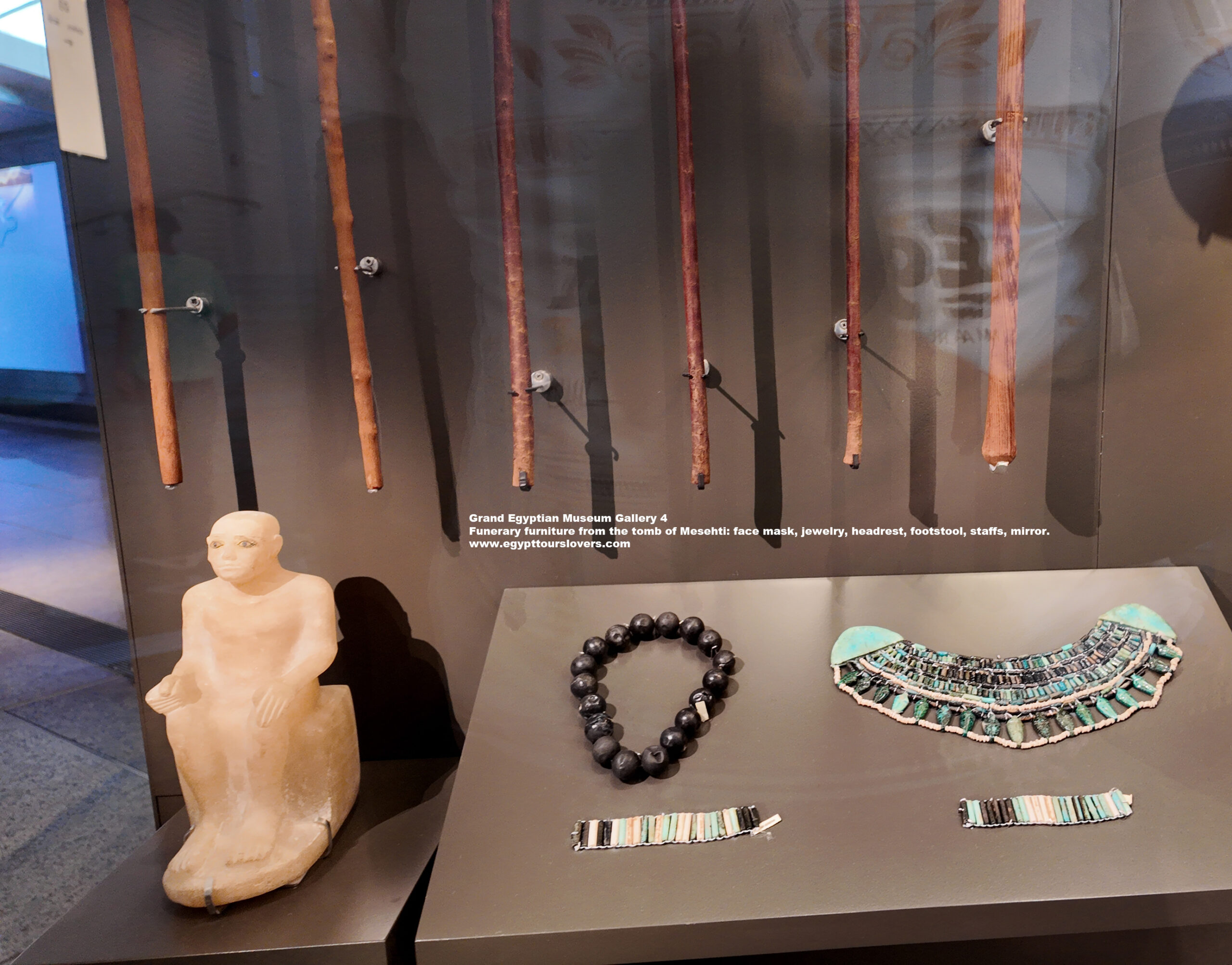
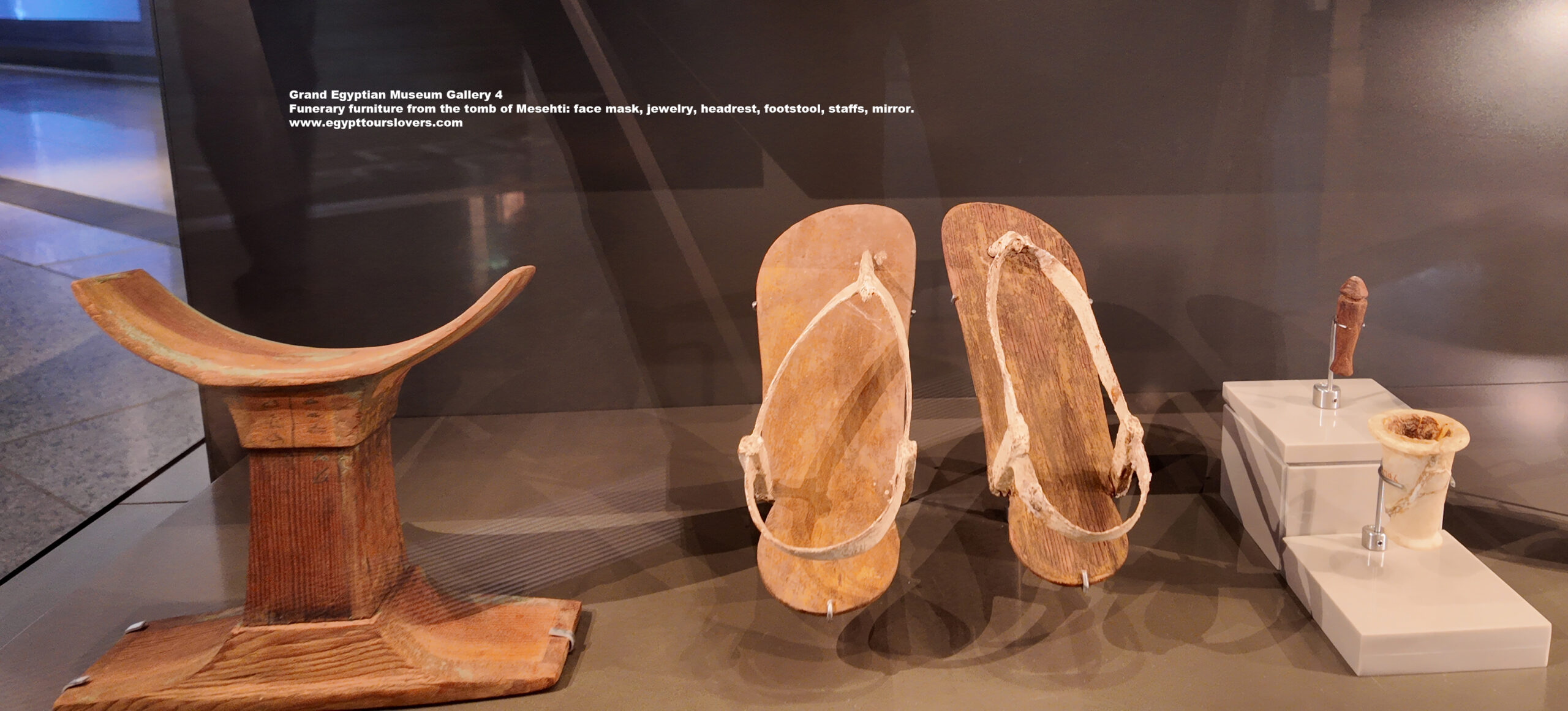
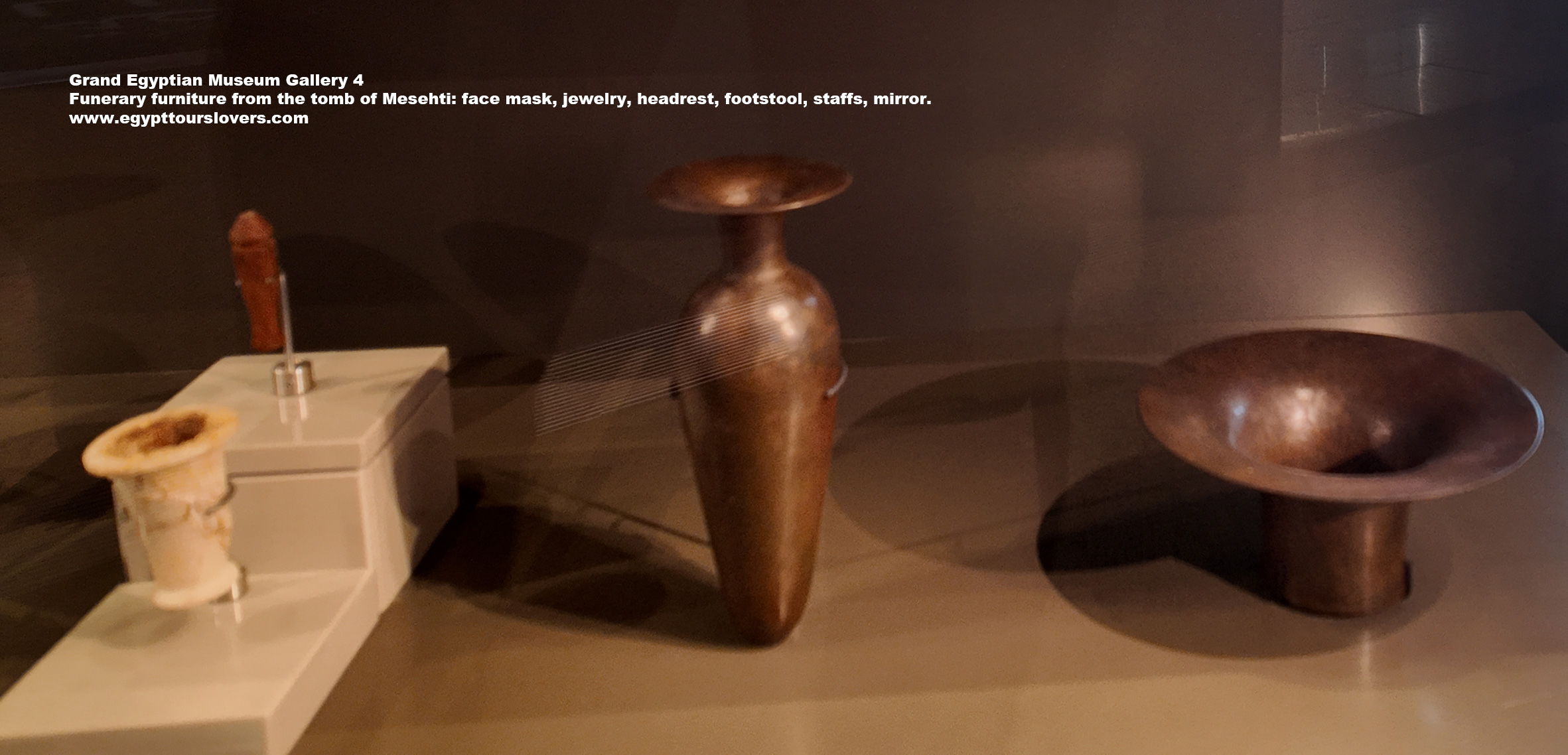
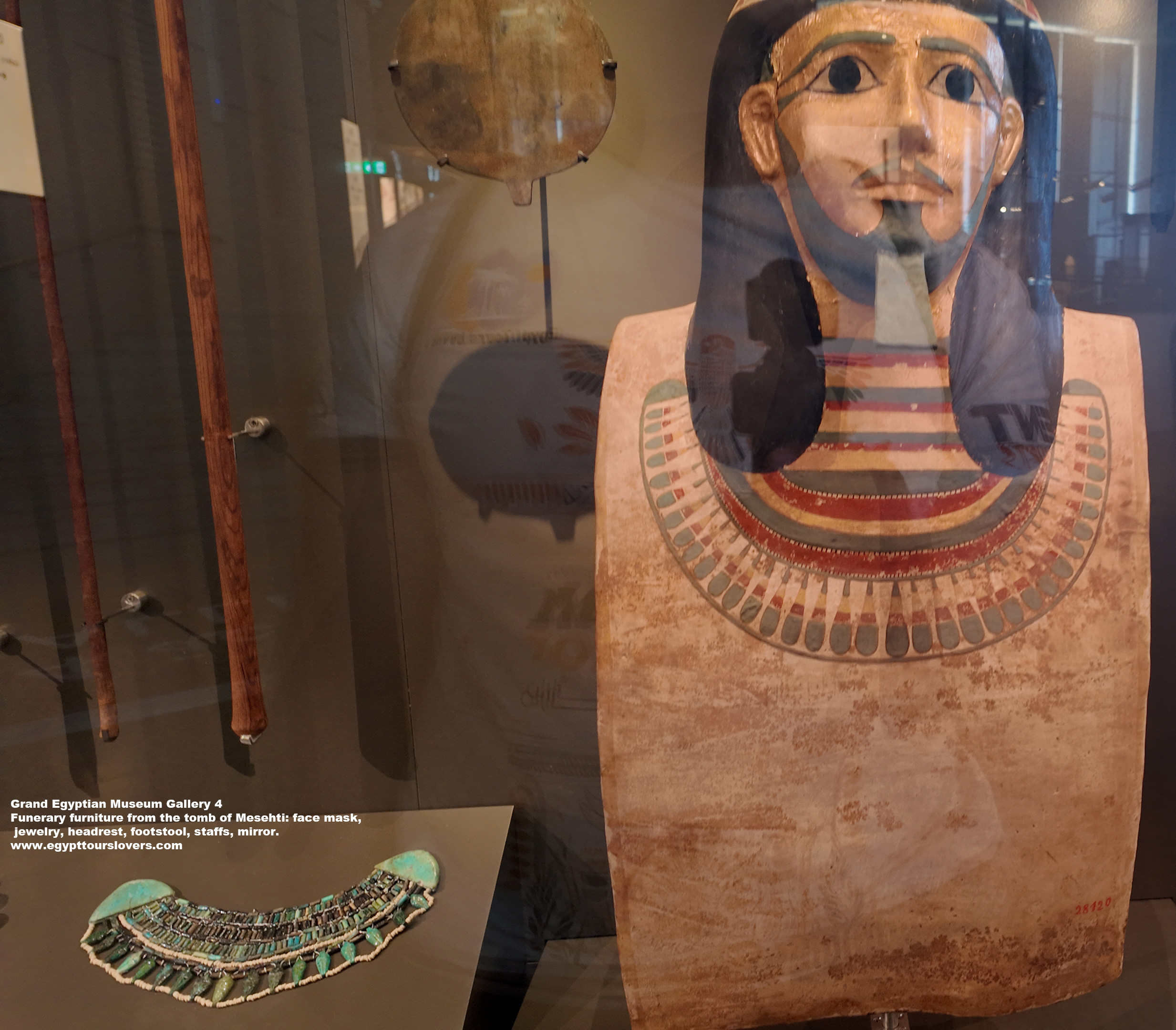
Dynasty 11 | Silver, bronze, faience, cartonnage, Egyptian alabaster| Assiut
Funerary furniture from the tomb of Mesehti: face mask, jewelry, headrest, footstool, staffs, mirror.
———– } ———– } ———– } ———– }
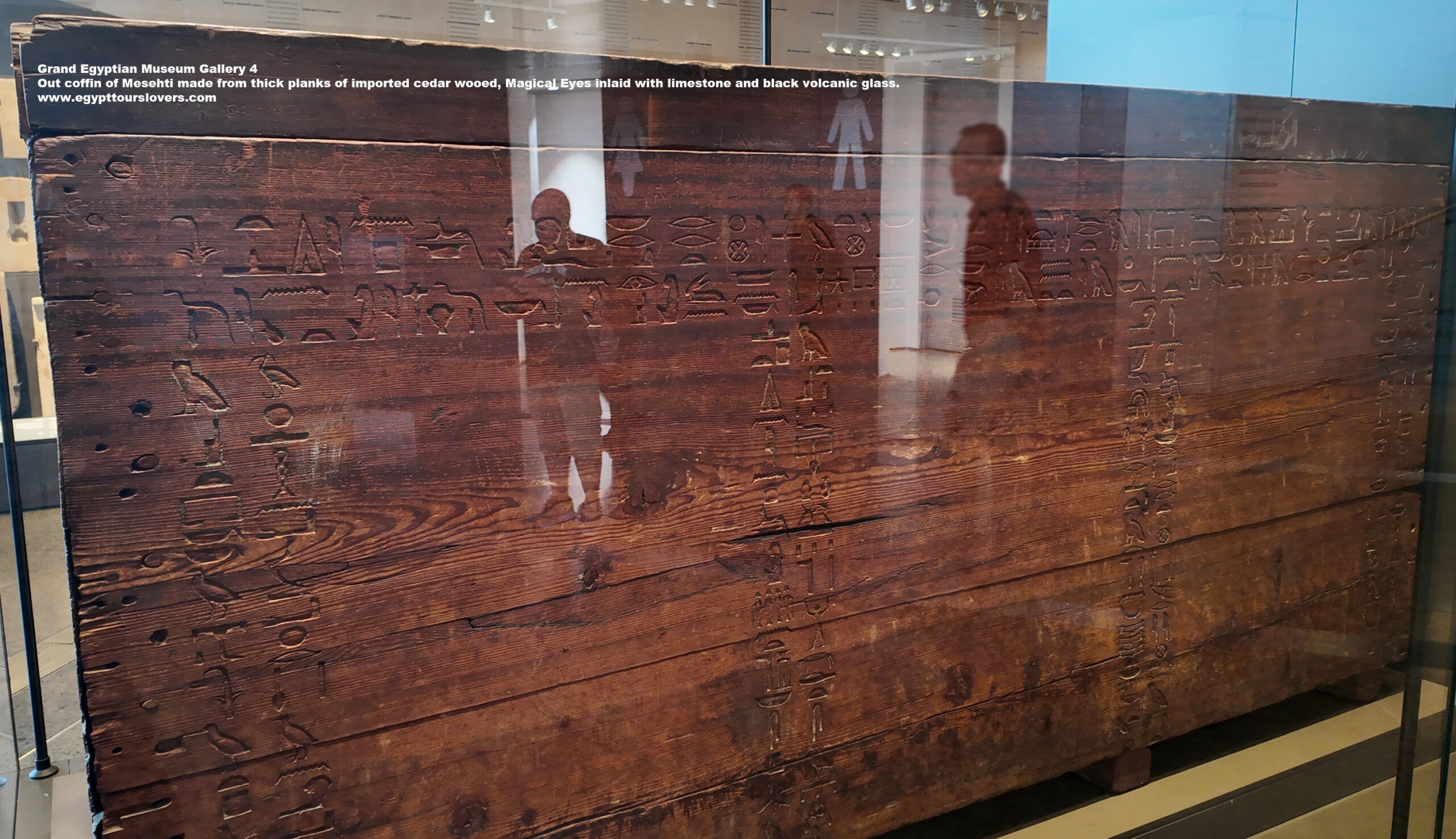
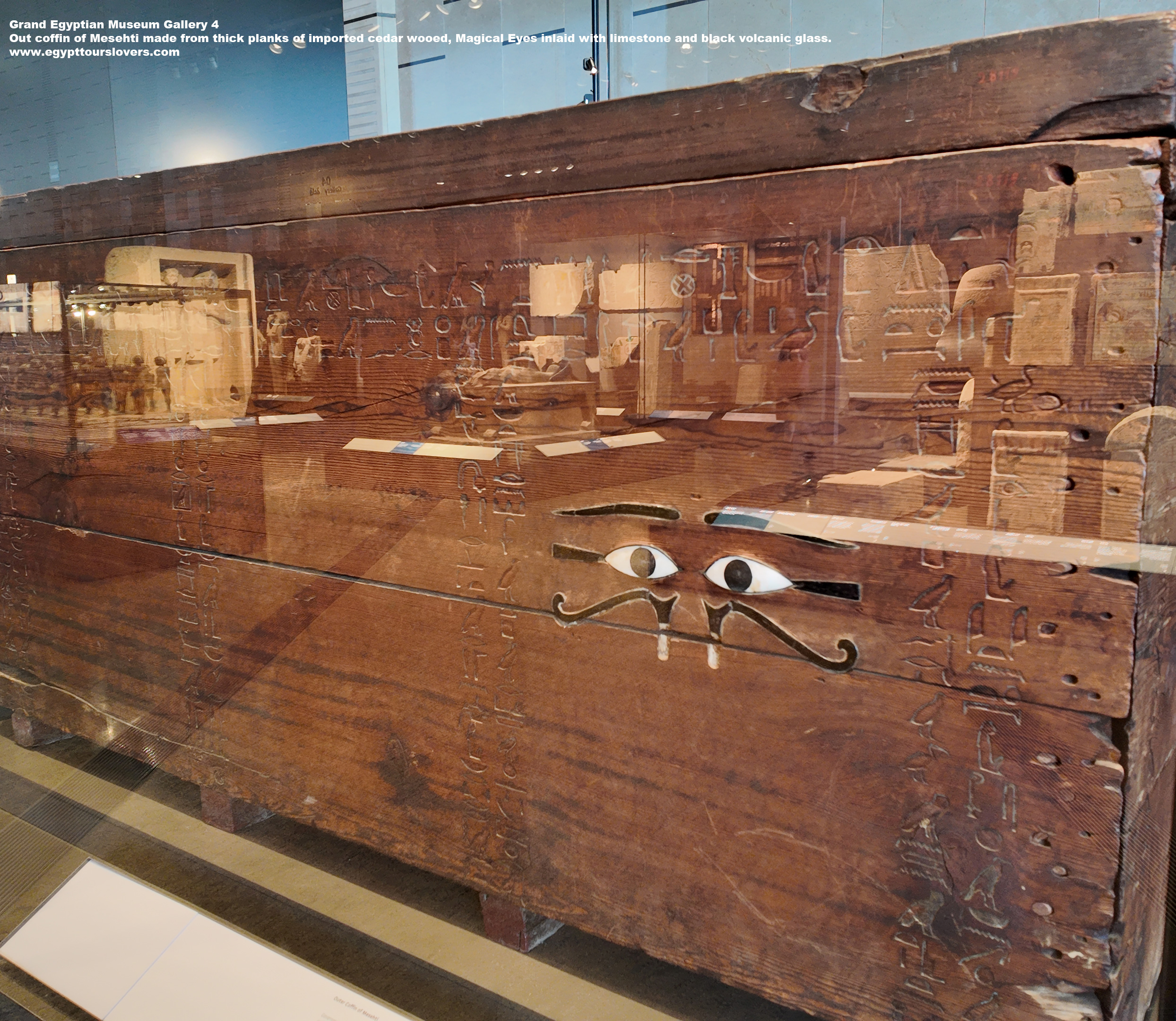
Dynasty 11 | wood, limestone, obsidian | Assiut
Out coffin of Mesehti made from thick planks of imported cedar wooed, Magical Eyes inlaid with limestone and black volcanic glass.
———– } ———– } ———– } ———– }
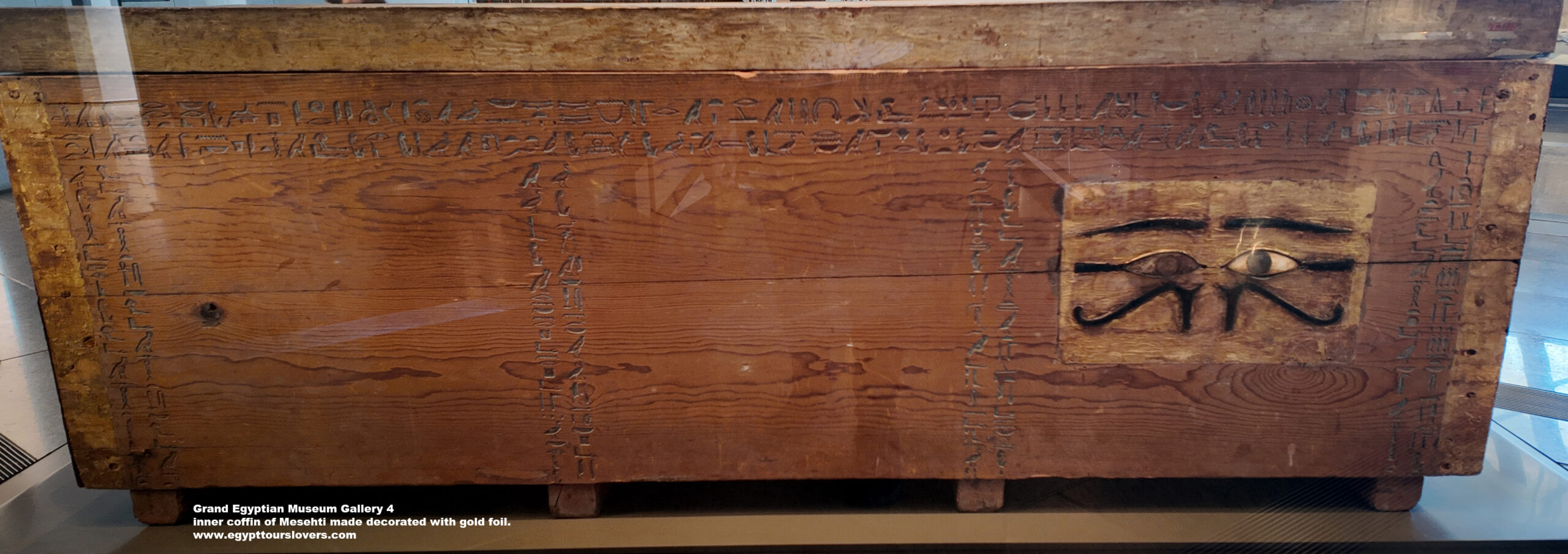
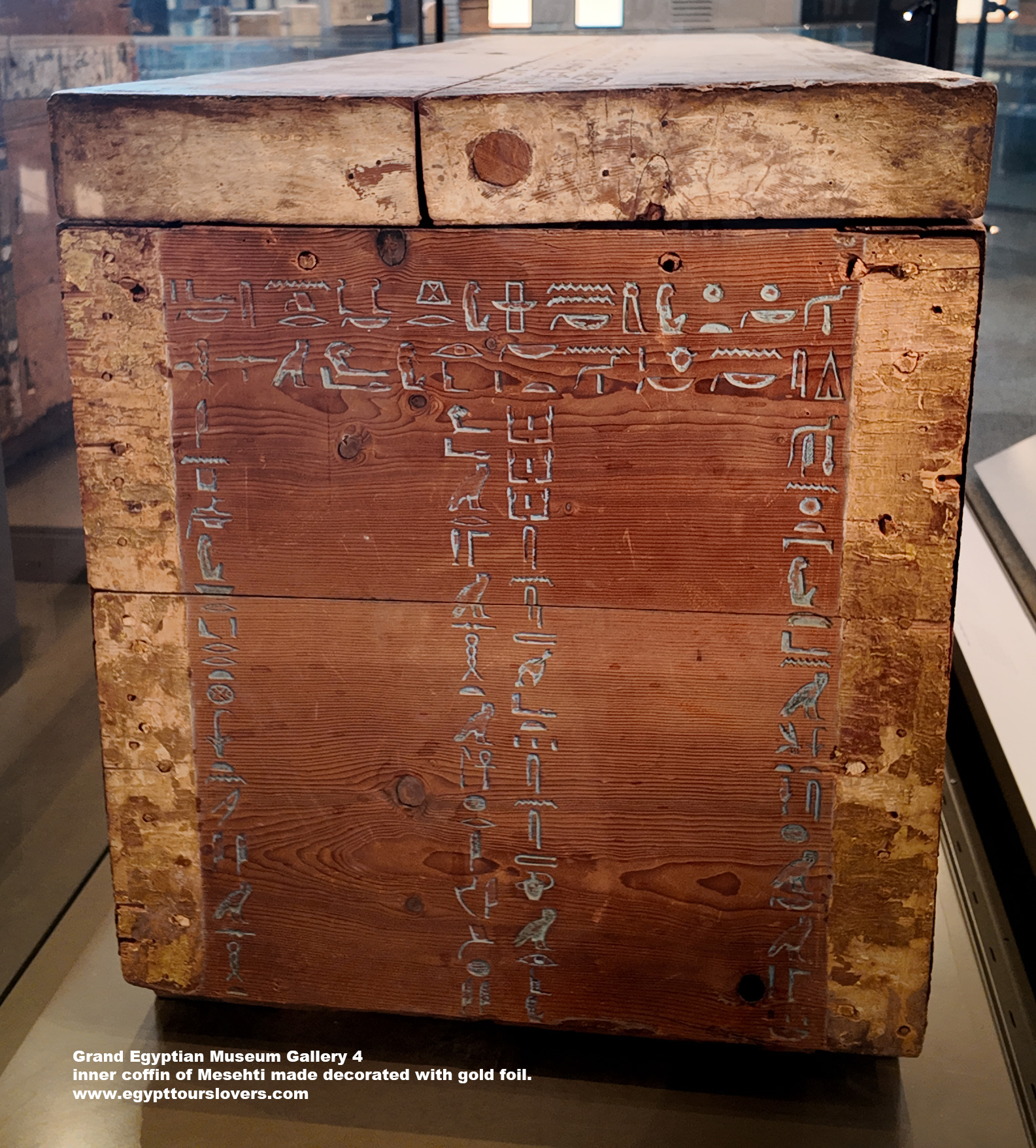
Dynasty 11 | wood, gold, bronze, limestone, obsidian | Assiut
inner coffin of Mesehti made decorated with gold foil.
The coffin and lid were decorated in Egyptian blue Color.
———– } ———– } ———– } ———– }
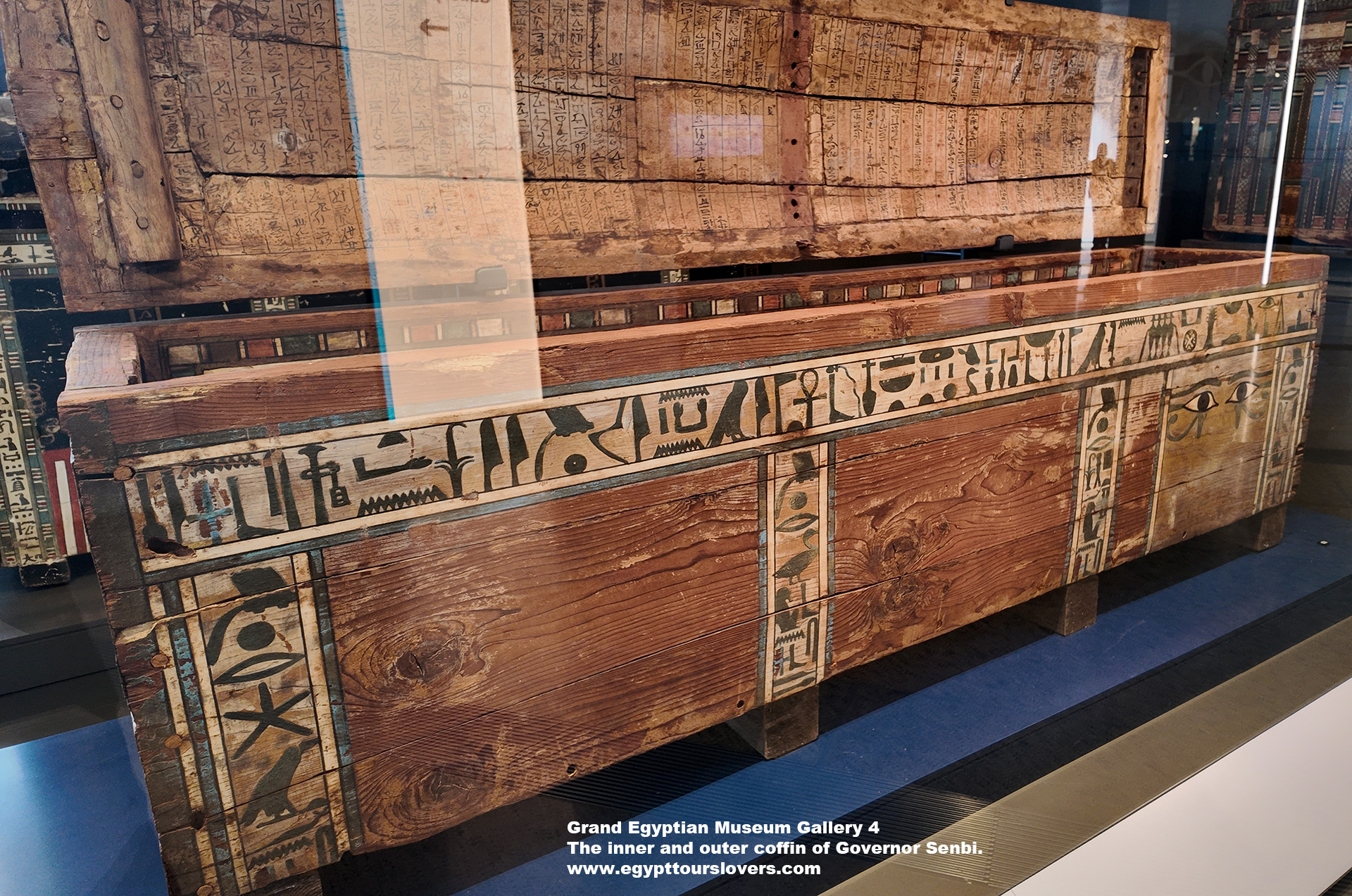
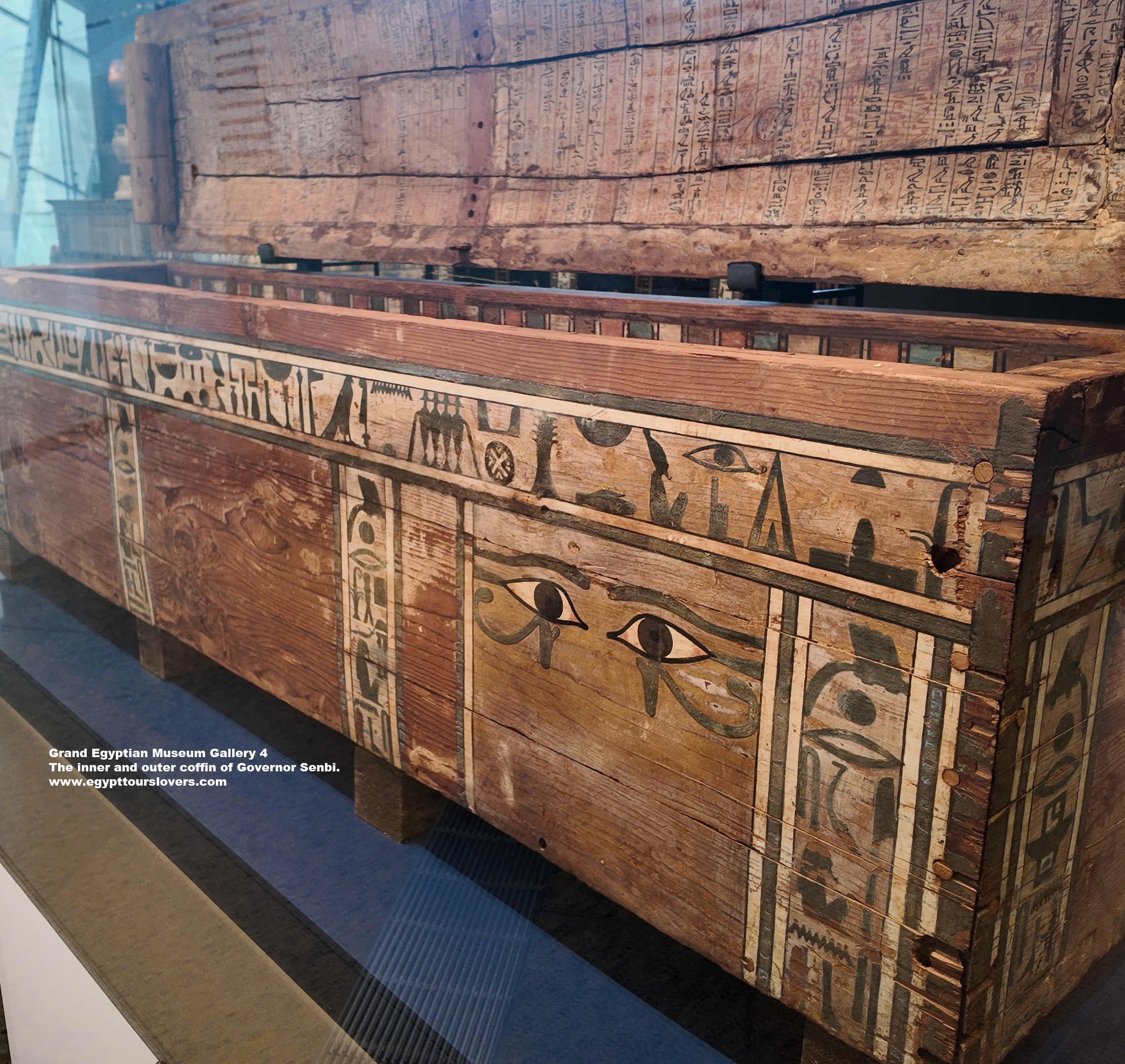
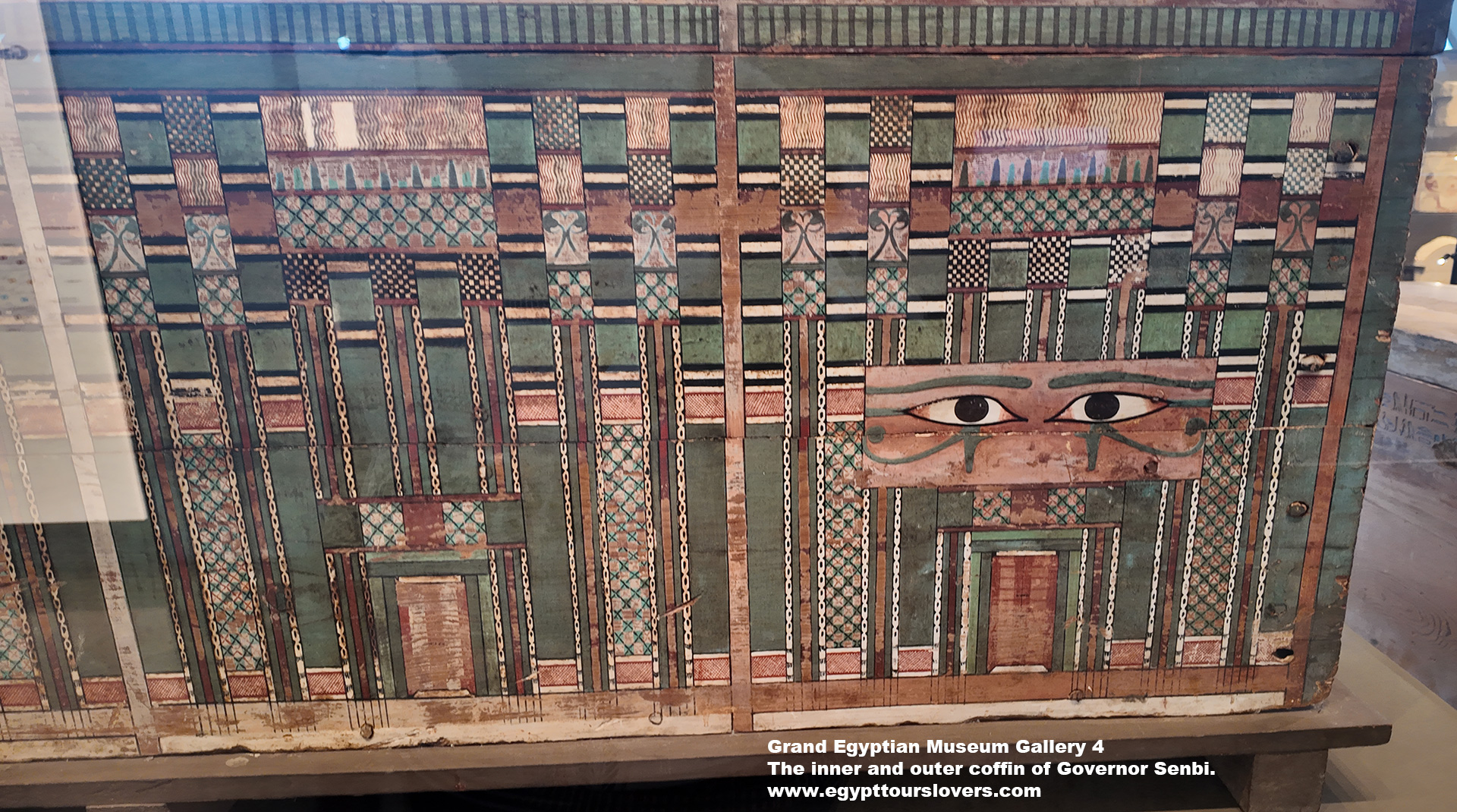
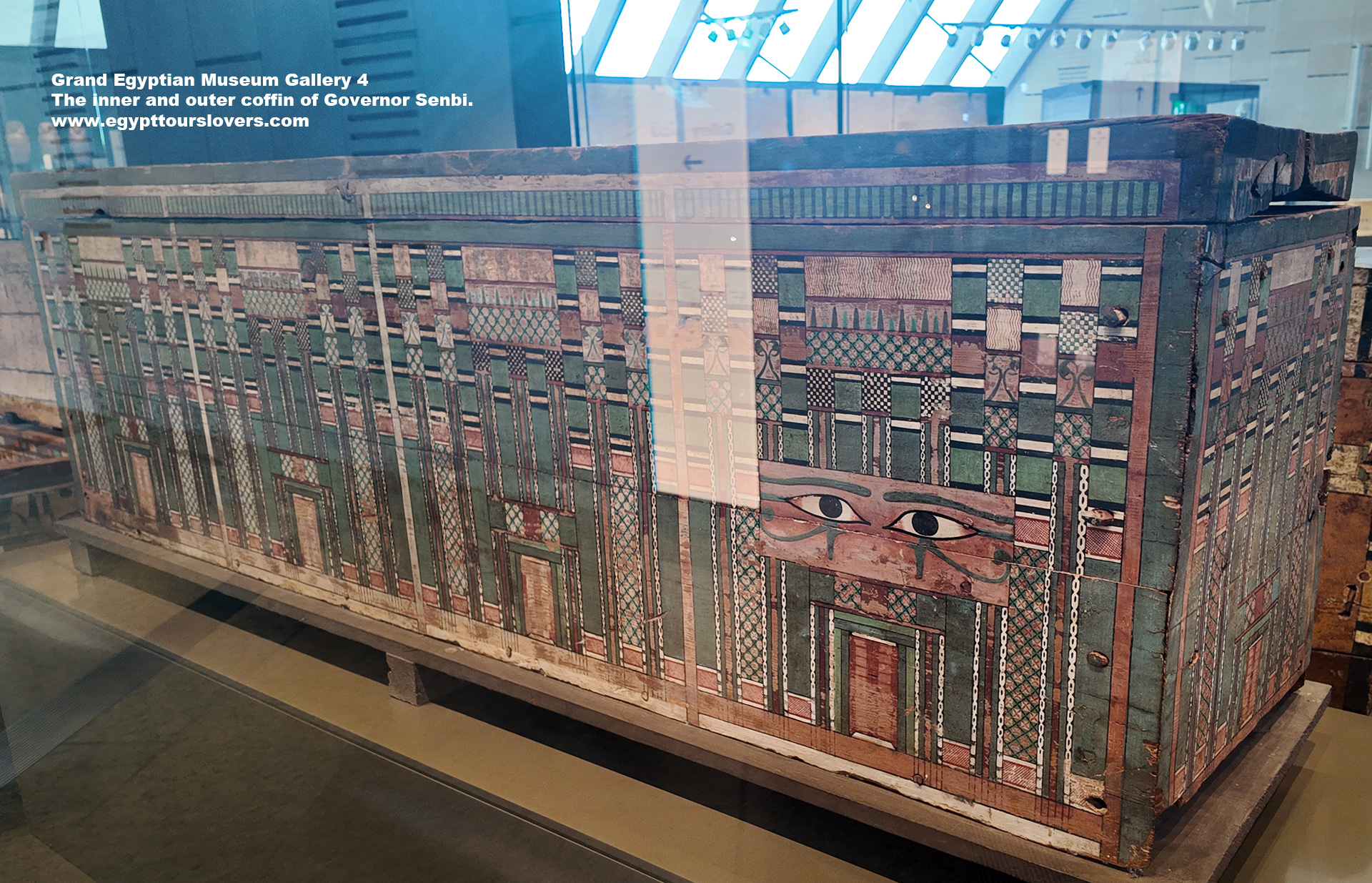


Dynasty 12 | Wood, plaster | Mir
The inner and outer coffin of Governor Senbi.
The coffin is decorated with intricate designs, architectural motifs, and vibrant colors.
———– } ———– } ———– } ———– }


Dynasty 13 | Wood, plaster | Luxor
Funerary bed and coffin of Ity with a lion’s head
———– } ———– } ———– } ———– }


Dynasty 13 | Wood | beni hassan
Coffin of Governor Khnumnakhti.
Khnumnakhti was buried with his wife Neternekhta and on his side looking out of the magical eyes painted above false door.
———– } ———– } ———– } ———– }


Dynasty 13 | limestone | Abydos
The sarcophagus and offering table of Governor Iuf.
The sarcophagus contained a small stone statue of the ruler Iuf.
The walls were decorated with colorful carvings and reliefs of his family, and there were also depictions of him inside the sarcophagus.
It was used for offering food and wine.
———– } ———– } ———– } ———– }


Dynasty 12 | granite | dahshur
Out canopic chest with hidden locking mechanism to safeguard it contents from Potential Tomb Robbers.
———– } ———– } ———– } ———– }


Dynasty 13 | granite | Abydos
Myth of the God Osiris on a funerary bed with his wife God Isis “the bird hovering over the God Osiris body”.
———– } ———– } ———– } ———– }

Dynasty 12 | granite | Hawara
Double King Amenemhat III statue in naos shrine.
Represented the king as a good offering life to his human form, or with his Ka “soul”.
———– } ———– } ———– } ———– }

Dynasty 12 | limestone | Hawara
Remains of a stone statue of the Goddess Hathor with a human face and animal ears.
———– } ———– } ———– } ———– }

Dynasty 12 | limestone | Abydos
A stone statue of the Goddess Isis without inscriptions, discovered in a funerary temple dedicated to the worship of her husband, the God Osiris.
———– } ———– } ———– } ———– }


Dynasty 12 | granite | Hawara
A stone statue of the God Sobek “the crocodile”.
Discovered inside chambers in the mortuary temple of King Amenemhat III.
———– } ———– } ———– } ———– }


Dynasty 12 | limestone | lisht
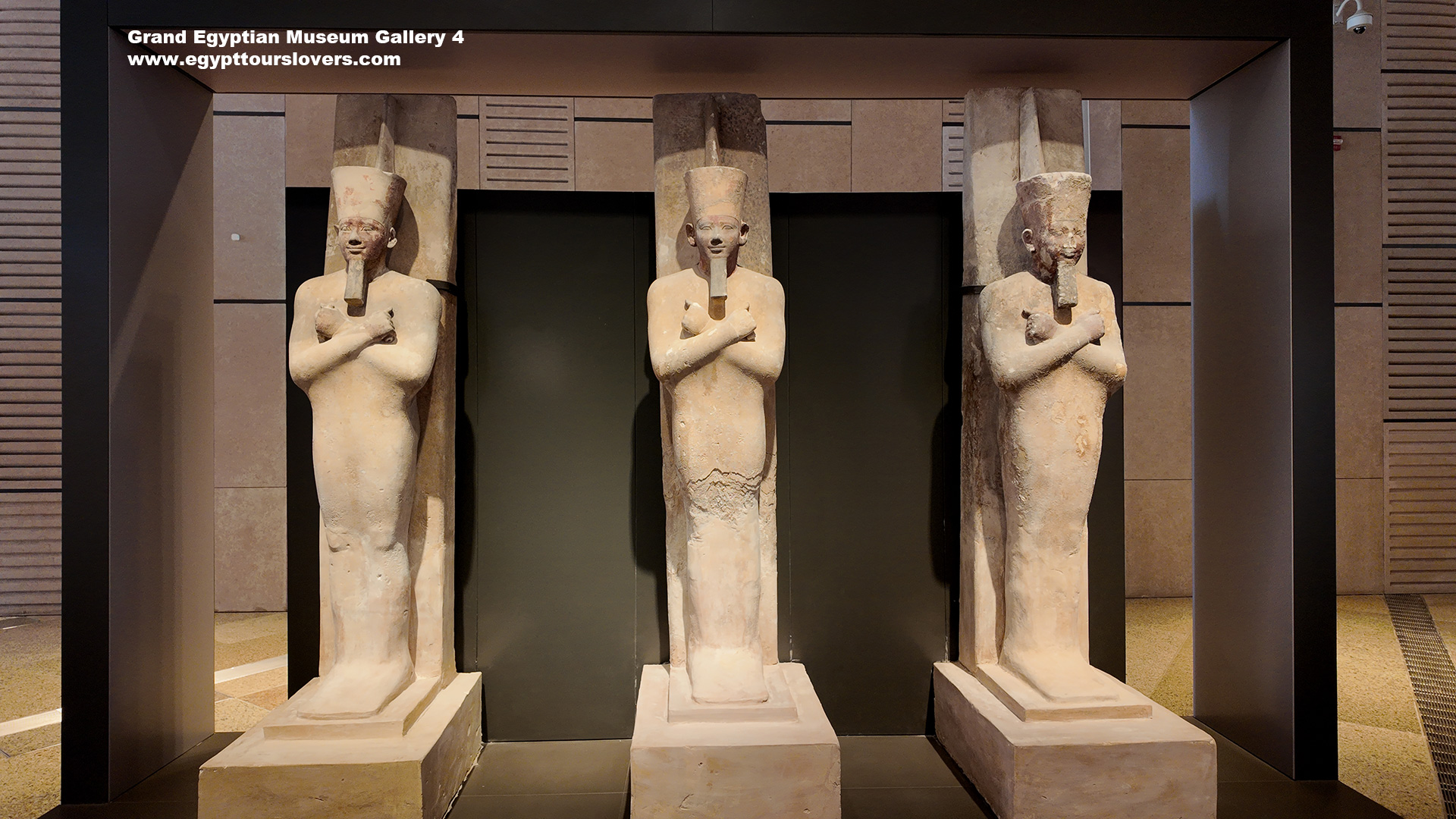
King Senwosret I statues stood along the long passage leading up to King Senwosret I Pyramid in lisht.
She was standing on the south side, in the Osirian Pose, the king wearing the white crown, the symbol of Upper Egypt.
———– } ———– } ———– } ———– }


Dynasty 12 | limestone | lisht
King Senwosret I statues.
She was standing on the north side, in the Osirian pose, the king wearing the red crown, the symbol of Lower Egypt.
———– } ———– } ———– } ———– }


Dynasty 12-17 | limestone | medamud
King Sobekemsaf I add offering scenes inside the temple gateway, this temple built before by King Senwosret III.
———– } ———– } ———– } ———– }

Dynasty 13 | pottery | Saqqara
4 small conical vessels found in a pit dug beneath the northeast corner of King Khendjer pyramid.
———– } ———– } ———– } ———– }

Dynasty 12 | Bones | lisht
Foundation of meat and fowl, young ox and 2 birds, bones.
———– } ———– } ———– } ———– }

Dynasty 12 | wood | lisht
Wooden dovetail cramps were inserted into matching slots to join stone blocks together, they strengthened the masonry of large buildings “pyramid”
———– } ———– } ———– } ———– }


Dynasty 12 | pottery | lisht
Funerary pottery vessels, containing clay as a substitute for beer.
———– } ———– } ———– } ———– }

Dynasty 11-12 | Egyptian alabaster, faience | lisht
Plaques named the kings who built the temples.
———– } ———– } ———– } ———– }

Dynasty 12 | Egyptian alabaster, faience, copper | lisht
Plaques of King Senwosret I with name “who see the 2 lands”.
Found in King Senwosret I Pyramid in lisht.
———– } ———– } ———– } ———– }


Dynasty 12 | granite | Karnak “Luxor”
A granite stone statue of King Senwosret I, which was located in a mortuary temple within the Karnak Temple Complex in Luxor.
The king Senwosret I wears the White Crown of Upper Egypt and is carved with great precision, featuring a round face and a muscular physique.
———– } ———– } ———– } ———– }

Dynasty 12 | limestone | lisht
Lintel of King Amenemhat I, celebrated after 30 years of his resign and renewed the aging king power.
Sed Festival scene shows King Amenemhat I twice wearing different crowns.
———– } ———– } ———– } ———– }

Dynasty 12 | limestone | lisht
King Amenemhat I with name “wehemmesut” who mean “he who repents births”, means a strong Egypt would be reborn under his leadership.
———– } ———– } ———– } ———– }

Dynasty 12 | limestone | lisht
King Amenemhat I with name “Sehetep Ib Ra”, meaning “He who pleases the heart of Ra”.
———– } ———– } ———– } ———– }

Dynasty 12 | limestone | lahun
King Senwosret II hours name “seshemtawy”, mean “he who guides the 2 lands”.
———– } ———– } ———– } ———– }

Dynasty 12 | limestone | armnt
King Amenemhat I hours name, marked by a falcon faces the cobra goddess “wadjet” of lower Egypt, blessing the King Amenemhat I.
———– } ———– } ———– } ———– }

Dynasty 12 | Granite | avris “tell el-daba”
Offer table of King Amenemhat II, a symbol of unified Egypt was carved in the middle.
———– } ———– } ———– } ———– }

Dynasty 12 | limestone | lisht
Wadjet goddess embracing King Amenemhat I.
———– } ———– } ———– } ———– }

Dynasty 13 | gold | Dahshur
Gold from King Hor Tomb, contain text ask gods to production King Hor.
———– } ———– } ———– } ———– }

Dynasty 11 | wood, wax, clay, linen | deir el-bahri
Small Funerary figurines and coffins for King Mentuhotep II, Queen Neferu “wife and sisiter”.
———– } ———– } ———– } ———– }

Dynasty 12 | limestone | ain shams
Block stone of Priest Hornakht “a priest for the cult of the dead King Amenemhat II”.
Test on this relief that refers to the Pyramid of King Amenemhat II ends with the triangular pyramid hieroglyph.
———– } ———– } ———– } ———– }

Middle kingdon | limestone
Queen statue with vulture body or a ba-bird representing her spirit.
———– } ———– } ———– } ———– }

Dynasty 13 | granite | Abydos
Funeral procession boundary stela.
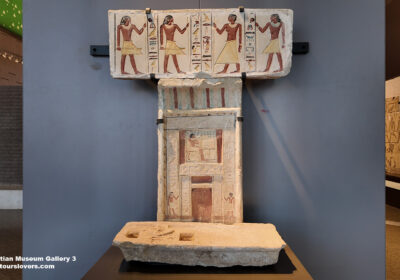
Royal decree prohibiting the erection of memorial funerary shrines in the area of the God Osiris festivals.
———– } ———– } ———– } ———– }

Dynasty 12 | limestone | Abydos
Stela of The Sculptor Ibet.
A view of 47 sculptors and the Sculptor’s Ibet associates.
———– } ———– } ———– } ———– }

Dynasty 12 | limestone | Abydos
Stela & offering table of Overseer Amenemhat “Supervisor of the storehouse”.
It was inside a commemorative mud-brick enclosure, placed during the annual celebrations of the god Osiris in Abydos, the “pilgrimage season”.
———– } ———– } ———– } ———– }


Dynasty 12 | limestone | Abydos
The offering table of Minister Amini contains engraved Magical Spells.
———– } ———– } ———– } ———– }

Dynasty 12 | limestone | Abydos
The offering table of the Overseer Dedu Sobek, the inscriptions contain the family names of the father, mother, brother, wife.
———– } ———– } ———– } ———– }

Dynasty 12 | limestone | Abydos
The tablet of the Overseer Si Ankh Ptah is inscribed with “I erected this shrine, so that I might smell the fragrance of incense.”
The stone tablet was part of a shrine.
———– } ———– } ———– } ———– }

Dynasty 12 | limestone | Abydos
Stela of the Overseer Nefer Hor “The supervisor of the goldsmiths”.
———– } ———– } ———– } ———– }

Dynasty 12 | limestone | Abydos
Stela depicts the Overseer Nebit (Overseer of the Anubis region) and Overseer Anpuhotep (Overseer of the temple).
The scene shows each individual standing with his wife, surrounded by family members including children and siblings.
———– } ———– } ———– } ———– }

Dynasty 12 | limestone | Abydos
Stela of the Overseer Nemty.
———– } ———– } ———– } ———– }

Dynasty 13 | limestone | Abydos
Stela of the Storekeeper, Royal Nursery, Titi.
———– } ———– } ———– } ———– }

Dynasty 12 | limestone | Abydos
Stelae of the Overseer Senetites.
———– } ———– } ———– } ———– }

Dynasty 11 | limestone | Abydos
Stelae of Wab-Priest of Amun Ibi.
———– } ———– } ———– } ———– }

Dynasty 13 | limestone | Abydos
Stelae of Overseer Ankhrenseneb includes an object frieze, a row of ointment jars, a khol pot, a mirror, perfume bottles and a lidded vessel.
———– } ———– } ———– } ———– }

Dynasty 13 | limestone | Abydos
Stelae of Overseer Tjenu, Hall keeper of the royal wardrobe.
———– } ———– } ———– } ———– }

Dynasty 12 | limestone | Abydos
Stelae of Overseer Itefrehu.
The texts on the Stelae confirm his family connection to his mother, maternal grandfather, aunt, and siblings. He had no wife or children.
———– } ———– } ———– } ———– }

Dynasty 12 | limestone | Abydos
Stelae of Overseer Intef,
Job: Overseer of the cattle count and assessing annual taxes.
———– } ———– } ———– } ———– }


Dynasty 12 | limestone | Abydos
Stelae of Overseer Ipty “Webwawethotep”
Job: Overseer of the double house of silver and gold.
———– } ———– } ———– } ———– }

Dynasty 12 | limestone | Abydos
Stelae of Overseer Mentuhotep.
Scenes in the painting show him with his wife and son, offering tables with the family, with his Brothers, sisters and their children “family bonds”.
———– } ———– } ———– } ———– }

Dynasty 13 | limestone |
Stelae of Overseer Webwawethotep
Job: Overseer of a district.
Scenes in the painting show him with his wife Senebhenaes and her father, the Vizier Ankhu, and her 2 brothers, the Viziers Ressoneb and Lymeru.
———– } ———– } ———– } ———– }

Dynasty 12 | limestone | Abydos
Stelae of Overseer Ipi.
Job: Overseer of Sailors.
Scenes in the painting show him with son Ptahemweskhet clinging to his leg, younger family members and mother and father.
———– } ———– } ———– } ———– }

Dynasty 12 | limestone | Abydos
Stelae of Overseer Remenyankh.
The niche in stela once contained a small statue of him
Text appeals to priests Abydos “who still live on earth, who shall pass by this offering chapel” to bring any spare offerings from the Osiris temple for Remenyankh ka.
———– } ———– } ———– } ———– }

Dynasty 12 | sandstone | Abydos
Stelae of Priest Amenemhat with his wife Hemusten.
Job: priest at the great temple of god Amun in Luxor.
———– } ———– } ———– } ———– }

Middle Kingdom | sandstone | Edfu
Stelae of Overseer Houri.
He sits with wife Seated in front of a dining table; the painting was made by the grandchildren in their honor.
———– } ———– } ———– } ———– }

Dynasty 13 | limestone | Edfu
Stela of Overseer Hour Har Khout Af.
He sits with his wife on the chair, and in front of me is his family, reading Incantations and Religious Rituals.
———– } ———– } ———– } ———– }

Dynasty 12 | Basalt | Elkab
Stela of Overseer Nubkheperre Senb.
Job: Overseer of Upper Egypt.
———– } ———– } ———– } ———– }

Middle Kingdom | Limestone | luxor
Stela of Overseer intef.
He appeared with his wife in front of the entire family, who had all come to greet him.
———– } ———– } ———– } ———– }

Dynasty 11 | Limestone | Dandara
Stela of Overseer Menat.
She appears inhaling the scent of the lotus flower, with food in front of her and her daughter behind her performing the same movement.
The Lotus Flower symbolizes the rebirth of the deceased in the Ancient Egyptian Belief.
———– } ———– } ———– } ———– }

Dynasty 11 | Limestone | Deir el-Bahari
A view of the planet of the Offering Bearers bringing food to the Tomb of Queen Neferu.
———– } ———– } ———– } ———– }

Dynasty 11 | Limestone | gebelein
A stone block with an inscription of a woman carrying a linen wrapping offering to the goddess Hathor in the temple.
The stone block was part of a private Shrine belonging to the king Mentuhotep II.
———– } ———– } ———– } ———– }


First Intermediate Period – Middle Kingdom | Pottery | Dendera, Rizeigat
Offering Tents with food samples on them were placed on top of the graves of the poor in ancient Egypt.
With development over the ages, they became the house of the soul in the culture of the ancient Egyptians.
———– } ———– } ———– } ———– }
Gallery 4 Design from Above in Grand Egyptian Museum Gallery


———– } ———– } ———– } ———– }
Researcher & Photographer: Tamer Ahmed Abdel Fattah